z-x-n.com | Trade for you! Trade for your account! | Direct | Joint | MAM | PAMM | LAMM | POA
Trade for you! Trade for your account! Invest for you! Invest for your account! Direct | Joint | MAM | PAMM | LAMM | POA Forex prop firm | Asset management company | Personal large funds. Formal starting from $500,000, test starting from $50,000. Profits are shared by half (50%), and losses are shared by a quarter (25%).
Forex multi-account manager Z-X-N Accepts global forex account operation, investment, and trading Assists family office investment and autonomous management
Foreign exchange investment manager Z-X-N accepts entrusted investment and trading for global foreign exchange investment accounts.
I am Z-X-N. Since 2000, I have been running a foreign trade manufacturing factory in Guangzhou, with products sold globally. Factory website: www.gosdar.com. In 2006, due to significant losses from entrusting investment business to international banks, I embarked on a self-taught journey in investment trading. After ten years of in-depth research, I now focus on foreign exchange trading and long-term investment business in London, Switzerland, Hong Kong, and other regions.
I possess core expertise in English application and web programming. During my early years running a factory, I successfully expanded overseas business through an online marketing system. After entering the investment field, I fully utilized my programming skills to complete comprehensive testing of various indicators for the MT4 trading system. Simultaneously, I conducted in-depth research by searching the official websites of major global banks and various professional materials in the foreign exchange field. Practical experience has proven that the only technical indicators with real-world application value are moving averages and candlestick charts. Effective trading methods focus on four core patterns: breakout buying, breakout selling, pullback buying, and pullback selling.
Based on nearly twenty years of practical experience in foreign exchange investment, I have summarized three core long-term strategies: First, when there are significant interest rate differentials between currencies, I employ a carry trade strategy; second, when currency prices are at historical highs or lows, I use large positions to buy at the top or bottom; third, when facing market volatility caused by currency crises or news speculation, I follow the principle of contrarian investing and enter the market in the opposite direction, achieving significant returns through swing trading or long-term holding.
Foreign exchange investment has significant advantages, primarily because if high leverage is strictly controlled or avoided, even if there are temporary misjudgments, significant losses are usually avoided. This is because currency prices tend to revert to their intrinsic value in the long run, allowing for the gradual recovery of temporary losses, and most global currencies possess this intrinsic value-reversion attribute.
Foreign Exchange Manager | Z-X-N | Detailed Introduction.
Starting in 1993, I leveraged my English proficiency to begin my career in Guangzhou. In 2000, utilizing my core strengths in English, website building, and online marketing, I founded a manufacturing company and began cross-border export business, with products sold globally.
In 2007, based on my substantial foreign exchange holdings, I shifted my career focus to the financial investment field, officially initiating systematic learning, in-depth research, and small-scale pilot trading in foreign exchange investment. In 2008, leveraging the resource advantages of the international financial market, I conducted large-scale, high-volume foreign exchange investment and trading business through financial institutions and foreign exchange banks in the UK, Switzerland, and Hong Kong.
In 2015, based on eight years of accumulated practical experience in foreign exchange investment, I officially launched a client foreign exchange account management, investment, and trading service, with a minimum account balance of US$500,000. For cautious and conservative clients, a trial investment account service is offered to facilitate their verification of my trading capabilities. The minimum investment for this type of account is $50,000.
Service Principles: I only provide agency management, investment, and trading services for clients' trading accounts; I do not directly hold client funds. Joint trading account partnerships are preferred.
Why did foreign exchange manager Z-X-N enter the field of foreign exchange investment?
My initial foray into financial investment stemmed from an urgent need to effectively allocate and preserve the value of idle foreign exchange funds. In 2000, I founded an export manufacturing company in Guangzhou, whose main products were marketed in Europe and the United States, and the business continued to grow steadily. However, due to China's then-current annual foreign exchange settlement quota of US$50,000 for individuals and enterprises, a large amount of US dollar funds accumulated in the company's account that could not be promptly repatriated.
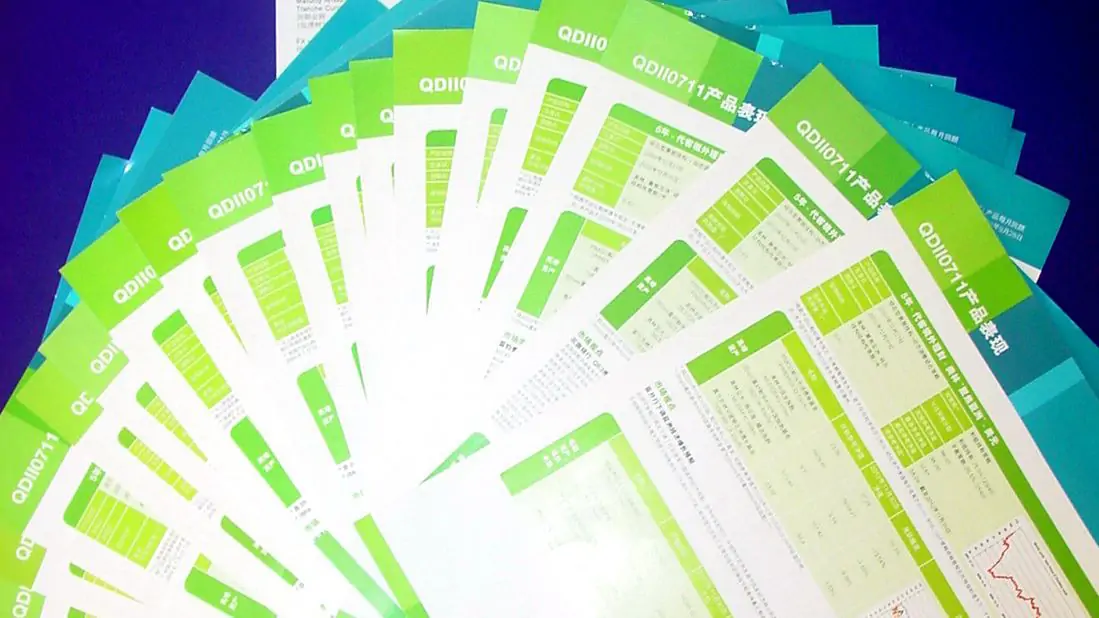
To revitalize these hard-earned assets, around 2006, I entrusted some funds to a well-known international bank for wealth management. Unfortunately, the investment results were far below expectations—several structured products suffered serious losses, especially product number QDII0711 (i.e., "Merrill Lynch Focus Asia Structured Investment No. 2 Wealth Management Plan"), which ultimately lost nearly 70%, becoming a key turning point for me to switch to independent investment.
In 2008, as the Chinese government further strengthened its regulation of cross-border capital flows, a large amount of export revenue became stuck in the overseas banking system, unable to be smoothly repatriated. Faced with the reality of millions of dollars being tied up in overseas accounts for an extended period, I was forced to shift from passive wealth management to active management, and began systematically engaging in long-term foreign exchange investment. My investment cycle is typically three to five years, focusing on fundamental drivers and macroeconomic trend judgments, rather than short-term high-frequency or scalping trading.
This fund pool not only includes my personal capital but also integrates the overseas assets of several partners engaged in export trade who also faced the problem of capital being tied up. Based on this, I also actively seek cooperation with external investors who have a long-term vision and matching risk appetite. It is important to note that I do not directly hold or manage client funds, but rather provide professional account management, strategy execution, and asset operation services by authorizing the operation of clients' trading accounts, committed to helping clients achieve steady wealth growth under strict risk control.
Foreign Exchange Manager Z-X-N's Diversified Investment Strategy System.
I. Currency Hedging Strategy: Focusing on substantial currency exchange transactions, with long-term stable returns as the core objective. This strategy uses currency swaps as the core operational vehicle, constructing a long-term investment portfolio to achieve continuous and stable returns.
II. Carry Trade Strategy: Targeting significant interest rate differences between different currency pairs, this strategy implements arbitrage operations to maximize returns. The core of the strategy lies in fully exploring and realizing the continuous profit potential brought by interest rate differentials by holding the underlying currency pair for the long term.
III. Long Terms Extremes-Based Positioning Strategy: Based on historical currency price fluctuation cycles, this strategy implements large-scale capital intervention to buy at the top or bottom when prices reach historical extreme ranges (highs or lows). By holding positions long-term and waiting for prices to return to a reasonable range or for a trend to unfold, excess returns can be realized.
IV. Crisis & News-Driven Contrarian Strategy: This strategy employs a contrarian investment framework to address extreme market conditions such as currency crises and excessive speculation in the foreign exchange market. It encompasses diverse operational models including contrarian trading strategies, trend following, and long-term position holding, leveraging the amplified profit window of market volatility to achieve significant differentiated returns.
Profit and Loss Plan Explanation for Forex Manager Z-X-N
I. Profit and Loss Distribution Mechanism.
1. Profit Distribution: The forex manager is entitled to 50% of the profits. This distribution ratio is a reasonable return on the manager's professional competence and market timing ability.
2. Loss Sharing: The forex manager is responsible for 25% of the losses. This clause aims to strengthen the manager's decision-making prudence, restrain aggressive trading behavior, and reduce the risk of excessive losses.
II. Fee Collection Rules.
The forex manager only charges a performance fee and does not charge additional management fees or trading commissions. Performance Fee Calculation Rules: After deducting the current period's profit from the previous period's loss, the performance fee is calculated based on the actual profit. Example: If the first period has a 5% loss and the second period has a 25% profit, then the difference between the current period's profit and the previous period's loss (25% - 5% = 20%) will be used as the calculation base, from which the forex manager will collect the performance fee.
III. Trading Objectives and Profit Determination Method.


1. Trading Objectives: The forex manager's core trading objective is to achieve a conservative return rate, adhering to the principle of prudent trading and not pursuing short-term windfall profits.
2. Profit Determination: The final profit amount is determined comprehensively based on the market fluctuations and actual trading results for the year.
Forex Manager Z-X-N provides you with professional forex investment and trading services directly!
You directly provide your investment and trading account username and password, establishing a private direct entrustment relationship. This relationship is based on mutual trust.
Service Cooperation Model Description: After you provide your account information, I will directly conduct trading operations on your behalf. Profits will be split 50/50. If losses occur, I will bear 25% of the loss. Furthermore, you can choose or negotiate other cooperation agreement terms that conform to the principle of mutual benefit; the final decision on cooperation details rests with you.
Risk Protection Warning: Under this service model, we do not hold any of your funds; we only conduct trading operations through the account you provide, thus fundamentally avoiding the risk of fund security.
Joint Investment Trading Account Cooperation Model: You provide the funds, and I am responsible for the execution of trades, achieving professional division of labor, shared risk, and shared profits.
In this cooperation, both parties jointly open a joint trading account: you, as the investor, provide the operating capital, and I, as the trading manager, am responsible for professional investment operations. This model represents a mutually beneficial cooperative relationship established between natural persons based on full trust.
Account profit and risk arrangements are as follows: For profits, I will receive 50% as performance compensation; for losses, I will bear 25% of the losses. Specific cooperation terms can be negotiated and drafted according to your needs, and the final plan respects your decision.
During the cooperation period, all funds remain in the joint account. I only execute trading instructions and do not hold or safeguard funds, thereby completely avoiding the risk of fund security. We look forward to establishing a long-term, stable, and mutually trusting professional cooperation with you through this model.
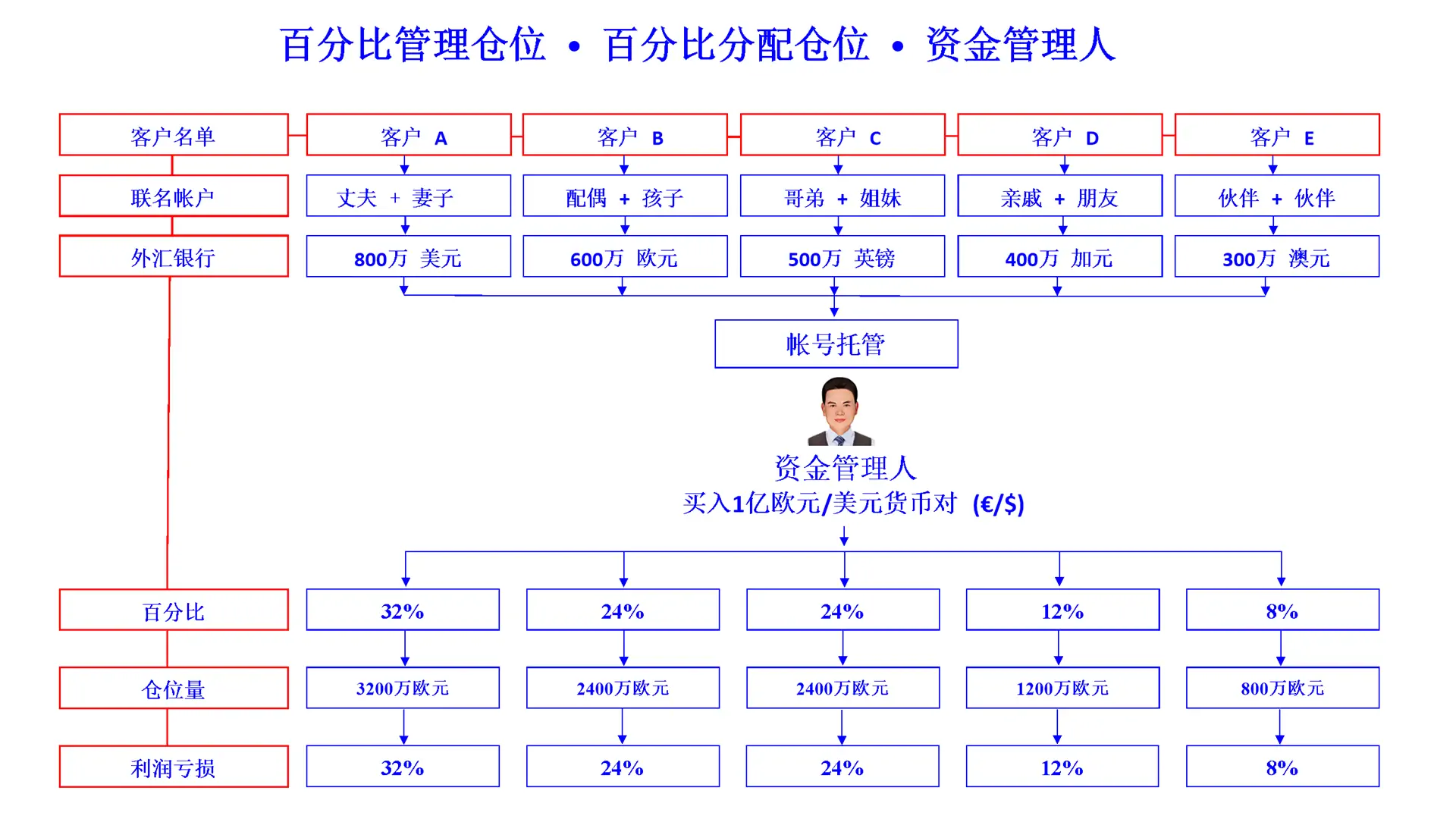
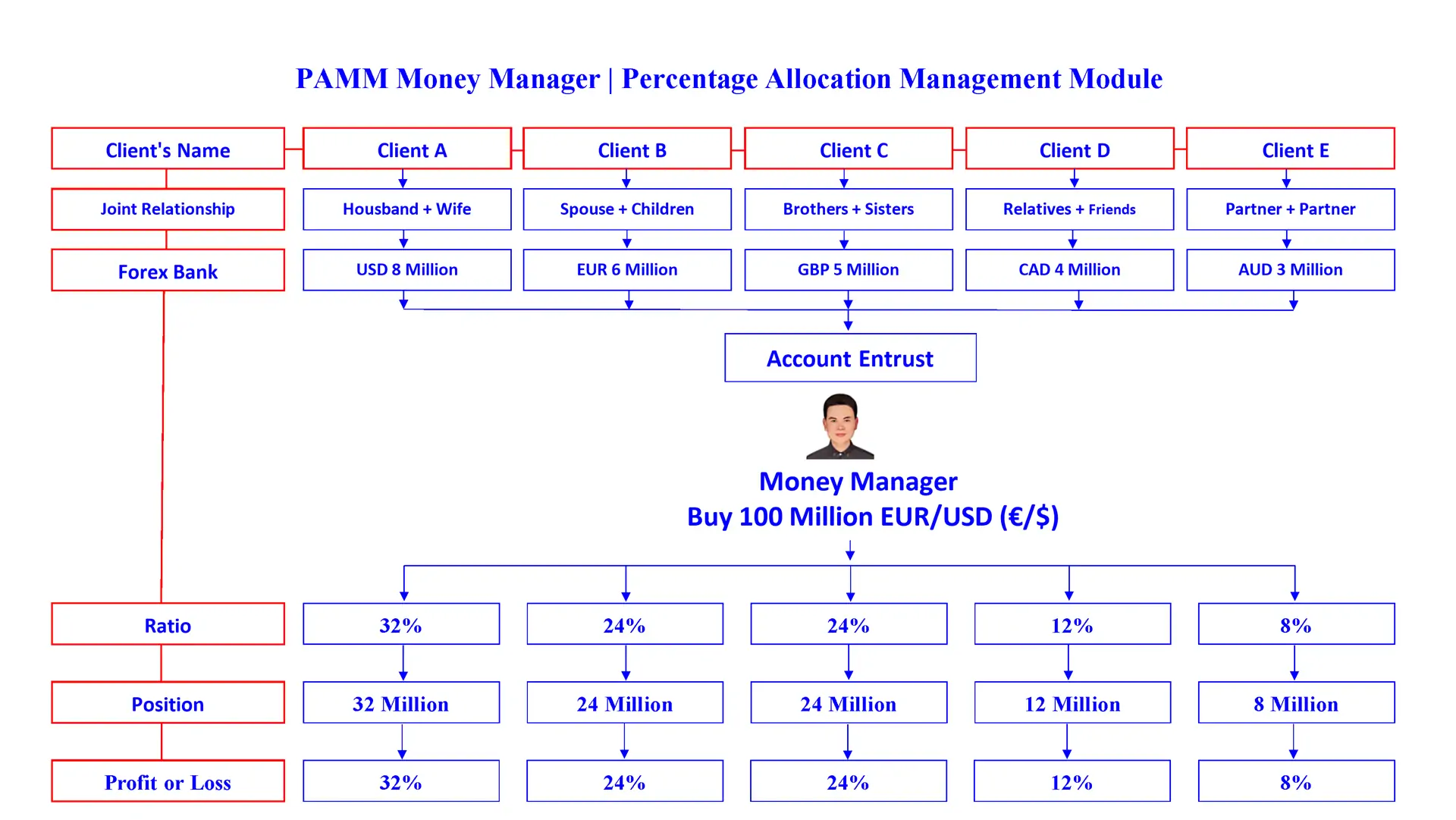
MAM, PAMM, LAMM, POA, and other account management models primarily provide professional investment and trading services for client accounts.
MAM (Multi-Account Management), PAMM (Percentage Allocation Management), LAMM (Lot Allocation Management), and POA (Power of Attorney) are all widely supported account management structures by major international forex brokers. These models allow clients to authorize professional traders to execute investment decisions on their behalf while retaining ownership of their funds. This is a mature, transparent, and regulated form of asset management.
If you entrust your account to us for investment and trading operations, the relevant cooperation terms are as follows: Profits will be split 50/50 between both parties, and this split will be included in the formal entrustment agreement issued by the forex broker. In the event of trading losses, we will bear 25% of the loss liability. This loss liability clause is beyond the scope of a standard brokerage entrustment agreement and must be clarified in a separate private cooperation agreement signed by both parties.
During this cooperation, we are only responsible for account transaction operations and will not access your account funds. This cooperation model has eliminated fund security risks from its operational mechanism.
Introduction to Account Custody Models such as MAM, PAMM, LAMM, and POA.
Clients need to entrust a forex manager to manage their trading accounts using custody models such as MAM, PAMM, LAMM, and POA. After the entrustment takes effect, the client's account will be officially included in the management system of the corresponding custody model.
Clients included in the MAM, PAMM, LAMM, and POA custody models can only log in to their account's read-only portal and have no right to execute any trading operations. The account's trading decision-making power is exercised uniformly by the entrusted forex manager.
The entrusted client has the right to terminate the account custody at any time and can withdraw their account from the MAM, PAMM, LAMM, and POA custody system managed by the forex manager. After the account withdrawal is completed, the client will regain full operational rights to their own account and can independently carry out trading-related operations.
We can undertake family fund management services through account custody models such as MAM, PAMM, LAMM, and POA.
If you intend to preserve and grow your family funds through forex investment, you must first select a trustworthy broker with compliant qualifications and open a personal trading account. After the account is opened, you can sign an agency trading agreement with us through the broker, entrusting us to conduct professional trading operations on your account; profit distribution will be automatically cleared and transferred by the trading platform system you selected.
Regarding fund security, the core logic is as follows: We only have trading operation rights for your trading account and do not directly control the account funds; at the same time, we give priority to accepting joint accounts. According to the general rules of the forex banking and brokerage industry, fund transfers are limited to the account holder and are strictly prohibited from being transferred to third parties. This rule is fundamentally different from the transfer regulations of ordinary commercial banks, ensuring fund security from a systemic perspective.
Our custody services cover all models: MAM, PAMM, LAMM, and POA. There are no restrictions on the source of custody accounts; any compliant trading platform that supports the above custody models can be seamlessly integrated for management.
Regarding the initial capital size of custody accounts, we recommend the following: Trial investment should start at no less than US$50,000; formal investment should start at no less than US$500,000.
Note: Joint accounts refer to trading accounts jointly held and owned by you and your spouse, children, relatives, etc. The core advantage of this type of account is that in the event of unforeseen circumstances, any account holder can legally and compliantly exercise their right to transfer funds, ensuring the safety and controllability of account rights.

Appendix: Over Two Decades of Practical Experience | Tens of Thousands of Original Research Articles Available for Reference.
Since shifting from foreign trade manufacturing to foreign exchange investment in 2007, I have gained a deep understanding of the operating essence of the foreign exchange market and the core logic of long-term investment through over a decade of intensive self-study, massive real-world verification, and systematic review.
Now, I am publishing tens of thousands of original research articles accumulated over more than two decades, fully presenting my decision-making logic, position management, and execution discipline under various market environments, allowing clients to objectively assess the robustness of my strategies and the consistency of long-term performance.
This knowledge base also provides a high-value learning path for beginners, helping them avoid common pitfalls, shorten trial-and-error cycles, and build rational and sustainable trading capabilities.
In the forex two-way trading market, if traders intend to use technical indicators to assist in decision-making, moving averages and candlestick charts are sufficient to meet their core needs; there's no need to overly rely on complex indicator systems.
For forex two-way traders, a solid foundation in trading techniques is often built upon the combined application of moving averages and candlestick charts. These two complement each other, jointly constructing a basic framework for judging market trends. Moving averages focus on outlining the market's horizontal trend, providing traders with clear directional guidance; candlestick charts focus on reflecting the details of vertical price fluctuations, accurately capturing the traces of the battle between bulls and bears within each cycle. The combination of the two provides a relatively comprehensive view of the market's movement.
However, this combined application logic often leads to operational difficulties among forex two-way trading novices. Many beginners, while understanding the trend signals conveyed by moving averages in the early stages of trading, often hesitate due to doubts about the certainty of the trend, missing the best entry opportunities. When the moving average trend is fully clear and the signals stabilize, the corresponding price wave is often nearing its end. Not only is the subsequent upward potential very limited, but it is also highly susceptible to a period of pullback. This indecisive trading style stems from a novice's insufficient grasp of the overall structure of the trading instrument and a slow perception of market rhythm. This deficiency can only be gradually overcome through systematic practical training and experience accumulation.
In the two-way trading mechanism of the forex market, short-term and long-term investors adhere to drastically different operating logics: short-term traders prioritize momentum over price, focusing on capturing short-term market momentum; while long-term investors prioritize price over momentum, paying more attention to the intrinsic value and long-term rationality of the price itself.
Especially for long-term positioning, historical highs or lows of currency pairs often have special significance. When a sovereign nation's currency falls into crisis due to economic, political, or financial factors, its exchange rate may be severely undervalued or overvalued. At this point, while prices are extremely attractive, market momentum often dwindles—there's neither a clear driving force for upward or downward movement nor a sustained trend.
Therefore, these extreme price levels actually provide long-term investors with a rare strategic entry window. In this scenario, if the chosen currency pair offers a positive overnight interest rate spread, it not only effectively reduces holding costs but also, with the added benefit of compounding over time, further enhances the stability and sustainability of overall investment returns.
Therefore, rationally discerning the primary and secondary relationship between price and trend, and combining this with a comprehensive assessment of macroeconomic fundamentals and funding costs, is essential to achieving the long-term investment goal of making informed decisions and seeking steady gains in the complex and volatile foreign exchange market.
In the two-way foreign exchange market, traders live in an era of information overload, where information access is unprecedentedly convenient. However, the vast amount of information also presents problems of varying quality and difficulty in distinguishing truth from falsehood, creating potential risks for trading decisions.
Even those traders who dedicate themselves to mastering fundamental information often struggle to grasp its core essence. Many rely on fundamental analysis for trading but ultimately fail to achieve their desired results. The core issue lies in a flawed understanding of fundamental information, a failure to see beyond the surface and grasp the essence.
Regarding technical analysis, some traders mistakenly consider it useless or even a misleading tool. This is not the case. Technical analysis itself is neither superior nor inferior; its effectiveness depends entirely on the user's skill. Just as a sharp sword wounds not because of the sword, but because of the user's lack of proficiency, traders must abandon a one-sided view of technical analysis. They should neither blindly believe in it nor completely reject it, but rather rationally explore its underlying logic, avoid cognitive biases, and allow technical analysis to serve as a supplementary tool for trading decisions, not the dominant factor.
Fundamental analysis is far more complex than imagined. It encompasses a wide variety of influencing factors, including not only objective market elements such as fund flows, market expectations, and sentiment fluctuations, but also subjective factors such as the trader's risk tolerance and psychological resilience. These factors intertwine and interact, collectively influencing the trends of the foreign exchange market. Therefore, traders must never rely solely on fundamental analysis for judgment; instead, they must comprehensively consider all factors, constructing a holistic analytical framework to organically combine subjective and objective perspectives.
Ultimately, the shortcomings of traders' trading skills in two-way forex trading are essentially due to insufficient understanding. The core of trading ability is not simply analytical skills or operational techniques, but a comprehensive and profound understanding of market rules, analytical tools, and one's own limitations. The breadth and depth of a trader's cognitive boundaries are the key to determining trading success or failure.
Under the two-way trading mechanism of forex investment, the market always reserves its own window of opportunity for traders with sufficient knowledge and a reasonable capital scale.
Regardless of market cycles, there will always be a certain phase or wave that demonstrates significant suitability for specific strategies or styles, thus providing traders with a real possibility of profit. This is precisely why the foreign exchange market has always carried hope and expectation, becoming an arena that countless practitioners strive for.
However, it is undeniable that this industry is also known for its high degree of uncertainty and psychological pressure. Forex trading is often a long-term test of patience, discipline, and emotional control, resulting in generally low levels of job satisfaction and professional identity among practitioners. In this context, "preserving capital is essential for survival" is not only a simple survival rule but also a fundamental prerequisite for maintaining a foothold in the market—only by preserving capital and maintaining a stable mindset can one find opportunities amidst volatility.
It is gratifying that every year the market generates several significant price movements with clear trends, providing a stage for those who are prepared to showcase their talents. These crucial moments not only highlight the unique charm of forex trading but also validate the value of perseverance and continuous improvement. May those traders who have already achieved success continue to refine their skills and reach new heights; and may those still struggling on the edge of profit and loss remain steadfast in their beliefs, diligently hone their skills, and ultimately find a stable path that suits their own characteristics.
Most losing investors struggle to hold profitable positions long-term, rushing to exit with even the slightest profit.
In the forex market, most losing investors are trapped in a common misconception: they find it difficult to hold profitable positions long-term, rushing to exit with even the slightest profit, while when faced with losing positions, they cling to wishful thinking and are unwilling to cut losses in time, falling into a vicious cycle of "unable to hold onto profits and unable to let go of losses." This problem is not isolated; observations show that over 90% of investors have encountered or are currently trapped in this trading predicament, becoming a key bottleneck restricting their trading profits.
The root cause of this phenomenon lies in investors' distorted understanding of the nature of trading and their unbalanced mindset. Many traders often confuse the core objective of trading—whether it is to pursue the long-term, continuous growth of total account capital or to indulge in the fleeting psychological pleasure of a single profitable trade. Driven by a subconscious desire for inner peace, investors are prone to the pitfalls of frequent profit-taking and holding onto losing positions. When faced with small profits, to avoid potential pullbacks and lock in immediate gains for psychological satisfaction, they often deviate from their trading strategy and exit prematurely, missing out on potentially larger profits later. Conversely, when positions incur losses, they are unwilling to accept the inevitable losses and hope for a market reversal, choosing to stubbornly hold onto them, allowing losses to continue to mount and ultimately wiping out all previous profits or even eroding their principal.
In fact, this mindset-driven trading behavior is the core reason why the vast majority of investors fall into a quagmire of losses. For forex traders struggling with losses, the primary task is to re-examine their trading objectives and proactively ask themselves: is it to adhere to long-term principles and pursue steady growth of account funds, or to be swayed by short-term emotions and indulge in the immediate pleasure of a single profit-taking opportunity? Only by clarifying this core understanding can they break free from the interference of emotions in their trading decisions and establish a rational and sustainable trading logic.
In the forex market, traders with vastly different capital scales exhibit significant psychological differences in their mindset and behavioral logic, profoundly impacting their trading strategies and ultimate outcomes.
For traders with ample capital, the sheer size of their funds grants them a more relaxed trading mindset and greater strategic flexibility. If such a trader uses $1 million to invest in a long-term trend, even a 10% return would yield $100,000. This substantial capital base allows them to focus on trend-based opportunities without fixating on short-term profits. Even if they choose to use $100,000 for short-term trading, a $10,000 profit is insignificant in their overall financial situation. This "non-dependent profit" approach allows them to effectively avoid the interference of greed and fear, maintaining rational judgment.
Conversely, traders with limited capital often find themselves in the opposite predicament. Limited by their capital, the potential profit from a single trade is inherently limited. These meager gains fail to provide positive incentives, leading to an impulse for high-frequency trading. The attempt to accumulate profits through "volume to compensate for price" often results in a vicious cycle of increasing error rates due to frequent trading, leading to ever-growing losses. The intertwining of life pressures and trading anxiety erodes their rational decision-making, causing them to fall into cognitive biases. They equate forex trading with simply working for a living, stubbornly believing that only frantic daily trading constitutes "effort," while ignoring the core logic of the trading market: "follow the trend." Ultimately, the psychological problems of these traders stem from a lack of sufficient savings. Limited funds cannot support waiting for favorable market conditions, leading to a desire for quick profits in short-term trading. This anxiety further exacerbates decision-making biases, creating a vicious cycle.
Traders with substantial capital and ample savings have already transcended the cognitive limitations of "daily profits." Their trading logic leans towards long-term value capture. They are keenly aware of the uncertainty of the foreign exchange market. They don't seek frequent profits, but patiently lie low, focusing throughout the year on a few high-certainty market opportunities. Once the time is right, they strike decisively and reap substantial returns. During periods of market volatility with no clear opportunities, they choose to remain on the sidelines, calmly avoiding the risks of ineffective trading. This balanced trading rhythm is built upon a solid financial foundation and a mature mindset.
In the field of two-way forex trading, a trader's initial capital accumulation is not only a basic prerequisite for entering the market, but also a key factor determining their trading mindset and long-term success or failure. The earlier this awareness and practice of accumulation are established, the more proactive one can be in the market.
For the vast majority of forex traders, the accumulation of initial capital does not rely on accidental trading profits, but stems from long-term rational saving and consumption control. Small savings accumulate into a torrent of capital available for trading.
Crucially, when traders have low incomes and weak financial foundations, excessive focus on discussions and attempts at forex trading is a waste of time and energy. The core priority at this stage is not honing trading skills or participating in market speculation, but rather concentrating on increasing income and accumulating capital, avoiding empty talk when abilities and funds are mismatched. For young traders, abandoning unnecessary consumption and establishing rational consumption habits is the core path to accumulating initial capital. Only by accumulating a certain amount of initial capital can one possess the basic qualifications to participate in forex trading and withstand market risks; otherwise, all trading ideas are merely unrealistic castles in the air.
Young traders should also abandon the impetuous mentality of overspending and adhere to the principle of gradual, incremental capital accumulation, solidifying their financial foundation through daily cost-cutting and income growth. Only in this way can one possess sufficient financial strength to seize excellent trading opportunities when they arise in the market, rather than missing out due to a lack of capital. This is not only the way to survive in forex trading, but also the inevitable path for young traders to achieve financial advancement.
In the two-way trading mechanism of forex investment, a trader's fate is not entirely determined by market fluctuations, nor can it be reversed purely by later efforts; in a sense, their success or failure is subtly foreshadowed from the very beginning.
Just like an individual's background in traditional society—whether born into a wealthy and powerful family or raised in poverty—the initial circumstances of life, though vastly different, often define the basic framework of early development. However, human destiny is not a static, predetermined script: those from humble backgrounds often strive to break free with unwavering determination, constantly reconstructing their survival logic and attempting to escape the shackles of their birth—this is what is known as "defying fate." Those from wealthy families, on the other hand, tend to be content with their existing advantages and rarely take risks, because any reckless "troublemaking" could shake the foundations accumulated over generations; therefore, they prefer to maintain rather than overturn them.
The same applies to the field of forex investment. Although the reasons for entering this field are varied and numerous, those who truly navigate market cycles and achieve consistent profits often share a common prerequisite—a relatively ample amount of capital. This capital endowment is akin to an innate social class advantage: it not only provides traders with greater room for error and stronger risk tolerance but also implicitly raises their starting point and expected success rate. In contrast, those with limited funds, even with exceptional skills and meticulous strategies, are often forced out of the market by a single normal drawdown, rarely having a chance to recover. This reveals a structural "inherent fate" hidden behind the seemingly fair and open foreign exchange market—capital size has long been a key implicit variable determining a trader's long-term success or failure.
In the two-way foreign exchange market, some traders suffer significant losses, resulting in a substantial reduction in their initial capital. Even if their remaining capital still far exceeds that of ordinary investors, some extreme cases choose to end their lives. The core issue lies in the complete collapse of their emotional system and willpower.
For participants in forex trading, the courage to gamble and the ambition to profit are rare qualities honed and refined through market experience. Once eroded, they are difficult to rekindle, becoming the final straw for some disillusioned traders.
A problematic phenomenon exists in the market: some traders deliberately incite the profit-seeking desires of ordinary investors by using fabricated narratives of small-scale success and numerous screenshots of profits. The authenticity of these profit screenshots and trading accounts is often difficult to verify, posing a significant risk of misleading investors. This misleading approach is highly insidious and far-reaching, instilling in novice forex traders the illusion of "getting rich overnight," distorting their understanding of the nature of trading, and leading to flawed investment concepts and theories, thus sowing the seeds for future losses.
In reality, in the two-way forex market, most traders face a shortage of funds. Under the influence of these one-sided and fabricated profit stories, novices often overlook the harsh realities of the market. Forex trading inherently involves leverage, which amplifies both potential profits and risks. Even if a trader accumulates numerous small profits over time, a single margin call or account wipes out years of hard work, followed by emotional breakdown and a loss of willpower. Whether a novice or a seasoned trader, losses often stem from irrational behaviors such as over-leveraging and holding onto losing positions against the trend. High leverage inherently eliminates any room for wishful thinking; every instance of reckless gambling comes at a heavy price for past gambles.
In forex trading, maintaining a sound trading mindset is crucial for sustained market participation. A widely accepted approach is to clearly define one's target market direction and gradually increase trades using small positions. However, implementing this strategy faces numerous obstacles. The forex market is highly volatile and rife with temptations. Leverage amplifies greed and fear, making it difficult even for disciplined traders to succumb to market emotions. Ultimately, forex traders must maintain a stable mindset and strictly adhere to risk limits to avoid margin calls and ensure long-term sustainability in this volatile market.
In the two-way trading realm of forex investment, investors face a fundamental question: are they trading for their own benefit, or acting as agents for others?
Newcomers often have an illusion of complete control, mistakenly believing that learning a few technical indicators will easily achieve risk-free returns. This view ignores the true complexity of forex trading and its sensitivity to market dynamics, especially when using leverage. The rapid shifts between profits and losses make focusing solely on short-term trends while neglecting long-term stability particularly short-sighted.
From an employment perspective, forex investment firms tend to hire traders who can demonstrate consistent profitability. However, the paradox lies in the fact that those truly possessing this ability often prefer proprietary trading for higher returns and greater freedom, while those who choose to join the firm often haven't yet achieved stable profitability. This leads to a situation where companies rely too heavily on results-oriented standards in their selection process, failing to provide sufficient margin for error to support the uncertainties of growth. In reality, so-called "stable profitability" does not guarantee profits in any given period, nor does it mean complete risk avoidance. True sustained profitability is reflected in positive growth in returns over a certain period, supported by a proven trading system, including a clear understanding and expectation of key indicators such as profit/loss ratio, win rate, and maximum drawdown.
In the forex market, success depends not only on capturing favorable market trends and holding until profit, but also on the ability to cut losses promptly in unfavorable situations, thus waiting for the next opportunity. The essence of sustained profitability lies in balancing the difference between winning and losing trades, forming a positive growth trend. Meanwhile, risk management and emotional control are crucial factors in ensuring capital safety, and are also the main reasons why many retail investors fail.
For traders working within a company framework, strict risk control rules and money management measures effectively limit the impact of human weaknesses and promote rational decision-making. In contrast, while proprietary trading offers higher profit potential and flexibility, it also comes with greater risk and psychological pressure. Therefore, when choosing a trading path, individuals need to decide based on their ability to withstand emotional fluctuations and capital loss, as well as their preference for freedom and personal control. If you value stability, low stress levels, and inner peace, then working in a corporate environment is a good option; conversely, if you prioritize high returns and an independent work style, then proprietary trading might be a better choice.
In the realm of two-way forex trading, dedicating oneself full-time to trading is not the same as constantly monitoring the market and making frequent trades. There is a fundamental difference between the two, and many traders easily fall into this misconception.
More importantly, the forex market presents a classic paradoxical dilemma: traders who haven't yet achieved stable profits often face extremely high risks if they hastily switch to full-time trading, while maintaining a part-time approach makes it difficult to break through profit bottlenecks and achieve stable returns.
It is not recommended for those who haven't achieved stable profits to trade full-time. The core logic lies in the dual considerations of survival and mindset management. The lack of stable profits means an insecure income source, even making it difficult to maintain basic living needs. At this point, discussing trading as a profession is undoubtedly premature. Even with some reserve funds, the psychological pressure of eagerly anticipating profits can easily lead to an imbalance in mindset for novice traders, causing them to lose patience and rational judgment, thus exacerbating the difficulty of learning to trade and falling into a vicious cycle of making more mistakes the more impatient they are. In reality, there are numerous extreme cases. Some traders dedicate themselves full-time to trading, almost completely cutting themselves off from the outside world, deliberately cutting back on living costs and suppressing material needs, immersing themselves in the field for five years, only to ultimately fail to establish themselves in the forex market and leave in disgrace. More alarming is that the trading experience accumulated over those five years is highly industry-specific, difficult to transfer to other fields, and this prolonged detachment from mainstream society may even lead to a difficult situation of falling into poverty.
The crux of why part-time trading struggles to achieve stable profits also stems from a cognitive bias—mistaking full-time trading for constant monitoring of the market. In fact, the profit and loss in forex trading is not determined by the amount of time spent monitoring the market; the core lies in the trading system's adaptability to different market cycles. As a typical zero-sum or even negative-sum market, forex trading is not simply about exchanging time for profits. Blindly extending trading hours may actually increase the probability of errors due to overtrading. From an industry profit perspective, profit-making models can be broadly categorized into two types: one relies on time investment for compensation, such as ordinary employment; the other leverages capital operations to generate more money. Forex trading belongs to the latter, its essence being closer to doing business or starting a business, testing strategic planning, risk control, and resource management capabilities, rather than mechanically consuming time.
The correct path to becoming a full-time trader should be a gradual, system-centric progression. The primary task is to build a trading system with a positive expected value, then continuously test its effectiveness through market practice. During this process, strictly manage risk boundaries, continuously improve trading execution, and only consider a full-time transition after the stability of returns has been fully verified. Conversely, the common mistake made by many traders is rushing into full-time trading before clarifying the core logic and accidental factors of profitability. Under pressure from losses, they attempt to alleviate anxiety through frequent trading, falling into the trap of "false busyness," mistakenly equating mechanical busyness with improved trading skills, ultimately wasting capital and energy in repeated trial and error.
True full-time trading is not simply about dedicating all your time and energy; its core lies in achieving a state of full-time commitment in strategy building, cognitive iteration, mindset upgrading, and mental cultivation. Developing meticulous trading plans before the market opens, conducting thorough post-market reviews, and continuously refining and optimizing trading systems—these crucial steps determining trading success or failure do not rely on constant monitoring of the market, but rather on long-term learning, accumulation, and deliberate practice. The implicit and explicit costs of full-time trading cannot be ignored. Not only can there be direct financial losses, but the repeated impacts of market fluctuations can also shatter one's original values and mental balance. For traders with a decent starting point and other career options, full-time trading should not be a priority initially. They should gradually improve their trading skills while ensuring a stable life and income, and then make a rational decision based on their actual situation.
In the two-way trading field of forex investment, the most valuable quality for a trader is emotional stability and composure.
When first entering this field, many investors mistakenly believe that logical thinking ability and the ability to predict unknown markets are the keys to consistent profitability. However, with accumulated trading experience, especially after countless stop-losses and market setbacks, they gradually realize that speculative trading is not a simple intellectual game or a matter of right or wrong judgment. In the volatile forex market, all types of traders inevitably face the risk of loss.
Maintaining composure and preventing temporary setbacks from affecting subsequent trading decisions in the face of continuous losses—this strong emotional control is true trading talent. It's worth noting that while a trader may only need a year to master basic trading skills, truly mastering them and achieving consistent profitability typically requires 5 to 10 years of honing skills. This is a process of continuously strengthening execution and pursuing the unity of knowledge and action. During this process, many traders often encounter the problem of finding it difficult to cut losses or prematurely closing profitable positions, reflecting a contradiction between their emotional impulses in actual operation and their rational analysis in theory.
Emotional stability is an extremely rare and difficult-to-replicate trait for traders. It either stems from innate personality traits or needs to be cultivated through long-term, persistent effort. When consciously cultivating a trading mindset, a painful phase often occurs. This process requires engaging in behaviors most people wouldn't do to reduce emotional sensitivity to market fluctuations. Despite this, a few traders, possessing innate composure, can achieve consistent profitability by leveraging their unique micro-level advantages—such as a deep understanding of their trading system, keen insight into market dynamics, and accurate grasp of long-term chart trends—combined with effective money management strategies.
It's important to note that successful trading systems are often unique and cannot be easily replicated. Each trader's success stems from specific talents and unique ways of adapting to the market. Therefore, attempting to easily master the market by imitating others' trading systems is unrealistic. Each trader needs to build a trading system tailored to their own personality, knowledge structure, and market understanding, and continuously refine and develop it through practice.
In the forex market, position management is always the core issue determining a trader's survival and profitability. The strategy of "always using light positions, occasionally using heavy positions" is not only a proven practical principle but also a key logic for balancing risk and return.
For traders with small capital, how to achieve steady growth in capital through scientific position planning has always been a hot topic in the industry. Many small-capital traders often fall into the misconception that only by using heavy or even full positions can they reap high profits in large market movements and thus rapidly expand their capital. However, seasoned traders who have been in the market for many years generally adhere to the trading philosophy of "light positions as the foundation," emphasizing that the core of sustained profitability lies in stable, light positions.
In fact, these two views are not diametrically opposed; rather, they contain the underlying logic of "profit and loss originating from the same source" in forex trading. The essence of light-position trading is to safeguard the "lifeline" of trading, resisting unknown risks in the ever-changing market and preserving the possibility for long-term trading. Heavy-position trading, on the other hand, is a necessary means to efficiently amplify profit potential when certain opportunities arise. Risk and return are always intertwined in the forex market. If one insists on heavy-position trading, excessively high positions will significantly increase the probability of margin calls and even wipe out all capital in a single market reversal. However, while consistently maintaining light positions can avoid extreme risks, it also makes it difficult to break through the bottleneck of capital growth and achieve the goal of leapfrog development. Therefore, the optimal solution for forex trading position strategies ultimately lies in dynamic balance—building a solid foundation for survival with consistently light positions, and capturing profit opportunities with occasional heavy positions.
The implementation of position strategies needs to consider both the trading cycle and the amount of capital, proceeding gradually. For traders with small capital, establishing correct position habits is particularly important in the early stages of operation. In the first few years of trading, it's advisable to hone practical skills using small trades as a benchmark. Before developing a trading system with sufficient confidence, resolutely avoid the idea of heavy or full leverage. The core goal at this stage is not profit, but to accumulate experience and validate strategies through small trades, preventing rapid capital depletion due to excessive leverage and preserving room for trial and error in subsequent trades. As trading experience gradually accumulates, traders' understanding of their own trading system deepens, and their perception of market trends and volatility patterns becomes increasingly acute. At this point, they can selectively target high-probability, high-risk/reward ratio opportunities, using moderately heavy leverage to achieve efficient capital expansion.
In the specific operation of position adjustment, adding to winning positions is a core principle that must be strictly adhered to. Adding to positions must be based on a foundation of continuous unrealized profits, using profitable funds to further expand the position, rather than blindly adding to positions when unrealized losses exist, thus avoiding a vicious cycle of "the more you lose, the more you add; the more you add, the more you lose." Simultaneously, the execution of position strategies must also directly address potential psychological and risk challenges. Traders accustomed to small-position trading often become conservative when excellent opportunities arise. Even if they muster the courage to enter with a large position, they may be unable to hold the position for the long term due to emotional fluctuations, missing out on substantial profits. Furthermore, as small capital grows into larger sums, each increase in capital level can be wiped out by a single mistrade. This is the core reason why most full-time traders maintain a cautious attitude towards large-position trading.
Full-time forex traders, honed by market experience, typically have a clear understanding of their ability to manage capital and the limits of their trading psychology. They will not push their risk boundaries in pursuit of short-term windfalls. Once their capital reaches a certain scale, their core trading strategy shifts from the aggressive goal of simply doubling their capital to a more stable path of long-term compound interest through small-position trading. Smoothing out the impact of market volatility through small-position trading and relying on a mature trading system to achieve continuous profit accumulation is the ultimate way to achieve long-term stable profitability and transcend capital levels in forex trading.
Small-position trading provides novice investors with valuable learning time and more room to adapt.
In the vast world of forex trading, the profound significance of a small-position strategy for novice investors lies in its ability to not only extend the time between losses but also provide them with ample opportunity to understand market mechanisms, thereby increasing their probability of success and allowing them to remain in the market for a longer period rather than quickly exhausting their capital and exiting in despair. Compared to pursuing short-term profits and suffering rapid failure, a small-position strategy offers investors valuable learning and adaptation time.
While many ambitious individuals in the forex market attempt to triple their returns within a year, those who actually double their money in three years are extremely rare. Forex trading may appear to be gambling, but its core principle is a zero-sum game. To consistently profit in such a competitive environment, investors need to invest significant time, energy, and experience, building a trading system tailored to their individual circumstances and possessing a probabilistic advantage, based on a deep understanding of the trading rules. The advantage of this system lies in its overall effect and final result, rather than the specific price prediction of each trade. Therefore, strictly controlling stop-loss points and ensuring a favorable risk-reward ratio is crucial.
For novice forex investors, the survival period is often too short. Many lose everything due to normal trading practices before fully understanding the market. Newcomers should avoid relying solely on subjective judgment to buy low and sell high, but instead accumulate experience by observing market behavior at bottoms and tops during bull and bear market transitions. Learning forex trading inevitably involves paying tuition fees; it's difficult to earn money while learning. Most people only realize this after experiencing several account blowouts.
New investors using a small position strategy can slow down the rate of loss, extend their time in the market, and increase the likelihood of achieving consistent profitability. For experienced traders who have achieved stable profits or even make a living from trading, a small position strategy is equally important—it's an effective way to manage personal emotional fluctuations and unexpected market events. Small positions are not only key to long-term survival in the forex industry but also an important way to obtain returns while taking on appropriate risks. Ordinary traders should understand that profit and loss are two sides of the same coin and should not solely rely on heavy positions for windfall profits.
In the forex market, traders achieve steady wealth accumulation and appreciation not through short-term speculative trading, but through a long-term, low-leverage strategy that gradually builds up substantial wealth.
Many of the legendary stories of exorbitant profits circulating in the forex market, when traced back to their origins, largely stem from the compounding effect and trend-driven gains of long-term investment. Looking at successful traders who have established themselves in the market, their core trading systems are mostly based on long-term investment, rather than indulging in frequent short-term trading.
Buying low and selling high, as the underlying logic permeating all trading scenarios, is deeply ingrained in every trader's understanding. Long-term investment, in essence, aligns with humanity's innate pursuit of certainty and stability, making it a trading model that aligns with human nature. Compared to the extreme emotional strain of short-term trading, long-term investing effectively mitigates the emotional interference caused by short-term market fluctuations, providing traders with stronger psychological support and a sense of security during the holding period. Theoretically, long-term investing, by fully capturing trends, is more likely to achieve a higher profit-loss ratio, offering a better mathematical expectation for wealth accumulation.
Short-term market movements in forex trading often exhibit moderate volatility and weak trend continuity. Even small fluctuations within a single trading day rarely generate substantial profits. However, looking at a longer time horizon, market movements inevitably involve pullbacks and adjustments. These cyclical fluctuations provide traders with multiple opportunities to enter and add to positions based on technical logic, allowing long-term strategies to be gradually refined at reasonable price levels.
In contrast, the profit potential of short-term trading is inherently limited, particularly evident in forex currency investment. The monetary policies of major global central banks are largely anchored to the US dollar interest rate, resulting in a linkage effect between interest rates in different countries, with overall differences remaining within a narrow range, and in some scenarios even approaching parity. The narrowing interest rate space directly limits the range of exchange rate fluctuations, making it difficult for short-term trading to break through profit bottlenecks. Only by adhering to a long-term, low-position strategy, and accumulating small profits through compounding, can one break out of this profit predicament and achieve long-term, stable returns in foreign exchange investment.
In the two-way trading mechanism of forex investment, success is not an unattainable myth, but a feasible path built on rationality and self-discipline. Traders who possess basic logical thinking skills and can maintain emotional stability and composure already hold the key to long-term profitability.
Logical thinking enables one to penetrate the complexities of the market and discern the essential patterns behind price fluctuations; emotional stability ensures that one is not swayed by fear or greed amidst profit and loss fluctuations, thus adhering to established strategies.
Furthermore, trading does not demand profound intelligence, but rather emphasizes the basic cognitive ability to "see through appearances to the essence"—a quality possessed by most but often overlooked. For novice investors, the primary task is to clarify the nature of trading: it is essentially a probabilistic game wagered with capital. The value of technical analysis lies in helping traders identify statistically advantageous entry points, rather than pursuing absolute certainty. What truly determines success or failure is often not the sophistication of the technique itself, but rather the ability to build a trading system that aligns with one's risk appetite and behavioral habits, and possesses a positive expected value.
The importance of emotional management becomes increasingly apparent with years of trading experience. From a probabilistic perspective, the law of large numbers dictates that long-term returns are ultimately determined by both systemic advantages and consistent execution. The underlying logic of "small losses, big gains" can only be effectively implemented when emotions are stable. Many traders, after a decade of ups and downs, realize that top-notch emotional control combined with a mediocre trading system often outperforms a combination with a top-tier strategy but volatile emotions. While reviewing past performance and historical testing are crucial, even the most perfect plan is difficult to implement without present-day mental fortitude.
It's worth noting that a high level of education does not necessarily constitute an advantage in trading; instead, it may breed cognitive arrogance. Some highly educated traders, by underestimating market complexity and lacking the necessary respect for the randomness and uncertainty of prices, ultimately suffer severe losses. The fairness of the foreign exchange market lies not only in its transparent rules and equal access, but also in its pure outcome-oriented nature. Regardless of background, education, or personality traits, anyone who can develop a trading system that matches their talents and execute it with unwavering determination has the opportunity to achieve consistent profitability. Compared to many traditional industries, the potential returns in this field are particularly considerable.
Ultimately, the root causes of trading losses can usually be attributed to two points: first, a failure to deeply understand the underlying logic of the market; and second, a severe mismatch between the trading system used and one's personal psychological traits and operating style. Only by dispelling the fog of confusion in understanding and repeatedly calibrating the fit between strategy and self-discipline in practice can one navigate the wave of two-way trading steadily and sustainably.
In the two-way forex market, online platforms are rife with various false price predictions. These irregularities often mislead investors through carefully designed schemes, posing a potential risk, especially to inexperienced novices. Mastering common tactics and methods of identification, and cultivating independent thinking, are essential abilities for every forex investor.
In the realm of investment and trading, a deep understanding of the unpredictability of prices—whether in forex or stocks—is crucial. Neither can be precisely predicted. This is a core quality that distinguishes mature investors from ordinary traders. True trading profits do not rely on accidental price predictions, but rather on a self-consistent trading logic and a complete trading system with probabilistic advantages. Only in this way can long-term, sustainable profits be achieved, avoiding the pitfalls of blind speculation.
Common tactics used in online forex trading fraud are highly deceptive. One typical form involves fabricating trading scenarios by creating demo accounts with interfaces highly identical to legitimate trading software, thus confusing investors. These software programs are visually indistinguishable from live trading software, but the core data is not real-time market data. Instead, it is artificially generated or manipulated, lacking genuine trading attributes. However, the realistic interface design misleads investors into believing they are participating in real market trading, thus being misled by false profit performance.
Another prevalent tactic leverages the information dissemination characteristics of self-media platforms, using clever rhetoric and manipulation to create the illusion of "accurate predictions." Many self-media accounts first select popular currency pairs in the current market, simultaneously publishing both bullish and bearish views for each pair. These views are only visible to the account itself. Then, after the market opens the next trading day, they compare the actual market movements, selecting the correct predictions and publicly displaying them while deleting the incorrect ones. This selective disclosure can create cognitive biases for unsuspecting novice investors, leading them to mistakenly believe that every prediction from this self-media account is accurate. This can lead them to idolize the account operator as a "trading master," fostering a desire to learn from them and blindly follow their trades, ultimately resulting in being exploited.
It is worth considering that forex investors often have significant biases in their understanding of returns, which indirectly affects the rationality of their investment decisions. In daily life, a 20% annualized loan interest rate is often considered usurious and criticized; however, in the forex market, many investors scoff at a 20% annual return, deeming it too low. In fact, from a long-term investment perspective, consistently achieving an annualized return of 20% is extremely difficult. Such a level of return requires not only a mature trading system but also exceptional risk control and market insight. Blindly underestimating this level of return often leads investors to pursue excessively high returns and fall into the trap of aggressive trading, ultimately losing the possibility of stable profits. For every forex investor, overcoming cognitive biases, abandoning reliance on false predictions, and maintaining independent thinking while rationally considering returns and risks are fundamental to success in the market.
In the forex two-way trading market, whether one's personality is suitable for trading is a core issue that often perplexes beginners. Different personalities behave differently in trading scenarios, and corresponding strategies must be tailored to the individual; there is no one-size-fits-all approach.
Many forex trading beginners often struggle with the compatibility of their personality with the market, especially when trading is not going well. This can easily lead to self-doubt and discussions about "which personality is more suitable for trading." This confusion stems essentially from a lack of trading knowledge. Newcomers often enter the market with high expectations of profit, eager to capture the tops and bottoms of every market cycle. However, lacking sufficient trading experience and professional skills, they cannot accurately identify profitable opportunities and market risks to avoid, ultimately falling into the trap of ignorant and reckless trading. Their choices and operations often deviate from objective market laws.
The diversity of the forex market determines significant differences in trading choices and profit models among newcomers. Even when aiming to double their profits, different traders take drastically different paths: some tend to adopt a high-leverage strategy, using small investments to reap huge returns; others adhere to a low-leverage principle, relying on trends to gradually accumulate and amplify profits. Newcomers also show divergent preferences in how they capture market movements. Some favor left-side trading, actively predicting market turning points; others adhere to right-side trading, following established trends. Both choices have unique win rate characteristics and profit/loss ratio logics, with no absolute superiority or inferiority. The key lies in the degree of matching with one's own characteristics and the market environment.
It's important to clarify that there's no inherently good or bad personality type for forex trading beginners. Excluding extreme cases, most traders possess both offensive and defensive traits, and their suitability hinges on their ability to accurately adapt to different trading scenarios. In terms of personality traits, while a more patient trader may not achieve explosive high profits, their stability helps them avoid significant losses. Conversely, an impatient trader faces higher risk of loss, but their inherent explosiveness allows them to potentially reap excess returns. Therefore, a calmer personality is better suited to trend trading with small position sizes, accumulating profits through long-term commitment. An impatient personality can appropriately increase position sizes, focusing on short-term, small-range trades. Regardless of the chosen trading style, it must be based on probabilistic logic that offers a high win rate and favorable risk-reward ratio, rather than simply relying on personality preferences.
Furthermore, beginners must avoid emotional imbalances during trading, especially avoiding blind envy. Once a trading method is chosen, one should not blindly pursue the profit advantages of other models. Confusion in trading often stems from confusing the core boundaries of different models. Essentially, all trading choices follow the principle of "profit and loss are two sides of the same coin"—high returns inevitably come with high risks, and stability requires sacrificing some profit potential. Only by accepting the compatibility between one's own personality traits and the trading model can a stable trading system be established in the market.
In the two-way trading field of forex investment, experienced investors tend to simplify their strategies and methods over time.
Compared to novice investors' understanding of the complex and ever-changing nature of forex trading, experienced traders know that the secret to success lies in simplicity, not complexity.
New investors often view the forex market as a kaleidoscope, believing it contains endless changes and possibilities. They confidently believe they have mastered various trading techniques and theories, enabling them to accurately buy low and sell high, or vice versa, regardless of market conditions. However, reality is far more complex than ideals, and this mindset can easily lead to a lack of understanding of the true operating mechanisms of the market.
Furthermore, novice investors often make mistakes when using technical indicators. When they find that a single indicator cannot meet their needs, they tend to use multiple indicators in combination, hoping to improve predictive accuracy by increasing the number of indicators. But in fact, all technical indicators are based on price movements and cannot directly predict future price trends. Over-reliance on indicators not only fails to compensate for the limitations of a single indicator but can also lead to homogenized analysis and reduced decision-making effectiveness, just as launching more missiles does not necessarily increase the hit rate.
For consistent profitability, the key lies in understanding the inertia of prices within a cycle. Market prices have a certain continuity and inertia; different scales of inertia determine the size of market movements and the level of volatility. Mastering this underlying logic helps achieve the goal of small losses and large profits, which is the core principle of consistent profitability in forex trading.
In summary, trading skills are not about quantity but about effectively achieving the goal of small losses and large profits. As trading experience accumulates, traders' strategies tend to simplify, reflecting the philosophy of "simplicity is the ultimate sophistication" and the technical concept of mean reversion. True masters understand how to extract the most essential patterns from complex market environments, using a simple approach to address ever-changing market challenges.
In the forex market, many novice traders often find themselves in a perplexing dilemma: the more energy they invest in studying trading and the more frequently they trade, the more severe their losses become. This contradiction between effort and results becomes the primary obstacle on a novice's path to advancement.
This stage is often a frustrating period for novice traders. At this time, traders are not complacent; instead, they actively review each trade, meticulously summarize their gains and losses, and are eager to capture every opportunity presented by market fluctuations, attempting to accumulate profits through high-density trading. However, contrary to expectations, this excessive pursuit of opportunities not only fails to bring the expected returns but also accelerates losses, amplifies the amount of losses, and ultimately leaves traders deeply confused. The core issue behind this confusion lies in the fact that beginners haven't yet developed a correct understanding of profitability—the key to profitable trading is never the number of trades, but rather focusing on a few trading opportunities that one can understand and control, rather than blindly believing the misconception that "more trades equal more money."
For forex beginners, the core path to achieving consistent profitability lies in solidifying a trading model and flexibly adapting it to their own abilities. Solidifying a trading model doesn't require traders to accurately predict market movements, but rather to establish a standardized operating framework and consistently capture specific market conditions that fit that framework. This is the core logic behind the stable returns achieved by most full-time traders. It's important to note that a solidified trading model is not a single, rigid system. Traders can build multi-dimensional strategy combinations based on their capital size, risk tolerance, and strategy mastery level, ensuring the trading model highly matches their actual situation, rather than being limited to a single operating logic.
In fact, beginners inevitably take a detour during their advancement process, namely, over-reliance on trading techniques to predict market movements, obsessively trying to capture every market fluctuation, and directly linking trading frequency with profit potential. This cognitive bias and operational habit are essential stages for beginners to build trading knowledge from scratch; essentially, they are the learning costs and growth expenses they pay to the forex market. While this experience is accompanied by losses and confusion, it allows traders to gradually recognize the complexity of the market, laying the foundation for subsequent strategy transformation.
The core transformation of a beginner's trading strategy often stems from the profound pain of consecutive losses. This pain forces traders to abandon the obsession with "capturing all market movements" and shift towards trading strategies with probabilistic advantages, focusing on specific trend opportunities. However, this transformation is by no means easy. What seems like a simple cognitive shift requires overcoming human greed and fear, the inertia of frequent trading, and truly knowing what to do and what not to do. Its execution is far more difficult than theoretical understanding.
Traders also need to deeply understand the "trading trinity" in the forex market: high win rate, large profit/loss ratio, and high-frequency trading are difficult to achieve simultaneously. High-win-rate trading opportunities with a considerable profit/loss ratio are inherently scarce. Most traders' profits tend to be concentrated when these high-quality opportunities appear, while the final profit and loss gap between traders is precisely reflected in their operational choices outside of high-quality opportunities. Those who blindly chase ordinary opportunities and trade frequently often erode core profits and become the key variable that widens the profit gap.
In the two-way trading mechanism of forex investment, the entire trading process experienced by investors is essentially a rational awakening that gradually dispels the illusion of "certainty."
So-called certainty often manifests as an obsession—the attempt to lock in profits and avoid losses, simplifying market behavior into a predictable and controllable linear process. This obsession is particularly evident in novice traders: they generally prefer short-term operations, are keen on intraday or even ultra-short-term trading, fantasize about achieving stable returns through daily small profits (such as a fixed profit of $200), and naively believe that as long as they are not greedy, they can be guaranteed to win. Little do they know that this obsession with a "small and stable" profit model stems precisely from a deep-seated fear of the inherent randomness and uncertainty of the market.
However, the forex market is essentially a zero-sum game arena; any participant, once entering the market, naturally bears the possibility of loss. Even if a trading strategy has a statistically positive expected value, according to the law of large numbers, low-probability extreme losses are still unavoidable. More importantly, many traders don't truly understand their own psychology and behavioral patterns: even after achieving their preset daily profit targets, the satisfaction is often fleeting, replaced by a craving for even higher returns—revealing the true desire hidden beneath superficial rationality: not steady growth, but stable, exorbitant profits.
Therefore, risk management becomes the core issue in forex trading. Profit and loss are essentially two sides of the same coin; behind exorbitant profits often lies the risk of massive losses. The true art of trading lies not in maximizing profits, but in building a scientific and disciplined risk control system. Greed is not simply defined by the amount of profit, but by whether it deviates from established position management principles and the logic of the trading system. If one acts according to the system, manages positions reasonably, and strictly adheres to risk control boundaries, even substantial profits are not greed; conversely, if one subjectively interprets market trends and forcibly sets unrealistic profit targets, then regardless of profit or loss, it is an irrational act.
Ultimately, traders can only control their own risk exposure and behavioral discipline; whether they profit, and how much, is left to the market to decide. When the market lacks a clear trend or is in chaotic fluctuation, forced trading not only fails to generate profits but also increases unnecessary losses. Therefore, mature forex investors will eventually understand that true certainty lies not in predicting the market, but in mastering oneself.
In the forex two-way trading market, losses are the norm for the vast majority of traders. In fact, it can be said that the mainstream ecosystem of this market is consistently composed of a losing group, with most participants trapped in a cycle of losses.
Especially for forex trading novices, their trading behavior often falls into fixed pitfalls: they become overly obsessed with studying various trading techniques, while also being keen to seek out so-called insider information and market rumors, regarding these two methods as shortcuts to profit, while neglecting the core logic of trading and the accumulation of their own abilities.
In fact, the characteristics of forex novices and those who lose money highly overlap. Besides being obsessed with technical analysis and blindly following rumors, weak emotional management is another fatal flaw. These traders are easily swayed by market fluctuations, becoming greedy when profitable and unwilling to take profits in time, missing opportunities to lock in gains; when losing, they cling to wishful thinking and refuse to cut losses, allowing losses to continue to escalate, ultimately falling into a passive situation of "not being able to hold onto profits and enduring losses to the bitter end," gradually becoming part of the market's losing camp.
To escape the losing camp in forex trading, consider a reverse approach, using the typical behavioral characteristics of those who lose money as a counter-reference. This might open up a different trading path. This process doesn't simply rely on intellectual games; the core is changing one's mindset, learning to let go of the black-and-white obsession with right and wrong—abandoning the prejudice that "my losses are due to market injustice," and objectively examining market rules and one's own operations. A closer look reveals that those who suffer losses often harbor a gambler's mentality of trying to buy at the bottom and sell at the top, and frequently fall into the paradox of "quickly exiting when profitable and stubbornly holding onto losses." Learning from this and avoiding such irrational actions, while establishing a trading rhythm that aligns with market principles, will undoubtedly provide profound insights and assistance in improving one's probability of profitable trading.
In the two-way trading mechanism of forex investment, investors' obsession with certainty actually constitutes the most hidden yet most fatal obstacle on their path to profitability.
Indeed, the forex market, as a typical zero-sum game, does not operate because "the majority are destined to lose"; on the contrary, it is precisely the psychological tendency of traders to try to avoid uncertainty and obsessively seek so-called "sure-win signals" that truly shakes the foundation of the market's existence. It's crucial to understand that if absolute certainty truly existed in the market, rational participants would quickly converge in the same direction, leading to a depletion of counterparties and an instantaneous evaporation of liquidity—a market without the opposing forces of buying and selling would cease to be a market.
This misconception about certainty often manifests as a blind worship of a particular technical indicator or trading model: when investors firmly believe a tool can provide risk-free returns, they subconsciously view other market participants as exploitable "fools." Little do they realize that in the highly interconnected and iterative modern forex market, others view themselves with the same logic. It is precisely in this collective cognitive dissonance of mutual perception as "irrational others" that the market quietly completes its brutal yet efficient selection mechanism—the "Pareto Principle" is not accidental, but an inevitable result of the combined effects of group behavior bias and systemic feedback loops.
What is particularly alarming is that newcomers to forex trading often fall into a cognitive paradox: the simpler the market conditions and strategies seem, the more likely they are to reveal their inherent complexity in practice. Many beginners, upon entering the market, are bewildered by the gap between their idealized expectations and real-world volatility, feeling as if they are making mistakes at every turn and facing constant difficulties. Little do they know, this is precisely the market's initial disenchantment of their illusions of certainty—only by letting go of the obsession with "easy answers" can one forge a truly sound trading philosophy amidst the vast ocean of uncertainty.
In the two-way forex market, retail traders' opponents are not institutions, major players, or market makers.
From the actual market structure, institutions and other entities have an overwhelming advantage over retail traders in terms of capital size, trading experience, and operational discipline. There is a significant disparity in resources and capabilities between the two sides, making an equal game impossible. Viewing institutions as opponents is itself a cognitive bias.
The various forex trading secrets circulating in the market are essentially pseudo-knowledge and false propositions, unlikely to support retail traders in achieving consistent profits. Many traders mistakenly believe that mastering so-called secret techniques will allow them to defeat institutions, major players, or market makers, falling into a cognitive trap. True profitability doesn't stem from confronting or defeating institutions, but rather from skillfully avoiding direct confrontation and seizing opportunities when institutions haven't deeply intervened or are moving in the same direction. From a profit perspective, the source of returns for retail investors in the forex market isn't new market capital inflows, but rather the losses incurred by other retail investors due to misconceptions and operational errors—essentially a redistribution of profits within the retail investor group.
For retail investors to achieve stable profits in forex trading, the key is learning to admit defeat at the right time. Admitting defeat is not compromise or retreat, but rather a respect for market rules and a clear understanding of one's own limitations. Without timely stop-loss orders and the ability to accept temporary losses, it's difficult to break through profit bottlenecks and even more difficult to establish a long-term foothold in a complex and volatile market. Forex trading naturally follows the zero-sum game principle, where total profits and losses are always balanced, accompanied by the long-term effectiveness of the Pareto principle (80/20 rule), meaning a minority of traders profit while the majority lose. The core function of market trading rules is to maintain the balance of the overall market structure, rather than to achieve an equal distribution of profits. This underlying logic determines the scarcity and difficulty of profits for retail investors.
In the two-way trading mechanism of forex investment, there is a fundamental difference between forex trading and gambling. This difference is not only reflected in the operational logic but also rooted in deeper dimensions of risk control, opportunity identification, and trading philosophy.
Forex traders do not participate in the market based on emotional impulses or blind betting. Instead, they rely on systematic methods such as technical analysis, key price level judgment, and cycle resonance to cautiously enter the market in situations with a high win rate and profit-loss ratio. Especially in market conditions with clear swing or short-term trends, traders usually set stop-loss orders near important support or resistance levels, analogous to proactive risk management in business activities, thereby achieving effective capital protection and appreciation.
Truly strategic traders understand that the market isn't always a trading opportunity; rather, they patiently wait for breakout opportunities that emerge after prolonged periods of consolidation—these points often hold the potential for excess returns through dual confirmation of cyclical and price movements. In contrast, gambling is essentially a game of negative expected value, its outcome highly dependent on randomness and luck, lacking a replicable positive feedback mechanism. No matter how participants adjust their strategies, in the long run, their capital will be quietly eroded by the cold rules of probability. While the forex market also carries risk, its structural characteristics and analyzability provide rational traders with a reasonable basis for "betting" at key points, elevating their behavior beyond pure speculation.
Furthermore, mature forex traders place particular emphasis on the art of "timing": knowing when to enter decisively when signals are clear and the odds are favorable, and when to exit promptly when trends weaken and risks accumulate. This precise control of "entering the table" and "leaving the table" is the fundamental difference between professional trading and blind gambling. Therefore, two-way foreign exchange trading is by no means a gamble left to chance, but a financial skill that combines discipline, insight, and patience.
In the two-way foreign exchange trading market, for traders who are new to the industry, the core logic of trading always revolves around "small losses and big profits".
It should be noted that in this highly liquid and volatile market, it is unrealistic to pursue absolute profits and no losses. Even for ordinary investors, trading qualifications in this ideal state are difficult to achieve. Moderate small losses are actually an inevitable part of the trading process.
Looking at the traders who can make long-term stable profits in the foreign exchange market, their commonality is not that they are overly obsessed with transactions. Instead, they mostly treat every transaction with a free and easy attitude, so that they can move freely and not be coerced by the ups and downs of the market. This transcendent trading state of mind is by no means innate, but is gradually formed after countless real-time operations and the polishing of alternating profits and losses. It is the dual result of market experience and mentality cultivation. Loss in trading is normal, but if you observe it among novice traders, you will find that the losses of novice traders tend to be larger and more frequent. "Loss more and profit less" is almost a typical label at this stage, and the key to turning losses into profits must ultimately return to the core logic of "small losses, big profits".
It is worth pondering that the core of seeking long-term profits in the foreign exchange market does not rely on a single trading technology. The technology itself can only be used as an auxiliary tool to help traders judge the possibility of market trends, quantify potential risk boundaries and profit margins, and provide data and logical support for trading decisions. What truly determines whether a trader can survive the market cycle and achieve sustained profits is his depth of understanding of the nature of the market and the execution of his trading strategy. This understanding is the core secret that the foreign exchange market conveys to every persistently exploring trader in the long-term fluctuations.
In the two-way trading mechanism of foreign exchange investment, the seemingly poetic expression of "enjoying solitude" actually hides a high-cost trap.
The foreign exchange market is essentially a zero-sum or even negative-sum game. In this field, if traders romanticize solitude as a kind of spiritual enjoyment, it is tantamount to engaging in an expensive game that may exhaust their energy and capital - this may become the most expensive "entertainment" in their lives.
What is even more alarming is that "enjoying solitude" is often packaged as a trading philosophy, but in fact it constitutes the deepest cognitive misleading to traders. Many people mistakenly believe that the key to success or failure in trading lies in how much profit can be earned. However, the bigger scam lies in the self-hypnotic belief that as long as you stay away from the hustle and bustle and immerse yourself in the market, you can reach a state of rationality and freedom. Especially for full-time traders, the outside world often looks at them with envy, thinking that they have enough time to pursue poetry and distance, and realize those dreams that have been shelved due to the shackles of reality. However, the truth is exactly the opposite: if a full-time trader is stuck in front of a screen day after day, keeping an eye on price fluctuations, not only will he be unable to gain peace of mind, but he will easily fall into a whirlpool of anxiety. The more closely you watch, the more anxious you become; the more anxious you are, the more likely your judgment will be inaccurate, your operations will be deformed, and losses will follow you. The so-called "enjoying loneliness" at this time is nothing more than a psychological defense mechanism to escape the pressure of reality. Its essence is no different from the behavior of escaping into the trading world due to frustration in the workplace - it is all done in the name of trading to avoid it.
Furthermore, the physical and mental impact of living alone for a long time on traders is no lie. A large-scale British study that lasted 12 years and covered 460,000 people revealed that individuals who lack social interaction for a long time will face "genetic penalties." In a state of continued isolation, the human body will secrete a large amount of stress-related hormones such as stress peptides, which not only leads to a tendency to be paranoid and stubborn, but also significantly increases the risk of premature death - up to 77%, which is as harmful as smoking a whole pack of cigarettes every day. For foreign exchange traders who rely heavily on emotional stability and cognitive clarity, this dual physical and psychological erosion is undoubtedly a fatal weakening of their trading ability.
Therefore, in the face of popular discourse such as "To trade, you must enjoy loneliness", traders urgently need to establish a clear and rational understanding. Loneliness should not be glorified as a spiritual practice but should be seen as a risk factor that needs to be proactively managed. Real professional trading is not about practicing hard in solitude, but about seeking balance and improvement in self-discipline, reflection and appropriate social support. Only in this way can we make steady progress in the unpredictable foreign exchange market instead of becoming an expensive sacrifice in the "lonely game".
In the field of two-way foreign exchange trading, many people have a misunderstanding and believe that mastering trading technology is enough to be qualified for the positions of foreign exchange analysts and foreign exchange trainers.
In fact, this is not the case. Trading technology is only the tip of the iceberg in the foreign exchange trading ability system, but not the whole. Looking at the foreign exchange market, it is not true that there are no trading mentors with profound knowledge. This can be seen from the rules of the Olympic Games: the coaches of Olympic champions are often proficient in all the technical points and tactical logic of the project, but they may not be able to stand on the highest podium in person. However, their core value lies in their ability to accurately empower players and cultivate many top champions. This logic also applies to the foreign exchange market. Excellent trading mentors may not be top traders who are consistently profitable, but they can guide traders to grow with their deep understanding of the nature of trading.
To participate in two-way foreign exchange trading, the first prerequisite is to have qualified trading skills, and the composition of this skill system is far more complex than a single trading technology. The tempering and precipitation of trading mentality are also core components. Even in the entire skill system, the weight of trading technology is actually relatively limited. More importantly, the cultivation of foreign exchange trading skills cannot be achieved by studying books. From mastering theoretical trading techniques to truly possessing practical trading skills, there is a gap between a large number of actual transactions and repeated practice. The core cost of this kind of exercise is precisely the inevitable trial and error cost of traders in the process of exploration, which is the so-called "trading detour cost". For novice traders, taking detours is the only way to grow. Every trial and error is to pay for their own lack of knowledge. Profit and learning are often difficult to achieve simultaneously. The two are essentially pursuits in different dimensions and cannot be confused.
Compared with the monetary cost of trial and error, the pressure brought by time cost is even more unbearable. Many traders have been immersed in the market for many years and have never reached the threshold of stable profits. Their long-term frustration has gradually eroded their trading confidence, which also proves the difficulty of cultivating foreign exchange trading skills. In addition, the biggest challenge faced by traders is actually the game of human nature. Overcoming the weaknesses of human nature is far more difficult than expected. At the moment of placing a trading order, the psychological shadow left by past losses can easily cause fear and interfere with decision-making and judgment. This personal experience is difficult for foreign exchange analysts to perceive - analysts' abilities can be gradually built through systematic learning, while traders' core qualities must be polished in countless actual combats. After all, traders who can truly break through bottlenecks and develop mature trading abilities are rare.
In the two-way trading mechanism of foreign exchange investment, although the vast majority of traders can capture profit opportunities, they often find it difficult to maintain profits and profits.
The root cause is not a lack of judgment on market trends, but a significant disconnect between thinking and behavior: at the cognitive level, they know that they should firmly hold profitable positions, and even have a strong intention, but they fail to internalize this rational cognition into stable behavioral habits, and therefore lack the ability to truly "take it." When there is a floating profit in the account, the instinctive psychology of seeking profits and avoiding losses will quietly come into play - settling for safety becomes a subconscious choice. Although this is human nature, it constitutes a deep obstacle to sustained profits.
In fact, many traders are proficient in various technical analysis tools and are qualified to play the role of analysts; however, there is a psychological and behavioral gap between "understanding trading" and "being able to trade" that requires long-term tempering. Real traders not only need to master the methodology, but also need to solidify rational decisions into executable and replicable operating principles through repeated practice. This process is inseparable from a solid realistic foundation: if you have never fully experienced the profit of 100 points on a single position, then expecting to control a larger market with a larger position is tantamount to a castle in the air.
What is particularly noteworthy is that profit itself also tests psychological endurance. People often focus on the pressure caused by losses, but ignore the anxiety and uneasiness caused by fluctuations in profits. The process of training the ability to "hold profits" is essentially a dual challenge of cognitive boundaries and emotional resilience - it requires traders to calmly face the torment of multiple retracements or even zero profits, and gradually expand their tolerance threshold for profits through repeated trials and errors. After all, truly substantial gains are often hidden beyond the awareness of most people and beyond the untrained psychological comfort zone. Only by going through this tempering journey can we recognize good opportunities and hold on to the results in the two-way fluctuating foreign exchange market.
In the field of two-way foreign exchange trading, a controversial core question has always lingered in the minds of traders: should the income obtained through exchange rate fluctuations be classified as positive wealth or partial wealth?
In fact, there is no absolute classification of attributes in foreign exchange trading itself. Whether it is a positive or partial fortune depends entirely on the trader's cognitive dimension, operational logic and trading mentality. It is essentially an investment tool with both high liquidity and leverage characteristics and its own profit and loss rules. The core of attribute definition lies in the person rather than the tool itself.
To clarify this issue, we first need to clarify the core characteristics of positive wealth and partial wealth. Positive wealth is essentially the corresponding reward that an individual obtains step by step through continuous investment of labor, energy and professional abilities. Its core characteristics are stability, security and long-term, and it is a deterministic return based on predictable efforts. It runs through normal professional operations or labor processes, such as workplace wages, steady profits from industrial operations, etc., all fall into the category of positive wealth.
In contrast, partial wealth mostly comes from unexpected opportunities, capital operations or short-term investment returns. It is characterized by distinct contingency, volatility and high risk. It is often deviated from the normal labor scene and is more like an uncertain increase in wealth. It is often popularly compared to "pie in the sky". Its returns and risks lack stable expectations. It may achieve a surge in wealth in a short period of time, or it may face a sharp shrinkage in an instant.
The reason why foreign exchange trading is often classified as making money by the public is mainly due to its trading characteristics and the irrational operations of some traders. From the perspective of the transaction itself, a leverage mechanism of about 10 times is common in the foreign exchange market. This mechanism greatly amplifies the profit and loss efficiency of funds, making profits and losses much faster than traditional workplace salary income and stable investments. This extreme efficiency difference easily makes the public equate it with speculative gambling. In addition, there is no clear boundary between the upper limit of profit and the lower limit of loss. Frequent extreme cases of "getting rich overnight" and "exploding positions overnight" further strengthen the perception of its financial bias. From a trader level, most beginners have insufficient understanding of the financial logic of the foreign exchange market and fail to grasp the core principle of investment in risk management. They often enter the market with a utilitarian mentality of getting rich overnight and blindly take radical operations such as heavy positions and full positions. They lack the support of systematic strategies and rely mostly on the accidental favor of market conditions. In essence, wealth is obtained by luck, which is naturally in line with the characteristics of partial wealth.
In the eyes of mature professional traders, foreign exchange trading can become a stable way to make money. This is due to its professional trading system and rational business thinking. The core competitiveness of those professional veterans who can achieve sustained profits for more than ten years lies in a set of trading strategies that have been proven by the market and have advantages in winning rate and profit-loss ratio. Every profit is not an accident, but a reasonable return after taking the initiative to take controllable risks within the strategy framework. They regard foreign exchange trading as a refined business rather than short-term speculation. In this business logic, losses are not unexpected losses, but costs that must be paid to obtain long-term profits. When the market is volatile or the trend is unclear, they will choose to wait on the sidelines and wait patiently for the best time to enter. Before each position is opened, they will formulate a strict stop-loss strategy in advance to lock the risk within their own tolerance. Through continuous strategy execution and risk control, they can achieve long-term and steady growth in income. This is completely consistent with the logic of investing costs, controlling risks, and making steady profits in industrial operations, and naturally has the core attribute of making money.
In the two-way trading mechanism of forex investment, differences in capital size profoundly affect traders' psychological state, behavioral patterns, and even overall strategic orientation.
Investors with substantial capital and those with limited funds exhibit significant differences in mindset, risk tolerance, and trading pace.
For traders with considerable financial strength, their operations are often calm and prudent. For example, a trader with one million dollars in investable funds, if they judge a long-term market trend to have high certainty, may decisively invest that million dollars. Even with a mere 10% return, they could still reap a considerable return of one hundred thousand dollars. Even with one hundred thousand dollars used for medium-sized trades, a profit of one hundred thousand dollars would hardly have a substantial impact on their overall financial structure. This is why such investors typically don't obsess over daily profits, but rather adhere to the principle of "waiting for the opportune moment"—if they capture a high-probability, high-reward opportunity within a year, they seize it with full force; the rest of the time, they lie low, away from the market noise, patiently waiting for the next good opportunity.
On the other hand, traders with limited capital face a completely different situation. Due to meager capital, even if they successfully capitalize on short-term fluctuations, the profits are often negligible, failing to improve their actual circumstances. This sense of frustration from "poor returns," coupled with life pressures and an urgent desire for quick wealth, easily breeds anxiety, driving them into a cycle of high-frequency, short-sighted trading—day after day, constantly monitoring the market and frequently entering and exiting, attempting to compensate for insufficient capital with "diligence." Little do they know that this misconception of equating trading with physical labor directly contradicts the essential logic of the financial market: "patient waiting, striking decisively." The root cause of their unbalanced mindset lies in the lack of necessary financial buffer and the inability to bear the time cost. This forces them to gamble everything in uncertain short-term games, often resulting in disappointing outcomes and deeper losses.
Therefore, the size of capital not only affects the amount of profit and loss but also profoundly shapes a trader's psychological resilience and strategic vision. True investment wisdom often arises from calm and patient waiting, rather than from anxious and frequent trading.
In the two-way trading practice of forex investment, the concept of "initial capital accumulation" is fundamental—the earlier it begins, the more solid the foundation for future investment.
For the vast majority of ordinary traders, initial capital does not come from nothing but from the accumulation of daily restraint and rational saving; in other words, money is often "saved," not "thought" into existence.
When a trader is still in a stage of meager income and weak economic foundation, indulging in grand discussions about market trends, trading strategies, or profit myths is tantamount to trying to catch fish by climbing a tree. Not only will it fail to translate into tangible results, but it will also easily distract from the truly important process of financial development. Especially for young investors, the focus at this stage should not be on how to get rich quickly, but on how to gradually accumulate their first capital for practical trading through prudent consumption and eliminating unnecessary expenses. Only with a certain amount of initial capital can one be qualified to participate in the market when opportunities arise; otherwise, all discussions about trading skills and profit expectations will ultimately become castles in the air, increasing anxiety without providing any real benefit.
Therefore, young people especially need to abandon excessive consumption and a get-rich-quick mentality, and instead view the process of wealth accumulation with a long-term perspective. A journey of a thousand miles begins with a single step, and a great river is formed from countless streams—only by completing the leap from "nothing" to "something" through self-discipline and patience can one truly enter the door of rational, stable, and sustainable forex investment. In the two-way trading arena of forex investment, a trader's investment trajectory and ultimate outcome are subtly influenced by the underlying destiny shaped by innate conditions, much like in real life.
This implicit presupposition, while not absolute, significantly impacts a trader's starting point and progress. Its logic can be found in the class and social circumstances of traditional societies.
In the context of traditional society, an individual's birth is like a pre-set initial script. Some are born into wealthy and powerful families, inheriting inherent riches and resources; others are born into ordinary circumstances, even impoverished. These innate family circumstances define drastically different starting points in life, forming relatively fixed initial survival paradigms. But the beauty of life lies precisely in its dynamic potential and malleability. Those born into poverty often refuse to accept the shackles of fate, struggling and striving upwards throughout their lives, breaking free from predetermined survival patterns with unwavering determination, and rewriting their innate destiny through tireless effort—this is what people often refer to as "defying fate." Conversely, individuals born into privileged backgrounds rarely experience such arduous struggles and are less inclined to venture into unknown risks and uncertainties. After all, maintaining their existing wealth and status is the optimal choice; rash attempts might overturn their current advantageous position. Therefore, they tend to cling to their existing resources and preserve the natural continuation of their advantageous destiny.
The market ecosystem of two-way forex trading shares a striking similarity with this logic of destiny in traditional society. Traders enter the forex trading field at various times—driven by a desire for wealth, an extension of their professional field, or by chance—their origins are diverse and driven by various reasons. However, in this market fraught with uncertainty, traders who ultimately achieve success often rely on substantial capital. For forex traders, ample financial reserves are akin to a privileged family background in traditional society, providing not only greater trading opportunities and operational tolerance but also a significant initial advantage and higher probability of success compared to those with limited funds. This inherent difference, determined by capital size, cannot be easily overcome through short-term efforts; it essentially constitutes a hidden "investment destiny" in the forex market, profoundly influencing a trader's confidence and potential for growth.
In the two-way trading arena of forex investment, some investors, even with relatively large initial capital, may suffer significant losses, and due to a complete breakdown of emotions and willpower, may choose to end their lives in extreme circumstances.
This serves as a warning that a forex trader's drive and ambition are finite and non-renewable resources; once exhausted, they will bring irreversible consequences.
Meanwhile, the market is rife with schemes using small-scale success stories or showcasing numerous profit screenshots to entice others to invest. However, these so-called success stories are often dubious, and the hidden dangers are far-reaching. They easily instill in novice forex investors the false illusion of overnight riches and flawed investment concepts and theoretical frameworks.
Most forex investors face a shortage of funds. Influenced by one-sided and false narratives, they often overlook the ruthless nature of the forex market. Forex trading inherently involves leverage. While multiple small profits may seem appealing, a single margin call or wipeout can wipe out years of hard work and severely damage an investor's emotions and willpower. Whether novice or experienced, over-leveraging is a major cause of losses. The high leverage of forex trading leaves no room for wishful thinking; every large bet is like a gamble on the future, ultimately just paying the price for past recklessness.
Maintaining a good mindset is crucial for forex investors. This means clearly defining their trading goals and investing with small, trial positions. However, achieving this in practice is fraught with challenges because the market is incredibly tempting, and forex leverage amplifies both greed and fear. Even highly disciplined investors struggle to fully control their emotions. Therefore, only by constantly adjusting one's mindset and avoiding unnecessary risk exposure can one ensure continued progress and long-term stable development in forex investment.
In the complex ecosystem of forex two-way trading, a core question always deserves traders' deep consideration: Is the core objective of each trade to increase one's own wealth, or is it driven by external factors to do the work for others?
Behind this question lies the underlying logic of different trading models and also conceals cognitive pitfalls that forex trading novices are prone to fall into.
For newcomers to the forex two-way trading market, a misconception of having complete control often arises. They simplify trading to a single technical operation, mistakenly believing that mastering a few basic technical indicators will allow them to overcome risk barriers and achieve worry-free profits. Foreign exchange trading, seemingly low-barrier and easy to operate, coupled with the amplifying effect of leverage, significantly accelerates profit and loss reversals, further reinforcing the illusion of market "ease of access." Most traders are obsessed with capturing short-term trend reversals, eager to pursue immediate gains, while neglecting the accumulated value of long-term trends and failing to recognize the inherent laws and risks of market operation.
From the perspective of industry recruitment logic, foreign exchange trading companies generally focus on stable profitability as the core requirement for traders. However, this standard itself contains an inherent contradiction. Those traders who truly possess stable profitability tend to choose proprietary trading models, controlling the entire trading process to maximize profits; while traders who actively seek company employment opportunities are mostly those who have not yet broken through profitability bottlenecks and have not yet developed a sustainable profit system. More concerningly, most companies use "stable profitability" as the sole screening criterion, failing to provide necessary tolerance for errors and growth support in the trading process, and even ignoring a crucial premise—so-called stable profitability is often just a temporary market illusion for traders, not a replicable long-term ability.
In fact, stable profitability does not mean guaranteed positive returns within a fixed period, nor does it imply the absence of any risk. Capital costs and risk attrition are inherent and unavoidable core costs in trading. True stable profitability, more accurately termed consistent profitability, refers specifically to a consistently positive growth curve in trading returns over a given period. This is invariably supported by a market-proven, mature trading system with clear mathematical predictions and quantitative control over key indicators such as profit/loss ratio, win rate, and maximum drawdown, rather than relying solely on luck or short-term market gains.
The profit logic in the forex market is essentially a comprehensive test of market judgment and execution capabilities: when a trend emerges, can one accurately enter the market and firmly hold profitable positions to capture the full trend's gains? When the market enters a period of consolidation or deviates from expectations, can one decisively cut losses and patiently await the next trading opportunity? The rhythm of consistent profitability is ultimately reflected in the net result of winning and losing trades. In this process, the two major risk points—capital protection and psychological management—are precisely the core issues causing widespread losses among retail investors and inherent disadvantages that individual traders struggle to overcome.
The systemic advantage of forex trading companies lies in their clear risk control rules and rigid capital management systems, which create a binding framework that confines human weaknesses such as greed and fear within its constraints. This forces traders to make rational decisions and fundamentally avoids extreme risks like margin calls. The two models of proprietary trading and company trading are essentially choices based on different risk appetites and return expectations: proprietary trading offers higher profit ceilings and operational freedom, but also comes with greater risk exposure and psychological pressure; company trading, while offering lower profit sharing and limited operational freedom, can reduce risk and alleviate pressure through institutional safeguards. Essentially, it trades institutional constraints for operational freedom and rule restrictions for stable returns.
Therefore, a trader's choice of trading style should be highly compatible with their own characteristics: if they can calmly accept the impact of emotional fluctuations on decision-making, accept the risk of potential capital loss, have sufficient confidence in their self-control, and pursue a high degree of operational freedom, then proprietary trading may be a more suitable choice; if they value the stability of the trading process more, hope to reduce psychological pressure, and maintain a calm mindset, then relying on the company's system to conduct trading when the opportunity arises is a more prudent path.
In the two-way trading field of forex investment, even if investors choose to dedicate themselves to this career full-time, it doesn't mean they need to be trading around the clock.
In fact, successful investing doesn't depend on the length of time invested, but rather on a systematic strategy that can operate stably and adapt to changes in various market environments.
A common misconception is rushing to become a full-time investor before achieving stable profits. However, this approach often leads to a paradox: on the one hand, investors lacking stable returns struggle to make a living through trading; on the other hand, without full commitment to learning and practice, it's difficult to build the necessary skills to achieve stable profits. For those who haven't yet established a solid profit foundation, prematurely making trading their primary source of income may not only result in failing to meet basic living needs but may also lead to impatience due to eagerness for quick success, making the already challenging learning process even more difficult. Some people even fail to establish themselves in the forex market after years of complete isolation from society, an experience that can have irreversible effects on their careers.
It's important to note that the key factor determining trading success or failure is not merely the length of time spent monitoring the market, but rather the adaptability and competitiveness of the trading system employed. Trading is essentially a zero-sum or negative-sum game; simply increasing trading frequency does not guarantee profitability. True success stems from a deep understanding of the market, effective risk management, and continuous self-improvement.
Therefore, for investors aspiring to become full-time traders, the correct path should begin with building a trading system with a positive expected value, then testing its effectiveness through practice, and continuously optimizing and refining it. It's crucial to recognize that becoming a professional trader is not just a commitment of time, but involves a comprehensive improvement in strategic planning, cognitive deepening, mindset transformation, and psychological resilience. Highly effective traders utilize their non-trading time for in-depth analysis, reflection on past operations, and continuous improvement of their trading system. In short, choosing full-time trading is a costly and extremely risky path; one should carefully consider their individual circumstances before making the decision.
In the forex market, emotional stability and composure are arguably the most core talents a trader possesses.
Many new traders, when entering the market, often regard logical thinking and the ability to predict market trends as the key to achieving consistent profits, firmly believing that intellectual superiority can dominate trading outcomes. However, with accumulated trading experience and a wealth of profit and loss experience, especially after repeatedly experiencing stop-loss orders and self-doubt, they gradually realize that forex speculation is not simply a game of intellect or judgment. Losses are a normal occurrence that no participant in the market can avoid; even experienced traders are not immune to capital drawdowns. Compared to short-term profit-making techniques, the ability to maintain a stable mindset under the pressure of consecutive losses, and the emotional control to prevent negative emotions from affecting the execution of the next trade, is the core talent that enables traders to navigate market fluctuations.
While the entry barrier to forex trading may not be high—most traders can grasp the basic trading logic and operational methods within a year—achieving consistent profitability and mastering the art of trading often requires five to ten years of dedicated practice. This process is essentially a long and arduous journey of continuously building execution skills and pursuing the unity of knowledge and action. In practice, traders generally face two major challenges: difficulty in cutting losses and reluctance to implement timely stop-loss orders, and an eagerness to exit profitable positions early on, making it difficult to hold onto winning trades. The core of this phenomenon lies in the disconnect and conflict between rational post-market planning and emotional decision-making during trading. Resolving this conflict ultimately comes down to improving emotional control.
It is worth noting that stable trading emotions are not a skill that can be quickly acquired or replicated in the short term. They either stem from innate personality traits or require gradual refinement through long-term market experience. When traders consciously cultivate their trading mindset, they often enter a challenging growth phase—requiring them to deliberately practice behaviors that defy common sense, constantly lowering their emotional sensitivity threshold to market fluctuations, and building a strong mental defense through repeated self-stretching and correction.
While only a few traders are born with innate composure, most traders can discover their unique micro-level talents even without this natural emotional stability. Whether it's a deep understanding of a trading system, a keen insight into market dynamics, or the ability to accurately analyze long-term charts and capture major market trends, these differentiated talents are crucial foundations for a trader's success in the market. Combining these talents with sound money management allows for the creation of a probabilistic advantage in the uncertain forex market, laying the groundwork for consistent profitability.
It's important to understand that each trader's talents and trading system are unique; others' mature trading systems are difficult to simply replicate and master. The effective operation of a trading system depends on a deep fit between the trader's own talent, cognitive level, and operational habits. Blindly copying others' models often leads to trading difficulties due to incompatibility. Only by building a unique trading logic based on one's own talents can a sustainable trading path be forged in the market.
In the vast world of two-way forex trading, forex investors demonstrate unique wisdom in position management.
They understand that in the art of capital operation, survival and profit are the two core themes. Typically, investors choose to operate with light positions to ensure a safety margin of capital, only cautiously adopting a heavy position strategy to pursue high returns when a clear opportunity arises in the market.
For forex traders with small amounts of capital, how to skillfully use position strategies to achieve asset appreciation is a crucial issue. Newcomers to the market often believe that only through full-margin or even over-leveraged trading can wealth be accumulated quickly. However, experienced and successful traders emphasize that the key to sustained profitability lies in maintaining a low position level. These two viewpoints are not entirely contradictory, but rather reflect different emphases in risk management: the former focuses on maximizing short-term returns, while the latter focuses on the foundation of long-term stable growth—safety and stability.
An ideal position sizing strategy should maintain a light position most of the time, only moderately increasing the position when market conditions are extremely favorable. Especially in the early stages of a trading career, beginners should focus on practicing with smaller positions until they establish a mature and reliable trading system, avoiding premature high-risk heavy or full-position operations to prevent excessive losses from hindering their growth.
As trading experience accumulates and market insight deepens, when faced with high-probability and attractive profit-loss ratio trading opportunities, one can consider using these opportunities to propel capital growth. However, when implementing a position-adding strategy, it must be based on the account already generating unrealized profits, rather than blindly adding to losing positions. It is worth noting that investors accustomed to conservative positions may lack the courage to act decisively at crucial moments, or even if they dare to take heavy positions, they may find it difficult to hold firmly. This is a key reason why full-time traders must be cautious about heavy position operations. Ultimately, full-time forex investors who successfully transform small amounts of capital into large sums clearly understand the limits of their ability to manage funds and their psychological limits in withstanding market volatility. Once they reach a certain capital level, they turn to more stable growth methods, namely achieving long-term compounding effects through consistent, low-leverage trading, rather than solely pursuing short-term doubling of their principal. This strategy not only helps protect existing profits but also lays a solid foundation for future sustainable development.
Low-leverage trading allows beginners sufficient time to understand the market's dynamics, while it provides experienced traders with an effective shield against their own emotional fluctuations.
In the forex market, the core value of using small positions for novice traders is not simply about controlling losses, but rather about extending the capital consumption cycle and delaying the point of failure. This allows for ample time to learn about market dynamics through continuous participation, gradually building a solid foundation for success and enabling long-term survival in the market, rather than being forced to exit prematurely due to rapid capital depletion, thus missing out on potential growth and profits.
The forex market is never short of stories of short-term windfall profits; traders who triple their assets within a year seem numerous and ubiquitous. However, those who can weather market cycles and steadily double their assets within three years are extremely rare, practically phoenix feathers. The surface appearance of forex trading is often misunderstood as speculation, even confused with gambling, but its underlying logic is essentially a zero-sum game—one party's profit necessarily corresponds to another party's loss. The market itself does not create additional value; all gains stem from the redistribution of funds among participants.
For traders aspiring to achieve consistent profitability and establish a foothold in the forex market, short-term windfalls are far from sustainable. Only by investing sufficient time, effort, and experience—starting from the essence of the trading system and building a trading system tailored to their trading habits and possessing a probabilistic advantage—based on the underlying logic of zero-sum games, can they break free from the constraints of short-term fluctuations. In this process, traders must personally experience various market conditions, including bull and bear market cycles, periods of consolidation, and trends, honing their mindset and optimizing profit strategies and risk management plans in different market environments. It is worth emphasizing that the advantage of a trading system always lies in long-term overall results, not in the precise prediction of individual trade prices. Therefore, it is essential to strictly control the stop-loss range for each trade, establishing a reasonable profit-loss ratio to achieve positive long-term profit accumulation.
In reality, most forex trading novices often fail to survive long-term in the market. Before they have had time to deeply understand the market's operating logic and become familiar with various market characteristics, they gradually deplete their capital due to losses in normal trading and hastily exit the market. The most common pitfall for novice traders is acting solely on subjective judgment, blindly buying at the bottom when prices fall and rushing to buy at the top when prices rise, while ignoring the complex behavior of bottoms and tops during bull-bear market transitions and lacking respect and understanding of market trends. The learning process in forex trading often involves costs; so-called "tuition fees" are unavoidable. Most traders need to experience several painful lessons of margin calls before recognizing the unrealistic nature of "profiting while learning" and thus correcting their trading mindset.
Low-position trading is a key method for beginners to combat rapid capital depletion and extend their market participation time. It slows the pace of losses, allowing beginners to accumulate experience and refine their understanding through continuous market practice, thereby increasing the probability of achieving consistent profitability. For experienced traders who have achieved stable profits or even make a living from trading, the significance of low-position trading goes further, becoming an effective shield against emotional fluctuations and black swan events in the market. Ultimately, low-position trading is the lifeline for forex traders to establish themselves in the industry. The core logic of trading is to obtain reasonable returns within an acceptable risk range, rather than blindly pursuing short-term windfalls from heavy positions. For ordinary traders, the principle that profit and loss originate from the same source always applies. Only by respecting risk and adhering to the principle of small positions can one achieve long-term survival and steady profits in a zero-sum game market.
In the two-way trading mechanism of forex investment, the true path to steady wealth growth often does not stem from frequent short-term speculation, but rather from the continuous accumulation of long-term, small-position strategies.
Looking at the widely circulated "myths of windfall profits" in the forex market, few are miracles achieved overnight through high-frequency trading. More often, they are created by patient, long-term investors who hold positions and follow the trend. At its core, the simple yet profound business logic of "buying low and selling high" is deeply ingrained in human investment instincts. Long-term investment, because it aligns with the natural human pursuit of certainty and security, not only gives traders greater composure and resolve psychologically, but also effectively reduces the interference of emotional fluctuations on decision-making. From a risk-reward ratio perspective, long-term holding theoretically offers a superior risk-reward structure, making it a mainstream strategy favored by rational investors.
Although daily price fluctuations in the foreign exchange market are relatively limited, especially against the backdrop of highly coordinated monetary policies among major central banks and converging interest rates, the interest rate differentials between currency pairs are significantly compressed, thus limiting the possibility of short-term arbitrage and volatility. However, it is precisely this seemingly uneventful trend, when viewed over a longer timeframe, that provides multiple reasonable entry or position-adding opportunities for technical analysis. While short-term trading offers operational flexibility, it is limited by meager individual profits and high transaction costs, making it difficult to generate a sustainable compounding effect. Only through long-term, low-position investing, accumulating small gains into large ones, can one navigate market noise, avoid the vicious cycle of "low volatility - low returns" caused by overtrading, and ultimately achieve steady asset growth and the gradual accumulation of wealth.
In the two-way forex market, a trader's success does not depend on chance. Its core pillars lie in solid logical thinking and a stable, composed mindset. These two complement each other, jointly constructing the path to consistent profitability.
While forex trading does not require exceptional intelligence, it does demand at least average cognitive abilities. Its core essence lies in the ability to penetrate market appearances and discern the underlying patterns of price fluctuations. This fundamental understanding is particularly crucial for novice traders. Different cognitive orientations will lead to drastically different trading results—those who rely on technical analysis to uncover market certainty and build trading systems with probabilistic advantages often gradually accumulate advantages in market competition, while those with vague understanding are prone to falling into the trap of blind trading. Beginners need to understand that trading is essentially a game of strategy revolving around the flow of funds. Price fluctuations are the premise and foundation of technical analysis; technical indicators are merely derivative representations of price movements. Even without a deep understanding of the zero-sum game nature of the forex market, one must adhere to the basic principle of "price first, technique second" to avoid falling into the trap of blindly following indicators.
Stable emotional control is an indispensable core quality in forex trading. Its importance stems from the law of large numbers in probability theory and the underlying profit logic of "small losses, big gains," and cannot be achieved simply by reviewing historical data or deducing theoretical models. The deeper value of trading practice lies in translating theoretical understanding into emotional control in real-time decision-making. Traders with over a decade of market experience often agree that emotional stability is far more important than the trading system itself. A top-notch emotional management ability paired with a mediocre trading system often yields better results than a top-notch system with mediocre emotions. This is because the randomness and uncertainty of market fluctuations always require a calm mindset to support decision-making. Only by eliminating short-term emotional interference can one adhere to trading rules and achieve long-term compounding profits.
It is worth noting that highly educated traders are often prone to overconfidence, ignoring the implicit barriers to entry in the forex market due to excessive reliance on their own knowledge, and losing respect for the market. This lack of respect is often the trigger for huge losses. The fairness of the forex market is not only reflected in its unified and transparent trading rules, but also in its inclusivity towards participants—regardless of education level or personality differences, as long as one can build a trading system suited to their own personality traits, possess exceptional execution skills, and adhere to established trading discipline, they can achieve consistent profitability in the market, and its profit potential is more attractive than in most traditional industries.
Looking back at the root causes of most traders' losses, they can essentially be attributed to two core problems: first, a failure to understand the underlying operating logic of the forex market, with a vague understanding of the inherent laws governing price fluctuations and capital flows; second, a failure to build a trading system that matches their own risk tolerance and personality traits, or having a system but lacking the determination to execute it firmly. Only by overcoming these two major challenges can one gain a foothold in the complex and ever-changing two-way forex market and achieve long-term, stable investment returns.
In the forex market, a market characterized by two-way trading, investors are often overwhelmed by the sheer volume of online information, especially various false price predictions.
This chaos not only disrupts market perception but also easily misleads inexperienced novices. Therefore, recognizing common tactics and cultivating independent judgment has become an indispensable lesson on the path to becoming a mature trader.
It must be understood that at the fundamental level of investment trading, prices themselves are unpredictable—whether in forex or stocks, any promise to accurately predict future trends inherently contradicts the randomness and complexity of the market. Truly mature traders understand that consistent profitability does not stem from "precognition" of prices, but is built upon a logically consistent trading system with a probabilistic advantage. This system integrates risk management, capital allocation, entry and exit rules, and other multi-dimensional elements; it is the culmination of long-term practice and reflection, not a matter of chance based on so-called "miraculous predictions."
One common tactic among online fraudulent predictions is the use of highly realistic trading interfaces to mislead investors. These software programs are virtually indistinguishable from mainstream trading platforms, but the data is artificially generated in the background, not derived from real market quotes, and lacks any actual transaction records. They are merely demo accounts or completely fictitious demonstration environments. Beginners, without careful discernment, are easily misled into believing virtual profits and losses represent real ability, thus overestimating the publisher's trading skills.
Another, more insidious tactic is common on self-media platforms. Operators often pre-select several popular currency pairs and simultaneously publish two diametrically opposed views—one bullish and one bearish—on the same pair, making them private. After the market trend becomes clear the next day, they then publicly publish the view that aligns with the actual market movement. This repeated operation creates the illusion of "every prediction is correct." Newcomers often mistakenly believe they have encountered a "trading master," developing admiration and even considering becoming his apprentices. Unbeknownst to them, this is a carefully designed cognitive trap, exploiting humanity's natural thirst for certainty and blind trust in apparent success.
Furthermore, the cognitive biases among market participants regarding expected returns warrant serious consideration. For example, society generally condemns a 20% annualized loan interest rate as "usury," yet scoffs at a stable 20% annualized return in forex trading, viewing it as mediocre or even a failure. However, from the perspective of compound interest and long-term capital growth, consistently achieving a 20% annualized return over many years is an achievement attainable only by a select few professional institutions and top traders. This misjudgment of the difficulty of achieving returns reflects a shallow understanding of the true operating logic of financial markets among the general public, highlighting the importance of establishing a rational and objective investment perspective.
In conclusion, faced with the information fog in the forex market, investors should use a clear eye to distinguish truth from falsehood, and independent thinking to dispel illusions, shifting their focus from chasing "prediction myths" to building their own sustainable, verifiable, and evolving trading system. Only in this way can they navigate the ever-changing market waves steadily and sustainably.
In the realm of two-way trading in forex investment, novice investors often question whether their personality is suited to this type of trading.
This confusion stems from insufficient market knowledge and a lack of sufficient trading experience. Newcomers are eager to maximize profits by capturing every market fluctuation, but often struggle to accurately determine which opportunities to seize and which to avoid.
In fact, in the world of forex trading, there is no single "ideal" personality type that applies to everyone. Different investors, due to their unique personality traits, exhibit different behavioral patterns and strategy choices when facing the market. For example, some investors tend to use heavy leverage, hoping to reap high returns with a relatively small investment; while others prefer light leverage, allowing profits to accumulate gradually with market trends. Similarly, in capturing market movements, some investors prefer left-side trading, that is, predicting and acting before price movements occur; while others may prefer right-side trading, that is, waiting for the trend to become clear before entering the market.
It's important to note that there's no inherent superiority or inferiority in an investor's personality. Aside from extreme cases, most traders possess both aggressive and defensive traits. In terms of trading behavior, more composed investors typically don't pursue huge short-term gains but focus on long-term, stable growth, making them well-suited for trend-following strategies with small positions. Conversely, more impatient investors, while facing greater risk of loss, also possess a formidable ability to achieve high profits in a short period, making them more suitable for short-term swing trading with larger positions. However, regardless of personality, the key is to choose a strategy with a high win rate and a favorable risk-reward ratio to ensure overall trading success.
Furthermore, maintaining the right trading mindset is crucial for novice investors. Avoid blindly idolizing other traders' methods and understand that every trading method has its inherent risks and rewards. Confusion during trading often stems from failing to clearly distinguish the boundaries between different strategies. Recognizing that each choice carries the potential for profit and loss is an essential step on the path to becoming a mature trader.
In the forex market, a trader's career is often accompanied by the iterative simplification of strategies and methods. The trading duration and the number of techniques employed typically exhibit an inverse relationship, a change that is essentially a natural result of the trader's deepening understanding of the market.
Forex trading novices often view this market as a dazzling kaleidoscope, becoming engrossed in piling up various trading techniques and theories, blindly confident that they have mastered the key to market control. Regardless of market fluctuations, they are convinced they can accurately capture highs and lows, achieving the ideal trading state of buying at the bottom and selling at the peak, while ignoring the complexity and uncertainty of market volatility.
New traders commonly have misconceptions about the use of technical indicators. When a single indicator fails to provide the expected signal, traders often fall into the trap of thinking "quantity makes up for quality" and "only brute force can produce miracles." They rush to add more indicators to try and cover market changes, failing to clarify the essential attributes and inherent limitations of indicators, and further confusing the causal relationship between indicators and prices. In fact, all technical indicators are derivatives of price fluctuations; price changes are the cause, and indicator performance is the effect. Attempting to predict the preceding cause with a lagging "effect" is futile and violates market principles. More importantly, piling up indicators does not achieve the desired effect of filling gaps; instead, it leads to homogenization due to the convergence of core logic among different indicators. Their actual effectiveness does not linearly increase with quantity. Just as launching multiple missiles does not simply improve the hit rate, too many indicators may interfere with each other, blurring trading decisions.
For novice traders to achieve consistent profitability, they must first understand the underlying logic of profitability. The core of this logic is not complex technical techniques, but rather the price inertia from a cyclical perspective. Price fluctuations are not entirely random; they exhibit significant inertia within specific periods. This inertia varies in strength, and the different intensities collectively determine the level and amplitude of market movements. The key to consistent profitability lies in aligning with this price inertia and constructing a "small losses, big gains" trading model. When market inertia is weak or the direction is unclear, manage risk with small losses; when inertia is strong and the trend is clear, firmly grasp profit opportunities. Through this imbalanced allocation of risk and return, achieve positive returns in the long term. This is the core underlying logic of consistent profitability in forex trading.
The essence of forex trading is never about accumulating a large number of techniques, but about accurately targeting the core objective of "small losses, big gains." As trading experience accumulates, traders gradually discard redundant and complex strategies, focusing instead on core methods that align with the market's essence. This evolution of "the longer you trade, the fewer tricks you use" reflects a deeper understanding of the market, moving from superficial appearances to their true nature. It also validates the core logic of "simplicity is the ultimate sophistication" in trading, representing a mean reversion process from scattered and chaotic trading techniques to a return to fundamental principles. Ultimately, it achieves resonance with market dynamics through minimalist strategies.
In the two-way trading field of forex investment, novice investors often fall into a paradox: the more they invest in trading, the more likely they are to incur greater losses.
The reason behind this phenomenon is that novices often overlook the essence of profitability—focusing on opportunities they truly understand, rather than blindly increasing trading frequency.
The novice period is a challenging learning phase. During this time, although they diligently review and summarize their experiences, attempting to seize every opportunity in the market, the results are often unsatisfactory. This excessive effort not only failed to bring the expected returns but also accelerated the loss of funds, leaving investors confused and bewildered. In fact, successful trading lies not in frequent operations, but in accurately seizing a few high-certainty opportunities.
For beginners seeking consistent profitability, building and solidifying a trading model that suits them is crucial. This doesn't mean finding a universal formula to predict every market fluctuation, but rather developing a strategy through continuous practice and adjustment that effectively captures specific market conditions. It's worth noting that different investors, due to differences in capital size and individual abilities, will require different strategies; therefore, flexibly using multiple strategies is the wise approach.
Many beginners tend to rely on technical analysis to predict market trends in the initial stages, dreaming of capturing every fluctuation and believing that more trades equate to higher returns. In reality, this is a necessary learning process and a cost of understanding market patterns. However, the real transformation occurs after profound reflection following consecutive losses—shifting from trying to capture every opportunity to implementing strategies with a probabilistic advantage, focusing on specific trends. This process is easier said than done, requiring investors to overcome psychological barriers and be willing to adapt.
Finally, understanding the "trading trinity" is equally important: high-probability, high-reward-loss-ratio trading opportunities are extremely rare, and most investors can only profit when such opportunities arise. In daily trading, the key factor that differentiates investors' profits and losses lies in how they handle those regular opportunities and their ability to consistently execute proven trading strategies.
In the realm of two-way forex trading, every decision and action a trader takes is essentially a journey of dispelling the mystique surrounding "certainty."
This persistent pursuit of certainty often boils down to the extreme goal of stable profits and minimizing losses. This obsession stems from humanity's instinctive fear of market randomness and unknown risks, giving rise to numerous trading dilemmas and pitfalls. This fascination with certainty is particularly pronounced among forex trading novices. They often prefer intraday trading or even ultra-short-term trading, setting concrete, small daily profit targets such as a guaranteed $200, naively believing that simply avoiding greed and taking profits when appropriate will lead to steady gains. However, they overlook the underlying logic of the trading market and the complex interplay of human nature.
However, such idealized profit targets are often difficult to achieve, due to both objective constraints of market mechanisms and a lack of self-awareness among traders. From a market perspective, forex trading is a zero-sum game; risk and return are inextricably linked. Once you enter the market and assume risk, the possibility of loss is ever-present. Even according to the law of large numbers, those low-probability extreme loss events will eventually become inevitable over the long term. From the trader's perspective, human nature's shortcomings more easily destroy established goals—even if daily profit expectations are occasionally met, a sense of "not earning enough" inevitably arises, leading to deviations from original plans in pursuit of higher returns. Hidden deep within is a secret desire for "stable, exorbitant profits," which quietly breaks trading discipline, causing initial intentions to give way to greed.
Recognizing this reality is crucial to understanding the core logic of forex trading: profit and loss are two sides of the same coin; behind exorbitant profits lies the risk of massive losses. The essence of trading is ultimately a precise control of risk management. Greed is never defined by the amount of profit, but is deeply intertwined with the rationality of position management and the execution of the trading system. If one strictly adheres to a trading system, rationally controls positions, and accurately manages risk, even substantial profits are compliant and rational trading outcomes. Conversely, if one sets profit targets based solely on subjective desires and forcibly executes them, detached from actual market movements, even seemingly conservative targets are essentially manifestations of greed. Truly mature trading understanding involves distinguishing between what is controllable and uncontrollable in trading—the boundaries of risk, the size of positions, and the rhythm of operations are all within the trader's control; however, the final amount of profit and the quality of timing are left to the market's judgment. When the market is in a trendless, range-bound state, forcibly pursuing profits often only increases losses. Learning to follow the trend and respect the market is the key to survival in uncertainty.
In the two-way trading mechanism of the forex market, the vast majority of participants ultimately cannot escape the fate of losses, making this market almost a haven for "losers."
The root cause is not that the market itself deliberately creates obstacles, but rather that traders' own cognitive biases and behavioral habits lead to these problems. Especially for beginners in the forex market, they often fall into a blind worship of technical indicators and an excessive pursuit of rumors, mistakenly believing that mastering some "secret formula" or obtaining exclusive information will guarantee success. Little do they know that the real problem lies in a lack of emotional management skills—facing volatility, they are easily swayed by fear and greed, leading to hesitation in stop-loss orders and hasty profit-taking. They are eager to secure profits when they are winning, but cling to illusions and stubbornly hold onto losses when they are losing, forming a vicious cycle of "not being able to hold onto profits and holding onto losses to the bitter end."
To truly escape this losing streak, the key is not to pursue more sophisticated predictive tools, but to deeply reflect on and reverse their own behavioral patterns. In other words, we should learn from the typical characteristics of "losers" and do the opposite: curb excessive reliance on technical analysis and news, and strengthen discipline; remain calm when emotions run high, and strictly adhere to pre-set trading plans; more importantly, completely abandon the obsession that "the market must be in my favor," and let go of black-and-white right and wrong views—losses are not necessarily due to market errors, but often stem from blind spots in one's own strategy or mindset. Only in this way can one settle down in the noisy forex market, shifting from passively accepting losses to actively building a sound profit-making logic, thus truly moving towards becoming a mature trader.
In the two-way forex market, the trader's extreme pursuit of certainty is actually the core constraint hindering profitability.
This cognitive bias does not simply correspond to the market outcome of "most people losing," but rather reveals the underlying logic of a zero-sum game market—the root of losses is not group attributes, but a misperception of the market's essence. The forex market, as a typical zero-sum game, always sees a balance between total profits and losses. The majority of traders fall into a losing position because their obsession with certainty disrupts the balance of the trading ecosystem, rather than a natural market law that "most people will lose."
The market's built-in random reward mechanism further intensifies traders' pursuit of certainty. Even with inherent uncertainty, this mechanism is unlikely to deter participants fixated on finding the "absolute answer," making it a significant factor limiting trading profitability. From a market operation perspective, certainty itself contradicts the very foundation of the forex market. If absolutely replicable, certain trading opportunities existed, market liquidity would instantly dry up. The reason is that when all traders grasp the same certain logic, counterparties disappear completely. A market lacking counterparties loses its core foundation for trading and ultimately stagnates.
This obsession with certainty manifests itself in a common cognitive bias among traders: many cling to a particular technical indicator, regarding it as a "magic weapon" for guaranteed profits, subconsciously assuming that other market participants are incapable of discerning this pattern, thus falling into a cognitive loop of "everyone else is foolish while I am wise." However, every participant in the market may harbor the same mindset. In this cognitive game of opposing viewpoints, retail investors ultimately contribute to the normalization of the "Pareto Principle"—a few profit by overcoming cognitive biases, while the majority are eliminated by the market due to the limitations of their own understanding.
For novice forex traders, this cognitive dilemma, coupled with the market's complexity, is even more likely to have a strong impact, causing their trading mentality to often shift from "simple understanding" to "complex confusion." The strange thing about the forex market is that when most participants feel the trading logic is clear and the operation is simple, the market often subtly shifts, and its complexity becomes apparent. Newcomers to the trading field are often overwhelmed by a multitude of problems: they struggle to accurately grasp the patterns of market fluctuations and find it difficult to align their own actions with market trends. It seems as if every decision contradicts market feedback. This confusion stems from a combination of insufficient understanding of market complexity and an excessive craving for certainty.
In the two-way trading mechanism of forex trading, retail investors do not face traditional institutional investors, major players, or so-called "market makers."
Admittedly, these market participants possess overwhelming advantages over ordinary retail investors in terms of experience, capital size, and discipline. However, placing them in a direct confrontation framework is a misunderstanding. The market structure itself does not operate based on the logic of individual wins and losses, but rather resembles a complex game driven by rules and emotions. Therefore, if retail investors are obsessed with "beating" institutions, it's futile and easily leads to cognitive biases.
So-called "real-money trading secrets" and "sure-win strategies" circulating in the market often cloak themselves in a professional guise, but are in reality mostly unverified pseudo-knowledge, even constituting a systemic cognitive trap. True profitability doesn't stem from outsmarting or technically overwhelming so-called "big players," but rather from avoiding the illusion of direct confrontation. The nature of the forex market dictates that most retail investors' losses are not due to institutions, but rather to themselves—to greed, fear, obsession, and the blind pursuit of certainty. In other words, the profits of the winners essentially come from the "cognitive tax" paid by other retail investors who failed to rationally exit the market and insisted on buying into flawed beliefs.
Therefore, learning to admit defeat becomes a crucial threshold for retail investors towards sustained profitability. Admitting defeat is not cowardice, but a manifestation of respect for the market and a clear understanding of one's own limitations. In the zero-sum game of the forex market, the redistribution of wealth always follows the "Pareto Principle": a few profit, and the majority lose. This pattern is not accidental, but an inevitable result shaped by human weaknesses and market mechanisms. The initial purpose of trading rules is not to achieve an equal distribution of wealth, but to maintain a dynamic balance within the system. Only by letting go of obsessions, accepting uncertainty, and decisively cutting losses at the appropriate time can one truly master their own way of survival in this cruel yet rational arena.
In the context of forex two-way trading, the actions of traders differ significantly from gambling in a fundamental way. This difference is not merely a formal distinction, but stems from a fundamental difference in the core logic, risk management, and profit logic.
The professionalism of forex two-way trading is primarily reflected in the awareness of risk management and the regularity of operations. When conducting trades, traders need to establish a strict stop-loss mechanism and anchor their trading actions to key market price levels. This is similar to the prediction and control of potential risks in real business operations. The core is to conduct rational operations based on market swings or clear short-term trends, rather than blindly following the crowd.
The core essence of trading lies in patiently waiting for and accurately capturing high-quality opportunities. When key price levels and market cycles effectively overlap, there is often a potential for excess returns. For example, a breakout after a long period of consolidation at low or high levels is a prime scenario that traders should focus on and position themselves for. These opportunities are not accidental but rather the inevitable result of a balance between bullish and bearish forces in the market. By analyzing market patterns and grasping cycles, traders can significantly improve their trading success rate, a stark contrast to the randomness of gambling.
The core difference lies in their underlying logic and profit attributes: gambling is essentially either an emotionally driven speculative game or a probabilistic game with negative expected value. There are no precisely predictable opportunities; victory or defeat depends entirely on luck. In contrast, forex trading, with its core advantage of aligning key price levels and cycles, provides traders with predictable and manageable trading anchors. From the perspective of capital depletion, gambling inherently involves cold randomness and compulsion, continuously eroding capital through repeated play and ultimately leading to a high probability of loss. While forex trading also involves market risk, precise control of key levels and cycles allows for a dynamic balance between risk and return, providing a reasonable path to generating excess returns.
For forex traders, cultivating a mature trading mindset is crucial, and the ability to time the market is a core competency. Traders must not only accurately judge entry points and decisively position themselves in favorable market conditions, but also clearly define exit boundaries, exiting promptly when preset targets are reached or risks exceed manageable limits. This rhythmic control of "knowing when to enter and exit," like the precise timing of entering and exiting the game, directly determines the final trading outcome and is a key benchmark distinguishing professional traders from blind speculators.
z-x-n.com | Négociez pour vous ! Négociez pour votre compte ! | Direct | Joint | MAM | PAMM | LAMM | POA MAM | PAMM | LAMM | POA
Négociez pour vous ! Négociez pour votre compte ! Investissez pour vous ! Investissez pour votre compte ! Direct | Joint | MAM | PAMM | LAMM | POA MAM | PAMM | LAMM | POA Société de prop Forex | Société de gestion d'actifs | Fonds personnels importants. Formel à partir de 500 000 $, test à partir de 50 000 $. Les bénéfices sont partagés à parts égales (50 %) et les pertes à parts égales (25 %).
Gestionnaire multi-comptes de change Z-X-N Accepte les opérations, investissements et transactions d'agence de comptes de change mondiaux Aider les family offices à gérer leurs investissements de manière autonome
Z-X-N, gestionnaire de placements en devises, accepte les investissements et les opérations de change pour compte propre.
Je suis Z-X-N. Depuis 2000, je dirige une usine de fabrication de produits destinés au commerce international à Guangzhou, dont les produits sont vendus dans le monde entier. Site web de l'usine : www.gosdar.com. En 2006, suite à d'importantes pertes liées à la gestion de mes investissements par des banques internationales, j'ai entrepris un apprentissage autodidacte du trading. Après dix ans de recherches approfondies, je me concentre désormais sur le trading de devises et les investissements à long terme à Londres, en Suisse, à Hong Kong et dans d'autres régions.
Je possède une solide expertise en programmation web et d'applications en anglais. Durant mes premières années à la tête d'une usine, j'ai développé avec succès une activité à l'international grâce à un système de marketing en ligne. Après mon entrée dans le secteur de l'investissement, j'ai pleinement exploité mes compétences en programmation pour réaliser des tests complets de divers indicateurs pour le système de trading MT4. Parallèlement, j'ai mené des recherches approfondies en consultant les sites web officiels des principales banques internationales et diverses ressources spécialisées dans le domaine des changes. L'expérience pratique a démontré que seuls les indicateurs techniques des moyennes mobiles et des graphiques en chandeliers japonais présentent une réelle valeur ajoutée. Mes méthodes de trading efficaces reposent sur quatre configurations clés : l'achat en cas de cassure, la vente en cas de cassure, l'achat en repli et la vente en repli.
Fort de près de vingt ans d'expérience pratique dans l'investissement sur le marché des changes, j'ai identifié trois stratégies clés à long terme : premièrement, en cas d'écarts de taux d'intérêt importants entre les devises, j'utilise une stratégie de portage ; Deuxièmement, lorsque les cours des devises atteignent des sommets ou des creux historiques, je prends des positions importantes pour acheter au plus haut ou au plus bas. Troisièmement, face à la volatilité des marchés causée par des crises monétaires ou des spéculations, j'applique les principes de l'investissement contrarien et j'entre sur le marché dans le sens inverse, réalisant ainsi des gains significatifs grâce au swing trading ou à la détention à long terme.
L'investissement sur le marché des changes présente des avantages considérables, notamment parce que, si l'effet de levier est strictement contrôlé ou évité, même en cas d'erreurs d'appréciation temporaires, les pertes importantes sont généralement limitées. En effet, les cours des devises tendent à revenir à leur valeur intrinsèque sur le long terme, permettant ainsi un rétablissement progressif des pertes temporaires. La plupart des devises mondiales possèdent cette propriété de retour à la valeur intrinsèque.
Gestionnaire de change | Z-X-N | Présentation détaillée.
Dès 1993, j'ai mis à profit ma maîtrise de l'anglais pour débuter ma carrière à Guangzhou. En 2000, fort de mes compétences en anglais, en création de sites web et en marketing digital, j'ai fondé une entreprise de fabrication et lancé une activité d'exportation internationale, avec des produits vendus dans le monde entier.
En 2007, grâce à un important portefeuille de devises, j'ai réorienté ma carrière vers le secteur des investissements financiers, en commençant officiellement un apprentissage systématique, des recherches approfondies et une expérience pilote de trading à petite échelle sur le marché des changes. En 2008, tirant parti des ressources offertes par le marché financier international, j'ai mené des opérations d'investissement et de trading de devises à grande échelle et à fort volume par le biais d'institutions financières et de banques de change au Royaume-Uni, en Suisse et à Hong Kong.
En 2015, forte de huit années d'expérience pratique dans le domaine des investissements en devises, j'ai officiellement lancé un service de gestion, d'investissement et de trading de comptes de change pour mes clients, avec un solde minimum de 500 000 USD. Pour les clients prudents, un compte d'essai est proposé afin de leur permettre de vérifier mes compétences en matière de trading. L'investissement minimum pour ce type de compte est de 50 000 USD.
Principes de service : Je propose uniquement des services de gestion, d'investissement et de trading pour les comptes de trading de mes clients ; je ne détiens pas directement leurs fonds. Les partenariats sur comptes de trading conjoints sont privilégiés.
Pourquoi le gestionnaire de change Z-X-N s'est-il lancé dans l'investissement en devises ?
Mon entrée dans le monde de l'investissement financier est née d'un besoin urgent d'allouer et de préserver efficacement la valeur de mes fonds en devises dormants. En 2000, j'ai fondé à Guangzhou une entreprise de fabrication destinée à l'exportation, dont les principaux produits étaient commercialisés en Europe et aux États-Unis. L'activité a connu une croissance régulière. Cependant, en raison du quota annuel de règlement en devises en vigueur en Chine à l'époque, fixé à 50 000 $US pour les particuliers et les entreprises, une somme importante de dollars américains s'est accumulée sur le compte de l'entreprise, sans possibilité de rapatriement rapide.
Afin de revitaliser ces actifs durement acquis, vers 2006, j'ai confié une partie de ces fonds à une banque internationale de gestion de patrimoine réputée. Malheureusement, les résultats des investissements ont été bien inférieurs aux attentes : plusieurs produits structurés ont subi de lourdes pertes, notamment le produit QDII0711 (c’est-à-dire le « Plan de gestion de patrimoine structuré Merrill Lynch Focus Asia n° 2 »), qui a finalement perdu près de 70 %, marquant un tournant décisif dans ma décision de me tourner vers la gestion indépendante.
En 2008, alors que le gouvernement chinois renforçait sa réglementation des flux de capitaux transfrontaliers, une part importante des recettes d’exportation s’est retrouvée bloquée dans le système bancaire étranger, sans possibilité de rapatriement. Confronté à la réalité de millions de dollars immobilisés sur des comptes à l’étranger pendant une période prolongée, j’ai été contraint de passer d’une gestion de patrimoine passive à une gestion active et j’ai commencé à investir systématiquement sur le marché des changes à long terme. Mon cycle d’investissement est généralement de trois à cinq ans et privilégie l’analyse des facteurs fondamentaux et des tendances macroéconomiques plutôt que le trading haute fréquence à court terme ou le scalping.
Ce fonds commun comprend non seulement mon capital personnel, mais aussi les actifs à l'étranger de plusieurs partenaires actifs dans le commerce d'exportation et confrontés eux aussi à des difficultés de financement. C'est pourquoi je recherche activement des investisseurs externes ayant une vision à long terme et une tolérance au risque adaptée. Il est important de préciser que je ne détiens ni ne gère directement les fonds de mes clients. Je leur fournis des services professionnels de gestion de comptes, d'exécution de stratégies et d'opérations sur actifs en leur autorisant la gestion de leurs comptes de trading. Mon objectif est de les aider à réaliser une croissance patrimoniale stable, sous un contrôle rigoureux des risques.
Système de stratégie d'investissement diversifiée du gestionnaire de change Z-X-N.
I. Stratégie de couverture de change : Axée sur des opérations de change substantielles, avec pour objectif principal des rendements stables à long terme. Cette stratégie utilise les swaps de devises comme principal instrument opérationnel, construisant un portefeuille d'investissement à long terme pour obtenir des rendements continus et stables.
II. Stratégie de portage : Ciblant les écarts significatifs de taux d'intérêt entre différentes paires de devises, cette stratégie met en œuvre des opérations d'arbitrage pour maximiser les rendements. Le cœur de la stratégie réside dans l'exploitation et la réalisation complètes du potentiel de profit continu offert par les différentiels de taux d'intérêt en conservant la paire de devises sous-jacente à long terme.
III. Stratégie de positionnement à long terme basée sur les extrêmes : S’appuyant sur les cycles historiques de fluctuation des cours des devises, cette stratégie met en œuvre une intervention massive de capitaux pour acheter au plus haut ou au plus bas lorsque les prix atteignent des niveaux extrêmes historiques (plus hauts ou plus bas). En conservant les positions à long terme et en attendant que les prix reviennent à une fourchette raisonnable ou qu’une tendance se dessine, il est possible de réaliser des rendements supérieurs.
IV. Stratégie contrarienne axée sur les crises et l’actualité : Cette stratégie utilise un cadre d’investissement contrarien pour faire face aux conditions de marché extrêmes telles que les crises monétaires et la spéculation excessive sur le marché des changes. Elle englobe divers modèles opérationnels, notamment des stratégies de trading contrariennes, le suivi de tendance et le maintien de positions à long terme, tirant parti de la fenêtre de profit amplifiée par la volatilité du marché pour obtenir des rendements significativement différenciés.
Explication du plan de profits et pertes pour le gestionnaire Forex Z-X-N
I. Mécanisme de répartition des profits et pertes.
1. Répartition des profits : Le gestionnaire Forex a droit à 50 % des profits. Ce taux de répartition représente une rémunération raisonnable pour sa compétence professionnelle et sa capacité à anticiper les fluctuations du marché.
2. Partage des pertes : Le gestionnaire Forex est responsable de 25 % des pertes. Cette clause vise à encourager la prudence dans la prise de décision, à limiter les comportements de trading agressifs et à réduire le risque de pertes excessives.
II. Règles de perception des honoraires.
Le gestionnaire Forex perçoit uniquement une commission de performance et ne facture ni frais de gestion ni commissions de trading supplémentaires. Règles de calcul des commissions de performance : Après déduction du profit de la période en cours de la perte de la période précédente, les commissions de performance sont calculées sur la base du profit réel. Exemple : Si la première période enregistre une perte de 5 % et la seconde un profit de 25 %, la différence entre le profit de la période en cours et la perte de la période précédente (25 % - 5 % = 20 %) servira de base de calcul pour le prélèvement des commissions de performance par le gestionnaire de change.
III. Objectifs de trading et méthode de détermination des profits
1. Objectifs de trading : L’objectif principal du gestionnaire de change est d’obtenir un rendement prudent, en respectant les principes d’une gestion rigoureuse et en évitant la recherche de gains exceptionnels à court terme.
2. Détermination des profits : Le montant final des profits est déterminé de manière globale en fonction des fluctuations du marché et des résultats de trading réels de l’année.
Forex Manager Z-X-N vous propose des services professionnels d'investissement et de trading forex !
Vous nous fournissez directement votre identifiant et votre mot de passe pour vos comptes d'investissement et de trading, établissant ainsi une relation de confiance directe et privée.
Description du modèle de collaboration : Après réception de vos informations de compte, nous réalisons directement les opérations de trading pour votre compte. Les profits sont partagés à parts égales (50/50). En cas de pertes, nous prenons en charge 25 % des pertes. Vous pouvez également choisir ou négocier d'autres modalités de collaboration conformes au principe de l'intérêt mutuel ; la décision finale concernant les détails de notre collaboration vous appartient.
Avertissement relatif à la protection contre les risques : Dans le cadre de ce modèle de service, nous ne détenons aucun de vos fonds ; nous réalisons uniquement les opérations de trading via le compte que vous nous fournissez, éliminant ainsi tout risque lié à la sécurité de vos fonds.
Modèle de coopération pour un compte de trading d'investissement conjoint : Vous fournissez les fonds et je me charge de l'exécution des transactions, ce qui permet une répartition professionnelle des tâches, un partage des risques et des profits.
Dans le cadre de cette coopération, nous ouvrons conjointement un compte de trading : vous, en tant qu'investisseur, fournissez le capital opérationnel et je, en tant que gestionnaire de trading, suis responsable des opérations d'investissement professionnelles. Ce modèle représente une relation de coopération mutuellement avantageuse, établie entre personnes physiques et fondée sur une confiance totale.
La répartition des profits et des risques du compte est la suivante : en cas de profits, je perçois 50 % de la commission de performance ; en cas de pertes, je supporte 25 % des pertes. Les modalités spécifiques de cette coopération peuvent être négociées et adaptées à vos besoins, et le plan final respectera votre décision.
Pendant toute la durée de la coopération, les fonds restent sur le compte joint. Je me contente d'exécuter les instructions de trading et ne détiens ni ne protège les fonds, éliminant ainsi tout risque lié à leur sécurité. Nous espérons établir avec vous, grâce à ce modèle, une coopération professionnelle durable, stable et fondée sur la confiance mutuelle.
Les modèles de gestion de comptes MAM, PAMM, LAMM, POA et autres offrent principalement des services professionnels d'investissement et de trading pour les comptes clients.
Les modèles MAM (Gestion multi-comptes), PAMM (Gestion de l'allocation en pourcentage), LAMM (Gestion de l'allocation de lots) et POA (Procuration) sont des structures de gestion de comptes largement proposées par les principaux courtiers forex internationaux. Ces modèles permettent aux clients d'autoriser des traders professionnels à exécuter des décisions d'investissement en leur nom, tout en conservant la propriété de leurs fonds. Il s'agit d'une forme de gestion d'actifs éprouvée, transparente et réglementée.
Si vous nous confiez la gestion de votre compte pour vos opérations d'investissement et de trading, les conditions de coopération sont les suivantes : les bénéfices seront partagés à parts égales (50/50) entre les deux parties, et ce partage sera stipulé dans la convention de mandat formelle émise par le courtier forex. En cas de pertes liées à des transactions, nous prendrons en charge 25 % de la responsabilité. Cette clause de responsabilité est distincte de toute convention de courtage standard et doit être précisée dans un accord de coopération privé signé par les deux parties.
Durant cette coopération, nous sommes uniquement responsables des opérations de transaction sur votre compte et n'aurons pas accès à vos fonds. Ce modèle de coopération élimine tout risque lié à la sécurité des fonds.
Présentation des modèles de garde de comptes tels que MAM, PAMM, LAMM et POA.
Les clients doivent confier la gestion de leurs comptes de trading à un gestionnaire forex via des modèles de garde tels que MAM, PAMM, LAMM et POA. Une fois la gestion effectuée, le compte du client est officiellement intégré au système de gestion du modèle de garde correspondant.
Les clients inclus dans les modèles de garde MAM, PAMM, LAMM et POA peuvent uniquement se connecter au portail en lecture seule de leur compte et n'ont aucun droit d'effectuer des opérations de trading. Le pouvoir de décision en matière de trading du compte est exercé de manière uniforme par le gestionnaire forex désigné.
Le client mandaté a le droit de résilier la garde de son compte à tout moment et peut le retirer du système de garde MAM, PAMM, LAMM et POA géré par le gestionnaire de change. Une fois le retrait effectué, le client recouvre l'intégralité des droits opérationnels sur son compte et peut réaliser lui-même ses opérations de trading.
Nous proposons des services de gestion de patrimoine familial via différents modèles de dépôt de comptes, tels que MAM, PAMM, LAMM et POA.
Si vous souhaitez préserver et faire fructifier votre patrimoine familial grâce au forex, vous devez d'abord choisir un courtier de confiance répondant aux critères requis et ouvrir un compte de trading personnel. Une fois le compte ouvert, vous pouvez signer avec nous, par l'intermédiaire du courtier, une convention de trading par mandat, nous confiant ainsi la gestion professionnelle de votre compte. La distribution des profits sera automatiquement effectuée par la plateforme de trading que vous aurez sélectionnée.
En matière de sécurité des fonds, notre principe est le suivant : nous disposons uniquement des droits d'opération sur votre compte de trading et ne contrôlons pas directement les fonds. Par ailleurs, nous privilégions l'ouverture de comptes joints. Conformément aux règles générales du secteur des opérations bancaires et de courtage sur le marché des changes, les transferts de fonds sont limités au titulaire du compte et ne peuvent être effectués au profit de tiers. Cette règle diffère fondamentalement des réglementations en matière de transferts des banques commerciales classiques, garantissant ainsi la sécurité des fonds d'un point de vue systémique.
Nos services de conservation couvrent tous les modèles : MAM, PAMM, LAMM et POA. Aucune restriction ne s'applique à la source des comptes de conservation ; toute plateforme de trading conforme prenant en charge les modèles de conservation susmentionnés peut être intégrée facilement à la gestion.
Concernant le capital initial des comptes de conservation, nous recommandons : un investissement d'essai d'au moins 50 000 USD ; un investissement formel d'au moins 500 000 USD.
Remarque : Les comptes joints sont des comptes de trading détenus conjointement par vous et votre conjoint, vos enfants, vos proches, etc. L’avantage principal de ce type de compte est qu’en cas d’imprévu, chaque titulaire peut légalement et en toute conformité exercer son droit de transférer des fonds, garantissant ainsi la sécurité et le contrôle des droits sur le compte.
Annexe : Plus de vingt ans d’expérience pratique | Des dizaines de milliers d’articles de recherche originaux disponibles pour consultation.
Depuis ma reconversion du commerce extérieur manufacturier vers l’investissement en devises en 2007, j’ai acquis une connaissance approfondie du fonctionnement du marché des changes et des principes fondamentaux de l’investissement à long terme grâce à plus d’une décennie d’autoformation intensive, de vérifications concrètes à grande échelle et d’analyses systématiques.
Je publie aujourd’hui des dizaines de milliers d’articles de recherche originaux, fruits de plus de vingt ans d’expérience, présentant en détail ma logique de prise de décision, ma gestion des positions et ma rigueur d’exécution dans divers contextes de marché. Mes clients peuvent ainsi évaluer objectivement la robustesse de mes stratégies et la constance de leurs performances à long terme.
Cette base de connaissances offre également un parcours d'apprentissage de grande valeur pour les débutants, les aidant à éviter les pièges courants, à raccourcir les cycles d'essais et d'erreurs et à développer des compétences de trading rationnelles et durables.
Sur le marché du Forex, si les traders souhaitent utiliser des indicateurs techniques pour les aider dans leurs décisions, les moyennes mobiles et les graphiques en chandeliers suffisent amplement ; il n’est pas nécessaire de s’appuyer excessivement sur des systèmes d’indicateurs complexes.
Pour les traders Forex, une base solide en techniques de trading repose souvent sur l’utilisation combinée des moyennes mobiles et des graphiques en chandeliers. Ces deux outils se complètent et constituent ensemble un cadre fondamental pour analyser les tendances du marché. Les moyennes mobiles mettent l’accent sur la tendance horizontale du marché, fournissant aux traders une indication directionnelle claire ; les graphiques en chandeliers, quant à eux, reflètent les fluctuations verticales des prix, capturant avec précision les traces de l’affrontement entre acheteurs et vendeurs au sein de chaque cycle. Leur combinaison offre une vision relativement complète de l’évolution du marché.
Cependant, cette logique d’application combinée engendre souvent des difficultés opérationnelles chez les novices en trading Forex. De nombreux débutants, bien qu'ils comprennent les signaux de tendance fournis par les moyennes mobiles lors de leurs premières étapes de trading, hésitent souvent par doute quant à la certitude de la tendance, ratant ainsi les meilleures opportunités d'entrée. Lorsque la tendance de la moyenne mobile est parfaitement claire et que les signaux se stabilisent, la vague de prix correspondante approche souvent de sa fin. Non seulement le potentiel de hausse ultérieur est très limité, mais il est également très susceptible de subir une correction. Cette indécision en trading découle d'une compréhension insuffisante, chez le novice, de la structure globale de l'instrument de trading et d'une perception lente du rythme du marché. Cette lacune ne peut être comblée que progressivement par une formation pratique systématique et l'accumulation d'expérience.
Dans le mécanisme bidirectionnel du marché des changes, les investisseurs à court et à long terme suivent des logiques opérationnelles radicalement différentes : les traders à court terme privilégient la dynamique du marché au prix, cherchant à capter cette dynamique à court terme ; Tandis que les investisseurs à long terme privilégient le prix à la dynamique, accordant une plus grande importance à la valeur intrinsèque et à la rationalité à long terme du prix lui-même.
Surtout pour le positionnement à long terme, les plus hauts et les plus bas historiques des paires de devises revêtent souvent une importance particulière. Lorsqu'une monnaie souveraine traverse une crise due à des facteurs économiques, politiques ou financiers, son taux de change peut être fortement sous-évalué ou surévalué. À ce stade, bien que les prix soient extrêmement attractifs, la dynamique du marché s'essouffle souvent : il n'y a pas de force motrice claire à la hausse ou à la baisse, ni de tendance durable.
Par conséquent, ces niveaux de prix extrêmes offrent aux investisseurs à long terme une rare opportunité d'entrée stratégique. Dans ce scénario, si la paire de devises choisie présente un spread de taux d'intérêt au jour le jour positif, cela réduit non seulement les coûts de détention, mais, grâce à l'effet cumulatif des intérêts, renforce également la stabilité et la pérennité des rendements globaux de l'investissement.
Par conséquent, discerner rationnellement la relation primaire et secondaire entre le prix et la tendance, et combiner cette analyse avec une évaluation complète des fondamentaux macroéconomiques et des coûts de financement, est essentiel pour atteindre l'objectif d'investissement à long terme : prendre des décisions éclairées et rechercher des gains réguliers sur le marché des changes, complexe et volatil.
Sur le marché des changes bidirectionnel, les traders évoluent dans une ère de surinformation, où l'accès à l'information est d'une facilité sans précédent. Cependant, cette profusion d'informations pose également des problèmes de qualité variable et rend difficile la distinction entre le vrai et le faux, créant ainsi des risques potentiels pour les décisions de trading.
Même les traders qui s'attachent à maîtriser l'information fondamentale peinent souvent à en saisir l'essence. Nombreux sont ceux qui s'appuient sur l'analyse fondamentale pour trader, mais qui, au final, n'atteignent pas les résultats escomptés. Le problème fondamental réside dans une compréhension erronée de l'information fondamentale, une incapacité à voir au-delà des apparences et à en saisir l'essence.
Concernant l'analyse technique, certains traders la considèrent à tort comme inutile, voire trompeuse. Ce n'est pas le cas. L'analyse technique n'est ni supérieure ni inférieure en soi ; son efficacité dépend entièrement du savoir-faire de l'utilisateur. De même qu'une épée acérée blesse non par sa propre force, mais par l'inexpérience de celui qui la manie, les traders doivent abandonner une vision unilatérale de l'analyse technique. Ils ne doivent ni y croire aveuglément, ni la rejeter catégoriquement, mais plutôt explorer rationnellement sa logique sous-jacente, éviter les biais cognitifs et considérer l'analyse technique comme un outil complémentaire à leurs décisions de trading, et non comme le facteur prédominant.
L'analyse fondamentale est bien plus complexe qu'on ne l'imagine. Elle englobe une grande variété de facteurs d'influence, incluant non seulement des éléments objectifs du marché tels que les flux de capitaux, les anticipations et les fluctuations du sentiment, mais aussi des facteurs subjectifs comme la tolérance au risque et la résilience psychologique du trader. Ces facteurs s'entremêlent et interagissent, influençant collectivement les tendances du marché des changes. Par conséquent, les traders ne doivent jamais se fier uniquement à l'analyse fondamentale pour prendre leurs décisions ; ils doivent au contraire considérer l'ensemble des facteurs et construire un cadre analytique holistique permettant d'intégrer harmonieusement les perspectives subjectives et objectives.
En définitive, les lacunes des traders sur le marché des changes bidirectionnel sont essentiellement dues à une compréhension insuffisante. La compétence en trading ne se résume pas à des aptitudes analytiques ou à des techniques opérationnelles, mais repose sur une compréhension approfondie des règles du marché, des outils d'analyse et de ses propres limites. L'étendue et la profondeur des capacités cognitives d'un trader sont déterminantes pour sa réussite ou son échec.
Avec le mécanisme bidirectionnel du marché des changes, celui-ci offre toujours des opportunités aux traders possédant les connaissances nécessaires et un capital suffisant.
Quels que soient les cycles de marché, il existe toujours une phase ou une vague propice à certaines stratégies ou styles, offrant ainsi aux traders une réelle possibilité de profit. C'est précisément pourquoi le marché des changes a toujours suscité espoir et attentes, devenant un secteur convoité par de nombreux professionnels.
Cependant, il est indéniable que ce secteur est également connu pour son haut degré d'incertitude et la pression psychologique qu'il engendre. Le trading sur le Forex est souvent une épreuve de patience, de discipline et de maîtrise de soi à long terme, ce qui se traduit généralement par une faible satisfaction professionnelle et un sentiment d'identité professionnelle peu affirmé chez les traders. Dans ce contexte, « préserver son capital est essentiel à la survie » n'est pas seulement une simple règle de survie, mais aussi une condition fondamentale pour se maintenir sur le marché : seule la préservation du capital et un état d'esprit stable permettent de saisir les opportunités malgré la volatilité.
Il est encourageant de constater que chaque année, le marché génère plusieurs mouvements de prix significatifs, avec des tendances claires, offrant ainsi une tribune à ceux qui sont prêts à démontrer leurs talents. Ces moments cruciaux soulignent non seulement le charme unique du trading sur le Forex, mais confirment également la valeur de la persévérance et de l'amélioration continue. Puisse ceux qui ont déjà connu le succès continuer à perfectionner leurs compétences et atteindre de nouveaux sommets ; et puisse ceux qui luttent encore à la limite du profit et de la perte rester fidèles à leurs convictions, affiner leurs compétences avec diligence et, finalement, trouver une voie stable qui leur corresponde.
La plupart des investisseurs perdants peinent à maintenir des positions gagnantes sur le long terme et s'empressent de vendre au moindre profit.
Sur le marché des changes, la plupart des investisseurs perdants sont victimes d'une idée fausse répandue : ils ont du mal à conserver des positions gagnantes sur le long terme et s'empressent de vendre au moindre profit. Face à des positions perdantes, ils s'accrochent à l'espoir et refusent de limiter leurs pertes à temps, s'enfermant ainsi dans un cercle vicieux : « incapacité à conserver ses gains et à se défaire de ses pertes ». Ce problème est loin d'être isolé ; les observations montrent que plus de 90 % des investisseurs ont déjà été confrontés à ce dilemme ou y sont actuellement pris au piège, ce qui constitue un frein majeur à leurs profits.
La cause profonde de ce phénomène réside dans une compréhension erronée du fonctionnement du trading et dans un état d'esprit déséquilibré. Nombreux sont les traders qui confondent l'objectif principal du trading : s'agit-il de viser la croissance continue et à long terme du capital investi ou de rechercher le plaisir éphémère d'une transaction gagnante ? Poussés par un désir inconscient de sérénité, les investisseurs sont sujets aux pièges des prises de bénéfices fréquentes et du maintien de positions perdantes. Face à de faibles gains, pour éviter d'éventuels replis du marché et sécuriser des gains immédiats pour une satisfaction psychologique, ils s'écartent souvent de leur stratégie et sortent prématurément, ratant ainsi des gains potentiellement plus importants par la suite. À l'inverse, lorsque leurs positions subissent des pertes, ils refusent d'accepter l'inévitable et d'espérer un retournement du marché, s'obstinant à les conserver, laissant les pertes s'accumuler et finissant par anéantir tous les gains précédents, voire même leur capital.
En réalité, ce comportement de trading, dicté par cet état d'esprit, est la principale raison pour laquelle la grande majorité des investisseurs s'enlisent dans un cercle vicieux de pertes. Pour les traders forex confrontés à des pertes, la priorité est de réexaminer leurs objectifs et de se poser la question suivante : faut-il privilégier les principes du long terme et viser une croissance régulière du capital, ou se laisser emporter par les émotions à court terme et céder à la tentation d’un gain immédiat ? Ce n’est qu’en clarifiant cette question fondamentale qu’ils pourront s’affranchir de l’influence des émotions sur leurs décisions et instaurer une logique de trading rationnelle et durable.
Sur le marché des changes, les traders disposant de capitaux très différents présentent des différences psychologiques significatives dans leur état d'esprit et leur raisonnement, ce qui influence profondément leurs stratégies de trading et leurs résultats.
Pour les traders disposant d'un capital important, l'ampleur de leurs fonds leur confère un état d'esprit plus détendu et une plus grande flexibilité stratégique. Si un tel trader investit 1 million de dollars dans une tendance à long terme, même un rendement de 10 % lui rapportera 100 000 dollars. Cette base de capital substantielle lui permet de se concentrer sur les opportunités liées aux tendances sans se focaliser sur les profits à court terme. Même s'il choisit d'utiliser 100 000 dollars pour du trading à court terme, un profit de 10 000 dollars est insignifiant au regard de sa situation financière globale. Cette approche du « profit non dépendant » lui permet d'éviter efficacement les interférences de l'avidité et de la peur, et de conserver un jugement rationnel.
À l'inverse, les traders disposant d'un capital limité se trouvent souvent dans la situation inverse. Limités par leur capital, le profit potentiel d'une seule transaction est intrinsèquement restreint. Ces gains modestes ne constituent pas une motivation suffisante, incitant à un trading haute fréquence. La tentative d'accumuler des profits en « compensant le prix par le volume » engendre souvent un cercle vicieux d'erreurs croissantes dues à la fréquence des transactions, entraînant des pertes toujours plus importantes. L'imbrication des pressions de la vie et de l'anxiété liée au trading altère leur jugement rationnel, les exposant à des biais cognitifs. Ils assimilent le trading forex à un simple travail, persuadés que seul un trading quotidien frénétique constitue un « effort », ignorant ainsi la logique fondamentale du marché : « suivre la tendance ». En fin de compte, les problèmes psychologiques de ces traders proviennent d'une épargne insuffisante. Des fonds limités ne permettent pas d'attendre des conditions de marché favorables, ce qui les pousse à rechercher des profits rapides à court terme. Cette anxiété exacerbe encore les biais décisionnels, créant un cercle vicieux.
Les traders disposant d'un capital important et d'une épargne conséquente ont déjà dépassé les limites cognitives des « profits quotidiens ». Leur stratégie de trading privilégie la création de valeur à long terme. Ils sont pleinement conscients de l'incertitude du marché des changes. Ils ne recherchent pas des profits fréquents, mais préfèrent la prudence et la discrétion, se concentrant tout au long de l'année sur quelques opportunités de marché à forte probabilité de succès. Le moment venu, ils agissent avec détermination et engrangent des gains substantiels. En période de forte volatilité, sans opportunités évidentes, ils choisissent de rester à l'écart, évitant ainsi les risques liés à des transactions inefficaces. Ce rythme de trading équilibré repose sur une base financière solide et une approche mature.
Dans le domaine du trading forex bidirectionnel, l'accumulation de capital initial est non seulement une condition essentielle pour entrer sur le marché, mais aussi un facteur déterminant de l'état d'esprit du trader et de sa réussite ou de son échec à long terme. Plus cette prise de conscience et cette pratique de l'accumulation sont mises en place tôt, plus le trader peut être proactif sur le marché.
Pour la grande majorité des traders forex, la constitution d'un capital initial ne repose pas sur des gains de trading fortuits, mais résulte d'une épargne rationnelle et d'une maîtrise de la consommation sur le long terme. De petites économies s'accumulent pour former un capital important disponible pour le trading.
Il est crucial de noter que, lorsque les traders disposent de faibles revenus et d'une situation financière précaire, se concentrer excessivement sur les discussions et les tentatives de trading forex est une perte de temps et d'énergie. La priorité absolue à ce stade n'est pas de perfectionner ses compétences de trading ni de participer à la spéculation, mais plutôt de se concentrer sur l'augmentation des revenus et l'accumulation de capital, en évitant les discours creux lorsque les capacités et les fonds sont inadaptés. Pour les jeunes traders, abandonner les dépenses superflues et adopter des habitudes de consommation rationnelles est la voie principale pour constituer un capital initial. Seule l'accumulation d'un certain montant de capital initial permet de posséder les qualifications de base pour participer au trading forex et supporter les risques du marché ; autrement, toutes les idées de trading ne sont que des chimères.
Les jeunes traders devraient abandonner la mentalité impulsive des dépenses excessives et privilégier une accumulation progressive de capital, en consolidant leurs bases financières par une réduction quotidienne des coûts et une croissance des revenus. C'est la seule façon de disposer des ressources financières nécessaires pour saisir les excellentes opportunités de trading lorsqu'elles se présentent sur le marché, plutôt que de les manquer par manque de capital. Il s'agit non seulement de la clé de la réussite dans le trading forex, mais aussi du chemin incontournable pour les jeunes traders souhaitant progresser financièrement.
Dans le mécanisme bidirectionnel du trading forex, le destin d'un trader n'est pas entièrement déterminé par les fluctuations du marché, et il est impossible de le changer par de simples efforts ultérieurs ; en un sens, son succès ou son échec est subtilement pressenti dès le départ.
À l'instar du milieu social traditionnel – qu'il s'agisse de naître dans une famille riche et influente ou de grandir dans la pauvreté –, les circonstances initiales de la vie, bien que très différentes, définissent souvent le cadre fondamental du développement précoce. Cependant, le destin humain n'est pas un scénario figé et prédéterminé : ceux qui viennent de milieux modestes s'efforcent souvent de s'en affranchir avec une détermination sans faille, redéfinissant constamment leur stratégie de survie et tentant d'échapper aux chaînes de leur naissance – c'est ce que l'on appelle « défier le destin ». Ceux issus de familles aisées, en revanche, ont tendance à se contenter de leurs avantages et prennent rarement des risques, car toute action imprudente pourrait ébranler les fondements accumulés au fil des générations ; ils préfèrent donc les préserver plutôt que de les remettre en cause.
Il en va de même pour le domaine de l'investissement en devises. Bien que les raisons de se lancer dans ce domaine soient variées et nombreuses, ceux qui parviennent à tirer profit des cycles de marché et à réaliser des bénéfices constants partagent souvent un point commun : un capital relativement important. Cette dotation en capital s'apparente à un avantage social inné : elle offre aux traders une plus grande marge d'erreur et une tolérance au risque accrue, tout en rehaussant implicitement leur point de départ et leur taux de réussite attendu. À l'inverse, ceux qui disposent de fonds limités, même dotés de compétences exceptionnelles et de stratégies méticuleuses, sont souvent contraints de quitter le marché après une simple perte, et ont rarement l'occasion de se redresser. Ceci révèle un « destin inhérent » structurel, dissimulé derrière l'apparente transparence et l'équité du marché des changes : la taille du capital est depuis longtemps une variable implicite déterminante du succès ou de l'échec à long terme d'un trader.
Sur le marché des changes bidirectionnel, certains traders subissent des pertes importantes, entraînant une réduction substantielle de leur capital initial. Même si leur capital restant dépasse encore largement celui des investisseurs ordinaires, certains cas extrêmes mettent fin à leurs jours. Le problème fondamental réside dans l'effondrement total de leur système émotionnel et de leur volonté.
Pour les participants au trading forex, le courage de prendre des risques et l'ambition de réaliser des profits sont des qualités rares, forgées et affinées par l'expérience. Une fois érodées, elles sont difficiles à raviver, constituant souvent le coup de grâce pour certains traders désabusés.
Un phénomène problématique sévit sur le marché : certains traders attisent délibérément la soif de profit des investisseurs particuliers en utilisant des récits fictifs de succès modestes et de nombreuses captures d'écran de gains. L'authenticité de ces captures d'écran et des comptes de trading est souvent difficile à vérifier, ce qui représente un risque important d'induire les investisseurs en erreur. Cette pratique trompeuse est particulièrement insidieuse et a des conséquences considérables : elle inculque aux traders forex novices l'illusion de « devenir riche du jour au lendemain », fausse leur compréhension du trading et les conduit à des concepts et théories d'investissement erronés, semant ainsi les germes de pertes futures.
En réalité, sur le marché des changes, la plupart des traders sont confrontés à un manque de fonds. Sous l'influence de ces récits de profits unilatéraux et artificiels, les novices négligent souvent les dures réalités du marché. Le trading sur le Forex implique intrinsèquement un effet de levier, qui amplifie à la fois les gains potentiels et les risques. Même si un trader accumule de nombreux petits profits au fil du temps, un seul appel de marge ou la fermeture d'un compte peut anéantir des années de travail acharné, entraînant un effondrement émotionnel et une perte de motivation. Qu'il s'agisse d'un trader novice ou expérimenté, les pertes proviennent souvent de comportements irrationnels tels que le surendettement et le maintien de positions perdantes à contre-tendance. Un effet de levier élevé élimine toute possibilité d'optimisme ; chaque pari inconsidéré a un coût important pour les paris passés.
En trading sur le Forex, il est crucial de maintenir une approche saine pour une participation durable au marché. Une méthode largement acceptée consiste à définir clairement sa direction cible et à augmenter progressivement la taille de ses positions. Cependant, la mise en œuvre de cette stratégie se heurte à de nombreux obstacles. Le marché des changes est extrêmement volatil et regorge de tentations. L'effet de levier amplifie la cupidité et la peur, rendant difficile, même pour les traders les plus disciplinés, de maîtriser ses émotions face aux fluctuations du marché. En définitive, les traders forex doivent conserver un mental stable et respecter scrupuleusement leurs limites de risque afin d'éviter les appels de marge et d'assurer la pérennité de leurs activités sur ce marché volatil.
Dans le domaine du trading bidirectionnel du forex, les investisseurs sont confrontés à une question fondamentale : tradent-ils pour leur propre compte ou agissent-ils pour le compte de tiers ?
Les débutants ont souvent l'illusion d'une maîtrise totale, croyant à tort que la simple connaissance de quelques indicateurs techniques leur permettra d'obtenir facilement des rendements sans risque. Cette vision ignore la véritable complexité du trading forex et sa sensibilité à la dynamique du marché, notamment en cas d'effet de levier. La rapidité des fluctuations entre gains et pertes rend particulièrement imprudent de se concentrer uniquement sur les tendances à court terme, au détriment de la stabilité à long terme.
Du point de vue de l'emploi, les sociétés d'investissement forex ont tendance à recruter des traders capables de démontrer une rentabilité constante. Le paradoxe réside dans le fait que ceux qui possèdent réellement cette capacité privilégient souvent le trading pour compte propre, synonyme de rendements plus élevés et d'une plus grande liberté, tandis que ceux qui choisissent de rejoindre une entreprise n'ont généralement pas encore atteint une rentabilité stable. Il en résulte une situation où les entreprises accordent une importance excessive aux résultats dans leur processus de sélection, négligeant ainsi la marge d'erreur nécessaire pour faire face aux aléas de la croissance. En réalité, la « rentabilité stable » ne garantit pas les profits sur une période donnée, ni l'absence totale de risque. Une véritable rentabilité durable se traduit par une croissance positive des rendements sur une période déterminée, soutenue par un système de trading éprouvé, incluant une compréhension et une anticipation claires des indicateurs clés tels que le ratio gains/pertes, le taux de réussite et le drawdown maximal.
Sur le marché des changes, le succès ne dépend pas seulement de la capacité à saisir les tendances favorables et à conserver ses positions jusqu'à réaliser un profit, mais aussi de la capacité à limiter rapidement ses pertes dans les situations défavorables, afin de saisir la prochaine opportunité. L'essence d'une rentabilité durable réside dans l'équilibre entre les transactions gagnantes et perdantes, formant ainsi une dynamique de croissance positive. Par ailleurs, la gestion des risques et la maîtrise des émotions sont essentielles à la sécurité du capital et constituent la principale cause d'échec pour de nombreux investisseurs particuliers.
Pour les traders travaillant au sein d'une entreprise, des règles strictes de contrôle des risques et des mesures de gestion financière rigoureuses limitent efficacement l'impact des faiblesses humaines et favorisent une prise de décision rationnelle. En revanche, si le trading pour compte propre offre un potentiel de profit et une flexibilité plus élevés, il s'accompagne également de risques et d'une pression psychologique accrus. Par conséquent, le choix d'une voie de trading doit reposer sur la capacité à gérer les fluctuations émotionnelles et les pertes de capital, ainsi que sur la préférence pour la liberté et l'autonomie. Si vous privilégiez la stabilité, un faible niveau de stress et la sérénité, travailler en entreprise est une bonne option ; à l'inverse, si vous privilégiez des rendements élevés et une grande indépendance, le trading pour compte propre pourrait être un meilleur choix.
Dans le monde du trading forex bidirectionnel, se consacrer à plein temps au trading ne revient pas à surveiller constamment le marché et à effectuer des transactions fréquentes. Il existe une différence fondamentale entre les deux, et de nombreux traders tombent facilement dans ce piège.
Plus important encore, le marché du forex présente un paradoxe classique : les traders qui n’ont pas encore dégagé de profits stables s’exposent souvent à des risques extrêmement élevés s’ils se lancent trop vite dans le trading à plein temps, tandis qu’une activité à temps partiel rend difficile le franchissement des paliers de rentabilité et l’obtention de rendements stables.
Il est déconseillé à ceux qui n’ont pas encore dégagé de profits stables de se consacrer au trading à plein temps. La logique principale repose sur deux considérations : la survie et la gestion de l’état d’esprit. L’absence de profits stables signifie une source de revenus précaire, pouvant même rendre difficile le maintien des besoins essentiels. À ce stade, il est sans aucun doute prématuré de parler de trading comme d’une profession. Même avec des fonds de réserve, la pression psychologique liée à l'attente impatiente de profits peut facilement déséquilibrer l'état d'esprit des traders novices, les amenant à perdre patience et à altérer leur jugement rationnel. Ceci aggrave la difficulté d'apprendre le trading et les enferme dans un cercle vicieux d'erreurs croissantes. En réalité, les cas extrêmes sont nombreux. Certains traders se consacrent à plein temps au trading, se coupant presque totalement du monde extérieur, réduisant drastiquement leurs dépenses et leurs besoins matériels, s'immergeant dans le secteur pendant cinq ans, pour finalement échouer à s'imposer sur le marché des changes et le quitter en disgrâce. Plus alarmant encore, l'expérience acquise durant ces cinq années est très spécifique au secteur, difficilement transposable à d'autres domaines, et ce détachement prolongé de la société peut même conduire à une situation de pauvreté extrême.
La difficulté rencontrée par les traders à temps partiel pour générer des profits stables tient également à un biais cognitif : confondre le trading à temps plein avec une surveillance constante du marché. En réalité, les gains et les pertes en trading forex ne dépendent pas du temps passé à surveiller le marché ; l’essentiel réside dans l’adaptabilité du système de trading aux différents cycles de marché. Marché à somme nulle, voire négative, le trading forex ne consiste pas simplement à échanger du temps contre des profits. Prolonger inconsciemment ses heures de trading peut accroître le risque d’erreurs dues au surtrading. Du point de vue de la rentabilité, les modèles économiques se répartissent en deux grandes catégories : ceux qui reposent sur l’investissement en temps, comme dans un emploi salarié ; et ceux qui utilisent des opérations sur le capital pour générer davantage de revenus. Le trading forex appartient à cette dernière catégorie, son essence étant plus proche de la création ou de la gestion d’entreprise, et nécessitant de mettre à l’épreuve la planification stratégique, la maîtrise des risques et la gestion des ressources, plutôt que de consommer du temps de manière mécanique.
Pour devenir trader à temps plein, il est essentiel d’adopter une approche progressive et systémique. La première étape consiste à construire un système de trading à espérance de gain positive, puis à en tester continuellement l’efficacité par la pratique. Durant ce processus, il est essentiel de gérer rigoureusement les limites de risque, d'améliorer constamment l'exécution des transactions et de n'envisager une transition à temps plein qu'après avoir pleinement vérifié la stabilité des rendements. À l'inverse, l'erreur fréquente de nombreux traders est de se précipiter dans le trading à temps plein avant d'avoir clarifié la logique fondamentale et les facteurs accidentels de rentabilité. Sous la pression des pertes, ils tentent d'apaiser leur anxiété en multipliant les transactions, tombant ainsi dans le piège d'une « fausse activité », assimilant à tort une activité mécanique à une amélioration des compétences de trading et gaspillant finalement capital et énergie dans des essais et erreurs répétés.
Le trading à temps plein ne se résume pas à y consacrer tout son temps et son énergie ; il repose essentiellement sur un engagement total dans l'élaboration de stratégies, l'itération cognitive, l'amélioration de l'état d'esprit et le développement mental. Élaborer des plans de trading méticuleux avant l'ouverture du marché, effectuer des analyses approfondies après la clôture et affiner et optimiser continuellement les systèmes de trading : ces étapes cruciales qui déterminent le succès ou l'échec en trading ne dépendent pas d'une surveillance constante du marché, mais plutôt d'un apprentissage à long terme, d'une accumulation de connaissances et d'une pratique délibérée. Les coûts implicites et explicites du trading à temps plein ne peuvent être ignorés. Outre les pertes financières directes, les fluctuations répétées du marché peuvent ébranler les valeurs et l'équilibre mental. Pour les traders disposant d'un bon capital de départ et d'autres perspectives de carrière, le trading à temps plein ne devrait pas être une priorité initiale. Ils devraient perfectionner progressivement leurs compétences tout en assurant une vie et des revenus stables, puis prendre une décision rationnelle en fonction de leur situation.
Dans le domaine du trading bidirectionnel sur le marché des changes, la qualité la plus précieuse pour un trader est la stabilité émotionnelle et le sang-froid.
Lorsqu'ils débutent dans ce domaine, de nombreux investisseurs croient à tort que la logique et la capacité à prédire les marchés inconnus sont les clés d'une rentabilité constante. Cependant, avec l'expérience, et surtout après de nombreux ordres stop-loss et revers de marché, ils réalisent peu à peu que le trading spéculatif n'est pas un simple jeu intellectuel ni une question de bon ou de mauvais jugement. Sur le marché volatil du forex, tous les traders sont inévitablement exposés au risque de perte.
Garder son sang-froid et éviter que les revers passagers n'affectent les décisions de trading ultérieures face à des pertes continues : cette maîtrise émotionnelle est le véritable talent du trader. Il est important de noter que si un trader peut acquérir les compétences de base en un an seulement, les maîtriser véritablement et atteindre une rentabilité constante exige généralement 5 à 10 ans de perfectionnement. Il s'agit d'un processus d'amélioration continue de l'exécution et de recherche de la cohérence entre la théorie et la pratique. Au cours de ce processus, de nombreux traders rencontrent souvent la difficulté de limiter leurs pertes ou de clôturer prématurément des positions gagnantes, ce qui reflète une contradiction entre leurs impulsions émotionnelles en situation réelle et leur analyse rationnelle en théorie.
La stabilité émotionnelle est une qualité extrêmement rare et difficile à reproduire chez les traders. Elle découle soit de traits de personnalité innés, soit d'un travail constant et soutenu sur le long terme. Cultiver consciemment un état d'esprit propice au trading implique souvent une phase difficile. Ce processus exige d'adopter des comportements que la plupart des gens n'adopteraient pas afin de réduire sa sensibilité émotionnelle aux fluctuations du marché. Malgré cela, quelques traders, dotés d'un sang-froid naturel, parviennent à une rentabilité constante en tirant parti de leurs atouts uniques au niveau micro – tels qu'une compréhension approfondie de leur système de trading, une fine analyse de la dynamique du marché et une parfaite maîtrise des tendances graphiques à long terme – combinés à des stratégies efficaces de gestion des risques.
Il est important de noter que les systèmes de trading performants sont souvent uniques et difficiles à reproduire. La réussite de chaque trader repose sur des talents spécifiques et une capacité d'adaptation unique au marché. Par conséquent, tenter de maîtriser facilement le marché en imitant les systèmes de trading d'autrui est illusoire. Chaque trader doit construire un système de trading adapté à sa personnalité, à ses connaissances et à sa compréhension du marché, et le perfectionner continuellement par la pratique.
Sur le marché des changes, la gestion des positions est toujours un facteur déterminant pour la survie et la rentabilité d'un trader. La stratégie consistant à « toujours utiliser des positions légères et occasionnellement des positions lourdes » est non seulement un principe pratique éprouvé, mais aussi une logique essentielle pour équilibrer risque et rendement.
Pour les traders disposant de faibles capitaux, la question de la croissance régulière du capital grâce à une planification scientifique des positions a toujours été un sujet brûlant dans le secteur. Nombre d'entre eux tombent dans l'erreur de croire que seules des positions importantes, voire complètes, leur permettront de réaliser des profits élevés lors des fortes fluctuations du marché et ainsi d'accroître rapidement leur capital. Cependant, les traders expérimentés, forts de nombreuses années d'expérience, adhèrent généralement à la philosophie du « positionnement léger comme fondement », soulignant que la clé d'une rentabilité durable réside dans des positions stables et peu élevées.
En réalité, ces deux visions ne sont pas diamétralement opposées ; elles reposent plutôt sur la même logique : « profit et perte ont la même origine » en trading forex. L'essence du trading avec des positions légères est de préserver la viabilité du trading, de se prémunir contre les risques inconnus sur un marché en perpétuelle évolution et de maintenir la possibilité d'un trading à long terme. Le trading avec des positions importantes, quant à lui, est un moyen nécessaire pour amplifier efficacement le potentiel de profit lorsque certaines opportunités se présentent. Risque et rendement sont indissociables sur le marché des changes. Si l'on persiste à trader avec des positions importantes, des positions excessivement élevées augmentent considérablement la probabilité d'appels de marge et peuvent même anéantir tout le capital lors d'un simple retournement de marché. Cependant, si le maintien constant de positions légères permet d'éviter les risques extrêmes, il rend également difficile de dépasser le plafond de croissance du capital et d'atteindre l'objectif d'une progression fulgurante. Par conséquent, la solution optimale pour les stratégies de position en trading forex réside en définitive dans un équilibre dynamique : construire une base solide pour la pérennité du trading avec des positions légères et constantes, et saisir les opportunités de profit grâce à des positions plus importantes occasionnelles.
La mise en œuvre des stratégies de position doit tenir compte à la fois du cycle de trading et du montant du capital, et se faire progressivement. Pour les traders disposant d'un capital limité, il est particulièrement important d'adopter de bonnes habitudes de positionnement dès les premières étapes de leur activité. Durant les premières années de trading, il est conseillé de perfectionner ses compétences pratiques en utilisant de petits trades comme référence. Avant de développer un système de trading avec suffisamment d'assurance, il est impératif d'éviter tout recours à un effet de levier important ou maximal. L'objectif principal à ce stade n'est pas le profit, mais l'acquisition d'expérience et la validation des stratégies par le biais de transactions de petite taille. Ceci permet d'éviter une perte de capital trop rapide due à un effet de levier excessif et de préserver une marge de manœuvre pour les essais et erreurs lors des transactions suivantes. À mesure que l'expérience s'accumule, la compréhension qu'ont les traders de leur propre système de trading s'approfondit et leur perception des tendances et des schémas de volatilité du marché s'affine. Ils peuvent alors cibler sélectivement les opportunités à forte probabilité et à ratio risque/rendement élevé, en utilisant un effet de levier modéré pour une expansion efficace du capital.
Dans le cadre de l'ajustement des positions, le renforcement des positions gagnantes est un principe fondamental à respecter scrupuleusement. Ce renforcement doit reposer sur des profits latents continus, en utilisant les fonds générés pour développer davantage la position, plutôt que de renforcer aveuglément les positions en cas de pertes latentes. On évite ainsi un cercle vicieux : « plus on perd, plus on renforce ; plus on renforce, plus on perd ». Parallèlement, la mise en œuvre des stratégies de position doit également prendre en compte les défis psychologiques et les risques potentiels. Les traders habitués aux petites positions ont souvent tendance à devenir prudents face à d'excellentes opportunités. Même s'ils osent prendre une position importante, ils risquent de ne pas pouvoir la maintenir sur le long terme en raison de fluctuations émotionnelles, ratant ainsi des profits substantiels. De plus, à mesure que de petits capitaux se développent, chaque augmentation peut être anéantie par une seule erreur de trading. C'est la principale raison pour laquelle la plupart des traders professionnels adoptent une attitude prudente vis-à-vis des positions importantes.
Forts de leur expérience du marché, les traders forex professionnels ont généralement une parfaite maîtrise de leur capital et des limites de leur psychologie de trading. Ils ne prennent pas de risques inconsidérés pour des gains rapides. Une fois leur capital suffisamment élevé, leur stratégie de trading évolue : d'un objectif agressif visant simplement à doubler leur capital, ils privilégient une approche plus stable, fondée sur les intérêts composés à long terme, grâce aux petites positions. Lisser l'impact de la volatilité du marché grâce à des positions de petite taille et s'appuyer sur un système de trading éprouvé pour une accumulation continue de profits est la meilleure façon d'atteindre une rentabilité stable à long terme et de dépasser les limites du capital investi en trading forex.
Les positions de petite taille offrent aux investisseurs novices un temps d'apprentissage précieux et une plus grande marge de manœuvre pour s'adapter.
Dans le vaste univers du trading forex, l'importance capitale d'une stratégie de positions de petite taille pour les investisseurs novices réside dans sa capacité non seulement à espacer les pertes, mais aussi à leur offrir de nombreuses occasions de comprendre les mécanismes du marché. Ceci augmente leurs chances de succès et leur permet de rester plus longtemps sur le marché au lieu d'épuiser rapidement leur capital et de se retirer désespérés. Comparée à la recherche de profits à court terme et à l'échec rapide qui en découle, une stratégie de positions de petite taille offre aux investisseurs un temps précieux d'apprentissage et d'adaptation.
Si de nombreux investisseurs ambitieux sur le marché forex tentent de tripler leurs gains en un an, ceux qui doublent réellement leur capital en trois ans sont extrêmement rares. Le trading forex peut sembler être un jeu de hasard, mais son principe fondamental est celui d'un jeu à somme nulle. Pour réaliser des profits constants dans un environnement aussi concurrentiel, les investisseurs doivent investir beaucoup de temps, d'énergie et d'expérience, en élaborant un système de trading adapté à leur situation et bénéficiant d'un avantage probabiliste, fondé sur une compréhension approfondie des règles du marché. L'avantage de ce système réside dans son effet global et son résultat final, plutôt que dans la prédiction précise du prix de chaque transaction. Par conséquent, il est crucial de contrôler rigoureusement les niveaux de stop-loss et de garantir un ratio risque/rendement favorable.
Pour les investisseurs forex novices, la période de survie est souvent trop courte. Nombreux sont ceux qui perdent tout leur capital en raison de pratiques de trading courantes, avant même de maîtriser pleinement le marché. Les débutants doivent éviter de se fier uniquement à leur jugement subjectif pour acheter bas et vendre haut, mais plutôt acquérir de l'expérience en observant le comportement du marché aux points bas et aux points hauts lors des transitions haussières et baissières. Apprendre le trading forex implique inévitablement des frais de formation ; il est difficile de gagner de l'argent pendant cette phase d'apprentissage. La plupart des gens ne s'en rendent compte qu'après avoir subi plusieurs pertes importantes.
Les nouveaux investisseurs qui adoptent une stratégie de petites positions peuvent ralentir le rythme des pertes, prolonger leur présence sur le marché et augmenter leurs chances d'atteindre une rentabilité constante. Pour les traders expérimentés qui réalisent des profits stables, voire qui vivent du trading, une stratégie de petites positions est tout aussi importante : c’est un moyen efficace de gérer les fluctuations émotionnelles et les aléas du marché. Les petites positions sont non seulement essentielles à la pérennité du trading sur le marché des changes, mais aussi un moyen important d’obtenir des rendements tout en prenant des risques mesurés. Les traders occasionnels doivent comprendre que profit et perte sont indissociables et ne doivent pas compter uniquement sur des positions importantes pour réaliser des gains exceptionnels.
Sur le marché des changes, les traders accumulent et font fructifier leur patrimoine de manière régulière non pas grâce à la spéculation à court terme, mais grâce à une stratégie à long terme et à faible effet de levier qui permet de constituer progressivement un patrimoine conséquent.
Nombre des histoires légendaires de profits exorbitants qui circulent sur le marché des changes, lorsqu’on remonte à leur origine, s’expliquent en grande partie par l’effet cumulatif et les gains liés aux tendances des investissements à long terme. Lorsqu'on observe les traders performants qui se sont imposés sur le marché, on constate que leurs systèmes de trading reposent principalement sur l'investissement à long terme, plutôt que sur des opérations fréquentes à court terme.
Acheter bas et vendre haut, principe fondamental qui sous-tend toutes les situations de trading, est profondément ancré dans la compréhension de chaque trader. L'investissement à long terme, par essence, correspond à la quête innée de certitude et de stabilité de l'être humain, ce qui en fait un modèle de trading en phase avec la nature humaine. Comparé à la forte pression émotionnelle du trading à court terme, l'investissement à long terme atténue efficacement l'impact émotionnel des fluctuations de marché à court terme, offrant aux traders un soutien psychologique plus solide et un sentiment de sécurité pendant la période de détention. Théoriquement, l'investissement à long terme, en tirant pleinement parti des tendances, est plus susceptible d'atteindre un ratio gains/pertes plus élevé, offrant ainsi une meilleure perspective mathématique d'accumulation de patrimoine.
Les mouvements de marché à court terme sur le marché des changes présentent souvent une volatilité modérée et une faible continuité de tendance. Même de petites fluctuations au cours d'une même journée de bourse génèrent rarement des profits substantiels. Cependant, sur un horizon temporel plus long, les mouvements de marché impliquent inévitablement des replis et des ajustements. Ces fluctuations cycliques offrent aux traders de multiples opportunités d'entrer en position et de la renforcer selon une logique technique, permettant ainsi d'affiner progressivement les stratégies à long terme à des niveaux de prix raisonnables.
À l'inverse, le potentiel de profit du trading à court terme est intrinsèquement limité, comme en témoignent les investissements sur le marché des changes. Les politiques monétaires des principales banques centrales mondiales sont largement ancrées au taux d'intérêt du dollar américain, ce qui induit une corrélation entre les taux d'intérêt des différents pays. Les écarts globaux restent dans une fourchette étroite, voire tendent vers la parité dans certains cas. Ce rétrécissement de l'espace des taux d'intérêt limite directement l'amplitude des fluctuations des taux de change, rendant difficile pour le trading à court terme de dépasser les plafonds de rentabilité. Seule une stratégie à long terme, basée sur des positions faibles, et l'accumulation de petits profits grâce à la capitalisation des intérêts permettent de sortir de cette impasse et d'obtenir des rendements stables et durables sur le marché des changes.
Dans le mécanisme bidirectionnel du marché des changes, le succès n'est pas un mythe inaccessible, mais une voie réaliste fondée sur la rationalité et l'autodiscipline. Les traders qui possèdent des compétences de raisonnement logique de base et savent maintenir leur sang-froid et leur stabilité émotionnelle détiennent déjà la clé d'une rentabilité à long terme.
Le raisonnement logique permet de comprendre la complexité du marché et de discerner les tendances essentielles qui sous-tendent les fluctuations de prix ; la stabilité émotionnelle garantit de ne pas se laisser influencer par la peur ou l'avidité face aux fluctuations de gains et de pertes, et permet ainsi de respecter les stratégies établies.
De plus, le trading ne requiert pas une intelligence hors du commun, mais plutôt la capacité cognitive fondamentale à « aller au-delà des apparences pour aller à l'essentiel » – une qualité présente chez la plupart des traders, mais souvent négligée. Pour les investisseurs novices, la première étape consiste à clarifier la nature du trading : il s'agit essentiellement d'un jeu de probabilités avec du capital. L'intérêt de l'analyse technique réside dans sa capacité à aider les traders à identifier les points d'entrée statistiquement avantageux, plutôt que dans la recherche d'une certitude absolue. Ce qui détermine véritablement le succès ou l'échec, ce n'est souvent pas la sophistication de la technique elle-même, mais plutôt la capacité à construire un système de trading adapté à son appétit pour le risque et à ses habitudes comportementales, et présentant une espérance de gain positive.
L'importance de la gestion des émotions devient de plus en plus évidente avec les années d'expérience en trading. D'un point de vue probabiliste, la loi des grands nombres stipule que les rendements à long terme sont en fin de compte déterminés à la fois par des avantages systémiques et par une exécution rigoureuse. La logique sous-jacente « petites pertes, gros gains » ne peut être appliquée efficacement que lorsque les émotions sont stables. De nombreux traders, après une décennie de hauts et de bas, réalisent qu'une excellente maîtrise de ses émotions, combinée à un système de trading moyen, surpasse souvent une stratégie de pointe, mais des émotions volatiles. Bien que l'analyse des performances passées et les tests historiques soient essentiels, même le plan le plus parfait est difficile à mettre en œuvre sans une force mentale à toute épreuve.
Il convient de noter qu'un niveau d'études élevé ne constitue pas nécessairement un avantage en trading ; il peut même engendrer une certaine arrogance. Certains traders, pourtant très instruits, sous-estiment la complexité du marché et ne tiennent pas suffisamment compte de l'aléatoire et de l'incertitude des prix, et finissent par subir des pertes considérables. L'équité du marché des changes réside non seulement dans la transparence de ses règles et l'égalité d'accès, mais aussi dans son orientation purement axée sur les résultats. Quels que soient son parcours, son niveau d'études ou sa personnalité, quiconque est capable de développer un système de trading adapté à ses talents et de l'appliquer avec une détermination sans faille a la possibilité d'atteindre une rentabilité constante. Comparé à de nombreux secteurs traditionnels, le potentiel de gains dans ce domaine est particulièrement important.
En fin de compte, les pertes en trading s'expliquent généralement par deux facteurs : d'une part, une compréhension insuffisante de la logique sous-jacente du marché ; d'autre part, une inadéquation majeure entre le système de trading utilisé et les caractéristiques psychologiques et le style de travail du trader. Ce n'est qu'en dissipant la confusion et en ajustant régulièrement l'adéquation entre stratégie et autodiscipline que l'on peut naviguer avec stabilité et durabilité dans le monde complexe du trading.
Sur le marché des changes bidirectionnel, les plateformes en ligne regorgent de fausses prédictions de prix. Ces irrégularités induisent souvent les investisseurs en erreur grâce à des stratagèmes soigneusement élaborés, ce qui représente un risque potentiel, notamment pour les novices. Maîtriser les tactiques et méthodes d'identification courantes, et cultiver un esprit critique, sont des compétences essentielles pour tout investisseur en devises.
Dans le domaine de l'investissement et du trading, une compréhension approfondie de l'imprévisibilité des prix – que ce soit sur le marché des changes ou sur les actions – est cruciale. Il est impossible de prédire avec précision l'évolution des prix. C'est une qualité fondamentale qui distingue les investisseurs expérimentés des traders ordinaires. Les véritables profits en trading ne reposent pas sur des prédictions de prix fortuites, mais plutôt sur une logique de trading cohérente et un système de trading complet, tirant parti des probabilités. C'est la seule façon de réaliser des profits durables à long terme, en évitant les pièges de la spéculation aveugle.
Les tactiques courantes utilisées dans les fraudes au trading de devises en ligne sont extrêmement trompeuses. Une forme courante consiste à fabriquer de faux scénarios de trading en créant des comptes de démonstration dont l'interface est très similaire à celle des logiciels de trading légitimes, induisant ainsi les investisseurs en erreur. Ces logiciels sont visuellement indiscernables des logiciels de trading réels, mais les données utilisées ne sont pas des données de marché en temps réel. Elles sont générées ou manipulées artificiellement et ne possèdent pas les caractéristiques d'un véritable marché. Cependant, le réalisme de l'interface trompe les investisseurs qui croient participer à de véritables transactions, les amenant ainsi à afficher de faux gains.
Une autre tactique répandue exploite les caractéristiques de diffusion d'informations des plateformes d'autopromotion, en utilisant une rhétorique habile et la manipulation pour créer l'illusion de « prédictions exactes ». De nombreux comptes d'autopromotion sélectionnent d'abord les paires de devises populaires sur le marché actuel, en publiant simultanément des prévisions haussières et baissières pour chaque paire. Ces prévisions ne sont visibles que par le titulaire du compte. Ensuite, à l'ouverture du marché le jour de bourse suivant, ils comparent les mouvements réels du marché, sélectionnent les prédictions correctes et les affichent publiquement, tout en supprimant les incorrectes. Cette divulgation sélective peut créer des biais cognitifs chez les investisseurs novices non avertis, les amenant à croire, à tort, que toutes les prédictions de ce compte sont exactes. Ils peuvent alors idolâtrer l'opérateur du compte, le considérant comme un « maître du trading », et être tentés d'apprendre de lui et de suivre aveuglément ses transactions, ce qui les expose finalement à des arnaques.
Il est important de noter que les investisseurs en forex ont souvent des biais importants dans leur compréhension des rendements, ce qui affecte indirectement la rationalité de leurs décisions d'investissement. Dans la vie courante, un taux d'intérêt annuel de 20 % est souvent considéré comme usuraire et critiqué ; pourtant, sur le marché des changes, de nombreux investisseurs se moquent d'un rendement annuel de 20 %, le jugeant trop faible. En réalité, dans une perspective d'investissement à long terme, atteindre un rendement annuel de 20 % de manière constante est extrêmement difficile. Un tel niveau de rendement exige non seulement un système de trading éprouvé, mais aussi une maîtrise exceptionnelle des risques et une excellente connaissance du marché. Sous-estimer aveuglément ce niveau de rendement conduit souvent les investisseurs à rechercher des rendements excessivement élevés et à tomber dans le piège du trading agressif, compromettant ainsi la possibilité de réaliser des profits stables. Pour tout investisseur forex, surmonter les biais cognitifs, se défaire des prédictions erronées et conserver un esprit critique tout en évaluant rationnellement les rendements et les risques sont essentiels à la réussite sur le marché.
Sur le marché du forex, où les échanges sont bidirectionnels, la question de savoir si sa personnalité est adaptée au trading est un point crucial qui déconcerte souvent les débutants. Chaque personnalité réagit différemment face aux situations de trading, et les stratégies correspondantes doivent être personnalisées ; il n’existe pas de solution universelle.
Nombreux sont les traders forex débutants qui s’interrogent sur la compatibilité de leur personnalité avec le marché, surtout lorsque les résultats sont décevants. Cela peut facilement engendrer des doutes et des discussions sur « quelle personnalité est la plus adaptée au trading ». Cette confusion provient essentiellement d’un manque de connaissances en trading. Les nouveaux venus abordent souvent le marché avec des attentes de profit élevées, désireux de profiter des sommets et des creux de chaque cycle de marché. Cependant, faute d'expérience et de compétences professionnelles suffisantes, ils ne parviennent pas à identifier avec précision les opportunités lucratives et les risques de marché à éviter, et tombent ainsi dans le piège d'un trading irréfléchi et imprudent. Leurs choix et leurs opérations s'écartent souvent des lois objectives du marché.
La diversité du marché des changes engendre des différences significatives dans les choix de trading et les modèles de profit des nouveaux venus. Même lorsqu'ils visent à doubler leurs profits, les traders empruntent des voies radicalement différentes : certains privilégient une stratégie à fort effet de levier, utilisant de petits investissements pour obtenir des rendements importants ; d'autres adhèrent à un principe de faible effet de levier, s'appuyant sur les tendances pour accumuler et amplifier progressivement leurs profits. Les nouveaux venus manifestent également des préférences divergentes quant à la manière d'exploiter les mouvements du marché. Certains privilégient le trading anticipatif, prédisant activement les points d'inflexion du marché ; d'autres privilégient le trading haussier, suivant les tendances établies. Chaque approche présente des taux de réussite et des ratios gains/pertes spécifiques, sans supériorité ni infériorité absolue. La clé réside dans l'adéquation entre les caractéristiques du trader et l'environnement du marché.
Il est important de préciser qu'il n'existe pas de profil de personnalité intrinsèquement bon ou mauvais pour les débutants en trading forex. Hormis les cas extrêmes, la plupart des traders possèdent des traits offensifs et défensifs, et leur aptitude dépend de leur capacité à s'adapter avec précision aux différentes situations de trading. En termes de traits de personnalité, un trader patient, bien que n'atteignant pas des gains importants et explosifs, sa stabilité lui permet d'éviter des pertes considérables. À l'inverse, un trader impatient court un risque de perte plus élevé, mais son tempérament impulsif lui permet potentiellement de réaliser des gains exceptionnels. Par conséquent, une personnalité calme est plus adaptée au trading de tendance avec des positions de petite taille, accumulant des profits grâce à un engagement à long terme. Une personnalité impatiente peut, quant à elle, augmenter judicieusement la taille de ses positions, en se concentrant sur des transactions à court terme et à faible volatilité. Quel que soit le style de trading choisi, il doit reposer sur une logique probabiliste offrant un taux de réussite élevé et un rapport risque/rendement favorable, plutôt que de se fier uniquement à des préférences personnelles.
De plus, les débutants doivent éviter les déséquilibres émotionnels pendant leurs séances de trading, et notamment se garder de toute forme d'envie. Une fois une méthode de trading choisie, il ne faut pas rechercher aveuglément les avantages de rentabilité d'autres modèles. La confusion en trading provient souvent d'une méconnaissance des frontières fondamentales des différents modèles. En substance, tous les choix de trading suivent le principe selon lequel « profit et perte sont les deux faces d'une même pièce » : des rendements élevés s'accompagnent inévitablement de risques élevés, et la stabilité exige de sacrifier une partie du potentiel de profit. Ce n'est qu'en acceptant la compatibilité entre ses propres traits de personnalité et le modèle de trading qu'un système de trading stable peut être établi sur le marché.
Dans le domaine du trading bidirectionnel du forex, les investisseurs expérimentés ont tendance à simplifier leurs stratégies et méthodes au fil du temps.
Contrairement aux investisseurs novices qui appréhendent la nature complexe et changeante du trading forex, les traders expérimentés savent que le secret du succès réside dans la simplicité, et non dans la complexité.
Les nouveaux investisseurs perçoivent souvent le marché du forex comme un kaléidoscope, croyant qu'il recèle d'innombrables changements et possibilités. Ils sont convaincus de maîtriser diverses techniques et théories de trading, ce qui leur permettrait d'acheter bas et de vendre haut, ou inversement, quelles que soient les conditions du marché. Cependant, la réalité est bien plus complexe que les idéaux, et cette façon de penser peut facilement mener à une incompréhension des véritables mécanismes de fonctionnement du marché.
De plus, les investisseurs novices commettent souvent des erreurs lorsqu'ils utilisent des indicateurs techniques. Constatant qu'un seul indicateur ne répond pas à leurs besoins, ils ont tendance à en combiner plusieurs, espérant ainsi améliorer la précision des prédictions. Or, en réalité, tous les indicateurs techniques sont basés sur les mouvements de prix et ne peuvent prédire directement les tendances futures. Une dépendance excessive aux indicateurs non seulement ne compense pas les limites d'un indicateur unique, mais peut également conduire à une analyse uniformisée et à une prise de décision moins efficace, tout comme multiplier les tirs n'augmente pas nécessairement le taux de réussite.
Pour une rentabilité constante, la clé réside dans la compréhension de l'inertie des prix au sein d'un cycle. Les prix du marché présentent une certaine continuité et une certaine inertie ; différentes amplitudes d'inertie déterminent l'ampleur des mouvements de marché et le niveau de volatilité. Maîtriser cette logique sous-jacente permet d'atteindre l'objectif de faibles pertes et de gains importants, principe fondamental d'une rentabilité constante en trading forex.
En résumé, les compétences en trading ne résident pas dans la quantité, mais dans la capacité à atteindre efficacement l'objectif de minimiser les pertes et de maximiser les profits. Avec l'expérience, les stratégies des traders tendent à se simplifier, reflétant la philosophie selon laquelle « la simplicité est la sophistication suprême » et le concept technique de retour à la moyenne. Les véritables experts savent extraire les schémas essentiels des environnements de marché complexes, en utilisant une approche simple pour relever les défis d'un marché en constante évolution.
Sur le marché des changes, de nombreux traders novices se trouvent souvent confrontés à un dilemme déconcertant : plus ils investissent d'énergie dans l'étude du trading et plus ils tradent fréquemment, plus leurs pertes sont importantes. Cette contradiction entre effort et résultats constitue le principal obstacle à leur progression.
Cette étape est souvent une période frustrante pour les traders novices. À ce stade, ils ne se reposent pas sur leurs lauriers ; au contraire, ils analysent activement chaque transaction, résument méticuleusement leurs gains et leurs pertes, et cherchent à saisir la moindre opportunité offerte par les fluctuations du marché, tentant d'accumuler des profits grâce à un trading intensif. Cependant, contrairement aux attentes, cette recherche excessive d'opportunités non seulement ne génère pas les rendements escomptés, mais accélère et amplifie les pertes, plongeant finalement les traders dans une profonde confusion. Cette confusion provient du fait que les débutants n'ont pas encore acquis une compréhension correcte de la rentabilité : la clé d'un trading rentable ne réside jamais dans le nombre de transactions, mais plutôt dans la capacité à se concentrer sur quelques opportunités de trading que l'on peut comprendre et maîtriser, au lieu de croire aveuglément à l'idée fausse selon laquelle « plus de transactions signifie plus d'argent ».
Pour les débutants en forex, la voie principale vers une rentabilité constante consiste à consolider un modèle de trading et à l'adapter avec souplesse à leurs propres compétences. Consolider un modèle de trading ne requiert pas de prédire avec exactitude les mouvements du marché, mais plutôt d'établir un cadre opérationnel standardisé et de saisir systématiquement les conditions de marché spécifiques qui s'y intègrent. C'est la logique fondamentale qui sous-tend les rendements stables obtenus par la plupart des traders à temps plein. Il est important de noter qu'un modèle de trading consolidé n'est pas un système unique et rigide. Les traders peuvent élaborer des combinaisons de stratégies multidimensionnelles en fonction de leur capital, de leur tolérance au risque et de leur niveau de maîtrise des stratégies, garantissant ainsi que leur modèle de trading soit parfaitement adapté à leur situation réelle, plutôt que d'être limité à une seule logique opérationnelle.
En réalité, les débutants empruntent inévitablement un chemin détourné lors de leur progression : la surdépendance aux techniques de trading pour prédire les mouvements du marché, la volonté obsessionnelle de capter chaque fluctuation et l'association directe entre la fréquence des transactions et le potentiel de profit. Ce biais cognitif et cette habitude opérationnelle sont des étapes essentielles pour les débutants qui souhaitent acquérir des connaissances en trading ; il s'agit en quelque sorte des coûts d'apprentissage et des dépenses de croissance qu'ils consentent sur le marché du forex. Bien que cette expérience s'accompagne de pertes et de confusion, elle permet aux traders de prendre progressivement conscience de la complexité du marché, jetant ainsi les bases d'une transformation stratégique ultérieure.
La transformation fondamentale de la stratégie de trading d'un débutant découle souvent de la profonde douleur des pertes consécutives. Cette douleur les oblige à abandonner l'obsession de « capter tous les mouvements du marché » et à se tourner vers des stratégies de trading basées sur les probabilités, en se concentrant sur des opportunités de tendance spécifiques. Cependant, cette transformation est loin d'être facile. Ce qui semble être un simple changement de perspective exige de surmonter l'avidité et la peur, l'inertie du trading fréquent, et de savoir précisément ce qu'il faut faire et ne pas faire. Sa mise en pratique est bien plus complexe que sa compréhension théorique.
Les traders doivent également maîtriser la « trinité du trading » sur le marché des changes : un taux de réussite élevé, un ratio gains/pertes important et une fréquence de trading élevée sont difficiles à concilier. Les opportunités de trading à fort taux de réussite et à ratio gains/pertes considérable sont par nature rares. La plupart des profits des traders ont tendance à se concentrer lorsque ces opportunités de qualité apparaissent, tandis que l'écart final entre les traders se reflète précisément dans leurs choix opérationnels en dehors de ces opportunités. Ceux qui poursuivent aveuglément des opportunités ordinaires et tradent fréquemment érodent souvent leurs profits principaux et deviennent le facteur clé qui creuse l'écart de rentabilité.
Dans le mécanisme bidirectionnel du marché des changes, l'expérience de trading vécue par les investisseurs est essentiellement une prise de conscience progressive qui dissipe l'illusion de la « certitude ».
Cette prétendue certitude se manifeste souvent comme une obsession : la volonté de sécuriser les profits et d'éviter les pertes, en simplifiant le comportement du marché en un processus linéaire prévisible et contrôlable. Cette obsession est particulièrement visible chez les traders novices : ils privilégient généralement les opérations à court terme, sont friands de trading intraday, voire à très court terme, rêvent de rendements stables grâce à de petits profits quotidiens (par exemple, un profit fixe de 200 $), et croient naïvement que tant qu'ils ne sont pas gourmands, la victoire est assurée. Ils ignorent que cette obsession pour un modèle de profit « petit et stable » découle précisément d'une peur profonde de l'aléatoire et de l'incertitude inhérents au marché.
Or, le marché des changes est fondamentalement un jeu à somme nulle. Tout participant, dès son entrée sur le marché, s'expose naturellement à un risque de perte. Même si une stratégie de trading présente une espérance de gain statistiquement positive, la loi des grands nombres rend inévitables des pertes extrêmes, même si leur probabilité est faible. Plus important encore, de nombreux traders ne comprennent pas véritablement leur propre psychologie et leurs schémas comportementaux : même après avoir atteint leurs objectifs de profit quotidiens, la satisfaction est souvent éphémère, remplacée par une soif de rendements toujours plus élevés – révélant ainsi le véritable désir dissimulé sous une rationalité superficielle : non pas une croissance régulière, mais des profits stables et exorbitants.
Par conséquent, la gestion des risques devient un enjeu crucial du trading forex. Profit et perte sont indissociables ; derrière des profits exorbitants se cache souvent le risque de pertes considérables. Le véritable art du trading ne réside pas dans la maximisation des profits, mais dans la mise en place d'un système de contrôle des risques rigoureux et scientifique. L'avidité ne se définit pas simplement par le montant du profit, mais par son écart par rapport aux principes établis de gestion des positions et à la logique du système de trading. Si l'on agit conformément au système, que l'on gère ses positions de manière raisonnable et que l'on respecte scrupuleusement les limites de contrôle des risques, même des profits substantiels ne relèvent pas de la cupidité. À l'inverse, si l'on interprète subjectivement les tendances du marché et que l'on se fixe de force des objectifs de profit irréalistes, alors, qu'il s'agisse de gains ou de pertes, il s'agit d'un acte irrationnel.
En fin de compte, les traders ne peuvent contrôler que leur propre exposition au risque et leur discipline comportementale ; quant aux profits, et à leur montant, ils sont laissés au marché. Lorsque le marché manque de tendance claire ou qu'il est en proie à des fluctuations chaotiques, le trading forcé non seulement ne génère pas de profits, mais accroît également les pertes inutiles. Par conséquent, les investisseurs forex expérimentés finissent par comprendre que la véritable certitude ne réside pas dans la prédiction du marché, mais dans la maîtrise de soi.
Sur le marché du forex, où les transactions sont bidirectionnelles, les pertes sont la norme pour la grande majorité des traders. De fait, on peut dire que l'écosystème dominant de ce marché est constamment composé d'un groupe perdant, la plupart des participants étant pris au piège d'un cycle de pertes.
Surtout pour les novices en trading forex, leur comportement est souvent sujet à des erreurs récurrentes : ils deviennent excessivement obsédés par l’étude des différentes techniques de trading, tout en étant avides de rechercher des informations prétendument privilégiées et des rumeurs de marché, considérant ces deux méthodes comme des raccourcis vers le profit, au détriment de la logique fondamentale du trading et du développement de leurs propres compétences.
En réalité, les caractéristiques des novices en forex et de ceux qui perdent de l’argent se recoupent largement. Outre l’obsession pour l’analyse technique et le suivi aveugle des rumeurs, une faible gestion des émotions constitue un autre défaut fatal. Ces traders sont facilement influencés par les fluctuations du marché, devenant avides lorsqu’ils sont en profit et refusant d’encaisser leurs gains à temps, ratant ainsi des opportunités de les sécuriser ; lorsqu’ils perdent, ils s’accrochent à leurs illusions et refusent de limiter leurs pertes, laissant ces dernières s’aggraver, pour finalement tomber dans une situation passive où « incapables de conserver leurs profits, ils subissent les pertes jusqu’au bout », rejoignant progressivement le camp des perdants du marché.
Pour sortir du cercle vicieux des pertes en trading forex, envisagez une approche inverse, en vous appuyant sur les comportements typiques de ceux qui perdent de l'argent. Cela pourrait ouvrir de nouvelles perspectives. Ce processus ne repose pas uniquement sur des raisonnements intellectuels ; il s'agit avant tout de changer d'état d'esprit, d'apprendre à se détacher de la vision binaire du bien et du mal, d'abandonner le préjugé selon lequel « mes pertes sont dues à une injustice du marché », et d'examiner objectivement les règles du marché et ses propres opérations. Un examen plus approfondi révèle que ceux qui subissent des pertes ont souvent une mentalité de joueur, cherchant à acheter au plus bas et à vendre au plus haut, et tombent fréquemment dans le paradoxe de « sortir rapidement en cas de profit et de s'accrocher obstinément aux pertes ». Tirer des leçons de ces expériences et éviter ces actions irrationnelles, tout en établissant un rythme de trading aligné sur les principes du marché, apportera sans aucun doute des enseignements précieux et contribuera grandement à améliorer ses chances de réaliser des profits.
Dans le mécanisme bidirectionnel du marché des changes, l'obsession des investisseurs pour la certitude constitue en réalité l'obstacle le plus insidieux, mais aussi le plus fatal, à leur rentabilité.
En effet, le marché des changes, tel un jeu à somme nulle, ne fonctionne pas parce que « la majorité est vouée à perdre » ; au contraire, c'est précisément la tendance psychologique des traders à fuir l'incertitude et à rechercher obsessionnellement des signaux de « gain assuré » qui ébranle véritablement les fondements du marché. Il est crucial de comprendre que si une certitude absolue existait réellement sur le marché, les participants rationnels convergeraient rapidement dans la même direction, entraînant une pénurie de contreparties et une évaporation instantanée de la liquidité – un marché sans forces opposées d'achat et de vente cesserait d'être un marché.
Cette conception erronée de la certitude se manifeste souvent par une vénération aveugle d'un indicateur technique ou d'un modèle de trading particulier : lorsque les investisseurs croient fermement qu'un outil peut leur garantir des rendements sans risque, ils perçoivent inconsciemment les autres acteurs du marché comme des « imbéciles » exploitables. Ils ignorent que, sur le marché des changes moderne, hautement interconnecté et itératif, d'autres se perçoivent selon la même logique. C'est précisément dans cette dissonance cognitive collective, cette perception mutuelle d'« autres irrationnels », que le marché accomplit discrètement son mécanisme de sélection brutal mais efficace : le « principe de Pareto » n'est pas le fruit du hasard, mais le résultat inévitable des effets combinés des biais de comportement de groupe et des boucles de rétroaction systémiques.
Ce qui est particulièrement alarmant, c'est que les nouveaux venus dans le trading forex tombent souvent dans un paradoxe cognitif : plus les conditions et les stratégies de marché paraissent simples, plus elles risquent de révéler leur complexité intrinsèque dans la pratique. Nombre de débutants, en entrant sur le marché, sont déconcertés par le décalage entre leurs attentes idéalisées et la volatilité réelle, ayant l'impression de commettre des erreurs à chaque étape et de faire face à des difficultés constantes. Ce qu'ils ignorent, c'est que c'est précisément la désillusion initiale du marché face à leurs illusions de certitude. Ce n'est qu'en se détachant de l'obsession des « réponses faciles » que l'on peut forger une philosophie de trading véritablement solide au milieu de l'immensité de l'incertitude.
Sur le marché des changes bidirectionnel, les adversaires des traders particuliers ne sont ni les institutions, ni les acteurs majeurs, ni les teneurs de marché.
De par la structure même du marché, les institutions et autres entités bénéficient d'un avantage considérable sur les traders particuliers en termes de capital, d'expérience et de rigueur opérationnelle. Il existe une disparité significative de ressources et de capacités entre les deux camps, rendant impossible une compétition équitable. Considérer les institutions comme des adversaires relève en soi d'un biais cognitif.
Les divers secrets du trading forex qui circulent sur le marché ne sont en réalité que des pseudo-connaissances et des affirmations erronées, peu susceptibles d'aider les traders particuliers à réaliser des profits constants. De nombreux traders croient à tort que la maîtrise de prétendues techniques secrètes leur permettra de vaincre les institutions, les acteurs majeurs ou les teneurs de marché, tombant ainsi dans un piège cognitif. La véritable rentabilité ne provient pas de la confrontation ou de la défaite des institutions, mais plutôt de la capacité à éviter habilement la confrontation directe et à saisir les opportunités lorsque les institutions n'interviennent pas fortement ou évoluent dans la même direction. Du point de vue des profits, la source des rendements pour les investisseurs particuliers sur le marché des changes ne provient pas de nouveaux afflux de capitaux, mais plutôt des pertes subies par d'autres investisseurs particuliers en raison d'erreurs d'interprétation et d'opérations – en somme, une redistribution des profits au sein de la communauté des investisseurs particuliers.
Pour que les investisseurs particuliers réalisent des profits stables en trading forex, la clé est d'apprendre à reconnaître ses erreurs au bon moment. Reconnaître ses erreurs n'est ni un compromis ni un abandon, mais plutôt le respect des règles du marché et une compréhension claire de ses propres limites. Sans ordres stop-loss opportuns et sans la capacité d'accepter des pertes temporaires, il est difficile de surmonter les blocages de profit et encore plus difficile de s'établir durablement sur un marché complexe et volatil. Le trading sur le Forex suit naturellement le principe du jeu à somme nulle, où les profits et les pertes s'équilibrent toujours. Ce principe s'accompagne de l'efficacité à long terme du principe de Pareto (règle des 80/20), ce qui signifie qu'une minorité de traders gagne tandis que la majorité perd. La fonction première des règles de trading est de maintenir l'équilibre de la structure globale du marché, plutôt que de parvenir à une distribution égale des profits. Cette logique sous-jacente explique la rareté et la difficulté des profits pour les investisseurs particuliers.
Dans le mécanisme bidirectionnel du trading sur le Forex, il existe une différence fondamentale entre le trading et les jeux de hasard. Cette différence se reflète non seulement dans la logique opérationnelle, mais s'enracine également dans des dimensions plus profondes telles que la gestion des risques, l'identification des opportunités et la philosophie de trading.
Les traders Forex n'interviennent pas sur le marché sous l'effet de l'émotion ou en pariant à l'aveugle. Ils s'appuient plutôt sur des méthodes systématiques telles que l'analyse technique, l'identification des niveaux de prix clés et la résonance cyclique pour entrer prudemment sur le marché dans des situations présentant un taux de réussite et un ratio gains/pertes élevés. En particulier sur les marchés présentant des fluctuations marquées ou des tendances à court terme, les traders placent généralement des ordres stop-loss près des niveaux de support ou de résistance importants, à l'instar d'une gestion proactive des risques en entreprise, ce qui leur permet de protéger et d'accroître efficacement leur capital.
Les traders véritablement stratégiques comprennent que le marché n'est pas toujours une opportunité de trading ; ils attendent patiemment les opportunités de rupture qui émergent après de longues périodes de consolidation. Ces points recèlent souvent un potentiel de rendement supérieur grâce à la double confirmation des mouvements cycliques et de prix. À l'inverse, le jeu de hasard est par essence un jeu à espérance de gain négative, dont l'issue dépend fortement du hasard et de la chance, sans mécanisme de rétroaction positive reproductible. Quelles que soient les stratégies adoptées par les participants, à long terme, leur capital sera insidieusement érodé par les lois implacables des probabilités. Si le marché des changes comporte également des risques, ses caractéristiques structurelles et son analysabilité offrent aux traders rationnels une base raisonnable pour « parier » sur des points clés, élargissant ainsi leur comportement au-delà de la simple spéculation.
De plus, les traders forex expérimentés accordent une importance particulière à l'art du « timing » : savoir entrer de manière décisive lorsque les signaux sont clairs et les probabilités favorables, et sortir rapidement lorsque les tendances s'affaiblissent et que les risques s'accumulent. Cette maîtrise précise des entrées et sorties du marché constitue la différence fondamentale entre le trading professionnel et le jeu de hasard. Par conséquent, le trading de devises à double sens n'est en aucun cas un jeu de hasard, mais une compétence financière qui allie discipline, perspicacité et patience.
Sur le marché des changes, où les transactions sont bidirectionnelles, la logique de base des traders novices repose souvent sur le principe « petites pertes, gros gains ».
Il est important de comprendre que, sur ce marché extrêmement liquide et volatil, viser des profits absolus sans aucune perte est illusoire. En réalité, pour les investisseurs particuliers, atteindre cet idéal est difficile. Des pertes modérées sont inévitables.
Les traders qui génèrent des profits stables et constants sur le long terme n'ont pas pour point commun une obsession excessive du trading. Au contraire, ils abordent chaque transaction avec détachement, gardant le contrôle et ne se laissant pas influencer par les fluctuations du marché. Cette mentalité détachée n'est pas innée ; elle se cultive progressivement grâce à d'innombrables expériences concrètes et à l'apprentissage de l'alternance de profits et de pertes. Elle est le fruit de l'expérience du marché et d'une discipline mentale rigoureuse. Les pertes sont normales en trading, mais l'observation des traders novices révèle qu'elles sont souvent importantes et fréquentes ; « plus de pertes que de gains » est presque une caractéristique déterminante de cette étape. La clé pour transformer les pertes en profits réside en fin de compte dans la logique fondamentale : « petites pertes, grands gains ».
Il est important de noter que la rentabilité à long terme sur le marché des changes ne repose pas uniquement sur les techniques de trading. Ces dernières ne sont que des outils auxiliaires, aidant les traders à évaluer les tendances du marché, à quantifier les limites de risque et les marges de profit potentielles, et à fournir des données et un raisonnement logique pour étayer leurs décisions. Ce qui détermine véritablement la capacité d'un trader à naviguer dans les cycles de marché et à atteindre une rentabilité constante, c'est la profondeur de sa compréhension de l'essence du marché et la rigueur de l'exécution de sa stratégie. Cette compréhension est le secret fondamental que le marché des changes, à travers ses fluctuations à long terme, révèle à tout trader persévérant.
Dans le mécanisme bidirectionnel du trading sur le marché des changes, l'expression apparemment poétique de « profiter de la solitude » dissimule en réalité un piège coûteux.
Le marché des changes est par essence un jeu à somme nulle, voire négative. Dans cet univers, si les traders idéalisent la solitude comme une forme de plaisir spirituel, ils s'engagent en réalité dans un jeu coûteux qui risque d'épuiser leur énergie et leur capital – peut-être le « divertissement » le plus onéreux de leur vie.
Plus alarmant encore, « apprécier la solitude » est souvent présenté comme une philosophie de trading, ce qui constitue en réalité la plus profonde erreur d'appréciation des traders. Nombreux sont ceux qui croient à tort que la clé du succès en trading réside dans le montant des profits réalisés, ignorant que la plus grande illusion est la croyance, presque hypnotique, que tant qu'on s'isole du bruit ambiant et qu'on se plonge dans le marché, on peut atteindre un état de rationalité et de liberté. Les traders à temps plein, en particulier, suscitent souvent l'envie du monde extérieur, qui les imagine avoir tout le temps nécessaire pour se consacrer à la poésie et aux voyages, et réaliser des rêves autrefois mis de côté par les contraintes de la réalité. Pourtant, la réalité est tout autre : si les traders à temps plein restent rivés à leurs écrans jour après jour, scrutant attentivement les fluctuations de prix, non seulement ils ne trouveront pas la sérénité, mais ils seront aussi facilement pris au piège d'un tourbillon d'anxiété. Plus on se concentre sur le marché, plus on est anxieux ; plus on est anxieux, plus on risque d'avoir un jugement erroné, de voir ses transactions faussées et de subir des pertes incessantes. Dès lors, le prétendu « plaisir de la solitude » n'est qu'un mécanisme de défense psychologique pour échapper aux pressions du marché, fondamentalement identique à celui de ceux qui se réfugient dans le trading suite à des revers professionnels – les uns comme les autres utilisant le trading comme prétexte pour fuir la réalité.
De plus, les effets à long terme de la solitude sur la santé physique et mentale des traders ne sont pas exagérés. Une vaste étude britannique menée sur 12 ans auprès de 460 000 personnes a révélé que les individus privés d'interactions sociales pendant de longues périodes subissent une « pénalité génétique ». En cas d'isolement prolongé, l'organisme sécrète d'importantes quantités d'hormones liées au stress, comme les peptides de stress, ce qui engendre non seulement une tendance à la paranoïa et à l'obstination, mais augmente aussi considérablement le risque de décès prématuré – jusqu'à 77 %, un niveau de risque comparable à celui de fumer un paquet de cigarettes par jour. Pour les traders forex, qui dépendent fortement de leur stabilité émotionnelle et de leur clarté d'esprit, cette double érosion des facteurs physiologiques et psychologiques constitue indubitablement un affaiblissement fatal de leurs performances.
Par conséquent, les traders doivent impérativement comprendre de manière claire et rationnelle des expressions populaires telles que « le trading exige d'apprécier la solitude ». La solitude ne doit pas être idéalisée comme une pratique spirituelle, mais plutôt perçue comme un facteur de risque nécessitant une gestion proactive. Le trading professionnel n'est pas synonyme d'ascétisme solitaire, mais de recherche d'équilibre et de perfectionnement grâce à l'autodiscipline, la réflexion et un soutien social approprié. C'est la seule façon de naviguer avec stabilité et durabilité sur le marché volatil du forex, plutôt que de se sacrifier à un « jeu solitaire ».
Dans le domaine du trading forex bidirectionnel, beaucoup pensent à tort que la maîtrise des techniques de trading suffit pour devenir analyste ou formateur forex.
Ce n'est pas le cas. Les techniques de trading ne représentent que la partie émergée de l'iceberg en matière de compétences dans le trading forex. Le marché des changes compte de nombreux mentors compétents. On peut le constater aux Jeux olympiques : les entraîneurs des champions maîtrisent souvent tous les aspects techniques et tactiques de leur sport, même s'ils ne sont pas eux-mêmes champions. Leur valeur réside dans leur capacité à former des athlètes performants et à faire émerger de nombreux champions. Ce principe s'applique également au marché du forex. Un excellent mentor n'est pas forcément un trader systématiquement performant, mais il peut guider les traders dans leur progression grâce à une compréhension approfondie des fondamentaux du trading.
Participer au trading forex bidirectionnel exige avant tout des compétences techniques pointues. Cet ensemble de compétences est bien plus complexe qu'une simple technique de trading. Cultiver et affiner un état d'esprit de trader est également essentiel ; en réalité, les techniques de trading elles-mêmes ne représentent qu'une part relativement mineure de cet ensemble de compétences. Plus important encore, les compétences en trading forex ne s'acquièrent pas uniquement par la lecture de livres. Il existe un fossé important entre la maîtrise des techniques de trading théoriques et la véritable maîtrise pratique – un fossé qui se comble grâce à une expérience concrète et une pratique répétée. Le principal coût de cette pratique réside précisément dans l'inévitable processus d'apprentissage par essais et erreurs, ce que l'on appelle le « coût des détours ». Pour les traders novices, ces détours sont une étape incontournable de leur progression. Chaque erreur est la conséquence d'une compréhension insuffisante. Il est souvent difficile de concilier profit et apprentissage ; ce sont deux objectifs fondamentalement différents qu'il ne faut pas confondre.
Comparé au coût financier des essais et erreurs, le coût en temps est bien plus lourd à supporter. Nombreux sont les traders qui évoluent sur le marché depuis des années sans parvenir à atteindre une rentabilité stable. Le sentiment de frustration persistant érode progressivement leur confiance en trading, ce qui souligne la difficulté d'acquérir des compétences en trading forex. Au-delà de cela, le plus grand défi auquel les traders sont confrontés réside dans la lutte contre la nature humaine ; surmonter les faiblesses humaines est bien plus complexe qu'on ne l'imagine. Au moment de passer un ordre, le poids psychologique des pertes passées peut facilement engendrer la peur, perturbant ainsi la prise de décision. Cette expérience directe est difficilement perceptible pour les analystes forex : leurs compétences se développent progressivement grâce à un apprentissage systématique, tandis que les compétences fondamentales d'un trader doivent être affinées par d'innombrables transactions réelles. Et les traders capables de véritablement dépasser les obstacles et de développer des compétences de trading abouties sont, en définitive, très rares.
Dans le mécanisme bidirectionnel du trading forex, si la plupart des traders parviennent à saisir les opportunités de profit, ils peinent souvent à maintenir et à pérenniser ces gains.
La cause profonde ne réside pas dans un manque de discernement quant aux tendances du marché, mais plutôt dans un décalage important entre la réflexion et l'action : bien qu'ils comprennent intellectuellement la nécessité de maintenir fermement leurs positions gagnantes, et qu'ils puissent même avoir une forte envie de le faire, ils ne parviennent pas à intégrer cette compréhension rationnelle dans des habitudes comportementales stables, ce qui les empêche de véritablement « tenir leurs positions ». Lorsqu'un compte affiche des gains latents, le désir instinctif de réaliser des profits et d'éviter les pertes prend subtilement le dessus ; encaisser les gains devient un choix inconscient. Bien que cela soit inhérent à la nature humaine, cela constitue un obstacle majeur à une rentabilité durable.
En réalité, de nombreux traders maîtrisent divers outils d'analyse technique et sont capables d'agir comme analystes ; cependant, entre « comprendre le trading » et « être un trader compétent », il existe un fossé psychologique et comportemental qui exige un travail de longue haleine. Les véritables traders doivent non seulement maîtriser la méthodologie, mais aussi, par une pratique répétée, transformer leur prise de décision rationnelle en principes opérationnels applicables et reproductibles. Ce processus exige une solide base de réalisme : si l’on n’a jamais pleinement réalisé un profit de 100 points sur une seule position, espérer gérer des positions plus importantes et une volatilité accrue du marché relève de l’utopie.
Il est particulièrement important de noter que les profits eux-mêmes mettent à l’épreuve la résilience psychologique. On se focalise souvent sur la pression des pertes, en négligeant l’anxiété et le malaise causés par les fluctuations des profits non réalisés. Développer la capacité à « conserver ses profits » représente un double défi, à la fois cognitif et émotionnel : il faut affronter sereinement la douleur de multiples pertes, voire la perte totale des profits, en augmentant progressivement son seuil de tolérance au profit par l’expérience. Après tout, les rendements vraiment substantiels dépassent souvent l’entendement de la plupart des gens et excèdent leur zone de confort psychologique. Seul ce chemin rigoureux permet de reconnaître les opportunités et de préserver ses gains sur le marché volatil du forex.
Dans le monde du trading forex bidirectionnel, une question fondamentale et très controversée hante constamment les traders : les profits réalisés grâce aux fluctuations des taux de change doivent-ils être classés comme « revenu régulier » ou « revenu exceptionnel » ?
En réalité, le trading forex ne se prête pas à une classification absolue. La distinction entre revenu régulier et revenu exceptionnel dépend entièrement du niveau de compréhension, de la logique opérationnelle et de la mentalité du trader. Il s’agit essentiellement d’un instrument d’investissement à forte liquidité et à fort effet de levier, avec des schémas de gains et de pertes inhérents. La classification repose avant tout sur la personne, et non sur l’instrument lui-même.
Pour clarifier ce point, il convient d’abord de comprendre les différences fondamentales entre revenu régulier et revenu exceptionnel. Le revenu régulier, par essence, est la récompense qu’un individu obtient progressivement grâce à un investissement continu de travail, d’énergie et de compétences professionnelles. Ses principales caractéristiques sont la stabilité, la sécurité et la pérennité à long terme. Il s'agit d'un revenu certain, fondé sur un effort prévisible, qui imprègne le processus des opérations professionnelles ou du travail normalisés, tels que les salaires et les bénéfices réguliers des activités commerciales – autant d'éléments qui relèvent de la catégorie des revenus réguliers.
À l'inverse, les gains exceptionnels proviennent souvent d'opportunités inattendues, d'opérations de capitaux ou de rendements d'investissements à court terme. Ils se caractérisent par leur caractère aléatoire, leur volatilité et leur risque élevé, et sont fréquemment déconnectés des situations de travail normales. Ils s'apparentent à une accumulation de richesse incertaine, souvent qualifiée familièrement de « gain exceptionnel », avec des rendements et des risques dépourvus de perspectives stables. La richesse peut croître rapidement en peu de temps, ou diminuer brutalement en un instant.
Le trading sur le marché des changes est souvent classé comme gain exceptionnel, principalement en raison de ses caractéristiques et des actions irrationnelles de certains traders. Du point de vue du trading, le marché des changes utilise généralement un effet de levier d'environ 10 fois. Ce mécanisme amplifie considérablement l'efficacité des gains et des pertes, les rendant beaucoup plus rapides que les salaires traditionnels et les investissements stables. Cette inefficacité extrême conduit facilement le public à assimiler le forex à la spéculation et aux jeux de hasard. De plus, l'absence de limites claires entre les plafonds de profit et les planchers de perte, conjuguée aux cas fréquents de gains et de faillites fulgurants, renforce encore cette perception de gain exceptionnel. Du point de vue du trader débutant, la plupart ne comprennent pas suffisamment la logique financière du marché des changes et ne saisissent pas le principe fondamental de la gestion des risques. Ils abordent souvent le marché avec l'espoir de s'enrichir rapidement, adoptant aveuglément des opérations agressives telles que le trading à marge élevée ou maximale, sans aucun soutien stratégique systématique. Leurs profits dépendent largement de l'aléatoire des mouvements du marché, une richesse acquise essentiellement par chance, ce qui correspond naturellement aux caractéristiques de la richesse spéculative.
En revanche, les traders professionnels expérimentés considèrent le trading forex comme une voie stable pour gagner sa vie, grâce à leurs systèmes de trading professionnels et à leur raisonnement commercial rationnel. Ces professionnels chevronnés, qui ont réalisé une rentabilité constante pendant plus d'une décennie, possèdent un avantage concurrentiel majeur : une stratégie de trading éprouvée sur le marché, avec un taux de réussite et un ratio gains/pertes élevés. Chaque profit n'est pas le fruit du hasard, mais le résultat d'un rendement raisonnable obtenu en prenant des risques maîtrisables dans le cadre d'une stratégie définie. Ils considèrent le trading forex comme une activité sophistiquée, et non comme une simple spéculation à court terme. Dans cette optique, les pertes ne sont pas perçues comme inattendues, mais comme des coûts nécessaires à la rentabilité à long terme. Lorsque le marché est volatil ou que la tendance est incertaine, ils préfèrent rester à l'écart et attendre patiemment la meilleure opportunité d'entrée. Avant chaque prise de position, ils élaborent une stratégie de stop-loss stricte afin de limiter le risque à leurs propres limites de tolérance. Grâce à une mise en œuvre rigoureuse de leur stratégie et à une gestion des risques efficace, ils obtiennent une croissance stable et durable de leurs rendements. Cette approche est parfaitement cohérente avec la logique des investissements, la maîtrise des risques et la réalisation de profits réguliers propres aux entreprises, et présente naturellement les caractéristiques essentielles d'un revenu légitime.
Dans le mécanisme bidirectionnel du marché des changes, les différences de capital influencent profondément l'état psychologique, les comportements et même l'orientation stratégique globale des traders.
Les investisseurs disposant d'un capital important et ceux aux fonds limités présentent des différences significatives en termes d'état d'esprit, de tolérance au risque et de rythme de trading.
Les traders financièrement solides opèrent généralement avec calme et prudence. Par exemple, un trader disposant d'un million de dollars à investir, s'il juge une tendance de marché à long terme très probable, peut investir ce million de dollars sans hésiter. Même avec un rendement de seulement 10 %, il pourrait tout de même encaisser un gain considérable de cent mille dollars. Cependant, même avec des transactions de taille moyenne, un tel profit n'aurait qu'un impact limité sur sa situation financière globale. C’est pourquoi ces investisseurs ne s’obsèdent généralement pas sur les profits quotidiens, mais adhèrent plutôt au principe de « laisser passer l’occasion ». S’ils repèrent une opportunité à forte probabilité et à fort potentiel de gain dans l’année, ils la saisissent pleinement ; le reste du temps, ils restent discrets, à l’écart des fluctuations du marché, attendant patiemment la prochaine bonne opportunité.
À l’inverse, les traders disposant d’un capital limité sont confrontés à une situation totalement différente. Faute de capital suffisant, même s’ils parviennent à tirer profit des fluctuations à court terme, les gains sont souvent négligeables et ne parviennent pas à améliorer leur situation. Ce sentiment de frustration face à de « faibles rendements », conjugué aux pressions de la vie et à un désir urgent de s’enrichir rapidement, engendre facilement de l’anxiété, les entraînant dans un cycle de trading haute fréquence et à court terme : jour après jour, ils surveillent constamment le marché et entrent et sortent fréquemment du marché, tentant de compenser l’insuffisance de capital par une « diligence ». Ils ignorent souvent que cette conception erronée, assimilant le trading à un travail physique, contredit directement la logique fondamentale du marché financier : « attendre patiemment et agir avec détermination ». Leur déséquilibre mental provient du manque de réserves financières et de l’incapacité à supporter le temps nécessaire. Ceci les pousse à tout miser sur des opérations à court terme incertaines, souvent synonymes de déceptions et de pertes importantes.
Ainsi, le capital investi influence non seulement le montant des gains et des pertes, mais aussi profondément la résilience psychologique et la vision stratégique du trader. La véritable sagesse en matière d’investissement naît souvent d’une attente calme et patiente, plutôt que d’un trading frénétique et anxieux.
Dans la pratique du trading bidirectionnel sur le marché des changes, la notion d’« accumulation de capital initial » est fondamentale : plus elle commence tôt, plus les bases des investissements futurs sont solides.
Pour la grande majorité des traders particuliers, le capital initial ne provient pas de rien, mais de l’accumulation d’une épargne quotidienne rigoureuse et raisonnée. En d'autres termes, l'argent est souvent « économisé », et non « créé par la pensée ».
Lorsqu'un trader dispose encore de revenus modestes et d'une situation financière fragile, se perdre dans de grandes discussions sur les tendances du marché, les stratégies de trading ou les mythes du profit revient à essayer d'attraper du poisson en grimpant à un arbre. Non seulement cela ne se traduira pas par des résultats concrets, mais cela détournera aussi l'attention du processus véritablement essentiel du développement financier. Surtout pour les jeunes investisseurs, à ce stade, l'objectif ne devrait pas être de s'enrichir rapidement, mais de constituer progressivement un premier capital pour investir concrètement, grâce à une consommation responsable et à l'élimination des dépenses superflues. Seul un certain capital initial permet de saisir les opportunités du marché ; sinon, toutes les discussions sur les techniques de trading et les espoirs de profit resteront lettre morte, générant de l'anxiété sans aucun bénéfice réel.
Par conséquent, les jeunes, en particulier, doivent abandonner la consommation excessive et la mentalité du « devenir riche rapidement », et envisager plutôt l'accumulation de patrimoine dans une perspective à long terme. Un voyage de mille lieues commence par un premier pas, et un grand fleuve se forme à partir d'innombrables ruisseaux. Ce n'est qu'en franchissant le cap du néant à l'accomplissement, grâce à l'autodiscipline et à la patience, que l'on peut véritablement accéder à un investissement forex rationnel, stable et durable. Dans l'arène bidirectionnelle du forex, la trajectoire et le résultat final d'un trader sont subtilement influencés par un destin sous-jacent façonné par des conditions intrinsèques, à l'instar de la vie réelle.
Ce postulat implicite, bien que non absolu, a un impact considérable sur le point de départ et la progression d'un trader. Sa logique se retrouve dans les classes sociales et les circonstances sociales des sociétés traditionnelles.
Dans le contexte d'une société traditionnelle, la naissance d'un individu s'apparente à un scénario initial prédéfini. Certains naissent dans des familles riches et influentes, héritant de richesses et de ressources considérables ; d'autres naissent dans des conditions ordinaires, voire pauvres. Ces circonstances familiales innées définissent des points de départ de vie radicalement différents, formant des paradigmes de survie initiaux relativement fixes. Mais la beauté de la vie réside précisément dans son potentiel dynamique et sa malléabilité. Ceux qui naissent dans la pauvreté refusent souvent les chaînes du destin, luttant et s'élevant tout au long de leur vie, se libérant des schémas de survie prédéterminés grâce à une détermination inébranlable et réécrivant leur destin inné par un effort inlassable – c'est ce que l'on appelle souvent « défier le destin ». À l'inverse, les individus nés dans des milieux privilégiés connaissent rarement de telles luttes ardues et sont moins enclins à s'aventurer dans l'inconnu et l'incertitude. Après tout, conserver leur richesse et leur statut actuels est le choix optimal ; des tentatives téméraires pourraient bouleverser leur position avantageuse. Par conséquent, ils ont tendance à s'accrocher à leurs ressources existantes et à préserver la continuité de leur destin favorable.
L'écosystème du marché du trading forex bidirectionnel présente une similitude frappante avec cette logique du destin dans la société traditionnelle. Les traders entrent dans le domaine du trading forex à différents moments – poussés par le désir de s'enrichir, par extension de leur domaine professionnel ou par hasard – leurs origines sont diverses et motivées par des raisons variées. Cependant, sur ce marché marqué par l'incertitude, les traders qui parviennent finalement au succès disposent souvent d'un capital important. Pour les traders forex, des réserves financières conséquentes s'apparentent à un milieu familial privilégié dans la société traditionnelle, offrant non seulement de meilleures opportunités de trading et une plus grande marge de manœuvre opérationnelle, mais aussi un avantage initial significatif et une probabilité de succès plus élevée que pour ceux qui disposent de fonds limités. Cette différence intrinsèque, déterminée par la taille du capital, ne peut être facilement comblée par des efforts à court terme ; elle constitue en quelque sorte un « destin d'investissement » caché sur le marché des changes, influençant profondément la confiance et le potentiel de croissance d'un trader.
Dans l'arène du trading bidirectionnel qu'est le forex, certains investisseurs, même avec un capital initial relativement important, peuvent subir des pertes considérables et, suite à un effondrement total de leurs émotions et de leur volonté, peuvent choisir de mettre fin à leurs jours dans des circonstances extrêmes.
Ceci sert d'avertissement : la motivation et l'ambition d'un trader forex sont des ressources limitées et non renouvelables ; une fois épuisées, elles auront des conséquences irréversibles.
Parallèlement, le marché regorge d'arnaques qui exploitent de petits succès ou présentent de nombreuses captures d'écran de profits pour inciter à investir. Cependant, ces prétendus succès sont souvent douteux et les dangers cachés sont considérables. Ils inculquent facilement aux investisseurs forex novices l'illusion d'une richesse instantanée et des concepts et cadres théoriques d'investissement erronés.
La plupart des investisseurs forex sont confrontés à un manque de fonds. Influencés par des discours unilatéraux et mensongers, ils négligent souvent la nature impitoyable du marché des changes. Le trading forex implique intrinsèquement un effet de levier. Si de multiples petits profits peuvent sembler attrayants, un seul appel de marge ou une perte totale peut anéantir des années de travail acharné et mettre à rude épreuve le moral et la détermination d'un investisseur. Qu'il soit novice ou expérimenté, le surendettement est une cause majeure de pertes. L'effet de levier élevé du trading forex ne laisse aucune place à l'illusion ; chaque pari important est un pari sur l'avenir, dont on paie finalement le prix fort pour ses imprudences passées.
Garder un état d'esprit sain est crucial pour les investisseurs forex. Cela implique de définir clairement ses objectifs de trading et d'investir avec de petites positions d'essai. Cependant, la mise en œuvre de cette approche est semée d'embûches, car le marché est extrêmement tentant et l'effet de levier du forex amplifie à la fois la cupidité et la peur. Même les investisseurs les plus disciplinés peinent à maîtriser pleinement leurs émotions. Par conséquent, seul un ajustement constant de son état d'esprit et l'évitement des risques inutiles permettent de garantir une progression continue et un développement stable à long terme dans l'investissement en forex.
Dans l'écosystème complexe du trading bidirectionnel sur le forex, une question fondamentale mérite une profonde réflexion de la part des traders : l'objectif principal de chaque transaction est-il d'accroître son propre patrimoine, ou est-elle motivée par des facteurs externes visant à servir les intérêts d'autrui ?
Derrière cette question se cache la logique sous-jacente des différents modèles de trading et recèle également les pièges cognitifs dans lesquels les novices du trading forex sont susceptibles de tomber.
Pour les nouveaux venus sur le marché du trading bidirectionnel sur le forex, l'illusion d'un contrôle total est fréquente. Ils réduisent le trading à une simple opération technique, croyant à tort que la maîtrise de quelques indicateurs techniques de base leur permettra de surmonter les barrières au risque et de réaliser des profits sans souci. Le trading sur le marché des changes, apparemment facile d'accès et accessible, combiné à l'effet amplificateur de l'effet de levier, accélère considérablement les retournements de situation, renforçant ainsi l'illusion d'une « facilité d'accès » au marché. La plupart des traders sont obsédés par la capture des retournements de tendance à court terme, avides de gains immédiats, tout en négligeant la valeur accumulée des tendances à long terme et en ne tenant pas compte des lois et des risques inhérents au fonctionnement du marché.
Du point de vue du recrutement, les sociétés de trading sur le marché des changes privilégient généralement une rentabilité stable comme critère essentiel pour les traders. Or, ce critère recèle une contradiction intrinsèque. Les traders qui affichent une rentabilité réellement stable ont tendance à choisir des modèles de trading pour compte propre, contrôlant l'intégralité du processus de trading afin de maximiser leurs profits ; tandis que les traders qui recherchent activement un emploi en entreprise sont généralement ceux qui n'ont pas encore franchi les obstacles à la rentabilité et n'ont pas encore développé un système de profit durable. Plus inquiétant encore, la plupart des entreprises utilisent la « rentabilité stable » comme unique critère de sélection, négligeant ainsi la tolérance aux erreurs et le soutien à la croissance nécessaires au processus de trading, et ignorant même un principe fondamental : cette prétendue rentabilité stable n’est souvent qu’une illusion de marché temporaire pour les traders, et non une capacité reproductible à long terme.
En réalité, la rentabilité stable ne garantit pas des rendements positifs sur une période donnée, ni l’absence de risque. Les coûts du capital et l’attrition liée au risque sont des coûts inhérents et inévitables au trading. La véritable rentabilité stable, plus précisément appelée rentabilité constante, se réfère à une courbe de croissance positive et régulière des rendements de trading sur une période donnée. Celle-ci repose invariablement sur un système de trading éprouvé et mature, doté de prévisions mathématiques claires et d’un contrôle quantitatif des indicateurs clés tels que le ratio profit/perte, le taux de réussite et le drawdown maximal, plutôt que de s’en remettre uniquement à la chance ou aux gains de marché à court terme.
La logique de profit sur le marché des changes repose essentiellement sur une évaluation complète du jugement et des capacités d'exécution : lorsqu'une tendance se dessine, est-il possible d'entrer sur le marché avec précision et de maintenir des positions gagnantes pour capter pleinement les gains de cette tendance ? Lorsque le marché entre dans une phase de consolidation ou s'écarte des prévisions, est-il possible de limiter ses pertes et d'attendre patiemment la prochaine opportunité de trading ? La régularité des profits se reflète en définitive dans le résultat net des transactions gagnantes et perdantes. Dans ce processus, les deux principaux facteurs de risque – la protection du capital et la gestion psychologique – sont précisément à l'origine de pertes importantes chez les investisseurs particuliers et constituent des désavantages inhérents que les traders individuels peinent à surmonter.
L'avantage systémique des sociétés de trading forex réside dans leurs règles de contrôle des risques claires et leurs systèmes de gestion du capital rigoureux, qui créent un cadre contraignant limitant les faiblesses humaines telles que l'avidité et la peur. Ceci oblige les traders à prendre des décisions rationnelles et évite fondamentalement les risques extrêmes comme les appels de marge. Les deux modèles de trading pour compte propre et de trading pour compte d'autrui sont essentiellement des choix basés sur des appétits pour le risque et des attentes de rendement différents : le trading pour compte propre offre des plafonds de profit plus élevés et une plus grande liberté opérationnelle, mais s'accompagne également d'une exposition au risque et d'une pression psychologique plus importantes ; Le trading pour compte propre, bien qu'offrant une participation aux bénéfices moindre et une liberté opérationnelle limitée, permet de réduire les risques et d'atténuer la pression grâce aux garde-fous institutionnels. En substance, il s'agit de privilégier la liberté opérationnelle aux contraintes institutionnelles et la stabilité des rendements aux restrictions réglementaires.
Par conséquent, le style de trading choisi par un trader doit être en parfaite adéquation avec ses caractéristiques personnelles : s'il est capable d'accepter sereinement l'impact des fluctuations émotionnelles sur ses décisions, d'assumer le risque de perte en capital, s'il a une confiance suffisante en sa maîtrise de soi et s'il recherche une grande liberté opérationnelle, le trading pour compte propre peut s'avérer plus approprié ; s'il privilégie la stabilité du processus de trading, souhaite réduire la pression psychologique et conserver un état d'esprit serein, s'appuyer sur le système de son entreprise pour réaliser des transactions lorsque l'opportunité se présente est une approche plus prudente.
Dans le domaine du trading bidirectionnel sur le marché des changes (Forex), même si les investisseurs choisissent de se consacrer pleinement à cette activité, cela ne signifie pas qu'ils doivent trader 24h/24.
En réalité, la réussite en investissement ne dépend pas de la durée d'investissement, mais plutôt d'une stratégie systématique capable de fonctionner de manière stable et de s'adapter aux fluctuations des différents marchés.
Une erreur fréquente consiste à se précipiter pour devenir investisseur à temps plein avant d'avoir réalisé des profits stables. Or, cette approche conduit souvent à un paradoxe : d'une part, les investisseurs qui ne dégagent pas de rendements stables peinent à vivre du trading ; d'autre part, sans un engagement total dans l'apprentissage et la pratique, il est difficile d'acquérir les compétences nécessaires pour obtenir des profits stables. Pour ceux qui n'ont pas encore établi de solides bases de rentabilité, faire prématurément du trading leur principale source de revenus peut non seulement les empêcher de subvenir à leurs besoins essentiels, mais aussi engendrer de l'impatience due à une soif de succès rapide, rendant ainsi le processus d'apprentissage, déjà complexe, encore plus ardu. Certaines personnes échouent même à s'imposer sur le marché des changes après des années d'isolement complet, une expérience qui peut avoir des conséquences irréversibles sur leur carrière.
Il est important de noter que le facteur déterminant du succès ou de l'échec en trading n'est pas simplement le temps passé à surveiller le marché, mais plutôt l'adaptabilité et la compétitivité du système de trading utilisé. Le trading est par essence un jeu à somme nulle ou négative ; augmenter la fréquence des transactions ne garantit pas la rentabilité. Le véritable succès repose sur une compréhension approfondie du marché, une gestion efficace des risques et un perfectionnement continu.
Par conséquent, pour les investisseurs aspirant à devenir traders à temps plein, la voie à suivre consiste à commencer par la construction d'un système de trading à espérance de gain positive, puis à tester son efficacité par la pratique, et enfin à l'optimiser et à le perfectionner continuellement. Il est crucial de comprendre que devenir trader professionnel ne se résume pas à un simple investissement en temps, mais implique une amélioration globale de la planification stratégique, un approfondissement des connaissances, une transformation de l'état d'esprit et une résilience psychologique accrue. Les traders les plus performants utilisent leur temps hors trading pour une analyse approfondie, une réflexion sur leurs opérations passées et l'amélioration continue de leur système de trading. En bref, se consacrer au trading à temps plein est une voie coûteuse et extrêmement risquée ; il est essentiel d'examiner attentivement sa situation personnelle avant de prendre une telle décision.
Sur le marché des changes, la stabilité émotionnelle et le sang-froid sont sans doute les qualités les plus essentielles d'un trader.
Nombre de nouveaux traders, lorsqu'ils entrent sur le marché, considèrent souvent la pensée logique et la capacité à prédire les tendances comme la clé de profits constants, persuadés que la supériorité intellectuelle détermine les résultats. Cependant, avec l'expérience et les nombreux échecs, notamment après avoir subi des ordres stop-loss et des périodes de doute, ils réalisent progressivement que la spéculation sur le forex n'est pas qu'un jeu d'intellect ou de jugement. Les pertes sont inévitables ; même les traders expérimentés ne sont pas à l'abri des pertes en capital. Comparativement aux techniques de profit à court terme, la capacité à garder son sang-froid face à des pertes successives et la maîtrise de ses émotions pour éviter que les émotions négatives n'affectent l'exécution de la transaction suivante constituent le principal atout permettant aux traders de naviguer dans les fluctuations du marché.
Si l'accès au trading forex est relativement aisé – la plupart des traders peuvent assimiler les principes et méthodes opérationnelles de base en un an –, atteindre une rentabilité constante et maîtriser l'art du trading exige souvent cinq à dix ans de pratique assidue. Ce processus représente un long et ardu parcours d'acquisition continue de compétences d'exécution et de recherche de la cohérence entre théorie et pratique. En pratique, les traders sont généralement confrontés à deux défis majeurs : la difficulté à limiter leurs pertes et la réticence à placer des ordres stop-loss à temps, ainsi qu'une tendance à liquider prématurément les positions gagnantes, rendant difficile le maintien des gains. Ce phénomène trouve son origine dans le décalage et le conflit entre la planification rationnelle après la clôture et la prise de décision émotionnelle pendant le trading. La résolution de ce conflit repose en définitive sur une meilleure maîtrise de ses émotions.
Il est important de noter que la maîtrise des émotions en trading ne s'acquiert ni ne se reproduit rapidement. Elle découle soit de traits de personnalité innés, soit d'un perfectionnement progressif grâce à une longue expérience des marchés. Lorsque les traders cultivent consciemment leur état d'esprit, ils entrent souvent dans une phase de croissance exigeante. Celle-ci les oblige à pratiquer délibérément des comportements qui vont à l'encontre du bon sens, à réduire constamment leur seuil de sensibilité émotionnelle aux fluctuations du marché et à développer une solide résistance mentale par un exercice répété d'auto-correction.
Si rares sont les traders qui naissent avec un sang-froid inné, la plupart peuvent découvrir leurs talents uniques, même sans cette stabilité émotionnelle naturelle. Qu'il s'agisse d'une compréhension approfondie d'un système de trading, d'une fine analyse de la dynamique des marchés ou de la capacité à analyser avec précision les graphiques à long terme et à identifier les grandes tendances, ces talents spécifiques constituent des fondements essentiels à la réussite d'un trader. Combinés à une gestion rigoureuse du capital, ces talents permettent de se créer un avantage probabiliste sur le marché incertain du forex, jetant ainsi les bases d'une rentabilité constante.
Il est important de comprendre que les talents et le système de trading de chaque trader sont uniques ; il est difficile de simplement reproduire et maîtriser les systèmes de trading éprouvés d'autrui. L'efficacité d'un système de trading repose sur une parfaite adéquation entre les talents, le niveau cognitif et les habitudes opérationnelles du trader. Copier aveuglément les modèles d'autrui conduit souvent à des difficultés de trading dues à l'incompatibilité. Seule la construction d'une logique de trading unique, fondée sur ses propres talents, permet de tracer une voie durable sur le marché.
Dans le vaste univers du trading forex bidirectionnel, les investisseurs font preuve d'une grande sagesse dans la gestion de leurs positions.
Ils comprennent que, dans l'art de la gestion de capital, la survie et le profit sont les deux maîtres mots. Généralement, les investisseurs privilégient des positions légères pour préserver leur capital, n'adoptant une stratégie de positions importantes avec prudence, afin de rechercher des rendements élevés, que lorsqu'une opportunité claire se présente sur le marché.
Pour les traders forex disposant de faibles capitaux, la maîtrise des stratégies de positionnement pour accroître leurs actifs est cruciale. Les nouveaux venus sur le marché pensent souvent que seul le trading à effet de levier maximal, voire excessif, permet d'accumuler rapidement des richesses. Cependant, les traders expérimentés et performants insistent sur le fait que la clé d'une rentabilité durable réside dans le maintien de positions minimales. Ces deux points de vue ne sont pas totalement contradictoires, mais reflètent plutôt des approches différentes en matière de gestion des risques : le premier privilégie la maximisation des rendements à court terme, tandis que le second se concentre sur les fondements d'une croissance stable à long terme, à savoir la sécurité et la stabilité.
Une stratégie idéale de dimensionnement des positions consiste à maintenir des positions faibles la plupart du temps, en les augmentant modérément seulement lorsque les conditions de marché sont extrêmement favorables. En particulier au début de leur carrière, les traders débutants devraient s'entraîner avec des positions réduites jusqu'à ce qu'ils aient mis en place un système de trading mature et fiable, en évitant les opérations prématurées à haut risque avec des positions importantes ou maximales afin de ne pas subir de pertes excessives qui pourraient freiner leur progression.
Avec l'expérience et l'approfondissement de la connaissance du marché, face à des opportunités de trading à forte probabilité et à ratio gain/perte attractif, il est possible d'envisager de les exploiter pour accroître son capital. Toutefois, toute stratégie de renforcement de position doit s'appuyer sur un compte générant déjà des profits latents, plutôt que de renforcer aveuglément des positions perdantes. Il est important de noter que les investisseurs habitués à des positions prudentes peuvent manquer d'audace pour agir avec détermination aux moments cruciaux, ou, même s'ils osent prendre des positions importantes, avoir du mal à les maintenir. C'est une raison essentielle pour laquelle les traders à temps plein doivent faire preuve de prudence face aux opérations sur des positions importantes. En définitive, les investisseurs forex à temps plein qui réussissent à transformer de petits capitaux en sommes importantes comprennent parfaitement les limites de leur capacité à gérer des fonds et leurs limites psychologiques face à la volatilité du marché. Une fois un certain niveau de capital atteint, ils se tournent vers des méthodes de croissance plus stables, à savoir l'obtention d'effets de capitalisation à long terme grâce à un trading régulier à faible effet de levier, plutôt que de rechercher uniquement un doublement rapide de leur capital. Cette stratégie permet non seulement de protéger les profits existants, mais aussi de jeter les bases d'un développement durable.
Le trading à faible effet de levier offre aux débutants le temps nécessaire pour comprendre la dynamique du marché, tout en protégeant efficacement les traders expérimentés de leurs propres fluctuations émotionnelles.
Sur le marché des changes, l'intérêt principal des petites positions pour les traders novices ne réside pas seulement dans la limitation des pertes, mais surtout dans l'allongement du cycle de consommation de capital et le report du moment critique. Cela leur permet d'apprendre les rouages du marché grâce à une participation continue, de construire progressivement des bases solides pour la réussite et de pérenniser leur présence sur le marché, plutôt que d'être contraints de sortir prématurément en raison d'une perte de capital rapide, et ainsi de passer à côté d'opportunités de croissance et de profits.
Le marché des changes regorge d'histoires de gains exceptionnels à court terme ; les traders qui triplent leur capital en un an semblent légion. Cependant, ceux qui parviennent à traverser les cycles de marché et à doubler régulièrement leur patrimoine en trois ans sont extrêmement rares, de véritables phénomènes. L'apparence du trading forex est souvent mal comprise et perçue comme de la spéculation, voire confondue avec les jeux de hasard, alors que sa logique sous-jacente est celle d'un jeu à somme nulle : le profit de l'un correspond nécessairement à la perte de l'autre. Le marché lui-même ne crée pas de valeur ajoutée ; tous les gains proviennent de la redistribution des fonds entre les participants.
Pour les traders qui aspirent à une rentabilité constante et à s'implanter durablement sur le marché forex, les gains exceptionnels à court terme sont loin d'être viables. Seul un investissement conséquent en temps, en efforts et en expérience – en partant des fondamentaux du trading et en élaborant un système adapté à leurs habitudes et bénéficiant d'un avantage probabiliste – basé sur la logique des jeux à somme nulle, leur permettra de s'affranchir des contraintes des fluctuations conjoncturelles. Dans ce processus, les traders doivent expérimenter personnellement diverses conditions de marché, notamment les cycles haussiers et baissiers, les périodes de consolidation et les tendances, afin d'affiner leur approche et d'optimiser leurs stratégies de profit et leurs plans de gestion des risques dans différents environnements de marché. Il convient de souligner que l'avantage d'un système de trading réside toujours dans ses résultats globaux à long terme, et non dans la prédiction précise des prix de chaque transaction. Par conséquent, il est essentiel de contrôler rigoureusement le niveau de stop-loss pour chaque transaction, en établissant un ratio gain/perte raisonnable pour parvenir à une accumulation de profits positive à long terme.
En réalité, la plupart des traders forex novices échouent souvent à se maintenir sur le marché à long terme. Avant même d'avoir eu le temps de comprendre en profondeur la logique de fonctionnement du marché et de se familiariser avec ses différentes caractéristiques, ils épuisent progressivement leur capital en raison des pertes liées aux transactions courantes et quittent le marché précipitamment. L'écueil le plus fréquent pour les traders novices est de se fier uniquement à leur jugement subjectif, en achetant aveuglément au plus bas lorsque les prix baissent et en se précipitant pour acheter au plus haut lorsqu'ils montent, tout en ignorant la complexité des mouvements de marché lors des transitions haussières et baissières et en manquant de respect et de compréhension des tendances. L'apprentissage du trading forex a souvent un coût ; les « frais d'apprentissage » sont inévitables. La plupart des traders doivent faire l'expérience de plusieurs appels de marge avant de comprendre l'illusion de « gagner en apprenant » et de corriger ainsi leur approche.
Le trading avec des positions réduites est une méthode essentielle pour les débutants afin de limiter la perte rapide de capital et de prolonger leur présence sur le marché. Il ralentit le rythme des pertes, permettant aux débutants d'accumuler de l'expérience et d'affiner leur compréhension grâce à une pratique continue, augmentant ainsi la probabilité d'une rentabilité constante. Pour les traders expérimentés qui ont réalisé des profits stables, voire qui vivent du trading, l'importance du trading avec des positions réduites est encore plus grande : il constitue un rempart efficace contre les fluctuations émotionnelles et les cygnes noirs du marché. En définitive, le trading de positions limitées est essentiel pour les traders forex qui souhaitent s'établir dans le secteur. La logique fondamentale du trading est d'obtenir des rendements raisonnables dans une fourchette de risque acceptable, plutôt que de rechercher aveuglément des gains exceptionnels à court terme grâce à des positions importantes. Pour les traders ordinaires, le principe selon lequel les profits et les pertes proviennent de la même source s'applique toujours. Seul le respect du risque et l'adoption du principe des petites positions permettent d'assurer une pérennité et des profits réguliers sur un marché à somme nulle.
Dans le mécanisme bidirectionnel du trading forex, la véritable voie vers une croissance stable du patrimoine ne réside généralement pas dans la spéculation à court terme, mais plutôt dans l'accumulation continue de stratégies à long terme basées sur des positions limitées.
Concernant les « mythes des gains exceptionnels » largement répandus sur le marché des changes, rares sont les miracles obtenus du jour au lendemain grâce au trading haute fréquence. Le plus souvent, ces gains sont le fruit d'investisseurs patients, investis sur le long terme, qui conservent leurs positions et suivent la tendance. Au fond, la logique commerciale simple mais profonde d'« acheter bas et vendre haut » est profondément ancrée dans l'instinct d'investissement humain. L'investissement à long terme, parce qu'il correspond à la quête naturelle de certitude et de sécurité, confère aux investisseurs une plus grande sérénité et une meilleure détermination, tout en réduisant efficacement l'influence des fluctuations émotionnelles sur leurs décisions. Du point de vue du rapport risque/rendement, la détention à long terme offre théoriquement une structure risque/rendement supérieure, ce qui en fait une stratégie courante privilégiée par les investisseurs rationnels.
Bien que les fluctuations quotidiennes des prix sur le marché des changes soient relativement limitées, notamment dans un contexte de politiques monétaires étroitement coordonnées entre les principales banques centrales et de convergence des taux d'intérêt, les écarts de taux entre les paires de devises sont considérablement réduits, limitant ainsi les possibilités d'arbitrage à court terme et la volatilité. Cependant, c'est précisément cette tendance apparemment stable, observée sur une période plus longue, qui offre de multiples opportunités d'entrée ou de renforcement de position intéressantes pour l'analyse technique. Si le trading à court terme offre une certaine flexibilité opérationnelle, il est limité par des profits individuels modestes et des coûts de transaction élevés, ce qui rend difficile la génération d'un effet de capitalisation durable. Seul un investissement à long terme, avec des positions faibles, permettant d'accumuler de petits gains pour en obtenir de gros, permet de naviguer dans le brouhaha du marché, d'éviter le cercle vicieux de « faible volatilité – faibles rendements » causé par le surinvestissement, et finalement de parvenir à une croissance régulière des actifs et à une accumulation progressive de richesse.
Sur le marché des changes, où les sens sont fluctuants, le succès d'un trader ne repose pas sur la chance. Il s'appuie avant tout sur une logique rigoureuse et un état d'esprit stable et serein. Ces deux éléments se complètent et, ensemble, tracent la voie d'une rentabilité constante.
Si le trading sur le marché des changes ne requiert pas une intelligence exceptionnelle, il exige néanmoins des capacités cognitives au moins moyennes. Son essence même réside dans la capacité à décrypter les apparences du marché et à discerner les schémas sous-jacents des fluctuations de prix. Cette compréhension fondamentale est particulièrement cruciale pour les traders débutants. Différentes approches cognitives conduisent à des résultats de trading radicalement différents : ceux qui s'appuient sur l'analyse technique pour identifier les tendances du marché et construire des systèmes de trading basés sur des probabilités avantageuses accumulent souvent progressivement des avantages concurrentiels, tandis que ceux dont la compréhension est superficielle risquent de tomber dans le piège du trading à l'aveugle. Les débutants doivent comprendre que le trading est avant tout un jeu de stratégie axé sur les flux financiers. Les fluctuations de prix constituent le principe et le fondement de l'analyse technique. Les indicateurs techniques ne sont que des représentations dérivées des mouvements de prix. Même sans une compréhension approfondie du jeu à somme nulle du marché des changes, il est essentiel de respecter le principe fondamental « le prix d'abord, la technique ensuite » pour éviter de tomber dans le piège du suivi aveugle des indicateurs.
La maîtrise de ses émotions est une qualité fondamentale et indispensable en trading forex. Son importance découle de la loi des grands nombres en théorie des probabilités et de la logique sous-jacente des profits (« petites pertes, gros gains »). Elle ne peut être acquise par la simple analyse de données historiques ou la déduction de modèles théoriques. La véritable valeur de la pratique du trading réside dans la capacité à traduire la compréhension théorique en maîtrise émotionnelle lors de la prise de décision en temps réel. Les traders ayant plus de dix ans d'expérience s'accordent souvent à dire que la stabilité émotionnelle est bien plus importante que le système de trading lui-même. Une excellente gestion des émotions, associée à un système de trading moyen, donne souvent de meilleurs résultats qu'un excellent système avec des émotions moyennes. En effet, l'aléatoire et l'incertitude des fluctuations du marché exigent toujours un esprit calme pour faciliter la prise de décision. Seule l'élimination des interférences émotionnelles à court terme permet de respecter les règles de trading et de réaliser des profits composés à long terme.
Il convient de noter que les traders très instruits sont souvent sujets à l'excès de confiance, ignorant les barrières implicites à l'entrée sur le marché des changes en raison d'une dépendance excessive à leurs propres connaissances, et perdant ainsi le respect du marché. Ce manque de respect est souvent à l'origine de pertes considérables. L'équité du marché des changes se reflète non seulement dans ses règles de trading unifiées et transparentes, mais aussi dans son inclusivité envers les participants : quels que soient leur niveau d'études ou leurs différences de personnalité, pourvu qu'un trader soit capable de construire un système de trading adapté à ses propres caractéristiques, qu'il possède d'excellentes compétences d'exécution et qu'il respecte une discipline de trading établie, il peut atteindre une rentabilité constante sur ce marché, dont le potentiel de profit est plus attractif que dans la plupart des secteurs traditionnels.
En analysant les causes profondes des pertes de la plupart des traders, on constate qu'elles peuvent être attribuées essentiellement à deux problèmes majeurs : premièrement, une incapacité à comprendre la logique de fonctionnement sous-jacente du marché des changes, avec une compréhension vague des lois inhérentes qui régissent les fluctuations de prix et les flux de capitaux ; Deuxièmement, l'incapacité à élaborer un système de trading adapté à sa propre tolérance au risque et à sa personnalité, ou le fait de posséder un système mais de manquer de détermination pour l'appliquer rigoureusement. Ce n'est qu'en surmontant ces deux obstacles majeurs qu'il est possible de s'implanter durablement sur le marché des changes, complexe et en constante évolution, et d'obtenir des rendements stables et à long terme.
Sur le marché des changes, caractérisé par des échanges bidirectionnels, les investisseurs sont souvent submergés par le volume considérable d'informations en ligne, notamment par les nombreuses prédictions de prix erronées.
Ce chaos perturbe non seulement la perception du marché, mais induit aussi facilement en erreur les novices. Par conséquent, savoir reconnaître les tactiques courantes et développer son esprit critique est devenu un enseignement indispensable pour devenir un trader expérimenté.
Il est essentiel de comprendre qu'au niveau fondamental du trading, les prix sont par nature imprévisibles, que ce soit sur le forex ou les actions. Toute promesse de prédiction précise des tendances futures contredit intrinsèquement le caractère aléatoire et la complexité du marché. Les traders expérimentés savent qu'une rentabilité constante ne repose pas sur la « précognition » des prix, mais sur un système de trading logique et cohérent, doté d'un avantage probabiliste. Ce système intègre la gestion des risques, l'allocation du capital, les règles d'entrée et de sortie, ainsi que d'autres éléments multidimensionnels. Il est le fruit d'une longue pratique et d'une réflexion approfondie, et non le résultat d'un coup de chance fondé sur de prétendues « prédictions miraculeuses ».
Une tactique courante des prédictions frauduleuses en ligne consiste à utiliser des interfaces de trading très réalistes pour tromper les investisseurs. Ces logiciels sont quasiment impossibles à distinguer des plateformes de trading traditionnelles, mais les données sont générées artificiellement en arrière-plan, ne proviennent pas des cours réels du marché et ne contiennent aucun historique de transactions réelles. Il s'agit simplement de comptes de démonstration ou d'environnements de démonstration entièrement fictifs. Les débutants, faute de discernement, sont facilement amenés à croire que les gains et pertes virtuels reflètent de réelles compétences, surestimant ainsi le savoir-faire de l'éditeur.
Une autre tactique, plus insidieuse, est courante sur les plateformes d'auto-analyse. Les opérateurs présélectionnent souvent plusieurs paires de devises populaires et publient simultanément deux analyses diamétralement opposées – l'une haussière et l'autre baissière – sur la même paire, en les gardant privées. Le lendemain, une fois la tendance du marché clairement établie, ils publient alors l'analyse qui correspond à l'évolution réelle du marché. Cette opération répétée crée l'illusion que « toutes les prédictions sont justes ». Les nouveaux venus croient souvent, à tort, avoir rencontré un « maître du trading », développant de l'admiration et envisageant même de devenir ses apprentis. À leur insu, il s'agit d'un piège cognitif savamment orchestré, exploitant le besoin naturel de certitude et la confiance aveugle dans le succès apparent.
Par ailleurs, les biais cognitifs des acteurs du marché concernant les rendements attendus méritent une attention particulière. Par exemple, la société condamne généralement un taux d'intérêt annuel de 20 % sur un prêt comme étant de l'« usure », tout en raillant un rendement annuel stable de 20 % sur le marché des changes, le jugeant médiocre, voire un échec. Or, du point de vue des intérêts composés et de la croissance du capital à long terme, obtenir un rendement annuel de 20 % de façon constante pendant de nombreuses années est un exploit que seuls quelques établissements professionnels et traders de haut niveau peuvent réaliser. Cette sous-estimation de la difficulté d'obtenir de tels rendements témoigne d'une compréhension superficielle du fonctionnement des marchés financiers au sein de la population, soulignant l'importance d'adopter une perspective d'investissement rationnelle et objective.
En conclusion, face à la profusion d'informations sur le marché des changes, les investisseurs doivent faire preuve de discernement pour distinguer le vrai du faux et d'esprit critique pour dissiper les illusions, en délaissant la poursuite de prédictions hasardeuses au profit de la construction d'un système de trading durable, vérifiable et évolutif. C'est la seule façon pour eux de naviguer avec stabilité et pérennité dans un marché en perpétuelle mutation.
Dans le domaine du trading bidirectionnel sur le marché des changes, les investisseurs novices se demandent souvent si leur personnalité est adaptée à ce type de trading.
Cette confusion provient d'une connaissance insuffisante du marché et d'un manque d'expérience. Les débutants souhaitent maximiser leurs profits en exploitant chaque fluctuation du marché, mais peinent souvent à identifier les opportunités à saisir et celles à éviter.
En réalité, dans le monde du trading forex, il n'existe pas de profil type qui convienne à tous. Chaque investisseur, de par ses traits de personnalité uniques, adopte des comportements et des stratégies différents face au marché. Par exemple, certains investisseurs ont tendance à utiliser un fort effet de levier, espérant obtenir des rendements élevés avec un investissement relativement faible ; tandis que d'autres préfèrent un effet de levier modéré, permettant aux profits de s'accumuler progressivement en suivant les tendances du marché. De même, pour tirer profit des mouvements du marché, certains investisseurs privilégient le trading anticipatif, c'est-à-dire la prévision et l'action avant que les prix ne se manifestent ; Tandis que certains préfèrent suivre la tendance, c'est-à-dire attendre qu'elle se confirme avant d'entrer sur le marché.
Il est important de noter qu'il n'existe pas de personnalité intrinsèquement supérieure ou inférieure chez un investisseur. Hormis quelques cas extrêmes, la plupart des traders possèdent des traits à la fois agressifs et défensifs. En matière de comportement de trading, les investisseurs les plus posés ne recherchent généralement pas des gains importants à court terme, mais privilégient une croissance stable et durable, ce qui les rend particulièrement adaptés aux stratégies de suivi de tendance avec des positions modestes. À l'inverse, les investisseurs plus impatients, bien que confrontés à un risque de perte plus élevé, possèdent également une capacité remarquable à réaliser des profits importants en peu de temps, ce qui les rend plus aptes au swing trading à court terme avec des positions plus importantes. Cependant, quelle que soit la personnalité, l'essentiel est de choisir une stratégie avec un taux de réussite élevé et un ratio risque/rendement favorable pour garantir le succès global de vos investissements.
De plus, adopter la bonne mentalité est crucial pour les investisseurs débutants. Évitez d'idolâtrer aveuglément les méthodes des autres traders et comprenez que chaque méthode de trading comporte ses propres risques et avantages. La confusion en trading provient souvent d'une incapacité à distinguer clairement les limites entre les différentes stratégies. Reconnaître que chaque choix comporte un potentiel de gain ou de perte est une étape essentielle pour devenir un trader expérimenté.
Sur le marché des changes, la carrière d'un trader est souvent marquée par une simplification progressive de ses stratégies et méthodes. La durée des transactions et le nombre de techniques employées présentent généralement une relation inverse, une évolution qui résulte naturellement de l'approfondissement de la compréhension du marché par le trader.
Les novices en trading forex perçoivent souvent ce marché comme un kaléidoscope fascinant, se perdant dans l'accumulation de techniques et de théories de trading, persuadés d'avoir maîtrisé la clé du contrôle du marché. Indépendamment des fluctuations, ils sont convaincus de pouvoir anticiper les points hauts et les points bas, atteignant ainsi la situation idéale d'achat au plus bas et de vente au plus haut, ignorant la complexité et l'incertitude de la volatilité du marché.
Les nouveaux traders ont souvent des idées fausses sur l'utilisation des indicateurs techniques. Lorsqu'un indicateur ne fournit pas le signal attendu, les traders tombent souvent dans le piège de croire que « la quantité prime sur la qualité » et que « seule la force brute peut produire des miracles ». Ils s'empressent d'ajouter des indicateurs pour tenter de couvrir les fluctuations du marché, sans en comprendre les attributs essentiels et les limites inhérentes, et brouillant davantage encore la relation de cause à effet entre les indicateurs et les prix. En réalité, tous les indicateurs techniques sont des dérivés des fluctuations de prix ; les variations de prix en sont la cause, et la performance de l'indicateur, l'effet. Tenter de prédire la cause antérieure avec un « effet » différé est vain et contrevient aux principes du marché. Plus important encore, l'accumulation d'indicateurs n'atteint pas l'objectif recherché de combler les lacunes ; elle conduit plutôt à une homogénéisation due à la convergence de leur logique de base. Leur efficacité réelle n'augmente pas linéairement avec leur nombre. De même que le lancement de plusieurs missiles n'améliore pas le taux de réussite, un trop grand nombre d'indicateurs peut interférer entre eux, brouillant les décisions de trading.
Pour atteindre une rentabilité constante, les traders novices doivent d'abord comprendre la logique sous-jacente à la rentabilité. Le cœur de cette logique ne réside pas dans des techniques techniques complexes, mais plutôt dans l'inertie des prix d'un point de vue cyclique. Les fluctuations de prix ne sont pas totalement aléatoires ; elles présentent une inertie significative sur des périodes spécifiques. L'intensité de cette inertie varie, et ces différentes intensités déterminent collectivement le niveau et l'amplitude des mouvements de marché. La clé d'une rentabilité constante réside dans l'adaptation à cette inertie des prix et la mise en place d'un modèle de trading basé sur le principe « petites pertes, gros gains ». Lorsque l'inertie du marché est faible ou que la direction est incertaine, il convient de gérer le risque en limitant les pertes ; lorsque l'inertie est forte et que la tendance est claire, il faut saisir les opportunités de profit. Grâce à cette répartition déséquilibrée du risque et du rendement, on obtient des rendements positifs sur le long terme. C'est le principe fondamental d'une rentabilité constante en trading forex.
L'essence du trading forex ne consiste jamais à accumuler un grand nombre de techniques, mais à cibler précisément l'objectif principal : « petites pertes, gros gains ». Avec l'expérience, les traders abandonnent progressivement les stratégies redondantes et complexes pour se concentrer sur les méthodes essentielles qui correspondent à l'essence du marché. Cette évolution, selon laquelle « plus on trade, moins on utilise de techniques complexes », reflète une compréhension plus fine du marché, passant des apparences superficielles à sa véritable nature. Elle confirme également le principe fondamental selon lequel « la simplicité est la sophistication suprême » en trading, représentant un retour aux principes fondamentaux après des techniques de trading dispersées et chaotiques. En fin de compte, elle permet une harmonie avec la dynamique du marché grâce à des stratégies minimalistes.
Dans le domaine du trading bidirectionnel sur le marché des changes, les investisseurs novices sont souvent confrontés à un paradoxe : plus ils investissent, plus ils risquent de subir des pertes importantes.
Ce phénomène s'explique par le fait que les novices négligent souvent l'essence même de la rentabilité : se concentrer sur les opportunités qu'ils comprennent réellement, plutôt que d'augmenter aveuglément la fréquence de leurs transactions.
La période d'initiation est une phase d'apprentissage exigeante. Durant cette période, malgré un examen et une synthèse rigoureux de leurs expériences, et malgré leur volonté de saisir la moindre opportunité de marché, les résultats sont souvent décevants. Cet effort excessif non seulement n'a pas permis d'atteindre les rendements escomptés, mais a également accéléré la perte de fonds, laissant les investisseurs perplexes et désemparés. En réalité, la réussite en trading ne réside pas dans la fréquence des opérations, mais dans la capacité à saisir avec précision quelques opportunités à forte probabilité de succès.
Pour les débutants en quête de rentabilité constante, il est crucial de construire et de consolider un modèle de trading adapté à leurs besoins. Il ne s'agit pas de trouver une formule universelle pour prédire chaque fluctuation du marché, mais plutôt de développer une stratégie par une pratique et des ajustements continus, afin de tirer pleinement parti des conditions spécifiques du marché. Il est important de noter que chaque investisseur, en raison de la taille de son capital et de ses compétences individuelles, aura besoin de stratégies différentes ; par conséquent, l'utilisation flexible de plusieurs stratégies est une approche judicieuse.
Nombreux sont les débutants qui ont tendance à s'appuyer sur l'analyse technique pour prédire les tendances du marché dans un premier temps, rêvant de saisir la moindre fluctuation et croyant qu'un plus grand nombre de transactions se traduit par des rendements plus élevés. En réalité, il s'agit d'un processus d'apprentissage nécessaire et d'un prix à payer pour comprendre les tendances du marché. Cependant, la véritable transformation s'opère après une profonde réflexion suite à des pertes consécutives : on passe alors de la volonté de saisir toutes les opportunités à la mise en œuvre de stratégies présentant un avantage probabiliste, en se concentrant sur des tendances spécifiques. Ce processus est plus facile à dire qu'à faire, car il exige des investisseurs qu'ils surmontent des blocages psychologiques et qu'ils soient prêts à s'adapter.
Enfin, la compréhension de la « trinité du trading » est tout aussi importante : les opportunités de trading à forte probabilité et à ratio gain/perte élevé sont extrêmement rares, et la plupart des investisseurs ne peuvent réaliser de profits que lorsque de telles opportunités se présentent. En trading quotidien, le facteur clé qui différencie les gains et les pertes des investisseurs réside dans leur capacité à gérer ces opportunités régulières et à appliquer avec constance des stratégies de trading éprouvées.
Dans le monde du trading forex bidirectionnel, chaque décision et action d'un trader consiste essentiellement à dissiper le mythe de la « certitude ».
Cette quête incessante de certitude se résume souvent à l'objectif extrême de profits stables et de minimisation des pertes. Cette obsession découle de la peur instinctive de l'être humain face à l'aléatoire des marchés et aux risques inconnus, engendrant de nombreux dilemmes et pièges en trading. Cette fascination pour la certitude est particulièrement marquée chez les novices en trading forex. Ils privilégient souvent le trading intraday, voire le trading à très court terme, se fixant des objectifs de profit quotidiens modestes et concrets, comme 200 $ garantis, croyant naïvement qu'en évitant la cupidité et en prenant leurs bénéfices au bon moment, ils obtiendront des gains réguliers. Cependant, ils négligent la logique sous-jacente du marché et la complexité des comportements humains.
Cependant, ces objectifs de profit idéalisés sont souvent difficiles à atteindre, en raison des contraintes objectives des mécanismes de marché et d'un manque de lucidité chez les traders. Du point de vue du marché, le trading forex est un jeu à somme nulle : risque et rendement sont inextricablement liés. Dès lors qu'on entre sur le marché et qu'on prend des risques, la possibilité de perte est omniprésente. Même selon la loi des grands nombres, ces pertes extrêmes, bien que peu probables, deviendront inévitables à long terme. Du point de vue du trader, les faiblesses de la nature humaine compromettent plus facilement les objectifs fixés : même si les objectifs de profit quotidiens sont parfois atteints, un sentiment d'insuffisance de gains s'installe inévitablement, entraînant des déviations par rapport aux plans initiaux dans la quête de rendements plus élevés. Au fond de lui se cache un désir secret de « profits stables et exorbitants », qui mine insidieusement la discipline de trading, faisant céder les intentions initiales à la cupidité.
Reconnaître cette réalité est crucial pour comprendre la logique fondamentale du trading forex : profit et perte sont les deux faces d'une même pièce ; derrière des profits exorbitants se cache le risque de pertes considérables. L'essence du trading réside en fin de compte dans une maîtrise précise de la gestion des risques. L'avidité ne se définit jamais par le montant des profits, mais est intimement liée à la rationalité de la gestion des positions et à l'exécution du système de trading. Si l'on respecte scrupuleusement un système de trading, que l'on contrôle rationnellement ses positions et que l'on gère les risques avec précision, même des profits substantiels constituent des résultats de trading conformes et rationnels. À l'inverse, si l'on fixe des objectifs de profit uniquement en fonction de désirs subjectifs et que l'on les applique de force, sans tenir compte des mouvements réels du marché, même des objectifs apparemment prudents ne sont en réalité que des manifestations d'avidité. Une compréhension véritablement mature du trading implique de distinguer ce qui est contrôlable de ce qui ne l'est pas : les limites du risque, la taille des positions et le rythme des opérations sont tous sous le contrôle du trader ; cependant, le montant final des profits et la pertinence du timing sont laissés à l'appréciation du marché. Lorsque le marché évolue dans une phase sans tendance, en consolidation, la poursuite forcée des profits ne fait souvent qu'accroître les pertes. Apprendre à suivre la tendance et à respecter le marché est la clé de la survie en période d'incertitude.
Dans le mécanisme bidirectionnel du marché des changes, la grande majorité des participants ne peuvent échapper aux pertes, faisant de ce marché un véritable refuge pour les perdants.
La cause profonde de ces problèmes ne réside pas dans les obstacles créés délibérément par le marché lui-même, mais plutôt dans les biais cognitifs et les habitudes comportementales des traders. Les débutants, en particulier, tombent souvent dans le piège d'une vénération aveugle pour les indicateurs techniques et d'une recherche excessive de rumeurs, croyant à tort que la maîtrise d'une « formule secrète » ou l'obtention d'informations exclusives leur garantira le succès. Ils ignorent que le véritable problème réside dans un manque de maîtrise de leurs émotions : face à la volatilité, ils sont facilement influencés par la peur et l'avidité, ce qui les conduit à hésiter à placer des ordres stop-loss et à prendre leurs bénéfices trop rapidement. Ils sont avides de gains lorsqu'ils gagnent, mais s'accrochent à des illusions et persistent à subir leurs pertes lorsqu'ils perdent, engendrant un cercle vicieux où ils ne parviennent pas à conserver leurs gains et s'accrochent obstinément à leurs pertes.
Pour véritablement sortir de cette spirale de pertes, la clé n'est pas de recourir à des outils prédictifs plus sophistiqués, mais de réfléchir profondément à ses propres comportements et de les inverser. Autrement dit, il faut tirer des leçons des caractéristiques typiques des « perdants » et faire le contraire : modérer sa dépendance excessive à l'analyse technique et aux actualités, et renforcer sa discipline ; garder son calme lorsque les émotions sont fortes, et respecter scrupuleusement ses plans de trading prédéfinis ; plus important encore, abandonner complètement l'obsession que « le marché doit être en ma faveur », et renoncer à une vision binaire du bien et du mal : les pertes ne sont pas nécessairement dues à des erreurs de marché, mais proviennent souvent d'angles morts dans sa propre stratégie ou son état d'esprit. C’est la seule façon de trouver sa place sur le marché des changes, un marché volatil, en passant d’une acceptation passive des pertes à l’élaboration active d’une logique de profit solide, et ainsi de devenir un trader mature.
Sur le marché des changes, caractérisé par une forte volatilité, la recherche excessive de certitude par le trader constitue en réalité le principal frein à la rentabilité.
Ce biais cognitif ne se limite pas à expliquer le constat général selon lequel « la plupart des gens perdent », mais révèle plutôt la logique sous-jacente d’un marché à somme nulle : les pertes ne proviennent pas des caractéristiques du groupe, mais d’une mauvaise compréhension de l’essence même du marché. Le marché des changes, en tant que jeu à somme nulle typique, présente toujours un équilibre entre les profits et les pertes. La majorité des traders se retrouvent en position perdante parce que leur obsession de la certitude perturbe l’équilibre de l’écosystème de trading, et non en raison d’une loi naturelle du marché selon laquelle « la plupart des gens perdent ».
Le mécanisme de récompense aléatoire inhérent au marché intensifie la quête de certitude des traders. Malgré l'incertitude intrinsèque, ce mécanisme a peu de chances de dissuader les participants obsédés par la recherche de la « réponse absolue », ce qui en fait un facteur limitant important la rentabilité des transactions. Du point de vue du fonctionnement du marché, la certitude elle-même contredit les fondements mêmes du marché des changes. Si des opportunités de trading parfaitement reproductibles existaient, la liquidité du marché s'assécherait instantanément. En effet, lorsque tous les traders adoptent la même logique de certitude, les contreparties disparaissent complètement. Un marché sans contreparties perd son fondement même et finit par stagner.
Cette obsession de la certitude se manifeste par un biais cognitif courant chez les traders : beaucoup s'accrochent à un indicateur technique particulier, le considérant comme une « arme magique » pour des profits garantis, supposant inconsciemment que les autres acteurs du marché sont incapables de discerner ce schéma, tombant ainsi dans un cercle vicieux : « tout le monde est fou, je suis sage ». Or, chaque participant au marché peut partager ce même état d'esprit. Dans ce jeu cognitif de points de vue opposés, les investisseurs particuliers contribuent en fin de compte à la normalisation du « principe de Pareto » : quelques-uns profitent de la situation en surmontant leurs biais cognitifs, tandis que la majorité est éliminée par le marché en raison des limites de leur propre compréhension.
Pour les traders forex novices, ce dilemme cognitif, combiné à la complexité du marché, est susceptible d'avoir un impact encore plus important, les amenant souvent à passer d'une « compréhension simple » à une « confusion complexe ». L'étrangeté du marché des changes réside dans le fait que lorsque la plupart des participants estiment que la logique de trading est claire et le fonctionnement simple, le marché évolue souvent subtilement, et sa complexité devient manifeste. Les nouveaux venus dans le monde du trading sont souvent submergés par une multitude de problèmes : ils peinent à saisir avec précision les schémas de fluctuations du marché et ont du mal à aligner leurs actions sur les tendances. Chaque décision semble contredire les signaux du marché. Cette confusion résulte d'une compréhension insuffisante de la complexité du marché et d'un besoin excessif de certitude.
Dans le mécanisme bidirectionnel du marché des changes (Forex), les investisseurs particuliers ne sont pas confrontés aux investisseurs institutionnels traditionnels, aux acteurs majeurs ni aux teneurs de marché.
Certes, ces intervenants possèdent des avantages considérables sur les investisseurs particuliers en termes d'expérience, de capital et de discipline. Cependant, les opposer frontalement est une erreur. La structure du marché ne repose pas sur la logique des gains et des pertes individuels, mais s'apparente plutôt à un jeu complexe régi par des règles et les émotions. Par conséquent, si les investisseurs particuliers sont obsédés par l'idée de « battre » les institutions, c'est peine perdue et cela peut facilement engendrer des biais cognitifs.
Les prétendus « secrets du trading en argent réel » et les « stratégies infaillibles » qui circulent sur le marché se présentent souvent sous un vernis professionnel, mais ne sont en réalité que des pseudo-connaissances non vérifiées, constituant même un piège cognitif systémique. La véritable rentabilité ne découle pas de la capacité à surpasser techniquement les soi-disant « gros acteurs », mais plutôt de l'évitement de l'illusion de la confrontation directe. La nature même du marché des changes fait que la plupart des pertes des investisseurs particuliers ne sont pas imputables aux institutions, mais à eux-mêmes : à l'avidité, à la peur, à l'obsession et à la quête aveugle de certitude. Autrement dit, les profits des gagnants proviennent essentiellement du « coût cognitif » payé par les autres investisseurs particuliers qui n'ont pas su se retirer rationnellement du marché et se sont obstinément accrochés à des croyances erronées.
Apprendre à reconnaître ses erreurs devient donc une étape cruciale pour les investisseurs particuliers souhaitant une rentabilité durable. Reconnaître ses erreurs n'est pas un signe de lâcheté, mais une preuve de respect pour le marché et une lucidité quant à ses propres limites. Dans le jeu à somme nulle du marché des changes, la redistribution des richesses suit toujours le principe de Pareto : une minorité gagne, la majorité perd. Ce schéma n'est pas le fruit du hasard, mais une conséquence inévitable des faiblesses humaines et des mécanismes du marché. L'objectif initial des règles de trading n'est pas de parvenir à une répartition égale des richesses, mais de maintenir un équilibre dynamique au sein du système. Ce n'est qu'en se libérant de ses obsessions, en acceptant l'incertitude et en limitant ses pertes au moment opportun que l'on peut véritablement maîtriser son propre équilibre dans cette arène à la fois impitoyable et rationnelle.
Dans le contexte du trading bidirectionnel sur le Forex, les actions des traders diffèrent fondamentalement des jeux de hasard. Cette différence n'est pas qu'une simple distinction formelle ; elle découle d'une différence fondamentale dans la logique sous-jacente, la gestion des risques et la logique de profit.
Le professionnalisme du trading bidirectionnel sur le Forex se manifeste principalement par la maîtrise de la gestion des risques et la régularité des opérations. Lors de leurs transactions, les traders doivent mettre en place un mécanisme de stop-loss strict et ancrer leurs actions de trading sur des niveaux de prix clés du marché. Ceci est comparable à la prévision et au contrôle des risques potentiels dans les opérations commerciales classiques. L'essentiel est de mener des opérations rationnelles, basées sur les fluctuations du marché ou des tendances claires à court terme, plutôt que de suivre aveuglément le mouvement général.
L'essence même du trading réside dans la patience et la saisie précise d'opportunités de qualité. Lorsque les niveaux de prix clés et les cycles de marché coïncident, un potentiel de surperformance existe souvent. Par exemple, une cassure après une longue période de consolidation à des niveaux bas ou élevés constitue un scénario privilégié sur lequel les traders doivent se concentrer et se positionner. Ces opportunités ne sont pas le fruit du hasard, mais le résultat inévitable d'un équilibre entre les forces haussières et baissières du marché. En analysant les configurations de marché et en appréhendant les cycles, les traders peuvent améliorer significativement leur taux de réussite, contrairement au caractère aléatoire des jeux de hasard.
La différence fondamentale réside dans leur logique sous-jacente et leurs caractéristiques de profit : les jeux de hasard sont essentiellement soit un jeu spéculatif guidé par l'émotion, soit un jeu probabiliste à espérance de gain négative. Il n'existe aucune opportunité précisément prévisible ; la victoire ou la défaite dépend entièrement de la chance. À l'inverse, le trading forex, grâce à son principal atout que représente l'alignement des niveaux de prix clés et des cycles, offre aux traders des points d'ancrage prévisibles et gérables. Du point de vue de l'épuisement du capital, les jeux de hasard reposent intrinsèquement sur le hasard et la compulsion, érodant continuellement le capital par la répétition des parties et entraînant, en fin de compte, une forte probabilité de perte. Si le trading forex comporte également un risque de marché, la maîtrise précise des niveaux et cycles clés permet un équilibre dynamique entre risque et rendement, offrant ainsi une voie raisonnable vers la génération de surperformance.
Pour les traders forex, cultiver une approche mature est crucial, et la capacité à anticiper les fluctuations du marché est une compétence fondamentale. Les traders doivent non seulement évaluer avec précision les points d'entrée et se positionner judicieusement dans des conditions de marché favorables, mais aussi définir clairement leurs limites de sortie, en quittant rapidement le marché lorsque les objectifs prédéfinis sont atteints ou que les risques dépassent les seuils gérables. Cette maîtrise rythmique du « quand entrer et sortir », à l'instar du timing précis d'une partie, détermine directement le résultat final de la transaction et constitue un critère essentiel qui distingue les traders professionnels des spéculateurs aveugles.
z-x-n.com | Handeln Sie für Sie! Handeln Sie für Ihr Konto! | Direkt | Joint | MAM | PAMM | LAMM | POA
Handeln Sie für Sie! Handeln Sie für Ihr Konto! Investieren Sie für sich! Investieren Sie für Ihr Konto! Direkt | Joint | MAM | PAMM | LAMM | POA Forex-Prop-Firma | Vermögensverwaltung | Große Privatfonds. Offizieller Start ab 500.000 US-Dollar, Test ab 50.000 US-Dollar. Gewinne werden zur Hälfte (50 %) und Verluste zu einem Viertel (25 %) geteilt.
Foreign Exchange Multi-Account Manager Z-X-N Akzeptiert den Betrieb, die Investitionen und die Transaktionen globaler Devisenkontoagenturen Unterstützen Sie Family Offices bei der autonomen Vermögensverwaltung
Der Deviseninvestmentmanager Z-X-N nimmt anvertraute Investitionen und Handelsgeschäfte für globale Deviseninvestmentkonten entgegen.
Ich bin Z-X-N. Seit 2000 leite ich eine Produktionsstätte für Außenhandelsprodukte in Guangzhou, deren Produkte weltweit vertrieben werden. Webseite der Fabrik: www.gosdar.com. Im Jahr 2006 begann ich aufgrund erheblicher Verluste durch die Überlassung von Anlagegeschäften an internationale Banken, mir autodidaktisch Kenntnisse im Wertpapierhandel anzueignen. Nach zehn Jahren intensiver Recherche konzentriere ich mich nun auf Devisenhandel und langfristige Investitionen in London, der Schweiz, Hongkong und anderen Regionen.
Ich verfüge über fundierte Kenntnisse in englischer Anwendungs- und Webprogrammierung. In meinen frühen Jahren als Fabrikbesitzer konnte ich das Auslandsgeschäft erfolgreich über ein Online-Marketingsystem ausbauen. Nach meinem Einstieg in die Investmentbranche nutzte ich meine Programmierkenntnisse umfassend, um verschiedene Indikatoren für das MT4-Handelssystem zu testen. Parallel dazu recherchierte ich eingehend auf den offiziellen Websites großer globaler Banken und in diversen Fachpublikationen zum Thema Devisenhandel. Die Praxis hat gezeigt, dass gleitende Durchschnitte und Candlestick-Charts die einzigen technischen Indikatoren mit praktischem Nutzen sind. Effektive Handelsmethoden basieren auf vier Kernmustern: Ausbruchskäufe, Ausbruchsverkäufe, Pullback-Käufe und Pullback-Verkäufe.
Basierend auf fast zwanzig Jahren praktischer Erfahrung im Devisenhandel habe ich drei zentrale langfristige Strategien entwickelt: Erstens, bei signifikanten Zinsdifferenzen zwischen Währungen wende ich eine Carry-Trade-Strategie an; Zweitens: Wenn sich Währungskurse auf historischen Höchst- oder Tiefstständen befinden, nutze ich große Positionen, um an diesen Punkten zu kaufen. Drittens: Bei Marktvolatilität aufgrund von Währungskrisen oder Spekulationen über Nachrichten verfolge ich das Prinzip des konträren Investierens und steige entgegengesetzt in den Markt ein. So erziele ich signifikante Renditen durch Swing-Trading oder langfristiges Halten.
Deviseninvestitionen bieten erhebliche Vorteile, vor allem, weil bei strikter Kontrolle oder Vermeidung hoher Hebelwirkung selbst bei vorübergehenden Fehleinschätzungen in der Regel keine signifikanten Verluste entstehen. Dies liegt daran, dass Währungskurse langfristig tendenziell zu ihrem inneren Wert zurückkehren, wodurch vorübergehende Verluste allmählich ausgeglichen werden. Die meisten globalen Währungen weisen diese Eigenschaft der Wertrückkehr auf.
Devisenmanager | Z-X-N | Ausführliche Vorstellung.
1993 nutzte ich meine Englischkenntnisse, um meine Karriere in Guangzhou zu beginnen. Im Jahr 2000 gründete ich, basierend auf meinen Stärken in Englisch, Webdesign und Online-Marketing, ein Produktionsunternehmen und begann mit dem grenzüberschreitenden Exportgeschäft. Meine Produkte wurden weltweit vertrieben.
2007 verlagerte ich meinen beruflichen Schwerpunkt aufgrund meiner umfangreichen Devisenbestände auf den Bereich Finanzinvestitionen. Ich begann systematisch zu lernen, führte eingehende Recherchen durch und erwarb erste Erfahrungen im Devisenhandel. 2008 nutzte ich die Ressourcen des internationalen Finanzmarktes, um über Finanzinstitute und Devisenbanken in Großbritannien, der Schweiz und Hongkong umfangreiche Devisengeschäfte abzuwickeln.
Im Jahr 2015 habe ich, basierend auf acht Jahren praktischer Erfahrung im Devisenhandel, offiziell einen Service für die Verwaltung, Anlage und den Handel von Devisenkonten für Kunden mit einem Mindestguthaben von 500.000 US-Dollar eingeführt. Für vorsichtige und konservative Kunden biete ich ein Probekonto an, um ihnen die Möglichkeit zu geben, sich von meiner Handelskompetenz zu überzeugen. Die Mindestanlage für dieses Konto beträgt 50.000 US-Dollar.
Serviceprinzipien: Ich biete ausschließlich Dienstleistungen in den Bereichen Kontoverwaltung, Anlage und Handel für Kundenkonten an; ich verwalte keine Kundengelder direkt. Partnerschaften für gemeinsame Handelskonten werden bevorzugt.
Warum hat sich Devisenmanager Z-X-N dem Bereich Deviseninvestitionen zugewandt?
Mein Einstieg in die Finanzinvestitionen entstand aus dem dringenden Bedürfnis, ungenutzte Devisenmittel effektiv anzulegen und ihren Wert zu sichern. Im Jahr 2000 gründete ich in Guangzhou ein exportorientiertes Produktionsunternehmen, dessen Hauptprodukte in Europa und den USA vertrieben wurden. Das Unternehmen wuchs stetig. Aufgrund der damals geltenden jährlichen Devisenabrechnungsgrenze Chinas von 50.000 US-Dollar für Privatpersonen und Unternehmen sammelte sich jedoch ein großer Betrag an US-Dollar auf dem Firmenkonto an, der nicht umgehend transferiert werden konnte.
Um diese hart erarbeiteten Vermögenswerte zu revitalisieren, vertraute ich um das Jahr 2006 einen Teil davon einer renommierten internationalen Bank zur Vermögensverwaltung an. Leider blieben die Anlageergebnisse weit hinter den Erwartungen zurück – mehrere strukturierte Produkte erlitten erhebliche Verluste, insbesondere das Produkt mit der Nummer QDII0711 (d. h. „Merrill Lynch Focus Asia Structured Investment No. 2 Wealth Management Plan“), das letztendlich fast 70 % an Wert verlor. Dies war für mich der entscheidende Wendepunkt, um auf unabhängiges Investment umzusteigen.
2008, als die chinesische Regierung die Regulierung grenzüberschreitender Kapitalströme weiter verschärfte, blieben große Exporterlöse im ausländischen Bankensystem stecken und konnten nicht reibungslos repatriiert werden. Angesichts der Tatsache, dass Millionen von Dollar über einen längeren Zeitraum auf ausländischen Konten gebunden waren, sah ich mich gezwungen, von passiver Vermögensverwaltung auf aktive Verwaltung umzusteigen und systematisch in langfristige Devisenanlagen zu investieren. Mein Anlagezyklus beträgt in der Regel drei bis fünf Jahre. Dabei konzentriere ich mich auf fundamentale Faktoren und die Beurteilung makroökonomischer Trends anstatt auf kurzfristigen Hochfrequenzhandel oder Scalping.
Dieser Fonds umfasst nicht nur mein persönliches Kapital, sondern integriert auch die Auslandsvermögen mehrerer Partner aus dem Exportgeschäft, die ebenfalls mit gebundenem Kapital konfrontiert waren. Aus diesem Grund suche ich aktiv nach externen Investoren mit einer langfristigen Anlagevision und einer entsprechenden Risikobereitschaft. Es ist wichtig zu betonen, dass ich keine Kundengelder direkt verwalte, sondern professionelle Kontoführung, Strategieumsetzung und Vermögensverwaltung durch die Autorisierung der Handelskonten meiner Kunden anbiete. Mein Ziel ist es, meine Kunden beim Erreichen eines stetigen Vermögenswachstums unter strenger Risikokontrolle zu unterstützen.
Das diversifizierte Anlagestrategiesystem von Foreign Exchange Manager Z-X-N.
I. Währungsabsicherungsstrategie: Fokus auf umfangreiche Währungstransaktionen mit dem Ziel langfristiger, stabiler Renditen. Diese Strategie nutzt Währungsswaps als zentrales Instrument und baut ein langfristiges Anlageportfolio auf, um kontinuierliche und stabile Renditen zu erzielen.
II. Carry-Trade-Strategie: Diese Strategie zielt auf signifikante Zinsdifferenzen zwischen verschiedenen Währungspaaren ab und nutzt Arbitragegeschäfte zur Renditemaximierung. Kern der Strategie ist die vollständige Ausschöpfung und Realisierung des kontinuierlichen Gewinnpotenzials, das sich aus Zinsdifferenzen durch das langfristige Halten des zugrunde liegenden Währungspaares ergibt.
III. Langfristige Positionierungsstrategie basierend auf Extremwerten: Diese Strategie nutzt historische Währungskursschwankungen und setzt auf groß angelegte Kapitalinterventionen, um bei Erreichen historischer Extremwerte (Hochs oder Tiefs) am Höchst- oder Tiefststand zu kaufen. Durch das Halten von Positionen über einen längeren Zeitraum und das Abwarten einer Rückkehr der Kurse in einen angemessenen Bereich oder die Entwicklung eines Trends können überdurchschnittliche Renditen erzielt werden.
IV. Krisen- und nachrichtengetriebene Kontra-Strategie: Diese Strategie verwendet einen konträren Anlageansatz, um auf extreme Marktbedingungen wie Währungskrisen und übermäßige Spekulation am Devisenmarkt zu reagieren. Sie umfasst verschiedene operative Modelle, darunter konträre Handelsstrategien, Trendfolge und das Halten langfristiger Positionen. Dabei wird das erhöhte Gewinnpotenzial durch Marktvolatilität genutzt, um signifikante differenzierte Renditen zu erzielen.
Erläuterung des Gewinn- und Verlustplans für Forex-Manager Z-X-N
I. Gewinn- und Verlustverteilung
1. Gewinnverteilung: Der Forex-Manager erhält 50 % des Gewinns. Diese Verteilungsquote entspricht einer angemessenen Vergütung für die Fachkompetenz und das Markt-Timing des Managers.
2. Verlustbeteiligung: Der Forex-Manager trägt 25 % der Verluste. Diese Klausel soll die Umsicht des Managers bei seinen Entscheidungen stärken, aggressives Handelsverhalten eindämmen und das Risiko übermäßiger Verluste reduzieren.
II. Gebührenordnung
Der Forex-Manager berechnet ausschließlich eine Erfolgsgebühr und keine zusätzlichen Managementgebühren oder Handelskommissionen. Berechnungsregeln für die Performancegebühr: Die Performancegebühr wird berechnet, indem der Gewinn der aktuellen Periode vom Verlust der Vorperiode abgezogen wird. Beispiel: Bei einem Verlust von 5 % in der ersten Periode und einem Gewinn von 25 % in der zweiten Periode dient die Differenz zwischen dem Gewinn der aktuellen Periode und dem Verlust der Vorperiode (25 % - 5 % = 20 %) als Berechnungsgrundlage. Auf dieser Grundlage zieht der Forex-Manager die Performancegebühr ein.
III. Handelsziele und Gewinnermittlung
1. Handelsziele: Das Hauptziel des Forex-Managers ist die Erzielung einer konservativen Rendite. Dabei wird nach dem Prinzip des umsichtigen Handels gehandelt und nicht auf kurzfristige Gewinne spekuliert.
2. Gewinnermittlung: Die endgültige Gewinnhöhe wird umfassend auf Basis der Marktschwankungen und der tatsächlichen Handelsergebnisse des Jahres ermittelt.
Forex Manager Z-X-N bietet Ihnen professionelle Forex-Investitions- und Handelsdienstleistungen direkt an!
Sie geben uns Ihre Zugangsdaten für Ihr Anlage- und Handelskonto direkt an und begründen so eine direkte und vertrauensvolle Geschäftsbeziehung. Diese Beziehung basiert auf gegenseitigem Vertrauen.
Beschreibung des Service-Kooperationsmodells: Nachdem Sie uns Ihre Kontoinformationen mitgeteilt haben, führe ich die Handelsgeschäfte direkt in Ihrem Namen durch. Gewinne werden 50/50 geteilt. Im Falle von Verlusten übernehme ich 25 % des Verlustes. Darüber hinaus können Sie weitere Kooperationsbedingungen wählen oder aushandeln, die dem Prinzip des gegenseitigen Nutzens entsprechen. Die endgültige Entscheidung über die Details der Zusammenarbeit liegt bei Ihnen.
Hinweis zum Risikoschutz: Im Rahmen dieses Service-Modells verwahren wir keine Ihrer Gelder. Wir führen die Handelsgeschäfte ausschließlich über das von Ihnen angegebene Konto durch und vermeiden so das Risiko für Ihre Gelder.
Kooperationsmodell für ein gemeinsames Investment- und Handelskonto: Sie stellen das Kapital bereit, und ich bin für die Ausführung der Transaktionen verantwortlich. So erreichen wir eine professionelle Arbeitsteilung, geteiltes Risiko und geteilte Gewinne.
In dieser Kooperation eröffnen beide Parteien ein gemeinsames Handelskonto: Sie als Investor stellen das Betriebskapital bereit, und ich als Handelsmanager bin für die professionellen Anlagegeschäfte verantwortlich. Dieses Modell stellt eine für beide Seiten vorteilhafte Kooperation zwischen natürlichen Personen dar, die auf vollem Vertrauen basiert.
Die Gewinn- und Risikoverteilung auf dem Konto gestaltet sich wie folgt: Bei Gewinnen erhalte ich 50 % als Erfolgsvergütung; bei Verlusten trage ich 25 % der Verluste. Die konkreten Kooperationsbedingungen können individuell nach Ihren Bedürfnissen verhandelt und ausgearbeitet werden. Der endgültige Plan richtet sich nach Ihren Wünschen.
Während der gesamten Kooperationsdauer verbleiben alle Gelder auf dem gemeinsamen Konto. Ich führe ausschließlich Handelsaufträge aus und verwahre oder sichere keine Kundengelder, wodurch das Risiko für die Sicherheit Ihrer Gelder vollständig ausgeschlossen wird. Wir freuen uns darauf, mit Ihnen im Rahmen dieses Modells eine langfristige, stabile und vertrauensvolle Zusammenarbeit aufzubauen.
MAM, PAMM, LAMM, POA und andere Kontoverwaltungsmodelle bieten in erster Linie professionelle Anlage- und Handelsdienstleistungen für Kundenkonten.
MAM (Multi-Account Management), PAMM (Percentage Allocation Management), LAMM (Lot Allocation Management) und POA (Power of Attorney) sind weit verbreitete Kontoverwaltungsstrukturen, die von großen internationalen Forex-Brokern unterstützt werden. Diese Modelle ermöglichen es Kunden, professionelle Händler zu bevollmächtigen, in ihrem Namen Anlageentscheidungen zu treffen, während sie gleichzeitig die Kontrolle über ihr Kapital behalten. Dies ist eine ausgereifte, transparente und regulierte Form der Vermögensverwaltung.
Wenn Sie uns Ihr Konto für Anlage- und Handelsgeschäfte anvertrauen, gelten folgende Kooperationsbedingungen: Die Gewinne werden zwischen beiden Parteien hälftig geteilt. Diese Aufteilung wird in der formellen Treuhandvereinbarung des Forex-Brokers festgehalten. Im Falle von Handelsverlusten übernehmen wir 25 % der Verlusthaftung. Diese Haftungsklausel geht über den Rahmen eines Standard-Brokerage-Vertrags hinaus und muss in einer separaten, von beiden Parteien unterzeichneten Kooperationsvereinbarung klar geregelt werden.
Während dieser Zusammenarbeit sind wir ausschließlich für die Kontotransaktionen verantwortlich und haben keinen Zugriff auf Ihr Kontoguthaben. Dieses Kooperationsmodell schließt jegliche Risiken für die Kontosicherheit aus.
Einführung in Depotverwaltungsmodelle wie MAM, PAMM, LAMM und POA.
Kunden müssen einen Forex-Manager mit der Verwaltung ihrer Handelskonten beauftragen. Dabei kommen Depotverwaltungsmodelle wie MAM, PAMM, LAMM und POA zum Einsatz. Nach der Beauftragung wird das Kundenkonto offiziell in das Verwaltungssystem des jeweiligen Depotverwaltungsmodells aufgenommen.
Kunden, die in den Depotverwaltungsmodellen MAM, PAMM, LAMM und POA geführt werden, können sich lediglich im Leseportal ihres Kontos anmelden und haben keine Berechtigung, Handelsgeschäfte durchzuführen. Die Handelsentscheidungen für das Konto werden einheitlich vom beauftragten Forex-Manager getroffen.
Der Kunde hat das Recht, die Kontoverwaltung jederzeit zu beenden und sein Konto aus dem vom Forex-Manager verwalteten Verwahrungssystem (MAM, PAMM, LAMM, POA) abzuheben. Nach der Kontoabhebung erhält der Kunde alle Zugriffsrechte auf sein Konto zurück und kann selbstständig Handelsgeschäfte durchführen.
Wir bieten Ihnen Dienstleistungen im Bereich der Familienvermögensverwaltung über Depotbankmodelle wie MAM, PAMM, LAMM und POA an.
Wenn Sie Ihr Familienvermögen durch Forex-Investitionen sichern und vermehren möchten, wählen Sie zunächst einen vertrauenswürdigen Broker mit den entsprechenden Qualifikationen und eröffnen Sie ein persönliches Handelskonto. Nach der Kontoeröffnung können Sie über den Broker einen Handelsauftrag mit uns abschließen und uns damit beauftragen, professionelle Handelsgeschäfte für Ihr Konto durchzuführen. Die Gewinnausschüttung erfolgt automatisch über die von Ihnen gewählte Handelsplattform.
Bezüglich der Sicherheit Ihrer Gelder gilt folgendes Prinzip: Wir verfügen lediglich über die Handelsrechte für Ihr Handelskonto und haben keinen direkten Zugriff auf die Kontogelder. Gleichzeitig bevorzugen wir die Annahme von Gemeinschaftskonten. Gemäß den allgemeinen Regeln der Devisenbank- und Brokerbranche sind Geldtransfers auf den Kontoinhaber beschränkt und dürfen nicht an Dritte weitergeleitet werden. Diese Regelung unterscheidet sich grundlegend von den Transferbestimmungen herkömmlicher Geschäftsbanken und gewährleistet die Sicherheit der Gelder aus systemischer Sicht.
Unsere Verwahrungsdienstleistungen umfassen alle Modelle: MAM, PAMM, LAMM und POA. Es gibt keine Einschränkungen hinsichtlich der Herkunft der Verwahrkonten; jede kompatible Handelsplattform, die die oben genannten Verwahrungsmodelle unterstützt, kann nahtlos in die Verwaltung integriert werden.
Bezüglich der Mindesteinlage für Verwahrkonten empfehlen wir Folgendes: Testinvestitionen sollten mit mindestens 50.000 US-Dollar beginnen; formelle Investitionen sollten mit mindestens 500.000 US-Dollar beginnen.
Unsere Verwahrungsdienstleistungen umfassen alle Modelle: MAM, PAMM, LAMM und POA.
Hinweis: Gemeinschaftskonten sind Handelskonten, die von Ihnen und Ihrem Ehepartner, Ihren Kindern, Verwandten usw. gemeinsam geführt werden. Der Hauptvorteil dieser Kontoart besteht darin, dass im Falle unvorhergesehener Ereignisse jeder Kontoinhaber sein Recht auf Überweisung von Guthaben rechtmäßig und gesetzeskonform ausüben kann. Dies gewährleistet die Sicherheit und Kontrollierbarkeit der Kontorechte.
Anhang: Über zwei Jahrzehnte praktische Erfahrung | Zehntausende Originalforschungsartikel als Referenz verfügbar.
Seit meinem Wechsel vom Außenhandel zur Devisenanlage im Jahr 2007 habe ich mir durch über ein Jahrzehnt intensives Selbststudium, umfangreiche Praxiserfahrung und systematische Analysen ein tiefes Verständnis für die Funktionsweise des Devisenmarktes und die Kernlogik langfristiger Investitionen angeeignet.
Nun veröffentliche ich Zehntausende Originalforschungsartikel, die ich in über zwei Jahrzehnten gesammelt habe. Darin präsentiere ich meine Entscheidungslogik, mein Positionsmanagement und meine Umsetzungsdisziplin in verschiedenen Marktumfeldern. So können meine Kunden die Robustheit meiner Strategien und die Beständigkeit meiner langfristigen Performance objektiv beurteilen.
Diese Wissensdatenbank bietet Einsteigern einen wertvollen Lernpfad und hilft ihnen, häufige Fehler zu vermeiden, den Kreislauf des Ausprobierens zu verkürzen und rationale sowie nachhaltige Handelskompetenzen aufzubauen.
Im Forex-Zwei-Wege-Handel reichen gleitende Durchschnitte und Candlestick-Charts für die grundlegenden Bedürfnisse von Tradern aus, die technische Indikatoren zur Entscheidungsfindung nutzen möchten. Komplexe Indikatorsysteme sind nicht notwendig.
Für Forex-Zwei-Wege-Trader basiert eine solide Grundlage an Handelstechniken oft auf der kombinierten Anwendung von gleitenden Durchschnitten und Candlestick-Charts. Diese beiden ergänzen sich und bilden gemeinsam ein grundlegendes Gerüst zur Beurteilung von Markttrends. Gleitende Durchschnitte konzentrieren sich auf die Darstellung des horizontalen Markttrends und geben Tradern klare Richtungsangaben. Candlestick-Charts hingegen zeigen die Details vertikaler Preisschwankungen und erfassen präzise die Spuren des Kampfes zwischen Bullen und Bären innerhalb jedes Zyklus. Die Kombination beider ermöglicht einen relativ umfassenden Überblick über die Marktbewegung.
Diese kombinierte Anwendungslogik führt jedoch häufig zu Schwierigkeiten bei Anfängern im Forex-Zwei-Wege-Handel. Viele Anfänger verstehen zwar die Trendsignale gleitender Durchschnitte in der Anfangsphase des Handels, zögern aber oft aufgrund von Zweifeln an der Gewissheit des Trends und verpassen so die besten Einstiegschancen. Wenn der Trend des gleitenden Durchschnitts eindeutig ist und sich die Signale stabilisieren, nähert sich die entsprechende Kursbewegung häufig ihrem Ende. Das anschließende Aufwärtspotenzial ist nicht nur sehr begrenzt, sondern auch stark von einer Korrekturphase betroffen. Dieser unentschlossene Handelsstil resultiert aus dem unzureichenden Verständnis des Anfängers für die Gesamtstruktur des Handelsinstruments und seiner langsamen Wahrnehmung des Marktrhythmus. Dieses Defizit kann nur durch systematisches praktisches Training und das Sammeln von Erfahrung schrittweise überwunden werden.
Im Zwei-Wege-Handelsmechanismus des Devisenmarktes verfolgen kurz- und langfristige Anleger grundverschiedene Handelslogiken: Kurzfristig orientierte Händler priorisieren die Dynamik gegenüber dem Preis und konzentrieren sich darauf, die kurzfristige Marktdynamik zu nutzen; Langfristig orientierte Anleger priorisieren den Preis gegenüber der Kursdynamik und achten stärker auf den inneren Wert und die langfristige Rationalität des Preises.
Insbesondere für langfristige Positionen haben historische Höchst- und Tiefststände von Währungspaaren oft eine besondere Bedeutung. Gerät die Währung eines Staates aufgrund wirtschaftlicher, politischer oder finanzieller Faktoren in eine Krise, kann ihr Wechselkurs stark unter- oder überbewertet sein. In solchen Phasen sind die Preise zwar äußerst attraktiv, die Marktdynamik lässt jedoch häufig nach – es gibt weder eine klare Triebkraft für Aufwärts- oder Abwärtsbewegungen noch einen nachhaltigen Trend.
Daher bieten diese extremen Preisniveaus langfristig orientierten Anlegern ein seltenes strategisches Einstiegsfenster. Bietet das gewählte Währungspaar in diesem Szenario einen positiven Zinsspread über Nacht, reduziert dies nicht nur effektiv die Haltekosten, sondern erhöht durch den Zinseszinseffekt auch die Stabilität und Nachhaltigkeit der Gesamtrendite.
Daher ist es unerlässlich, die primären und sekundären Zusammenhänge zwischen Preis und Trend rational zu analysieren und diese mit einer umfassenden Bewertung makroökonomischer Fundamentaldaten und Finanzierungskosten zu verbinden, um das langfristige Anlageziel fundierter Entscheidungen zu treffen und im komplexen und volatilen Devisenmarkt stetige Gewinne zu erzielen.
Im Devisenmarkt leben Händler in einem Zeitalter der Informationsflut, in dem der Zugang zu Informationen so einfach wie nie zuvor ist. Die enorme Informationsmenge birgt jedoch auch Probleme hinsichtlich der Informationsqualität und der Schwierigkeit, Wahrheit von Falschheit zu unterscheiden, wodurch potenzielle Risiken für Handelsentscheidungen entstehen.
Selbst Händler, die sich intensiv mit Fundamentaldaten auseinandersetzen, haben oft Schwierigkeiten, deren Kern zu erfassen. Viele verlassen sich beim Handel auf die Fundamentalanalyse, erzielen aber letztendlich nicht die gewünschten Ergebnisse. Das Kernproblem liegt in einem fehlerhaften Verständnis von Fundamentaldaten – dem Unvermögen, über die Oberfläche hinauszusehen und das Wesentliche zu erkennen.
Was die technische Analyse betrifft, halten manche Händler sie fälschlicherweise für nutzlos oder gar irreführend. Das ist jedoch nicht der Fall. Die technische Analyse an sich ist weder überlegen noch unterlegen; ihre Effektivität hängt allein vom Können des Anwenders ab. So wie ein scharfes Schwert nicht wegen des Schwertes selbst, sondern wegen der mangelnden Geschicklichkeit des Anwenders schmerzt, müssen Händler eine einseitige Sichtweise der technischen Analyse aufgeben. Sie sollten ihr weder blind vertrauen noch sie gänzlich ablehnen, sondern vielmehr ihre zugrundeliegende Logik rational erforschen, kognitive Verzerrungen vermeiden und die technische Analyse als ergänzendes, nicht aber als dominierenden Faktor für Handelsentscheidungen nutzen.
Die Fundamentalanalyse ist weitaus komplexer als man annimmt. Sie umfasst eine Vielzahl von Einflussfaktoren, darunter nicht nur objektive Marktelemente wie Kapitalflüsse, Markterwartungen und Stimmungsschwankungen, sondern auch subjektive Faktoren wie die Risikotoleranz und die psychische Belastbarkeit des Händlers. Diese Faktoren sind miteinander verflochten und beeinflussen gemeinsam die Trends des Devisenmarktes. Daher dürfen sich Händler bei ihren Entscheidungen niemals allein auf die Fundamentalanalyse verlassen; stattdessen müssen sie alle Faktoren umfassend berücksichtigen und einen ganzheitlichen Analyserahmen entwickeln, der subjektive und objektive Perspektiven organisch miteinander verbindet.
Letztendlich beruhen die Defizite der Handelsfähigkeiten von Tradern im Devisenhandel im Wesentlichen auf unzureichendem Verständnis. Der Kern erfolgreicher Trader besteht nicht allein aus analytischen Fähigkeiten oder operativen Techniken, sondern aus einem umfassenden und tiefgreifenden Verständnis der Marktregeln, analytischen Instrumente und der eigenen Grenzen. Die Breite und Tiefe des kognitiven Horizonts eines Traders sind entscheidend für Erfolg oder Misserfolg.
Im Devisenhandel bietet der Markt Tradern mit ausreichendem Wissen und einem angemessenen Kapital stets Chancen.
Unabhängig von den Marktzyklen gibt es immer Phasen oder Wellen, die sich besonders für bestimmte Strategien oder Stile eignen und Tradern somit reale Gewinnchancen bieten. Genau deshalb weckt der Devisenmarkt seit jeher Hoffnung und Erwartungen und ist zu einem attraktiven Betätigungsfeld für unzählige Trader geworden.
Es lässt sich jedoch nicht leugnen, dass diese Branche auch für ihre hohe Unsicherheit und den damit verbundenen psychischen Druck bekannt ist. Der Devisenhandel ist oft ein langfristiger Test für Geduld, Disziplin und emotionale Selbstbeherrschung, was häufig zu geringer Arbeitszufriedenheit und einem schwachen Selbstverständnis unter den Händlern führt. In diesem Zusammenhang ist die Aussage „Kapitalerhalt ist überlebenswichtig“ nicht nur eine einfache Überlebensregel, sondern auch eine grundlegende Voraussetzung für den langfristigen Erfolg am Markt. Nur durch Kapitalerhalt und eine stabile Denkweise lassen sich inmitten der Volatilität Chancen erkennen.
Es ist erfreulich, dass der Markt jedes Jahr mehrere bedeutende Kursbewegungen mit klaren Trends hervorbringt und so denjenigen eine Bühne bietet, die bereit sind, ihr Können unter Beweis zu stellen. Diese entscheidenden Momente unterstreichen nicht nur den einzigartigen Reiz des Devisenhandels, sondern bestätigen auch den Wert von Ausdauer und kontinuierlicher Verbesserung. Mögen die erfolgreichen Händler ihre Fähigkeiten weiter verfeinern und neue Höhen erreichen; und mögen diejenigen, die noch am Rande von Gewinn und Verlust kämpfen, an ihren Überzeugungen festhalten, ihre Fähigkeiten fleißig weiterentwickeln und letztendlich einen stabilen Weg finden, der ihren individuellen Stärken entspricht.
Die meisten Anleger, die Verluste erleiden, haben Schwierigkeiten, langfristig profitable Positionen zu halten und verkaufen diese übereilt, selbst bei kleinsten Gewinnen.
Im Devisenmarkt unterliegen die meisten Anleger einem weit verbreiteten Irrglauben: Sie tun sich schwer, langfristig profitable Positionen zu halten und verkaufen diese übereilt, selbst bei kleinsten Gewinnen. Stehen sie hingegen vor Verlustpositionen, klammern sie sich an Wunschdenken und sind nicht bereit, Verluste rechtzeitig zu begrenzen. So geraten sie in einen Teufelskreis aus „Gewinne nicht halten können und Verluste nicht loslassen können“. Dieses Problem ist kein Einzelfall; Beobachtungen zeigen, dass über 90 % der Anleger diese Handelsfalle bereits erlebt haben oder aktuell darin gefangen sind. Sie stellt ein zentrales Hindernis für ihre Handelsgewinne dar.
Die Ursache dieses Phänomens liegt im verzerrten Verständnis der Anleger für die Natur des Handels und ihrer unausgewogenen Denkweise. Viele Trader verwechseln oft das eigentliche Ziel des Tradings – ob es nun darum geht, das langfristige, kontinuierliche Wachstum des Gesamtkapitals anzustreben oder sich dem kurzfristigen psychologischen Vergnügen eines einzelnen profitablen Trades hinzugeben. Getrieben von einem unbewussten Wunsch nach innerer Ruhe, neigen Anleger dazu, häufig Gewinne mitzunehmen und an Verlustpositionen festzuhalten. Bei kleinen Gewinnen weichen sie oft von ihrer Handelsstrategie ab und steigen vorzeitig aus, um potenziellen Kursrückgängen vorzubeugen und kurzfristige Gewinne für ihre psychologische Befriedigung zu sichern. Dadurch verpassen sie später potenziell höhere Gewinne. Umgekehrt sind sie bei Verlusten nicht bereit, diese zu akzeptieren und auf eine Marktumkehr zu hoffen. Stattdessen halten sie stur an ihren Positionen fest, lassen die Verluste immer weiter anwachsen und vernichten letztendlich alle vorherigen Gewinne oder sogar ihr Kapital.
Tatsächlich ist dieses von der Denkweise getriebene Handelsverhalten der Hauptgrund dafür, dass die überwiegende Mehrheit der Anleger in einen Strudel von Verlusten gerät. Für Forex-Trader, die mit Verlusten zu kämpfen haben, besteht die wichtigste Aufgabe darin, ihre Handelsziele zu überdenken und sich proaktiv zu fragen: Geht es darum, langfristige Prinzipien zu verfolgen und ein stetiges Wachstum des Kontoguthabens anzustreben, oder sich von kurzfristigen Emotionen leiten zu lassen und den unmittelbaren Reiz einer einzelnen Gewinnmitnahme zu genießen? Nur wenn sie diese grundlegende Frage klären, können sie sich von emotionalen Einflüssen auf ihre Handelsentscheidungen befreien und eine rationale und nachhaltige Handelsstrategie entwickeln.
Im Devisenmarkt zeigen Händler mit sehr unterschiedlichem Kapital erhebliche psychologische Unterschiede in ihrer Denkweise und ihrem Verhalten, was ihre Handelsstrategien und letztendlichen Ergebnisse maßgeblich beeinflusst.
Händler mit hohem Kapital ermöglichen aufgrund ihrer großen Mittel eine entspanntere Herangehensweise und größere strategische Flexibilität. Investiert ein solcher Händler beispielsweise 1 Million US-Dollar in einen langfristigen Trend, würde selbst eine Rendite von 10 % 100.000 US-Dollar einbringen. Diese solide Kapitalbasis erlaubt es ihm, sich auf trendbasierte Chancen zu konzentrieren, ohne sich auf kurzfristige Gewinne zu fixieren. Selbst wenn er 100.000 US-Dollar für kurzfristiges Trading einsetzt, sind 10.000 US-Dollar Gewinn im Verhältnis zu seiner Gesamtfinanzlage unbedeutend. Dieser Ansatz der „unabhängigen Gewinnmaximierung“ hilft ihm, Gier und Angst effektiv zu vermeiden und rational zu handeln.
Händler mit begrenztem Kapital befinden sich hingegen oft in der gegenteiligen Lage. Da ihr Kapital begrenzt ist, ist der potenzielle Gewinn aus einem einzelnen Trade naturgemäß gering. Diese mageren Gewinne bieten keine positiven Anreize und führen zu einem Impuls für Hochfrequenzhandel. Der Versuch, Gewinne durch „Volumen, um den Preis auszugleichen“ zu erzielen, mündet oft in einen Teufelskreis steigender Fehlerraten aufgrund häufiger Trades, was zu immer größeren Verlusten führt. Die Verflechtung von Lebensstress und Handelsangst beeinträchtigt ihre rationale Entscheidungsfindung und führt zu kognitiven Verzerrungen. Sie setzen Forex-Trading mit Erwerbsarbeit gleich und glauben hartnäckig, dass nur hektisches tägliches Trading „Anstrengung“ darstellt, während sie die Kernlogik des Handelsmarktes ignorieren: „Folge dem Trend“. Letztendlich rühren die psychologischen Probleme dieser Trader von unzureichenden Ersparnissen her. Begrenzte Mittel reichen nicht aus, um auf günstige Marktbedingungen zu warten, was den Wunsch nach schnellen Gewinnen im kurzfristigen Handel verstärkt. Diese Angst verschärft die kognitiven Verzerrungen zusätzlich und erzeugt so einen Teufelskreis.
... Trader mit beträchtlichem Kapital und ausreichenden Ersparnissen haben die kognitiven Grenzen kurzfristiger Gewinne bereits hinter sich gelassen. Ihre Handelsstrategie ist auf langfristige Wertsteigerung ausgerichtet. Sie sind sich der Unsicherheit des Devisenmarktes bewusst. Sie streben nicht nach häufigen Gewinnen, sondern halten sich geduldig im Hintergrund und konzentrieren sich das ganze Jahr über auf wenige, vielversprechende Marktchancen. Sobald der richtige Zeitpunkt gekommen ist, schlagen sie entschlossen zu und erzielen beträchtliche Renditen. In Phasen von Marktvolatilität ohne klare Chancen bleiben sie lieber an der Seitenlinie und vermeiden so gelassen die Risiken ineffektiver Handelsaktivitäten. Dieser ausgewogene Handelsrhythmus basiert auf einer soliden finanziellen Grundlage und einer reifen Denkweise.
Im Devisenhandel ist die anfängliche Kapitalakkumulation eines Traders nicht nur eine Grundvoraussetzung für den Markteintritt, sondern auch ein Schlüsselfaktor für seine Handelsstrategie und seinen langfristigen Erfolg oder Misserfolg. Je früher dieses Bewusstsein und die Praxis der Kapitalakkumulation etabliert werden, desto proaktiver kann man am Markt agieren.
Für die überwiegende Mehrheit der Forex-Trader basiert der Aufbau von Startkapital nicht auf zufälligen Handelsgewinnen, sondern auf langfristigem, rationalem Sparen und bewusster Konsumkontrolle. Kleine Ersparnisse summieren sich zu einem beträchtlichen Kapital, das für den Handel zur Verfügung steht.
Entscheidend ist, dass übermäßige Konzentration auf Diskussionen und Versuche im Forex-Handel für Trader mit niedrigem Einkommen und schwacher finanzieller Basis Zeit- und Energieverschwendung ist. In dieser Phase liegt die Priorität nicht darin, Handelsfähigkeiten zu verbessern oder an Marktspekulationen teilzunehmen, sondern vielmehr darin, das Einkommen zu steigern und Kapital anzusammeln. Leere Gespräche sollten vermieden werden, wenn Fähigkeiten und finanzielle Mittel nicht übereinstimmen. Für junge Trader ist der Verzicht auf unnötigen Konsum und die Entwicklung rationaler Konsumgewohnheiten der Schlüssel zum Aufbau von Startkapital. Nur mit einem gewissen Startkapital kann man die grundlegenden Voraussetzungen für den Forex-Handel erfüllen und Marktrisiken standhalten; andernfalls bleiben alle Handelsideen unrealistische Luftschlösser.
Junge Trader sollten die impulsive Mentalität übermäßiger Ausgaben ablegen und sich stattdessen dem Prinzip des schrittweisen Kapitalaufbaus verschreiben. Durch tägliche Kostensenkung und Einkommenssteigerung festigen sie ihre finanzielle Basis. Nur so erlangen sie die nötige Finanzkraft, um vielversprechende Handelschancen am Markt zu nutzen, anstatt sie aufgrund von Kapitalmangel zu verpassen. Dies ist nicht nur der Weg zum Überleben im Devisenhandel, sondern auch der unausweichliche Weg für junge Trader, finanziellen Erfolg zu erzielen.
Im dynamischen Mechanismus des Devisenhandels wird das Schicksal eines Traders nicht allein von Marktschwankungen bestimmt und kann auch nicht allein durch spätere Anstrengungen umgekehrt werden. In gewisser Weise zeichnet sich Erfolg oder Misserfolg von Anfang an subtil ab.
Ähnlich wie der Hintergrund eines Menschen in einer traditionellen Gesellschaft – ob er in eine wohlhabende und einflussreiche Familie hineingeboren wurde oder in Armut aufwuchs – prägen die anfänglichen Lebensumstände, so unterschiedlich sie auch sein mögen, oft die grundlegende Struktur seiner frühen Entwicklung. Das menschliche Schicksal ist jedoch kein statisches, vorbestimmtes Drehbuch: Menschen aus bescheidenen Verhältnissen streben oft mit unerschütterlicher Entschlossenheit danach, sich davon zu befreien, indem sie ihre Überlebensstrategien ständig neu gestalten und versuchen, den Fesseln ihrer Geburt zu entfliehen – dies wird als „Schicksalsüberwindung“ bezeichnet. Menschen aus wohlhabenden Familien hingegen neigen dazu, mit ihren bestehenden Vorteilen zufrieden zu sein und selten Risiken einzugehen, da jede leichtsinnige „Unruhestiftung“ die über Generationen aufgebauten Fundamente erschüttern könnte; daher ziehen sie es vor, diese zu bewahren, anstatt sie zu zerstören.
Dasselbe gilt für den Bereich der Deviseninvestitionen. Obwohl die Gründe für den Einstieg in diesen Bereich vielfältig sind, haben diejenigen, die Marktzyklen erfolgreich nutzen und nachhaltige Gewinne erzielen, oft eine gemeinsame Voraussetzung: ein relativ hohes Kapitalvolumen. Dieses Kapitalvermögen gleicht einem angeborenen sozialen Vorteil: Es verschafft Händlern nicht nur mehr Spielraum für Fehler und eine höhere Risikotoleranz, sondern erhöht implizit auch ihre Ausgangsposition und die erwartete Erfolgsquote. Im Gegensatz dazu werden diejenigen mit begrenzten Mitteln, selbst mit außergewöhnlichen Fähigkeiten und sorgfältig ausgearbeiteten Strategien, oft durch einen einzigen normalen Kursrückgang aus dem Markt gedrängt und haben selten eine Chance, sich zu erholen. Dies offenbart ein strukturelles „inhärentes Schicksal“, das hinter dem scheinbar fairen und offenen Devisenmarkt verborgen liegt: Die Kapitalgröße ist seit Langem eine entscheidende, implizite Variable, die über den langfristigen Erfolg oder Misserfolg eines Händlers entscheidet.
Im Devisenmarkt erleiden manche Händler erhebliche Verluste, die zu einer deutlichen Reduzierung ihres Anfangskapitals führen. Selbst wenn ihr verbleibendes Kapital das von Privatanlegern noch weit übersteigt, entscheiden sich einige in extremen Fällen für den Suizid. Die Ursache liegt im völligen Zusammenbruch ihrer emotionalen Stabilität und Willenskraft.
Für Teilnehmer am Devisenhandel sind Risikobereitschaft und Gewinnstreben seltene Eigenschaften, die durch Markterfahrung geschärft und verfeinert werden. Sind sie einmal verloren gegangen, lassen sie sich nur schwer wiedererwecken und können für manche desillusionierte Händler den Ausschlag geben.
Ein problematisches Phänomen existiert auf dem Markt: Einige Händler schüren bewusst die Gewinngier von Privatanlegern, indem sie erfundene Geschichten über kleine Erfolge und zahlreiche Screenshots von Gewinnen präsentieren. Die Echtheit dieser Gewinn-Screenshots und Handelskonten ist oft schwer zu überprüfen, was ein erhebliches Risiko birgt, Anleger irrezuführen. Diese irreführende Vorgehensweise ist äußerst heimtückisch und weitreichend. Sie vermittelt unerfahrenen Devisenhändlern die Illusion, „über Nacht reich zu werden“, verzerrt ihr Verständnis des Handels und führt zu fehlerhaften Anlagekonzepten und -theorien, wodurch der Grundstein für zukünftige Verluste gelegt wird.
Tatsächlich leiden die meisten Händler im Devisenmarkt unter Kapitalmangel. Unter dem Einfluss einseitiger und erfundener Gewinngeschichten übersehen Anfänger oft die harte Realität des Marktes. Forex-Trading beinhaltet naturgemäß Hebelwirkung, die sowohl potenzielle Gewinne als auch Risiken verstärkt. Selbst wenn ein Trader im Laufe der Zeit viele kleine Gewinne erzielt, kann ein einziger Margin Call oder ein Kontoverlust jahrelange harte Arbeit zunichtemachen, gefolgt von einem emotionalen Zusammenbruch und einem Verlust der Willenskraft. Ob Anfänger oder erfahrener Trader – Verluste resultieren oft aus irrationalem Verhalten wie übermäßiger Hebelwirkung und dem Festhalten an Verlustpositionen entgegen dem Trend. Hohe Hebelwirkung lässt keinen Raum für Wunschdenken; jedes leichtsinnige Spiel hat seinen Preis.
Im Forex-Trading ist eine solide Trading-Mentalität entscheidend für eine nachhaltige Marktteilnahme. Ein weit verbreiteter Ansatz ist es, die Zielmarktrichtung klar zu definieren und die Positionen schrittweise mit kleinen Beträgen auszubauen. Die Umsetzung dieser Strategie stößt jedoch auf zahlreiche Hindernisse. Der Forex-Markt ist hochvolatil und voller Versuchungen. Der Einsatz von Hebelwirkung verstärkt Gier und Angst und macht es selbst disziplinierten Händlern schwer, sich von Marktemotionen leiten zu lassen. Forex-Händler müssen daher unbedingt einen kühlen Kopf bewahren und ihre Risikolimits strikt einhalten, um Nachschussforderungen zu vermeiden und in diesem volatilen Markt langfristig erfolgreich zu sein.
Im Devisenhandel stehen Anleger vor einer grundlegenden Frage: Handeln sie für ihren eigenen Vorteil oder im Auftrag anderer?
Einsteiger haben oft die Illusion, die volle Kontrolle zu haben, und glauben fälschlicherweise, mit dem Erlernen einiger technischer Indikatoren problemlos risikofreie Renditen erzielen zu können. Diese Sichtweise ignoriert die wahre Komplexität des Devisenhandels und seine Sensibilität gegenüber der Marktdynamik, insbesondere beim Einsatz von Hebelwirkung. Die schnellen Schwankungen zwischen Gewinnen und Verlusten machen es besonders kurzsichtig, sich ausschließlich auf kurzfristige Trends zu konzentrieren und die langfristige Stabilität zu vernachlässigen.
Aus Sicht der Arbeitgeber stellen Forex-Investmentfirmen bevorzugt Händler ein, die eine kontinuierliche Profitabilität nachweisen können. Das Paradoxe liegt jedoch darin, dass diejenigen, die diese Fähigkeit tatsächlich besitzen, oft den Eigenhandel bevorzugen, um höhere Renditen und mehr Freiheit zu erzielen, während diejenigen, die sich für ein Unternehmen entscheiden, häufig noch keine stabile Profitabilität erreicht haben. Dies führt dazu, dass Unternehmen sich bei der Personalauswahl zu stark auf ergebnisorientierte Kriterien stützen und nicht genügend Spielraum für Fehler lassen, um die Unsicherheiten des Wachstums abzufedern. Tatsächlich garantiert sogenannte „stabile Profitabilität“ weder Gewinne in einem bestimmten Zeitraum noch bedeutet sie vollständige Risikovermeidung. Wahre, nachhaltige Profitabilität zeigt sich in einem positiven Renditewachstum über einen bestimmten Zeitraum, gestützt durch ein bewährtes Handelssystem, das ein klares Verständnis und realistische Erwartungen an wichtige Kennzahlen wie Gewinn-Verlust-Verhältnis, Trefferquote und maximalen Drawdown beinhaltet.
Im Devisenmarkt hängt der Erfolg nicht nur davon ab, günstige Markttrends zu erkennen und Positionen bis zum Erreichen von Gewinnen zu halten, sondern auch davon, Verluste in ungünstigen Situationen schnell zu begrenzen und so auf die nächste Gelegenheit zu warten. Der Kern nachhaltiger Profitabilität liegt darin, die Differenz zwischen erfolgreichen und verlustreichen Trades auszugleichen und so einen positiven Wachstumstrend zu erzielen. Risikomanagement und emotionale Kontrolle sind entscheidend für die Kapitalsicherheit und gleichzeitig die Hauptgründe für das Scheitern vieler Privatanleger.
Für Händler in einem Unternehmen begrenzen strenge Risikokontrollregeln und Maßnahmen zum Geldmanagement effektiv die Auswirkungen menschlicher Schwächen und fördern rationale Entscheidungen. Im Gegensatz dazu bietet der Eigenhandel zwar höheres Gewinnpotenzial und mehr Flexibilität, birgt aber auch ein höheres Risiko und einen größeren psychischen Druck. Daher sollten Anleger bei der Wahl ihres Handelsweges ihre Fähigkeit, emotionale Schwankungen und Kapitalverluste zu verkraften, sowie ihre Präferenz für Freiheit und Selbstbestimmung berücksichtigen. Wer Wert auf Stabilität, geringes Stressniveau und innere Ruhe legt, ist in einem Unternehmen gut aufgehoben; wer hingegen hohe Renditen und einen unabhängigen Arbeitsstil bevorzugt, für den könnte der Eigenhandel die bessere Wahl sein.
Im Devisenhandel ist es nicht dasselbe, sich hauptberuflich dem Trading zu widmen wie den Markt ständig zu beobachten und häufig zu handeln. Zwischen den beiden Ansätzen besteht ein fundamentaler Unterschied, und viele Trader unterliegen diesem Irrtum.
Noch wichtiger ist, dass der Devisenmarkt ein klassisches paradoxes Dilemma birgt: Trader, die noch keine stabilen Gewinne erzielt haben, setzen sich oft extrem hohen Risiken aus, wenn sie übereilt auf hauptberufliches Trading umsteigen. Gleichzeitig erschwert ein nebenberuflicher Ansatz das Durchbrechen von Gewinnbarrieren und das Erreichen stabiler Renditen.
Es wird daher nicht empfohlen, hauptberuflich zu traden, solange keine stabilen Gewinne erzielt wurden. Der Kern dieser Argumentation liegt in den beiden Aspekten des Überlebens und der mentalen Stabilität. Fehlende stabile Gewinne bedeuten ein unsicheres Einkommen und können sogar die Deckung des Lebensunterhalts erschweren. Zum jetzigen Zeitpunkt ist es daher verfrüht, Trading als Beruf zu betrachten. Selbst mit finanziellen Reserven kann der psychologische Druck, Gewinne sehnsüchtig zu erwarten, bei unerfahrenen Tradern leicht zu einem Ungleichgewicht in der Denkweise führen. Sie verlieren dadurch Geduld und Urteilsvermögen, was das Erlernen des Tradings erschwert und sie in einen Teufelskreis aus immer mehr Fehlern stürzt, je ungeduldiger sie werden. Tatsächlich gibt es zahlreiche Extremfälle. Manche Trader widmen sich dem Trading hauptberuflich, isolieren sich fast vollständig von der Außenwelt, reduzieren bewusst ihre Lebenshaltungskosten und vernachlässigen materielle Bedürfnisse. Sie tauchen fünf Jahre lang in die Materie ein, nur um letztendlich im Devisenmarkt zu scheitern und in Ungnade zu gehen. Noch alarmierender ist, dass die in diesen fünf Jahren gesammelte Trading-Erfahrung stark branchenspezifisch ist und sich nur schwer auf andere Bereiche übertragen lässt. Diese anhaltende Abkapselung von der Gesellschaft kann sogar zu Armut führen.
Der Kern des Problems, warum nebenberufliches Trading Schwierigkeiten hat, stabile Gewinne zu erzielen, liegt auch in einer kognitiven Verzerrung: dem fälschlichen Umgang mit Vollzeit-Trading und der ständigen Marktbeobachtung. Tatsächlich hängt der Gewinn oder Verlust im Devisenhandel nicht von der Zeit ab, die mit der Marktbeobachtung verbracht wird; entscheidend ist vielmehr die Anpassungsfähigkeit des Handelssystems an unterschiedliche Marktzyklen. Da es sich im Devisenhandel typischerweise um einen Nullsummen- oder sogar Negativsummenmarkt handelt, geht es nicht einfach darum, Zeit gegen Gewinn einzutauschen. Eine blinde Verlängerung der Handelszeiten kann die Fehlerwahrscheinlichkeit durch Überhandel sogar erhöhen. Aus Sicht der Gewinnmaximierung lassen sich gewinnbringende Modelle grob in zwei Kategorien einteilen: Die eine basiert auf Zeitinvestitionen als Vergütung, ähnlich wie bei einer regulären Anstellung; die andere nutzt Kapitaloperationen, um mehr Geld zu generieren. Der Devisenhandel gehört zur letzteren Kategorie. Sein Wesen ähnelt eher dem Führen oder Gründen eines Unternehmens und erfordert strategische Planung, Risikomanagement und Ressourcenmanagement, anstatt lediglich Zeit zu verbrauchen.
Der richtige Weg zum hauptberuflichen Trader sollte ein schrittweiser, systemorientierter Fortschritt sein. Die wichtigste Aufgabe besteht darin, ein Handelssystem mit positivem Erwartungswert aufzubauen und dessen Effektivität kontinuierlich durch Praxis am Markt zu testen. Während dieses Prozesses sollten Sie Ihre Risikogrenzen strikt kontrollieren, Ihre Handelsausführung kontinuierlich verbessern und einen Vollzeit-Handel erst dann in Betracht ziehen, wenn die Stabilität Ihrer Renditen vollständig nachgewiesen ist. Ein häufiger Fehler vieler Trader ist es hingegen, vorschnell in den Vollzeit-Handel einzusteigen, bevor sie die grundlegende Logik und die zufälligen Faktoren der Profitabilität verstanden haben. Unter dem Druck von Verlusten versuchen sie, ihre Angst durch häufiges Trading zu lindern und tappen dabei in die Falle der „falschen Geschäftigkeit“. Sie verwechseln fälschlicherweise mechanische Geschäftigkeit mit verbesserten Handelsfähigkeiten und verschwenden letztendlich Kapital und Energie durch wiederholtes Ausprobieren.
Wahrer Vollzeit-Handel bedeutet nicht einfach, all Ihre Zeit und Energie zu investieren; sein Kern liegt in einem Zustand uneingeschränkten Engagements für Strategieentwicklung, kognitive Iteration, Mindset-Optimierung und mentale Weiterentwicklung. Die Entwicklung sorgfältiger Handelspläne vor Marktöffnung, die Durchführung gründlicher Nachmarktanalysen und die kontinuierliche Verfeinerung und Optimierung von Handelssystemen – diese entscheidenden Schritte für Erfolg oder Misserfolg im Handel basieren nicht auf ständiger Marktbeobachtung, sondern auf langfristigem Lernen, Erfahrungsschatz und gezielter Übung. Die impliziten und expliziten Kosten des Vollzeithandels dürfen nicht außer Acht gelassen werden. Es können nicht nur direkte finanzielle Verluste entstehen, sondern die wiederholten Auswirkungen von Marktschwankungen können auch die eigenen Werte und das seelische Gleichgewicht zerstören. Für Trader mit einer soliden Ausgangslage und anderen beruflichen Optionen sollte der Vollzeithandel zunächst nicht Priorität haben. Sie sollten ihre Handelsfähigkeiten schrittweise verbessern, während sie gleichzeitig für ein stabiles Leben und Einkommen sorgen und dann eine rationale Entscheidung auf Grundlage ihrer tatsächlichen Situation treffen.
Im Devisenhandel sind emotionale Stabilität und Gelassenheit die wertvollsten Eigenschaften eines Traders.
Viele Anleger glauben fälschlicherweise, dass logisches Denkvermögen und die Fähigkeit, unbekannte Märkte vorherzusagen, der Schlüssel zu dauerhaften Gewinnen sind. Mit zunehmender Handelserfahrung, insbesondere nach unzähligen Stop-Loss-Orders und Marktrückschlägen, erkennen sie jedoch allmählich, dass spekulativer Handel kein einfaches Gedankenspiel oder eine Frage von richtig oder falsch ist. Auf dem volatilen Devisenmarkt sind alle Trader unweigerlich dem Verlustrisiko ausgesetzt.
Die Ruhe zu bewahren und sich von vorübergehenden Rückschlägen nicht in nachfolgende Handelsentscheidungen verwickeln zu lassen – diese starke emotionale Kontrolle ist wahres Trading-Talent. Es ist wichtig zu wissen, dass ein Trader zwar grundlegende Handelsfähigkeiten innerhalb eines Jahres erlernen kann, die wahre Meisterschaft und das Erreichen dauerhafter Profitabilität jedoch typischerweise 5 bis 10 Jahre Übung erfordern. Dies ist ein Prozess der kontinuierlichen Verbesserung der Umsetzung und des Strebens nach der Einheit von Wissen und Handeln. Viele Trader stoßen dabei auf das Problem, Verluste nur schwer zu begrenzen oder profitable Positionen vorzeitig zu schließen. Dies spiegelt einen Widerspruch zwischen ihren emotionalen Impulsen im praktischen Handeln und ihrer rationalen Analyse in der Theorie wider.
Emotionale Stabilität ist eine äußerst seltene und schwer zu imitierende Eigenschaft für Trader. Sie entspringt entweder angeborenen Persönlichkeitsmerkmalen oder muss durch langfristige, beharrliche Anstrengung entwickelt werden. Bei der bewussten Entwicklung einer Trading-Mentalität tritt oft eine schmerzhafte Phase ein. Dieser Prozess erfordert Verhaltensweisen, die die meisten Menschen nicht anwenden würden, um die emotionale Sensibilität gegenüber Marktschwankungen zu reduzieren. Trotzdem gelingt es einigen Händlern mit angeborener Gelassenheit, durch die Nutzung ihrer einzigartigen Vorteile auf Mikroebene – wie einem tiefen Verständnis ihres Handelssystems, einem ausgeprägten Gespür für die Marktdynamik und einem präzisen Verständnis langfristiger Charttrends – in Kombination mit effektiven Risikomanagementstrategien dauerhafte Gewinne zu erzielen.
Es ist wichtig zu beachten, dass erfolgreiche Handelssysteme oft einzigartig sind und sich nicht einfach kopieren lassen. Der Erfolg jedes Händlers basiert auf spezifischen Talenten und individuellen Anpassungsstrategien an den Markt. Daher ist der Versuch, den Markt durch die Imitation der Handelssysteme anderer zu beherrschen, unrealistisch. Jeder Händler muss ein auf seine Persönlichkeit, sein Wissen und sein Marktverständnis zugeschnittenes Handelssystem entwickeln und dieses durch Übung kontinuierlich verfeinern und weiterentwickeln.
Im Devisenmarkt ist das Positionsmanagement stets der entscheidende Faktor für den Erfolg und die Rentabilität eines Händlers. Die Strategie, „immer mit kleinen Positionen zu handeln und nur gelegentlich große Positionen einzugehen“, ist nicht nur ein bewährtes praktisches Prinzip, sondern auch ein Schlüsselfaktor für ein ausgewogenes Verhältnis von Risiko und Rendite.
Für Trader mit geringem Kapital ist die Frage, wie man durch wissenschaftliche Positionsplanung ein stetiges Kapitalwachstum erzielen kann, seit jeher ein wichtiges Thema. Viele Trader mit geringem Kapital unterliegen dem Irrglauben, dass sie nur durch hohe oder gar volle Positionen hohe Gewinne bei starken Marktbewegungen erzielen und so ihr Kapital schnell vermehren können. Erfahrene Trader hingegen, die seit vielen Jahren am Markt aktiv sind, verfolgen in der Regel die Handelsphilosophie „Kleine Positionen als Basis“ und betonen, dass der Kern nachhaltiger Profitabilität in stabilen, kleinen Positionen liegt.
Tatsächlich stehen diese beiden Ansichten nicht im Widerspruch zueinander; vielmehr beinhalten sie die grundlegende Logik, dass Gewinn und Verlust im Devisenhandel denselben Ursprung haben. Der Kern des Handels mit kleinen Positionen besteht darin, die „Lebensader“ des Handels zu sichern, unbekannten Risiken im sich ständig verändernden Markt entgegenzuwirken und die Möglichkeit für langfristiges Trading zu erhalten. Der Handel mit großen Positionen hingegen ist ein notwendiges Mittel, um das Gewinnpotenzial bei sich bietenden Gelegenheiten effizient zu steigern. Risiko und Rendite sind im Devisenmarkt stets eng miteinander verbunden. Wer auf hohe Positionen setzt, riskiert durch übermäßig hohe Positionen deutlich höhere Margin Calls und kann im schlimmsten Fall sogar sein gesamtes Kapital bei einer einzigen Marktumkehr vernichten. Zwar lassen sich extreme Risiken durch konsequent niedrige Positionen vermeiden, doch erschwert dies auch das Durchbrechen des Engpasses beim Kapitalwachstum und das Erreichen des Ziels eines sprunghaften Wachstums. Die optimale Lösung für Forex-Positionsstrategien liegt daher letztlich in einem dynamischen Gleichgewicht: mit konstant niedrigen Positionen eine solide Basis für den Erfolg schaffen und mit gelegentlich hohen Positionen Gewinnchancen nutzen.
Bei der Umsetzung von Positionsstrategien müssen sowohl der Handelszyklus als auch das verfügbare Kapital berücksichtigt und schrittweise vorgegangen werden. Für Trader mit geringem Kapital ist es besonders in der Anfangsphase wichtig, korrekte Positionsgewohnheiten zu entwickeln. In den ersten Handelsjahren empfiehlt es sich, die praktischen Fähigkeiten anhand kleiner Trades zu verbessern. Bevor man ein Handelssystem mit ausreichendem Vertrauen entwickelt hat, sollte man unbedingt auf hohe oder volle Hebelwirkung verzichten. Das Hauptziel in dieser Phase ist nicht der Gewinn, sondern das Sammeln von Erfahrung und die Validierung von Strategien durch kleine Trades. So wird ein schneller Kapitalverlust durch übermäßige Hebelwirkung vermieden und Spielraum für Versuche und Irrtümer in späteren Trades erhalten. Mit zunehmender Handelserfahrung vertieft sich das Verständnis der Trader für ihr eigenes Handelssystem, und ihre Wahrnehmung von Markttrends und Volatilitätsmustern schärft sich. Nun können sie gezielt auf vielversprechende Gelegenheiten mit hohem Risiko-Rendite-Verhältnis setzen und mit moderat hohem Hebel eine effiziente Kapitalerweiterung erzielen.
Beim Positionsmanagement ist das Aufstocken von Gewinnpositionen ein zentrales Prinzip, das unbedingt befolgt werden muss. Das Aufstocken von Positionen muss auf kontinuierlichen, noch nicht realisierten Gewinnen basieren. Profitable Mittel werden genutzt, um die Position weiter auszubauen, anstatt blindlings Positionen aufzustocken, wenn noch nicht realisierte Verluste bestehen. Dadurch wird ein Teufelskreis vermieden: „Je mehr man verliert, desto mehr kauft man; je mehr man kauft, desto mehr verliert man.“ Gleichzeitig muss die Umsetzung von Positionsstrategien auch potenzielle psychologische und Risikofaktoren berücksichtigen. Trader, die an den Handel mit kleinen Positionen gewöhnt sind, reagieren oft konservativ, wenn sich vielversprechende Gelegenheiten bieten. Selbst wenn sie den Mut aufbringen, mit einer großen Position einzusteigen, können sie diese aufgrund emotionaler Schwankungen möglicherweise nicht langfristig halten und verpassen so erhebliche Gewinne. Darüber hinaus kann jeder Kapitalzuwachs durch einen einzigen Fehlhandel zunichtegemacht werden, wenn kleine Kapitalbeträge zu größeren Summen anwachsen. Dies ist der Hauptgrund, warum die meisten hauptberuflichen Trader beim Handel mit großen Positionen eine vorsichtige Haltung einnehmen.
Vollzeit-Forex-Trader, die über umfangreiche Markterfahrung verfügen, haben in der Regel ein klares Verständnis ihrer Fähigkeit, Kapital zu verwalten, und der Grenzen ihrer Handelspsychologie. Sie werden ihre Risikogrenzen nicht für kurzfristige Gewinne ausreizen. Sobald ihr Kapital eine gewisse Größe erreicht hat, verlagert sich ihre Kernhandelsstrategie vom aggressiven Ziel der einfachen Kapitalverdopplung hin zu einem stabileren Weg des langfristigen Zinseszinses durch den Handel mit kleinen Positionen. Die Auswirkungen von Marktschwankungen durch den Handel mit kleinen Positionen abzufedern und auf ein ausgereiftes Handelssystem zu setzen, um kontinuierlich Gewinne zu erzielen, ist der beste Weg, langfristig stabile Profitabilität zu erreichen und das Kapitalniveau im Devisenhandel zu steigern.
Der Handel mit kleinen Positionen bietet unerfahrenen Anlegern wertvolle Lernzeit und mehr Spielraum zur Anpassung.
In der komplexen Welt des Devisenhandels liegt die große Bedeutung einer Strategie mit kleinen Positionen für unerfahrene Anleger darin, dass sie nicht nur die Zeit zwischen Verlusten verlängert, sondern ihnen auch ausreichend Gelegenheit bietet, Marktmechanismen zu verstehen. Dadurch erhöht sich ihre Erfolgswahrscheinlichkeit, und sie können länger im Markt bleiben, anstatt ihr Kapital schnell zu verlieren und frustriert auszusteigen. Im Vergleich zum Streben nach kurzfristigen Gewinnen und dem damit verbundenen schnellen Scheitern bietet eine Strategie mit kleinen Positionen Anlegern wertvolle Lern- und Anpassungszeit.
Viele ambitionierte Anleger im Devisenmarkt versuchen zwar, ihre Rendite innerhalb eines Jahres zu verdreifachen, doch diejenigen, die ihr Geld tatsächlich in drei Jahren verdoppeln, sind äußerst selten. Devisenhandel mag wie Glücksspiel erscheinen, aber sein Kernprinzip ist ein Nullsummenspiel. Um in einem so wettbewerbsintensiven Umfeld dauerhaft Gewinne zu erzielen, müssen Anleger viel Zeit, Energie und Erfahrung investieren und ein auf ihre individuellen Bedürfnisse zugeschnittenes Handelssystem entwickeln, das auf einem tiefen Verständnis der Handelsregeln basiert und einen probabilistischen Vorteil bietet. Der Vorteil dieses Systems liegt in seiner Gesamtwirkung und dem Endergebnis, nicht in der spezifischen Preisprognose jedes einzelnen Trades. Daher ist die strikte Kontrolle von Stop-Loss-Punkten und die Sicherstellung eines günstigen Risiko-Rendite-Verhältnisses entscheidend.
Für Forex-Einsteiger ist die Überlebenszeit oft zu kurz. Viele verlieren durch gängige Handelspraktiken ihr gesamtes Kapital, bevor sie den Markt vollständig verstehen. Anfänger sollten sich nicht allein auf subjektive Einschätzungen verlassen, um günstig zu kaufen und teuer zu verkaufen, sondern stattdessen Erfahrung sammeln, indem sie das Marktverhalten an Tiefpunkten und Hochpunkten während Auf- und Abwärtsphasen beobachten. Forex-Trading zu lernen ist unweigerlich mit Lernkosten verbunden; es ist schwierig, während des Lernens Geld zu verdienen. Die meisten erkennen dies erst nach mehreren Totalverlusten ihres Kontos.
Einsteiger, die mit einer Strategie kleiner Positionen arbeiten, können die Verlustrate verlangsamen, ihre Marktpräsenz verlängern und die Wahrscheinlichkeit dauerhafter Gewinne erhöhen. Für erfahrene Trader, die stabile Gewinne erzielen oder sogar vom Trading leben, ist eine Strategie mit kleinen Positionen ebenso wichtig – sie ist ein effektives Mittel, um emotionale Schwankungen und unerwartete Marktereignisse zu bewältigen. Kleine Positionen sind nicht nur der Schlüssel zum langfristigen Erfolg im Devisenhandel, sondern auch eine wichtige Möglichkeit, Renditen bei angemessenem Risiko zu erzielen. Privatanleger sollten verstehen, dass Gewinn und Verlust zwei Seiten derselben Medaille sind und sich nicht allein auf große Positionen für hohe Gewinne verlassen.
Im Devisenmarkt erzielen Trader einen stetigen Vermögensaufbau und -zuwachs nicht durch kurzfristige Spekulationen, sondern durch eine langfristige Strategie mit geringem Hebel, die schrittweise ein substanzielles Vermögen aufbaut.
Viele der legendären Geschichten über exorbitante Gewinne im Devisenmarkt lassen sich, wenn man ihren Ursprung betrachtet, größtenteils auf den Zinseszinseffekt und trendgetriebene Gewinne langfristiger Investitionen zurückführen. Erfolgreiche Trader, die sich am Markt etabliert haben, basieren ihre Kernhandelssysteme größtenteils auf langfristigen Investitionen und nicht auf häufigem kurzfristigem Handel.
Das Prinzip „günstig kaufen und teuer verkaufen“ ist die grundlegende Logik aller Handelsszenarien und tief im Verständnis jedes Traders verankert. Langfristige Investitionen entsprechen dem menschlichen Bedürfnis nach Sicherheit und Stabilität und sind somit ein Handelsmodell, das der menschlichen Natur entspricht. Im Vergleich zur extremen emotionalen Belastung durch kurzfristigen Handel mildert langfristiges Investieren die emotionalen Auswirkungen kurzfristiger Marktschwankungen und bietet Tradern so mehr psychologische Unterstützung und ein Gefühl der Sicherheit während der Haltedauer. Theoretisch erzielt langfristiges Investieren durch die vollständige Erfassung von Trends mit höherer Wahrscheinlichkeit ein besseres Gewinn-Verlust-Verhältnis und bietet somit eine höhere mathematische Erwartung für den Vermögensaufbau.
Kurzfristige Marktbewegungen im Devisenhandel weisen oft moderate Volatilität und eine schwache Trendkontinuität auf. Selbst kleine Schwankungen innerhalb eines einzelnen Handelstages generieren selten substanzielle Gewinne. Betrachtet man jedoch einen längeren Zeithorizont, so beinhalten Marktbewegungen unweigerlich Rücksetzer und Anpassungen. Diese zyklischen Schwankungen bieten Händlern zahlreiche Möglichkeiten, Positionen auf Basis technischer Logik ein- und auszubauen und so langfristige Strategien schrittweise auf angemessenen Preisniveaus zu verfeinern.
Im Gegensatz dazu ist das Gewinnpotenzial des kurzfristigen Handels naturgemäß begrenzt, insbesondere bei Deviseninvestitionen. Die Geldpolitik der großen globalen Zentralbanken ist weitgehend an den US-Dollar-Zinssatz gekoppelt, was zu einer Verknüpfung der Zinssätze in verschiedenen Ländern führt. Die Unterschiede bleiben insgesamt in einem engen Rahmen und nähern sich in manchen Szenarien sogar der Parität an. Der sich verengende Zinsspielraum begrenzt direkt die Bandbreite der Wechselkursschwankungen und erschwert es dem kurzfristigen Handel, Gewinnbarrieren zu überwinden. Nur durch das Festhalten an einer langfristigen Strategie mit geringen Positionen und das Anhäufen kleiner Gewinne durch Zinseszinsen kann man diese Gewinnfalle überwinden und langfristig stabile Renditen bei Deviseninvestitionen erzielen.
Im Devisenhandel ist Erfolg kein unerreichbarer Mythos, sondern ein gangbarer Weg, der auf Rationalität und Selbstdisziplin basiert. Trader mit grundlegenden logischen Denkfähigkeiten und emotionaler Stabilität und Gelassenheit haben bereits den Schlüssel zu langfristiger Profitabilität in der Hand.
Logisches Denken ermöglicht es, die Komplexität des Marktes zu durchdringen und die wesentlichen Muster hinter Kursschwankungen zu erkennen. Emotionale Stabilität bewahrt davor, sich von Angst oder Gier inmitten von Gewinn- und Verlustschwankungen leiten zu lassen und so etablierte Strategien zu verfolgen.
Trading erfordert keine überragende Intelligenz, sondern vielmehr die grundlegende kognitive Fähigkeit, „hinter den Kulissen das Wesentliche zu erkennen“ – eine Eigenschaft, die die meisten besitzen, aber oft übersehen wird. Für unerfahrene Anleger besteht die Hauptaufgabe darin, das Wesen des Tradings zu verstehen: Es ist im Wesentlichen ein Wahrscheinlichkeitsspiel, bei dem Kapital eingesetzt wird. Der Wert der technischen Analyse liegt darin, Tradern zu helfen, statistisch vorteilhafte Einstiegspunkte zu identifizieren, anstatt absolute Gewissheit anzustreben. Was Erfolg oder Misserfolg wirklich bestimmt, ist oft nicht die Raffinesse der Technik selbst, sondern vielmehr die Fähigkeit, ein Handelssystem zu entwickeln, das zum eigenen Risikoprofil und den eigenen Verhaltensgewohnheiten passt und einen positiven Erwartungswert aufweist.
Die Bedeutung des Emotionsmanagements wird mit zunehmender Handelserfahrung immer deutlicher. Aus probabilistischer Sicht besagt das Gesetz der großen Zahlen, dass langfristige Renditen letztendlich sowohl von systemischen Vorteilen als auch von konsequenter Umsetzung abhängen. Die zugrunde liegende Logik von „kleinen Verlusten, großen Gewinnen“ lässt sich nur dann effektiv umsetzen, wenn die Emotionen stabil sind. Viele Händler erkennen nach einem Jahrzehnt mit Höhen und Tiefen, dass eine hervorragende Emotionskontrolle in Kombination mit einem mittelmäßigen Handelssystem oft besser abschneidet als eine Kombination aus einer erstklassigen Strategie und volatilen Emotionen. Die Analyse vergangener Ergebnisse und historische Tests sind zwar unerlässlich, doch selbst der perfekteste Plan lässt sich ohne die nötige mentale Stärke im Hier und Jetzt nur schwer umsetzen.
Es ist wichtig zu beachten, dass ein hoher Bildungsstand im Handel nicht zwangsläufig einen Vorteil darstellt; er kann vielmehr zu kognitiver Arroganz führen. Manche hochqualifizierte Händler erleiden durch die Unterschätzung der Marktkomplexität und mangelnden Respekt vor der Zufälligkeit und Unsicherheit der Preise letztendlich schwere Verluste. Die Fairness des Devisenmarktes liegt nicht nur in seinen transparenten Regeln und dem gleichen Zugang, sondern auch in seiner rein ergebnisorientierten Natur. Ungeachtet von Herkunft, Ausbildung oder Persönlichkeitsmerkmalen hat jeder, der ein seinen Fähigkeiten entsprechendes Handelssystem entwickelt und es mit unerschütterlicher Entschlossenheit umsetzt, die Chance auf dauerhafte Gewinne. Verglichen mit vielen traditionellen Branchen sind die potenziellen Renditen in diesem Bereich besonders beträchtlich.
Letztendlich lassen sich die Hauptursachen für Handelsverluste meist auf zwei Punkte zurückführen: erstens ein mangelndes Verständnis der zugrunde liegenden Marktlogik und zweitens eine erhebliche Diskrepanz zwischen dem verwendeten Handelssystem und den persönlichen psychologischen Eigenschaften und dem Handelsstil. Nur wer die Verwirrung im Verständnis beseitigt und die Abstimmung zwischen Strategie und Selbstdisziplin in der Praxis immer wieder optimiert, kann sich im dynamischen Devisenhandel stabil und nachhaltig behaupten.
Im Devisenmarkt wimmelt es auf Online-Plattformen von falschen Preisprognosen. Diese Unregelmäßigkeiten führen Anleger oft durch ausgeklügelte Betrugsmaschen in die Irre und stellen insbesondere für unerfahrene Anfänger ein potenzielles Risiko dar. Die Beherrschung gängiger Taktiken und Methoden zur Erkennung solcher Betrugsmaschen sowie die Entwicklung unabhängigen Denkens sind für jeden Deviseninvestor unerlässlich.
Im Bereich des Investierens und Tradings ist ein tiefes Verständnis der Unvorhersehbarkeit von Preisen – ob im Devisen- oder Aktienhandel – entscheidend. Beides lässt sich nicht präzise vorhersagen. Dies ist eine Kernkompetenz, die erfahrene Anleger von Gelegenheitshändlern unterscheidet. Echte Handelsgewinne basieren nicht auf zufälligen Preisprognosen, sondern auf einer in sich schlüssigen Handelslogik und einem umfassenden Handelssystem mit probabilistischen Vorteilen. Nur so lassen sich langfristige, nachhaltige Gewinne erzielen und die Fallstricke blinder Spekulation vermeiden.
Gängige Taktiken beim Betrug im Online-Devisenhandel sind äußerst irreführend. Eine typische Methode besteht darin, Handelsszenarien zu inszenieren, indem Demokonten mit Benutzeroberflächen erstellt werden, die legitimer Handelssoftware täuschend ähnlich sehen. Dadurch werden Anleger irregeführt. Diese Softwareprogramme sind optisch nicht von Live-Handelssoftware zu unterscheiden, die zugrunde liegenden Daten sind jedoch keine Echtzeit-Marktdaten. Sie werden künstlich generiert oder manipuliert und weisen keine authentischen Handelseigenschaften auf. Das realistische Design der Benutzeroberfläche verleitet Anleger jedoch zu der Annahme, sie würden am realen Markthandel teilnehmen, und lässt sie so durch falsche Gewinndarstellungen in die Irre führen.
Eine weitere verbreitete Taktik nutzt die Informationsverbreitungseigenschaften von Social-Media-Plattformen aus. Durch geschickte Rhetorik und Manipulation wird die Illusion „korrekter Prognosen“ erzeugt. Viele Social-Media-Konten wählen zunächst beliebte Währungspaare im aktuellen Markt aus und veröffentlichen gleichzeitig sowohl bullische als auch bärische Prognosen für jedes Paar. Diese Prognosen sind nur für das jeweilige Konto sichtbar. Nach Marktöffnung am nächsten Handelstag werden die tatsächlichen Marktbewegungen verglichen, die korrekten Prognosen ausgewählt und öffentlich präsentiert, während die falschen gelöscht werden. Diese selektive Offenlegung von Informationen kann bei ahnungslosen Anfängern kognitive Verzerrungen hervorrufen und sie fälschlicherweise glauben lassen, dass jede Prognose dieses Social-Media-Accounts korrekt ist. Dies kann dazu führen, dass sie den Account-Betreiber als „Trading-Meister“ idealisieren, den Wunsch entwickeln, von ihm zu lernen und seine Trades blind zu kopieren, was letztendlich zu Ausbeutung führen kann.
Es ist wichtig zu bedenken, dass Forex-Investoren oft erhebliche Verzerrungen in ihrem Verständnis von Renditen aufweisen, was indirekt die Rationalität ihrer Anlageentscheidungen beeinflusst. Im Alltag gelten 20 % Jahreszins für Kredite oft als Wucher und werden kritisiert; auf dem Forex-Markt hingegen belächeln viele Anleger eine jährliche Rendite von 20 % und halten sie für zu niedrig. Tatsächlich ist es aus langfristiger Anlageperspektive äußerst schwierig, eine jährliche Rendite von 20 % konstant zu erzielen. Ein solches Renditeniveau erfordert nicht nur ein ausgereiftes Handelssystem, sondern auch ein außergewöhnliches Risikomanagement und fundierte Marktkenntnisse. Die blinde Unterschätzung dieses Renditepotenzials verleitet Anleger oft dazu, überhöhte Renditen anzustreben und in die Falle aggressiven Handels zu tappen, wodurch sie letztendlich die Chance auf stabile Gewinne verlieren. Für jeden Forex-Investor ist es daher grundlegend für den Erfolg am Markt, kognitive Verzerrungen zu überwinden, sich nicht auf falsche Prognosen zu verlassen und unabhängiges Denken zu bewahren, während gleichzeitig Renditen und Risiken rational abgewogen werden.
Im Forex-Handel ist die Frage, ob die eigene Persönlichkeit für den Handel geeignet ist, ein zentrales Thema, das Anfänger oft verunsichert. Unterschiedliche Persönlichkeiten verhalten sich in Handelssituationen unterschiedlich, und entsprechende Strategien müssen individuell angepasst werden; es gibt keine Universallösung.
Viele Forex-Handelsanfänger haben oft Schwierigkeiten mit der Frage, ob ihre Persönlichkeit zum Markt passt, insbesondere wenn der Handel nicht gut läuft. Dies kann leicht zu Selbstzweifeln und Diskussionen darüber führen, welche Persönlichkeit besser zum Handel geeignet ist. Diese Verwirrung rührt im Wesentlichen von einem Mangel an Handelswissen her. Neueinsteiger betreten den Markt oft mit hohen Gewinnerwartungen und dem Bestreben, die Höchst- und Tiefpunkte jedes Marktzyklus auszunutzen. Da ihnen jedoch ausreichende Handelserfahrung und Fachkenntnisse fehlen, können sie profitable Chancen und zu vermeidende Marktrisiken nicht präzise erkennen und tappen letztendlich in die Falle unüberlegten und leichtsinnigen Handels. Ihre Entscheidungen und Vorgehensweisen weichen häufig von den objektiven Marktgesetzen ab.
Die Vielfalt des Devisenmarktes bedingt erhebliche Unterschiede in den Handelsentscheidungen und Gewinnmodellen von Neueinsteigern. Selbst beim Ziel, ihre Gewinne zu verdoppeln, verfolgen verschiedene Händler völlig unterschiedliche Wege: Einige setzen auf eine Strategie mit hohem Hebel und erzielen mit kleinen Investitionen hohe Renditen; andere folgen dem Prinzip des niedrigen Hebels und nutzen Trends, um Gewinne schrittweise aufzubauen und zu steigern. Auch bei der Art und Weise, wie sie Marktbewegungen nutzen, zeigen Neueinsteiger unterschiedliche Präferenzen. Einige bevorzugen den Handel auf der linken Seite und prognostizieren aktiv Marktwendepunkte; andere folgen etablierten Trends auf der rechten Seite. Beide Ansätze weisen spezifische Erfolgsquoten und Gewinn-/Verlustverhältnisse auf, ohne dass es eine absolute Überlegenheit oder Unterlegenheit gibt. Der Schlüssel liegt im Grad der Übereinstimmung mit den eigenen Eigenschaften und dem Marktumfeld.
Es ist wichtig zu betonen, dass es für Forex-Trading-Anfänger keine grundsätzlich guten oder schlechten Persönlichkeitstypen gibt. Abgesehen von Extremfällen besitzen die meisten Trader sowohl offensive als auch defensive Eigenschaften, und ihre Eignung hängt von ihrer Fähigkeit ab, sich präzise an unterschiedliche Handelsszenarien anzupassen. Was die Persönlichkeitsmerkmale betrifft, so erzielt ein geduldigerer Trader zwar möglicherweise keine explosionsartigen Gewinne, doch seine Stabilität hilft ihm, erhebliche Verluste zu vermeiden. Umgekehrt ist ein ungeduldiger Trader einem höheren Verlustrisiko ausgesetzt, doch seine angeborene Impulsivität ermöglicht ihm potenziell überdurchschnittliche Renditen. Daher eignet sich eine ruhigere Persönlichkeit besser für Trendhandel mit kleinen Positionsgrößen und dem Aufbau von Gewinnen durch langfristiges Engagement. Eine ungeduldige Persönlichkeit kann die Positionsgrößen angemessen erhöhen und sich auf kurzfristige Trades mit geringem Kursausschlag konzentrieren. Unabhängig vom gewählten Handelsstil muss dieser auf einer Wahrscheinlichkeitslogik basieren, die eine hohe Gewinnrate und ein günstiges Risiko-Rendite-Verhältnis bietet, anstatt sich lediglich auf Persönlichkeitspräferenzen zu stützen.
Darüber hinaus sollten Anfänger beim Trading emotionale Ungleichgewichte vermeiden, insbesondere blinden Neid. Hat man sich erst einmal für eine Handelsmethode entschieden, sollte man nicht blindlings den Gewinnvorteilen anderer Modelle hinterherjagen. Verwirrung beim Trading entsteht oft durch die Verwechslung der Kernpunkte verschiedener Modelle. Grundsätzlich gilt bei allen Handelsentscheidungen: „Gewinn und Verlust sind zwei Seiten derselben Medaille“ – hohe Renditen gehen unweigerlich mit hohen Risiken einher, und Stabilität erfordert den Verzicht auf einen Teil des Gewinnpotenzials. Nur wenn man die Kompatibilität zwischen den eigenen Persönlichkeitsmerkmalen und dem gewählten Handelsmodell akzeptiert, kann ein stabiles Handelssystem am Markt etabliert werden.
Im Devisenhandel (Forex) neigen erfahrene Anleger dazu, ihre Strategien und Methoden im Laufe der Zeit zu vereinfachen.
Im Gegensatz zum Verständnis unerfahrener Anleger für die komplexe und sich ständig verändernde Natur des Devisenhandels wissen erfahrene Trader, dass der Schlüssel zum Erfolg in der Einfachheit, nicht in der Komplexität liegt.
Neue Anleger betrachten den Devisenmarkt oft als Kaleidoskop, in dem sie unendliche Veränderungen und Möglichkeiten vermuten. Sie sind überzeugt, diverse Handelstechniken und -theorien zu beherrschen und somit unabhängig von den Marktbedingungen präzise günstig kaufen und teuer verkaufen zu können – oder umgekehrt. Die Realität ist jedoch weitaus komplexer als Ideale, und diese Denkweise kann leicht zu einem mangelnden Verständnis der wahren Funktionsweise des Marktes führen.
Darüber hinaus machen unerfahrene Anleger häufig Fehler bei der Verwendung technischer Indikatoren. Wenn sie feststellen, dass ein einzelner Indikator ihren Bedürfnissen nicht genügt, neigen sie dazu, mehrere Indikatoren zu kombinieren, in der Hoffnung, die Vorhersagegenauigkeit durch eine höhere Anzahl von Indikatoren zu verbessern. Tatsächlich basieren jedoch alle technischen Indikatoren auf Kursbewegungen und können zukünftige Kurstrends nicht direkt vorhersagen. Eine übermäßige Abhängigkeit von Indikatoren gleicht nicht nur die Grenzen eines einzelnen Indikators nicht aus, sondern kann auch zu einer homogenisierten Analyse und einer geringeren Effektivität der Entscheidungsfindung führen – ähnlich wie der Einsatz mehrerer Raketen nicht zwangsläufig die Trefferquote erhöht.
Für nachhaltige Rentabilität liegt der Schlüssel im Verständnis der Trägheit der Preise innerhalb eines Zyklus. Marktpreise weisen eine gewisse Kontinuität und Trägheit auf; unterschiedliche Ausprägungen dieser Trägheit bestimmen das Ausmaß der Marktbewegungen und die Volatilität. Das Verständnis dieser zugrundeliegenden Logik trägt dazu bei, das Ziel kleiner Verluste und großer Gewinne zu erreichen – das Kernprinzip nachhaltiger Profitabilität im Devisenhandel.
Zusammenfassend lässt sich sagen, dass es beim Trading nicht um Quantität, sondern um die effektive Erreichung dieses Ziels geht. Mit zunehmender Handelserfahrung vereinfachen sich die Strategien der Trader tendenziell, was die Philosophie „Einfachheit ist die höchste Form der Raffinesse“ und das technische Konzept der Mittelwertrückkehr widerspiegelt. Wahre Meister verstehen es, die wichtigsten Muster aus komplexen Marktumgebungen herauszufiltern und mit einem einfachen Ansatz auf die sich ständig verändernden Herausforderungen des Marktes zu reagieren.
Im Devisenmarkt befinden sich viele unerfahrene Trader oft in einem Dilemma: Je mehr Energie sie in das Studium des Tradings investieren und je häufiger sie handeln, desto höher werden ihre Verluste. Dieser Widerspruch zwischen Aufwand und Ergebnis stellt das größte Hindernis auf dem Weg zum Erfolg dar.
Diese Phase ist für Anfänger im Forex-Handel oft frustrierend. Sie sind in dieser Zeit nicht selbstzufrieden, sondern analysieren aktiv jeden einzelnen Trade, fassen ihre Gewinne und Verluste akribisch zusammen und versuchen, jede sich bietende Marktchance zu nutzen, um durch häufiges Trading Gewinne zu erzielen. Entgegen den Erwartungen führt dieses übermäßige Streben nach Gelegenheiten jedoch nicht nur nicht zu den erwarteten Renditen, sondern beschleunigt und verstärkt die Verluste und hinterlässt die Trader letztendlich in tiefer Verwirrung. Der Kern dieser Verwirrung liegt darin, dass Anfänger noch kein richtiges Verständnis von Profitabilität entwickelt haben. Der Schlüssel zu profitablem Trading liegt nicht in der Anzahl der Trades, sondern darin, sich auf wenige, überschaubare und kontrollierbare Handelsmöglichkeiten zu konzentrieren, anstatt blind dem Irrglauben zu verfallen, dass „mehr Trades gleichbedeutend mit mehr Geld sind“.
Für Forex-Anfänger liegt der Schlüssel zu dauerhafter Profitabilität darin, ein solides Handelsmodell zu entwickeln und es flexibel an die eigenen Fähigkeiten anzupassen. Die Festigung eines Handelsmodells erfordert von Händlern keine präzisen Marktvorhersagen, sondern vielmehr die Etablierung eines standardisierten Betriebsrahmens und die konsequente Nutzung spezifischer Marktbedingungen, die zu diesem Rahmen passen. Dies ist die Kernlogik hinter den stabilen Renditen, die die meisten hauptberuflichen Händler erzielen. Wichtig ist, dass ein gefestigtes Handelsmodell kein starres System ist. Händler können je nach Kapital, Risikotoleranz und Strategiekenntnissen mehrdimensionale Strategiekombinationen entwickeln und so sicherstellen, dass das Handelsmodell optimal zu ihrer tatsächlichen Situation passt, anstatt auf eine einzige Betriebslogik beschränkt zu sein.
Tatsächlich begehen Anfänger auf ihrem Weg zum Erfolg häufig einen Umweg: Sie verlassen sich zu sehr auf Handelstechniken zur Vorhersage von Marktbewegungen, versuchen obsessiv, jede Marktschwankung zu erfassen, und verknüpfen die Handelsfrequenz direkt mit dem Gewinnpotenzial. Diese kognitive Verzerrung und diese Gewohnheit sind wesentliche Schritte für Anfänger, um Handelswissen von Grund auf aufzubauen; im Wesentlichen stellen sie die Lernkosten und Wachstumsausgaben dar, die sie dem Devisenmarkt in Rechnung stellen. Obwohl diese Erfahrung mit Verlusten und Verwirrung einhergeht, ermöglicht sie Händlern, die Komplexität des Marktes schrittweise zu erkennen und so die Grundlage für die spätere Strategieentwicklung zu legen.
Die grundlegende Umgestaltung der Handelsstrategie eines Anfängers wurzelt oft im tiefen Schmerz aufeinanderfolgender Verluste. Dieser Schmerz zwingt Händler, die Besessenheit vom „Erfassen aller Marktbewegungen“ aufzugeben und sich Handelsstrategien mit probabilistischen Vorteilen zuzuwenden, die sich auf spezifische Trendchancen konzentrieren. Diese Umstellung ist jedoch alles andere als einfach. Was wie eine simple kognitive Umstellung erscheint, erfordert die Überwindung menschlicher Gier und Angst, die Trägheit des häufigen Handels und das wirkliche Wissen, was zu tun und was zu lassen ist. Die Umsetzung ist weitaus schwieriger als das theoretische Verständnis.
Händler müssen zudem die „Handelsdreifaltigkeit“ im Devisenmarkt tiefgehend verstehen: Hohe Trefferquote, hohes Gewinn-Verlust-Verhältnis und Hochfrequenzhandel sind schwer gleichzeitig zu erreichen. Handelsmöglichkeiten mit hoher Trefferquote und einem beträchtlichen Gewinn-Verlust-Verhältnis sind naturgemäß selten. Die Gewinne der meisten Händler konzentrieren sich tendenziell auf das Auftreten dieser hochwertigen Gelegenheiten, während die endgültige Gewinn-Verlust-Lücke zwischen den Händlern genau ihre operativen Entscheidungen außerhalb dieser hochwertigen Gelegenheiten widerspiegelt. Wer blindlings gewöhnlichen Gelegenheiten nachjagt und häufig handelt, schmälert oft die Kerngewinne und wird zum entscheidenden Faktor, der die Gewinnlücke vergrößert.
Handelsmechanismus des Devisenhandels erleben Anleger im Wesentlichen einen rationalen Erwachensprozess, der die Illusion der „Sicherheit“ nach und nach auflöst.
Sogenannte Sicherheit äußert sich oft in einer Besessenheit – dem Versuch, Gewinne zu sichern und Verluste zu vermeiden, indem das Marktverhalten zu einem vorhersehbaren und kontrollierbaren linearen Prozess vereinfacht wird. Diese Besessenheit ist besonders bei unerfahrenen Händlern deutlich: Sie bevorzugen in der Regel kurzfristige Positionen, sind scharf auf Intraday- oder sogar Ultrakurzfristhandel, träumen von stabilen Renditen durch tägliche kleine Gewinne (z. B. einen festen Gewinn von 200 $) und glauben naiv, dass ihnen Gewinne garantiert sind, solange sie nicht gierig sind. Sie ahnen nicht, dass diese Besessenheit von einem Modell mit „kleinen und stabilen“ Gewinnen genau aus einer tiefsitzenden Angst vor der inhärenten Zufälligkeit und Unsicherheit des Marktes resultiert.
Der Devisenmarkt ist im Grunde ein Nullsummenspiel; jeder Teilnehmer trägt beim Markteintritt naturgemäß das Verlustrisiko. Selbst wenn eine Handelsstrategie statistisch einen positiven Erwartungswert aufweist, sind extreme Verluste mit geringer Wahrscheinlichkeit gemäß dem Gesetz der großen Zahlen unvermeidbar. Noch wichtiger ist, dass viele Trader ihre eigene Psychologie und ihre Verhaltensmuster nicht wirklich verstehen: Selbst nach Erreichen der festgelegten Tagesgewinnziele ist die Zufriedenheit oft nur von kurzer Dauer und wird durch das Verlangen nach noch höheren Renditen ersetzt – was den wahren Wunsch hinter der oberflächlichen Rationalität offenbart: nicht stetiges Wachstum, sondern stabile, exorbitante Gewinne.
Daher ist Risikomanagement der Kernpunkt im Devisenhandel. Gewinn und Verlust sind im Grunde zwei Seiten derselben Medaille; hinter exorbitanten Gewinnen verbirgt sich oft das Risiko massiver Verluste. Die wahre Kunst des Tradings liegt nicht in der Gewinnmaximierung, sondern im Aufbau eines wissenschaftlichen und disziplinierten Risikomanagementsystems. Gier definiert sich nicht allein durch die Höhe des Gewinns, sondern auch dadurch, ob sie von etablierten Prinzipien des Positionsmanagements und der Logik des Handelssystems abweicht. Wer sich an das System hält, Positionen vernünftig verwaltet und die Risikogrenzen strikt einhält, für den sind selbst hohe Gewinne keine Gier. Wer hingegen Markttrends subjektiv interpretiert und sich unrealistische Gewinnziele setzt, handelt irrational – unabhängig von Gewinn oder Verlust.
Letztendlich können Trader nur ihr eigenes Risiko und ihre Verhaltensdisziplin kontrollieren; ob und wie viel sie gewinnen, entscheidet der Markt. Fehlt dem Markt ein klarer Trend oder unterliegt er chaotischen Schwankungen, führt erzwungenes Trading nicht nur zu ausbleibenden Gewinnen, sondern erhöht auch unnötige Verluste. Erfahrene Forex-Investoren verstehen daher, dass wahre Sicherheit nicht in der Marktvorhersage, sondern in der Selbstbeherrschung liegt.
Im Forex-Handel sind Verluste für die meisten Trader die Norm. Tatsächlich lässt sich sagen, dass das Mainstream-Ökosystem dieses Marktes beständig aus einer Gruppe von Verlierern besteht, deren Teilnehmer größtenteils in einem Verlustkreislauf gefangen sind.
Besonders Anfänger im Devisenhandel tappen oft in typische Fallen: Sie verlieren sich in der Analyse verschiedener Handelstechniken und suchen eifrig nach vermeintlichen Insiderinformationen und Marktgerüchten. Sie betrachten diese beiden Methoden als Abkürzungen zum Gewinn und vernachlässigen dabei die grundlegende Logik des Handels und den Aufbau eigener Fähigkeiten.
Tatsächlich überschneiden sich die Merkmale von Forex-Anfängern und jenen, die Geld verlieren, stark. Neben der Fixierung auf technische Analysen und dem blinden Folgen von Gerüchten ist ein schwaches Emotionsmanagement ein weiterer fataler Fehler. Diese Händler lassen sich leicht von Marktschwankungen mitreißen, werden bei Gewinnen gierig und sind nicht bereit, diese rechtzeitig zu realisieren. Dadurch verpassen sie Chancen, Gewinne zu sichern. Bei Verlusten klammern sie sich an Wunschdenken und weigern sich, Verluste zu begrenzen. So eskalieren die Verluste immer weiter, bis sie schließlich in eine passive Situation geraten, in der sie „Gewinne nicht halten können und Verluste bis zum bitteren Ende ertragen“. So werden sie allmählich Teil des Verliererlagers am Markt.
Um im Devisenhandel Verluste zu vermeiden, sollten Sie einen umgekehrten Ansatz verfolgen und die typischen Verhaltensmerkmale von Anlegern, die Geld verlieren, als Vergleichsgrundlage nutzen. Dies kann Ihnen einen neuen Handelsweg eröffnen. Dieser Prozess beruht nicht nur auf theoretischen Überlegungen; im Kern geht es darum, die eigene Denkweise zu ändern, die Schwarz-Weiß-Einteilung in Richtig und Falsch loszulassen – das Vorurteil abzulegen, dass „meine Verluste auf Marktungerechtigkeit zurückzuführen sind“, und stattdessen die Marktregeln und das eigene Handeln objektiv zu analysieren. Bei genauerer Betrachtung zeigt sich, dass Anleger, die Verluste erleiden, oft eine spielerische Mentalität haben, die darin besteht, am Tiefpunkt zu kaufen und am Höchstpunkt zu verkaufen. Häufig tappen sie in das Paradoxon, „bei Gewinnen schnell auszusteigen und Verluste hartnäckig festzuhalten“. Daraus zu lernen und solche irrationalen Handlungen zu vermeiden, während man gleichzeitig einen Handelsrhythmus entwickelt, der den Marktprinzipien entspricht, wird zweifellos wertvolle Erkenntnisse liefern und die Wahrscheinlichkeit für profitables Trading deutlich erhöhen.
Im zweiseitigen Handelsmechanismus des Devisenmarktes stellt die Fixierung der Anleger auf absolute Sicherheit das versteckteste und zugleich fatalste Hindernis auf ihrem Weg zu Profitabilität dar.
Der Devisenmarkt, ein typisches Nullsummenspiel, funktioniert nicht etwa deshalb, weil „die Mehrheit zwangsläufig verliert“. Im Gegenteil: Es ist gerade die psychologische Tendenz der Händler, Unsicherheit zu vermeiden und obsessiv nach vermeintlich sicheren Gewinnsignalen zu suchen, die das Fundament des Marktes erschüttert. Es ist entscheidend zu verstehen, dass bei absoluter Gewissheit im Markt rationale Marktteilnehmer schnell in dieselbe Richtung tendieren würden. Dies würde zu einem Mangel an Kontrahenten und einem sofortigen Liquiditätsverlust führen – ein Markt ohne die gegenläufigen Kräfte von Kauf und Verkauf wäre kein Markt mehr.
Dieses Missverständnis bezüglich Gewissheit äußert sich oft in einer blinden Verehrung bestimmter technischer Indikatoren oder Handelsmodelle: Wenn Anleger fest davon überzeugt sind, dass ein Instrument risikofreie Renditen ermöglicht, betrachten sie andere Marktteilnehmer unbewusst als ausnutzbare „Narren“. Sie ahnen nicht, dass im hochvernetzten und iterativen modernen Devisenmarkt andere sich selbst mit derselben Logik sehen. Genau in dieser kollektiven kognitiven Dissonanz der gegenseitigen Wahrnehmung als „irrationale Andere“ vollendet der Markt still und leise seinen brutalen, aber effizienten Selektionsmechanismus – das „Pareto-Prinzip“. Es ist kein Zufall, sondern ein unvermeidliches Ergebnis der kombinierten Effekte von Gruppenverhaltensverzerrungen und systemischen Rückkopplungsschleifen.
Besonders alarmierend ist, dass Einsteiger im Devisenhandel oft in ein kognitives Paradoxon tappen: Je einfacher die Marktbedingungen und Strategien erscheinen, desto wahrscheinlicher offenbaren sie in der Praxis ihre inhärente Komplexität. Viele Anfänger sind beim Markteintritt verwirrt über die Diskrepanz zwischen ihren idealisierten Erwartungen und der realen Volatilität. Sie haben das Gefühl, ständig Fehler zu machen und auf permanente Schwierigkeiten zu stoßen. Sie ahnen es kaum: Genau hier liegt die anfängliche Ernüchterung des Marktes hinsichtlich ihrer Illusionen von Sicherheit. Nur wer die Fixierung auf vermeintlich einfache Antworten aufgibt, kann inmitten der unendlichen Unsicherheit eine wirklich solide Handelsstrategie entwickeln.
Im Devisenmarkt sind die Gegner von Privatanlegern nicht Institutionen, Großinvestoren oder Market Maker.
Aufgrund der tatsächlichen Marktstruktur verfügen Institutionen und andere Marktteilnehmer über einen überwältigenden Vorteil gegenüber Privatanlegern in Bezug auf Kapitalstärke, Handelserfahrung und operative Disziplin. Es besteht ein erhebliches Ungleichgewicht in den Ressourcen und Fähigkeiten beider Seiten, was einen fairen Wettbewerb unmöglich macht. Institutionen als Gegner zu betrachten, ist selbst eine kognitive Verzerrung.
Die verschiedenen im Markt kursierenden Forex-Handelsgeheimnisse sind im Wesentlichen Pseudowissen und falsche Behauptungen, die Privatanlegern kaum zu nachhaltigen Gewinnen verhelfen werden. Viele Trader irren sich, wenn sie glauben, mit sogenannten Geheimtechniken Institutionen, Großakteure oder Market Maker schlagen zu können. Wahre Profitabilität entsteht nicht durch Konfrontation oder den Sieg über Institutionen, sondern durch geschicktes Vermeiden direkter Konfrontationen und das Nutzen von Chancen, wenn Institutionen noch nicht stark eingegriffen haben oder in dieselbe Richtung agieren. Aus Gewinnperspektive stammen die Renditen von Privatanlegern im Devisenmarkt nicht aus neuen Kapitalzuflüssen, sondern aus den Verlusten anderer Privatanleger aufgrund von Fehleinschätzungen und operativen Fehlern – im Wesentlichen eine Umverteilung der Gewinne innerhalb der Gruppe der Privatanleger.
Um im Devisenhandel stabile Gewinne zu erzielen, ist es für Privatanleger entscheidend, rechtzeitig eine Niederlage einzugestehen. Eine Niederlage einzugestehen bedeutet weder Kompromiss noch Rückzug, sondern Respekt vor den Marktregeln und ein klares Verständnis der eigenen Grenzen. Ohne rechtzeitige Stop-Loss-Orders und die Fähigkeit, vorübergehende Verluste zu akzeptieren, ist es schwierig, Gewinnbarrieren zu überwinden und sich langfristig in einem komplexen und volatilen Markt zu etablieren. Der Devisenhandel folgt naturgemäß dem Nullsummenprinzip, bei dem sich Gewinne und Verluste stets ausgleichen. Dies wird durch die langfristige Wirksamkeit des Pareto-Prinzips (80/20-Regel) ergänzt, das besagt, dass nur eine Minderheit der Händler Gewinne erzielt, während die Mehrheit Verluste erleidet. Die Kernfunktion der Marktregeln besteht darin, das Gleichgewicht der Gesamtmarktstruktur zu erhalten, anstatt eine gleichmäßige Gewinnverteilung zu erreichen. Diese zugrunde liegende Logik erklärt die Seltenheit und Schwierigkeit, Gewinne für Privatanleger zu erzielen.
Im zweiseitigen Handelsmechanismus des Devisenhandels besteht ein fundamentaler Unterschied zwischen Devisenhandel und Glücksspiel. Dieser Unterschied spiegelt sich nicht nur in der operativen Logik wider, sondern wurzelt auch in tieferliegenden Dimensionen der Risikokontrolle, der Identifizierung von Chancen und der Handelsphilosophie.
Devisenhändler agieren nicht aus emotionalen Impulsen oder durch blindes Wetten. Stattdessen nutzen sie systematische Methoden wie die technische Analyse, die Beurteilung wichtiger Kursniveaus und die Zyklusresonanz, um in Situationen mit hoher Gewinn- und Verlustquote vorsichtig in den Markt einzusteigen. Insbesondere in Marktphasen mit klaren Swing- oder kurzfristigen Trends platzieren Trader Stop-Loss-Orders in der Regel nahe wichtiger Unterstützungs- oder Widerstandsniveaus, analog zum proaktiven Risikomanagement in der Wirtschaft. Dadurch erzielen sie effektiven Kapitalschutz und -zuwachs.
Strategische Trader wissen, dass der Markt nicht immer eine Handelschance bietet. Sie warten geduldig auf Ausbruchschancen, die sich nach längeren Konsolidierungsphasen ergeben – diese Punkte bergen oft das Potenzial für überdurchschnittliche Renditen durch die Bestätigung zyklischer und preislicher Bewegungen. Im Gegensatz dazu ist Glücksspiel im Wesentlichen ein Spiel mit negativem Erwartungswert, dessen Ergebnis stark von Zufall und Glück abhängt und keinen reproduzierbaren positiven Rückkopplungsmechanismus aufweist. Unabhängig davon, wie die Teilnehmer ihre Strategien anpassen, wird ihr Kapital langfristig durch die unerbittlichen Gesetze der Wahrscheinlichkeit schleichend aufgebraucht. Auch der Devisenmarkt birgt Risiken, doch seine strukturellen Merkmale und seine Analysierbarkeit bieten rationalen Tradern eine vernünftige Grundlage für strategisches Handeln an wichtigen Punkten und heben ihr Verhalten über reine Spekulation hinaus.
Erfahrene Forex-Trader legen besonderen Wert auf das richtige Timing: Sie wissen, wann sie bei eindeutigen Signalen und günstigen Chancen entschlossen einsteigen und wann sie schnell aussteigen, wenn Trends schwächer werden und Risiken zunehmen. Diese präzise Kontrolle über den Einstieg und Ausstieg ist der grundlegende Unterschied zwischen professionellem Trading und blindem Glücksspiel. Daher ist der Devisenhandel keineswegs ein Glücksspiel, sondern eine Finanzkompetenz, die Disziplin, Weitblick und Geduld vereint.
Im Devisenhandel, der sich in beide Richtungen bewegt, lautet die Grundidee für Anfänger stets: „Kleine Verluste, große Gewinne“.
Es ist wichtig zu verstehen, dass es in diesem hochliquiden und volatilen Markt unrealistisch ist, absolute Gewinne ohne Verluste anzustreben. Tatsächlich ist es für Privatanleger schwierig, dieses Ideal zu erreichen. Moderate Verluste sind ein unvermeidbarer Bestandteil des Handelsprozesses.
Betrachtet man die Händler im Devisenmarkt, die langfristig stabile Gewinne erzielen, so ist ihre Gemeinsamkeit nicht übermäßige Handelsbesessenheit. Vielmehr gehen sie jeden Trade mit einer distanzierten Haltung an, behalten die Kontrolle und lassen sich nicht von Marktschwankungen beeinflussen. Diese distanzierte Handelsmentalität ist nicht angeboren, sondern wird durch unzählige Handelserfahrungen und die Verfeinerung des Wechsels von Gewinnen und Verlusten stetig weiterentwickelt; sie ist das Ergebnis von Markterfahrung und mentaler Disziplin. Verluste im Trading sind normal, doch Beobachtungen von Anfängern zeigen, dass ihre Verluste oft hoch und häufig sind; „mehr Verluste als Gewinne“ ist fast schon ein Kennzeichen dieser Phase. Der Schlüssel, Verluste in Gewinne umzuwandeln, liegt letztendlich in der Grundidee „kleine Verluste, große Gewinne“.
Es ist wichtig zu bedenken, dass langfristige Profitabilität im Devisenmarkt nicht allein von Handelstechniken abhängt. Techniken können lediglich als Hilfsmittel dienen, um Markttrends zu analysieren, potenzielle Risikogrenzen und Gewinnmargen zu quantifizieren und Daten sowie logische Unterstützung für Handelsentscheidungen zu liefern. Entscheidend für die Fähigkeit eines Traders, Marktzyklen zu meistern und nachhaltige Gewinne zu erzielen, ist sein tiefes Verständnis für das Wesen des Marktes und die Stärke seiner Strategieumsetzung. Dieses Verständnis ist das zentrale Geheimnis, das der Devisenmarkt durch seine langfristigen Schwankungen jedem ausdauernden Trader vermittelt.
Im zweiseitigen Handelsmechanismus des Devisenhandels verbirgt sich hinter dem scheinbar poetischen Ausdruck „Einsamkeit genießen“ eine teure Falle.
Der Devisenmarkt ist im Grunde ein Nullsummenspiel oder sogar ein Negativsummenspiel. Wenn Händler in diesem Umfeld Einsamkeit als spirituellen Genuss romantisieren, begeben sie sich in ein kostspieliges Spiel, das ihre Energie und ihr Kapital aufzehren kann – vielleicht die teuerste „Unterhaltung“ ihres Lebens.
Noch alarmierender ist, dass „Einsamkeit genießen“ oft als Handelsphilosophie verkauft wird, was in Wirklichkeit die größte kognitive Fehlleitung für Händler darstellt. Viele glauben fälschlicherweise, der Schlüssel zum Handelserfolg liege im maximalen Gewinn, ohne zu ahnen, dass der größere Irrglaube darin besteht, dass man, solange man sich vom Lärm fernhält und in den Markt eintaucht, einen Zustand der Rationalität und Freiheit erreichen kann. Insbesondere Vollzeithändler werden oft von der Außenwelt neidisch beäugt. Man glaubt, sie hätten genügend Zeit für Poesie, Reisen in ferne Länder und die Verwirklichung von Träumen, die einst aufgrund der Zwänge des Alltags auf Eis gelegt wurden. Doch das Gegenteil ist der Fall: Wer als Vollzeithändler Tag für Tag vor dem Bildschirm sitzt und die Kursschwankungen verfolgt, findet nicht nur keinen inneren Frieden, sondern gerät auch leicht in einen Strudel der Angst. Je mehr man sich auf den Markt konzentriert, desto ängstlicher wird man; je ängstlicher man ist, desto wahrscheinlicher ist es, dass das Urteilsvermögen mangelhaft ist, die Handelsentscheidungen verzerrt werden und Verluste einen wie ein Schatten verfolgen. In diesem Fall ist die vermeintliche „Genießung der Einsamkeit“ lediglich ein psychologischer Abwehrmechanismus, um dem Druck des Marktes zu entfliehen – im Grunde nicht anders als bei denen, die sich aufgrund beruflicher Rückschläge in die Welt des Tradings zurückziehen: Beide nutzen das Trading als Vorwand, um der Realität zu entfliehen.
Darüber hinaus sind die langfristigen Auswirkungen der Einsamkeit auf die körperliche und geistige Gesundheit von Händlern keine Übertreibung. Eine groß angelegte britische Studie, die sich über zwölf Jahre erstreckte und 460.000 Personen umfasste, zeigte, dass Menschen, denen über längere Zeiträume soziale Kontakte fehlen, genetischen Schäden ausgesetzt sind. In einem Zustand anhaltender Isolation schüttet der Körper große Mengen an Stresshormonen wie Stresspeptiden aus, was nicht nur zu Paranoia und Sturheit führt, sondern auch das Risiko eines vorzeitigen Todes um bis zu 77 % erhöht – ein Schaden, der dem Rauchen einer ganzen Schachtel Zigaretten pro Tag entspricht. Für Forex-Trader, die stark auf emotionale Stabilität und kognitive Klarheit angewiesen sind, bedeutet diese doppelte Schwächung physiologischer und psychologischer Faktoren zweifellos eine fatale Beeinträchtigung ihrer Handelsfähigkeiten.
Daher müssen Trader dringend ein klares und rationales Verständnis von Sprüchen wie „Trading erfordert die Freude an der Einsamkeit“ entwickeln. Einsamkeit sollte nicht als spirituelle Praxis romantisiert, sondern als Risikofaktor betrachtet werden, der proaktives Management erfordert. Wahres professionelles Trading bedeutet nicht Askese in der Einsamkeit, sondern Ausgewogenheit und Weiterentwicklung durch Selbstdisziplin, Reflexion und angemessene soziale Unterstützung. Nur so kann man sich im volatilen Devisenmarkt stabil und nachhaltig bewegen, anstatt sich einem kostspieligen „einsamen Spiel“ zu verschreiben.
Im Bereich des Devisenhandels herrscht oft die Fehlvorstellung, dass die Beherrschung von Handelstechniken ausreicht, um sich für Positionen als Devisenanalyst oder -trainer zu qualifizieren.
Das ist nicht der Fall. Handelstechniken sind nur die Spitze des Eisbergs im Kompetenzsystem des Devisenhandels, nicht das Ganze. Betrachtet man den Devisenmarkt, so gibt es durchaus hochqualifizierte Trading-Mentoren. Dies lässt sich an den Mustern bei den Olympischen Spielen beobachten: Die Trainer von Olympiasiegern beherrschen oft alle technischen Aspekte und die taktische Logik des Sports, stehen aber möglicherweise nicht selbst auf dem obersten Treppchen. Ihr Kernwert liegt jedoch in ihrer Fähigkeit, Athleten gezielt zu fördern und mehrere Spitzensportler hervorzubringen. Diese Logik gilt auch für den Devisenmarkt. Ein exzellenter Trading-Mentor ist nicht zwangsläufig ein dauerhaft erfolgreicher Top-Trader, aber er kann Trader durch ein tiefes Verständnis des Wesens des Tradings in ihrer Entwicklung begleiten.
Die Teilnahme am Devisenhandel erfordert in erster Linie qualifizierte Trading-Kenntnisse. Diese sind weitaus komplexer als eine einzelne Handelstechnik. Die Entwicklung und Verfeinerung einer geeigneten Trading-Mentalität ist ebenfalls ein zentraler Bestandteil; tatsächlich spielen Handelstechniken selbst innerhalb des Gesamt-Kompetenzspektrums eine relativ untergeordnete Rolle. Wichtiger noch: Forex-Trading-Kenntnisse lassen sich nicht allein durch das Studium von Büchern erwerben. Es besteht eine erhebliche Lücke zwischen der Beherrschung theoretischer Handelstechniken und dem Besitz praktischer Trading-Kenntnisse – eine Lücke, die durch umfangreiche praktische Handelserfahrung und wiederholtes Üben geschlossen werden muss. Die Hauptkosten dieses Übens sind genau die unvermeidlichen Kosten des Versuch-und-Irrtum-Prozesses, die sogenannten „Umwegkosten“. Für Anfänger sind Umwege ein unvermeidlicher Teil des Lernprozesses. Jeder Fehler ist eine Folge unzureichenden Verständnisses. Gewinn und Lernen lassen sich oft nicht gleichzeitig erzielen; es handelt sich um grundverschiedene Ziele, die nicht verwechselt werden sollten.
Im Vergleich zu den finanziellen Kosten des Ausprobierens ist der Zeitaufwand weitaus erdrückender. Viele Trader sind seit Jahren im Markt aktiv und erreichen dennoch nicht die Schwelle zu stabiler Profitabilität. Die anhaltende Frustration untergräbt allmählich ihr Vertrauen in den Handel und verdeutlicht die Schwierigkeit, Forex-Handelsfähigkeiten zu entwickeln. Darüber hinaus ist die größte Herausforderung für Trader der Kampf gegen die menschliche Natur; menschliche Schwächen zu überwinden ist viel schwieriger als gedacht. Im Moment der Orderaufgabe kann die psychologische Belastung durch vergangene Verluste leicht Angst auslösen und so die Entscheidungsfindung beeinträchtigen. Diese Erfahrung ist für Forex-Analysten schwer nachzuvollziehen – ihre Fähigkeiten können sie durch systematisches Lernen aufbauen, während die Kernkompetenzen eines Traders durch unzählige reale Trades geschärft werden müssen. Und Trader, die diese Hürden tatsächlich überwinden und ausgereifte Handelsfähigkeiten entwickeln können, sind letztendlich sehr selten.
Im zweiseitigen Handelsmechanismus des Devisenhandels gelingt es den meisten Händlern zwar, Gewinnchancen zu nutzen, doch fällt es ihnen oft schwer, diese Gewinne zu halten und langfristig zu sichern.
Die Ursache liegt nicht in einem mangelnden Urteilsvermögen hinsichtlich Markttrends, sondern vielmehr in einer erheblichen Diskrepanz zwischen Denken und Handeln: Obwohl sie kognitiv verstehen, wie wichtig es ist, profitable Positionen zu halten, und dies möglicherweise sogar stark wünschen, gelingt es ihnen nicht, dieses rationale Verständnis in stabile Verhaltensgewohnheiten umzusetzen. Dadurch fehlt ihnen die Fähigkeit, Positionen dauerhaft zu halten. Weist ein Konto unrealisierte Gewinne auf, übernimmt der instinktive Wunsch nach Gewinnmaximierung und Verlustvermeidung unbewusst die Oberhand – Gewinnmitnahmen werden zu einer unbewussten Entscheidung. Dies ist zwar menschlich, stellt aber ein tiefgreifendes Hindernis für nachhaltige Profitabilität dar.
Tatsächlich beherrschen viele Händler verschiedene Instrumente der technischen Analyse und können als Analysten agieren; Zwischen dem bloßen Verständnis von Trading und dem erfolgreichen Handeln klafft jedoch eine psychologische und verhaltensbezogene Lücke, die langfristiges Training erfordert. Wahre Trader müssen nicht nur die Methodik beherrschen, sondern durch wiederholtes Üben rationale Entscheidungsfindung in umsetzbare und reproduzierbare operative Prinzipien umsetzen. Dieser Prozess benötigt ein solides Fundament in der Realität: Wer noch nie einen Gewinn von 100 Punkten mit einer einzelnen Position erzielt hat, kann unmöglich erwarten, größere Positionen und höhere Marktvolatilität zu managen.
Besonders wichtig ist, dass Gewinne selbst die psychische Belastbarkeit auf die Probe stellen. Oft konzentrieren sich Trader auf den Druck von Verlusten und vernachlässigen die Angst und das Unbehagen, die durch Schwankungen nicht realisierter Gewinne entstehen. Die Fähigkeit, Gewinne zu halten, zu trainieren, stellt eine doppelte Herausforderung für die kognitiven Grenzen und die emotionale Belastbarkeit dar – Trader müssen die Belastung durch wiederholte Drawdowns und sogar vollständig verlorene Gewinne ruhig ertragen und ihre Risikotoleranzschwelle durch wiederholtes Ausprobieren schrittweise erweitern. Denn wirklich substanzielle Renditen liegen oft jenseits des Verständnisses der meisten Menschen und überschreiten ihre ungeschulte psychologische Komfortzone. Nur auf diesem anspruchsvollen Weg lassen sich Chancen erkennen und Gewinne im volatilen Devisenmarkt sichern.
Im Devisenhandel beschäftigt Trader immer wieder eine zentrale und kontroverse Frage: Sollten Gewinne aus Wechselkursschwankungen als „reguläres Einkommen“ oder als „zusätzliches Einkommen“ eingestuft werden?
Tatsächlich gibt es im Devisenhandel keine absolute Kategorisierung. Ob es sich um regelmäßiges oder zusätzliches Einkommen handelt, hängt allein vom Denkvermögen, der Handelslogik und der Mentalität des Traders ab. Es ist im Wesentlichen ein Anlageinstrument mit hoher Liquidität und Hebelwirkung sowie inhärenten Gewinn- und Verlustmustern. Entscheidend für die Kategorisierung ist die Person, nicht das Instrument selbst.
Um diese Frage zu klären, müssen wir zunächst die grundlegenden Unterschiede zwischen regelmäßigem und zusätzlichem Einkommen verstehen. Regelmäßiges Einkommen ist im Wesentlichen der Lohn, den ein Mensch durch kontinuierliche Investition von Arbeit, Energie und Fachwissen erwirtschaftet. Seine Kernmerkmale sind Stabilität, Sicherheit und langfristige Nachhaltigkeit. Es handelt sich um eine sichere Rendite, die auf vorhersehbarem Aufwand basiert und den Prozess normalisierter beruflicher Abläufe oder Arbeit durchdringt, wie beispielsweise Gehälter und stetige Gewinne aus realen Geschäftstätigkeiten – all dies fällt unter die Kategorie des regelmäßigen Einkommens.
Im Gegensatz dazu resultieren unerwartete Gewinne oft aus unvorhergesehenen Gelegenheiten, Kapitaltransaktionen oder kurzfristigen Anlageerträgen. Sie sind durch ihre inhärente Zufälligkeit, Volatilität und ihr hohes Risiko gekennzeichnet und häufig losgelöst von normalen Arbeitsszenarien. Sie ähneln einer unsicheren Vermögensbildung, die umgangssprachlich oft als „Windfall“ bezeichnet wird, bei der sowohl Renditen als auch Risiken keine stabilen Erwartungen aufweisen. Vermögen kann innerhalb kurzer Zeit rasant ansteigen oder im Nu dramatisch schrumpfen.
Devisenhandel wird aufgrund seiner Handelscharakteristika und des irrationalen Handelns einiger Händler häufig als unerwarteter Gewinn kategorisiert. Aus Handelssicht verwendet der Devisenmarkt typischerweise einen Hebel von etwa dem Zehnfachen. Dieser Mechanismus verstärkt die Effizienz von Gewinn und Verlust erheblich und führt zu Gewinnen und Verlusten, die weitaus schneller eintreten als bei traditionellen Gehältern und stabilen Anlagen. Diese extreme Ineffizienz führt leicht dazu, dass die Öffentlichkeit den Devisenhandel mit Spekulation und Glücksspiel gleichsetzt. Darüber hinaus verstärkt das Fehlen klarer Grenzen zwischen Gewinn- und Verlustgrenzen, gepaart mit häufigen Extremfällen von „über Nacht Reichtum“ und „über Nacht Bankrott“, die Wahrnehmung von unverdienten Gewinnen. Aus der Sicht eines Traders fehlt den meisten Anfängern das ausreichende Verständnis der Finanzlogik des Devisenmarktes und sie begreifen das Kernprinzip des Risikomanagements nicht. Sie betreten den Markt oft mit der Mentalität, schnell reich werden zu wollen, und wenden blind aggressive Strategien wie den Handel mit hohem oder vollem Margin-Einsatz an, ohne systematische strategische Unterstützung. Ihre Gewinne hängen größtenteils von der Zufälligkeit der Marktbewegungen ab, ihr Vermögen ist im Wesentlichen durch Glück erworben und entspricht somit den Merkmalen spekulativen Vermögens.
Erfahrene professionelle Trader hingegen sehen den Devisenhandel als einen stabilen Weg, ihren Lebensunterhalt zu verdienen, basierend auf ihren professionellen Handelssystemen und ihrem rationalen Geschäftsdenken. Diejenigen erfahrenen Profis, die seit über einem Jahrzehnt konstant profitabel sind, verfügen über einen entscheidenden Wettbewerbsvorteil durch eine markterprobte Handelsstrategie mit einer hohen Trefferquote und einem günstigen Gewinn-Verlust-Verhältnis. Jeder Gewinn ist kein Zufall, sondern eine angemessene Rendite, die durch das proaktive Eingehen kontrollierbarer Risiken im Rahmen der Strategie erzielt wird. Sie betrachten Devisenhandel als anspruchsvolles Geschäft, nicht als kurzfristige Spekulation. In dieser Geschäftslogik sind Verluste keine unerwarteten, sondern notwendige Kosten für langfristige Rentabilität. Bei Marktvolatilität oder unklaren Trends halten sie sich lieber zurück und warten geduldig auf die beste Einstiegschance. Vor jeder Positionseröffnung formulieren sie eine strikte Stop-Loss-Strategie, um das Risiko innerhalb ihrer Risikotoleranz zu begrenzen. Durch kontinuierliche Strategieumsetzung und Risikomanagement erzielen sie ein langfristiges und stetiges Renditewachstum. Dies entspricht voll und ganz der Logik von Investitionskosten, Risikokontrolle und stetigen Gewinnen im realen Geschäftsleben und besitzt somit die Kernmerkmale eines legitimen Einkommens.
Im zweiseitigen Handelsmechanismus des Devisenhandels beeinflussen Unterschiede in der Kapitalgröße die psychologische Verfassung, das Verhalten und sogar die strategische Ausrichtung der Händler maßgeblich.
Anleger mit hohem Kapital und solche mit begrenzten Mitteln weisen deutliche Unterschiede in ihrer Denkweise, Risikotoleranz und ihrem Handelstempo auf.
Händler mit beträchtlicher Finanzkraft agieren oft ruhig und umsichtig. Beispielsweise kann ein Händler mit einer Million Dollar an investierbarem Kapital, wenn er einen langfristigen Markttrend als sehr sicher einschätzt, diese Million Dollar entschlossen investieren. Selbst bei einer Rendite von nur 10 % könnte er immer noch einen beachtlichen Gewinn von einhunderttausend Dollar erzielen. Selbst wenn diese einhunderttausend Dollar für mittelgroße Transaktionen eingesetzt werden, würde ein Gewinn von einhunderttausend Dollar seine gesamte Finanzlage kaum wesentlich beeinflussen. Deshalb konzentrieren sich solche Anleger typischerweise nicht obsessiv auf tägliche Gewinne, sondern folgen dem Prinzip, auf den richtigen Moment zu warten. Ergreifen sie innerhalb eines Jahres eine vielversprechende Gelegenheit mit hohem Gewinnpotenzial, nutzen sie diese voll aus. Ansonsten halten sie sich im Hintergrund, fernab vom Marktgeschehen, und warten geduldig auf die nächste günstige Gelegenheit.
Händler mit begrenztem Kapital stehen hingegen vor einer völlig anderen Situation. Aufgrund ihres geringen Kapitals sind ihre Gewinne selbst bei erfolgreicher Nutzung kurzfristiger Kursschwankungen oft minimal und verbessern ihre Lebensumstände nicht. Diese Frustration über die geringen Renditen, gepaart mit dem Druck des Alltags und dem dringenden Wunsch nach schnellem Reichtum, führt leicht zu Angstzuständen und treibt sie in einen Kreislauf aus häufigem, kurzsichtigem Handel – Tag für Tag beobachten sie ständig den Markt, steigen häufig ein und aus und versuchen, ihr unzureichendes Kapital durch vermeintliche Sorgfalt zu kompensieren. Sie ahnen nicht, dass dieses Missverständnis, Trading mit körperlicher Arbeit gleichzusetzen, der grundlegenden Logik des Finanzmarktes diametral widerspricht: „Geduldig warten, dann entschlossen handeln.“ Die Ursache ihrer unausgewogenen Denkweise liegt im Mangel an notwendigen finanziellen Reserven und der Unfähigkeit, den damit verbundenen Zeitaufwand zu tragen. Dies zwingt sie, alles auf unsichere, kurzfristige Spekulationen zu setzen, was oft zu enttäuschenden Ergebnissen und noch größeren Verlusten führt.
Daher beeinflusst die Kapitalhöhe nicht nur die Höhe von Gewinn und Verlust, sondern prägt auch maßgeblich die psychische Widerstandsfähigkeit und die strategische Weitsicht eines Traders. Wahre Anlageweisheit entsteht oft durch ruhiges und geduldiges Abwarten, nicht durch ängstliches und häufiges Handeln.
Im Devisenhandel ist das Konzept der „Anfangskapitalbildung“ von grundlegender Bedeutung – je früher damit begonnen wird, desto solider ist die Grundlage für zukünftige Investitionen.
Für die große Mehrheit der Privatanleger entsteht Anfangskapital nicht aus dem Nichts, sondern durch tägliche Disziplin und vernünftiges Sparen. Anders ausgedrückt: Geld wird oft „gespart“, nicht „erschaffen“.
Wenn ein Trader noch über ein geringes Einkommen und eine schwache finanzielle Basis verfügt, ist es, als würde man versuchen, Fische zu fangen, indem man auf einen Baum klettert, wenn man sich in große Diskussionen über Markttrends, Handelsstrategien oder Gewinnmythen verstrickt. Das führt nicht nur zu keinen greifbaren Ergebnissen, sondern lenkt auch leicht vom wirklich wichtigen Prozess der finanziellen Entwicklung ab. Gerade für junge Anleger sollte der Fokus in dieser Phase nicht darauf liegen, schnell reich zu werden, sondern darauf, durch umsichtigen Konsum und den Verzicht auf unnötige Ausgaben schrittweise ihr erstes Kapital für den praktischen Handel anzusparen. Nur mit einem gewissen Startkapital ist man qualifiziert, am Markt teilzunehmen, wenn sich Gelegenheiten bieten; andernfalls sind alle Diskussionen über Handelsfähigkeiten und Gewinnerwartungen letztendlich Luftschlösser, die nur Angst schüren, ohne wirklichen Nutzen zu bringen.
Daher müssen insbesondere junge Menschen übermäßigen Konsum und die Mentalität des schnellen Reichwerdens aufgeben und stattdessen den Vermögensaufbau langfristig betrachten. Eine Reise von tausend Meilen beginnt mit dem ersten Schritt, und ein großer Fluss entsteht aus unzähligen Bächen – nur wer den Sprung vom „Nichts“ zum „Etwas“ durch Selbstdisziplin und Geduld meistert, kann die Tür zu rationalen, stabilen und nachhaltigen Deviseninvestitionen öffnen. Im Devisenhandel werden der Investitionsverlauf und das Endergebnis eines Traders, ähnlich wie im realen Leben, subtil von seinem Schicksal beeinflusst, das durch angeborene Bedingungen geprägt ist.
Diese implizite Annahme, obwohl nicht absolut, beeinflusst den Ausgangspunkt und den Fortschritt eines Traders maßgeblich. Ihre Logik findet sich in den Klassen- und Sozialverhältnissen traditioneller Gesellschaften wieder.
Im Kontext traditioneller Gesellschaften gleicht die Geburt eines Menschen einem vorgegebenen Drehbuch. Manche werden in wohlhabende und einflussreiche Familien hineingeboren und erben Reichtum und Ressourcen; andere in bescheidenen Verhältnissen, ja sogar in Armut. Diese angeborenen familiären Umstände definieren drastisch unterschiedliche Ausgangspunkte im Leben und prägen relativ feste anfängliche Überlebensmuster. Doch die Schönheit des Lebens liegt gerade in seinem dynamischen Potenzial und seiner Formbarkeit. Menschen, die in Armut geboren werden, weigern sich oft, sich den Fesseln des Schicksals zu ergeben. Sie kämpfen und streben ihr Leben lang nach oben, befreien sich mit unerschütterlicher Entschlossenheit von vorgegebenen Überlebensmustern und gestalten ihr angeborenes Schicksal durch unermüdliche Anstrengung neu – dies wird oft als „dem Schicksal trotzen“ bezeichnet. Menschen aus privilegierten Verhältnissen hingegen erleben selten solche harten Kämpfe und sind weniger geneigt, sich auf unbekannte Risiken und Unsicherheiten einzulassen. Schließlich ist der Erhalt ihres bestehenden Wohlstands und Status die optimale Wahl; übereilte Versuche könnten ihre derzeitige vorteilhafte Position zunichtemachen. Daher neigen sie dazu, an ihren bestehenden Ressourcen festzuhalten und die natürliche Fortsetzung ihres vorteilhaften Schicksals zu bewahren.
Das Marktökosystem des Devisenhandels weist eine frappierende Ähnlichkeit mit dieser Logik des Schicksals in der traditionellen Gesellschaft auf. Händler betreten den Devisenhandel zu unterschiedlichen Zeiten – angetrieben vom Wunsch nach Reichtum, als Erweiterung ihres beruflichen Fachgebiets oder durch Zufall – ihre Ursprünge sind vielfältig und von verschiedenen Gründen geprägt. In diesem von Unsicherheit geprägten Markt sind erfolgreiche Trader oft auf beträchtliches Kapital angewiesen. Für Forex-Trader sind umfangreiche finanzielle Reserven vergleichbar mit einem privilegierten familiären Hintergrund in traditionellen Gesellschaften. Sie bieten nicht nur größere Handelsmöglichkeiten und mehr operative Flexibilität, sondern auch einen signifikanten Startvorteil und eine höhere Erfolgswahrscheinlichkeit im Vergleich zu Tradern mit begrenzten Mitteln. Dieser durch die Kapitalhöhe bedingte Unterschied lässt sich nicht einfach durch kurzfristige Anstrengungen ausgleichen; er stellt im Forex-Markt im Grunde eine Art verborgenes „Investitionsschicksal“ dar, das das Selbstvertrauen und das Wachstumspotenzial eines Traders maßgeblich beeinflusst.
Im dynamischen Forex-Handel können manche Anleger, selbst mit relativ hohem Startkapital, erhebliche Verluste erleiden und aufgrund eines kompletten Zusammenbruchs ihrer Emotionen und Willenskraft in extremen Situationen sogar Suizid begehen.
Dies dient als Warnung: Der Antrieb und der Ehrgeiz eines Forex-Traders sind endliche und nicht erneuerbare Ressourcen; sind sie einmal erschöpft, hat dies irreversible Folgen.
Der Markt ist voll von unseriösen Anbietern, die mit kleinen Erfolgsgeschichten oder zahlreichen Gewinn-Screenshots Investoren anlocken wollen. Diese vermeintlichen Erfolgsgeschichten sind jedoch oft zweifelhaft, und die versteckten Gefahren sind weitreichend. Sie vermitteln unerfahrenen Forex-Anlegern leicht die falsche Illusion von schnellem Reichtum und führen sie zu fehlerhaften Anlagekonzepten und -theorien.
Die meisten Forex-Anleger haben mit Kapitalmangel zu kämpfen. Beeinflusst von einseitigen und falschen Darstellungen, übersehen sie oft die Unbarmherzigkeit des Forex-Marktes. Forex-Handel beinhaltet naturgemäß Hebelwirkung. Viele kleine Gewinne mögen verlockend erscheinen, doch ein einziger Margin Call oder Totalverlust kann jahrelange harte Arbeit zunichtemachen und die Nerven und die Willenskraft eines Anlegers schwer belasten. Ob Anfänger oder erfahrener Anleger – übermäßige Hebelwirkung ist eine Hauptursache für Verluste. Der hohe Hebel im Forex-Handel lässt keinen Raum für Wunschdenken; jede große Wette ist wie ein Glücksspiel auf die Zukunft und führt letztendlich nur dazu, den Preis für vergangene Leichtsinnigkeit zu zahlen.
Eine positive Einstellung ist für Forex-Anleger unerlässlich. Das bedeutet, die Handelsziele klar zu definieren und mit kleinen Testpositionen zu investieren. In der Praxis ist dies jedoch mit vielen Herausforderungen verbunden, da der Markt extrem verlockend ist und der Forex-Hebel sowohl Gier als auch Angst verstärkt. Selbst sehr disziplinierte Anleger haben Schwierigkeiten, ihre Emotionen vollständig zu kontrollieren. Daher kann man nur durch die ständige Anpassung der eigenen Denkweise und die Vermeidung unnötiger Risiken kontinuierlichen Fortschritt und eine langfristig stabile Entwicklung im Forex-Handel gewährleisten.
Im komplexen Ökosystem des Forex-Zweiwegehandels verdient eine zentrale Frage stets die eingehende Betrachtung durch Händler: Ist das Hauptziel jedes Handels die Steigerung des eigenen Vermögens oder wird er von externen Faktoren getrieben, um die Arbeit für andere zu erledigen?
Hinter dieser Frage verbirgt sich die zugrunde liegende Logik verschiedener Handelsmodelle und gleichzeitig kognitive Fallstricke, in die Forex-Handelsanfänger leicht tappen.
Für Neueinsteiger im Forex-Zweiwegehandel entsteht oft der Irrglaube, die vollständige Kontrolle zu haben. Sie reduzieren den Handel auf eine einzige technische Operation und glauben fälschlicherweise, dass die Beherrschung einiger weniger grundlegender technischer Indikatoren ihnen ermöglicht, Risikobarrieren zu überwinden und sorgenfreie Gewinne zu erzielen. Der Devisenhandel, scheinbar mit geringen Einstiegshürden und einfacher Handhabung, beschleunigt in Verbindung mit dem Hebeleffekt Gewinn- und Verlustumkehrungen erheblich und verstärkt so die Illusion eines „einfachen Marktzugangs“. Die meisten Händler sind darauf fixiert, kurzfristige Trendumkehrungen zu nutzen und sofortige Gewinne zu erzielen, während sie den akkumulierten Wert langfristiger Trends vernachlässigen und die inhärenten Gesetze und Risiken des Marktgeschehens nicht erkennen.
Aus Sicht der Personalbeschaffung in der Branche konzentrieren sich Devisenhandelsunternehmen im Allgemeinen auf stabile Rentabilität als wichtigste Anforderung an Händler. Dieser Standard birgt jedoch einen Widerspruch in sich. Händler mit tatsächlich stabiler Rentabilität neigen dazu, proprietäre Handelsmodelle zu wählen und den gesamten Handelsprozess zu kontrollieren, um Gewinne zu maximieren; Händler, die aktiv nach Anstellungen in Unternehmen suchen, sind hingegen meist diejenigen, die noch keine Rentabilitätshürden überwunden und kein nachhaltiges Gewinnsystem entwickelt haben. Noch besorgniserregender ist, dass die meisten Unternehmen „stabile Profitabilität“ als einziges Auswahlkriterium verwenden. Sie vernachlässigen die notwendige Fehlertoleranz und die Wachstumsunterstützung im Handelsprozess und ignorieren sogar eine entscheidende Prämisse: Die sogenannte stabile Profitabilität ist für Händler oft nur eine vorübergehende Marktillusion und keine langfristig reproduzierbare Fähigkeit.
Tatsächlich bedeutet stabile Profitabilität weder garantierte positive Renditen innerhalb eines festgelegten Zeitraums noch die Abwesenheit von Risiko. Kapitalkosten und Risikoverluste sind im Handel inhärente und unvermeidbare Kernkosten. Wahre stabile Profitabilität, genauer gesagt konsistente Profitabilität, bezieht sich konkret auf eine stetig positive Wachstumskurve der Handelsrenditen über einen bestimmten Zeitraum. Dies wird stets durch ein markterprobtes, ausgereiftes Handelssystem mit klaren mathematischen Prognosen und quantitativer Kontrolle über Schlüsselindikatoren wie Gewinn-/Verlustverhältnis, Trefferquote und maximalen Drawdown unterstützt, anstatt sich allein auf Glück oder kurzfristige Marktgewinne zu verlassen.
Die Gewinnlogik im Devisenmarkt ist im Wesentlichen ein umfassender Test für Marktkenntnis und Umsetzungsfähigkeit: Kann man bei Entstehung eines Trends präzise in den Markt einsteigen und profitable Positionen halten, um die vollen Gewinne des Trends zu realisieren? Kann man bei Konsolidierungsphasen oder Abweichungen von den Erwartungen Verluste konsequent begrenzen und geduldig auf die nächste Handelsmöglichkeit warten? Der Rhythmus kontinuierlicher Profitabilität spiegelt sich letztendlich im Nettoergebnis aus gewonnenen und verlorenen Trades wider. Dabei sind die beiden Hauptrisikopunkte – Kapitalschutz und psychologisches Management – genau die Kernprobleme, die zu weit verbreiteten Verlusten bei Privatanlegern führen und die individuelle Schwierigkeiten einzelner Trader mit sich bringen.
Der systemische Vorteil von Forex-Handelsunternehmen liegt in ihren klaren Risikokontrollregeln und strengen Kapitalmanagementsystemen. Diese schaffen einen verbindlichen Rahmen, der menschliche Schwächen wie Gier und Angst in Schach hält. Dadurch werden Trader zu rationalen Entscheidungen gezwungen und extreme Risiken wie Margin Calls grundsätzlich vermieden. Die beiden Modelle Eigenhandel und Unternehmenshandel basieren im Wesentlichen auf unterschiedlichen Risikobereitschaften und Renditeerwartungen: Eigenhandel bietet höhere Gewinnchancen und operative Freiheit, birgt aber auch ein höheres Risiko und stärkeren psychologischen Druck. Unternehmenshandel hingegen bietet zwar eine geringere Gewinnbeteiligung und eingeschränkte operative Freiheit, kann aber durch institutionelle Schutzmechanismen das Risiko reduzieren und den Druck mindern. Im Wesentlichen werden institutionelle Beschränkungen gegen operative Freiheit und Regelbeschränkungen gegen stabile Renditen eingetauscht.
Daher sollte die Wahl des Handelsstils eines Händlers gut zu seinen persönlichen Eigenschaften passen: Kann er den Einfluss emotionaler Schwankungen auf seine Entscheidungen gelassen hinnehmen, das Risiko potenzieller Kapitalverluste akzeptieren, ausreichend Vertrauen in seine Selbstkontrolle haben und ein hohes Maß an operativer Freiheit anstreben, ist Eigenhandel möglicherweise die geeignetere Wahl. Legt er hingegen mehr Wert auf die Stabilität des Handelsprozesses, möchte er den psychologischen Druck reduzieren und eine ruhige Denkweise bewahren, ist es ratsamer, bei passenden Gelegenheiten auf das System des Unternehmens zurückzugreifen.
Im Devisenhandel müssen Anleger, selbst wenn sie sich hauptberuflich diesem Thema widmen, nicht rund um die Uhr handeln.
Erfolgreiches Investieren hängt nicht von der Anlagedauer ab, sondern von einer systematischen Strategie, die stabil funktioniert und sich an die Veränderungen im jeweiligen Marktumfeld anpasst.
Ein häufiger Irrglaube ist, vorschnell hauptberuflich zu investieren, bevor man stabile Gewinne erzielt. Dieser Ansatz führt jedoch oft zu einem Paradoxon: Einerseits haben Anleger ohne stabile Renditen Schwierigkeiten, vom Handel zu leben; andererseits ist es ohne vollen Einsatz für Lernen und Üben schwierig, die notwendigen Fähigkeiten für stabile Gewinne zu entwickeln. Für diejenigen, die noch keine solide Gewinnbasis geschaffen haben, kann es passieren, dass der Handel vorschnell zur Haupteinnahmequelle wird. Dies kann nicht nur dazu führen, dass die grundlegenden Lebenshaltungskosten nicht gedeckt werden können, sondern auch zu Ungeduld aufgrund des Wunsches nach schnellem Erfolg führen. Dadurch wird der ohnehin schon anspruchsvolle Lernprozess noch schwieriger. Manche scheitern sogar daran, sich nach jahrelanger völliger Isolation vom Markt im Devisenhandel zu etablieren – eine Erfahrung, die irreversible Folgen für ihre Karriere haben kann.
Es ist wichtig zu verstehen, dass der Schlüsselfaktor für Erfolg oder Misserfolg im Handel nicht allein die Dauer der Marktbeobachtung ist, sondern vielmehr die Anpassungsfähigkeit und Wettbewerbsfähigkeit des eingesetzten Handelssystems. Handel ist im Grunde ein Nullsummenspiel; eine Erhöhung der Handelsfrequenz allein garantiert keine Rentabilität. Wahrer Erfolg basiert auf einem tiefen Marktverständnis, effektivem Risikomanagement und kontinuierlicher Weiterentwicklung.
Daher sollte der richtige Weg für Anleger, die hauptberuflich handeln möchten, mit dem Aufbau eines Handelssystems mit positivem Erwartungswert beginnen. Anschließend sollte dessen Effektivität durch praktische Erfahrung getestet und das System kontinuierlich optimiert und verfeinert werden. Es ist entscheidend zu verstehen, dass der Weg zum professionellen Trader nicht nur Zeitaufwand erfordert, sondern eine umfassende Verbesserung der strategischen Planung, der kognitiven Fähigkeiten, der Denkweise und der psychischen Belastbarkeit voraussetzt. Erfolgreiche Trader nutzen ihre Zeit außerhalb des Tradings für tiefgreifende Analysen, die Reflexion vergangener Transaktionen und die kontinuierliche Optimierung ihres Handelssystems. Kurz gesagt: Der Weg zum Vollzeit-Trading ist kostspielig und mit hohen Risiken verbunden; man sollte seine individuellen Umstände sorgfältig abwägen, bevor man diese Entscheidung trifft.
Im Devisenmarkt zählen emotionale Stabilität und Gelassenheit zu den wichtigsten Fähigkeiten eines Traders.
Viele neue Trader betrachten logisches Denken und die Fähigkeit, Markttrends vorherzusagen, als Schlüssel zu dauerhaften Gewinnen und glauben fest daran, dass intellektuelle Überlegenheit den Erfolg im Trading maßgeblich beeinflusst. Mit zunehmender Handelserfahrung und einer Fülle an Gewinn- und Verlusterfahrungen, insbesondere nach wiederholten Stop-Loss-Orders und Selbstzweifeln, erkennen sie allmählich, dass Devisenhandel nicht nur eine Frage von Verstand oder Urteilsvermögen ist. Verluste sind ein normales Phänomen, dem kein Marktteilnehmer entgehen kann; selbst erfahrene Trader sind vor Kapitalverlusten nicht gefeit. Im Vergleich zu kurzfristigen Gewinnstrategien ist die Fähigkeit, unter dem Druck aufeinanderfolgender Verluste eine stabile Denkweise zu bewahren und die Emotionen zu kontrollieren, um negative Emotionen nicht die Ausführung des nächsten Trades beeinflussen zu lassen, die Kernkompetenz, die es Tradern ermöglicht, Marktschwankungen zu meistern.
Obwohl die Einstiegshürde für den Devisenhandel nicht hoch sein mag – die meisten Trader können die grundlegende Handelslogik und die operativen Methoden innerhalb eines Jahres verstehen –, erfordert das Erreichen dauerhafter Profitabilität und die Beherrschung der Handelskunst oft fünf bis zehn Jahre engagierten Übens. Dieser Prozess ist im Wesentlichen eine lange und mühsame Reise, auf der kontinuierlich die Ausführungsfähigkeiten ausgebaut und die Einheit von Wissen und Handeln angestrebt wird. In der Praxis stehen Trader im Allgemeinen vor zwei großen Herausforderungen: Schwierigkeiten bei der Verlustbegrenzung und die Zurückhaltung, rechtzeitig Stop-Loss-Orders zu setzen, sowie die Tendenz, profitable Positionen frühzeitig zu schließen, was es erschwert, erfolgreiche Trades zu halten. Der Kern dieses Phänomens liegt in der Diskrepanz und dem Konflikt zwischen rationaler Nachmarktplanung und emotionalen Entscheidungen während des Tradings. Die Lösung dieses Konflikts erfordert letztendlich eine verbesserte emotionale Kontrolle.
Es ist wichtig zu beachten, dass stabile Trading-Emotionen keine Fähigkeit sind, die sich schnell erlernen oder kurzfristig wiederholen lässt. Sie basieren entweder auf angeborenen Persönlichkeitsmerkmalen oder erfordern eine schrittweise Verfeinerung durch langfristige Markterfahrung. Wenn Trader ihre Trading-Mentalität bewusst kultivieren, treten sie oft in eine anspruchsvolle Wachstumsphase ein. Diese erfordert, dass sie bewusst Verhaltensweisen üben, die dem gesunden Menschenverstand widersprechen, ihre emotionale Sensibilität gegenüber Marktschwankungen kontinuierlich senken und durch wiederholte Selbstüberwindung und Korrektur eine starke mentale Abwehr aufbauen.
Während nur wenige Trader mit angeborener Gelassenheit geboren werden, können die meisten Trader ihre einzigartigen Talente auf Mikroebene auch ohne diese natürliche emotionale Stabilität entdecken. Ob es sich um ein tiefes Verständnis eines Handelssystems, ein ausgeprägtes Gespür für Marktdynamiken oder die Fähigkeit handelt, langfristige Charts präzise zu analysieren und wichtige Markttrends zu erkennen – diese differenzierten Talente sind die entscheidende Grundlage für den Erfolg eines Traders. Die Kombination dieser Talente mit einem soliden Risikomanagement ermöglicht es, sich im volatilen Devisenmarkt einen probabilistischen Vorteil zu verschaffen und so die Basis für nachhaltige Profitabilität zu legen.
Es ist wichtig zu verstehen, dass die Talente und Handelssysteme jedes Traders einzigartig sind; ausgereifte Handelssysteme anderer lassen sich nicht einfach kopieren und beherrschen. Der effektive Betrieb eines Handelssystems hängt von der optimalen Abstimmung zwischen den Talenten, dem kognitiven Niveau und den Handelsgewohnheiten des Traders ab. Das blinde Kopieren fremder Modelle führt aufgrund von Inkompatibilität häufig zu Handelsschwierigkeiten. Nur durch die Entwicklung einer individuellen Handelslogik, basierend auf den eigenen Talenten, lässt sich ein nachhaltiger Handelsweg am Markt beschreiten.
In der komplexen Welt des Devisenhandels beweisen Forex-Investoren ein außergewöhnliches Geschick im Positionsmanagement.
Sie wissen, dass Überleben und Gewinn die beiden zentralen Themen im Kapitalmanagement sind. Typischerweise agieren Investoren mit geringen Positionen, um eine Kapitalreserve zu gewährleisten. Nur bei klaren Marktchancen setzen sie vorsichtig auf eine Strategie mit hohen Positionen, um hohe Renditen zu erzielen.
Für Forex-Trader mit geringem Kapital ist die geschickte Anwendung von Positionsstrategien zur Wertsteigerung des Vermögens von entscheidender Bedeutung. Markteinsteiger glauben oft, dass sich Vermögen nur durch Handel mit vollem Hebel oder sogar übermäßiger Hebelwirkung schnell anhäufen lässt. Erfahrene und erfolgreiche Trader betonen jedoch, dass der Schlüssel zu nachhaltiger Profitabilität in der Aufrechterhaltung eines niedrigen Positionsniveaus liegt. Diese beiden Sichtweisen widersprechen sich nicht völlig, sondern spiegeln unterschiedliche Schwerpunkte im Risikomanagement wider: Die erste konzentriert sich auf die Maximierung kurzfristiger Renditen, die zweite auf die Grundlage langfristigen, stabilen Wachstums – Sicherheit und Stabilität.
Eine ideale Positionsgrößenstrategie sollte die Positionsgröße größtenteils gering halten und sie nur moderat erhöhen, wenn die Marktbedingungen extrem günstig sind. Insbesondere zu Beginn einer Trading-Karriere sollten Anfänger mit kleineren Positionen üben, bis sie ein ausgereiftes und zuverlässiges Handelssystem etabliert haben. Sie sollten verfrühte, risikoreiche oder vollständige Positionskäufe vermeiden, um zu verhindern, dass übermäßige Verluste ihr Wachstum behindern.
Mit zunehmender Trading-Erfahrung und vertieftem Marktverständnis können sich Handelsmöglichkeiten mit hoher Erfolgswahrscheinlichkeit und attraktivem Gewinn-Verlust-Verhältnis bieten, die man nutzen kann, um das Kapitalwachstum anzukurbeln. Bei der Umsetzung einer Positionsaufstockungsstrategie sollte diese jedoch auf bereits vorhandenen, noch nicht realisierten Gewinnen basieren und nicht blindlings Verlustpositionen aufstocken. Es ist wichtig zu beachten, dass Anleger, die an konservative Anlagestrategien gewöhnt sind, in entscheidenden Momenten möglicherweise nicht den Mut haben, entschlossen zu handeln. Selbst wenn sie es wagen, hohe Positionen einzugehen, fällt es ihnen unter Umständen schwer, diese zu halten. Dies ist ein wesentlicher Grund, warum hauptberufliche Forex-Händler bei Positionen mit hohem Volumen vorsichtig sein sollten. Letztendlich kennen hauptberufliche Forex-Investoren, die erfolgreich kleine Kapitalbeträge in große Summen verwandeln, die Grenzen ihrer Fähigkeit, Geld zu verwalten, und ihre psychologische Belastbarkeit gegenüber Marktschwankungen. Sobald sie ein bestimmtes Kapitalniveau erreicht haben, wenden sie sich stabileren Wachstumsmethoden zu, indem sie durch konsequentes Trading mit geringem Hebel langfristige Zinseszinseffekte erzielen, anstatt lediglich eine kurzfristige Verdopplung ihres Kapitals anzustreben. Diese Strategie hilft nicht nur, bestehende Gewinne zu sichern, sondern legt auch ein solides Fundament für zukünftiges nachhaltiges Wachstum.
Trading mit geringem Hebel gibt Anfängern ausreichend Zeit, die Marktdynamik zu verstehen, während es erfahrenen Händlern einen wirksamen Schutz vor ihren eigenen emotionalen Schwankungen bietet.
Im Devisenmarkt liegt der Hauptvorteil kleiner Positionen für Einsteiger nicht nur in der Verlustbegrenzung, sondern vielmehr in der Verlängerung des Kapitalverbrauchszyklus, dem Hinauszögern des Scheiterns und der Gewinnung ausreichend Zeit, den Markt kennenzulernen. Dies ermöglicht es ihnen, durch kontinuierliche Teilnahme die Marktdynamik schrittweise zu verstehen, eine solide Grundlage für den Erfolg zu schaffen und langfristig im Markt zu bleiben, anstatt aufgrund schnellen Kapitalverbrauchs vorzeitig aussteigen zu müssen und so potenzielles Wachstum und Gewinne zu verpassen.
Im Devisenmarkt mangelt es nie an Geschichten von kurzfristigen Gewinnen; Händler, die ihr Vermögen innerhalb eines Jahres verdreifachen, scheinen zahlreich und allgegenwärtig zu sein. Doch diejenigen, die Marktzyklen überstehen und ihr Vermögen innerhalb von drei Jahren stetig verdoppeln können, sind extrem selten, fast wie Phönixfedern. Der oberflächliche Eindruck des Devisenhandels wird oft fälschlicherweise als Spekulation, ja sogar als Glücksspiel, missverstanden, doch seine zugrunde liegende Logik ist im Wesentlichen ein Nullsummenspiel – der Gewinn des einen entspricht zwangsläufig dem Verlust des anderen. Der Markt selbst schafft keinen zusätzlichen Wert; Alle Gewinne resultieren aus der Umverteilung von Geldern unter den Teilnehmern.
Für Trader, die nachhaltige Profitabilität anstreben und sich im Devisenmarkt etablieren möchten, sind kurzfristige Gewinne alles andere als nachhaltig. Nur durch ausreichend Zeit, Mühe und Erfahrung – ausgehend von den Grundlagen des Handelssystems und dem Aufbau eines auf die eigenen Handelsgewohnheiten zugeschnittenen Systems mit einem probabilistischen Vorteil – basierend auf der Logik von Nullsummenspielen, können sie sich von den Zwängen kurzfristiger Schwankungen befreien. Dabei müssen Trader verschiedene Marktphasen, darunter Aufwärts- und Abwärtszyklen, Konsolidierungsphasen und Trends, selbst erleben, ihre Denkweise schärfen und Gewinnstrategien sowie Risikomanagementpläne in unterschiedlichen Marktumgebungen optimieren. Es ist wichtig zu betonen, dass der Vorteil eines Handelssystems stets in den langfristigen Gesamtergebnissen liegt, nicht in der präzisen Vorhersage einzelner Handelskurse. Daher ist es unerlässlich, den Stop-Loss-Bereich für jeden Trade strikt zu kontrollieren und ein angemessenes Gewinn-Verlust-Verhältnis zu etablieren, um langfristig positive Gewinne zu erzielen.
Tatsächlich scheitern die meisten Forex-Trading-Neulinge langfristig am Markt. Bevor sie die Funktionsweise des Marktes wirklich verstehen und sich mit seinen verschiedenen Charakteristika vertraut machen können, verlieren sie durch Verluste im normalen Handel nach und nach ihr Kapital und steigen überstürzt aus. Die häufigste Falle für Anfänger ist, ausschließlich nach subjektiven Einschätzungen zu handeln, blindlings bei fallenden Kursen zu kaufen und bei steigenden Kursen überhastet zuzuschlagen, während sie das komplexe Verhalten von Tiefs und Hochs in Auf- und Abwärtsphasen ignorieren und Markttrends nicht respektieren und verstehen. Der Lernprozess im Forex-Trading ist oft mit Kosten verbunden; sogenannte „Lehrgebühren“ sind unvermeidbar. Die meisten Trader müssen einige schmerzhafte Erfahrungen mit Margin Calls machen, bevor sie die Unrealistik des Konzepts „Profitieren während des Lernens“ erkennen und ihre Handelsmentalität entsprechend anpassen.
Trading mit kleinen Positionen ist eine wichtige Methode für Anfänger, um einem schnellen Kapitalverlust entgegenzuwirken und ihre Marktteilnahme zu verlängern. Es verlangsamt Verluste und ermöglicht Anfängern, durch kontinuierliche Marktpraxis Erfahrung zu sammeln und ihr Verständnis zu verfeinern, wodurch die Wahrscheinlichkeit dauerhafter Gewinne steigt. Für erfahrene Trader, die stabile Gewinne erzielen oder sogar vom Trading leben, geht die Bedeutung des Handels mit kleinen Positionen noch weiter: Er dient als wirksamer Schutz gegen emotionale Schwankungen und unvorhergesehene Marktereignisse. Letztendlich ist der Handel mit kleinen Positionen für Forex-Trader überlebenswichtig, um sich in der Branche zu etablieren. Die Kernlogik des Tradings besteht darin, innerhalb eines akzeptablen Risikorahmens angemessene Renditen zu erzielen, anstatt blindlings kurzfristigen Gewinnen durch hohe Positionen nachzujagen. Für normale Trader gilt der Grundsatz, dass Gewinn und Verlust immer denselben Ursprung haben. Nur wer das Risiko respektiert und sich an das Prinzip kleiner Positionen hält, kann in einem Nullsummenspiel wie dem Forex-Markt langfristig überleben und stetige Gewinne erzielen.
Im Devisenhandel führt der Weg zu stetigem Vermögenswachstum oft nicht über häufige kurzfristige Spekulationen, sondern über die kontinuierliche Akkumulation langfristiger Strategien mit kleinen Positionen.
Die weit verbreiteten Mythen vom schnellen Geldsegen am Devisenmarkt zeigen, dass nur wenige dieser Gewinne durch Hochfrequenzhandel über Nacht erzielt werden. Vielmehr sind sie das Ergebnis geduldiger, langfristiger Anleger, die Positionen halten und dem Trend folgen. Im Kern ist die einfache, aber tiefgreifende Geschäftslogik „günstig kaufen und teuer verkaufen“ tief im menschlichen Anlageinstinkt verankert. Langfristige Anlagen entsprechen dem natürlichen menschlichen Bedürfnis nach Sicherheit und Stabilität und verleihen Händlern nicht nur mehr Gelassenheit und psychologische Entschlossenheit, sondern reduzieren auch den Einfluss emotionaler Schwankungen auf die Entscheidungsfindung. Aus Sicht des Risiko-Rendite-Verhältnisses bietet das langfristige Halten theoretisch eine überlegene Risiko-Rendite-Struktur und ist daher eine gängige Strategie, die von rationalen Anlegern bevorzugt wird.
Obwohl die täglichen Preisschwankungen am Devisenmarkt relativ gering sind, insbesondere vor dem Hintergrund der weitgehend koordinierten Geldpolitik der großen Zentralbanken und der sich angleichenden Zinssätze, sind die Zinsdifferenzen zwischen Währungspaaren deutlich geringer. Dies schränkt die Möglichkeiten für kurzfristige Arbitrage und Volatilität ein. Doch gerade dieser scheinbar unspektakuläre Trend bietet, langfristig betrachtet, zahlreiche sinnvolle Einstiegs- oder Positionsaufstockungsmöglichkeiten für die technische Analyse. Kurzfristiger Handel bietet zwar operative Flexibilität, ist aber durch geringe Einzelgewinne und hohe Transaktionskosten begrenzt, was einen nachhaltigen Zinseszinseffekt erschwert. Nur durch langfristiges Investieren mit kleinen Positionen und dem Aufbau großer Gewinne lassen sich Marktschwankungen ausgleichen, der Teufelskreis aus geringer Volatilität und geringen Renditen durch übermäßiges Trading vermeiden und letztendlich ein stetiges Vermögenswachstum und einen schrittweisen Vermögensaufbau erzielen.
Im Devisenhandel hängt der Erfolg eines Traders nicht vom Zufall ab. Seine Grundpfeiler sind solides logisches Denken und eine stabile, besonnene Denkweise. Diese beiden ergänzen sich und ebnen gemeinsam den Weg zu dauerhafter Profitabilität.
Devisenhandel erfordert zwar keine außergewöhnliche Intelligenz, aber zumindest durchschnittliche kognitive Fähigkeiten. Sein Kern liegt in der Fähigkeit, Markterscheinungen zu durchschauen und die zugrunde liegenden Muster von Kursschwankungen zu erkennen. Dieses grundlegende Verständnis ist besonders für Anfänger entscheidend. Unterschiedliche kognitive Herangehensweisen führen zu drastisch unterschiedlichen Handelsergebnissen: Wer sich auf die technische Analyse verlässt, um Marktsicherheit zu erkennen und Handelssysteme mit Wahrscheinlichkeitsvorteilen aufzubauen, verschafft sich im Wettbewerb oft nach und nach Vorteile, während diejenigen mit einem vagen Verständnis Gefahr laufen, in die Falle des blinden Handels zu tappen. Anfänger müssen verstehen, dass Trading im Wesentlichen ein Strategiespiel ist, bei dem es um den Geldfluss geht. Kursschwankungen sind die Prämisse und Grundlage der technischen Analyse; Technische Indikatoren sind lediglich abgeleitete Darstellungen von Kursbewegungen. Selbst ohne ein tiefes Verständnis des Nullsummenspiels im Devisenmarkt muss man sich an den Grundsatz „Kurs zuerst, Technik zweitens“ halten, um nicht blind Indikatoren zu folgen.
Stabile emotionale Kontrolle ist eine unverzichtbare Kernkompetenz im Devisenhandel. Ihre Bedeutung ergibt sich aus dem Gesetz der großen Zahlen der Wahrscheinlichkeitstheorie und der zugrunde liegenden Gewinnlogik „kleine Verluste, große Gewinne“ und lässt sich nicht allein durch die Analyse historischer Daten oder die Ableitung theoretischer Modelle erreichen. Der tiefere Wert der Handelspraxis liegt darin, theoretisches Verständnis in emotionale Kontrolle bei Echtzeit-Entscheidungen umzusetzen. Händler mit mehr als zehn Jahren Markterfahrung sind sich oft einig, dass emotionale Stabilität weitaus wichtiger ist als das Handelssystem selbst. Eine hervorragende Fähigkeit zum Emotionsmanagement in Kombination mit einem mittelmäßigen Handelssystem führt oft zu besseren Ergebnissen als ein hervorragendes System mit mittelmäßigen Emotionen. Dies liegt daran, dass die Zufälligkeit und Unsicherheit der Marktschwankungen stets einen ruhigen Geist erfordern, um fundierte Entscheidungen treffen zu können. Nur durch die Eliminierung kurzfristiger emotionaler Einflüsse lassen sich Handelsregeln einhalten und langfristige, exponentielle Gewinne erzielen.
Es ist wichtig zu beachten, dass hochqualifizierte Händler oft zu Selbstüberschätzung neigen. Sie ignorieren die impliziten Markteintrittsbarrieren im Devisenmarkt aufgrund übermäßigen Vertrauens auf ihr eigenes Wissen und verlieren den Respekt vor dem Markt. Dieser Mangel an Respekt ist häufig der Auslöser für enorme Verluste. Die Fairness des Devisenmarktes spiegelt sich nicht nur in seinen einheitlichen und transparenten Handelsregeln wider, sondern auch in seiner Inklusivität gegenüber allen Teilnehmern – unabhängig von Bildungsniveau oder Persönlichkeit. Solange man ein auf die eigenen Persönlichkeitsmerkmale abgestimmtes Handelssystem entwickelt, über außergewöhnliche Umsetzungsfähigkeiten verfügt und sich an etablierte Handelsdisziplin hält, kann man im Markt dauerhafte Gewinne erzielen. Das Gewinnpotenzial ist dabei attraktiver als in den meisten traditionellen Branchen.
Die Hauptursachen für die Verluste der meisten Händler lassen sich im Wesentlichen auf zwei Kernprobleme zurückführen: Erstens ein mangelndes Verständnis der zugrunde liegenden Funktionsweise des Devisenmarktes und ein unzureichendes Verständnis der inhärenten Gesetze, die Preisschwankungen und Kapitalflüsse bestimmen; Zweitens scheitert es daran, ein Handelssystem zu entwickeln, das der eigenen Risikotoleranz und Persönlichkeit entspricht, oder es fehlt zwar an der Entschlossenheit, es konsequent umzusetzen. Nur wer diese beiden zentralen Herausforderungen meistert, kann im komplexen und sich ständig verändernden Devisenmarkt Fuß fassen und langfristig stabile Anlageerträge erzielen.
Im Devisenmarkt, der durch den Handel in beide Richtungen gekennzeichnet ist, fühlen sich Anleger oft von der schieren Menge an Online-Informationen, insbesondere von diversen falschen Preisprognosen, überfordert.
Dieses Chaos verzerrt nicht nur die Marktwahrnehmung, sondern führt auch unerfahrene Anfänger leicht in die Irre. Daher ist das Erkennen gängiger Taktiken und die Entwicklung eines unabhängigen Urteilsvermögens unerlässlich auf dem Weg zu einem erfolgreichen Trader.
Man muss verstehen, dass Preise im fundamentalen Bereich des Wertpapierhandels selbst unvorhersehbar sind – ob im Devisen- oder Aktienmarkt, jedes Versprechen, zukünftige Trends präzise vorherzusagen, widerspricht der Zufälligkeit und Komplexität des Marktes. Erfahrene Trader wissen, dass nachhaltige Profitabilität nicht auf der „Vorhersage“ von Preisen beruht, sondern auf einem logisch konsistenten Handelssystem mit einem Wahrscheinlichkeitsvorteil. Dieses System integriert Risikomanagement, Kapitalallokation, Ein- und Ausstiegsregeln sowie weitere vielschichtige Elemente. Es ist das Ergebnis langjähriger Übung und Reflexion, nicht etwa ein Zufallsprodukt vermeintlicher „Wunderprognosen“.
Eine gängige Taktik betrügerischer Online-Prognosen ist die Verwendung äußerst realistischer Handelsoberflächen, um Anleger in die Irre zu führen. Diese Softwareprogramme sind von gängigen Handelsplattformen kaum zu unterscheiden, doch die Daten werden künstlich im Hintergrund generiert, stammen nicht aus realen Marktkursen und enthalten keinerlei tatsächliche Transaktionsdaten. Es handelt sich lediglich um Demokonten oder komplett fiktive Demonstrationsumgebungen. Anfänger lassen sich leicht täuschen und glauben, virtuelle Gewinne und Verluste spiegelten ihre tatsächlichen Fähigkeiten wider. Dadurch überschätzen sie die Handelskompetenz des Anbieters.
Eine weitere, perfidere Taktik ist auf Social-Media-Plattformen weit verbreitet. Trader wählen oft mehrere beliebte Währungspaare im Voraus aus und veröffentlichen gleichzeitig zwei diametral entgegengesetzte Prognosen – eine bullische und eine bärische – für dasselbe Paar, die sie zunächst geheim halten. Sobald sich der Markttrend am nächsten Tag abzeichnet, veröffentlichen sie dann die Prognose, die mit der tatsächlichen Marktentwicklung übereinstimmt. Dieses wiederholte Vorgehen erzeugt die Illusion, dass „jede Vorhersage richtig ist“. Neueinsteiger glauben oft fälschlicherweise, einem „Trading-Meister“ begegnet zu sein, entwickeln Bewunderung und erwägen sogar, bei ihm in die Lehre zu gehen. Ihnen ist nicht bewusst, dass es sich hierbei um eine sorgfältig konstruierte kognitive Falle handelt, die den natürlichen menschlichen Drang nach Gewissheit und das blinde Vertrauen in scheinbaren Erfolg ausnutzt.
Darüber hinaus verdienen die kognitiven Verzerrungen der Marktteilnehmer hinsichtlich erwarteter Renditen ernsthafte Beachtung. Beispielsweise verurteilt die Gesellschaft im Allgemeinen einen jährlichen Kreditzins von 20 % als „Wucher“, spottet aber über eine stabile jährliche Rendite von 20 % im Devisenhandel und betrachtet sie als mittelmäßig oder gar als Misserfolg. Aus der Perspektive des Zinseszinses und des langfristigen Kapitalwachstums ist eine jährliche Rendite von 20 % über viele Jahre hinweg jedoch nur wenigen professionellen Institutionen und Top-Händlern möglich. Diese Fehleinschätzung der Schwierigkeit, Renditen zu erzielen, spiegelt ein mangelndes Verständnis der Funktionsweise der Finanzmärkte in der breiten Öffentlichkeit wider und unterstreicht die Bedeutung einer rationalen und objektiven Anlageperspektive.
Angesichts der Informationsflut im Devisenmarkt sollten Anleger daher einen klaren Blick für Wahrheit und Falschheit bewahren und Illusionen durch unabhängiges Denken entlarven. Sie sollten ihren Fokus von der Jagd nach „Prognosemythen“ auf den Aufbau eines eigenen, nachhaltigen, überprüfbaren und sich stetig weiterentwickelnden Handelssystems verlagern. Nur so können sie die sich ständig verändernden Marktphasen stabil und nachhaltig meistern.
Im Bereich des Zwei-Wege-Handels im Devisenhandel fragen sich unerfahrene Anleger oft, ob ihre Persönlichkeit für diese Art des Handels geeignet ist.
Diese Verwirrung rührt von unzureichenden Marktkenntnissen und mangelnder Handelserfahrung her. Neueinsteiger sind bestrebt, ihre Gewinne durch das Ausnutzen jeder Marktschwankung zu maximieren, haben aber oft Schwierigkeiten, die richtigen Chancen zu erkennen und die zu vermeidenden zu nutzen.
Tatsächlich gibt es im Devisenhandel keinen einheitlichen „idealen“ Persönlichkeitstyp, der auf alle zutrifft. Unterschiedliche Anleger zeigen aufgrund ihrer individuellen Persönlichkeitsmerkmale unterschiedliche Verhaltensmuster und Strategiewahl. Manche Anleger setzen beispielsweise auf hohe Hebelwirkung, um mit relativ geringem Kapitaleinsatz hohe Renditen zu erzielen, während andere eine geringe Hebelwirkung bevorzugen und Gewinne schrittweise mit den Markttrends aufbauen. Ebenso bevorzugen manche Anleger beim Ausnutzen von Marktbewegungen das sogenannte „Left-Side-Trading“, d. h. sie prognostizieren und handeln, bevor Kursbewegungen eintreten, während andere das „Right-Side-Trading“ bevorzugen, d. h. sie warten ab, bis sich der Trend klar abzeichnet, bevor sie in den Markt einsteigen.
Es ist wichtig zu verstehen, dass es keine angeborene Überlegenheit oder Unterlegenheit der Anlegerpersönlichkeit gibt. Abgesehen von Extremfällen weisen die meisten Händler sowohl aggressive als auch defensive Züge auf. Was das Handelsverhalten angeht, streben besonnenere Anleger in der Regel nicht nach hohen kurzfristigen Gewinnen, sondern konzentrieren sich auf langfristiges, stabiles Wachstum. Daher eignen sie sich gut für Trendfolgestrategien mit kleinen Positionen. Ungeduldigere Anleger hingegen tragen zwar ein höheres Verlustrisiko, verfügen aber auch über die Fähigkeit, in kurzer Zeit hohe Gewinne zu erzielen. Sie sind daher besser für kurzfristiges Swing-Trading mit größeren Positionen geeignet. Unabhängig von der Persönlichkeit ist es jedoch entscheidend, eine Strategie mit einer hohen Trefferquote und einem günstigen Risiko-Rendite-Verhältnis zu wählen, um den Handelserfolg insgesamt zu sichern.
Darüber hinaus ist die richtige Einstellung zum Handel für Einsteiger unerlässlich. Vermeiden Sie es, die Methoden anderer Händler blind zu kopieren, und verstehen Sie, dass jede Handelsmethode ihre eigenen Risiken und Chancen birgt. Verwirrung beim Handel entsteht oft dadurch, dass die Grenzen zwischen verschiedenen Strategien nicht klar definiert werden. Zu erkennen, dass jede Entscheidung sowohl Gewinn- als auch Verlustpotenzial birgt, ist ein wesentlicher Schritt auf dem Weg zu einem erfahrenen Händler.
Im Devisenmarkt geht die Karriere eines Traders oft mit der schrittweisen Vereinfachung von Strategien und Methoden einher. Die Handelsdauer und die Anzahl der angewandten Techniken weisen typischerweise eine inverse Beziehung auf – eine Veränderung, die im Wesentlichen eine natürliche Folge des wachsenden Marktverständnisses des Traders ist.
Einsteiger im Devisenhandel betrachten diesen Markt oft als ein schillerndes Kaleidoskop und verlieren sich darin, verschiedene Handelstechniken und -theorien anzuhäufen, in der blinden Überzeugung, den Schlüssel zur Marktkontrolle gefunden zu haben. Ungeachtet der Marktschwankungen sind sie überzeugt, Hochs und Tiefs präzise erfassen und den idealen Handelszustand erreichen zu können, indem sie am Tiefpunkt kaufen und am Hochpunkt verkaufen. Dabei ignorieren sie die Komplexität und Unsicherheit der Marktvolatilität.
Neue Trader haben häufig falsche Vorstellungen über die Verwendung technischer Indikatoren. Wenn ein einzelner Indikator das erwartete Signal nicht liefert, tappen Händler oft in die Falle, zu denken, „Quantität gleicht Qualität aus“ und „nur rohe Gewalt kann Wunder vollbringen“. Sie versuchen, Marktveränderungen durch das Hinzufügen weiterer Indikatoren abzudecken, ohne dabei die wesentlichen Eigenschaften und inhärenten Grenzen der Indikatoren zu verstehen. Dadurch wird der kausale Zusammenhang zwischen Indikatoren und Preisen zusätzlich verkompliziert. Tatsächlich sind alle technischen Indikatoren Ableitungen von Preisschwankungen; Preisveränderungen sind die Ursache, die Indikatorperformance die Wirkung. Der Versuch, die vorhergehende Ursache mit einer verzögerten „Wirkung“ vorherzusagen, ist sinnlos und verstößt gegen Marktprinzipien. Noch wichtiger ist, dass das Anhäufen von Indikatoren nicht den gewünschten Effekt erzielt, Kurslücken zu schließen; stattdessen führt es zu einer Homogenisierung aufgrund der Angleichung der Kernlogik verschiedener Indikatoren. Ihre tatsächliche Effektivität steigt nicht linear mit ihrer Anzahl. So wie der Abschuss mehrerer Raketen nicht einfach die Trefferquote erhöht, können zu viele Indikatoren sich gegenseitig stören und Handelsentscheidungen verfälschen.
Um dauerhaft profitabel zu handeln, müssen unerfahrene Händler zunächst die zugrunde liegende Logik der Profitabilität verstehen. Der Kern dieser Logik liegt nicht in komplexen technischen Verfahren, sondern in der Preisträgheit aus zyklischer Sicht. Preisschwankungen sind nicht völlig zufällig; sie weisen innerhalb bestimmter Zeiträume eine signifikante Trägheit auf. Diese Trägheit variiert in ihrer Stärke, und die unterschiedlichen Intensitäten bestimmen gemeinsam das Niveau und die Amplitude der Marktbewegungen. Der Schlüssel zu dauerhafter Profitabilität liegt darin, diese Preisträgheit zu nutzen und ein Handelsmodell mit „kleinen Verlusten, großen Gewinnen“ zu entwickeln. Bei schwacher Marktträgheit oder unklarer Richtung sollte das Risiko durch kleine Verluste gesteuert werden; bei starker Trägheit und klarem Trend sollten Gewinnchancen konsequent genutzt werden. Durch diese unausgewogene Risiko-Rendite-Verteilung lassen sich langfristig positive Renditen erzielen. Dies ist die grundlegende Logik für dauerhafte Profitabilität im Devisenhandel.
Im Devisenhandel geht es nie darum, eine Vielzahl von Techniken anzuhäufen, sondern darum, das Kernziel von „kleinen Verlusten, großen Gewinnen“ präzise zu verfolgen. Mit zunehmender Handelserfahrung verwerfen Händler nach und nach überflüssige und komplexe Strategien und konzentrieren sich stattdessen auf Kernmethoden, die dem Wesen des Marktes entsprechen. Diese Entwicklung hin zu „Je länger man handelt, desto weniger Tricks wendet man an“ spiegelt ein tieferes Marktverständnis wider, das von oberflächlichen Eindrücken zu deren wahrem Wesen vordringt. Sie bestätigt auch die Kernaussage „Einfachheit ist die höchste Form der Raffinesse“ im Trading und stellt eine Rückkehr zu fundamentalen Prinzipien dar – weg von unstrukturierten und chaotischen Handelstechniken. Letztendlich findet sie durch minimalistische Strategien Resonanz im Einklang mit der Marktdynamik.
Im Devisenhandel geraten unerfahrene Anleger oft in ein Paradoxon: Je mehr sie investieren, desto höher ist das Risiko größerer Verluste.
Der Grund dafür liegt darin, dass Anfänger oft das Wesentliche der Profitabilität übersehen: Sie konzentrieren sich auf Chancen, die sie wirklich verstehen, anstatt blind die Handelsfrequenz zu erhöhen.
Die Anfängerphase ist eine herausfordernde Lernphase. Während dieser Zeit analysieren und fassen sie zwar sorgfältig ihre Erfahrungen zusammen und versuchen, jede Marktchance zu nutzen, doch die Ergebnisse sind oft unbefriedigend. Dieser übermäßige Aufwand brachte nicht nur nicht die erwarteten Renditen, sondern beschleunigte auch den Kapitalverlust und führte zu Verwirrung und Ratlosigkeit der Anleger. Erfolgreiches Trading liegt tatsächlich nicht in häufigen Transaktionen, sondern darin, wenige, aber vielversprechende Gelegenheiten präzise zu nutzen.
Für Anfänger, die nachhaltige Gewinne anstreben, ist der Aufbau und die Festigung eines passenden Handelsmodells entscheidend. Das bedeutet nicht, eine universelle Formel zur Vorhersage jeder Marktschwankung zu finden, sondern vielmehr eine Strategie zu entwickeln, die durch kontinuierliches Üben und Anpassen die jeweiligen Marktbedingungen effektiv nutzt. Unterschiedliche Anleger benötigen aufgrund ihres Kapitals und ihrer individuellen Fähigkeiten unterschiedliche Strategien; daher ist der flexible Einsatz mehrerer Strategien ratsam.
Viele Anfänger neigen dazu, sich in der Anfangsphase auf die technische Analyse zu verlassen, um Markttrends vorherzusagen. Sie träumen davon, jede Schwankung mitzunehmen und glauben, dass mehr Trades automatisch höhere Renditen bedeuten. In Wirklichkeit ist dies ein notwendiger Lernprozess und eine notwendige Voraussetzung für das Verständnis von Marktmustern. Die eigentliche Transformation erfolgt jedoch erst nach tiefgreifender Reflexion im Anschluss an aufeinanderfolgende Verluste – der Wechsel vom Versuch, jede Gelegenheit zu nutzen, hin zur Anwendung von Strategien mit einem Wahrscheinlichkeitsvorteil, die sich auf spezifische Trends konzentrieren. Dieser Prozess ist leichter gesagt als getan und erfordert von Anlegern, psychologische Barrieren zu überwinden und anpassungsfähig zu sein.
Letztendlich ist das Verständnis der „Trading-Dreifaltigkeit“ ebenso wichtig: Handelsmöglichkeiten mit hoher Wahrscheinlichkeit und hohem Gewinn-Verlust-Verhältnis sind extrem selten, und die meisten Anleger können nur dann Gewinne erzielen, wenn sich solche Gelegenheiten bieten. Im täglichen Handel liegt der entscheidende Faktor für den Unterschied zwischen Gewinnen und Verlusten der Anleger darin, wie sie diese regelmäßigen Gelegenheiten nutzen und ihre Fähigkeit, bewährte Handelsstrategien konsequent umzusetzen.
Im Devisenhandel ist jede Entscheidung und jede Handlung eines Traders im Grunde eine Reise, um den Mythos der „Gewissheit“ zu entzaubern.
Dieses ständige Streben nach Gewissheit läuft oft auf das extreme Ziel stabiler Gewinne und minimaler Verluste hinaus. Diese Besessenheit entspringt der instinktiven Angst des Menschen vor der Unberechenbarkeit des Marktes und unbekannten Risiken und führt zu zahlreichen Handelsdilemmata und Fallstricken. Diese Faszination für Gewissheit ist besonders bei Forex-Handelsanfängern ausgeprägt. Sie bevorzugen oft Intraday-Trading oder sogar ultrakurzfristiges Trading und setzen sich konkrete, kleine tägliche Gewinnziele, wie beispielsweise garantierte 200 US-Dollar. Sie glauben naiv, dass sie durch das Vermeiden von Gier und das Mitnehmen von Gewinnen zum richtigen Zeitpunkt stetige Gewinne erzielen können. Dabei übersehen sie jedoch die zugrunde liegende Logik des Handelsmarktes und das komplexe Zusammenspiel der menschlichen Natur.
Solche idealisierten Gewinnziele sind jedoch aufgrund objektiver Marktmechanismen und mangelnder Selbstreflexion bei Händlern oft schwer zu erreichen. Aus Marktperspektive ist der Devisenhandel ein Nullsummenspiel; Risiko und Rendite sind untrennbar miteinander verbunden. Sobald man in den Markt einsteigt und ein Risiko eingeht, besteht stets die Möglichkeit eines Verlustes. Selbst nach dem Gesetz der großen Zahlen werden unwahrscheinliche, extreme Verlustereignisse langfristig unvermeidlich. Aus der Sicht des Händlers zerstören menschliche Schwächen gesteckte Ziele umso leichter – selbst wenn die Erwartungen an den Tagesgewinn gelegentlich erfüllt werden, entsteht unweigerlich das Gefühl, „nicht genug zu verdienen“, was zu Abweichungen von den ursprünglichen Plänen im Streben nach höheren Renditen führt. Tief im Inneren schlummert der Wunsch nach „stabilen, exorbitanten Gewinnen“, der die Handelsdisziplin untergräbt und die ursprünglichen Absichten der Gier weichen lässt.
Diese Realität zu erkennen ist entscheidend für das Verständnis der Kernlogik des Devisenhandels: Gewinn und Verlust sind zwei Seiten derselben Medaille; hinter exorbitanten Gewinnen verbirgt sich das Risiko massiver Verluste. Das Wesen des Tradings liegt letztlich in der präzisen Kontrolle des Risikomanagements. Gier definiert sich niemals über die Höhe des Gewinns, sondern ist eng mit der Rationalität des Positionsmanagements und der Umsetzung des Handelssystems verknüpft. Hält man sich strikt an ein Handelssystem, kontrolliert Positionen rational und managt Risiken präzise, sind selbst beträchtliche Gewinne nachvollziehbare und rationale Handelsergebnisse. Setzt man hingegen Gewinnziele ausschließlich auf Basis subjektiver Wünsche und verfolgt sie gewaltsam, losgelöst von den tatsächlichen Marktbewegungen, so sind selbst scheinbar konservative Ziele Ausdruck von Gier. Ein wirklich ausgereiftes Handelsverständnis beinhaltet die Unterscheidung zwischen Kontrollierbarem und Unkontrollierbarem: Die Grenzen des Risikos, die Positionsgröße und der Rhythmus der Transaktionen liegen in der Hand des Traders; die endgültige Gewinnhöhe und das Timing hingegen werden vom Markt bestimmt. Befindet sich der Markt in einer trendlosen Seitwärtsphase, führt das erzwungene Streben nach Gewinnen oft nur zu noch größeren Verlusten. Dem Trend zu folgen und den Markt zu respektieren, ist der Schlüssel zum Erfolg in unsicheren Zeiten.
Im zweiseitigen Handelsmechanismus des Devisenmarktes können die meisten Teilnehmer letztendlich Verlusten nicht entgehen, was diesen Markt beinahe zu einem Zufluchtsort für „Verlierer“ macht.
Die Ursache liegt nicht darin, dass der Markt selbst absichtlich Hindernisse schafft, sondern vielmehr in den kognitiven Verzerrungen und Verhaltensgewohnheiten der Händler. Insbesondere Anfänger im Devisenmarkt verfallen oft einer blinden Verehrung technischer Indikatoren und einer übermäßigen Jagd nach Gerüchten. Sie glauben fälschlicherweise, dass die Beherrschung einer „Geheimformel“ oder der Erhalt exklusiver Informationen den Erfolg garantiert. Dabei verkennen sie, dass das eigentliche Problem in mangelnder emotionaler Selbstkontrolle liegt. Angesichts der Volatilität lassen sie sich leicht von Angst und Gier leiten, was zu Zögern bei Stop-Loss-Orders und übereilten Gewinnmitnahmen führt. Sie sind bestrebt, Gewinne zu sichern, wenn sie gewinnen, klammern sich aber an Illusionen und halten hartnäckig an Verlusten fest, wodurch ein Teufelskreis entsteht, in dem sie Gewinne nicht halten können und Verluste bis zum bitteren Ende mit sich herumtragen.
Um diese Verlustserie wirklich zu durchbrechen, liegt der Schlüssel nicht darin, auf ausgefeiltere Prognoseinstrumente zurückzugreifen, sondern die eigenen Verhaltensmuster gründlich zu reflektieren und umzukehren. Anders ausgedrückt: Wir sollten von den typischen Eigenschaften von „Verlierern“ lernen und das Gegenteil tun: die übermäßige Abhängigkeit von technischer Analyse und Nachrichten reduzieren und die Disziplin stärken; in emotional aufgeladenen Situationen Ruhe bewahren und uns strikt an vorab festgelegte Handelspläne halten; und vor allem die Besessenheit, dass „der Markt mir wohlgesonnen sein muss“, vollständig aufgeben und Schwarz-Weiß-Denken von Richtig und Falsch verabschieden – Verluste sind nicht zwangsläufig auf Marktfehler zurückzuführen, sondern entstehen oft durch blinde Flecken in der eigenen Strategie oder Denkweise. Nur so kann man sich im unruhigen Devisenmarkt etablieren, von der passiven Verlustakzeptanz zur aktiven Entwicklung einer soliden Gewinnstrategie übergehen und sich so zu einem wirklich reifen Trader entwickeln.
Im Devisenmarkt ist das extreme Streben nach Sicherheit der Trader die zentrale Hürde für Profitabilität.
Diese kognitive Verzerrung entspricht nicht einfach dem Marktergebnis, dass „die meisten verlieren“, sondern offenbart die zugrundeliegende Logik eines Nullsummenspiels: Die Ursache für Verluste liegt nicht in Gruppenmerkmalen, sondern in einer Fehlwahrnehmung des Marktes. Der Devisenmarkt, als typisches Nullsummenspiel, weist stets ein Gleichgewicht zwischen Gesamtgewinnen und -verlusten auf. Die meisten Trader geraten in eine Verlustposition, weil ihre Besessenheit von Sicherheit das Gleichgewicht des Handelsökosystems stört, und nicht aufgrund eines natürlichen Marktgesetzes, das besagt, dass „die meisten verlieren werden“.
Der dem Markt innewohnende Zufallsmechanismus verstärkt das Streben der Händler nach Gewissheit. Trotz der inhärenten Unsicherheit wird dieser Mechanismus die Teilnehmer, die auf der Suche nach der „absoluten Antwort“ sind, kaum abschrecken und somit die Handelsprofitabilität erheblich einschränken. Aus Sicht des Marktbetriebs widerspricht Gewissheit dem Fundament des Devisenmarktes. Gäbe es absolut reproduzierbare, sichere Handelsmöglichkeiten, würde die Marktliquidität schlagartig versiegen. Denn wenn alle Händler dieselbe vermeintlich sichere Logik anwenden, verschwinden die Kontrahenten vollständig. Ein Markt ohne Kontrahenten verliert seine Grundlage und stagniert letztendlich.
Diese Besessenheit von Gewissheit manifestiert sich in einer häufigen kognitiven Verzerrung unter Händlern: Viele klammern sich an einen bestimmten technischen Indikator und betrachten ihn als „Wunderwaffe“ für garantierte Gewinne. Unterbewusst gehen sie davon aus, dass andere Marktteilnehmer dieses Muster nicht erkennen können und verfallen so in eine Gedankenschleife: „Alle anderen sind dumm, nur ich bin klug.“ Dabei kann jeder Marktteilnehmer diese Denkweise hegen. In diesem kognitiven Spiel gegensätzlicher Standpunkte tragen Privatanleger letztlich zur Normalisierung des Pareto-Prinzips bei: Einige wenige profitieren, indem sie kognitive Verzerrungen überwinden, während die Mehrheit aufgrund ihres begrenzten Verständnisses vom Markt aussortiert wird.
Für unerfahrene Devisenhändler hat dieses kognitive Dilemma, gepaart mit der Komplexität des Marktes, mit noch größerer Wahrscheinlichkeit starke Auswirkungen und führt dazu, dass sich ihre Handelsmentalität oft von einem einfachen Verständnis zu einer komplexen Verwirrung wandelt. Das Merkwürdige am Devisenmarkt ist, dass sich der Markt oft subtil verändert und seine Komplexität deutlich wird, gerade wenn die meisten Teilnehmer die Handelslogik als klar und die Abläufe als einfach empfinden. Neueinsteiger im Trading-Bereich sind oft von einer Vielzahl von Problemen überwältigt: Sie haben Schwierigkeiten, die Muster der Marktschwankungen richtig zu erfassen und ihre eigenen Handlungen an den Markttrends auszurichten. Es scheint, als ob jede Entscheidung dem Feedback des Marktes widerspricht. Diese Verwirrung resultiert aus einer Kombination aus unzureichendem Verständnis der Marktkomplexität und einem übermäßigen Bedürfnis nach Sicherheit.
Im Devisenhandel, der auf zwei Wegen stattfindet, stehen Privatanleger nicht den traditionellen institutionellen Anlegern, den großen Marktteilnehmern oder sogenannten „Market Makern“ gegenüber.
Zugegebenermaßen verfügen diese Marktteilnehmer über enorme Vorteile gegenüber Privatanlegern hinsichtlich Erfahrung, Kapitalstärke und Disziplin. Sie jedoch in einen direkten Konkurrenzkampf zu versetzen, ist ein Missverständnis. Die Marktstruktur selbst basiert nicht auf der Logik individueller Gewinne und Verluste, sondern gleicht einem komplexen Spiel, das von Regeln und Emotionen bestimmt wird. Wenn Privatanleger also darauf fixiert sind, Institutionen zu „schlagen“, ist das sinnlos und führt leicht zu kognitiven Verzerrungen.
Sogenannte „Geheimnisse des Echtgeldhandels“ und „sichere Gewinnstrategien“, die auf dem Markt kursieren, geben sich oft professionell, sind aber in Wirklichkeit meist unbestätigtes Pseudowissen und stellen sogar eine systemische kognitive Falle dar. Echte Profitabilität entsteht nicht dadurch, dass man sogenannte „große Player“ austrickst oder technisch übertrumpft, sondern vielmehr dadurch, dass man die Illusion einer direkten Konfrontation vermeidet. Die Natur des Devisenmarktes bedingt, dass die Verluste der meisten Privatanleger nicht auf institutionelle Anleger zurückzuführen sind, sondern auf sie selbst – auf Gier, Angst, Besessenheit und das blinde Streben nach Gewissheit. Anders ausgedrückt: Die Gewinne der Gewinner stammen im Wesentlichen aus der „kognitiven Steuer“, die andere Privatanleger zahlen, die es versäumt haben, rational aus dem Markt auszusteigen und an fehlerhaften Annahmen festgehalten haben.
Daher ist das Eingestehen von Niederlagen eine entscheidende Voraussetzung für Privatanleger auf dem Weg zu nachhaltiger Profitabilität. Eine Niederlage einzugestehen ist keine Feigheit, sondern Ausdruck von Respekt vor dem Markt und einem klaren Verständnis der eigenen Grenzen. Im Nullsummenspiel des Devisenmarktes folgt die Vermögensverteilung stets dem Pareto-Prinzip: Wenige gewinnen, die Mehrheit verliert. Dieses Muster ist kein Zufall, sondern ein unvermeidliches Ergebnis menschlicher Schwächen und Marktmechanismen. Der ursprüngliche Zweck von Handelsregeln ist nicht die gleichmäßige Vermögensverteilung, sondern die Aufrechterhaltung eines dynamischen Gleichgewichts im System. Nur wer sich von obsessiven Vorstellungen löst, Unsicherheit akzeptiert und Verluste zum richtigen Zeitpunkt konsequent begrenzt, kann in diesem harten, aber rationalen Umfeld wirklich bestehen.
Im Forex-Handel unterscheiden sich die Handlungen von Tradern grundlegend vom Glücksspiel. Dieser Unterschied ist nicht nur formaler Natur, sondern beruht auf fundamentalen Unterschieden in der Kernlogik, dem Risikomanagement und der Gewinnmaximierung.
Die Professionalität im Forex-Handel zeigt sich vor allem im Bewusstsein für Risikomanagement und in der Regelmäßigkeit der Transaktionen. Trader müssen beim Handel einen strikten Stop-Loss-Mechanismus etablieren und ihre Handelsaktivitäten an wichtigen Marktpreisniveaus ausrichten. Dies ähnelt der Vorhersage und Kontrolle potenzieller Risiken im realen Geschäftsleben. Im Kern geht es darum, rationale Transaktionen auf Basis von Marktschwankungen oder klaren kurzfristigen Trends durchzuführen, anstatt blind der Masse zu folgen.
Das Wesen des Tradings liegt darin, geduldig auf hochwertige Gelegenheiten zu warten und diese präzise zu nutzen. Wenn wichtige Kursniveaus und Marktzyklen effektiv zusammentreffen, besteht oft das Potenzial für überdurchschnittliche Renditen. Beispielsweise ist ein Ausbruch nach einer längeren Konsolidierungsphase auf niedrigen oder hohen Niveaus ein ideales Szenario, auf das sich Trader konzentrieren und für das sie sich positionieren sollten. Diese Gelegenheiten sind kein Zufall, sondern das unvermeidliche Ergebnis eines Gleichgewichts zwischen bullischen und bärischen Kräften am Markt. Durch die Analyse von Marktmustern und das Erkennen von Zyklen können Trader ihre Erfolgsquote im Trading deutlich verbessern – ein krasser Gegensatz zur Zufälligkeit des Glücksspiels.
Der Kernunterschied liegt in der zugrunde liegenden Logik und den Gewinnmerkmalen: Glücksspiel ist im Wesentlichen entweder ein emotional getriebenes Spekulationsspiel oder ein Wahrscheinlichkeitsspiel mit negativem Erwartungswert. Es gibt keine präzise vorhersehbaren Gelegenheiten; Sieg oder Niederlage hängen allein vom Glück ab. Im Gegensatz dazu bietet der Devisenhandel mit seinem zentralen Vorteil, wichtige Kursniveaus und Zyklen aufeinander abzustimmen, Tradern vorhersehbare und steuerbare Handelsanker. Aus Sicht des Kapitalverlusts ist Glücksspiel naturgemäß von kalter Zufälligkeit und Zwang geprägt, wodurch das Kapital durch wiederholtes Spielen kontinuierlich aufgezehrt wird und letztendlich ein hohes Verlustrisiko besteht. Auch der Devisenhandel birgt Marktrisiken, doch die präzise Kontrolle wichtiger Kursniveaus und Zyklen ermöglicht ein dynamisches Gleichgewicht zwischen Risiko und Rendite und bietet somit einen vernünftigen Weg zu überdurchschnittlichen Renditen.
Für Devisenhändler ist die Entwicklung einer reifen Handelsmentalität entscheidend, und die Fähigkeit, den Markt zu timen, ist eine Kernkompetenz. Händler müssen nicht nur Einstiegspunkte präzise einschätzen und sich in günstigen Marktphasen strategisch positionieren, sondern auch Ausstiegsgrenzen klar definieren und umgehend aussteigen, sobald voreingestellte Ziele erreicht sind oder die Risiken ein überschaubares Maß überschreiten. Diese rhythmische Kontrolle des „Wissens, wann man ein- und aussteigt“, ähnlich dem präzisen Timing beim Spielen, bestimmt direkt das endgültige Handelsergebnis und ist ein entscheidendes Merkmal, das professionelle Händler von unbedarften Spekulanten unterscheidet.
z-x-n.com | आपके लिए ट्रेड करें! आपके अकाउंट के लिए ट्रेड करें! | डायरेक्ट | जॉइंट | MAM | PAMM | LAMM | POA
आपके लिए ट्रेड करें! आपके अकाउंट के लिए ट्रेड करें! अपने लिए इन्वेस्ट करें! अपने अकाउंट के लिए इन्वेस्ट करें! डायरेक्ट | जॉइंट | MAM | PAMM | LAMM | POA विदेशी मुद्रा प्रॉप फर्म | एसेट मैनेजमेंट कंपनी | व्यक्तिगत बड़े फंड। औपचारिक शुरुआत $500,000 से, परीक्षण शुरुआत $50,000 से। लाभ आधे (50%) द्वारा साझा किया जाता है, और नुकसान एक चौथाई (25%) द्वारा साझा किया जाता है।
फॉरेन एक्सचेंज मल्टी-अकाउंट मैनेजर Z-X-N वैश्विक विदेशी मुद्रा खाता एजेंसी संचालन, निवेश और लेनदेन स्वीकार करता है स्वायत्त निवेश प्रबंधन में पारिवारिक कार्यालयों की सहायता करें
फॉरेन एक्सचेंज इन्वेस्टमेंट मैनेजर Z-X-N ग्लोबल फॉरेन एक्सचेंज इन्वेस्टमेंट अकाउंट्स के लिए ट्रस्टेड इन्वेस्टमेंट और ट्रेडिंग स्वीकार करता है।
मैं Z-X-N हूं। 2000 से, मैं ग्वांगझू में एक फॉरेन ट्रेड मैन्युफैक्चरिंग फैक्ट्री चला रहा हूं, जिसके प्रोडक्ट्स दुनिया भर में बेचे जाते हैं। फैक्ट्री वेबसाइट: www.gosdar.com। 2006 में, इंटरनेशनल बैंकों को इन्वेस्टमेंट बिज़नेस सौंपने से हुए बड़े नुकसान के कारण, मैंने इन्वेस्टमेंट ट्रेडिंग में खुद से सीखी हुई यात्रा शुरू की। दस साल की गहरी रिसर्च के बाद, अब मैं लंदन, स्विट्जरलैंड, हांगकांग और दूसरे इलाकों में फॉरेन एक्सचेंज ट्रेडिंग और लॉन्ग-टर्म इन्वेस्टमेंट बिज़नेस पर फोकस करता हूँ।
मेरे पास इंग्लिश एप्लीकेशन और वेब प्रोग्रामिंग में खास एक्सपर्टीज़ है। फैक्ट्री चलाने के शुरुआती सालों में, मैंने एक ऑनलाइन मार्केटिंग सिस्टम के ज़रिए विदेशों में बिज़नेस को सफलतापूर्वक बढ़ाया। इन्वेस्टमेंट फील्ड में आने के बाद, मैंने MT4 ट्रेडिंग सिस्टम के लिए अलग-अलग इंडिकेटर्स की पूरी टेस्टिंग पूरी करने के लिए अपनी प्रोग्रामिंग स्किल्स का पूरा इस्तेमाल किया। साथ ही, मैंने बड़े ग्लोबल बैंकों की ऑफिशियल वेबसाइट्स और फॉरेन एक्सचेंज फील्ड में अलग-अलग प्रोफेशनल मटीरियल्स को सर्च करके गहरी रिसर्च की। प्रैक्टिकल एक्सपीरियंस ने साबित किया है कि रियल-वर्ल्ड एप्लीकेशन वैल्यू वाले सिर्फ मूविंग एवरेज और कैंडलस्टिक चार्ट्स ही टेक्निकल इंडिकेटर्स हैं। असरदार ट्रेडिंग मेथड्स चार मुख्य पैटर्न पर फोकस करते हैं: ब्रेकआउट बाइंग, ब्रेकआउट सेलिंग, पुलबैक बाइंग और पुलबैक सेलिंग।
फॉरेन एक्सचेंज इन्वेस्टमेंट में लगभग बीस साल के प्रैक्टिकल एक्सपीरियंस के आधार पर, मैंने तीन मुख्य लॉन्ग-टर्म स्ट्रेटेजी बताई हैं: पहली, जब करेंसीज़ के बीच इंटरेस्ट रेट में काफी अंतर होता है, तो मैं कैरी ट्रेड स्ट्रेटेजी अपनाता हूँ; दूसरा, जब करेंसी की कीमतें अब तक के सबसे ऊंचे या निचले स्तर पर होती हैं, तो मैं ऊपर या नीचे खरीदने के लिए बड़ी पोजीशन का इस्तेमाल करता हूं; तीसरा, जब करेंसी संकट या खबरों की अटकलों की वजह से मार्केट में उतार-चढ़ाव होता है, तो मैं कॉन्ट्रेरियन इन्वेस्टिंग के सिद्धांत को मानता हूं और स्विंग ट्रेडिंग या लंबे समय तक होल्डिंग के ज़रिए अच्छा रिटर्न पाने के लिए उल्टी दिशा में मार्केट में उतरता हूं।
फॉरेन एक्सचेंज इन्वेस्टमेंट के बड़े फायदे हैं, खासकर इसलिए क्योंकि अगर ज़्यादा लेवरेज को सख्ती से कंट्रोल किया जाए या उससे बचा जाए, तो भले ही कुछ समय के लिए गलत फैसले हों, लेकिन आमतौर पर बड़े नुकसान से बचा जा सकता है। ऐसा इसलिए है क्योंकि करेंसी की कीमतें लंबे समय में अपनी इंट्रिंसिक वैल्यू पर वापस आ जाती हैं, जिससे कुछ समय के नुकसान की धीरे-धीरे रिकवरी होती है, और ज़्यादातर ग्लोबल करेंसी में यह इंट्रिंसिक वैल्यू-रिवर्सन एट्रीब्यूट होता है।
फॉरेन एक्सचेंज मैनेजर | Z-X-N | डिटेल्ड इंट्रोडक्शन।
1993 में, मैंने ग्वांगझू में अपना करियर शुरू करने के लिए अपनी इंग्लिश की काबिलियत का इस्तेमाल किया। 2000 में, इंग्लिश, वेबसाइट बनाने और ऑनलाइन मार्केटिंग में अपनी खास ताकत का इस्तेमाल करते हुए, मैंने एक मैन्युफैक्चरिंग कंपनी शुरू की और क्रॉस-बॉर्डर एक्सपोर्ट बिज़नेस शुरू किया, जिसके प्रोडक्ट दुनिया भर में बेचे जाते थे।
2007 में, अपनी काफी फॉरेन एक्सचेंज होल्डिंग्स के आधार पर, मैंने अपने करियर का फोकस फाइनेंशियल इन्वेस्टमेंट फील्ड में शिफ्ट कर दिया, और ऑफिशियली सिस्टमैटिक लर्निंग, गहरी रिसर्च और फॉरेन एक्सचेंज इन्वेस्टमेंट में छोटे लेवल पर पायलट ट्रेडिंग शुरू की। 2008 में, इंटरनेशनल फाइनेंशियल मार्केट के रिसोर्स का फ़ायदा उठाते हुए, मैंने UK, स्विट्जरलैंड और हांगकांग में फाइनेंशियल इंस्टीट्यूशन और फॉरेन एक्सचेंज बैंकों के ज़रिए बड़े पैमाने पर, ज़्यादा वॉल्यूम वाला फॉरेन एक्सचेंज इन्वेस्टमेंट और ट्रेडिंग बिज़नेस किया।
2015 में, फॉरेन एक्सचेंज इन्वेस्टमेंट में आठ साल के जमा हुए प्रैक्टिकल अनुभव के आधार पर, मैंने ऑफिशियली एक क्लाइंट फॉरेन एक्सचेंज अकाउंट मैनेजमेंट, इन्वेस्टमेंट और ट्रेडिंग सर्विस शुरू की, जिसमें कम से कम अकाउंट बैलेंस US$500,000 था। सावधान और कंजर्वेटिव क्लाइंट के लिए, मेरी ट्रेडिंग क्षमताओं के वेरिफिकेशन में मदद के लिए एक ट्रायल इन्वेस्टमेंट अकाउंट सर्विस दी जाती है। इस तरह के अकाउंट के लिए कम से कम इन्वेस्टमेंट $50,000 है।
सर्विस के सिद्धांत: मैं सिर्फ़ क्लाइंट के ट्रेडिंग अकाउंट के लिए एजेंसी मैनेजमेंट, इन्वेस्टमेंट और ट्रेडिंग सर्विस देता हूँ; मैं सीधे क्लाइंट का फंड नहीं रखता। जॉइंट ट्रेडिंग अकाउंट पार्टनरशिप को प्राथमिकता दी जाती है।
फॉरेन एक्सचेंज मैनेजर Z-X-N फॉरेन एक्सचेंज इन्वेस्टमेंट के फील्ड में क्यों आए?
फाइनेंशियल इन्वेस्टमेंट में मेरा शुरुआती कदम बेकार पड़े फॉरेन एक्सचेंज फंड की वैल्यू को असरदार तरीके से बांटने और बचाने की तुरंत ज़रूरत से शुरू हुआ। 2000 में, मैंने ग्वांगझू में एक एक्सपोर्ट मैन्युफैक्चरिंग कंपनी शुरू की, जिसके मुख्य प्रोडक्ट यूरोप और यूनाइटेड स्टेट्स में बेचे जाते थे, और बिज़नेस लगातार बढ़ता रहा। हालांकि, चीन में उस समय लोगों और कंपनियों के लिए US$50,000 के सालाना फॉरेन एक्सचेंज सेटलमेंट कोटा के कारण, कंपनी के अकाउंट में बड़ी मात्रा में US डॉलर फंड जमा हो गए थे जिन्हें तुरंत वापस नहीं लाया जा सका।
इन मेहनत से कमाए गए एसेट्स को फिर से शुरू करने के लिए, 2006 के आसपास, मैंने कुछ फंड वेल्थ मैनेजमेंट के लिए एक जाने-माने इंटरनेशनल बैंक को सौंप दिए। बदकिस्मती से, इन्वेस्टमेंट के नतीजे उम्मीद से बहुत कम थे—कई स्ट्रक्चर्ड प्रोडक्ट्स को बहुत नुकसान हुआ, खासकर प्रोडक्ट नंबर QDII0711 (यानी, "मेरिल लिंच फोकस एशिया स्ट्रक्चर्ड इन्वेस्टमेंट नंबर 2 वेल्थ मैनेजमेंट प्लान"), जिसमें आखिरकार लगभग 70% का नुकसान हुआ, जो मेरे लिए इंडिपेंडेंट इन्वेस्टमेंट पर स्विच करने का एक अहम मोड़ बन गया।
2008 में, जब चीनी सरकार ने क्रॉस-बॉर्डर कैपिटल फ्लो के अपने रेगुलेशन को और मज़बूत किया, तो एक्सपोर्ट रेवेन्यू का एक बड़ा हिस्सा ओवरसीज़ बैंकिंग सिस्टम में फंस गया, जिसे आसानी से वापस नहीं लाया जा सका। लाखों डॉलर के ओवरसीज़ अकाउंट्स में लंबे समय तक फंसे रहने की सच्चाई का सामना करते हुए, मुझे पैसिव वेल्थ मैनेजमेंट से एक्टिव मैनेजमेंट में शिफ्ट होने के लिए मजबूर होना पड़ा, और मैंने सिस्टमैटिक तरीके से लॉन्ग-टर्म फॉरेन एक्सचेंज इन्वेस्टमेंट में शामिल होना शुरू कर दिया। मेरा इन्वेस्टमेंट साइकिल आमतौर पर तीन से पांच साल का होता है, जो शॉर्ट-टर्म हाई-फ्रीक्वेंसी या स्कैल्पिंग ट्रेडिंग के बजाय फंडामेंटल ड्राइवर्स और मैक्रोइकोनॉमिक ट्रेंड जजमेंट पर फोकस करता है।
इस फंड पूल में न सिर्फ मेरा पर्सनल कैपिटल शामिल है, बल्कि एक्सपोर्ट ट्रेड में लगे कई पार्टनर्स के ओवरसीज एसेट्स भी शामिल हैं, जिन्हें कैपिटल के फंसने की प्रॉब्लम का सामना करना पड़ा। इसके आधार पर, मैं उन बाहरी इन्वेस्टर्स से भी एक्टिव रूप से सहयोग चाहता हूं जिनका लॉन्ग-टर्म विज़न हो और जो रिस्क लेने की क्षमता से मैच करते हों। यह ध्यान रखना ज़रूरी है कि मैं सीधे क्लाइंट फंड्स को होल्ड या मैनेज नहीं करता, बल्कि क्लाइंट्स के ट्रेडिंग अकाउंट्स के ऑपरेशन को ऑथराइज़ करके प्रोफेशनल अकाउंट मैनेजमेंट, स्ट्रैटेजी एग्जीक्यूशन और एसेट ऑपरेशन सर्विसेज़ देता हूं, जो क्लाइंट्स को सख्त रिस्क कंट्रोल के तहत लगातार वेल्थ ग्रोथ हासिल करने में मदद करने के लिए कमिटेड है।
फॉरेन एक्सचेंज मैनेजर Z-X-N का डायवर्सिफाइड इन्वेस्टमेंट स्ट्रैटेजी सिस्टम।
I. करेंसी हेजिंग स्ट्रैटेजी: बड़े करेंसी एक्सचेंज ट्रांज़ैक्शन पर फोकस करना, जिसका मुख्य मकसद लंबे समय तक स्टेबल रिटर्न देना है। यह स्ट्रैटेजी करेंसी स्वैप को मुख्य ऑपरेशनल व्हीकल के तौर पर इस्तेमाल करती है, और लगातार और स्टेबल रिटर्न पाने के लिए एक लंबे समय का इन्वेस्टमेंट पोर्टफोलियो बनाती है।
II. कैरी ट्रेड स्ट्रैटेजी: अलग-अलग करेंसी पेयर्स के बीच इंटरेस्ट रेट के बड़े अंतर को टारगेट करते हुए, यह स्ट्रैटेजी रिटर्न को ज़्यादा से ज़्यादा करने के लिए आर्बिट्रेज ऑपरेशन लागू करती है। इस स्ट्रैटेजी का मुख्य मकसद अंडरलाइंग करेंसी पेयर को लंबे समय तक होल्ड करके इंटरेस्ट रेट के अंतर से मिलने वाले लगातार प्रॉफिट की संभावना को पूरी तरह से एक्सप्लोर करना और उसे हासिल करना है।
III. लॉन्ग टर्म एक्सट्रीम-बेस्ड पोजिशनिंग स्ट्रैटेजी: हिस्टॉरिकल करेंसी प्राइस में उतार-चढ़ाव के साइकिल के आधार पर, यह स्ट्रैटेजी बड़े पैमाने पर कैपिटल इंटरवेंशन लागू करती है ताकि जब कीमतें हिस्टॉरिकल एक्सट्रीम रेंज (हाई या लो) तक पहुंच जाएं तो टॉप या बॉटम पर खरीदा जा सके। लॉन्ग टर्म तक पोजीशन होल्ड करके और कीमतों के एक सही रेंज में लौटने या किसी ट्रेंड के सामने आने का इंतज़ार करके, ज़्यादा रिटर्न पाया जा सकता है।
IV. क्राइसिस और न्यूज़-ड्रिवन कॉन्ट्रेरियन स्ट्रैटेजी: यह स्ट्रैटेजी करेंसी क्राइसिस और फॉरेन एक्सचेंज मार्केट में बहुत ज़्यादा सट्टेबाजी जैसी एक्सट्रीम मार्केट कंडीशन से निपटने के लिए एक कॉन्ट्रेरियन इन्वेस्टमेंट फ्रेमवर्क का इस्तेमाल करती है। इसमें कॉन्ट्रेरियन ट्रेडिंग स्ट्रैटेजी, ट्रेंड फॉलोइंग और लॉन्ग-टर्म पोजीशन होल्ड करने सहित अलग-अलग ऑपरेशनल मॉडल शामिल हैं, जो मार्केट वोलैटिलिटी के एम्प्लिफाइड प्रॉफिट विंडो का फायदा उठाकर खास डिफरेंशियल रिटर्न हासिल करते हैं।
फॉरेक्स मैनेजर Z-X-N के लिए प्रॉफिट और लॉस प्लान का एक्सप्लेनेशन
I. प्रॉफिट और लॉस डिस्ट्रीब्यूशन मैकेनिज्म।
1. प्रॉफिट डिस्ट्रीब्यूशन: फॉरेक्स मैनेजर को प्रॉफिट का 50% हिस्सा मिलता है। यह डिस्ट्रीब्यूशन रेश्यो मैनेजर की प्रोफेशनल काबिलियत और मार्केट टाइमिंग की काबिलियत पर एक ठीक-ठाक रिटर्न है।
2. लॉस शेयरिंग: फॉरेक्स मैनेजर 25% नुकसान के लिए जिम्मेदार होता है। इस क्लॉज का मकसद मैनेजर की फैसले लेने की समझदारी को मजबूत करना, एग्रेसिव ट्रेडिंग बिहेवियर को रोकना और बहुत ज्यादा नुकसान के रिस्क को कम करना है।
II. फीस कलेक्शन रूल्स।
फॉरेक्स मैनेजर सिर्फ परफॉर्मेंस फीस लेता है और कोई एडिशनल मैनेजमेंट फीस या ट्रेडिंग कमीशन नहीं लेता है। परफॉर्मेंस फीस कैलकुलेशन के नियम: पिछले पीरियड के नुकसान में से मौजूदा पीरियड का प्रॉफिट घटाने के बाद, असल प्रॉफिट के आधार पर परफॉर्मेंस फीस कैलकुलेट की जाती है। उदाहरण: अगर पहले पीरियड में 5% का नुकसान होता है और दूसरे पीरियड में 25% का प्रॉफिट होता है, तो मौजूदा पीरियड के प्रॉफिट और पिछले पीरियड के नुकसान (25% - 5% = 20%) के बीच के अंतर को कैलकुलेशन बेस के तौर पर इस्तेमाल किया जाएगा, जिससे फॉरेक्स मैनेजर परफॉर्मेंस फीस इकट्ठा करेगा।
III. ट्रेडिंग के मकसद और प्रॉफिट तय करने का तरीका।
1. ट्रेडिंग के मकसद: फॉरेक्स मैनेजर का मुख्य ट्रेडिंग मकसद समझदारी भरी ट्रेडिंग के सिद्धांत का पालन करते हुए और शॉर्ट-टर्म में अचानक होने वाले प्रॉफिट के पीछे न भागते हुए, एक कंजर्वेटिव रिटर्न रेट पाना है।
2. प्रॉफिट तय करना: फाइनल प्रॉफिट की रकम मार्केट के उतार-चढ़ाव और साल के असल ट्रेडिंग नतीजों के आधार पर पूरी तरह से तय की जाती है।
फॉरेक्स मैनेजर Z-X-N आपको सीधे प्रोफेशनल फॉरेक्स इन्वेस्टमेंट और ट्रेडिंग सर्विस देता है!
आप सीधे अपना इन्वेस्टमेंट और ट्रेडिंग अकाउंट यूज़रनेम और पासवर्ड देते हैं, जिससे एक प्राइवेट डायरेक्ट एन्ट्रस्टमेंट रिलेशनशिप बनता है। यह रिलेशनशिप आपसी भरोसे पर आधारित है।
सर्विस कोऑपरेशन मॉडल का विवरण: आपके अकाउंट की जानकारी देने के बाद, मैं सीधे आपकी ओर से ट्रेडिंग ऑपरेशन करूँगा। प्रॉफिट 50/50 में बांटा जाएगा। अगर नुकसान होता है, तो मैं नुकसान का 25% उठाऊँगा। इसके अलावा, आप दूसरे कोऑपरेशन एग्रीमेंट टर्म्स चुन सकते हैं या उन पर बातचीत कर सकते हैं जो आपसी फायदे के सिद्धांत के हिसाब से हों; कोऑपरेशन डिटेल्स पर आखिरी फैसला आपका होगा।
रिस्क प्रोटेक्शन चेतावनी: इस सर्विस मॉडल के तहत, हम आपके किसी भी फंड को होल्ड नहीं करते हैं; हम सिर्फ़ आपके दिए गए अकाउंट से ही ट्रेडिंग ऑपरेशन करते हैं, इस तरह फंड सिक्योरिटी का रिस्क पूरी तरह से टाला जा सकता है।
जॉइंट इन्वेस्टमेंट ट्रेडिंग अकाउंट कोऑपरेशन मॉडल: आप फंड देते हैं, और मैं ट्रेड्स को पूरा करने, प्रोफेशनल काम का बंटवारा करने, रिस्क शेयर करने और प्रॉफिट शेयर करने के लिए ज़िम्मेदार हूँ।
इस कोऑपरेशन में, दोनों पार्टी मिलकर एक जॉइंट ट्रेडिंग अकाउंट खोलती हैं: आप, इन्वेस्टर के तौर पर, ऑपरेटिंग कैपिटल देते हैं, और मैं, ट्रेडिंग मैनेजर के तौर पर, प्रोफेशनल इन्वेस्टमेंट ऑपरेशन्स के लिए ज़िम्मेदार हूँ। यह मॉडल पूरे भरोसे के आधार पर लोगों के बीच बने आपसी फायदे वाले कोऑपरेटिव रिश्ते को दिखाता है।
अकाउंट प्रॉफिट और रिस्क अरेंजमेंट इस तरह हैं: प्रॉफिट के लिए, मुझे परफॉर्मेंस कंपनसेशन के तौर पर 50% मिलेगा; नुकसान के लिए, मैं 25% नुकसान उठाऊँगा। आपकी ज़रूरतों के हिसाब से खास कोऑपरेशन की शर्तों पर बातचीत और ड्राफ्ट किया जा सकता है, और फाइनल प्लान आपके फैसले का सम्मान करता है।
कोऑपरेशन पीरियड के दौरान, सारा फंड जॉइंट अकाउंट में रहता है। मैं सिर्फ़ ट्रेडिंग इंस्ट्रक्शन को एग्जीक्यूट करता हूँ और फंड को होल्ड या सेफ नहीं करता, जिससे फंड सिक्योरिटी का रिस्क पूरी तरह से टल जाता है। हम इस मॉडल के ज़रिए आपके साथ लंबे समय तक चलने वाला, स्टेबल और आपसी भरोसे वाला प्रोफेशनल कोऑपरेशन बनाने की उम्मीद करते हैं।
MAM, PAMM, LAMM, POA, और दूसरे अकाउंट मैनेजमेंट मॉडल मुख्य रूप से क्लाइंट अकाउंट के लिए प्रोफेशनल इन्वेस्टमेंट और ट्रेडिंग सर्विस देते हैं।
MAM (मल्टी-अकाउंट मैनेजमेंट), PAMM (परसेंटेज एलोकेशन मैनेजमेंट), LAMM (लॉट एलोकेशन मैनेजमेंट), और POA (पावर ऑफ अटॉर्नी) सभी बड़े इंटरनेशनल फॉरेक्स ब्रोकर द्वारा बड़े पैमाने पर सपोर्टेड अकाउंट मैनेजमेंट स्ट्रक्चर हैं। ये मॉडल क्लाइंट को अपने फंड का मालिकाना हक बनाए रखते हुए प्रोफेशनल ट्रेडर को अपनी ओर से इन्वेस्टमेंट के फैसले लेने के लिए ऑथराइज़ करने की सुविधा देते हैं। यह एसेट मैनेजमेंट का एक मैच्योर, ट्रांसपेरेंट और रेगुलेटेड तरीका है।
अगर आप इन्वेस्टमेंट और ट्रेडिंग ऑपरेशन के लिए अपना अकाउंट हमें सौंपते हैं, तो संबंधित कोऑपरेशन की शर्तें इस प्रकार हैं: प्रॉफिट दोनों पार्टियों के बीच 50/50 में बांटा जाएगा, और यह बंटवारा फॉरेक्स ब्रोकर द्वारा जारी किए गए फॉर्मल सौंपने के एग्रीमेंट में शामिल होगा। ट्रेडिंग में नुकसान होने पर, हम नुकसान की 25% लायबिलिटी उठाएंगे। यह नुकसान लायबिलिटी क्लॉज़ एक स्टैंडर्ड ब्रोकरेज एन्ट्रस्टमेंट एग्रीमेंट के दायरे से बाहर है और इसे दोनों पार्टियों द्वारा साइन किए गए एक अलग प्राइवेट कोऑपरेशन एग्रीमेंट में साफ़ किया जाना चाहिए।
इस कोऑपरेशन के दौरान, हम सिर्फ़ अकाउंट ट्रांज़ैक्शन ऑपरेशन के लिए ज़िम्मेदार हैं और आपके अकाउंट के फंड को एक्सेस नहीं करेंगे। इस कोऑपरेशन मॉडल ने अपने ऑपरेशनल मैकेनिज़्म से फंड सिक्योरिटी रिस्क को खत्म कर दिया है।
MAM, PAMM, LAMM, और POA जैसे अकाउंट कस्टडी मॉडल का परिचय।
क्लाइंट को MAM, PAMM, LAMM, और POA जैसे कस्टडी मॉडल का इस्तेमाल करके अपने ट्रेडिंग अकाउंट को मैनेज करने के लिए एक फॉरेक्स मैनेजर को सौंपना होगा। सौंपे जाने के बाद, क्लाइंट का अकाउंट आधिकारिक तौर पर संबंधित कस्टडी मॉडल के मैनेजमेंट सिस्टम में शामिल हो जाएगा।
MAM, PAMM, LAMM, और POA कस्टडी मॉडल में शामिल क्लाइंट सिर्फ़ अपने अकाउंट के रीड-ओनली पोर्टल में लॉग इन कर सकते हैं और उन्हें कोई भी ट्रेडिंग ऑपरेशन करने का अधिकार नहीं है। अकाउंट की ट्रेडिंग का फैसला लेने की शक्ति सौंपे गए फॉरेक्स मैनेजर द्वारा एक समान रूप से इस्तेमाल की जाती है।
जिस क्लाइंट को अकाउंट कस्टडी दी गई है, उसे किसी भी समय अकाउंट कस्टडी खत्म करने का अधिकार है और वह फॉरेक्स मैनेजर द्वारा मैनेज किए जाने वाले MAM, PAMM, LAMM, और POA कस्टडी सिस्टम से अपना अकाउंट निकाल सकता है। अकाउंट से पैसे निकालने के पूरा होने के बाद, क्लाइंट को अपने अकाउंट पर पूरे ऑपरेशनल अधिकार वापस मिल जाएंगे और वह खुद से ट्रेडिंग से जुड़े ऑपरेशन कर सकता है।
हम MAM, PAMM, LAMM, और POA जैसे अकाउंट कस्टडी मॉडल के ज़रिए फ़ैमिली फ़ंड मैनेजमेंट सर्विस दे सकते हैं।
अगर आप फ़ॉरेक्स इन्वेस्टमेंट के ज़रिए अपने फ़ैमिली फ़ंड को बचाना और बढ़ाना चाहते हैं, तो आपको सबसे पहले एक भरोसेमंद ब्रोकर चुनना होगा जिसके पास ज़रूरी क्वालिफ़िकेशन हों और एक पर्सनल ट्रेडिंग अकाउंट खोलना होगा। अकाउंट खुलने के बाद, आप ब्रोकर के ज़रिए हमारे साथ एक एजेंसी ट्रेडिंग एग्रीमेंट साइन कर सकते हैं, और हमें आपके अकाउंट पर प्रोफ़ेशनल ट्रेडिंग ऑपरेशन करने का काम सौंप सकते हैं; आपके चुने हुए ट्रेडिंग प्लेटफ़ॉर्म सिस्टम से प्रॉफ़िट डिस्ट्रीब्यूशन अपने आप क्लियर और ट्रांसफ़र हो जाएगा।
फ़ंड सिक्योरिटी के बारे में, मुख्य लॉजिक यह है: हमारे पास सिर्फ़ आपके ट्रेडिंग अकाउंट के लिए ट्रेडिंग ऑपरेशन के अधिकार हैं और हम सीधे अकाउंट के फ़ंड को कंट्रोल नहीं करते हैं; साथ ही, हम जॉइंट अकाउंट स्वीकार करने को प्राथमिकता देते हैं। फॉरेक्स बैंकिंग और ब्रोकरेज इंडस्ट्री के आम नियमों के मुताबिक, फंड ट्रांसफर सिर्फ़ अकाउंट होल्डर तक ही सीमित हैं और इसे किसी तीसरे पक्ष को ट्रांसफर करने की सख्त मनाही है। यह नियम आम कमर्शियल बैंकों के ट्रांसफर नियमों से बिल्कुल अलग है, जो सिस्टम के नज़रिए से फंड की सुरक्षा पक्का करता है।
हमारी कस्टडी सर्विस सभी मॉडल को कवर करती हैं: MAM, PAMM, LAMM, और POA। कस्टडी अकाउंट के सोर्स पर कोई रोक नहीं है; कोई भी कम्प्लायंट ट्रेडिंग प्लेटफॉर्म जो ऊपर बताए गए कस्टडी मॉडल को सपोर्ट करता है, उसे मैनेजमेंट के लिए आसानी से इंटीग्रेट किया जा सकता है।
कस्टडी अकाउंट के शुरुआती कैपिटल साइज़ के बारे में, हम ये सलाह देते हैं: ट्रायल इन्वेस्टमेंट US$50,000 से कम से शुरू नहीं होना चाहिए; फॉर्मल इन्वेस्टमेंट US$500,000 से कम से शुरू नहीं होना चाहिए।
ध्यान दें: जॉइंट अकाउंट का मतलब है ट्रेडिंग अकाउंट जो आप और आपके जीवनसाथी, बच्चे, रिश्तेदार वगैरह मिलकर रखते हैं और उनके मालिक होते हैं। इस तरह के अकाउंट का सबसे बड़ा फ़ायदा यह है कि अचानक कोई भी हालात आने पर, कोई भी अकाउंट होल्डर कानूनी तौर पर और नियमों के हिसाब से फंड ट्रांसफर करने के अपने अधिकार का इस्तेमाल कर सकता है, जिससे अकाउंट के अधिकारों की सुरक्षा और कंट्रोल पक्का होता है।
अपेंडिक्स: दो दशकों से ज़्यादा का प्रैक्टिकल अनुभव | रेफरेंस के लिए हज़ारों ओरिजिनल रिसर्च आर्टिकल उपलब्ध हैं।
2007 में फॉरेन ट्रेड मैन्युफैक्चरिंग से फॉरेन एक्सचेंज इन्वेस्टमेंट में शिफ्ट होने के बाद से, मैंने एक दशक से ज़्यादा की गहरी सेल्फ-स्टडी, बड़े पैमाने पर रियल-वर्ल्ड वेरिफिकेशन और सिस्टमैटिक रिव्यू के ज़रिए फॉरेन एक्सचेंज मार्केट के ऑपरेटिंग एसेंस और लॉन्ग-टर्म इन्वेस्टमेंट के कोर लॉजिक की गहरी समझ हासिल की है।
अब, मैं दो दशकों से ज़्यादा समय में जमा किए गए हज़ारों ओरिजिनल रिसर्च आर्टिकल पब्लिश कर रहा हूँ, जो अलग-अलग मार्केट एनवायरनमेंट में मेरे डिसीजन-मेकिंग लॉजिक, पोजीशन मैनेजमेंट और एग्जीक्यूशन डिसिप्लिन को पूरी तरह से पेश करते हैं, जिससे क्लाइंट्स मेरी स्ट्रेटेजी की मजबूती और लॉन्ग-टर्म परफॉर्मेंस की कंसिस्टेंसी का ऑब्जेक्टिवली असेसमेंट कर सकते हैं।
यह नॉलेज बेस शुरुआती लोगों के लिए एक हाई-वैल्यू लर्निंग पाथ भी देता है, जिससे उन्हें आम गलतियों से बचने, ट्रायल-एंड-एरर साइकिल को छोटा करने और सही और टिकाऊ ट्रेडिंग क्षमता बनाने में मदद मिलती है।
फॉरेक्स टू-वे ट्रेडिंग मार्केट में, अगर ट्रेडर्स फैसला लेने में मदद के लिए टेक्निकल इंडिकेटर्स का इस्तेमाल करना चाहते हैं, तो मूविंग एवरेज और कैंडलस्टिक चार्ट उनकी मुख्य ज़रूरतों को पूरा करने के लिए काफी हैं; मुश्किल इंडिकेटर सिस्टम पर बहुत ज़्यादा भरोसा करने की कोई ज़रूरत नहीं है।
फॉरेक्स टू-वे ट्रेडर्स के लिए, ट्रेडिंग टेक्नीक में एक मज़बूत नींव अक्सर मूविंग एवरेज और कैंडलस्टिक चार्ट के मिले-जुले इस्तेमाल पर बनती है। ये दोनों एक-दूसरे को पूरा करते हैं, और मिलकर मार्केट ट्रेंड्स को समझने के लिए एक बेसिक फ्रेमवर्क बनाते हैं। मूविंग एवरेज मार्केट के हॉरिजॉन्टल ट्रेंड को बताने पर फोकस करते हैं, जिससे ट्रेडर्स को साफ डायरेक्शनल गाइडेंस मिलती है; कैंडलस्टिक चार्ट वर्टिकल प्राइस में उतार-चढ़ाव की डिटेल्स दिखाने पर फोकस करते हैं, और हर साइकिल में बुल्स और बेयर्स के बीच लड़ाई के निशानों को सही-सही पकड़ते हैं। दोनों का कॉम्बिनेशन मार्केट की मूवमेंट का काफी बड़ा व्यू देता है।
हालांकि, यह मिला-जुला एप्लीकेशन लॉजिक अक्सर फॉरेक्स टू-वे ट्रेडिंग के नए लोगों के बीच ऑपरेशनल मुश्किलों का कारण बनता है। कई नए लोग, ट्रेडिंग के शुरुआती दौर में मूविंग एवरेज से मिलने वाले ट्रेंड सिग्नल को समझते हुए, अक्सर ट्रेंड के पक्का होने पर शक की वजह से हिचकिचाते हैं, और सबसे अच्छे एंट्री के मौके चूक जाते हैं। जब मूविंग एवरेज ट्रेंड पूरी तरह से साफ़ हो जाता है और सिग्नल स्टेबल हो जाते हैं, तो उससे जुड़ी प्राइस वेव अक्सर अपने अंत के करीब होती है। न केवल बाद में ऊपर जाने की संभावना बहुत कम होती है, बल्कि यह पुलबैक के दौर के लिए भी बहुत ज़्यादा सेंसिटिव होती है। यह अनिश्चित ट्रेडिंग स्टाइल एक नए व्यक्ति की ट्रेडिंग इंस्ट्रूमेंट के पूरे स्ट्रक्चर की कम समझ और मार्केट रिदम की धीमी समझ से पैदा होती है। इस कमी को केवल सिस्टमैटिक प्रैक्टिकल ट्रेनिंग और अनुभव जमा करके धीरे-धीरे दूर किया जा सकता है।
फॉरेक्स मार्केट के टू-वे ट्रेडिंग सिस्टम में, शॉर्ट-टर्म और लॉन्ग-टर्म इन्वेस्टर बहुत अलग ऑपरेटिंग लॉजिक का पालन करते हैं: शॉर्ट-टर्म ट्रेडर प्राइस से ज़्यादा मोमेंटम को प्रायोरिटी देते हैं, और शॉर्ट-टर्म मार्केट मोमेंटम को कैप्चर करने पर फोकस करते हैं; जबकि लॉन्ग-टर्म इन्वेस्टर मोमेंटम से ज़्यादा प्राइस को प्रायोरिटी देते हैं, और प्राइस की इंट्रिंसिक वैल्यू और लॉन्ग-टर्म रैशनैलिटी पर ज़्यादा ध्यान देते हैं।
खासकर लॉन्ग-टर्म पोजिशनिंग के लिए, करेंसी पेयर्स के हिस्टॉरिकल हाई या लो का अक्सर खास महत्व होता है। जब किसी सॉवरेन देश की करेंसी इकोनॉमिक, पॉलिटिकल या फाइनेंशियल वजहों से संकट में पड़ जाती है, तो उसका एक्सचेंज रेट बहुत ज़्यादा अंडरवैल्यूड या ओवरवैल्यूड हो सकता है। इस समय, जबकि कीमतें बहुत आकर्षक होती हैं, मार्केट मोमेंटम अक्सर कम हो जाता है—न तो ऊपर या नीचे जाने के लिए कोई साफ ड्राइविंग फोर्स होती है और न ही कोई लगातार ट्रेंड होता है।
इसलिए, ये एक्सट्रीम प्राइस लेवल असल में लॉन्ग-टर्म इन्वेस्टर्स को एक रेयर स्ट्रेटेजिक एंट्री विंडो देते हैं। इस सिनेरियो में, अगर चुना गया करेंसी पेयर एक पॉजिटिव ओवरनाइट इंटरेस्ट रेट स्प्रेड देता है, तो यह न केवल होल्डिंग कॉस्ट को असरदार तरीके से कम करता है, बल्कि समय के साथ कंपाउंडिंग के एक्स्ट्रा फायदे के साथ, ओवरऑल इन्वेस्टमेंट रिटर्न की स्टेबिलिटी और सस्टेनेबिलिटी को और बढ़ाता है।
इसलिए, प्राइस और ट्रेंड के बीच प्राइमरी और सेकेंडरी रिलेशनशिप को समझदारी से समझना, और इसे मैक्रोइकोनॉमिक फंडामेंटल्स और फंडिंग कॉस्ट के कॉम्प्रिहेंसिव असेसमेंट के साथ जोड़ना, कॉम्प्लेक्स और वोलाटाइल फॉरेन एक्सचेंज मार्केट में सोच-समझकर फैसले लेने और लगातार फायदे पाने के लॉन्ग-टर्म इन्वेस्टमेंट गोल को पाने के लिए ज़रूरी है।
टू-वे फॉरेन एक्सचेंज मार्केट में, ट्रेडर्स इन्फॉर्मेशन ओवरलोड के ज़माने में जी रहे हैं, जहाँ इन्फॉर्मेशन एक्सेस बहुत आसान है। हालाँकि, बहुत ज़्यादा इन्फॉर्मेशन होने से अलग-अलग क्वालिटी की दिक्कतें भी आती हैं और सच और झूठ में फर्क करना मुश्किल होता है, जिससे ट्रेडिंग के फैसलों में रिस्क बढ़ जाता है।
यहाँ तक कि जो ट्रेडर्स फंडामेंटल इन्फॉर्मेशन में महारत हासिल करने के लिए खुद को पूरी तरह लगा देते हैं, वे भी अक्सर इसकी असली बात समझने में मुश्किल महसूस करते हैं। कई लोग ट्रेडिंग के लिए फंडामेंटल एनालिसिस पर भरोसा करते हैं लेकिन आखिर में अपने चाहे गए नतीजे पाने में नाकाम रहते हैं। असली दिक्कत फंडामेंटल इन्फॉर्मेशन की गलत समझ, ऊपरी तौर पर देखने और असली बात को समझने में नाकामी है।
टेक्निकल एनालिसिस के बारे में, कुछ ट्रेडर्स गलती से इसे बेकार या गुमराह करने वाला टूल मान लेते हैं। ऐसा नहीं है। टेक्निकल एनालिसिस अपने आप में न तो बेहतर है और न ही कमतर; इसका असर पूरी तरह से यूज़र के स्किल पर निर्भर करता है। जैसे एक तेज़ तलवार तलवार की वजह से नहीं, बल्कि यूज़र की काबिलियत की कमी की वजह से घाव करती है, वैसे ही ट्रेडर्स को टेक्निकल एनालिसिस के बारे में एकतरफ़ा नज़रिया छोड़ देना चाहिए। उन्हें न तो आँख बंद करके इस पर विश्वास करना चाहिए और न ही इसे पूरी तरह से नकारना चाहिए, बल्कि इसके अंदरूनी लॉजिक को समझदारी से समझना चाहिए, कॉग्निटिव बायस से बचना चाहिए, और टेक्निकल एनालिसिस को ट्रेडिंग के फैसलों के लिए एक सप्लीमेंट्री टूल के तौर पर काम करने देना चाहिए, न कि मुख्य फैक्टर के तौर पर।
फंडामेंटल एनालिसिस जितना सोचा जाता है, उससे कहीं ज़्यादा मुश्किल है। इसमें कई तरह के असर डालने वाले फैक्टर शामिल हैं, जिसमें न सिर्फ़ फंड फ्लो, मार्केट की उम्मीदें और सेंटिमेंट में उतार-चढ़ाव जैसे ऑब्जेक्टिव मार्केट एलिमेंट शामिल हैं, बल्कि ट्रेडर की रिस्क लेने की क्षमता और साइकोलॉजिकल लचीलापन जैसे सब्जेक्टिव फैक्टर भी शामिल हैं। ये फैक्टर आपस में जुड़ते हैं और इंटरैक्ट करते हैं, और मिलकर फॉरेन एक्सचेंज मार्केट के ट्रेंड्स पर असर डालते हैं। इसलिए, ट्रेडर्स को कभी भी फैसले के लिए सिर्फ़ फंडामेंटल एनालिसिस पर निर्भर नहीं रहना चाहिए; इसके बजाय, उन्हें सभी फैक्टर्स पर अच्छी तरह से विचार करना चाहिए, और सब्जेक्टिव और ऑब्जेक्टिव नज़रियों को ऑर्गेनिकली मिलाने के लिए एक होलिस्टिक एनालिटिकल फ्रेमवर्क बनाना चाहिए।
आखिरकार, टू-वे फॉरेक्स ट्रेडिंग में ट्रेडर्स की ट्रेडिंग स्किल्स की कमियां असल में कम समझ के कारण होती हैं। ट्रेडिंग काबिलियत का मूल सिर्फ़ एनालिटिकल स्किल्स या ऑपरेशनल टेक्नीक नहीं है, बल्कि मार्केट के नियमों, एनालिटिकल टूल्स और अपनी सीमाओं की पूरी और गहरी समझ है। एक ट्रेडर की सोचने-समझने की क्षमता की सीमाएँ कितनी बड़ी और गहरी हैं, यह ट्रेडिंग में सफलता या असफलता तय करने की चाबी है।
फॉरेक्स इन्वेस्टमेंट के टू-वे ट्रेडिंग सिस्टम के तहत, मार्केट हमेशा उन ट्रेडर्स के लिए मौके का अपना मौका रखता है जिनके पास काफ़ी जानकारी और सही कैपिटल स्केल होता है।
मार्केट साइकिल चाहे जो भी हों, हमेशा एक ऐसा फेज़ या लहर आएगी जो खास स्ट्रेटेजी या स्टाइल के लिए काफी सही होगी, जिससे ट्रेडर्स को मुनाफ़े की असली संभावना मिलेगी। यही वजह है कि फॉरेन एक्सचेंज मार्केट हमेशा उम्मीद और उम्मीद लेकर चलता है, और यह एक ऐसा एरिया बन गया है जिसके लिए अनगिनत प्रैक्टिशनर कोशिश करते हैं।
हालांकि, इस बात से इनकार नहीं किया जा सकता कि यह इंडस्ट्री अपनी बहुत ज़्यादा अनिश्चितता और साइकोलॉजिकल दबाव के लिए भी जानी जाती है। फॉरेक्स ट्रेडिंग अक्सर धैर्य, अनुशासन और इमोशनल कंट्रोल का एक लंबे समय का टेस्ट होता है, जिसके नतीजे में प्रैक्टिशनर्स के बीच नौकरी से संतुष्टि और प्रोफेशनल पहचान का लेवल आम तौर पर कम होता है। इस मामले में, "ज़िंदा रहने के लिए कैपिटल बचाना ज़रूरी है" न सिर्फ़ ज़िंदा रहने का एक आसान नियम है, बल्कि मार्केट में अपनी पकड़ बनाए रखने के लिए एक ज़रूरी शर्त भी है—सिर्फ़ कैपिटल बचाकर और एक स्थिर सोच बनाए रखकर ही उतार-चढ़ाव के बीच मौके मिल सकते हैं।
यह अच्छी बात है कि हर साल मार्केट में साफ़ ट्रेंड के साथ कई बड़े प्राइस मूवमेंट होते हैं, जो उन लोगों के लिए एक मंच देते हैं जो अपना टैलेंट दिखाने के लिए तैयार हैं। ये ज़रूरी पल न सिर्फ़ फॉरेक्स ट्रेडिंग के अनोखे आकर्षण को दिखाते हैं, बल्कि लगन और लगातार सुधार की कीमत को भी साबित करते हैं। जो ट्रेडर पहले ही सफल हो चुके हैं, वे अपनी स्किल्स को और बेहतर करते रहें और नई ऊंचाइयों तक पहुंचें; और जो अभी भी प्रॉफ़िट और लॉस के बीच जूझ रहे हैं, वे अपने विश्वासों पर अडिग रहें, मेहनत से अपनी स्किल्स को बेहतर बनाएं, और आखिर में एक ऐसा स्थिर रास्ता खोजें जो उनकी अपनी खासियतों के हिसाब से हो।
ज़्यादातर घाटे में चल रहे इन्वेस्टर लंबे समय तक प्रॉफ़िटेबल पोजीशन बनाए रखने के लिए संघर्ष करते हैं, और थोड़े से प्रॉफ़िट पर भी बाहर निकलने की जल्दी में होते हैं।
फॉरेक्स मार्केट में, ज़्यादातर घाटे में रहने वाले इन्वेस्टर एक आम गलतफहमी में फंसे रहते हैं: उन्हें लंबे समय तक फायदे वाली पोजीशन बनाए रखना मुश्किल लगता है, वे थोड़े से भी मुनाफे पर बाहर निकलने की जल्दी में होते हैं, जबकि जब घाटे वाली पोजीशन का सामना करना पड़ता है, तो वे सिर्फ अपनी ही सोच में फंसे रहते हैं और समय पर नुकसान कम करने को तैयार नहीं होते, और "मुनाफे को रोक नहीं पाते और नुकसान को जाने नहीं देते" के बुरे चक्कर में फंस जाते हैं। यह समस्या अकेली नहीं है; देखने से पता चलता है कि 90% से ज़्यादा इन्वेस्टर इस ट्रेडिंग की मुश्किल में फंस चुके हैं या अभी फंसे हुए हैं, जो उनके ट्रेडिंग मुनाफे को रोकने वाली एक बड़ी रुकावट बन गई है।
इस घटना की असली वजह ट्रेडिंग के नेचर के बारे में इन्वेस्टर की गलत समझ और उनकी अनबैलेंस्ड सोच है। कई ट्रेडर अक्सर ट्रेडिंग के मुख्य मकसद को लेकर कन्फ्यूज हो जाते हैं—चाहे वह टोटल अकाउंट कैपिटल की लंबे समय तक, लगातार ग्रोथ करना हो या एक ही मुनाफे वाले ट्रेड की थोड़ी देर की साइकोलॉजिकल खुशी में डूबना हो। मन की शांति की सबकॉन्शियस इच्छा से प्रेरित होकर, इन्वेस्टर बार-बार मुनाफा कमाने और घाटे वाली पोजीशन बनाए रखने के नुकसान में पड़ जाते हैं। जब छोटे प्रॉफ़िट का सामना करना पड़ता है, तो संभावित पुलबैक से बचने और साइकोलॉजिकल सैटिस्फैक्शन के लिए तुरंत प्रॉफ़िट को लॉक करने के लिए, वे अक्सर अपनी ट्रेडिंग स्ट्रैटेजी से भटक जाते हैं और समय से पहले एग्ज़िट कर लेते हैं, जिससे बाद में संभावित बड़े प्रॉफ़िट से चूक जाते हैं। इसके उलट, जब पोजीशन में नुकसान होता है, तो वे ज़रूरी नुकसान को स्वीकार करने और मार्केट रिवर्सल की उम्मीद करने को तैयार नहीं होते हैं, ज़िद पर अड़े रहते हैं, जिससे नुकसान बढ़ता रहता है और आखिरकार पिछले सभी प्रॉफ़िट खत्म हो जाते हैं या उनका प्रिंसिपल भी खत्म हो जाता है।
असल में, यह माइंडसेट-ड्रिवन ट्रेडिंग बिहेवियर ही मुख्य कारण है कि ज़्यादातर इन्वेस्टर नुकसान के दलदल में क्यों फँस जाते हैं। नुकसान से जूझ रहे फॉरेक्स ट्रेडर्स के लिए, पहला काम अपने ट्रेडिंग ऑब्जेक्टिव्स को फिर से देखना और खुद से एक्टिवली पूछना है: क्या यह लॉन्ग-टर्म प्रिंसिपल्स पर टिके रहना और अकाउंट फंड्स की रेगुलर ग्रोथ को आगे बढ़ाना है, या शॉर्ट-टर्म इमोशंस में बहकर एक प्रॉफ़िट लेने के मौके की तुरंत खुशी में डूब जाना है? सिर्फ़ इस मुख्य समझ को क्लियर करके ही वे अपने ट्रेडिंग डिसीजन्स में इमोशंस के दखल से आज़ाद हो सकते हैं और एक लॉजिकल और सस्टेनेबल ट्रेडिंग लॉजिक बना सकते हैं।
फॉरेक्स मार्केट में, बहुत अलग-अलग कैपिटल स्केल वाले ट्रेडर्स अपनी सोच और बिहेवियरल लॉजिक में काफी साइकोलॉजिकल अंतर दिखाते हैं, जो उनकी ट्रेडिंग स्ट्रेटेजी और आखिरी नतीजों पर बहुत गहरा असर डालता है।
जिन ट्रेडर्स के पास काफी कैपिटल होता है, उनके फंड का बड़ा साइज़ उन्हें ज़्यादा रिलैक्स्ड ट्रेडिंग माइंडसेट और ज़्यादा स्ट्रेटेजिक फ्लेक्सिबिलिटी देता है। अगर ऐसा कोई ट्रेडर लॉन्ग-टर्म ट्रेंड में इन्वेस्ट करने के लिए $1 मिलियन का इस्तेमाल करता है, तो 10% रिटर्न से भी $100,000 मिलेंगे। यह बड़ा कैपिटल बेस उन्हें शॉर्ट-टर्म प्रॉफिट पर ध्यान दिए बिना ट्रेंड-बेस्ड मौकों पर फोकस करने देता है। भले ही वे शॉर्ट-टर्म ट्रेडिंग के लिए $100,000 का इस्तेमाल करना चुनें, उनकी ओवरऑल फाइनेंशियल सिचुएशन में $10,000 का प्रॉफिट कोई खास नहीं है। यह "नॉन-डिपेंडेंट प्रॉफिट" अप्रोच उन्हें लालच और डर के दखल से असरदार तरीके से बचने और सही फैसला लेने में मदद करता है।
इसके उलट, लिमिटेड कैपिटल वाले ट्रेडर्स अक्सर खुद को उल्टी मुश्किल में पाते हैं। अपने कैपिटल की वजह से, एक ट्रेड से होने वाला मुनाफ़ा अपने आप में सीमित होता है। ये मामूली मुनाफ़े पॉज़िटिव इंसेंटिव नहीं दे पाते, जिससे हाई-फ़्रीक्वेंसी ट्रेडिंग की इच्छा होती है। "कीमत की भरपाई के लिए वॉल्यूम" के ज़रिए मुनाफ़ा जमा करने की कोशिश अक्सर बार-बार ट्रेडिंग की वजह से बढ़ती गलती दर के एक बुरे चक्र में बदल जाती है, जिससे लगातार बढ़ता नुकसान होता है। ज़िंदगी के दबाव और ट्रेडिंग की चिंता का आपस में जुड़ना उनके समझदारी भरे फ़ैसले लेने की क्षमता को कमज़ोर कर देता है, जिससे वे कॉग्निटिव बायस में पड़ जाते हैं। वे फ़ॉरेक्स ट्रेडिंग को सिर्फ़ गुज़ारे के लिए काम करने के बराबर मानते हैं, ज़िद करते हुए कि सिर्फ़ रोज़ाना की भागदौड़ वाली ट्रेडिंग ही "मेहनत" है, जबकि ट्रेडिंग मार्केट के मुख्य लॉजिक को नज़रअंदाज़ करते हैं: "ट्रेंड को फ़ॉलो करें।" आख़िरकार, इन ट्रेडर्स की साइकोलॉजिकल समस्याएँ काफ़ी बचत की कमी से पैदा होती हैं। सीमित फ़ंड अच्छे मार्केट हालात का इंतज़ार नहीं कर सकते, जिससे शॉर्ट-टर्म ट्रेडिंग में जल्दी मुनाफ़े की इच्छा होती है। यह चिंता फ़ैसले लेने के बायस को और बढ़ा देती है, जिससे एक बुरा चक्र बन जाता है।
काफ़ी कैपिटल और काफ़ी बचत वाले ट्रेडर्स पहले ही "रोज़ाना के मुनाफ़े" की कॉग्निटिव सीमाओं को पार कर चुके हैं। उनका ट्रेडिंग लॉजिक लंबे समय तक वैल्यू कैप्चर करने की तरफ़ झुका होता है। उन्हें फॉरेन एक्सचेंज मार्केट की अनिश्चितता के बारे में अच्छी तरह पता होता है। वे बार-बार प्रॉफ़िट नहीं चाहते, बल्कि सब्र से शांत रहते हैं, और पूरे साल कुछ ज़्यादा पक्के मार्केट मौकों पर ध्यान देते हैं। जब सही समय आता है, तो वे पक्का फ़ैसला करते हैं और अच्छा-ख़ासा फ़ायदा कमाते हैं। मार्केट में उतार-चढ़ाव के समय जब कोई साफ़ मौका नहीं होता, तो वे किनारे रहना पसंद करते हैं, और शांति से बेकार ट्रेडिंग के जोखिमों से बचते हैं। यह बैलेंस्ड ट्रेडिंग लय एक मज़बूत फ़ाइनेंशियल बुनियाद और एक मैच्योर सोच पर बनी होती है।
टू-वे फ़ॉरेक्स ट्रेडिंग के फ़ील्ड में, एक ट्रेडर का शुरुआती कैपिटल जमा करना न सिर्फ़ मार्केट में आने के लिए एक बुनियादी शर्त है, बल्कि उनकी ट्रेडिंग सोच और लंबे समय तक सफलता या असफलता तय करने वाला एक अहम फ़ैक्टर भी है। यह जागरूकता और जमा करने की प्रैक्टिस जितनी जल्दी हो, कोई मार्केट में उतना ही ज़्यादा प्रोएक्टिव हो सकता है।
ज़्यादातर फॉरेक्स ट्रेडर्स के लिए, शुरुआती कैपिटल जमा करना अचानक हुए ट्रेडिंग प्रॉफ़िट पर निर्भर नहीं करता, बल्कि लंबे समय की समझदारी भरी बचत और खर्च पर कंट्रोल से होता है। छोटी-छोटी बचतें ट्रेडिंग के लिए उपलब्ध कैपिटल की बाढ़ में बदल जाती हैं।
सबसे ज़रूरी बात यह है कि जब ट्रेडर्स की इनकम कम होती है और उनकी फाइनेंशियल नींव कमज़ोर होती है, तो फॉरेक्स ट्रेडिंग पर चर्चा और कोशिशों पर बहुत ज़्यादा ध्यान देना समय और एनर्जी की बर्बादी है। इस स्टेज पर मुख्य प्राथमिकता ट्रेडिंग स्किल्स को बेहतर बनाना या मार्केट की अटकलों में हिस्सा लेना नहीं है, बल्कि इनकम बढ़ाने और कैपिटल जमा करने पर ध्यान देना है, और जब काबिलियत और फंड्स का मेल न हो तो बेकार की बातों से बचना है। युवा ट्रेडर्स के लिए, गैर-ज़रूरी खर्च छोड़ना और समझदारी भरी खर्च की आदतें डालना शुरुआती कैपिटल जमा करने का मुख्य रास्ता है। सिर्फ़ एक तय शुरुआती कैपिटल जमा करके ही कोई फॉरेक्स ट्रेडिंग में हिस्सा लेने और मार्केट के रिस्क झेलने की बेसिक क्वालिफिकेशन हासिल कर सकता है; नहीं तो, सभी ट्रेडिंग आइडिया सिर्फ़ हवा में किले बनाने जैसे हैं।
युवा ट्रेडर्स को भी ज़्यादा खर्च करने की जल्दबाज़ी वाली सोच को छोड़ देना चाहिए और धीरे-धीरे, धीरे-धीरे कैपिटल जमा करने के सिद्धांत पर चलना चाहिए, रोज़ाना खर्च कम करके और इनकम बढ़ाकर अपनी फाइनेंशियल नींव मज़बूत करनी चाहिए। सिर्फ़ इसी तरह से कोई मार्केट में आने वाले बेहतरीन ट्रेडिंग मौकों का फ़ायदा उठाने के लिए काफ़ी फाइनेंशियल ताकत रख सकता है, न कि कैपिटल की कमी के कारण चूक जाए। यह न सिर्फ़ फॉरेक्स ट्रेडिंग में टिके रहने का तरीका है, बल्कि युवा ट्रेडर्स के लिए फाइनेंशियल तरक्की पाने का ज़रूरी रास्ता भी है।
फॉरेक्स इन्वेस्टमेंट के टू-वे ट्रेडिंग सिस्टम में, किसी ट्रेडर की किस्मत पूरी तरह से मार्केट के उतार-चढ़ाव से तय नहीं होती है, न ही इसे सिर्फ़ बाद की कोशिशों से बदला जा सकता है; एक तरह से, उनकी सफलता या असफलता शुरू से ही साफ़ तौर पर पता चल जाती है।
जैसे पारंपरिक समाज में किसी व्यक्ति का बैकग्राउंड होता है—चाहे वह अमीर और ताकतवर परिवार में पैदा हुआ हो या गरीबी में पला-बढ़ा हो—ज़िंदगी के शुरुआती हालात, भले ही बहुत अलग हों, अक्सर शुरुआती विकास का बेसिक ढांचा तय करते हैं। लेकिन, इंसान की किस्मत कोई स्थिर, पहले से तय स्क्रिप्ट नहीं है: आम बैकग्राउंड वाले लोग अक्सर पक्के इरादे के साथ आज़ाद होने की कोशिश करते हैं, लगातार अपने ज़िंदा रहने के तरीके को फिर से बनाते हैं और अपने जन्म की बेड़ियों से बचने की कोशिश करते हैं—इसे ही "किस्मत को चुनौती देना" कहते हैं। दूसरी ओर, अमीर परिवारों के लोग अपने मौजूदा फ़ायदों से खुश रहते हैं और शायद ही कभी रिस्क लेते हैं, क्योंकि कोई भी लापरवाही वाली "मुसीबत खड़ी करने" से पीढ़ियों से जमा हुई नींव हिल सकती है; इसलिए, वे उन्हें उलटने के बजाय बनाए रखना पसंद करते हैं।
यही बात फॉरेक्स इन्वेस्टमेंट के फील्ड पर भी लागू होती है। हालांकि इस फील्ड में आने के कारण अलग-अलग और बहुत सारे हैं, लेकिन जो लोग सच में मार्केट साइकिल को समझते हैं और लगातार प्रॉफ़िट कमाते हैं, उनके लिए अक्सर एक आम शर्त होती है—काफ़ी ज़्यादा कैपिटल। यह कैपिटल एक पैदाइशी सोशल क्लास के फ़ायदे जैसा है: यह न सिर्फ़ ट्रेडर्स को गलती करने की ज़्यादा गुंजाइश और ज़्यादा रिस्क लेने की ताकत देता है, बल्कि अंदर ही अंदर उनके शुरुआती पॉइंट और उम्मीद के मुताबिक सक्सेस रेट को भी बढ़ाता है। इसके उलट, जिनके पास कम पैसे होते हैं, भले ही उनके पास बहुत अच्छी स्किल और सोच-समझकर बनाई गई स्ट्रैटेजी हो, वे अक्सर एक नॉर्मल गिरावट से मार्केट से बाहर हो जाते हैं, और उन्हें ठीक होने का मौका बहुत कम मिलता है। यह एक स्ट्रक्चरल "अंदरूनी किस्मत" को दिखाता है जो दिखने में फेयर और खुले फॉरेन एक्सचेंज मार्केट के पीछे छिपी होती है—कैपिटल का साइज़ लंबे समय से एक ट्रेडर की लंबे समय की सफलता या असफलता तय करने वाला एक अहम छिपा हुआ वैरिएबल रहा है।
टू-वे फॉरेन एक्सचेंज मार्केट में, कुछ ट्रेडर्स को बड़ा नुकसान होता है, जिससे उनके शुरुआती कैपिटल में काफी कमी आ जाती है। भले ही उनका बचा हुआ कैपिटल आम इन्वेस्टर्स से कहीं ज़्यादा हो, कुछ बहुत बुरे मामलों में लोग अपनी जान दे देते हैं। असली दिक्कत उनके इमोशनल सिस्टम और विलपावर का पूरी तरह से खत्म हो जाना है।
फॉरेक्स ट्रेडिंग में हिस्सा लेने वालों के लिए, जुआ खेलने की हिम्मत और प्रॉफिट कमाने की चाहत, मार्केट के अनुभव से सीखी और बेहतर हुई खासियतें हैं। एक बार खत्म हो जाने पर, उन्हें फिर से जगाना मुश्किल होता है, जो कुछ निराश ट्रेडर्स के लिए आखिरी सहारा बन जाती हैं।
मार्केट में एक दिक्कत वाली बात है: कुछ ट्रेडर जानबूझकर आम इन्वेस्टर्स की प्रॉफिट कमाने की इच्छा को भड़काते हैं। इसके लिए वे छोटी-मोटी सफलता की मनगढ़ंत कहानियां और प्रॉफिट के कई स्क्रीनशॉट दिखाते हैं। इन प्रॉफिट स्क्रीनशॉट और ट्रेडिंग अकाउंट की असलियत को वेरिफाई करना अक्सर मुश्किल होता है, जिससे इन्वेस्टर्स को गुमराह करने का बड़ा रिस्क होता है। यह गुमराह करने वाला तरीका बहुत ही खतरनाक और दूर तक असर डालने वाला होता है, जो नए फॉरेक्स ट्रेडर्स में "रातों-रात अमीर बनने" का भ्रम पैदा करता है, ट्रेडिंग के नेचर के बारे में उनकी समझ को बिगाड़ता है, और गलत इन्वेस्टमेंट कॉन्सेप्ट और थ्योरी की ओर ले जाता है, जिससे भविष्य में नुकसान के बीज बोए जाते हैं।
असल में, दो-तरफ़ा फॉरेक्स मार्केट में, ज़्यादातर ट्रेडर्स को फंड की कमी का सामना करना पड़ता है। इन एकतरफ़ा और मनगढ़ंत प्रॉफिट की कहानियों के असर में, नए ट्रेडर्स अक्सर मार्केट की कड़वी सच्चाई को नज़रअंदाज़ कर देते हैं। फॉरेक्स ट्रेडिंग में असल में लेवरेज शामिल होता है, जो संभावित प्रॉफिट और रिस्क दोनों को बढ़ाता है। भले ही कोई ट्रेडर समय के साथ कई छोटे-छोटे प्रॉफिट जमा कर ले, लेकिन एक मार्जिन कॉल या अकाउंट सालों की मेहनत पर पानी फेर देता है, जिसके बाद इमोशनल ब्रेकडाउन और विलपावर की कमी होती है। चाहे कोई नया ट्रेडर हो या अनुभवी, नुकसान अक्सर बिना सोचे-समझे किए गए कामों से होता है, जैसे कि ज़्यादा लेवरेज करना और ट्रेंड के खिलाफ़ हारने वाली पोजीशन को बनाए रखना। ज़्यादा लेवरेज स्वाभाविक रूप से मनगढ़ंत सोच के लिए कोई जगह नहीं छोड़ता; बिना सोचे-समझे जुआ खेलने की हर घटना पिछले जुए की भारी कीमत चुकाती है।
फॉरेक्स ट्रेडिंग में, मार्केट में लगातार हिस्सा लेने के लिए एक अच्छी ट्रेडिंग सोच बनाए रखना बहुत ज़रूरी है। एक आम तरीका यह है कि अपने टारगेट मार्केट की दिशा को साफ तौर पर बताया जाए और धीरे-धीरे छोटी पोजीशन का इस्तेमाल करके ट्रेड बढ़ाए जाएं। हालांकि, इस स्ट्रेटेजी को लागू करने में कई मुश्किलें आती हैं। फॉरेक्स मार्केट बहुत ज़्यादा अस्थिर है और लालच से भरा हुआ है। लेवरेज लालच और डर को बढ़ाता है, जिससे डिसिप्लिन्ड ट्रेडर्स के लिए भी मार्केट की भावनाओं के आगे झुकना मुश्किल हो जाता है। आखिर में, फॉरेक्स ट्रेडर्स को एक स्थिर सोच बनाए रखनी चाहिए और मार्जिन कॉल से बचने और इस अस्थिर मार्केट में लंबे समय तक टिके रहने के लिए रिस्क लिमिट का सख्ती से पालन करना चाहिए।
फॉरेक्स इन्वेस्टमेंट के टू-वे ट्रेडिंग के दायरे में, इन्वेस्टर्स के सामने एक बुनियादी सवाल होता है: क्या वे अपने फायदे के लिए ट्रेडिंग कर रहे हैं, या दूसरों के एजेंट के तौर पर काम कर रहे हैं?
नए लोगों को अक्सर पूरा कंट्रोल होने का भ्रम होता है, उन्हें गलती से लगता है कि कुछ टेक्निकल इंडिकेटर्स सीखने से आसानी से रिस्क-फ्री रिटर्न मिल जाएगा। यह नज़रिया फॉरेक्स ट्रेडिंग की असली मुश्किल और मार्केट के डायनामिक्स के प्रति इसकी सेंसिटिविटी को नज़रअंदाज़ करता है, खासकर लेवरेज का इस्तेमाल करते समय। मुनाफे और नुकसान के बीच तेज़ी से होने वाले बदलाव सिर्फ़ शॉर्ट-टर्म ट्रेंड्स पर ध्यान देते हैं और लॉन्ग-टर्म स्टेबिलिटी को नज़रअंदाज़ करते हैं, यह खासकर छोटी सोच वाला काम है।
रोज़गार के नज़रिए से, फॉरेक्स इन्वेस्टमेंट फर्म ऐसे ट्रेडर्स को काम पर रखती हैं जो लगातार प्रॉफिट दिखा सकें। हालांकि, उलझन यह है कि जिनके पास सच में यह काबिलियत होती है, वे अक्सर ज़्यादा रिटर्न और ज़्यादा आज़ादी के लिए प्रोप्राइटरी ट्रेडिंग पसंद करते हैं, जबकि जो लोग फर्म में शामिल होना चुनते हैं, वे अक्सर अभी तक स्टेबल प्रॉफिट हासिल नहीं कर पाए होते हैं। इससे ऐसी स्थिति पैदा होती है जहाँ कंपनियाँ अपने सिलेक्शन प्रोसेस में रिज़ल्ट-ओरिएंटेड स्टैंडर्ड पर बहुत ज़्यादा निर्भर हो जाती हैं, और ग्रोथ की अनिश्चितताओं को सपोर्ट करने के लिए गलती की काफ़ी गुंजाइश नहीं दे पातीं। असल में, तथाकथित "स्टेबल प्रॉफ़िटेबिलिटी" किसी भी दिए गए समय में प्रॉफ़िट की गारंटी नहीं देती है, और न ही इसका मतलब पूरी तरह से रिस्क से बचना है। असली लगातार प्रॉफ़िटेबिलिटी एक निश्चित समय में रिटर्न में पॉज़िटिव ग्रोथ में दिखती है, जिसे एक प्रूवन ट्रेडिंग सिस्टम का सपोर्ट मिलता है, जिसमें प्रॉफ़िट/लॉस रेश्यो, विन रेट और मैक्सिमम ड्रॉडाउन जैसे मुख्य इंडिकेटर्स की साफ़ समझ और उम्मीद शामिल है।
फ़ॉरेक्स मार्केट में, सफलता न केवल अच्छे मार्केट ट्रेंड्स को पकड़ने और प्रॉफ़िट तक होल्ड करने पर निर्भर करती है, बल्कि खराब हालात में भी तुरंत नुकसान कम करने की क्षमता पर निर्भर करती है, इस तरह अगले मौके का इंतज़ार किया जाता है। लगातार प्रॉफ़िटेबिलिटी का मतलब जीतने और हारने वाले ट्रेड्स के बीच के अंतर को बैलेंस करना है, जिससे एक पॉज़िटिव ग्रोथ ट्रेंड बनता है। इस बीच, रिस्क मैनेजमेंट और इमोशनल कंट्रोल कैपिटल सेफ़्टी पक्का करने में ज़रूरी फैक्टर हैं, और यही मुख्य कारण भी हैं कि कई रिटेल इन्वेस्टर फेल हो जाते हैं।
एक कंपनी के फ्रेमवर्क में काम करने वाले ट्रेडर्स के लिए, सख़्त रिस्क कंट्रोल नियम और मनी मैनेजमेंट के उपाय इंसानी कमज़ोरियों के असर को असरदार तरीके से कम करते हैं और समझदारी से फ़ैसले लेने को बढ़ावा देते हैं। इसके उलट, प्रोप्राइटरी ट्रेडिंग में ज़्यादा प्रॉफ़िट और फ़्लेक्सिबिलिटी मिलती है, लेकिन इसमें ज़्यादा रिस्क और साइकोलॉजिकल प्रेशर भी होता है। इसलिए, ट्रेडिंग का रास्ता चुनते समय, लोगों को इमोशनल उतार-चढ़ाव और कैपिटल लॉस झेलने की अपनी क्षमता के साथ-साथ आज़ादी और पर्सनल कंट्रोल की अपनी पसंद के आधार पर फ़ैसला करना चाहिए। अगर आप स्टेबिलिटी, कम स्ट्रेस लेवल और मन की शांति को महत्व देते हैं, तो कॉर्पोरेट माहौल में काम करना एक अच्छा ऑप्शन है; इसके उलट, अगर आप ज़्यादा रिटर्न और इंडिपेंडेंट वर्क स्टाइल को प्राथमिकता देते हैं, तो प्रोप्राइटरी ट्रेडिंग एक बेहतर ऑप्शन हो सकता है।
टू-वे फॉरेक्स ट्रेडिंग के मामले में, ट्रेडिंग के लिए खुद को फुल-टाइम देना, मार्केट पर लगातार नज़र रखने और बार-बार ट्रेड करने जैसा नहीं है। दोनों में एक बुनियादी फ़र्क है, और कई ट्रेडर आसानी से इस गलतफहमी में पड़ जाते हैं।
इससे भी ज़रूरी बात यह है कि फॉरेक्स मार्केट एक आम उलझन वाली दुविधा पेश करता है: जिन ट्रेडर्स ने अभी तक स्टेबल प्रॉफ़िट हासिल नहीं किया है, उन्हें अक्सर बहुत ज़्यादा रिस्क का सामना करना पड़ता है अगर वे जल्दबाज़ी में फुल-टाइम ट्रेडिंग पर स्विच कर लेते हैं, जबकि पार्ट-टाइम तरीका बनाए रखने से प्रॉफ़िट की रुकावटों को दूर करना और स्टेबल रिटर्न पाना मुश्किल हो जाता है।
जिन लोगों ने स्टेबल प्रॉफ़िट हासिल नहीं किया है, उन्हें फुल-टाइम ट्रेड करने की सलाह नहीं दी जाती है। इसका मुख्य लॉजिक ज़िंदा रहने और माइंडसेट मैनेजमेंट की दोहरी बातों में है। स्टेबल प्रॉफ़िट की कमी का मतलब है इनसिक्योर इनकम सोर्स, यहाँ तक कि बेसिक ज़रूरतों को पूरा करना भी मुश्किल हो जाता है। इस समय, ट्रेडिंग को एक प्रोफ़ेशन के तौर पर डिस्कस करना बेशक जल्दबाज़ी होगी। कुछ रिज़र्व फंड होने पर भी, मुनाफ़े का बेसब्री से इंतज़ार करने का साइकोलॉजिकल दबाव नए ट्रेडर्स की सोच में आसानी से असंतुलन पैदा कर सकता है, जिससे वे सब्र और समझदारी से फ़ैसला करने की क्षमता खो देते हैं, जिससे ट्रेडिंग सीखने में मुश्किल होती है और वे जितने बेसब्र होते हैं, उतनी ही ज़्यादा गलतियाँ करते हैं। असल में, ऐसे कई बहुत बुरे मामले होते हैं। कुछ ट्रेडर्स अपना पूरा समय ट्रेडिंग में लगा देते हैं, बाहरी दुनिया से लगभग पूरी तरह कट जाते हैं, जान-बूझकर रहने का खर्च कम कर देते हैं और चीज़ों की ज़रूरतों को दबा देते हैं, पाँच साल तक इस फ़ील्ड में लगे रहते हैं, और आखिर में फ़ॉरेक्स मार्केट में अपनी जगह बनाने में नाकाम रहते हैं और बेइज़्ज़ती झेलते हैं। इससे भी ज़्यादा चिंता की बात यह है कि उन पाँच सालों में जमा हुआ ट्रेडिंग का अनुभव पूरी तरह से इंडस्ट्री-स्पेसिफिक होता है, जिसे दूसरे फ़ील्ड में ट्रांसफ़र करना मुश्किल होता है, और मेनस्ट्रीम समाज से यह लंबे समय तक का अलगाव गरीबी में गिरने जैसी मुश्किल स्थिति का कारण भी बन सकता है।
पार्ट-टाइम ट्रेडिंग में स्टेबल मुनाफ़ा पाने में मुश्किल होने की जड़ भी एक कॉग्निटिव बायस से निकलती है—फ़ुल-टाइम ट्रेडिंग को मार्केट की लगातार मॉनिटरिंग समझना। असल में, फॉरेक्स ट्रेडिंग में प्रॉफिट और लॉस इस बात से तय नहीं होता कि मार्केट को मॉनिटर करने में कितना समय लगा; असल बात ट्रेडिंग सिस्टम की अलग-अलग मार्केट साइकिल के हिसाब से ढलने की क्षमता में है। एक आम ज़ीरो-सम या नेगेटिव-सम मार्केट की तरह, फॉरेक्स ट्रेडिंग सिर्फ़ प्रॉफिट के लिए समय का लेन-देन नहीं है। बिना सोचे-समझे ट्रेडिंग के घंटे बढ़ाने से असल में ओवरट्रेडिंग की वजह से गलतियों की संभावना बढ़ सकती है। इंडस्ट्री के प्रॉफिट के नज़रिए से, प्रॉफिट कमाने वाले मॉडल को मोटे तौर पर दो तरह से बांटा जा सकता है: एक तो मुआवज़े के लिए टाइम इन्वेस्टमेंट पर निर्भर करता है, जैसे कि आम नौकरी; दूसरा ज़्यादा पैसा कमाने के लिए कैपिटल ऑपरेशन का फ़ायदा उठाता है। फॉरेक्स ट्रेडिंग बाद वाले मॉडल में आती है, इसका मतलब बिज़नेस करने या बिज़नेस शुरू करने, स्ट्रेटेजिक प्लानिंग, रिस्क कंट्रोल और रिसोर्स मैनेजमेंट क्षमताओं को टेस्ट करने के करीब होना है, न कि मशीन की तरह समय बर्बाद करना।
फुल-टाइम ट्रेडर बनने का सही रास्ता धीरे-धीरे, सिस्टम-सेंट्रिक तरक्की होना चाहिए। पहला काम एक पॉजिटिव एक्सपेक्टेड वैल्यू वाला ट्रेडिंग सिस्टम बनाना है, फिर मार्केट प्रैक्टिस के ज़रिए लगातार उसके असर को टेस्ट करना है। इस प्रोसेस के दौरान, रिस्क की सीमाओं को सख्ती से मैनेज करें, ट्रेडिंग एग्जीक्यूशन को लगातार बेहतर बनाएं, और रिटर्न की स्टेबिलिटी पूरी तरह से वेरिफाई होने के बाद ही फुल-टाइम ट्रांज़िशन पर विचार करें। इसके उलट, कई ट्रेडर्स जो आम गलती करते हैं, वह है प्रॉफिटेबिलिटी के कोर लॉजिक और एक्सीडेंटल फैक्टर्स को क्लियर किए बिना फुल-टाइम ट्रेडिंग में जल्दबाजी करना। नुकसान के प्रेशर में, वे बार-बार ट्रेडिंग करके एंग्जायटी कम करने की कोशिश करते हैं, "झूठी बिज़ीनेस" के जाल में फंस जाते हैं, गलती से मैकेनिकल बिज़ीनेस को बेहतर ट्रेडिंग स्किल्स के बराबर मान लेते हैं, और आखिर में बार-बार ट्रायल एंड एरर में कैपिटल और एनर्जी बर्बाद करते हैं।
असली फुल-टाइम ट्रेडिंग सिर्फ अपना सारा समय और एनर्जी लगाने के बारे में नहीं है; इसका कोर स्ट्रेटेजी बनाने, कॉग्निटिव इटरेशन, माइंडसेट अपग्रेडिंग और मेंटल कल्चर में फुल-टाइम कमिटमेंट की स्थिति पाने में है। मार्केट खुलने से पहले सावधानी से ट्रेडिंग प्लान बनाना, मार्केट के बाद पूरी तरह रिव्यू करना, और ट्रेडिंग सिस्टम को लगातार रिफाइन और ऑप्टिमाइज़ करना—ट्रेडिंग की सफलता या असफलता तय करने वाले ये ज़रूरी कदम मार्केट की लगातार मॉनिटरिंग पर निर्भर नहीं करते, बल्कि लंबे समय तक सीखने, जमा करने और सोच-समझकर प्रैक्टिस करने पर निर्भर करते हैं। फुल-टाइम ट्रेडिंग की इम्प्लिसिट और एक्सप्लिसिट कॉस्ट को इग्नोर नहीं किया जा सकता। इससे न सिर्फ़ सीधे फ़ाइनेंशियल नुकसान हो सकता है, बल्कि मार्केट के उतार-चढ़ाव का बार-बार असर किसी की असली वैल्यू और मेंटल बैलेंस को भी बिगाड़ सकता है। जिन ट्रेडर्स की शुरुआत अच्छी है और जिनके पास दूसरे करियर ऑप्शन हैं, उनके लिए शुरू में फ़ुल-टाइम ट्रेडिंग प्रायोरिटी नहीं होनी चाहिए। उन्हें धीरे-धीरे अपनी ट्रेडिंग स्किल्स को बेहतर बनाना चाहिए, साथ ही एक स्टेबल ज़िंदगी और इनकम पक्की करनी चाहिए, और फिर अपनी असल स्थिति के आधार पर सही फ़ैसला लेना चाहिए।
फ़ॉरेक्स इन्वेस्टमेंट के टू-वे ट्रेडिंग फ़ील्ड में, एक ट्रेडर के लिए सबसे कीमती क्वालिटी इमोशनल स्टेबिलिटी और शांत रहना है।
जब पहली बार इस फ़ील्ड में आते हैं, तो कई इन्वेस्टर गलती से यह मान लेते हैं कि लॉजिकल सोचने की क्षमता और अनजान मार्केट का अंदाज़ा लगाने की क्षमता ही लगातार मुनाफ़े की चाबी है। हालाँकि, जमा हुए ट्रेडिंग अनुभव के साथ, खासकर अनगिनत स्टॉप-लॉस और मार्केट की असफलताओं के बाद, उन्हें धीरे-धीरे एहसास होता है कि स्पेक्युलेटिव ट्रेडिंग कोई आसान दिमागी खेल या सही या गलत फ़ैसले का मामला नहीं है। उतार-चढ़ाव वाले फ़ॉरेक्स मार्केट में, सभी तरह के ट्रेडर्स को नुकसान का रिस्क ज़रूर होता है।
लगातार नुकसान होने पर भी, शांत रहना और कुछ समय के झटकों को बाद के ट्रेडिंग फैसलों पर असर डालने से रोकना—यह मज़बूत इमोशनल कंट्रोल ही असली ट्रेडिंग टैलेंट है। यह ध्यान देने वाली बात है कि एक ट्रेडर को बेसिक ट्रेडिंग स्किल्स सीखने में सिर्फ़ एक साल लग सकता है, लेकिन असल में उन्हें सीखने और लगातार मुनाफ़ा कमाने के लिए आमतौर पर 5 से 10 साल तक स्किल्स को बेहतर बनाने की ज़रूरत होती है। यह लगातार काम को मज़बूत करने और ज्ञान और काम की एकता को बनाए रखने का एक प्रोसेस है। इस प्रोसेस के दौरान, कई ट्रेडर्स को अक्सर नुकसान कम करने या फ़ायदेमंद पोज़िशन को समय से पहले बंद करने में मुश्किल होती है, जो असल में उनके इमोशनल आवेगों और थ्योरी में उनके तर्कसंगत एनालिसिस के बीच विरोधाभास को दिखाता है।
ट्रेडर्स के लिए इमोशनल स्टेबिलिटी एक बहुत ही दुर्लभ और मुश्किल से मिलने वाली खासियत है। यह या तो जन्मजात पर्सनैलिटी की खासियतों से आती है या इसे लंबे समय तक, लगातार कोशिश करके विकसित करने की ज़रूरत होती है। जब जानबूझकर ट्रेडिंग माइंडसेट विकसित किया जाता है, तो अक्सर एक दर्दनाक दौर आता है। इस प्रोसेस में ऐसे व्यवहार करने पड़ते हैं जो ज़्यादातर लोग बाज़ार के उतार-चढ़ाव के प्रति इमोशनल सेंसिटिविटी को कम करने के लिए नहीं करते। इसके बावजूद, कुछ ट्रेडर, जिनमें स्वाभाविक रूप से धैर्य होता है, अपने खास माइक्रो-लेवल फायदों का इस्तेमाल करके लगातार प्रॉफिट कमा सकते हैं—जैसे कि उनके ट्रेडिंग सिस्टम की गहरी समझ, मार्केट के डायनामिक्स की गहरी समझ, और लंबे समय के चार्ट ट्रेंड्स की सही समझ—और साथ ही असरदार मनी मैनेजमेंट स्ट्रेटेजी।
यह ध्यान रखना ज़रूरी है कि सफल ट्रेडिंग सिस्टम अक्सर अनोखे होते हैं और उन्हें आसानी से कॉपी नहीं किया जा सकता। हर ट्रेडर की सफलता खास टैलेंट और मार्केट के हिसाब से ढलने के अनोखे तरीकों से आती है। इसलिए, दूसरों के ट्रेडिंग सिस्टम की नकल करके मार्केट में आसानी से मास्टर बनने की कोशिश करना अवास्तविक है। हर ट्रेडर को अपनी पर्सनैलिटी, नॉलेज स्ट्रक्चर और मार्केट की समझ के हिसाब से एक ट्रेडिंग सिस्टम बनाने की ज़रूरत होती है, और प्रैक्टिस के ज़रिए इसे लगातार बेहतर और डेवलप करना होता है।
फॉरेक्स मार्केट में, पोजीशन मैनेजमेंट हमेशा एक ट्रेडर के टिके रहने और प्रॉफिट को तय करने वाला मुख्य मुद्दा होता है। "हमेशा हल्की पोजीशन का इस्तेमाल करना, कभी-कभी भारी पोजीशन का इस्तेमाल करना" की स्ट्रेटेजी न केवल एक प्रूवन प्रैक्टिकल प्रिंसिपल है, बल्कि रिस्क और रिटर्न को बैलेंस करने का एक मुख्य लॉजिक भी है।
कम कैपिटल वाले ट्रेडर्स के लिए, साइंटिफिक पोजीशन प्लानिंग के ज़रिए कैपिटल में लगातार ग्रोथ कैसे हासिल करें, यह इंडस्ट्री में हमेशा से एक हॉट टॉपिक रहा है। कई छोटे कैपिटल वाले ट्रेडर्स अक्सर इस गलतफहमी में रहते हैं कि सिर्फ़ हेवी या फुल पोजीशन का इस्तेमाल करके ही वे बड़े मार्केट मूवमेंट में ज़्यादा प्रॉफ़िट कमा सकते हैं और इस तरह तेज़ी से अपना कैपिटल बढ़ा सकते हैं। हालांकि, जो अनुभवी ट्रेडर्स कई सालों से मार्केट में हैं, वे आम तौर पर "हल्की पोजीशन को बुनियाद" की ट्रेडिंग फिलॉसफी को मानते हैं, और इस बात पर ज़ोर देते हैं कि लगातार प्रॉफ़िट का मूल स्थिर, हल्की पोजीशन में ही होता है।
असल में, ये दोनों विचार बिल्कुल अलग नहीं हैं; बल्कि, इनमें फॉरेक्स ट्रेडिंग में "एक ही सोर्स से प्रॉफ़िट और लॉस" का अंदरूनी लॉजिक शामिल है। लाइट-पोजीशन ट्रेडिंग का मतलब है ट्रेडिंग की "लाइफलाइन" को सुरक्षित रखना, हमेशा बदलते मार्केट में अनजान रिस्क का सामना करना और लॉन्ग-टर्म ट्रेडिंग की संभावना को बनाए रखना। दूसरी ओर, हेवी-पोजीशन ट्रेडिंग, कुछ खास मौके आने पर प्रॉफ़िट की संभावना को अच्छे से बढ़ाने का एक ज़रूरी तरीका है। फॉरेक्स मार्केट में रिस्क और रिटर्न हमेशा एक-दूसरे से जुड़े होते हैं। अगर कोई हेवी-पोज़िशन ट्रेडिंग पर ज़ोर देता है, तो बहुत ज़्यादा ऊँची पोज़िशन मार्जिन कॉल की संभावना को काफ़ी बढ़ा देंगी और एक ही मार्केट रिवर्सल में सारा कैपिटल भी खत्म कर देंगी। हालाँकि, लगातार हल्की पोज़िशन बनाए रखने से बहुत ज़्यादा रिस्क से बचा जा सकता है, लेकिन इससे कैपिटल ग्रोथ की रुकावट को तोड़ना और लीपफ्रॉग डेवलपमेंट का लक्ष्य हासिल करना भी मुश्किल हो जाता है। इसलिए, फॉरेक्स ट्रेडिंग पोज़िशन स्ट्रेटेजी के लिए सबसे अच्छा सॉल्यूशन आखिरकार डायनामिक बैलेंस में है—लगातार हल्की पोज़िशन के साथ बने रहने के लिए एक मज़बूत नींव बनाना, और कभी-कभी भारी पोज़िशन के साथ मुनाफ़े के मौकों को हासिल करना।
पोज़िशन स्ट्रेटेजी को लागू करने के लिए ट्रेडिंग साइकिल और कैपिटल की मात्रा, दोनों पर विचार करने की ज़रूरत है, और धीरे-धीरे आगे बढ़ना चाहिए। कम कैपिटल वाले ट्रेडर्स के लिए, ऑपरेशन के शुरुआती दौर में सही पोज़िशन की आदतें बनाना खास तौर पर ज़रूरी है। ट्रेडिंग के शुरुआती कुछ सालों में, छोटे ट्रेड को बेंचमार्क के तौर पर इस्तेमाल करके प्रैक्टिकल स्किल्स को बेहतर बनाने की सलाह दी जाती है। पूरे कॉन्फिडेंस के साथ ट्रेडिंग सिस्टम बनाने से पहले, भारी या पूरे लेवरेज के विचार से पूरी तरह बचें। इस स्टेज पर मुख्य लक्ष्य मुनाफ़ा नहीं है, बल्कि छोटे ट्रेड के ज़रिए अनुभव जमा करना और स्ट्रेटेजी को वैलिडेट करना है, ताकि ज़्यादा लेवरेज के कारण तेज़ी से कैपिटल खत्म होने से रोका जा सके और बाद के ट्रेड में ट्रायल और एरर की गुंजाइश बनी रहे। जैसे-जैसे ट्रेडिंग का अनुभव धीरे-धीरे जमा होता है, ट्रेडर्स की अपने ट्रेडिंग सिस्टम की समझ गहरी होती जाती है, और मार्केट ट्रेंड और वोलैटिलिटी पैटर्न के बारे में उनकी समझ और भी तेज़ होती जाती है। इस पॉइंट पर, वे अच्छे कैपिटल एक्सपेंशन के लिए थोड़े ज़्यादा लेवरेज का इस्तेमाल करके, ज़्यादा-से-ज़्यादा संभावना वाले, ज़्यादा-रिस्क/रिवॉर्ड रेश्यो वाले मौकों को चुनकर टारगेट कर सकते हैं।
पोज़िशन एडजस्टमेंट के खास ऑपरेशन में, जीतने वाली पोज़िशन में जोड़ना एक मुख्य सिद्धांत है जिसका सख्ती से पालन किया जाना चाहिए। पोज़िशन में जोड़ना लगातार बिना हासिल हुए मुनाफ़े की बुनियाद पर आधारित होना चाहिए, मुनाफ़े वाले फंड का इस्तेमाल करके पोज़िशन को और बढ़ाया जाना चाहिए, न कि बिना हासिल हुए नुकसान होने पर बिना सोचे-समझे पोज़िशन में जोड़ना, इस तरह "जितना ज़्यादा आप खोते हैं, उतना ज़्यादा जोड़ते हैं; जितना ज़्यादा आप जोड़ते हैं, उतना ज़्यादा खोते हैं" के बुरे चक्कर से बचा जा सकता है। साथ ही, पोज़िशन स्ट्रेटेजी को लागू करने में संभावित साइकोलॉजिकल और रिस्क चुनौतियों का भी सीधे तौर पर सामना करना चाहिए। छोटी-पोज़िशन ट्रेडिंग के आदी ट्रेडर अक्सर अच्छे मौके आने पर कंजर्वेटिव हो जाते हैं। अगर वे बड़ी पोजीशन के साथ एंट्री करने की हिम्मत भी जुटा लेते हैं, तो भी इमोशनल उतार-चढ़ाव के कारण वे लंबे समय तक पोजीशन नहीं रख पाते हैं, और बड़ा प्रॉफिट चूक जाते हैं। इसके अलावा, जैसे-जैसे छोटा कैपिटल बड़ी रकम में बदलता है, कैपिटल लेवल में हर बढ़ोतरी एक ही गलत ट्रेड से खत्म हो सकती है। यही मुख्य कारण है कि ज़्यादातर फुल-टाइम ट्रेडर बड़ी पोजीशन वाली ट्रेडिंग के प्रति सतर्क रवैया रखते हैं।
मार्केट के अनुभव से सीखे हुए फुल-टाइम फॉरेक्स ट्रेडर, आमतौर पर कैपिटल को मैनेज करने की अपनी क्षमता और अपनी ट्रेडिंग साइकोलॉजी की सीमाओं को अच्छी तरह समझते हैं। वे शॉर्ट-टर्म में अचानक मिलने वाले फायदे के चक्कर में अपनी रिस्क की सीमाओं को नहीं बढ़ाएंगे। एक बार जब उनका कैपिटल एक खास लेवल पर पहुंच जाता है, तो उनकी मुख्य ट्रेडिंग स्ट्रेटेजी सिर्फ अपने कैपिटल को दोगुना करने के एग्रेसिव लक्ष्य से हटकर, छोटी पोजीशन वाली ट्रेडिंग के ज़रिए लंबे समय के कंपाउंड इंटरेस्ट के ज़्यादा स्थिर रास्ते पर चली जाती है। छोटी पोजीशन वाली ट्रेडिंग के ज़रिए मार्केट के उतार-चढ़ाव के असर को कम करना और लगातार प्रॉफिट जमा करने के लिए एक मैच्योर ट्रेडिंग सिस्टम पर भरोसा करना, फॉरेक्स ट्रेडिंग में लंबे समय तक स्थिर प्रॉफिट पाने और कैपिटल लेवल को पार करने का सबसे अच्छा तरीका है।
स्मॉल-पोजीशन ट्रेडिंग नए इन्वेस्टर्स को कीमती सीखने का समय और एडजस्ट करने के लिए ज़्यादा जगह देती है।
फॉरेक्स ट्रेडिंग की बड़ी दुनिया में, नए इन्वेस्टर्स के लिए स्मॉल-पोजीशन स्ट्रैटेजी का बहुत बड़ा महत्व इस बात में है कि यह न केवल नुकसान के बीच का समय बढ़ाती है, बल्कि उन्हें मार्केट के तरीकों को समझने का पूरा मौका भी देती है, जिससे उनकी सफलता की संभावना बढ़ जाती है और वे जल्दी से अपना पैसा खर्च करने और निराशा में बाहर निकलने के बजाय लंबे समय तक मार्केट में बने रह सकते हैं। कम समय के मुनाफे का पीछा करने और तेजी से फेल होने की तुलना में, स्मॉल-पोजीशन स्ट्रैटेजी इन्वेस्टर्स को कीमती सीखने और एडजस्ट करने का समय देती है।
जबकि फॉरेक्स मार्केट में कई महत्वाकांक्षी लोग एक साल के अंदर अपने रिटर्न को तीन गुना करने की कोशिश करते हैं, जो लोग असल में तीन साल में अपना पैसा दोगुना कर लेते हैं, वे बहुत कम होते हैं। फॉरेक्स ट्रेडिंग जुआ लग सकता है, लेकिन इसका मुख्य सिद्धांत एक ज़ीरो-सम गेम है। ऐसे कॉम्पिटिटिव माहौल में लगातार फायदा उठाने के लिए, इन्वेस्टर्स को काफी समय, एनर्जी और अनुभव इन्वेस्ट करने की ज़रूरत होती है, अपनी व्यक्तिगत परिस्थितियों के हिसाब से एक ट्रेडिंग सिस्टम बनाना और ट्रेडिंग नियमों की गहरी समझ के आधार पर एक प्रोबेबिलिस्टिक फायदा होना चाहिए। इस सिस्टम का फ़ायदा हर ट्रेड के खास प्राइस प्रेडिक्शन के बजाय इसके ओवरऑल असर और फ़ाइनल रिज़ल्ट में है। इसलिए, स्टॉप-लॉस पॉइंट्स को सख्ती से कंट्रोल करना और एक अच्छा रिस्क-रिवॉर्ड रेश्यो पक्का करना बहुत ज़रूरी है।
नए फॉरेक्स इन्वेस्टर्स के लिए, सर्वाइवल पीरियड अक्सर बहुत कम होता है। कई लोग मार्केट को पूरी तरह समझने से पहले नॉर्मल ट्रेडिंग प्रैक्टिस की वजह से सब कुछ खो देते हैं। नए लोगों को सिर्फ़ अपने फ़ैसले पर भरोसा करके कम पर खरीदना और ज़्यादा पर बेचना नहीं चाहिए, बल्कि बुल और बेयर मार्केट ट्रांज़िशन के दौरान बॉटम और टॉप पर मार्केट के बर्ताव को देखकर अनुभव इकट्ठा करना चाहिए। फॉरेक्स ट्रेडिंग सीखने में ज़रूरी तौर पर ट्यूशन फ़ीस देनी पड़ती है; सीखते हुए पैसे कमाना मुश्किल है। ज़्यादातर लोगों को यह बात कई बार अकाउंट में पैसे डूबने के बाद ही पता चलती है।
छोटे पोज़िशन स्ट्रेटेजी का इस्तेमाल करने वाले नए इन्वेस्टर्स नुकसान की दर को धीमा कर सकते हैं, मार्केट में अपना समय बढ़ा सकते हैं, और लगातार मुनाफ़ा कमाने की संभावना बढ़ा सकते हैं। अनुभवी ट्रेडर्स जिन्होंने स्टेबल मुनाफ़ा कमाया है या ट्रेडिंग से गुज़ारा करते हैं, उनके लिए भी छोटे पोज़िशन स्ट्रेटेजी उतनी ही ज़रूरी है—यह पर्सनल इमोशनल उतार-चढ़ाव और अचानक मार्केट की घटनाओं को मैनेज करने का एक असरदार तरीका है। छोटी पोजीशन न सिर्फ फॉरेक्स इंडस्ट्री में लंबे समय तक टिके रहने के लिए ज़रूरी हैं, बल्कि सही रिस्क लेते हुए रिटर्न पाने का भी एक ज़रूरी तरीका हैं। आम ट्रेडर्स को यह समझना चाहिए कि प्रॉफिट और लॉस एक ही सिक्के के दो पहलू हैं और उन्हें अचानक होने वाले प्रॉफिट के लिए सिर्फ भारी पोजीशन पर निर्भर नहीं रहना चाहिए।
फॉरेक्स मार्केट में, ट्रेडर्स शॉर्ट-टर्म स्पेक्युलेटिव ट्रेडिंग से नहीं, बल्कि लॉन्ग-टर्म, कम-लेवरेज वाली स्ट्रैटेजी से लगातार पैसा जमा करते हैं और उसमें बढ़ोतरी करते हैं, जिससे धीरे-धीरे काफी पैसा बनता है।
फॉरेक्स मार्केट में चल रहे बहुत ज़्यादा प्रॉफिट की कई मशहूर कहानियां, जब उनकी शुरुआत की ओर जाती हैं, तो वे काफी हद तक लॉन्ग-टर्म इन्वेस्टमेंट के कंपाउंडिंग इफेक्ट और ट्रेंड-ड्रिवन फायदे से पैदा होती हैं। मार्केट में खुद को स्थापित करने वाले सफल ट्रेडर्स को देखें, तो उनके मुख्य ट्रेडिंग सिस्टम ज़्यादातर लॉन्ग-टर्म इन्वेस्टमेंट पर आधारित होते हैं, न कि बार-बार शॉर्ट-टर्म ट्रेडिंग में शामिल होने पर।
कम कीमत पर खरीदना और ज़्यादा कीमत पर बेचना, सभी ट्रेडिंग सिनेरियो में मौजूद अंदरूनी लॉजिक के तौर पर, हर ट्रेडर की समझ में गहराई से बैठा होता है। लॉन्ग-टर्म इन्वेस्टमेंट, असल में, इंसान की निश्चितता और स्थिरता की स्वाभाविक खोज के साथ जुड़ा हुआ है, जिससे यह एक ऐसा ट्रेडिंग मॉडल बन जाता है जो इंसानी स्वभाव के साथ जुड़ा हुआ है। शॉर्ट-टर्म ट्रेडिंग के बहुत ज़्यादा इमोशनल तनाव की तुलना में, लॉन्ग-टर्म इन्वेस्टिंग शॉर्ट-टर्म मार्केट के उतार-चढ़ाव से होने वाले इमोशनल दखल को असरदार तरीके से कम करता है, जिससे ट्रेडर्स को होल्डिंग पीरियड के दौरान मज़बूत साइकोलॉजिकल सपोर्ट और सुरक्षा की भावना मिलती है। थ्योरी के हिसाब से, ट्रेंड्स को पूरी तरह से कैप्चर करके, लॉन्ग-टर्म इन्वेस्टिंग से ज़्यादा प्रॉफ़िट-लॉस रेश्यो मिलने की संभावना ज़्यादा होती है, जो पैसे जमा करने के लिए बेहतर मैथमेटिकल उम्मीद देता है।
फॉरेक्स ट्रेडिंग में शॉर्ट-टर्म मार्केट मूवमेंट अक्सर मध्यम उतार-चढ़ाव और कमज़ोर ट्रेंड कंटिन्यूटी दिखाते हैं। एक ही ट्रेडिंग दिन में छोटे उतार-चढ़ाव भी शायद ही कभी बड़ा प्रॉफ़िट देते हैं। हालांकि, लंबे समय को देखते हुए, मार्केट मूवमेंट में ज़रूरी तौर पर पुलबैक और एडजस्टमेंट शामिल होते हैं। ये साइक्लिकल उतार-चढ़ाव ट्रेडर्स को टेक्निकल लॉजिक के आधार पर पोजीशन में आने और जोड़ने के कई मौके देते हैं, जिससे लॉन्ग-टर्म स्ट्रैटेजी को धीरे-धीरे सही प्राइस लेवल पर बेहतर बनाया जा सकता है।
इसके उलट, शॉर्ट-टर्म ट्रेडिंग में मुनाफ़े की संभावना अपने आप में सीमित होती है, खासकर फॉरेक्स करेंसी इन्वेस्टमेंट में यह बात साफ़ दिखती है। दुनिया के बड़े सेंट्रल बैंकों की मॉनेटरी पॉलिसी ज़्यादातर US डॉलर इंटरेस्ट रेट पर टिकी होती हैं, जिससे अलग-अलग देशों में इंटरेस्ट रेट के बीच एक लिंकेज इफ़ेक्ट होता है, जिसमें कुल मिलाकर अंतर एक छोटी रेंज में रहता है, और कुछ मामलों में तो बराबरी के करीब भी पहुँच जाता है। इंटरेस्ट रेट की घटती गुंजाइश सीधे एक्सचेंज रेट में उतार-चढ़ाव की रेंज को सीमित कर देती है, जिससे शॉर्ट-टर्म ट्रेडिंग के लिए मुनाफ़े की रुकावटों को तोड़ना मुश्किल हो जाता है। सिर्फ़ लॉन्ग-टर्म, लो-पोज़िशन स्ट्रैटेजी को फ़ॉलो करके, और कंपाउंडिंग के ज़रिए थोड़ा मुनाफ़ा जमा करके ही कोई इस मुनाफ़े की मुश्किल से बाहर निकल सकता है और फॉरेन एक्सचेंज इन्वेस्टमेंट में लॉन्ग-टर्म, स्टेबल रिटर्न पा सकता है।
फॉरेक्स इन्वेस्टमेंट के टू-वे ट्रेडिंग सिस्टम में, सफलता कोई ऐसी झूठी बात नहीं है जिसे पाया न जा सके, बल्कि यह समझदारी और सेल्फ-डिसिप्लिन पर बना एक मुमकिन रास्ता है। जिन ट्रेडर्स में बेसिक लॉजिकल सोच होती है और जो इमोशनल स्टेबिलिटी और शांत रह सकते हैं, उनके पास लंबे समय तक प्रॉफिट कमाने की चाबी पहले से ही होती है।
लॉजिकल सोच किसी को मार्केट की मुश्किलों को समझने और कीमतों में उतार-चढ़ाव के पीछे के ज़रूरी पैटर्न को समझने में मदद करती है; इमोशनल स्टेबिलिटी यह पक्का करती है कि प्रॉफिट और लॉस में उतार-चढ़ाव के बीच कोई डर या लालच में न बहे, और इस तरह तय स्ट्रेटेजी पर टिका रहे।
इसके अलावा, ट्रेडिंग के लिए बहुत ज़्यादा समझदारी की ज़रूरत नहीं होती, बल्कि यह "दिखावे से असलियत को समझने" की बेसिक कॉग्निटिव क्षमता पर ज़ोर देती है—यह एक ऐसी क्वालिटी है जो ज़्यादातर लोगों में होती है लेकिन अक्सर इसे नज़रअंदाज़ कर दिया जाता है। नए इन्वेस्टर्स के लिए, पहला काम ट्रेडिंग के नेचर को साफ करना है: यह असल में पैसे के साथ खेला जाने वाला एक प्रोबेबिलिस्टिक गेम है। टेक्निकल एनालिसिस की वैल्यू ट्रेडर्स को स्टैटिस्टिकली फायदेमंद एंट्री पॉइंट पहचानने में मदद करने में है, न कि पूरी तरह से पक्का होने के पीछे भागने में। असल में सफलता या असफलता अक्सर तकनीक की सोफिस्टिकेशन से तय नहीं होती, बल्कि एक ऐसा ट्रेडिंग सिस्टम बनाने की क्षमता से तय होती है जो किसी की रिस्क लेने की क्षमता और व्यवहार की आदतों के हिसाब से हो, और जिसमें पॉजिटिव एक्सपेक्टेड वैल्यू हो।
सालों के ट्रेडिंग अनुभव के साथ इमोशनल मैनेजमेंट का महत्व और भी ज़्यादा साफ़ होता जाता है। प्रोबेबिलिस्टिक नज़रिए से, बड़े नंबरों का नियम यह बताता है कि लंबे समय के रिटर्न आखिरकार सिस्टमिक फ़ायदों और लगातार एग्ज़िक्यूशन दोनों से तय होते हैं। "छोटा नुकसान, बड़ा फ़ायदा" का अंदरूनी लॉजिक तभी असरदार तरीके से लागू किया जा सकता है जब इमोशन स्टेबल हों। कई ट्रेडर्स, एक दशक के उतार-चढ़ाव के बाद, यह महसूस करते हैं कि टॉप-क्लास इमोशनल कंट्रोल और एक औसत ट्रेडिंग सिस्टम का कॉम्बिनेशन अक्सर टॉप-टियर स्ट्रैटेजी लेकिन अस्थिर इमोशन वाले कॉम्बिनेशन से बेहतर परफॉर्म करता है। जबकि पिछले परफॉर्मेंस और हिस्टोरिकल टेस्टिंग का रिव्यू करना ज़रूरी है, आज की मेंटल मज़बूती के बिना सबसे परफेक्ट प्लान को भी लागू करना मुश्किल है।
यह ध्यान देने वाली बात है कि हाई लेवल की एजुकेशन ज़रूरी नहीं कि ट्रेडिंग में फ़ायदा दे; इसके बजाय, यह कॉग्निटिव एरोगेंस पैदा कर सकती है। कुछ बहुत पढ़े-लिखे ट्रेडर, मार्केट की मुश्किलों को कम आंककर और कीमतों की रैंडमनेस और अनिश्चितता का ज़रूरी सम्मान न करके, आखिर में भारी नुकसान उठाते हैं। फॉरेन एक्सचेंज मार्केट की फेयरनेस न सिर्फ उसके ट्रांसपेरेंट नियमों और बराबर एक्सेस में है, बल्कि उसके प्योर आउटकम-ओरिएंटेड नेचर में भी है। बैकग्राउंड, एजुकेशन या पर्सनैलिटी ट्रेट्स चाहे जो भी हों, कोई भी जो अपने टैलेंट से मैच करता हुआ ट्रेडिंग सिस्टम डेवलप कर सकता है और पक्के इरादे के साथ उसे एग्जीक्यूट कर सकता है, उसके पास लगातार प्रॉफिट कमाने का मौका होता है। कई ट्रेडिशनल इंडस्ट्रीज़ की तुलना में, इस फील्ड में पोटेंशियल रिटर्न खास तौर पर काफी ज़्यादा हैं।
आखिरकार, ट्रेडिंग लॉस के असली कारणों को आमतौर पर दो पॉइंट्स से जोड़ा जा सकता है: पहला, मार्केट के अंदरूनी लॉजिक को गहराई से न समझ पाना; और दूसरा, इस्तेमाल किए गए ट्रेडिंग सिस्टम और किसी के पर्सनल साइकोलॉजिकल ट्रेट्स और ऑपरेटिंग स्टाइल के बीच गंभीर मिसमैच। समझने में कन्फ्यूजन के कोहरे को दूर करके और प्रैक्टिस में स्ट्रेटेजी और सेल्फ-डिसिप्लिन के बीच फिट को बार-बार कैलिब्रेट करके ही कोई टू-वे ट्रेडिंग की लहर को लगातार और सस्टेनेबली नेविगेट कर सकता है।
टू-वे फॉरेक्स मार्केट में, ऑनलाइन प्लेटफॉर्म पर कई तरह के गलत प्राइस प्रेडिक्शन भरे पड़े हैं। ये गड़बड़ियां अक्सर ध्यान से बनाई गई स्कीम के ज़रिए इन्वेस्टर्स को गुमराह करती हैं, जिससे खासकर नए लोगों के लिए रिस्क बढ़ जाता है। आम तरीकों और पहचान के तरीकों में माहिर होना, और अपनी सोच को बढ़ाना, हर फॉरेक्स इन्वेस्टर के लिए ज़रूरी काबिलियत है।
इन्वेस्टमेंट और ट्रेडिंग के मामले में, चाहे फॉरेक्स हो या स्टॉक्स, प्राइस के अनप्रेडिक्टेबल होने की गहरी समझ बहुत ज़रूरी है। दोनों का ठीक-ठीक प्रेडिक्शन नहीं किया जा सकता। यह एक खास बात है जो मैच्योर इन्वेस्टर्स को आम ट्रेडर्स से अलग करती है। असली ट्रेडिंग प्रॉफिट अचानक प्राइस प्रेडिक्शन पर निर्भर नहीं करता, बल्कि एक सेल्फ-कंसिस्टेंट ट्रेडिंग लॉजिक और प्रोबेबिलिस्टिक फायदों वाले पूरे ट्रेडिंग सिस्टम पर निर्भर करता है। सिर्फ इसी तरह से लंबे समय तक चलने वाला, टिकाऊ प्रॉफिट पाया जा सकता है, और बिना सोचे-समझे अंदाजे के नुकसान से बचा जा सकता है।
ऑनलाइन फॉरेक्स ट्रेडिंग फ्रॉड में इस्तेमाल होने वाले आम तरीके बहुत धोखा देने वाले होते हैं। एक आम तरीका है डेमो अकाउंट बनाकर ट्रेडिंग के हालात बनाना, जिनका इंटरफ़ेस असली ट्रेडिंग सॉफ़्टवेयर जैसा ही होता है, जिससे इन्वेस्टर कन्फ्यूज़ हो जाते हैं। ये सॉफ़्टवेयर प्रोग्राम देखने में लाइव ट्रेडिंग सॉफ़्टवेयर से अलग नहीं होते, लेकिन इनका मेन डेटा रियल-टाइम मार्केट डेटा नहीं होता। इसके बजाय, यह बनावटी तरीके से बनाया या बदला जाता है, जिसमें असली ट्रेडिंग की खासियतें नहीं होतीं। हालांकि, असली इंटरफ़ेस डिज़ाइन इन्वेस्टर को यह यकीन दिलाता है कि वे असली मार्केट ट्रेडिंग में हिस्सा ले रहे हैं, और इस तरह वे झूठे प्रॉफ़िट परफ़ॉर्मेंस से गुमराह हो जाते हैं।
एक और आम तरीका है सेल्फ़-मीडिया प्लेटफ़ॉर्म की जानकारी फैलाने की खासियतों का फ़ायदा उठाना, जिसमें चालाकी भरी बातों और हेरफेर का इस्तेमाल करके "सही अंदाज़ों" का भ्रम पैदा किया जाता है। कई सेल्फ़-मीडिया अकाउंट पहले मौजूदा मार्केट में पॉपुलर करेंसी पेयर चुनते हैं, और साथ ही हर पेयर के लिए तेज़ी और मंदी दोनों के नज़रिए पब्लिश करते हैं। ये नज़रिए सिर्फ़ अकाउंट को ही दिखते हैं। फिर, अगले ट्रेडिंग दिन मार्केट खुलने के बाद, वे असल मार्केट मूवमेंट की तुलना करते हैं, सही अंदाज़ों को चुनते हैं और गलत अंदाज़ों को हटाते हुए उन्हें सबके सामने दिखाते हैं। यह चुनिंदा जानकारी नए इन्वेस्टर्स के मन में गलत सोच पैदा कर सकती है, जिससे उन्हें गलती से यह विश्वास हो जाता है कि इस सेल्फ-मीडिया अकाउंट से किया गया हर अनुमान सही है। इससे वे अकाउंट ऑपरेटर को "ट्रेडिंग मास्टर" मानने लगते हैं, उनसे सीखने की इच्छा पैदा होती है और वे आँख बंद करके उनके ट्रेड्स को फॉलो करते हैं, जिसका नतीजा यह होता है कि उनका शोषण होता है।
यह ध्यान देने वाली बात है कि फॉरेक्स इन्वेस्टर्स को अक्सर रिटर्न की समझ में काफी गलतफ़हमी होती है, जो अप्रत्यक्ष रूप से उनके इन्वेस्टमेंट के फैसलों की समझदारी पर असर डालती है। रोज़मर्रा की ज़िंदगी में, 20% सालाना लोन इंटरेस्ट रेट को अक्सर ज़्यादा ब्याज माना जाता है और इसकी आलोचना की जाती है; हालाँकि, फॉरेक्स मार्केट में, कई इन्वेस्टर्स 20% सालाना रिटर्न का मज़ाक उड़ाते हैं, इसे बहुत कम मानते हैं। असल में, लॉन्ग-टर्म इन्वेस्टमेंट के नज़रिए से, लगातार 20% का सालाना रिटर्न पाना बहुत मुश्किल है। इतने अच्छे रिटर्न के लिए न केवल एक मैच्योर ट्रेडिंग सिस्टम की ज़रूरत होती है, बल्कि बहुत ज़्यादा रिस्क कंट्रोल और मार्केट की समझ भी होनी चाहिए। इस लेवल के रिटर्न को आँख बंद करके कम आंकने से अक्सर इन्वेस्टर्स बहुत ज़्यादा रिटर्न के पीछे भागते हैं और एग्रेसिव ट्रेडिंग के जाल में फँस जाते हैं, जिससे आखिरकार स्टेबल प्रॉफिट की संभावना खत्म हो जाती है। हर फॉरेक्स इन्वेस्टर के लिए, कॉग्निटिव बायस पर काबू पाना, गलत अंदाज़ों पर भरोसा छोड़ना, और रिटर्न और रिस्क पर सोच-समझकर सोचते हुए आज़ाद सोच बनाए रखना, मार्केट में सफलता के लिए ज़रूरी है।
फॉरेक्स टू-वे ट्रेडिंग मार्केट में, किसी की पर्सनैलिटी ट्रेडिंग के लिए सही है या नहीं, यह एक मुख्य मुद्दा है जो अक्सर नए लोगों को उलझन में डालता है। अलग-अलग पर्सनैलिटी ट्रेडिंग सिनेरियो में अलग-अलग तरह से व्यवहार करती हैं, और उनसे जुड़ी स्ट्रेटेजी हर व्यक्ति के हिसाब से होनी चाहिए; ऐसा कोई एक-साइज़-फिट-ऑल तरीका नहीं है।
कई फॉरेक्स ट्रेडिंग नए लोग अक्सर मार्केट के साथ अपनी पर्सनैलिटी की कम्पैटिबिलिटी को लेकर संघर्ष करते हैं, खासकर जब ट्रेडिंग ठीक से नहीं चल रही हो। इससे आसानी से खुद पर शक हो सकता है और इस बारे में चर्चा हो सकती है कि "कौन सी पर्सनैलिटी ट्रेडिंग के लिए ज़्यादा सही है।" यह कन्फ्यूजन असल में ट्रेडिंग की जानकारी की कमी से पैदा होता है। नए लोग अक्सर प्रॉफिट की बड़ी उम्मीदों के साथ मार्केट में आते हैं, हर मार्केट साइकिल के टॉप और बॉटम को पकड़ने के लिए उत्सुक रहते हैं। लेकिन, ट्रेडिंग का काफ़ी अनुभव और प्रोफ़ेशनल स्किल्स की कमी के कारण, वे फ़ायदेमंद मौकों और मार्केट रिस्क की सही पहचान नहीं कर पाते, जिससे वे बच सकें, और आखिर में बिना सोचे-समझे और लापरवाही से ट्रेडिंग करने के जाल में फँस जाते हैं। उनके फ़ैसले और काम अक्सर सही मार्केट नियमों से अलग होते हैं।
फ़ॉरेक्स मार्केट की अलग-अलग तरह की चीज़ें नए लोगों के बीच ट्रेडिंग के फ़ैसलों और प्रॉफ़िट मॉडल में काफ़ी फ़र्क डालती हैं। अपने प्रॉफ़िट को दोगुना करने का लक्ष्य रखते हुए भी, अलग-अलग ट्रेडर काफ़ी अलग-अलग रास्ते अपनाते हैं: कुछ लोग ज़्यादा फ़ायदा कमाने के लिए छोटे इन्वेस्टमेंट का इस्तेमाल करके ज़्यादा-से-ज़्यादा फ़ायदा उठाने की स्ट्रैटेजी अपनाते हैं; दूसरे कम-फ़ायदा उठाने के सिद्धांत को मानते हैं, और धीरे-धीरे प्रॉफ़िट जमा करने और बढ़ाने के लिए ट्रेंड्स पर भरोसा करते हैं। नए लोग मार्केट की चाल को समझने के तरीके में भी अलग-अलग पसंद दिखाते हैं। कुछ लोग लेफ़्ट-साइड ट्रेडिंग पसंद करते हैं, जो मार्केट के टर्निंग पॉइंट्स का अंदाज़ा लगाते हैं; दूसरे लोग पहले से मौजूद ट्रेंड्स को फ़ॉलो करते हुए राइट-साइड ट्रेडिंग पसंद करते हैं। दोनों ही ऑप्शन में जीत की दर की खासियतें और प्रॉफ़िट/लॉस रेश्यो के लॉजिक होते हैं, जिनमें कोई पूरी तरह से बेहतरी या कमतरता नहीं होती। सबसे ज़रूरी बात यह है कि यह अपनी खासियतों और मार्केट के माहौल से कितना मेल खाता है।
यह साफ़ करना ज़रूरी है कि फ़ॉरेक्स ट्रेडिंग शुरू करने वालों के लिए कोई भी पर्सनैलिटी अच्छी या बुरी नहीं होती। बहुत ज़्यादा मामलों को छोड़कर, ज़्यादातर ट्रेडर्स में अटैकिंग और डिफेंसिव दोनों तरह के गुण होते हैं, और उनका सही होना इस बात पर निर्भर करता है कि वे अलग-अलग ट्रेडिंग सिनेरियो में सही तरीके से ढल पाते हैं या नहीं। पर्सनैलिटी के गुणों के मामले में, हो सकता है कि ज़्यादा सब्र वाला ट्रेडर बहुत ज़्यादा प्रॉफ़िट न कमा पाए, लेकिन उनकी स्टेबिलिटी उन्हें बड़े नुकसान से बचने में मदद करती है। इसके उलट, एक बेसब्र ट्रेडर को नुकसान का ज़्यादा रिस्क होता है, लेकिन उनकी अंदरूनी तेज़ी उन्हें ज़्यादा रिटर्न पाने की क्षमता देती है। इसलिए, एक शांत पर्सनैलिटी छोटे पोज़िशन साइज़ के साथ ट्रेंड ट्रेडिंग के लिए बेहतर होती है, जो लॉन्ग-टर्म कमिटमेंट के ज़रिए प्रॉफ़िट जमा करती है। एक बेसब्र पर्सनैलिटी शॉर्ट-टर्म, छोटी-रेंज वाले ट्रेड पर ध्यान देकर, पोज़िशन साइज़ को सही तरीके से बढ़ा सकती है। चुनी गई ट्रेडिंग स्टाइल चाहे जो भी हो, यह सिर्फ़ पर्सनैलिटी की पसंद पर निर्भर रहने के बजाय, प्रोबेबिलिस्टिक लॉजिक पर आधारित होनी चाहिए जो ज़्यादा विन रेट और फ़ायदेमंद रिस्क-रिवॉर्ड रेश्यो दे।
इसके अलावा, शुरुआती लोगों को ट्रेडिंग के दौरान इमोशनल इम्बैलेंस से बचना चाहिए, खासकर अंधी जलन से बचना चाहिए। एक बार ट्रेडिंग का तरीका चुन लेने के बाद, किसी को आँख बंद करके दूसरे मॉडल के मुनाफ़े के फ़ायदों के पीछे नहीं भागना चाहिए। ट्रेडिंग में कन्फ़्यूज़न अक्सर अलग-अलग मॉडल की मुख्य सीमाओं को समझने में कन्फ़्यूज़न से होता है। असल में, सभी ट्रेडिंग ऑप्शन "प्रॉफ़िट और लॉस एक ही सिक्के के दो पहलू हैं" के सिद्धांत पर चलते हैं—ज़्यादा रिटर्न के साथ ज़्यादा रिस्क भी आते हैं, और स्टेबिलिटी के लिए कुछ मुनाफ़े की संभावना को छोड़ना पड़ता है। सिर्फ़ अपनी पर्सनैलिटी की खासियतों और ट्रेडिंग मॉडल के बीच कम्पैटिबिलिटी को मानकर ही मार्केट में एक स्टेबल ट्रेडिंग सिस्टम बनाया जा सकता है।
फ़ॉरेक्स इन्वेस्टमेंट के टू-वे ट्रेडिंग फ़ील्ड में, अनुभवी इन्वेस्टर समय के साथ अपनी स्ट्रैटेजी और तरीकों को आसान बनाते हैं।
नए इन्वेस्टर की फ़ॉरेक्स ट्रेडिंग के कॉम्प्लेक्स और हमेशा बदलते नेचर की समझ की तुलना में, अनुभवी ट्रेडर जानते हैं कि सफलता का राज़ सिम्प्लिसिटी में है, कॉम्प्लेक्सिटी में नहीं।
नए इन्वेस्टर अक्सर फ़ॉरेक्स मार्केट को एक कैलिडोस्कोप की तरह देखते हैं, यह मानते हुए कि इसमें अनगिनत बदलाव और संभावनाएँ हैं। उन्हें पूरा भरोसा होता है कि उन्होंने अलग-अलग ट्रेडिंग टेक्नीक और थ्योरी में मास्टरी हासिल कर ली है, जिससे वे मार्केट की कंडीशन की परवाह किए बिना, सही तरीके से कम कीमत पर खरीद सकते हैं और ज़्यादा कीमत पर बेच सकते हैं, या इसका उल्टा भी कर सकते हैं। हालांकि, असलियत आइडियल से कहीं ज़्यादा कॉम्प्लेक्स होती है, और इस सोच से मार्केट के असली ऑपरेटिंग मैकेनिज्म की समझ में आसानी से कमी आ सकती है।
इसके अलावा, नए इन्वेस्टर अक्सर टेक्निकल इंडिकेटर का इस्तेमाल करते समय गलतियाँ करते हैं। जब उन्हें लगता है कि एक इंडिकेटर उनकी ज़रूरतों को पूरा नहीं कर सकता है, तो वे इंडिकेटर की संख्या बढ़ाकर प्रेडिक्टिव एक्यूरेसी को बेहतर बनाने की उम्मीद में कई इंडिकेटर को मिलाकर इस्तेमाल करते हैं। लेकिन असल में, सभी टेक्निकल इंडिकेटर प्राइस मूवमेंट पर आधारित होते हैं और सीधे भविष्य के प्राइस ट्रेंड का अनुमान नहीं लगा सकते हैं। इंडिकेटर पर बहुत ज़्यादा डिपेंडेंस न केवल एक इंडिकेटर की लिमिटेशन को कम्पेनसेट करने में फेल हो जाता है, बल्कि इससे एक जैसा एनालिसिस और डिसीजन-मेकिंग इफेक्टिवनेस भी कम हो सकती है, ठीक वैसे ही जैसे ज़्यादा मिसाइल लॉन्च करने से हिट रेट ज़रूरी नहीं कि बढ़े।
लगातार प्रॉफिटेबिलिटी के लिए, एक साइकिल के अंदर प्राइस के इनर्शिया को समझना ज़रूरी है। मार्केट प्राइस में एक निश्चित कंटिन्यूटी और इनर्शिया होता है; इनर्शिया के अलग-अलग स्केल मार्केट मूवमेंट के साइज़ और वोलैटिलिटी के लेवल को तय करते हैं। इस अंदरूनी लॉजिक में माहिर होने से छोटे नुकसान और बड़े मुनाफ़े का लक्ष्य पाने में मदद मिलती है, जो फॉरेक्स ट्रेडिंग में लगातार मुनाफ़े का मुख्य सिद्धांत है।
आसान शब्दों में कहें तो, ट्रेडिंग स्किल्स का मतलब मात्रा से नहीं, बल्कि छोटे नुकसान और बड़े मुनाफ़े के लक्ष्य को असरदार तरीके से पाना है। जैसे-जैसे ट्रेडिंग का अनुभव बढ़ता है, ट्रेडर्स की स्ट्रैटेजी आसान होती जाती हैं, जो "सादगी ही सबसे बड़ी सोफिस्टिकेशन है" की फिलॉसफी और मीन रिवर्सन के टेक्निकल कॉन्सेप्ट को दिखाती हैं। सच्चे मास्टर्स समझते हैं कि मुश्किल मार्केट माहौल से सबसे ज़रूरी पैटर्न कैसे निकाले जाएं, और लगातार बदलती मार्केट चुनौतियों से निपटने के लिए एक आसान तरीका इस्तेमाल करें।
फॉरेक्स मार्केट में, कई नए ट्रेडर्स अक्सर खुद को एक मुश्किल दुविधा में पाते हैं: वे ट्रेडिंग की पढ़ाई में जितनी ज़्यादा एनर्जी लगाते हैं और जितनी ज़्यादा बार ट्रेड करते हैं, उनका नुकसान उतना ही ज़्यादा होता जाता है। कोशिश और नतीजों के बीच यह उलझन एक नए ट्रेडर के आगे बढ़ने के रास्ते में सबसे बड़ी रुकावट बन जाती है।
यह स्टेज अक्सर नए ट्रेडर्स के लिए एक निराशाजनक समय होता है। इस समय, ट्रेडर्स बेफिक्र नहीं होते; इसके बजाय, वे हर ट्रेड को ध्यान से रिव्यू करते हैं, अपने फायदे और नुकसान को ध्यान से बताते हैं, और मार्केट के उतार-चढ़ाव से मिलने वाले हर मौके का फायदा उठाने के लिए उत्सुक रहते हैं, हाई-डेंसिटी ट्रेडिंग के ज़रिए मुनाफा जमा करने की कोशिश करते हैं। हालांकि, उम्मीदों के उलट, मौकों की यह बहुत ज़्यादा खोज न सिर्फ़ उम्मीद के मुताबिक रिटर्न लाने में नाकाम रहती है, बल्कि नुकसान को भी तेज़ करती है, नुकसान की मात्रा को बढ़ाती है, और आखिर में ट्रेडर्स को बहुत कन्फ्यूज़ कर देती है। इस कन्फ्यूज़न के पीछे मुख्य बात यह है कि नए लोगों ने अभी तक प्रॉफिटेबिलिटी की सही समझ नहीं बनाई है—प्रॉफिटेबल ट्रेडिंग की चाबी कभी भी ट्रेड्स की संख्या नहीं होती, बल्कि कुछ ऐसे ट्रेडिंग मौकों पर फोकस करना होता है जिन्हें कोई समझ और कंट्रोल कर सके, न कि इस गलतफहमी पर आँख बंद करके यकीन करना कि "ज़्यादा ट्रेड्स का मतलब ज़्यादा पैसा।"
फॉरेक्स में नए लोगों के लिए, लगातार प्रॉफिटेबिलिटी पाने का मुख्य रास्ता एक ट्रेडिंग मॉडल को मज़बूत करना और उसे अपनी काबिलियत के हिसाब से फ्लेक्सिबल तरीके से बदलना है। एक ट्रेडिंग मॉडल को मज़बूत करने के लिए ट्रेडर्स को मार्केट की चाल का सही अनुमान लगाने की ज़रूरत नहीं होती, बल्कि एक स्टैंडर्ड ऑपरेटिंग फ्रेमवर्क बनाने और उस फ्रेमवर्क में फिट होने वाली खास मार्केट कंडीशन को लगातार पकड़ने की ज़रूरत होती है। ज़्यादातर फुल-टाइम ट्रेडर्स को मिलने वाले स्टेबल रिटर्न के पीछे यही मुख्य लॉजिक है। यह ध्यान रखना ज़रूरी है कि एक मज़बूत ट्रेडिंग मॉडल कोई अकेला, सख़्त सिस्टम नहीं होता। ट्रेडर्स अपने कैपिटल साइज़, रिस्क लेने की क्षमता और स्ट्रैटेजी में महारत के लेवल के आधार पर मल्टी-डाइमेंशनल स्ट्रैटेजी कॉम्बिनेशन बना सकते हैं, जिससे यह पक्का होता है कि ट्रेडिंग मॉडल उनकी असल स्थिति से पूरी तरह मेल खाता है, न कि सिर्फ़ एक ऑपरेटिंग लॉजिक तक सीमित रहता है।
असल में, नए लोग अपने आगे बढ़ने के प्रोसेस में एक रास्ता ज़रूर अपनाते हैं, यानी, मार्केट की चाल का अंदाज़ा लगाने के लिए ट्रेडिंग टेक्नीक पर बहुत ज़्यादा निर्भर रहना, हर मार्केट के उतार-चढ़ाव को समझने की कोशिश करना, और ट्रेडिंग फ़्रीक्वेंसी को सीधे मुनाफ़े की संभावना से जोड़ना। यह कॉग्निटिव बायस और ऑपरेशनल आदत नए लोगों के लिए शुरू से ट्रेडिंग की जानकारी बनाने के लिए ज़रूरी स्टेज हैं; असल में, ये सीखने की लागत और ग्रोथ का खर्च हैं जो वे फ़ॉरेक्स मार्केट को देते हैं। हालाँकि इस अनुभव के साथ नुकसान और कन्फ्यूजन भी होता है, लेकिन यह ट्रेडर्स को धीरे-धीरे मार्केट की मुश्किलों को पहचानने में मदद करता है, जिससे बाद की स्ट्रैटेजी में बदलाव की नींव रखी जा सके।
एक नए व्यक्ति की ट्रेडिंग स्ट्रैटेजी का मुख्य बदलाव अक्सर लगातार नुकसान के गहरे दर्द से आता है। यह दर्द ट्रेडर्स को "मार्केट के सभी मूवमेंट को कैप्चर करने" के जुनून को छोड़ने और खास ट्रेंड मौकों पर फोकस करते हुए, प्रोबेबिलिस्टिक फायदे वाली ट्रेडिंग स्ट्रेटेजी की ओर जाने पर मजबूर करता है। हालांकि, यह बदलाव किसी भी तरह से आसान नहीं है। जो एक आसान कॉग्निटिव बदलाव जैसा लगता है, उसके लिए इंसानी लालच और डर, बार-बार ट्रेडिंग की सुस्ती पर काबू पाना और सच में यह जानना ज़रूरी है कि क्या करना है और क्या नहीं करना है। इसे करना थ्योरी की समझ से कहीं ज़्यादा मुश्किल है।
ट्रेडर्स को फॉरेक्स मार्केट में "ट्रेडिंग ट्रिनिटी" को भी गहराई से समझने की ज़रूरत है: हाई विन रेट, बड़ा प्रॉफिट/लॉस रेश्यो, और हाई-फ्रीक्वेंसी ट्रेडिंग एक साथ हासिल करना मुश्किल है। काफी प्रॉफिट/लॉस रेश्यो वाले हाई-विन-रेट ट्रेडिंग के मौके स्वाभाविक रूप से कम होते हैं। ज़्यादातर ट्रेडर्स का प्रॉफिट तब केंद्रित होता है जब ये हाई-क्वालिटी मौके आते हैं, जबकि ट्रेडर्स के बीच फाइनल प्रॉफिट और लॉस का अंतर हाई-क्वालिटी मौकों के बाहर उनके ऑपरेशनल विकल्पों में ठीक से दिखता है। जो लोग आँख बंद करके आम मौकों का पीछा करते हैं और बार-बार ट्रेड करते हैं, वे अक्सर मुख्य प्रॉफिट को कम कर देते हैं और प्रॉफिट के अंतर को बढ़ाने वाला मुख्य वेरिएबल बन जाते हैं।
फॉरेक्स इन्वेस्टमेंट के टू-वे ट्रेडिंग सिस्टम में, इन्वेस्टर्स को होने वाला पूरा ट्रेडिंग प्रोसेस असल में एक समझदारी भरा एहसास होता है जो धीरे-धीरे "पक्का" होने के भ्रम को दूर करता है।
सो-कॉल्ड पक्कापन अक्सर एक जुनून के तौर पर सामने आता है—मुनाफ़े को लॉक करने और नुकसान से बचने की कोशिश, मार्केट के व्यवहार को एक अंदाज़े वाले और कंट्रोल किए जा सकने वाले सीधे प्रोसेस में आसान बनाना। यह जुनून खास तौर पर नए ट्रेडर्स में साफ़ दिखता है: वे आम तौर पर शॉर्ट-टर्म ऑपरेशन पसंद करते हैं, इंट्राडे या अल्ट्रा-शॉर्ट-टर्म ट्रेडिंग के शौकीन होते हैं, रोज़ाना छोटे मुनाफ़े (जैसे $200 का फिक्स्ड मुनाफ़ा) के ज़रिए स्टेबल रिटर्न पाने का सपना देखते हैं, और भोलेपन से मानते हैं कि जब तक वे लालची नहीं हैं, उनके जीतने की गारंटी है। उन्हें यह नहीं पता कि "छोटे और स्टेबल" मुनाफ़े वाले मॉडल का यह जुनून ठीक मार्केट की अंदरूनी रैंडमनेस और अनिश्चितता के गहरे डर से पैदा होता है।
हालांकि, फॉरेक्स मार्केट असल में एक ज़ीरो-सम गेम का मैदान है; कोई भी पार्टिसिपेंट, एक बार मार्केट में एंटर करने के बाद, नैचुरली नुकसान की पॉसिबिलिटी झेलता है। भले ही किसी ट्रेडिंग स्ट्रेटेजी की स्टैटिस्टिकली पॉजिटिव एक्सपेक्टेड वैल्यू हो, लॉ ऑफ़ लार्ज नंबर्स के अनुसार, कम-प्रोबेबिलिटी वाले एक्सट्रीम लॉस से बचा नहीं जा सकता। इससे भी ज़रूरी बात यह है कि कई ट्रेडर्स अपनी साइकोलॉजी और बिहेवियरल पैटर्न को ठीक से नहीं समझते हैं: अपने पहले से तय डेली प्रॉफिट टारगेट हासिल करने के बाद भी, सैटिस्फैक्शन अक्सर कुछ समय के लिए होता है, और उसकी जगह और भी ज़्यादा रिटर्न की चाहत ले लेती है—जो ऊपरी समझदारी के नीचे छिपी असली इच्छा को सामने लाती है: रेगुलर ग्रोथ नहीं, बल्कि स्टेबल, बहुत ज़्यादा प्रॉफिट।
इसलिए, फॉरेक्स ट्रेडिंग में रिस्क मैनेजमेंट मुख्य मुद्दा बन जाता है। प्रॉफिट और लॉस असल में एक ही सिक्के के दो पहलू हैं; बहुत ज़्यादा प्रॉफिट के पीछे अक्सर बड़े नुकसान का रिस्क होता है। ट्रेडिंग की असली कला प्रॉफिट को मैक्सिमाइज़ करने में नहीं, बल्कि एक साइंटिफिक और डिसिप्लिन्ड रिस्क कंट्रोल सिस्टम बनाने में है। लालच सिर्फ़ प्रॉफिट की मात्रा से तय नहीं होता, बल्कि इससे तय होता है कि क्या यह स्थापित पोजीशन मैनेजमेंट प्रिंसिपल्स और ट्रेडिंग सिस्टम के लॉजिक से भटकता है। अगर कोई सिस्टम के हिसाब से काम करता है, पोजीशन को सही तरीके से मैनेज करता है, और रिस्क कंट्रोल की सीमाओं का सख्ती से पालन करता है, तो अच्छा-खासा प्रॉफिट भी लालच नहीं है; इसके उलट, अगर कोई अपनी मर्ज़ी से मार्केट ट्रेंड्स को समझता है और ज़बरदस्ती ऐसे प्रॉफिट टारगेट तय करता है जो असलियत से अलग हों, तो प्रॉफिट हो या लॉस, यह एक बिना सोचे-समझे किया गया काम है।
आखिरकार, ट्रेडर्स सिर्फ़ अपने रिस्क और व्यवहार के अनुशासन को कंट्रोल कर सकते हैं; उन्हें प्रॉफिट होगा या नहीं, और कितना होगा, यह मार्केट पर छोड़ दिया जाता है। जब मार्केट में कोई साफ़ ट्रेंड नहीं होता या वह बहुत ज़्यादा उतार-चढ़ाव में होता है, तो ज़बरदस्ती की ट्रेडिंग न सिर्फ़ प्रॉफिट कमाने में नाकाम रहती है, बल्कि बेवजह का नुकसान भी बढ़ाती है। इसलिए, मैच्योर फॉरेक्स इन्वेस्टर्स आखिरकार समझ जाएंगे कि असली पक्कापन मार्केट का अंदाज़ा लगाने में नहीं, बल्कि खुद को मास्टर करने में है।
फॉरेक्स टू-वे ट्रेडिंग मार्केट में, ज़्यादातर ट्रेडर्स के लिए नुकसान होना आम बात है। असल में, यह कहा जा सकता है कि इस मार्केट का मेनस्ट्रीम इकोसिस्टम लगातार हारने वाले ग्रुप से बना है, जिसमें ज़्यादातर पार्टिसिपेंट्स नुकसान के चक्कर में फंसे हुए हैं।
खासकर फॉरेक्स ट्रेडिंग में नए लोगों का ट्रेडिंग का तरीका अक्सर पक्की गलतियों में पड़ जाता है: वे अलग-अलग ट्रेडिंग टेक्नीक सीखने में बहुत ज़्यादा डूब जाते हैं, साथ ही तथाकथित अंदरूनी जानकारी और मार्केट की अफवाहों को भी ढूंढते रहते हैं, इन दोनों तरीकों को प्रॉफिट कमाने का शॉर्टकट मानते हैं, जबकि ट्रेडिंग के मुख्य लॉजिक और अपनी काबिलियत को इकट्ठा करने को नज़रअंदाज़ कर देते हैं।
असल में, फॉरेक्स में नए लोगों और पैसे हारने वालों की खासियतें बहुत मिलती-जुलती हैं। टेक्निकल एनालिसिस में डूबे रहने और अफवाहों पर आँख बंद करके यकीन करने के अलावा, कमज़ोर इमोशनल मैनेजमेंट एक और बड़ी कमी है। ये ट्रेडर मार्केट के उतार-चढ़ाव से आसानी से बहक जाते हैं, प्रॉफिट होने पर लालची हो जाते हैं और समय पर प्रॉफिट लेने को तैयार नहीं होते, जिससे प्रॉफिट को लॉक करने के मौके चूक जाते हैं; हारने पर, वे मनगढ़ंत सोच पर टिके रहते हैं और लॉस कम करने से मना कर देते हैं, जिससे लॉस बढ़ता रहता है, और आखिर में "प्रॉफिट को रोक नहीं पाने और आखिर तक लॉस सहने" की पैसिव सिचुएशन में फंस जाते हैं, धीरे-धीरे मार्केट के लूज़िंग कैंप का हिस्सा बन जाते हैं।
फॉरेक्स ट्रेडिंग में हारने वालों से बचने के लिए, एक उल्टा तरीका अपनाएं, जिसमें पैसे हारने वालों के आम व्यवहार को काउंटर-रेफरेंस के तौर पर इस्तेमाल करें। इससे ट्रेडिंग का एक अलग रास्ता खुल सकता है। यह प्रोसेस सिर्फ़ दिमागी खेल पर निर्भर नहीं करता; इसका मुख्य हिस्सा है अपनी सोच बदलना, सही और गलत के बारे में काली-सफ़ेद सोच को छोड़ना सीखना—यह गलतफ़हमी छोड़ना कि "मेरा नुकसान मार्केट की नाइंसाफ़ी की वजह से हुआ है," और मार्केट के नियमों और अपने कामों को सही तरीके से जांचना। करीब से देखने पर पता चलता है कि जो लोग नुकसान उठाते हैं, उनमें अक्सर एक जुआरी वाली सोच होती है कि वे सबसे नीचे खरीदने और सबसे ऊपर बेचने की कोशिश करते हैं, और वे अक्सर "मुनाफ़े में होने पर जल्दी से निकल जाते हैं और नुकसान को ज़िद पर पकड़े रहते हैं" के उलटे रास्ते पर आ जाते हैं। इससे सीखना और ऐसे बिना सोचे-समझे किए गए कामों से बचना, साथ ही मार्केट के उसूलों के हिसाब से ट्रेडिंग की एक लय बनाना, बेशक फ़ायदेमंद ट्रेडिंग की संभावना को बेहतर बनाने में गहरी समझ और मदद देगा।
फॉरेक्स इन्वेस्टमेंट के टू-वे ट्रेडिंग सिस्टम में, इन्वेस्टर्स का पक्का होने का जुनून असल में उनके प्रॉफिट के रास्ते में सबसे छिपी हुई लेकिन सबसे बड़ी रुकावट है।
असल में, फॉरेक्स मार्केट, एक आम ज़ीरो-सम गेम की तरह, इसलिए नहीं चलता कि "ज़्यादातर लोगों को हारना ही है"; इसके उलट, यह ट्रेडर्स की अनिश्चितता से बचने और जुनूनी तरीके से तथाकथित "पक्का जीतने वाले सिग्नल" खोजने की साइकोलॉजिकल आदत है जो सच में मार्केट के होने की नींव को हिला देती है। यह समझना ज़रूरी है कि अगर मार्केट में सच में पूरी तरह पक्का होता, तो समझदार पार्टिसिपेंट्स जल्दी ही एक ही दिशा में इकट्ठा हो जाते, जिससे काउंटरपार्टीज़ कम हो जातीं और लिक्विडिटी तुरंत खत्म हो जाती—बिक्री और खरीदने की विरोधी ताकतों के बिना मार्केट, मार्केट नहीं रह जाता।
पक्का होने के बारे में यह गलतफहमी अक्सर किसी खास टेक्निकल इंडिकेटर या ट्रेडिंग मॉडल की अंधी पूजा के तौर पर सामने आती है: जब इन्वेस्टर को पक्का यकीन हो जाता है कि कोई टूल बिना रिस्क के रिटर्न दे सकता है, तो वे अनजाने में दूसरे मार्केट पार्टिसिपेंट्स को ऐसे "मूर्ख" समझते हैं जिनका फायदा उठाया जा सकता है। उन्हें इस बात का ज़रा भी एहसास नहीं होता कि बहुत ज़्यादा आपस में जुड़े और बदलते रहने वाले मॉडर्न फॉरेक्स मार्केट में, दूसरे लोग भी खुद को उसी लॉजिक से देखते हैं। यह ठीक इसी कलेक्टिव कॉग्निटिव डिसोनेंस में है कि लोग एक-दूसरे को "इर्रेशनल दूसरे" मानते हैं, जिससे मार्केट चुपचाप अपना क्रूर लेकिन असरदार सिलेक्शन मैकेनिज्म पूरा करता है—"पेरेटो प्रिंसिपल" कोई एक्सीडेंटल बात नहीं है, बल्कि ग्रुप बिहेवियर बायस और सिस्टमिक फीडबैक लूप्स के मिले-जुले असर का एक ज़रूरी नतीजा है।
खास तौर पर चिंता की बात यह है कि फॉरेक्स ट्रेडिंग में नए लोग अक्सर एक कॉग्निटिव पैराडॉक्स में पड़ जाते हैं: मार्केट के हालात और स्ट्रैटेजी जितनी आसान लगती हैं, प्रैक्टिस में उनकी अंदरूनी मुश्किलें सामने आने की संभावना उतनी ही ज़्यादा होती है। कई नए लोग, मार्केट में आने पर, अपनी आइडियल उम्मीदों और असल दुनिया की वोलैटिलिटी के बीच के अंतर से हैरान रह जाते हैं, उन्हें लगता है कि वे हर मोड़ पर गलतियाँ कर रहे हैं और लगातार मुश्किलों का सामना कर रहे हैं। उन्हें पता नहीं है कि यह ठीक मार्केट का उनके पक्के होने के भ्रम से शुरुआती मोहभंग है—सिर्फ़ "आसान जवाबों" के जुनून को छोड़कर ही कोई अनिश्चितता के विशाल सागर के बीच एक सही मायने में सही ट्रेडिंग फ़िलॉसफ़ी बना सकता है।
टू-वे फ़ॉरेक्स मार्केट में, रिटेल ट्रेडर्स के विरोधी इंस्टीट्यूशन, बड़े प्लेयर या मार्केट मेकर नहीं होते हैं।
असल मार्केट स्ट्रक्चर से, इंस्टीट्यूशन और दूसरी एंटिटीज़ को कैपिटल साइज़, ट्रेडिंग एक्सपीरियंस और ऑपरेशनल डिसिप्लिन के मामले में रिटेल ट्रेडर्स पर बहुत ज़्यादा फ़ायदा होता है। दोनों तरफ़ के रिसोर्स और क्षमताओं में काफ़ी फ़र्क है, जिससे बराबरी का खेल नामुमकिन हो जाता है। इंस्टीट्यूशन को विरोधी के तौर पर देखना अपने आप में एक कॉग्निटिव बायस है।
मार्केट में घूम रहे अलग-अलग फ़ॉरेक्स ट्रेडिंग सीक्रेट असल में नकली जानकारी और झूठे प्रपोज़िशन हैं, जिनसे रिटेल ट्रेडर्स को लगातार प्रॉफ़िट कमाने में मदद मिलने की उम्मीद कम है। कई ट्रेडर्स गलती से यह मान लेते हैं कि तथाकथित सीक्रेट टेक्नीक में महारत हासिल करने से वे इंस्टीट्यूशन, बड़े प्लेयर या मार्केट मेकर को हरा पाएंगे, और कॉग्निटिव ट्रैप में फंस जाएंगे। असली प्रॉफिट इंस्टीट्यूशन का सामना करने या उन्हें हराने से नहीं मिलता, बल्कि सीधे टकराव से कुशलता से बचने और उन मौकों का फायदा उठाने से मिलता है, जब इंस्टीट्यूशन ने गहराई से दखल नहीं दिया हो या उसी दिशा में आगे नहीं बढ़ रहे हों। प्रॉफिट के नजरिए से, फॉरेक्स मार्केट में रिटेल इन्वेस्टर के लिए रिटर्न का सोर्स नया मार्केट कैपिटल इनफ्लो नहीं है, बल्कि गलतफहमियों और ऑपरेशनल गलतियों के कारण दूसरे रिटेल इन्वेस्टर को हुआ नुकसान है—असल में रिटेल इन्वेस्टर ग्रुप के अंदर प्रॉफिट का रीडिस्ट्रिब्यूशन।
रिटेल इन्वेस्टर के लिए फॉरेक्स ट्रेडिंग में स्टेबल प्रॉफिट पाने के लिए, सही समय पर हार मानना सीखना सबसे ज़रूरी है। हार मानना समझौता करना या पीछे हटना नहीं है, बल्कि मार्केट के नियमों का सम्मान करना और अपनी सीमाओं को साफ समझना है। समय पर स्टॉप-लॉस ऑर्डर और टेम्पररी नुकसान स्वीकार करने की क्षमता के बिना, प्रॉफिट की रुकावटों को दूर करना मुश्किल है और एक कॉम्प्लेक्स और वोलाटाइल मार्केट में लंबे समय तक टिकना और भी मुश्किल है। फॉरेक्स ट्रेडिंग नैचुरली ज़ीरो-सम गेम प्रिंसिपल को फॉलो करती है, जहाँ टोटल प्रॉफ़िट और लॉस हमेशा बैलेंस्ड होते हैं, साथ ही पैरेटो प्रिंसिपल (80/20 रूल) का लॉन्ग-टर्म असर भी होता है, जिसका मतलब है कि कुछ ट्रेडर्स को प्रॉफ़िट होता है जबकि ज़्यादातर को लॉस होता है। मार्केट ट्रेडिंग रूल्स का मेन काम प्रॉफ़िट का बराबर डिस्ट्रीब्यूशन करने के बजाय, ओवरऑल मार्केट स्ट्रक्चर का बैलेंस बनाए रखना है। यही अंदरूनी लॉजिक रिटेल इन्वेस्टर्स के लिए प्रॉफ़िट की कमी और मुश्किल तय करता है।
फॉरेक्स इन्वेस्टमेंट के टू-वे ट्रेडिंग मैकेनिज्म में, फॉरेक्स ट्रेडिंग और गैंबलिंग के बीच एक बेसिक फ़र्क है। यह फ़र्क न सिर्फ़ ऑपरेशनल लॉजिक में दिखता है, बल्कि रिस्क कंट्रोल, मौके की पहचान और ट्रेडिंग फ़िलॉसफ़ी के गहरे पहलुओं में भी छिपा है।
फॉरेक्स ट्रेडर्स इमोशनल इंपल्स या ब्लाइंड बेटिंग के आधार पर मार्केट में हिस्सा नहीं लेते हैं। इसके बजाय, वे टेक्निकल एनालिसिस, की प्राइस लेवल जजमेंट और साइकिल रेजोनेंस जैसे सिस्टमैटिक तरीकों पर भरोसा करते हैं ताकि ज़्यादा विन रेट और प्रॉफ़िट-लॉस रेश्यो वाली सिचुएशन में सावधानी से मार्केट में एंटर कर सकें। खासकर जब मार्केट में साफ़ स्विंग या शॉर्ट-टर्म ट्रेंड्स हों, तो ट्रेडर्स आमतौर पर ज़रूरी सपोर्ट या रेजिस्टेंस लेवल के पास स्टॉप-लॉस ऑर्डर सेट करते हैं, जो बिज़नेस एक्टिविटीज़ में प्रोएक्टिव रिस्क मैनेजमेंट जैसा होता है, जिससे असरदार कैपिटल प्रोटेक्शन और एप्रिसिएशन मिलता है।
सच में स्ट्रेटेजिक ट्रेडर्स समझते हैं कि मार्केट हमेशा ट्रेडिंग का मौका नहीं होता; बल्कि, वे लंबे समय तक कंसोलिडेशन के बाद आने वाले ब्रेकआउट मौकों का सब्र से इंतज़ार करते हैं—इन पॉइंट्स में अक्सर साइक्लिकल और प्राइस मूवमेंट्स की दोहरी पुष्टि के ज़रिए ज़्यादा रिटर्न मिलने की संभावना होती है। इसके उलट, जुआ असल में नेगेटिव एक्सपेक्टेड वैल्यू का खेल है, इसका नतीजा बहुत हद तक रैंडमनेस और किस्मत पर निर्भर करता है, जिसमें कोई दोहराने लायक पॉजिटिव फीडबैक मैकेनिज्म नहीं होता। पार्टिसिपेंट्स अपनी स्ट्रेटेजी को कैसे भी एडजस्ट करें, लंबे समय में, उनका कैपिटल प्रोबेबिलिटी के ठंडे नियमों से चुपचाप खत्म हो जाएगा। जबकि फॉरेक्स मार्केट में भी रिस्क होता है, इसकी स्ट्रक्चरल खासियतें और एनालाइज़ेबिलिटी रैशनल ट्रेडर्स को खास पॉइंट्स पर "बेटिंग" करने का एक सही आधार देती हैं, जिससे उनका व्यवहार सिर्फ़ स्पेक्युलेशन से ऊपर उठ जाता है।
इसके अलावा, मैच्योर फॉरेक्स ट्रेडर्स "टाइमिंग" की कला पर खास ज़ोर देते हैं: यह जानना कि जब सिग्नल साफ हों और मौके अच्छे हों तो कब पक्के तौर पर एंटर करना है, और जब ट्रेंड कमजोर हों और रिस्क बढ़ जाए तो कब तुरंत एग्जिट करना है। "टेबल में एंटर करने" और "टेबल से बाहर निकलने" का यह सटीक कंट्रोल ही प्रोफेशनल ट्रेडिंग और ब्लाइंड गैंबलिंग के बीच बुनियादी अंतर है। इसलिए, टू-वे फॉरेन एक्सचेंज ट्रेडिंग किसी भी तरह से किस्मत पर छोड़ा गया जुआ नहीं है, बल्कि एक फाइनेंशियल स्किल है जिसमें डिसिप्लिन, समझ और सब्र का मेल होता है।
फॉरेक्स मार्केट की टू-वे ट्रेडिंग में, नए ट्रेडर्स के लिए, मुख्य लॉजिक हमेशा "छोटा नुकसान, बड़ा मुनाफ़ा" के आस-पास घूमता है।
यह समझना ज़रूरी है कि इस बहुत ज़्यादा लिक्विड और वोलाटाइल मार्केट में, बिना नुकसान के पूरा मुनाफ़ा कमाना नामुमकिन है। असल में, आम इन्वेस्टर्स के लिए, यह आइडियल ट्रेडिंग क्वालिफिकेशन हासिल करना मुश्किल है। मामूली छोटे नुकसान ट्रेडिंग प्रोसेस का एक ज़रूरी हिस्सा हैं।
फॉरेक्स मार्केट में उन ट्रेडर्स को देखें जो लंबे समय तक लगातार स्टेबल मुनाफ़ा कमाते हैं, उनकी आम खासियत ट्रेडिंग को लेकर बहुत ज़्यादा जुनून नहीं है। इसके बजाय, वे अक्सर हर ट्रेड को एक अलग सोच के साथ करते हैं, कंट्रोल बनाए रखते हैं और मार्केट के उतार-चढ़ाव से प्रभावित नहीं होते। यह अलग ट्रेडिंग सोच पैदाइशी नहीं होती, बल्कि असल दुनिया के अनगिनत ट्रेडिंग अनुभवों और बारी-बारी से मुनाफ़े और नुकसान के बेहतर होने से धीरे-धीरे बनती है; यह मार्केट के अनुभव और मेंटल डिसिप्लिन दोनों का नतीजा है। ट्रेडिंग में नुकसान होना आम बात है, लेकिन नए ट्रेडर्स को देखने से पता चलता है कि उनके नुकसान अक्सर बड़े और बार-बार होते हैं; "फायदे से ज़्यादा नुकसान" इस स्टेज की लगभग एक खासियत है। नुकसान को मुनाफे में बदलने की चाबी आखिरकार "छोटा नुकसान, बड़ा फायदा" के मुख्य लॉजिक में है।
यह सोचने लायक है कि फॉरेक्स मार्केट में लंबे समय तक प्रॉफिट कमाना सिर्फ ट्रेडिंग टेक्नीक पर निर्भर नहीं करता है। टेक्नीक सिर्फ सहायक टूल के तौर पर काम कर सकती हैं, जो ट्रेडर्स को मार्केट ट्रेंड का आकलन करने, संभावित रिस्क बाउंड्री और प्रॉफिट मार्जिन को मापने और ट्रेडिंग फैसलों के लिए डेटा और लॉजिकल सपोर्ट देने में मदद करती हैं। एक ट्रेडर की मार्केट साइकिल को नेविगेट करने और लगातार प्रॉफिट कमाने की क्षमता असल में मार्केट के सार की उनकी गहरी समझ और उनकी ट्रेडिंग स्ट्रेटेजी को लागू करने की ताकत से तय होती है। यह समझ ही वह मुख्य सीक्रेट है जो फॉरेक्स मार्केट, अपने लंबे समय के उतार-चढ़ाव के ज़रिए, हर लगातार ट्रेडर तक पहुंचाता है।
फॉरेक्स इन्वेस्टमेंट के टू-वे ट्रेडिंग सिस्टम में, "अकेलेपन का आनंद लेना" जैसा लगने वाला पोएटिक एक्सप्रेशन असल में एक हाई-कॉस्ट ट्रैप को छुपाता है।
फॉरेन एक्सचेंज मार्केट असल में एक ज़ीरो-सम या नेगेटिव-सम गेम है। इस एरिया में, अगर ट्रेडर्स अकेलेपन को स्पिरिचुअल एन्जॉयमेंट के तौर पर रोमांटिक बनाते हैं, तो वे असल में खुद को एक महंगे गेम में डाल रहे हैं जो उनकी एनर्जी और कैपिटल को खत्म कर सकता है—शायद उनकी ज़िंदगी का सबसे महंगा "एंटरटेनमेंट"।
इससे भी ज़्यादा चिंता की बात यह है कि "अकेलेपन का मज़ा लेना" को अक्सर एक ट्रेडिंग फिलॉसफी के तौर पर दिखाया जाता है, जो असल में ट्रेडर्स के लिए सबसे गहरी कॉग्निटिव मिसगाइडेंस है। कई लोग गलती से मानते हैं कि ट्रेडिंग में सफलता की चाबी इस बात में है कि कोई कितना प्रॉफिट कमा सकता है, इस बात से अनजान कि बड़ा धोखा इस सेल्फ-हिप्नोटिक विश्वास में है कि जब तक कोई शोर-शराबे से दूर रहता है और खुद को मार्केट में डुबोए रखता है, तब तक वह समझदारी और आज़ादी की स्थिति में पहुँच सकता है। खासकर फुल-टाइम ट्रेडर्स के लिए, बाहरी दुनिया अक्सर जलन भरी नज़रों से देखती है, यह मानते हुए कि उनके पास कविता और दूर की जगहों को आगे बढ़ाने, उन सपनों को पूरा करने के लिए काफी समय है जो कभी असलियत की रुकावटों के कारण पीछे छूट गए थे। लेकिन, सच्चाई इसके बिल्कुल उलट है: अगर फुल-टाइम ट्रेडर्स दिन-ब-दिन अपनी स्क्रीन से चिपके रहते हैं, और कीमतों में उतार-चढ़ाव को ध्यान से देखते रहते हैं, तो वे न सिर्फ़ मन की शांति नहीं पा सकेंगे, बल्कि आसानी से चिंता के भंवर में भी फंस सकते हैं। आप जितना ज़्यादा मार्केट पर ध्यान देंगे, आप उतने ही ज़्यादा परेशान हो जाएंगे; आप जितने ज़्यादा परेशान होंगे, आपके फैसले गलत होने की संभावना उतनी ही ज़्यादा होगी, आपकी ट्रेडिंग बिगड़ जाएगी, और नुकसान साये की तरह आपका पीछा करेगा। इस समय, तथाकथित "अकेलेपन का मज़ा लेना" सिर्फ़ मार्केट के दबाव से बचने का एक साइकोलॉजिकल बचाव का तरीका है, असल में उन लोगों से अलग नहीं है जो काम की जगह पर मिली नाकामियों की वजह से ट्रेडिंग की दुनिया में वापस चले जाते हैं—दोनों ही ट्रेडिंग को बचने के बहाने के तौर पर इस्तेमाल करते हैं।
इसके अलावा, ट्रेडर्स की शारीरिक और मानसिक सेहत पर अकेलेपन के लंबे समय तक पड़ने वाले असर कोई बढ़ा-चढ़ाकर कही बात नहीं है। 12 साल तक चली और 460,000 लोगों पर की गई एक बड़ी ब्रिटिश स्टडी से पता चला कि जो लोग लंबे समय तक सोशल इंटरेक्शन नहीं करते, उन्हें "जेनेटिक सज़ा" का सामना करना पड़ता है। लगातार अकेले रहने पर, शरीर बहुत ज़्यादा स्ट्रेस से जुड़े हॉर्मोन जैसे स्ट्रेस पेप्टाइड्स निकालता है, जिससे न सिर्फ़ पैरानोइया और ज़िद्दीपन की आदत पड़ती है, बल्कि समय से पहले मौत का खतरा भी काफ़ी बढ़ जाता है—77% तक, यह नुकसान एक दिन में सिगरेट का पूरा पैकेट पीने जितना है। जो फॉरेक्स ट्रेडर इमोशनल स्टेबिलिटी और कॉग्निटिव क्लैरिटी पर बहुत ज़्यादा निर्भर करते हैं, उनके लिए फिज़ियोलॉजिकल और साइकोलॉजिकल फैक्टर्स का यह दोहरा नुकसान बेशक उनकी ट्रेडिंग क्षमताओं को जानलेवा रूप से कमज़ोर कर देता है।
इसलिए, ट्रेडर्स को तुरंत "ट्रेडिंग के लिए अकेलेपन का मज़ा लेना ज़रूरी है" जैसी मशहूर कहावतों की साफ़ और सही समझ बनाने की ज़रूरत है। अकेलेपन को आध्यात्मिक प्रैक्टिस के तौर पर रोमांटिक नहीं बनाना चाहिए, बल्कि इसे एक रिस्क फैक्टर के तौर पर देखना चाहिए जिसके लिए प्रोएक्टिव मैनेजमेंट की ज़रूरत होती है। सच्ची प्रोफेशनल ट्रेडिंग अकेले रहने के बारे में नहीं है, बल्कि सेल्फ-डिसिप्लिन, सोच-विचार और सही सोशल सपोर्ट के ज़रिए बैलेंस और सुधार खोजने के बारे में है। सिर्फ़ इसी तरह कोई अस्थिर फॉरेक्स मार्केट में स्थिरता और टिकाऊ तरीके से आगे बढ़ सकता है, बजाय इसके कि वह "अकेले खेल" का महंगा शिकार बन जाए।
टू-वे फॉरेक्स ट्रेडिंग के फील्ड में, बहुत से लोगों को यह गलतफहमी है कि फॉरेक्स एनालिस्ट और फॉरेक्स ट्रेनर की पोस्ट के लिए क्वालिफाई करने के लिए ट्रेडिंग टेक्नीक में मास्टरी हासिल करना ही काफी है।
ऐसा नहीं है। ट्रेडिंग टेक्नीक फॉरेक्स ट्रेडिंग कॉम्पिटेंस सिस्टम में सिर्फ शुरुआत है, पूरी नहीं। फॉरेक्स मार्केट को देखें तो ऐसा नहीं है कि कोई सच में स्किल्ड ट्रेडिंग मेंटर नहीं हैं। यह ओलंपिक गेम्स में देखे गए पैटर्न में देखा जा सकता है: ओलंपिक चैंपियन के कोच अक्सर खेल के सभी टेक्निकल पहलुओं और टैक्टिकल लॉजिक में माहिर होते हैं, लेकिन हो सकता है कि वे पर्सनली सबसे ऊंचे पोडियम पर न हों। हालांकि, उनकी मुख्य वैल्यू एथलीटों को सही तरीके से एम्पावर करने और कई टॉप चैंपियन तैयार करने की उनकी काबिलियत में है। यह लॉजिक फॉरेक्स मार्केट पर भी लागू होता है। एक बेहतरीन ट्रेडिंग मेंटर जरूरी नहीं कि लगातार प्रॉफिटेबल टॉप ट्रेडर हो, लेकिन वे ट्रेडिंग के सार की गहरी समझ के जरिए ट्रेडर्स की ग्रोथ को गाइड कर सकते हैं।
टू-वे फॉरेक्स ट्रेडिंग में हिस्सा लेने के लिए मुख्य रूप से क्वालिफाइड ट्रेडिंग स्किल्स की जरूरत होती है। यह स्किल सेट किसी एक ट्रेडिंग टेक्नीक से कहीं ज़्यादा मुश्किल है। ट्रेडिंग माइंडसेट बनाना और उसे बेहतर बनाना भी एक मुख्य हिस्सा है; असल में, ट्रेडिंग टेक्नीक खुद पूरे स्किल सेट में काफ़ी कम अहमियत रखती हैं। इससे भी ज़रूरी बात यह है कि सिर्फ़ किताबें पढ़कर फ़ॉरेक्स ट्रेडिंग स्किल्स डेवलप नहीं की जा सकतीं। थ्योरेटिकल ट्रेडिंग टेक्नीक में महारत हासिल करने और सच में प्रैक्टिकल ट्रेडिंग स्किल्स हासिल करने के बीच एक बड़ा फ़र्क है—यह फ़र्क असल दुनिया के ट्रेडिंग अनुभव और बार-बार प्रैक्टिस से भरा जाता है। इस प्रैक्टिस की मुख्य लागत ठीक वही है जिसे ट्रेडर के एक्सप्लोरेशन प्रोसेस की ज़रूरी ट्रायल-एंड-एरर लागत, जिसे "ट्रेडिंग डिटोर कॉस्ट" कहा जाता है। नए ट्रेडर्स के लिए, डिटोर लेना ग्रोथ का एक ज़रूरी हिस्सा है। हर गलती कम समझ का नतीजा होती है। प्रॉफ़िट और लर्निंग अक्सर एक साथ पाना मुश्किल होता है; वे असल में अलग-अलग काम हैं और उन्हें कन्फ्यूज़ नहीं करना चाहिए।
ट्रायल एंड एरर की पैसे की लागत की तुलना में, समय की लागत का दबाव कहीं ज़्यादा असहनीय होता है। कई ट्रेडर सालों से मार्केट में डूबे हुए हैं, फिर भी वे स्टेबल प्रॉफ़िट की सीमा तक पहुँचने में नाकाम रहते हैं। लंबे समय तक निराशा की भावना धीरे-धीरे उनके ट्रेडिंग कॉन्फिडेंस को कम करती है, जो फॉरेक्स ट्रेडिंग स्किल्स को डेवलप करने की मुश्किल प्रकृति को दिखाता है। इसके अलावा, ट्रेडर्स के सामने सबसे बड़ी चुनौती असल में इंसानी स्वभाव की लड़ाई है; इंसानी कमजोरियों पर काबू पाना जितना सोचा जाता है, उससे कहीं ज़्यादा मुश्किल है। ऑर्डर देते समय, पिछले नुकसानों की साइकोलॉजिकल छाया आसानी से डर पैदा कर सकती है, जिससे फैसला लेने में दिक्कत होती है। फॉरेक्स एनालिस्ट के लिए यह सीधा अनुभव समझना मुश्किल होता है—एनालिस्ट की काबिलियत धीरे-धीरे सिस्टमैटिक लर्निंग से बनाई जा सकती है, जबकि एक ट्रेडर की कोर कॉम्पिटेंसी को अनगिनत असल दुनिया के ट्रेड्स के ज़रिए बेहतर बनाना पड़ता है। और जो ट्रेडर्स सच में रुकावटों को पार कर सकते हैं और मैच्योर ट्रेडिंग स्किल्स डेवलप कर सकते हैं, वे आखिरकार बहुत कम होते हैं।
फॉरेक्स इन्वेस्टमेंट के टू-वे ट्रेडिंग सिस्टम में, जबकि ज़्यादातर ट्रेडर्स प्रॉफिट के मौके पकड़ सकते हैं, वे अक्सर उन प्रॉफिट्स को बनाए रखने और बनाए रखने के लिए संघर्ष करते हैं।
इसका असली कारण मार्केट ट्रेंड्स को लेकर सही फ़ैसले न ले पाना नहीं है, बल्कि सोच और काम के बीच एक बड़ा फ़र्क है: जबकि वे कॉग्निटिवली फ़ायदेमंद पोजीशन को मज़बूती से बनाए रखने की ज़रूरत को समझते हैं, और ऐसा करने की उनकी बहुत इच्छा भी हो सकती है, वे इस समझदारी भरी समझ को स्थिर व्यवहार की आदतों में नहीं बदल पाते, इस तरह उनमें "बने रहने" की असली क्षमता नहीं होती। जब कोई अकाउंट बिना मिले मुनाफ़े दिखाता है, तो मुनाफ़ा कमाने और नुकसान से बचने की स्वाभाविक इच्छा धीरे-धीरे हावी हो जाती है—मुनाफ़ा लेना एक सबकॉन्शियस चॉइस बन जाता है। हालाँकि यह इंसानी स्वभाव है, लेकिन यह लगातार मुनाफ़े में एक गहरी रुकावट है।
असल में, कई ट्रेडर्स अलग-अलग टेक्निकल एनालिसिस टूल्स में माहिर होते हैं और एनालिस्ट के तौर पर काम करने में सक्षम होते हैं; हालाँकि, "ट्रेडिंग को समझने" और "एक कुशल ट्रेडर होने" के बीच, एक साइकोलॉजिकल और व्यवहारिक अंतर होता है जिसे लंबे समय तक सुधारने की ज़रूरत होती है। सच्चे ट्रेडर्स को न केवल मेथडोलॉजी में महारत हासिल करने की ज़रूरत होती है, बल्कि बार-बार प्रैक्टिस करके, समझदारी भरे फ़ैसले लेने को ऐसे ऑपरेशनल प्रिंसिपल्स में मज़बूत करने की भी ज़रूरत होती है जिन्हें लागू किया जा सके और जिन्हें दोहराया जा सके। इस प्रोसेस के लिए असलियत में एक मज़बूत नींव की ज़रूरत होती है: अगर किसी ने एक ही पोजीशन से 100-पॉइंट का प्रॉफ़िट भी पूरी तरह से महसूस नहीं किया है, तो बड़ी पोजीशन और ज़्यादा मार्केट वोलैटिलिटी को मैनेज करने की उम्मीद करना हवा में किले बनाने से कम नहीं है।
खास तौर पर ज़रूरी बात यह है कि प्रॉफ़िट खुद भी साइकोलॉजिकल मज़बूती का टेस्ट लेते हैं। लोग अक्सर नुकसान के प्रेशर पर ध्यान देते हैं, और न मिलने वाले प्रॉफ़िट में उतार-चढ़ाव से होने वाली चिंता और बेचैनी को नज़रअंदाज़ कर देते हैं। "प्रॉफ़िट बनाए रखने" की क्षमता को ट्रेन करना असल में कॉग्निटिव बाउंड्री और इमोशनल मज़बूती दोनों के लिए एक दोहरी चुनौती है—इसके लिए ट्रेडर्स को कई बार गिरावट और यहाँ तक कि पूरी तरह खत्म हो चुके प्रॉफ़िट के दर्द का शांति से सामना करना पड़ता है, और बार-बार ट्रायल और एरर के ज़रिए धीरे-धीरे अपने प्रॉफ़िट टॉलरेंस थ्रेशहोल्ड को बढ़ाना होता है। आखिर, सच में अच्छा-खासा रिटर्न अक्सर ज़्यादातर लोगों की समझ से बाहर होता है और उनके अनट्रेंड साइकोलॉजिकल कम्फर्ट ज़ोन से भी ज़्यादा होता है। सिर्फ़ इस मुश्किल रास्ते पर चलकर ही कोई अस्थिर फॉरेक्स मार्केट में मौकों को पहचान सकता है और फ़ायदे को बनाए रख सकता है।
टू-वे फॉरेक्स ट्रेडिंग के मामले में, एक मुख्य, बहुत विवादित सवाल ट्रेडर्स के मन में लगातार घूमता रहता है: क्या एक्सचेंज रेट में उतार-चढ़ाव से होने वाले मुनाफ़े को "रेगुलर इनकम" या "विंडफॉल इनकम" के तौर पर क्लासिफ़ाई किया जाना चाहिए?
असल में, फॉरेक्स ट्रेडिंग का खुद कोई पक्का क्लासिफ़िकेशन नहीं है। यह रेगुलर इनकम है या विंडफॉल इनकम, यह पूरी तरह से ट्रेडर के कॉग्निटिव लेवल, ऑपरेशनल लॉजिक और ट्रेडिंग मेंटैलिटी पर निर्भर करता है। यह असल में एक इन्वेस्टमेंट टूल है जिसमें ज़्यादा लिक्विडिटी और लेवरेज होता है, और इसमें अपने-आप मुनाफ़ा और नुकसान के पैटर्न होते हैं। इसके क्लासिफ़िकेशन का मुख्य आधार व्यक्ति है, टूल नहीं।
इस मुद्दे को साफ़ करने के लिए, हमें पहले रेगुलर इनकम और विंडफॉल इनकम के बीच मुख्य अंतर को समझना होगा। रेगुलर इनकम, असल में, वह इनाम है जो एक व्यक्ति को मेहनत, एनर्जी और प्रोफ़ेशनल स्किल्स के लगातार इन्वेस्टमेंट से धीरे-धीरे मिलता है। इसकी मुख्य खासियतें स्टेबिलिटी, सिक्योरिटी और लंबे समय तक चलने वाली सस्टेनेबिलिटी हैं। यह एक तय रिटर्न है जो पहले से पता मेहनत पर आधारित होता है, जो नॉर्मल प्रोफेशनल ऑपरेशन या मेहनत के प्रोसेस में शामिल होता है, जैसे वर्कप्लेस सैलरी और असली बिजनेस ऑपरेशन से होने वाला रेगुलर प्रॉफिट—ये सभी रेगुलर इनकम की कैटेगरी में आते हैं।
इसके उलट, विंडफॉल गेन अक्सर अचानक मिले मौकों, कैपिटल ऑपरेशन या शॉर्ट-टर्म इन्वेस्टमेंट रिटर्न से होता है। इनकी खासियत होती है कि ये रैंडम होते हैं, इनमें उतार-चढ़ाव होता है और ये ज़्यादा रिस्क वाले होते हैं, जो अक्सर नॉर्मल काम के हालात से अलग होते हैं। ये अनिश्चित पैसे जमा करने जैसा होता है, जिसे अक्सर आम बोलचाल में "विंडफॉल" कहा जाता है, जिसमें रिटर्न और रिस्क दोनों में ही स्टेबल उम्मीदें नहीं होतीं। पैसा कम समय में तेज़ी से बढ़ सकता है, या एक पल में बहुत तेज़ी से घट सकता है।
फॉरेन एक्सचेंज ट्रेडिंग को अक्सर विंडफॉल गेन की कैटेगरी में रखा जाता है, खासकर इसकी ट्रेडिंग खासियतों और कुछ ट्रेडर्स के बिना सोचे-समझे कामों की वजह से। ट्रेडिंग के नज़रिए से, फॉरेन एक्सचेंज मार्केट में आमतौर पर लगभग 10 गुना का लेवरेज मैकेनिज्म इस्तेमाल होता है। यह मैकेनिज्म प्रॉफिट और लॉस की एफिशिएंसी को बहुत बढ़ा देता है, जिससे ट्रेडिशनल वर्कप्लेस सैलरी और स्टेबल इन्वेस्टमेंट की तुलना में प्रॉफिट और लॉस बहुत तेज़ी से होता है। यह बहुत ज़्यादा इनएफिशिएंसी लोगों को आसानी से इसे स्पेक्युलेशन और गैंबलिंग के बराबर मानने पर मजबूर कर देती है। इसके अलावा, प्रॉफ़िट की ऊपरी सीमा और नुकसान की निचली सीमा के बीच साफ़ सीमा न होना, साथ ही "रातों-रात अमीर बनना" और "रातों-रात दिवालिया होना" जैसे अक्सर होने वाले बहुत ज़्यादा मामले, इसे अचानक होने वाला फ़ायदा मानने की सोच को और मज़बूत करते हैं। एक ट्रेडर के नज़रिए से, ज़्यादातर नए लोगों को फ़ॉरेक्स मार्केट के फ़ाइनेंशियल लॉजिक की पूरी समझ नहीं होती और वे रिस्क मैनेजमेंट के मुख्य सिद्धांत को समझने में नाकाम रहते हैं। वे अक्सर जल्दी अमीर बनने की सोच के साथ मार्केट में आते हैं, बिना सोचे-समझे हैवी या फ़ुल-मार्जिन ट्रेडिंग जैसे आक्रामक काम अपना लेते हैं, और उनके पास सिस्टमैटिक स्ट्रेटेजिक सपोर्ट की कमी होती है। उनका प्रॉफ़िट काफ़ी हद तक मार्केट के उतार-चढ़ाव पर निर्भर करता है, असल में यह किस्मत से कमाई गई दौलत होती है, जो स्वाभाविक रूप से सट्टेबाजी से होने वाली दौलत की खासियतों से मेल खाती है।
हालांकि, मैच्योर प्रोफ़ेशनल ट्रेडर फ़ॉरेक्स ट्रेडिंग को रोज़ी-रोटी कमाने का एक पक्का रास्ता मानते हैं, जो उनके प्रोफ़ेशनल ट्रेडिंग सिस्टम और समझदारी भरी बिज़नेस सोच से आता है। वे अनुभवी प्रोफ़ेशनल जिन्होंने एक दशक से ज़्यादा समय तक लगातार प्रॉफ़िट कमाया है, उनके पास मार्केट में परखी हुई ट्रेडिंग स्ट्रेटेजी में एक मुख्य कॉम्पिटिटिव फ़ायदा होता है, जिसमें जीत की दर और प्रॉफ़िट-लॉस रेश्यो ज़्यादा होता है। हर प्रॉफ़िट अचानक नहीं होता, बल्कि स्ट्रेटेजिक फ्रेमवर्क के अंदर कंट्रोल किए जा सकने वाले रिस्क को एक्टिवली लेने से मिलने वाला एक ठीक-ठाक रिटर्न होता है। वे फॉरेक्स ट्रेडिंग को एक सोफिस्टिकेटेड बिज़नेस मानते हैं, न कि शॉर्ट-टर्म स्पेक्युलेशन। इस बिज़नेस लॉजिक में, नुकसान अचानक नहीं होते, बल्कि लॉन्ग-टर्म प्रॉफ़िट पाने के लिए ज़रूरी कॉस्ट होते हैं। जब मार्केट वोलाटाइल होता है या ट्रेंड साफ़ नहीं होता, तो वे साइडलाइन पर रहना और सब्र से सबसे अच्छे एंट्री मौके का इंतज़ार करना चुनते हैं। हर पोज़िशन सेट अप करने से पहले, वे रिस्क को अपनी टॉलरेंस रेंज में लॉक करने के लिए पहले से एक सख़्त स्टॉप-लॉस स्ट्रेटेजी बनाते हैं। लगातार स्ट्रेटेजी एग्ज़िक्यूशन और रिस्क मैनेजमेंट के ज़रिए, वे रिटर्न में लॉन्ग-टर्म और स्टेबल ग्रोथ हासिल करते हैं। यह इन्वेस्टिंग कॉस्ट, रिस्क को कंट्रोल करने और रियल बिज़नेस ऑपरेशन में स्टेबल प्रॉफ़िट कमाने के लॉजिक से पूरी तरह मैच करता है, और नैचुरली लेजीटिमेट इनकम के कोर एट्रिब्यूट्स रखता है।
फॉरेक्स इन्वेस्टमेंट के टू-वे ट्रेडिंग सिस्टम में, कैपिटल साइज़ में अंतर ट्रेडर्स की साइकोलॉजिकल हालत, बिहेवियरल पैटर्न और यहां तक कि ओवरऑल स्ट्रेटेजिक ओरिएंटेशन पर बहुत ज़्यादा असर डालता है।
जिन इन्वेस्टर्स के पास अच्छा-खासा कैपिटल है और जिनके पास लिमिटेड फंड हैं, उनकी सोच, रिस्क लेने की क्षमता और ट्रेडिंग की रफ़्तार में काफ़ी अंतर होता है।
जिन ट्रेडर्स की फाइनेंशियल हालत काफ़ी अच्छी होती है, उनके ऑपरेशन अक्सर शांत और समझदारी भरे होते हैं। उदाहरण के लिए, एक ट्रेडर जिसके पास इन्वेस्ट करने लायक फंड में एक मिलियन डॉलर हैं, अगर उन्हें लगता है कि लॉन्ग-टर्म मार्केट ट्रेंड में बहुत ज़्यादा पक्कापन है, तो वे उस मिलियन डॉलर को पक्का इन्वेस्ट कर सकते हैं। सिर्फ़ 10% रिटर्न के साथ भी, वे एक लाख डॉलर का अच्छा-खासा रिटर्न कमा सकते हैं। मीडियम-साइज़ के ट्रेड्स के लिए एक लाख डॉलर इस्तेमाल करने पर भी, एक लाख डॉलर के प्रॉफ़िट का उनके ओवरऑल फाइनेंशियल स्ट्रक्चर पर शायद ही कोई बड़ा असर पड़ेगा। इसीलिए ऐसे इन्वेस्टर आम तौर पर रोज़ाना के मुनाफ़े के बारे में नहीं सोचते, बल्कि "सही मौके का इंतज़ार करने" के उसूल पर चलते हैं—अगर उन्हें एक साल के अंदर कोई ज़्यादा संभावना वाला, ज़्यादा फ़ायदा वाला मौका मिलता है, तो वे उसे पूरी ताकत से पकड़ लेते हैं; बाकी समय, वे चुपचाप, बाज़ार के शोर से दूर, अगले अच्छे मौके का सब्र से इंतज़ार करते हैं।
दूसरी ओर, कम पैसे वाले ट्रेडर बिल्कुल अलग हालात का सामना करते हैं। कम पैसे की वजह से, भले ही वे कम समय के उतार-चढ़ाव का फ़ायदा उठा लें, लेकिन मुनाफ़ा अक्सर बहुत कम होता है, जिससे उनके असल हालात सुधर नहीं पाते। "खराब रिटर्न" से होने वाली यह निराशा, ज़िंदगी के दबाव और जल्दी पैसा कमाने की चाहत के साथ मिलकर, आसानी से चिंता पैदा करती है, जिससे वे दिन-ब-दिन, बाज़ार पर लगातार नज़र रखते हुए और बार-बार अंदर-बाहर होते हुए, "मेहनत" से कम पैसे की भरपाई करने की कोशिश करते हुए, ज़्यादा बार, छोटी सोच वाली ट्रेडिंग के चक्कर में फँस जाते हैं। उन्हें यह नहीं पता कि ट्रेडिंग को मेहनत के बराबर मानने की यह गलतफहमी सीधे फाइनेंशियल मार्केट के ज़रूरी लॉजिक के उलट है: "धैर्य से इंतज़ार करना, पक्का फैसला करना।" उनकी इस बिगड़ी हुई सोच की असली वजह ज़रूरी फाइनेंशियल बफर की कमी और समय की कीमत न चुका पाना है। यह उन्हें अनिश्चित शॉर्ट-टर्म गेम्स में सब कुछ दांव पर लगाने के लिए मजबूर करता है, जिसके नतीजे अक्सर निराशाजनक होते हैं और उन्हें गहरा नुकसान होता है।
इसलिए, कैपिटल का साइज़ न सिर्फ़ मुनाफ़े और नुकसान की मात्रा पर असर डालता है, बल्कि एक ट्रेडर की साइकोलॉजिकल मज़बूती और स्ट्रेटेजिक नज़रिए को भी गहराई से आकार देता है। सच्ची इन्वेस्टमेंट समझ अक्सर शांति और धैर्य से इंतज़ार करने से आती है, न कि बेचैनी और बार-बार ट्रेडिंग करने से।
फॉरेक्स इन्वेस्टमेंट के टू-वे ट्रेडिंग प्रैक्टिस में, "शुरुआती कैपिटल जमा करने" का कॉन्सेप्ट बुनियादी है—यह जितनी जल्दी शुरू होगा, भविष्य के इन्वेस्टमेंट के लिए नींव उतनी ही मज़बूत होगी।
ज़्यादातर आम ट्रेडर्स के लिए, शुरुआती कैपिटल रोज़ाना के संयम और समझदारी से बचत जमा करने से ही नहीं आती; दूसरे शब्दों में, पैसा अक्सर "बचाया" जाता है, "सोचा" नहीं जाता।
जब कोई ट्रेडर अभी भी कम इनकम और कमज़ोर आर्थिक बुनियाद वाले स्टेज में होता है, तो मार्केट ट्रेंड्स, ट्रेडिंग स्ट्रेटेजी, या प्रॉफिट की झूठी बातों पर बड़ी-बड़ी बातें करना, पेड़ पर चढ़कर मछली पकड़ने जैसा है। इससे न सिर्फ़ कोई ठोस नतीजा नहीं मिलेगा, बल्कि यह फाइनेंशियल डेवलपमेंट के असल ज़रूरी प्रोसेस से भी आसानी से ध्यान भटका देगा। खासकर युवा इन्वेस्टर्स के लिए, इस स्टेज पर फोकस इस बात पर नहीं होना चाहिए कि जल्दी अमीर कैसे बनें, बल्कि इस बात पर होना चाहिए कि समझदारी से खर्च करके और गैर-ज़रूरी खर्चों को खत्म करके प्रैक्टिकल ट्रेडिंग के लिए धीरे-धीरे अपनी पहली कैपिटल कैसे जमा करें। शुरुआती कैपिटल की एक तय रकम के साथ ही कोई मौका आने पर मार्केट में हिस्सा लेने के काबिल हो सकता है; नहीं तो, ट्रेडिंग स्किल्स और प्रॉफिट की उम्मीदों के बारे में सारी बातें आखिर में हवाई किले बनकर रह जाएंगी, जिससे कोई असली फायदा दिए बिना चिंता बढ़ेगी।
इसलिए, खासकर युवा लोगों को बहुत ज़्यादा खर्च और जल्दी अमीर बनने की सोच को छोड़ने की ज़रूरत है, और इसके बजाय पैसा जमा करने के प्रोसेस को लंबे समय के नज़रिए से देखने की ज़रूरत है। हज़ार मील का सफ़र एक कदम से शुरू होता है, और अनगिनत धाराओं से एक बड़ी नदी बनती है—सिर्फ़ सेल्फ़-डिसिप्लिन और सब्र से "कुछ नहीं" से "कुछ" तक की छलांग लगाकर ही कोई सही मायने में समझदारी भरे, स्थिर और टिकाऊ फ़ॉरेक्स इन्वेस्टमेंट के दरवाज़े पर पहुँच सकता है। फ़ॉरेक्स इन्वेस्टमेंट के टू-वे ट्रेडिंग के मैदान में, एक ट्रेडर के इन्वेस्टमेंट का रास्ता और आखिरी नतीजा, असल ज़िंदगी की तरह ही, पैदाइशी हालातों से बनी अंदरूनी किस्मत से थोड़ा-बहुत प्रभावित होता है।
यह अंदरूनी पहले से बनी सोच, हालांकि पूरी तरह से पक्की नहीं है, एक ट्रेडर के शुरुआती पॉइंट और तरक्की पर काफ़ी असर डालती है। इसका लॉजिक पारंपरिक समाजों के क्लास और सामाजिक हालातों में पाया जा सकता है।
पारंपरिक समाज के मामले में, किसी इंसान का जन्म एक पहले से तय शुरुआती स्क्रिप्ट जैसा होता है। कुछ लोग अमीर और ताकतवर परिवारों में पैदा होते हैं, जिन्हें विरासत में मिली दौलत और रिसोर्स मिलते हैं; दूसरे आम हालातों में, यहाँ तक कि गरीब भी पैदा होते हैं। ये पैदाइशी पारिवारिक हालात ज़िंदगी में एकदम अलग शुरुआती पॉइंट तय करते हैं, जिससे शुरुआती तौर पर ज़िंदा रहने के तरीके काफ़ी हद तक तय हो जाते हैं। लेकिन ज़िंदगी की खूबसूरती ठीक उसकी डायनामिक क्षमता और लचीलेपन में है। गरीबी में पैदा हुए लोग अक्सर किस्मत की बेड़ियों को मानने से मना कर देते हैं, ज़िंदगी भर संघर्ष करते हैं और ऊपर उठने की कोशिश करते हैं, पक्के इरादे से पहले से तय जीने के तरीकों से आज़ाद होते हैं, और बिना थके मेहनत करके अपनी पैदाइशी किस्मत को फिर से लिखते हैं—इसे लोग अक्सर "किस्मत को चुनौती देना" कहते हैं। इसके उलट, अमीर बैकग्राउंड में पैदा हुए लोग शायद ही कभी ऐसे मुश्किल संघर्षों का सामना करते हैं और अनजाने जोखिमों और अनिश्चितताओं में जाने के लिए कम तैयार होते हैं। आखिर, अपनी मौजूदा दौलत और हैसियत को बनाए रखना ही सबसे अच्छा विकल्प है; जल्दबाज़ी में की गई कोशिशें उनकी मौजूदा फ़ायदेमंद स्थिति को खत्म कर सकती हैं। इसलिए, वे अपने मौजूदा रिसोर्स से चिपके रहते हैं और अपनी फ़ायदेमंद किस्मत को नैचुरल तरीके से जारी रखने की कोशिश करते हैं।
टू-वे फॉरेक्स ट्रेडिंग का मार्केट इकोसिस्टम पारंपरिक समाज में किस्मत के इस लॉजिक से काफी मिलता-जुलता है। ट्रेडर अलग-अलग समय पर फॉरेक्स ट्रेडिंग के फील्ड में आते हैं—दौलत की चाहत से, अपने प्रोफेशनल फील्ड को बढ़ाने के लिए, या संयोग से—उनके मूल अलग-अलग होते हैं और कई कारणों से प्रेरित होते हैं। लेकिन, इस अनिश्चितता से भरे मार्केट में, जो ट्रेडर आखिरकार सफल होते हैं, वे अक्सर काफी कैपिटल पर निर्भर रहते हैं। फॉरेक्स ट्रेडर्स के लिए, काफी फाइनेंशियल रिज़र्व पारंपरिक समाज में एक खास फैमिली बैकग्राउंड जैसा होता है, जो न सिर्फ ज़्यादा ट्रेडिंग के मौके और ऑपरेशनल टॉलरेंस देता है, बल्कि कम फंड वाले लोगों की तुलना में एक बड़ा शुरुआती फायदा और सफलता की ज़्यादा संभावना भी देता है। कैपिटल के साइज़ से तय होने वाला यह अंदरूनी अंतर, शॉर्ट-टर्म कोशिशों से आसानी से दूर नहीं किया जा सकता; यह असल में फॉरेक्स मार्केट में एक छिपी हुई "इन्वेस्टमेंट डेस्टिनी" बनाता है, जो एक ट्रेडर के कॉन्फिडेंस और ग्रोथ की संभावना पर बहुत ज़्यादा असर डालता है।
फॉरेक्स इन्वेस्टमेंट के टू-वे ट्रेडिंग एरिया में, कुछ इन्वेस्टर, तुलनात्मक रूप से बड़े शुरुआती कैपिटल के साथ भी, काफी नुकसान उठा सकते हैं, और भावनाओं और विलपावर के पूरी तरह टूट जाने के कारण, बहुत खराब हालात में अपनी जान लेने का फैसला कर सकते हैं।
यह एक चेतावनी है कि एक फॉरेक्स ट्रेडर का जोश और एम्बिशन सीमित और नॉन-रिन्यूएबल रिसोर्स हैं; एक बार खत्म हो जाने पर, वे ऐसे नतीजे लाएंगे जिन्हें बदला नहीं जा सकता।
इस बीच, मार्केट में ऐसी स्कीमें भरी पड़ी हैं जो दूसरों को इन्वेस्ट करने के लिए लुभाने के लिए छोटी-मोटी सक्सेस स्टोरीज़ या कई प्रॉफिट स्क्रीनशॉट दिखाती हैं। हालांकि, ये सो-कॉल्ड सक्सेस स्टोरीज़ अक्सर शक वाली होती हैं, और इनमें छिपे खतरे बहुत बड़े होते हैं। ये नए फॉरेक्स इन्वेस्टर्स में आसानी से रातों-रात अमीर बनने और गलत इन्वेस्टमेंट कॉन्सेप्ट्स और थ्योरेटिकल फ्रेमवर्क का झूठा भ्रम पैदा कर देती हैं।
ज़्यादातर फॉरेक्स इन्वेस्टर्स को फंड की कमी का सामना करना पड़ता है। एकतरफा और झूठी बातों से प्रभावित होकर, वे अक्सर फॉरेक्स मार्केट के बेरहम नेचर को नज़रअंदाज़ कर देते हैं। फॉरेक्स ट्रेडिंग में स्वाभाविक रूप से लेवरेज शामिल होता है। जबकि कई छोटे प्रॉफिट आकर्षक लग सकते हैं, एक सिंगल मार्जिन कॉल या वाइपआउट सालों की कड़ी मेहनत को खत्म कर सकता है और इन्वेस्टर की भावनाओं और विलपावर को बुरी तरह नुकसान पहुंचा सकता है। चाहे नया हो या अनुभवी, ओवर-लेवरेजिंग नुकसान का एक बड़ा कारण है। फॉरेक्स ट्रेडिंग का हाई लेवरेज सिर्फ ख्वाहिशों के लिए कोई जगह नहीं छोड़ता; हर बड़ा दांव भविष्य पर एक जुआ जैसा है, जो आखिरकार पिछली लापरवाही की कीमत चुकाता है।
फॉरेक्स इन्वेस्टर्स के लिए एक अच्छी सोच बनाए रखना बहुत ज़रूरी है। इसका मतलब है अपने ट्रेडिंग लक्ष्यों को साफ़ तौर पर तय करना और छोटी, ट्रायल पोजीशन के साथ इन्वेस्ट करना। हालाँकि, असल में इसे हासिल करना मुश्किल है क्योंकि मार्केट बहुत ज़्यादा लुभावना है, और फॉरेक्स लेवरेज लालच और डर दोनों को बढ़ाता है। बहुत ज़्यादा डिसिप्लिन वाले इन्वेस्टर भी अपनी भावनाओं को पूरी तरह से कंट्रोल करने में मुश्किल महसूस करते हैं। इसलिए, सिर्फ़ अपनी सोच को लगातार बदलकर और गैर-ज़रूरी रिस्क लेने से बचकर ही कोई फॉरेक्स इन्वेस्टमेंट में लगातार तरक्की और लंबे समय तक स्थिर विकास पक्का कर सकता है।
फॉरेक्स टू-वे ट्रेडिंग के मुश्किल इकोसिस्टम में, एक मुख्य सवाल हमेशा ट्रेडर्स को गहराई से सोचने लायक होता है: क्या हर ट्रेड का मुख्य मकसद अपनी दौलत बढ़ाना है, या यह दूसरों के लिए काम करने के लिए बाहरी वजहों से चलता है?
इस सवाल के पीछे अलग-अलग ट्रेडिंग मॉडल का अंदरूनी लॉजिक छिपा है और इसमें वे कॉग्निटिव नुकसान भी छिपे हैं जिनमें फॉरेक्स ट्रेडिंग के नए लोग अक्सर पड़ जाते हैं।
फॉरेक्स टू-वे ट्रेडिंग मार्केट में नए लोगों के लिए, अक्सर पूरा कंट्रोल होने की गलतफहमी पैदा होती है। वे ट्रेडिंग को एक ही टेक्निकल ऑपरेशन तक आसान बना देते हैं, यह गलती से मानते हैं कि कुछ बेसिक टेक्निकल इंडिकेटर्स में महारत हासिल करने से वे रिस्क की रुकावटों को पार कर लेंगे और बिना किसी चिंता के प्रॉफिट कमा लेंगे। फॉरेन एक्सचेंज ट्रेडिंग, जो कम रुकावट वाली और चलाने में आसान लगती है, लेवरेज के बढ़ते असर के साथ मिलकर, प्रॉफिट और लॉस रिवर्सल को काफी तेज कर देती है, जिससे मार्केट में "पहुंच में आसानी" का भ्रम और मजबूत होता है। ज़्यादातर ट्रेडर्स शॉर्ट-टर्म ट्रेंड रिवर्सल को पकड़ने के लिए जुनूनी होते हैं, तुरंत फायदा कमाने के लिए उत्सुक रहते हैं, जबकि लॉन्ग-टर्म ट्रेंड्स की जमा हुई वैल्यू को नज़रअंदाज़ करते हैं और मार्केट ऑपरेशन के अंदरूनी नियमों और रिस्क को पहचानने में नाकाम रहते हैं।
इंडस्ट्री रिक्रूटमेंट लॉजिक के नज़रिए से, फॉरेन एक्सचेंज ट्रेडिंग कंपनियां आमतौर पर ट्रेडर्स के लिए मुख्य ज़रूरत के तौर पर स्टेबल प्रॉफिट पर फोकस करती हैं। हालांकि, इस स्टैंडर्ड में खुद में एक अंदरूनी उलझन है। जिन ट्रेडर्स के पास सच में स्टेबल प्रॉफिट होता है, वे प्रॉफिट को ज़्यादा से ज़्यादा करने के लिए पूरी ट्रेडिंग प्रोसेस को कंट्रोल करते हुए प्रोप्राइटरी ट्रेडिंग मॉडल चुनते हैं; जबकि जो ट्रेडर्स एक्टिवली कंपनी में नौकरी के मौके ढूंढते हैं, वे ज़्यादातर वे होते हैं जिन्होंने अभी तक प्रॉफिट की रुकावटों को नहीं तोड़ा है और अभी तक एक सस्टेनेबल प्रॉफिट सिस्टम डेवलप नहीं किया है। इससे भी ज़्यादा चिंता की बात यह है कि ज़्यादातर कंपनियाँ "स्टेबल प्रॉफ़िटेबिलिटी" को ही एकमात्र स्क्रीनिंग क्राइटेरिया मानती हैं, ट्रेडिंग प्रोसेस में गलतियों के लिए ज़रूरी टॉलरेंस और ग्रोथ सपोर्ट देने में नाकाम रहती हैं, और यहाँ तक कि एक ज़रूरी बात को भी नज़रअंदाज़ कर देती हैं—सो कॉल्ड स्टेबल प्रॉफ़िटेबिलिटी अक्सर ट्रेडर्स के लिए सिर्फ़ एक टेम्पररी मार्केट इल्यूजन होती है, न कि लंबे समय तक दोहराने लायक क्षमता।
असल में, स्टेबल प्रॉफ़िटेबिलिटी का मतलब यह नहीं है कि एक तय समय में पॉज़िटिव रिटर्न की गारंटी है, और न ही इसका मतलब है कि कोई रिस्क नहीं है। कैपिटल कॉस्ट और रिस्क एट्रिशन ट्रेडिंग में अंदरूनी और ज़रूरी कोर कॉस्ट हैं। असली स्टेबल प्रॉफ़िटेबिलिटी, जिसे ज़्यादा सही तरीके से कंसिस्टेंट प्रॉफ़िटेबिलिटी कहा जाता है, का मतलब खास तौर पर एक तय समय में ट्रेडिंग रिटर्न में लगातार पॉज़िटिव ग्रोथ कर्व से है। यह हमेशा एक मार्केट-प्रूवन, मैच्योर ट्रेडिंग सिस्टम से सपोर्टेड होता है जिसमें साफ़ मैथमेटिकल प्रेडिक्शन और प्रॉफ़िट/लॉस रेश्यो, विन रेट और मैक्सिमम ड्रॉडाउन जैसे मुख्य इंडिकेटर्स पर क्वांटिटेटिव कंट्रोल होता है, न कि सिर्फ़ किस्मत या शॉर्ट-टर्म मार्केट गेन पर निर्भर रहना।
फॉरेक्स मार्केट में प्रॉफिट लॉजिक असल में मार्केट के फैसले और उसे पूरा करने की काबिलियत का एक पूरा टेस्ट है: जब कोई ट्रेंड आता है, तो क्या कोई सही तरीके से मार्केट में एंटर कर सकता है और पूरे ट्रेंड का फायदा उठाने के लिए प्रॉफिटेबल पोजीशन को मजबूती से होल्ड कर सकता है? जब मार्केट कंसोलिडेशन के दौर में जाता है या उम्मीदों से भटक जाता है, तो क्या कोई नुकसान को पूरी तरह से कम कर सकता है और अगले ट्रेडिंग मौके का सब्र से इंतजार कर सकता है? लगातार प्रॉफिट की लय आखिरकार जीतने और हारने वाले ट्रेड के नेट रिजल्ट में दिखती है। इस प्रोसेस में, दो बड़े रिस्क पॉइंट—कैपिटल प्रोटेक्शन और साइकोलॉजिकल मैनेजमेंट—ठीक वही मुख्य मुद्दे हैं जिनकी वजह से रिटेल इन्वेस्टर्स को बड़े पैमाने पर नुकसान होता है और अंदरूनी नुकसान होते हैं जिनसे अलग-अलग ट्रेडर्स को उबरने में मुश्किल होती है।
फॉरेक्स ट्रेडिंग कंपनियों का सिस्टमिक फायदा उनके साफ रिस्क कंट्रोल नियमों और सख्त कैपिटल मैनेजमेंट सिस्टम में है, जो एक ऐसा फ्रेमवर्क बनाते हैं जो लालच और डर जैसी इंसानी कमजोरियों को अपनी सीमाओं में बांधता है। यह ट्रेडर्स को समझदारी भरे फैसले लेने के लिए मजबूर करता है और मार्जिन कॉल जैसे बहुत ज़्यादा रिस्क से बचाता है। प्रोप्राइटरी ट्रेडिंग और कंपनी ट्रेडिंग के दो मॉडल असल में अलग-अलग रिस्क लेने की क्षमता और रिटर्न की उम्मीदों पर आधारित विकल्प हैं: प्रोप्राइटरी ट्रेडिंग ज़्यादा प्रॉफिट लिमिट और ऑपरेशनल फ्रीडम देती है, लेकिन इसके साथ ज़्यादा रिस्क एक्सपोजर और साइकोलॉजिकल प्रेशर भी आता है; कंपनी ट्रेडिंग, कम प्रॉफ़िट शेयरिंग और लिमिटेड ऑपरेशनल आज़ादी देते हुए, इंस्टीट्यूशनल सेफ़गार्ड के ज़रिए रिस्क कम कर सकती है और प्रेशर कम कर सकती है। असल में, यह ऑपरेशनल आज़ादी के लिए इंस्टीट्यूशनल रुकावटों और स्टेबल रिटर्न के लिए रूल रिस्ट्रिक्शन का ट्रेड करती है।
इसलिए, एक ट्रेडर का ट्रेडिंग स्टाइल का चुनाव उसकी अपनी खासियतों से काफ़ी मैच होना चाहिए: अगर वे फ़ैसले लेने पर इमोशनल उतार-चढ़ाव के असर को शांति से मान सकते हैं, पोटेंशियल कैपिटल लॉस का रिस्क मान सकते हैं, अपने सेल्फ़-कंट्रोल पर काफ़ी भरोसा रख सकते हैं, और ऑपरेशनल आज़ादी का हाई लेवल चाहते हैं, तो प्रोप्राइटरी ट्रेडिंग ज़्यादा सही ऑप्शन हो सकता है; अगर वे ट्रेडिंग प्रोसेस की स्टेबिलिटी को ज़्यादा महत्व देते हैं, साइकोलॉजिकल प्रेशर कम करने की उम्मीद करते हैं, और शांत माइंडसेट बनाए रखते हैं, तो मौका मिलने पर ट्रेडिंग करने के लिए कंपनी के सिस्टम पर भरोसा करना ज़्यादा समझदारी का रास्ता है।
फॉरेक्स इन्वेस्टमेंट के टू-वे ट्रेडिंग फील्ड में, भले ही इन्वेस्टर इस करियर को फुल-टाइम करने का फैसला करें, इसका मतलब यह नहीं है कि उन्हें चौबीसों घंटे ट्रेडिंग करनी होगी।
असल में, सफल इन्वेस्टमेंट इन्वेस्ट किए गए समय की लंबाई पर निर्भर नहीं करता है, बल्कि एक सिस्टमैटिक स्ट्रेटेजी पर निर्भर करता है जो स्थिर रूप से काम कर सके और अलग-अलग मार्केट माहौल में बदलावों के हिसाब से ढल सके।
एक आम गलतफहमी यह है कि स्टेबल प्रॉफिट पाने से पहले फुल-टाइम इन्वेस्टर बनने की जल्दबाजी की जाती है। हालांकि, इस तरीके से अक्सर एक उलझन पैदा होती है: एक तरफ, जिन इन्वेस्टर के पास स्टेबल रिटर्न नहीं होता है, वे ट्रेडिंग के ज़रिए गुज़ारा करने के लिए संघर्ष करते हैं; दूसरी तरफ, सीखने और प्रैक्टिस के लिए पूरी तरह से कमिटमेंट के बिना, स्टेबल प्रॉफिट पाने के लिए ज़रूरी स्किल बनाना मुश्किल होता है। जिन लोगों ने अभी तक प्रॉफिट का पक्का बेस नहीं बनाया है, उनके लिए समय से पहले ट्रेडिंग को अपनी इनकम का मेन सोर्स बनाने से न सिर्फ वे अपनी बेसिक ज़रूरतें पूरी नहीं कर पाएंगे, बल्कि जल्दी सक्सेस पाने की चाहत में बेसब्र भी हो सकते हैं, जिससे पहले से ही मुश्किल सीखने का प्रोसेस और भी मुश्किल हो जाएगा। कुछ लोग तो समाज से पूरी तरह अलग-थलग रहने के कई सालों बाद भी फॉरेक्स मार्केट में खुद को जमा नहीं पाते, इस अनुभव का उनके करियर पर ऐसा असर पड़ सकता है जिसे बदला नहीं जा सकता।
यह ध्यान रखना ज़रूरी है कि ट्रेडिंग की सक्सेस या फेलियर तय करने वाला मुख्य फैक्टर सिर्फ मार्केट को मॉनिटर करने में लगने वाला समय नहीं है, बल्कि इस्तेमाल किए गए ट्रेडिंग सिस्टम की एडैप्टेबिलिटी और कॉम्पिटिटिवनेस है। ट्रेडिंग असल में एक ज़ीरो-सम या नेगेटिव-सम गेम है; सिर्फ ट्रेडिंग फ्रीक्वेंसी बढ़ाने से प्रॉफिट की गारंटी नहीं मिलती। सच्ची सक्सेस मार्केट की गहरी समझ, असरदार रिस्क मैनेजमेंट और लगातार खुद को बेहतर बनाने से मिलती है।
इसलिए, जो इन्वेस्टर फुल-टाइम ट्रेडर बनना चाहते हैं, उनके लिए सही रास्ता एक पॉजिटिव एक्सपेक्टेड वैल्यू वाला ट्रेडिंग सिस्टम बनाने से शुरू होना चाहिए, फिर प्रैक्टिस से उसके असर को टेस्ट करना चाहिए, और उसे लगातार ऑप्टिमाइज़ और बेहतर बनाना चाहिए। यह समझना ज़रूरी है कि एक प्रोफेशनल ट्रेडर बनना सिर्फ़ समय देना नहीं है, बल्कि इसमें स्ट्रेटेजिक प्लानिंग, कॉग्निटिव डीपनेस, माइंडसेट ट्रांसफॉर्मेशन और साइकोलॉजिकल रेजिलिएंस में बड़े पैमाने पर सुधार शामिल है। बहुत असरदार ट्रेडर अपने नॉन-ट्रेडिंग समय का इस्तेमाल गहराई से एनालिसिस करने, पिछले ऑपरेशन्स पर सोचने और अपने ट्रेडिंग सिस्टम में लगातार सुधार करने के लिए करते हैं। संक्षेप में, फुल-टाइम ट्रेडिंग चुनना एक महंगा और बहुत रिस्की रास्ता है; फैसला लेने से पहले किसी को अपने हालात पर ध्यान से सोचना चाहिए।
फॉरेक्स मार्केट में, इमोशनल स्टेबिलिटी और शांत रहना यकीनन एक ट्रेडर के सबसे खास टैलेंट हैं।
कई नए ट्रेडर, मार्केट में आते समय, अक्सर लॉजिकल सोच और मार्केट ट्रेंड्स का अनुमान लगाने की क्षमता को लगातार प्रॉफिट पाने की चाबी मानते हैं, उनका पक्का मानना है कि इंटेलेक्चुअल सुपीरियरिटी ट्रेडिंग के नतीजों पर हावी हो सकती है। हालांकि, जमा हुए ट्रेडिंग अनुभव और प्रॉफिट और लॉस के बहुत सारे अनुभव के साथ, खासकर बार-बार स्टॉप-लॉस ऑर्डर और खुद पर शक का सामना करने के बाद, उन्हें धीरे-धीरे एहसास होता है कि फॉरेक्स स्पेक्युलेशन सिर्फ़ इंटेलेक्चुअल या जजमेंट का खेल नहीं है। नुकसान एक आम बात है जिससे मार्केट में कोई भी हिस्सा लेने वाला बच नहीं सकता; अनुभवी ट्रेडर्स भी कैपिटल ड्रॉडाउन से बच नहीं पाते। शॉर्ट-टर्म प्रॉफिट कमाने की टेक्नीक के मुकाबले, लगातार नुकसान के प्रेशर में भी स्टेबल माइंडसेट बनाए रखने की काबिलियत, और नेगेटिव इमोशंस को अगले ट्रेड के एग्जीक्यूशन पर असर डालने से रोकने के लिए इमोशनल कंट्रोल, वह मेन टैलेंट है जो ट्रेडर्स को मार्केट के उतार-चढ़ाव से निपटने में मदद करता है।
हालांकि फॉरेक्स ट्रेडिंग में एंट्री की रुकावटें ज़्यादा नहीं हो सकतीं—ज़्यादातर ट्रेडर्स एक साल के अंदर बेसिक ट्रेडिंग लॉजिक और ऑपरेशनल तरीकों को समझ सकते हैं—लगातार प्रॉफिट कम करने और ट्रेडिंग की कला में माहिर होने के लिए अक्सर पांच से दस साल की डेडिकेटेड प्रैक्टिस की ज़रूरत होती है। यह प्रोसेस असल में लगातार एग्जीक्यूशन स्किल्स बनाने और नॉलेज और एक्शन की एकता को आगे बढ़ाने का एक लंबा और मुश्किल सफर है। असल में, ट्रेडर्स को आम तौर पर दो बड़ी चुनौतियों का सामना करना पड़ता है: नुकसान कम करने में मुश्किल और समय पर स्टॉप-लॉस ऑर्डर लागू करने में हिचकिचाहट, और प्रॉफिटेबल पोजीशन से जल्दी बाहर निकलने की जल्दी, जिससे जीतने वाले ट्रेड को बनाए रखना मुश्किल हो जाता है। इस घटना की जड़ में ट्रेडिंग के दौरान लॉजिकल पोस्ट-मार्केट प्लानिंग और इमोशनल फैसले लेने के बीच का डिसकनेक्शन और टकराव है। इस टकराव को हल करने के लिए आखिरकार इमोशनल कंट्रोल को बेहतर बनाना होता है।
यह ध्यान देने वाली बात है कि स्टेबल ट्रेडिंग इमोशन कोई ऐसी स्किल नहीं है जिसे जल्दी से हासिल किया जा सके या कम समय में दोहराया जा सके। वे या तो जन्मजात पर्सनैलिटी ट्रेट्स से आती हैं या लंबे समय के मार्केट एक्सपीरियंस से धीरे-धीरे बेहतर होने की ज़रूरत होती है। जब ट्रेडर्स जानबूझकर अपनी ट्रेडिंग माइंडसेट बनाते हैं, तो वे अक्सर एक मुश्किल ग्रोथ फेज़ में चले जाते हैं—जिसमें उन्हें जानबूझकर ऐसे बिहेवियर करने पड़ते हैं जो कॉमन सेंस के खिलाफ हों, मार्केट के उतार-चढ़ाव के लिए अपनी इमोशनल सेंसिटिविटी थ्रेशहोल्ड को लगातार कम करते हैं, और बार-बार खुद को स्ट्रेच और करेक्शन करके एक मजबूत मेंटल डिफेंस बनाते हैं।
हालांकि कुछ ही ट्रेडर्स जन्मजात शांत स्वभाव के साथ पैदा होते हैं, ज़्यादातर ट्रेडर्स इस नेचुरल इमोशनल स्टेबिलिटी के बिना भी अपने यूनिक माइक्रो-लेवल टैलेंट को खोज सकते हैं। चाहे वह ट्रेडिंग सिस्टम की गहरी समझ हो, मार्केट डायनामिक्स की गहरी समझ हो, या लंबे समय के चार्ट्स को सही ढंग से एनालाइज़ करने और बड़े मार्केट ट्रेंड्स को कैप्चर करने की क्षमता हो, ये अलग-अलग टैलेंट मार्केट में एक ट्रेडर की सफलता के लिए ज़रूरी नींव हैं। इन टैलेंट्स को अच्छे मनी मैनेजमेंट के साथ मिलाने से अनिश्चित फॉरेक्स मार्केट में एक प्रोबेबिलिस्टिक एडवांटेज बनाने की अनुमति मिलती है, जो लगातार प्रॉफिटेबिलिटी के लिए बेस तैयार करता है।
यह समझना ज़रूरी है कि हर ट्रेडर का टैलेंट और ट्रेडिंग सिस्टम यूनिक होता है; दूसरों के मैच्योर ट्रेडिंग सिस्टम को आसानी से कॉपी करना और उसमें महारत हासिल करना मुश्किल होता है। किसी ट्रेडिंग सिस्टम का असरदार ऑपरेशन ट्रेडर के अपने टैलेंट, कॉग्निटिव लेवल और ऑपरेशनल आदतों के बीच गहरे तालमेल पर निर्भर करता है। दूसरों के मॉडल को बिना सोचे-समझे कॉपी करने से अक्सर इनकम्पैटिबिलिटी के कारण ट्रेडिंग में मुश्किलें आती हैं। सिर्फ़ अपने टैलेंट के आधार पर एक यूनिक ट्रेडिंग लॉजिक बनाकर ही मार्केट में एक सस्टेनेबल ट्रेडिंग पाथ बनाया जा सकता है।
टू-वे फॉरेक्स ट्रेडिंग की बड़ी दुनिया में, फॉरेक्स इन्वेस्टर पोजीशन मैनेजमेंट में यूनिक समझदारी दिखाते हैं।
वे समझते हैं कि कैपिटल ऑपरेशन की कला में, सर्वाइवल और प्रॉफिट दो मुख्य थीम हैं। आमतौर पर, इन्वेस्टर कैपिटल का सेफ्टी मार्जिन पक्का करने के लिए हल्की पोजीशन के साथ काम करना चुनते हैं, और मार्केट में साफ मौका आने पर ही ज़्यादा रिटर्न पाने के लिए सावधानी से भारी पोजीशन की स्ट्रैटेजी अपनाते हैं।
कम कैपिटल वाले फॉरेक्स ट्रेडर्स के लिए, एसेट एप्रिसिएशन पाने के लिए पोजीशन स्ट्रैटेजी का सही तरीके से इस्तेमाल कैसे करें, यह एक ज़रूरी मुद्दा है। मार्केट में नए लोग अक्सर मानते हैं कि सिर्फ़ फुल-मार्जिन या ओवर-लेवरेज्ड ट्रेडिंग से ही जल्दी पैसा जमा किया जा सकता है। हालांकि, अनुभवी और सफल ट्रेडर्स इस बात पर ज़ोर देते हैं कि लगातार मुनाफ़े का राज़ कम पोजीशन लेवल बनाए रखना है। ये दोनों नज़रिए पूरी तरह से अलग नहीं हैं, बल्कि रिस्क मैनेजमेंट में अलग-अलग बातों पर ज़ोर देते हैं: पहला शॉर्ट-टर्म रिटर्न को ज़्यादा से ज़्यादा करने पर फ़ोकस करता है, जबकि दूसरा लॉन्ग-टर्म स्टेबल ग्रोथ—सेफ्टी और स्टेबिलिटी—की बुनियाद पर फ़ोकस करता है।
एक आइडियल पोजीशन साइज़िंग स्ट्रैटेजी में ज़्यादातर समय हल्की पोजीशन बनाए रखनी चाहिए, और मार्केट की हालत बहुत अच्छी होने पर ही पोजीशन को थोड़ा बढ़ाना चाहिए। खासकर ट्रेडिंग करियर के शुरुआती दौर में, नए लोगों को छोटी पोजीशन के साथ प्रैक्टिस करने पर फ़ोकस करना चाहिए, जब तक कि वे एक मैच्योर और भरोसेमंद ट्रेडिंग सिस्टम न बना लें, और ज़्यादा नुकसान को अपनी ग्रोथ में रुकावट बनने से रोकने के लिए समय से पहले ज़्यादा रिस्क वाले भारी या फुल-पोजीशन ऑपरेशन से बचना चाहिए।
जैसे-जैसे ट्रेडिंग का अनुभव बढ़ता है और मार्केट की समझ गहरी होती है, जब ज़्यादा संभावना वाले और आकर्षक प्रॉफ़िट-लॉस रेश्यो वाले ट्रेडिंग मौके मिलते हैं, तो कोई भी इन मौकों का इस्तेमाल कैपिटल ग्रोथ को बढ़ाने के लिए कर सकता है। हालांकि, पोजीशन जोड़ने की स्ट्रैटेजी लागू करते समय, यह पहले से ही बिना मिले प्रॉफ़िट कमाने वाले अकाउंट पर आधारित होनी चाहिए, न कि बिना सोचे-समझे नुकसान वाली पोजीशन में इजाफा करना। यह ध्यान देने वाली बात है कि कंज़र्वेटिव पोजीशन के आदी इन्वेस्टर में अहम मौकों पर निर्णायक कदम उठाने की हिम्मत नहीं हो सकती है, या अगर वे भारी पोजीशन लेने की हिम्मत भी करते हैं, तो उन्हें इसे मज़बूती से बनाए रखना मुश्किल हो सकता है। यही एक मुख्य कारण है कि फुल-टाइम ट्रेडर को भारी पोजीशन ऑपरेशन के बारे में सावधान रहना चाहिए। आखिरकार, जो फुल-टाइम फॉरेक्स इन्वेस्टर कम मात्रा में कैपिटल को बड़ी रकम में सफलतापूर्वक बदलते हैं, वे फंड मैनेज करने की अपनी क्षमता की सीमाओं और मार्केट के उतार-चढ़ाव को झेलने की अपनी साइकोलॉजिकल सीमाओं को अच्छी तरह समझते हैं। एक बार जब वे एक निश्चित कैपिटल लेवल पर पहुंच जाते हैं, तो वे ज़्यादा स्थिर ग्रोथ के तरीकों की ओर रुख करते हैं, यानी लगातार, कम-लेवरेज वाली ट्रेडिंग के ज़रिए लंबे समय तक कंपाउंडिंग असर पाना, न कि सिर्फ़ अपने मूलधन को कम समय में दोगुना करना। यह स्ट्रैटेजी न केवल मौजूदा प्रॉफ़िट को बचाने में मदद करती है बल्कि भविष्य के सस्टेनेबल डेवलपमेंट के लिए एक मज़बूत नींव भी रखती है।
कम-लेवरेज ट्रेडिंग से नए ट्रेडर्स को मार्केट के डायनामिक्स को समझने के लिए काफी समय मिलता है, जबकि यह अनुभवी ट्रेडर्स को उनके अपने इमोशनल उतार-चढ़ाव के खिलाफ एक असरदार ढाल देता है।
फॉरेक्स मार्केट में, नए ट्रेडर्स के लिए छोटी पोजीशन इस्तेमाल करने का मुख्य फायदा सिर्फ नुकसान को कंट्रोल करना नहीं है, बल्कि कैपिटल कंजम्पशन साइकिल को बढ़ाना, फेलियर के पॉइंट को टालना और मार्केट के बारे में जानने के लिए काफी समय बचाना है। इससे वे लगातार हिस्सा लेकर धीरे-धीरे मार्केट के डायनामिक्स को समझ पाते हैं, सफलता के लिए एक मजबूत नींव बना पाते हैं और तेजी से कैपिटल खत्म होने के कारण समय से पहले बाहर निकलने के बजाय, संभावित ग्रोथ और मुनाफे से चूकने के बजाय, लंबे समय तक मार्केट में बने रह पाते हैं।
फॉरेक्स मार्केट में शॉर्ट-टर्म अचानक मुनाफे की कहानियों की कभी कमी नहीं होती; जो ट्रेडर्स एक साल के अंदर अपने एसेट को तीन गुना कर लेते हैं, वे बहुत सारे और हर जगह मिलते हैं। हालांकि, जो लोग मार्केट साइकिल का सामना कर सकते हैं और तीन साल के अंदर अपने एसेट को लगातार दोगुना कर सकते हैं, वे बहुत कम मिलते हैं, लगभग फीनिक्स पंख जैसे। फॉरेक्स ट्रेडिंग को ऊपर से देखने पर अक्सर सट्टा समझ लिया जाता है, यहाँ तक कि इसे जुए से भी कन्फ्यूज कर दिया जाता है, लेकिन इसका अंदरूनी लॉजिक असल में एक ज़ीरो-सम गेम है—एक पार्टी का प्रॉफिट ज़रूरी तौर पर दूसरी पार्टी के नुकसान के बराबर होता है। मार्केट खुद कोई एक्स्ट्रा वैल्यू नहीं बनाता; सारा फायदा पार्टिसिपेंट्स के बीच फंड के रीडिस्ट्रिब्यूशन से होता है।
जो ट्रेडर्स लगातार प्रॉफिट कमाना चाहते हैं और फॉरेक्स मार्केट में अपनी जगह बनाना चाहते हैं, उनके लिए शॉर्ट-टर्म में अचानक मिलने वाले फायदे टिकाऊ नहीं होते। सिर्फ़ काफ़ी समय, मेहनत और अनुभव इन्वेस्ट करके—ट्रेडिंग सिस्टम के सार से शुरू करके और अपनी ट्रेडिंग आदतों के हिसाब से एक ट्रेडिंग सिस्टम बनाकर और ज़ीरो-सम गेम्स के अंदरूनी लॉजिक के आधार पर एक प्रोबेबिलिस्टिक फायदा रखकर—वे शॉर्ट-टर्म उतार-चढ़ाव की रुकावटों से आज़ाद हो सकते हैं। इस प्रोसेस में, ट्रेडर्स को खुद अलग-अलग मार्केट कंडीशन का अनुभव करना होगा, जिसमें बुल और बेयर मार्केट साइकिल, कंसोलिडेशन के समय और ट्रेंड शामिल हैं, अपनी सोच को बेहतर बनाना होगा और अलग-अलग मार्केट माहौल में प्रॉफिट स्ट्रेटेजी और रिस्क मैनेजमेंट प्लान को ऑप्टिमाइज़ करना होगा। इस बात पर ज़ोर देना ज़रूरी है कि ट्रेडिंग सिस्टम का फ़ायदा हमेशा लंबे समय के कुल नतीजों में होता है, न कि हर ट्रेड की कीमतों के सटीक अनुमान में। इसलिए, हर ट्रेड के लिए स्टॉप-लॉस रेंज को सख्ती से कंट्रोल करना ज़रूरी है, ताकि लंबे समय तक पॉज़िटिव प्रॉफ़िट जमा करने के लिए एक सही प्रॉफ़िट-लॉस रेश्यो बनाया जा सके।
असल में, ज़्यादातर फ़ॉरेक्स ट्रेडिंग के नए लोग अक्सर मार्केट में लंबे समय तक टिक नहीं पाते। इससे पहले कि उन्हें मार्केट के ऑपरेटिंग लॉजिक को गहराई से समझने और मार्केट की अलग-अलग खासियतों से परिचित होने का समय मिले, वे नॉर्मल ट्रेडिंग में होने वाले नुकसान के कारण धीरे-धीरे अपना कैपिटल खत्म कर देते हैं और जल्दबाज़ी में मार्केट से बाहर निकल जाते हैं। नए ट्रेडर्स के लिए सबसे आम गलती सिर्फ़ अपनी सोच पर काम करना है, जब कीमतें गिरती हैं तो आँख बंद करके सबसे नीचे खरीद लेते हैं और जब कीमतें बढ़ती हैं तो सबसे ऊपर खरीदने के लिए दौड़ पड़ते हैं, जबकि बुल-बेयर मार्केट ट्रांज़िशन के दौरान बॉटम और टॉप के मुश्किल व्यवहार को नज़रअंदाज़ करते हैं और मार्केट ट्रेंड्स का सम्मान और समझ नहीं रखते। फ़ॉरेक्स ट्रेडिंग में सीखने की प्रक्रिया में अक्सर खर्च शामिल होता है; तथाकथित "ट्यूशन फ़ीस" से बचा नहीं जा सकता। ज़्यादातर ट्रेडर्स को "सीखते हुए प्रॉफ़िट कमाने" के अवास्तविक नेचर को पहचानने और इस तरह अपनी ट्रेडिंग सोच को ठीक करने से पहले मार्जिन कॉल्स के कई दर्दनाक सबक अनुभव करने की ज़रूरत होती है।
लो-पोज़िशन ट्रेडिंग नए लोगों के लिए तेज़ी से कैपिटल खत्म होने से निपटने और मार्केट में अपनी भागीदारी का समय बढ़ाने का एक मुख्य तरीका है। यह नुकसान की रफ़्तार को धीमा कर देता है, जिससे नए लोग लगातार मार्केट प्रैक्टिस के ज़रिए अनुभव जमा कर सकते हैं और अपनी समझ को बेहतर बना सकते हैं, जिससे लगातार प्रॉफ़िट कमाने की संभावना बढ़ जाती है। अनुभवी ट्रेडर्स जिन्होंने स्थिर प्रॉफ़िट कमाया है या ट्रेडिंग से गुज़ारा करते हैं, उनके लिए लो-पोज़िशन ट्रेडिंग का महत्व और भी बढ़ जाता है, जो मार्केट में इमोशनल उतार-चढ़ाव और ब्लैक स्वान घटनाओं के ख़िलाफ़ एक असरदार ढाल बन जाता है। आखिरकार, लो-पोज़िशन ट्रेडिंग फ़ॉरेक्स ट्रेडर्स के लिए इंडस्ट्री में खुद को स्थापित करने की लाइफ़लाइन है। ट्रेडिंग का मुख्य लॉजिक एक स्वीकार्य रिस्क रेंज में उचित रिटर्न पाना है, न कि आँख बंद करके भारी पोज़िशन से शॉर्ट-टर्म फ़ायदे के पीछे भागना। आम ट्रेडर्स के लिए, यह सिद्धांत कि प्रॉफ़िट और लॉस एक ही सोर्स से होते हैं, हमेशा लागू होता है। सिर्फ़ रिस्क का सम्मान करके और छोटी पोज़िशन के सिद्धांत का पालन करके ही कोई ज़ीरो-सम गेम मार्केट में लंबे समय तक टिक सकता है और स्थिर प्रॉफ़िट कमा सकता है।
फॉरेक्स इन्वेस्टमेंट के टू-वे ट्रेडिंग सिस्टम में, लगातार पैसे बढ़ने का असली रास्ता अक्सर बार-बार होने वाले शॉर्ट-टर्म स्पेक्युलेशन से नहीं, बल्कि लॉन्ग-टर्म, छोटी-पोजीशन वाली स्ट्रेटेजी को लगातार जमा करने से आता है।
फॉरेक्स मार्केट में बड़े पैमाने पर फैले "अचानक होने वाले मुनाफे के मिथकों" को देखें, तो हाई-फ्रीक्वेंसी ट्रेडिंग से रातों-रात कुछ ही चमत्कार होते हैं। ज़्यादातर, वे सब्र रखने वाले, लॉन्ग-टर्म इन्वेस्टर बनाते हैं जो पोजीशन बनाए रखते हैं और ट्रेंड को फॉलो करते हैं। असल में, "कम में खरीदना और ज़्यादा में बेचना" का आसान लेकिन गहरा बिजनेस लॉजिक इंसानी इन्वेस्टमेंट की आदत में गहराई से बैठा हुआ है। लॉन्ग-टर्म इन्वेस्टमेंट, क्योंकि यह निश्चितता और सुरक्षा की इंसानी स्वाभाविक खोज से जुड़ा है, न केवल ट्रेडर को साइकोलॉजिकली ज़्यादा शांत और पक्का इरादा देता है, बल्कि फैसले लेने में इमोशनल उतार-चढ़ाव के दखल को भी असरदार तरीके से कम करता है। रिस्क-रिवॉर्ड रेश्यो के नजरिए से, लॉन्ग-टर्म होल्डिंग थ्योरी के हिसाब से एक बेहतर रिस्क-रिवॉर्ड स्ट्रक्चर देता है, जो इसे समझदार इन्वेस्टर की पसंदीदा मेनस्ट्रीम स्ट्रेटेजी बनाता है।
हालांकि फॉरेन एक्सचेंज मार्केट में रोज़ाना कीमतों में उतार-चढ़ाव काफ़ी कम होता है, खासकर बड़े सेंट्रल बैंकों के बीच बहुत ज़्यादा कोऑर्डिनेटेड मॉनेटरी पॉलिसी और एक जैसी इंटरेस्ट रेट के बैकग्राउंड में, करेंसी पेयर के बीच इंटरेस्ट रेट का अंतर काफ़ी कम हो जाता है, जिससे शॉर्ट-टर्म आर्बिट्रेज और वोलैटिलिटी की संभावना कम हो जाती है। हालांकि, यह ठीक यही दिखने में बिना किसी घटना वाला ट्रेंड है, जब इसे लंबे समय में देखा जाता है, जो टेक्निकल एनालिसिस के लिए कई सही एंट्री या पोजीशन जोड़ने के मौके देता है। हालांकि शॉर्ट-टर्म ट्रेडिंग ऑपरेशनल फ्लेक्सिबिलिटी देती है, लेकिन यह कम इंडिविजुअल प्रॉफिट और ज़्यादा ट्रांज़ैक्शन कॉस्ट की वजह से लिमिटेड होती है, जिससे एक सस्टेनेबल कंपाउंडिंग इफ़ेक्ट बनाना मुश्किल हो जाता है। सिर्फ़ लॉन्ग-टर्म, लो-पोजीशन इन्वेस्टिंग के ज़रिए, छोटे मुनाफ़े को बड़े मुनाफ़े में बदलकर, कोई मार्केट के शोर से निपट सकता है, ओवरट्रेडिंग की वजह से होने वाले "कम वोलैटिलिटी - कम रिटर्न" के बुरे चक्कर से बच सकता है, और आखिर में लगातार एसेट ग्रोथ और धीरे-धीरे पैसा जमा कर सकता है।
टू-वे फॉरेक्स मार्केट में, एक ट्रेडर की सफलता किस्मत पर निर्भर नहीं करती है। इसके मुख्य आधार ठोस लॉजिकल सोच और एक स्थिर, शांत सोच हैं। ये दोनों एक-दूसरे के पूरक हैं, और मिलकर लगातार मुनाफ़े का रास्ता बनाते हैं।
हालांकि फॉरेक्स ट्रेडिंग के लिए बहुत ज़्यादा समझदारी की ज़रूरत नहीं होती है, लेकिन इसके लिए कम से कम औसत सोचने-समझने की क्षमता की ज़रूरत होती है। इसका मुख्य सार मार्केट के माहौल को समझने और कीमत में उतार-चढ़ाव के अंदरूनी पैटर्न को समझने की क्षमता में है। यह बुनियादी समझ नए ट्रेडर्स के लिए खास तौर पर ज़रूरी है। अलग-अलग सोचने-समझने की सोच से ट्रेडिंग के नतीजे बहुत अलग-अलग होंगे—जो लोग मार्केट की निश्चितता का पता लगाने और संभावित फ़ायदों वाले ट्रेडिंग सिस्टम बनाने के लिए टेक्निकल एनालिसिस पर भरोसा करते हैं, वे अक्सर मार्केट कॉम्पिटिशन में धीरे-धीरे फ़ायदे जमा करते हैं, जबकि जिनकी समझ कम होती है, वे ब्लाइंड ट्रेडिंग के जाल में फंस जाते हैं। नए लोगों को यह समझने की ज़रूरत है कि ट्रेडिंग असल में फंड के फ्लो के इर्द-गिर्द घूमने वाली एक स्ट्रैटेजी का खेल है। कीमत में उतार-चढ़ाव टेक्निकल एनालिसिस का आधार और बुनियाद है; टेक्निकल इंडिकेटर सिर्फ़ कीमत में उतार-चढ़ाव के डेरिवेटिव रिप्रेजेंटेशन हैं। फॉरेक्स मार्केट के ज़ीरो-सम गेम नेचर की गहरी समझ के बिना भी, इंडिकेटर्स को आँख बंद करके फॉलो करने के जाल में फँसने से बचने के लिए "प्राइस पहले, टेक्नीक बाद में" के बेसिक प्रिंसिपल को मानना चाहिए।
फॉरेक्स ट्रेडिंग में स्टेबल इमोशनल कंट्रोल एक ज़रूरी कोर क्वालिटी है। इसकी इंपॉर्टेंस प्रोबेबिलिटी थ्योरी में लार्ज नंबर्स के लॉ और "छोटा नुकसान, बड़ा फायदा" के अंडरलाइंग प्रॉफिट लॉजिक से निकलती है, और इसे सिर्फ हिस्टोरिकल डेटा को रिव्यू करके या थ्योरेटिकल मॉडल्स निकालकर हासिल नहीं किया जा सकता। ट्रेडिंग प्रैक्टिस की गहरी वैल्यू रियल-टाइम डिसीजन-मेकिंग में थ्योरेटिकल समझ को इमोशनल कंट्रोल में ट्रांसलेट करने में है। एक दशक से ज़्यादा के मार्केट एक्सपीरियंस वाले ट्रेडर्स अक्सर इस बात से सहमत होते हैं कि इमोशनल स्टेबिलिटी खुद ट्रेडिंग सिस्टम से कहीं ज़्यादा इंपॉर्टेंट है। एक टॉप-नॉच इमोशनल मैनेजमेंट एबिलिटी को एक एवरेज ट्रेडिंग सिस्टम के साथ जोड़ने पर अक्सर एवरेज इमोशंस वाले टॉप-नॉच सिस्टम से बेहतर रिजल्ट मिलते हैं। ऐसा इसलिए है क्योंकि मार्केट के उतार-चढ़ाव की रैंडमनेस और अनसर्टेनिटी के लिए डिसीजन-मेकिंग में सपोर्ट के लिए हमेशा एक शांत माइंडसेट की ज़रूरत होती है। सिर्फ शॉर्ट-टर्म इमोशनल इंटरफेरेंस को खत्म करके ही कोई ट्रेडिंग रूल्स को फॉलो कर सकता है और लॉन्ग-टर्म कंपाउंडिंग प्रॉफिट पा सकता है।
यह ध्यान देने वाली बात है कि बहुत पढ़े-लिखे ट्रेडर्स अक्सर ओवरकॉन्फिडेंस के शिकार हो जाते हैं, अपनी जानकारी पर बहुत ज़्यादा भरोसा करने की वजह से फॉरेक्स मार्केट में एंट्री में आने वाली रुकावटों को नज़रअंदाज़ कर देते हैं, और मार्केट के लिए सम्मान खो देते हैं। सम्मान की यह कमी अक्सर बड़े नुकसान का कारण बनती है। फॉरेक्स मार्केट का फेयरनेस न सिर्फ़ इसके एक जैसे और ट्रांसपेरेंट ट्रेडिंग नियमों में दिखता है, बल्कि पार्टिसिपेंट्स के लिए इसके इनक्लूसिव होने में भी दिखता है—चाहे एजुकेशन लेवल या पर्सनैलिटी में कोई भी अंतर हो, जब तक कोई अपनी पर्सनैलिटी ट्रेट्स के हिसाब से ट्रेडिंग सिस्टम बना सकता है, उसके पास बेहतरीन एग्जीक्यूशन स्किल्स हैं, और वह पहले से बने ट्रेडिंग डिसिप्लिन को फॉलो करता है, वह मार्केट में लगातार प्रॉफिट कमा सकता है, और इसका प्रॉफिट पोटेंशियल ज़्यादातर ट्रेडिशनल इंडस्ट्रीज़ की तुलना में ज़्यादा अट्रैक्टिव है।
ज़्यादातर ट्रेडर्स के नुकसान की असली वजहों को देखें, तो वे असल में दो मुख्य समस्याओं की वजह से हो सकते हैं: पहला, फॉरेक्स मार्केट के अंदरूनी ऑपरेटिंग लॉजिक को समझने में नाकामी, जिसमें प्राइस में उतार-चढ़ाव और कैपिटल फ्लो को कंट्रोल करने वाले अंदरूनी नियमों की धुंधली समझ हो; दूसरा, ऐसा ट्रेडिंग सिस्टम बनाने में नाकामी जो उनकी अपनी रिस्क टॉलरेंस और पर्सनैलिटी ट्रेट्स से मैच करे, या सिस्टम तो हो लेकिन उसे मज़बूती से एग्जीक्यूट करने का पक्का इरादा न हो। इन दो बड़ी चुनौतियों को पार करके ही कोई मुश्किल और हमेशा बदलते रहने वाले टू-वे फॉरेक्स मार्केट में अपनी जगह बना सकता है और लंबे समय में स्थिर इन्वेस्टमेंट रिटर्न पा सकता है।
फॉरेक्स मार्केट में, जो टू-वे ट्रेडिंग की पहचान वाला मार्केट है, इन्वेस्टर अक्सर ऑनलाइन जानकारी की बहुत ज़्यादा मात्रा, खासकर अलग-अलग गलत प्राइस प्रेडिक्शन से परेशान हो जाते हैं।
यह गड़बड़ी न सिर्फ मार्केट की समझ को बिगाड़ती है बल्कि नए लोगों को भी आसानी से गुमराह कर देती है। इसलिए, आम तरीकों को पहचानना और खुद से फैसला लेना एक मैच्योर ट्रेडर बनने की राह पर एक ज़रूरी सबक बन गया है।
यह समझना होगा कि इन्वेस्टमेंट ट्रेडिंग के बुनियादी लेवल पर, कीमतें खुद अनप्रेडिक्टेबल होती हैं—चाहे फॉरेक्स हो या स्टॉक्स, भविष्य के ट्रेंड्स का सही अनुमान लगाने का कोई भी वादा असल में मार्केट की रैंडमनेस और कॉम्प्लेक्सिटी के खिलाफ होता है। सच में मैच्योर ट्रेडर समझते हैं कि लगातार प्रॉफिटेबिलिटी कीमतों की "पहले से जानकारी" से नहीं आती, बल्कि यह एक लॉजिकली कंसिस्टेंट ट्रेडिंग सिस्टम पर बनी होती है जिसमें प्रोबेबिलिस्टिक एडवांटेज होता है। यह सिस्टम रिस्क मैनेजमेंट, कैपिटल एलोकेशन, एंट्री और एग्जिट रूल्स, और दूसरे मल्टी-डाइमेंशनल एलिमेंट्स को इंटीग्रेट करता है; यह लंबे समय की प्रैक्टिस और सोच-विचार का नतीजा है, न कि तथाकथित "चमत्कारी प्रेडिक्शन्स" पर आधारित कोई संयोग।
ऑनलाइन फ्रॉड प्रेडिक्शन्स में एक आम तरीका है इन्वेस्टर्स को गुमराह करने के लिए बहुत ज़्यादा रियलिस्टिक ट्रेडिंग इंटरफेस का इस्तेमाल करना। ये सॉफ्टवेयर प्रोग्राम मेनस्ट्रीम ट्रेडिंग प्लेटफॉर्म्स से लगभग अलग नहीं होते, लेकिन डेटा बैकग्राउंड में आर्टिफिशियली जेनरेट किया जाता है, असली मार्केट कोट्स से नहीं लिया जाता, और इनमें कोई असली ट्रांजैक्शन रिकॉर्ड नहीं होता। वे सिर्फ़ डेमो अकाउंट्स या पूरी तरह से मनगढ़ंत डेमोंस्ट्रेशन एनवायरनमेंट्स होते हैं। नए लोग, बिना सावधानी के, आसानी से यह मानकर गुमराह हो जाते हैं कि वर्चुअल प्रॉफिट और लॉस असली काबिलियत दिखाते हैं, इस तरह वे पब्लिशर की ट्रेडिंग स्किल्स को ज़्यादा आंकते हैं।
एक और, ज़्यादा खतरनाक तरीका सेल्फ-मीडिया प्लेटफॉर्म्स पर आम है। ऑपरेटर्स अक्सर कई पॉपुलर करेंसी पेयर्स को पहले से चुन लेते हैं और एक ही पेयर पर दो बिल्कुल अलग-अलग व्यूज़ – एक बुलिश और एक बेयरिश – एक ही समय में पब्लिश कर देते हैं, जिससे वे प्राइवेट हो जाते हैं। अगले दिन जब मार्केट का ट्रेंड साफ़ हो जाता है, तो वे उस नज़रिए को पब्लिक में पब्लिश करते हैं जो असल मार्केट मूवमेंट से मेल खाता है। यह बार-बार होने वाला काम "हर अंदाज़ा सही है" का भ्रम पैदा करता है। नए लोग अक्सर गलती से मान लेते हैं कि वे किसी "ट्रेडिंग मास्टर" से मिल चुके हैं, जिससे वे उनकी तारीफ़ करने लगते हैं और उनके ट्रेनी बनने के बारे में भी सोचते हैं। उन्हें पता नहीं होता कि यह एक सोच-समझकर बनाया गया कॉग्निटिव जाल है, जो इंसान की पक्की होने की नैचुरल प्यास और साफ़ तौर पर दिखने वाली कामयाबी पर आँख बंद करके भरोसा करने का फ़ायदा उठाता है।
इसके अलावा, उम्मीद के मुताबिक रिटर्न के बारे में मार्केट पार्टिसिपेंट्स के बीच कॉग्निटिव बायस पर गंभीरता से विचार करने की ज़रूरत है। उदाहरण के लिए, समाज आम तौर पर 20% सालाना लोन इंटरेस्ट रेट को "सूदखोरी" कहता है, फिर भी फ़ॉरेक्स ट्रेडिंग में स्टेबल 20% सालाना रिटर्न का मज़ाक उड़ाता है, इसे ठीक-ठाक या फेलियर भी मानता है। हालाँकि, कंपाउंड इंटरेस्ट और लॉन्ग-टर्म कैपिटल ग्रोथ के नज़रिए से, कई सालों तक लगातार 20% सालाना रिटर्न पाना एक ऐसी कामयाबी है जो सिर्फ़ कुछ चुनिंदा प्रोफ़ेशनल इंस्टीट्यूशन और टॉप ट्रेडर ही हासिल कर सकते हैं। रिटर्न पाने में मुश्किल का यह गलत अंदाज़ा आम लोगों के बीच फाइनेंशियल मार्केट के असली ऑपरेटिंग लॉजिक की कम समझ को दिखाता है, जो एक सही और ऑब्जेक्टिव इन्वेस्टमेंट नज़रिया बनाने की अहमियत को दिखाता है।
नतीजा यह है कि फॉरेक्स मार्केट में जानकारी की कमी का सामना करते हुए, इन्वेस्टर्स को सच और झूठ में फर्क करने के लिए साफ नज़र का इस्तेमाल करना चाहिए, और गलतफहमी दूर करने के लिए अपनी सोच का इस्तेमाल करना चाहिए, अपना ध्यान "भविष्यवाणी की गलतफहमियों" का पीछा करने से हटाकर अपना खुद का टिकाऊ, वेरिफाइड और बदलता हुआ ट्रेडिंग सिस्टम बनाने पर लगाना चाहिए। सिर्फ इसी तरह वे लगातार बदलते मार्केट की लहरों को लगातार और टिकाऊ तरीके से नेविगेट कर सकते हैं।
फॉरेक्स इन्वेस्टमेंट में टू-वे ट्रेडिंग के मामले में, नए इन्वेस्टर अक्सर सवाल करते हैं कि क्या उनकी पर्सनैलिटी इस तरह की ट्रेडिंग के लिए सही है।
यह कन्फ्यूजन मार्केट की कम जानकारी और ट्रेडिंग के काफी अनुभव की कमी से पैदा होता है। नए लोग मार्केट के हर उतार-चढ़ाव को पकड़कर ज़्यादा से ज़्यादा प्रॉफिट कमाने के लिए बेताब रहते हैं, लेकिन अक्सर यह तय करने में मुश्किल होती है कि किन मौकों का फायदा उठाना है और किनसे बचना है।
असल में, फॉरेक्स ट्रेडिंग की दुनिया में, कोई एक "आइडियल" पर्सनैलिटी टाइप नहीं है जो हर किसी पर लागू हो। अलग-अलग इन्वेस्टर, अपनी खास पर्सनैलिटी की वजह से, मार्केट का सामना करते समय अलग-अलग बिहेवियर पैटर्न और स्ट्रेटेजी चॉइस दिखाते हैं। उदाहरण के लिए, कुछ इन्वेस्टर ज़्यादा लेवरेज का इस्तेमाल करते हैं, ताकि कम इन्वेस्टमेंट से ज़्यादा रिटर्न मिल सके; जबकि दूसरे हल्के लेवरेज पसंद करते हैं, जिससे मार्केट ट्रेंड के साथ धीरे-धीरे प्रॉफिट जमा हो सके। इसी तरह, मार्केट मूवमेंट को पकड़ने के लिए, कुछ इन्वेस्टर लेफ्ट-साइड ट्रेडिंग पसंद करते हैं, यानी प्राइस मूवमेंट होने से पहले अनुमान लगाना और एक्शन लेना; जबकि दूसरे राइट-साइड ट्रेडिंग पसंद कर सकते हैं, यानी मार्केट में आने से पहले ट्रेंड साफ होने का इंतज़ार करना।
यह ध्यान रखना ज़रूरी है कि किसी इन्वेस्टर की पर्सनैलिटी में कोई खास अच्छाई या कमज़ोरी नहीं होती। बहुत ज़्यादा मामलों को छोड़कर, ज़्यादातर ट्रेडर में एग्रेसिव और डिफेंसिव दोनों तरह के गुण होते हैं। ट्रेडिंग बिहेवियर के मामले में, ज़्यादा शांत इन्वेस्टर आमतौर पर बड़े शॉर्ट-टर्म फायदे के पीछे नहीं भागते, बल्कि लॉन्ग-टर्म, स्टेबल ग्रोथ पर फोकस करते हैं, जिससे वे छोटी पोजीशन वाली ट्रेंड-फॉलोइंग स्ट्रेटेजी के लिए अच्छे होते हैं। इसके उलट, ज़्यादा बेसब्र इन्वेस्टर, नुकसान के ज़्यादा रिस्क का सामना करते हुए भी, कम समय में ज़्यादा प्रॉफ़िट कमाने की ज़बरदस्त क्षमता रखते हैं, जो उन्हें बड़ी पोज़िशन के साथ शॉर्ट-टर्म स्विंग ट्रेडिंग के लिए ज़्यादा सही बनाता है। हालांकि, पर्सनैलिटी चाहे जो भी हो, ज़रूरी बात यह है कि ज़्यादा विन रेट और फ़ायदेमंद रिस्क-रिवॉर्ड रेश्यो वाली स्ट्रैटेजी चुनें ताकि ओवरऑल ट्रेडिंग में सफलता पक्की हो सके।
इसके अलावा, नए इन्वेस्टर के लिए सही ट्रेडिंग माइंडसेट बनाए रखना बहुत ज़रूरी है। दूसरे ट्रेडर के तरीकों को आँख बंद करके अपनाने से बचें और समझें कि हर ट्रेडिंग तरीके के अपने रिस्क और रिवॉर्ड होते हैं। ट्रेडिंग के दौरान कन्फ्यूज़न अक्सर अलग-अलग स्ट्रैटेजी के बीच की सीमाओं को साफ़ तौर पर न पहचान पाने से होता है। यह समझना कि हर ऑप्शन में प्रॉफ़िट और लॉस की संभावना होती है, एक मैच्योर ट्रेडर बनने की राह पर एक ज़रूरी कदम है।
फ़ॉरेक्स मार्केट में, एक ट्रेडर का करियर अक्सर स्ट्रैटेजी और तरीकों के बार-बार आसान होने से जुड़ा होता है। ट्रेडिंग का समय और इस्तेमाल की जाने वाली टेक्नीक की संख्या में आम तौर पर उल्टा रिश्ता होता है, यह बदलाव असल में ट्रेडर की मार्केट की गहरी समझ का एक स्वाभाविक नतीजा है।
फॉरेक्स ट्रेडिंग में नए लोग अक्सर इस मार्केट को एक चमकदार केलिडोस्कोप की तरह देखते हैं, अलग-अलग ट्रेडिंग टेक्नीक और थ्योरी को इकट्ठा करने में खो जाते हैं, उन्हें पूरा भरोसा होता है कि उन्होंने मार्केट कंट्रोल करने की चाबी सीख ली है। मार्केट में उतार-चढ़ाव के बावजूद, उन्हें यकीन होता है कि वे हाई और लो को सही-सही पकड़ सकते हैं, सबसे नीचे खरीदने और सबसे ऊपर बेचने की आइडियल ट्रेडिंग स्थिति हासिल कर सकते हैं, जबकि मार्केट के उतार-चढ़ाव की जटिलता और अनिश्चितता को नज़रअंदाज़ कर देते हैं।
नए ट्रेडर्स को आम तौर पर टेक्निकल इंडिकेटर्स के इस्तेमाल के बारे में गलतफहमियां होती हैं। जब कोई एक इंडिकेटर उम्मीद के मुताबिक सिग्नल नहीं दे पाता है, तो ट्रेडर्स अक्सर इस सोच में पड़ जाते हैं कि "क्वांटिटी क्वालिटी की भरपाई करती है" और "सिर्फ़ ज़बरदस्ती से ही चमत्कार हो सकता है।" वे मार्केट में होने वाले बदलावों को कवर करने के लिए और इंडिकेटर्स जोड़ने में जल्दबाजी करते हैं, इंडिकेटर्स की ज़रूरी खूबियों और अंदरूनी सीमाओं को साफ़ करने में नाकाम रहते हैं, और इंडिकेटर्स और कीमतों के बीच के संबंध को और उलझा देते हैं। असल में, सभी टेक्निकल इंडिकेटर कीमत में उतार-चढ़ाव के डेरिवेटिव होते हैं; कीमत में बदलाव इसका कारण है, और इंडिकेटर का परफॉर्मेंस इसका असर है। पिछले कारण का अनुमान लगाने की कोशिश करना बेकार है और यह मार्केट के सिद्धांतों का उल्लंघन करता है। इससे भी ज़रूरी बात यह है कि इंडिकेटर जमा करने से गैप भरने का मनचाहा असर नहीं होता; इसके बजाय, यह अलग-अलग इंडिकेटर के बीच कोर लॉजिक के मिलने से एक जैसा हो जाता है। उनका असली असर मात्रा के साथ सीधे नहीं बढ़ता। जैसे कई मिसाइल लॉन्च करने से सिर्फ़ हिट रेट में सुधार नहीं होता, वैसे ही बहुत सारे इंडिकेटर एक-दूसरे के साथ दखल दे सकते हैं, जिससे ट्रेडिंग के फैसले धुंधले हो सकते हैं।
नए ट्रेडर को लगातार प्रॉफिट कमाने के लिए, उन्हें पहले प्रॉफिट के अंदरूनी लॉजिक को समझना होगा। इस लॉजिक का मूल कॉम्प्लेक्स टेक्निकल तकनीक नहीं है, बल्कि साइक्लिकल नज़रिए से प्राइस इनर्शिया है। कीमत में उतार-चढ़ाव पूरी तरह से रैंडम नहीं होते; वे खास समय में काफी इनर्शिया दिखाते हैं। यह इनर्शिया ताकत में अलग-अलग होता है, और अलग-अलग इंटेंसिटी मिलकर मार्केट मूवमेंट के लेवल और एम्प्लिट्यूड को तय करती हैं। लगातार मुनाफ़े का राज़ इस प्राइस इनर्शिया के साथ तालमेल बिठाने और "छोटा नुकसान, बड़ा मुनाफ़ा" वाला ट्रेडिंग मॉडल बनाने में है। जब मार्केट इनर्शिया कमज़ोर हो या दिशा साफ़ न हो, तो छोटे नुकसान के साथ रिस्क मैनेज करें; जब इनर्शिया मज़बूत हो और ट्रेंड साफ़ हो, तो मुनाफ़े के मौकों को मज़बूती से पकड़ें। रिस्क और रिटर्न के इस असंतुलित बंटवारे से, लंबे समय में पॉज़िटिव रिटर्न पाएँ। यही फ़ॉरेक्स ट्रेडिंग में लगातार मुनाफ़े का मुख्य लॉजिक है।
फ़ॉरेक्स ट्रेडिंग का मतलब कभी भी बहुत सारी टेक्नीक जमा करना नहीं होता, बल्कि "छोटा नुकसान, बड़ा मुनाफ़ा" के मुख्य मकसद को सही तरीके से टारगेट करना होता है। जैसे-जैसे ट्रेडिंग का अनुभव बढ़ता है, ट्रेडर धीरे-धीरे फालतू और मुश्किल स्ट्रेटेजी को छोड़ देते हैं, और इसके बजाय उन मुख्य तरीकों पर ध्यान देते हैं जो मार्केट के सार के साथ तालमेल बिठाते हैं। "आप जितना ज़्यादा समय तक ट्रेड करेंगे, उतनी ही कम तरकीबें इस्तेमाल करेंगे" का यह विकास मार्केट की गहरी समझ को दिखाता है, जो ऊपरी दिखावे से उनके असली रूप की ओर बढ़ता है। यह ट्रेडिंग में "सादगी ही सबसे बड़ी सोफिस्टिकेशन है" के मुख्य लॉजिक को भी सही ठहराता है, जो बिखरी हुई और अस्त-व्यस्त ट्रेडिंग टेक्नीक से बुनियादी सिद्धांतों पर लौटने की एक मीन रिवर्सन प्रोसेस को दिखाता है। आखिरकार, यह मिनिमलिस्ट स्ट्रेटेजी के ज़रिए मार्केट डायनामिक्स के साथ तालमेल बिठाता है।
फॉरेक्स इन्वेस्टमेंट के टू-वे ट्रेडिंग फील्ड में, नए इन्वेस्टर अक्सर एक उलझन में पड़ जाते हैं: वे ट्रेडिंग में जितना ज़्यादा इन्वेस्ट करते हैं, उन्हें उतना ही ज़्यादा नुकसान होने की संभावना होती है।
इस घटना के पीछे का कारण यह है कि नए इन्वेस्टर अक्सर प्रॉफिटेबिलिटी के सार को नज़रअंदाज़ कर देते हैं—बिना आँख बंद करके ट्रेडिंग फ्रीक्वेंसी बढ़ाने के, उन मौकों पर फोकस करते हैं जिन्हें वे सच में समझते हैं।
नए लोगों का समय सीखने का एक मुश्किल दौर होता है। इस दौरान, हालांकि वे अपने अनुभवों को ध्यान से रिव्यू और समराइज़ करते हैं, मार्केट में हर मौके का फ़ायदा उठाने की कोशिश करते हैं, लेकिन नतीजे अक्सर संतोषजनक नहीं होते। इस ज़्यादा कोशिश से न सिर्फ़ उम्मीद के मुताबिक रिटर्न नहीं मिला, बल्कि फंड का नुकसान भी तेज़ी से हुआ, जिससे इन्वेस्टर कन्फ्यूज़ और हैरान रह गए। असल में, सफल ट्रेडिंग बार-बार ऑपरेशन करने में नहीं, बल्कि कुछ ज़्यादा पक्के मौकों का सही-सही फ़ायदा उठाने में है।
जो नए लोग लगातार प्रॉफिटेबिलिटी चाहते हैं, उनके लिए एक ऐसा ट्रेडिंग मॉडल बनाना और उसे मज़बूत करना बहुत ज़रूरी है जो उनके लिए सही हो। इसका मतलब यह नहीं है कि मार्केट के हर उतार-चढ़ाव का अनुमान लगाने के लिए कोई एक जैसा फ़ॉर्मूला ढूंढा जाए, बल्कि लगातार प्रैक्टिस और एडजस्टमेंट के ज़रिए एक ऐसी स्ट्रैटेजी बनाई जाए जो खास मार्केट कंडीशन को असरदार तरीके से समझ सके। यह ध्यान देने वाली बात है कि अलग-अलग इन्वेस्टर, कैपिटल साइज़ और अपनी-अपनी काबिलियत में अंतर के कारण, अलग-अलग स्ट्रैटेजी की ज़रूरत महसूस करेंगे; इसलिए, कई स्ट्रैटेजी का फ्लेक्सिबल तरीके से इस्तेमाल करना ही समझदारी भरा तरीका है।
कई नए लोग शुरुआती स्टेज में मार्केट ट्रेंड का अनुमान लगाने के लिए टेक्निकल एनालिसिस पर भरोसा करते हैं, हर उतार-चढ़ाव को समझने का सपना देखते हैं और मानते हैं कि ज़्यादा ट्रेड का मतलब ज़्यादा रिटर्न है। असल में, यह सीखने का एक ज़रूरी प्रोसेस है और मार्केट पैटर्न को समझने की कीमत है। हालांकि, असली बदलाव लगातार नुकसान के बाद गहराई से सोचने के बाद होता है—हर मौके को पकड़ने की कोशिश करने से हटकर, खास ट्रेंड पर ध्यान देते हुए, प्रोबेबिलिस्टिक फ़ायदे वाली स्ट्रैटेजी लागू करने की ओर बढ़ना। यह प्रोसेस कहना आसान है, करना मुश्किल, इसके लिए इन्वेस्टर को साइकोलॉजिकल रुकावटों को दूर करना होगा और ढलने के लिए तैयार रहना होगा।
आखिर में, "ट्रेडिंग ट्रिनिटी" को समझना भी उतना ही ज़रूरी है: हाई-प्रोबेबिलिटी, हाई-रिवॉर्ड-लॉस-रेश्यो वाले ट्रेडिंग के मौके बहुत कम मिलते हैं, और ज़्यादातर इन्वेस्टर ऐसे मौके आने पर ही फ़ायदा उठा सकते हैं। डेली ट्रेडिंग में, इन्वेस्टर्स के प्रॉफिट और लॉस में फर्क करने वाली खास बात यह है कि वे उन रेगुलर मौकों को कैसे हैंडल करते हैं और उनकी लगातार प्रूवन ट्रेडिंग स्ट्रेटेजी को एग्जीक्यूट करने की काबिलियत क्या है।
टू-वे फॉरेक्स ट्रेडिंग की दुनिया में, एक ट्रेडर का हर फैसला और एक्शन असल में "पक्कापन" के आस-पास के रहस्य को दूर करने का एक सफ़र होता है।
पक्कापन की यह लगातार कोशिश अक्सर स्टेबल प्रॉफ़िट और नुकसान को कम करने के बहुत बड़े लक्ष्य तक पहुँच जाती है। यह जुनून इंसान के मार्केट की रैंडमनेस और अनजान रिस्क के अंदर के डर से पैदा होता है, जिससे कई ट्रेडिंग मुश्किलें और नुकसान होते हैं। पक्कापन के लिए यह आकर्षण फॉरेक्स ट्रेडिंग में नए लोगों में खास तौर पर ज़्यादा होता है। वे अक्सर इंट्राडे ट्रेडिंग या अल्ट्रा-शॉर्ट-टर्म ट्रेडिंग पसंद करते हैं, पक्के, छोटे डेली प्रॉफ़िट टारगेट जैसे कि गारंटीड $200 तय करते हैं, और भोलेपन से यह मानते हैं कि बस लालच से बचने और सही समय पर प्रॉफ़िट लेने से लगातार फ़ायदा होगा। हालाँकि, वे ट्रेडिंग मार्केट के अंदरूनी लॉजिक और इंसानी फितरत के मुश्किल आपसी तालमेल को नज़रअंदाज़ कर देते हैं।
लेकिन, ऐसे आइडियल प्रॉफ़िट टारगेट को पाना अक्सर मुश्किल होता है, क्योंकि मार्केट के सिस्टम की ऑब्जेक्टिव रुकावटें और ट्रेडर्स में खुद के बारे में जानकारी की कमी होती है। मार्केट के नज़रिए से, फ़ॉरेक्स ट्रेडिंग एक ज़ीरो-सम गेम है; रिस्क और रिटर्न एक-दूसरे से जुड़े हुए हैं। एक बार जब आप मार्केट में आते हैं और रिस्क उठाते हैं, तो नुकसान की संभावना हमेशा बनी रहती है। बड़ी संख्या के नियम के अनुसार भी, कम संभावना वाली बहुत ज़्यादा नुकसान वाली घटनाएँ आखिरकार लंबे समय में ज़रूरी हो जाएँगी। ट्रेडर के नज़रिए से, इंसानी स्वभाव की कमियाँ तय लक्ष्यों को आसानी से खत्म कर देती हैं—भले ही रोज़ाना के प्रॉफ़िट की उम्मीदें कभी-कभी पूरी हो जाएँ, फिर भी "काफ़ी कमाई नहीं" होने का एहसास ज़रूर होता है, जिससे ज़्यादा रिटर्न की चाहत में असली प्लान से भटकाव होता है। अंदर ही अंदर "स्टेबल, बहुत ज़्यादा प्रॉफ़िट" की एक छिपी हुई इच्छा छिपी होती है, जो चुपचाप ट्रेडिंग डिसिप्लिन को तोड़ देती है, जिससे शुरुआती इरादे लालच में बदल जाते हैं।
फ़ॉरेक्स ट्रेडिंग के मुख्य लॉजिक को समझने के लिए इस सच्चाई को पहचानना बहुत ज़रूरी है: प्रॉफ़िट और लॉस एक ही सिक्के के दो पहलू हैं; बहुत ज़्यादा प्रॉफ़िट के पीछे बड़े नुकसान का रिस्क होता है। ट्रेडिंग का मतलब आखिर में रिस्क मैनेजमेंट पर सही कंट्रोल है। लालच कभी भी प्रॉफिट की रकम से तय नहीं होता, बल्कि यह पोजीशन मैनेजमेंट की समझदारी और ट्रेडिंग सिस्टम के एग्जीक्यूशन से गहराई से जुड़ा होता है। अगर कोई ट्रेडिंग सिस्टम का सख्ती से पालन करता है, पोजीशन को समझदारी से कंट्रोल करता है, और रिस्क को सही तरीके से मैनेज करता है, तो अच्छा-खासा प्रॉफिट भी सही और समझदारी भरे ट्रेडिंग नतीजे होते हैं। इसके उलट, अगर कोई सिर्फ अपनी इच्छाओं के आधार पर प्रॉफिट टारगेट तय करता है और उन्हें जबरदस्ती पूरा करता है, असल मार्केट मूवमेंट से अलग, तो कंजर्वेटिव लगने वाले टारगेट भी असल में लालच का ही नतीजा होते हैं। सही मायने में मैच्योर ट्रेडिंग समझ में यह फर्क करना शामिल है कि ट्रेडिंग में क्या कंट्रोल किया जा सकता है और क्या अनकंट्रोल किया जा सकता है—रिस्क की सीमाएं, पोजीशन का साइज़, और ऑपरेशन की लय, ये सभी ट्रेडर के कंट्रोल में होते हैं; हालांकि, प्रॉफिट की आखिरी रकम और टाइमिंग की क्वालिटी मार्केट के फैसले पर छोड़ दी जाती है। जब मार्केट बिना ट्रेंड, रेंज-बाउंड हालत में होता है, तो जबरदस्ती प्रॉफिट कमाने से अक्सर सिर्फ नुकसान ही बढ़ता है। ट्रेंड को फॉलो करना और मार्केट का सम्मान करना सीखना ही अनिश्चितता में बने रहने की चाबी है।
फॉरेक्स मार्केट के टू-वे ट्रेडिंग सिस्टम में, ज़्यादातर पार्टिसिपेंट्स आखिर में नुकसान की किस्मत से बच नहीं पाते, जिससे यह मार्केट लगभग "लूज़र्स" के लिए एक पनाहगाह बन जाता है।
असल वजह यह नहीं है कि मार्केट खुद जानबूझकर रुकावटें पैदा करता है, बल्कि ट्रेडर्स के अपने कॉग्निटिव बायस और बिहेवियरल आदतें इन प्रॉब्लम्स की वजह बनती हैं। खासकर फॉरेक्स मार्केट में नए लोग, वे अक्सर टेक्निकल इंडिकेटर्स की अंधी पूजा और अफवाहों के पीछे पड़ जाते हैं, यह गलती से मान लेते हैं कि किसी "सीक्रेट फ़ॉर्मूला" में महारत हासिल करने या एक्सक्लूसिव जानकारी हासिल करने से सफलता की गारंटी मिल जाएगी। उन्हें यह नहीं पता कि असली प्रॉब्लम इमोशनल मैनेजमेंट स्किल्स की कमी में है—वोलैटिलिटी का सामना करते हुए, वे आसानी से डर और लालच में बहक जाते हैं, जिससे स्टॉप-लॉस ऑर्डर में हिचकिचाहट होती है और जल्दबाजी में प्रॉफ़िट लेने लगते हैं। जब वे जीत रहे होते हैं तो प्रॉफ़िट पाने के लिए बेताब रहते हैं, लेकिन जब वे हार रहे होते हैं तो भ्रम में रहते हैं और ज़िद से नुकसान को पकड़े रहते हैं, जिससे "प्रॉफ़िट को न रोक पाना और आखिर तक नुकसान को पकड़े रहना" का एक बुरा चक्कर बन जाता है।
असल में इस हार के सिलसिले से बचने के लिए, ज़्यादा एडवांस्ड प्रेडिक्टिव टूल्स का इस्तेमाल करना नहीं है, बल्कि अपने व्यवहार के पैटर्न पर गहराई से सोचना और उन्हें बदलना है। दूसरे शब्दों में, हमें "हारे हुए लोगों" की आम बातों से सीखना चाहिए और इसका उल्टा करना चाहिए: टेक्निकल एनालिसिस और खबरों पर ज़्यादा भरोसा कम करना, और अनुशासन मज़बूत करना; जब भावनाएं बहुत ज़्यादा हों तो शांत रहना, और पहले से तय ट्रेडिंग प्लान का सख्ती से पालन करना; और भी ज़रूरी बात, इस जुनून को पूरी तरह छोड़ देना कि "मार्केट मेरे पक्ष में होना चाहिए," और सही और गलत की काली-सफ़ेद सोच को छोड़ देना—नुकसान ज़रूरी नहीं कि मार्केट की गलतियों की वजह से हों, बल्कि अक्सर किसी की अपनी स्ट्रैटेजी या सोच में मौजूद कमियों की वजह से होते हैं। सिर्फ़ इसी तरह कोई शोरगुल वाले फ़ॉरेक्स मार्केट में सेटल हो सकता है, नुकसान को चुपचाप मानने के बजाय एक्टिव रूप से प्रॉफ़िट कमाने का एक अच्छा लॉजिक बना सकता है, और इस तरह सच में एक मैच्योर ट्रेडर बनने की ओर बढ़ सकता है।
टू-वे फॉरेक्स मार्केट में, ट्रेडर का पक्का होने की बहुत ज़्यादा चाहत ही असल में मुनाफ़े में रुकावट डालने वाली मुख्य रुकावट है।
यह कॉग्निटिव बायस सिर्फ़ "ज़्यादातर लोग हार रहे हैं" के मार्केट नतीजे से मेल नहीं खाता, बल्कि ज़ीरो-सम गेम मार्केट के अंदरूनी लॉजिक को दिखाता है—नुकसान की जड़ ग्रुप की खासियतें नहीं हैं, बल्कि मार्केट के सार के बारे में गलत सोच है। फॉरेक्स मार्केट, एक आम ज़ीरो-सम गेम की तरह, हमेशा कुल मुनाफ़े और नुकसान के बीच एक बैलेंस देखता है। ज़्यादातर ट्रेडर इसलिए हार जाते हैं क्योंकि पक्का होने की उनकी चाहत ट्रेडिंग इकोसिस्टम के बैलेंस को बिगाड़ देती है, न कि मार्केट के इस नैचुरल नियम से कि "ज़्यादातर लोग हारेंगे।"
मार्केट का पहले से बना रैंडम रिवॉर्ड मैकेनिज़्म ट्रेडर्स की पक्का होने की चाहत को और तेज़ करता है। अंदर की अनिश्चितता के बावजूद, यह मैकेनिज़्म उन पार्टिसिपेंट्स को रोकने की संभावना नहीं रखता जो "पूरा जवाब" खोजने पर अड़े रहते हैं, जिससे यह ट्रेडिंग मुनाफ़े को सीमित करने वाला एक बड़ा फ़ैक्टर बन जाता है। मार्केट ऑपरेशन के नज़रिए से, पक्का होना ही फॉरेक्स मार्केट की बुनियाद के खिलाफ है। अगर पूरी तरह से दोहराने लायक, कुछ खास ट्रेडिंग के मौके होते, तो मार्केट में लिक्विडिटी तुरंत खत्म हो जाती। इसका कारण यह है कि जब सभी ट्रेडर एक ही खास लॉजिक समझ लेते हैं, तो काउंटरपार्टी पूरी तरह से गायब हो जाते हैं। काउंटरपार्टी की कमी वाला मार्केट ट्रेडिंग के लिए अपनी मुख्य बुनियाद खो देता है और आखिर में रुक जाता है।
पक्का होने का यह जुनून ट्रेडर्स के बीच एक आम कॉग्निटिव बायस में दिखता है: कई लोग किसी खास टेक्निकल इंडिकेटर से चिपके रहते हैं, इसे गारंटीड प्रॉफिट के लिए "जादुई हथियार" मानते हैं, अनजाने में यह मान लेते हैं कि मार्केट के दूसरे पार्टिसिपेंट इस पैटर्न को समझने में काबिल नहीं हैं, इस तरह "बाकी सब बेवकूफ हैं जबकि मैं समझदार हूं" के कॉग्निटिव लूप में फंस जाते हैं। हालांकि, मार्केट में हर पार्टिसिपेंट की सोच एक जैसी हो सकती है। अलग-अलग नज़रियों के इस कॉग्निटिव गेम में, रिटेल इन्वेस्टर आखिर में "पेरेटो प्रिंसिपल" को नॉर्मल बनाने में मदद करते हैं—कुछ लोग कॉग्निटिव बायस पर काबू पाकर फायदा उठाते हैं, जबकि ज़्यादातर अपनी समझ की सीमाओं के कारण मार्केट से बाहर हो जाते हैं।
नए फॉरेक्स ट्रेडर्स के लिए, यह कॉग्निटिव दुविधा, मार्केट की कॉम्प्लेक्सिटी के साथ मिलकर, और भी ज़्यादा असर डाल सकती है, जिससे उनकी ट्रेडिंग मेंटैलिटी अक्सर "सिंपल समझ" से "कॉम्प्लेक्स कन्फ्यूजन" में बदल जाती है। फॉरेक्स मार्केट के बारे में अजीब बात यह है कि जब ज़्यादातर पार्टिसिपेंट्स को लगता है कि ट्रेडिंग लॉजिक क्लियर है और ऑपरेशन सिंपल है, तो मार्केट अक्सर धीरे से बदल जाता है, और इसकी कॉम्प्लेक्सिटी साफ़ हो जाती है। ट्रेडिंग फील्ड में नए लोग अक्सर कई तरह की प्रॉब्लम्स से परेशान हो जाते हैं: उन्हें मार्केट के उतार-चढ़ाव के पैटर्न को सही ढंग से समझने में मुश्किल होती है और मार्केट ट्रेंड्स के साथ अपने एक्शन को अलाइन करने में मुश्किल होती है। ऐसा लगता है जैसे हर फैसला मार्केट फीडबैक के उलट है। यह कन्फ्यूजन मार्केट कॉम्प्लेक्सिटी की कम समझ और निश्चितता की बहुत ज़्यादा चाहत के कॉम्बिनेशन से पैदा होता है।
फॉरेक्स ट्रेडिंग के टू-वे ट्रेडिंग मैकेनिज्म में, रिटेल इन्वेस्टर्स को ट्रेडिशनल इंस्टीट्यूशनल इन्वेस्टर्स, बड़े प्लेयर्स, या तथाकथित "मार्केट मेकर्स" का सामना नहीं करना पड़ता है।
माना कि इन मार्केट पार्टिसिपेंट्स के पास अनुभव, कैपिटल साइज़ और डिसिप्लिन के मामले में आम रिटेल इन्वेस्टर्स के मुकाबले बहुत ज़्यादा फायदे होते हैं। हालांकि, उन्हें सीधे टकराव के फ्रेमवर्क में रखना एक गलतफहमी है। मार्केट का स्ट्रक्चर खुद किसी एक की जीत और हार के लॉजिक के आधार पर काम नहीं करता, बल्कि नियमों और भावनाओं से चलने वाले एक मुश्किल खेल जैसा दिखता है। इसलिए, अगर रिटेल इन्वेस्टर्स इंस्टीट्यूशन्स को "हराने" के लिए ऑब्सेस्ड हैं, तो यह बेकार है और आसानी से कॉग्निटिव बायस की ओर ले जाता है।
मार्केट में घूमने वाले तथाकथित "रियल-मनी ट्रेडिंग सीक्रेट्स" और "पक्का जीतने वाली स्ट्रैटेजी" अक्सर खुद को प्रोफेशनल रूप में दिखाते हैं, लेकिन असल में ज़्यादातर बिना वेरिफाइड नकली जानकारी होती हैं, जो एक सिस्टेमिक कॉग्निटिव जाल भी बनाती हैं। असली प्रॉफिटेबिलिटी तथाकथित "बड़े प्लेयर्स" को स्मार्ट बनाने या टेक्निकली हराने से नहीं आती, बल्कि सीधे टकराव के भ्रम से बचने से आती है। फॉरेक्स मार्केट का नेचर बताता है कि ज़्यादातर रिटेल इन्वेस्टर्स का नुकसान इंस्टीट्यूशन्स की वजह से नहीं, बल्कि खुद उनकी वजह से होता है—लालच, डर, जुनून और यकीन की अंधी दौड़ की वजह से। दूसरे शब्दों में, जीतने वालों का प्रॉफिट असल में दूसरे रिटेल इन्वेस्टर्स द्वारा दिए गए "कॉग्निटिव टैक्स" से आता है, जो सोच-समझकर मार्केट से बाहर नहीं निकल पाए और गलत सोच में खरीदने पर अड़े रहे।
इसलिए, हार मानना सीखना रिटेल इन्वेस्टर्स के लिए लगातार प्रॉफिट कमाने की एक ज़रूरी सीमा बन जाता है। हार मानना कायरता नहीं है, बल्कि मार्केट के प्रति सम्मान और अपनी सीमाओं की साफ समझ का सबूत है। फॉरेक्स मार्केट के ज़ीरो-सम गेम में, पैसे का रीडिस्ट्रिब्यूशन हमेशा "पेरेटो प्रिंसिपल" को फॉलो करता है: कुछ लोग प्रॉफिट कमाते हैं, और ज़्यादातर लोग हार जाते हैं। यह पैटर्न अचानक नहीं होता, बल्कि इंसानी कमज़ोरियों और मार्केट के तरीकों से बना एक ज़रूरी नतीजा होता है। ट्रेडिंग नियमों का शुरुआती मकसद पैसे का बराबर बंटवारा करना नहीं है, बल्कि सिस्टम के अंदर एक डायनामिक बैलेंस बनाए रखना है। सिर्फ़ जुनून छोड़कर, अनिश्चितता को स्वीकार करके, और सही समय पर नुकसान को कम करके ही कोई इस क्रूर लेकिन समझदारी भरे क्षेत्र में अपने बचने का सही तरीका सीख सकता है।
फॉरेक्स टू-वे ट्रेडिंग के मामले में, ट्रेडर्स के काम जुए से बुनियादी तौर पर काफी अलग होते हैं। यह अंतर सिर्फ़ एक औपचारिक अंतर नहीं है, बल्कि मुख्य लॉजिक, रिस्क मैनेजमेंट और प्रॉफिट लॉजिक में एक बुनियादी अंतर से पैदा होता है।
फॉरेक्स टू-वे ट्रेडिंग का प्रोफेशनलिज़्म मुख्य रूप से रिस्क मैनेजमेंट की जागरूकता और ऑपरेशन की रेगुलरिटी में दिखता है। ट्रेड करते समय, ट्रेडर्स को एक सख्त स्टॉप-लॉस मैकेनिज्म बनाने और अपने ट्रेडिंग एक्शन को मुख्य मार्केट प्राइस लेवल पर एंकर करने की ज़रूरत होती है। यह असली बिज़नेस ऑपरेशन में संभावित रिस्क के अनुमान और कंट्रोल जैसा ही है। मुख्य बात यह है कि भीड़ के पीछे आँख बंद करके चलने के बजाय, मार्केट के उतार-चढ़ाव या साफ़ शॉर्ट-टर्म ट्रेंड के आधार पर समझदारी से काम किया जाए।
ट्रेडिंग का मुख्य सार अच्छे मौकों का सब्र से इंतज़ार करने और उन्हें सही तरीके से पकड़ने में है। जब खास प्राइस लेवल और मार्केट साइकिल एक-दूसरे से अच्छी तरह ओवरलैप होते हैं, तो अक्सर ज़्यादा रिटर्न मिलने की संभावना होती है। उदाहरण के लिए, लंबे समय तक कम या ज़्यादा लेवल पर कंसोलिडेशन के बाद ब्रेकआउट एक ऐसा खास सिनेरियो है जिस पर ट्रेडर्स को ध्यान देना चाहिए और खुद को उसके लिए तैयार करना चाहिए। ये मौके अचानक नहीं होते, बल्कि मार्केट में बुलिश और बेयरिश ताकतों के बीच बैलेंस का ज़रूरी नतीजा होते हैं। मार्केट पैटर्न का एनालिसिस करके और साइकिल को समझकर, ट्रेडर्स अपनी ट्रेडिंग सक्सेस रेट में काफी सुधार कर सकते हैं, जो जुए के रैंडम होने के बिल्कुल उलट है।
मुख्य अंतर उनके अंदरूनी लॉजिक और प्रॉफिट एट्रीब्यूट में है: जुआ असल में या तो इमोशन से चलने वाला सट्टा गेम है या नेगेटिव एक्सपेक्टेड वैल्यू वाला प्रोबेबिलिस्टिक गेम है। कोई सटीक रूप से प्रेडिक्टेबल मौके नहीं होते; जीत या हार पूरी तरह से किस्मत पर निर्भर करती है। इसके उलट, फॉरेक्स ट्रेडिंग, खास प्राइस लेवल और साइकिल को अलाइन करने के अपने मुख्य फायदे के साथ, ट्रेडर्स को प्रेडिक्टेबल और मैनेजेबल ट्रेडिंग एंकर देती है। कैपिटल की कमी के नज़रिए से, जुए में स्वाभाविक रूप से कोल्ड रैंडमनेस और मजबूरी शामिल होती है, जो बार-बार खेलने से कैपिटल को लगातार कम करती है और आखिर में नुकसान की बहुत ज़्यादा संभावना पैदा करती है। हालांकि फॉरेक्स ट्रेडिंग में मार्केट रिस्क भी शामिल होता है, लेकिन खास लेवल और साइकिल पर सही कंट्रोल से रिस्क और रिटर्न के बीच एक डायनामिक बैलेंस बनता है, जिससे ज़्यादा रिटर्न पाने का एक सही रास्ता मिलता है।
फॉरेक्स ट्रेडर्स के लिए, एक मैच्योर ट्रेडिंग माइंडसेट बनाना बहुत ज़रूरी है, और मार्केट को टाइम करने की काबिलियत एक खास काबिलियत है। ट्रेडर्स को न सिर्फ एंट्री पॉइंट का सही अंदाज़ा लगाना चाहिए और सही मार्केट कंडीशन में खुद को सही जगह पर रखना चाहिए, बल्कि एग्जिट बाउंड्री भी साफ तौर पर तय करनी चाहिए, और जब पहले से तय टारगेट पूरे हो जाएं या रिस्क मैनेज की जा सकने वाली लिमिट से ज़्यादा हो जाएं तो तुरंत एग्जिट कर लेना चाहिए। "कब एंटर और एग्जिट करना है, यह जानने" का यह रिदमिक कंट्रोल, जैसे गेम में एंटर और एग्जिट करने का सही समय, सीधे तौर पर फाइनल ट्रेडिंग नतीजा तय करता है और यह प्रोफेशनल ट्रेडर्स को अंधे सट्टेबाजों से अलग करने वाला एक खास बेंचमार्क है।
z-x-n.com | Fai trading per te! Fai trading per il tuo account! | Diretto | Giunto | MAM | PAMM | LAMM | POA
Fai trading per te! Fai trading per il tuo account! Investi per te! Investi per il tuo conto! Diretto | Giunto | MAM | PAMM | LAMM | POA Società di proprietà Forex | Società di gestione patrimoniale | Grandi fondi personali. Formale a partire da $ 500.000, test a partire da $ 50.000. I profitti sono divisi per metà (50%) e le perdite per un quarto (25%).
Gestore multi-account in valuta estera Z-X-N Accetta operazioni, investimenti e transazioni di agenzia di conti in valuta estera globali Assistere i family office nella gestione autonoma degli investimenti
Il gestore di investimenti in valuta estera Z-X-N accetta investimenti e trading affidati per conti di investimento in valuta estera globali.
Sono Z-X-N. Dal 2000 gestisco una fabbrica di produzione per il commercio estero a Guangzhou, con prodotti venduti in tutto il mondo. Sito web della fabbrica: www.gosdar.com. Nel 2006, a causa di perdite significative derivanti dall'affidamento di attività di investimento a banche internazionali, ho intrapreso un percorso autodidatta nel trading di investimenti. Dopo dieci anni di ricerca approfondita, ora mi concentro sul trading di valute e sugli investimenti a lungo termine a Londra, in Svizzera, a Hong Kong e in altre regioni.
Possiedo competenze di base in applicazioni in inglese e programmazione web. Durante i miei primi anni alla guida di un'azienda, ho ampliato con successo il mio business all'estero attraverso un sistema di marketing online. Dopo essere entrato nel settore degli investimenti, ho sfruttato appieno le mie competenze di programmazione per completare test completi di vari indicatori per il sistema di trading MT4. Contemporaneamente, ho condotto ricerche approfondite consultando i siti web ufficiali delle principali banche globali e vari materiali professionali nel settore dei cambi. L'esperienza pratica ha dimostrato che gli unici indicatori tecnici con valore applicativo nel mondo reale sono le medie mobili e i grafici a candele. I metodi di trading efficaci si concentrano su quattro pattern principali: acquisto breakout, vendita breakout, acquisto pullback e vendita pullback.
Sulla base di quasi vent'anni di esperienza pratica negli investimenti in valute, ho riassunto tre strategie fondamentali a lungo termine: in primo luogo, quando ci sono differenziali significativi dei tassi di interesse tra le valute, utilizzo una strategia di carry trade; In secondo luogo, quando i prezzi delle valute sono ai massimi o ai minimi storici, sfrutto posizioni ampie per acquistare al rialzo o al ribasso; in terzo luogo, quando mi trovo ad affrontare la volatilità del mercato causata da crisi valutarie o speculazioni sulle notizie, seguo il principio dell'investimento contrarian ed entro nel mercato nella direzione opposta, ottenendo rendimenti significativi attraverso lo swing trading o il mantenimento a lungo termine.
Gli investimenti in valuta estera presentano vantaggi significativi, principalmente perché se si controlla o si evita un'elevata leva finanziaria, anche in caso di errori di valutazione temporanei, si evitano solitamente perdite significative. Questo perché i prezzi delle valute tendono a tornare al loro valore intrinseco nel lungo periodo, consentendo il graduale recupero delle perdite temporanee, e la maggior parte delle valute globali possiede questa caratteristica di ritorno al valore intrinseco.
Responsabile Valuta Estera | Z-X-N | Introduzione dettagliata.
A partire dal 1993, ho sfruttato la mia conoscenza dell'inglese per iniziare la mia carriera a Guangzhou. Nel 2000, sfruttando i miei punti di forza in inglese, creazione di siti web e marketing online, ho fondato un'azienda manifatturiera e avviato attività di esportazione transfrontaliera, con prodotti venduti in tutto il mondo.
Nel 2007, grazie alle mie ingenti disponibilità in valuta estera, ho spostato l'attenzione della mia carriera sul campo degli investimenti finanziari, avviando ufficialmente un percorso di apprendimento sistematico, una ricerca approfondita e un trading pilota su piccola scala nel settore degli investimenti in valuta estera. Nel 2008, sfruttando le risorse vantaggiose del mercato finanziario internazionale, ho condotto investimenti e trading in valuta estera su larga scala e ad alto volume tramite istituti finanziari e banche valutarie nel Regno Unito, in Svizzera e a Hong Kong.
Nel 2015, sulla base di otto anni di esperienza pratica accumulata negli investimenti in valuta estera, ho lanciato ufficialmente un servizio di gestione, investimento e trading di conti in valuta estera per i clienti, con un saldo minimo di 500.000 dollari USA. Per i clienti prudenti e prudenti, viene offerto un servizio di conto di investimento di prova per facilitare la verifica delle mie capacità di trading. L'investimento minimo per questo tipo di conto è di 50.000 dollari.
Principi del servizio: fornisco solo servizi di gestione, investimento e trading per i conti di trading dei clienti; non detengo direttamente i fondi dei clienti. Sono preferibili partnership con conti di trading congiunti.
Perché il gestore di cambi Z-X-N ha deciso di dedicarsi agli investimenti in valuta estera?
Il mio primo approccio agli investimenti finanziari è nato dall'urgente necessità di allocare e preservare efficacemente il valore dei fondi in valuta estera inutilizzati. Nel 2000 ho fondato un'azienda manifatturiera per l'esportazione a Guangzhou, i cui prodotti principali venivano commercializzati in Europa e negli Stati Uniti, e l'attività ha continuato a crescere costantemente. Tuttavia, a causa della quota annuale di regolamento in valuta estera in vigore in Cina, pari a 50.000 dollari USA per privati e imprese, sul conto aziendale si è accumulata una grande quantità di fondi in dollari USA che non poteva essere rimpatriata tempestivamente.
Per rivitalizzare questi asset guadagnati con fatica, intorno al 2006 ho affidato alcuni fondi a una nota banca internazionale per la gestione patrimoniale. Purtroppo, i risultati degli investimenti sono stati ben al di sotto delle aspettative: diversi prodotti strutturati hanno subito gravi perdite, in particolare il prodotto numero QDII0711 (ovvero, "Merrill Lynch Focus Asia Structured Investment No. 2 Wealth Management Plan"), che alla fine ha perso quasi il 70%, diventando per me un punto di svolta fondamentale per passare agli investimenti indipendenti.
Nel 2008, con l'ulteriore rafforzamento della regolamentazione dei flussi di capitali transfrontalieri da parte del governo cinese, una grande quantità di proventi derivanti dalle esportazioni è rimasta bloccata nel sistema bancario estero, senza poter essere rimpatriata senza problemi. Di fronte alla realtà di milioni di dollari bloccati in conti esteri per un periodo prolungato, sono stato costretto a passare dalla gestione patrimoniale passiva a quella attiva e ho iniziato a investire sistematicamente in valuta estera a lungo termine. Il mio ciclo di investimento è in genere di tre-cinque anni, concentrandomi sui fattori fondamentali e sulle valutazioni delle tendenze macroeconomiche, piuttosto che sul trading ad alta frequenza o sullo scalping a breve termine.
Questo fondo non include solo il mio capitale personale, ma integra anche le attività estere di diversi partner impegnati nel commercio estero, che hanno anch'essi dovuto affrontare il problema del vincolo di capitale. Per questo motivo, cerco attivamente la collaborazione con investitori esterni che abbiano una visione a lungo termine e una propensione al rischio adeguata. È importante sottolineare che non detengo né gestisco direttamente i fondi dei clienti, ma piuttosto fornisco servizi professionali di gestione dei conti, esecuzione di strategie e gestione patrimoniale autorizzando la gestione dei conti di trading dei clienti, impegnandomi ad aiutarli a raggiungere una crescita costante del patrimonio sotto un rigoroso controllo del rischio.
Sistema di strategia di investimento diversificato del gestore del mercato valutario Z-X-N.
I. Strategia di copertura valutaria: focalizzata su transazioni di cambio sostanziali, con rendimenti stabili a lungo termine come obiettivo principale. Questa strategia utilizza gli swap valutari come principale strumento operativo, costruendo un portafoglio di investimenti a lungo termine per ottenere rendimenti continui e stabili.
II. Strategia di carry trade: mirata a differenze significative dei tassi di interesse tra diverse coppie di valute, questa strategia implementa operazioni di arbitraggio per massimizzare i rendimenti. Il fulcro della strategia risiede nell'esplorare e realizzare appieno il potenziale di profitto continuo offerto dai differenziali dei tassi di interesse, detenendo la coppia di valute sottostante a lungo termine.
III. Strategia di posizionamento a lungo termine basata su estremi: basata sui cicli storici di fluttuazione dei prezzi delle valute, questa strategia implementa un intervento di capitale su larga scala per acquistare al massimo o al minimo quando i prezzi raggiungono intervalli estremi storici (massimi o minimi). Mantenendo posizioni a lungo termine e attendendo che i prezzi tornino a un intervallo ragionevole o che si sviluppi un trend, è possibile realizzare rendimenti extra.
IV. Strategia contrarian basata su crisi e notizie: questa strategia impiega un framework di investimento contrarian per affrontare condizioni di mercato estreme come crisi valutarie ed eccessiva speculazione sul mercato dei cambi. Comprende diversi modelli operativi, tra cui strategie di trading contrarian, trend following e mantenimento di posizioni a lungo termine, sfruttando l'amplificazione della finestra di profitto dovuta alla volatilità del mercato per ottenere rendimenti differenziati significativi.
Spiegazione del piano di profitti e perdite per il gestore Forex Z-X-N
I. Meccanismo di distribuzione di profitti e perdite.
1. Distribuzione dei profitti: il gestore Forex ha diritto al 50% dei profitti. Questa percentuale di distribuzione rappresenta un ragionevole ritorno sulla competenza professionale e sulla capacità di market timing del gestore.
2. Condivisione delle perdite: il gestore Forex è responsabile del 25% delle perdite. Questa clausola mira a rafforzare la prudenza decisionale del gestore, a limitare comportamenti di trading aggressivi e a ridurre il rischio di perdite eccessive.
II. Regole di riscossione delle commissioni.
Il gestore Forex addebita solo una commissione di performance e non addebita commissioni di gestione o di trading aggiuntive. Regole di calcolo della commissione di performance: dopo aver dedotto l'utile del periodo corrente dalla perdita del periodo precedente, la commissione di performance viene calcolata in base all'utile effettivo. Esempio: se il primo periodo registra una perdita del 5% e il secondo un utile del 25%, la differenza tra l'utile del periodo corrente e la perdita del periodo precedente (25% - 5% = 20%) verrà utilizzata come base di calcolo, da cui il gestore forex riscuoterà la commissione di performance.
III. Obiettivi di trading e metodo di determinazione del profitto.
1. Obiettivi di trading: l'obiettivo principale del gestore forex è raggiungere un tasso di rendimento conservativo, aderendo al principio di un trading prudente e non perseguendo profitti inaspettati a breve termine.
2. Determinazione del profitto: l'importo finale del profitto viene determinato in modo completo in base alle fluttuazioni del mercato e ai risultati di trading effettivi dell'anno.
Forex Manager Z-X-N ti offre servizi professionali di investimento e trading forex direttamente!
Fornisci direttamente il nome utente e la password del tuo conto di investimento e trading, instaurando un rapporto di affidamento privato e diretto. Questo rapporto si basa sulla fiducia reciproca.
Descrizione del modello di cooperazione: Dopo aver fornito le informazioni del tuo conto, condurrò direttamente le operazioni di trading per tuo conto. I profitti saranno suddivisi al 50%. In caso di perdite, mi farò carico del 25% della perdita. Inoltre, puoi scegliere o negoziare altri termini di cooperazione conformi al principio del reciproco vantaggio; la decisione finale sui dettagli della cooperazione spetta a te.
Avvertenza sulla protezione dai rischi: Con questo modello di servizio, non tratteniamo alcuno dei tuoi fondi; effettuiamo operazioni di trading solo tramite il conto che ci fornisci, evitando così fondamentalmente il rischio di perdita dei fondi.
Modello di cooperazione per conto di trading di investimento congiunto: tu fornisci i fondi e io sono responsabile dell'esecuzione delle operazioni, ottenendo una divisione professionale del lavoro, un rischio condiviso e profitti condivisi.
In questa cooperazione, entrambe le parti aprono congiuntamente un conto di trading congiunto: tu, in qualità di investitore, fornisci il capitale operativo e io, in qualità di responsabile del trading, sono responsabile delle operazioni di investimento professionali. Questo modello rappresenta un rapporto di cooperazione reciprocamente vantaggioso, instaurato tra persone fisiche e basato sulla piena fiducia.
Gli accordi su profitti e rischi del conto sono i seguenti: per i profitti, riceverò il 50% come compenso per le prestazioni; per le perdite, sosterrò il 25% delle perdite. Termini di cooperazione specifici possono essere negoziati e redatti in base alle tue esigenze e il piano finale rispetta la tua decisione.
Durante il periodo di cooperazione, tutti i fondi rimangono nel conto congiunto. Eseguo solo istruzioni di trading e non detengo né proteggo fondi, evitando così completamente il rischio per la sicurezza dei fondi. Ci auguriamo di instaurare con voi una collaborazione professionale a lungo termine, stabile e basata sulla fiducia reciproca attraverso questo modello.
MAM, PAMM, LAMM, POA e altri modelli di gestione dei conti forniscono principalmente servizi di investimento e trading professionali per i conti dei clienti.
MAM (Multi-Account Management), PAMM (Percentage Allocation Management), LAMM (Lot Allocation Management) e POA (Power of Attorney) sono tutti modelli di gestione dei conti ampiamente supportati dai principali broker forex internazionali. Questi modelli consentono ai clienti di autorizzare trader professionisti a eseguire decisioni di investimento per loro conto, mantenendo la proprietà dei loro fondi. Si tratta di una forma di gestione patrimoniale matura, trasparente e regolamentata.
Se ci affidi il tuo conto per operazioni di investimento e trading, i termini di cooperazione applicabili sono i seguenti: i profitti saranno suddivisi al 50% tra entrambe le parti e tale suddivisione sarà inclusa nell'accordo di affidamento formale emesso dal broker forex. In caso di perdite di trading, ci assumeremo il 25% della responsabilità per le perdite. Questa clausola di responsabilità per le perdite esula dall'ambito di un contratto di incarico di intermediazione standard e deve essere chiarita in un accordo di cooperazione privato separato firmato da entrambe le parti.
Durante questa cooperazione, siamo responsabili solo delle operazioni di transazione del conto e non avremo accesso ai fondi del tuo conto. Questo modello di cooperazione ha eliminato i rischi per la sicurezza dei fondi dal suo meccanismo operativo.
Introduzione ai modelli di custodia dei conti come MAM, PAMM, LAMM e POA.
I clienti devono affidare a un gestore forex la gestione dei propri conti di trading utilizzando modelli di custodia come MAM, PAMM, LAMM e POA. Una volta che l'affidamento avrà effetto, il conto del cliente verrà ufficialmente incluso nel sistema di gestione del modello di custodia corrispondente.
I clienti inclusi nei modelli di custodia MAM, PAMM, LAMM e POA possono accedere solo al portale di sola lettura del proprio conto e non hanno il diritto di eseguire alcuna operazione di trading. Il potere decisionale di trading del conto è esercitato in modo uniforme dal gestore forex incaricato.
Il cliente affidatario ha il diritto di interrompere la custodia del conto in qualsiasi momento e può ritirare il proprio conto dai sistemi di custodia MAM, PAMM, LAMM e POA gestiti dal gestore forex. Una volta completato il ritiro, il cliente riacquisterà i pieni diritti operativi sul proprio conto e potrà svolgere autonomamente le operazioni di trading.
Possiamo offrire servizi di gestione di fondi familiari attraverso modelli di custodia dei conti come MAM, PAMM, LAMM e POA.
Se intendi preservare e far crescere i tuoi fondi familiari attraverso investimenti nel forex, devi prima selezionare un broker affidabile con qualifiche conformi e aprire un conto di trading personale. Dopo l'apertura del conto, puoi firmare un contratto di trading con noi tramite il broker, affidandoci la conduzione di operazioni di trading professionali sul tuo conto; la distribuzione degli utili verrà automaticamente liquidata e trasferita dal sistema della piattaforma di trading da te selezionato.
Per quanto riguarda la sicurezza dei fondi, la logica di base è la seguente: abbiamo solo i diritti di operare sul tuo conto di trading e non controlliamo direttamente i fondi del conto; allo stesso tempo, diamo priorità all'accettazione di conti cointestati. Secondo le regole generali del settore bancario e di intermediazione forex, i trasferimenti di fondi sono limitati al titolare del conto e ne è severamente vietato il trasferimento a terzi. Questa regola è fondamentalmente diversa dalle normative sui trasferimenti delle normali banche commerciali, garantendo la sicurezza dei fondi da una prospettiva sistemica.
I nostri servizi di custodia coprono tutti i modelli: MAM, PAMM, LAMM e POA. Non ci sono restrizioni sulla provenienza dei conti di custodia; qualsiasi piattaforma di trading conforme che supporti i modelli di custodia sopra indicati può essere integrata senza problemi per la gestione.
Per quanto riguarda l'importo iniziale del capitale dei conti di custodia, consigliamo quanto segue: l'investimento di prova dovrebbe iniziare da almeno 50.000 dollari USA; l'investimento formale dovrebbe iniziare da almeno 500.000 dollari USA.
Nota: i conti cointestati sono conti di trading detenuti e posseduti congiuntamente da te e dal tuo coniuge, figli, parenti, ecc. Il vantaggio principale di questo tipo di conto è che, in caso di circostanze impreviste, qualsiasi titolare può esercitare legalmente e nel rispetto delle norme il proprio diritto di trasferire fondi, garantendo la sicurezza e la controllabilità dei diritti del conto.
Appendice: Oltre due decenni di esperienza pratica | Decine di migliaia di articoli di ricerca originali disponibili per la consultazione.
Da quando sono passato dalla produzione al commercio estero agli investimenti in valuta estera nel 2007, ho acquisito una profonda comprensione dell'essenza operativa del mercato dei cambi e della logica fondamentale degli investimenti a lungo termine attraverso oltre un decennio di intenso studio autonomo, massicce verifiche nel mondo reale e revisione sistematica.
Ora pubblico decine di migliaia di articoli di ricerca originali, accumulati in oltre due decenni, che presentano in modo completo la mia logica decisionale, la gestione delle posizioni e la disciplina esecutiva in diversi contesti di mercato, consentendo ai clienti di valutare oggettivamente la solidità delle mie strategie e la coerenza delle performance a lungo termine.
Questa base di conoscenze fornisce anche un percorso di apprendimento di alto valore per i principianti, aiutandoli a evitare errori comuni, abbreviare i cicli di tentativi ed errori e sviluppare capacità di trading razionali e sostenibili.
Nel mercato del forex a due vie, se i trader intendono utilizzare indicatori tecnici per supportare il processo decisionale, medie mobili e grafici a candele sono sufficienti a soddisfare le loro esigenze principali; non è necessario affidarsi eccessivamente a sistemi di indicatori complessi.
Per i trader del forex a due vie, una solida base nelle tecniche di trading si basa spesso sull'applicazione combinata di medie mobili e grafici a candele. Questi due strumenti si completano a vicenda, costruendo insieme un quadro di base per valutare i trend del mercato. Le medie mobili si concentrano sul delineare il trend orizzontale del mercato, fornendo ai trader una chiara guida direzionale; i grafici a candele si concentrano sul riflettere i dettagli delle fluttuazioni verticali dei prezzi, catturando accuratamente le tracce della battaglia tra rialzisti e ribassisti all'interno di ogni ciclo. La combinazione dei due fornisce una visione relativamente completa del movimento del mercato.
Tuttavia, questa logica applicativa combinata spesso porta a difficoltà operative tra i principianti del forex a due vie. Molti principianti, pur comprendendo i segnali di tendenza trasmessi dalle medie mobili nelle prime fasi del trading, spesso esitano a causa di dubbi sulla certezza del trend, perdendo le migliori opportunità di ingresso. Quando il trend della media mobile è completamente chiaro e i segnali si stabilizzano, l'ondata di prezzo corrispondente si avvicina spesso alla fine. Non solo il potenziale rialzista successivo è molto limitato, ma è anche altamente suscettibile a una fase di pullback. Questo stile di trading indeciso deriva da una comprensione insufficiente da parte del principiante della struttura generale dello strumento di trading e da una lenta percezione del ritmo di mercato. Questa carenza può essere gradualmente superata solo attraverso una formazione pratica sistematica e l'accumulo di esperienza.
Nel meccanismo di trading bidirezionale del mercato forex, gli investitori a breve e lungo termine aderiscono a logiche operative drasticamente diverse: i trader a breve termine danno priorità al momentum rispetto al prezzo, concentrandosi sulla cattura del momentum di mercato a breve termine; Mentre gli investitori a lungo termine danno priorità al prezzo rispetto al momentum, prestando maggiore attenzione al valore intrinseco e alla razionalità a lungo termine del prezzo stesso.
Soprattutto per il posizionamento a lungo termine, i massimi o i minimi storici delle coppie di valute hanno spesso un significato particolare. Quando la valuta di una nazione sovrana entra in crisi a causa di fattori economici, politici o finanziari, il suo tasso di cambio può essere gravemente sottovalutato o sopravvalutato. A questo punto, sebbene i prezzi siano estremamente interessanti, il momentum del mercato spesso diminuisce: non c'è né una chiara forza trainante per un movimento al rialzo o al ribasso, né un trend sostenuto.
Pertanto, questi livelli di prezzo estremi offrono in realtà agli investitori a lungo termine una rara finestra di ingresso strategica. In questo scenario, se la coppia di valute scelta offre uno spread sui tassi di interesse overnight positivo, non solo riduce efficacemente i costi di detenzione, ma, con l'ulteriore vantaggio della capitalizzazione nel tempo, migliora ulteriormente la stabilità e la sostenibilità dei rendimenti complessivi degli investimenti.
Pertanto, discernere razionalmente la relazione primaria e secondaria tra prezzo e trend, e combinarla con una valutazione completa dei fondamentali macroeconomici e dei costi di finanziamento, è essenziale per raggiungere l'obiettivo di investimento a lungo termine di prendere decisioni informate e ricercare guadagni costanti nel complesso e volatile mercato dei cambi.
Nel mercato dei cambi bidirezionale, i trader vivono in un'epoca di sovraccarico di informazioni, in cui l'accesso alle informazioni è senza precedenti. Tuttavia, l'enorme quantità di informazioni presenta anche problemi di varia qualità e difficoltà nel distinguere il vero dal falso, creando potenziali rischi per le decisioni di trading.
Anche i trader che si dedicano alla padronanza delle informazioni fondamentali spesso faticano a coglierne l'essenza. Molti si affidano all'analisi fondamentale per il trading, ma alla fine non riescono a ottenere i risultati desiderati. Il problema principale risiede in una comprensione errata delle informazioni fondamentali, nell'incapacità di guardare oltre la superficie e di coglierne l'essenza.
Per quanto riguarda l'analisi tecnica, alcuni trader la considerano erroneamente uno strumento inutile o addirittura fuorviante. Non è così. L'analisi tecnica in sé non è né superiore né inferiore; la sua efficacia dipende interamente dall'abilità dell'utente. Proprio come una spada affilata ferisce non a causa della spada, ma a causa della mancanza di competenza dell'utente, i trader devono abbandonare una visione unilaterale dell'analisi tecnica. Non dovrebbero né crederci ciecamente né rifiutarla completamente, ma piuttosto esplorarne razionalmente la logica sottostante, evitare pregiudizi cognitivi e consentire all'analisi tecnica di fungere da strumento supplementare per le decisioni di trading, non da fattore dominante.
L'analisi fondamentale è molto più complessa di quanto si immagini. Comprende un'ampia varietà di fattori influenti, tra cui non solo elementi oggettivi di mercato come flussi di fondi, aspettative di mercato e fluttuazioni del sentiment, ma anche fattori soggettivi come la tolleranza al rischio e la resilienza psicologica del trader. Questi fattori si intrecciano e interagiscono, influenzando collettivamente le tendenze del mercato valutario. Pertanto, i trader non devono mai affidarsi esclusivamente all'analisi fondamentale per il giudizio; devono invece considerare tutti i fattori in modo completo, costruendo un quadro analitico olistico per combinare organicamente prospettive soggettive e oggettive.
In definitiva, le carenze nelle capacità di trading dei trader nel trading forex bidirezionale sono essenzialmente dovute a una comprensione insufficiente. Il fulcro delle capacità di trading non risiede semplicemente nelle capacità analitiche o nelle tecniche operative, ma in una comprensione completa e approfondita delle regole del mercato, degli strumenti analitici e dei propri limiti. L'ampiezza e la profondità dei limiti cognitivi di un trader sono la chiave per determinare il successo o il fallimento del trading.
Nell'ambito del meccanismo di trading bidirezionale degli investimenti forex, il mercato riserva sempre la propria finestra di opportunità ai trader con conoscenze sufficienti e un capitale ragionevole.
Indipendentemente dai cicli di mercato, ci sarà sempre una certa fase o ondata che dimostra una significativa idoneità per strategie o stili specifici, offrendo così ai trader una reale possibilità di profitto. Questo è esattamente il motivo per cui il mercato forex ha sempre suscitato speranza e aspettative, diventando un'arena a cui innumerevoli professionisti aspirano.
Tuttavia, è innegabile che questo settore sia anche noto per il suo elevato grado di incertezza e pressione psicologica. Il trading sul Forex è spesso una prova a lungo termine di pazienza, disciplina e controllo emotivo, con conseguenti bassi livelli di soddisfazione lavorativa e di identità professionale tra i professionisti. In questo contesto, "preservare il capitale è essenziale per la sopravvivenza" non è solo una semplice regola di sopravvivenza, ma anche un prerequisito fondamentale per mantenere una posizione sul mercato: solo preservando il capitale e mantenendo una mentalità stabile si possono trovare opportunità in un contesto di volatilità.
È gratificante che ogni anno il mercato generi diversi movimenti di prezzo significativi con trend chiari, offrendo un palcoscenico per coloro che sono pronti a mettere in mostra il proprio talento. Questi momenti cruciali non solo evidenziano il fascino unico del trading sul Forex, ma convalidano anche il valore della perseveranza e del miglioramento continuo. Possano i trader che hanno già raggiunto il successo continuare ad affinare le proprie competenze e raggiungere nuove vette; e possano coloro che ancora lottano sul filo del rasoio rimanere saldi nelle proprie convinzioni, affinare diligentemente le proprie capacità e, infine, trovare un percorso stabile che si adatti alle proprie caratteristiche.
La maggior parte degli investitori in perdita fatica a mantenere posizioni redditizie a lungo termine, affrettandosi a uscire anche con il minimo profitto.
Nel mercato forex, la maggior parte degli investitori in perdita è intrappolata in un equivoco comune: trovano difficile mantenere posizioni redditizie a lungo termine, affrettandosi a uscire anche con il minimo profitto, mentre quando si trovano di fronte a posizioni in perdita, si aggrappano a illusioni e non sono disposti a ridurre le perdite in tempo, cadendo in un circolo vizioso di "incapacità di mantenere i profitti e incapacità di lasciar andare le perdite". Questo problema non è isolato; le osservazioni mostrano che oltre il 90% degli investitori si è imbattuto o è attualmente intrappolato in questa situazione di trading, diventando un collo di bottiglia chiave che limita i loro profitti.
La causa principale di questo fenomeno risiede nella distorta comprensione della natura del trading da parte degli investitori e nella loro mentalità sbilanciata. Molti trader spesso confondono l'obiettivo principale del trading: se perseguire la crescita continua e a lungo termine del capitale totale del conto o abbandonarsi al piacere psicologico fugace di una singola operazione redditizia. Spinti da un desiderio inconscio di pace interiore, gli investitori sono inclini alle insidie di frequenti prese di profitto e di mantenere posizioni in perdita. Di fronte a piccoli profitti, per evitare potenziali ritiri e assicurarsi guadagni immediati per la soddisfazione psicologica, spesso deviano dalla loro strategia di trading e chiudono prematuramente, perdendo potenziali profitti più consistenti in seguito. Al contrario, quando le posizioni subiscono perdite, non sono disposti ad accettare le inevitabili perdite e sperare in un'inversione di mercato, scegliendo di mantenerle ostinatamente, permettendo alle perdite di continuare ad accumularsi e, in ultima analisi, azzerando tutti i profitti precedenti o addirittura erodendo il capitale.
In effetti, questo comportamento di trading guidato da questa mentalità è la ragione principale per cui la stragrande maggioranza degli investitori cade in un pantano di perdite. Per i trader forex alle prese con le perdite, il compito principale è riesaminare i propri obiettivi di trading e chiedersi proattivamente: aderire a principi a lungo termine e perseguire una crescita costante dei fondi del conto, oppure lasciarsi influenzare dalle emozioni a breve termine e abbandonarsi al piacere immediato di una singola opportunità di profitto? Solo chiarendo questa comprensione fondamentale è possibile liberarsi dall'interferenza delle emozioni nelle proprie decisioni di trading e stabilire una logica di trading razionale e sostenibile.
Nel mercato forex, i trader con capitali molto diversi mostrano significative differenze psicologiche nella loro mentalità e logica comportamentale, che influenzano profondamente le loro strategie di trading e i risultati finali.
Per i trader con un capitale elevato, l'enorme entità dei loro fondi garantisce loro una mentalità di trading più rilassata e una maggiore flessibilità strategica. Se un trader di questo tipo utilizza 1 milione di dollari per investire in un trend a lungo termine, anche un rendimento del 10% produrrebbe 100.000 dollari. Questa consistente base di capitale consente loro di concentrarsi sulle opportunità basate sul trend senza fissarsi sui profitti a breve termine. Anche se scelgono di utilizzare 100.000 dollari per il trading a breve termine, un profitto di 10.000 dollari è insignificante nella loro situazione finanziaria complessiva. Questo approccio basato sul "profitto non dipendente" consente loro di evitare efficacemente l'interferenza di avidità e paura, mantenendo un giudizio razionale.
Al contrario, i trader con un capitale limitato si trovano spesso nella situazione opposta. Limitati dal loro capitale, il profitto potenziale di una singola operazione è intrinsecamente limitato. Questi magri guadagni non riescono a fornire incentivi positivi, portando a un impulso al trading ad alta frequenza. Il tentativo di accumulare profitti attraverso il "volume per compensare il prezzo" si traduce spesso in un circolo vizioso di crescenti tassi di errore dovuti a operazioni frequenti, con conseguenti perdite sempre crescenti. L'intreccio tra pressioni quotidiane e ansia da trading erode il loro processo decisionale razionale, facendoli cadere in distorsioni cognitive. Equiparano il trading sul forex al semplice lavoro, credendo ostinatamente che solo il trading frenetico quotidiano costituisca "sforzo", ignorando la logica fondamentale del mercato del trading: "seguire il trend". In definitiva, i problemi psicologici di questi trader derivano dalla mancanza di risparmi sufficienti. Fondi limitati non possono sostenere l'attesa di condizioni di mercato favorevoli, portando al desiderio di profitti rapidi nel trading a breve termine. Questa ansia esacerba ulteriormente i distorsioni decisionali, creando un circolo vizioso.
I trader con un capitale consistente e ampi risparmi hanno già superato i limiti cognitivi dei "profitti giornalieri". La loro logica di trading è orientata alla cattura di valore a lungo termine. Sono profondamente consapevoli dell'incertezza del mercato valutario. Non cercano profitti frequenti, ma si mantengono pazientemente discreti, concentrandosi durante tutto l'anno su poche opportunità di mercato ad alta certezza. Al momento giusto, colpiscono con decisione e raccolgono rendimenti sostanziali. Durante i periodi di volatilità del mercato senza chiare opportunità, scelgono di rimanere in disparte, evitando con calma i rischi di un trading inefficace. Questo ritmo di trading equilibrato si basa su solide basi finanziarie e una mentalità matura.
Nel campo del trading forex bidirezionale, l'accumulo iniziale di capitale da parte di un trader non è solo un prerequisito fondamentale per entrare nel mercato, ma anche un fattore chiave che determina la sua mentalità di trading e il successo o il fallimento a lungo termine. Prima si acquisiscono questa consapevolezza e questa pratica di accumulo, più si può essere proattivi sul mercato.
Per la stragrande maggioranza dei trader forex, l'accumulo di capitale iniziale non si basa su profitti accidentali, ma deriva dal risparmio razionale a lungo termine e dal controllo dei consumi. Piccoli risparmi si accumulano in un torrente di capitale disponibile per il trading.
Fondamentalmente, quando i trader hanno redditi bassi e basi finanziarie deboli, concentrarsi eccessivamente su discussioni e tentativi di trading sul forex è uno spreco di tempo ed energie. La priorità principale in questa fase non è affinare le capacità di trading o partecipare alle speculazioni di mercato, ma piuttosto concentrarsi sull'aumento del reddito e sull'accumulo di capitale, evitando chiacchiere inutili quando capacità e fondi non sono all'altezza. Per i giovani trader, abbandonare i consumi superflui e stabilire abitudini di consumo razionali è il percorso fondamentale per accumulare capitale iniziale. Solo accumulando una certa quantità di capitale iniziale si possono possedere i requisiti di base per partecipare al trading sul forex e resistere ai rischi di mercato; altrimenti, tutte le idee di trading sono solo castelli in aria irrealistici.
I giovani trader dovrebbero inoltre abbandonare la mentalità impetuosa di spendere troppo e aderire al principio di un accumulo graduale e incrementale di capitale, consolidando le proprie basi finanziarie attraverso la riduzione quotidiana dei costi e la crescita del reddito. Solo in questo modo si può avere una solidità finanziaria sufficiente per cogliere eccellenti opportunità di trading quando si presentano sul mercato, anziché perderle a causa della mancanza di capitale. Questo non è solo il modo per sopravvivere nel trading forex, ma anche il percorso inevitabile per i giovani trader verso il successo finanziario.
Nel meccanismo di trading bidirezionale dell'investimento forex, il destino di un trader non è interamente determinato dalle fluttuazioni del mercato, né può essere invertito solo da sforzi successivi; in un certo senso, il suo successo o fallimento è sottilmente preannunciato fin dall'inizio.
Proprio come il background di un individuo nella società tradizionale – che sia nato in una famiglia ricca e potente o cresciuto in povertà – le circostanze iniziali della vita, sebbene molto diverse, spesso definiscono il quadro di base dello sviluppo iniziale. Tuttavia, il destino umano non è un copione statico e predeterminato: chi proviene da famiglie umili spesso si sforza di liberarsi con incrollabile determinazione, ricostruendo costantemente la propria logica di sopravvivenza e tentando di sfuggire alle catene della propria nascita – questo è ciò che viene definito "sfida al destino". Chi proviene da famiglie benestanti, d'altra parte, tende ad accontentarsi dei propri vantaggi attuali e raramente corre rischi, perché qualsiasi "problema" sconsiderato potrebbe far vacillare le fondamenta accumulate nel corso delle generazioni; pertanto, preferisce mantenerle piuttosto che distruggerle.
Lo stesso vale per il settore degli investimenti forex. Sebbene le ragioni per entrare in questo settore siano varie e numerose, coloro che si muovono veramente nei cicli di mercato e ottengono profitti costanti spesso condividono un prerequisito comune: una quantità di capitale relativamente ampia. Questa dotazione di capitale è simile a un innato vantaggio di classe sociale: non solo offre ai trader un maggiore margine di errore e una maggiore tolleranza al rischio, ma aumenta anche implicitamente il loro punto di partenza e il tasso di successo atteso. Al contrario, coloro che dispongono di fondi limitati, anche con competenze eccezionali e strategie meticolose, sono spesso costretti a uscire dal mercato da un singolo drawdown normale, avendo raramente la possibilità di recuperare. Questo rivela un "destino intrinseco" strutturale nascosto dietro il mercato dei cambi apparentemente equo e aperto: la dimensione del capitale è da tempo una variabile implicita chiave che determina il successo o il fallimento a lungo termine di un trader.
Nel mercato dei cambi bilaterale, alcuni trader subiscono perdite significative, con conseguente riduzione sostanziale del loro capitale iniziale. Anche se il loro capitale rimanente supera di gran lunga quello degli investitori ordinari, in alcuni casi estremi scelgono di porre fine alla propria vita. Il problema principale risiede nel completo collasso del loro sistema emotivo e della loro forza di volontà.
Per chi fa trading sul forex, il coraggio di scommettere e l'ambizione di trarre profitto sono qualità rare, affinate e perfezionate attraverso l'esperienza di mercato. Una volta erose, sono difficili da riaccendere, diventando la goccia che fa traboccare il vaso per alcuni trader disillusi.
Esiste un fenomeno problematico nel mercato: alcuni trader fomentano deliberatamente il desiderio di profitto degli investitori comuni, utilizzando narrazioni inventate di successi su piccola scala e numerose schermate di profitti. L'autenticità di queste schermate di profitti e dei conti di trading è spesso difficile da verificare, il che comporta un rischio significativo di fuorviare gli investitori. Questo approccio fuorviante è altamente insidioso e di vasta portata, instillando nei trader forex alle prime armi l'illusione di "arricchirsi dall'oggi al domani", distorcendo la loro comprensione della natura del trading e portando a concetti e teorie di investimento errati, gettando così i semi per perdite future.
In realtà, nel mercato forex bidirezionale, la maggior parte dei trader si trova ad affrontare una carenza di fondi. Sotto l'influenza di queste storie di profitti unilaterali e inventate, i principianti spesso trascurano la dura realtà del mercato. Il trading sul Forex implica intrinsecamente la leva finanziaria, che amplifica sia i potenziali profitti che i rischi. Anche se un trader accumula numerosi piccoli profitti nel tempo, una singola richiesta di margine o un singolo conto vanificano anni di duro lavoro, seguiti da un crollo emotivo e da una perdita di forza di volontà. Che si tratti di un principiante o di un trader esperto, le perdite spesso derivano da comportamenti irrazionali come l'eccessiva leva finanziaria e il mantenimento di posizioni perdenti contro il trend. Una leva finanziaria elevata elimina intrinsecamente ogni spazio per illusioni; ogni episodio di gioco d'azzardo sconsiderato ha un prezzo elevato per le scommesse passate.
Nel trading sul Forex, mantenere una sana mentalità di trading è fondamentale per una partecipazione duratura al mercato. Un approccio ampiamente accettato è quello di definire chiaramente la propria direzione di mercato target e aumentare gradualmente le operazioni utilizzando piccole posizioni. Tuttavia, l'implementazione di questa strategia incontra numerosi ostacoli. Il mercato del Forex è altamente volatile e pieno di tentazioni. La leva finanziaria amplifica avidità e paura, rendendo difficile anche per i trader più disciplinati soccombere alle emozioni del mercato. In definitiva, i trader forex devono mantenere una mentalità stabile e rispettare rigorosamente i limiti di rischio per evitare richieste di margine e garantire la sostenibilità a lungo termine in questo mercato volatile.
Nel mondo del trading bidirezionale degli investimenti forex, gli investitori si trovano di fronte a una domanda fondamentale: stanno operando per il proprio tornaconto o agiscono come agenti per altri?
I principianti spesso hanno l'illusione di avere il controllo completo, credendo erroneamente che apprendere alcuni indicatori tecnici possa facilmente ottenere rendimenti privi di rischio. Questa visione ignora la vera complessità del trading forex e la sua sensibilità alle dinamiche di mercato, soprattutto quando si utilizza la leva finanziaria. Le rapide oscillazioni tra profitti e perdite rendono particolarmente miope concentrarsi esclusivamente sui trend a breve termine trascurando la stabilità a lungo termine.
Dal punto di vista occupazionale, le società di investimento forex tendono ad assumere trader in grado di dimostrare una redditività costante. Tuttavia, il paradosso sta nel fatto che coloro che possiedono realmente questa capacità spesso preferiscono il trading proprietario per rendimenti più elevati e maggiore libertà, mentre coloro che scelgono di entrare a far parte dell'azienda spesso non hanno ancora raggiunto una redditività stabile. Questo porta a una situazione in cui le aziende si affidano eccessivamente a standard orientati ai risultati nel loro processo di selezione, non riuscendo a fornire un margine di errore sufficiente a supportare le incertezze della crescita. In realtà, la cosiddetta "redditività stabile" non garantisce profitti in un dato periodo, né implica la completa assenza di rischi. Una vera redditività sostenibile si riflette in una crescita positiva dei rendimenti in un determinato periodo, supportata da un sistema di trading collaudato, che include una chiara comprensione e previsione di indicatori chiave come il rapporto profitti/perdite, il tasso di vincita e il drawdown massimo.
Nel mercato forex, il successo dipende non solo dalla capacità di cogliere i trend di mercato favorevoli e di mantenerli fino al raggiungimento del profitto, ma anche dalla capacità di ridurre tempestivamente le perdite in situazioni sfavorevoli, attendendo così la successiva opportunità. L'essenza di una redditività sostenibile risiede nel bilanciare la differenza tra operazioni vincenti e perdenti, creando un trend di crescita positivo. Nel frattempo, la gestione del rischio e il controllo emotivo sono fattori cruciali per garantire la sicurezza del capitale e sono anche le principali ragioni del fallimento di molti investitori al dettaglio.
Per i trader che operano all'interno di un contesto aziendale, rigide regole di controllo del rischio e misure di money management limitano efficacemente l'impatto delle debolezze umane e promuovono un processo decisionale razionale. Al contrario, sebbene il trading proprietario offra maggiori potenzialità di profitto e flessibilità, comporta anche maggiori rischi e pressioni psicologiche. Pertanto, nella scelta di un percorso di trading, gli individui devono decidere in base alla propria capacità di resistere alle fluttuazioni emotive e alle perdite di capitale, nonché alla propria preferenza per la libertà e il controllo personale. Se si apprezza la stabilità, i bassi livelli di stress e la pace interiore, lavorare in un ambiente aziendale è una buona opzione; al contrario, se si dà priorità a rendimenti elevati e a uno stile di lavoro indipendente, il trading proprietario potrebbe essere una scelta migliore.
Nell'ambito del trading forex bidirezionale, dedicarsi a tempo pieno al trading non equivale a monitorare costantemente il mercato ed effettuare operazioni frequenti. C'è una differenza fondamentale tra i due, e molti trader cadono facilmente in questo equivoco.
Ancora più importante, il mercato forex presenta un classico dilemma paradossale: i trader che non hanno ancora ottenuto profitti stabili spesso affrontano rischi estremamente elevati se passano frettolosamente al trading a tempo pieno, mentre mantenere un approccio part-time rende difficile superare i colli di bottiglia dei profitti e ottenere rendimenti stabili.
Non è consigliabile a chi non ha ottenuto profitti stabili fare trading a tempo pieno. La logica di base risiede nella duplice considerazione della sopravvivenza e della gestione della mentalità. La mancanza di profitti stabili significa una fonte di reddito insicura, rendendo persino difficile il mantenimento dei bisogni primari. A questo punto, parlare di trading come professione è senza dubbio prematuro. Anche con un minimo di fondi di riserva, la pressione psicologica dell'attesa impaziente dei profitti può facilmente portare a uno squilibrio mentale nei trader alle prime armi, facendo perdere loro la pazienza e la capacità di giudizio, aggravando così la difficoltà di imparare a fare trading e cadendo in un circolo vizioso in cui, con la loro impazienza, commettono più errori. In realtà, ci sono numerosi casi estremi. Alcuni trader si dedicano a tempo pieno al trading, isolandosi quasi completamente dal mondo esterno, riducendo deliberatamente il costo della vita e sopprimendo i bisogni materiali, immergendosi nel settore per cinque anni, solo per poi non riuscire ad affermarsi nel mercato forex e abbandonarlo in disgrazia. Ancora più allarmante è che l'esperienza di trading accumulata in questi cinque anni è altamente specifica del settore, difficile da trasferire ad altri settori, e questo prolungato distacco dalla società tradizionale può persino portare a una situazione difficile, fino alla povertà.
Il nocciolo della questione per cui il trading part-time fatica a ottenere profitti stabili deriva anche da un pregiudizio cognitivo: confondere il trading a tempo pieno con il monitoraggio costante del mercato. In effetti, i profitti e le perdite nel trading sul forex non sono determinati dalla quantità di tempo dedicato al monitoraggio del mercato; il fulcro risiede nell'adattabilità del sistema di trading ai diversi cicli di mercato. Essendo un tipico mercato a somma zero o addirittura a somma negativa, il trading sul forex non consiste semplicemente nello scambiare tempo per profitti. Estendere ciecamente gli orari di trading può effettivamente aumentare la probabilità di errori dovuti all'overtrading. Dal punto di vista del profitto del settore, i modelli di profitto possono essere ampiamente classificati in due tipologie: una si basa sull'investimento di tempo a scopo di lucro, come un normale impiego; l'altra sfrutta le operazioni di capitale per generare più denaro. Il trading sul forex appartiene a quest'ultima categoria, la cui essenza è più vicina a quella di fare impresa o avviare un'attività, testando le capacità di pianificazione strategica, controllo del rischio e gestione delle risorse, piuttosto che a un consumo meccanico di tempo.
Il percorso corretto per diventare un trader a tempo pieno dovrebbe essere una progressione graduale e incentrata sul sistema. Il compito principale è costruire un sistema di trading con un valore atteso positivo, quindi testarne continuamente l'efficacia attraverso la pratica di mercato. Durante questo processo, gestisci rigorosamente i limiti di rischio, migliora costantemente l'esecuzione del trading e considera una transizione a tempo pieno solo dopo aver verificato la stabilità dei rendimenti. Al contrario, l'errore comune commesso da molti trader è quello di precipitarsi nel trading a tempo pieno prima di aver chiarito la logica fondamentale e i fattori accidentali della redditività. Sotto la pressione delle perdite, cercano di alleviare l'ansia attraverso il trading frequente, cadendo nella trappola della "falsa attività", equiparando erroneamente l'attività meccanica al miglioramento delle competenze di trading, sprecando infine capitale ed energie in ripetuti tentativi ed errori.
Il vero trading a tempo pieno non consiste semplicemente nel dedicare tutto il proprio tempo e le proprie energie; il suo nucleo risiede nel raggiungere uno stato di impegno a tempo pieno nella costruzione di strategie, nell'iterazione cognitiva, nell'aggiornamento della mentalità e nella coltivazione mentale. Sviluppare piani di trading meticolosi prima dell'apertura del mercato, condurre approfondite revisioni post-mercato e perfezionare e ottimizzare costantemente i sistemi di trading: questi passaggi cruciali che determinano il successo o il fallimento del trading non si basano sul monitoraggio costante del mercato, ma piuttosto sull'apprendimento a lungo termine, sull'accumulo e sulla pratica deliberata. I costi impliciti ed espliciti del trading a tempo pieno non possono essere ignorati. Non solo si possono verificare perdite finanziarie dirette, ma gli impatti ripetuti delle fluttuazioni di mercato possono anche infrangere i valori originali e l'equilibrio mentale. Per i trader con una solida base di partenza e altre opzioni di carriera, il trading a tempo pieno non dovrebbe essere inizialmente una priorità. Dovrebbero migliorare gradualmente le proprie capacità di trading, garantendosi al contempo una vita e un reddito stabili, per poi prendere una decisione razionale basata sulla loro situazione reale.
Nel campo del trading bidirezionale degli investimenti forex, le qualità più preziose per un trader sono la stabilità emotiva e la compostezza.
Quando si avvicinano per la prima volta a questo settore, molti investitori credono erroneamente che la capacità di pensiero logico e la capacità di prevedere mercati sconosciuti siano le chiavi per una redditività costante. Tuttavia, con l'esperienza di trading accumulata, soprattutto dopo innumerevoli stop-loss e battute d'arresto del mercato, si rendono gradualmente conto che il trading speculativo non è un semplice gioco intellettuale o una questione di giudizio giusto o sbagliato. Nel volatile mercato forex, tutti i tipi di trader affrontano inevitabilmente il rischio di perdite.
Mantenere la calma e impedire che battute d'arresto temporanee influenzino le decisioni di trading successive a fronte di perdite continue: questo forte controllo emotivo è il vero talento del trading. Vale la pena notare che, sebbene un trader possa aver bisogno solo di un anno per padroneggiare le competenze di trading di base, padroneggiarle veramente e raggiungere una redditività costante richiede in genere dai 5 ai 10 anni di affinamento. Si tratta di un processo di continuo rafforzamento dell'esecuzione e di ricerca dell'unità tra conoscenza e azione. Durante questo processo, molti trader incontrano spesso il problema di trovare difficoltà a tagliare le perdite o a chiudere prematuramente posizioni redditizie, riflettendo una contraddizione tra i loro impulsi emotivi nell'operatività reale e la loro analisi razionale in teoria.
La stabilità emotiva è una caratteristica estremamente rara e difficile da replicare per i trader. Deriva da tratti innati della personalità o deve essere coltivata attraverso uno sforzo costante e a lungo termine. Quando si coltiva consapevolmente una mentalità di trading, spesso si verifica una fase dolorosa. Questo processo richiede l'adozione di comportamenti che la maggior parte delle persone non adotterebbe per ridurre la sensibilità emotiva alle fluttuazioni del mercato. Nonostante ciò, alcuni trader, dotati di un'innata compostezza, riescono a raggiungere una redditività costante sfruttando i propri vantaggi unici a livello micro, come una profonda comprensione del proprio sistema di trading, una profonda comprensione delle dinamiche di mercato e una comprensione accurata delle tendenze grafiche a lungo termine, combinati con efficaci strategie di money management.
È importante notare che i sistemi di trading di successo sono spesso unici e non facilmente replicabili. Il successo di ogni trader deriva da talenti specifici e da modi unici di adattarsi al mercato. Pertanto, cercare di dominare facilmente il mercato imitando i sistemi di trading altrui è irrealistico. Ogni trader deve costruire un sistema di trading su misura per la propria personalità, la propria struttura di conoscenze e la propria comprensione del mercato, e affinarlo e svilupparlo costantemente attraverso la pratica.
Nel mercato forex, la gestione delle posizioni è sempre il fattore chiave che determina la sopravvivenza e la redditività di un trader. La strategia di "utilizzare sempre posizioni leggere, occasionalmente posizioni pesanti" non è solo un principio pratico comprovato, ma anche una logica chiave per bilanciare rischio e rendimento.
Per i trader con un capitale ridotto, come ottenere una crescita costante del capitale attraverso una pianificazione scientifica delle posizioni è sempre stato un argomento di grande attualità nel settore. Molti trader con un capitale ridotto spesso cadono nell'errata convinzione che solo utilizzando posizioni pesanti o addirittura complete possano ottenere profitti elevati in caso di forti movimenti di mercato e quindi espandere rapidamente il proprio capitale. Tuttavia, i trader esperti che operano sul mercato da molti anni aderiscono generalmente alla filosofia di trading delle "posizioni leggere come base", sottolineando che il fulcro di una redditività sostenibile risiede in posizioni leggere e stabili.
In realtà, queste due visioni non sono diametralmente opposte; piuttosto, racchiudono la logica di fondo del trading forex secondo cui "profitti e perdite originano dalla stessa fonte". L'essenza del trading con posizioni leggere è salvaguardare la "linea vitale" del trading, resistendo ai rischi sconosciuti in un mercato in continua evoluzione e preservando la possibilità di trading a lungo termine. Il trading con posizioni pesanti, d'altra parte, è un mezzo necessario per amplificare efficacemente il potenziale di profitto quando si presentano determinate opportunità. Rischio e rendimento sono sempre interconnessi nel mercato forex. Se si insiste nel trading con posizioni pesanti, posizioni eccessivamente elevate aumenteranno significativamente la probabilità di richieste di margine e persino di azzerare l'intero capitale in una singola inversione di mercato. Tuttavia, se da un lato mantenere costantemente posizioni leggere può evitare rischi estremi, dall'altro rende anche difficile superare il collo di bottiglia della crescita del capitale e raggiungere l'obiettivo di uno sviluppo a balzo. Pertanto, la soluzione ottimale per le strategie di posizione nel forex risiede in ultima analisi nell'equilibrio dinamico: costruire solide basi per la sopravvivenza con posizioni costantemente leggere e cogliere opportunità di profitto con posizioni pesanti occasionali.
L'implementazione di strategie di posizione deve considerare sia il ciclo di trading che l'ammontare di capitale, procedendo gradualmente. Per i trader con un capitale ridotto, stabilire corrette abitudini di posizione è particolarmente importante nelle prime fasi dell'attività. Nei primi anni di trading, è consigliabile affinare le competenze pratiche utilizzando piccole operazioni come punto di riferimento. Prima di sviluppare un sistema di trading con sufficiente sicurezza, è necessario evitare categoricamente l'idea di una leva finanziaria pesante o completa. L'obiettivo principale in questa fase non è il profitto, ma accumulare esperienza e convalidare strategie attraverso piccole operazioni, prevenendo un rapido esaurimento del capitale dovuto a una leva finanziaria eccessiva e preservando il margine per tentativi ed errori nelle operazioni successive. Con l'accumularsi graduale di esperienza, la comprensione del proprio sistema di trading da parte dei trader si approfondisce e la loro percezione delle tendenze di mercato e dei modelli di volatilità diventa sempre più acuta. A questo punto, possono puntare selettivamente a opportunità ad alta probabilità e ad alto rapporto rischio/rendimento, utilizzando una leva finanziaria moderatamente elevata per ottenere un'efficiente espansione del capitale.
Nella specifica operazione di aggiustamento delle posizioni, l'aggiunta di capitale alle posizioni vincenti è un principio fondamentale che deve essere rigorosamente rispettato. L'aggiunta di capitale alle posizioni deve basarsi su una base di profitti non realizzati continui, utilizzando fondi redditizi per espandere ulteriormente la posizione, piuttosto che aggiungere capitale ciecamente in presenza di perdite non realizzate, evitando così un circolo vizioso del tipo "più perdi, più aggiungi; più aggiungi, più perdi". Allo stesso tempo, l'esecuzione delle strategie di posizione deve anche affrontare direttamente potenziali sfide psicologiche e di rischio. I trader abituati a operare con piccole posizioni spesso diventano prudenti quando si presentano ottime opportunità. Anche se trovano il coraggio di entrare con una posizione importante, potrebbero non essere in grado di mantenerla a lungo termine a causa di fluttuazioni emotive, perdendo profitti sostanziali. Inoltre, man mano che un piccolo capitale si trasforma in somme maggiori, ogni aumento del livello di capitale può essere vanificato da una singola operazione errata. Questo è il motivo principale per cui la maggior parte dei trader a tempo pieno mantiene un atteggiamento cauto nei confronti del trading con posizioni importanti.
I trader forex a tempo pieno, affinati dall'esperienza di mercato, in genere hanno una chiara comprensione della propria capacità di gestire il capitale e dei limiti della propria psicologia di trading. Non spingeranno i propri limiti di rischio alla ricerca di guadagni inaspettati a breve termine. Una volta che il loro capitale raggiunge una certa entità, la loro strategia di trading principale passa dall'obiettivo aggressivo di raddoppiare semplicemente il capitale a un percorso più stabile di interesse composto a lungo termine attraverso il trading con piccole posizioni. Ammortizzare l'impatto della volatilità del mercato attraverso il trading con piccole posizioni e affidarsi a un sistema di trading maturo per ottenere un accumulo continuo di profitti è il modo migliore per raggiungere una redditività stabile a lungo termine e superare i livelli di capitale nel trading forex.
Il trading con piccole posizioni offre agli investitori alle prime armi un prezioso tempo di apprendimento e maggiore spazio di adattamento.
Nel vasto mondo del trading forex, la profonda importanza di una strategia con piccole posizioni per gli investitori alle prime armi risiede non solo nella sua capacità di prolungare il tempo tra le perdite, ma anche di offrire loro ampie opportunità di comprendere i meccanismi del mercato, aumentando così le probabilità di successo e consentendo loro di rimanere sul mercato per un periodo più lungo, anziché esaurire rapidamente il capitale e uscire disperati. Rispetto alla ricerca di profitti a breve termine e al fallimento rapido, una strategia con piccole posizioni offre agli investitori un prezioso tempo di apprendimento e adattamento.
Mentre molti individui ambiziosi nel mercato forex tentano di triplicare i propri rendimenti in un anno, coloro che effettivamente raddoppiano il proprio denaro in tre anni sono estremamente rari. Il trading sul Forex può sembrare un gioco d'azzardo, ma il suo principio fondamentale è un gioco a somma zero. Per ottenere profitti costanti in un ambiente così competitivo, gli investitori devono investire tempo, energia ed esperienza significativi, costruendo un sistema di trading su misura per le proprie circostanze individuali e possedendo un vantaggio probabilistico basato su una profonda comprensione delle regole del trading. Il vantaggio di questo sistema risiede nel suo effetto complessivo e nel risultato finale, piuttosto che nella specifica previsione del prezzo di ogni operazione. Pertanto, è fondamentale controllare rigorosamente i punti di stop-loss e garantire un rapporto rischio-rendimento favorevole.
Per gli investitori forex alle prime armi, il periodo di sopravvivenza è spesso troppo breve. Molti perdono tutto a causa delle normali pratiche di trading prima di comprendere appieno il mercato. I principianti dovrebbero evitare di affidarsi esclusivamente al giudizio soggettivo per acquistare a basso prezzo e vendere a prezzo alto, ma piuttosto accumulare esperienza osservando il comportamento del mercato nei minimi e nei massimi durante le transizioni rialziste e ribassiste. Imparare a fare trading sul Forex comporta inevitabilmente il pagamento di tasse universitarie; è difficile guadagnare denaro mentre si impara. La maggior parte delle persone se ne rende conto solo dopo aver subito diversi fallimenti del conto.
I nuovi investitori che utilizzano una strategia di piccole posizioni possono rallentare il tasso di perdita, prolungare la loro permanenza sul mercato e aumentare la probabilità di ottenere una redditività costante. Per i trader esperti che hanno ottenuto profitti stabili o che addirittura vivono di trading, una strategia di piccole posizioni è altrettanto importante: è un modo efficace per gestire le fluttuazioni emotive personali e gli eventi di mercato inaspettati. Le piccole posizioni non sono solo fondamentali per la sopravvivenza a lungo termine nel settore forex, ma anche un modo importante per ottenere rendimenti assumendosi rischi adeguati. I trader ordinari dovrebbero comprendere che profitti e perdite sono due facce della stessa medaglia e non dovrebbero fare affidamento esclusivamente su posizioni pesanti per ottenere profitti inaspettati.
Nel mercato forex, i trader ottengono un accumulo e un apprezzamento costanti del patrimonio non attraverso il trading speculativo a breve termine, ma attraverso una strategia a lungo termine a bassa leva finanziaria che accumula gradualmente un patrimonio sostanziale.
Molte delle storie leggendarie di profitti esorbitanti che circolano nel mercato forex, se ricondotte alle loro origini, derivano in gran parte dall'effetto composto e dai guadagni guidati dal trend degli investimenti a lungo termine. Osservando i trader di successo che si sono affermati sul mercato, i loro sistemi di trading principali si basano principalmente su investimenti a lungo termine, piuttosto che su frequenti operazioni a breve termine.
Acquistare a basso prezzo e vendere a prezzo alto, come logica di fondo che permea tutti gli scenari di trading, è profondamente radicato nella comprensione di ogni trader. L'investimento a lungo termine, in sostanza, si allinea con l'innata ricerca di certezza e stabilità dell'umanità, rendendolo un modello di trading in linea con la natura umana. Rispetto all'estrema tensione emotiva del trading a breve termine, l'investimento a lungo termine mitiga efficacemente l'interferenza emotiva causata dalle fluttuazioni di mercato a breve termine, fornendo ai trader un maggiore supporto psicologico e un senso di sicurezza durante il periodo di detenzione. In teoria, gli investimenti a lungo termine, cogliendo appieno i trend, hanno maggiori probabilità di raggiungere un rapporto profitti-perdite più elevato, offrendo una migliore aspettativa matematica per l'accumulo di ricchezza.
I movimenti di mercato a breve termine nel trading forex presentano spesso una volatilità moderata e una debole continuità di trend. Anche piccole fluttuazioni all'interno di una singola giornata di negoziazione raramente generano profitti sostanziali. Tuttavia, guardando a un orizzonte temporale più lungo, i movimenti di mercato comportano inevitabilmente ritiri e aggiustamenti. Queste fluttuazioni cicliche offrono ai trader molteplici opportunità di entrare e aumentare le posizioni in base a una logica tecnica, consentendo di perfezionare gradualmente le strategie a lungo termine a livelli di prezzo ragionevoli.
Al contrario, il potenziale di profitto del trading a breve termine è intrinsecamente limitato, particolarmente evidente negli investimenti in valute forex. Le politiche monetarie delle principali banche centrali globali sono in gran parte ancorate al tasso di interesse del dollaro statunitense, con conseguente effetto di collegamento tra i tassi di interesse nei diversi paesi, con differenze complessive che rimangono entro un intervallo ristretto e, in alcuni scenari, persino prossime alla parità. Il restringimento dello spazio dei tassi di interesse limita direttamente l'intervallo di fluttuazione dei tassi di cambio, rendendo difficile per il trading a breve termine superare i colli di bottiglia dei profitti. Solo aderendo a una strategia a lungo termine, con posizioni basse e accumulando piccoli profitti attraverso la capitalizzazione, è possibile uscire da questa situazione di difficoltà e ottenere rendimenti stabili e duraturi negli investimenti in valuta estera.
Nel meccanismo di trading bidirezionale degli investimenti nel forex, il successo non è un mito irraggiungibile, ma un percorso fattibile basato sulla razionalità e sull'autodisciplina. I trader che possiedono capacità di pensiero logico di base e riescono a mantenere stabilità emotiva e compostezza detengono già la chiave per la redditività a lungo termine.
Il pensiero logico permette di penetrare le complessità del mercato e di discernere i modelli essenziali dietro le fluttuazioni dei prezzi; la stabilità emotiva assicura che non ci si lasci influenzare dalla paura o dall'avidità durante le fluttuazioni di profitti e perdite, aderendo così alle strategie consolidate.
Inoltre, il trading non richiede una profonda intelligenza, ma piuttosto enfatizza la capacità cognitiva di base di "vedere oltre le apparenze per arrivare all'essenza", una qualità posseduta dalla maggior parte delle persone ma spesso trascurata. Per gli investitori alle prime armi, il compito principale è chiarire la natura del trading: si tratta essenzialmente di un gioco probabilistico giocato con il capitale. Il valore dell'analisi tecnica risiede nell'aiutare i trader a identificare punti di ingresso statisticamente vantaggiosi, piuttosto che nel perseguire la certezza assoluta. Ciò che determina veramente il successo o il fallimento spesso non è la sofisticatezza della tecnica in sé, ma piuttosto la capacità di costruire un sistema di trading che si allinei alla propria propensione al rischio e alle proprie abitudini comportamentali e che abbia un valore atteso positivo.
L'importanza della gestione emotiva diventa sempre più evidente con anni di esperienza nel trading. Da una prospettiva probabilistica, la legge dei grandi numeri stabilisce che i rendimenti a lungo termine sono in ultima analisi determinati sia dai vantaggi sistemici che dall'esecuzione coerente. La logica di fondo del "piccole perdite, grandi guadagni" può essere implementata efficacemente solo quando le emozioni sono stabili. Molti trader, dopo un decennio di alti e bassi, si rendono conto che un controllo emotivo di alto livello combinato con un sistema di trading mediocre spesso supera una combinazione con una strategia di alto livello ma emozioni volatili. Sebbene rivedere le performance passate e testare i risultati storici sia fondamentale, anche il piano più perfetto è difficile da implementare senza la forza mentale attuale.
Vale la pena notare che un elevato livello di istruzione non costituisce necessariamente un vantaggio nel trading; al contrario, può generare arroganza cognitiva. Alcuni trader altamente qualificati, sottovalutando la complessità del mercato e non avendo il necessario rispetto per la casualità e l'incertezza dei prezzi, finiscono per subire gravi perdite. L'equità del mercato valutario non risiede solo nelle sue regole trasparenti e nella parità di accesso, ma anche nella sua natura puramente orientata ai risultati. Indipendentemente dal background, dall'istruzione o dai tratti della personalità, chiunque riesca a sviluppare un sistema di trading che corrisponda al proprio talento e ad applicarlo con incrollabile determinazione ha l'opportunità di ottenere una redditività costante. Rispetto a molti settori tradizionali, i potenziali rendimenti in questo campo sono particolarmente considerevoli.
In definitiva, le cause profonde delle perdite nel trading possono essere solitamente attribuite a due fattori: in primo luogo, la mancata comprensione approfondita della logica sottostante del mercato; e in secondo luogo, una grave discrepanza tra il sistema di trading utilizzato e le caratteristiche psicologiche e lo stile operativo personali. Solo dissipando la nebbia della confusione nella comprensione e calibrando ripetutamente la coerenza tra strategia e autodisciplina nella pratica è possibile navigare nell'onda del trading bidirezionale in modo costante e sostenibile.
Nel mercato forex bidirezionale, le piattaforme online sono piene di varie false previsioni sui prezzi. Queste irregolarità spesso inducono in errore gli investitori attraverso schemi attentamente progettati, rappresentando un potenziale rischio, soprattutto per i principianti inesperti. Padroneggiare tattiche e metodi di identificazione comuni e coltivare un pensiero indipendente sono capacità essenziali per ogni investitore forex.
Nel mondo degli investimenti e del trading, una profonda comprensione dell'imprevedibilità dei prezzi, sia nel forex che nelle azioni, è fondamentale. Nessuno dei due può essere previsto con precisione. Questa è una qualità fondamentale che distingue gli investitori esperti dai trader ordinari. I veri profitti del trading non si basano su previsioni di prezzo accidentali, ma piuttosto su una logica di trading coerente e su un sistema di trading completo con vantaggi probabilistici. Solo in questo modo è possibile ottenere profitti sostenibili a lungo termine, evitando le insidie della speculazione cieca.
Le tattiche comuni utilizzate nelle frodi nel forex trading online sono altamente ingannevoli. Una forma tipica consiste nel creare scenari di trading creando conti demo con interfacce praticamente identiche a quelle dei software di trading legittimi, confondendo così gli investitori. Questi software sono visivamente indistinguibili dai software di trading reali, ma i dati di base non sono dati di mercato in tempo reale. Sono invece generati o manipolati artificialmente, privi di autentiche caratteristiche di trading. Tuttavia, il design realistico dell'interfaccia induce gli investitori a credere di partecipare a un trading di mercato reale, venendo così ingannati da false performance di profitto.
Un'altra tattica diffusa sfrutta le caratteristiche di diffusione delle informazioni delle piattaforme self-media, utilizzando una retorica intelligente e la manipolazione per creare l'illusione di "previsioni accurate". Molti account self-media selezionano prima le coppie di valute più popolari nel mercato attuale, pubblicando simultaneamente sia previsioni rialziste che ribassiste per ciascuna coppia. Queste previsioni sono visibili solo all'account stesso. Quindi, dopo l'apertura del mercato il giorno di contrattazione successivo, confrontano i movimenti effettivi del mercato, selezionando le previsioni corrette e pubblicandole, eliminando quelle errate. Questa divulgazione selettiva può creare distorsioni cognitive negli ignari investitori alle prime armi, inducendoli a credere erroneamente che ogni previsione proveniente da questo account social sia accurata. Questo può portarli a idolatrare il gestore dell'account come un "maestro di trading", alimentando il desiderio di imparare da lui e di seguire ciecamente le sue operazioni, con il risultato finale di essere sfruttati.
Vale la pena considerare che gli investitori forex hanno spesso distorsioni significative nella loro comprensione dei rendimenti, il che influisce indirettamente sulla razionalità delle loro decisioni di investimento. Nella vita quotidiana, un tasso di interesse annualizzato del 20% sui prestiti è spesso considerato usuraio e criticato; tuttavia, nel mercato forex, molti investitori deridono un rendimento annuo del 20%, ritenendolo troppo basso. Infatti, da una prospettiva di investimento a lungo termine, ottenere costantemente un rendimento annualizzato del 20% è estremamente difficile. Un tale livello di rendimento richiede non solo un sistema di trading maturo, ma anche un controllo del rischio eccezionale e una profonda conoscenza del mercato. Sottovalutare ciecamente questo livello di rendimento spesso porta gli investitori a perseguire rendimenti eccessivamente elevati e a cadere nella trappola del trading aggressivo, perdendo infine la possibilità di profitti stabili. Per ogni investitore forex, superare i pregiudizi cognitivi, abbandonare l'affidamento a false previsioni e mantenere un pensiero indipendente, pur considerando razionalmente rendimenti e rischi, sono fondamentali per il successo sul mercato.
Nel mercato del trading forex bidirezionale, stabilire se la propria personalità sia adatta al trading è una questione fondamentale che spesso lascia perplessi i principianti. Diverse personalità si comportano in modo diverso negli scenari di trading e le strategie corrispondenti devono essere personalizzate; non esiste un approccio universale.
Molti principianti del trading forex spesso hanno difficoltà a trovare la compatibilità della propria personalità con il mercato, soprattutto quando il trading non va bene. Questo può facilmente portare a dubbi su se stessi e discussioni su "quale personalità sia più adatta al trading". Questa confusione deriva essenzialmente da una mancanza di conoscenze di trading. I principianti spesso entrano nel mercato con grandi aspettative di profitto, desiderosi di catturare i massimi e i minimi di ogni ciclo di mercato. Tuttavia, privi di sufficiente esperienza di trading e competenze professionali, non riescono a identificare con precisione le opportunità redditizie e i rischi di mercato da evitare, cadendo infine nella trappola di un trading ignorante e sconsiderato. Le loro scelte e operazioni spesso si discostano dalle leggi oggettive del mercato.
La diversità del mercato forex determina differenze significative nelle scelte di trading e nei modelli di profitto tra i principianti. Anche quando mirano a raddoppiare i propri profitti, i diversi trader intraprendono percorsi radicalmente diversi: alcuni tendono ad adottare una strategia ad alta leva finanziaria, utilizzando piccoli investimenti per ottenere enormi rendimenti; altri aderiscono a un principio di bassa leva finanziaria, affidandosi ai trend per accumulare e amplificare gradualmente i profitti. I principianti mostrano anche preferenze divergenti nel modo in cui catturano i movimenti di mercato. Alcuni preferiscono il trading sul lato sinistro, prevedendo attivamente i punti di svolta del mercato; altri aderiscono al trading sul lato destro, seguendo i trend consolidati. Entrambe le scelte presentano caratteristiche uniche in termini di tasso di vincita e logiche di rapporto profitti/perdite, senza superiorità o inferiorità assolute. La chiave sta nel grado di corrispondenza con le proprie caratteristiche e con l'ambiente di mercato.
È importante chiarire che non esiste un tipo di personalità intrinsecamente buono o cattivo per i principianti del forex trading. Escludendo i casi estremi, la maggior parte dei trader possiede tratti sia offensivi che difensivi, e la loro idoneità dipende dalla capacità di adattarsi accuratamente a diversi scenari di trading. In termini di tratti della personalità, mentre un trader più paziente potrebbe non raggiungere profitti elevati e improvvisi, la sua stabilità lo aiuta a evitare perdite significative. Al contrario, un trader impaziente affronta un rischio di perdita maggiore, ma la sua intrinseca esplosività gli consente di ottenere potenzialmente rendimenti extra. Pertanto, una personalità più calma è più adatta al trading di tendenza con posizioni di piccole dimensioni, accumulando profitti attraverso un impegno a lungo termine. Una personalità impaziente può aumentare opportunamente le dimensioni delle posizioni, concentrandosi su operazioni a breve termine e di breve periodo. Indipendentemente dallo stile di trading scelto, questo deve basarsi su una logica probabilistica che offra un alto tasso di vincita e un rapporto rischio-rendimento favorevole, piuttosto che basarsi semplicemente sulle preferenze personali.
Inoltre, i principianti devono evitare squilibri emotivi durante il trading, in particolare l'invidia cieca. Una volta scelto un metodo di trading, non si dovrebbero perseguire ciecamente i vantaggi di profitto di altri modelli. La confusione nel trading spesso deriva dalla confusione sui confini fondamentali dei diversi modelli. In sostanza, tutte le scelte di trading seguono il principio "profitti e perdite sono due facce della stessa medaglia": rendimenti elevati comportano inevitabilmente rischi elevati e la stabilità richiede di sacrificare parte del potenziale di profitto. Solo accettando la compatibilità tra i propri tratti personali e il modello di trading è possibile stabilire un sistema di trading stabile sul mercato.
Nel campo del trading bidirezionale degli investimenti forex, gli investitori esperti tendono a semplificare le proprie strategie e metodi nel tempo.
Rispetto alla comprensione che gli investitori alle prime armi hanno della natura complessa e in continua evoluzione del trading forex, i trader esperti sanno che il segreto del successo risiede nella semplicità, non nella complessità.
I nuovi investitori spesso vedono il mercato forex come un caleidoscopio, credendo che contenga infinite possibilità e cambiamenti. Credono con sicurezza di aver padroneggiato diverse tecniche e teorie di trading, che consentono loro di acquistare a basso prezzo e vendere a prezzo alto, o viceversa, indipendentemente dalle condizioni di mercato. Tuttavia, la realtà è molto più complessa dell'ideale, e questa mentalità può facilmente portare a una mancanza di comprensione dei veri meccanismi operativi del mercato.
Inoltre, gli investitori alle prime armi commettono spesso errori nell'utilizzo degli indicatori tecnici. Quando si accorgono che un singolo indicatore non può soddisfare le loro esigenze, tendono a utilizzare più indicatori in combinazione, sperando di migliorare l'accuratezza predittiva aumentando il numero di indicatori. Ma in realtà, tutti gli indicatori tecnici si basano sui movimenti dei prezzi e non possono prevedere direttamente le tendenze future dei prezzi. Affidarsi eccessivamente agli indicatori non solo non compensa i limiti di un singolo indicatore, ma può anche portare a un'analisi omogenea e a una riduzione dell'efficacia decisionale, proprio come lanciare più missili non aumenta necessariamente il tasso di successo.
Per una redditività costante, la chiave sta nel comprendere l'inerzia dei prezzi all'interno di un ciclo. I prezzi di mercato hanno una certa continuità e inerzia; diverse scale di inerzia determinano l'entità dei movimenti di mercato e il livello di volatilità. Padroneggiare questa logica di fondo aiuta a raggiungere l'obiettivo di piccole perdite e grandi profitti, che è il principio fondamentale della redditività costante nel trading forex.
In sintesi, le competenze di trading non riguardano la quantità, ma il raggiungimento efficace dell'obiettivo di piccole perdite e grandi profitti. Con l'accumularsi dell'esperienza di trading, le strategie dei trader tendono a semplificarsi, riflettendo la filosofia del "la semplicità è la massima sofisticazione" e il concetto tecnico di mean reversion. I veri maestri sanno come estrarre i pattern più essenziali da contesti di mercato complessi, utilizzando un approccio semplice per affrontare le sfide di mercato in continua evoluzione.
Nel mercato forex, molti trader principianti si trovano spesso di fronte a un dilemma sconcertante: più energia investono nello studio del trading e più frequentemente operano, più gravi diventano le loro perdite. Questa contraddizione tra impegno e risultati diventa il principale ostacolo sul percorso di crescita di un principiante.
Questa fase è spesso un periodo frustrante per i trader principianti. In questa fase, i trader non si accontentano; al contrario, esaminano attivamente ogni operazione, riepilogano meticolosamente i loro guadagni e perdite e sono ansiosi di cogliere ogni opportunità presentata dalle fluttuazioni del mercato, cercando di accumulare profitti attraverso un trading ad alta densità. Tuttavia, contrariamente alle aspettative, questa ricerca eccessiva di opportunità non solo non produce i rendimenti attesi, ma accelera anche le perdite, ne amplifica l'entità e, in definitiva, lascia i trader profondamente confusi. Il problema principale di questa confusione risiede nel fatto che i principianti non hanno ancora sviluppato una corretta comprensione della redditività: la chiave per un trading redditizio non è mai il numero di operazioni, ma piuttosto concentrarsi su poche opportunità di trading che si possono comprendere e controllare, piuttosto che credere ciecamente all'idea sbagliata che "più operazioni equivalgono a più soldi".
Per i principianti del forex, il percorso fondamentale per raggiungere una redditività costante risiede nel consolidare un modello di trading e adattarlo in modo flessibile alle proprie capacità. Consolidare un modello di trading non richiede ai trader di prevedere accuratamente i movimenti del mercato, ma piuttosto di stabilire un quadro operativo standardizzato e di catturare costantemente specifiche condizioni di mercato che si adattino a tale quadro. Questa è la logica fondamentale alla base dei rendimenti stabili ottenuti dalla maggior parte dei trader a tempo pieno. È importante notare che un modello di trading consolidato non è un sistema unico e rigido. I trader possono costruire combinazioni di strategie multidimensionali in base al loro capitale, alla loro tolleranza al rischio e al livello di padronanza della strategia, garantendo che il modello di trading corrisponda esattamente alla loro situazione reale, piuttosto che essere limitato a una singola logica operativa.
In effetti, i principianti inevitabilmente prendono una deviazione durante il loro processo di avanzamento, ovvero affidandosi eccessivamente alle tecniche di trading per prevedere i movimenti del mercato, cercando ossessivamente di catturare ogni fluttuazione del mercato e collegando direttamente la frequenza di trading al potenziale di profitto. Questo pregiudizio cognitivo e questa abitudine operativa sono fasi essenziali per i principianti che vogliono costruire conoscenze di trading da zero; in sostanza, rappresentano i costi di apprendimento e le spese di crescita che pagano al mercato forex. Sebbene questa esperienza sia accompagnata da perdite e confusione, consente ai trader di riconoscere gradualmente la complessità del mercato, gettando le basi per la successiva trasformazione della strategia.
La trasformazione fondamentale della strategia di trading di un principiante deriva spesso dal profondo dolore delle perdite consecutive. Questo dolore costringe i trader ad abbandonare l'ossessione di "catturare tutti i movimenti del mercato" e a passare a strategie di trading con vantaggi probabilistici, concentrandosi su specifiche opportunità di trend. Tuttavia, questa trasformazione non è affatto facile. Quello che sembra un semplice cambiamento cognitivo richiede di superare l'avidità e la paura umane, l'inerzia del trading frequente e di sapere veramente cosa fare e cosa non fare. La sua esecuzione è molto più difficile della comprensione teorica.
I trader devono anche comprendere a fondo la "trinità del trading" nel mercato forex: un elevato tasso di vincita, un elevato rapporto profitti/perdite e trading ad alta frequenza sono difficili da ottenere contemporaneamente. Le opportunità di trading con un elevato tasso di vincita e un considerevole rapporto profitti/perdite sono intrinsecamente scarse. I profitti della maggior parte dei trader tendono a concentrarsi quando si presentano queste opportunità di alta qualità, mentre il divario finale tra profitti e perdite tra i trader si riflette precisamente nelle loro scelte operative al di fuori delle opportunità di alta qualità. Chi insegue ciecamente le opportunità ordinarie e opera frequentemente spesso erode i profitti principali e diventa la variabile chiave che amplia il divario di profitto.
Nel meccanismo di trading bidirezionale degli investimenti nel forex, l'intero processo di trading sperimentato dagli investitori è essenzialmente un risveglio razionale che dissipa gradualmente l'illusione di "certezza".
La cosiddetta certezza si manifesta spesso come un'ossessione: il tentativo di bloccare i profitti ed evitare le perdite, semplificando il comportamento del mercato in un processo lineare prevedibile e controllabile. Questa ossessione è particolarmente evidente nei trader alle prime armi: generalmente preferiscono operazioni a breve termine, sono propensi al trading intraday o addirittura a brevissimo termine, fantasticano di ottenere rendimenti stabili attraverso piccoli profitti giornalieri (come un profitto fisso di $200) e credono ingenuamente che, finché non sono avidi, possano avere la garanzia di vincere. Non sanno che questa ossessione per un modello di profitto "piccolo e stabile" deriva proprio da una profonda paura della casualità e dell'incertezza intrinseche del mercato.
Tuttavia, il mercato forex è essenzialmente un'arena di gioco a somma zero; qualsiasi partecipante, una volta entrato nel mercato, si espone naturalmente alla possibilità di subire perdite. Anche se una strategia di trading ha un valore atteso statisticamente positivo, secondo la legge dei grandi numeri, perdite estreme a bassa probabilità sono comunque inevitabili. Ancora più importante, molti trader non comprendono appieno la propria psicologia e i propri modelli comportamentali: anche dopo aver raggiunto gli obiettivi di profitto giornalieri prefissati, la soddisfazione è spesso fugace, sostituita dal desiderio di rendimenti ancora più elevati, rivelando il vero desiderio nascosto sotto una razionalità superficiale: non una crescita costante, ma profitti stabili ed esorbitanti.
Pertanto, la gestione del rischio diventa la questione centrale nel trading forex. Profitti e perdite sono essenzialmente due facce della stessa medaglia; dietro profitti esorbitanti si nasconde spesso il rischio di perdite ingenti. La vera arte del trading non sta nel massimizzare i profitti, ma nel costruire un sistema di controllo del rischio scientifico e disciplinato. L'avidità non è definita semplicemente dall'ammontare del profitto, ma dal fatto che si discosti dai principi consolidati di gestione delle posizioni e dalla logica del sistema di trading. Se si agisce secondo il sistema, si gestiscono le posizioni in modo ragionevole e si rispettano rigorosamente i limiti di controllo del rischio, anche profitti consistenti non sono frutto di avidità; al contrario, se si interpretano soggettivamente le tendenze del mercato e si impongono obiettivi di profitto irrealistici, allora, indipendentemente dal profitto o dalla perdita, si tratta di un atto irrazionale.
In definitiva, i trader possono controllare solo la propria esposizione al rischio e la propria disciplina comportamentale; se e quanto realizzare un profitto è lasciato al mercato. Quando il mercato non ha un trend chiaro o è in fluttuazioni caotiche, il trading forzato non solo non genera profitti, ma aumenta anche le perdite inutili. Pertanto, gli investitori forex più maturi alla fine capiranno che la vera certezza non risiede nel prevedere il mercato, ma nel padroneggiare se stessi.
Nel mercato del forex, dove il trading è bidirezionale, le perdite sono la norma per la stragrande maggioranza dei trader. In effetti, si può affermare che l'ecosistema principale di questo mercato sia costantemente composto da un gruppo in perdita, con la maggior parte dei partecipanti intrappolata in un ciclo di perdite.
Soprattutto per i principianti del forex trading, il loro comportamento di trading cade spesso in trappole fisse: diventano eccessivamente ossessionati dallo studio di varie tecniche di trading, ma sono anche desiderosi di ricercare le cosiddette informazioni privilegiate e le voci di mercato, considerando questi due metodi come scorciatoie per il profitto, trascurando la logica fondamentale del trading e l'accumulo delle proprie capacità.
In effetti, le caratteristiche dei principianti del forex e di coloro che perdono denaro si sovrappongono notevolmente. Oltre all'ossessione per l'analisi tecnica e al seguire ciecamente le voci, un altro difetto fatale è la scarsa gestione emotiva. Questi trader sono facilmente influenzati dalle fluttuazioni del mercato, diventando avidi quando si tratta di profitti e non disposti a incassare i profitti in tempo, perdendo opportunità per consolidare i guadagni; Quando perdono, si aggrappano a illusioni e si rifiutano di limitare le perdite, permettendo alle perdite di continuare a crescere, finendo per cadere in una situazione passiva di "incapacità di trattenere i profitti e sopportare le perdite fino alla fine", entrando gradualmente a far parte della schiera dei perdenti del mercato.
Per uscire dalla schiera dei perdenti nel trading forex, si può considerare un approccio inverso, utilizzando le caratteristiche comportamentali tipiche di chi perde denaro come controreferenza. Questo potrebbe aprire un percorso di trading diverso. Questo processo non si basa semplicemente su giochi intellettuali; il fulcro è cambiare la propria mentalità, imparare a liberarsi dall'ossessione del bianco e del nero per il giusto e lo sbagliato, abbandonando il pregiudizio che "le mie perdite siano dovute all'ingiustizia del mercato" ed esaminando oggettivamente le regole del mercato e le proprie operazioni. Uno sguardo più attento rivela che coloro che subiscono perdite spesso nutrono una mentalità da giocatore d'azzardo, cercando di acquistare al minimo e vendere al massimo, e cadono spesso nel paradosso di "uscire rapidamente quando si è in profitto e trattenere ostinatamente le perdite". Imparare da questo ed evitare tali azioni irrazionali, stabilendo al contempo un ritmo di trading in linea con i principi del mercato, fornirà senza dubbio spunti profondi e un aiuto per migliorare le proprie probabilità di trading redditizio.
Nel meccanismo di trading bidirezionale degli investimenti nel forex, l'ossessione degli investitori per la certezza costituisce in realtà l'ostacolo più nascosto ma anche più fatale sul loro cammino verso la redditività.
In effetti, il mercato forex, come un tipico gioco a somma zero, non funziona perché "la maggior parte è destinata a perdere"; Al contrario, è proprio la tendenza psicologica dei trader a cercare di evitare l'incertezza e a ricercare ossessivamente i cosiddetti "segnali di vittoria sicura" che scuote davvero le fondamenta dell'esistenza del mercato. È fondamentale comprendere che se esistesse davvero la certezza assoluta nel mercato, i partecipanti razionali convergerebbero rapidamente nella stessa direzione, portando a un esaurimento delle controparti e a un'istantanea evaporazione della liquidità: un mercato senza le forze opposte di acquisto e vendita cesserebbe di essere un mercato.
Questo equivoco sulla certezza si manifesta spesso come una cieca adorazione di un particolare indicatore tecnico o modello di trading: quando gli investitori credono fermamente che uno strumento possa fornire rendimenti privi di rischio, inconsciamente considerano gli altri partecipanti al mercato come "sciocchi" sfruttabili. Non si rendono conto che nel moderno mercato forex, altamente interconnesso e iterativo, anche altri si vedono con la stessa logica. È proprio in questa dissonanza cognitiva collettiva di percezione reciproca come "altri irrazionali" che il mercato completa silenziosamente il suo brutale ma efficiente meccanismo di selezione: il "Principio di Pareto" non è casuale, ma un risultato inevitabile degli effetti combinati di pregiudizi comportamentali di gruppo e circoli viziosi sistemici.
Ciò che è particolarmente allarmante è che i neofiti del forex trading spesso cadono in un paradosso cognitivo: più semplici sembrano le condizioni e le strategie di mercato, più è probabile che rivelino la loro intrinseca complessità nella pratica. Molti principianti, entrando nel mercato, sono disorientati dal divario tra le loro aspettative idealizzate e la volatilità del mondo reale, con la sensazione di commettere errori a ogni passo e di affrontare continue difficoltà. Non sanno che questa è proprio la disillusione iniziale del mercato nei confronti delle sue illusioni di certezza: solo abbandonando l'ossessione per le "risposte facili" si può forgiare una filosofia di trading veramente solida in mezzo al vasto oceano di incertezza.
Nel mercato forex bidirezionale, gli avversari dei trader al dettaglio non sono istituzioni, grandi operatori o market maker.
Dalla struttura effettiva del mercato, istituzioni e altre entità hanno un vantaggio schiacciante rispetto ai trader al dettaglio in termini di capitale, esperienza di trading e disciplina operativa. Esiste una significativa disparità di risorse e capacità tra le due parti, rendendo impossibile una partita alla pari. Considerare le istituzioni come avversari è di per sé un pregiudizio cognitivo.
I vari segreti del trading forex che circolano sul mercato sono essenzialmente pseudo-conoscenze e false proposizioni, difficilmente in grado di supportare i trader al dettaglio nel conseguimento di profitti costanti. Molti trader credono erroneamente che padroneggiare le cosiddette tecniche segrete permetterà loro di sconfiggere istituzioni, grandi operatori o market maker, cadendo in una trappola cognitiva. La vera redditività non deriva dal confronto o dalla sconfitta delle istituzioni, ma piuttosto dall'evitare abilmente il confronto diretto e cogliere le opportunità quando le istituzioni non sono intervenute in modo significativo o si stanno muovendo nella stessa direzione. Dal punto di vista del profitto, la fonte di rendimento per gli investitori al dettaglio nel mercato forex non è rappresentata da nuovi afflussi di capitale, ma piuttosto dalle perdite subite da altri investitori al dettaglio a causa di idee sbagliate ed errori operativi, essenzialmente una ridistribuzione dei profitti all'interno del gruppo di investitori al dettaglio.
Affinché gli investitori al dettaglio possano ottenere profitti stabili nel trading forex, la chiave è imparare ad ammettere la sconfitta al momento giusto. Ammettere la sconfitta non significa scendere a compromessi o fare marcia indietro, ma piuttosto rispettare le regole del mercato e comprendere appieno i propri limiti. Senza ordini stop-loss tempestivi e la capacità di accettare perdite temporanee, è difficile superare i colli di bottiglia dei profitti e ancora più difficile affermarsi a lungo termine in un mercato complesso e volatile. Il trading forex segue naturalmente il principio del gioco a somma zero, in cui profitti e perdite totali sono sempre bilanciati, accompagnato dall'efficacia a lungo termine del principio di Pareto (regola 80/20), il che significa che una minoranza di trader guadagna mentre la maggioranza perde. La funzione principale delle regole di trading di mercato è quella di mantenere l'equilibrio della struttura complessiva del mercato, piuttosto che raggiungere un'equa distribuzione dei profitti. Questa logica di fondo determina la scarsità e la difficoltà di ottenere profitti per gli investitori al dettaglio.
Nel meccanismo di trading bidirezionale degli investimenti nel forex, esiste una differenza fondamentale tra il trading sul forex e il gioco d'azzardo. Questa differenza non si riflette solo nella logica operativa, ma affonda anche le radici in dimensioni più profonde del controllo del rischio, dell'identificazione delle opportunità e della filosofia di trading.
I trader del forex non partecipano al mercato basandosi su impulsi emotivi o scommesse alla cieca. Si affidano invece a metodi sistematici come l'analisi tecnica, la valutazione dei livelli di prezzo chiave e la risonanza ciclica per entrare con cautela nel mercato in situazioni con un elevato tasso di vincita e un elevato rapporto profitti-perdite. Soprattutto in condizioni di mercato con chiare oscillazioni o trend a breve termine, i trader di solito impostano ordini stop-loss in prossimità di importanti livelli di supporto o resistenza, analogamente alla gestione proattiva del rischio nelle attività commerciali, ottenendo così un'efficace protezione e apprezzamento del capitale.
I trader veramente strategici capiscono che il mercato non è sempre un'opportunità di trading; piuttosto, attendono pazientemente le opportunità di breakout che emergono dopo prolungati periodi di consolidamento: questi punti spesso offrono il potenziale per rendimenti in eccesso attraverso la doppia conferma dei movimenti ciclici e di prezzo. Al contrario, il gioco d'azzardo è essenzialmente un gioco di valore atteso negativo, il cui esito dipende fortemente dalla casualità e dalla fortuna, privo di un meccanismo di feedback positivo replicabile. Indipendentemente da come i partecipanti adattino le loro strategie, a lungo termine, il loro capitale verrà silenziosamente eroso dalle fredde regole della probabilità. Sebbene il mercato forex comporti anche dei rischi, le sue caratteristiche strutturali e la sua analizzabilità forniscono ai trader razionali una base ragionevole per "scommettere" sui punti chiave, elevando il loro comportamento oltre la pura speculazione.
Inoltre, i trader forex maturi attribuiscono particolare importanza all'arte del "timing": sapere quando entrare con decisione quando i segnali sono chiari e le probabilità favorevoli, e quando uscire prontamente quando i trend si indeboliscono e i rischi si accumulano. Questo controllo preciso di "entrare al tavolo" e "uscire dal tavolo" è la differenza fondamentale tra il trading professionale e il gioco d'azzardo alla cieca. Pertanto, il trading di valute estere bidirezionale non è affatto una scommessa lasciata al caso, ma un'abilità finanziaria che unisce disciplina, intuizione e pazienza.
Nel trading bidirezionale del mercato forex, per i trader alle prime armi, la logica di base ruota sempre attorno al principio "piccole perdite, grandi profitti".
È importante comprendere che in questo mercato altamente liquido e volatile, perseguire profitti assoluti senza perdite è irrealistico. Infatti, per gli investitori comuni, raggiungere questa qualifica ideale nel trading è difficile. Perdite moderate e di piccola entità sono una parte inevitabile del processo di trading.
Osservando i trader del mercato forex che generano costantemente profitti stabili nel lungo termine, il loro tratto comune non è un'eccessiva ossessione per il trading. Piuttosto, spesso affrontano ogni operazione con una mentalità distaccata, mantenendo il controllo e non lasciandosi influenzare dalle fluttuazioni del mercato. Questa mentalità distaccata nel trading non è innata, ma gradualmente coltivata attraverso innumerevoli esperienze di trading nel mondo reale e il perfezionamento dell'alternanza di profitti e perdite; è il risultato sia dell'esperienza di mercato che della disciplina mentale. Le perdite nel trading sono normali, ma l'osservazione dei trader alle prime armi rivela che le loro perdite sono spesso ingenti e frequenti; "più perdite che guadagni" è quasi una caratteristica distintiva di questa fase. La chiave per trasformare le perdite in profitti risiede, in ultima analisi, nella logica fondamentale del "piccole perdite, grandi guadagni".
Vale la pena considerare che il raggiungimento della redditività a lungo termine nel mercato forex non si basa esclusivamente sulle tecniche di trading. Le tecniche possono fungere solo da strumenti ausiliari, aiutando i trader a valutare le tendenze del mercato, quantificare i potenziali limiti di rischio e i margini di profitto e fornire dati e supporto logico per le decisioni di trading. Ciò che determina realmente la capacità di un trader di navigare nei cicli di mercato e raggiungere una redditività costante è la profondità della sua comprensione dell'essenza del mercato e la forza dell'esecuzione della sua strategia di trading. Questa comprensione è il segreto fondamentale che il mercato forex, attraverso le sue fluttuazioni a lungo termine, trasmette a ogni trader tenace.
Nel meccanismo di trading bidirezionale degli investimenti nel forex, l'espressione apparentemente poetica di "godersi la solitudine" nasconde in realtà una trappola ad alto costo.
Il mercato dei cambi è essenzialmente un gioco a somma zero o addirittura negativa. In questo ambito, se i trader idealizzano la solitudine come una forma di godimento spirituale, si stanno essenzialmente lanciando in un gioco costoso che potrebbe esaurire le loro energie e il loro capitale, forse il "divertimento" più costoso della loro vita.
Ancora più allarmante è che "godersi la solitudine" viene spesso spacciato per una filosofia di trading, il che in realtà costituisce il più profondo errore cognitivo per i trader. Molti credono erroneamente che la chiave del successo nel trading risieda nell'entità del profitto che si riesce a realizzare, ignari del fatto che l'inganno più grande risiede nella convinzione autoipnotica che, finché ci si tiene lontani dal rumore e ci si immerge nel mercato, si possa raggiungere uno stato di razionalità e libertà. Soprattutto per i trader a tempo pieno, il mondo esterno spesso lancia sguardi invidiosi, convinti di avere tutto il tempo per dedicarsi alla poesia e a luoghi lontani, realizzando sogni un tempo accantonati a causa dei vincoli della realtà. Tuttavia, la verità è esattamente l'opposto: se i trader a tempo pieno sono confinati davanti ai loro schermi giorno dopo giorno, fissando intensamente le fluttuazioni dei prezzi, non solo non riusciranno a raggiungere la pace interiore, ma saranno anche facilmente intrappolati in un vortice di ansia. Più ci si concentra sul mercato, più si diventa ansiosi; più si è ansiosi, più è probabile che il proprio giudizio sia impreciso, che il proprio trading diventi distorto e che le perdite ci seguano come un'ombra. A questo punto, il cosiddetto "godersi la solitudine" è semplicemente un meccanismo di difesa psicologica per sfuggire alle pressioni del mercato, sostanzialmente non diverso da coloro che si ritirano nel mondo del trading a causa di difficoltà lavorative: entrambi usano il trading come pretesto per evitarlo.
Inoltre, gli effetti a lungo termine della solitudine sulla salute fisica e mentale dei trader non sono un'esagerazione. Un ampio studio britannico durato 12 anni e che ha coinvolto 460.000 persone ha rivelato che gli individui che mancano di interazione sociale per lunghi periodi vanno incontro a una "punizione genetica". In uno stato di isolamento continuo, il corpo secerne grandi quantità di ormoni correlati allo stress, come i peptidi dello stress, che portano non solo a una tendenza alla paranoia e alla testardaggine, ma anche ad aumentare significativamente il rischio di morte prematura, fino al 77%, un livello di danno paragonabile a quello di fumare un intero pacchetto di sigarette al giorno. Per i trader forex che fanno molto affidamento sulla stabilità emotiva e sulla chiarezza cognitiva, questa duplice erosione di fattori fisiologici e psicologici rappresenta senza dubbio un indebolimento fatale delle loro capacità di trading.
Pertanto, i trader devono urgentemente sviluppare una comprensione chiara e razionale di detti popolari come "il trading richiede di godersi la solitudine". La solitudine non dovrebbe essere idealizzata come una forma di pratica spirituale, ma piuttosto vista come un fattore di rischio che richiede una gestione proattiva. Il vero trading professionale non consiste nell'ascetismo solitario, ma nel trovare equilibrio e perfezionamento attraverso l'autodisciplina, la riflessione e un adeguato supporto sociale. Solo in questo modo è possibile navigare nel volatile mercato forex in modo costante e sostenibile, anziché diventare un costoso sacrificio per un "gioco solitario".
Nel campo del trading forex bidirezionale, molti credono erroneamente che padroneggiare le tecniche di trading sia sufficiente per qualificarsi per le posizioni di analista forex e formatore forex.
Non è così. Le tecniche di trading sono solo la punta dell'iceberg nel sistema di competenze del trading forex, non la totalità. Osservando il mercato forex, non è che non ci siano mentori di trading veramente qualificati. Questo si può vedere negli schemi osservati nei Giochi Olimpici: gli allenatori dei campioni olimpici sono spesso competenti in tutti gli aspetti tecnici e nella logica tattica di questo sport, ma potrebbero non salire personalmente sul podio più alto. Tuttavia, il loro valore fondamentale risiede nella capacità di supportare con precisione gli atleti e coltivare molteplici campioni di alto livello. Questa logica si applica anche al mercato forex. Un eccellente mentore di trading non è necessariamente un trader di alto livello costantemente redditizio, ma può guidare la crescita dei trader attraverso una profonda comprensione dell'essenza del trading.
Partecipare al trading forex bidirezionale richiede principalmente competenze di trading qualificate. Questo insieme di competenze è molto più complesso di una singola tecnica di trading. Coltivare e affinare una mentalità di trading è anch'esso una componente fondamentale; infatti, le tecniche di trading stesse hanno un peso relativamente limitato all'interno del set di competenze complessivo. Ancora più importante, le competenze di trading forex non possono essere sviluppate semplicemente studiando sui libri. Esiste un divario significativo tra la padronanza delle tecniche di trading teoriche e il possesso di vere competenze di trading pratiche, un divario colmato da una notevole esperienza di trading nel mondo reale e dalla pratica ripetuta. Il costo principale di questa pratica è proprio l'inevitabile costo di tentativi ed errori del processo di esplorazione del trader, il cosiddetto "costo della deviazione dal trading". Per i trader alle prime armi, prendere delle deviazioni è una parte inevitabile della crescita. Ogni errore è conseguenza di una comprensione insufficiente. Profitto e apprendimento sono spesso difficili da raggiungere contemporaneamente; sono obiettivi fondamentalmente diversi e non dovrebbero essere confusi.
Rispetto al costo monetario di tentativi ed errori, la pressione derivante dal costo del tempo è molto più insopportabile. Molti trader sono immersi nel mercato da anni, eppure non riescono ancora a raggiungere la soglia di una redditività stabile. Il senso di frustrazione a lungo termine erode gradualmente la loro fiducia nel trading, il che sottolinea la natura ardua dello sviluppo delle competenze di trading sul forex. Oltre a questo, la sfida più grande che i trader devono affrontare è in realtà la battaglia della natura umana; superare le debolezze umane è molto più difficile di quanto si immagini. Nell'istante in cui si effettua un ordine, l'ombra psicologica lasciata dalle perdite passate può facilmente innescare paura, interferendo così con il processo decisionale. Questa esperienza diretta è difficile da percepire per gli analisti forex: le capacità degli analisti possono essere gradualmente sviluppate attraverso l'apprendimento sistematico, mentre le competenze chiave di un trader devono essere affinate attraverso innumerevoli operazioni nel mondo reale. E quei trader che riescono davvero a superare i colli di bottiglia e a sviluppare competenze di trading mature sono in definitiva molto rari.
Nel meccanismo di trading bidirezionale degli investimenti forex, mentre la maggior parte dei trader riesce a cogliere opportunità di profitto, spesso fatica a mantenerle e sostenerle.
La causa principale non è una mancanza di giudizio riguardo alle tendenze del mercato, ma piuttosto una significativa discrepanza tra pensiero e azione: sebbene comprendano cognitivamente la necessità di mantenere saldamente posizioni redditizie, e possano persino avere un forte desiderio di farlo, non riescono a interiorizzare questa comprensione razionale in abitudini comportamentali stabili, mancando così della vera capacità di "mantenere". Quando un conto mostra profitti non realizzati, il desiderio istintivo di trarre profitto ed evitare perdite prende il sopravvento in modo subdolo: realizzare profitti diventa una scelta inconscia. Sebbene questa sia la natura umana, costituisce un ostacolo profondo alla redditività sostenibile.
Infatti, molti trader sono competenti in vari strumenti di analisi tecnica e sono in grado di agire come analisti; Tuttavia, tra "capire il trading" ed "essere un trader esperto" esiste un divario psicologico e comportamentale che richiede un affinamento a lungo termine. I veri trader non devono solo padroneggiare la metodologia, ma anche, attraverso la pratica ripetuta, consolidare il processo decisionale razionale in principi operativi eseguibili e replicabili. Questo processo richiede solide basi nella realtà: se non si è ancora sperimentato un profitto di 100 punti con una singola posizione, aspettarsi di gestire posizioni più grandi e una maggiore volatilità del mercato è come costruire castelli in aria.
Ciò che è particolarmente importante è che i profitti stessi mettono alla prova anche la resilienza psicologica. Le persone spesso si concentrano sulla pressione delle perdite, trascurando l'ansia e il disagio causati dalle fluttuazioni dei profitti non realizzati. Allenare la capacità di "mantenere i profitti" è essenzialmente una doppia sfida sia per i limiti cognitivi che per la resilienza emotiva: richiede ai trader di affrontare con calma l'agonia di molteplici drawdown e persino di profitti azzerati, ampliando gradualmente la propria soglia di tolleranza al profitto attraverso ripetuti tentativi ed errori. Dopotutto, rendimenti davvero consistenti spesso vanno oltre la comprensione della maggior parte delle persone e superano la loro zona di comfort psicologico inesperta. Solo percorrendo questo rigoroso percorso è possibile riconoscere le opportunità e mantenere i guadagni nel volatile mercato forex.
Nel mondo del trading forex bidirezionale, una domanda fondamentale e altamente controversa aleggia costantemente nella mente dei trader: i profitti ottenuti dalle fluttuazioni dei tassi di cambio dovrebbero essere classificati come "reddito regolare" o "reddito inaspettato"?
In effetti, il trading forex in sé non ha una classificazione assoluta. Che si tratti di reddito regolare o di reddito inaspettato dipende interamente dal livello cognitivo del trader, dalla logica operativa e dalla mentalità di trading. Si tratta essenzialmente di uno strumento di investimento con elevata liquidità e leva finanziaria, e modelli intrinseci di profitti e perdite. Il fulcro della sua classificazione risiede nella persona, non nello strumento in sé.
Per chiarire questo problema, dobbiamo prima comprendere le differenze fondamentali tra reddito regolare e reddito inaspettato. Il reddito regolare, in sostanza, è la ricompensa corrispondente che un individuo ottiene gradualmente attraverso un investimento continuo di lavoro, energia e competenze professionali. Le sue caratteristiche principali sono stabilità, sicurezza e sostenibilità a lungo termine. Si tratta di un rendimento certo basato su uno sforzo prevedibile, che permea il processo di operazioni professionali o di lavoro normalizzate, come gli stipendi sul posto di lavoro e i profitti costanti derivanti da operazioni aziendali reali, tutti elementi che rientrano nella categoria del reddito regolare.
Al contrario, i guadagni inattesi derivano spesso da opportunità inaspettate, operazioni di capitale o rendimenti di investimenti a breve termine. Sono caratterizzati dalla loro intrinseca casualità, volatilità e rischio elevato, spesso slegati dai normali scenari lavorativi. Assomigliano all'accumulo di ricchezza incerto, spesso descritto colloquialmente come "una manna", con rendimenti e rischi privi di aspettative stabili. La ricchezza può aumentare rapidamente in breve tempo o ridursi drasticamente in un istante.
Il trading sul mercato forex è spesso classificato come guadagno inatteso principalmente a causa delle sue caratteristiche di trading e delle azioni irrazionali di alcuni trader. Dal punto di vista del trading, il mercato forex impiega in genere un meccanismo di leva finanziaria di circa 10 volte. Questo meccanismo amplifica notevolmente l'efficienza di profitti e perdite, generando profitti e perdite molto più rapidamente rispetto ai tradizionali stipendi sul posto di lavoro e agli investimenti stabili. Questa estrema inefficienza porta facilmente il pubblico a equipararlo alla speculazione e al gioco d'azzardo. Inoltre, la mancanza di confini chiari tra massimali di profitto e minima di perdita, unita ai frequenti casi estremi di "ricchezze dall'oggi al domani" e "fallimenti dall'oggi al domani", rafforza ulteriormente la percezione di questo fenomeno come un guadagno inaspettato. Dal punto di vista di un trader, la maggior parte dei principianti non ha una comprensione sufficiente della logica finanziaria del mercato forex e non riesce a cogliere il principio fondamentale della gestione del rischio. Spesso entrano nel mercato con una mentalità da "arricchimento rapido", adottando ciecamente operazioni aggressive come il trading pesante o a margine pieno, senza un supporto strategico sistematico. I loro profitti dipendono in gran parte dalla casualità dei movimenti di mercato, essenzialmente da una ricchezza acquisita per fortuna, che si allinea naturalmente con le caratteristiche della ricchezza speculativa.
Tuttavia, i trader professionisti maturi vedono il trading sul forex come un percorso stabile per guadagnarsi da vivere, derivante dai loro sistemi di trading professionali e da un pensiero imprenditoriale razionale. I professionisti esperti che hanno raggiunto una redditività costante per oltre un decennio possiedono un vantaggio competitivo fondamentale in una strategia di trading testata sul mercato con un elevato tasso di vincita e un rapporto profitti-perdite elevato. Ogni profitto non è accidentale, ma un rendimento ragionevole ottenuto assumendo proattivamente rischi controllabili all'interno del quadro strategico. Considerano il trading sul forex un'attività sofisticata, non una speculazione a breve termine. In questa logica aziendale, le perdite non sono costi inaspettati, ma necessari per raggiungere una redditività a lungo termine. Quando il mercato è volatile o il trend non è chiaro, scelgono di rimanere in disparte e attendere pazientemente la migliore opportunità di ingresso. Prima di aprire ogni posizione, formulano in anticipo una rigorosa strategia di stop-loss per bloccare il rischio entro il proprio intervallo di tolleranza. Attraverso l'esecuzione continua della strategia e la gestione del rischio, ottengono una crescita costante e a lungo termine dei rendimenti. Ciò è pienamente coerente con la logica di investire i costi, controllare i rischi e realizzare profitti costanti nelle operazioni commerciali reali, e possiede naturalmente gli attributi fondamentali di un reddito legittimo.
Nel meccanismo di trading bidirezionale degli investimenti nel forex, le differenze nella dimensione del capitale influenzano profondamente lo stato psicologico dei trader, i modelli comportamentali e persino l'orientamento strategico generale.
Gli investitori con un capitale consistente e quelli con fondi limitati mostrano differenze significative in termini di mentalità, tolleranza al rischio e ritmo di trading.
Per i trader con una notevole solidità finanziaria, le loro operazioni sono spesso calme e prudenti. Ad esempio, un trader con un milione di dollari in fondi investibili, se ritiene che un trend di mercato a lungo termine abbia un'elevata certezza, potrebbe investire con decisione quel milione di dollari. Anche con un rendimento di appena il 10%, potrebbe comunque ottenere un rendimento considerevole di centomila dollari. Anche con centomila dollari impiegati per operazioni di medie dimensioni, un profitto di centomila dollari difficilmente avrebbe un impatto sostanziale sulla sua struttura finanziaria complessiva. Ecco perché questi investitori in genere non sono ossessionati dai profitti giornalieri, ma aderiscono piuttosto al principio di "aspettare il momento opportuno": se catturano un'opportunità ad alta probabilità e rendimento entro un anno, la afferrano con tutte le loro forze; per il resto del tempo, si tengono nascosti, lontani dal rumore del mercato, aspettando pazientemente la prossima buona opportunità.
D'altra parte, i trader con un capitale limitato si trovano ad affrontare una situazione completamente diversa. A causa del capitale esiguo, anche se riescono a capitalizzare sulle fluttuazioni a breve termine, i profitti sono spesso trascurabili, senza migliorare la loro situazione reale. Questo senso di frustrazione dovuto a "scarsi rendimenti", unito alle pressioni della vita e a un desiderio impellente di ricchezza rapida, genera facilmente ansia, spingendoli in un ciclo di trading ad alta frequenza e miope: giorno dopo giorno, monitorando costantemente il mercato e entrando e uscendo frequentemente, nel tentativo di compensare il capitale insufficiente con la "diligenza". Non sanno che questa errata concezione di equiparare il trading al lavoro fisico contraddice direttamente la logica essenziale del mercato finanziario: "attesa paziente, colpi decisi". La causa principale della loro mentalità sbilanciata risiede nella mancanza del necessario cuscinetto finanziario e nell'incapacità di sostenere il costo del tempo. Questo li costringe a rischiare tutto in giochi incerti a breve termine, spesso con risultati deludenti e perdite più consistenti.
Pertanto, l'entità del capitale non solo influenza l'entità di profitti e perdite, ma plasma anche profondamente la resilienza psicologica e la visione strategica di un trader. La vera saggezza negli investimenti nasce spesso da un'attesa calma e paziente, piuttosto che da un trading ansioso e frequente.
Nella pratica di trading bidirezionale degli investimenti forex, il concetto di "accumulazione di capitale iniziale" è fondamentale: prima inizia, più solide saranno le basi per gli investimenti futuri.
Per la stragrande maggioranza dei trader ordinari, il capitale iniziale non deriva dal nulla, ma dall'accumulo di moderazione quotidiana e risparmio razionale; In altre parole, il denaro viene spesso "risparmiato", non "pensato" per esistere.
Quando un trader si trova ancora in una fase di reddito esiguo e di deboli basi economiche, abbandonarsi a grandi discussioni su tendenze di mercato, strategie di trading o miti sul profitto equivale a cercare di catturare pesci arrampicandosi su un albero. Non solo non si tradurrà in risultati tangibili, ma distrarrà facilmente dal processo veramente importante dello sviluppo finanziario. Soprattutto per i giovani investitori, l'attenzione in questa fase non dovrebbe essere su come arricchirsi rapidamente, ma su come accumulare gradualmente il primo capitale per il trading pratico attraverso un consumo prudente ed eliminando le spese inutili. Solo con una certa quantità di capitale iniziale si può essere qualificati per partecipare al mercato quando si presentano le opportunità; altrimenti, tutte le discussioni sulle capacità di trading e sulle aspettative di profitto finiranno per trasformarsi in castelli in aria, aumentando l'ansia senza apportare alcun beneficio reale.
Pertanto, i giovani in particolare devono abbandonare i consumi eccessivi e la mentalità del "arricchirsi rapidamente", e considerare invece il processo di accumulazione della ricchezza con una prospettiva a lungo termine. Un viaggio di mille miglia inizia con un singolo passo, e un grande fiume si forma da innumerevoli corsi d'acqua: solo completando il salto dal "nulla" al "qualcosa" attraverso l'autodisciplina e la pazienza si può davvero varcare la soglia di un investimento forex razionale, stabile e sostenibile. Nell'arena del trading bidirezionale degli investimenti forex, la traiettoria di investimento e il risultato finale di un trader sono sottilmente influenzati dal destino sottostante, plasmato da condizioni innate, proprio come nella vita reale.
Questo presupposto implicito, sebbene non assoluto, ha un impatto significativo sul punto di partenza e sul progresso di un trader. La sua logica può essere trovata nelle circostanze sociali e di classe delle società tradizionali.
Nel contesto della società tradizionale, la nascita di un individuo è come un copione iniziale preimpostato. Alcuni nascono in famiglie ricche e potenti, ereditando ricchezze e risorse innate; altri nascono in circostanze ordinarie, persino povere. Queste circostanze familiari innate definiscono punti di partenza drasticamente diversi nella vita, formando paradigmi di sopravvivenza iniziali relativamente fissi. Ma la bellezza della vita risiede proprio nel suo potenziale dinamico e nella sua malleabilità. Chi nasce in povertà spesso si rifiuta di accettare le catene del destino, lottando e lottando per il successo per tutta la vita, liberandosi da schemi di sopravvivenza predeterminati con incrollabile determinazione e riscrivendo il proprio destino innato con uno sforzo instancabile: questo è ciò che spesso si definisce "sfidare il destino". Al contrario, gli individui nati in contesti privilegiati raramente affrontano lotte così ardue e sono meno inclini ad avventurarsi in rischi e incertezze sconosciuti. Dopotutto, mantenere la propria ricchezza e il proprio status attuale è la scelta ottimale; tentativi avventati potrebbero ribaltare la loro attuale posizione di vantaggio. Pertanto, tendono ad aggrapparsi alle risorse esistenti e a preservare la naturale continuazione del loro destino vantaggioso.
L'ecosistema di mercato del forex trading bidirezionale condivide una sorprendente somiglianza con questa logica del destino nella società tradizionale. I trader entrano nel settore del forex trading in momenti diversi: spinti dal desiderio di ricchezza, dall'ampliamento del loro campo professionale o per caso; le loro origini sono diverse e spinte da varie ragioni. Tuttavia, in questo mercato pieno di incertezza, i trader che alla fine raggiungono il successo spesso fanno affidamento su un capitale considerevole. Per i trader forex, ampie riserve finanziarie sono paragonabili a un background familiare privilegiato nella società tradizionale, offrendo non solo maggiori opportunità di trading e tolleranza operativa, ma anche un significativo vantaggio iniziale e una maggiore probabilità di successo rispetto a chi dispone di fondi limitati. Questa differenza intrinseca, determinata dall'entità del capitale, non può essere facilmente superata con sforzi a breve termine; costituisce essenzialmente un "destino di investimento" nascosto nel mercato forex, che influenza profondamente la fiducia e il potenziale di crescita di un trader.
Nell'arena del trading bidirezionale degli investimenti forex, alcuni investitori, anche con un capitale iniziale relativamente elevato, possono subire perdite significative e, a causa di un completo crollo di emozioni e forza di volontà, possono scegliere di porre fine alla propria vita in circostanze estreme.
Questo serve da monito: la determinazione e l'ambizione di un trader forex sono risorse finite e non rinnovabili; una volta esaurite, porteranno conseguenze irreversibili.
Nel frattempo, il mercato è pieno di schemi che sfruttano storie di successo su piccola scala o mostrano numerosi screenshot di profitti per invogliare altri a investire. Tuttavia, queste cosiddette storie di successo sono spesso dubbie e i pericoli nascosti sono di vasta portata. Instillano facilmente negli investitori forex alle prime armi la falsa illusione di ricchezze dall'oggi al domani e concetti di investimento e quadri teorici imperfetti.
La maggior parte degli investitori forex si trova ad affrontare una carenza di fondi. Influenzati da narrazioni unilaterali e false, spesso trascurano la natura spietata del mercato forex. Il trading forex implica intrinsecamente la leva finanziaria. Mentre molteplici piccoli profitti possono sembrare allettanti, una singola richiesta di margine o un'interruzione possono vanificare anni di duro lavoro e danneggiare gravemente le emozioni e la forza di volontà di un investitore. Che si tratti di principianti o esperti, l'eccessiva leva finanziaria è una delle principali cause di perdite. L'elevata leva finanziaria del trading forex non lascia spazio a illusioni; ogni grande scommessa è come una scommessa sul futuro, che in ultima analisi paga solo il prezzo di una passata imprudenza.
Mantenere una mentalità positiva è fondamentale per gli investitori forex. Ciò significa definire chiaramente i propri obiettivi di trading e investire con piccole posizioni di prova. Tuttavia, raggiungere questo obiettivo nella pratica è irto di sfide, perché il mercato è incredibilmente allettante e la leva finanziaria nel forex amplifica sia l'avidità che la paura. Anche gli investitori più disciplinati faticano a controllare completamente le proprie emozioni. Pertanto, solo modificando costantemente la propria mentalità ed evitando inutili esposizioni al rischio è possibile garantire progressi continui e uno sviluppo stabile a lungo termine negli investimenti nel forex.
Nel complesso ecosistema del trading forex bidirezionale, una domanda fondamentale merita sempre un'attenta riflessione da parte dei trader: l'obiettivo principale di ogni operazione è aumentare il proprio patrimonio o è guidato da fattori esterni per fare il lavoro per gli altri?
Dietro questa domanda si cela la logica di fondo dei diversi modelli di trading e nasconde anche insidie cognitive in cui i principianti del forex trading sono inclini a cadere.
Per i nuovi arrivati nel mercato del trading forex bidirezionale, spesso emerge l'idea errata di avere il controllo completo. Semplificano il trading riducendolo a una singola operazione tecnica, credendo erroneamente che padroneggiare alcuni indicatori tecnici di base permetterà loro di superare le barriere al rischio e ottenere profitti senza preoccupazioni. Il trading sul mercato forex, apparentemente senza barriere e facile da gestire, unito all'effetto amplificante della leva finanziaria, accelera significativamente le inversioni di profitti e perdite, rafforzando ulteriormente l'illusione di "facilità di accesso" al mercato. La maggior parte dei trader è ossessionata dall'idea di catturare inversioni di tendenza a breve termine, desiderosa di perseguire guadagni immediati, trascurando il valore accumulato delle tendenze a lungo termine e non riuscendo a riconoscere le leggi e i rischi intrinseci delle operazioni di mercato.
Dal punto di vista della logica di reclutamento del settore, le società di trading sul mercato forex si concentrano generalmente sulla redditività stabile come requisito fondamentale per i trader. Tuttavia, questo standard contiene di per sé una contraddizione intrinseca. I trader che possiedono realmente una redditività stabile tendono a scegliere modelli di trading proprietari, controllando l'intero processo di trading per massimizzare i profitti; mentre i trader che cercano attivamente opportunità di lavoro in azienda sono per lo più coloro che non hanno ancora superato i colli di bottiglia della redditività e non hanno ancora sviluppato un sistema di profitto sostenibile. Ancora più preoccupante è il fatto che la maggior parte delle aziende utilizzi la "redditività stabile" come unico criterio di selezione, non riuscendo a garantire la necessaria tolleranza agli errori e il supporto alla crescita nel processo di trading, e ignorando persino una premessa cruciale: la cosiddetta redditività stabile è spesso solo un'illusione di mercato temporanea per i trader, non una capacità replicabile a lungo termine.
In effetti, redditività stabile non significa rendimenti positivi garantiti entro un periodo di tempo prestabilito, né implica l'assenza di rischi. I costi di capitale e l'attrito del rischio sono costi fondamentali intrinseci e inevitabili nel trading. La vera redditività stabile, più correttamente definita redditività costante, si riferisce specificamente a una curva di crescita costantemente positiva dei rendimenti di trading in un dato periodo. Questo è invariabilmente supportato da un sistema di trading maturo e collaudato sul mercato con chiare previsioni matematiche e controllo quantitativo su indicatori chiave come il rapporto profitti/perdite, il tasso di vincita e il drawdown massimo, piuttosto che affidarsi esclusivamente alla fortuna o ai guadagni di mercato a breve termine.
La logica del profitto nel mercato forex è essenzialmente un test completo del giudizio di mercato e delle capacità di esecuzione: quando emerge un trend, si riesce a entrare con precisione nel mercato e a mantenere saldamente posizioni redditizie per catturare i guadagni del trend completo? Quando il mercato entra in una fase di consolidamento o si discosta dalle aspettative, si riesce a tagliare con decisione le perdite e ad attendere pazientemente la successiva opportunità di trading? Il ritmo di una redditività costante si riflette in ultima analisi nel risultato netto delle operazioni vincenti e perdenti. In questo processo, i due principali punti di rischio – la protezione del capitale e la gestione psicologica – sono proprio i problemi principali che causano perdite diffuse tra gli investitori al dettaglio e svantaggi intrinseci che i singoli trader faticano a superare.
Il vantaggio sistemico delle società di trading forex risiede nelle loro chiare regole di controllo del rischio e nei rigidi sistemi di gestione del capitale, che creano un quadro vincolante che confina debolezze umane come avidità e paura entro i propri limiti. Questo costringe i trader a prendere decisioni razionali ed evita fondamentalmente rischi estremi come le richieste di margine. I due modelli di trading proprietario e di trading aziendale sono essenzialmente scelte basate su diverse propensioni al rischio e aspettative di rendimento: il trading proprietario offre tetti massimi di profitto e libertà operativa più elevati, ma comporta anche una maggiore esposizione al rischio e una maggiore pressione psicologica; il trading aziendale, pur offrendo una minore condivisione degli utili e una limitata libertà operativa, può ridurre il rischio e alleviare la pressione attraverso tutele istituzionali. In sostanza, sostituisce i vincoli istituzionali con la libertà operativa e le restrizioni normative con rendimenti stabili.
Pertanto, la scelta dello stile di trading di un trader dovrebbe essere altamente compatibile con le sue caratteristiche: se riesce ad accettare con calma l'impatto delle fluttuazioni emotive sul processo decisionale, accetta il rischio di potenziali perdite di capitale, ha sufficiente fiducia nel proprio autocontrollo e persegue un elevato grado di libertà operativa, allora il trading proprietario potrebbe essere una scelta più adatta; se invece attribuisce maggiore importanza alla stabilità del processo di trading, spera di ridurre la pressione psicologica e mantiene una mentalità calma, allora affidarsi al sistema aziendale per condurre le operazioni quando si presenta l'opportunità è una scelta più prudente.
Nel campo del trading bidirezionale degli investimenti forex, anche se gli investitori scelgono di dedicarsi a questa carriera a tempo pieno, ciò non significa che debbano fare trading 24 ore su 24.
In effetti, il successo degli investimenti non dipende dalla durata del tempo investito, ma piuttosto da una strategia sistematica in grado di operare stabilmente e adattarsi ai cambiamenti dei diversi contesti di mercato.
Un errore comune è quello di affrettarsi a diventare investitori a tempo pieno prima di aver ottenuto profitti stabili. Tuttavia, questo approccio porta spesso a un paradosso: da un lato, gli investitori privi di rendimenti stabili faticano a guadagnarsi da vivere con il trading; dall'altro, senza un impegno totale nell'apprendimento e nella pratica, è difficile acquisire le competenze necessarie per ottenere profitti stabili. Per coloro che non hanno ancora costruito solide basi di profitto, fare prematuramente del trading la propria fonte di reddito principale potrebbe non solo comportare l'incapacità di soddisfare i bisogni primari, ma anche l'impazienza dovuta al desiderio di un successo rapido, rendendo il già impegnativo processo di apprendimento ancora più arduo. Alcune persone non riescono nemmeno ad affermarsi nel mercato forex dopo anni di completo isolamento dalla società, un'esperienza che può avere effetti irreversibili sulla loro carriera.
È importante notare che il fattore chiave che determina il successo o il fallimento nel trading non è semplicemente il tempo dedicato al monitoraggio del mercato, ma piuttosto l'adattabilità e la competitività del sistema di trading utilizzato. Il trading è essenzialmente un gioco a somma zero o a somma negativa; aumentare semplicemente la frequenza di trading non garantisce la redditività. Il vero successo deriva da una profonda comprensione del mercato, da un'efficace gestione del rischio e da un continuo miglioramento personale.
Pertanto, per gli investitori che aspirano a diventare trader a tempo pieno, il percorso corretto dovrebbe iniziare con la creazione di un sistema di trading con un valore atteso positivo, per poi testarne l'efficacia attraverso la pratica e ottimizzarlo e perfezionarlo costantemente. È fondamentale riconoscere che diventare un trader professionista non è solo un impegno di tempo, ma implica un miglioramento completo nella pianificazione strategica, nell'approfondimento cognitivo, nella trasformazione della mentalità e nella resilienza psicologica. I trader altamente efficaci utilizzano il tempo libero per un'analisi approfondita, una riflessione sulle operazioni passate e il miglioramento continuo del proprio sistema di trading. In breve, scegliere il trading a tempo pieno è un percorso costoso ed estremamente rischioso; è necessario valutare attentamente le proprie circostanze individuali prima di prendere una decisione.
Nel mercato forex, la stabilità emotiva e la compostezza sono probabilmente le doti più importanti che un trader possiede.
Molti nuovi trader, quando entrano nel mercato, spesso considerano il pensiero logico e la capacità di prevedere le tendenze di mercato come la chiave per ottenere profitti costanti, credendo fermamente che la superiorità intellettuale possa dominare i risultati del trading. Tuttavia, con l'esperienza di trading accumulata e una vasta esperienza di profitti e perdite, soprattutto dopo aver sperimentato ripetutamente ordini stop-loss e insicurezza, si rendono gradualmente conto che la speculazione sul forex non è semplicemente un gioco di intelletto o giudizio. Le perdite sono un evento normale che nessun partecipante al mercato può evitare; anche i trader esperti non sono immuni alle perdite di capitale. Rispetto alle tecniche di profitto a breve termine, la capacità di mantenere una mentalità stabile sotto la pressione di perdite consecutive e il controllo emotivo per impedire che le emozioni negative influenzino l'esecuzione della successiva operazione sono le capacità fondamentali che consentono ai trader di gestire le fluttuazioni del mercato.
Sebbene la barriera d'ingresso al trading sul forex possa non essere elevata – la maggior parte dei trader riesce ad apprendere la logica di trading di base e i metodi operativi entro un anno – raggiungere una redditività costante e padroneggiare l'arte del trading richiede spesso dai cinque ai dieci anni di pratica costante. Questo processo è essenzialmente un lungo e arduo percorso di continuo sviluppo delle capacità di esecuzione e di ricerca dell'unità tra conoscenza e azione. Nella pratica, i trader si trovano generalmente ad affrontare due sfide principali: la difficoltà a ridurre le perdite e la riluttanza a implementare tempestivamente ordini stop-loss, e la voglia di chiudere anticipatamente le posizioni redditizie, rendendo difficile mantenere le posizioni vincenti. Il nocciolo di questo fenomeno risiede nella disconnessione e nel conflitto tra la pianificazione razionale post-mercato e il processo decisionale emotivo durante il trading. La risoluzione di questo conflitto si riduce in ultima analisi al miglioramento del controllo emotivo.
Vale la pena notare che la stabilità emotiva nel trading non è un'abilità che può essere acquisita rapidamente o replicata nel breve termine. Deriva da tratti innati della personalità o richiede un graduale affinamento attraverso un'esperienza di mercato a lungo termine. Quando i trader coltivano consapevolmente la propria mentalità di trading, spesso entrano in una fase di crescita impegnativa, che richiede loro di mettere in pratica deliberatamente comportamenti che sfidano il buon senso, abbassando costantemente la propria soglia di sensibilità emotiva alle fluttuazioni del mercato e costruendo una solida difesa mentale attraverso ripetuti esercizi di auto-allungamento e correzione.
Sebbene solo pochi trader nascano con una compostezza innata, la maggior parte dei trader può scoprire i propri talenti unici a livello micro anche senza questa naturale stabilità emotiva. Che si tratti di una profonda comprensione di un sistema di trading, di una profonda comprensione delle dinamiche di mercato o della capacità di analizzare accuratamente i grafici a lungo termine e cogliere i principali trend di mercato, questi talenti differenziati sono fondamentali per il successo di un trader sul mercato. Combinare questi talenti con una sana gestione del denaro consente di creare un vantaggio probabilistico nell'incerto mercato forex, gettando le basi per una redditività costante.
È importante comprendere che i talenti e il sistema di trading di ogni trader sono unici; i sistemi di trading maturi di altri sono difficili da replicare e padroneggiare. L'efficacia di un sistema di trading dipende da una profonda sintonia tra il talento, il livello cognitivo e le abitudini operative del trader. Copiare ciecamente i modelli altrui porta spesso a difficoltà di trading dovute all'incompatibilità. Solo costruendo una logica di trading unica basata sui propri talenti è possibile forgiare un percorso di trading sostenibile sul mercato.
Nel vasto mondo del trading forex bidirezionale, gli investitori dimostrano una saggezza unica nella gestione delle posizioni.
Capiscono che nell'arte della gestione del capitale, sopravvivenza e profitto sono i due temi centrali. In genere, gli investitori scelgono di operare con posizioni leggere per garantire un margine di sicurezza del capitale, adottando solo con cautela una strategia di posizioni pesanti per perseguire rendimenti elevati quando si presenta una chiara opportunità sul mercato.
Per i trader forex con piccole quantità di capitale, come utilizzare abilmente le strategie di posizione per ottenere un apprezzamento degli asset è una questione cruciale. I nuovi arrivati sul mercato spesso credono che solo attraverso il trading a margine pieno o addirittura con una leva finanziaria eccessiva si possa accumulare rapidamente ricchezza. Tuttavia, i trader esperti e di successo sottolineano che la chiave per una redditività sostenibile risiede nel mantenere un livello di posizione basso. Questi due punti di vista non sono del tutto contraddittori, ma riflettono piuttosto diverse enfasi nella gestione del rischio: il primo si concentra sulla massimizzazione dei rendimenti a breve termine, mentre il secondo si concentra sulle basi di una crescita stabile a lungo termine: sicurezza e stabilità.
Una strategia ideale per il dimensionamento delle posizioni dovrebbe mantenere una posizione leggera per la maggior parte del tempo, aumentandola solo moderatamente quando le condizioni di mercato sono estremamente favorevoli. Soprattutto nelle prime fasi di una carriera di trading, i principianti dovrebbero concentrarsi sulla pratica con posizioni più piccole fino a quando non avranno consolidato un sistema di trading maturo e affidabile, evitando operazioni premature ad alto rischio, pesanti o con posizioni complete, per evitare che perdite eccessive ostacolino la loro crescita.
Con l'accumularsi dell'esperienza di trading e l'approfondirsi della conoscenza del mercato, di fronte a opportunità di trading ad alta probabilità e con un rapporto profitti-perdite interessante, si può considerare di sfruttarle per stimolare la crescita del capitale. Tuttavia, quando si implementa una strategia di aggiunta di posizioni, questa deve basarsi sul fatto che il conto stia già generando profitti non realizzati, piuttosto che aggiungere ciecamente posizioni in perdita. Vale la pena notare che gli investitori abituati a posizioni conservative potrebbero non avere il coraggio di agire con decisione nei momenti cruciali, o anche se osano assumere posizioni pesanti, potrebbero avere difficoltà a mantenerle saldamente. Questo è un motivo fondamentale per cui i trader a tempo pieno devono essere cauti nelle operazioni con posizioni pesanti. In definitiva, gli investitori forex a tempo pieno che trasformano con successo piccole quantità di capitale in grandi somme comprendono chiaramente i limiti della loro capacità di gestire i fondi e i loro limiti psicologici nel resistere alla volatilità del mercato. Una volta raggiunto un certo livello di capitale, si rivolgono a metodi di crescita più stabili, ovvero ottenendo effetti composti a lungo termine attraverso un trading costante e a bassa leva finanziaria, piuttosto che perseguire esclusivamente il raddoppio del capitale a breve termine. Questa strategia non solo aiuta a proteggere i profitti esistenti, ma getta anche solide basi per uno sviluppo sostenibile futuro.
Il trading a bassa leva finanziaria offre ai principianti il tempo sufficiente per comprendere le dinamiche del mercato, mentre fornisce ai trader esperti un'efficace protezione contro le proprie fluttuazioni emotive.
Nel mercato forex, il valore fondamentale dell'utilizzo di piccole posizioni per i trader principianti non risiede semplicemente nel controllo delle perdite, ma piuttosto nell'estensione del ciclo di consumo del capitale, nel ritardare il punto di fallimento e nel riservare tempo sufficiente per apprendere il mercato. Ciò consente loro di comprendere gradualmente le dinamiche di mercato attraverso una partecipazione continuativa, costruendo solide basi per il successo e consentendo loro di rimanere sul mercato a lungo termine, anziché essere costretti a uscire prematuramente a causa del rapido esaurimento del capitale, perdendo così potenziali opportunità di crescita e profitti.
Il mercato forex non è mai a corto di storie di profitti inaspettati a breve termine; i trader che triplicano il proprio patrimonio in un anno sembrano numerosi e onnipresenti. Tuttavia, coloro che riescono a resistere ai cicli di mercato e raddoppiare costantemente il proprio patrimonio in tre anni sono estremamente rari, praticamente delle piume di fenice. L'apparenza superficiale del trading forex è spesso fraintesa come speculazione, persino confusa con il gioco d'azzardo, ma la sua logica di fondo è essenzialmente un gioco a somma zero: il profitto di una parte corrisponde necessariamente alla perdita dell'altra. Il mercato in sé non crea valore aggiuntivo; tutti i guadagni derivano dalla ridistribuzione dei fondi tra i partecipanti.
Per i trader che aspirano a raggiungere una redditività costante e ad affermarsi nel mercato forex, i profitti inaspettati a breve termine sono tutt'altro che sostenibili. Solo investendo tempo, impegno ed esperienza sufficienti – partendo dall'essenza del sistema di trading e costruendone uno su misura per le proprie abitudini di trading e dotato di un vantaggio probabilistico – basato sulla logica di fondo dei giochi a somma zero, è possibile liberarsi dai vincoli delle fluttuazioni a breve termine. In questo processo, i trader devono sperimentare personalmente diverse condizioni di mercato, inclusi cicli di mercato rialzisti e ribassisti, periodi di consolidamento e trend, affinando la propria mentalità e ottimizzando strategie di profitto e piani di gestione del rischio in diversi contesti di mercato. Vale la pena sottolineare che il vantaggio di un sistema di trading risiede sempre nei risultati complessivi a lungo termine, non nella previsione precisa dei prezzi delle singole operazioni. Pertanto, è essenziale controllare rigorosamente l'intervallo di stop-loss per ogni operazione, stabilendo un rapporto profitti-perdite ragionevole per ottenere un accumulo di profitti positivo a lungo termine.
In realtà, la maggior parte dei principianti del forex trading spesso non riesce a sopravvivere a lungo termine sul mercato. Prima di aver avuto il tempo di comprendere a fondo la logica operativa del mercato e di familiarizzare con le sue diverse caratteristiche, esauriscono gradualmente il proprio capitale a causa delle perdite subite durante le normali operazioni di trading e abbandonano frettolosamente il mercato. L'insidia più comune per i trader alle prime armi è quella di agire esclusivamente in base al proprio giudizio soggettivo, acquistando ciecamente al minimo quando i prezzi scendono e correndo ad acquistare al massimo quando i prezzi salgono, ignorando il complesso comportamento dei minimi e dei massimi durante le transizioni di mercato rialzista-ribassista e mancando di rispetto e comprensione delle tendenze di mercato. Il processo di apprendimento nel trading forex spesso comporta dei costi; le cosiddette "tasse di iscrizione" sono inevitabili. La maggior parte dei trader deve sperimentare diverse dolorose lezioni sulle richieste di margine prima di riconoscere la natura irrealistica del "profitto durante l'apprendimento" e correggere così la propria mentalità di trading.
Il trading con posizioni basse è un metodo fondamentale per i principianti per contrastare il rapido esaurimento del capitale e prolungare la propria permanenza sul mercato. Rallenta il ritmo delle perdite, consentendo ai principianti di accumulare esperienza e affinare la propria comprensione attraverso una pratica di mercato continua, aumentando così la probabilità di raggiungere una redditività costante. Per i trader esperti che hanno ottenuto profitti stabili o addirittura vivono di trading, l'importanza del trading con posizioni ridotte va oltre, diventando un efficace scudo contro le fluttuazioni emotive e gli eventi "cigno nero" del mercato. In definitiva, il trading con posizioni ridotte è la linfa vitale per i trader forex che vogliono affermarsi nel settore. La logica fondamentale del trading è ottenere rendimenti ragionevoli entro un intervallo di rischio accettabile, piuttosto che perseguire ciecamente profitti inaspettati a breve termine da posizioni elevate. Per i trader ordinari, vale sempre il principio secondo cui profitti e perdite provengono dalla stessa fonte. Solo rispettando il rischio e aderendo al principio delle posizioni ridotte si può raggiungere la sopravvivenza a lungo termine e profitti costanti in un mercato a somma zero.
Nel meccanismo di trading bidirezionale degli investimenti forex, il vero percorso verso una crescita costante della ricchezza spesso non deriva da frequenti speculazioni a breve termine, ma piuttosto dal continuo accumulo di strategie a lungo termine con posizioni ridotte.
Guardando ai "miti dei profitti inaspettati" ampiamente diffusi nel mercato forex, pochi sono miracoli realizzati dall'oggi al domani grazie al trading ad alta frequenza. Più spesso, sono creati da investitori pazienti e a lungo termine che mantengono posizioni e seguono il trend. In sostanza, la semplice ma profonda logica aziendale del "comprare a basso prezzo e vendere a prezzo alto" è profondamente radicata nell'istinto umano all'investimento. L'investimento a lungo termine, poiché si allinea alla naturale ricerca umana di certezza e sicurezza, non solo conferisce ai trader maggiore compostezza e determinazione psicologica, ma riduce anche efficacemente l'interferenza delle fluttuazioni emotive sul processo decisionale. Dal punto di vista del rapporto rischio-rendimento, l'investimento a lungo termine offre teoricamente una struttura rischio-rendimento superiore, rendendolo una strategia diffusa preferita dagli investitori razionali.
Sebbene le fluttuazioni giornaliere dei prezzi sul mercato dei cambi siano relativamente limitate, soprattutto nel contesto di politiche monetarie altamente coordinate tra le principali banche centrali e di tassi di interesse convergenti, i differenziali di tasso di interesse tra le coppie di valute sono significativamente compressi, limitando così la possibilità di arbitraggio e volatilità a breve termine. Tuttavia, è proprio questo trend apparentemente tranquillo, se osservato su un orizzonte temporale più lungo, che offre molteplici opportunità ragionevoli di ingresso o di aggiunta di posizioni per l'analisi tecnica. Sebbene il trading a breve termine offra flessibilità operativa, è limitato da esigui profitti individuali e da elevati costi di transazione, rendendo difficile generare un effetto composto sostenibile. Solo attraverso investimenti a lungo termine, con posizioni ridotte, accumulando piccoli guadagni fino a ottenere guadagni più consistenti, è possibile gestire il rumore di mercato, evitare il circolo vizioso "bassa volatilità - bassi rendimenti" causato dall'eccesso di trading e, in definitiva, ottenere una crescita costante del patrimonio e un graduale accumulo di ricchezza.
Nel mercato forex bidirezionale, il successo di un trader non dipende dal caso. I suoi pilastri fondamentali risiedono in un solido pensiero logico e in una mentalità stabile e composta. Questi due elementi si completano a vicenda, costruendo insieme il percorso verso una redditività costante.
Sebbene il trading sul forex non richieda un'intelligenza eccezionale, richiede almeno capacità cognitive nella media. La sua essenza risiede nella capacità di penetrare le apparenze del mercato e di discernere i modelli sottostanti delle fluttuazioni dei prezzi. Questa comprensione fondamentale è particolarmente cruciale per i trader alle prime armi. Diversi orientamenti cognitivi porteranno a risultati di trading drasticamente diversi: coloro che si affidano all'analisi tecnica per scoprire la certezza del mercato e costruire sistemi di trading con vantaggi probabilistici spesso accumulano gradualmente vantaggi nella concorrenza di mercato, mentre coloro che hanno una comprensione vaga tendono a cadere nella trappola del trading alla cieca. I principianti devono capire che il trading è essenzialmente un gioco di strategia che ruota attorno al flusso di fondi. Le fluttuazioni dei prezzi sono la premessa e il fondamento dell'analisi tecnica; Gli indicatori tecnici sono semplicemente rappresentazioni derivate dei movimenti di prezzo. Anche senza una profonda comprensione della natura a somma zero del mercato forex, è necessario attenersi al principio fondamentale "prima il prezzo, poi la tecnica" per evitare di cadere nella trappola di seguire ciecamente gli indicatori.
Un controllo emotivo stabile è una qualità fondamentale indispensabile nel trading forex. La sua importanza deriva dalla legge dei grandi numeri nella teoria della probabilità e dalla logica di profitto sottostante di "piccole perdite, grandi guadagni", e non può essere ottenuta semplicemente esaminando i dati storici o deducendo modelli teorici. Il valore più profondo della pratica del trading risiede nel tradurre la comprensione teorica in controllo emotivo nel processo decisionale in tempo reale. I trader con oltre un decennio di esperienza di mercato spesso concordano sul fatto che la stabilità emotiva sia molto più importante del sistema di trading stesso. Una capacità di gestione emotiva di prim'ordine abbinata a un sistema di trading mediocre produce spesso risultati migliori di un sistema di prim'ordine con emozioni mediocri. Questo perché la casualità e l'incertezza delle fluttuazioni del mercato richiedono sempre una mentalità calma per supportare il processo decisionale. Solo eliminando le interferenze emotive a breve termine è possibile aderire alle regole del trading e ottenere profitti composti a lungo termine.
Vale la pena notare che i trader altamente qualificati sono spesso inclini a un eccesso di fiducia, ignorando le barriere implicite all'ingresso nel mercato forex a causa dell'eccessivo affidamento alle proprie conoscenze e perdendo rispetto per il mercato. Questa mancanza di rispetto è spesso la causa di ingenti perdite. L'equità del mercato forex non si riflette solo nelle sue regole di trading unificate e trasparenti, ma anche nella sua inclusività nei confronti dei partecipanti: indipendentemente dal livello di istruzione o dalle differenze di personalità, purché si riesca a costruire un sistema di trading adatto ai propri tratti caratteriali, si possiedano eccezionali capacità di esecuzione e si aderisca a una consolidata disciplina di trading, è possibile ottenere una redditività costante sul mercato, il cui potenziale di profitto è più allettante rispetto alla maggior parte dei settori tradizionali.
Ripensando alle cause profonde delle perdite della maggior parte dei trader, queste possono essere essenzialmente attribuite a due problemi fondamentali: in primo luogo, la mancata comprensione della logica operativa sottostante al mercato forex, con una vaga comprensione delle leggi intrinseche che governano le fluttuazioni dei prezzi e i flussi di capitale; in secondo luogo, l'incapacità di costruire un sistema di trading che corrisponda alla propria propensione al rischio e ai propri tratti caratteriali, oppure la mancanza di un sistema ma della determinazione necessaria per applicarlo con fermezza. Solo superando queste due sfide principali è possibile affermarsi nel complesso e mutevole mercato forex bidirezionale e ottenere rendimenti stabili e a lungo termine.
Nel mercato forex, caratterizzato da un trading bidirezionale, gli investitori sono spesso sopraffatti dall'enorme quantità di informazioni online, in particolare da varie false previsioni sui prezzi.
Questo caos non solo altera la percezione del mercato, ma può anche facilmente fuorviare i principianti inesperti. Pertanto, riconoscere tattiche comuni e coltivare un giudizio indipendente è diventato un insegnamento indispensabile per diventare un trader maturo.
Bisogna comprendere che, a livello fondamentale del trading di investimento, i prezzi stessi sono imprevedibili: che si tratti di forex o azioni, qualsiasi promessa di prevedere accuratamente i trend futuri contraddice intrinsecamente la casualità e la complessità del mercato. I trader veramente maturi comprendono che una redditività costante non deriva dalla "precognizione" dei prezzi, ma si basa su un sistema di trading logicamente coerente con un vantaggio probabilistico. Questo sistema integra la gestione del rischio, l'allocazione del capitale, le regole di entrata e uscita e altri elementi multidimensionali; è il culmine di una pratica e di una riflessione a lungo termine, non una questione di fortuna basata sulle cosiddette "previsioni miracolose".
Una tattica comune tra le previsioni fraudolente online è l'uso di interfacce di trading altamente realistiche per ingannare gli investitori. Questi software sono praticamente indistinguibili dalle piattaforme di trading tradizionali, ma i dati sono generati artificialmente in background, non derivati da quotazioni di mercato reali e privi di registrazioni di transazioni reali. Si tratta semplicemente di conti demo o ambienti dimostrativi completamente fittizi. I principianti, senza un'attenta analisi, sono facilmente indotti a credere che profitti e perdite virtuali rappresentino capacità reali, sopravvalutando così le capacità di trading dell'editore.
Un'altra tattica, più insidiosa, è comune sulle piattaforme di self-media. Gli operatori spesso preselezionano diverse coppie di valute popolari e pubblicano simultaneamente due opinioni diametralmente opposte – una rialzista e una ribassista – sulla stessa coppia, rendendole private. Dopo che il trend di mercato diventa chiaro il giorno successivo, pubblicano pubblicamente l'opinione che si allinea con l'effettivo movimento del mercato. Questa operazione ripetuta crea l'illusione che "ogni previsione sia corretta". I principianti spesso credono erroneamente di aver incontrato un "maestro di trading", sviluppando ammirazione per lui e persino prendendo in considerazione l'idea di diventare suoi apprendisti. A loro insaputa, si tratta di una trappola cognitiva attentamente progettata, che sfrutta la naturale sete di certezza dell'umanità e la cieca fiducia nell'apparente successo.
Inoltre, i pregiudizi cognitivi tra gli operatori di mercato riguardo ai rendimenti attesi meritano una seria considerazione. Ad esempio, la società generalmente condanna un tasso di interesse annualizzato sui prestiti del 20% come "usura", ma deride un rendimento annualizzato stabile del 20% nel trading forex, considerandolo mediocre o addirittura un fallimento. Tuttavia, dal punto di vista dell'interesse composto e della crescita del capitale a lungo termine, raggiungere costantemente un rendimento annualizzato del 20% per molti anni è un risultato raggiungibile solo da pochi istituti professionali e trader di alto livello. Questa valutazione errata della difficoltà di ottenere rendimenti riflette una comprensione superficiale della vera logica operativa dei mercati finanziari da parte del grande pubblico, evidenziando l'importanza di stabilire una prospettiva di investimento razionale e oggettiva.
In conclusione, di fronte alla nebbia informativa del mercato forex, gli investitori dovrebbero usare la vista lucida per distinguere il vero dal falso e il pensiero indipendente per dissipare le illusioni, spostando la loro attenzione dall'inseguire "miti predittivi" alla costruzione di un proprio sistema di trading sostenibile, verificabile e in continua evoluzione. Solo in questo modo potranno navigare le onde del mercato in continua evoluzione in modo costante e sostenibile.
Nell'ambito del trading bidirezionale negli investimenti forex, gli investitori alle prime armi spesso si chiedono se la loro personalità sia adatta a questo tipo di trading.
Questa confusione deriva da una conoscenza insufficiente del mercato e da una mancanza di esperienza di trading. I principianti sono desiderosi di massimizzare i profitti catturando ogni fluttuazione del mercato, ma spesso faticano a determinare con precisione quali opportunità cogliere e quali evitare.
In effetti, nel mondo del trading forex, non esiste un unico tipo di personalità "ideale" che si applichi a tutti. Investitori diversi, a causa dei loro tratti di personalità unici, mostrano modelli comportamentali e scelte strategiche differenti quando affrontano il mercato. Ad esempio, alcuni investitori tendono a utilizzare una leva finanziaria elevata, sperando di ottenere rendimenti elevati con un investimento relativamente piccolo; mentre altri preferiscono una leva finanziaria leggera, consentendo ai profitti di accumularsi gradualmente con l'andamento del mercato. Allo stesso modo, nel catturare i movimenti di mercato, alcuni investitori preferiscono il trading sul lato sinistro, ovvero prevedere e agire prima che si verifichino i movimenti di prezzo; mentre altri potrebbero preferire il trading sul lato destro, ovvero attendere che il trend diventi chiaro prima di entrare nel mercato.
È importante notare che non esiste una superiorità o inferiorità intrinseca nella personalità di un investitore. A parte casi estremi, la maggior parte dei trader possiede sia tratti aggressivi che difensivi. In termini di comportamento di trading, gli investitori più composti in genere non perseguono enormi guadagni a breve termine, ma si concentrano su una crescita stabile a lungo termine, il che li rende adatti a strategie trend-following con posizioni ridotte. Al contrario, gli investitori più impazienti, pur affrontando un rischio di perdita maggiore, possiedono anche una formidabile capacità di ottenere profitti elevati in un breve periodo, il che li rende più adatti allo swing trading a breve termine con posizioni più ampie. Tuttavia, indipendentemente dalla personalità, la chiave è scegliere una strategia con un alto tasso di vincita e un rapporto rischio-rendimento favorevole per garantire il successo complessivo nel trading.
Inoltre, mantenere la giusta mentalità di trading è fondamentale per gli investitori alle prime armi. Evitate di idolatrare ciecamente i metodi di altri trader e comprendete che ogni metodo di trading ha i suoi rischi e benefici intrinseci. La confusione durante il trading spesso deriva dalla mancata distinzione chiara dei confini tra le diverse strategie. Riconoscere che ogni scelta comporta un potenziale di profitto e perdita è un passo essenziale nel percorso per diventare un trader maturo.
Nel mercato forex, la carriera di un trader è spesso accompagnata dalla semplificazione iterativa di strategie e metodi. La durata del trading e il numero di tecniche impiegate mostrano tipicamente una relazione inversa, un cambiamento che è essenzialmente il risultato naturale della crescente comprensione del mercato da parte del trader.
I principianti del trading Forex spesso vedono questo mercato come un caleidoscopio abbagliante, perdendosi nell'accumulare varie tecniche e teorie di trading, ciecamente convinti di aver padroneggiato la chiave per il controllo del mercato. Indipendentemente dalle fluttuazioni del mercato, sono convinti di poter catturare con precisione massimi e minimi, raggiungendo la situazione di trading ideale di acquisto al minimo e vendita al picco, ignorando la complessità e l'incertezza della volatilità del mercato.
I nuovi trader hanno spesso idee sbagliate sull'uso degli indicatori tecnici. Quando un singolo indicatore non riesce a fornire il segnale atteso, i trader spesso cadono nella trappola di pensare che "la quantità compensa la qualità" e che "solo la forza bruta può fare miracoli". Si affrettano ad aggiungere altri indicatori per cercare di coprire i cambiamenti del mercato, senza chiarire gli attributi essenziali e i limiti intrinseci degli indicatori e confondendo ulteriormente la relazione causale tra indicatori e prezzi. Infatti, tutti gli indicatori tecnici sono derivati delle fluttuazioni di prezzo; le variazioni di prezzo sono la causa e la performance dell'indicatore è l'effetto. Tentare di prevedere la causa precedente con un "effetto" ritardato è inutile e viola i principi di mercato. Ancora più importante, accumulare indicatori non ottiene l'effetto desiderato di colmare le lacune; al contrario, porta all'omogeneizzazione dovuta alla convergenza della logica di base tra i diversi indicatori. La loro effettiva efficacia non aumenta linearmente con la quantità. Proprio come lanciare più missili non migliora semplicemente il tasso di successo, troppi indicatori possono interferire tra loro, confondendo le decisioni di trading.
Affinché i trader alle prime armi raggiungano una redditività costante, devono prima comprendere la logica sottostante della redditività. Il fulcro di questa logica non sono le complesse tecniche tecniche, ma piuttosto l'inerzia dei prezzi in una prospettiva ciclica. Le fluttuazioni dei prezzi non sono del tutto casuali; mostrano un'inerzia significativa in periodi specifici. Questa inerzia varia in intensità e le diverse intensità determinano collettivamente il livello e l'ampiezza dei movimenti di mercato. La chiave per una redditività costante sta nell'allinearsi a questa inerzia dei prezzi e costruire un modello di trading "piccole perdite, grandi guadagni". Quando l'inerzia del mercato è debole o la direzione non è chiara, gestisci il rischio con piccole perdite; quando l'inerzia è forte e il trend è chiaro, cogli con decisione le opportunità di profitto. Attraverso questa allocazione sbilanciata di rischio e rendimento, ottieni rendimenti positivi nel lungo termine. Questa è la logica fondamentale alla base della redditività costante nel trading forex.
L'essenza del trading forex non consiste mai nell'accumulare un gran numero di tecniche, ma nel perseguire con precisione l'obiettivo principale di "piccole perdite, grandi guadagni". Con l'accumularsi dell'esperienza di trading, i trader abbandonano gradualmente strategie ridondanti e complesse, concentrandosi invece su metodi fondamentali in linea con l'essenza del mercato. Questa evoluzione del "più a lungo fai trading, meno trucchi usi" riflette una comprensione più profonda del mercato, che passa dalle apparenze superficiali alla sua vera natura. Convalida inoltre la logica fondamentale del "la semplicità è la massima sofisticazione" nel trading, rappresentando un processo di ritorno alla media da tecniche di trading disperse e caotiche a un ritorno ai principi fondamentali. In definitiva, raggiunge la risonanza con le dinamiche di mercato attraverso strategie minimaliste.
Nel campo del trading bidirezionale degli investimenti forex, gli investitori alle prime armi spesso cadono in un paradosso: più investono nel trading, più è probabile che subiscano perdite maggiori.
La ragione di questo fenomeno è che i principianti spesso trascurano l'essenza della redditività: concentrarsi sulle opportunità che comprendono veramente, piuttosto che aumentare ciecamente la frequenza di trading.
Il periodo iniziale è una fase di apprendimento impegnativa. Durante questo periodo, sebbene rivedano e riassumano diligentemente le proprie esperienze, cercando di cogliere ogni opportunità sul mercato, i risultati sono spesso insoddisfacenti. Questo sforzo eccessivo non solo non ha prodotto i rendimenti attesi, ma ha anche accelerato la perdita di fondi, lasciando gli investitori confusi e disorientati. In effetti, il successo nel trading non risiede nella frequenza delle operazioni, ma nel cogliere con precisione poche opportunità ad alta certezza.
Per i principianti che cercano una redditività costante, costruire e consolidare un modello di trading adatto a loro è fondamentale. Questo non significa trovare una formula universale per prevedere ogni fluttuazione del mercato, ma piuttosto sviluppare una strategia attraverso la pratica e l'aggiustamento continui che catturi efficacemente le specifiche condizioni di mercato. Vale la pena notare che investitori diversi, a causa delle diverse dimensioni del capitale e delle capacità individuali, richiederanno strategie diverse; pertanto, utilizzare più strategie in modo flessibile è l'approccio più saggio.
Molti principianti tendono ad affidarsi all'analisi tecnica per prevedere le tendenze del mercato nelle fasi iniziali, sognando di catturare ogni fluttuazione e credendo che più operazioni equivalgano a rendimenti più elevati. In realtà, questo è un processo di apprendimento necessario e un costo per comprendere i modelli di mercato. Tuttavia, la vera trasformazione avviene dopo una profonda riflessione dopo perdite consecutive: si passa dal cercare di cogliere ogni opportunità all'implementare strategie con un vantaggio probabilistico, concentrandosi su tendenze specifiche. Questo processo è più facile a dirsi che a farsi, e richiede agli investitori di superare le barriere psicologiche e di essere disposti ad adattarsi.
Infine, comprendere la "trinità del trading" è altrettanto importante: le opportunità di trading ad alta probabilità e con un elevato rapporto rendimento-perdita sono estremamente rare e la maggior parte degli investitori può trarre profitto solo quando si presentano tali opportunità. Nel trading giornaliero, il fattore chiave che differenzia i profitti e le perdite degli investitori risiede nel modo in cui gestiscono queste opportunità ricorrenti e nella loro capacità di eseguire costantemente strategie di trading comprovate.
Nel mondo del trading forex bidirezionale, ogni decisione e azione intrapresa da un trader è essenzialmente un percorso per dissipare il mistero che circonda la "certezza".
Questa persistente ricerca della certezza si riduce spesso all'obiettivo estremo di profitti stabili e minimizzazione delle perdite. Questa ossessione deriva dalla paura istintiva dell'umanità per la casualità del mercato e i rischi sconosciuti, dando origine a numerosi dilemmi e insidie nel trading. Questa fascinazione per la certezza è particolarmente pronunciata tra i principianti del trading forex. Spesso preferiscono il trading intraday o persino il trading a brevissimo termine, fissando obiettivi di profitto giornalieri concreti e ridotti, come 200 $ garantiti, credendo ingenuamente che semplicemente evitando l'avidità e realizzando profitti quando appropriato si possano ottenere guadagni costanti. Tuttavia, trascurano la logica di fondo del mercato del trading e la complessa interazione della natura umana.
Tuttavia, tali obiettivi di profitto idealizzati sono spesso difficili da raggiungere, a causa sia dei vincoli oggettivi dei meccanismi di mercato sia della mancanza di consapevolezza di sé tra i trader. Dal punto di vista del mercato, il trading sul forex è un gioco a somma zero; rischio e rendimento sono indissolubilmente legati. Una volta entrati nel mercato e assunti i rischi, la possibilità di una perdita è sempre presente. Anche secondo la legge dei grandi numeri, quegli eventi di perdita estrema a bassa probabilità diventeranno inevitabili nel lungo termine. Dal punto di vista del trader, i difetti della natura umana distruggono più facilmente gli obiettivi prefissati: anche se le aspettative di profitto giornaliero vengono occasionalmente soddisfatte, inevitabilmente sorge un senso di "non guadagno sufficiente", che porta a deviazioni dai piani originali alla ricerca di rendimenti più elevati. Nascosto nel profondo, si cela un desiderio segreto di "profitti stabili ed esorbitanti", che infrange silenziosamente la disciplina del trading, facendo sì che le intenzioni iniziali cedano il passo all'avidità.
Riconoscere questa realtà è fondamentale per comprendere la logica fondamentale del trading sul forex: profitto e perdita sono due facce della stessa medaglia; Dietro profitti esorbitanti si nasconde il rischio di perdite ingenti. L'essenza del trading è, in definitiva, un controllo preciso della gestione del rischio. L'avidità non è mai definita dall'entità del profitto, ma è profondamente intrecciata con la razionalità della gestione delle posizioni e dell'esecuzione del sistema di trading. Se si aderisce rigorosamente a un sistema di trading, si controllano razionalmente le posizioni e si gestisce accuratamente il rischio, anche profitti sostanziali sono risultati di trading conformi e razionali. Al contrario, se si stabiliscono obiettivi di profitto basati esclusivamente su desideri soggettivi e li si attua forzatamente, svincolati dai movimenti effettivi del mercato, anche obiettivi apparentemente conservativi sono essenzialmente manifestazioni di avidità. Una comprensione del trading veramente matura implica la distinzione tra ciò che è controllabile e ciò che è incontrollabile nel trading: i limiti del rischio, l'entità delle posizioni e il ritmo delle operazioni sono tutti sotto il controllo del trader; tuttavia, l'entità finale del profitto e la qualità del tempismo sono lasciati al giudizio del mercato. Quando il mercato è in uno stato senza tendenza e in un range ristretto, perseguire forzatamente i profitti spesso non fa che aumentare le perdite. Imparare a seguire il trend e rispettare il mercato è la chiave per sopravvivere nell'incertezza.
Nel meccanismo di trading bidirezionale del mercato forex, la stragrande maggioranza dei partecipanti non può sfuggire al destino delle perdite, rendendo questo mercato quasi un paradiso per i "perdenti".
La causa principale non è che il mercato stesso crei deliberatamente ostacoli, ma piuttosto che i pregiudizi cognitivi e le abitudini comportamentali dei trader stessi portano a questi problemi. Soprattutto i principianti del mercato forex, spesso cadono in una cieca adorazione degli indicatori tecnici e in un'eccessiva ricerca di voci, credendo erroneamente che padroneggiare una "formula segreta" o ottenere informazioni esclusive garantisca il successo. Non sanno che il vero problema risiede nella mancanza di capacità di gestione emotiva: di fronte alla volatilità, sono facilmente influenzati dalla paura e dall'avidità, il che li porta a esitare negli ordini stop-loss e a frettolose prese di profitto. Sono ansiosi di assicurarsi profitti quando vincono, ma si aggrappano alle illusioni e si aggrappano ostinatamente alle perdite quando perdono, creando un circolo vizioso di "non riuscire a trattenere i profitti e trattenere le perdite fino alla fine".
Per uscire davvero da questa serie di sconfitte, la chiave non è ricorrere a strumenti predittivi più sofisticati, ma riflettere profondamente sui propri schemi comportamentali e invertirli. In altre parole, dovremmo imparare dalle caratteristiche tipiche dei "perdenti" e fare il contrario: limitare l'eccessiva dipendenza dall'analisi tecnica e dalle notizie e rafforzare la disciplina; mantenere la calma quando le emozioni si fanno forti e attenersi rigorosamente ai piani di trading preimpostati; ancora più importante, abbandonare completamente l'ossessione del "il mercato deve essere a mio favore" e abbandonare le visioni nette e nette di giusto e sbagliato: le perdite non sono necessariamente dovute a errori di mercato, ma spesso derivano da punti ciechi nella propria strategia o mentalità. Solo in questo modo è possibile stabilizzarsi nel rumoroso mercato forex, passando dall'accettazione passiva delle perdite alla costruzione attiva di una solida logica di profitto, diventando così un trader davvero maturo.
Nel mercato forex bidirezionale, l'estrema ricerca della certezza da parte del trader è in realtà il vincolo fondamentale che ostacola la redditività.
Questo pregiudizio cognitivo non corrisponde semplicemente all'esito di mercato secondo cui "la maggior parte delle persone perde", ma rivela piuttosto la logica di fondo di un mercato a somma zero: la radice delle perdite non risiede negli attributi di gruppo, ma in una percezione errata dell'essenza del mercato. Il mercato forex, in quanto tipico gioco a somma zero, vede sempre un equilibrio tra profitti e perdite totali. La maggior parte dei trader si ritrova in una posizione perdente perché la sua ossessione per la certezza interrompe l'equilibrio dell'ecosistema di trading, piuttosto che una legge naturale di mercato secondo cui "la maggior parte delle persone perderà".
Il meccanismo di ricompensa casuale intrinseco del mercato intensifica ulteriormente la ricerca di certezza da parte dei trader. Pur con l'incertezza intrinseca, è improbabile che questo meccanismo scoraggi i partecipanti ossessionati dalla ricerca della "risposta assoluta", rendendolo un fattore significativo che limita la redditività del trading. Dal punto di vista operativo del mercato, la certezza stessa contraddice le fondamenta stesse del mercato forex. Se esistessero determinate opportunità di trading assolutamente replicabili, la liquidità del mercato si esaurirebbe all'istante. Il motivo è che quando tutti i trader afferrano la stessa logica certa, le controparti scompaiono completamente. Un mercato privo di controparti perde il suo fondamento fondamentale per il trading e alla fine ristagna.
Questa ossessione per la certezza si manifesta in un pregiudizio cognitivo comune tra i trader: molti si aggrappano a un particolare indicatore tecnico, considerandolo un'"arma magica" per profitti garantiti, dando inconsciamente per scontato che gli altri partecipanti al mercato siano incapaci di discernere questo schema, cadendo così in un circolo vizioso del "tutti gli altri sono sciocchi mentre io sono saggio". Tuttavia, ogni partecipante al mercato potrebbe nutrire la stessa mentalità. In questo gioco cognitivo di punti di vista opposti, gli investitori al dettaglio contribuiscono in ultima analisi alla normalizzazione del "Principio di Pareto": alcuni traggono profitto dal superamento dei pregiudizi cognitivi, mentre la maggior parte viene eliminata dal mercato a causa dei limiti della propria comprensione.
Per i trader forex alle prime armi, questo dilemma cognitivo, unito alla complessità del mercato, ha ancora più probabilità di avere un impatto significativo, facendo sì che la loro mentalità di trading passi spesso da "semplice comprensione" a "complessità confusa". La cosa strana del mercato forex è che, quando la maggior parte dei partecipanti ritiene che la logica di trading sia chiara e il funzionamento semplice, il mercato spesso cambia leggermente e la sua complessità diventa evidente. I nuovi arrivati nel mondo del trading sono spesso sopraffatti da una moltitudine di problemi: faticano a comprendere con precisione i modelli delle fluttuazioni del mercato e trovano difficile allineare le proprie azioni con le tendenze del mercato. Sembra che ogni decisione contraddica il feedback del mercato. Questa confusione deriva da una combinazione di insufficiente comprensione della complessità del mercato e di un'eccessiva brama di certezza.
Nel meccanismo di trading bidirezionale del forex, gli investitori al dettaglio non si confrontano con gli investitori istituzionali tradizionali, i grandi operatori o i cosiddetti "market maker".
Certo, questi partecipanti al mercato possiedono vantaggi schiaccianti rispetto ai normali investitori al dettaglio in termini di esperienza, capitale e disciplina. Tuttavia, collocarli in un contesto di confronto diretto è un equivoco. La struttura del mercato in sé non funziona in base alla logica delle vincite e delle perdite individuali, ma assomiglia piuttosto a un gioco complesso guidato da regole ed emozioni. Pertanto, se gli investitori al dettaglio sono ossessionati dal "battere" le istituzioni, è inutile e porta facilmente a pregiudizi cognitivi.
I cosiddetti "segreti del trading con denaro reale" e le "strategie vincenti sicure" che circolano sul mercato spesso si mascherano da una parvenza professionale, ma in realtà sono per lo più pseudo-conoscenze non verificate, costituendo persino una trappola cognitiva sistemica. La vera redditività non deriva dal superare in astuzia o dal sopraffare tecnicamente i cosiddetti "big player", ma piuttosto dall'evitare l'illusione di un confronto diretto. La natura del mercato forex impone che la maggior parte delle perdite degli investitori al dettaglio non siano dovute alle istituzioni, ma piuttosto a loro stessi: all'avidità, alla paura, all'ossessione e alla cieca ricerca della certezza. In altre parole, i profitti dei vincitori derivano essenzialmente dalla "tassa cognitiva" pagata da altri investitori al dettaglio che non sono riusciti a uscire razionalmente dal mercato e hanno insistito nell'accettare convinzioni errate.
Pertanto, imparare ad ammettere la sconfitta diventa una soglia cruciale per gli investitori al dettaglio verso una redditività sostenibile. Ammettere la sconfitta non è codardia, ma una manifestazione di rispetto per il mercato e una chiara comprensione dei propri limiti. Nel gioco a somma zero del mercato forex, la ridistribuzione della ricchezza segue sempre il "Principio di Pareto": pochi guadagnano e la maggioranza perde. Questo schema non è casuale, ma un risultato inevitabile plasmato dalle debolezze umane e dai meccanismi di mercato. Lo scopo iniziale delle regole di trading non è raggiungere un'equa distribuzione della ricchezza, ma mantenere un equilibrio dinamico all'interno del sistema. Solo abbandonando le ossessioni, accettando l'incertezza e riducendo con decisione le perdite al momento opportuno si può veramente padroneggiare il proprio modo di sopravvivere in quest'arena crudele ma razionale.
Nel contesto del trading forex bidirezionale, le azioni dei trader differiscono significativamente dal gioco d'azzardo in modo fondamentale. Questa differenza non è solo formale, ma deriva da una differenza fondamentale nella logica di base, nella gestione del rischio e nella logica del profitto.
La professionalità del trading forex bidirezionale si riflette principalmente nella consapevolezza della gestione del rischio e nella regolarità delle operazioni. Quando conducono operazioni, i trader devono stabilire un rigoroso meccanismo di stop-loss e ancorare le loro azioni di trading ai livelli chiave dei prezzi di mercato. Questo è simile alla previsione e al controllo dei potenziali rischi nelle operazioni commerciali reali. L'essenza del trading sta nell'attendere pazientemente e cogliere con precisione opportunità di alta qualità. Quando i livelli di prezzo chiave e i cicli di mercato si sovrappongono efficacemente, spesso si presenta il potenziale per rendimenti in eccesso. Ad esempio, un breakout dopo un lungo periodo di consolidamento a livelli bassi o alti è uno scenario primario su cui i trader dovrebbero concentrarsi e per il quale dovrebbero posizionarsi. Queste opportunità non sono casuali, ma piuttosto il risultato inevitabile di un equilibrio tra forze rialziste e ribassiste nel mercato. Analizzando i pattern di mercato e comprendendo i cicli, i trader possono migliorare significativamente il loro tasso di successo nel trading, in netto contrasto con la casualità del gioco d'azzardo.
La differenza fondamentale risiede nella logica sottostante e negli attributi di profitto: il gioco d'azzardo è essenzialmente un gioco speculativo guidato dalle emozioni o un gioco probabilistico con valore atteso negativo. Non ci sono opportunità prevedibili con precisione; la vittoria o la sconfitta dipendono interamente dalla fortuna. Al contrario, il trading sul forex, con il suo vantaggio fondamentale di allineare livelli e cicli di prezzo chiave, fornisce ai trader punti di riferimento prevedibili e gestibili. Dal punto di vista dell'esaurimento del capitale, il gioco d'azzardo implica intrinsecamente fredda casualità e compulsione, erodendo continuamente il capitale attraverso ripetute giocate e portando infine a un'elevata probabilità di perdita. Sebbene il trading sul forex comporti anche rischi di mercato, il controllo preciso dei livelli e dei cicli chiave consente un equilibrio dinamico tra rischio e rendimento, offrendo un percorso ragionevole per generare rendimenti in eccesso.
Per i trader sul forex, coltivare una mentalità di trading matura è fondamentale e la capacità di prevedere il mercato è una competenza fondamentale. I trader non devono solo valutare accuratamente i punti di ingresso e posizionarsi con decisione in condizioni di mercato favorevoli, ma anche definire chiaramente i limiti di uscita, uscendo prontamente quando vengono raggiunti gli obiettivi prefissati o i rischi superano i limiti gestibili. Questo controllo ritmico del "sapere quando entrare e uscire", così come il momento preciso di entrata e uscita dal gioco, determina direttamente l'esito finale del trading ed è un parametro di riferimento fondamentale che distingue i trader professionisti dagli speculatori ciechi.
外国為替運用会社 Z-X-N の分散投資戦略システム
I. 為替ヘッジ戦略:長期安定的なリターンを最優先に考え、大規模な為替取引に注力する戦略です。この戦略は、通貨スワップを中核的な運用手段として活用し、継続的かつ安定したリターンを実現する長期投資ポートフォリオを構築します。
II. キャリートレード戦略:異なる通貨ペア間の大幅な金利差をターゲットに、裁定取引によってリターンを最大化します。この戦略の核心は、対象通貨ペアを長期保有することで、金利差がもたらす継続的な利益の可能性を最大限に追求し、実現することにあります。
III.長期エクストリーム・ポジショニング戦略:過去の通貨価格変動サイクルに基づき、価格が過去の極端なレンジ(高値または安値)に達した際に、大規模な資本介入を行い、高値または安値で買い注文を出します。ポジションを長期保有し、価格が妥当なレンジに戻るか、トレンドが展開するのを待つことで、超過収益を実現できます。
IV. 危機・ニュースドリブン逆張り戦略:この戦略は、通貨危機や外国為替市場における過剰な投機といった極端な市場状況に対処するため、逆張り投資の枠組みを採用しています。逆張り取引戦略、トレンドフォロー、長期ポジション保有など、多様な運用モデルを網羅し、市場ボラティリティの増幅された利益獲得機会を活用して、差別化された大きなリターンを実現します。
FXマネージャーZ-X-Nの損益計算書に関する説明
I. 損益分配メカニズム
1. 利益分配:FXマネージャーは利益の50%を受け取る権利を有します。この分配率は、マネージャーの専門的能力と市場タイミング能力に対する合理的なリターンです。
2. 損失分担:FXマネージャーは損失の25%を負担します。この条項は、マネージャーの意思決定における慎重さを強化し、積極的な取引行動を抑制し、過大な損失のリスクを軽減することを目的としています。
II. 手数料徴収ルール
FXマネージャーはパフォーマンス手数料のみを請求し、追加の管理手数料や取引手数料は請求しません。成功報酬の計算ルール:前期の損失から当期の利益を差し引いた後、実際の利益に基づいて成功報酬が計算されます。例:第1期の損失が5%、第2期の利益が25%の場合、当期の利益と前期の損失の差(25% - 5% = 20%)が計算基準となり、FXマネージャーはそこから成功報酬を徴収します。
III. 取引目標と利益決定方法
1. 取引目標:FXマネージャーの取引における主な目標は、短期的な突発的な利益を追求せず、慎重な取引の原則を遵守し、保守的な収益率を達成することです。
2. 利益決定:最終的な利益額は、市場の変動と年間の実際の取引結果に基づいて総合的に決定されます。
z-x-n.com | Negocie por si! Negocie para a sua conta! | Direto | Conjunto | MAM | PAMM | LAMM | POA
Negocie por si! Negocie para a sua conta! Invista para si! Invista para a sua conta! Direto | Conjunto | MAM | PAMM | LAMM | POA Empresa de suporte Forex | Empresa de gestão de ativos | Grandes fundos pessoais. Curso formal a partir de 500.000 dólares, teste a partir de 50.000 dólares. Os lucros são divididos por metade (50%) e as perdas são divididas por um quarto (25%).
Gerente de múltiplas contas de câmbio Z-X-N Aceita operações, investimentos e transações globais de agências de contas de câmbio Auxiliar os family offices na gestão autónoma de investimentos
O gestor de investimentos cambiais Z-X-N aceita investimentos e negociações confiadas para contas de investimento cambiais globais.
Eu sou o Z-X-N. Desde 2000, dirijo uma fábrica de fabrico para comércio externo em Cantão, com produtos vendidos a nível global. Site da fábrica: www.gosdar.com. Em 2006, devido a perdas significativas por confiar os meus negócios de investimento a bancos internacionais, embarquei numa viagem de aprendizagem autodidata em negociação de investimento. Após dez anos de investigação aprofundada, dedico-me agora ao mercado cambial e a investimentos de longo prazo em Londres, Suíça, Hong Kong e outras regiões.
Possuo uma vasta experiência em programação web e de aplicações em inglês. Durante os meus primeiros anos a gerir uma fábrica, expandi com sucesso os meus negócios internacionais através de um sistema de marketing online. Após ter ingressado no mercado financeiro, utilizei plenamente as minhas competências de programação para realizar testes abrangentes de diversos indicadores para o sistema de negociação MT4. Simultaneamente, realizei pesquisas aprofundadas consultando os sites oficiais dos principais bancos globais e diversos materiais profissionais na área cambial. A experiência prática comprovou que os únicos indicadores técnicos com valor de aplicação no mundo real são as médias móveis e os gráficos de velas. Os métodos de negociação eficazes concentram-se em quatro padrões principais: rutura de compra, rutura de venda, retração de compra e retração de venda.
Com base em quase vinte anos de experiência prática em investimentos cambiais, resumi três estratégias principais a longo prazo: Em primeiro lugar, quando existem diferenciais significativos nas taxas de juro entre moedas, emprego uma estratégia de carry trade; Em segundo lugar, quando os preços das moedas estão em máximos ou mínimos históricos, utilizo grandes posições para comprar no topo ou na base; em terceiro lugar, quando enfrento volatilidade de mercado causada por crises cambiais ou especulação de notícias, sigo o princípio do investimento contrarian e entro no mercado na direção oposta, obtendo retornos significativos através de swing trading ou investimentos de longo prazo.
O investimento cambial apresenta vantagens significativas, principalmente porque, se a elevada alavancagem for rigorosamente controlada ou evitada, mesmo que ocorram erros de julgamento temporários, são geralmente evitadas perdas significativas. Isto acontece porque os preços das moedas tendem a regressar ao seu valor intrínseco no longo prazo, permitindo a recuperação gradual das perdas temporárias, e a maioria das moedas globais possui este atributo de reversão do valor intrínseco.
Gestor de Câmbios | Z-X-N | Apresentação Detalhada.
A partir de 1993, utilizei a minha proficiência em inglês para iniciar a minha carreira em Cantão. Em 2000, empregando as minhas principais competências em inglês, desenvolvimento de websites e marketing digital, fundei uma empresa de fabrico e iniciei negócios de exportação internacional, com produtos vendidos a nível global.
Em 2007, com base nas minhas consideráveis reservas em moeda estrangeira, redirecionei o meu foco profissional para o setor dos investimentos financeiros, iniciando oficialmente uma aprendizagem sistemática, investigação aprofundada e operações piloto de pequena escala no mercado cambial. Em 2008, aproveitando as vantagens de recursos do mercado financeiro internacional, realizei operações de investimento e negociação em câmbios de grande escala e de elevado volume através de instituições financeiras e bancos de câmbio no Reino Unido, Suíça e Hong Kong. Em 2015, com base em oito anos de experiência prática acumulada em investimentos cambiais, lancei oficialmente um serviço de gestão, investimento e negociação de contas de câmbio para clientes, com um saldo mínimo de 500.000 dólares. Para clientes cautelosos e conservadores, ofereço um serviço de conta de investimento experimental para facilitar a verificação das minhas capacidades de negociação. O investimento mínimo para este tipo de conta é de 50.000 dólares.
Princípios de Serviço: Apenas presto serviços de gestão, investimento e negociação para contas de negociação de clientes; não administro diretamente os fundos dos clientes. As parcerias em contas de negociação conjuntas são preferenciais.
Por que razão o gestor de câmbios Z-X-N entrou no negócio de investimento em moeda estrangeira?
A minha incursão inicial nos investimentos financeiros surgiu da necessidade urgente de alocar e preservar o valor dos fundos ociosos em moeda estrangeira. Em 2000, fundei uma empresa de fabrico para exportação em Cantão, cujos principais produtos eram comercializados na Europa e nos Estados Unidos, e o negócio continuou a crescer de forma constante. No entanto, devido à quota anual de liquidação de câmbios na China, então em vigor, de 50.000 dólares para particulares e empresas, uma grande quantia em dólares americanos acumulou-se na conta da empresa e não pôde ser prontamente repatriada.
Para revitalizar estes activos conquistados com muito esforço, por volta de 2006, confiei alguns fundos a um banco internacional de renome para a gestão de património. Infelizmente, os resultados dos investimentos ficaram muito aquém das expectativas — vários produtos estruturados sofreram perdas significativas, especialmente o produto número QDII0711 (ou seja, "Plano de Gestão de Património nº 2 do Merrill Lynch Focus Asia Structured Investment"), que acabou por perder quase 70%, tornando-se um ponto de viragem crucial para que eu migrasse para investimentos independentes.
Em 2008, com o reforço da regulação dos fluxos de capitais internacionais por parte do governo chinês, uma grande quantidade de receitas de exportação ficou retida no sistema bancário estrangeiro, sem poder ser repatriada sem problemas. Perante a realidade de milhões de dólares retidos em contas no estrangeiro durante um longo período, fui obrigado a mudar da gestão passiva de património para a gestão activa e comecei a investir sistematicamente em câmbios a longo prazo. O meu ciclo de investimento dura geralmente três a cinco anos, com foco nos fundamentos e tendências macroeconómicas, em vez de operações de curto prazo de alta frequência ou scalping.
Este fundo não inclui apenas o meu capital pessoal, mas também integra os ativos no estrangeiro de vários parceiros envolvidos no comércio externo que também enfrentavam o problema do capital imobilizado. Com base nisto, procuro ativamente a cooperação com investidores externos que tenham uma visão de longo prazo e um apetite ao risco compatível. É importante salientar que não detenho nem administro diretamente os fundos dos clientes, mas sim presto serviços profissionais de gestão de contas, execução de estratégias e operação de ativos, autorizando a operação das contas de negociação dos clientes, com o compromisso de os ajudar a alcançar um crescimento patrimonial constante sob um rigoroso controlo de risco.
Sistema de Estratégia de Investimento Diversificado do Gestor de Câmbios Z-X-N.
I. Estratégia de Hedge Cambial: Focada em transações cambiais substanciais, com o objetivo principal de retornos estáveis a longo prazo. Esta estratégia utiliza os swaps cambiais como principal instrumento operacional, construindo um portefólio de investimentos de longo prazo para alcançar retornos contínuos e estáveis.
II. Estratégia de Carry Trade: Visando diferenças significativas nas taxas de juro entre diferentes pares de moedas, esta estratégia implementa operações de arbitragem para maximizar os retornos. O cerne da estratégia reside na exploração e realização plenas do potencial de lucro contínuo proporcionado pelos diferenciais das taxas de juro, mantendo o par de moedas subjacente a longo prazo.
III. Estratégia de Posicionamento de Longo Prazo Baseada em Extremos: Baseada em ciclos históricos de flutuação dos preços das moedas, esta estratégia implementa intervenções de capital em grande escala para comprar no topo ou na base quando os preços atingem gamas extremas históricas (máximas ou mínimas). Ao manter posições a longo prazo e aguardar que os preços regressem a um intervalo razoável ou que se desenvolva uma tendência, podem ser obtidos retornos excedentes.
IV. Estratégia Contrária Impulsionada por Crises e Notícias: Esta estratégia emprega uma estrutura de investimento contrária para lidar com condições extremas de mercado, tais como crises cambiais e especulação excessiva no mercado cambial. Engloba diversos modelos operacionais, incluindo estratégias de negociação contrárias, acompanhamento de tendências e manutenção de posições de longo prazo, aproveitando a janela de lucro alargada pela volatilidade do mercado para alcançar retornos diferenciados significativos.
Explicação do Plano de Resultados para o Gestor Forex Z-X-N
I. Mecanismo de Distribuição de Resultados.
1. Distribuição de Lucros: O gestor forex tem direito a 50% dos lucros. Esta taxa de distribuição representa um retorno razoável pela competência profissional e capacidade de market timing do gestor.
2.º Partilha de Perdas: O gestor forex é responsável por 25% das perdas. Esta cláusula visa reforçar a prudência na tomada de decisões por parte do gestor, restringir o comportamento agressivo de negociação e reduzir o risco de perdas excessivas.
II. Regras de Cobrança de Taxas.
O gestor forex cobra apenas uma taxa de desempenho e não cobra taxas de gestão adicionais ou comissões de negociação. Regras de Cálculo da Taxa de Performance: Após deduzir o lucro do período corrente à perda do período anterior, a taxa de performance é calculada com base no lucro real. Exemplo: Se o primeiro período tiver uma perda de 5% e o segundo período tiver um lucro de 25%, a diferença entre o lucro do período atual e a perda do período anterior (25% - 5% = 20%) será utilizada como base de cálculo, a partir da qual o gestor de forex irá cobrar a taxa de performance.
III. Objectivos de Negociação e Método de Determinação do Lucro.
1. Objetivos de Negociação: O principal objetivo de negociação do gestor de forex é alcançar uma taxa de retorno conservadora, aderindo ao princípio da negociação prudente e não procurando lucros extraordinários a curto prazo.
2. Determinação do lucro: O valor final do lucro é determinado de forma abrangente com base nas flutuações do mercado e nos resultados reais de negociação do ano.
O Gestor de Forex Z-X-N oferece serviços profissionais de investimento e negociação em Forex diretamente para si!
Fornece diretamente o nome de utilizador e a palavra-passe da sua conta de investimento e negociação, estabelecendo uma relação de confiança direta e privada. Esta relação é baseada na confiança mútua.
Descrição do Modelo de Cooperação de Serviço: Após fornecer as informações da sua conta, realizarei as operações de negociação diretamente em seu nome. Os lucros serão divididos em partes iguais (50/50). Em caso de perdas, suportarei 25% do prejuízo. Além disso, pode escolher ou negociar outros termos do acordo de cooperação que estejam de acordo com o princípio do benefício mútuo; a decisão final sobre os detalhes da cooperação é sua.
Aviso de Proteção de Risco: Neste modelo de serviço, não retemos nenhum dos seus fundos; apenas realizamos as operações de negociação através da conta que nos fornece, evitando, assim, o risco de perda de fundos.
Modelo de Cooperação em Conta Conjunta de Investimento e Negociação: Você fornece os fundos e eu sou responsável pela execução das negociações, alcançando uma divisão profissional do trabalho, risco partilhado e lucros partilhados.
Nesta cooperação, ambas as partes abrem conjuntamente uma conta de negociação conjunta: você, como investidor, fornece o fundo de maneio e eu, como gestor de negociação, sou responsável pelas operações de investimento profissionais. Este modelo representa uma relação de cooperação mutuamente benéfica estabelecida entre pessoas singulares com base na plena confiança.
Os acordos de lucro e risco da conta são os seguintes: Em caso de lucros, receberei 50% como remuneração de desempenho; em caso de perdas, suportarei 25% das perdas. Os termos específicos da cooperação podem ser negociados e elaborados de acordo com as suas necessidades, e o plano final respeitará a sua decisão.
Durante o período de cooperação, todos os fundos permanecem na conta conjunta. Apenas executo instruções de negociação e não guardo nem protejo fundos, evitando assim completamente o risco de segurança dos fundos. Aguardamos com expectativa o estabelecimento de uma cooperação profissional estável, a longo prazo e baseada na confiança mútua através deste modelo.
Os modelos de gestão de contas MAM, PAMM, LAMM, POA e outros oferecem principalmente serviços profissionais de investimento e negociação para contas de clientes.
MAM (Gestão de Múltiplas Contas), PAMM (Gestão de Alocação Percentual), LAMM (Gestão de Alocação de Lotes) e POA (Procuração) são estruturas de gestão de contas amplamente suportadas pelas principais corretoras de forex internacionais. Estes modelos permitem que os clientes autorizem os traders profissionais a executar decisões de investimento em seu nome, mantendo a propriedade dos seus fundos. Esta é uma forma madura, transparente e regulada de gestão de ativos.
Se nos confiar a sua conta para operações de investimento e negociação, os termos de cooperação relevantes são os seguintes: Os lucros serão divididos em partes iguais (50/50) entre ambas as partes, e esta divisão será incluída no contrato formal de custódia emitido pela corretora de forex. Em caso de perdas nas negociações, suportaremos 25% da responsabilidade pela perda. Esta cláusula de responsabilidade por perdas está para além do âmbito de um contrato de corretagem padrão e deve ser clarificada num contrato de cooperação privado separado, assinado por ambas as partes.
Durante esta cooperação, seremos apenas responsáveis pelas operações de transação da conta e não teremos acesso aos seus fundos. Este modelo de cooperação eliminou os riscos de segurança dos fundos do seu mecanismo operacional.
Introdução aos Modelos de Custódia de Contas, como o MAM, PAMM, LAMM e POA.
Os clientes necessitam de confiar a gestão das suas contas de trading a um gestor de forex, utilizando modelos de custódia como o MAM, PAMM, LAMM e POA. Após a efetivação da confiança, a conta do cliente será oficialmente incluída no sistema de gestão do modelo de custódia correspondente.
Os clientes incluídos nos modelos de custódia MAM, PAMM, LAMM e POA apenas podem aceder ao portal de leitura das suas contas e não têm permissão para executar quaisquer operações de negociação. O poder de decisão sobre as negociações da conta é exercido exclusivamente pelo gestor de forex responsável.
O cliente que confia a custódia à sua conta tem o direito de rescindir o contrato a qualquer momento e pode retirar os seus fundos do sistema de custódia MAM, PAMM, LAMM e POA gerido pelo gestor de forex. Após a conclusão do levantamento, o cliente recupera todos os direitos operacionais sobre a sua conta e pode realizar operações de negociação de forma independente.
Podemos prestar serviços de gestão de fundos familiares através de modelos de custódia de contas como o MAM, PAMM, LAMM e POA.
Se pretende preservar e aumentar os seus fundos familiares através de investimentos em Forex, deve primeiro selecionar uma corretora de confiança com qualificações adequadas e abrir uma conta de negociação pessoal. Após a abertura da conta, pode assinar um contrato de agência de negociação connosco através da corretora, confiando-nos a realização de operações de negociação profissionais na sua conta; a distribuição de lucros será automaticamente liquidada e transferida pelo sistema da plataforma de negociação que selecionou.
Em relação à segurança dos fundos, a lógica principal é a seguinte: temos apenas direitos de operação de negociação para a sua conta de negociação e não controlamos diretamente os fundos da conta; ao mesmo tempo, damos prioridade à aceitação de contas conjuntas. De acordo com as regras gerais do setor bancário e de corretagem de câmbio, as transferências de fundos estão limitadas ao titular da conta e são estritamente proibidas a terceiros. Esta regra difere fundamentalmente das normas de transferência dos bancos comerciais comuns, garantindo a segurança dos fundos numa perspectiva sistémica.
Os nossos serviços de custódia abrangem todos os modelos: MAM, PAMM, LAMM e POA. Não existem restrições quanto à origem das contas de custódia; qualquer plataforma de negociação compatível que suporte os modelos de custódia acima pode ser integrada facilmente para gestão.
Relativamente ao capital inicial das contas de custódia, recomendamos o seguinte: o investimento inicial para testes deverá ser de, pelo menos, 50.000 dólares; o investimento formal deve ser de, pelo menos, 500.000 dólares.
Nota: As contas conjuntas referem-se a contas de negociação mantidas em conjunto por si e pelo seu cônjuge, filhos, familiares, etc. A principal vantagem deste tipo de conta é que, em caso de imprevistos, qualquer titular da conta pode exercer legalmente e em conformidade com a lei o seu direito de transferir fundos, garantindo a segurança e o controlo dos direitos da conta.
Apêndice: Mais de duas décadas de experiência prática | Dezenas de milhares de artigos de investigação originais disponíveis para consulta.
Desde que migrei da indústria transformadora de comércio externo para o investimento cambial em 2007, adquiri um profundo conhecimento da essência operacional do mercado cambial e da lógica central do investimento a longo prazo através de mais de uma década de estudo intensivo, verificação massiva no mundo real e revisão sistemática.
Publico agora dezenas de milhares de artigos de investigação originais acumulados ao longo de mais de duas décadas, apresentando integralmente a minha lógica de tomada de decisão, gestão de posições e disciplina de execução em diversos cenários de mercado, permitindo aos clientes avaliar objetivamente a robustez das minhas estratégias e a consistência do desempenho a longo prazo.
Esta base de conhecimentos também oferece um caminho de aprendizagem valioso para os principiantes, ajudando-os a evitar erros comuns, a reduzir os ciclos de tentativa e erro e a desenvolver competências de negociação racionais e sustentáveis.
No mercado Forex, se os traders pretendem utilizar indicadores técnicos para auxiliar na tomada de decisões, as médias móveis e os gráficos de velas são suficientes para satisfazer as suas necessidades básicas; não há necessidade de depender excessivamente de sistemas de indicadores complexos.
Para os traders de Forex, uma base sólida em técnicas de negociação é geralmente construída sobre a aplicação combinada de médias móveis e gráficos de velas. Estes dois complementam-se, construindo em conjunto uma estrutura básica para avaliar as tendências do mercado. As médias móveis concentram-se em delinear a tendência horizontal do mercado, fornecendo aos traders uma orientação direcional clara; os gráficos de velas concentram-se em refletir os detalhes das flutuações verticais dos preços, captando com precisão os vestígios da batalha entre compradores e vendedores dentro de cada ciclo. A combinação dos dois proporciona uma visão relativamente abrangente do movimento do mercado.
No entanto, esta lógica de aplicação combinada leva frequentemente a dificuldades operacionais entre os principiantes em negociação Forex. Muitos principiantes, embora compreendam os sinais de tendência transmitidos pelas médias móveis nas fases iniciais de negociação, hesitam frequentemente devido a dúvidas sobre a certeza da tendência, perdendo as melhores oportunidades de entrada. Quando a tendência da média móvel é totalmente clara e os sinais estabilizam, a onda de preços correspondente está geralmente a aproximar-se do fim. O potencial de subida subsequente não só é muito limitado, como também é altamente suscetível a um período de correção. Este estilo de negociação indeciso decorre da insuficiente compreensão, por parte do principiante, da estrutura geral do instrumento de negociação e da lenta perceção do ritmo do mercado. Esta deficiência só pode ser ultrapassada gradualmente através de formação prática sistemática e acumulação de experiência.
No mecanismo de negociação bidirecional do mercado forex, os investidores de curto e longo prazo seguem lógicas operacionais drasticamente diferentes: os traders de curto prazo priorizam o momentum em detrimento do preço, concentrando-se em captar o momentum do mercado no curto prazo; enquanto os investidores de longo prazo priorizam o preço em detrimento do momentum, prestando mais atenção ao valor intrínseco e à racionalidade de longo prazo do próprio preço.
Especialmente para o posicionamento a longo prazo, os máximos ou mínimos históricos dos pares de moedas têm frequentemente um significado especial. Quando a moeda de uma nação soberana entra em crise devido a factores económicos, políticos ou financeiros, a sua taxa de câmbio pode estar severamente subvalorizada ou sobrevalorizada. Nesta altura, embora os preços sejam extremamente atrativos, o ímpeto do mercado geralmente diminui — não há uma força motriz clara para o movimento de alta ou de baixa, nem uma tendência sustentada.
Portanto, estes níveis extremos de preços oferecem aos investidores de longo prazo uma rara janela de entrada estratégica. Neste cenário, se o par de moedas escolhido oferecer um spread de juros overnight positivo, não só reduz eficazmente os custos de manutenção, como também, com o benefício adicional dos juros compostos ao longo do tempo, aumenta ainda mais a estabilidade e a sustentabilidade dos retornos globais do investimento.
Por conseguinte, discernir racionalmente a relação primária e secundária entre preço e tendência, e combinar isto com uma avaliação abrangente dos fundamentos macroeconómicos e dos custos de financiamento, é essencial para atingir o objectivo de investimento a longo prazo de tomar decisões informadas e procurar ganhos consistentes no complexo e volátil mercado cambial.
No mercado cambial bidirecional, os traders vivem numa era de sobrecarga de informação, onde o acesso à informação é excecionalmente fácil. No entanto, a vasta quantidade de informação apresenta também problemas de qualidade variável e dificuldade em distinguir a verdade da falsidade, criando potenciais riscos para as decisões negociais.
Mesmo os traders que se dedicam a dominar a análise fundamental têm muitas vezes dificuldade em compreender a sua essência. Muitos confiam na análise fundamental para negociar, mas acabam por não conseguir alcançar os resultados desejados. O problema central reside numa compreensão falhada da análise fundamental, uma incapacidade de ver para além da superfície e captar a essência.
Em relação à análise técnica, alguns traders consideram-na erradamente inútil ou até mesmo uma ferramenta enganadora. Isso não é verdade. A análise técnica em si não é superior nem inferior; a sua eficácia depende inteiramente da habilidade do utilizador. Tal como uma espada afiada fere não por causa da espada, mas pela falta de habilidade do utilizador, os traders devem abandonar uma visão unilateral da análise técnica. Não devem acreditar cegamente na análise fundamental nem rejeitá-la completamente, mas sim explorar racionalmente a sua lógica subjacente, evitar os enviesamentos cognitivos e permitir que a análise técnica sirva como uma ferramenta complementar às decisões de negociação, e não como o factor dominante.
A análise fundamental é muito mais complexa do que se imagina. Abrange uma grande variedade de fatores de influência, incluindo não só elementos objetivos do mercado, como os fluxos de capital, as expectativas do mercado e as flutuações de sentimento, mas também fatores subjetivos, como a tolerância ao risco e a resiliência psicológica do trader. Estes fatores entrelaçam-se e interagem, influenciando coletivamente as tendências do mercado cambial. Por isso, os traders nunca devem basear-se exclusivamente na análise fundamental para tomar decisões; em vez disso, devem considerar todos os fatores de forma abrangente, construindo uma estrutura analítica holística para combinar organicamente as perspetivas subjetivas e objetivas.
Em última análise, as deficiências nas capacidades de negociação dos traders no mercado Forex bidirecional devem-se essencialmente a uma compreensão insuficiente. A essência da capacidade de negociação não reside simplesmente nas capacidades analíticas ou nas técnicas operacionais, mas numa compreensão abrangente e profunda das regras do mercado, das ferramentas analíticas e das próprias limitações. A amplitude e a profundidade dos limites cognitivos de um trader são a chave para determinar o sucesso ou o fracasso nas negociações.
No mecanismo de negociação bidirecional do mercado Forex, o mercado reserva sempre uma janela de oportunidade para os traders com conhecimento suficiente e um capital razoável.
Independentemente dos ciclos de mercado, existirá sempre uma fase ou onda que demonstra uma adequação significativa para estratégias ou estilos específicos, proporcionando aos traders uma possibilidade real de lucro. É precisamente por isso que o mercado Forex sempre gerou esperança e expectativa, tornando-se um campo ambicionado por inúmeros profissionais.
No entanto, é inegável que este setor é também conhecido pelo seu elevado grau de incerteza e pressão psicológica. A negociação Forex é frequentemente um teste a longo prazo de paciência, disciplina e controlo emocional, resultando em níveis geralmente baixos de satisfação profissional e identidade entre os traders. Neste contexto, "preservar o capital é essencial para a sobrevivência" não é apenas uma simples regra de sobrevivência, mas também um pré-requisito fundamental para manter uma posição no mercado — só preservando o capital e mantendo uma mentalidade estável é possível encontrar oportunidades no meio da volatilidade.
É gratificante que, a cada ano, o mercado gere diversos movimentos de preços significativos com tendências claras, proporcionando um palco para aqueles que estão preparados para demonstrar os seus talentos. Estes momentos cruciais não só destacam o encanto único do mercado Forex, como também validam o valor da perseverança e do aperfeiçoamento contínuo. Que os traders que já alcançaram o sucesso continuem a refinar as suas competências e a atingir novos patamares; e que aqueles que ainda se debatem entre o lucro e a perda se mantenham firmes nas suas convicções, aprimorem diligentemente as suas capacidades e, por fim, encontrem um caminho estável que se adeque às suas características.
A maioria dos investidores perdedores tem dificuldade em manter posições lucrativas a longo prazo, apressando-se a sair com o menor lucro.
No mercado Forex, a maioria dos investidores perdedores está presa a um equívoco comum: têm dificuldade em manter posições lucrativas a longo prazo, apressando-se a sair mesmo com o menor lucro, enquanto, quando confrontados com posições perdedoras, se agarram a ilusões e não estão dispostos a cortar as perdas a tempo, caindo num ciclo vicioso de "incapacidade de manter os lucros e incapacidade de se desfazer das perdas". Este problema não é isolado; observações mostram que mais de 90% dos investidores já se depararam ou estão actualmente presos nesta situação, que se torna um estrangulamento crucial que restringe os seus lucros.
A causa principal deste fenómeno reside na compreensão distorcida que os investidores têm da natureza do trading e na sua mentalidade desequilibrada. Muitos traders confundem frequentemente o objetivo central do trading — se é procurar o crescimento contínuo e a longo prazo do capital total da conta ou entregar-se ao prazer psicológico passageiro de uma única operação lucrativa. Impulsionados por um desejo subconsciente de paz interior, os investidores são propensos às armadilhas de realizar lucros com frequência e de manter posições perdedoras. Perante pequenos lucros, para evitar possíveis correções e garantir ganhos imediatos em busca de satisfação psicológica, os traders desviam-se frequentemente da sua estratégia e saem prematuramente, perdendo a oportunidade de obter lucros mais elevados posteriormente. Por outro lado, quando as suas posições sofrem perdas, recusam-se a aceitar os inevitáveis prejuízos e esperam por uma inversão do mercado, optando por se manterem obstinadamente nelas, permitindo que as perdas continuem a acumular-se e, em última instância, eliminando todos os lucros anteriores ou mesmo corroendo o seu capital inicial.
De facto, este comportamento de negociação guiado pela mentalidade é a principal razão pela qual a grande maioria dos investidores cai num lamaçal de perdas. Para os traders de forex que lutam contra as perdas, a tarefa primordial é reexaminar os seus objetivos de negociação e perguntar-se proactivamente: o objetivo é aderir a princípios de longo prazo e procurar o crescimento constante dos fundos da conta, ou deixar-se influenciar por emoções de curto prazo e entregar-se ao prazer imediato de uma única oportunidade de lucro? Só clarificando este entendimento fundamental poderão libertar-se da interferência das emoções nas suas decisões negociais e estabelecer uma lógica de negociação racional e sustentável.
No mercado Forex, os traders com diferentes níveis de capital apresentam diferenças psicológicas significativas na sua mentalidade e lógica comportamental, impactando profundamente as suas estratégias de negociação e resultados finais.
Para os traders com capital substancial, a dimensão dos seus fundos proporciona-lhes uma mentalidade de negociação mais tranquila e maior flexibilidade estratégica. Se um trader desta dimensão investir 1 milhão de dólares numa tendência de longo prazo, mesmo um retorno de 10% renderá 100.000 dólares. Esta base de capital substancial permite-lhes concentrarem-se em oportunidades baseadas em tendências, sem se fixarem em lucros de curto prazo. Mesmo que optem por utilizar 100.000 dólares para negociações de curto prazo, um lucro de 10.000 dólares é insignificante na sua situação financeira global. Esta abordagem de "lucro independente" permite-lhes evitar eficazmente a interferência da ganância e do medo, mantendo um juízo racional.
Por outro lado, os traders com capital limitado encontram-se frequentemente na situação oposta. Limitados pelo capital disponível, o potencial de lucro de uma única operação é inerentemente limitado. Estes ganhos modestos não oferecem incentivos positivos, levando a um impulso para negociações de alta frequência. A tentativa de acumular lucros através do "volume para compensar o preço" resulta frequentemente num ciclo vicioso de taxas de erro crescentes devido à negociação frequente, levando a perdas cada vez maiores. A combinação das pressões da vida e da ansiedade relacionada com as negociações corrói a tomada de decisões racionais, fazendo com que os traders caiam em enviesamentos cognitivos. Equiparam o mercado Forex a simplesmente trabalhar para sobreviver, acreditando teimosamente que apenas a negociação frenética diária constitui "esforço", ao mesmo tempo que ignoram a lógica central do mercado: "seguir a tendência". Em última análise, os problemas psicológicos destes traders resultam da falta de reservas financeiras suficientes. Os recursos limitados não permitem esperar por condições de mercado favoráveis, levando ao desejo de lucros rápidos em negociações de curto prazo. Esta ansiedade exacerba ainda mais os enviesamentos na tomada de decisões, criando um ciclo vicioso.
Os traders com capital substancial e amplas reservas financeiras já transcenderam as limitações cognitivas dos "lucros diários". A sua lógica de negociação inclina-se para a captura de valor a longo prazo. Estão bem cientes da incerteza do mercado cambial. Não procuram lucros frequentes, mas sim uma postura cautelosa, concentrando-se ao longo do ano em algumas oportunidades de mercado de elevada certeza. Quando o momento é propício, agem com decisão e colhem retornos substanciais. Durante períodos de volatilidade do mercado sem oportunidades claras, optam por permanecer à margem, evitando calmamente os riscos de negociações ineficazes. Este ritmo de negociação equilibrado é construído sobre uma base financeira sólida e uma mentalidade madura.
No campo do mercado Forex bidirecional, a acumulação inicial de capital de um trader não é apenas um pré-requisito básico para entrar no mercado, mas também um fator-chave que determina a sua mentalidade de negociação e o seu sucesso ou fracasso a longo prazo. Quanto mais cedo esta consciência e prática de acumulação forem estabelecidas, mais proativo o trader poderá ser no mercado.
Para a grande maioria dos traders de forex, a acumulação de capital inicial não depende dos lucros acidentais, mas sim da poupança racional a longo prazo e do controlo do consumo. Pequenas poupanças acumulam-se, transformando-se num fluxo de capital disponível para negociação.
Crucialmente, quando os traders têm baixos rendimentos e bases financeiras frágeis, focar-se excessivamente em discussões e tentativas de operar no mercado forex é um desperdício de tempo e energia. A prioridade principal nesta fase não é melhorar as competências de negociação ou participar na especulação de mercado, mas sim concentrar-se em aumentar os rendimentos e acumular capital, evitando conversas vazias quando as competências e os recursos financeiros não são compatíveis. Para os traders mais jovens, abandonar o consumo desnecessário e estabelecer hábitos de consumo racionais é o caminho fundamental para acumular capital inicial. Só acumulando uma determinada quantia de capital inicial é possível adquirir as qualificações básicas para participar na negociação forex e suportar os riscos do mercado; caso contrário, todas as ideias de negociação são meras ilusões.
Os jovens investidores devem também abandonar a mentalidade impulsiva de gastos excessivos e aderir ao princípio da acumulação gradual e incremental de capital, solidificando a sua base financeira através da redução diária de custos e do crescimento dos rendimentos. Só assim é possível possuir a solidez financeira necessária para aproveitar excelentes oportunidades de negociação quando estas surgem no mercado, em vez de as perder por falta de capital. Esta não é apenas a forma de sobreviver no mercado Forex, mas também o caminho inevitável para os jovens investidores alcançarem o sucesso financeiro.
No mecanismo de negociação bidirecional do investimento Forex, o destino de um investidor não é inteiramente determinado pelas flutuações do mercado, nem pode ser revertido apenas por esforços posteriores; num certo sentido, o seu sucesso ou fracasso é subtilmente prenunciado desde o início.
Tal como a origem de um indivíduo na sociedade tradicional — quer tenha nascido numa família rica e poderosa ou criado na pobreza — as circunstâncias iniciais da vida, embora muito diferentes, definem frequentemente a estrutura básica do desenvolvimento inicial. Contudo, o destino humano não é um guião estático e predeterminado: aqueles de origens humildes muitas vezes se esforçam para se libertar com determinação inabalável, reconstruindo constantemente a sua lógica de sobrevivência e tentando escapar das amarras do seu nascimento — isto é o que se conhece como «desafiar o destino». Os de famílias ricas, por outro lado, tendem a contentar-se com as suas vantagens existentes e raramente correm riscos, porque qualquer "problema" imprudente poderia abalar os alicerces acumulados ao longo de gerações; por isso, preferem mantê-los a derrubá-los.
O mesmo se aplica ao campo do investimento em Forex. Embora as razões para entrar neste campo sejam variadas e numerosas, aqueles que realmente navegam pelos ciclos de mercado e alcançam lucros consistentes partilham frequentemente um pré-requisito comum — uma quantidade relativamente grande de capital. Esta dotação de capital é semelhante a uma vantagem inata de classe social: não só proporciona aos traders uma maior margem de erro e uma maior tolerância ao risco, como também eleva implicitamente o seu ponto de partida e a taxa de sucesso esperada. Em contraste, aqueles com recursos limitados, mesmo com capacidades excecionais e estratégias meticulosas, são frequentemente forçados a sair do mercado por uma única queda normal, raramente tendo a hipótese de recuperar. Isto revela um "destino inerente" estrutural oculto por detrás do mercado cambial aparentemente justo e aberto — a dimensão do capital tem sido, desde há muito, uma variável implícita fundamental que determina o sucesso ou o fracasso de um trader a longo prazo.
No mercado cambial bidirecional, alguns traders sofrem perdas significativas, resultando numa redução substancial do seu capital inicial. Mesmo que o capital restante ainda exceda largamente o dos investidores comuns, alguns casos extremos optam por tirar a própria vida. A questão central reside no colapso completo do seu sistema emocional e da sua força de vontade.
Para os participantes do mercado Forex, a coragem de apostar e a ambição de lucrar são qualidades raras, melhoradas e refinadas pela experiência de mercado. Uma vez corroídas, são difíceis de reacender, tornando-se a gota de água para alguns traders desiludidos.
Existe um fenómeno problemático no mercado: alguns traders incitam deliberadamente o desejo de lucro dos investidores comuns, utilizando narrativas fabricadas de sucessos de pequena escala e inúmeras capturas de ecrã de lucros. A autenticidade destas capturas de ecrã e contas de negociação é muitas vezes difícil de verificar, representando um risco significativo de induzir os investidores em erro. Esta abordagem enganadora é altamente insidiosa e abrangente, incutendo nos traders iniciantes de forex a ilusão de "enriquecer da noite para o dia", distorcendo a sua compreensão da natureza do trading e levando a conceitos e teorias de investimento com falhas, semeando assim as sementes para perdas futuras.
Na realidade, no mercado forex bidirecional, a maioria dos traders enfrenta uma escassez de fundos. Sob a influência destas histórias de lucro unilaterais e fabricadas, os novatos ignoram frequentemente as duras realidades do mercado. O trading forex envolve alavancagem, o que amplifica tanto os lucros potenciais como os riscos. Mesmo que um trader acumule inúmeros pequenos lucros ao longo do tempo, uma única chamada de margem ou perda total da conta pode aniquilar anos de trabalho árduo, seguida de colapso emocional e perda de força de vontade. Quer seja um trader principiante ou experiente, as perdas resultam frequentemente de comportamentos irracionais, como a alavancagem excessiva e a manutenção de posições perdedoras contra a tendência. A elevada alavancagem elimina, inerentemente, qualquer espaço para otimismo; cada ato de especulação imprudente acarreta um preço elevado a pagar pelas apostas passadas.
No mercado Forex, manter uma mentalidade sólida é crucial para uma participação sustentada. Uma abordagem amplamente aceite é definir claramente a direção desejada do mercado e aumentar gradualmente as operações com posições pequenas. No entanto, a implementação desta estratégia enfrenta inúmeros obstáculos. O mercado Forex é altamente volátil e está repleto de tentações. A alavancagem amplifica a ganância e o medo, tornando difícil até mesmo para os traders mais disciplinados sucumbirem às emoções do mercado. Em última análise, os traders de Forex devem manter uma mentalidade estável e respeitar rigorosamente os limites de risco para evitar chamadas de margem e garantir a sustentabilidade a longo prazo neste mercado volátil.
No mundo do trading Forex bidirecional, os investidores enfrentam uma questão fundamental: estão a negociar para seu próprio benefício ou a atuar como agentes de terceiros?
Os principiantes têm frequentemente a ilusão de um controlo total, acreditando erradamente que aprender alguns indicadores técnicos garantirá retornos sem risco. Esta visão ignora a verdadeira complexidade do trading Forex e a sua sensibilidade à dinâmica do mercado, especialmente quando se utiliza alavancagem. As rápidas oscilações entre lucros e prejuízos tornam o foco exclusivo nas tendências de curto prazo, negligenciando a estabilidade a longo prazo, uma estratégia particularmente míope.
Do ponto de vista profissional, as corretoras de Forex tendem a contratar traders que demonstrem uma rentabilidade consistente. No entanto, o paradoxo reside no facto de que aqueles que realmente possuem esta capacidade preferem muitas vezes operar por conta própria para obter retornos mais elevados e maior liberdade, enquanto aqueles que optam por aderir à corretora geralmente ainda não alcançaram uma rentabilidade estável. Isto leva a uma situação em que as empresas dependem excessivamente de padrões orientados para os resultados nos seus processos de seleção, deixando de fornecer uma margem de erro suficiente para lidar com as incertezas do crescimento. Na realidade, a chamada "rentabilidade estável" não garante lucros em qualquer período específico, nem significa ausência total de risco. A verdadeira rendibilidade sustentável reflete-se no crescimento positivo dos retornos ao longo de um determinado período, suportado por um sistema de negociação comprovado, incluindo uma compreensão clara e a expectativa de indicadores-chave como o rácio lucro/prejuízo, a taxa de acerto e o drawdown máximo.
No mercado Forex, o sucesso depende não só de aproveitar as tendências favoráveis do mercado e manter a posição até obter lucro, mas também da capacidade de cortar rapidamente as perdas em situações desfavoráveis, aguardando assim a próxima oportunidade. A essência da rentabilidade sustentável reside no equilíbrio entre as negociações vencedoras e as perdedoras, formando uma tendência de crescimento positiva. Entretanto, a gestão do risco e o controlo emocional são factores cruciais para garantir a segurança do capital e são também os principais motivos pelos quais muitos investidores individuais falham.
Para os traders que trabalham dentro de uma estrutura corporativa, as regras rigorosas de controlo de risco e as medidas de gestão de capital limitam eficazmente o impacto das fraquezas humanas e promovem a tomada de decisões racionais. Em contrapartida, embora o trading proprietário ofereça maior potencial de lucro e flexibilidade, também acarreta maior risco e pressão psicológica. Portanto, ao escolher uma carreira no trading, os indivíduos precisam de decidir com base na sua capacidade de lidar com oscilações emocionais e perdas de capital, bem como na sua preferência pela liberdade e controlo pessoal. Se valoriza a estabilidade, os baixos níveis de stress e a paz interior, trabalhar em ambiente corporativo é uma boa opção; por outro lado, se prioriza os retornos elevados e um estilo de trabalho independente, o trading proprietário pode ser uma escolha mais acertada.
No mundo do trading Forex bidirecional, dedicar-se a tempo inteiro ao trading não é o mesmo que monitorizar constantemente o mercado e realizar operações frequentes. Existe uma diferença fundamental entre os dois, e muitos traders caem facilmente nesta ilusão.
Mais importante ainda, o mercado Forex apresenta um paradoxo clássico: os traders que ainda não obtiveram lucros estáveis enfrentam frequentemente riscos extremamente elevados se migrarem precipitadamente para o trading a tempo inteiro, enquanto a manutenção de uma abordagem a tempo parcial dificulta a superação de estrangulamentos de lucro e a obtenção de retornos estáveis.
Não é recomendável que aqueles que não obtiveram lucros estáveis se dediquem ao trading a tempo inteiro. A lógica central reside nas considerações de sobrevivência e de gestão da mentalidade. A falta de lucros estáveis significa uma fonte de rendimento insegura, dificultando até a manutenção das necessidades básicas de vida. Neste ponto, discutir o trading como profissão é, sem dúvida, prematuro. Mesmo com alguma reserva financeira, a pressão psicológica da expectativa de lucros pode facilmente levar a um desequilíbrio mental nos traders principiantes, fazendo com que percam a paciência e o discernimento, o que agrava a dificuldade de aprendizagem e os coloca num ciclo vicioso de erros crescentes quanto mais impacientes se tornam. Na realidade, existem inúmeros casos extremos. Alguns traders dedicam-se integralmente ao trading, isolando-se quase por completo do mundo exterior, reduzindo drasticamente os custos de vida e suprimindo as necessidades materiais, mergulhando no mercado durante cinco anos, para depois falharem e saírem em desgraça. Mais alarmante ainda é que a experiência acumulada nestes cinco anos é altamente específica do sector, difícil de transferir para outras áreas, e este afastamento prolongado da sociedade pode mesmo levar à pobreza.
A principal razão pela qual os traders a tempo parcial têm dificuldade em alcançar lucros estáveis também reside num viés cognitivo: confundir o trading a tempo inteiro com a monitorização constante do mercado. Na verdade, o lucro e a perda no mercado Forex não são determinados pela quantidade de tempo gasto a monitorizar o mercado; o cerne da questão reside na adaptabilidade do sistema de negociação aos diferentes ciclos de mercado. Sendo um mercado tipicamente de soma zero ou mesmo de soma negativa, o Forex não se resume a trocar tempo por lucros. O alargamento indiscriminadamente do horário de negociação pode, na verdade, aumentar a probabilidade de erros devido ao excesso de operações. Do ponto de vista do lucro no sector, os modelos de geração de lucro podem ser amplamente categorizados em dois tipos: um baseia-se no investimento de tempo como remuneração, como um emprego comum; o outro alavanca as operações de capital para gerar mais dinheiro. O Forex pertence ao segundo tipo, sendo a sua essência mais próxima de gerir ou iniciar um negócio, testando o planeamento estratégico, o controlo de risco e as capacidades de gestão de recursos, em vez de simplesmente consumir tempo mecanicamente.
O caminho correto para se tornar um trader a tempo inteiro deve ser uma progressão gradual e centrada nos sistemas. A tarefa principal é construir um sistema de negociação com um valor esperado positivo e, em seguida, testar continuamente a sua eficácia através da prática de mercado. Durante este processo, gerencie rigorosamente os limites de risco, melhore continuamente a execução das negociações e considere a transição para o trading a tempo inteiro apenas após a estabilidade dos retornos ter sido totalmente verificada. Por outro lado, o erro comum cometido por muitos traders é precipitar-se para o trading a tempo inteiro antes de clarificar a lógica central e os factores acidentais da rentabilidade. Sob a pressão das perdas, tentam aliviar a ansiedade negociando com frequência, caindo na armadilha da "falsa ocupação", equiparando erradamente a atividade mecânica com o aperfeiçoamento das capacidades de negociação, desperdiçando capital e energia em repetidas tentativas e erros.
O verdadeiro trading a tempo inteiro não se resume a dedicar todo o seu tempo e energia; a sua essência reside em alcançar um estado de compromisso integral com a construção de estratégias, iteração cognitiva, aperfeiçoamento da mentalidade e cultivo mental. Desenvolver planos de negociação meticulosos antes da abertura do mercado, realizar análises pós-mercado completas e refinar e otimizar continuamente os sistemas de negociação — estes passos cruciais que determinam o sucesso ou o fracasso no trading não dependem da monitorização constante do mercado, mas sim da aprendizagem a longo prazo, da acumulação e da prática deliberada. Os custos implícitos e explícitos do trading a tempo inteiro não podem ser ignorados. Não só podem ocorrer perdas financeiras diretas, como os impactos repetidos das flutuações do mercado também podem abalar os valores originais e o equilíbrio mental de um trader. Para os traders com um ponto de partida razoável e outras opções de carreira, o trading a tempo inteiro não deve ser uma prioridade inicial. Devem melhorar gradualmente as suas competências de trading, garantindo ao mesmo tempo uma vida e rendimentos estáveis, para depois tomarem uma decisão racional com base na sua situação real.
No mercado de investimento forex, a qualidade mais valiosa para um trader é a estabilidade emocional e a compostura.
Ao aderir a este mercado, muitos investidores acreditam erradamente que a capacidade de raciocínio lógico e a capacidade de prever mercados desconhecidos são a chave para uma rentabilidade consistente. No entanto, com a experiência acumulada, especialmente após inúmeras perdas e quebras de mercado, apercebem-se gradualmente que o trading especulativo não é um simples jogo intelectual ou uma questão de certo ou errado. No volátil mercado forex, todos os tipos de traders enfrentam inevitavelmente o risco de perdas.
Manter a compostura e evitar que contratempos temporários afetem as decisões de negociação subsequentes face a perdas contínuas — este forte controlo emocional é o verdadeiro talento do trader. Vale a pena notar que, embora um trader possa precisar de apenas um ano para dominar as competências básicas de negociação, dominá-las completamente e alcançar uma rentabilidade consistente, geralmente requer 5 a 10 anos de melhoria. Este é um processo de fortalecimento contínuo da execução e de procura da união entre o conhecimento e a ação. Durante este processo, muitos traders deparam-se frequentemente com a dificuldade de cortar perdas ou fechar prematuramente posições lucrativas, reflectindo uma contradição entre os seus impulsos emocionais na prática e a sua análise racional na teoria.
A estabilidade emocional é uma característica extremamente rara e difícil de replicar para os traders. Pode ser inata ou cultivada através de um esforço persistente e de longo prazo. Ao cultivar conscientemente uma mentalidade de trader, ocorre frequentemente uma fase dolorosa. Este processo exige a adoção de comportamentos que a maioria das pessoas não adotaria para reduzir a sensibilidade emocional às flutuações do mercado. Apesar disso, alguns traders, dotados de serenidade inata, conseguem alcançar uma rentabilidade consistente ao alavancar as suas vantagens únicas a nível micro — como um conhecimento profundo do seu sistema de negociação, uma perceção aguçada da dinâmica do mercado e uma compreensão precisa das tendências de longo prazo nos gráficos — combinadas com estratégias eficazes de gestão de capital.
É importante notar que os sistemas de negociação bem-sucedidos são frequentemente únicos e não podem ser facilmente replicados. O sucesso de cada trader deriva de talentos específicos e de formas únicas de se adaptar ao mercado. Portanto, tentar dominar o mercado facilmente imitando os sistemas de negociação de outros é irrealista. Cada trader precisa de construir um sistema de negociação personalizado para a sua própria personalidade, estrutura de conhecimento e compreensão do mercado, e refiná-lo e desenvolvê-lo continuamente através da prática.
No mercado forex, a gestão de posições é sempre a questão central que determina a sobrevivência e a rentabilidade de um trader. A estratégia de "utilizar sempre posições leves e ocasionalmente utilizar posições pesadas" não é apenas um princípio prático comprovado, mas também uma lógica fundamental para equilibrar o risco e o retorno.
Para os traders com capital reduzido, a forma de alcançar um crescimento constante do capital através de um planeamento científico de posições sempre foi um tema importante no mercado. Muitos traders com pouco capital caem frequentemente na ideia errada de que só utilizando posições grandes ou mesmo totalmente abertas podem obter lucros elevados em grandes movimentos de mercado e, assim, expandir rapidamente o seu capital. No entanto, os traders experientes, que operam no mercado há muitos anos, seguem geralmente a filosofia de negociação de "posições leves como base", enfatizando que a essência da rentabilidade sustentável reside em posições estáveis e leves.
Na verdade, estas duas visões não são diametralmente opostas; pelo contrário, contêm a lógica subjacente de que "o lucro e o prejuízo têm a mesma origem" no mercado Forex. A essência da negociação com posições leves é proteger a "linha de vida" da negociação, resistindo a riscos desconhecidos num mercado em constante mudança e preservando a possibilidade de negociações a longo prazo. A negociação com posições de grande dimensão, por outro lado, é um meio necessário para ampliar eficientemente o potencial de lucro quando surgem determinadas oportunidades. Risco e retorno estão sempre interligados no mercado Forex. Se alguém insistir em operar com posições elevadas, o excesso de capital aumentará significativamente a probabilidade de chamadas de margem e poderá mesmo anular todo o capital numa única reversão de mercado. Por outro lado, embora manter posições leves de forma consistente possa evitar riscos extremos, também dificulta a superação do estrangulamento do crescimento do capital e a conquista de um desenvolvimento exponencial. Portanto, a solução ideal para as estratégias de posição no mercado Forex reside, em última análise, no equilíbrio dinâmico: construir uma base sólida para a sobrevivência com posições leves de forma consistente e aproveitar oportunidades de lucro com posições elevadas ocasionais.
A implementação das estratégias de posição deve ter em conta tanto o ciclo de negociação como o montante de capital, procedendo gradualmente. Para os traders com pouco capital, estabelecer hábitos de posicionamento corretos é particularmente importante nas fases iniciais de operação. Nos primeiros anos de negociação, é aconselhável melhorar as competências práticas utilizando as pequenas operações como referência. Antes de desenvolver um sistema de trading com confiança suficiente, evite resolutamente a ideia de alavancagem elevada ou total. O principal objetivo nesta fase não é o lucro, mas sim acumular experiência e validar estratégias através de pequenas operações, evitando a rápida depleção de capital devido à alavancagem excessiva e preservando espaço para tentativas e erros nas operações subsequentes. À medida que a experiência de negociação se acumula gradualmente, a compreensão do trader sobre o seu próprio sistema de negociação aprofunda-se e a sua perceção das tendências de mercado e dos padrões de volatilidade torna-se cada vez mais apurada. Neste ponto, ele pode selecionar oportunidades de alta probabilidade e elevada relação risco/recompensa, utilizando uma alavancagem moderadamente elevada para alcançar uma expansão eficiente do capital.
Na operação específica de ajuste de posição, a adição de posições vencedoras é um princípio fundamental que deve ser rigorosamente seguido. O aumento de posições deve ser baseado em lucros não realizados contínuos, utilizando fundos lucrativos para expandir ainda mais a posição, em vez de adicionar cegamente às posições quando existem perdas não realizadas, evitando assim um ciclo vicioso de "quanto mais perde, mais adiciona; quanto mais adiciona, mais perde". Simultaneamente, a execução das estratégias de posição deve também abordar diretamente os potenciais desafios psicológicos e de risco. Os traders habituados a negociar com pequenas posições tornam-se frequentemente conservadores quando surgem excelentes oportunidades. Mesmo que consigam reunir a coragem para abrir uma posição de grande dimensão, poderão não conseguir mantê-la a longo prazo devido às flutuações emocionais, perdendo lucros substanciais. Além disso, à medida que um pequeno capital se transforma em somas mais elevadas, cada aumento do nível de capital pode ser anulado por uma única operação mal sucedida. Esta é a principal razão pela qual a maioria dos traders a tempo inteiro mantém uma postura cautelosa em relação à negociação de grandes posições.
Os traders de forex a tempo inteiro, potenciados pela experiência de mercado, têm frequentemente uma compreensão clara da sua capacidade de gerir o capital e dos limites da sua psicologia de negociação. Não ultrapassam os seus limites de risco em busca de ganhos rápidos de curto prazo. Assim que o seu capital atinge uma determinada escala, a sua estratégia principal de negociação muda do objectivo agressivo de simplesmente duplicar o capital para um caminho mais estável de juros compostos a longo prazo através da negociação de pequenas posições. Suavizar o impacto da volatilidade do mercado através da negociação de pequenas posições e confiar num sistema de negociação maduro para alcançar a acumulação contínua de lucros é a melhor forma de obter uma rentabilidade estável a longo prazo e transcender os níveis de capital na negociação forex.
A negociação com posições reduzidas proporciona aos investidores principiantes um valioso período de aprendizagem e mais espaço para adaptação.
No vasto mundo do mercado Forex, a importância de uma estratégia de posições reduzidas para investidores principiantes reside na sua capacidade não só de prolongar o intervalo entre perdas, mas também de lhes proporcionar ampla oportunidade para compreender os mecanismos do mercado, aumentando assim a sua probabilidade de sucesso e permitindo-lhes permanecer no mercado por um período mais longo, em vez de esgotarem rapidamente o seu capital e saírem em desespero. Comparada com a procura de lucros a curto prazo e o risco de falhas rápidas, uma estratégia de posições reduzidas oferece aos investidores um valioso período de aprendizagem e adaptação.
Embora muitos indivíduos ambiciosos no mercado Forex tentem triplicar os seus retornos num ano, aqueles que de facto duplicam o seu dinheiro em três anos são extremamente raros. A negociação Forex pode parecer um jogo de azar, mas o seu princípio fundamental é o da soma zero. Para obter lucros consistentes num ambiente tão competitivo, os investidores necessitam de investir tempo, energia e experiência significativos, construindo um sistema de negociação adaptado às suas circunstâncias individuais e que possua uma vantagem probabilística, baseada numa compreensão profunda das regras de negociação. A vantagem deste sistema reside no seu efeito global e no resultado final, em vez da previsão específica do preço de cada operação. Por conseguinte, controlar rigorosamente os pontos de stop-loss e garantir uma relação risco-recompensa favorável é crucial.
Para os investidores iniciantes em forex, o período de sobrevivência é muitas vezes muito curto. Muitos perdem tudo devido a práticas de negociação comuns antes de compreenderem totalmente o mercado. Os novatos devem evitar confiar apenas em juízos subjetivos para comprar em baixa e vender em alta, mas sim acumular experiência observando o comportamento do mercado em fundos e topos durante as transições de mercado em alta e em baixa. Aprender a negociar forex envolve inevitavelmente o pagamento de propinas; é difícil ganhar dinheiro enquanto se aprende. A maioria das pessoas só se apercebe disto depois de sofrer várias perdas totais na conta.
Os novos investidores que utilizam uma estratégia de posições pequenas podem diminuir a taxa de perda, prolongar o seu tempo no mercado e aumentar a probabilidade de alcançar uma rentabilidade consistente. Para os traders experientes que obtiveram lucros estáveis ou até mesmo vivem da negociação, uma estratégia de posições pequenas é igualmente importante — é uma forma eficaz de gerir as flutuações emocionais pessoais e os eventos inesperados do mercado. As posições pequenas não são apenas essenciais para a sobrevivência a longo prazo no mercado Forex, mas também uma forma importante de obter retornos assumindo riscos apropriados. Os traders comuns devem compreender que o lucro e o prejuízo são duas faces da mesma moeda e não devem depender exclusivamente de posições de grande dimensão para obter lucros exorbitantes.
No mercado Forex, os traders conseguem acumulação e valorização de capital de forma constante não através de negociações especulativas de curto prazo, mas sim através de uma estratégia de longo prazo e baixa alavancagem que constrói gradualmente uma riqueza substancial.
Muitas das histórias lendárias de lucros exorbitantes que circulam no mercado Forex, quando analisadas na sua origem, decorrem em grande parte do efeito dos juros compostos e dos lucros impulsionados pelas tendências nos investimentos a longo prazo. Observando os traders de sucesso que se estabeleceram no mercado, os seus principais sistemas de negociação baseiam-se, na sua maioria, em investimentos de longo prazo, em vez de se envolverem em negociações frequentes de curto prazo.
Comprar barato e vender caro, a lógica subjacente que permeia todos os cenários de negociação, está profundamente enraizada na compreensão de cada trader. O investimento a longo prazo, na sua essência, está alinhado com a busca inata da humanidade pela certeza e estabilidade, tornando-se um modelo de negociação que se harmoniza com a natureza humana. Comparado com a extrema tensão emocional das negociações de curto prazo, o investimento a longo prazo mitiga eficazmente a interferência emocional causada pelas flutuações de mercado de curto prazo, proporcionando aos traders um apoio psicológico mais forte e uma sensação de segurança durante o período de investimento. Teoricamente, o investimento a longo prazo, ao captar totalmente as tendências, tem maior probabilidade de alcançar um rácio lucro/perda mais elevado, oferecendo uma melhor expectativa matemática para a acumulação de riqueza.
Os movimentos de mercado de curto prazo no mercado Forex exibem frequentemente uma volatilidade moderada e uma fraca continuidade de tendência. Mesmo pequenas flutuações dentro de um único dia de negociação raramente geram lucros substanciais. No entanto, considerando um horizonte temporal mais longo, os movimentos de mercado envolvem inevitavelmente correções e ajustes. Estas flutuações cíclicas oferecem aos traders múltiplas oportunidades para entrar e aumentar posições com base na lógica técnica, permitindo que as estratégias de longo prazo sejam gradualmente refinadas a níveis de preços razoáveis. Em contraste, o potencial de lucro das negociações de curto prazo é inerentemente limitado, o que é particularmente evidente no investimento em moedas estrangeiras. As políticas monetárias dos principais bancos centrais globais estão amplamente ancoradas na taxa de juro do dólar norte-americano, resultando num efeito de ligação entre as taxas de juro nos diferentes países, com as diferenças gerais a manterem-se dentro de um intervalo estreito e, em alguns cenários, até se aproximarem da paridade. O estreitamento do espaço das taxas de juro limita diretamente a amplitude das flutuações cambiais, dificultando que as negociações de curto prazo superem os estrangulamentos dos lucros. Só adotando uma estratégia de longo prazo com posições reduzidas e acumulando pequenos lucros através de juros compostos, é possível romper com esta limitação e alcançar retornos estáveis de longo prazo no investimento cambial.
No mecanismo de negociação bidirecional do mercado Forex, o sucesso não é um mito inatingível, mas um caminho viável construído sobre a racionalidade e a autodisciplina. Os traders que possuem competências básicas de raciocínio lógico e conseguem manter a estabilidade emocional e a compostura já detêm a chave para a rentabilidade a longo prazo.
O raciocínio lógico permite penetrar nas complexidades do mercado e discernir os padrões essenciais por detrás das flutuações de preços; a estabilidade emocional garante que o trader não é influenciado pelo medo ou pela ganância no meio das oscilações de lucros e perdas, mantendo-se fiel às estratégias estabelecidas.
Além disso, operar no mercado não exige inteligência profunda, mas sim a capacidade cognitiva básica de "ver para além das aparências e chegar à essência" — uma qualidade que a maioria possui, mas que é muitas vezes negligenciada. Para os investidores principiantes, a principal tarefa é esclarecer a natureza da negociação: trata-se essencialmente de um jogo probabilístico com capital investido. O valor da análise técnica reside em ajudar os traders a identificar pontos de entrada estatisticamente vantajosos, em vez de procurarem a certeza absoluta. O que realmente determina o sucesso ou o fracasso muitas vezes não é a sofisticação da técnica em si, mas sim a capacidade de construir um sistema de negociação que esteja alinhado com o apetite ao risco e os hábitos comportamentais do investidor, e que possua um valor esperado positivo.
A importância da gestão emocional torna-se cada vez mais evidente com anos de experiência em negociação. Numa perspectiva probabilística, a lei dos grandes números dita que os retornos a longo prazo são, em última análise, determinados tanto pelas vantagens sistémicas como por uma execução consistente. A lógica subjacente de "pequenas perdas, grandes ganhos" só pode ser implementada eficazmente quando as emoções estão estáveis. Muitos investidores, após uma década de altos e baixos, percebem que um excelente controlo emocional, combinado com um sistema de negociação mediano, muitas vezes supera a combinação de uma estratégia de ponta com emoções voláteis. Embora a revisão do desempenho passado e os testes históricos sejam cruciais, mesmo o plano mais perfeito é difícil de implementar sem a força mental necessária no presente.
De salientar que um elevado nível de escolaridade não constitui necessariamente uma vantagem na negociação; pelo contrário, pode gerar arrogância cognitiva. Alguns traders altamente instruídos, por subestimarem a complexidade do mercado e não respeitarem a aleatoriedade e a incerteza dos preços, acabam por sofrer perdas significativas. A justiça do mercado cambial reside não só nas suas regras transparentes e na igualdade de acesso, mas também na sua natureza puramente orientada para os resultados. Independentemente da formação, educação ou traços de personalidade, qualquer pessoa que consiga desenvolver um sistema de negociação que corresponda aos seus talentos e executá-lo com uma determinação inabalável tem a oportunidade de alcançar uma rentabilidade consistente. Comparativamente a muitos sectores tradicionais, o potencial de retorno neste domínio é particularmente considerável.
Em última análise, as causas principais das perdas no mercado podem ser geralmente atribuídas a dois pontos: em primeiro lugar, a falta de compreensão profunda da lógica subjacente do mercado; e segundo, uma grande incompatibilidade entre o sistema de trading utilizado e as características psicológicas e o estilo de operação do trader. Só dissipando a névoa da confusão e calibrando repetidamente a adequação entre estratégia e autodisciplina na prática é possível navegar na onda do trading de forma estável e sustentável.
No mercado Forex bidirecional, as plataformas online estão repletas de previsões de preços falsas. Estas irregularidades enganam frequentemente os investidores através de esquemas cuidadosamente elaborados, representando um risco potencial, especialmente para os principiantes inexperientes. Dominar táticas e métodos de identificação comuns, bem como cultivar o pensamento independente, são competências essenciais para todo o investidor Forex.
No mundo dos investimentos e das negociações, uma compreensão profunda da imprevisibilidade dos preços — seja no Forex ou nas ações — é crucial. Nenhum dos dois pode ser previsto com precisão. Esta é uma qualidade fundamental que distingue os investidores experientes dos traders comuns. Os verdadeiros lucros nas negociações não dependem de previsões de preços acidentais, mas sim de uma lógica de negociação consistente e de um sistema completo com vantagens probabilísticas. Só assim é possível alcançar lucros sustentáveis a longo prazo, evitando as armadilhas da especulação cega.
As táticas comuns utilizadas nas fraudes no mercado Forex online são altamente enganosas. Uma forma típica envolve a fabricação de cenários de negociação através da criação de contas de demonstração com interfaces muito semelhantes às dos softwares de negociação legítimos, confundindo assim os investidores. Estes programas são visualmente indistinguíveis dos softwares de negociação reais, mas os dados principais não são dados de mercado em tempo real. Em vez disso, são gerados ou manipulados artificialmente, carecendo de atributos genuínos de negociação. No entanto, o design realista da interface induz os investidores a acreditar que estão a participar em negociações reais no mercado, sendo assim enganados por falsos resultados de lucro.
Outra tática comum aproveita as características de disseminação de informação das plataformas de redes sociais, utilizando retórica inteligente e manipulação para criar a ilusão de "previsões precisas". Muitas contas de redes sociais selecionam primeiro pares de moedas populares no mercado atual, publicando simultaneamente visões otimistas e pessimistas para cada par. Estas visões são visíveis apenas para a própria conta. Depois, após a abertura do mercado no dia de negociação seguinte, comparam os movimentos reais do mercado, selecionando as previsões corretas e exibindo-as publicamente, ao mesmo tempo que excluem as incorretas. Esta divulgação seletiva pode criar enviesamentos cognitivos em investidores novatos incautos, levando-os a acreditar erradamente que todas as previsões desta conta de redes sociais são precisas. Isto pode levá-los a idolatrar o operador da conta como um "mestre do trading", fomentando o desejo de aprender com ele e seguir cegamente as suas operações, resultando, em última análise, em exploração.
Vale a pena considerar que os investidores em forex têm frequentemente enviesamentos significativos na sua compreensão dos retornos, o que afecta indirectamente a racionalidade das suas decisões de investimento. No dia-a-dia, uma taxa de juro anualizada de 20% num empréstimo é frequentemente considerada usurária e criticada; no entanto, no mercado forex, muitos investidores desdenham um retorno anual de 20%, considerando-o demasiado baixo. De facto, numa perspectiva de investimento a longo prazo, alcançar consistentemente um retorno anualizado de 20% é extremamente difícil. Tal nível de retorno exige não só um sistema de trading maduro, mas também um controlo de risco excecional e um conhecimento profundo do mercado. Subestimar cegamente este nível de retorno leva muitas vezes os investidores a procurar retornos demasiado elevados e a cair na armadilha do trading agressivo, perdendo, em última análise, a possibilidade de lucros estáveis. Para cada investidor em Forex, ultrapassar os enviesamentos cognitivos, abandonar a dependência de previsões falsas e manter o pensamento independente, considerando racionalmente os retornos e os riscos, são fundamentais para o sucesso no mercado.
No mercado Forex, a adequação da personalidade ao trading é uma questão central que frequentemente confunde os principiantes. As diferentes personalidades comportam-se de forma diferente nos cenários de negociação, e as estratégias correspondentes devem ser adaptadas a cada indivíduo; não existe uma abordagem única que sirva para todos.
Muitos principiantes no trading Forex têm frequentemente dificuldades em encontrar a compatibilidade entre a sua personalidade e o mercado, especialmente quando as negociações não estão a correr bem. Isto pode facilmente levar à insegurança e a discussões sobre "qual a personalidade mais adequada para operar no mercado". Esta confusão surge essencialmente da falta de conhecimento sobre o mercado. Os novatos entram geralmente no mercado com elevadas expectativas de lucro, ansiosos por captar os picos e os vales de cada ciclo de mercado. No entanto, por não possuírem experiência suficiente em negociação e competências profissionais, não conseguem identificar com precisão as oportunidades lucrativas e os riscos de mercado a evitar, caindo, em última instância, na armadilha da negociação ignorante e imprudente. As suas escolhas e operações desviam-se frequentemente das leis objetivas do mercado.
A diversidade do mercado forex determina diferenças significativas nas escolhas de negociação e nos modelos de lucro entre os principiantes. Mesmo quando o objetivo é duplicar os seus lucros, os diferentes traders seguem caminhos drasticamente distintos: alguns tendem a adotar uma estratégia de elevada alavancagem, utilizando pequenos investimentos para obter enormes retornos; outros aderem a um princípio de baixa alavancagem, confiando nas tendências para acumular e amplificar os lucros gradualmente. Os principiantes também demonstram preferências divergentes sobre como captar os movimentos do mercado. Alguns preferem a negociação à esquerda, prevendo ativamente os pontos de inflexão do mercado; outros aderem à negociação à direita, seguindo as tendências estabelecidas. Ambas as escolhas têm características únicas de taxa de acerto e lógicas de relação lucro/prejuízo, não havendo superioridade ou inferioridade absoluta. A chave reside no grau de adequação entre as características individuais e o ambiente de mercado.
É importante esclarecer que não existe um tipo de personalidade inerentemente bom ou mau para os principiantes no mercado Forex. Exceto em casos extremos, a maioria dos traders possui características tanto ofensivas como defensivas, sendo que a sua adequação depende da capacidade de se adaptarem com precisão a diferentes cenários de trading. Em termos de traços de personalidade, embora um trader mais paciente possa não alcançar lucros explosivos, a sua estabilidade ajuda-o a evitar perdas significativas. Por outro lado, um trader impaciente enfrenta um maior risco de perda, mas a sua explosividade inerente permite-lhe obter potencialmente retornos acima da média. Assim sendo, uma personalidade mais calma é mais adequada para operar seguindo tendências com posições pequenas, acumulando lucros através de um compromisso a longo prazo. Uma personalidade impaciente pode aumentar o tamanho das posições de forma apropriada, focando-se em operações de curto prazo e com amplitudes mais reduzidas. Independentemente do estilo de negociação escolhido, este deve basear-se numa lógica probabilística que ofereça uma elevada taxa de acerto e uma relação risco-recompensa favorável, em vez de depender simplesmente de preferências pessoais.
Além disso, os principiantes devem evitar desequilíbrios emocionais durante a negociação, especialmente a inveja cega. Uma vez escolhido um método de negociação, não se deve procurar cegamente as vantagens de lucro de outros modelos. A confusão nas negociações surge, geralmente, da confusão entre os limites fundamentais dos diferentes modelos. Essencialmente, todas as escolhas de negociação seguem o princípio de que "o lucro e o prejuízo são duas faces da mesma moeda" — os retornos elevados vêm inevitavelmente com riscos elevados, e a estabilidade exige o sacrifício de parte do potencial de lucro. Só aceitando a compatibilidade entre as características da personalidade de cada um e o modelo de negociação é possível estabelecer um sistema de negociação estável no mercado.
No campo da negociação bidirecional do mercado Forex, os investidores experientes tendem a simplificar as suas estratégias e métodos ao longo do tempo.
Em comparação com a compreensão que os investidores novatos têm da natureza complexa e em constante mudança do mercado Forex, os traders experientes sabem que o segredo do sucesso reside na simplicidade, e não na complexidade.
Os investidores principiantes vêem frequentemente o mercado Forex como um caleidoscópio, acreditando que contém infinitas mudanças e possibilidades. Acreditam, com convicção, que dominam diversas técnicas e teorias de negociação, permitindo-lhes comprar em baixa e vender em alta, ou vice-versa, independentemente das condições de mercado. No entanto, a realidade é muito mais complexa do que os ideais, e esta mentalidade pode facilmente levar à falta de compreensão dos verdadeiros mecanismos de funcionamento do mercado.
Além disso, os investidores principiantes cometem frequentemente erros ao utilizar indicadores técnicos. Quando percebem que um único indicador não satisfaz as suas necessidades, tendem a utilizar vários indicadores em combinação, na esperança de melhorar a precisão das previsões, aumentando o número de indicadores. Mas, na verdade, todos os indicadores técnicos baseiam-se em movimentos de preços e não podem prever diretamente as tendências futuras. A excessiva dependência de indicadores não só deixa de compensar as limitações de um único indicador, como pode levar a análises homogeneizadas e à redução da eficácia na tomada de decisões, tal como lançar mais mísseis não aumenta necessariamente a taxa de acerto.
Para obter uma rentabilidade consistente, a chave está em compreender a inércia dos preços dentro de um ciclo. Os preços de mercado têm uma certa continuidade e inércia; diferentes níveis de inércia determinam a magnitude dos movimentos do mercado e o nível de volatilidade. Dominar esta lógica subjacente ajuda a alcançar o objetivo de pequenas perdas e grandes lucros, que é o princípio fundamental da rentabilidade consistente no mercado Forex.
Em síntese, as competências de negociação não se resumem à quantidade, mas sim a atingir eficazmente o objetivo de pequenas perdas e grandes lucros. À medida que a experiência de trading se acumula, as estratégias dos traders tendem a simplificar-se, refletindo a filosofia de que "a simplicidade é a máxima sofisticação" e o conceito técnico de reversão à média. Os verdadeiros mestres compreendem como extrair os padrões mais essenciais de ambientes de mercado complexos, utilizando uma abordagem simples para lidar com os desafios de mercado em constante mudança.
No mercado Forex, muitos traders principiantes encontram-se frequentemente num dilema intrigante: quanto mais energia investem no estudo da negociação e quanto mais frequentemente negoceiam, mais severas se tornam as suas perdas. Esta contradição entre esforço e resultados torna-se o principal obstáculo no caminho de um principiante para o progresso.
Esta fase é muitas vezes um período frustrante para os traders iniciantes. Neste momento, os traders não estão complacentes; Em vez disso, reveem ativamente cada operação, resumem meticulosamente os seus ganhos e perdas e estão ansiosos por aproveitar todas as oportunidades apresentadas pelas flutuações do mercado, tentando acumular lucros através de negociações de alta frequência. No entanto, ao contrário das expectativas, esta procura excessiva de oportunidades não só deixa de trazer os retornos esperados, como também acelera as perdas, amplifica o valor das perdas e, em última análise, deixa os traders profundamente confusos. A questão central por detrás desta confusão reside no facto de os principiantes ainda não terem desenvolvido uma compreensão correta da rentabilidade — a chave para o trading rentável nunca é o número de operações, mas sim focar-se em algumas oportunidades de negociação que se possa compreender e controlar, em vez de acreditar cegamente na ideia errada de que "mais operações significam mais dinheiro".
Para os principiantes no mercado Forex, o caminho principal para alcançar uma rentabilidade consistente reside em consolidar um modelo de trading e adaptá-lo de forma flexível às suas próprias competências. Consolidar um modelo de trading não exige que os traders prevejam com precisão os movimentos do mercado, mas sim que estabeleçam uma estrutura operacional padronizada e captem consistentemente condições específicas de mercado que se enquadrem nessa estrutura. Esta é a lógica central por detrás dos retornos estáveis alcançados pela maioria dos traders a tempo inteiro. É importante notar que um modelo de negociação sólido não é um sistema único e rígido. Os traders podem construir combinações de estratégias multidimensionais com base no tamanho do seu capital, tolerância ao risco e nível de domínio da estratégia, garantindo que o modelo de negociação corresponde à sua situação real, em vez de se limitar a uma única lógica operacional.
De facto, os principiantes cometem inevitavelmente um erro durante o seu processo de desenvolvimento, ou seja, a excessiva dependência das técnicas de negociação para prever os movimentos do mercado, a tentativa obsessiva de captar todas as flutuações do mercado e a associação direta da frequência de negociação com o potencial de lucro. Este viés cognitivo e hábito operacional são passos essenciais para que os principiantes construam conhecimento de negociação a partir do zero; essencialmente, são os custos de aprendizagem e as despesas de crescimento que pagam ao mercado forex. Embora esta experiência seja acompanhada de perdas e confusão, permite aos traders reconhecer gradualmente a complexidade do mercado, lançando as bases para a transformação subsequente da estratégia.
A transformação fundamental da estratégia de negociação de um principiante surge frequentemente da profunda dor de perdas consecutivas. Esta dor obriga os traders a abandonar a obsessão por "captar todos os movimentos do mercado" e a virarem-se para estratégias de trading com vantagens probabilísticas, concentrando-se em oportunidades de tendências específicas. No entanto, esta transformação está longe de ser fácil. O que parece uma simples mudança cognitiva exige superar a ganância e o medo humanos, a inércia das negociações frequentes e saber de facto o que fazer e o que não fazer. A sua execução é muito mais difícil do que a compreensão teórica.
Os traders também precisam de compreender profundamente a "trindade do trading" no mercado Forex: alta taxa de acerto, grande relação lucro/prejuízo e negociação de alta frequência são difíceis de alcançar simultaneamente. Oportunidades de trading com uma elevada taxa de acerto e uma relação lucro/prejuízo considerável são inerentemente raras. Os lucros da maioria dos traders tendem a concentrar-se quando estas oportunidades de alta qualidade aparecem, enquanto a diferença final entre o lucro e o prejuízo entre os traders se reflete precisamente nas suas escolhas operacionais fora das oportunidades de alta qualidade. Aqueles que perseguem cegamente oportunidades comuns e negoceiam com frequência, muitas vezes corroem os seus lucros principais e tornam-se a principal variável que amplia a diferença de lucro.
No mecanismo de negociação bidirecional do mercado Forex, todo o processo de negociação vivido pelos investidores é essencialmente um despertar racional que dissipa gradualmente a ilusão de "certeza".
A chamada certeza manifesta-se, muitas vezes, como uma obsessão — a tentativa de garantir lucros e evitar perdas, simplificando o comportamento do mercado num processo linear previsível e controlável. Esta obsessão é particularmente evidente nos traders principiantes: geralmente preferem operações de curto prazo, são adeptos de negociações intradiárias ou mesmo de muito curto prazo, fantasiam sobre a obtenção de retornos estáveis através de pequenos lucros diários (como um lucro fixo de 200 dólares) e acreditam ingenuamente que, desde que não sejam gananciosos, podem garantir o sucesso. Mal sabem eles que esta obsessão por um modelo de lucro "pequeno e estável" deriva precisamente de um medo profundo da aleatoriedade e incerteza inerentes ao mercado.
No entanto, o mercado Forex é essencialmente um jogo de soma zero; Qualquer participante, ao entrar no mercado, assume naturalmente a possibilidade de perdas. Mesmo que uma estratégia de trading tenha um valor esperado estatisticamente positivo, de acordo com a lei dos grandes números, as perdas extremas de baixa probabilidade são ainda inevitáveis. Mais importante ainda, muitos traders não compreendem verdadeiramente a sua própria psicologia e padrões de comportamento: mesmo após atingirem as suas metas de lucro diárias predefinidas, a satisfação costuma ser passageira, substituída por um desejo por retornos ainda maiores — revelando o verdadeiro anseio oculto sob uma racionalidade superficial: não um crescimento constante, mas lucros estáveis e exorbitantes.
Portanto, a gestão de risco torna-se a questão central na negociação forex. O lucro e o prejuízo são essencialmente duas faces da mesma moeda; por detrás de lucros exorbitantes, reside muitas vezes o risco de perdas maciças. A verdadeira arte da negociação não reside na maximização dos lucros, mas sim na construção de um sistema de controlo de risco científico e disciplinado. A ganância não é definida simplesmente pela quantidade de lucro, mas sim pela sua capacidade de se desviar dos princípios estabelecidos de gestão de posição e da lógica do sistema de negociação. Se alguém age de acordo com o sistema, gere as posições de forma racional e respeita rigorosamente os limites de controlo do risco, mesmo os lucros substanciais não são ganância; por outro lado, se alguém interpreta subjetivamente as tendências do mercado e estabelece metas de lucro irreais à força, então, independentemente do lucro ou prejuízo, trata-se de um ato irracional.
Em última análise, os traders apenas podem controlar a sua própria exposição ao risco e disciplina comportamental; se lucrarão e quanto lucrarão, cabe ao mercado decidir. Quando o mercado não apresenta uma tendência clara ou se encontra em flutuação caótica, a negociação forçada não só deixa de gerar lucros, como também aumenta as perdas desnecessárias. Portanto, os investidores experientes em forex acabarão por compreender que a verdadeira certeza não reside em prever o mercado, mas em dominar-se a si próprio.
No mercado forex, as perdas são a norma para a grande maioria dos traders. De facto, pode dizer-se que o ecossistema predominante deste mercado é consistentemente composto por um grupo perdedor, com a maioria dos participantes presos num ciclo de prejuízos.
Especialmente para os novatos no mercado Forex, o seu comportamento de negociação cai frequentemente em armadilhas comuns: tornam-se demasiado obcecados pelo estudo de diversas técnicas de negociação, ao mesmo tempo que procuram informações privilegiadas e rumores de mercado, considerando estes dois métodos como atalhos para o lucro, ao mesmo tempo que negligenciam a lógica fundamental da negociação e o desenvolvimento das suas próprias competências.
Na verdade, as características dos novatos no Forex e daqueles que perdem dinheiro sobrepõem-se bastante. Para além da obsessão pela análise técnica e da adesão cega aos rumores, a fraca gestão emocional é outra falha fatal. Estes traders são facilmente influenciados pelas flutuações do mercado, tornando-se gananciosos quando estão rentáveis e relutantes em realizar lucros a tempo, perdendo oportunidades de consolidar ganhos; quando perdem, agarram-se a ilusões e recusam-se a cortar as perdas, permitindo-lhes continuar a aumentar, acabando por cair numa situação passiva de "incapacidade de manter os lucros e suportar as perdas até ao fim", tornando-se gradualmente parte do grupo dos perdedores do mercado.
Para escapar ao grupo dos perdedores no mercado Forex, considere uma abordagem inversa, utilizando as características comportamentais típicas daqueles que perdem dinheiro como contraponto. Isto pode abrir um caminho diferente para as suas negociações. Este processo não se baseia simplesmente em jogos intelectuais; o cerne da questão é mudar a mentalidade, aprender a abandonar a obsessão a preto e branco com o certo e o errado — deixando de lado o preconceito de que "as minhas perdas se devem à injustiça do mercado" e examinando objectivamente as regras do mercado e as suas próprias operações. Uma análise mais atenta revela que aqueles que sofrem perdas nutrem frequentemente uma mentalidade de apostador, tentando comprar em baixa e vender em alta, e muitas vezes caem no paradoxo de "sair rapidamente quando é rentável e agarrar-se teimosamente às perdas". Aprender com isto e evitar tais ações irracionais, ao mesmo tempo que se estabelece um ritmo de negociação alinhado com os princípios do mercado, proporcionará, sem dúvida, insights profundos e ajudará a melhorar a probabilidade de negociações lucrativas.
No mecanismo de negociação bidirecional do mercado Forex, a obsessão dos investidores pela certeza constitui, na verdade, o obstáculo mais oculto e fatal no seu caminho para a rentabilidade.
De facto, o mercado Forex, como um típico jogo de soma zero, não opera porque "a maioria está destinada a perder"; pelo contrário, é precisamente a tendência psicológica dos traders para tentar evitar a incerteza e procurar obsessivamente os chamados "sinais de ganho garantido" que realmente abala os alicerces da existência do mercado. É crucial compreender que, se a certeza absoluta existisse realmente no mercado, os participantes racionais convergiriam rapidamente no mesmo sentido, levando ao esgotamento das contrapartes e à evaporação instantânea da liquidez — um mercado sem as forças opostas de compra e venda deixaria de ser um mercado.
Esta conceção errónea sobre a certeza manifesta-se muitas vezes como uma adoração cega a um indicador técnico ou modelo de negociação específico: quando os investidores acreditam firmemente que uma ferramenta pode proporcionar retornos sem risco, veem inconscientemente os outros participantes do mercado como "tolos" exploráveis. Mal se apercebem que, no mercado forex moderno, altamente interligado e iterativo, os outros se vêem com a mesma lógica. É precisamente nesta dissonância cognitiva colectiva da percepção mútua como "outros irracionais" que o mercado completa silenciosamente o seu mecanismo de selecção brutal, mas eficiente — o "Princípio de Pareto" não é acidental, mas um resultado inevitável dos efeitos combinados do enviesamento do comportamento de grupo e dos ciclos de feedback sistémico.
O que é particularmente alarmante é que os novatos no mercado forex caem frequentemente num paradoxo cognitivo: quanto mais simples parecem as condições e estratégias de mercado, maior é a probabilidade de revelarem a sua complexidade inerente na prática. Muitos principiantes, ao entrarem no mercado, ficam perplexos com a discrepância entre as suas expectativas idealizadas e a volatilidade do mundo real, sentindo que estão a cometer erros a cada passo e enfrentam dificuldades constantes. Mal sabem eles que este é precisamente o desencanto inicial do mercado com as suas ilusões de certeza — só abandonando a obsessão pelas "respostas fáceis" é possível forjar uma filosofia de negociação verdadeiramente sólida no meio do vasto oceano de incertezas.
No mercado Forex bidirecional, os adversários dos traders de retalho não são instituições, grandes players ou formadores de mercado.
De acordo com a estrutura real do mercado, as instituições e outras entidades têm uma vantagem esmagadora sobre os traders de retalho em termos de dimensão do capital, experiência em negociação e disciplina operacional. Existe uma disparidade significativa em recursos e capacidades entre os dois lados, tornando impossível um jogo equilibrado. Ver as instituições como oponentes é, por si só, um viés cognitivo.
Os diversos segredos de negociação Forex que circulam no mercado são essencialmente pseudoconhecimento e proposições falsas, com pouca probabilidade de ajudar os traders de retalho a obter lucros consistentes. Muitos traders acreditam erradamente que dominar as chamadas técnicas secretas lhes permitirá derrotar instituições, grandes players ou formadores de mercado, caindo numa armadilha cognitiva. A verdadeira rentabilidade não provém de confrontar ou derrotar instituições, mas sim de evitar habilmente o confronto direto e aproveitar oportunidades quando as instituições não intervieram profundamente ou estão a caminhar na mesma direção. Do ponto de vista do lucro, a fonte de retorno para os investidores de retalho no mercado forex não são as novas entradas de capital, mas sim as perdas sofridas por outros investidores de retalho devido a equívocos e erros operacionais — essencialmente uma redistribuição de lucros dentro do grupo de investidores de retalho.
Para que os investidores de retalho alcancem lucros estáveis no mercado forex, o fundamental é aprender a admitir a derrota no momento certo. Admitir a derrota não significa ceder ou recuar, mas sim respeitar as regras do mercado e ter uma compreensão clara das próprias limitações. Sem ordens de stop-loss atempadas e a capacidade de aceitar perdas temporárias, é difícil ultrapassar os estrangulamentos de lucro e ainda mais difícil estabelecer uma posição sólida a longo prazo num mercado complexo e volátil. O mercado Forex segue naturalmente o princípio do jogo de soma zero, onde os lucros e prejuízos totais estão sempre equilibrados, em consonância com a eficácia a longo prazo do princípio de Pareto (regra 80/20), o que significa que uma minoria dos traders lucra enquanto a maioria perde. A função principal das regras de negociação de mercado é manter o equilíbrio da estrutura geral do mercado, em vez de conseguir uma distribuição igualitária dos lucros. Esta lógica subjacente determina a escassez e a dificuldade de obtenção de lucros para os investidores individuais.
No mecanismo de negociação bidirecional do investimento em Forex, existe uma diferença fundamental entre o Forex e o jogo. Esta diferença não se reflete apenas na lógica operacional, mas também está enraizada em dimensões mais profundas de controlo de risco, identificação de oportunidades e filosofia de negociação.
Os traders de Forex não participam no mercado com base em impulsos emocionais ou apostas cegas. Em vez disso, baseiam-se em métodos sistemáticos, como a análise técnica, o julgamento dos níveis-chave dos preços e a ressonância dos ciclos, para entrar cautelosamente no mercado em situações com uma elevada taxa de sucesso e rácio lucro-prejuízo. Especialmente em condições de mercado com oscilações claras ou tendências de curto prazo, os traders costumam definir ordens de stop-loss próximas de importantes níveis de suporte ou resistência, de forma análoga à gestão proativa de riscos em atividades comerciais, conseguindo assim uma proteção e valorização de capital eficazes.
Os traders verdadeiramente estratégicos compreendem que o mercado nem sempre é uma oportunidade de trading; em vez disso, aguardam pacientemente por oportunidades de rutura que surgem após longos períodos de consolidação — estes pontos apresentam frequentemente potencial para retornos acima da média através da confirmação simultânea de movimentos cíclicos e de preços. Em contraste, o jogo de azar é essencialmente um jogo de valor esperado negativo, cujo resultado depende fortemente do acaso e da sorte, sem um mecanismo de feedback positivo replicável. Não importa como os participantes ajustam as suas estratégias, a longo prazo, o seu capital será silenciosamente corroído pelas frias regras da probabilidade. Embora o mercado forex também apresente riscos, as suas características estruturais e a sua capacidade de análise proporcionam aos traders racionais uma base sólida para "apostar" em pontos-chave, elevando o seu comportamento para além da mera especulação.
Além disso, os traders de forex experientes dão especial ênfase à arte do "timing": saber quando entrar decisivamente quando os sinais são claros e as probabilidades são favoráveis, e quando sair prontamente quando as tendências enfraquecem e os riscos se acumulam. Este controlo preciso de "entrar na mesa" e "sair da mesa" é a diferença fundamental entre o trading profissional e o jogo às cegas. Portanto, o trading cambial bidirecional não é de forma alguma um jogo de azar, mas sim uma competência financeira que combina disciplina, perspicácia e paciência.
No mercado Forex, onde a negociação é bidirecional, para os traders principiantes, a lógica principal gira em torno de "pequenas perdas, grandes lucros".
É importante compreender que, neste mercado altamente líquido e volátil, procurar lucros absolutos sem perdas é irrealista. Na verdade, para os investidores comuns, alcançar este ideal de negociação é difícil. Pequenas perdas moderadas são uma parte inevitável do processo de negociação.
Observando os traders do mercado Forex que geram lucros estáveis de forma consistente a longo prazo, percebe-se que a sua característica comum não é uma obsessão excessiva pela negociação. Em vez disso, abordam frequentemente cada operação com uma mentalidade desapegada, mantendo o controlo e não se deixando influenciar pelas flutuações do mercado. Esta mentalidade de negociação desapegada não é inata, mas cultivada gradualmente através de inúmeras experiências reais de negociação e do aperfeiçoamento da alternância entre lucros e perdas; é o resultado tanto da experiência de mercado como da disciplina mental. As perdas no mercado financeiro são normais, mas observar traders iniciantes revela que as suas perdas são normalmente grandes e frequentes; "mais perdas do que ganhos" é quase uma característica definidora desta fase. A chave para transformar as perdas em lucros reside, em última análise, na lógica fundamental das "pequenas perdas, grandes ganhos".
Vale a pena considerar que alcançar a rentabilidade a longo prazo no mercado Forex não depende exclusivamente das técnicas de negociação. As técnicas servem apenas como ferramentas auxiliares, ajudando os traders a avaliar as tendências do mercado, a quantificar os limites de risco e as margens de lucro potenciais e a fornecer dados e suporte lógico para as decisões de negociação. O que realmente determina a capacidade de um trader navegar pelos ciclos de mercado e alcançar uma rentabilidade consistente é a profundidade da sua compreensão da essência do mercado e a força da execução da sua estratégia de negociação. Esta compreensão é o segredo fundamental que o mercado Forex, através das suas flutuações de longo prazo, transmite a cada trader persistente.
No mecanismo de negociação bidireccional do investimento cambial, a expressão aparentemente poética de "apreciar a solidão" esconde, na verdade, uma armadilha de elevado custo.
O mercado cambial é essencialmente um jogo de soma nula ou mesmo de soma negativa. Neste cenário, se os traders romantizam a solidão como uma forma de prazer espiritual, estão, na verdade, a lançar-se num jogo dispendioso que pode esgotar a sua energia e capital — talvez o "entretenimento" mais custoso das suas vidas.
Ainda mais alarmante é que "apreciar a solidão" é frequentemente apresentado como uma filosofia de negociação, o que, na verdade, constitui o maior equívoco cognitivo para os traders. Muitos acreditam erradamente que a chave para o sucesso nas negociações reside no lucro obtido, sem se aperceberem que o maior engano está na crença auto-hipnótica de que, desde que se mantenham afastados do ruído e imersos no mercado, podem alcançar um estado de racionalidade e liberdade. Especialmente para os traders a tempo inteiro, o mundo exterior lança frequentemente olhares invejosos, acreditando que têm tempo de sobra para se dedicarem à poesia e a lugares distantes, realizando sonhos que antes foram adiados devido às limitações da realidade. No entanto, a verdade é bem diferente: se os traders a tempo inteiro estiverem confinados aos seus ecrãs dia após dia, observando atentamente as flutuações de preços, não só deixarão de alcançar a paz interior, como também ficarão facilmente presos num turbilhão de ansiedade. Quanto mais se foca no mercado, mais ansioso fica; quanto mais ansioso estiver, maior será a probabilidade de o seu julgamento ser impreciso, as suas negociações se distorcerem e as perdas o seguirem como uma sombra. Neste ponto, o chamado "desfrutar da solidão" é meramente um mecanismo de defesa psicológico para escapar às pressões do mercado, essencialmente igual àqueles que se refugiam no mundo das negociações devido a contratempos no trabalho — ambos usam as negociações como pretexto para evitar problemas.
Além disso, os efeitos a longo prazo da solidão na saúde física e mental dos traders não são exagerados. Um estudo britânico de grande escala, com a duração de 12 anos e que abrange 460 mil pessoas, revelou que os indivíduos que sofrem de falta de interação social durante períodos prolongados enfrentam uma "punição genética". Num estado de isolamento contínuo, o corpo segrega grandes quantidades de hormonas relacionadas com o stress, como os peptídeos do stress, levando não só a uma tendência para a paranóia e a teimosia, mas também aumentando significativamente o risco de morte prematura — até 77%, um nível de dano comparável ao de fumar um maço inteiro de cigarros por dia. Para os traders de forex, que dependem fortemente da estabilidade emocional e da clareza cognitiva, esta dupla erosão dos factores fisiológicos e psicológicos representa, sem dúvida, um enfraquecimento fatal das suas capacidades de negociação.
Por conseguinte, os traders precisam urgentemente de desenvolver uma compreensão clara e racional de ditados populares como "negociar exige apreciar a solidão". A solidão não deve ser romantizada como uma forma de prática espiritual, mas sim vista como um fator de risco que requer uma gestão proativa. O verdadeiro profissionalismo na negociação não se resume ao ascetismo solitário, mas sim a encontrar o equilíbrio e a melhoria através da autodisciplina, da reflexão e do apoio social adequado. Só assim é possível navegar no volátil mercado Forex de forma estável e sustentável, em vez de se tornar um sacrifício custoso num "jogo solitário".
No campo do trading Forex, muitas pessoas têm a ideia errada de que dominar as técnicas de trading é suficiente para se qualificarem para os cargos de analista e instrutor de Forex.
Isso não é verdade. As técnicas de trading são apenas a ponta do icebergue no sistema de competências do trading Forex, e não a totalidade. Observando o mercado Forex, não é que não existam mentores de trading verdadeiramente habilidosos. Isto pode ser visto nos padrões observados nos Jogos Olímpicos: os treinadores de campeões olímpicos são frequentemente proficientes em todos os aspetos técnicos e na lógica tática do desporto, mas podem não estar pessoalmente no pódio mais alto. No entanto, o seu valor essencial reside na capacidade de capacitar os atletas com precisão e cultivar múltiplos campeões de topo. Esta lógica também se aplica ao mercado Forex. Um excelente mentor de trading não é necessariamente um trader de sucesso consistente, mas pode orientar o crescimento de outros traders através de uma compreensão profunda da essência do trading.
Participar no trading bidirecional de forex exige, principalmente, competências de trading qualificadas. Este conjunto de competências é muito mais complexo do que uma única técnica de trading. Cultivar e refinar uma mentalidade de trading é também uma componente essencial; na verdade, as técnicas de trading em si têm um peso relativamente limitado no conjunto geral de competências. Mais importante ainda, as competências de trading em forex não podem ser desenvolvidas simplesmente estudando livros. Existe uma lacuna significativa entre dominar as técnicas teóricas de trading e possuir realmente competências práticas de trading — uma lacuna preenchida com experiência substancial no mundo real e prática repetida. O custo principal desta prática é precisamente o custo inevitável de tentativa e erro do processo de exploração do trader, o chamado "custo do desvio no trading". Para os traders principiantes, fazer desvios é uma parte inevitável do crescimento. Cada erro é consequência de uma compreensão insuficiente. O lucro e a aprendizagem são frequentemente difíceis de alcançar simultaneamente; são objetivos fundamentalmente diferentes e não devem ser confundidos.
Comparado com o custo monetário da tentativa e erro, a pressão do custo do tempo é muito mais insuportável. Muitos traders estão imersos no mercado há anos, mas ainda não conseguem atingir o patamar de rentabilidade estável. A frustração prolongada corrói gradualmente a confiança nas negociações, o que sublinha a natureza árdua do desenvolvimento de competências em negociação forex. Além disso, o maior desafio enfrentado pelos traders é, na verdade, a batalha contra a natureza humana; superar as fragilidades humanas é muito mais difícil do que se imagina. No instante de fazer uma ordem, a sombra psicológica deixada pelas perdas passadas pode facilmente desencadear o medo, interferindo na tomada de decisões. Esta experiência em primeira mão é difícil de perceber para os analistas de forex — as competências dos analistas podem ser construídas gradualmente através de uma aprendizagem sistemática, enquanto as competências essenciais de um trader devem ser melhoradas através de inúmeras negociações reais. E aqueles traders que conseguem realmente superar os obstáculos e desenvolver competências de negociação maduras são, em última análise, muito raros.
No mecanismo de negociação bidirecional do mercado Forex, embora a maioria dos traders consiga aproveitar as oportunidades de lucro, muitas vezes têm dificuldades em manter e sustentar esses lucros.
A causa principal não é a falta de discernimento em relação às tendências do mercado, mas antes uma desconexão significativa entre o pensamento e a ação: embora compreendam cognitivamente a necessidade de manter firmemente posições lucrativas, e até tenham um forte desejo de o fazer, não conseguem interiorizar este entendimento racional em hábitos comportamentais estáveis, carecendo, por isso, da verdadeira capacidade de "manter a posição". Quando uma conta apresenta lucros não realizados, o desejo instintivo de lucrar e evitar perdas assume o controlo subtilmente — realizar lucros torna-se uma escolha subconsciente. Embora isto seja da natureza humana, constitui um profundo obstáculo à rentabilidade sustentada.
De facto, muitos traders são proficientes em diversas ferramentas de análise técnica e capazes de atuar como analistas; no entanto, entre "compreender o mercado" e "ser um trader habilidoso", existe um fosso psicológico e comportamental que requer melhoria a longo prazo. Os verdadeiros traders precisam não só de dominar a metodologia, mas também, através da prática repetida, consolidar a tomada de decisões racionais em princípios operacionais executáveis e replicáveis. Este processo requer uma base sólida na realidade: se alguém nunca experimentou um lucro de 100 pontos com uma única posição, esperar gerir posições maiores e uma volatilidade de mercado mais acentuada é como construir castelos no ar.
O que é particularmente importante é que os próprios lucros também testam a resiliência psicológica. As pessoas concentram-se frequentemente na pressão das perdas, negligenciando a ansiedade e o desconforto causados pelas flutuações dos lucros não realizados. Treinar a capacidade de "manter os lucros" é essencialmente um desafio duplo tanto para os limites cognitivos como para a resiliência emocional — exige que os traders enfrentem calmamente a agonia de múltiplos drawdowns e até mesmo a perda total dos lucros, expandindo gradualmente o seu limite de tolerância ao lucro através de repetidas tentativas e erros. Afinal, os retornos verdadeiramente substanciais estão muitas vezes para além da compreensão da maioria das pessoas e ultrapassam a sua zona de conforto psicológica. Só percorrendo este caminho rigoroso é possível reconhecer oportunidades e manter os ganhos no volátil mercado forex.
No mundo do trading cambial bidirecional, uma questão central e altamente controversa permanece constantemente na mente dos traders: os lucros obtidos com as flutuações cambiais devem ser classificados como "rendimento regular" ou "rendimento extraordinário"?
Na verdade, o próprio trading cambial não possui uma classificação absoluta. Se é rendimento regular ou rendimento extraordinário depende inteiramente do nível cognitivo do trader, da sua lógica operacional e da sua mentalidade de trading. É essencialmente uma ferramenta de investimento com elevada liquidez e alavancagem, e padrões inerentes de lucro e perda. O cerne da sua classificação reside na pessoa, e não na ferramenta em si.
Para esclarecer esta questão, devemos primeiro compreender as principais diferenças entre o rendimento regular e o rendimento extraordinário. O rendimento regular, na sua essência, é a recompensa correspondente que um indivíduo obtém gradualmente através do investimento contínuo de trabalho, energia e competências profissionais. As suas principais características são a estabilidade, a segurança e a sustentabilidade a longo prazo. Trata-se de um retorno certo baseado em esforço previsível, que permeia o processo de operações ou trabalho profissional normalizados, como salários e lucros estáveis de operações comerciais reais — todos os quais se enquadram na categoria de rendimento regular.
Em contraste, os ganhos inesperados resultam geralmente de oportunidades inesperadas, operações de capital ou retornos de investimento de curto prazo. Caracterizam-se pela sua aleatoriedade inerente, volatilidade e elevado risco, frequentemente dissociados dos cenários de trabalho normais. Assemelham-se à acumulação incerta de riqueza, muitas vezes coloquialmente descrita como "um ganho inesperado", com retornos e riscos sem expectativas estáveis. A riqueza pode aumentar rapidamente em pouco tempo ou diminuir drasticamente num instante.
A negociação cambial é frequentemente categorizada como um ganho inesperado principalmente devido às suas características de negociação e às ações irracionais de alguns investidores. Do ponto de vista da negociação, o mercado cambial emprega normalmente um mecanismo de alavancagem de aproximadamente 10 vezes. Este mecanismo amplifica consideravelmente a eficiência do lucro e da perda, fazendo com que os lucros e as perdas ocorram muito mais rapidamente do que os salários tradicionais e os investimentos estáveis. Esta extrema ineficiência leva facilmente o público a equipará-la à especulação e ao jogo. Além disso, a falta de limites claros entre os tetos de lucro e os pisos de prejuízo, juntamente com os frequentes casos extremos de "enriquecimento repentino" e "falências repentinas", reforça ainda mais a perceção de que se trata de um ganho inesperado. Do ponto de vista do trader, a maioria dos principiantes não compreende suficientemente a lógica financeira do mercado forex e não consegue assimilar o princípio fundamental da gestão do risco. Muitas vezes entram no mercado com uma mentalidade de enriquecimento rápido, adotando cegamente operações agressivas, como negociações com margem elevada ou total, sem o devido apoio estratégico sistemático. Os seus lucros dependem em grande parte da aleatoriedade dos movimentos do mercado, essencialmente riqueza adquirida por sorte, o que está naturalmente alinhado com as características da riqueza especulativa.
No entanto, os traders profissionais experientes vêem o mercado forex como um caminho estável para ganhar a vida, fruto dos seus sistemas de negociação profissionais e do pensamento empresarial racional. Estes profissionais experientes, que alcançaram uma rentabilidade consistente durante mais de uma década, possuem uma vantagem competitiva essencial: uma estratégia de trading testada no mercado, com uma elevada taxa de sucesso e uma excelente relação lucro/prejuízo. Cada lucro não é acidental, mas sim um retorno razoável obtido ao assumir proactivamente riscos controláveis dentro de uma estrutura estratégica. Encaram o mercado Forex como um negócio sofisticado, e não como especulação de curto prazo. Nesta lógica de negócio, as perdas não são inesperadas, mas sim custos necessários para alcançar a rentabilidade a longo prazo. Quando o mercado está volátil ou a tendência é incerta, optam por ficar de fora e aguardar pacientemente pela melhor oportunidade de entrada. Antes de cada posição ser aberta, formulam uma estratégia rigorosa de stop-loss para limitar o risco dentro da sua própria margem de tolerância. Através da execução contínua da estratégia e da gestão do risco, conseguem um crescimento constante e sustentável dos retornos a longo prazo. Isto está totalmente alinhado com a lógica de investir custos, controlar riscos e obter lucros consistentes em operações comerciais reais, e tem naturalmente os atributos essenciais de um rendimento legítimo.
No mecanismo de negociação bidirecional do mercado Forex, as diferenças no tamanho do capital afetam profundamente o estado psicológico, os padrões de comportamento e até a orientação estratégica geral dos traders
Os investidores com capital substancial e aqueles com fundos limitados apresentam diferenças significativas em termos de mentalidade, tolerância ao risco e ritmo de negociação.
Para os traders com um poder financeiro considerável, as suas operações são frequentemente calmas e prudentes. Por exemplo, um trader com um milhão de dólares em fundos investíveis, se julgar que uma tendência de mercado a longo prazo tem uma elevada probabilidade de sucesso, pode investir esse milhão de dólares de forma decisiva. Mesmo com um retorno de apenas 10%, ele ainda poderia obter um retorno considerável de cem mil dólares. Mesmo que cem mil dólares sejam utilizados em operações de média dimensão, um lucro de cem mil dólares dificilmente teria um impacto substancial na sua estrutura financeira global. É por isso que estes investidores normalmente não se preocupam obsessivamente com os lucros diários, mas antes seguem o princípio de "esperar o momento oportuno" — se encontrarem uma oportunidade de alta probabilidade e alto retorno dentro de um ano, aproveitam-na com toda a força; no resto do tempo, mantêm-se discretos, longe do ruído do mercado, aguardando pacientemente a próxima boa oportunidade.
Por outro lado, os traders com capital limitado enfrentam uma situação completamente diferente. Devido ao capital escasso, mesmo que consigam capitalizar com sucesso as flutuações de curto prazo, os lucros são frequentemente insignificantes, não melhorando as suas circunstâncias reais. Esta sensação de frustração com os "baixos retornos", aliada às pressões da vida e ao desejo urgente de enriquecimento rápido, gera facilmente ansiedade, levando-os a um ciclo de negociações frequentes e de curto prazo — dia após dia, monitorizando constantemente o mercado e entrando e saindo com frequência, tentando compensar a insuficiência de capital com "diligência". Desconhecem que esta concepção errónea de equiparar o trading ao trabalho físico contradiz directamente a lógica essencial do mercado financeiro: "espera paciente, acção decisiva". A causa principal desta mentalidade desequilibrada reside na falta da reserva financeira necessária e na incapacidade de suportar o custo de tempo. Isto obriga-os a apostar tudo em jogos incertos de curto prazo, resultando frequentemente em resultados decepcionantes e perdas maiores.
Portanto, a dimensão do capital não só afeta o montante do lucro e da perda, como também molda profundamente a resiliência psicológica e a visão estratégica de um trader. A verdadeira sabedoria nos investimentos surge, muitas vezes, da espera calma e paciente, e não de negociações ansiosas e frequentes.
Na prática de trading bidirecional do investimento em forex, o conceito de "acumulação de capital inicial" é fundamental — quanto mais cedo começar, mais sólida será a base para investimentos futuros.
Para a grande maioria dos traders comuns, o capital inicial não surge do nada, mas sim da acumulação de autocontrolo diário e de poupança racional; Por outras palavras, o dinheiro é muitas vezes "poupado", e não "criado com o pensamento".
Quando um investidor ainda se encontra na fase de rendimento modesto e base económica frágil, envolver-se em grandes discussões sobre tendências de mercado, estratégias de negociação ou mitos de lucro é como tentar pescar subindo a uma árvore. Não só não se traduzirá em resultados tangíveis, como também o distrairá facilmente do processo verdadeiramente importante de desenvolvimento financeiro. Especialmente para os jovens investidores, o foco nesta fase não deve ser como enriquecer rapidamente, mas sim como acumular gradualmente o capital inicial para negociações práticas através de um consumo prudente e da eliminação de despesas desnecessárias. Só com um determinado montante de capital inicial se pode estar qualificado para participar no mercado quando surgem oportunidades; caso contrário, todas as discussões sobre competências de negociação e expectativas de lucro se tornarão castelos no ar, aumentando a ansiedade sem trazer qualquer benefício real.
Por conseguinte, os jovens, em particular, precisam de abandonar o consumo excessivo e a mentalidade de enriquecimento rápido, e, em vez disso, encarar o processo de acumulação de riqueza com uma perspectiva de longo prazo. Uma viagem de mil milhas começa com um único passo, e um grande rio forma-se a partir de inúmeros riachos — só ao completar o salto do "nada" para o "algo" através da autodisciplina e da paciência é que se pode realmente entrar na porta do investimento forex racional, estável e sustentável. No cenário de negociação bidirecional do investimento forex, a trajetória de investimento e o resultado final de um trader são subtilmente influenciados pelo destino subjacente, moldado por condições inatas, tal como na vida real.
Esta pressuposição implícita, embora não absoluta, impacta significativamente o ponto de partida e o progresso de um trader. A sua lógica pode ser encontrada nas circunstâncias de classe e sociais das sociedades tradicionais.
No contexto da sociedade tradicional, o nascimento de um indivíduo é como um guião inicial predefinido. Uns nascem em famílias ricas e poderosas, herdando riquezas e recursos inerentes; outros nascem em circunstâncias comuns, até mesmo empobrecidas. Estas circunstâncias familiares inatas definem pontos de partida drasticamente diferentes na vida, formando paradigmas iniciais de sobrevivência relativamente fixos. Mas a beleza da vida reside precisamente no seu potencial dinâmico e na sua maleabilidade. Aqueles que nascem na pobreza recusam-se frequentemente a aceitar as amarras do destino, lutando e esforçando-se ao longo da vida, libertando-se de padrões de sobrevivência predeterminados com uma determinação inabalável e reescrevendo o seu destino inato através de um esforço incansável — é a isto que as pessoas se costumam referir como «desafiar o destino». Por outro lado, os indivíduos nascidos em contextos privilegiados raramente experienciam lutas tão árduas e são menos inclinados a aventurar-se em riscos e incertezas desconhecidos. Afinal, manter a sua riqueza e estatuto atuais é a escolha ideal; tentativas precipitadas poderiam comprometer a sua posição vantajosa. Por isso, tendem a apegar-se aos seus recursos existentes e a preservar a continuidade natural do seu destino favorável.
O ecossistema do mercado cambial bidirecional partilha uma semelhança impressionante com esta lógica do destino na sociedade tradicional. Os traders entram no mercado cambial em vários momentos — impulsionados pelo desejo de riqueza, como uma extensão da sua área profissional ou por acaso — as suas origens são diversas e motivadas por vários motivos. No entanto, neste mercado repleto de incertezas, os traders que alcançam o sucesso dependem frequentemente de um capital substancial. Para os traders de forex, as amplas reservas financeiras são como uma origem familiar privilegiada na sociedade tradicional, proporcionando não só maiores oportunidades de negociação e tolerância operacional, mas também uma vantagem inicial significativa e uma maior probabilidade de sucesso em comparação com aqueles com fundos limitados. Esta diferença inerente, determinada pela dimensão do capital, não pode ser facilmente ultrapassada através de esforços de curto prazo; constitui essencialmente um "destino de investimento" escondido no mercado forex, influenciando profundamente a confiança e o potencial de crescimento de um trader.
No cenário de negociação bidirecional do investimento em forex, alguns investidores, mesmo com um capital inicial relativamente grande, podem sofrer perdas significativas e, devido a um colapso emocional e de força de vontade, podem optar por tirar a sua própria vida em circunstâncias extremas.
Isto serve de alerta de que a motivação e a ambição de um trader de forex são recursos finitos e não renováveis; uma vez esgotados, trarão consequências irreversíveis.
Entretanto, o mercado está repleto de esquemas que utilizam histórias de sucesso em pequena escala ou exibem inúmeras capturas de ecrã de lucros para atrair outros investidores. No entanto, estas alegadas histórias de sucesso são frequentemente duvidosas, e os perigos ocultos são abrangentes. Facilmente instilam nos investidores iniciantes em forex a falsa ilusão de enriquecimento da noite para o dia, além de conceitos e estruturas teóricas de investimento com falhas.
A maioria dos investidores em forex enfrenta uma escassez de fundos. Influenciados por narrativas unilaterais e falsas, muitas vezes ignoram a natureza implacável do mercado forex. O trading forex envolve inerentemente alavancagem. Embora múltiplos pequenos lucros possam parecer atraentes, uma única chamada de margem ou perda total pode aniquilar anos de trabalho árduo e prejudicar gravemente as emoções e a força de vontade de um investidor. Seja principiante ou experiente, a alavancagem excessiva é uma das principais causas de perdas. A elevada alavancagem do trading forex não deixa espaço para ilusões; cada grande aposta é como uma aposta no futuro, que acaba por ser o preço a pagar pela imprudência passada.
Manter uma mentalidade positiva é crucial para os investidores em forex. Isto significa definir claramente os seus objetivos de negociação e investir com pequenas posições de teste. No entanto, conseguir isto na prática está repleto de desafios, pois o mercado é incrivelmente tentador e a alavancagem no Forex amplifica tanto a ganância como o medo. Mesmo os investidores altamente disciplinados têm dificuldade em controlar totalmente as suas emoções. Portanto, só ajustando constantemente a mentalidade e evitando a exposição desnecessária ao risco é possível garantir um progresso contínuo e um desenvolvimento estável a longo prazo no investimento em Forex.
No complexo ecossistema do Forex, uma questão fundamental merece sempre a profunda reflexão dos traders: o principal objetivo de cada negociação é aumentar o seu próprio património ou é impulsionado por fatores externos para trabalhar para outros?
Por detrás desta questão reside a lógica subjacente dos diferentes modelos de negociação e também esconde armadilhas cognitivas nas quais os novatos no Forex são propensos a cair.
Para os recém-chegados ao mercado Forex, surge frequentemente a ideia errada de ter o controlo total. Simplificam a negociação a uma única operação técnica, acreditando erradamente que dominar alguns indicadores técnicos básicos lhes permitirá ultrapassar as barreiras de risco e obter lucros sem preocupações. A negociação cambial, aparentemente de baixo risco e de fácil operação, aliada ao efeito amplificador da alavancagem, acelera significativamente as reversões de lucros e perdas, reforçando ainda mais a ilusão de "facilidade de acesso" ao mercado. A maioria dos traders está obcecada em captar reversões de tendência de curto prazo, ansiosa por ganhos imediatos, negligenciando o valor acumulado das tendências de longo prazo e deixando de reconhecer as leis e os riscos inerentes à operação de mercado.
Do ponto de vista da lógica de recrutamento do setor, as empresas de negociação cambial concentram-se frequentemente na rentabilidade estável como requisito fundamental para os traders. No entanto, este padrão em si contém uma contradição inerente. Os traders que realmente possuem uma rentabilidade estável tendem a escolher modelos de negociação proprietários, controlando todo o processo de negociação para maximizar os lucros; enquanto os traders que procuram ativamente oportunidades de emprego nas empresas são, na sua maioria, aqueles que ainda não ultrapassaram os estrangulamentos de rentabilidade e ainda não desenvolveram um sistema de lucro sustentável. Mais preocupante ainda, a maioria das empresas utiliza a "rentabilidade estável" como único critério de seleção, deixando de oferecer a tolerância necessária a erros e suporte ao crescimento no processo de negociação, e até mesmo ignorando uma premissa crucial: a chamada rentabilidade estável é, muitas vezes, apenas uma ilusão temporária de mercado para os traders, e não uma capacidade replicável a longo prazo.
Na verdade, rendibilidade estável não significa rendibilidades positivas garantidas dentro de um período fixo, nem implica a ausência de qualquer risco. Os custos de capital e as perdas por risco são custos inerentes e inevitáveis no mercado financeiro. A verdadeira rendibilidade estável, mais precisamente denominada rendibilidade consistente, refere-se especificamente a uma curva de crescimento consistentemente positiva dos retornos das negociações ao longo de um determinado período. Isto é invariavelmente sustentado por um sistema de negociação maduro e comprovado pelo mercado, com previsões matemáticas claras e controlo quantitativo sobre indicadores-chave, como o rácio lucro/prejuízo, a taxa de acerto e o drawdown máximo, em vez de depender unicamente da sorte ou dos ganhos de mercado a curto prazo.
A lógica do lucro no mercado Forex é essencialmente um teste abrangente de julgamento de mercado e capacidade de execução: quando surge uma tendência, é possível entrar no mercado com precisão e manter posições lucrativas para captar todos os ganhos da tendência? Quando o mercado entra num período de consolidação ou se desvia das expectativas, é possível cortar as perdas de forma decisiva e aguardar pacientemente pela próxima oportunidade de negociação? O ritmo de rentabilidade consistente reflete-se, em última análise, no resultado líquido de operações vencedoras e perdedoras. Neste processo, os dois principais pontos de risco — a proteção do capital e a gestão psicológica — são precisamente as questões centrais que causam perdas generalizadas entre os investidores de retalho e as desvantagens inerentes que os traders individuais lutam para ultrapassar.
A vantagem sistémica das corretoras Forex reside nas suas regras claras de controlo de risco e sistemas de gestão de capital rígidos, que criam uma estrutura vinculativa que confina as fraquezas humanas, como a ganância e o medo, dentro das suas restrições. Isto obriga os traders a tomar decisões racionais e evita fundamentalmente riscos extremos, como as chamadas de margem. Os dois modelos, a negociação proprietária e a negociação através de corretores, são essencialmente escolhas baseadas em diferentes apetites de risco e expectativas de retorno: a negociação proprietária oferece tetos de lucro mais elevados e liberdade operacional, mas também acarreta uma maior exposição ao risco e pressão psicológica; A negociação por conta própria, embora ofereça uma menor participação nos lucros e uma liberdade operacional limitada, pode reduzir o risco e aliviar a pressão através de salvaguardas institucionais. Essencialmente, trocam-se restrições institucionais por liberdade operacional e restrições de regras por retornos estáveis.
Assim sendo, a escolha do estilo de negociação de um trader deve ser altamente compatível com as suas próprias características: se ele consegue aceitar com serenidade o impacto das flutuações emocionais na tomada de decisões, aceita o risco de potencial perda de capital, tem confiança suficiente no seu autocontrolo e procura um elevado grau de liberdade operacional, então a negociação por conta própria pode ser uma escolha mais adequada; se ele valoriza mais a estabilidade do processo de negociação, espera reduzir a pressão psicológica e manter uma mentalidade tranquila, então confiar no sistema da empresa para realizar negociações quando a oportunidade surgir é um caminho mais prudente.
No mercado cambial (forex), mesmo que os investidores optem por se dedicar a tempo inteiro a esta carreira, isso não significa que necessitem de operar 24 horas por dia.
Na verdade, o sucesso nos investimentos não depende do tempo investido, mas sim de uma estratégia sistemática que opere de forma estável e se adapte às mudanças nos diferentes cenários de mercado.
Um equívoco comum é a pressa em tornar-se um investidor a tempo inteiro antes de obter lucros estáveis. No entanto, esta abordagem conduz frequentemente a um paradoxo: por um lado, os investidores que não obtêm retornos estáveis têm dificuldade em sustentar-se com o trading; por outro lado, sem uma dedicação total à aprendizagem e à prática, é difícil desenvolver as competências necessárias para alcançar lucros estáveis. Para aqueles que ainda não construíram uma base sólida de lucro, fazer do trading a sua principal fonte de rendimento prematuramente pode não só resultar na incapacidade de satisfazer as necessidades básicas de vida, mas também levar à impaciência devido à ânsia de sucesso rápido, tornando o já desafiante processo de aprendizagem ainda mais difícil. Algumas pessoas chegam mesmo a não conseguir estabelecer-se no mercado Forex mesmo após anos de completo isolamento social, uma experiência que pode ter efeitos irreversíveis nas suas carreiras.
É importante realçar que o fator-chave para o sucesso ou insucesso no trading não é apenas o tempo despendido a monitorizar o mercado, mas sim a adaptabilidade e a competitividade do sistema de trading utilizado. O trading é essencialmente um jogo de soma zero ou negativa; simplesmente aumentar a frequência de negociação não garante rentabilidade. O verdadeiro sucesso provém de um profundo conhecimento do mercado, de uma gestão eficaz do risco e da melhoria contínua.
Assim sendo, para os investidores que aspiram a tornar-se traders a tempo inteiro, o caminho correto deve começar com a construção de um sistema de trading com um valor esperado positivo, seguido do teste da sua eficácia na prática e da sua otimização e refinamento contínuos. É crucial reconhecer que tornar-se um trader profissional não é apenas uma questão de tempo, mas envolve uma melhoria abrangente no planeamento estratégico, no aprofundamento cognitivo, na transformação da mentalidade e na resiliência psicológica. Os traders altamente eficazes utilizam o seu tempo livre para análises aprofundadas, reflexão sobre operações passadas e melhoria contínua do seu sistema de trading. Em síntese, optar por se dedicar integralmente ao trading é um caminho dispendioso e extremamente arriscado; é necessário considerar cuidadosamente as circunstâncias individuais antes de tomar essa decisão.
No mercado Forex, a estabilidade emocional e a compostura são, sem dúvida, os talentos mais essenciais que um trader possui.
Muitos traders principiantes, ao ingressarem no mercado, consideram frequentemente o raciocínio lógico e a capacidade de prever tendências como a chave para alcançar lucros consistentes, acreditando firmemente que a superioridade intelectual pode dominar os resultados das negociações. No entanto, com a experiência acumulada em negociações e um vasto conhecimento de lucros e perdas, especialmente após repetidas situações de stop-loss e insegurança, os traders apercebem-se gradualmente de que a especulação no mercado Forex não é simplesmente um jogo de intelecto ou julgamento. As perdas são uma ocorrência normal que nenhum participante no mercado pode evitar; mesmo os traders experientes não estão imunes a reduções de capital. Comparada com as técnicas de lucro a curto prazo, a capacidade de manter uma mentalidade estável sob a pressão de perdas consecutivas e o controlo emocional para evitar que as emoções negativas afetem a execução da próxima operação são as principais competências que permitem aos traders navegar pelas flutuações do mercado.
Embora a barreira de entrada para o mercado Forex possa não ser elevada — a maioria dos traders consegue compreender a lógica básica de negociação e os métodos operacionais num ano — alcançar uma rentabilidade consistente e dominar a arte de operar requer, geralmente, cinco a dez anos de prática dedicada. Este processo é essencialmente uma longa e árdua viagem de desenvolvimento contínuo de competências de execução e de procura da união entre conhecimento e ação. Na prática, os traders enfrentam, geralmente, dois grandes desafios: a dificuldade em limitar as perdas e a relutância em implementar ordens de stop-loss em tempo útil, e a ânsia de sair de posições lucrativas precocemente, o que dificulta a manutenção de operações vencedoras. A essência deste fenómeno reside na desconexão e no conflito entre o planeamento racional pós-mercado e a tomada de decisões emocionais durante a negociação. Resolver este conflito resume-se, em última análise, a melhorar o controlo emocional.
É de salientar que a estabilidade emocional no trading não é uma competência que possa ser adquirida ou replicada rapidamente a curto prazo. Deriva de traços de personalidade inatos ou requer um refinamento gradual através de uma longa experiência de mercado. Quando os traders cultivam conscientemente a sua mentalidade de trading, entram frequentemente numa fase de crescimento desafiante, que exige a prática deliberada de comportamentos que desafiam o senso comum, reduzindo constantemente o seu limiar de sensibilidade emocional às flutuações do mercado e construindo uma forte defesa mental através de uma auto-extensão e correção repetidas.
Embora apenas alguns traders nasçam com uma compostura inata, a maioria pode descobrir os seus talentos únicos a um nível micro, mesmo sem esta estabilidade emocional natural. Quer se trate de um conhecimento profundo de um sistema de trading, de uma perceção apurada da dinâmica do mercado ou da capacidade de analisar com precisão gráficos de longo prazo e identificar as principais tendências do mercado, estes talentos diferenciados são fundamentos cruciais para o sucesso de um trader no mercado. A combinação destes talentos com uma gestão de capital sólida permite a criação de uma vantagem probabilística no incerto mercado forex, estabelecendo as bases para uma rentabilidade consistente.
É importante compreender que os talentos e o sistema de trading de cada trader são únicos; sistemas de negociação consolidados de outros são difíceis de simplesmente replicar e dominar. A operação eficaz de um sistema de trading depende de uma profunda sintonia entre o talento, o nível cognitivo e os hábitos operacionais do trader. Copiar cegamente os modelos de outros leva frequentemente a dificuldades de negociação devido à incompatibilidade. Só construindo uma lógica de negociação única, baseada nos próprios talentos, é possível trilhar um caminho sustentável no mercado.
No vasto mundo da negociação forex bidirecional, os investidores demonstram uma sabedoria singular na gestão de posições.
Entendem que, na arte da gestão do capital, a sobrevivência e o lucro são os dois temas centrais. Normalmente, os investidores optam por operar com posições leves para garantir uma margem de segurança de capital, adotando com cautela uma estratégia de posições pesadas para procurar retornos elevados apenas quando surge uma oportunidade clara no mercado.
Para os traders de forex com pouco capital, saber como utilizar habilmente as estratégias de posição para obter valorização do ativo é uma questão crucial. Os novatos no mercado acreditam muitas vezes que só através de negociações com margem total ou mesmo com alavancagem excessiva é possível acumular riqueza rapidamente. No entanto, os traders experientes e bem-sucedidos enfatizam que a chave para a rentabilidade sustentável reside na manutenção de um nível de posição baixo. Estes dois pontos de vista não são totalmente contraditórios, mas reflectem diferentes ênfases na gestão do risco: o primeiro centra-se na maximização dos retornos a curto prazo, enquanto o segundo se centra na base do crescimento estável a longo prazo — a segurança e a estabilidade.
Uma estratégia de dimensionamento de posições ideal deve manter uma posição leve durante a maior parte do tempo, aumentando-a moderadamente apenas quando as condições de mercado são extremamente favoráveis. Especialmente nas fases iniciais de uma carreira de trading, os principiantes devem concentrar-se em praticar com posições mais pequenas até estabelecerem um sistema de trading maduro e fiável, evitando operações prematuras de alto risco com posições grandes ou totalmente abertas para evitar que perdas excessivas prejudiquem o seu crescimento.
À medida que a experiência em trading se acumula e o conhecimento do mercado se aprofunda, ao deparar-se com oportunidades de trading de alta probabilidade e com uma relação risco-retorno atrativa, pode-se considerar aproveitá-las para impulsionar o crescimento do capital. No entanto, ao implementar uma estratégia de aumento de posição, esta deve basear-se em contas que já estejam a gerar lucros não realizados, em vez de adicionar cegamente a posições perdedoras. É de salientar que os investidores habituados a posições conservadoras podem não ter a coragem de agir de forma decisiva em momentos cruciais, ou mesmo que se atrevam a assumir posições grandes, podem ter dificuldade em mantê-las firmemente. Esta é uma razão fundamental pela qual os traders a tempo inteiro devem ser cautelosos com operações de posições grandes. Em última análise, os investidores em forex a tempo inteiro que transformam com sucesso pequenas quantidades de capital em grandes somas compreendem claramente os limites da sua capacidade de gerir fundos e os seus limites psicológicos para suportar a volatilidade do mercado. Uma vez atingido um determinado nível de capital, os traders passam a adotar métodos de crescimento mais estáveis, ou seja, alcançar efeitos de capitalização a longo prazo através de negociações consistentes com baixa alavancagem, em vez de procurarem apenas a duplicação do capital inicial no curto prazo. Esta estratégia não só ajuda a proteger os lucros existentes, como também estabelece uma base sólida para o desenvolvimento sustentável futuro.
A negociação com baixa alavancagem permite aos principiantes tempo suficiente para compreender a dinâmica do mercado, ao mesmo tempo que oferece aos traders experientes uma proteção eficaz contra as suas próprias oscilações emocionais.
No mercado Forex, o principal benefício de utilizar posições pequenas para traders principiantes não é simplesmente controlar as perdas, mas sim prolongar o ciclo de consumo de capital, adiar o ponto de falha e reservar tempo suficiente para aprender sobre o mercado. Isto permite-lhes compreender gradualmente a dinâmica do mercado através da participação contínua, construindo uma base sólida para o sucesso e possibilitando-lhes permanecer no mercado a longo prazo, em vez de serem forçados a sair prematuramente devido à rápida depleção de capital, perdendo oportunidades de crescimento e lucros. O mercado Forex está repleto de histórias de lucros extraordinários a curto prazo; os traders que triplicam os seus ativos num ano parecem numerosos e omnipresentes. No entanto, aqueles que conseguem resistir aos ciclos de mercado e duplicar os seus activos de forma consistente em três anos são extremamente raros, praticamente penas de fénix. A aparência superficial do Forex é muitas vezes mal interpretada como especulação, até mesmo confundida com jogo, mas a sua lógica subjacente é essencialmente um jogo de soma zero — o lucro de uma parte corresponde necessariamente à perda da outra. O mercado em si não cria valor adicional; todos os ganhos provêm da redistribuição de fundos entre os participantes.
Para os traders que aspiram a alcançar uma rentabilidade consistente e a estabelecer uma posição sólida no mercado Forex, os lucros extraordinários a curto prazo estão longe de ser sustentáveis. Só investindo tempo, esforço e experiência suficientes — partindo da essência do sistema de negociação e construindo um sistema personalizado para os seus hábitos de negociação e que possua uma vantagem probabilística — com base na lógica subjacente dos jogos de soma zero, poderão libertar-se das limitações das flutuações de curto prazo. Neste processo, os traders devem experienciar pessoalmente diversas condições de mercado, incluindo ciclos de alta e baixa, períodos de consolidação e tendências, melhorando a sua mentalidade e otimizando as estratégias de lucro e os planos de gestão de risco em diferentes ambientes de mercado. É de salientar que a vantagem de um sistema de trading reside sempre nos resultados globais a longo prazo, e não na previsão precisa dos preços das negociações individuais. Assim, é essencial controlar rigorosamente o intervalo de stop-loss para cada operação, estabelecendo uma relação lucro-perda razoável para alcançar uma acumulação positiva de lucros a longo prazo.
Na realidade, a maioria dos traders iniciantes no mercado Forex não consegue frequentemente manter-se a longo prazo. Antes de terem tempo para compreender profundamente a lógica de funcionamento do mercado e se familiarizarem com as suas diversas características, esgotam gradualmente o seu capital devido a perdas nas negociações normais e abandonam o mercado precipitadamente. O erro mais comum para os traders principiantes é agir com base unicamente em julgamentos subjetivos, comprando cegamente em baixa quando os preços descem e correndo para comprar em alta quando os preços sobem, ignorando o comportamento complexo dos fundos e topos durante as transições de mercado de alta e baixa, além de não respeitar e compreender as tendências do mercado. O processo de aprendizagem no mercado Forex envolve, geralmente, custos; as chamadas "taxas de matrícula" são inevitáveis. A maioria dos traders precisa de experienciar diversas lições dolorosas com as chamadas de margem antes de reconhecer a natureza irrealista de "lucrar enquanto aprende" e, assim, corrigir a sua mentalidade de negociação.
Negociar com poucas posições é um método fundamental para os principiantes combaterem a rápida perda de capital e prolongarem o seu tempo de participação no mercado. Isto reduz o ritmo das perdas, permitindo aos principiantes acumular experiência e melhorar a sua compreensão através da prática contínua no mercado, aumentando assim a probabilidade de alcançar uma rentabilidade consistente. Para os traders experientes que já obtiveram lucros estáveis ou até mesmo vivem da negociação, a importância de negociar com poucas posições vai mais além, tornando-se uma proteção eficaz contra flutuações emocionais e eventos imprevisíveis no mercado. Em última análise, operar com posições reduzidas é essencial para que os traders de forex se estabeleçam no mercado. A lógica central do trading é obter retornos razoáveis dentro de um intervalo de risco aceitável, em vez de procurar cegamente ganhos rápidos com posições elevadas. Para os traders comuns, aplica-se sempre o princípio de que o lucro e o prejuízo têm a mesma origem. Só respeitando o risco e aderindo ao princípio das posições pequenas é possível alcançar a sobrevivência a longo prazo e lucros consistentes num mercado de soma zero.
No mecanismo de negociação bidirecional do mercado forex, o verdadeiro caminho para o crescimento constante do capital próprio geralmente não tem origem na especulação frequente de curto prazo, mas sim na acumulação contínua de estratégias de longo prazo com posições reduzidas.
Analisando os "mitos de lucros extraordinários" amplamente difundidos no mercado forex, poucos são os milagres alcançados da noite para o dia através da negociação de alta frequência. Na maioria das vezes, são criados por investidores pacientes de longo prazo que mantêm posições e acompanham a tendência. Na sua essência, a lógica de negócio simples, mas profunda, de "comprar barato e vender caro" está profundamente enraizada nos instintos humanos de investimento. O investimento a longo prazo, por estar alinhado com a busca natural do ser humano pela certeza e segurança, não só proporciona aos investidores uma maior serenidade e determinação psicológica, como também reduz eficazmente a interferência das flutuações emocionais na tomada de decisões. Do ponto de vista da relação risco-retorno, a manutenção de posições a longo prazo oferece, teoricamente, uma estrutura superior, tornando-se uma estratégia convencional preferida pelos investidores racionais.
Embora as flutuações diárias de preços no mercado cambial sejam relativamente limitadas, especialmente considerando o contexto de políticas monetárias altamente coordenadas entre os principais bancos centrais e a convergência das taxas de juro, os diferenciais de taxas de juro entre pares de moedas são significativamente comprimidos, limitando, assim, a possibilidade de arbitragem e volatilidade de curto prazo. Contudo, é precisamente esta tendência aparentemente estável, quando analisada num horizonte temporal mais longo, que oferece diversas oportunidades razoáveis de entrada ou de aumento de posição para a análise técnica. Embora o trading de curto prazo ofereça flexibilidade operacional, está limitado por lucros individuais modestos e elevados custos de transação, dificultando a geração de um efeito de juros compostos sustentável. Só através de investimentos de longo prazo com posições reduzidas, acumulando pequenos ganhos até se transformarem em grandes, é possível navegar pelas oscilações do mercado, evitar o ciclo vicioso de "baixa volatilidade - baixos retornos" provocado pelo excesso de negociações e, em última análise, alcançar um crescimento constante do património e a acumulação gradual de riqueza.
No mercado Forex bidirecional, o sucesso de um trader não depende da sorte. Os seus pilares fundamentais residem num raciocínio lógico sólido e numa mentalidade estável e equilibrada. Estes dois elementos complementam-se, construindo em conjunto o caminho para uma rentabilidade consistente.
Embora o trading Forex não exija uma inteligência excecional, exige, no mínimo, capacidades cognitivas medianas. A sua essência reside na capacidade de penetrar nas aparências do mercado e discernir os padrões subjacentes das flutuações de preços. Esta compreensão fundamental é particularmente crucial para os traders iniciantes. Diferentes orientações cognitivas levarão a resultados de trading drasticamente diferentes — aqueles que se baseiam na análise técnica para descobrir a certeza do mercado e construir sistemas de trading com vantagens probabilísticas frequentemente acumulam vantagens gradualmente na competição do mercado, enquanto aqueles com uma compreensão vaga são propensos a cair na armadilha do trading às cegas. Os principiantes precisam de compreender que o trading é essencialmente um jogo de estratégia que gira em torno do fluxo de fundos. As flutuações de preços são a premissa e o fundamento da análise técnica; Os indicadores técnicos são meramente representações derivadas dos movimentos de preços. Mesmo sem um profundo conhecimento da natureza de jogo de soma zero do mercado Forex, é necessário aderir ao princípio básico de "preço em primeiro lugar, técnica em segundo" para evitar cair na armadilha de seguir cegamente os indicadores.
O controlo emocional estável é uma qualidade essencial e indispensável no trading Forex. A sua importância deriva da lei dos grandes números na teoria da probabilidade e da lógica subjacente de lucro das "pequenas perdas, grandes ganhos", e não pode ser alcançada simplesmente pela análise de dados históricos ou pela dedução de modelos teóricos. O valor mais profundo da prática de trading reside na tradução da compreensão teórica em controlo emocional na tomada de decisões em tempo real. Os traders com mais de uma década de experiência no mercado concordam frequentemente que a estabilidade emocional é muito mais importante do que o próprio sistema de trading. Uma excelente capacidade de gestão emocional, aliada a um sistema de trading mediano, produz muitas vezes melhores resultados do que um sistema de topo com emoções medianas. Isto porque a aleatoriedade e a incerteza das flutuações do mercado exigem sempre uma mentalidade calma para fundamentar a tomada de decisões. Só eliminando a interferência emocional de curto prazo é possível aderir às regras de negociação e alcançar lucros compostos a longo prazo.
É de salientar que os traders altamente instruídos tendem frequentemente para o excesso de confiança, ignorando as barreiras implícitas de entrada no mercado forex devido à confiança excessiva no seu próprio conhecimento e à perda de respeito pelo mercado. Esta falta de respeito é, muitas vezes, o gatilho para grandes perdas. A justiça do mercado forex não se reflete apenas nas suas regras de negociação unificadas e transparentes, mas também na sua inclusão de participantes — independentemente do nível de instrução ou das diferenças de personalidade, desde que se consiga construir um sistema de negociação adequado às próprias características, se possua capacidades de execução excecionais e se siga uma disciplina de negociação estabelecida, é possível alcançar uma rentabilidade consistente no mercado, cujo potencial de lucro é mais atrativo do que na maioria dos setores tradicionais.
Analisando as causas principais das perdas da maioria dos traders, estas podem ser essencialmente atribuídas a dois problemas centrais: em primeiro lugar, a falha em compreender a lógica operacional subjacente do mercado forex, com um entendimento vago das leis inerentes que regem as flutuações de preços e os fluxos de capital; Em segundo lugar, a incapacidade de construir um sistema de negociação que corresponda à sua própria tolerância ao risco e aos traços de personalidade, ou ter um sistema, mas não a determinação para o executar com firmeza. Só ultrapassando estes dois grandes desafios é possível ganhar terreno no complexo e sempre mutável mercado bidirecional de câmbio (forex) e alcançar retornos de investimento estáveis a longo prazo.
No mercado forex, caracterizado pela negociação bidirecional, os investidores são frequentemente sobrecarregados pelo enorme volume de informação online, especialmente pelas diversas previsões de preços falsas.
Este caos não só distorce a perceção do mercado, como também engana facilmente os novatos inexperientes. Por conseguinte, reconhecer táticas comuns e cultivar o julgamento independente tornou-se uma lição indispensável no caminho para se tornar um trader experiente.
É necessário compreender que, ao nível fundamental da negociação de investimentos, os próprios preços são imprevisíveis — seja no mercado forex ou em ações, qualquer promessa de prever com precisão as tendências futuras contradiz inerentemente a aleatoriedade e a complexidade do mercado. Os traders verdadeiramente experientes compreendem que a rentabilidade consistente não deriva da "previsão" de preços, mas sim de um sistema de negociação logicamente consistente com vantagem probabilística. Este sistema integra a gestão de risco, a alocação de capital, as regras de entrada e saída e outros elementos multidimensionais; é o resultado de uma longa prática e reflexão, e não uma questão de sorte baseada em supostas "previsões milagrosas".
Uma tática comum entre as previsões fraudulentas online é a utilização de interfaces de negociação extremamente realistas para enganar os investidores. Estes softwares são praticamente indistinguíveis das plataformas de negociação convencionais, mas os dados são gerados artificialmente em segundo plano, não derivam de cotações reais de mercado e não possuem registos de transações reais. São meramente contas de demonstração ou ambientes de demonstração completamente fictícios. Os principiantes, sem discernimento cuidadoso, são facilmente levados a acreditar que os lucros e as perdas virtuais representam competências reais, sobrestimando assim as capacidades de negociação do criador da plataforma.
Outra tática, ainda mais insidiosa, é comum nas plataformas de media independentes. Os operadores pré-selecionam frequentemente vários pares de moedas populares e publicam simultaneamente duas visões diametralmente opostas — uma otimista e outra pessimista — sobre o mesmo par, mantendo-as privadas. Após a tendência do mercado se tornar clara no dia seguinte, publicam a visão que se alinha com o movimento real do mercado. Esta operação repetida cria a ilusão de que "toda a previsão está correta". Os novatos acreditam muitas vezes erradamente ter encontrado um "mestre do trading", desenvolvendo admiração e até mesmo considerando tornarem-se seus aprendizes. Sem que eles saibam, esta é uma armadilha cognitiva cuidadosamente planeada, que explora a sede natural da humanidade por certezas e a confiança cega no sucesso aparente.
Além disso, os enviesamentos cognitivos entre os participantes do mercado em relação aos retornos esperados merecem uma séria consideração. Por exemplo, a sociedade geralmente condena uma taxa de juro anualizada de 20% nos empréstimos como "usura", mas desdenha um retorno anualizado estável de 20% no mercado Forex, considerando-o medíocre ou mesmo um fracasso. Contudo, da perspectiva dos juros compostos e do crescimento de capital a longo prazo, alcançar consistentemente um retorno anualizado de 20% ao longo de muitos anos é uma conquista atingível apenas por algumas instituições profissionais seleccionadas e traders de elite. Esta avaliação errada da dificuldade de obter retornos reflecte uma compreensão superficial da verdadeira lógica operacional dos mercados financeiros por parte do público em geral, sublinhando a importância de estabelecer uma perspectiva de investimento racional e objectiva.
Em conclusão, perante a névoa de informação no mercado forex, os investidores devem usar um olhar crítico para distinguir a verdade da mentira e um pensamento independente para dissipar ilusões, mudando o foco da procura de "mitos de previsão" para a construção do seu próprio sistema de negociação sustentável, verificável e em constante evolução. Só assim poderão navegar pelas ondas de mercado em constante mudança de forma estável e sustentável.
No âmbito do trading bidirecional em investimentos forex, os investidores principiantes questionam frequentemente se a sua personalidade é adequada a este tipo de trading.
Esta confusão surge do conhecimento insuficiente do mercado e da falta de experiência suficiente em negociação. Os novatos estão ansiosos por maximizar os lucros, aproveitando cada flutuação do mercado, mas muitas vezes têm dificuldade em determinar com precisão quais as oportunidades a aproveitar e quais as que devem evitar.
Na verdade, no mundo do mercado Forex, não existe um único tipo de personalidade "ideal" que se aplique a todos. Os diferentes investidores, devido às suas características de personalidade únicas, exibem diferentes padrões de comportamento e escolhas de estratégia quando enfrentam o mercado. Por exemplo, alguns investidores tendem a utilizar uma elevada alavancagem, esperando obter elevados retornos com um investimento relativamente pequeno; enquanto outros preferem uma baixa alavancagem, permitindo que os lucros se acumulem gradualmente com as tendências do mercado. Da mesma forma, ao tentar captar os movimentos de mercado, alguns investidores preferem operar na tendência de baixa (leftside trading), ou seja, prever e agir antes que os movimentos de preço ocorram; enquanto outros podem preferir operar na tendência de alta (rightside trading), ou seja, esperar que a tendência se torne clara antes de entrar no mercado.
É importante referir que não existe qualquer superioridade ou inferioridade inerente à personalidade de um investidor. Exceto em casos extremos, a maioria dos traders possui características tanto agressivas como defensivas. Em termos de comportamento de negociação, os investidores mais tranquilos geralmente não procuram grandes ganhos a curto prazo, mas sim um crescimento estável a longo prazo, o que os torna adequados para estratégias de acompanhamento de tendências com posições pequenas. Por outro lado, os investidores mais impacientes, embora enfrentem um maior risco de perda, possuem também uma formidável capacidade de obter lucros elevados num curto período, tornando-os mais adequados para swing trading de curto prazo com posições maiores. No entanto, independentemente da personalidade, o fundamental é escolher uma estratégia com uma elevada taxa de sucesso e uma relação risco-recompensa favorável para garantir o sucesso global nas negociações.
Além disso, manter a mentalidade correta para as negociações é crucial para os investidores principiantes. Evite idolatrar cegamente os métodos de outros traders e compreenda que cada método de negociação tem os seus riscos e recompensas inerentes. A confusão durante as negociações surge, geralmente, da dificuldade em distinguir claramente os limites entre as diferentes estratégias. Reconhecer que cada escolha carrega o potencial de lucro e perda é um passo essencial no caminho para se tornar um trader experiente.
No mercado Forex, a carreira de um trader é frequentemente acompanhada pela simplificação iterativa de estratégias e métodos. A duração das operações e o número de técnicas empregues apresentam, geralmente, uma relação inversa, uma mudança que é essencialmente um resultado natural do aprofundamento da compreensão do mercado por parte do trader.
Os traders iniciantes no mercado Forex vêem-no frequentemente como um caleidoscópio deslumbrante, absortos em acumular diversas técnicas e teorias de trading, confiantes de que dominam a chave para o controlo do mercado. Independentemente das flutuações do mercado, estão convencidos de que podem captar com precisão os máximos e mínimos, alcançando o estado ideal de compra em baixa e venda em alta, ignorando ao mesmo tempo a complexidade e a incerteza da volatilidade do mercado.
Os novos traders têm, muitas vezes, ideias erradas sobre o uso de indicadores técnicos. Quando um único indicador não fornece o sinal esperado, os traders caem frequentemente na armadilha de pensar que "a quantidade compensa a qualidade" e que "só a força bruta pode produzir milagres". Apressam-se a acrescentar mais indicadores para tentar cobrir as mudanças do mercado, sem clarificar os atributos essenciais e as limitações inerentes dos indicadores, e confundindo ainda mais a relação causal entre indicadores e preços. Na verdade, todos os indicadores técnicos são derivados das flutuações de preços; as variações de preço são a causa, e o desempenho do indicador é o efeito. Tentar prever a causa precedente com um "efeito" desfasado é inútil e viola os princípios do mercado. Mais importante ainda, acumular indicadores não consegue o efeito desejado de colmatar lacunas; em vez disso, leva à homogeneização devido à convergência da lógica central entre diferentes indicadores. A sua eficácia real não aumenta linearmente com a quantidade. Tal como lançar vários mísseis não melhora simplesmente a taxa de acerto, muitos indicadores podem interferir uns com os outros, obscurecendo as decisões de negociação.
Para que os traders iniciantes alcancem uma rentabilidade consistente, devem primeiro compreender a lógica subjacente da rentabilidade. O cerne desta lógica não são técnicas técnicas complexas, mas sim a inércia do preço numa perspectiva cíclica. As flutuações de preço não são totalmente aleatórias; exibem inércia significativa dentro de períodos específicos. Esta inércia varia em intensidade, e as diferentes intensidades determinam coletivamente o nível e a amplitude dos movimentos do mercado. A chave para uma rentabilidade consistente reside em alinhar com esta inércia de preço e construir um modelo de negociação de "pequenas perdas, grandes ganhos". Quando a inércia do mercado é fraca ou a direção é incerta, gerencie o risco com pequenas perdas; quando a inércia é forte e a tendência é clara, aproveite firmemente as oportunidades de lucro. Através desta alocação desequilibrada de risco e retorno, alcance retornos positivos a longo prazo. Esta é a lógica fundamental da rentabilidade consistente no mercado Forex.
A essência da negociação Forex nunca foi acumular um grande número de técnicas, mas sim atingir com precisão o objetivo principal de "pequenas perdas, grandes ganhos". À medida que a experiência de negociação se acumula, os traders descartam gradualmente estratégias redundantes e complexas, concentrando-se em métodos essenciais que se alinham com a essência do mercado. Esta evolução de "quanto mais tempo se negoceia, menos truques se usam" reflete uma compreensão mais profunda do mercado, passando das aparências superficiais para a sua verdadeira natureza. Isto valida também a lógica central de que "a simplicidade é a máxima sofisticação" no mercado financeiro, representando um processo de reversão à média, passando de técnicas de negociação dispersas e caóticas para um regresso aos princípios fundamentais. Em última análise, consegue ressonância com a dinâmica do mercado através de estratégias minimalistas.
No mercado bidirecional de investimento em Forex, os investidores principiantes deparam-se frequentemente com um paradoxo: quanto mais investem, maior é a probabilidade de sofrerem perdas.
A razão por detrás deste fenómeno é que os principiantes negligenciam frequentemente a essência da rentabilidade — concentrar-se em oportunidades que realmente compreendem, em vez de aumentar cegamente a frequência de negociação.
O período de principiante é uma fase de aprendizagem desafiante. Durante este tempo, embora revejam e sintetizem diligentemente as suas experiências, tentando aproveitar todas as oportunidades do mercado, os resultados são muitas vezes insatisfatórios. Este esforço excessivo não só deixa de trazer os retornos esperados, como também acelera a perda de capital, deixando os investidores confusos e perplexos. Na verdade, o sucesso no trading não reside na frequência das operações, mas sim na capacidade de aproveitar com precisão algumas oportunidades de alta probabilidade.
Para os principiantes que procuram uma rentabilidade consistente, construir e consolidar um modelo de trading adequado é crucial. Isto não significa encontrar uma fórmula universal para prever todas as flutuações do mercado, mas sim desenvolver uma estratégia através da prática e de ajustes contínuos que capte eficazmente as condições específicas do mercado. De salientar que diferentes investidores, devido às diferenças na dimensão do capital e nas competências individuais, necessitarão de estratégias diferentes; por isso, utilizar múltiplas estratégias de forma flexível é a abordagem mais sensata.
Muitos principiantes tendem a confiar na análise técnica para prever as tendências do mercado nas fases iniciais, sonhando em captar todas as flutuações e acreditando que mais operações equivalem a retornos mais elevados. Na realidade, este é um processo de aprendizagem necessário e um custo para a compreensão dos padrões de mercado. No entanto, a verdadeira transformação ocorre após uma reflexão profunda após perdas consecutivas — passando da tentativa de captar todas as oportunidades para a implementação de estratégias com vantagem probabilística, focando-se em tendências específicas. Este processo é mais fácil de dizer do que fazer, exigindo que os investidores ultrapassem as barreiras psicológicas e estejam dispostos a adaptar-se.
Por fim, compreender a "trindade do trading" é igualmente importante: as oportunidades de trading com uma elevada probabilidade de sucesso e uma elevada relação risco-retorno são extremamente raras, e a maioria dos investidores só consegue lucrar quando estas oportunidades surgem. No trading diário, o factor-chave que diferencia os lucros das perdas dos investidores reside na forma como lidam com estas oportunidades regulares e na sua capacidade de executar consistentemente estratégias de trading comprovadas.
टू-वे फॉरेक्स ट्रेडिंग की दुनिया में, एक ट्रेडर का हर फैसला और एक्शन असल में "पक्कापन" के आस-पास के रहस्य को दूर करने का एक सफ़र होता है।
पक्कापन की यह लगातार कोशिश अक्सर स्टेबल प्रॉफ़िट और नुकसान को कम करने के बहुत बड़े लक्ष्य तक पहुँच जाती है। यह जुनून इंसान के मार्केट की रैंडमनेस और अनजान रिस्क के अंदर के डर से पैदा होता है, जिससे कई ट्रेडिंग मुश्किलें और नुकसान होते हैं। पक्कापन के लिए यह आकर्षण फॉरेक्स ट्रेडिंग में नए लोगों में खास तौर पर ज़्यादा होता है। वे अक्सर इंट्राडे ट्रेडिंग या अल्ट्रा-शॉर्ट-टर्म ट्रेडिंग पसंद करते हैं, पक्के, छोटे डेली प्रॉफ़िट टारगेट जैसे कि गारंटीड $200 तय करते हैं, और भोलेपन से यह मानते हैं कि बस लालच से बचने और सही समय पर प्रॉफ़िट लेने से लगातार फ़ायदा होगा। हालाँकि, वे ट्रेडिंग मार्केट के अंदरूनी लॉजिक और इंसानी फितरत के मुश्किल आपसी तालमेल को नज़रअंदाज़ कर देते हैं।
लेकिन, ऐसे आइडियल प्रॉफ़िट टारगेट को पाना अक्सर मुश्किल होता है, क्योंकि मार्केट के सिस्टम की ऑब्जेक्टिव रुकावटें और ट्रेडर्स में खुद के बारे में जानकारी की कमी होती है। मार्केट के नज़रिए से, फ़ॉरेक्स ट्रेडिंग एक ज़ीरो-सम गेम है; रिस्क और रिटर्न एक-दूसरे से जुड़े हुए हैं। एक बार जब आप मार्केट में आते हैं और रिस्क उठाते हैं, तो नुकसान की संभावना हमेशा बनी रहती है। बड़ी संख्या के नियम के अनुसार भी, कम संभावना वाली बहुत ज़्यादा नुकसान वाली घटनाएँ आखिरकार लंबे समय में ज़रूरी हो जाएँगी। ट्रेडर के नज़रिए से, इंसानी स्वभाव की कमियाँ तय लक्ष्यों को आसानी से खत्म कर देती हैं—भले ही रोज़ाना के प्रॉफ़िट की उम्मीदें कभी-कभी पूरी हो जाएँ, फिर भी "काफ़ी कमाई नहीं" होने का एहसास ज़रूर होता है, जिससे ज़्यादा रिटर्न की चाहत में असली प्लान से भटकाव होता है। अंदर ही अंदर "स्टेबल, बहुत ज़्यादा प्रॉफ़िट" की एक छिपी हुई इच्छा छिपी होती है, जो चुपचाप ट्रेडिंग डिसिप्लिन को तोड़ देती है, जिससे शुरुआती इरादे लालच में बदल जाते हैं।
फ़ॉरेक्स ट्रेडिंग के मुख्य लॉजिक को समझने के लिए इस सच्चाई को पहचानना बहुत ज़रूरी है: प्रॉफ़िट और लॉस एक ही सिक्के के दो पहलू हैं; बहुत ज़्यादा प्रॉफ़िट के पीछे बड़े नुकसान का रिस्क होता है। ट्रेडिंग का मतलब आखिर में रिस्क मैनेजमेंट पर सही कंट्रोल है। लालच कभी भी प्रॉफिट की रकम से तय नहीं होता, बल्कि यह पोजीशन मैनेजमेंट की समझदारी और ट्रेडिंग सिस्टम के एग्जीक्यूशन से गहराई से जुड़ा होता है। अगर कोई ट्रेडिंग सिस्टम का सख्ती से पालन करता है, पोजीशन को समझदारी से कंट्रोल करता है, और रिस्क को सही तरीके से मैनेज करता है, तो अच्छा-खासा प्रॉफिट भी सही और समझदारी भरे ट्रेडिंग नतीजे होते हैं। इसके उलट, अगर कोई सिर्फ अपनी इच्छाओं के आधार पर प्रॉफिट टारगेट तय करता है और उन्हें जबरदस्ती पूरा करता है, असल मार्केट मूवमेंट से अलग, तो कंजर्वेटिव लगने वाले टारगेट भी असल में लालच का ही नतीजा होते हैं। सही मायने में मैच्योर ट्रेडिंग समझ में यह फर्क करना शामिल है कि ट्रेडिंग में क्या कंट्रोल किया जा सकता है और क्या अनकंट्रोल किया जा सकता है—रिस्क की सीमाएं, पोजीशन का साइज़, और ऑपरेशन की लय, ये सभी ट्रेडर के कंट्रोल में होते हैं; हालांकि, प्रॉफिट की आखिरी रकम और टाइमिंग की क्वालिटी मार्केट के फैसले पर छोड़ दी जाती है। जब मार्केट बिना ट्रेंड, रेंज-बाउंड हालत में होता है, तो जबरदस्ती प्रॉफिट कमाने से अक्सर सिर्फ नुकसान ही बढ़ता है। ट्रेंड को फॉलो करना और मार्केट का सम्मान करना सीखना ही अनिश्चितता में बने रहने की चाबी है।
फॉरेक्स मार्केट के टू-वे ट्रेडिंग सिस्टम में, ज़्यादातर पार्टिसिपेंट्स आखिर में नुकसान की किस्मत से बच नहीं पाते, जिससे यह मार्केट लगभग "लूज़र्स" के लिए एक पनाहगाह बन जाता है।
असल वजह यह नहीं है कि मार्केट खुद जानबूझकर रुकावटें पैदा करता है, बल्कि ट्रेडर्स के अपने कॉग्निटिव बायस और बिहेवियरल आदतें इन प्रॉब्लम्स की वजह बनती हैं। खासकर फॉरेक्स मार्केट में नए लोग, वे अक्सर टेक्निकल इंडिकेटर्स की अंधी पूजा और अफवाहों के पीछे पड़ जाते हैं, यह गलती से मान लेते हैं कि किसी "सीक्रेट फ़ॉर्मूला" में महारत हासिल करने या एक्सक्लूसिव जानकारी हासिल करने से सफलता की गारंटी मिल जाएगी। उन्हें यह नहीं पता कि असली प्रॉब्लम इमोशनल मैनेजमेंट स्किल्स की कमी में है—वोलैटिलिटी का सामना करते हुए, वे आसानी से डर और लालच में बहक जाते हैं, जिससे स्टॉप-लॉस ऑर्डर में हिचकिचाहट होती है और जल्दबाजी में प्रॉफ़िट लेने लगते हैं। जब वे जीत रहे होते हैं तो प्रॉफ़िट पाने के लिए बेताब रहते हैं, लेकिन जब वे हार रहे होते हैं तो भ्रम में रहते हैं और ज़िद से नुकसान को पकड़े रहते हैं, जिससे "प्रॉफ़िट को न रोक पाना और आखिर तक नुकसान को पकड़े रहना" का एक बुरा चक्कर बन जाता है।
असल में इस हार के सिलसिले से बचने के लिए, ज़्यादा एडवांस्ड प्रेडिक्टिव टूल्स का इस्तेमाल करना नहीं है, बल्कि अपने व्यवहार के पैटर्न पर गहराई से सोचना और उन्हें बदलना है। दूसरे शब्दों में, हमें "हारे हुए लोगों" की आम बातों से सीखना चाहिए और इसका उल्टा करना चाहिए: टेक्निकल एनालिसिस और खबरों पर ज़्यादा भरोसा कम करना, और अनुशासन मज़बूत करना; जब भावनाएं बहुत ज़्यादा हों तो शांत रहना, और पहले से तय ट्रेडिंग प्लान का सख्ती से पालन करना; और भी ज़रूरी बात, इस जुनून को पूरी तरह छोड़ देना कि "मार्केट मेरे पक्ष में होना चाहिए," और सही और गलत की काली-सफ़ेद सोच को छोड़ देना—नुकसान ज़रूरी नहीं कि मार्केट की गलतियों की वजह से हों, बल्कि अक्सर किसी की अपनी स्ट्रैटेजी या सोच में मौजूद कमियों की वजह से होते हैं। सिर्फ़ इसी तरह कोई शोरगुल वाले फ़ॉरेक्स मार्केट में सेटल हो सकता है, नुकसान को चुपचाप मानने के बजाय एक्टिव रूप से प्रॉफ़िट कमाने का एक अच्छा लॉजिक बना सकता है, और इस तरह सच में एक मैच्योर ट्रेडर बनने की ओर बढ़ सकता है।
टू-वे फॉरेक्स मार्केट में, ट्रेडर का पक्का होने की बहुत ज़्यादा चाहत ही असल में मुनाफ़े में रुकावट डालने वाली मुख्य रुकावट है।
यह कॉग्निटिव बायस सिर्फ़ "ज़्यादातर लोग हार रहे हैं" के मार्केट नतीजे से मेल नहीं खाता, बल्कि ज़ीरो-सम गेम मार्केट के अंदरूनी लॉजिक को दिखाता है—नुकसान की जड़ ग्रुप की खासियतें नहीं हैं, बल्कि मार्केट के सार के बारे में गलत सोच है। फॉरेक्स मार्केट, एक आम ज़ीरो-सम गेम की तरह, हमेशा कुल मुनाफ़े और नुकसान के बीच एक बैलेंस देखता है। ज़्यादातर ट्रेडर इसलिए हार जाते हैं क्योंकि पक्का होने की उनकी चाहत ट्रेडिंग इकोसिस्टम के बैलेंस को बिगाड़ देती है, न कि मार्केट के इस नैचुरल नियम से कि "ज़्यादातर लोग हारेंगे।"
मार्केट का पहले से बना रैंडम रिवॉर्ड मैकेनिज़्म ट्रेडर्स की पक्का होने की चाहत को और तेज़ करता है। अंदर की अनिश्चितता के बावजूद, यह मैकेनिज़्म उन पार्टिसिपेंट्स को रोकने की संभावना नहीं रखता जो "पूरा जवाब" खोजने पर अड़े रहते हैं, जिससे यह ट्रेडिंग मुनाफ़े को सीमित करने वाला एक बड़ा फ़ैक्टर बन जाता है। मार्केट ऑपरेशन के नज़रिए से, पक्का होना ही फॉरेक्स मार्केट की बुनियाद के खिलाफ है। अगर पूरी तरह से दोहराने लायक, कुछ खास ट्रेडिंग के मौके होते, तो मार्केट में लिक्विडिटी तुरंत खत्म हो जाती। इसका कारण यह है कि जब सभी ट्रेडर एक ही खास लॉजिक समझ लेते हैं, तो काउंटरपार्टी पूरी तरह से गायब हो जाते हैं। काउंटरपार्टी की कमी वाला मार्केट ट्रेडिंग के लिए अपनी मुख्य बुनियाद खो देता है और आखिर में रुक जाता है।
पक्का होने का यह जुनून ट्रेडर्स के बीच एक आम कॉग्निटिव बायस में दिखता है: कई लोग किसी खास टेक्निकल इंडिकेटर से चिपके रहते हैं, इसे गारंटीड प्रॉफिट के लिए "जादुई हथियार" मानते हैं, अनजाने में यह मान लेते हैं कि मार्केट के दूसरे पार्टिसिपेंट इस पैटर्न को समझने में काबिल नहीं हैं, इस तरह "बाकी सब बेवकूफ हैं जबकि मैं समझदार हूं" के कॉग्निटिव लूप में फंस जाते हैं। हालांकि, मार्केट में हर पार्टिसिपेंट की सोच एक जैसी हो सकती है। अलग-अलग नज़रियों के इस कॉग्निटिव गेम में, रिटेल इन्वेस्टर आखिर में "पेरेटो प्रिंसिपल" को नॉर्मल बनाने में मदद करते हैं—कुछ लोग कॉग्निटिव बायस पर काबू पाकर फायदा उठाते हैं, जबकि ज़्यादातर अपनी समझ की सीमाओं के कारण मार्केट से बाहर हो जाते हैं।
नए फॉरेक्स ट्रेडर्स के लिए, यह कॉग्निटिव दुविधा, मार्केट की कॉम्प्लेक्सिटी के साथ मिलकर, और भी ज़्यादा असर डाल सकती है, जिससे उनकी ट्रेडिंग मेंटैलिटी अक्सर "सिंपल समझ" से "कॉम्प्लेक्स कन्फ्यूजन" में बदल जाती है। फॉरेक्स मार्केट के बारे में अजीब बात यह है कि जब ज़्यादातर पार्टिसिपेंट्स को लगता है कि ट्रेडिंग लॉजिक क्लियर है और ऑपरेशन सिंपल है, तो मार्केट अक्सर धीरे से बदल जाता है, और इसकी कॉम्प्लेक्सिटी साफ़ हो जाती है। ट्रेडिंग फील्ड में नए लोग अक्सर कई तरह की प्रॉब्लम्स से परेशान हो जाते हैं: उन्हें मार्केट के उतार-चढ़ाव के पैटर्न को सही ढंग से समझने में मुश्किल होती है और मार्केट ट्रेंड्स के साथ अपने एक्शन को अलाइन करने में मुश्किल होती है। ऐसा लगता है जैसे हर फैसला मार्केट फीडबैक के उलट है। यह कन्फ्यूजन मार्केट कॉम्प्लेक्सिटी की कम समझ और निश्चितता की बहुत ज़्यादा चाहत के कॉम्बिनेशन से पैदा होता है।
फॉरेक्स ट्रेडिंग के टू-वे ट्रेडिंग मैकेनिज्म में, रिटेल इन्वेस्टर्स को ट्रेडिशनल इंस्टीट्यूशनल इन्वेस्टर्स, बड़े प्लेयर्स, या तथाकथित "मार्केट मेकर्स" का सामना नहीं करना पड़ता है।
माना कि इन मार्केट पार्टिसिपेंट्स के पास अनुभव, कैपिटल साइज़ और डिसिप्लिन के मामले में आम रिटेल इन्वेस्टर्स के मुकाबले बहुत ज़्यादा फायदे होते हैं। हालांकि, उन्हें सीधे टकराव के फ्रेमवर्क में रखना एक गलतफहमी है। मार्केट का स्ट्रक्चर खुद किसी एक की जीत और हार के लॉजिक के आधार पर काम नहीं करता, बल्कि नियमों और भावनाओं से चलने वाले एक मुश्किल खेल जैसा दिखता है। इसलिए, अगर रिटेल इन्वेस्टर्स इंस्टीट्यूशन्स को "हराने" के लिए ऑब्सेस्ड हैं, तो यह बेकार है और आसानी से कॉग्निटिव बायस की ओर ले जाता है।
मार्केट में घूमने वाले तथाकथित "रियल-मनी ट्रेडिंग सीक्रेट्स" और "पक्का जीतने वाली स्ट्रैटेजी" अक्सर खुद को प्रोफेशनल रूप में दिखाते हैं, लेकिन असल में ज़्यादातर बिना वेरिफाइड नकली जानकारी होती हैं, जो एक सिस्टेमिक कॉग्निटिव जाल भी बनाती हैं। असली प्रॉफिटेबिलिटी तथाकथित "बड़े प्लेयर्स" को स्मार्ट बनाने या टेक्निकली हराने से नहीं आती, बल्कि सीधे टकराव के भ्रम से बचने से आती है। फॉरेक्स मार्केट का नेचर बताता है कि ज़्यादातर रिटेल इन्वेस्टर्स का नुकसान इंस्टीट्यूशन्स की वजह से नहीं, बल्कि खुद उनकी वजह से होता है—लालच, डर, जुनून और यकीन की अंधी दौड़ की वजह से। दूसरे शब्दों में, जीतने वालों का प्रॉफिट असल में दूसरे रिटेल इन्वेस्टर्स द्वारा दिए गए "कॉग्निटिव टैक्स" से आता है, जो सोच-समझकर मार्केट से बाहर नहीं निकल पाए और गलत सोच में खरीदने पर अड़े रहे।
इसलिए, हार मानना सीखना रिटेल इन्वेस्टर्स के लिए लगातार प्रॉफिट कमाने की एक ज़रूरी सीमा बन जाता है। हार मानना कायरता नहीं है, बल्कि मार्केट के प्रति सम्मान और अपनी सीमाओं की साफ समझ का सबूत है। फॉरेक्स मार्केट के ज़ीरो-सम गेम में, पैसे का रीडिस्ट्रिब्यूशन हमेशा "पेरेटो प्रिंसिपल" को फॉलो करता है: कुछ लोग प्रॉफिट कमाते हैं, और ज़्यादातर लोग हार जाते हैं। यह पैटर्न अचानक नहीं होता, बल्कि इंसानी कमज़ोरियों और मार्केट के तरीकों से बना एक ज़रूरी नतीजा होता है। ट्रेडिंग नियमों का शुरुआती मकसद पैसे का बराबर बंटवारा करना नहीं है, बल्कि सिस्टम के अंदर एक डायनामिक बैलेंस बनाए रखना है। सिर्फ़ जुनून छोड़कर, अनिश्चितता को स्वीकार करके, और सही समय पर नुकसान को कम करके ही कोई इस क्रूर लेकिन समझदारी भरे क्षेत्र में अपने बचने का सही तरीका सीख सकता है।
फॉरेक्स टू-वे ट्रेडिंग के मामले में, ट्रेडर्स के काम जुए से बुनियादी तौर पर काफी अलग होते हैं। यह अंतर सिर्फ़ एक औपचारिक अंतर नहीं है, बल्कि मुख्य लॉजिक, रिस्क मैनेजमेंट और प्रॉफिट लॉजिक में एक बुनियादी अंतर से पैदा होता है।
फॉरेक्स टू-वे ट्रेडिंग का प्रोफेशनलिज़्म मुख्य रूप से रिस्क मैनेजमेंट की जागरूकता और ऑपरेशन की रेगुलरिटी में दिखता है। ट्रेड करते समय, ट्रेडर्स को एक सख्त स्टॉप-लॉस मैकेनिज्म बनाने और अपने ट्रेडिंग एक्शन को मुख्य मार्केट प्राइस लेवल पर एंकर करने की ज़रूरत होती है। यह असली बिज़नेस ऑपरेशन में संभावित रिस्क के अनुमान और कंट्रोल जैसा ही है। मुख्य बात यह है कि भीड़ के पीछे आँख बंद करके चलने के बजाय, मार्केट के उतार-चढ़ाव या साफ़ शॉर्ट-टर्म ट्रेंड के आधार पर समझदारी से काम किया जाए।
ट्रेडिंग का मुख्य सार अच्छे मौकों का सब्र से इंतज़ार करने और उन्हें सही तरीके से पकड़ने में है। जब खास प्राइस लेवल और मार्केट साइकिल एक-दूसरे से अच्छी तरह ओवरलैप होते हैं, तो अक्सर ज़्यादा रिटर्न मिलने की संभावना होती है। उदाहरण के लिए, लंबे समय तक कम या ज़्यादा लेवल पर कंसोलिडेशन के बाद ब्रेकआउट एक ऐसा खास सिनेरियो है जिस पर ट्रेडर्स को ध्यान देना चाहिए और खुद को उसके लिए तैयार करना चाहिए। ये मौके अचानक नहीं होते, बल्कि मार्केट में बुलिश और बेयरिश ताकतों के बीच बैलेंस का ज़रूरी नतीजा होते हैं। मार्केट पैटर्न का एनालिसिस करके और साइकिल को समझकर, ट्रेडर्स अपनी ट्रेडिंग सक्सेस रेट में काफी सुधार कर सकते हैं, जो जुए के रैंडम होने के बिल्कुल उलट है।
मुख्य अंतर उनके अंदरूनी लॉजिक और प्रॉफिट एट्रीब्यूट में है: जुआ असल में या तो इमोशन से चलने वाला सट्टा गेम है या नेगेटिव एक्सपेक्टेड वैल्यू वाला प्रोबेबिलिस्टिक गेम है। कोई सटीक रूप से प्रेडिक्टेबल मौके नहीं होते; जीत या हार पूरी तरह से किस्मत पर निर्भर करती है। इसके उलट, फॉरेक्स ट्रेडिंग, खास प्राइस लेवल और साइकिल को अलाइन करने के अपने मुख्य फायदे के साथ, ट्रेडर्स को प्रेडिक्टेबल और मैनेजेबल ट्रेडिंग एंकर देती है। कैपिटल की कमी के नज़रिए से, जुए में स्वाभाविक रूप से कोल्ड रैंडमनेस और मजबूरी शामिल होती है, जो बार-बार खेलने से कैपिटल को लगातार कम करती है और आखिर में नुकसान की बहुत ज़्यादा संभावना पैदा करती है। हालांकि फॉरेक्स ट्रेडिंग में मार्केट रिस्क भी शामिल होता है, लेकिन खास लेवल और साइकिल पर सही कंट्रोल से रिस्क और रिटर्न के बीच एक डायनामिक बैलेंस बनता है, जिससे ज़्यादा रिटर्न पाने का एक सही रास्ता मिलता है।
फॉरेक्स ट्रेडर्स के लिए, एक मैच्योर ट्रेडिंग माइंडसेट बनाना बहुत ज़रूरी है, और मार्केट को टाइम करने की काबिलियत एक खास काबिलियत है। ट्रेडर्स को न सिर्फ एंट्री पॉइंट का सही अंदाज़ा लगाना चाहिए और सही मार्केट कंडीशन में खुद को सही जगह पर रखना चाहिए, बल्कि एग्जिट बाउंड्री भी साफ तौर पर तय करनी चाहिए, और जब पहले से तय टारगेट पूरे हो जाएं या रिस्क मैनेज की जा सकने वाली लिमिट से ज़्यादा हो जाएं तो तुरंत एग्जिट कर लेना चाहिए। "कब एंटर और एग्जिट करना है, यह जानने" का यह रिदमिक कंट्रोल, जैसे गेम में एंटर और एग्जिट करने का सही समय, सीधे तौर पर फाइनल ट्रेडिंग नतीजा तय करता है और यह प्रोफेशनल ट्रेडर्स को अंधे सट्टेबाजों से अलग करने वाला एक खास बेंचमार्क है।
z-x-n.com | Торговля для вас! Торговля для вашего аккаунта! | Прямая | Совместный | MAM | PAMM | LAMM | POA
Торговля для вас! Торговля для вашего аккаунта! Инвестируйте для себя! Инвестируйте для своего счета! Прямая | Совместный | MAM | PAMM | LAMM | POA Forex prop firm | Компания по управлению активами | Крупные личные фонды. Формальный старт от $500 000, тестовый старт от $50 000. Прибыль делится пополам (50%), а убытки делятся на четверть (25%).
Менеджер нескольких валютных счетов Z-X-N Принимает глобальные операции агентства по счетам в иностранной валюте, инвестиции и транзакции Помощь семейным офисам в автономном управлении инвестициями
Управляющий инвестициями в иностранной валюте Z-X-N принимает доверенные инвестиции и торговые операции для глобальных инвестиционных счетов в иностранной валюте.
Меня зовут Z-X-N. С 2000 года я управляю заводом по производству товаров для внешней торговли в Гуанчжоу, продукция которого продается по всему миру. Веб-сайт завода: www.gosdar.com. В 2006 году, из-за значительных убытков от передачи инвестиционного бизнеса международным банкам, я начал самообразование в сфере инвестиционной торговли. После десяти лет углубленных исследований я теперь специализируюсь на торговле иностранной валютой и долгосрочных инвестициях в Лондоне, Швейцарии, Гонконге и других регионах.
Я обладаю глубокими знаниями в области прикладного и веб-программирования. В начале своей карьеры, управляя заводом, я успешно расширил зарубежный бизнес с помощью системы онлайн-маркетинга. После перехода в инвестиционную сферу я в полной мере использовал свои навыки программирования для проведения всестороннего тестирования различных индикаторов для торговой системы MT4. Одновременно я проводил углубленные исследования, изучая официальные сайты крупнейших мировых банков и различные профессиональные материалы в области валютного рынка. Практический опыт показал, что единственными техническими индикаторами, имеющими реальную практическую ценность, являются скользящие средние и свечные графики. Эффективные методы торговли основаны на четырех основных паттернах: покупка на прорыве, продажа на прорыве, покупка на откате и продажа на откате.
Основываясь на почти двадцатилетнем практическом опыте инвестиций в иностранную валюту, я выделил три основные долгосрочные стратегии: Во-первых, при значительных различиях в процентных ставках между валютами я использую стратегию кэрри-трейда; Во-вторых, когда цены на валюту находятся на исторических максимумах или минимумах, я использую крупные позиции для покупки на пике или минимуме; в-третьих, когда сталкиваюсь с волатильностью рынка, вызванной валютными кризисами или спекуляциями на новостях, я следую принципу контрциклического инвестирования и вхожу на рынок в противоположном направлении, получая значительную прибыль за счет свинг-трейдинга или долгосрочного удержания.
Инвестиции в иностранную валюту имеют значительные преимущества, прежде всего потому, что при строгом контроле или избегании высокого кредитного плеча, даже при временных ошибках в оценке, обычно удается избежать значительных потерь. Это связано с тем, что цены на валюту, как правило, возвращаются к своей внутренней стоимости в долгосрочной перспективе, что позволяет постепенно компенсировать временные потери, и большинство мировых валют обладают этим свойством возвращения к внутренней стоимости.
Менеджер по валютным операциям | Z-X-N | Подробное описание.
Начиная с 1993 года, я использовал свои знания английского языка, чтобы начать свою карьеру в Гуанчжоу. В 2000 году, используя свои сильные стороны в английском языке, создании веб-сайтов и онлайн-маркетинге, я основал производственную компанию и начал трансграничный экспортный бизнес, продукция которого продается по всему миру.
В 2007 году, основываясь на своих значительных валютных активах, я переключил свою карьеру на сферу финансовых инвестиций, официально начав систематическое обучение, углубленные исследования и мелкомасштабную пилотную торговлю в сфере валютных инвестиций. В 2008 году, используя ресурсные преимущества международного финансового рынка, я осуществлял крупномасштабные, высокообъемные операции по инвестициям и торговле иностранной валютой через финансовые учреждения и валютные банки в Великобритании, Швейцарии и Гонконге.
В 2015 году, опираясь на восьмилетний практический опыт в сфере инвестиций в иностранную валюту, я официально запустил услугу управления счетами клиентов, инвестиций и торговли иностранной валютой с минимальным балансом счета в 500 000 долларов США. Для осторожных и консервативных клиентов предлагается услуга пробного инвестиционного счета, чтобы облегчить им проверку моих торговых возможностей. Минимальный объем инвестиций для этого типа счета составляет 50 000 долларов США.
Принципы обслуживания: Я предоставляю только агентские услуги по управлению, инвестициям и торговле для торговых счетов клиентов; я не храню средства клиентов напрямую. Предпочтительны партнерские отношения по совместным торговым счетам.
Почему управляющий валютным портфелем Z-X-N занялся инвестициями в валютный рынок?
Мое первое знакомство с финансовыми инвестициями было вызвано острой необходимостью эффективно распределять и сохранять стоимость неиспользуемых валютных средств. В 2000 году я основал экспортную производственную компанию в Гуанчжоу, основная продукция которой продавалась в Европе и США, и бизнес продолжал стабильно расти. Однако из-за действовавшей тогда в Китае годовой квоты на валютные расчеты в размере 50 000 долларов США для физических и юридических лиц, на счете компании накопилось большое количество долларов, которые не могли быть оперативно репатриированы.
Чтобы оживить эти с трудом заработанные активы, примерно в 2006 году я доверил часть средств известному международному банку для управления активами. К сожалению, результаты инвестиций оказались намного ниже ожиданий — несколько структурированных продуктов понесли серьёзные убытки, особенно продукт номер QDII0711 (т.е. «Структурированный инвестиционный план Merrill Lynch Focus Asia № 2 для управления капиталом»), который в итоге потерял почти 70%, став для меня ключевым поворотным моментом в переходе к независимым инвестициям.
В 2008 году, когда китайское правительство ещё больше усилило регулирование трансграничных потоков капитала, значительная часть экспортной выручки застряла в зарубежных банковских системах, и её невозможно было беспрепятственно репатриировать. Столкнувшись с реальностью того, что миллионы долларов были заблокированы на зарубежных счетах в течение длительного периода, я был вынужден перейти от пассивного управления капиталом к активному управлению и начал систематически заниматься долгосрочными инвестициями в иностранную валюту. Мой инвестиционный цикл обычно составляет от трёх до пяти лет, и я фокусируюсь на фундаментальных факторах и макроэкономических тенденциях, а не на краткосрочной высокочастотной торговле или скальпинге.
Этот инвестиционный фонд включает не только мой личный капитал, но и зарубежные активы нескольких партнеров, занимающихся экспортной торговлей, которые также столкнулись с проблемой замороженного капитала. Исходя из этого, я также активно ищу сотрудничества с внешними инвесторами, обладающими долгосрочным видением и соответствующей склонностью к риску. Важно отметить, что я не владею и не управляю средствами клиентов напрямую, а предоставляю профессиональные услуги по управлению счетами, реализации стратегий и операциям с активами, разрешая операции с торговыми счетами клиентов, стремясь помочь клиентам достичь стабильного роста капитала при строгом контроле рисков.
Диверсифицированная инвестиционная стратегия управляющего валютным портфелем Z-X-N.
I. Стратегия валютного хеджирования: Фокус на существенных валютных операциях с долгосрочной стабильной доходностью в качестве основной цели. Эта стратегия использует валютные свопы в качестве основного операционного инструмента, формируя долгосрочный инвестиционный портфель для достижения непрерывной и стабильной доходности.
II. Стратегия кэрри-трейда: Нацелившись на значительные различия процентных ставок между различными валютными парами, эта стратегия использует арбитражные операции для максимизации доходности. Суть стратегии заключается в полном изучении и реализации потенциала непрерывной прибыли, обеспечиваемого разницей процентных ставок, путем удержания базовой валютной пары в течение длительного времени.
III. Стратегия долгосрочного позиционирования на основе экстремальных значений: Основываясь на исторических циклах колебаний валютных курсов, эта стратегия предполагает масштабные капиталовложения для покупки на пике или минимуме, когда цены достигают исторических экстремальных диапазонов (максимумов или минимумов). Удерживая позиции в долгосрочной перспективе и ожидая возвращения цен в разумный диапазон или развития тренда, можно получить дополнительную прибыль.
IV. Контрарианская стратегия, основанная на кризисах и новостях: Эта стратегия использует контрциклический подход к инвестициям для противодействия экстремальным рыночным условиям, таким как валютные кризисы и чрезмерные спекуляции на валютном рынке. Она включает в себя различные операционные модели, в том числе контрциклические торговые стратегии, следование тренду и долгосрочное удержание позиций, используя расширенное окно прибыли, создаваемое волатильностью рынка, для достижения значительной дифференцированной доходности.
Объяснение плана прибыли и убытков для форекс-менеджера Z-X-N
I. Механизм распределения прибыли и убытков.
1. Распределение прибыли: Форекс-менеджер имеет право на 50% прибыли. Это соотношение распределения является разумной оценкой профессиональной компетентности менеджера и его способности определять момент для совершения сделок.
2. Разделение убытков: Форекс-менеджер несет ответственность за 25% убытков. Этот пункт направлен на повышение осмотрительности менеджера при принятии решений, сдерживание агрессивного торгового поведения и снижение риска чрезмерных убытков.
II. Правила взимания комиссий.
Форекс-менеджер взимает только комиссию за исполнение и не взимает дополнительных комиссий за управление или торговых комиссий. Правила расчета комиссионных за успех: После вычета прибыли текущего периода из убытка предыдущего периода, комиссионные за успех рассчитываются на основе фактической прибыли. Пример: Если в первом периоде убыток составил 5%, а во втором — прибыль 25%, то разница между прибылью текущего периода и убытком предыдущего периода (25% - 5% = 20%) будет использована в качестве основы для расчета, на основании которой управляющий форекс-рынком будет взимать комиссионные за успех.
III. Торговые цели и метод определения прибыли.
1. Торговые цели: Основная торговая цель управляющего форекс-рынком — достижение консервативной доходности, придерживаясь принципа осмотрительной торговли и не стремясь к краткосрочной сверхприбыли.
2. Определение прибыли: Окончательная сумма прибыли определяется комплексно на основе рыночных колебаний и фактических результатов торговли за год.
Forex Manager Z-X-N предоставляет вам профессиональные услуги по инвестициям и торговле на Форекс напрямую!
Вы напрямую предоставляете имя пользователя и пароль от своего инвестиционного и торгового счета, устанавливая частные отношения прямого доверия. Эти отношения основаны на взаимном доверии.
Описание модели сотрудничества: После предоставления вами информации о вашем счете я буду напрямую проводить торговые операции от вашего имени. Прибыль будет делиться 50/50. В случае убытков я понесу 25% убытков. Кроме того, вы можете выбрать или согласовать другие условия соглашения о сотрудничестве, соответствующие принципу взаимной выгоды; окончательное решение по деталям сотрудничества остается за вами.
Предупреждение о защите от рисков: В рамках данной модели обслуживания мы не храним ваши средства; Мы проводим торговые операции только через предоставленный вами счет, что в принципе исключает риск потери средств.
Модель сотрудничества в рамках совместного инвестиционного торгового счета: Вы предоставляете средства, а я отвечаю за исполнение сделок, обеспечивая профессиональное разделение труда, распределение рисков и прибыли.
В рамках этого сотрудничества обе стороны совместно открывают совместный торговый счет: вы, как инвестор, предоставляете оборотный капитал, а я, как управляющий торговыми операциями, отвечаю за профессиональное проведение инвестиционных операций. Эта модель представляет собой взаимовыгодное сотрудничество между физическими лицами, основанное на полном доверии.
Условия распределения прибыли и рисков по счету следующие: за прибыль я получаю 50% в качестве вознаграждения за результаты; за убытки я несу 25% убытков. Конкретные условия сотрудничества могут быть согласованы и составлены в соответствии с вашими потребностями, и окончательный план учитывает ваше решение.
В течение периода сотрудничества все средства остаются на совместном счете. Я только исполняю торговые поручения и не храню и не обеспечиваю сохранность средств, тем самым полностью исключая риск потери средств. Мы рассчитываем на установление долгосрочного, стабильного и взаимовыгодного профессионального сотрудничества с вами по этой модели.
MAM, PAMM, LAMM, POA и другие модели управления счетами в основном предоставляют профессиональные инвестиционные и торговые услуги для клиентских счетов.
MAM (управление несколькими счетами), PAMM (управление процентным распределением), LAMM (управление распределением лотов) и POA (доверенность) — это широко распространенные структуры управления счетами, используемые крупными международными форекс-брокерами. Эти модели позволяют клиентам уполномочивать профессиональных трейдеров принимать инвестиционные решения от их имени, сохраняя при этом право собственности на их средства. Это зрелая, прозрачная и регулируемая форма управления активами.
Если вы доверяете нам свой счет для инвестиционных и торговых операций, соответствующие условия сотрудничества следующие: Прибыль будет делиться 50/50 между обеими сторонами, и это распределение будет включено в официальное соглашение о доверительном управлении, выданное форекс-брокером. В случае торговых убытков мы несем 25% от суммы убытков. Этот пункт об ответственности за убытки выходит за рамки стандартного соглашения о доверительном управлении брокером и должен быть оговорен в отдельном частном соглашении о сотрудничестве, подписанном обеими сторонами.
В ходе этого сотрудничества мы несем ответственность только за операции по операциям на счете и не будем иметь доступа к средствам вашего счета. Эта модель сотрудничества исключает риски безопасности средств из своего операционного механизма.
Введение в модели хранения счетов, такие как MAM, PAMM, LAMM и POA.
Клиенты должны доверить управление своими торговыми счетами форекс-менеджеру, используя модели хранения, такие как MAM, PAMM, LAMM и POA. После вступления в силу доверительного управления счет клиента будет официально включен в систему управления соответствующей модели хранения.
Клиенты, включенные в модели хранения MAM, PAMM, LAMM и POA, могут входить только в портал только для чтения своего счета и не имеют права совершать какие-либо торговые операции. Право принятия торговых решений по счету осуществляется единообразно доверенным форекс-менеджером.
Доверенный клиент имеет право в любое время прекратить хранение счета и вывести свой счет из систем хранения MAM, PAMM, LAMM и POA, управляемых форекс-менеджером. После завершения вывода средств клиент восстанавливает полные операционные права на свой счет и может самостоятельно осуществлять торговые операции.
Мы можем предоставлять услуги по управлению семейными средствами через модели хранения счетов, такие как MAM, PAMM, LAMM и POA.
Если вы намерены сохранить и приумножить семейные средства посредством инвестиций в Форекс, вам необходимо сначала выбрать надежного брокера с соответствующей квалификацией и открыть личный торговый счет. После открытия счета вы можете заключить с нами агентское торговое соглашение через брокера, поручив нам проводить профессиональные торговые операции на вашем счете; распределение прибыли будет автоматически осуществляться через выбранную вами торговую платформу.
Что касается безопасности средств, основная логика такова: мы имеем только права на торговые операции на вашем торговом счете и не контролируем средства на счете напрямую; в то же время мы отдаем приоритет совместным счетам. В соответствии с общими правилами индустрии форекс-банкинга и брокерских услуг, переводы средств ограничены только владельцем счета и строго запрещены для перевода третьим лицам. Это правило принципиально отличается от правил перевода средств обычных коммерческих банков, обеспечивая безопасность средств с системной точки зрения.
Наши услуги по хранению активов охватывают все модели: MAM, PAMM, LAMM и POA. Нет никаких ограничений на источник средств на депозитарных счетах; любая соответствующая торговая платформа, поддерживающая вышеуказанные модели хранения, может быть беспрепятственно интегрирована для управления.
Что касается размера начального капитала на депозитарных счетах, мы рекомендуем следующее: пробные инвестиции должны начинаться не менее чем с 50 000 долларов США; формальные инвестиции должны начинаться не менее чем с 500 000 долларов США.
Примечание: Совместные счета — это торговые счета, находящиеся в совместной собственности вас и вашего супруга(и), детей, родственников и т. д. Основное преимущество этого типа счетов заключается в том, что в случае непредвиденных обстоятельств любой владелец счета может законным и соответствующим законодательству образом осуществить перевод средств, обеспечивая безопасность и контролируемость прав по счету.
Приложение: Более двух десятилетий практического опыта | Десятки тысяч оригинальных исследовательских статей доступны для ознакомления.
С момента перехода от внешнеторгового производства к инвестициям в иностранную валюту в 2007 году я приобрел глубокое понимание сути функционирования валютного рынка и основной логики долгосрочных инвестиций благодаря более чем десятилетнему интенсивному самообразованию, масштабной проверке в реальных условиях и систематическому анализу.
Сейчас я публикую десятки тысяч оригинальных исследовательских статей, накопленных за более чем два десятилетия, в которых в полной мере излагаю свою логику принятия решений, управление позициями и дисциплину исполнения в различных рыночных условиях, позволяя клиентам объективно оценивать надежность моих стратегий и стабильность долгосрочных результатов.
Эта база знаний также предоставляет ценный путь обучения для начинающих, помогая им избегать распространенных ошибок, сокращать циклы проб и ошибок и развивать рациональные и устойчивые торговые навыки.
На рынке Форекс, где торговля осуществляется в двух направлениях, если трейдеры намерены использовать технические индикаторы для принятия решений, скользящих средних и свечных графиков достаточно для удовлетворения их основных потребностей; нет необходимости чрезмерно полагаться на сложные системы индикаторов.
Для трейдеров, торгующих на рынке Форекс в двух направлениях, прочная основа торговых методов часто строится на комбинированном применении скользящих средних и свечных графиков. Эти два инструмента дополняют друг друга, совместно создавая базовую структуру для оценки рыночных трендов. Скользящие средние фокусируются на обозначении горизонтального тренда рынка, предоставляя трейдерам четкое направление движения; свечные графики фокусируются на отражении деталей вертикальных колебаний цен, точно фиксируя следы борьбы между быками и медведями в каждом цикле. Комбинация этих двух инструментов обеспечивает относительно полное представление о движении рынка.
Однако такая комбинированная логика применения часто приводит к операционным трудностям для новичков в торговле на рынке Форекс в двух направлениях. Многие новички, понимая сигналы тренда, передаваемые скользящими средними на ранних этапах торговли, часто колеблются из-за сомнений в достоверности тренда, упуская лучшие возможности для входа. Когда тренд скользящих средних становится полностью ясным и сигналы стабилизируются, соответствующая ценовая волна часто приближается к своему завершению. В этом случае потенциал последующего роста не только очень ограничен, но и крайне подвержен периоду коррекции. Такой нерешительный стиль торговли проистекает из недостаточного понимания новичком общей структуры торгового инструмента и медленного восприятия рыночного ритма. Этот недостаток можно постепенно преодолеть только посредством систематического практического обучения и накопления опыта.
В двустороннем торговом механизме рынка Форекс краткосрочные и долгосрочные инвесторы придерживаются кардинально разных логик действий: краткосрочные трейдеры отдают приоритет импульсу, а не цене, фокусируясь на захвате краткосрочного рыночного импульса; В то время как долгосрочные инвесторы отдают приоритет цене, а не импульсу, уделяя больше внимания внутренней стоимости и долгосрочной рациональности самой цены.
Особенно для долгосрочного позиционирования исторические максимумы или минимумы валютных пар часто имеют особое значение. Когда валюта суверенного государства оказывается в кризисе из-за экономических, политических или финансовых факторов, ее обменный курс может быть сильно недооценен или переоценен. В этот момент, хотя цены чрезвычайно привлекательны, рыночный импульс часто ослабевает — нет ни четкой движущей силы для движения вверх или вниз, ни устойчивого тренда.
Таким образом, эти экстремальные уровни цен фактически предоставляют долгосрочным инвесторам редкое стратегическое окно для входа. В этом сценарии, если выбранная валютная пара предлагает положительный спред процентных ставок на одну ночь, это не только эффективно снижает затраты на удержание, но и, с дополнительным преимуществом сложного процента со временем, еще больше повышает стабильность и устойчивость общей доходности инвестиций.
Таким образом, рациональное распознавание основных и второстепенных взаимосвязей между ценой и трендом, а также сочетание этого с всесторонней оценкой макроэкономических фундаментальных показателей и стоимости финансирования, имеет важное значение для достижения долгосрочной инвестиционной цели – принятия обоснованных решений и поиска стабильной прибыли на сложном и волатильном валютном рынке.
На двустороннем валютном рынке трейдеры живут в эпоху информационной перегрузки, когда доступ к информации беспрецедентно удобен. Однако огромный объем информации также создает проблемы различного качества и сложности в различении истины от лжи, что создает потенциальные риски для торговых решений.
Даже те трейдеры, которые посвящают себя освоению фундаментальной информации, часто испытывают трудности с пониманием ее сути. Многие полагаются на фундаментальный анализ в торговле, но в конечном итоге не достигают желаемых результатов. Основная проблема заключается в ошибочном понимании фундаментальной информации, неспособности увидеть за поверхностью и уловить суть.
Что касается технического анализа, некоторые трейдеры ошибочно считают его бесполезным или даже вводящим в заблуждение инструментом. Это не так. Сам по себе технический анализ не является ни превосходящим, ни уступающим; его эффективность полностью зависит от навыков пользователя. Подобно тому, как острый меч ранит не из-за самого меча, а из-за недостаточной квалификации пользователя, трейдеры должны отказаться от одностороннего взгляда на технический анализ. Они не должны слепо верить в него или полностью отвергать его, а скорее рационально исследовать его лежащую в основе логику, избегать когнитивных искажений и позволять техническому анализу служить дополнительным инструментом для принятия торговых решений, а не доминирующим фактором.
Фундаментальный анализ гораздо сложнее, чем кажется. Он охватывает широкий спектр влияющих факторов, включая не только объективные элементы рынка, такие как приток средств, рыночные ожидания и колебания настроений, но и субъективные факторы, такие как толерантность трейдера к риску и психологическая устойчивость. Эти факторы переплетаются и взаимодействуют, в совокупности влияя на тенденции валютного рынка. Поэтому трейдеры никогда не должны полагаться исключительно на фундаментальный анализ при принятии решений; Вместо этого им необходимо всесторонне учитывать все факторы, создавая целостную аналитическую структуру, органично сочетающую субъективные и объективные точки зрения.
В конечном счете, недостатки торговых навыков трейдеров в двусторонней торговле на Форекс обусловлены, главным образом, недостаточным пониманием. Суть торговых способностей заключается не просто в аналитических навыках или оперативных методах, а в всестороннем и глубоком понимании правил рынка, аналитических инструментов и собственных ограничений. Широта и глубина когнитивных границ трейдера являются ключом к определению успеха или неудачи в торговле.
В рамках механизма двусторонней торговли на Форекс рынок всегда оставляет за собой окно возможностей для трейдеров, обладающих достаточными знаниями и разумным капиталом.
Независимо от рыночных циклов, всегда будет определенная фаза или волна, демонстрирующая значительную пригодность для конкретных стратегий или стилей, предоставляя трейдерам реальную возможность получения прибыли. Именно поэтому валютный рынок всегда был полон надежд и ожиданий, став ареной, к которой стремятся бесчисленные участники.
Однако нельзя отрицать, что эта индустрия также известна своей высокой степенью неопределенности и психологическим давлением. Торговля на Форекс часто является долгосрочным испытанием терпения, дисциплины и эмоционального контроля, что приводит к, как правило, низкому уровню удовлетворенности работой и профессиональной идентичности среди участников. В этом контексте «сохранение капитала необходимо для выживания» — это не только простое правило выживания, но и фундаментальное условие для удержания позиций на рынке — только сохраняя капитал и поддерживая стабильный настрой, можно найти возможности в условиях волатильности.
Отрадно, что каждый год рынок генерирует несколько значительных ценовых движений с четкими трендами, предоставляя площадку для тех, кто готов продемонстрировать свои таланты. Эти решающие моменты не только подчеркивают уникальное очарование торговли на Форекс, но и подтверждают ценность настойчивости и постоянного совершенствования. Пусть те трейдеры, которые уже добились успеха, продолжают совершенствовать свои навыки и достигать новых высот; И пусть те, кто всё ещё борется на грани прибыли и убытков, останутся непоколебимы в своих убеждениях, будут усердно оттачивать свои навыки и в конечном итоге найдут стабильный путь, соответствующий их собственным характеристикам.
Большинство инвесторов, терпящих убытки, испытывают трудности с удержанием прибыльных позиций в долгосрочной перспективе, стремясь выйти из сделки даже с минимальной прибылью.
На валютном рынке большинство инвесторов, терпящих убытки, попадают в ловушку распространённого заблуждения: им трудно удерживать прибыльные позиции в долгосрочной перспективе, они стремятся выйти из сделки даже с минимальной прибылью, а столкнувшись с убыточными позициями, они цепляются за самообман и не желают вовремя закрывать убытки, попадая в порочный круг «неспособности удержать прибыль и неспособности отпустить убытки». Эта проблема не единична; наблюдения показывают, что более 90% инвесторов сталкивались или в настоящее время находятся в этой торговой дилемме, которая становится ключевым препятствием, ограничивающим их торговую прибыль.
Основная причина этого явления кроется в искаженном понимании инвесторами природы торговли и их несбалансированном мышлении. Многие трейдеры часто путают основную цель торговли — стремление к долгосрочному, непрерывному росту общего капитала на счете или мимолетное психологическое удовольствие от одной прибыльной сделки. Движимые подсознательным желанием внутреннего покоя, инвесторы склонны к ловушкам частой фиксации прибыли и удержания убыточных позиций. Столкнувшись с небольшой прибылью, чтобы избежать потенциальных коррекций и зафиксировать немедленную прибыль для психологического удовлетворения, они часто отклоняются от своей торговой стратегии и преждевременно выходят из позиций, упуская потенциально большую прибыль в будущем. И наоборот, когда позиции приносят убытки, они не желают принимать неизбежные потери и надеяться на разворот рынка, предпочитая упорно удерживать позиции, позволяя убыткам продолжать расти и в конечном итоге уничтожая всю предыдущую прибыль или даже уменьшая свой основной капитал.
Фактически, именно такое поведение в торговле, обусловленное образом мышления, является основной причиной того, почему подавляющее большинство инвесторов попадают в трясину убытков. Для трейдеров на рынке Форекс, борющихся с убытками, первостепенная задача — пересмотреть свои торговые цели и активно задать себе вопрос: следует ли придерживаться долгосрочных принципов и стремиться к стабильному росту средств на счете, или же поддаваться краткосрочным эмоциям и предаваться сиюминутному удовольствию от одной-единственной возможности фиксации прибыли? Только прояснив это ключевое понимание, они смогут освободиться от влияния эмоций на свои торговые решения и установить рациональную и устойчивую торговую логику.
На валютном рынке трейдеры с совершенно разными размерами капитала демонстрируют значительные психологические различия в своем мышлении и поведенческой логике, что оказывает глубокое влияние на их торговые стратегии и конечные результаты.
Для трейдеров с большим капиталом сам размер их средств обеспечивает им более спокойный торговый настрой и большую стратегическую гибкость. Если такой трейдер использует 1 миллион долларов для инвестирования в долгосрочный тренд, даже 10% прибыли принесут 100 000 долларов. Эта существенная капитальная база позволяет им сосредоточиться на возможностях, основанных на тренде, не зацикливаясь на краткосрочной прибыли. Даже если они решат использовать 100 000 долларов для краткосрочной торговли, прибыль в 10 000 долларов будет незначительной в их общем финансовом положении. Такой подход «независимой прибыли» позволяет им эффективно избегать влияния жадности и страха, сохраняя рациональное суждение.
Напротив, трейдеры с ограниченным капиталом часто оказываются в противоположном затруднительном положении. Ограниченные своим капиталом, потенциальная прибыль от одной сделки по своей сути ограничена. Эти скудные доходы не создают позитивных стимулов, что приводит к импульсивному стремлению к высокочастотной торговле. Попытка накопить прибыль за счет «объема для компенсации цены» часто приводит к порочному кругу: увеличение количества ошибок из-за частой торговли ведет к постоянно растущим убыткам. Сочетание жизненных трудностей и торговой тревоги подрывает их рациональное принятие решений, заставляя их попадать в ловушку когнитивных искажений. Они приравнивают торговлю на Форекс к простой работе для заработка, упорно веря, что только лихорадочная ежедневная торговля представляет собой «усилие», игнорируя при этом основную логику торгового рынка: «следуй за трендом». В конечном итоге, психологические проблемы этих трейдеров проистекают из недостатка достаточных сбережений. Ограниченные средства не позволяют ждать благоприятных рыночных условий, что приводит к желанию быстрой прибыли в краткосрочной торговле. Эта тревога еще больше усугубляет искажения в принятии решений, создавая порочный круг.
Трейдеры со значительным капиталом и большими сбережениями уже преодолели когнитивные ограничения, связанные с «ежедневной прибылью». Их торговая логика склоняется к долгосрочному извлечению выгоды. Они прекрасно осознают неопределенность валютного рынка. Они не стремятся к частой прибыли, а терпеливо занимают выжидательную позицию, фокусируясь в течение года на нескольких высоконадежных рыночных возможностях. Когда наступает подходящий момент, они наносят решительный удар и получают существенную прибыль. В периоды рыночной волатильности без явных возможностей они предпочитают оставаться в стороне, спокойно избегая рисков неэффективной торговли. Этот сбалансированный торговый ритм построен на прочном финансовом фундаменте и зрелом мышлении.
В сфере двусторонней торговли на Форекс накопление начального капитала трейдера является не только базовым условием для выхода на рынок, но и ключевым фактором, определяющим его торговое мышление и долгосрочный успех или неудачу. Чем раньше будет сформировано это осознание и практика накопления капитала, тем более активным можно будет быть на рынке.
Для подавляющего большинства трейдеров на рынке Форекс накопление начального капитала происходит не за счет случайной прибыли от торговли, а благодаря долгосрочному рациональному сбережению и контролю потребления. Небольшие сбережения накапливаются в огромный капитал, доступный для торговли.
Крайне важно отметить, что при низких доходах и слабом финансовом положении трейдеров чрезмерное внимание к обсуждениям и попыткам торговли на Форекс является пустой тратой времени и энергии. На данном этапе приоритетной задачей является не оттачивание торговых навыков или участие в рыночных спекуляциях, а концентрация на увеличении дохода и накоплении капитала, избегая пустых разговоров, когда возможности и средства не соответствуют друг другу. Для молодых трейдеров отказ от ненужного потребления и формирование рациональных потребительских привычек является основным путем к накоплению начального капитала. Только накопив определенный объем начального капитала, можно получить базовые навыки для участия в торговле на Форекс и противостоять рыночным рискам; в противном случае все торговые идеи — всего лишь нереалистичные воздушные замки.
Молодым трейдерам также следует отказаться от импульсивного мышления, склонного к чрезмерным тратам, и придерживаться принципа постепенного, поэтапного накопления капитала, укрепляя свою финансовую основу за счет ежедневного сокращения расходов и роста доходов. Только таким образом можно обладать достаточной финансовой мощью, чтобы использовать отличные торговые возможности, когда они возникают на рынке, а не упускать их из-за нехватки капитала. Это не только путь к выживанию на рынке Форекс, но и неизбежный путь для молодых трейдеров к финансовому продвижению.
В двустороннем торговом механизме инвестиций на Форекс судьба трейдера не полностью определяется рыночными колебаниями и не может быть изменена исключительно последующими усилиями; в некотором смысле, его успех или неудача тонко предопределены с самого начала.
Подобно происхождению человека в традиционном обществе — будь то рождение в богатой и влиятельной семье или воспитание в бедности — начальные жизненные обстоятельства, хотя и совершенно разные, часто определяют основные рамки раннего развития. Однако судьба человека — это не статичный, предопределенный сценарий: люди из скромных семей часто стремятся вырваться на свободу с непоколебимой решимостью, постоянно перестраивая свою логику выживания и пытаясь освободиться от оков своего рождения — это то, что известно как «бросание вызова судьбе». Те, кто происходит из богатых семей, напротив, как правило, довольны своими существующими преимуществами и редко рискуют, потому что любое безрассудное «нарушение порядка» может пошатнуть фундамент, накопленный за поколения; поэтому они предпочитают поддерживать его, а не разрушать.
То же самое относится и к сфере инвестиций на рынке Форекс. Хотя причины для вступления в эту сферу разнообразны и многочисленны, те, кто действительно ориентируется в рыночных циклах и добивается стабильной прибыли, часто имеют общее необходимое условие — относительно большой капитал. Это наличие капитала сродни врожденному преимуществу социального класса: оно не только предоставляет трейдерам больше возможностей для ошибок и более высокую толерантность к риску, но и косвенно повышает их стартовую позицию и ожидаемый уровень успеха. Напротив, те, кто обладает ограниченными средствами, даже исключительными навыками и тщательно продуманными стратегиями, часто вынуждены покидать рынок из-за единичного обычного спада, редко имея шанс на восстановление. Это выявляет структурную «неотъемлемую судьбу», скрытую за кажущимся справедливым и открытым валютным рынком — размер капитала долгое время являлся ключевой неявной переменной, определяющей долгосрочный успех или неудачу трейдера.
На двустороннем валютном рынке некоторые трейдеры терпят значительные убытки, что приводит к существенному уменьшению их первоначального капитала. Даже если их оставшийся капитал все еще значительно превышает капитал обычных инвесторов, в некоторых крайних случаях они решают покончить с собой. Основная проблема заключается в полном крахе их эмоциональной системы и силы воли.
Для участников валютного рынка смелость рисковать и стремление к прибыли — редкие качества, отточенные и усовершенствованные благодаря рыночному опыту. Однажды утраченные, их трудно возродить, и они становятся последней каплей для некоторых разочарованных трейдеров.
На рынке существует проблемное явление: некоторые трейдеры намеренно разжигают стремление к прибыли у обычных инвесторов, используя сфабрикованные истории о небольших успехах и многочисленные скриншоты прибыли. Подлинность этих скриншотов прибыли и торговых отчетов часто трудно проверить, что создает значительный риск введения инвесторов в заблуждение. Этот вводящий в заблуждение подход крайне коварен и далеко идущий, он внушает начинающим трейдерам на рынке Форекс иллюзию «разбогатеть за одну ночь», искажает их понимание природы торговли и приводит к ошибочным инвестиционным концепциям и теориям, тем самым закладывая основу для будущих убытков.
В действительности, на двустороннем рынке Форекс большинство трейдеров сталкиваются с нехваткой средств. Под влиянием этих односторонних и сфабрикованных историй о прибыли новички часто упускают из виду суровые реалии рынка. Торговля на Форекс по своей сути предполагает использование кредитного плеча, которое увеличивает как потенциальную прибыль, так и риски. Даже если трейдер со временем накапливает множество небольших прибылей, один-единственный маржин-колл или списание средств сводит на нет годы упорного труда, приводя к эмоциональному срыву и потере силы воли. Независимо от того, новичок это или опытный трейдер, убытки часто возникают из-за иррационального поведения, такого как чрезмерное использование кредитного плеча и удержание убыточных позиций против тренда. Высокое кредитное плечо по своей сути исключает возможность принятия желаемого за действительное; каждый случай безрассудной игры обходится дорого за прошлые риски.
В торговле на Форекс поддержание здравого торгового мышления имеет решающее значение для устойчивого участия на рынке. Широко распространенный подход заключается в четком определении целевого направления рынка и постепенном увеличении объемов сделок с использованием небольших позиций. Однако реализация этой стратегии сталкивается с многочисленными препятствиями. Рынок Форекс отличается высокой волатильностью и изобилует соблазнами. Кредитное плечо усиливает жадность и страх, что затрудняет даже для дисциплинированных трейдеров поддаваться рыночным эмоциям. В конечном итоге, трейдерам на рынке Форекс необходимо сохранять стабильный настрой и строго соблюдать лимиты риска, чтобы избежать маржин-коллов и обеспечить долгосрочную устойчивость на этом волатильном рынке.
В сфере двусторонней торговли на рынке Форекс инвесторы сталкиваются с фундаментальным вопросом: торгуют ли они в своих собственных интересах или выступают в качестве агентов других?
Новички часто питают иллюзию полного контроля, ошибочно полагая, что изучение нескольких технических индикаторов легко обеспечит безрисковую прибыль. Такой взгляд игнорирует истинную сложность торговли на Форекс и ее чувствительность к динамике рынка, особенно при использовании кредитного плеча. Быстрые колебания прибыли и убытков делают сосредоточение исключительно на краткосрочных трендах, пренебрегая долгосрочной стабильностью, особенно недальновидным.
С точки зрения трудоустройства, инвестиционные компании на рынке Форекс, как правило, нанимают трейдеров, способных демонстрировать стабильную прибыльность. Однако парадокс заключается в том, что те, кто действительно обладает такими способностями, часто предпочитают собственную торговлю ради более высокой доходности и большей свободы, в то время как те, кто решает присоединиться к компании, зачастую еще не достигли стабильной прибыльности. Это приводит к ситуации, когда компании слишком сильно полагаются на ориентированные на результат стандарты в процессе отбора, не обеспечивая достаточного запаса прочности для поддержки неопределенности роста. В действительности так называемая «стабильная прибыльность» не гарантирует прибыль в любой данный период и не означает полного избегания риска. Истинная устойчивая прибыльность отражается в положительном росте доходности за определенный период, подкрепленном проверенной торговой системой, включая четкое понимание и прогнозирование ключевых показателей, таких как соотношение прибыли/убытков, процент выигрышных сделок и максимальная просадка.
На валютном рынке успех зависит не только от использования благоприятных рыночных трендов и удержания позиций до получения прибыли, но и от способности оперативно сокращать убытки в неблагоприятных ситуациях, ожидая следующей возможности. Суть устойчивой прибыльности заключается в балансировании разницы между выигрышными и проигрышными сделками, формировании положительного тренда роста. Между тем, управление рисками и эмоциональный контроль являются важнейшими факторами обеспечения сохранности капитала, а также основными причинами неудач многих розничных инвесторов.
Для трейдеров, работающих в рамках компании, строгие правила контроля рисков и меры управления капиталом эффективно ограничивают влияние человеческих слабостей и способствуют принятию рациональных решений. В отличие от этого, проприетарная торговля, хотя и предлагает более высокий потенциал прибыли и гибкость, также сопряжена с большим риском и психологическим давлением. Поэтому, выбирая путь трейдера, необходимо принимать решение, исходя из своей способности противостоять эмоциональным колебаниям и потерям капитала, а также из предпочтений в отношении свободы и личного контроля. Если вы цените стабильность, низкий уровень стресса и внутреннее спокойствие, то работа в корпоративной среде — хороший вариант; наоборот, если вы отдаете приоритет высокой доходности и независимому стилю работы, то проприетарная торговля может быть лучшим выбором.
В сфере двусторонней торговли на Форекс, полная самоотдача торговле — это не то же самое, что постоянный мониторинг рынка и частые сделки. Между этими понятиями существует принципиальная разница, и многие трейдеры легко попадают в ловушку этого заблуждения.
Что еще важнее, рынок Форекс представляет собой классическую парадоксальную дилемму: трейдеры, которые еще не достигли стабильной прибыли, часто сталкиваются с чрезвычайно высокими рисками, если поспешно переходят на торговлю на полный рабочий день, в то время как поддержание частичного подхода затрудняет преодоление «узких мест» в получении прибыли и достижение стабильной доходности.
Тем, кто еще не достиг стабильной прибыли, не рекомендуется торговать на полный рабочий день. Основная логика заключается в двойном соображении: выживании и управлении мышлением. Отсутствие стабильной прибыли означает ненадежный источник дохода, что даже затрудняет удовлетворение основных жизненных потребностей. На данном этапе обсуждение торговли как профессии, несомненно, преждевременно. Даже при наличии резервных средств психологическое давление, вызванное нетерпеливым ожиданием прибыли, может легко привести к дисбалансу мышления у начинающих трейдеров, заставляя их терять терпение и рациональное суждение, тем самым усугубляя трудности обучения торговле и попадая в порочный круг, совершая все больше ошибок по мере того, как они становятся нетерпеливее. В действительности существует множество крайних случаев. Некоторые трейдеры посвящают себя торговле на полный рабочий день, почти полностью отгораживаясь от внешнего мира, намеренно сокращая расходы на жизнь и подавляя материальные потребности, погружаясь в эту сферу на пять лет, только чтобы в конечном итоге не закрепиться на валютном рынке и уйти с позором. Еще более тревожно то, что накопленный за эти пять лет опыт торговли носит сугубо отраслевой характер, его трудно перенести в другие области, и это длительное отчуждение от основного общества может даже привести к сложной ситуации бедности.
Суть того, почему торговля на неполный рабочий день с трудом достигает стабильной прибыли, также кроется в когнитивном искажении — ошибочном принятии торговли на полный рабочий день за постоянный мониторинг рынка. На самом деле, прибыль и убытки на рынке Форекс определяются не количеством времени, затраченного на мониторинг рынка; суть заключается в адаптивности торговой системы к различным рыночным циклам. Как типичный рынок с нулевой или даже отрицательной суммой, торговля на Форекс — это не просто обмен времени на прибыль. Слепое увеличение торговых часов может фактически повысить вероятность ошибок из-за чрезмерной торговли. С точки зрения прибыли в отрасли, модели получения прибыли можно условно разделить на два типа: один основан на временных инвестициях в качестве вознаграждения, как обычная работа по найму; другой использует капитальные операции для получения большей прибыли. Торговля на Форекс относится ко второму типу, её суть ближе к ведению бизнеса или созданию собственного бизнеса, проверке стратегического планирования, контроля рисков и управления ресурсами, а не к механическому расходованию времени.
Правильный путь к тому, чтобы стать трейдером на полную ставку, должен быть постепенным, системно-ориентированным прогрессом. Первоочередная задача — построить торговую систему с положительным ожидаемым значением, а затем постоянно проверять её эффективность на практике. В ходе этого процесса необходимо строго контролировать границы риска, постоянно улучшать исполнение сделок и рассматривать переход на полную занятость только после того, как будет полностью подтверждена стабильность доходности. Напротив, распространенная ошибка многих трейдеров — это поспешное начало торговли на полную ставку, прежде чем прояснить основную логику и случайные факторы прибыльности. Под давлением убытков они пытаются снять тревогу с помощью частой торговли, попадая в ловушку «ложной занятости», ошибочно приравнивая механическую занятость к улучшенным торговым навыкам, в конечном итоге тратя капитал и энергию на многократные пробы и ошибки.
Настоящая торговля на полную ставку — это не просто посвящение всего своего времени и энергии; её суть заключается в достижении состояния полной приверженности построению стратегий, когнитивной итерации, совершенствованию мышления и умственной развитию. Разработка тщательных торговых планов до открытия рынка, проведение всестороннего анализа рынка после его открытия и постоянное совершенствование и оптимизация торговых систем — эти важнейшие шаги, определяющие успех или неудачу в торговле, зависят не от постоянного мониторинга рынка, а от долгосрочного обучения, накопления опыта и целенаправленной практики. Нельзя игнорировать скрытые и явные издержки торговли на полный рабочий день. Помимо прямых финансовых потерь, повторяющиеся колебания рынка могут разрушить первоначальные ценности и психическое равновесие. Для трейдеров с хорошим стартовым капиталом и другими вариантами карьеры торговля на полный рабочий день не должна быть приоритетом на начальном этапе. Им следует постепенно совершенствовать свои торговые навыки, обеспечивая себе стабильную жизнь и доход, а затем принимать рациональные решения, основываясь на реальной ситуации.
В сфере двусторонней торговли на рынке Форекс наиболее ценным качеством для трейдера является эмоциональная устойчивость и самообладание.
На начальном этапе многие инвесторы ошибочно полагают, что логическое мышление и способность прогнозировать неопределенные рынки являются ключом к стабильной прибыльности. Однако, накопив опыт торговли, особенно после бесчисленных стоп-лоссов и рыночных спадов, они постепенно понимают, что спекулятивная торговля — это не простая интеллектуальная игра или вопрос правильности или неправильности суждений. На волатильном рынке Форекс все типы трейдеров неизбежно сталкиваются с риском потерь.
Сохранение самообладания и предотвращение влияния временных неудач на последующие торговые решения в условиях постоянных убытков — этот сильный эмоциональный контроль является истинным торговым талантом. Стоит отметить, что хотя трейдеру может потребоваться всего год, чтобы освоить базовые торговые навыки, для их истинного совершенствования и достижения стабильной прибыльности обычно требуется от 5 до 10 лет оттачивания мастерства. Это процесс постоянного совершенствования исполнения и стремления к единству знаний и действий. В ходе этого процесса многие трейдеры часто сталкиваются с проблемой трудностей с фиксацией убытков или преждевременным закрытием прибыльных позиций, что отражает противоречие между их эмоциональными импульсами в реальной работе и рациональным анализом в теории.
Эмоциональная стабильность — это крайне редкое и трудновоспроизводимое качество для трейдеров. Она либо является врожденной чертой характера, либо требует развития посредством долгосрочных, настойчивых усилий. При сознательном формировании торгового мышления часто наступает болезненный этап. Этот процесс требует совершения действий, которые большинство людей не стали бы совершать, чтобы снизить эмоциональную чувствительность к колебаниям рынка. Несмотря на это, некоторые трейдеры, обладающие врожденным самообладанием, могут добиться стабильной прибыльности, используя свои уникальные преимущества на микроуровне — такие как глубокое понимание своей торговой системы, проницательность в отношении динамики рынка и точное знание долгосрочных трендов на графиках — в сочетании с эффективными стратегиями управления капиталом.
Важно отметить, что успешные торговые системы часто уникальны и не могут быть легко воспроизведены. Успех каждого трейдера обусловлен специфическими талантами и уникальными способами адаптации к рынку. Поэтому попытка легко освоить рынок, имитируя торговые системы других, нереалистична. Каждому трейдеру необходимо создать торговую систему, адаптированную к его собственной личности, структуре знаний и пониманию рынка, и постоянно совершенствовать и развивать ее посредством практики.
На рынке Форекс управление позициями всегда является ключевым вопросом, определяющим выживание и прибыльность трейдера. Стратегия «всегда использовать легкие позиции, иногда — тяжелые» — это не только проверенный практический принцип, но и ключевая логика баланса риска и доходности.
Для трейдеров с небольшим капиталом вопрос о том, как добиться стабильного роста капитала за счет научного планирования позиций, всегда был актуальной темой в отрасли. Многие трейдеры с небольшим капиталом часто ошибочно полагают, что только используя большие или даже полные позиции, они могут получить высокую прибыль при крупных рыночных движениях и, таким образом, быстро увеличить свой капитал. Однако опытные трейдеры, работающие на рынке много лет, как правило, придерживаются торговой философии «легкие позиции как основа», подчеркивая, что ядро устойчивой прибыльности лежит в стабильных, легких позициях.
На самом деле, эти две точки зрения не являются диаметрально противоположными; скорее, они содержат в себе лежащую в основе логику «прибыль и убыток происходят из одного источника» в торговле на Форекс. Суть торговли с легкими позициями заключается в защите «жизненной линии» торговли, противодействии неизвестным рискам на постоянно меняющемся рынке и сохранении возможности для долгосрочной торговли. Торговля с большими позициями, с другой стороны, является необходимым средством для эффективного увеличения потенциальной прибыли при возникновении определенных возможностей. Риск и доходность на валютном рынке всегда взаимосвязаны. Если настаивать на торговле крупными позициями, чрезмерно большие позиции значительно увеличат вероятность маржин-коллов и даже приведут к потере всего капитала в результате одного разворота рынка. Однако, хотя постоянное поддержание небольших позиций позволяет избежать экстремальных рисков, оно также затрудняет преодоление «узкого места» роста капитала и достижение цели скачка в развитии. Поэтому оптимальное решение для позиционных стратегий на валютном рынке в конечном итоге заключается в динамическом балансе — построении прочного фундамента для выживания за счет постоянно небольших позиций и использовании возможностей получения прибыли с помощью периодических крупных позиций.
При реализации позиционных стратегий необходимо учитывать как торговый цикл, так и объем капитала, действуя постепенно. Для трейдеров с небольшим капиталом формирование правильных позиционных привычек особенно важно на ранних этапах работы. В первые несколько лет торговли целесообразно оттачивать практические навыки, используя небольшие сделки в качестве ориентира. Прежде чем разрабатывать торговую систему с достаточной уверенностью, следует решительно избегать идеи большого или полного кредитного плеча. На данном этапе основная цель — не прибыль, а накопление опыта и проверка стратегий посредством небольших сделок, предотвращение быстрого истощения капитала из-за чрезмерного кредитного плеча и сохранение возможности для проб и ошибок в последующих сделках. По мере накопления торгового опыта понимание трейдерами собственной торговой системы углубляется, а их восприятие рыночных тенденций и моделей волатильности становится все более острым. На этом этапе они могут избирательно выбирать возможности с высокой вероятностью успеха и высоким соотношением риска и прибыли, используя умеренно большое кредитное плечо для эффективного наращивания капитала.
В специфической операции корректировки позиций ключевым принципом, которого необходимо строго придерживаться, является увеличение прибыльных позиций. Увеличение позиций должно основываться на непрерывной нереализованной прибыли, используя прибыльные средства для дальнейшего расширения позиции, а не слепо увеличивать позиции при наличии нереализованных убытков, избегая таким образом порочного круга «чем больше теряешь, тем больше добавляешь; чем больше добавляешь, тем больше теряешь». Одновременно с этим, реализация позиционных стратегий должна также напрямую учитывать потенциальные психологические и рисковые факторы. Трейдеры, привыкшие к торговле небольшими позициями, часто становятся консервативными, когда появляются отличные возможности. Даже если они набираются смелости, чтобы открыть крупную позицию, они могут оказаться неспособными удерживать её в долгосрочной перспективе из-за эмоциональных колебаний, упуская существенную прибыль. Более того, по мере роста небольшого капитала до больших сумм, каждое увеличение уровня капитала может быть сведено на нет одной-единственной ошибкой. Это основная причина, по которой большинство профессиональных трейдеров сохраняют осторожное отношение к торговле крупными позициями.
Профессиональные трейдеры на рынке Форекс, обладающие опытом, как правило, четко понимают свои возможности управления капиталом и пределы своей торговой психологии. Они не будут выходить за рамки риска в погоне за краткосрочной прибылью. Как только их капитал достигает определенного масштаба, их основная торговая стратегия смещается от агрессивной цели простого удвоения капитала к более стабильному пути долгосрочного сложного процента за счет торговли небольшими позициями. Сглаживание влияния рыночной волатильности за счет торговли небольшими позициями и опора на отлаженную торговую систему для достижения непрерывного накопления прибыли — это лучший способ добиться долгосрочной стабильной прибыльности и преодолеть ограничения по капиталу на рынке Форекс.
Торговля небольшими позициями предоставляет начинающим инвесторам ценное время для обучения и больше возможностей для адаптации.
В огромном мире торговли на Форекс глубокое значение стратегии торговли небольшими позициями для начинающих инвесторов заключается не только в увеличении времени между убытками, но и в предоставлении им ample возможности понять рыночные механизмы, тем самым повышая вероятность успеха и позволяя им оставаться на рынке дольше, а не быстро истощать свой капитал и выходить в отчаянии. По сравнению с погоней за краткосрочной прибылью и быстрым провалом, стратегия торговли небольшими позициями предлагает инвесторам ценное время для обучения и адаптации.
Хотя многие амбициозные участники рынка Форекс пытаются утроить свою прибыль за год, те, кто действительно удваивает свои деньги за три года, встречаются крайне редко. Торговля на Форекс может показаться азартной игрой, но её основной принцип — игра с нулевой суммой. Для стабильной прибыли в такой конкурентной среде инвесторам необходимо вложить значительное время, энергию и опыт, создав торговую систему, адаптированную к их индивидуальным обстоятельствам и обладающую вероятностным преимуществом, основанным на глубоком понимании торговых правил. Преимущество этой системы заключается в её общем эффекте и конечном результате, а не в конкретном прогнозировании цены каждой сделки. Поэтому строгий контроль точек стоп-лосса и обеспечение благоприятного соотношения риска и прибыли имеют решающее значение.
Для начинающих инвесторов на Форекс период выживания часто слишком короткий. Многие теряют всё из-за обычных торговых практик, прежде чем полностью понять рынок. Новичкам следует избегать полагаться исключительно на субъективные суждения, покупая дёшево и продавая дорого, а вместо этого накапливать опыт, наблюдая за поведением рынка на минимумах и максимумах во время бычьих и медвежьих рыночных переходов. Обучение торговле на Форекс неизбежно включает в себя оплату обучения; зарабатывать деньги во время обучения сложно. Большинство людей понимают это только после нескольких обвалов своих счетов.
Новые инвесторы, использующие стратегию небольших позиций, могут замедлить темпы убытков, продлить время пребывания на рынке и повысить вероятность получения стабильной прибыли. Для опытных трейдеров, которые добились стабильной прибыли или даже зарабатывают на жизнь торговлей, стратегия небольших позиций не менее важна — это эффективный способ управления личными эмоциональными колебаниями и неожиданными рыночными событиями. Небольшие позиции являются не только ключом к долгосрочному выживанию на рынке Форекс, но и важным способом получения прибыли при принятии соответствующих рисков. Обычные трейдеры должны понимать, что прибыль и убыток — две стороны одной медали, и не должны полагаться исключительно на большие позиции для получения сверхприбыли.
На рынке Форекс трейдеры достигают стабильного накопления и роста капитала не за счет краткосрочной спекулятивной торговли, а за счет долгосрочной стратегии с низким кредитным плечом, которая постепенно создает существенное состояние.
Многие легендарные истории о заоблачных прибылях на валютном рынке, если проследить их истоки, в значительной степени объясняются эффектом накопления и прибылью, обусловленной трендом, при долгосрочных инвестициях. Если посмотреть на успешных трейдеров, зарекомендовавших себя на рынке, то их основные торговые системы в основном основаны на долгосрочных инвестициях, а не на частой краткосрочной торговле.
Покупка по низкой цене и продажа по высокой, как основополагающая логика, пронизывающая все торговые сценарии, глубоко укоренена в понимании каждого трейдера. Долгосрочные инвестиции, по сути, соответствуют врожденному стремлению человека к определенности и стабильности, что делает их торговой моделью, соответствующей человеческой природе. По сравнению с сильным эмоциональным напряжением краткосрочной торговли, долгосрочные инвестиции эффективно смягчают эмоциональное воздействие, вызванное краткосрочными колебаниями рынка, обеспечивая трейдерам более сильную психологическую поддержку и чувство безопасности в течение периода удержания позиций. Теоретически, долгосрочное инвестирование, полностью используя тренды, с большей вероятностью обеспечит более высокое соотношение прибыли и убытков, предлагая лучшие математические ожидания для накопления капитала.
Краткосрочные рыночные движения на рынке Форекс часто характеризуются умеренной волатильностью и слабой непрерывностью тренда. Даже небольшие колебания в течение одного торгового дня редко приносят существенную прибыль. Однако, если рассматривать более длительный временной горизонт, рыночные движения неизбежно включают в себя откаты и корректировки. Эти циклические колебания предоставляют трейдерам множество возможностей для открытия и открытия позиций на основе технической логики, позволяя постепенно совершенствовать долгосрочные стратегии на разумных ценовых уровнях.
В отличие от этого, потенциал прибыли краткосрочной торговли по своей природе ограничен, что особенно очевидно в валютных инвестициях на Форекс. Денежно-кредитная политика крупнейших мировых центральных банков в значительной степени привязана к процентной ставке доллара США, что приводит к эффекту взаимосвязи между процентными ставками в разных странах, при этом общие различия остаются в узком диапазоне, а в некоторых сценариях даже приближаются к паритету. Сужение диапазона процентных ставок напрямую ограничивает диапазон колебаний обменного курса, что затрудняет для краткосрочной торговли преодоление «узких мест» прибыли. Только придерживаясь долгосрочной стратегии с низким уровнем позиций и накапливая небольшую прибыль за счет сложных процентов, можно вырваться из этого затруднительного положения с прибылью и добиться долгосрочной стабильной доходности от инвестиций в иностранную валюту.
В двустороннем торговом механизме инвестиций на рынке Форекс успех — это не недостижимый миф, а вполне осуществимый путь, основанный на рациональности и самодисциплине. Трейдеры, обладающие базовыми навыками логического мышления и способные сохранять эмоциональную стабильность и самообладание, уже держат ключ к долгосрочной прибыльности.
Логическое мышление позволяет проникать в сложности рынка и выявлять основные закономерности, лежащие в основе колебаний цен; эмоциональная стабильность гарантирует, что человек не поддастся страху или жадности в условиях колебаний прибыли и убытков, тем самым придерживаясь установленных стратегий.
Более того, торговля не требует глубокого интеллекта, а скорее подчеркивает базовую когнитивную способность «видеть сквозь видимость суть» — качество, которым обладают большинство, но которое часто упускается из виду. Для начинающих инвесторов первостепенная задача — прояснить природу торговли: по сути, это вероятностная игра, в которую ставят капитал. Ценность технического анализа заключается в том, чтобы помочь трейдерам определить статистически выгодные точки входа, а не в стремлении к абсолютной уверенности. На самом деле успех или неудача часто определяются не сложностью самой техники, а способностью построить торговую систему, которая соответствует склонности к риску и поведенческим привычкам, и обладает положительным ожидаемым значением.
Важность управления эмоциями становится все более очевидной с годами торгового опыта. С точки зрения вероятности, закон больших чисел диктует, что долгосрочная доходность в конечном итоге определяется как системными преимуществами, так и последовательным исполнением. Логика «малые потери, большая прибыль» может быть эффективно реализована только при стабильном эмоциональном состоянии. Многие трейдеры, после десятилетия взлетов и падений, понимают, что первоклассный эмоциональный контроль в сочетании со средней торговой системой часто превосходит комбинацию с первоклассной стратегией, но нестабильными эмоциями. Хотя анализ прошлых результатов и историческое тестирование имеют решающее значение, даже самый идеальный план трудно реализовать без нынешней психологической устойчивости.
Стоит отметить, что высокий уровень образования не обязательно является преимуществом в торговле; напротив, он может порождать когнитивную высокомерие. Некоторые высокообразованные трейдеры, недооценивая сложность рынка и не проявляя должного уважения к случайности и неопределенности цен, в конечном итоге терпят серьезные убытки. Справедливость валютного рынка заключается не только в его прозрачных правилах и равном доступе, но и в его чисто ориентированном на результат характере. Независимо от образования, происхождения или личностных качеств, любой, кто сможет разработать торговую систему, соответствующую его талантам, и неуклонно ее применять, имеет возможность добиться стабильной прибыльности. По сравнению со многими традиционными отраслями, потенциальная доходность в этой области особенно значительна.
В конечном счете, основные причины торговых убытков обычно можно отнести к двум моментам: во-первых, к недостаточному глубокому пониманию логики рынка; и во-вторых, к серьезному несоответствию между используемой торговой системой и личными психологическими особенностями и стилем работы. Только рассеяв туман непонимания и постоянно корректируя соответствие между стратегией и самодисциплиной на практике, можно устойчиво и стабильно ориентироваться в мире двусторонней торговли.
На двустороннем валютном рынке онлайн-платформы изобилуют различными ложными прогнозами цен. Эти нарушения часто вводят инвесторов в заблуждение с помощью тщательно разработанных схем, представляя потенциальный риск, особенно для неопытных новичков. Освоение распространенных тактик и методов выявления, а также развитие независимого мышления являются необходимыми навыками для каждого инвестора на рынке Форекс.
В сфере инвестиций и торговли глубокое понимание непредсказуемости цен — будь то на рынке Форекс или на фондовом рынке — имеет решающее значение. Ни то, ни другое нельзя точно предсказать. Это ключевое качество, отличающее опытных инвесторов от обычных трейдеров. Истинная прибыль от торговли не зависит от случайных прогнозов цен, а скорее от самосогласованной торговой логики и полной торговой системы с вероятностными преимуществами. Только таким образом можно достичь долгосрочной, устойчивой прибыли, избегая ловушек слепой спекуляции.
Распространенные тактики, используемые в мошенничестве при онлайн-торговле на рынке Форекс, крайне обманчивы. Один из типичных способов — создание фиктивных торговых сценариев путем создания демо-счетов с интерфейсами, максимально приближенными к реальному торговому программному обеспечению, что вводит инвесторов в заблуждение. Эти программы визуально неотличимы от реального торгового программного обеспечения, но основные данные не являются данными рынка в реальном времени. Вместо этого они искусственно генерируются или манипулируются, не обладая подлинными торговыми характеристиками. Однако реалистичный дизайн интерфейса вводит инвесторов в заблуждение, заставляя их поверить, что они участвуют в реальной торговле на рынке, и, таким образом, вводит в заблуждение ложными данными о прибыли.
Другая распространенная тактика использует особенности распространения информации на платформах саморекламы, применяя хитрую риторику и манипуляции для создания иллюзии «точных прогнозов». Многие аккаунты саморекламы сначала выбирают популярные валютные пары на текущем рынке, одновременно публикуя как бычьи, так и медвежьи прогнозы для каждой пары. Эти прогнозы видны только самому аккаунту. Затем, после открытия рынка на следующий торговый день, они сравнивают фактические движения рынка, выбирая правильные прогнозы и публично отображая их, удаляя неверные. Такое избирательное раскрытие информации может создавать когнитивные искажения у ничего не подозревающих начинающих инвесторов, заставляя их ошибочно полагать, что каждое предсказание с этого личного аккаунта является точным. Это может привести к тому, что они начнут боготворить владельца аккаунта как «мастера торговли», испытывая желание учиться у него и слепо следовать его сделкам, что в конечном итоге приведет к эксплуатации.
Стоит учитывать, что инвесторы на рынке Форекс часто имеют значительные искажения в своем понимании доходности, что косвенно влияет на рациональность их инвестиционных решений. В повседневной жизни 20% годовых процентных ставок по кредитам часто считаются ростовщическими и подвергаются критике; однако на рынке Форекс многие инвесторы насмехаются над 20% годовой доходностью, считая ее слишком низкой. На самом деле, с точки зрения долгосрочных инвестиций, стабильно достигать годовой доходности в 20% крайне сложно. Такой уровень доходности требует не только зрелой торговой системы, но и исключительного контроля рисков и понимания рынка. Слепая недооценка этого уровня доходности часто приводит инвесторов к погоне за чрезмерно высокими доходами и попаданию в ловушку агрессивной торговли, в конечном итоге теряя возможность стабильной прибыли. Для каждого инвестора на рынке Форекс преодоление когнитивных искажений, отказ от опоры на ложные прогнозы и сохранение независимого мышления при рациональном рассмотрении доходности и рисков являются основополагающими для успеха на рынке.
На рынке Форекс, где торговля ведется в двух направлениях, вопрос о том, подходит ли личность человека для торговли, является ключевым и часто ставит в тупик начинающих. Разные личности ведут себя по-разному в торговых сценариях, и соответствующие стратегии должны быть адаптированы к индивидуальным особенностям; универсального подхода не существует.
Многие начинающие трейдеры на рынке Форекс часто испытывают трудности с совместимостью своей личности с рынком, особенно когда торговля идет не очень хорошо. Это легко может привести к неуверенности в себе и дискуссиям о том, «какая личность больше подходит для торговли». Эта путаница в основном возникает из-за недостатка знаний в области торговли. Новички часто выходят на рынок с завышенными ожиданиями прибыли, стремясь захватить вершины и минимумы каждого рыночного цикла. Однако, не обладая достаточным опытом торговли и профессиональными навыками, они не могут точно определить прибыльные возможности и рыночные риски, которых следует избегать, в конечном итоге попадая в ловушку невежественной и безрассудной торговли. Их выбор и операции часто отклоняются от объективных законов рынка.
Разнообразие валютного рынка определяет значительные различия в торговых решениях и моделях получения прибыли среди новичков. Даже стремясь удвоить свою прибыль, разные трейдеры выбирают совершенно разные пути: одни склонны к стратегии с высоким кредитным плечом, используя небольшие инвестиции для получения огромной прибыли; другие придерживаются принципа низкого кредитного плеча, полагаясь на тренды для постепенного накопления и увеличения прибыли. Новички также демонстрируют различные предпочтения в том, как они используют рыночные движения. Некоторые предпочитают торговлю слева, активно прогнозируя точки разворота рынка; другие придерживаются торговли справа, следуя установленным трендам. Оба варианта имеют уникальные характеристики процента выигрышей и логику соотношения прибыли/убытков, без абсолютного превосходства или неполноценности. Ключ к успеху заключается в степени соответствия собственных характеристик и рыночной ситуации.
Важно уточнить, что нет изначально хороших или плохих типов личности для начинающих трейдеров на Форекс. За исключением крайних случаев, большинство трейдеров обладают как наступательными, так и оборонительными чертами, и их пригодность зависит от способности точно адаптироваться к различным торговым сценариям. Что касается личностных качеств, то, хотя более терпеливый трейдер может не достичь взрывной прибыли, его стабильность помогает ему избегать значительных потерь. Напротив, нетерпеливый трейдер сталкивается с более высоким риском потерь, но его присущая ему взрывная сила позволяет ему потенциально получать сверхприбыль. Поэтому более спокойный тип личности лучше подходит для трендовой торговли с небольшими размерами позиций, накапливая прибыль за счет долгосрочных инвестиций. Нетерпеливый тип личности может соответствующим образом увеличивать размеры позиций, фокусируясь на краткосрочных сделках в узком диапазоне. Независимо от выбранного стиля торговли, он должен основываться на вероятностной логике, предлагающей высокий процент выигрышных сделок и благоприятное соотношение риска и прибыли, а не просто полагаться на личностные предпочтения.
Кроме того, начинающим трейдерам следует избегать эмоциональных дисбалансов во время торговли, особенно слепой зависти. Выбрав метод торговли, не следует слепо стремиться к выгодным преимуществам других моделей. Путаница в торговле часто возникает из-за смешения основных границ различных моделей. По сути, все торговые решения следуют принципу «прибыль и убыток — две стороны одной медали»: высокая доходность неизбежно сопряжена с высокими рисками, а стабильность требует жертвовать частью потенциальной прибыли. Только приняв совместимость собственных личностных качеств с торговой моделью, можно создать стабильную торговую систему на рынке.
В двусторонней торговой сфере инвестиций на Форекс опытные инвесторы, как правило, со временем упрощают свои стратегии и методы.
В отличие от понимания начинающими инвесторами сложной и постоянно меняющейся природы торговли на Форекс, опытные трейдеры знают, что секрет успеха заключается в простоте, а не в сложности.
Начинающие инвесторы часто воспринимают рынок Форекс как калейдоскоп, полагая, что он содержит бесконечные изменения и возможности. Они уверенно считают, что освоили различные торговые техники и теории, позволяющие им точно покупать дешево и продавать дорого, или наоборот, независимо от рыночных условий. Однако реальность гораздо сложнее идеалов, и такой образ мышления легко может привести к непониманию истинных механизмов функционирования рынка.
Кроме того, начинающие инвесторы часто совершают ошибки при использовании технических индикаторов. Когда они обнаруживают, что один индикатор не может удовлетворить их потребности, они склонны использовать несколько индикаторов в комбинации, надеясь повысить точность прогнозирования за счет увеличения количества индикаторов. Но на самом деле все технические индикаторы основаны на движении цен и не могут напрямую предсказывать будущие ценовые тренды. Чрезмерная зависимость от индикаторов не только не компенсирует ограничения одного индикатора, но и может привести к гомогенизированному анализу и снижению эффективности принятия решений, подобно тому как запуск большего количества ракет не обязательно увеличивает вероятность попадания.
Для стабильной прибыльности ключ заключается в понимании инерции цен в рамках цикла. Рыночные цены обладают определенной непрерывностью и инерцией; Различные масштабы инерции определяют размер рыночных движений и уровень волатильности. Овладение этой основополагающей логикой помогает достичь цели малых потерь и большой прибыли, что является ключевым принципом стабильной прибыльности в торговле на Форекс.
Вкратце, торговые навыки — это не количество, а эффективное достижение цели малых потерь и большой прибыли. По мере накопления торгового опыта стратегии трейдеров, как правило, упрощаются, отражая философию «простота — высшая степень совершенства» и техническую концепцию возврата к среднему значению. Настоящие мастера понимают, как извлекать наиболее важные закономерности из сложных рыночных условий, используя простой подход для решения постоянно меняющихся рыночных задач.
На рынке Форекс многие начинающие трейдеры часто оказываются в запутанной дилемме: чем больше энергии они вкладывают в изучение торговли и чем чаще торгуют, тем больше становятся их потери. Это противоречие между усилиями и результатами становится основным препятствием на пути новичка к прогрессу.
Этот этап часто становится периодом разочарования для начинающих трейдеров. В это время трейдеры не проявляют самоуспокоения; вместо этого они активно анализируют каждую сделку, тщательно подводят итоги своих прибылей и убытков и стремятся использовать каждую возможность, предоставляемую колебаниями рынка, пытаясь накопить прибыль за счет высокой плотности сделок. Однако, вопреки ожиданиям, это чрезмерное стремление к возможностям не только не приносит ожидаемой прибыли, но и ускоряет убытки, увеличивает их размер и в конечном итоге приводит к глубокой путанице у трейдеров. Основная проблема этой путаницы заключается в том, что у новичков еще не сформировалось правильное понимание прибыльности — ключ к прибыльной торговле никогда не заключается в количестве сделок, а скорее в сосредоточении на нескольких торговых возможностях, которые можно понять и контролировать, вместо того, чтобы слепо верить в заблуждение, что «чем больше сделок, тем больше денег».
Для начинающих трейдеров на Форекс основной путь к достижению стабильной прибыльности лежит в создании торговой модели и гибкой адаптации ее к собственным возможностям. Создание надежной торговой модели не требует от трейдеров точного прогнозирования рыночных движений, а скорее разработки стандартизированной операционной структуры и последовательного использования конкретных рыночных условий, соответствующих этой структуре. В этом заключается основная логика стабильной доходности, достигаемой большинством профессиональных трейдеров. Важно отметить, что надежная торговая модель не является единой, жесткой системой. Трейдеры могут создавать многомерные комбинации стратегий, основываясь на размере своего капитала, толерантности к риску и уровне владения стратегиями, обеспечивая соответствие торговой модели их реальной ситуации, а не ограничиваясь одной операционной логикой.
На самом деле, начинающие трейдеры неизбежно совершают ошибку в процессе своего развития, а именно, чрезмерно полагаются на торговые методы для прогнозирования рыночных движений, навязчиво пытаясь уловить каждое рыночное колебание и напрямую связывая частоту сделок с потенциалом прибыли. Это когнитивное искажение и операционная привычка являются важными этапами для начинающих трейдеров, позволяющими им с нуля формировать свои знания в области торговли; по сути, это затраты на обучение и рост, которые они несут на валютном рынке. Хотя этот опыт сопровождается потерями и замешательством, он позволяет трейдерам постепенно осознать сложность рынка, закладывая основу для последующей трансформации стратегии.
Ключевая трансформация торговой стратегии начинающего трейдера часто происходит из-за глубокой боли от череды потерь. Эта боль заставляет трейдеров отказаться от одержимости «захватом всех рыночных движений» и перейти к торговым стратегиям с вероятностными преимуществами, сосредоточившись на конкретных трендовых возможностях. Однако эта трансформация отнюдь не проста. То, что кажется простым когнитивным сдвигом, требует преодоления человеческой жадности и страха, инерции частой торговли и истинного понимания того, что нужно делать, а чего не нужно. Ее реализация намного сложнее, чем теоретическое понимание.
Трейдерам также необходимо глубоко понимать «торговую триаду» на рынке Форекс: высокий процент выигрышных сделок, большое соотношение прибыли и убытков и высокая частота торгов трудно достичь одновременно. Возможности для торговли с высоким процентом выигрышных сделок и значительным соотношением прибыли и убытков по своей природе редки. Прибыль большинства трейдеров, как правило, концентрируется в моменты появления высококачественных возможностей, в то время как итоговая разница в прибыли и убытках между трейдерами точно отражает их операционные решения вне таких возможностей. Те, кто слепо гонится за обычными возможностями и часто торгует, часто снижают основную прибыль и становятся ключевым фактором, увеличивающим разрыв в прибыли.
В двустороннем торговом механизме инвестиций на рынке Форекс весь торговый процесс, переживаемый инвесторами, по сути, представляет собой рациональное пробуждение, постепенно рассеивающее иллюзию «уверенности».
Так называемая уверенность часто проявляется как навязчивая идея — попытка зафиксировать прибыль и избежать убытков, упрощая поведение рынка до предсказуемого и контролируемого линейного процесса. Эта навязчивая идея особенно очевидна у начинающих трейдеров: они, как правило, предпочитают краткосрочные операции, стремятся к внутридневной или даже сверхкраткосрочной торговле, мечтают о достижении стабильной прибыли за счет ежедневных небольших прибылей (например, фиксированной прибыли в 200 долларов) и наивно полагают, что, пока они не жадны, им гарантирован выигрыш. Они и не подозревают, что эта навязчивая идея «небольшой и стабильной» модели прибыли проистекает именно из глубоко укоренившегося страха перед присущей рынку случайностью и неопределенностью.
Однако рынок Форекс по сути является ареной игры с нулевой суммой; любой участник, войдя на рынок, естественно, несет в себе возможность убытков. Даже если торговая стратегия имеет статистически положительное ожидаемое значение, согласно закону больших чисел, экстремальные убытки с низкой вероятностью все равно неизбежны. Что еще важнее, многие трейдеры не до конца понимают свою собственную психологию и поведенческие модели: даже после достижения заранее установленных дневных целевых показателей прибыли удовлетворение часто мимолетно, его сменяет жажда еще большей прибыли — раскрывая истинное желание, скрытое за поверхностной рациональностью: не стабильный рост, а стабильная, непомерная прибыль.
Поэтому управление рисками становится ключевым вопросом в торговле на Форекс. Прибыль и убыток — это, по сути, две стороны одной медали; за непомерной прибылью часто скрывается риск огромных потерь. Истинное искусство торговли заключается не в максимизации прибыли, а в построении научной и дисциплинированной системы контроля рисков. Жадность определяется не просто размером прибыли, а тем, отклоняется ли она от установленных принципов управления позициями и логики торговой системы. Если действовать в соответствии с системой, разумно управлять позициями и строго соблюдать границы контроля рисков, то даже существенная прибыль не является жадностью; наоборот, если субъективно интерпретировать рыночные тенденции и насильно устанавливать нереалистичные целевые показатели прибыли, то независимо от прибыли или убытка, это иррациональный поступок.
В конечном счете, трейдеры могут контролировать только свою собственную подверженность риску и поведенческую дисциплину; прибыль и размер прибыли определяются рынком. Когда на рынке отсутствует четкий тренд или он находится в хаотичных колебаниях, принудительная торговля не только не приносит прибыли, но и увеличивает ненужные убытки. Поэтому опытные инвесторы на рынке Форекс в конечном итоге поймут, что истинная уверенность заключается не в прогнозировании рынка, а в самоконтроле.
На рынке Форекс, где торговля ведется в обе стороны, убытки являются нормой для подавляющего большинства трейдеров. Фактически, можно сказать, что основная экосистема этого рынка постоянно состоит из группы убыточных участников, большинство из которых застряли в цикле потерь.
Особенно для новичков в торговле на Форекс, их торговое поведение часто попадает в повторяющиеся ловушки: они чрезмерно увлекаются изучением различных торговых техник, а также стремятся к поиску так называемой инсайдерской информации и рыночных слухов, рассматривая эти два метода как кратчайшие пути к прибыли, пренебрегая основной логикой торговли и накоплением собственных навыков.
На самом деле, характеристики новичков на Форекс и тех, кто теряет деньги, во многом совпадают. Помимо одержимости техническим анализом и слепого следования слухам, еще одним фатальным недостатком является слабое управление эмоциями. Эти трейдеры легко поддаются рыночным колебаниям, становятся жадными, когда получают прибыль, и не желают вовремя фиксировать прибыль, упуская возможности закрепить успех; когда теряют, они цепляются за самообман и отказываются фиксировать убытки, позволяя им продолжать расти, в конечном итоге попадая в пассивную ситуацию «неспособности удержать прибыль и терпения убытков до самого конца», постепенно становясь частью лагеря теряющих на рынке. Чтобы вырваться из лагеря неудачников на рынке Форекс, стоит рассмотреть обратный подход, используя в качестве контрпримера типичные поведенческие характеристики тех, кто теряет деньги. Это может открыть другой торговый путь. Этот процесс не ограничивается интеллектуальными играми; его суть заключается в изменении мышления, в умении отказаться от черно-белой одержимости добром и злом — от предубеждения, что «мои потери вызваны рыночной несправедливостью», и в объективном анализе рыночных правил и собственных операций. Более внимательный анализ показывает, что те, кто терпит убытки, часто придерживаются «менталитета игрока», пытаясь покупать на минимуме и продавать на максимуме, и часто попадают в парадокс «быстрого выхода при прибыли и упорного удержания убытков». Усвоение этого опыта и избегание подобных иррациональных действий, а также установление торгового ритма, соответствующего рыночным принципам, несомненно, даст глубокие знания и поможет повысить вероятность прибыльной торговли.
В двустороннем торговом механизме инвестиций на рынке Форекс одержимость инвесторов уверенностью на самом деле представляет собой самое скрытое, но и самое фатальное препятствие на их пути к прибыльности.
Действительно, рынок Форекс, как типичная игра с нулевой суммой, функционирует не потому, что «большинство обречено на проигрыш»; напротив, именно психологическая тенденция трейдеров избегать неопределенности и навязчиво искать так называемые «сигналы гарантированной победы» действительно подрывает основы существования рынка. Крайне важно понимать, что если бы на рынке действительно существовала абсолютная уверенность, рациональные участники быстро бы сблизились в одном направлении, что привело бы к истощению числа контрагентов и мгновенному исчезновению ликвидности — рынок без противодействующих сил покупки и продажи перестал бы быть рынком.
Это ошибочное представление о достоверности часто проявляется в слепом поклонении определенному техническому индикатору или торговой модели: когда инвесторы твердо верят, что инструмент может обеспечить безрисковую прибыль, они подсознательно воспринимают других участников рынка как эксплуатируемых «дураков». Они не осознают, что на современном, взаимосвязанном и итеративном рынке Форекс другие участники рынка разделяют ту же логику. Именно в этом коллективном когнитивном диссонансе взаимного восприятия как «иррациональных других» рынок незаметно завершает свой жестокий, но эффективный механизм отбора — «принцип Парето» не случаен, а неизбежен в результате совокупного воздействия группового поведения и системных обратных связей.
Особенно тревожно то, что новички в торговле на Форекс часто попадают в когнитивный парадокс: чем проще кажутся рыночные условия и стратегии, тем больше вероятность того, что на практике они раскроют свою внутреннюю сложность. Многие начинающие, выходя на рынок, сбиты с толку разрывом между их идеализированными ожиданиями и реальной волатильностью, чувствуя, что они постоянно совершают ошибки и сталкиваются с трудностями. Они и не подозревают, что именно это и является первоначальным разочарованием рынка в их иллюзиях определенности — только отказавшись от одержимости «простыми ответами», можно выстроить по-настоящему обоснованную торговую философию посреди бескрайнего океана неопределенности.
На двустороннем валютном рынке противниками розничных трейдеров являются не институции, крупные игроки или маркет-мейкеры.
С точки зрения реальной структуры рынка, институции и другие организации имеют подавляющее преимущество перед розничными трейдерами с точки зрения размера капитала, торгового опыта и операционной дисциплины. Между двумя сторонами существует значительная разница в ресурсах и возможностях, что делает равную игру невозможной. Восприятие институций как противников само по себе является когнитивным искажением.
Различные секреты торговли на Форекс, циркулирующие на рынке, по сути, являются псевдознанием и ложными утверждениями, вряд ли способными помочь розничным трейдерам добиться стабильной прибыли. Многие трейдеры ошибочно полагают, что освоение так называемых секретных техник позволит им победить институции, крупных игроков или маркет-мейкеров, попадая в когнитивную ловушку. Истинная прибыльность достигается не за счет противостояния или победы над институциями, а за счет умелого избегания прямого противостояния и использования возможностей, когда институции не вмешиваются или движутся в том же направлении. С точки зрения прибыли, источником дохода для розничных инвесторов на валютном рынке являются не приток нового капитала, а убытки, понесенные другими розничными инвесторами из-за заблуждений и операционных ошибок — по сути, перераспределение прибыли внутри группы розничных инвесторов.
Для достижения розничными инвесторами стабильной прибыли на валютном рынке ключевым моментом является умение признавать поражение в нужный момент. Признание поражения — это не компромисс или отступление, а уважение к правилам рынка и четкое понимание собственных ограничений. Без своевременных стоп-лосс ордеров и возможности принимать временные убытки трудно преодолеть «узкие места» в получении прибыли и еще труднее закрепиться на сложном и волатильном рынке в долгосрочной перспективе. Торговля на Форекс естественным образом следует принципу игры с нулевой суммой, где общая прибыль и убытки всегда сбалансированы, а также долгосрочному эффекту принципа Парето (правило 80/20), означающего, что меньшинство трейдеров получает прибыль, а большинство теряет. Основная функция правил рыночной торговли заключается в поддержании баланса общей структуры рынка, а не в достижении равного распределения прибыли. Эта основополагающая логика определяет дефицит и сложность получения прибыли для розничных инвесторов.
В двустороннем торговом механизме инвестиций на Форекс существует принципиальное различие между торговлей на Форекс и азартными играми. Это различие отражается не только в операционной логике, но и коренится в более глубоких аспектах контроля рисков, выявления возможностей и торговой философии.
Трейдеры на рынке Форекс не действуют на основе эмоциональных импульсов или слепых ставок. Вместо этого они полагаются на систематические методы, такие как технический анализ, оценка ключевых ценовых уровней и циклический резонанс, чтобы осторожно входить на рынок в ситуациях с высокой вероятностью выигрыша и соотношением прибыли и убытков. Особенно в условиях рынка с четкими колебаниями или краткосрочными трендами трейдеры обычно устанавливают стоп-лосс ордера вблизи важных уровней поддержки или сопротивления, аналогично проактивному управлению рисками в бизнесе, тем самым обеспечивая эффективную защиту капитала и его прирост.
По-настоящему стратегические трейдеры понимают, что рынок не всегда является торговой возможностью; скорее, они терпеливо ждут прорывных возможностей, которые появляются после длительных периодов консолидации — эти точки часто несут потенциал для получения сверхприбыли за счет двойного подтверждения циклических и ценовых движений. В отличие от этого, азартная игра по сути является игрой с отрицательным ожидаемым значением, ее исход в значительной степени зависит от случайности и удачи, и в ней отсутствует воспроизводимый механизм положительной обратной связи. Независимо от того, как участники корректируют свои стратегии, в долгосрочной перспективе их капитал будет незаметно уменьшаться под действием холодных правил вероятности. Хотя валютный рынок также сопряжен с рисками, его структурные характеристики и возможность анализа предоставляют рациональным трейдерам разумную основу для «ставок» в ключевых точках, поднимая их поведение выше уровня чистой спекуляции.
Кроме того, опытные трейдеры на рынке Форекс уделяют особое внимание искусству «тайминга»: умению решительно входить в сделку, когда сигналы ясны и шансы благоприятны, и быстро выходить из нее, когда тренды ослабевают и риски накапливаются. Этот точный контроль «входа» и «выхода» является принципиальным отличием профессиональной торговли от слепой азартной игры. Поэтому двусторонняя торговля на валютном рынке ни в коем случае не является азартной игрой, оставленной на волю случая, а представляет собой финансовый навык, сочетающий в себе дисциплину, проницательность и терпение.
В двусторонней торговле на валютном рынке для начинающих трейдеров основная логика всегда вращается вокруг принципа «небольшие убытки, большая прибыль».
Важно понимать, что на этом высоколиквидном и волатильном рынке стремление к абсолютной прибыли без убытков нереалистично. На самом деле, для обычных инвесторов достижение этого идеального торгового критерия является сложной задачей. Умеренные небольшие убытки — неизбежная часть торгового процесса.
Если посмотреть на трейдеров на валютном рынке, которые стабильно получают прибыль в долгосрочной перспективе, их общая черта — не чрезмерная одержимость торговлей. Вместо этого они часто подходят к каждой сделке с отстраненным мышлением, сохраняя контроль и не поддаваясь влиянию рыночных колебаний. Этот отстраненный торговый менталитет не является врожденным, а постепенно культивируется благодаря бесчисленным реальным торговым операциям и оттачиванию навыков чередования прибыли и убытков; это результат как рыночного опыта, так и умственной дисциплины. Потери на рынке — это нормально, но наблюдение за начинающими трейдерами показывает, что их потери часто бывают большими и частыми; «больше потерь, чем прибылей» — это почти определяющая характеристика этого этапа. Ключ к превращению потерь в прибыль в конечном итоге лежит в основной логике «маленькие потери, большая прибыль».
Стоит учитывать, что достижение долгосрочной прибыльности на валютном рынке не зависит исключительно от торговых техник. Техники могут служить лишь вспомогательными инструментами, помогая трейдерам оценивать рыночные тенденции, количественно определять потенциальные границы риска и прибыли, а также предоставлять данные и логическое обоснование для торговых решений. Что действительно определяет способность трейдера ориентироваться в рыночных циклах и достигать стабильной прибыльности, так это глубина его понимания сущности рынка и эффективность исполнения торговой стратегии. Это понимание — главный секрет, который валютный рынок, благодаря своим долгосрочным колебаниям, передает каждому настойчивому трейдеру.
В двустороннем торговом механизме инвестиций на рынке Форекс, кажущееся поэтическим выражение «наслаждение одиночеством» на самом деле скрывает ловушку с высокими затратами.
Валютный рынок по сути является игрой с нулевой или даже отрицательной суммой. На этой арене, если трейдеры романтизируют одиночество как форму духовного наслаждения, они, по сути, бросаются в дорогостоящую игру, которая может истощить их энергию и капитал — возможно, самое дорогое «развлечение» в их жизни.
Еще более тревожно то, что «наслаждение одиночеством» часто преподносится как торговая философия, что на самом деле представляет собой глубочайшее когнитивное заблуждение для трейдеров. Многие ошибочно полагают, что ключ к успеху в торговле заключается в размере получаемой прибыли, не осознавая, что ещё больший обман кроется в самогипнотическом убеждении, что, избегая шума и полностью погружаясь в рынок, можно достичь состояния рациональности и свободы. Особенно это касается трейдеров, работающих полный рабочий день, на которых внешний мир часто бросает завистливые взгляды, полагая, что у них достаточно времени для поэзии и далёких мест, для осуществления мечт, которые когда-то были отложены из-за ограничений реальности. Однако правда совершенно противоположна: если трейдеры, работающие полный рабочий день, изо дня в день сидят перед экранами, пристально наблюдая за колебаниями цен, они не только не смогут обрести внутренний покой, но и легко попадут в водоворот тревоги. Чем больше вы сосредотачиваетесь на рынке, тем больше тревоги вы испытываете; чем больше тревоги, тем вероятнее, что ваши суждения будут неточными, ваша торговля будет искаженной, а убытки будут преследовать вас, как тень. На данном этапе так называемое «наслаждение одиночеством» — это всего лишь психологический защитный механизм, позволяющий избежать давления рынка, по сути, ничем не отличающийся от тех, кто уходит в мир трейдинга из-за неудач на работе — и те, и другие используют трейдинг как предлог для избегания.
Более того, долгосрочные последствия одиночества для физического и психического здоровья трейдеров не являются преувеличением. Масштабное британское исследование, охватывающее 12 лет и 460 000 человек, показало, что люди, длительное время лишенные социального взаимодействия, сталкиваются с «генетическим наказанием». В состоянии постоянной изоляции организм выделяет большое количество гормонов стресса, таких как стрессовые пептиды, что приводит не только к склонности к паранойе и упрямству, но и значительно увеличивает риск преждевременной смерти — до 77%, что сопоставимо с вредом от выкуривания целой пачки сигарет в день. Для форекс-трейдеров, которые в значительной степени полагаются на эмоциональную стабильность и ясность мышления, это двойное ослабление физиологических и психологических факторов, несомненно, является фатальным ослаблением их торговых способностей.
Поэтому трейдерам крайне необходимо выработать четкое и рациональное понимание популярных поговорок, таких как «торговля требует наслаждения одиночеством». Одиночество не следует романтизировать как форму духовной практики, а скорее рассматривать как фактор риска, требующий активного управления. Истинная профессиональная торговля — это не аскетизм в одиночестве, а поиск баланса и совершенствования посредством самодисциплины, размышлений и соответствующей социальной поддержки. Только таким образом можно стабильно и устойчиво ориентироваться на волатильном рынке Форекс, а не становиться дорогостоящей жертвой «одинокой игры».
В сфере двусторонней торговли на Форекс многие ошибочно полагают, что освоение торговых техник достаточно для того, чтобы претендовать на должности аналитика и тренера по Форекс.
Это не так. Торговые техники — это лишь верхушка айсберга в системе компетенций в торговле на Форекс, а не вся система целиком. Если посмотреть на рынок Форекс, то нельзя сказать, что там нет по-настоящему квалифицированных торговых наставников. Это можно увидеть на примере Олимпийских игр: тренеры олимпийских чемпионов часто владеют всеми техническими аспектами и тактической логикой спорта, но сами могут и не подниматься на высший пьедестал. Однако их главная ценность заключается в способности точно и грамотно помогать спортсменам и воспитывать множество чемпионов высшего уровня. Эта логика применима и к рынку Форекс. Отличный торговый наставник не обязательно является стабильно прибыльным трейдером, но он может направлять рост трейдеров благодаря глубокому пониманию сути торговли.
Участие в двусторонней торговле на Форекс в первую очередь требует квалифицированных торговых навыков. Этот набор навыков гораздо сложнее, чем просто одна торговая техника. Развитие и совершенствование торгового мышления также является ключевым компонентом; на самом деле, сами торговые техники имеют относительно ограниченный вес в общем наборе навыков. Что еще важнее, навыки торговли на Форекс нельзя развить, просто изучая книги. Между освоением теоретических торговых техник и реальными практическими навыками существует значительный разрыв — разрыв, который заполняется существенным опытом реальной торговли и многократной практикой. Основная цена этой практики — это неизбежные затраты на метод проб и ошибок в процессе исследования рынка, так называемые «затраты на торговые обходные пути». Для начинающих трейдеров обходные пути — неизбежная часть роста. Каждая ошибка — следствие недостаточного понимания. Прибыль и обучение часто трудно достичь одновременно; это принципиально разные цели, и их не следует путать.
По сравнению с денежными затратами на метод проб и ошибок, давление, связанное с временными затратами, гораздо более невыносимо. Многие трейдеры годами погружены в рынок, но так и не смогли достичь порога стабильной прибыльности. Долгосрочное чувство разочарования постепенно подрывает их уверенность в торговле, что подчеркивает трудный характер развития навыков торговли на Форекс. Более того, самая большая проблема, с которой сталкиваются трейдеры, — это борьба с человеческой природой; преодоление человеческих слабостей гораздо сложнее, чем кажется. В момент размещения ордера психологическая тень прошлых потерь может легко вызвать страх, мешая принятию решений. Аналитикам рынка Форекс трудно осознать этот непосредственный опыт — аналитические способности развиваются постепенно посредством систематического обучения, в то время как основные компетенции трейдера должны оттачиваться на протяжении бесчисленных реальных сделок. И трейдеры, которые действительно могут преодолеть препятствия и развить зрелые торговые навыки, в конечном итоге встречаются очень редко.
В двустороннем торговом механизме инвестиций на рынке Форекс, хотя большинство трейдеров могут использовать возможности для получения прибыли, им часто трудно поддерживать и сохранять эту прибыль.
Основная причина заключается не в отсутствии здравого суждения относительно рыночных тенденций, а в значительном разрыве между мыслью и действием: хотя они когнитивно понимают необходимость твердо удерживать прибыльные позиции и даже могут испытывать сильное желание это делать, они не могут усвоить это рациональное понимание и сформировать устойчивые поведенческие привычки, таким образом, им не хватает истинной способности «удерживать». Когда на счете отображается нереализованная прибыль, инстинктивное желание получить прибыль и избежать убытков незаметно берет верх — фиксация прибыли становится подсознательным выбором. Хотя это и свойственно человеческой природе, это представляет собой глубоко укоренившееся препятствие для устойчивой прибыльности.
На самом деле, многие трейдеры владеют различными инструментами технического анализа и способны выступать в роли аналитиков; однако между «пониманием торговли» и «мастерством трейдера» существует психологический и поведенческий разрыв, требующий долгосрочного совершенствования. Настоящим трейдерам необходимо не только освоить методологию, но и посредством многократной практики закрепить рациональное принятие решений в виде выполнимых и воспроизводимых операционных принципов. Этот процесс требует прочной основы в реальности: если человек даже не испытал в полной мере 100-процентную прибыль от одной позиции, ожидать управления более крупными позициями и большей волатильностью рынка — это все равно что строить воздушные замки.
Особенно важно то, что сама прибыль также проверяет психологическую устойчивость. Люди часто сосредотачиваются на давлении потерь, игнорируя тревогу и беспокойство, вызванные колебаниями нереализованной прибыли. Развитие способности «удерживать прибыль» — это, по сути, двойной вызов как когнитивным границам, так и эмоциональной устойчивости: оно требует от трейдеров спокойного противостояния агонии многочисленных просадок и даже полной потери прибыли, постепенно расширяя свой порог терпимости к прибыли путем многократных проб и ошибок. В конце концов, действительно существенная прибыль часто находится за пределами понимания большинства людей и выходит за пределы их неподготовленной психологической зоны комфорта. Только пройдя этот строгий путь, можно одновременно распознавать возможности и удерживать прибыль на волатильном валютном рынке.
В сфере двусторонней торговли на Форексе у трейдеров постоянно возникает ключевой, весьма спорный вопрос: следует ли классифицировать прибыль, полученную за счет колебаний обменного курса, как «регулярный доход» или «непредвиденный доход»?
На самом деле, сама торговля на Форексе не имеет абсолютной классификации. Классификация дохода как регулярного или неожиданного полностью зависит от уровня когнитивных способностей трейдера, его логики и торгового мышления. По сути, это инвестиционный инструмент с высокой ликвидностью и кредитным плечом, обладающий присущими ему моделями прибыли и убытков. Ключевое значение имеет личность, а не сам инструмент.
Для прояснения этого вопроса необходимо сначала понять основные различия между регулярным доходом и неожиданной прибылью. Регулярный доход, по сути, представляет собой вознаграждение, которое человек постепенно получает благодаря непрерывным инвестициям труда, энергии и профессиональных навыков. Его основные характеристики — стабильность, безопасность и долгосрочная устойчивость. Это гарантированная отдача, основанная на предсказуемых усилиях, пронизывающая процесс нормализованной профессиональной деятельности или труда, например, заработная плата на рабочем месте и стабильная прибыль от реальной коммерческой деятельности — всё это относится к категории регулярного дохода.
В отличие от этого, неожиданная прибыль часто возникает из-за неожиданных возможностей, операций с капиталом или краткосрочной инвестиционной прибыли. Она характеризуется присущей ей случайностью, волатильностью и высоким риском, часто оторванным от обычных рабочих сценариев. Они напоминают неопределенное накопление богатства, часто описываемое в разговорной речи как «неожиданная прибыль», при этом как доходность, так и риски не имеют стабильных ожиданий. Богатство может быстро вырасти за короткое время или резко уменьшиться в одно мгновение.
Торговля на валютном рынке часто классифицируется как неожиданная прибыль, главным образом из-за ее особенностей и иррациональных действий некоторых трейдеров. С точки зрения торговли, валютный рынок обычно использует механизм кредитного плеча примерно в 10 раз. Этот механизм значительно увеличивает эффективность прибыли и убытков, делая прибыль и убытки намного быстрее, чем традиционные зарплаты на рабочем месте и стабильные инвестиции. Эта крайняя неэффективность легко приводит к тому, что общественность приравнивает ее к спекуляции и азартным играм. Кроме того, отсутствие четких границ между потолками прибыли и минимумами убытков, в сочетании с частыми крайними случаями «мгновенного богатства» и «мгновенного банкротства», еще больше усиливает восприятие этого как неожиданной прибыли. С точки зрения трейдера, большинству начинающих не хватает достаточного понимания финансовой логики валютного рынка и они не усваивают основной принцип управления рисками. Они часто выходят на рынок с менталитетом быстрого обогащения, слепо прибегая к агрессивным операциям, таким как торговля с высокой маржой или полным маржинальным обеспечением, без систематической стратегической поддержки. Их прибыль во многом зависит от случайности рыночных движений, по сути, богатство, приобретенное по счастливой случайности, что естественным образом соответствует характеристикам спекулятивного богатства.
Однако опытные профессиональные трейдеры рассматривают торговлю на Форекс как стабильный путь к заработку, основанный на их профессиональных торговых системах и рациональном деловом мышлении. Те опытные профессионалы, которые добивались стабильной прибыльности более десяти лет, обладают ключевым конкурентным преимуществом в проверенной на рынке торговой стратегии с высоким процентом выигрышей и соотношением прибыли и убытков. Каждая прибыль не случайна, а является разумной отдачей, полученной за счет активного принятия контролируемых рисков в рамках стратегической структуры. Они рассматривают торговлю на Форекс как сложный бизнес, а не как краткосрочную спекуляцию. В этой бизнес-логике убытки не являются неожиданными, а необходимыми затратами для достижения долгосрочной прибыльности. Когда рынок волатилен или тренд неясен, они предпочитают оставаться в стороне и терпеливо ждать лучшей возможности для входа. Перед открытием каждой позиции они заранее разрабатывают строгую стратегию стоп-лосса, чтобы зафиксировать риск в пределах допустимого диапазона. Благодаря непрерывному выполнению стратегии и управлению рисками они достигают долгосрочного и стабильного роста доходности. Это полностью соответствует логике инвестирования, контроля рисков и получения стабильной прибыли в реальных бизнес-операциях и, естественно, обладает основными атрибутами законного дохода.
В двустороннем механизме торговли на рынке Форекс различия в размере капитала оказывают существенное влияние на психологическое состояние трейдеров, их поведенческие модели и даже общую стратегическую ориентацию.
Инвесторы со значительным капиталом и инвесторы с ограниченными средствами демонстрируют существенные различия в мышлении, толерантности к риску и темпе торговли.
Трейдеры со значительными финансовыми возможностями часто действуют спокойно и осмотрительно. Например, трейдер с миллионом долларов инвестируемых средств, если он сочтет долгосрочный рыночный тренд высоковероятным, может решительно инвестировать этот миллион долларов. Даже при доходности всего в 10% он все равно может получить значительную прибыль в размере ста тысяч долларов. Даже при использовании ста тысяч долларов для средних по размеру сделок, прибыль в размере ста тысяч долларов вряд ли окажет существенное влияние на его общую финансовую структуру. Вот почему такие инвесторы обычно не зацикливаются на ежедневной прибыли, а придерживаются принципа «ожидания подходящего момента» — если в течение года они используют возможность с высокой вероятностью и высокой прибылью, они используют её со всей силой; в остальное время они остаются в тени, подальше от рыночного шума, терпеливо ожидая следующей удачной возможности.
С другой стороны, трейдеры с ограниченным капиталом сталкиваются с совершенно иной ситуацией. Из-за скудного капитала, даже если им удаётся успешно извлекать выгоду из краткосрочных колебаний, прибыль часто оказывается незначительной и не улучшает их фактическое положение. Это чувство разочарования от «низкой доходности», в сочетании с жизненными трудностями и острым желанием быстро разбогатеть, легко порождает тревогу, загоняя их в цикл высокочастотной, недальновидной торговли — день за днём, постоянно отслеживая рынок и часто входя и выходя из сделок, пытаясь компенсировать недостаток капитала «усердием». Они и не подозревают, что это ошибочное представление о приравнивании торговли к физическому труду прямо противоречит основной логике финансового рынка: «терпеливое ожидание, решительный удар». Корень их несбалансированного мышления кроется в отсутствии необходимого финансового резерва и неспособности выдержать временные затраты. Это заставляет их рисковать всем в неопределенных краткосрочных играх, часто приводящих к разочаровывающим результатам и более глубоким потерям.
Поэтому размер капитала влияет не только на размер прибыли и убытков, но и глубоко формирует психологическую устойчивость и стратегическое видение трейдера. Истинная инвестиционная мудрость часто рождается из спокойного и терпеливого ожидания, а не из тревожной и частой торговли.
В двусторонней торговой практике на рынке Форекс концепция «накопления начального капитала» является фундаментальной — чем раньше она начинается, тем прочнее фундамент для будущих инвестиций.
Для подавляющего большинства обычных трейдеров начальный капитал формируется не из ничего, а из накопления ежедневной сдержанности и рациональных сбережений; Другими словами, деньги часто «сберегаются», а не «зарабатываются» с помощью мыслей.
Когда трейдер находится на этапе скудного дохода и слабого экономического положения, увлечение грандиозными рассуждениями о рыночных тенденциях, торговых стратегиях или мифах о прибыли сродни попытке поймать рыбу, забравшись на дерево. Это не только не принесет ощутимых результатов, но и легко отвлечет от действительно важного процесса финансового развития. Особенно для молодых инвесторов на этом этапе следует сосредоточиться не на том, как быстро разбогатеть, а на том, как постепенно накопить свой первый капитал для практической торговли посредством разумного потребления и исключения ненужных расходов. Только с определенным начальным капиталом можно быть готовым к участию в рынке, когда появятся возможности; в противном случае все дискуссии о торговых навыках и ожиданиях прибыли в конечном итоге превратятся в воздушные замки, усиливая тревогу без какой-либо реальной пользы.
Поэтому молодым людям особенно необходимо отказаться от чрезмерного потребления и менталитета быстрого обогащения и вместо этого рассматривать процесс накопления богатства в долгосрочной перспективе. Путешествие в тысячу миль начинается с одного шага, и великая река образуется из бесчисленных потоков — только совершив прыжок от «ничего» к «чему-то» посредством самодисциплины и терпения, можно по-настоящему войти в дверь рациональных, стабильных и устойчивых инвестиций на рынке Форекс. В двусторонней торговой сфере инвестиций на Форекс траектория инвестиций трейдера и конечный результат тонко зависят от лежащей в основе судьбы, сформированной врожденными условиями, как и в реальной жизни.
Это неявное предположение, хотя и не абсолютное, существенно влияет на отправную точку и прогресс трейдера. Его логику можно найти в классовых и социальных условиях традиционных обществ.
В контексте традиционного общества рождение человека подобно заранее установленному сценарию. Некоторые рождаются в богатых и влиятельных семьях, наследуя врожденные богатства и ресурсы; другие рождаются в обычных условиях, даже в нищете. Эти врожденные семейные обстоятельства определяют кардинально разные отправные точки в жизни, формируя относительно фиксированные начальные парадигмы выживания. Но красота жизни заключается именно в ее динамическом потенциале и изменчивости. Те, кто родился в бедности, часто отказываются принимать оковы судьбы, борясь и стремясь вверх на протяжении всей своей жизни, освобождаясь от предопределенных моделей выживания с непоколебимой решимостью и переписывая свою врожденную судьбу неустанными усилиями — это то, что часто называют «бросанием вызову судьбе». Напротив, люди, родившиеся в привилегированных семьях, редко сталкиваются с такими трудностями и менее склонны к риску и неопределенности. В конце концов, сохранение существующего богатства и статуса — оптимальный выбор; необдуманные попытки могут подорвать их нынешнее выгодное положение. Поэтому они, как правило, цепляются за свои существующие ресурсы и сохраняют естественное продолжение своей выгодной судьбы.
Рыночная экосистема двусторонней торговли на Форекс имеет поразительное сходство с этой логикой судьбы в традиционном обществе. Трейдеры приходят на рынок Форекс в разное время — движимые желанием разбогатеть, стремлением расширить свою профессиональную сферу или случайно — их происхождение разнообразно и обусловлено различными причинами. Однако на этом рынке, полном неопределенности, трейдеры, которые в конечном итоге добиваются успеха, часто полагаются на значительный капитал. Для форекс-трейдеров большие финансовые резервы сродни привилегированному семейному положению в традиционном обществе, предоставляя не только большие торговые возможности и операционную устойчивость, но и значительное первоначальное преимущество и более высокую вероятность успеха по сравнению с теми, у кого ограниченные средства. Это существенное различие, определяемое размером капитала, нелегко преодолеть краткосрочными усилиями; по сути, оно представляет собой скрытую «инвестиционную судьбу» на рынке Форекс, оказывающую глубокое влияние на уверенность трейдера и его потенциал роста.
На двусторонней торговой арене инвестиций в Форекс некоторые инвесторы, даже с относительно большим начальным капиталом, могут понести значительные убытки и, из-за полного эмоционального срыва и потери воли, в экстремальных обстоятельствах могут решить покончить жизнь самоубийством.
Это служит предупреждением о том, что стремление и амбиции форекс-трейдера — это конечные и невозобновляемые ресурсы; однажды исчерпав их, они приведут к необратимым последствиям.
Между тем, рынок полон схем, использующих истории успеха в небольших масштабах или демонстрирующих многочисленные скриншоты прибыли, чтобы побудить других инвестировать. Однако эти так называемые истории успеха часто сомнительны, а скрытые опасности гораздо серьезнее. Они легко внушают начинающим форекс-инвесторам ложную иллюзию мгновенного богатства и ошибочные инвестиционные концепции и теоретические модели.
Большинство форекс-инвесторов сталкиваются с нехваткой средств. Под влиянием односторонних и ложных представлений они часто упускают из виду безжалостную природу форекс-рынка. Торговля на Форекс по своей сути предполагает использование кредитного плеча. Хотя множество небольших прибылей может показаться привлекательным, один маржин-колл или полное обнуление может свести на нет годы упорного труда и серьезно повредить эмоции и силу воли инвестора. Как для новичков, так и для опытных трейдеров, чрезмерное использование кредитного плеча является основной причиной потерь. Высокий уровень кредитного плеча в торговле на Форекс не оставляет места для пустых надежд; каждая крупная ставка — это как азартная игра на будущее, в конечном итоге лишь расплата за прошлые безрассудства.
Поддержание позитивного настроя имеет решающее значение для инвесторов на Форекс. Это означает четкое определение торговых целей и инвестирование небольшими, пробными позициями. Однако достижение этого на практике сопряжено с трудностями, поскольку рынок невероятно соблазнителен, а кредитное плечо на Форекс усиливает как жадность, так и страх. Даже высокодисциплинированные инвесторы с трудом контролируют свои эмоции. Поэтому только постоянная корректировка своего мышления и избегание ненужного риска могут обеспечить непрерывный прогресс и долгосрочное стабильное развитие инвестиций на Форекс.
В сложной экосистеме двусторонней торговли на Форекс трейдерам всегда следует глубоко задуматься над ключевым вопросом: является ли основной целью каждой сделки увеличение собственного богатства, или же она обусловлена внешними факторами, которые выполняют работу за других?
За этим вопросом скрывается логика различных торговых моделей, а также когнитивные ловушки, в которые склонны попадать новички на рынке Форекс.
У новичков на рынке двусторонней торговли на Форекс часто возникает ошибочное представление о полном контроле. Они упрощают торговлю до одной технической операции, ошибочно полагая, что освоение нескольких базовых технических индикаторов позволит им преодолеть барьеры риска и получить беззаботную прибыль. Торговля на валютном рынке, кажущаяся низкой и простой в управлении, в сочетании с усиливающим эффектом кредитного плеча, значительно ускоряет развороты прибыли и убытков, еще больше укрепляя иллюзию «легкости доступа» к рынку. Большинство трейдеров одержимы краткосрочными разворотами тренда, стремясь к немедленной прибыли, пренебрегая накопленной стоимостью долгосрочных трендов и не осознавая присущих рынку законов и рисков.
С точки зрения логики найма в отрасли, компании, занимающиеся торговлей на валютном рынке, как правило, фокусируются на стабильной прибыльности как на основном требовании к трейдерам. Однако сам этот стандарт содержит в себе внутреннее противоречие. Трейдеры, действительно обладающие стабильной прибыльностью, как правило, выбирают собственные торговые модели, контролируя весь торговый процесс для максимизации прибыли; в то время как трейдеры, активно ищущие работу в компаниях, в основном это те, кто еще не преодолел «узкие места» в прибыльности и не разработал устойчивую систему получения прибыли. Что еще более тревожно, большинство компаний используют «стабильную прибыльность» в качестве единственного критерия отбора, не обеспечивая необходимой устойчивости к ошибкам и поддержки роста в торговом процессе, и даже игнорируя важнейшую предпосылку — так называемая стабильная прибыльность часто является лишь временной рыночной иллюзией для трейдеров, а не воспроизводимой способностью в долгосрочной перспективе.
На самом деле, стабильная прибыльность не означает гарантированную положительную доходность в течение фиксированного периода и не подразумевает отсутствия какого-либо риска. Капитальные затраты и снижение рисков являются неотъемлемыми и неизбежными основными издержками в торговле. Истинная стабильная прибыльность, точнее называемая устойчивой прибыльностью, относится именно к стабильно положительной кривой роста торговой доходности за определенный период. Это неизменно подкрепляется проверенной на рынке, зрелой торговой системой с четкими математическими прогнозами и количественным контролем ключевых показателей, таких как соотношение прибыли/убытков, процент выигрышных сделок и максимальная просадка, а не полагаясь исключительно на удачу или краткосрочную прибыль на рынке.
Логика прибыли на валютном рынке по сути является всесторонней проверкой рыночной оценки и исполнительских способностей: когда возникает тренд, можно ли точно войти на рынок и прочно удерживать прибыльные позиции, чтобы получить полную прибыль от тренда? Когда рынок вступает в период консолидации или отклоняется от ожиданий, можно ли решительно сократить убытки и терпеливо ждать следующей торговой возможности? Ритм стабильной прибыльности в конечном итоге отражается в чистом результате выигрышных и проигрышных сделок. В этом процессе два основных фактора риска — защита капитала и психологическое управление — являются именно теми ключевыми проблемами, которые приводят к повсеместным убыткам среди розничных инвесторов и присущими недостатками, которые индивидуальным трейдерам трудно преодолеть.
Системное преимущество компаний, занимающихся торговлей на Форекс, заключается в четких правилах контроля рисков и жестких системах управления капиталом, которые создают жесткие рамки, сдерживающие такие человеческие слабости, как жадность и страх. Это заставляет трейдеров принимать рациональные решения и принципиально избегает крайних рисков, таких как маржин-колл. Две модели — собственная торговля и торговля через компанию — по сути, являются выбором, основанным на разных склонностях к риску и ожиданиях доходности: собственная торговля предлагает более высокие потолки прибыли и операционную свободу, но также сопряжена с большей подверженностью риску и психологическим давлением; торговля через компанию, предлагая меньшее распределение прибыли и ограниченную операционную свободу, может снизить риск и ослабить давление за счет институциональных гарантий. По сути, она обменивает институциональные ограничения на операционную свободу и ограничения правил на стабильную доходность.
Поэтому выбор стиля торговли трейдером должен в значительной степени соответствовать его собственным характеристикам: если он может спокойно принимать влияние эмоциональных колебаний на принятие решений, принимать риск потенциальной потери капитала, обладать достаточной уверенностью в самоконтроле и стремиться к высокой степени операционной свободы, то собственная торговля может быть более подходящим выбором; Если они больше ценят стабильность торгового процесса, надеются снизить психологическое напряжение и сохранить спокойствие, то полагаться на систему компании для проведения торговых операций при появлении такой возможности — более разумный путь.
В сфере двусторонней торговли на рынке Форекс, даже если инвесторы решают посвятить себя этой карьере на полный рабочий день, это не означает, что им нужно торговать круглосуточно.
На самом деле, успешное инвестирование зависит не от продолжительности инвестирования, а от систематической стратегии, которая может стабильно работать и адаптироваться к изменениям в различных рыночных условиях.
Распространенное заблуждение — это стремление стать инвестором на полный рабочий день, не достигнув стабильной прибыли. Однако такой подход часто приводит к парадоксу: с одной стороны, инвесторы, не имеющие стабильной доходности, с трудом зарабатывают на жизнь торговлей; с другой стороны, без полной самоотдачи в обучении и практике трудно развить необходимые навыки для достижения стабильной прибыли. Для тех, кто еще не заложил прочный фундамент для получения прибыли, преждевременное превращение торговли в основной источник дохода может не только привести к нехватке средств для удовлетворения основных жизненных потребностей, но и вызвать нетерпение из-за стремления к быстрому успеху, что еще больше усложнит и без того непростой процесс обучения. Некоторые люди даже не могут закрепиться на валютном рынке после многих лет полной изоляции от общества, что может иметь необратимые последствия для их карьеры.
Важно отметить, что ключевым фактором, определяющим успех или неудачу в торговле, является не просто время, затраченное на мониторинг рынка, а скорее адаптивность и конкурентоспособность используемой торговой системы. Торговля по сути является игрой с нулевой или отрицательной суммой; простое увеличение частоты сделок не гарантирует прибыльности. Истинный успех проистекает из глубокого понимания рынка, эффективного управления рисками и постоянного самосовершенствования.
Поэтому инвесторам, стремящимся стать трейдерами на полную ставку, правильный путь должен начинаться с построения торговой системы с положительным ожидаемым значением, затем проверки ее эффективности на практике и постоянной оптимизации и совершенствования. Крайне важно понимать, что становление профессиональным трейдером — это не просто затрата времени, а всестороннее совершенствование стратегического планирования, углубление когнитивных знаний, трансформация мышления и психологическая устойчивость. Высокоэффективные трейдеры используют своё свободное от торговли время для углубленного анализа, осмысления прошлых операций и постоянного совершенствования своей торговой системы. Короче говоря, выбор торговли на полную ставку — это дорогостоящий и крайне рискованный путь; перед принятием решения следует тщательно обдумать свои индивидуальные обстоятельства.
На валютном рынке эмоциональная стабильность и самообладание, пожалуй, являются важнейшими качествами трейдера.
Многие начинающие трейдеры, выходя на рынок, часто считают логическое мышление и способность прогнозировать рыночные тенденции ключом к получению стабильной прибыли, твёрдо веря, что интеллектуальное превосходство может доминировать в результатах торговли. Однако, благодаря накопленному торговому опыту и множеству прибылей и убытков, особенно после неоднократного использования стоп-лосс ордеров и сомнений в собственных силах, они постепенно понимают, что спекуляция на Форекс — это не просто игра интеллекта или рассудительности. Убытки — это нормальное явление, которого не может избежать ни один участник рынка; даже опытные трейдеры не застрахованы от просадок капитала. По сравнению с методами краткосрочного получения прибыли, способность сохранять стабильное настроение под давлением последовательных убытков и эмоциональный контроль, предотвращающий влияние негативных эмоций на исполнение следующей сделки, является ключевым навыком, позволяющим трейдерам ориентироваться в рыночных колебаниях.
Хотя порог входа в торговлю на Форекс может быть невысоким — большинство трейдеров могут освоить базовую торговую логику и методы работы в течение года — достижение стабильной прибыльности и овладение искусством торговли часто требует пяти-десяти лет целенаправленной практики. Этот процесс, по сути, представляет собой долгое и трудное путешествие непрерывного развития навыков исполнения и стремления к единству знаний и действий. На практике трейдеры обычно сталкиваются с двумя основными проблемами: трудностями в закрытии убытков и нежеланием своевременно применять стоп-лосс ордера, а также стремлением как можно раньше закрыть прибыльные позиции, что затрудняет удержание выигрышных сделок. Суть этого явления заключается в несоответствии и конфликте между рациональным планированием после закрытия рынка и эмоциональным принятием решений во время торговли. Разрешение этого конфликта в конечном итоге сводится к улучшению эмоционального контроля.
Стоит отметить, что стабильные торговые эмоции — это навык, который нельзя быстро приобрести или воспроизвести в краткосрочной перспективе. Они либо проистекают из врожденных черт характера, либо требуют постепенного совершенствования на протяжении длительного рыночного опыта. Когда трейдеры сознательно развивают свой торговый образ мышления, они часто вступают в сложную фазу роста — требующую от них целенаправленной практики поведения, противоречащего здравому смыслу, постоянного снижения порога эмоциональной чувствительности к колебаниям рынка и построения сильной ментальной защиты посредством многократного самосовершенствования и коррекции.
Хотя лишь немногие трейдеры рождаются с врожденным спокойствием, большинство трейдеров могут обнаружить свои уникальные таланты на микроуровне даже без этой естественной эмоциональной стабильности. Будь то глубокое понимание торговой системы, проницательность в отношении динамики рынка или способность точно анализировать долгосрочные графики и улавливать основные рыночные тренды, эти уникальные навыки являются важнейшей основой для успеха трейдера на рынке. Сочетание этих навыков с грамотным управлением капиталом позволяет создать вероятностное преимущество на нестабильном валютном рынке, закладывая основу для стабильной прибыльности.
Важно понимать, что навыки и торговая система каждого трейдера уникальны; зрелые торговые системы других сложно просто скопировать и освоить. Эффективная работа торговой системы зависит от глубокого соответствия между собственными навыками трейдера, его когнитивным уровнем и операционными привычками. Слепое копирование чужих моделей часто приводит к трудностям в торговле из-за несовместимости. Только построив уникальную торговую логику, основанную на собственных навыках, можно проложить устойчивый путь на рынке.
В огромном мире двусторонней торговли на Форекс инвесторы демонстрируют уникальную мудрость в управлении позициями.
Они понимают, что в искусстве управления капиталом выживание и прибыль являются двумя основными темами. Как правило, инвесторы предпочитают работать с небольшими позициями, чтобы обеспечить запас прочности капитала, и лишь с осторожностью прибегают к стратегии больших позиций для получения высокой прибыли, когда на рынке появляется явная возможность.
Для трейдеров на Форекс с небольшим капиталом умение грамотно использовать позиционные стратегии для достижения роста стоимости активов является важнейшим вопросом. Новички на рынке часто считают, что быстрое накопление богатства возможно только с помощью полной маржинальной торговли или даже чрезмерного кредитного плеча. Однако опытные и успешные трейдеры подчеркивают, что ключ к устойчивой прибыльности заключается в поддержании низкого уровня позиций. Эти две точки зрения не совсем противоречат друг другу, а скорее отражают разные акценты в управлении рисками: первая фокусируется на максимизации краткосрочной прибыли, а вторая — на основе долгосрочного стабильного роста — безопасности и стабильности.
Идеальная стратегия определения размера позиции должна большую часть времени поддерживать небольшую позицию, умеренно увеличивая её только тогда, когда рыночные условия крайне благоприятны. Особенно на ранних этапах торговой карьеры начинающим следует сосредоточиться на практике с небольшими позициями, пока они не создадут зрелую и надежную торговую систему, избегая преждевременных операций с высокими рисками, больших или полных позиций, чтобы предотвратить чрезмерные убытки, препятствующие их росту.
По мере накопления торгового опыта и углубления понимания рынка, сталкиваясь с высоковероятными и привлекательными торговыми возможностями с высоким соотношением прибыли и убытков, можно рассмотреть возможность использования этих возможностей для увеличения капитала. Однако при реализации стратегии наращивания позиций она должна основываться на счете, уже приносящем нереализованную прибыль, а не на слепом увеличении убыточных позиций. Стоит отметить, что инвесторам, привыкшим к консервативным позициям, может не хватать смелости действовать решительно в решающие моменты, или, даже если они осмеливаются занимать крупные позиции, им может быть трудно их удержать. Это ключевая причина, по которой трейдерам, работающим полный рабочий день, следует проявлять осторожность при операциях с крупными позициями. В конечном итоге, профессиональные инвесторы на рынке Форекс, успешно превращающие небольшие суммы капитала в крупные, четко понимают пределы своих возможностей управления средствами и психологические ограничения в противостоянии волатильности рынка. Достигнув определенного уровня капитала, они обращаются к более стабильным методам роста, а именно к достижению долгосрочного эффекта сложного процента за счет последовательной торговли с низким кредитным плечом, а не только к краткосрочному удвоению основного капитала. Эта стратегия не только помогает защитить существующую прибыль, но и закладывает прочный фундамент для будущего устойчивого развития.
Торговля с низким кредитным плечом дает новичкам достаточно времени для понимания динамики рынка, а опытным трейдерам обеспечивает эффективную защиту от собственных эмоциональных колебаний.
На валютном рынке для начинающих трейдеров основная ценность использования небольших позиций заключается не просто в контроле убытков, а в продлении цикла расходования капитала, отсрочке момента сбоя и выделении достаточного времени для изучения рынка. Это позволяет им постепенно понимать динамику рынка благодаря постоянному участию, создавая прочную основу для успеха и позволяя им оставаться на рынке в долгосрочной перспективе, а не быть вынужденными преждевременно выйти из-за быстрого истощения капитала, упустив потенциальный рост и прибыль.
На валютном рынке всегда много историй о краткосрочных сверхприбылях; трейдеры, которые утраивают свои активы за год, кажутся многочисленными и повсеместными. Однако те, кто может пережить рыночные циклы и стабильно удваивать свои активы в течение трех лет, встречаются крайне редко, практически как фениксы. Внешне торговля на Форекс часто ошибочно воспринимается как спекуляция, даже путается с азартными играми, но ее основная логика по сути является игрой с нулевой суммой — прибыль одной стороны обязательно соответствует убытку другой стороны. Сам рынок не создает дополнительной стоимости; вся прибыль проистекает из перераспределения средств между участниками.
Для трейдеров, стремящихся к стабильной прибыльности и закреплению позиций на валютном рынке, краткосрочные выгоды далеки от устойчивых. Только инвестируя достаточно времени, усилий и опыта — начиная с основ торговой системы и создавая систему, адаптированную к их торговым привычкам и обладающую вероятностным преимуществом, — основанную на логике игр с нулевой суммой, они могут освободиться от ограничений краткосрочных колебаний. В этом процессе трейдеры должны лично испытать различные рыночные условия, включая бычьи и медвежьи циклы рынка, периоды консолидации и тренды, оттачивая свое мышление и оптимизируя стратегии получения прибыли и планы управления рисками в различных рыночных условиях. Стоит подчеркнуть, что преимущество торговой системы всегда заключается в долгосрочных общих результатах, а не в точном прогнозировании цен отдельных сделок. Поэтому крайне важно строго контролировать диапазон стоп-лосса для каждой сделки, устанавливая разумное соотношение прибыли и убытков для достижения положительного накопления прибыли в долгосрочной перспективе.
В действительности, большинство новичков на рынке Форекс часто не могут долго оставаться на рынке. Прежде чем они успевают глубоко понять логику функционирования рынка и ознакомиться с его различными характеристиками, они постепенно истощают свой капитал из-за убытков в обычной торговле и поспешно покидают рынок. Наиболее распространенная ошибка начинающих трейдеров — это принятие решений исключительно на основе субъективных оценок, слепая покупка на минимуме, когда цены падают, и поспешная покупка на максимуме, когда цены растут, при игнорировании сложного поведения минимумов и максимумов во время бычьих и медвежьих рыночных переходов, а также отсутствие уважения и понимания рыночных трендов. Процесс обучения на рынке Форекс часто сопряжен с затратами; так называемые «плата за обучение» неизбежны. Большинству трейдеров приходится пройти через несколько болезненных уроков маржин-коллов, прежде чем они осознают нереалистичность идеи «получения прибыли во время обучения» и, таким образом, скорректируют свой торговый образ мышления.
Торговля с низкими позициями — ключевой метод для начинающих, позволяющий бороться с быстрым истощением капитала и продлить время участия на рынке. Это замедляет темп потерь, позволяя новичкам накапливать опыт и совершенствовать понимание рынка благодаря постоянной практике, тем самым повышая вероятность достижения стабильной прибыльности. Для опытных трейдеров, которые добились стабильной прибыли или даже зарабатывают на жизнь торговлей, значение торговли с небольшими позициями выходит за рамки этого, становясь эффективной защитой от эмоциональных колебаний и событий типа «черный лебедь» на рынке. В конечном итоге, торговля с небольшими позициями — это спасательный круг для форекс-трейдеров, позволяющий им закрепиться в индустрии. Основная логика торговли заключается в получении разумной прибыли в пределах приемлемого диапазона риска, а не в слепой погоне за краткосрочной прибылью от больших позиций. Для обычных трейдеров всегда действует принцип, что прибыль и убыток происходят из одного источника. Только уважая риск и придерживаясь принципа небольших позиций, можно добиться долгосрочного выживания и стабильной прибыли на рынке с нулевой суммой.
В двустороннем торговом механизме инвестиций на рынке Форекс истинный путь к стабильному росту капитала часто лежит не в частых краткосрочных спекуляциях, а в непрерывном накоплении долгосрочных стратегий с небольшими позициями.
Если взглянуть на широко распространенные «мифы о сверхприбыли» на рынке Форекс, то лишь немногие из них являются чудесами, достигнутыми за одну ночь благодаря высокочастотной торговле. Чаще всего они создаются терпеливыми, долгосрочными инвесторами, которые удерживают позиции и следуют тренду. В основе простой, но глубокой бизнес-логики «покупай дешево и продавай дорого» лежит глубокий смысл в человеческих инвестиционных инстинктах. Долгосрочные инвестиции, поскольку они соответствуют естественному стремлению человека к уверенности и безопасности, не только дают трейдерам больше психологического спокойствия и решимости, но и эффективно снижают влияние эмоциональных колебаний на принятие решений. С точки зрения соотношения риска и доходности, долгосрочное инвестирование теоретически предлагает более выгодную структуру риска и доходности, что делает его распространенной стратегией, предпочитаемой рациональными инвесторами.
Хотя ежедневные колебания цен на валютном рынке относительно ограничены, особенно на фоне высоко скоординированной денежно-кредитной политики крупных центральных банков и сближения процентных ставок, разница процентных ставок между валютными парами значительно сокращена, что ограничивает возможности краткосрочного арбитража и волатильности. Однако именно эта, казалось бы, незначительная тенденция, если рассматривать ее в более длительной перспективе, предоставляет множество разумных возможностей для входа или увеличения позиций для технического анализа. Хотя краткосрочная торговля предлагает операционную гибкость, она ограничена незначительной индивидуальной прибылью и высокими транзакционными издержками, что затрудняет создание устойчивого эффекта сложного процента. Только посредством долгосрочного инвестирования с небольшими позициями, накапливая небольшие прибыли в крупные, можно преодолеть рыночный шум, избежать порочного круга «низкая волатильность — низкая доходность», вызванного чрезмерной торговлей, и в конечном итоге добиться устойчивого роста активов и постепенного накопления богатства.
На двустороннем валютном рынке успех трейдера не зависит от случая. Его основные столпы лежат в твердом логическом мышлении и стабильном, уравновешенном состоянии. Эти два качества дополняют друг друга, совместно прокладывая путь к стабильной прибыльности.
Хотя торговля на Форекс не требует исключительного интеллекта, она требует как минимум средних когнитивных способностей. Ее суть заключается в способности анализировать рыночные явления и распознавать скрытые закономерности колебаний цен. Это фундаментальное понимание особенно важно для начинающих трейдеров. Различные когнитивные подходы приводят к совершенно разным результатам торговли — те, кто полагается на технический анализ для выявления рыночной определенности и построения торговых систем с вероятностными преимуществами, часто постепенно накапливают преимущества в рыночной конкуренции, в то время как те, кто имеет смутное понимание, склонны попадать в ловушку слепой торговли. Новичкам необходимо понимать, что торговля — это, по сути, игра в стратегию, вращающаяся вокруг потока средств. Колебания цен являются предпосылкой и основой технического анализа; Технические индикаторы — это всего лишь производные представления ценовых движений. Даже без глубокого понимания природы игры с нулевой суммой на валютном рынке необходимо придерживаться основного принципа «цена прежде всего, техника — потом», чтобы избежать ловушки слепого следования индикаторам.
Стабильный эмоциональный контроль — это незаменимое ключевое качество в торговле на Форекс. Его важность обусловлена законом больших чисел в теории вероятностей и лежащей в основе логикой прибыли «малые потери — большая прибыль», и его нельзя достичь просто путем анализа исторических данных или вывода теоретических моделей. Более глубокая ценность торговой практики заключается в преобразовании теоретического понимания в эмоциональный контроль при принятии решений в реальном времени. Трейдеры с более чем десятилетним опытом работы на рынке часто соглашаются, что эмоциональная стабильность гораздо важнее, чем сама торговая система. Превосходные навыки управления эмоциями в сочетании со средней торговой системой часто дают лучшие результаты, чем первоклассная система со средним уровнем эмоционального контроля. Это связано с тем, что случайность и неопределенность рыночных колебаний всегда требуют спокойного мышления для принятия решений. Только исключив краткосрочное эмоциональное вмешательство, можно придерживаться торговых правил и добиваться долгосрочной прибыли за счет сложных процентов.
Стоит отметить, что высокообразованные трейдеры часто склонны к чрезмерной самоуверенности, игнорируя неявные барьеры для входа на рынок Форекс из-за чрезмерной опоры на собственные знания и теряя уважение к рынку. Это отсутствие уважения часто является причиной огромных убытков. Справедливость рынка Форекс отражается не только в его единых и прозрачных торговых правилах, но и в его инклюзивности по отношению к участникам — независимо от уровня образования или личностных различий, если человек может построить торговую систему, соответствующую его собственным личностным качествам, обладает исключительными навыками исполнения и придерживается установленной торговой дисциплины, он может добиться стабильной прибыльности на рынке, и его потенциал прибыли более привлекателен, чем в большинстве традиционных отраслей.
Оглядываясь на основные причины убытков большинства трейдеров, их можно в основном связать с двумя основными проблемами: во-первых, непонимание лежащей в основе логики функционирования рынка Форекс, смутное понимание законов, регулирующих колебания цен и потоки капитала; Во-вторых, это неспособность создать торговую систему, соответствующую собственной толерантности к риску и личностным качествам, или наличие системы, но отсутствие решимости для её эффективного применения. Только преодолев эти две основные проблемы, можно закрепиться на сложном и постоянно меняющемся двустороннем валютном рынке и добиться долгосрочной, стабильной доходности инвестиций.
На валютном рынке, характеризующемся двусторонней торговлей, инвесторы часто оказываются перегружены огромным объёмом информации в интернете, особенно различными ложными прогнозами цен.
Этот хаос не только нарушает восприятие рынка, но и легко вводит в заблуждение неопытных новичков. Поэтому распознавание распространённых тактик и развитие независимого суждения стали незаменимым уроком на пути к становлению зрелым трейдером.
Необходимо понимать, что на фундаментальном уровне инвестиционной торговли сами цены непредсказуемы — будь то на рынке Форекс или на фондовом рынке, любое обещание точно предсказать будущие тенденции по своей сути противоречит случайности и сложности рынка. По-настоящему опытные трейдеры понимают, что стабильная прибыльность не является результатом «предвидения» цен, а строится на логически обоснованной торговой системе с вероятностным преимуществом. Эта система интегрирует управление рисками, распределение капитала, правила входа и выхода и другие многомерные элементы; она является кульминацией многолетней практики и размышлений, а не делом случая, основанным на так называемых «чудесных предсказаниях».
Одной из распространенных тактик среди мошеннических онлайн-прогнозов является использование высокореалистичных торговых интерфейсов для введения инвесторов в заблуждение. Эти программные продукты практически неотличимы от основных торговых платформ, но данные генерируются искусственно в фоновом режиме, не получены из реальных рыночных котировок и не содержат никаких фактических записей о транзакциях. Это всего лишь демо-счета или полностью фиктивные демонстрационные среды. Новички, не проявляя должной осмотрительности, легко вводятся в заблуждение, полагая, что виртуальные прибыли и убытки отражают реальные способности, тем самым переоценивая торговые навыки издателя.
Другая, более коварная тактика распространена на платформах саморекламы. Операторы часто заранее выбирают несколько популярных валютных пар и одновременно публикуют два диаметрально противоположных прогноза — один бычий и один медвежий — по одной и той же паре, делая их приватными. После того, как на следующий день становится ясен рыночный тренд, они публично публикуют прогноз, совпадающий с фактическим движением рынка. Эта повторяющаяся операция создает иллюзию того, что «каждый прогноз верен». Новички часто ошибочно полагают, что встретили «мастера торговли», испытывают восхищение и даже подумывают стать его учениками. Не подозревая об этом, они понимают, что это тщательно разработанная когнитивная ловушка, эксплуатирующая естественную жажду уверенности и слепую веру в кажущийся успех.
Кроме того, когнитивные искажения среди участников рынка в отношении ожидаемой доходности заслуживают серьезного внимания. Например, общество в целом осуждает 20% годовых процентных ставок по кредитам как «ростовщичество», но при этом пренебрежительно относится к стабильной 20% годовой доходности на рынке Форекс, считая её посредственной или даже неудачной. Однако с точки зрения сложных процентов и долгосрочного роста капитала, стабильное достижение 20% годовой доходности на протяжении многих лет — это достижение, доступное лишь избранным профессиональным организациям и лучшим трейдерам. Эта ошибочная оценка сложности получения прибыли отражает поверхностное понимание истинной логики функционирования финансовых рынков среди широкой публики, подчеркивая важность формирования рациональной и объективной инвестиционной перспективы.
В заключение, в условиях информационного тумана на рынке Форекс инвесторам следует трезво оценивать правду и независимую логику, чтобы развеять иллюзии, переключив своё внимание с погони за «мифами о прогнозах» на создание собственной устойчивой, проверяемой и развивающейся торговой системы. Только таким образом они смогут стабильно и устойчиво ориентироваться в постоянно меняющихся рыночных условиях.
В сфере двусторонней торговли на рынке Форекс начинающие инвесторы часто задаются вопросом, подходит ли их тип личности для этого вида торговли.
Эта путаница возникает из-за недостаточного знания рынка и отсутствия достаточного опыта торговли. Новички стремятся максимизировать прибыль, используя каждое рыночное колебание, но часто испытывают трудности с точным определением того, какие возможности следует использовать, а какие избегать.
На самом деле, в мире торговли на Форекс нет единого «идеального» типа личности, подходящего для всех. Разные инвесторы, в силу своих уникальных личностных черт, демонстрируют разные модели поведения и стратегические решения при работе на рынке. Например, некоторые инвесторы склонны использовать большое кредитное плечо, надеясь получить высокую прибыль при относительно небольших инвестициях; в то время как другие предпочитают небольшое кредитное плечо, позволяя прибыли накапливаться постепенно в соответствии с рыночными тенденциями. Аналогично, при использовании рыночных движений некоторые инвесторы предпочитают торговлю «слева», то есть прогнозирование и действия до того, как произойдут ценовые движения; В то время как другие могут предпочитать торговлю «на правую сторону», то есть ожидание, пока тренд станет ясным, прежде чем войти в рынок.
Важно отметить, что в личности инвестора нет врожденного превосходства или неполноценности. За исключением крайних случаев, большинство трейдеров обладают как агрессивными, так и оборонительными чертами. С точки зрения торгового поведения, более спокойные инвесторы, как правило, не стремятся к огромной краткосрочной прибыли, а сосредотачиваются на долгосрочном, стабильном росте, что делает их хорошо подходящими для стратегий следования за трендом с небольшими позициями. И наоборот, более нетерпеливые инвесторы, хотя и сталкиваются с большим риском потерь, также обладают значительной способностью получать высокую прибыль за короткий период, что делает их более подходящими для краткосрочной свинг-трейдинга с крупными позициями. Однако, независимо от личности, ключевым моментом является выбор стратегии с высоким процентом выигрышей и благоприятным соотношением риска и прибыли для обеспечения общего успеха в торговле.
Кроме того, для начинающих инвесторов крайне важно поддерживать правильный торговый настрой. Избегайте слепого обожествления методов других трейдеров и понимайте, что каждый торговый метод имеет свои риски и выгоды. Путаница во время торговли часто возникает из-за неспособности четко различать границы между различными стратегиями. Понимание того, что каждый выбор несет в себе потенциал прибыли и убытка, является важным шагом на пути к становлению опытным трейдером.
На валютном рынке карьера трейдера часто сопровождается итеративным упрощением стратегий и методов. Продолжительность торговли и количество используемых методов обычно демонстрируют обратную зависимость, что является естественным результатом углубления понимания рынка трейдером.
Новички в торговле на Форекс часто рассматривают этот рынок как ослепительный калейдоскоп, погружаясь в изучение различных торговых методов и теорий, слепо уверенные в том, что они освоили ключ к контролю над рынком. Независимо от рыночных колебаний, они убеждены, что могут точно фиксировать максимумы и минимумы, достигая идеального торгового состояния: покупка на минимуме и продажа на пике, игнорируя при этом сложность и неопределенность рыночной волатильности.
Новые трейдеры часто имеют ошибочные представления об использовании технических индикаторов. Когда один индикатор не дает ожидаемого сигнала, трейдеры часто попадают в ловушку, думая, что «количество компенсирует качество» и «только грубая сила может творить чудеса». Они спешат добавить больше индикаторов, чтобы попытаться охватить изменения рынка, не разъясняя существенные характеристики и присущие индикаторам ограничения, и еще больше запутывая причинно-следственную связь между индикаторами и ценами. На самом деле, все технические индикаторы являются производными от колебаний цен; изменения цен — это причина, а эффективность индикатора — это следствие. Попытка предсказать предшествующую причину с помощью запаздывающего «следствия» бесполезна и нарушает рыночные принципы. Что еще важнее, накопление индикаторов не приводит к желаемому эффекту заполнения разрывов; Вместо этого, это приводит к гомогенизации из-за конвергенции основной логики различных индикаторов. Их фактическая эффективность не увеличивается линейно с количеством. Точно так же, как запуск нескольких ракет не просто повышает точность попаданий, слишком много индикаторов могут мешать друг другу, размывая торговые решения.
Чтобы начинающие трейдеры могли добиться стабильной прибыльности, они должны сначала понять лежащую в основе логику прибыльности. В основе этой логики лежат не сложные технические методы, а ценовая инерция с циклической точки зрения. Колебания цен не являются полностью случайными; они демонстрируют значительную инерцию в определенные периоды. Эта инерция варьируется по силе, и различные интенсивности в совокупности определяют уровень и амплитуду рыночных движений. Ключ к стабильной прибыльности заключается в согласовании с этой ценовой инерцией и построении торговой модели «небольшие потери, большая прибыль». Когда рыночная инерция слаба или направление неясно, управляйте риском с небольшими потерями; когда инерция сильна и тренд ясен, твердо используйте возможности для получения прибыли. Благодаря такому несбалансированному распределению риска и доходности, достигайте положительной прибыли в долгосрочной перспективе. Это основная логика, лежащая в основе стабильной прибыльности в торговле на Форекс.
Суть торговли на Форекс никогда не сводится к накоплению большого количества техник, а к точному достижению главной цели: «малые потери, большая прибыль». По мере накопления торгового опыта трейдеры постепенно отказываются от избыточных и сложных стратегий, сосредотачиваясь вместо этого на основных методах, которые соответствуют сути рынка. Эта эволюция принципа «чем дольше торгуешь, тем меньше уловок используешь» отражает более глубокое понимание рынка, переход от поверхностных проявлений к его истинной природе. Она также подтверждает основную логику принципа «простота — высшая степень совершенства» в торговле, представляя собой процесс возврата к среднему значению от разрозненных и хаотичных торговых техник к возвращению к фундаментальным принципам. В конечном итоге, это достигает резонанса с динамикой рынка посредством минималистских стратегий.
В двусторонней торговой сфере инвестиций на Форекс начинающие инвесторы часто попадают в парадокс: чем больше они инвестируют в торговлю, тем больше вероятность понести большие убытки.
Причина этого явления заключается в том, что новички часто упускают из виду суть прибыльности — сосредотачиваясь на возможностях, которые они действительно понимают, вместо того, чтобы слепо увеличивать частоту сделок.
Период новичка — это сложный этап обучения. В это время, несмотря на то, что они усердно анализируют и обобщают свой опыт, пытаясь использовать каждую возможность на рынке, результаты часто оказываются неудовлетворительными. Эти чрезмерные усилия не только не принесли ожидаемой прибыли, но и ускорили потерю средств, оставляя инвесторов в замешательстве и растерянности. На самом деле, успешная торговля заключается не в частых операциях, а в точном использовании нескольких высокодостоверных возможностей.
Для начинающих, стремящихся к стабильной прибыльности, крайне важно построить и укрепить подходящую им торговую модель. Это не означает поиск универсальной формулы для прогнозирования всех рыночных колебаний, а скорее разработку стратегии посредством непрерывной практики и корректировки, которая эффективно отражает конкретные рыночные условия. Стоит отметить, что разным инвесторам, из-за различий в размере капитала и индивидуальных способностях, потребуются разные стратегии; Поэтому гибкая стратегия, включающая использование нескольких вариантов, является разумным подходом.
Многие новички склонны полагаться на технический анализ для прогнозирования рыночных тенденций на начальных этапах, мечтая о том, чтобы уловить каждое колебание и веря, что больше сделок означает более высокую прибыль. В действительности это необходимый процесс обучения и плата за понимание рыночных закономерностей. Однако настоящая трансформация происходит после глубокого осмысления последствий череды убытков — переход от попыток уловить каждую возможность к внедрению стратегий с вероятностным преимуществом, фокусируясь на конкретных трендах. Этот процесс легче сказать, чем сделать, требуя от инвесторов преодоления психологических барьеров и готовности к адаптации.
Наконец, понимание «торговой триады» не менее важно: торговые возможности с высокой вероятностью успеха и высоким коэффициентом прибыли/убытков крайне редки, и большинство инвесторов могут получить прибыль только тогда, когда такие возможности возникают. В ежедневной торговле ключевым фактором, отличающим прибыль и убытки инвесторов, является то, как они используют эти регулярные возможности и их способность последовательно применять проверенные торговые стратегии.
В сфере двусторонней торговли на Форекс каждое решение и действие трейдера по сути является путешествием, направленным на рассеивание мистики, окружающей «уверенность».
Это постоянное стремление к уверенности часто сводится к крайней цели — стабильной прибыли и минимизации убытков. Эта одержимость проистекает из инстинктивного страха человека перед случайностью рынка и неизвестными рисками, порождая многочисленные торговые дилеммы и ловушки. Эта одержимость уверенностью особенно ярко выражена среди новичков в торговле на Форекс. Они часто предпочитают внутридневную торговлю или даже сверхкраткосрочную торговлю, устанавливая конкретные, небольшие дневные цели по прибыли, такие как гарантированные 200 долларов, наивно полагая, что простое избегание жадности и фиксация прибыли в подходящее время приведут к стабильному росту. Однако они упускают из виду лежащую в основе логику торгового рынка и сложное взаимодействие человеческой природы.
Однако такие идеализированные целевые показатели прибыли часто труднодостижимы как из-за объективных ограничений рыночных механизмов, так и из-за недостаточной самосознательности трейдеров. С точки зрения рынка, торговля на Форекс — это игра с нулевой суммой; риск и доходность неразрывно связаны. Как только вы выходите на рынок и принимаете на себя риск, возможность убытков всегда присутствует. Даже согласно закону больших чисел, эти маловероятные экстремальные события с убытками в конечном итоге станут неизбежными в долгосрочной перспективе. С точки зрения трейдера, недостатки человеческой природы легче разрушают установленные цели — даже если ожидания по ежедневной прибыли иногда оправдываются, неизбежно возникает ощущение «недостаточного заработка», что приводит к отклонениям от первоначальных планов в погоне за более высокой доходностью. Глубоко внутри скрывается тайное желание «стабильной, непомерной прибыли», которое незаметно разрушает торговую дисциплину, заставляя первоначальные намерения уступать место жадности.
Осознание этой реальности имеет решающее значение для понимания основной логики торговли на Форекс: прибыль и убыток — две стороны одной медали; за непомерной прибылью скрывается риск огромных потерь. Суть торговли в конечном итоге сводится к точному контролю над рисками. Жадность никогда не определяется размером прибыли, а тесно связана с рациональностью управления позициями и исполнением торговой системы. Если строго придерживаться торговой системы, рационально контролировать позиции и точно управлять рисками, даже существенная прибыль является результатом соблюдения правил и рационального поведения рынка. И наоборот, если устанавливать целевые показатели прибыли, основываясь исключительно на субъективных желаниях, и принудительно их достигать, оторванные от реальных движений рынка, даже кажущиеся консервативными цели по сути являются проявлением жадности. По-настоящему зрелое понимание торговли предполагает различение того, что можно контролировать, а что нет — границы риска, размер позиций и ритм операций находятся под контролем трейдера; однако конечный размер прибыли и качество выбора времени остаются на усмотрение рынка. Когда рынок находится в состоянии отсутствия тренда, в пределах диапазона, принудительное стремление к прибыли часто только увеличивает убытки. Умение следовать тренду и уважать рынок — ключ к выживанию в условиях неопределенности.
В двустороннем торговом механизме валютного рынка подавляющее большинство участников в конечном итоге не могут избежать участи убытков, что делает этот рынок практически пристанищем для «проигравших».
Основная причина заключается не в том, что сам рынок намеренно создает препятствия, а в том, что к этим проблемам приводят собственные когнитивные искажения и поведенческие привычки трейдеров. Особенно новички на валютном рынке часто впадают в слепое поклонение техническим индикаторам и чрезмерное следование слухам, ошибочно полагая, что освоение какой-то «секретной формулы» или получение эксклюзивной информации гарантирует успех. Они и не подозревают, что настоящая проблема заключается в недостатке навыков управления эмоциями — сталкиваясь с волатильностью, они легко поддаются страху и жадности, что приводит к нерешительности в использовании стоп-лосс ордеров и поспешной фиксации прибыли. Они стремятся закрепить прибыль, когда выигрывают, но цепляются за иллюзии и упорно удерживают убытки, когда проигрывают, образуя порочный круг «неспособность удержать прибыль и тяготение убытками до самого конца».
Чтобы действительно вырваться из этой полосы неудач, ключ заключается не в использовании более сложных инструментов прогнозирования, а в глубоком осмыслении и изменении собственных поведенческих моделей. Другими словами, мы должны учиться на типичных характеристиках «неудачников» и делать противоположное: ограничить чрезмерную зависимость от технического анализа и новостей, укрепить дисциплину; сохранять спокойствие, когда эмоции зашкаливают, и строго придерживаться заранее установленных торговых планов; что еще важнее, полностью отказаться от навязчивой идеи о том, что «рынок должен быть на моей стороне», и отпустить черно-белые представления о правильном и неправильном — убытки не обязательно вызваны рыночными ошибками, а часто возникают из-за слепых зон в собственной стратегии или мышлении. Только таким образом можно освоиться на шумном валютном рынке, перейдя от пассивного принятия убытков к активному построению обоснованной логики получения прибыли, и тем самым по-настоящему приблизиться к зрелости трейдера.
На двустороннем валютном рынке чрезмерное стремление трейдера к определенности на самом деле является основным ограничением, препятствующим прибыльности.
Это когнитивное искажение не просто соответствует рыночному результату «большинство людей проигрывают», а скорее раскрывает лежащую в основе логику рынка с нулевой суммой — корень убытков кроется не в групповых характеристиках, а в неправильном понимании сущности рынка. Валютный рынок, как типичная игра с нулевой суммой, всегда видит баланс между общей прибылью и убытками. Большинство трейдеров оказываются в убыточной позиции, потому что их одержимость определенностью нарушает баланс торговой экосистемы, а не из-за естественного рыночного закона, согласно которому «большинство людей проиграют».
Встроенный в рынок механизм случайного вознаграждения ещё больше усиливает стремление трейдеров к определённости. Даже при наличии присущей ему неопределённости этот механизм вряд ли сможет остановить участников, зацикленных на поиске «абсолютного ответа», что делает его существенным фактором, ограничивающим прибыльность торговли. С точки зрения функционирования рынка, сама определённость противоречит самой основе валютного рынка. Если бы существовали абсолютно воспроизводимые торговые возможности, ликвидность рынка мгновенно иссякла бы. Причина в том, что когда все трейдеры придерживаются одной и той же определённой логики, контрагенты полностью исчезают. Рынок, лишённый контрагентов, теряет свою основную основу для торговли и в конечном итоге стагнирует.
Эта одержимость определённостью проявляется в распространённом когнитивном искажении среди трейдеров: многие цепляются за определённый технический индикатор, рассматривая его как «волшебное оружие» для гарантированной прибыли, подсознательно предполагая, что другие участники рынка не способны распознать эту закономерность, таким образом попадая в когнитивный цикл «все остальные глупы, а я мудр». Однако каждый участник рынка может придерживаться того же образа мышления. В этой когнитивной игре противоположных точек зрения розничные инвесторы в конечном итоге способствуют нормализации «принципа Парето» — немногие получают прибыль, преодолевая когнитивные искажения, в то время как большинство выбывает из игры из-за ограниченности собственного понимания.
Для начинающих трейдеров на рынке Форекс эта когнитивная дилемма в сочетании со сложностью рынка оказывает ещё более сильное влияние, часто приводя к тому, что их торговое мышление часто смещается от «простого понимания» к «сложной путанице». Странно, что на рынке Форекс, когда большинство участников считают торговую логику ясной, а операции простыми, рынок часто незаметно меняется, и его сложность становится очевидной. Новички в сфере торговли часто оказываются подавлены множеством проблем: им трудно точно понять закономерности рыночных колебаний и сложно согласовать свои действия с рыночными тенденциями. Кажется, что каждое решение противоречит обратной связи рынка. Эта путаница возникает из-за сочетания недостаточного понимания сложности рынка и чрезмерного стремления к определённости.
В двустороннем механизме торговли на Форекс розничные инвесторы не сталкиваются с традиционными институциональными инвесторами, крупными игроками или так называемыми «маркет-мейкерами».
Безусловно, эти участники рынка обладают огромными преимуществами перед обычными розничными инвесторами с точки зрения опыта, размера капитала и дисциплины. Однако помещать их в рамки прямого противостояния — это заблуждение. Сама структура рынка функционирует не на основе логики индивидуальных побед и поражений, а скорее напоминает сложную игру, управляемую правилами и эмоциями. Поэтому, если розничные инвесторы одержимы идеей «победить» институции, это бесполезно и легко приводит к когнитивным искажениям.
Так называемые «секреты торговли на реальные деньги» и «беспроигрышные стратегии», циркулирующие на рынке, часто прикрываются профессиональным видом, но на самом деле являются в основном непроверенными псевдознаниями, представляя собой даже системную когнитивную ловушку. Истинная прибыльность достигается не за счет перехитрить или технически превзойти так называемых «крупных игроков», а скорее за счет избегания иллюзии прямой конфронтации. Природа валютного рынка диктует, что большинство потерь розничных инвесторов обусловлены не действиями институций, а их собственными ошибками — жадностью, страхом, одержимостью и слепым стремлением к уверенности. Другими словами, прибыль победителей по сути складывается из «когнитивного налога», уплачиваемого другими розничными инвесторами, которые не смогли рационально выйти из рынка и настаивали на принятии ошибочных убеждений.
Поэтому умение признавать поражение становится важнейшим этапом для розничных инвесторов на пути к устойчивой прибыльности. Признание поражения — это не трусость, а проявление уважения к рынку и четкое понимание собственных ограничений. В игре с нулевой суммой на валютном рынке перераспределение богатства всегда следует «принципу Парето»: немногие получают прибыль, а большинство проигрывает. Эта закономерность не случайна, а неизбежный результат, сформированный человеческими слабостями и рыночными механизмами. Первоначальная цель торговых правил заключается не в достижении равного распределения богатства, а в поддержании динамического баланса внутри системы. Только отказавшись от навязчивых идей, приняв неопределенность и решительно сокращая убытки в подходящий момент, можно по-настоящему овладеть собственным способом выживания на этой жестокой, но рациональной арене.
В контексте двусторонней торговли на Форекс действия трейдеров существенно отличаются от азартных игр по фундаментальному признаку. Это различие не является просто формальным отличием, а проистекает из принципиальной разницы в основной логике, управлении рисками и логике получения прибыли.
Профессионализм двусторонней торговли на Форекс в первую очередь отражается в осознании управления рисками и регулярности операций. При совершении сделок трейдерам необходимо установить строгий механизм стоп-лосса и привязать свои торговые действия к ключевым рыночным ценовым уровням. Это похоже на прогнозирование и контроль потенциальных рисков в реальных бизнес-операциях. Суть заключается в проведении рациональных операций, основанных на колебаниях рынка или четких краткосрочных трендах, а не в слепом следовании за толпой. Суть торговли заключается в терпеливом ожидании и точном использовании высококачественных возможностей. Когда ключевые ценовые уровни и рыночные циклы эффективно совпадают, часто возникает потенциал для получения сверхприбыли. Например, прорыв после длительного периода консолидации на низких или высоких уровнях — это идеальный сценарий, на котором трейдерам следует сосредоточиться и к которому следует подготовиться. Эти возможности не случайны, а являются неизбежным результатом баланса между бычьими и медвежьими силами на рынке. Анализируя рыночные паттерны и улавливая циклы, трейдеры могут значительно повысить свой процент успеха в торговле, что резко контрастирует со случайностью азартных игр.
Основное различие заключается в их логике и прибыльности: азартная игра — это, по сути, либо эмоционально мотивированная спекулятивная игра, либо вероятностная игра с отрицательным ожидаемым значением. Нет точно предсказуемых возможностей; победа или поражение полностью зависят от удачи. В отличие от этого, торговля на Форекс, с ее основным преимуществом совпадения ключевых ценовых уровней и циклов, предоставляет трейдерам предсказуемые и управляемые торговые ориентиры. С точки зрения истощения капитала, азартные игры по своей сути связаны с холодной случайностью и принуждением, постоянно истощая капитал за счет повторных игр и в конечном итоге приводя к высокой вероятности убытков. Хотя торговля на Форекс также сопряжена с рыночным риском, точный контроль ключевых уровней и циклов позволяет достичь динамического баланса между риском и доходностью, обеспечивая разумный путь к получению сверхприбыли.
Для трейдеров на Форекс крайне важно развивать зрелое торговое мышление, а умение предугадывать движение рынка является ключевой компетенцией. Трейдеры должны не только точно оценивать точки входа и решительно позиционировать себя в благоприятных рыночных условиях, но и четко определять границы выхода, оперативно выходя из сделки при достижении заданных целей или превышении рисков допустимых пределов. Этот ритмичный контроль «знания, когда входить и выходить», подобно точному выбору времени входа и выхода из игры, напрямую определяет конечный результат торговли и является ключевым критерием, отличающим профессиональных трейдеров от слепых спекулянтов.
z-x-n.com | ¡Intercambia por ti! ¡Intercambia por tu cuenta! | Directo | Conjunto | MAM | PAMM | LAMM | POA
¡Intercambia por ti! ¡Intercambia por tu cuenta! ¡Invierte por ti! ¡Invierte por tu cuenta! Directo | Conjunto | MAM | PAMM | LAMM | POA Empresa de Forex | Compañía de gestión de activos | Grandes fondos personales. Formal desde $500,000, prueba desde $50,000. Las ganancias se comparten a la mitad (50%) y las pérdidas a una cuarta parte (25%).
Administrador de cuentas múltiples de divisas Z-X-N Acepta operaciones, inversiones y transacciones de agencias de cuentas de divisas globales Ayudar a las family offices en la gestión autónoma de inversiones
El gestor de inversiones en divisas Z-X-N acepta inversiones y operaciones encomendadas para cuentas globales de inversión en divisas.
Soy Z-X-N. Desde el año 2000, dirijo una fábrica de productos de comercio exterior en Guangzhou, con ventas globales de productos. Sitio web de la fábrica: www.gosdar.com. En 2006, debido a pérdidas significativas por confiar negocios de inversión a bancos internacionales, me embarqué en una aventura autodidacta en el comercio de inversiones. Tras diez años de investigación exhaustiva, ahora me centro en el comercio de divisas y la inversión a largo plazo en Londres, Suiza, Hong Kong y otras regiones.
Cuento con una amplia experiencia en programación web y de aplicaciones en inglés. Durante mis primeros años como gerente de una fábrica, expandí con éxito mi negocio internacional a través de un sistema de marketing online. Tras incorporarme al sector de las inversiones, apliqué al máximo mis conocimientos de programación para realizar pruebas exhaustivas de diversos indicadores para el sistema de trading MT4. Simultáneamente, realicé una investigación exhaustiva consultando los sitios web oficiales de los principales bancos mundiales y diversos materiales profesionales sobre el sector de divisas. La experiencia práctica ha demostrado que los únicos indicadores técnicos con valor de aplicación real son las medias móviles y los gráficos de velas. Los métodos de trading eficaces se centran en cuatro patrones fundamentales: compra con ruptura, venta con ruptura, compra con retroceso y venta con retroceso.
Con casi veinte años de experiencia práctica en la inversión en divisas, he resumido tres estrategias fundamentales a largo plazo: primero, cuando existen diferenciales significativos de tipos de interés entre divisas, utilizo una estrategia de carry trade; En segundo lugar, cuando los precios de las divisas alcanzan máximos o mínimos históricos, utilizo posiciones amplias para comprar en los máximos o mínimos; en tercer lugar, ante la volatilidad del mercado causada por crisis cambiarias o especulaciones periodísticas, sigo el principio de la inversión contraria y entro en el mercado en la dirección opuesta, obteniendo rentabilidades significativas mediante swing trading o inversiones a largo plazo.
La inversión en divisas ofrece ventajas significativas, principalmente porque si se controla o evita estrictamente un alto apalancamiento, incluso si se producen errores temporales de cálculo, se suelen evitar pérdidas significativas. Esto se debe a que los precios de las divisas tienden a recuperar su valor intrínseco a largo plazo, lo que permite la recuperación gradual de las pérdidas temporales, y la mayoría de las divisas globales poseen esta propiedad intrínseca de reversión al valor.
Gerente de Divisas | Z-X-N | Introducción Detallada.
En 1993, aproveché mi dominio del inglés para iniciar mi carrera en Guangzhou. En el año 2000, aprovechando mis fortalezas en inglés, creación de sitios web y marketing digital, fundé una empresa manufacturera y comencé a exportar productos a nivel internacional.
En 2007, gracias a mis importantes inversiones en divisas, orienté mi carrera hacia el sector de la inversión financiera, iniciando oficialmente el aprendizaje sistemático, la investigación exhaustiva y la realización de operaciones piloto a pequeña escala en divisas. En 2008, aprovechando las ventajas del mercado financiero internacional, realicé operaciones de inversión y comercio de divisas a gran escala y de gran volumen a través de instituciones financieras y bancos de divisas en el Reino Unido, Suiza y Hong Kong.
En 2015, tras ocho años de experiencia práctica en inversión en divisas, lancé oficialmente un servicio de gestión de cuentas de divisas para clientes, con un saldo mínimo de US$500.000. Para clientes cautelosos y conservadores, se ofrece un servicio de cuenta de inversión de prueba para facilitar la verificación de mis capacidades de trading. La inversión mínima para este tipo de cuenta es de US$50.000.
Principios del servicio: Solo ofrezco servicios de gestión de agencia, inversión y trading para las cuentas de trading de mis clientes; no gestiono directamente sus fondos. Se prefieren las asociaciones de cuentas de trading conjuntas.
¿Por qué el gestor de divisas Z-X-N se dedicó a la inversión en divisas?
Mi primera incursión en la inversión financiera surgió de la urgente necesidad de asignar y preservar eficazmente el valor de los fondos de divisas inactivos. En el año 2000, fundé una empresa manufacturera de exportación en Guangzhou, cuyos principales productos se comercializaban en Europa y Estados Unidos, y el negocio continuó creciendo de forma constante. Sin embargo, debido a la cuota anual de liquidación de divisas vigente en China, de 50.000 dólares estadounidenses para particulares y empresas, se acumuló una gran cantidad de fondos en dólares estadounidenses en la cuenta de la empresa que no pudieron repatriarse con prontitud.
Para revitalizar estos activos, ganados con tanto esfuerzo, alrededor de 2006, confié algunos fondos a un reconocido banco internacional para la gestión patrimonial. Lamentablemente, los resultados de la inversión fueron muy inferiores a las expectativas: varios productos estructurados sufrieron graves pérdidas, especialmente el producto número QDII0711 (es decir, el "Plan de Gestión Patrimonial Merrill Lynch Focus Asia Structured Investment No. 2"), que finalmente perdió casi el 70%, lo que se convirtió en un punto de inflexión clave para mi transición a la inversión independiente.
En 2008, a medida que el gobierno chino reforzaba aún más la regulación de los flujos de capital transfronterizos, una gran cantidad de ingresos por exportaciones quedó estancada en el sistema bancario extranjero, sin poder repatriarse sin problemas. Ante la realidad de tener millones de dólares inmovilizados en cuentas en el extranjero durante un período prolongado, me vi obligado a cambiar de la gestión patrimonial pasiva a la gestión activa y comencé a invertir sistemáticamente en divisas a largo plazo. Mi ciclo de inversión suele ser de tres a cinco años, centrándome en los factores fundamentales y en las tendencias macroeconómicas, en lugar de en operaciones de alta frecuencia o scalping a corto plazo.
Este fondo común no solo incluye mi capital personal, sino que también integra los activos en el extranjero de varios socios dedicados al comercio de exportación que también se enfrentaron al problema de la inmovilización de capital. Por ello, busco activamente la cooperación con inversores externos con una visión a largo plazo y un perfil de riesgo similar. Cabe destacar que no poseo ni gestiono directamente los fondos de los clientes, sino que brindo servicios profesionales de gestión de cuentas, ejecución de estrategias y operación de activos, autorizando la operación de las cuentas de trading de los clientes, con el compromiso de ayudarlos a lograr un crecimiento patrimonial constante bajo un estricto control de riesgos.
Sistema de Estrategia de Inversión Diversificada del Gestor de Divisas Z-X-N.
I. Estrategia de Cobertura de Divisas: Se centra en transacciones cambiarias sustanciales, con el objetivo principal de obtener rendimientos estables a largo plazo. Esta estrategia utiliza swaps de divisas como vehículo operativo principal, construyendo una cartera de inversión a largo plazo para lograr rendimientos continuos y estables.
II. Estrategia de Carry Trade: Con el objetivo de abordar las diferencias significativas en los tipos de interés entre diferentes pares de divisas, esta estrategia implementa operaciones de arbitraje para maximizar los rendimientos. La clave de la estrategia reside en explorar y aprovechar al máximo el potencial de beneficios continuos que ofrecen los diferenciales de tipos de interés al mantener el par de divisas subyacente a largo plazo.
III. Estrategia de Posicionamiento Basada en Extremos a Largo Plazo: Basada en los ciclos históricos de fluctuación de los precios de las divisas, esta estrategia implementa una intervención de capital a gran escala para comprar en el máximo o mínimo cuando los precios alcanzan rangos extremos históricos (máximos o mínimos). Al mantener posiciones a largo plazo y esperar a que los precios vuelvan a un rango razonable o a que se desarrolle una tendencia, se pueden obtener rendimientos superiores.
IV. Estrategia Contraria Impulsada por Crisis y Noticias: Esta estrategia emplea un marco de inversión contraria para abordar condiciones extremas del mercado, como crisis cambiarias y especulación excesiva en el mercado de divisas. Abarca diversos modelos operativos, incluyendo estrategias de trading contraria, seguimiento de tendencias y mantenimiento de posiciones a largo plazo, aprovechando la ventana de beneficios amplificada que ofrece la volatilidad del mercado para obtener rendimientos significativos y diferenciados.
Explicación del Plan de Pérdidas y Ganancias para el Gestor de Forex Z-X-N
I. Mecanismo de Distribución de Pérdidas y Ganancias.
1. Distribución de Ganancias: El gestor de Forex tiene derecho al 50% de las ganancias. Esta proporción de distribución representa una rentabilidad razonable basada en la competencia profesional del gestor y su capacidad para anticipar el mercado.
2. Reparto de Pérdidas: El gestor de Forex es responsable del 25% de las pérdidas. Esta cláusula tiene como objetivo fortalecer la prudencia del gestor en la toma de decisiones, restringir las operaciones agresivas y reducir el riesgo de pérdidas excesivas.
II. Normas de Cobro de Comisiones.
El gestor de Forex solo cobra una comisión por rendimiento y no cobra comisiones de gestión ni comisiones de trading adicionales. Reglas para el cálculo de la comisión de rendimiento: Tras deducir las ganancias del período actual de las pérdidas del período anterior, la comisión de rendimiento se calcula con base en las ganancias reales. Ejemplo: Si el primer período presenta una pérdida del 5% y el segundo una del 25%, la diferencia entre las ganancias del período actual y las pérdidas del período anterior (25% - 5% = 20%) se utilizará como base de cálculo, de la cual el gestor de forex cobrará la comisión de rendimiento.
III. Objetivos de trading y método de determinación de beneficios.
1. Objetivos de trading: El objetivo principal del gestor de forex es lograr una tasa de rendimiento conservadora, siguiendo el principio de negociación prudente y sin buscar ganancias inesperadas a corto plazo.
2. Determinación de beneficios: El importe final de los beneficios se determina exhaustivamente en función de las fluctuaciones del mercado y los resultados reales del año.
¡Forex Manager Z-X-N le ofrece servicios profesionales de inversión y trading de forex directamente!
Usted proporciona directamente el nombre de usuario y la contraseña de su cuenta de inversión y trading, estableciendo así una relación privada de confianza directa. Esta relación se basa en la confianza mutua.
Descripción del modelo de cooperación: Después de proporcionar la información de su cuenta, realizaré operaciones comerciales directamente en su nombre. Las ganancias se dividirán al 50%. En caso de pérdidas, asumiré el 25% de las mismas. Además, puede elegir o negociar otros términos del acuerdo de cooperación que se ajusten al principio de beneficio mutuo; la decisión final sobre los detalles de la cooperación recae en usted.
Advertencia sobre la protección de riesgos: Con este modelo de servicio, no retenemos sus fondos; solo realizamos operaciones comerciales a través de la cuenta que usted proporciona, evitando así cualquier riesgo relacionado con la seguridad de los fondos.
Modelo de Cooperación para la Cuenta de Trading de Inversión Conjunta: Usted aporta los fondos y yo me encargo de la ejecución de las operaciones, logrando una división profesional del trabajo, riesgos y beneficios compartidos.
En esta cooperación, ambas partes abren conjuntamente una cuenta de trading conjunta: usted, como inversor, aporta el capital operativo y yo, como gestor de operaciones, me encargo de las operaciones de inversión profesionales. Este modelo representa una relación de cooperación mutuamente beneficiosa entre personas físicas basada en la plena confianza.
Los acuerdos sobre beneficios y riesgos de la cuenta son los siguientes: De los beneficios, recibiré el 50% como compensación por rendimiento; de las pérdidas, asumiré el 25%. Se pueden negociar y redactar términos específicos de cooperación según sus necesidades, y el plan final respetará su decisión.
Durante el período de cooperación, todos los fondos permanecen en la cuenta conjunta. Solo ejecuto instrucciones de trading y no retengo ni protejo fondos, lo que evita por completo el riesgo de seguridad de los mismos. Esperamos establecer con usted una cooperación profesional a largo plazo, estable y de confianza mutua a través de este modelo.
MAM, PAMM, LAMM, POA y otros modelos de gestión de cuentas ofrecen principalmente servicios profesionales de inversión y trading para las cuentas de los clientes.
MAM (Gestión Multicuenta), PAMM (Gestión de Asignación de Porcentaje), LAMM (Gestión de Asignación de Lotes) y POA (Poder Notarial) son estructuras de gestión de cuentas ampliamente aceptadas por los principales brókeres de forex internacionales. Estos modelos permiten a los clientes autorizar a operadores profesionales a tomar decisiones de inversión en su nombre, conservando la propiedad de sus fondos. Se trata de una forma de gestión de activos madura, transparente y regulada.
Si nos confía su cuenta para operaciones de inversión y trading, las condiciones de cooperación pertinentes son las siguientes: Las ganancias se dividirán al 50% entre ambas partes, y esta distribución se incluirá en el acuerdo de encomienda formal emitido por el bróker de forex. En caso de pérdidas comerciales, asumiremos el 25 % de la responsabilidad por pérdidas. Esta cláusula de responsabilidad por pérdidas excede el alcance de un contrato estándar de encargo de corretaje y debe aclararse en un acuerdo de cooperación privado independiente firmado por ambas partes.
Durante esta cooperación, solo somos responsables de las operaciones de la cuenta y no accederemos a los fondos de la misma. Este modelo de cooperación ha eliminado los riesgos de seguridad de los fondos de su mecanismo operativo.
Introducción a los Modelos de Custodia de Cuentas como MAM, PAMM, LAMM y POA.
Los clientes deben confiar la gestión de sus cuentas de trading a un gestor de forex mediante modelos de custodia como MAM, PAMM, LAMM y POA. Una vez que la encomienda entre en vigor, la cuenta del cliente se incluirá oficialmente en el sistema de gestión del modelo de custodia correspondiente.
Los clientes incluidos en los modelos de custodia MAM, PAMM, LAMM y POA solo pueden acceder al portal de solo lectura de su cuenta y no tienen derecho a realizar operaciones de trading. El gestor de forex encargado ejerce de forma uniforme la capacidad de tomar decisiones sobre las operaciones de la cuenta.
El cliente encargado tiene derecho a cancelar la custodia de la cuenta en cualquier momento y puede retirar su cuenta del sistema de custodia MAM, PAMM, LAMM y POA administrado por el gestor de forex. Una vez completado el retiro, el cliente recuperará todos los derechos operativos sobre su cuenta y podrá realizar operaciones de trading de forma independiente.
Podemos ofrecer servicios de gestión de fondos familiares a través de modelos de custodia de cuentas como MAM, PAMM, LAMM y POA.
Si desea preservar y aumentar sus fondos familiares mediante la inversión en forex, primero debe seleccionar un bróker confiable con las cualificaciones necesarias y abrir una cuenta de trading personal. Una vez abierta la cuenta, puede firmar un acuerdo de representación con nosotros a través del bróker, encargándonos la realización de operaciones profesionales en su cuenta. La distribución de beneficios se liquidará y transferirá automáticamente a través de la plataforma de trading que haya seleccionado.
En cuanto a la seguridad de los fondos, la lógica básica es la siguiente: Solo tenemos derechos de operación para su cuenta y no controlamos directamente los fondos de la cuenta; al mismo tiempo, damos prioridad a la aceptación de cuentas conjuntas. De acuerdo con las normas generales de la industria de banca y corretaje de divisas, las transferencias de fondos se limitan al titular de la cuenta y tienen estrictamente prohibida su transferencia a terceros. Esta norma difiere fundamentalmente de las regulaciones de transferencia de los bancos comerciales convencionales, lo que garantiza la seguridad de los fondos desde una perspectiva sistémica.
Nuestros servicios de custodia abarcan todos los modelos: MAM, PAMM, LAMM y POA. No existen restricciones en cuanto al origen de las cuentas de custodia; cualquier plataforma de negociación compatible con los modelos de custodia mencionados se puede integrar sin problemas para su gestión.
En cuanto al capital inicial de las cuentas de custodia, recomendamos lo siguiente: la inversión de prueba debe comenzar con un mínimo de US$50.000; la inversión formal debe comenzar con un mínimo de US$500.000.
Nota: Las cuentas conjuntas se refieren a cuentas de operaciones que usted y su cónyuge, hijos, familiares, etc. poseen conjuntamente. La principal ventaja de este tipo de cuenta es que, en caso de circunstancias imprevistas, cualquier titular puede ejercer su derecho a transferir fondos legalmente y conforme a la normativa vigente, lo que garantiza la seguridad y el control de los derechos de la cuenta.
Apéndice: Más de dos décadas de experiencia práctica | Decenas de miles de artículos de investigación originales disponibles para consulta.
Desde que cambié de la manufactura para comercio exterior a la inversión en divisas en 2007, he adquirido un profundo conocimiento de la esencia operativa del mercado cambiario y la lógica fundamental de la inversión a largo plazo gracias a más de una década de intenso autoaprendizaje, una verificación exhaustiva en situaciones reales y una revisión sistemática.
Actualmente, estoy publicando decenas de miles de artículos de investigación originales acumulados durante más de dos décadas, que presentan en detalle mi lógica de toma de decisiones, gestión de posiciones y disciplina de ejecución en diversos entornos de mercado, lo que permite a los clientes evaluar objetivamente la solidez de mis estrategias y la consistencia de mi rendimiento a largo plazo.
Esta base de conocimientos también ofrece una valiosa ruta de aprendizaje para principiantes, ayudándoles a evitar errores comunes, acortar los ciclos de prueba y error y desarrollar capacidades de trading racionales y sostenibles.
En el mercado de trading bidireccional de forex, si los operadores desean utilizar indicadores técnicos para facilitar la toma de decisiones, las medias móviles y los gráficos de velas son suficientes para satisfacer sus necesidades básicas; no es necesario depender excesivamente de sistemas de indicadores complejos.
Para los operadores bidireccionales de forex, una base sólida en técnicas de trading suele basarse en la aplicación combinada de medias móviles y gráficos de velas. Ambos se complementan, construyendo conjuntamente un marco básico para analizar las tendencias del mercado. Las medias móviles se centran en delinear la tendencia horizontal del mercado, proporcionando a los operadores una guía direccional clara; los gráficos de velas se centran en reflejar los detalles de las fluctuaciones verticales de los precios, capturando con precisión las trazas de la batalla entre alcistas y bajistas dentro de cada ciclo. La combinación de ambos proporciona una visión relativamente completa del movimiento del mercado.
Sin embargo, esta lógica de aplicación combinada a menudo genera dificultades operativas para los principiantes en el trading bidireccional de forex. Muchos principiantes, aunque comprenden las señales de tendencia que transmiten las medias móviles en las primeras etapas del trading, suelen dudar de la certeza de la tendencia, perdiendo así las mejores oportunidades de entrada. Cuando la tendencia de la media móvil es completamente clara y las señales se estabilizan, la onda de precio correspondiente suele estar llegando a su fin. El potencial alcista posterior no solo es muy limitado, sino que también es muy susceptible a un período de retroceso. Este estilo de trading indeciso se debe a una comprensión insuficiente por parte del principiante de la estructura general del instrumento de trading y a una percepción lenta del ritmo del mercado. Esta deficiencia solo puede superarse gradualmente mediante la práctica sistemática y la acumulación de experiencia.
En el mecanismo de trading bidireccional del mercado forex, los inversores a corto y largo plazo se adhieren a lógicas operativas radicalmente diferentes: los inversores a corto plazo priorizan el impulso sobre el precio, centrándose en capturar el impulso del mercado a corto plazo; mientras que los inversores a largo plazo priorizan el precio sobre el impulso, prestando más atención al valor intrínseco y la racionalidad a largo plazo del propio precio.
Especialmente para el posicionamiento a largo plazo, los máximos o mínimos históricos de los pares de divisas suelen tener una importancia especial. Cuando la moneda de un país soberano entra en crisis debido a factores económicos, políticos o financieros, su tipo de cambio puede estar gravemente infravalorado o sobrevalorado. En este punto, aunque los precios son extremadamente atractivos, el impulso del mercado suele disminuir: no existe una fuerza impulsora clara para el movimiento alcista o bajista ni una tendencia sostenida.
Por lo tanto, estos niveles extremos de precios ofrecen a los inversores a largo plazo una excepcional ventana de entrada estratégica. En este escenario, si el par de divisas elegido ofrece un diferencial positivo entre tipos de interés a un día, no solo reduce eficazmente los costes de mantenimiento, sino que también, con la ventaja adicional de la capitalización a lo largo del tiempo, mejora aún más la estabilidad y la sostenibilidad de la rentabilidad general de la inversión.
Por lo tanto, discernir racionalmente la relación primaria y secundaria entre el precio y la tendencia, y combinar esto con una evaluación exhaustiva de los fundamentos macroeconómicos y los costes de financiación, es esencial para lograr el objetivo de inversión a largo plazo de tomar decisiones informadas y buscar ganancias constantes en el complejo y volátil mercado cambiario.
En el mercado de divisas bidireccional, los operadores viven en una era de sobrecarga de información, donde el acceso a la misma es increíblemente fácil. Sin embargo, la gran cantidad de información también presenta problemas de diversa calidad y la dificultad de distinguir entre la verdad y la falsedad, lo que crea riesgos potenciales para las decisiones de trading.
Incluso aquellos operadores que se dedican a dominar la información fundamental a menudo tienen dificultades para comprender su esencia. Muchos confían en el análisis fundamental para operar, pero finalmente no logran los resultados deseados. El problema principal radica en una comprensión errónea de la información fundamental, en la incapacidad de ver más allá de la superficie y captar la esencia.
En cuanto al análisis técnico, algunos operadores lo consideran erróneamente inútil o incluso una herramienta engañosa. Esto no es así. El análisis técnico en sí mismo no es superior ni inferior; su efectividad depende enteramente de la habilidad del usuario. Así como una espada afilada hiere no por la espada, sino por la falta de competencia del usuario, los operadores deben abandonar una visión unilateral del análisis técnico. No deben creer ciegamente en él ni rechazarlo por completo, sino explorar racionalmente su lógica subyacente, evitar sesgos cognitivos y permitir que el análisis técnico sirva como herramienta complementaria para las decisiones de trading, no como el factor dominante.
El análisis fundamental es mucho más complejo de lo que se imagina. Abarca una amplia variedad de factores influyentes, incluyendo no solo elementos objetivos del mercado, como los flujos de fondos, las expectativas del mercado y las fluctuaciones del sentimiento, sino también factores subjetivos, como la tolerancia al riesgo y la resiliencia psicológica del operador. Estos factores se entrelazan e interactúan, influyendo colectivamente en las tendencias del mercado de divisas. Por lo tanto, los operadores nunca deben basarse únicamente en el análisis fundamental para su juicio; en cambio, deben considerar exhaustivamente todos los factores, construyendo un marco analítico holístico que combine orgánicamente las perspectivas subjetivas y objetivas.
En última instancia, las deficiencias en las habilidades de los operadores en el trading bidireccional de divisas se deben esencialmente a una comprensión insuficiente. La clave de la capacidad de trading no reside simplemente en las habilidades analíticas o las técnicas operativas, sino en una comprensión completa y profunda de las reglas del mercado, las herramientas analíticas y las propias limitaciones. La amplitud y profundidad de los límites cognitivos de un trader son clave para determinar el éxito o el fracaso en el trading.
Bajo el mecanismo de trading bidireccional de la inversión en forex, el mercado siempre reserva su propia ventana de oportunidad para los traders con suficiente conocimiento y un capital razonable.
Independientemente de los ciclos del mercado, siempre habrá una fase u ola que demuestre una idoneidad significativa para estrategias o estilos específicos, ofreciendo así a los traders una posibilidad real de obtener ganancias. Precisamente por eso, el mercado de divisas siempre ha generado esperanza y expectativas, convirtiéndose en un ámbito al que aspiran innumerables profesionales.
Sin embargo, es innegable que esta industria también es conocida por su alto grado de incertidumbre y presión psicológica. Operar en forex suele ser una prueba a largo plazo de paciencia, disciplina y control emocional, lo que resulta en niveles generalmente bajos de satisfacción laboral e identidad profesional entre los profesionales. En este contexto, "preservar el capital es esencial para la supervivencia" no es solo una simple regla de supervivencia, sino también un requisito fundamental para mantenerse en el mercado. Solo preservando el capital y manteniendo una mentalidad estable se pueden encontrar oportunidades en medio de la volatilidad.
Es gratificante que cada año el mercado genere movimientos de precios significativos con tendencias claras, lo que brinda un escenario para quienes están preparados para demostrar su talento. Estos momentos cruciales no solo resaltan el encanto único del trading de forex, sino que también validan el valor de la perseverancia y la mejora continua. Que los traders que ya han alcanzado el éxito continúen perfeccionando sus habilidades y alcancen nuevas metas; y que quienes aún luchan al borde de la pérdida se mantengan firmes en sus creencias, perfeccionen sus habilidades con diligencia y, finalmente, encuentren un camino estable que se adapte a sus propias características.
La mayoría de los inversores con pérdidas tienen dificultades para mantener posiciones rentables a largo plazo, y se apresuran a salir incluso con la más mínima ganancia.
En el mercado de divisas, la mayoría de los inversores con pérdidas caen en una idea errónea común: les resulta difícil mantener posiciones rentables a largo plazo y se apresuran a salir incluso con la más mínima ganancia. Mientras tanto, cuando se enfrentan a posiciones perdedoras, se aferran a ilusiones y no están dispuestos a reducir las pérdidas a tiempo, cayendo en un círculo vicioso de "incapacidad para mantener las ganancias y para deshacerse de las pérdidas". Este problema no es aislado; las observaciones muestran que más del 90% de los inversores se han encontrado o se encuentran actualmente atrapados en esta situación difícil, convirtiéndose en un cuello de botella clave que limita sus ganancias.
La causa principal de este fenómeno radica en la comprensión distorsionada de los inversores sobre la naturaleza del trading y su mentalidad desequilibrada. Muchos operadores a menudo confunden el objetivo principal del trading: si se trata de buscar el crecimiento continuo a largo plazo del capital total de la cuenta o de disfrutar del fugaz placer psicológico de una sola operación rentable. Impulsados por un deseo subconsciente de paz interior, los inversores son propensos a los riesgos de la toma frecuente de ganancias y el mantenimiento de posiciones perdedoras. Ante pequeñas ganancias, para evitar posibles retrocesos y asegurar ganancias inmediatas por satisfacción psicológica, suelen desviarse de su estrategia de trading y salir prematuramente, perdiendo así posibles ganancias mayores posteriormente. Por el contrario, cuando las posiciones incurren en pérdidas, no están dispuestos a aceptarlas inevitablemente y esperan una reversión del mercado, optando por aferrarse a ellas obstinadamente, permitiendo que las pérdidas sigan acumulándose y, en última instancia, eliminando todas las ganancias previas o incluso erosionando su capital.
De hecho, este comportamiento de trading impulsado por la mentalidad es la razón principal por la que la gran mayoría de los inversores caen en un atolladero de pérdidas. Para los operadores de forex que luchan contra las pérdidas, la tarea principal es reexaminar sus objetivos de trading y preguntarse proactivamente: ¿deberían adherirse a principios a largo plazo y buscar un crecimiento constante de los fondos de la cuenta, o dejarse llevar por las emociones a corto plazo y disfrutar del placer inmediato de una única oportunidad de obtener ganancias? Solo aclarando esta comprensión fundamental podrán liberarse de la interferencia de las emociones en sus decisiones de trading y establecer una lógica de trading racional y sostenible.
En el mercado forex, los operadores con niveles de capital muy diferentes muestran diferencias psicológicas significativas en su mentalidad y lógica de comportamiento, lo que impacta profundamente sus estrategias de trading y resultados finales.
Para los operadores con un capital amplio, el tamaño de sus fondos les otorga una mentalidad de trading más relajada y una mayor flexibilidad estratégica. Si un operador invierte $1 millón en una tendencia a largo plazo, incluso una rentabilidad del 10% generaría $100,000. Esta sustancial base de capital les permite centrarse en oportunidades basadas en tendencias sin obsesionarse con las ganancias a corto plazo. Incluso si deciden invertir $100,000 en operaciones a corto plazo, una ganancia de $10,000 es insignificante en su situación financiera general. Este enfoque de "ganancias independientes" les permite evitar eficazmente la interferencia de la codicia y el miedo, manteniendo un juicio racional.
Por el contrario, los operadores con capital limitado a menudo se encuentran en la situación opuesta. Limitados por su capital, el beneficio potencial de una sola operación es inherentemente limitado. Estas escasas ganancias no generan incentivos positivos, lo que los impulsa a operar con alta frecuencia. El intento de acumular beneficios mediante el "volumen para compensar el precio" a menudo resulta en un círculo vicioso de crecientes tasas de error debido a la frecuente operación, lo que genera pérdidas cada vez mayores. La combinación de presiones vitales y ansiedad al operar erosiona su capacidad racional para tomar decisiones, llevándolos a caer en sesgos cognitivos. Equiparan el trading de divisas con simplemente trabajar para ganarse la vida, creyendo obstinadamente que solo operar a diario de forma frenética constituye "esfuerzo", ignorando la lógica fundamental del mercado: "seguir la tendencia". En última instancia, los problemas psicológicos de estos operadores se derivan de la falta de ahorros suficientes. La escasez de fondos no les permite esperar condiciones favorables del mercado, lo que los lleva a desear ganancias rápidas en operaciones a corto plazo. Esta ansiedad exacerba aún más los sesgos en la toma de decisiones, creando un círculo vicioso.
Los operadores con un capital sustancial y amplios ahorros ya han superado las limitaciones cognitivas de las "ganancias diarias". Su lógica de trading se inclina hacia la captura de valor a largo plazo. Son plenamente conscientes de la incertidumbre del mercado de divisas. No buscan ganancias frecuentes, sino que mantienen un perfil bajo, concentrándose a lo largo del año en unas pocas oportunidades de mercado de alta certeza. Cuando llega el momento oportuno, atacan con decisión y obtienen ganancias sustanciales. Durante los períodos de volatilidad del mercado sin oportunidades claras, optan por mantenerse al margen, evitando con calma los riesgos de una negociación ineficaz. Este ritmo de trading equilibrado se basa en una sólida base financiera y una mentalidad madura.
En el ámbito del trading bidireccional de divisas, la acumulación inicial de capital de un operador no solo es un requisito básico para entrar en el mercado, sino también un factor clave que determina su mentalidad de trading y su éxito o fracaso a largo plazo. Cuanto antes se desarrolle esta conciencia y práctica de la acumulación, más proactivo se podrá ser en el mercado.
Para la gran mayoría de los operadores de forex, la acumulación de capital inicial no depende de ganancias accidentales, sino del ahorro racional a largo plazo y el control del consumo. Los pequeños ahorros se acumulan en un torrente de capital disponible para operar.
Curiosamente, cuando los operadores tienen bajos ingresos y una base financiera débil, centrarse excesivamente en discusiones e intentos de operar en forex es una pérdida de tiempo y energía. La prioridad principal en esta etapa no es perfeccionar las habilidades de trading ni participar en la especulación del mercado, sino concentrarse en aumentar los ingresos y acumular capital, evitando las palabras vacías cuando las habilidades y los fondos no coinciden. Para los operadores jóvenes, abandonar el consumo innecesario y establecer hábitos de consumo racionales es el camino principal para acumular capital inicial. Solo acumulando una cierta cantidad de capital inicial se pueden poseer las cualificaciones básicas para participar en el trading de forex y soportar los riesgos del mercado; de lo contrario, todas las ideas de trading son meros castillos en el aire.
Los jóvenes traders también deberían abandonar la mentalidad impulsiva del gasto excesivo y adherirse al principio de la acumulación gradual e incremental de capital, consolidando su base financiera mediante la reducción diaria de gastos y el crecimiento de los ingresos. Solo así se puede poseer la solidez financiera suficiente para aprovechar las excelentes oportunidades de trading cuando surgen en el mercado, en lugar de perderlas por falta de capital. Esta no es solo la forma de sobrevivir en el trading de divisas, sino también el camino inevitable para que los jóvenes traders alcancen el progreso financiero.
En el mecanismo bidireccional de la inversión en divisas, el destino de un trader no está completamente determinado por las fluctuaciones del mercado, ni puede revertirse únicamente por esfuerzos posteriores; en cierto sentido, su éxito o fracaso se presagia sutilmente desde el principio.
Al igual que el origen de un individuo en la sociedad tradicional —ya sea nacido en una familia adinerada y poderosa o criado en la pobreza—, las circunstancias iniciales de la vida, aunque muy diferentes, a menudo definen el marco básico de su desarrollo temprano. Sin embargo, el destino humano no es un guion estático y predeterminado: quienes provienen de orígenes humildes a menudo se esfuerzan por liberarse con una determinación inquebrantable, reconstruyendo constantemente su lógica de supervivencia e intentando escapar de las ataduras de su nacimiento; esto es lo que se conoce como "desafiar al destino". Quienes pertenecen a familias adineradas, en cambio, tienden a contentarse con sus ventajas actuales y rara vez se arriesgan, ya que cualquier "problema" imprudente podría sacudir los cimientos acumulados durante generaciones; por lo tanto, prefieren mantenerlos en lugar de destruirlos.
Lo mismo ocurre con la inversión en divisas. Si bien las razones para adentrarse en este campo son variadas y numerosas, quienes realmente navegan por los ciclos del mercado y obtienen ganancias consistentes suelen compartir un requisito común: un capital relativamente amplio. Esta dotación de capital es similar a una ventaja innata de clase social: no solo proporciona a los inversores un mayor margen de error y una mayor tolerancia al riesgo, sino que también aumenta implícitamente su punto de partida y su tasa de éxito esperada. Por el contrario, quienes cuentan con fondos limitados, incluso con habilidades excepcionales y estrategias meticulosas, a menudo se ven obligados a abandonar el mercado por una sola caída normal, sin apenas posibilidad de recuperación. Esto revela un "destino inherente" estructural que se esconde tras el aparentemente justo y abierto mercado de divisas: el tamaño del capital ha sido durante mucho tiempo una variable implícita clave que determina el éxito o el fracaso a largo plazo de un operador.
En el mercado de divisas bidireccional, algunos operadores sufren pérdidas significativas, lo que resulta en una reducción sustancial de su capital inicial. Incluso si su capital restante aún supera con creces al de los inversores comunes, algunos casos extremos deciden quitarse la vida. El problema central radica en el colapso total de su sistema emocional y su fuerza de voluntad.
Para los operadores de forex, la valentía para arriesgar y la ambición de obtener ganancias son cualidades excepcionales que se perfeccionan con la experiencia en el mercado. Una vez erosionadas, son difíciles de recuperar, convirtiéndose en la gota que colma el vaso para algunos operadores desilusionados.
Existe un fenómeno problemático en el mercado: algunos operadores incitan deliberadamente la búsqueda de beneficios de los inversores comunes mediante narrativas inventadas de éxitos a pequeña escala y numerosas capturas de pantalla de ganancias. La autenticidad de estas capturas de pantalla y cuentas de trading suele ser difícil de verificar, lo que supone un riesgo significativo de engañar a los inversores. Este enfoque engañoso es altamente insidioso y de gran alcance, inculcando en los operadores de forex novatos la ilusión de "enriquecerse de la noche a la mañana", distorsionando su comprensión de la naturaleza del trading y dando lugar a conceptos y teorías de inversión erróneas, sembrando así las semillas de futuras pérdidas.
En realidad, en el mercado de forex bidireccional, la mayoría de los operadores se enfrentan a una escasez de fondos. Bajo la influencia de estas historias de ganancias unilaterales e inventadas, los principiantes a menudo pasan por alto la dura realidad del mercado. Operar en forex implica inherentemente apalancamiento, lo que amplifica tanto las ganancias potenciales como los riesgos. Incluso si un operador acumula numerosas pequeñas ganancias a lo largo del tiempo, una sola llamada de margen o una cuenta borra años de duro trabajo, seguidos de un colapso emocional y una pérdida de fuerza de voluntad. Tanto para principiantes como para operadores experimentados, las pérdidas suelen deberse a comportamientos irracionales, como el apalancamiento excesivo y el mantenimiento de posiciones perdedoras contra la tendencia. Un apalancamiento elevado elimina por sí mismo cualquier posibilidad de hacerse ilusiones; cada jugada imprudente tiene un alto precio por las apuestas pasadas.
En el trading de forex, mantener una mentalidad sólida es crucial para una participación sostenida en el mercado. Un enfoque ampliamente aceptado es definir claramente la dirección del mercado objetivo y aumentar gradualmente las operaciones con posiciones pequeñas. Sin embargo, implementar esta estrategia enfrenta numerosos obstáculos. El mercado forex es altamente volátil y está plagado de tentaciones. El apalancamiento amplifica la codicia y el miedo, lo que dificulta que incluso los operadores disciplinados sucumban a las emociones del mercado. En definitiva, los operadores de forex deben mantener una mentalidad estable y cumplir estrictamente los límites de riesgo para evitar llamadas de margen y garantizar la sostenibilidad a largo plazo en este mercado volátil.
En el ámbito de las operaciones bidireccionales en forex, los inversores se enfrentan a una pregunta fundamental: ¿operan para su propio beneficio o actúan como agentes de terceros?
Los principiantes suelen tener la ilusión de un control total, creyendo erróneamente que aprender algunos indicadores técnicos les permitirá obtener fácilmente rentabilidades sin riesgo. Esta visión ignora la verdadera complejidad del trading de forex y su sensibilidad a la dinámica del mercado, especialmente al utilizar apalancamiento. Los rápidos cambios entre ganancias y pérdidas hacen que centrarse únicamente en las tendencias a corto plazo, descuidando la estabilidad a largo plazo, sea particularmente miope.
Desde una perspectiva laboral, las empresas de inversión en forex tienden a contratar operadores que pueden demostrar una rentabilidad constante. Sin embargo, la paradoja radica en que quienes realmente poseen esta capacidad suelen preferir el trading por cuenta propia para obtener mayores rendimientos y mayor libertad, mientras que quienes deciden unirse a la empresa a menudo aún no han alcanzado una rentabilidad estable. Esto lleva a una situación en la que las empresas se basan excesivamente en criterios de resultados en su proceso de selección, sin ofrecer un margen de error suficiente para afrontar las incertidumbres del crecimiento. En realidad, la llamada "rentabilidad estable" no garantiza beneficios en un período determinado ni implica la eliminación total del riesgo. La verdadera rentabilidad sostenida se refleja en un crecimiento positivo de la rentabilidad durante un período determinado, respaldado por un sistema de trading probado, que incluye una clara comprensión y expectativa de indicadores clave como la relación beneficio/pérdida, la tasa de éxito y la caída máxima.
En el mercado de divisas, el éxito depende no solo de aprovechar las tendencias favorables del mercado y mantener la rentabilidad hasta obtener beneficios, sino también de la capacidad de reducir las pérdidas con prontitud en situaciones desfavorables, esperando así la siguiente oportunidad. La esencia de la rentabilidad sostenida reside en equilibrar la diferencia entre las operaciones ganadoras y perdedoras, creando una tendencia de crecimiento positiva. Por otro lado, la gestión del riesgo y el control emocional son factores cruciales para garantizar la seguridad del capital y también son las principales razones por las que muchos inversores minoristas fracasan.
Para los traders que trabajan en el marco de una empresa, las estrictas normas de control de riesgos y las medidas de gestión del capital limitan eficazmente el impacto de las debilidades humanas y promueven la toma de decisiones racional. Por el contrario, si bien el trading por cuenta propia ofrece un mayor potencial de beneficios y flexibilidad, también conlleva mayor riesgo y presión psicológica. Por lo tanto, al elegir una estrategia de trading, las personas deben decidir en función de su capacidad para soportar fluctuaciones emocionales y pérdidas de capital, así como de su preferencia por la libertad y el control personal. Si valora la estabilidad, los bajos niveles de estrés y la paz interior, trabajar en un entorno corporativo es una buena opción; por el contrario, si prioriza una alta rentabilidad y un estilo de trabajo independiente, el trading por cuenta propia podría ser una mejor opción.
En el ámbito del trading bidireccional de forex, dedicarse a tiempo completo al trading no es lo mismo que monitorizar constantemente el mercado y realizar operaciones frecuentes. Existe una diferencia fundamental entre ambos, y muchos traders caen fácilmente en esta idea errónea.
Más importante aún, el mercado forex presenta un clásico dilema paradójico: los traders que aún no han obtenido ganancias estables a menudo se enfrentan a riesgos extremadamente altos si se dedican precipitadamente al trading a tiempo completo, mientras que mantener un enfoque a tiempo parcial dificulta superar los cuellos de botella de las ganancias y obtener retornos estables.
No se recomienda que quienes no han obtenido ganancias estables operen a tiempo completo. La lógica fundamental reside en la doble consideración de supervivencia y gestión de la mentalidad. La falta de ganancias estables implica una fuente de ingresos insegura, lo que incluso dificulta el mantenimiento de las necesidades básicas. En este punto, hablar del trading como profesión es, sin duda, prematuro. Incluso con algunas reservas, la presión psicológica de esperar ansiosamente las ganancias puede fácilmente desequilibrar la mentalidad de los traders principiantes, haciéndoles perder la paciencia y el juicio racional, agravando así la dificultad de aprender a operar y cayendo en un círculo vicioso de cometer más errores cuanto más impacientes son. En realidad, existen numerosos casos extremos. Algunos traders se dedican a tiempo completo al trading, aislándose casi por completo del mundo exterior, recortando deliberadamente el coste de la vida y suprimiendo las necesidades materiales, sumergiéndose en el sector durante cinco años, solo para finalmente no consolidarse en el mercado de divisas y abandonarlo en desgracia. Más alarmante aún es que la experiencia en trading acumulada durante esos cinco años es muy específica de la industria, difícil de transferir a otros campos, y este prolongado desapego de la sociedad puede incluso llevar a la difícil situación de caer en la pobreza.
La razón por la que el trading a tiempo parcial tiene dificultades para obtener beneficios estables también se debe a un sesgo cognitivo: confundir el trading a tiempo completo con la monitorización constante del mercado. De hecho, las ganancias y pérdidas en el trading de forex no dependen del tiempo dedicado a monitorear el mercado; la clave reside en la adaptabilidad del sistema a los diferentes ciclos. Como típico mercado de suma cero o incluso de suma negativa, el trading de forex no se trata simplemente de intercambiar tiempo por ganancias. Extender ciegamente el horario de negociación puede, de hecho, aumentar la probabilidad de errores debido al exceso de operaciones. Desde la perspectiva de las ganancias del sector, los modelos de generación de ganancias se pueden clasificar en dos tipos: uno se basa en la inversión de tiempo para obtener una remuneración, como un empleo ordinario; el otro aprovecha las operaciones de capital para generar más dinero. El trading de forex pertenece a este último, y su esencia se acerca más a hacer negocios o iniciar un negocio, poniendo a prueba la planificación estratégica, el control de riesgos y las capacidades de gestión de recursos, en lugar de consumir tiempo mecánicamente.
El camino correcto para convertirse en un trader a tiempo completo debe ser una progresión gradual y centrada en el sistema. La tarea principal es construir un sistema de trading con un valor esperado positivo y, posteriormente, probar continuamente su eficacia mediante la práctica en el mercado. Durante este proceso, gestione estrictamente los límites de riesgo, mejore continuamente la ejecución de sus operaciones y solo considere una transición a tiempo completo después de haber verificado por completo la estabilidad de las rentabilidades. Por el contrario, el error común que cometen muchos operadores es apresurarse a operar a tiempo completo sin aclarar la lógica central y los factores accidentales de la rentabilidad. Bajo la presión de las pérdidas, intentan aliviar la ansiedad operando con frecuencia, cayendo en la trampa de la "falsa ocupación", equiparando erróneamente la ocupación mecánica con una mejora en las habilidades de trading, desperdiciando capital y energía en repetidas pruebas y errores.
El verdadero trading a tiempo completo no se trata simplemente de dedicar todo el tiempo y la energía; su esencia reside en lograr un compromiso total con la creación de estrategias, la iteración cognitiva, la mejora de la mentalidad y el desarrollo mental. Desarrollar planes de trading meticulosos antes de la apertura del mercado, realizar revisiones exhaustivas posteriores a la apertura y perfeccionar y optimizar continuamente los sistemas de trading: estos pasos cruciales para el éxito o el fracaso del trading no se basan en la monitorización constante del mercado, sino en el aprendizaje a largo plazo, la acumulación y la práctica deliberada. Los costos implícitos y explícitos de dedicarse al trading a tiempo completo no pueden ignorarse. No solo pueden generar pérdidas financieras directas, sino que el impacto constante de las fluctuaciones del mercado también puede quebrantar los valores originales y el equilibrio mental. Para los traders con un buen punto de partida y otras opciones profesionales, el trading a tiempo completo no debería ser una prioridad inicial. Deben mejorar gradualmente sus habilidades de trading, asegurando una vida e ingresos estables, y luego tomar una decisión racional basada en su situación real.
En el ámbito del trading bidireccional de la inversión en forex, la cualidad más valiosa para un trader es la estabilidad emocional y la serenidad.
Al iniciarse en este campo, muchos inversores creen erróneamente que la capacidad de pensamiento lógico y la capacidad de predecir mercados desconocidos son claves para una rentabilidad constante. Sin embargo, con la experiencia adquirida en trading, especialmente después de innumerables pérdidas y reveses del mercado, gradualmente se dan cuenta de que el trading especulativo no es un simple juego intelectual ni una cuestión de acierto o error. En el volátil mercado forex, todo tipo de trader se enfrenta inevitablemente al riesgo de pérdida.
Mantener la compostura y evitar que los contratiempos temporales afecten las decisiones de trading posteriores ante pérdidas continuas: este sólido control emocional es el verdadero talento del trading. Cabe destacar que, si bien un trader puede necesitar solo un año para dominar las habilidades básicas, dominarlas realmente y lograr una rentabilidad constante suele requerir de 5 a 10 años de perfeccionamiento. Este proceso implica fortalecer continuamente la ejecución y buscar la unidad de conocimiento y acción. Durante este proceso, muchos traders suelen tener dificultades para reducir pérdidas o cerrar posiciones rentables prematuramente, lo que refleja una contradicción entre sus impulsos emocionales en la práctica y su análisis racional en la teoría.
La estabilidad emocional es un rasgo extremadamente raro y difícil de replicar en los traders. O bien proviene de rasgos innatos de la personalidad o bien debe cultivarse mediante un esfuerzo persistente y a largo plazo. Al cultivar conscientemente una mentalidad de trading, a menudo se presenta una fase dolorosa. Este proceso requiere adoptar comportamientos que la mayoría de las personas no adoptarían para reducir la sensibilidad emocional a las fluctuaciones del mercado. A pesar de esto, algunos operadores, con una serenidad innata, pueden lograr una rentabilidad constante aprovechando sus ventajas únicas a nivel micro —como un profundo conocimiento de su sistema de trading, una visión profunda de la dinámica del mercado y una comprensión precisa de las tendencias de los gráficos a largo plazo—, junto con estrategias eficaces de gestión del capital.
Es importante tener en cuenta que los sistemas de trading exitosos suelen ser únicos y difíciles de replicar. El éxito de cada operador reside en sus talentos específicos y su forma única de adaptarse al mercado. Por lo tanto, intentar dominar el mercado fácilmente imitando los sistemas de otros no es realista. Cada operador debe desarrollar un sistema de trading adaptado a su propia personalidad, estructura de conocimientos y comprensión del mercado, y perfeccionarlo y desarrollarlo continuamente con la práctica.
En el mercado forex, la gestión de posiciones es siempre el factor clave que determina la supervivencia y la rentabilidad de un operador. La estrategia de "utilizar siempre posiciones ligeras, ocasionalmente posiciones pesadas" no solo es un principio práctico comprobado, sino también una lógica clave para equilibrar el riesgo y la rentabilidad.
Para los operadores con poco capital, lograr un crecimiento constante del capital mediante la planificación científica de posiciones siempre ha sido un tema candente en la industria. Muchos operadores con poco capital suelen caer en la idea errónea de que solo utilizando posiciones fuertes o incluso completas pueden obtener grandes ganancias en grandes fluctuaciones del mercado y, por lo tanto, expandir rápidamente su capital. Sin embargo, los operadores experimentados con muchos años en el mercado generalmente se adhieren a la filosofía de trading de "posiciones ligeras como base", enfatizando que la clave de la rentabilidad sostenida reside en posiciones estables y ligeras.
De hecho, estas dos perspectivas no son diametralmente opuestas; más bien, contienen la lógica subyacente de que "las ganancias y las pérdidas provienen de la misma fuente" en el trading de forex. La esencia del trading de posiciones ligeras es salvaguardar la "línea de vida" del trading, resistiendo los riesgos desconocidos en un mercado en constante cambio y preservando la posibilidad de operar a largo plazo. El trading de posiciones fuertes, por otro lado, es un medio necesario para ampliar eficientemente el potencial de ganancias cuando surgen ciertas oportunidades. El riesgo y la rentabilidad siempre están entrelazados en el mercado de forex. Si se insiste en operar con posiciones fuertes, las posiciones excesivamente altas aumentarán significativamente la probabilidad de llamadas de margen e incluso agotarán todo el capital en una sola reversión del mercado. Sin embargo, si bien mantener posiciones ligeras de forma constante puede evitar riesgos extremos, también dificulta superar el cuello de botella del crecimiento del capital y alcanzar el objetivo de un desarrollo a gran escala. Por lo tanto, la solución óptima para las estrategias de posicionamiento en forex reside, en última instancia, en el equilibrio dinámico: construir una base sólida para la supervivencia con posiciones ligeras de forma constante y capturar oportunidades de beneficio con posiciones fuertes ocasionales.
La implementación de estrategias de posicionamiento debe considerar tanto el ciclo de trading como la cantidad de capital, y proceder de forma gradual. Para los operadores con poco capital, establecer hábitos de posicionamiento correctos es especialmente importante en las primeras etapas de la operación. En los primeros años de trading, es recomendable perfeccionar las habilidades prácticas utilizando pequeñas operaciones como referencia. Antes de desarrollar un sistema de trading con suficiente confianza, evite firmemente la idea de un apalancamiento elevado o total. El objetivo principal en esta etapa no es obtener ganancias, sino acumular experiencia y validar estrategias mediante pequeñas operaciones, evitando la rápida pérdida de capital debido al apalancamiento excesivo y dejando margen para la prueba y error en operaciones posteriores. A medida que se acumula experiencia, los operadores profundizan su comprensión de su propio sistema de trading y su percepción de las tendencias del mercado y los patrones de volatilidad se agudiza. En este punto, pueden identificar selectivamente oportunidades de alta probabilidad y alta relación riesgo/recompensa, utilizando un apalancamiento moderado para lograr una expansión de capital eficiente.
En la operación específica del ajuste de posiciones, la adición a las posiciones ganadoras es un principio fundamental que debe cumplirse estrictamente. La adición a las posiciones debe basarse en ganancias continuas no realizadas, utilizando los fondos rentables para expandir aún más la posición, en lugar de agregar posiciones a ciegas cuando existen pérdidas no realizadas, evitando así el círculo vicioso de "cuanto más pierdes, más sumas; cuanto más sumas, más pierdes". Simultáneamente, la ejecución de las estrategias de posición también debe abordar directamente los posibles desafíos psicológicos y de riesgo. Los operadores acostumbrados a operar con posiciones pequeñas suelen volverse conservadores cuando surgen excelentes oportunidades. Incluso si se atreven a abrir una posición grande, podrían no mantenerla a largo plazo debido a fluctuaciones emocionales, perdiendo así ganancias sustanciales. Además, a medida que un capital pequeño se convierte en cantidades mayores, cada aumento en el nivel de capital puede verse anulado por una sola operación errónea. Esta es la razón principal por la que la mayoría de los operadores a tiempo completo mantienen una actitud cautelosa hacia las operaciones con posiciones grandes.
Los operadores de forex a tiempo completo, con una sólida experiencia en el mercado, suelen comprender claramente su capacidad para gestionar el capital y los límites de su psicología de trading. No forzarán sus límites de riesgo en busca de ganancias inesperadas a corto plazo. Una vez que su capital alcanza cierta escala, su estrategia principal de trading cambia del objetivo agresivo de simplemente duplicarlo a una trayectoria más estable de interés compuesto a largo plazo mediante la operación con posiciones pequeñas. Suavizar el impacto de la volatilidad del mercado mediante el trading de pequeñas posiciones y confiar en un sistema de trading consolidado para lograr una acumulación continua de beneficios es la mejor manera de lograr una rentabilidad estable a largo plazo y superar los límites de capital en el trading de forex.
El trading de pequeñas posiciones ofrece a los inversores principiantes un valioso tiempo de aprendizaje y mayor margen de adaptación.
En el vasto mundo del trading de forex, la profunda importancia de una estrategia de pequeñas posiciones para los inversores principiantes reside en su capacidad no solo para prolongar el tiempo entre pérdidas, sino también para brindarles una amplia oportunidad de comprender los mecanismos del mercado, aumentando así sus probabilidades de éxito y permitiéndoles permanecer en el mercado durante más tiempo en lugar de agotar rápidamente su capital y salir desesperados. En comparación con la búsqueda de beneficios a corto plazo y el fracaso repentino, una estrategia de pequeñas posiciones ofrece a los inversores un valioso tiempo de aprendizaje y adaptación.
Si bien muchas personas ambiciosas en el mercado de forex intentan triplicar sus ganancias en un año, quienes realmente duplican su dinero en tres años son extremadamente raros. El trading de forex puede parecer una apuesta, pero su principio fundamental es un juego de suma cero. Para obtener ganancias consistentes en un entorno tan competitivo, los inversores necesitan invertir tiempo, energía y experiencia considerables, desarrollando un sistema de trading adaptado a sus circunstancias individuales y con una ventaja probabilística basada en un profundo conocimiento de las reglas del trading. La ventaja de este sistema reside en su efecto global y resultado final, más que en la predicción específica del precio de cada operación. Por lo tanto, es crucial controlar estrictamente los puntos de stop-loss y garantizar una relación riesgo-beneficio favorable.
Para los inversores principiantes en forex, el periodo de supervivencia suele ser demasiado corto. Muchos lo pierden todo debido a prácticas de trading habituales antes de comprender completamente el mercado. Los principiantes deben evitar confiar únicamente en el juicio subjetivo para comprar barato y vender caro, y en su lugar, acumular experiencia observando el comportamiento del mercado en mínimos y máximos durante las transiciones alcistas y bajistas. Aprender a operar en forex implica inevitablemente pagar matrícula; es difícil ganar dinero mientras se aprende. La mayoría de las personas solo se dan cuenta de esto después de experimentar varias pérdidas de capital.
Los nuevos inversores que utilizan una estrategia de posiciones pequeñas pueden ralentizar la tasa de pérdidas, prolongar su tiempo en el mercado y aumentar la probabilidad de obtener una rentabilidad consistente. Para los operadores experimentados que han obtenido ganancias estables o incluso se ganan la vida con el trading, una estrategia de posiciones pequeñas es igualmente importante: es una forma eficaz de gestionar las fluctuaciones emocionales personales y los eventos inesperados del mercado. Las posiciones pequeñas no solo son clave para la supervivencia a largo plazo en el sector forex, sino también una forma importante de obtener rentabilidad asumiendo los riesgos adecuados. Los operadores comunes deben comprender que las ganancias y las pérdidas son dos caras de la misma moneda y no deben depender únicamente de posiciones fuertes para obtener ganancias inesperadas.
En el mercado forex, los operadores logran una acumulación y apreciación constante de riqueza no mediante operaciones especulativas a corto plazo, sino mediante una estrategia a largo plazo de bajo apalancamiento que gradualmente genera una riqueza sustancial.
Muchas de las historias legendarias de ganancias exorbitantes que circulan en el mercado forex, si se rastrean hasta sus orígenes, se deben en gran medida al efecto compuesto y a las ganancias impulsadas por la tendencia de las inversiones a largo plazo. Al observar a los traders exitosos que se han consolidado en el mercado, sus sistemas de trading principales se basan principalmente en la inversión a largo plazo, en lugar de dedicarse frecuentemente a las operaciones a corto plazo.
Comprar barato y vender caro, como la lógica subyacente que impregna todos los escenarios de trading, está profundamente arraigada en la comprensión de todo trader. La inversión a largo plazo, en esencia, se alinea con la búsqueda innata de certeza y estabilidad, lo que la convierte en un modelo de trading acorde con la naturaleza humana. En comparación con la extrema tensión emocional del trading a corto plazo, la inversión a largo plazo mitiga eficazmente la interferencia emocional causada por las fluctuaciones del mercado a corto plazo, proporcionando a los traders un mayor apoyo psicológico y una sensación de seguridad durante el período de inversión. En teoría, la inversión a largo plazo, al captar plenamente las tendencias, tiene más probabilidades de lograr una mayor relación beneficio-pérdida, lo que ofrece una mejor expectativa matemática para la acumulación de riqueza.
Los movimientos del mercado a corto plazo en el trading de divisas suelen presentar una volatilidad moderada y una débil continuidad de la tendencia. Incluso pequeñas fluctuaciones dentro de un mismo día de negociación rara vez generan ganancias sustanciales. Sin embargo, considerando un horizonte temporal más largo, los movimientos del mercado inevitablemente implican retrocesos y ajustes. Estas fluctuaciones cíclicas ofrecen a los operadores múltiples oportunidades para entrar y ampliar posiciones basándose en la lógica técnica, lo que permite refinar gradualmente las estrategias a largo plazo a niveles de precios razonables.
En contraste, el potencial de ganancias de las operaciones a corto plazo es inherentemente limitado, especialmente evidente en la inversión en divisas. Las políticas monetarias de los principales bancos centrales mundiales están en gran medida ancladas al tipo de interés del dólar estadounidense, lo que genera un efecto de vinculación entre los tipos de interés de los diferentes países, con diferencias generales que se mantienen dentro de un rango estrecho, e incluso en algunos escenarios acercándose a la paridad. La reducción del margen de tipos de interés limita directamente el rango de fluctuaciones del tipo de cambio, lo que dificulta que las operaciones a corto plazo superen los cuellos de botella en las ganancias. Solo mediante una estrategia a largo plazo de posiciones bajas y la acumulación de pequeñas ganancias mediante la capitalización, se puede superar este problema de ganancias y obtener rendimientos estables a largo plazo en la inversión en divisas.
En el mecanismo bidireccional de trading de la inversión en forex, el éxito no es un mito inalcanzable, sino un camino factible basado en la racionalidad y la autodisciplina. Los operadores que poseen habilidades básicas de pensamiento lógico y pueden mantener la estabilidad emocional y la serenidad ya tienen la clave para la rentabilidad a largo plazo.
El pensamiento lógico permite penetrar en las complejidades del mercado y discernir los patrones esenciales tras las fluctuaciones de precios; la estabilidad emocional garantiza que uno no se deje llevar por el miedo ni la codicia ante las fluctuaciones de ganancias y pérdidas, adhiriéndose así a las estrategias establecidas.
Además, el trading no exige una inteligencia profunda, sino que enfatiza la capacidad cognitiva básica de "ver más allá de las apariencias hasta la esencia", una cualidad que la mayoría posee, pero que a menudo se pasa por alto. Para los inversores principiantes, la tarea principal es aclarar la naturaleza del trading: es esencialmente un juego probabilístico en el que se apuesta capital. El valor del análisis técnico reside en ayudar a los operadores a identificar puntos de entrada estadísticamente ventajosos, en lugar de buscar la certeza absoluta. Lo que realmente determina el éxito o el fracaso a menudo no es la sofisticación de la técnica en sí, sino la capacidad de construir un sistema de trading que se ajuste a la tolerancia al riesgo y los hábitos de comportamiento, y que posea un valor esperado positivo.
La importancia de la gestión emocional se hace cada vez más evidente con años de experiencia en trading. Desde una perspectiva probabilística, la ley de los grandes números dicta que la rentabilidad a largo plazo se determina en última instancia tanto por las ventajas sistémicas como por la ejecución consistente. La lógica subyacente de "pequeñas pérdidas, grandes ganancias" solo puede implementarse eficazmente cuando las emociones son estables. Muchos traders, tras una década de altibajos, se dan cuenta de que un control emocional de primera categoría combinado con un sistema de trading mediocre suele superar a una combinación con una estrategia de primer nivel, pero con emociones volátiles. Si bien revisar el rendimiento pasado y las pruebas históricas son cruciales, incluso el plan más perfecto es difícil de implementar sin una fortaleza mental actual.
Cabe destacar que un alto nivel de formación no constituye necesariamente una ventaja en el trading; al contrario, puede generar arrogancia cognitiva. Algunos operadores altamente cualificados, al subestimar la complejidad del mercado y carecer del respeto necesario por la aleatoriedad e incertidumbre de los precios, acaban sufriendo graves pérdidas. La equidad del mercado de divisas reside no solo en la transparencia de sus reglas y la igualdad de acceso, sino también en su orientación puramente a los resultados. Independientemente de su formación, educación o rasgos de personalidad, cualquiera que pueda desarrollar un sistema de trading que se ajuste a sus talentos y lo ejecute con una determinación inquebrantable tiene la oportunidad de obtener una rentabilidad constante. En comparación con muchas industrias tradicionales, el potencial de rentabilidad en este campo es particularmente considerable.
En última instancia, las causas fundamentales de las pérdidas en el trading suelen atribuirse a dos factores: primero, la falta de comprensión profunda de la lógica subyacente del mercado; y segundo, una grave discrepancia entre el sistema de trading utilizado y las características psicológicas y el estilo de operación personales. Solo disipando la confusión en la comprensión y calibrando repetidamente la compatibilidad entre estrategia y autodisciplina en la práctica, se puede navegar por la ola del trading bidireccional de forma estable y sostenible.
En el mercado de divisas bidireccional, las plataformas en línea están plagadas de diversas predicciones de precios falsas. Estas irregularidades suelen engañar a los inversores mediante esquemas cuidadosamente diseñados, lo que supone un riesgo potencial, especialmente para principiantes sin experiencia. Dominar las tácticas y métodos comunes de identificación, y cultivar el pensamiento independiente, son habilidades esenciales para todo inversor de divisas.
En el ámbito de la inversión y el trading, es crucial comprender a fondo la imprevisibilidad de los precios, ya sea en divisas o en acciones. Ninguno de los dos se puede predecir con precisión. Esta es una cualidad fundamental que distingue a los inversores experimentados de los operadores comunes. Las verdaderas ganancias en el trading no se basan en predicciones de precios accidentales, sino en una lógica de trading coherente y un sistema completo con ventajas probabilísticas. Solo así se pueden obtener ganancias sostenibles a largo plazo, evitando las trampas de la especulación a ciegas.
Las tácticas comunes utilizadas en el fraude del trading de divisas en línea son altamente engañosas. Una forma típica consiste en inventar escenarios de trading mediante la creación de cuentas demo con interfaces muy similares a las del software de trading legítimo, lo que confunde a los inversores. Estos programas son visualmente indistinguibles del software de trading en vivo, pero los datos principales no son datos de mercado en tiempo real. En cambio, se generan o manipulan artificialmente, careciendo de atributos de trading genuinos. Sin embargo, el diseño realista de la interfaz induce a los inversores a creer que están participando en operaciones de mercado reales, siendo engañados por falsos resultados de ganancias.
Otra táctica frecuente aprovecha las características de difusión de información de las plataformas de automedios, utilizando retórica astuta y manipulación para crear la ilusión de "predicciones precisas". Muchas cuentas de automedios seleccionan primero los pares de divisas populares en el mercado actual, publicando simultáneamente perspectivas alcistas y bajistas para cada par. Estas perspectivas solo son visibles para la propia cuenta. Luego, tras la apertura del mercado al siguiente día de negociación, comparan los movimientos reales del mercado, seleccionando las predicciones correctas y mostrándolas públicamente, eliminando las incorrectas. Esta divulgación selectiva puede generar sesgos cognitivos en inversores novatos desprevenidos, llevándolos a creer erróneamente que todas las predicciones de esta cuenta de medios propios son precisas. Esto puede llevarlos a idolatrar al operador de la cuenta como un "maestro del trading", fomentando el deseo de aprender de él y seguir ciegamente sus operaciones, lo que finalmente resulta en ser explotados.
Cabe considerar que los inversores de forex suelen tener sesgos significativos en su comprensión de las rentabilidades, lo que afecta indirectamente la racionalidad de sus decisiones de inversión. En la vida diaria, una tasa de interés anualizada del 20% para préstamos suele considerarse usura y criticada; sin embargo, en el mercado de divisas, muchos inversores se burlan de una rentabilidad anualizada del 20%, considerándola demasiado baja. De hecho, desde una perspectiva de inversión a largo plazo, lograr una rentabilidad anualizada del 20% de forma constante es extremadamente difícil. Tal nivel de rentabilidad requiere no solo un sistema de trading maduro, sino también un control de riesgos excepcional y un conocimiento profundo del mercado. Subestimar ciegamente este nivel de rentabilidad a menudo lleva a los inversores a buscar rentabilidades excesivamente altas y a caer en la trampa del trading agresivo, perdiendo así la posibilidad de obtener beneficios estables. Para todo inversor de forex, superar los sesgos cognitivos, abandonar la dependencia de predicciones falsas y mantener un pensamiento independiente, considerando racionalmente la rentabilidad y los riesgos, es fundamental para el éxito en el mercado.
En el mercado de trading bidireccional de forex, la idoneidad de la personalidad para operar es una cuestión fundamental que a menudo desconcierta a los principiantes. Cada personalidad se comporta de forma distinta en cada escenario de trading, y las estrategias correspondientes deben adaptarse a cada individuo; no existe un enfoque único.
Muchos principiantes en el trading de forex a menudo tienen dificultades para comprender la compatibilidad de su personalidad con el mercado, especialmente cuando las operaciones no van bien. Esto puede generar dudas y discusiones sobre qué personalidad es más adecuada para operar. Esta confusión se debe principalmente a la falta de conocimientos sobre trading. Los principiantes suelen entrar al mercado con altas expectativas de ganancias, ansiosos por aprovechar los máximos y mínimos de cada ciclo del mercado. Sin embargo, al carecer de suficiente experiencia y habilidades profesionales en trading, no pueden identificar con precisión las oportunidades rentables ni los riesgos del mercado que deben evitar, cayendo finalmente en la trampa de la ignorancia y la imprudencia. Sus decisiones y operaciones a menudo se desvían de las leyes objetivas del mercado.
La diversidad del mercado forex determina diferencias significativas en las opciones de trading y los modelos de rentabilidad entre los principiantes. Incluso cuando aspiran a duplicar sus ganancias, los operadores toman caminos radicalmente distintos: algunos tienden a adoptar una estrategia de alto apalancamiento, utilizando pequeñas inversiones para obtener grandes rendimientos; otros se adhieren a un principio de bajo apalancamiento, basándose en las tendencias para acumular y amplificar gradualmente las ganancias. Los principiantes también muestran preferencias divergentes en cómo captan los movimientos del mercado. Algunos prefieren el trading de lado izquierdo, prediciendo activamente los puntos de inflexión del mercado; otros se adhieren al trading de lado derecho, siguiendo las tendencias establecidas. Ambas opciones tienen características únicas de tasa de ganancia y lógicas de ratio de ganancias/pérdidas, sin superioridad ni inferioridad absolutas. La clave reside en el grado de adecuación a las propias características y al entorno del mercado.
Es importante aclarar que no existe una personalidad inherentemente buena o mala para quienes comienzan a operar en forex. Salvo casos extremos, la mayoría de los operadores poseen rasgos tanto ofensivos como defensivos, y su idoneidad depende de su capacidad para adaptarse con precisión a diferentes escenarios de trading. En cuanto a los rasgos de personalidad, si bien un operador más paciente puede no lograr ganancias explosivas, su estabilidad le ayuda a evitar pérdidas significativas. Por el contrario, un operador impaciente se enfrenta a un mayor riesgo de pérdida, pero su explosividad inherente le permite potencialmente obtener ganancias excesivas. Por lo tanto, una personalidad más tranquila es más adecuada para operar con tendencias con posiciones pequeñas, acumulando ganancias mediante un compromiso a largo plazo. Una personalidad impaciente puede aumentar adecuadamente el tamaño de las posiciones, centrándose en operaciones a corto plazo y de rango pequeño. Independientemente del estilo de trading elegido, debe basarse en una lógica probabilística que ofrezca una alta tasa de ganancias y una relación riesgo-recompensa favorable, en lugar de depender simplemente de las preferencias personales.
Además, los principiantes deben evitar los desequilibrios emocionales durante el trading, especialmente la envidia ciega. Una vez elegido un método de trading, no se debe buscar ciegamente las ventajas de otros modelos. La confusión en el trading suele deberse a la confusión de los límites fundamentales de los diferentes modelos. En esencia, todas las opciones de trading siguen el principio de que "ganancias y pérdidas son dos caras de la misma moneda": las altas rentabilidades conllevan inevitablemente altos riesgos, y la estabilidad requiere sacrificar parte del potencial de ganancias. Solo aceptando la compatibilidad entre los rasgos de personalidad propios y el modelo de trading se puede establecer un sistema de trading estable en el mercado.
En el ámbito de las operaciones bidireccionales en forex, los inversores experimentados tienden a simplificar sus estrategias y métodos con el tiempo.
En comparación con la comprensión de los inversores novatos sobre la naturaleza compleja y cambiante del trading de forex, los operadores experimentados saben que el secreto del éxito reside en la simplicidad, no en la complejidad.
Los nuevos inversores suelen ver el mercado de forex como un caleidoscopio, creyendo que contiene un sinfín de cambios y posibilidades. Creen con confianza que dominan diversas técnicas y teorías de trading, lo que les permite comprar barato y vender caro, o viceversa, independientemente de las condiciones del mercado. Sin embargo, la realidad es mucho más compleja que los ideales, y esta mentalidad puede fácilmente llevar a una falta de comprensión de los verdaderos mecanismos operativos del mercado.
Además, los inversores novatos suelen cometer errores al utilizar indicadores técnicos. Cuando descubren que un solo indicador no satisface sus necesidades, tienden a combinar varios indicadores con la esperanza de mejorar la precisión predictiva aumentando el número de indicadores. Pero, de hecho, todos los indicadores técnicos se basan en los movimientos de precios y no pueden predecir directamente las tendencias futuras. La dependencia excesiva de los indicadores no solo no compensa las limitaciones de un solo indicador, sino que también puede conducir a un análisis homogeneizado y a una menor eficacia en la toma de decisiones, al igual que lanzar más misiles no necesariamente aumenta la tasa de acierto.
Para una rentabilidad consistente, la clave reside en comprender la inercia de los precios dentro de un ciclo. Los precios de mercado tienen cierta continuidad e inercia; las diferentes escalas de inercia determinan la magnitud de los movimientos del mercado y el nivel de volatilidad. Dominar esta lógica subyacente ayuda a lograr el objetivo de pequeñas pérdidas y grandes ganancias, que es el principio fundamental de la rentabilidad constante en el trading de forex.
En resumen, las habilidades de trading no se basan en la cantidad, sino en lograr eficazmente el objetivo de pequeñas pérdidas y grandes ganancias. A medida que se acumula experiencia, las estrategias de los operadores tienden a simplificarse, lo que refleja la filosofía de que "la simplicidad es la máxima sofisticación" y el concepto técnico de reversión a la media. Los verdaderos expertos saben cómo extraer los patrones más esenciales de entornos de mercado complejos, utilizando un enfoque simple para abordar los desafíos del mercado en constante evolución.
En el mercado de forex, muchos operadores principiantes se encuentran a menudo en un dilema desconcertante: cuanto más energía invierten en estudiar trading y con mayor frecuencia operan, mayores son sus pérdidas. Esta contradicción entre esfuerzo y resultados se convierte en el principal obstáculo en el camino del principiante hacia el progreso.
Esta etapa suele ser un período frustrante para los operadores principiantes. En este momento, los operadores no se conforman; En cambio, revisan activamente cada operación, resumen meticulosamente sus ganancias y pérdidas, y se esfuerzan por aprovechar cada oportunidad que presentan las fluctuaciones del mercado, intentando acumular ganancias mediante operaciones de alta densidad. Sin embargo, contrariamente a lo esperado, esta búsqueda excesiva de oportunidades no solo no genera los rendimientos esperados, sino que acelera las pérdidas, las amplifica y, en última instancia, deja a los operadores profundamente confundidos. El problema principal de esta confusión radica en que los principiantes aún no han desarrollado una comprensión correcta de la rentabilidad: la clave para operar con rentabilidad nunca es el número de operaciones, sino centrarse en unas pocas oportunidades de trading que se puedan comprender y controlar, en lugar de creer ciegamente en la idea errónea de que "más operaciones equivalen a más dinero".
Para los principiantes en forex, la clave para lograr una rentabilidad constante reside en consolidar un modelo de trading y adaptarlo con flexibilidad a sus propias capacidades. Consolidar un modelo de trading no requiere que los operadores predigan con precisión los movimientos del mercado, sino establecer un marco operativo estandarizado y capturar constantemente las condiciones específicas del mercado que se ajusten a dicho marco. Esta es la lógica fundamental detrás de los rendimientos estables que logran la mayoría de los operadores a tiempo completo. Es importante destacar que un modelo de trading consolidado no es un sistema único y rígido. Los operadores pueden crear combinaciones de estrategias multidimensionales en función de su capital, tolerancia al riesgo y dominio de la estrategia, garantizando que el modelo se adapte a su situación real, en lugar de limitarse a una única lógica operativa.
De hecho, los principiantes inevitablemente se desvían durante su proceso de desarrollo: confían demasiado en las técnicas de trading para predecir los movimientos del mercado, intentan capturar obsesivamente cada fluctuación y vinculan directamente la frecuencia de las operaciones con el potencial de ganancias. Este sesgo cognitivo y este hábito operativo son etapas esenciales para que los principiantes adquieran conocimientos de trading desde cero; en esencia, son los costos de aprendizaje y los gastos de crecimiento que pagan al mercado de divisas. Si bien esta experiencia conlleva pérdidas y confusión, permite a los operadores reconocer gradualmente la complejidad del mercado, sentando las bases para la posterior transformación de la estrategia.
La transformación fundamental de la estrategia de trading de un principiante a menudo surge del profundo sufrimiento de las pérdidas consecutivas. Este sufrimiento obliga a los operadores a abandonar la obsesión por capturar todos los movimientos del mercado y a adoptar estrategias de trading con ventajas probabilísticas, centrándose en oportunidades de tendencia específicas. Sin embargo, esta transformación no es nada fácil. Lo que parece un simple cambio cognitivo requiere superar la codicia y el miedo, la inercia del trading frecuente y saber realmente qué hacer y qué no hacer. Su ejecución es mucho más difícil que la comprensión teórica.
Los operadores también necesitan comprender a fondo la "trinidad del trading" en el mercado forex: una alta tasa de ganancias, una alta relación beneficio/pérdida y una alta frecuencia de trading son difíciles de lograr simultáneamente. Las oportunidades de trading con una alta tasa de ganancias y una considerable relación beneficio/pérdida son inherentemente escasas. Las ganancias de la mayoría de los operadores tienden a concentrarse cuando aparecen estas oportunidades de alta calidad, mientras que la brecha final entre ganancias y pérdidas entre operadores se refleja precisamente en sus decisiones operativas fuera de las oportunidades de alta calidad. Quienes persiguen ciegamente las oportunidades comunes y operan con frecuencia suelen erosionar las ganancias principales y se convierten en la variable clave que amplía la brecha de ganancias.
En el mecanismo de trading bidireccional de la inversión en forex, todo el proceso de trading que experimentan los inversores es esencialmente un despertar racional que disipa gradualmente la ilusión de "certeza".
La supuesta certeza a menudo se manifiesta como una obsesión: el intento de asegurar ganancias y evitar pérdidas, simplificando el comportamiento del mercado en un proceso lineal predecible y controlable. Esta obsesión es particularmente evidente en los traders principiantes: generalmente prefieren las operaciones a corto plazo, se inclinan por el trading intradía o incluso a ultracorto plazo, fantasean con obtener rendimientos estables mediante pequeñas ganancias diarias (como una ganancia fija de $200) y creen ingenuamente que, mientras no sean codiciosos, pueden tener la victoria garantizada. Lo que no saben es que esta obsesión con un modelo de ganancias "pequeño y estable" proviene precisamente de un profundo miedo a la inherente aleatoriedad e incertidumbre del mercado.
Sin embargo, el mercado de divisas es esencialmente un juego de suma cero; cualquier participante, una vez que entra en el mercado, asume naturalmente la posibilidad de sufrir pérdidas. Incluso si una estrategia de trading tiene un valor esperado estadísticamente positivo, según la ley de los grandes números, las pérdidas extremas con baja probabilidad siguen siendo inevitables. Y lo que es más importante, muchos traders no comprenden del todo su propia psicología y patrones de comportamiento: incluso después de alcanzar sus objetivos diarios de ganancias preestablecidos, la satisfacción suele ser fugaz, reemplazada por el ansia de obtener rendimientos aún mayores, lo que revela el verdadero deseo oculto tras una racionalidad superficial: no un crecimiento constante, sino ganancias estables y exorbitantes.
Por lo tanto, la gestión del riesgo se convierte en el tema central del trading de divisas. Las ganancias y las pérdidas son esencialmente dos caras de la misma moneda; tras las ganancias exorbitantes a menudo se esconde el riesgo de pérdidas masivas. El verdadero arte del trading no reside en maximizar las ganancias, sino en construir un sistema de control de riesgos científico y disciplinado. La codicia no se define simplemente por la cantidad de ganancias, sino por si se desvía de los principios establecidos de gestión de posiciones y de la lógica del sistema de trading. Si uno actúa según el sistema, gestiona las posiciones razonablemente y se adhiere estrictamente a los límites de control de riesgos, incluso las ganancias sustanciales no son codicia. Por el contrario, si uno interpreta subjetivamente las tendencias del mercado y se impone objetivos de ganancias poco realistas, entonces, independientemente de las ganancias o pérdidas, es un acto irracional.
En última instancia, los operadores solo pueden controlar su propia exposición al riesgo y disciplina de comportamiento; el mercado decide si obtienen ganancias y en qué medida. Cuando el mercado carece de una tendencia clara o se encuentra en una fluctuación caótica, las operaciones forzadas no solo no generan ganancias, sino que también aumentan las pérdidas innecesarias. Por lo tanto, los inversores de forex experimentados eventualmente comprenderán que la verdadera certeza no reside en predecir el mercado, sino en el autocontrol.
En el mercado de forex, las pérdidas son la norma para la gran mayoría de los operadores. De hecho, se puede decir que el ecosistema principal de este mercado se compone constantemente de un grupo perdedor, con la mayoría de los participantes atrapados en un ciclo de pérdidas.
Especialmente para los principiantes en el trading de forex, su comportamiento suele caer en trampas constantes: se obsesionan excesivamente con el estudio de diversas técnicas de trading, a la vez que buscan información privilegiada y rumores del mercado, considerando estos dos métodos como atajos para obtener ganancias, descuidando la lógica fundamental del trading y el desarrollo de sus propias habilidades.
De hecho, las características de los principiantes en forex y las de quienes pierden dinero se solapan en gran medida. Además de obsesionarse con el análisis técnico y seguir ciegamente los rumores, la mala gestión emocional es otro defecto fatal. Estos operadores se dejan llevar fácilmente por las fluctuaciones del mercado, volviéndose codiciosos cuando obtienen ganancias y reacios a obtener ganancias a tiempo, perdiendo oportunidades para asegurarlas. Cuando pierden, se aferran a ilusiones y se niegan a reducir las pérdidas, permitiendo que estas sigan aumentando, cayendo finalmente en una situación pasiva de "incapacidad para conservar las ganancias y soportar las pérdidas hasta el final", convirtiéndose gradualmente en parte del grupo perdedor del mercado.
Para escapar del grupo perdedor en el trading de forex, considere un enfoque inverso, utilizando las características de comportamiento típicas de quienes pierden dinero como contrarreferencia. Esto podría abrir una nueva vía de trading. Este proceso no se basa simplemente en juegos intelectuales; la clave está en cambiar la mentalidad, aprender a dejar atrás la obsesión del blanco o negro con el bien y el mal, abandonar el prejuicio de que "mis pérdidas se deben a la injusticia del mercado" y examinar objetivamente las reglas del mercado y las propias operaciones. Un análisis más detallado revela que quienes sufren pérdidas suelen albergar una mentalidad de apostador que consiste en intentar comprar en los mínimos y vender en los máximos, y con frecuencia caen en la paradoja de "salir rápidamente cuando se obtienen ganancias y aferrarse obstinadamente a las pérdidas". Aprender de esto y evitar estas acciones irracionales, a la vez que se establece un ritmo de trading acorde con los principios del mercado, sin duda proporcionará conocimientos profundos y ayudará a mejorar la probabilidad de obtener ganancias.
En el mecanismo de trading bidireccional de la inversión en forex, la obsesión de los inversores por la certeza constituye, en realidad, el obstáculo más oculto, pero también el más fatal, en su camino hacia la rentabilidad.
De hecho, el mercado forex, como un típico juego de suma cero, no funciona porque "la mayoría esté destinada a perder"; Por el contrario, es precisamente la tendencia psicológica de los operadores a intentar evitar la incertidumbre y buscar obsesivamente las llamadas "señales de ganancia segura" lo que realmente sacude los cimientos del mercado. Es crucial comprender que si existiera una certeza absoluta en el mercado, los participantes racionales convergerían rápidamente en la misma dirección, lo que provocaría una disminución de las contrapartes y una evaporación instantánea de la liquidez: un mercado sin las fuerzas opuestas de compra y venta dejaría de ser un mercado.
Esta idea errónea sobre la certeza a menudo se manifiesta como una adoración ciega a un indicador técnico o modelo de trading en particular: cuando los inversores creen firmemente que una herramienta puede proporcionar rendimientos sin riesgo, inconscientemente ven a otros participantes del mercado como "tontos" explotables. No se dan cuenta de que, en el mercado forex moderno, altamente interconectado e iterativo, otros se ven a sí mismos con la misma lógica. Es precisamente en esta disonancia cognitiva colectiva de percepción mutua como "otros irracionales" que el mercado completa silenciosamente su brutal pero eficiente mecanismo de selección. El "Principio de Pareto" no es accidental, sino el resultado inevitable de los efectos combinados del sesgo de comportamiento grupal y los ciclos de retroalimentación sistémicos.
Lo particularmente alarmante es que quienes se inician en el trading de forex a menudo caen en una paradoja cognitiva: cuanto más simples parecen las condiciones y estrategias del mercado, más probable es que revelen su complejidad inherente en la práctica. Muchos principiantes, al entrar en el mercado, se sienten desconcertados por la brecha entre sus expectativas idealizadas y la volatilidad real, sintiendo que cometen errores constantemente y enfrentando dificultades constantes. Lo que no saben es que este es precisamente el desencanto inicial del mercado ante sus ilusiones de certeza: solo abandonando la obsesión por las "respuestas fáciles" se puede forjar una filosofía de trading verdaderamente sólida en medio del vasto océano de incertidumbre.
En el mercado de divisas bidireccional, los oponentes de los operadores minoristas no son instituciones, grandes actores ni creadores de mercado.
Según la estructura actual del mercado, las instituciones y otras entidades tienen una ventaja abrumadora sobre los operadores minoristas en términos de capital, experiencia comercial y disciplina operativa. Existe una disparidad significativa en recursos y capacidades entre ambas partes, lo que imposibilita un juego de igualdad. Considerar a las instituciones como oponentes es en sí mismo un sesgo cognitivo.
Los diversos secretos del trading de divisas que circulan en el mercado son esencialmente pseudoconocimiento y proposiciones falsas, con pocas probabilidades de ayudar a los operadores minoristas a obtener ganancias consistentes. Muchos operadores creen erróneamente que dominar las supuestas técnicas secretas les permitirá derrotar a las instituciones, grandes actores o creadores de mercado, cayendo en una trampa cognitiva. La verdadera rentabilidad no proviene de confrontar o derrotar a las instituciones, sino de evitar hábilmente la confrontación directa y aprovechar las oportunidades cuando las instituciones no han intervenido profundamente o se mueven en la misma dirección. Desde la perspectiva de las ganancias, la fuente de rentabilidad para los inversores minoristas en el mercado de divisas no son las nuevas entradas de capital, sino las pérdidas sufridas por otros inversores minoristas debido a malentendidos y errores operativos; en esencia, una redistribución de beneficios dentro del grupo de inversores minoristas.
Para que los inversores minoristas obtengan ganancias estables en el trading de divisas, la clave reside en aprender a reconocer la derrota en el momento oportuno. Admitir la derrota no implica ceder ni retirarse, sino respetar las reglas del mercado y comprender claramente las propias limitaciones. Sin órdenes de stop-loss oportunas y la capacidad de aceptar pérdidas temporales, es difícil superar los cuellos de botella en las ganancias y, aún más, establecer una posición a largo plazo en un mercado complejo y volátil. El trading de divisas sigue naturalmente el principio de suma cero, donde las ganancias y pérdidas totales siempre están equilibradas, acompañado de la eficacia a largo plazo del principio de Pareto (regla 80/20), lo que significa que una minoría de los operadores se beneficia mientras que la mayoría pierde. La función principal de las reglas del trading de mercado es mantener el equilibrio de la estructura general del mercado, en lugar de lograr una distribución equitativa de las ganancias. Esta lógica subyacente determina la escasez y dificultad de obtener ganancias para los inversores minoristas.
En el mecanismo de trading bidireccional de la inversión en forex, existe una diferencia fundamental entre operar en forex y apostar. Esta diferencia no solo se refleja en la lógica operativa, sino que también se arraiga en dimensiones más profundas de control de riesgos, identificación de oportunidades y filosofía de trading.
Los operadores de forex no participan en el mercado basándose en impulsos emocionales ni en apuestas a ciegas. En cambio, se basan en métodos sistemáticos como el análisis técnico, la evaluación de niveles clave de precios y la resonancia cíclica para entrar con cautela en situaciones con una alta tasa de ganancias y una alta relación entre ganancias y pérdidas. Especialmente en condiciones de mercado con claras oscilaciones o tendencias a corto plazo, los operadores suelen establecer órdenes de stop-loss cerca de niveles importantes de soporte o resistencia, de forma análoga a la gestión proactiva de riesgos en las actividades comerciales, logrando así una protección y apreciación efectivas del capital.
Los operadores verdaderamente estratégicos comprenden que el mercado no siempre es una oportunidad de trading; Más bien, esperan pacientemente las oportunidades de ruptura que surgen tras largos períodos de consolidación; estos puntos suelen albergar el potencial de obtener un rendimiento superior mediante la doble confirmación de los movimientos cíclicos y de precios. En contraste, las apuestas son esencialmente un juego de valor esperado negativo, cuyo resultado depende en gran medida de la aleatoriedad y la suerte, carente de un mecanismo de retroalimentación positiva replicable. Independientemente de cómo ajusten sus estrategias los participantes, a largo plazo, su capital se verá erosionado silenciosamente por las frías reglas de la probabilidad. Si bien el mercado de divisas también conlleva riesgos, sus características estructurales y su capacidad de análisis proporcionan a los operadores racionales una base razonable para apostar en puntos clave, elevando su comportamiento más allá de la mera especulación.
Además, los operadores de divisas experimentados ponen especial énfasis en el arte de la sincronización: saber cuándo entrar con decisión cuando las señales son claras y las probabilidades son favorables, y cuándo salir rápidamente cuando las tendencias se debilitan y los riesgos se acumulan. Este control preciso de entrar y salir de la mesa es la diferencia fundamental entre el trading profesional y las apuestas a ciegas. Por lo tanto, operar en divisas en ambos sentidos no es en absoluto una apuesta al azar, sino una habilidad financiera que combina disciplina, perspicacia y paciencia.
En el trading bidireccional del mercado forex, para los traders principiantes, la lógica fundamental siempre gira en torno a "pequeñas pérdidas, grandes ganancias".
Es importante comprender que en este mercado altamente líquido y volátil, buscar ganancias absolutas sin pérdidas no es realista. De hecho, para los inversores comunes, alcanzar esta cualificación ideal es difícil. Las pérdidas moderadas y pequeñas son inevitables en el proceso de trading.
Al observar a los traders del mercado forex que generan ganancias estables de forma constante a largo plazo, su característica común no es la obsesión excesiva con el trading. En cambio, suelen abordar cada operación con una mentalidad objetiva, manteniendo el control y sin dejarse influir por las fluctuaciones del mercado. Esta mentalidad objetiva no es innata, sino que se cultiva gradualmente a través de innumerables experiencias de trading en el mundo real y el perfeccionamiento de la alternancia de ganancias y pérdidas; es el resultado tanto de la experiencia en el mercado como de la disciplina mental. Las pérdidas en el trading son normales, pero observar a los traders novatos revela que suelen ser cuantiosas y frecuentes; "más pérdidas que ganancias" es casi una característica definitoria de esta etapa. La clave para convertir las pérdidas en ganancias reside, en última instancia, en la lógica fundamental de "pequeñas pérdidas, grandes ganancias".
Cabe considerar que lograr rentabilidad a largo plazo en el mercado de divisas no depende únicamente de las técnicas de trading. Estas solo pueden servir como herramientas auxiliares, ayudando a los traders a evaluar las tendencias del mercado, cuantificar los límites de riesgo potencial y los márgenes de beneficio, y proporcionar datos y un respaldo lógico para sus decisiones de trading. Lo que realmente determina la capacidad de un trader para navegar por los ciclos del mercado y lograr una rentabilidad constante es su profundo conocimiento de la esencia del mercado y la solidez de su estrategia de trading. Esta comprensión es el secreto fundamental que el mercado de divisas, a través de sus fluctuaciones a largo plazo, transmite a todo trader perseverante.
En el mecanismo de trading bidireccional de la inversión en forex, la expresión aparentemente poética de "disfrutar de la soledad" en realidad esconde una trampa de alto coste.
El mercado de divisas es esencialmente un juego de suma cero o incluso de suma negativa. En este ámbito, si los operadores idealizan la soledad como una forma de disfrute espiritual, se están lanzando a un juego costoso que puede agotar su energía y capital; quizás el "entretenimiento" más costoso de sus vidas.
Aún más alarmante es que "disfrutar de la soledad" a menudo se presenta como una filosofía de trading, lo que en realidad constituye el mayor error cognitivo para los operadores. Muchos creen erróneamente que la clave del éxito en el trading reside en la cantidad de beneficios que se pueden obtener, sin darse cuenta de que el mayor engaño reside en la creencia autohipnótica de que, mientras uno se mantenga alejado del ruido y se sumerja en el mercado, puede alcanzar un estado de racionalidad y libertad. Especialmente para los traders a tiempo completo, el mundo exterior suele lanzar miradas envidiosas, creyendo que tienen tiempo de sobra para dedicarse a la poesía y a lugares lejanos, haciendo realidad sueños que antes se posponían por las limitaciones de la realidad. Sin embargo, la realidad es todo lo contrario: si los traders a tiempo completo se confinaban a sus pantallas día tras día, observando atentamente las fluctuaciones de los precios, no solo no lograrían la paz interior, sino que también quedarían fácilmente atrapados en un torbellino de ansiedad. Cuanto más se centran en el mercado, más ansiosos se vuelven; cuanto más ansiosos están, más probable es que sus juicios sean imprecisos, sus operaciones se distorsionen y las pérdidas los sigan como una sombra. En este punto, el llamado "disfrutar de la soledad" es simplemente un mecanismo de defensa psicológico para escapar de las presiones del mercado, en esencia igual que quienes se refugian en el mundo del trading debido a contratiempos laborales; ambos usan el trading como pretexto para evadirse.
Además, los efectos a largo plazo de la soledad en la salud física y mental de los traders no son exagerados. Un estudio británico a gran escala, que duró 12 años y abarcó a 460.000 personas, reveló que quienes carecen de interacción social durante periodos prolongados se enfrentan a un "castigo genético". En un estado de aislamiento continuo, el cuerpo secreta grandes cantidades de hormonas relacionadas con el estrés, como los péptidos del estrés, lo que no solo provoca una tendencia a la paranoia y la terquedad, sino que también aumenta significativamente el riesgo de muerte prematura (hasta un 77 %), un nivel de daño comparable al de fumar un paquete entero de cigarrillos al día. Para los operadores de forex que dependen en gran medida de la estabilidad emocional y la claridad cognitiva, esta doble erosión de los factores fisiológicos y psicológicos supone, sin duda, un debilitamiento fatal de sus habilidades de trading.
Por lo tanto, los operadores necesitan urgentemente desarrollar una comprensión clara y racional de dichos populares como "el trading requiere disfrutar de la soledad". La soledad no debe idealizarse como una forma de práctica espiritual, sino verse como un factor de riesgo que requiere una gestión proactiva. El verdadero trading profesional no se trata de ascetismo solitario, sino de encontrar el equilibrio y el perfeccionamiento a través de la autodisciplina, la reflexión y el apoyo social adecuado. Solo así se puede navegar por el volátil mercado forex de forma estable y sostenible, en lugar de convertirse en un costoso sacrificio en un juego solitario.
En el ámbito del trading bidireccional de forex, muchas personas tienen la idea errónea de que dominar las técnicas de trading es suficiente para optar a los puestos de analista y entrenador de forex.
Esto no es así. Las técnicas de trading son solo la punta del iceberg en el sistema de competencias del trading de forex, no la totalidad. Si analizamos el mercado forex, no es que no haya mentores de trading verdaderamente capacitados. Esto se puede observar en los patrones observados en los Juegos Olímpicos: los entrenadores de los campeones olímpicos suelen ser competentes en todos los aspectos técnicos y la lógica táctica del deporte, pero puede que no lleguen personalmente al podio. Sin embargo, su valor fundamental reside en su capacidad para capacitar con precisión a los atletas y formar a múltiples campeones de élite. Esta lógica también se aplica al mercado forex. Un excelente mentor de trading no es necesariamente un trader de alto nivel con una rentabilidad constante, pero puede guiar el crecimiento de los traders mediante una profunda comprensión de la esencia del trading.
Participar en el trading bidireccional de forex requiere principalmente habilidades cualificadas. Este conjunto de habilidades es mucho más complejo que una sola técnica de trading. Cultivar y perfeccionar una mentalidad de trading también es un componente fundamental; de hecho, las técnicas de trading en sí mismas tienen un peso relativamente limitado dentro del conjunto general de habilidades. Más importante aún, las habilidades de trading de forex no se pueden desarrollar simplemente estudiando libros. Existe una brecha significativa entre dominar las técnicas teóricas de trading y poseer habilidades prácticas; una brecha que se llena con una experiencia sustancial en el trading en el mundo real y la práctica constante. El coste principal de esta práctica es precisamente el inevitable coste de ensayo y error del proceso de exploración del trader, el llamado "coste del desvío del trading". Para los traders principiantes, tomar desvíos es una parte inevitable del crecimiento. Cada error es consecuencia de una comprensión insuficiente. Obtener beneficios y aprender a menudo es difícil de lograr simultáneamente; son objetivos fundamentalmente diferentes y no deben confundirse.
Comparado con el coste monetario del ensayo y error, la presión del tiempo es mucho más insoportable. Muchos operadores llevan años inmersos en el mercado, pero aún no logran alcanzar el umbral de una rentabilidad estable. La frustración a largo plazo erosiona gradualmente su confianza en el trading, lo que subraya la ardua tarea de desarrollar habilidades en el trading de forex. Más allá de esto, el mayor desafío que enfrentan los operadores es, en realidad, la lucha contra la naturaleza humana; superar las debilidades humanas es mucho más difícil de lo que se imagina. En el instante de colocar una orden, la sombra psicológica de las pérdidas pasadas puede fácilmente generar miedo, interfiriendo así en la toma de decisiones. Esta experiencia directa es difícil de percibir para los analistas de forex: las habilidades de los analistas se pueden desarrollar gradualmente mediante el aprendizaje sistemático, mientras que las competencias básicas de un operador deben perfeccionarse mediante innumerables operaciones en el mundo real. Y aquellos operadores que realmente pueden superar los obstáculos y desarrollar habilidades de trading maduras son, en última instancia, muy pocos.
En el mecanismo bidireccional de trading de la inversión en forex, si bien la mayoría de los operadores pueden aprovechar oportunidades de ganancias, a menudo tienen dificultades para mantenerlas y sostenerlas.
La causa principal no es la falta de criterio respecto a las tendencias del mercado, sino una importante desconexión entre pensamiento y acción: si bien comprenden cognitivamente la necesidad de mantener firmemente posiciones rentables, e incluso pueden tener un fuerte deseo de hacerlo, no logran internalizar esta comprensión racional en hábitos de comportamiento estables, por lo que carecen de la verdadera capacidad de "mantenerse". Cuando una cuenta muestra ganancias no realizadas, el deseo instintivo de obtener ganancias y evitar pérdidas se impone sutilmente: la obtención de ganancias se convierte en una elección subconsciente. Si bien esto es parte de la naturaleza humana, constituye un obstáculo profundo para la rentabilidad sostenida.
De hecho, muchos operadores dominan diversas herramientas de análisis técnico y son capaces de actuar como analistas; sin embargo, entre "comprender el trading" y "ser un operador experto", existe una brecha psicológica y conductual que requiere un perfeccionamiento a largo plazo. Los verdaderos traders no solo necesitan dominar la metodología, sino también, mediante la práctica constante, consolidar la toma de decisiones racional en principios operativos ejecutables y replicables. Este proceso requiere una base sólida en la realidad: si ni siquiera se ha experimentado plenamente una ganancia de 100 puntos con una sola posición, esperar gestionar posiciones más grandes y una mayor volatilidad del mercado es prácticamente imposible.
Lo que es particularmente importante es que las propias ganancias también ponen a prueba la resiliencia psicológica. Las personas suelen centrarse en la presión de las pérdidas, ignorando la ansiedad y la inquietud causadas por las fluctuaciones en las ganancias no realizadas. Entrenar la capacidad de "mantener las ganancias" supone esencialmente un doble desafío tanto para los límites cognitivos como para la resiliencia emocional: requiere que los traders afronten con calma la agonía de múltiples pérdidas e incluso la pérdida de ganancias, ampliando gradualmente su umbral de tolerancia a las ganancias mediante ensayo y error. Después de todo, las rentabilidades verdaderamente sustanciales a menudo escapan a la comprensión de la mayoría de las personas y superan su zona de confort psicológico sin entrenamiento. Solo recorriendo este riguroso camino se pueden reconocer oportunidades y conservar las ganancias en el volátil mercado forex.
En el ámbito del trading bidireccional de divisas, una pregunta fundamental y muy controvertida persiste en la mente de los operadores: ¿deberían clasificarse las ganancias obtenidas mediante las fluctuaciones del tipo de cambio como "ingresos regulares" o "ingresos extraordinarios"?
De hecho, el trading de divisas en sí no tiene una clasificación absoluta. Que se trate de ingresos regulares o extraordinarios depende completamente del nivel cognitivo, la lógica operativa y la mentalidad del operador. Es esencialmente una herramienta de inversión con alta liquidez y apalancamiento, y patrones inherentes de ganancias y pérdidas. La clave de su clasificación reside en la persona, no en la herramienta en sí.
Para aclarar esta cuestión, primero debemos comprender las diferencias fundamentales entre los ingresos regulares y los extraordinarios. Los ingresos regulares, en esencia, son la recompensa que una persona obtiene gradualmente mediante la inversión continua de trabajo, energía y habilidades profesionales. Sus características principales son la estabilidad, la seguridad y la sostenibilidad a largo plazo. Se trata de una rentabilidad segura basada en un esfuerzo predecible, presente en el proceso de operaciones profesionales o laborales normalizadas, como los salarios laborales y las ganancias estables de operaciones comerciales reales, todo lo cual se engloba en la categoría de ingresos regulares.
En contraste, las ganancias inesperadas a menudo provienen de oportunidades inesperadas, operaciones de capital o rendimientos de inversiones a corto plazo. Se caracterizan por su inherente aleatoriedad, volatilidad y alto riesgo, frecuentemente desvinculadas de los escenarios laborales normales. Se asemejan a la acumulación incierta de riqueza, a menudo descrita coloquialmente como "ganancias inesperadas", con rendimientos y riesgos sin expectativas estables. La riqueza puede aumentar rápidamente en poco tiempo o disminuir drásticamente en un instante.
El mercado de divisas a menudo se clasifica como ganancia inesperada, principalmente debido a sus características comerciales y a las acciones irracionales de algunos operadores. Desde una perspectiva comercial, el mercado de divisas suele emplear un mecanismo de apalancamiento de aproximadamente 10 veces. Este mecanismo amplifica enormemente la eficiencia de las ganancias y pérdidas, generando ganancias y pérdidas mucho más rápidas que los salarios laborales tradicionales y las inversiones estables. Esta extrema ineficiencia lleva fácilmente al público a equipararla con la especulación y el juego. Además, la falta de límites claros entre los límites máximos de ganancias y mínimos de pérdidas, sumada a los frecuentes casos extremos de "riquezas repentinas" y "quiebras repentinas", refuerza aún más la percepción de que se trata de una ganancia inesperada. Desde la perspectiva de un operador, la mayoría de los principiantes carecen de una comprensión suficiente de la lógica financiera del mercado de divisas y no comprenden el principio fundamental de la gestión de riesgos. A menudo entran al mercado con la mentalidad de enriquecerse rápidamente, adoptando ciegamente operaciones agresivas como el trading de margen alto o completo, sin un apoyo estratégico sistemático. Sus ganancias dependen en gran medida de la aleatoriedad de los movimientos del mercado, esencialmente riqueza adquirida por suerte, que se alinea naturalmente con las características de la riqueza especulativa.
Sin embargo, los operadores profesionales experimentados ven el trading de divisas como una vía estable para ganarse la vida, gracias a sus sistemas de trading profesionales y a su pensamiento empresarial racional. Aquellos profesionales experimentados que han logrado una rentabilidad constante durante más de una década poseen una ventaja competitiva fundamental en una estrategia de trading probada en el mercado con una alta tasa de éxito y una alta relación beneficio-pérdida. Toda ganancia no es accidental, sino una rentabilidad razonable obtenida asumiendo proactivamente riesgos controlables dentro del marco estratégico. Consideran el trading de divisas como un negocio sofisticado, no como una especulación a corto plazo. En esta lógica empresarial, las pérdidas no son costos inesperados, sino necesarios para lograr rentabilidad a largo plazo. Cuando el mercado es volátil o la tendencia no es clara, optan por mantenerse al margen y esperar pacientemente la mejor oportunidad de entrada. Antes de establecer cada posición, formulan con antelación una estricta estrategia de stop-loss para limitar el riesgo dentro de su propio rango de tolerancia. Mediante la ejecución continua de la estrategia y la gestión del riesgo, logran un crecimiento constante y a largo plazo de la rentabilidad. Esto es totalmente coherente con la lógica de invertir costos, controlar los riesgos y obtener ganancias constantes en operaciones comerciales reales, y posee, naturalmente, los atributos esenciales de los ingresos legítimos.
En el mecanismo de trading bidireccional de la inversión en forex, las diferencias en el tamaño del capital afectan profundamente el estado psicológico, los patrones de comportamiento e incluso la orientación estratégica general de los operadores.
Los inversores con un capital sustancial y aquellos con fondos limitados presentan diferencias significativas en mentalidad, tolerancia al riesgo y ritmo de trading.
Los operadores con una sólida posición financiera suelen operar con calma y prudencia. Por ejemplo, un operador con un millón de dólares en fondos invertibles, si considera que una tendencia del mercado a largo plazo es muy probable, podría invertir ese millón de dólares con decisión. Incluso con una rentabilidad de tan solo el 10%, podría obtener una rentabilidad considerable de cien mil dólares. Incluso invirtiendo cien mil dólares en operaciones de tamaño mediano, una ganancia de cien mil dólares difícilmente tendría un impacto sustancial en su estructura financiera general. Por eso, estos inversores no suelen obsesionarse con las ganancias diarias, sino que se adhieren al principio de "esperar el momento oportuno": si captan una oportunidad con alta probabilidad y alta rentabilidad en un año, la aprovechan con todas sus fuerzas; el resto del tiempo, se mantienen al margen, alejados del ruido del mercado, esperando pacientemente la siguiente buena oportunidad.
Por otro lado, los inversores con capital limitado se enfrentan a una situación completamente diferente. Debido a la escasez de capital, incluso si aprovechan con éxito las fluctuaciones a corto plazo, las ganancias suelen ser insignificantes y no mejoran su situación actual. Esta sensación de frustración por los bajos rendimientos, sumada a las presiones de la vida y al deseo urgente de riqueza rápida, genera fácilmente ansiedad, llevándolos a un ciclo de trading de alta frecuencia y miopía: día tras día, monitoreando constantemente el mercado y entrando y saliendo con frecuencia, intentando compensar la insuficiencia de capital con diligencia. Lo que no saben es que esta idea errónea de equiparar el trading con el trabajo físico contradice directamente la lógica esencial del mercado financiero: "esperar pacientemente, atacar con decisión". La causa fundamental de su mentalidad desequilibrada reside en la falta del colchón financiero necesario y la incapacidad de asumir el coste del tiempo. Esto los obliga a arriesgarlo todo en juegos inciertos a corto plazo, lo que a menudo resulta en resultados decepcionantes y pérdidas más profundas.
Por lo tanto, el tamaño del capital no solo afecta la cantidad de ganancias y pérdidas, sino que también moldea profundamente la resiliencia psicológica y la visión estratégica del trader. La verdadera sabiduría inversora a menudo surge de una espera tranquila y paciente, más que de una negociación ansiosa y frecuente.
En la práctica de trading bidireccional de la inversión en forex, el concepto de "acumulación inicial de capital" es fundamental: cuanto antes se comience, más sólida será la base para la inversión futura.
Para la gran mayoría de los traders comunes, el capital inicial no proviene de la nada, sino de la acumulación de la moderación diaria y el ahorro racional; En otras palabras, el dinero a menudo se "ahorra", no se "piensa".
Cuando un inversor se encuentra aún en una etapa de escasos ingresos y una base económica débil, entregarse a grandes discusiones sobre las tendencias del mercado, las estrategias de trading o los mitos sobre las ganancias equivale a intentar pescar un pez trepando a un árbol. No solo no se traducirá en resultados tangibles, sino que también distraerá fácilmente del proceso verdaderamente importante del desarrollo financiero. Especialmente para los inversores jóvenes, el enfoque en esta etapa no debe centrarse en cómo enriquecerse rápidamente, sino en cómo acumular gradualmente su primer capital para operar de forma práctica mediante un consumo prudente y la eliminación de gastos innecesarios. Solo con una cierta cantidad de capital inicial se puede estar cualificado para participar en el mercado cuando surjan oportunidades; de lo contrario, todas las discusiones sobre habilidades de trading y expectativas de ganancias se convertirán en castillos en el aire, aumentando la ansiedad sin proporcionar ningún beneficio real.
Por lo tanto, los jóvenes, en particular, necesitan abandonar el consumo excesivo y la mentalidad de enriquecerse rápidamente, y en su lugar, ver el proceso de acumulación de riqueza con una perspectiva a largo plazo. Un viaje de mil millas comienza con un solo paso, y un gran río se forma a partir de innumerables arroyos. Solo completando el salto de la "nada" a "algo" mediante la autodisciplina y la paciencia, se puede acceder verdaderamente a la inversión en forex racional, estable y sostenible. En el ámbito bidireccional de la inversión en forex, la trayectoria de inversión y el resultado final de un operador se ven sutilmente influenciados por el destino subyacente, moldeado por condiciones innatas, al igual que en la vida real.
Esta presuposición implícita, aunque no absoluta, influye significativamente en el punto de partida y el progreso de un operador. Su lógica se encuentra en las circunstancias sociales y de clase de las sociedades tradicionales.
En el contexto de la sociedad tradicional, el nacimiento de un individuo es como un guion inicial preestablecido. Algunos nacen en familias ricas y poderosas, heredando riquezas y recursos inherentes; otros nacen en circunstancias ordinarias, incluso empobrecidas. Estas circunstancias familiares innatas definen puntos de partida drásticamente diferentes en la vida, formando paradigmas iniciales de supervivencia relativamente fijos. Pero la belleza de la vida reside precisamente en su potencial dinámico y su maleabilidad. Quienes nacen en la pobreza a menudo se niegan a aceptar las ataduras del destino, luchando y esforzándose por ascender a lo largo de sus vidas, liberándose de patrones de supervivencia predeterminados con una determinación inquebrantable y reescribiendo su destino innato mediante un esfuerzo incansable; esto es lo que la gente suele llamar "desafiar al destino". Por el contrario, las personas nacidas en entornos privilegiados rara vez experimentan luchas tan arduas y son menos propensas a aventurarse en riesgos e incertidumbres desconocidos. Después de todo, mantener su riqueza y estatus actuales es la opción óptima; los intentos precipitados podrían arruinar su posición ventajosa actual. Por lo tanto, tienden a aferrarse a sus recursos existentes y a preservar la continuidad natural de su destino ventajoso.
El ecosistema de mercado del trading bidireccional de divisas comparte una sorprendente similitud con esta lógica del destino en la sociedad tradicional. Los operadores entran en el mercado de divisas en diversos momentos —impulsados por el deseo de riqueza, una extensión de su campo profesional o por casualidad—; sus orígenes son diversos y están motivados por diversas razones. Sin embargo, en este mercado plagado de incertidumbre, los operadores que finalmente alcanzan el éxito suelen depender de un capital sustancial. Para los operadores de forex, contar con abundantes reservas financieras equivale a un entorno familiar privilegiado en la sociedad tradicional, ya que ofrece no solo mayores oportunidades de trading y tolerancia operativa, sino también una ventaja inicial significativa y una mayor probabilidad de éxito en comparación con quienes cuentan con fondos limitados. Esta diferencia inherente, determinada por el tamaño del capital, no se puede superar fácilmente con esfuerzos a corto plazo; en esencia, constituye un "destino de inversión" oculto en el mercado de forex, que influye profundamente en la confianza y el potencial de crecimiento del operador.
En el ámbito de las inversiones en forex, algunos inversores, incluso con un capital inicial relativamente grande, pueden sufrir pérdidas significativas y, debido a un colapso emocional y de voluntad, pueden optar por quitarse la vida en circunstancias extremas.
Esto sirve como advertencia de que el impulso y la ambición de un operador de forex son recursos finitos y no renovables; una vez agotados, traerán consecuencias irreversibles.
Mientras tanto, el mercado está plagado de estrategias que utilizan historias de éxito a pequeña escala o muestran numerosas capturas de pantalla de ganancias para incentivar la inversión. Sin embargo, estas supuestas historias de éxito suelen ser dudosas y los peligros ocultos son de gran alcance. Inculcan fácilmente en los inversores novatos de forex la falsa ilusión de riquezas repentinas y conceptos de inversión y marcos teóricos erróneos.
La mayoría de los inversores de forex se enfrentan a la escasez de fondos. Influenciados por narrativas unilaterales y falsas, a menudo pasan por alto la naturaleza implacable del mercado de divisas. Operar en forex implica inherentemente apalancamiento. Si bien obtener múltiples pequeñas ganancias puede parecer atractivo, una sola llamada de margen o una pérdida de capital puede echar por la borda años de duro trabajo y dañar gravemente las emociones y la fuerza de voluntad del inversor. Ya sea principiante o experimentado, el apalancamiento excesivo es una de las principales causas de pérdidas. El alto apalancamiento en el trading de forex no da lugar a ilusiones; cada gran apuesta es como una apuesta al futuro, que en última instancia solo paga el precio de las imprudencias pasadas.
Mantener una buena mentalidad es crucial para los inversores de forex. Esto implica definir claramente sus objetivos de trading e invertir con pequeñas posiciones de prueba. Sin embargo, lograr esto en la práctica presenta numerosos desafíos, ya que el mercado es increíblemente tentador y el apalancamiento en forex amplifica tanto la codicia como el miedo. Incluso los inversores más disciplinados tienen dificultades para controlar completamente sus emociones. Por lo tanto, solo ajustando constantemente la mentalidad y evitando la exposición innecesaria a riesgos se puede asegurar un progreso continuo y un desarrollo estable a largo plazo en la inversión en forex.
En el complejo ecosistema del trading bidireccional de forex, una pregunta fundamental siempre merece la profunda reflexión de los operadores: ¿El objetivo principal de cada operación es aumentar el patrimonio propio o está impulsado por factores externos para trabajar por otros?
Detrás de esta pregunta se encuentra la lógica subyacente de los diferentes modelos de trading y también se esconden errores cognitivos en los que los principiantes en el trading de forex son propensos a caer.
Para quienes se inician en el mercado del trading bidireccional de forex, a menudo surge la idea errónea de tener el control total. Simplifican el trading a una sola operación técnica, creyendo erróneamente que dominar algunos indicadores técnicos básicos les permitirá superar las barreras de riesgo y obtener ganancias sin preocupaciones. El trading de divisas, aparentemente fácil y de bajo costo, sumado al efecto amplificador del apalancamiento, acelera significativamente las reversiones de ganancias y pérdidas, reforzando aún más la ilusión de un mercado accesible. La mayoría de los traders están obsesionados con capturar las reversiones de tendencias a corto plazo, ansiosos por obtener ganancias inmediatas, mientras que descuidan el valor acumulado de las tendencias a largo plazo y desconocen las leyes y riesgos inherentes al funcionamiento del mercado.
Desde la perspectiva de la lógica de contratación del sector, las empresas de trading de divisas generalmente se centran en la rentabilidad estable como requisito fundamental para los traders. Sin embargo, este estándar en sí mismo contiene una contradicción inherente. Aquellos traders que realmente poseen una rentabilidad estable tienden a elegir modelos de trading propietarios, controlando todo el proceso de negociación para maximizar las ganancias; mientras que los traders que buscan activamente oportunidades de empleo en la empresa son, en su mayoría, aquellos que aún no han superado los cuellos de botella de la rentabilidad ni han desarrollado un sistema de ganancias sostenible. Aún más preocupante es que la mayoría de las empresas utilizan la "rentabilidad estable" como único criterio de selección, sin ofrecer la tolerancia necesaria a los errores ni el apoyo al crecimiento en el proceso de trading, e incluso ignoran una premisa crucial: la supuesta rentabilidad estable suele ser solo una ilusión temporal del mercado para los traders, no una capacidad replicable a largo plazo.
De hecho, la rentabilidad estable no implica rentabilidades positivas garantizadas en un plazo fijo, ni implica la ausencia de riesgo. Los costes de capital y la pérdida de riesgo son costes inherentes e inevitables en el trading. La verdadera rentabilidad estable, más precisamente denominada rentabilidad consistente, se refiere específicamente a una curva de crecimiento positiva y consistente en los rendimientos de las operaciones durante un período determinado. Esto se sustenta invariablemente en un sistema de trading maduro y probado en el mercado, con predicciones matemáticas claras y control cuantitativo sobre indicadores clave como la relación beneficio/pérdida, la tasa de ganancias y la caída máxima, en lugar de depender únicamente de la suerte o de las ganancias del mercado a corto plazo.
La lógica de las ganancias en el mercado forex es, en esencia, una prueba exhaustiva del juicio del mercado y la capacidad de ejecución: cuando surge una tendencia, ¿se puede entrar con precisión en el mercado y mantener firmemente las posiciones rentables para aprovechar al máximo las ganancias de la tendencia? Cuando el mercado entra en un período de consolidación o se desvía de las expectativas, ¿se pueden reducir las pérdidas con decisión y esperar pacientemente la siguiente oportunidad de trading? El ritmo de una rentabilidad constante se refleja, en última instancia, en el resultado neto de las operaciones ganadoras y perdedoras. En este proceso, los dos principales factores de riesgo —la protección del capital y la gestión psicológica— son precisamente los problemas centrales que causan pérdidas generalizadas entre los inversores minoristas y desventajas inherentes que los operadores individuales tienen dificultades para superar.
La ventaja sistémica de las empresas de trading de forex reside en sus claras normas de control de riesgos y sus rígidos sistemas de gestión de capital, que crean un marco vinculante que limita las debilidades humanas, como la codicia y el miedo. Esto obliga a los operadores a tomar decisiones racionales y, fundamentalmente, evita riesgos extremos como las llamadas de margen. Los dos modelos de trading por cuenta propia y trading de empresa son, en esencia, opciones basadas en diferentes tolerancias al riesgo y expectativas de rentabilidad: el trading por cuenta propia ofrece mayores límites de beneficios y libertad operativa, pero también conlleva mayor exposición al riesgo y presión psicológica; el trading de empresa, si bien ofrece una menor participación en los beneficios y una libertad operativa limitada, puede reducir el riesgo y aliviar la presión mediante salvaguardas institucionales. En esencia, intercambia las restricciones institucionales por libertad operativa y las restricciones normativas por rentabilidades estables.
Por lo tanto, la elección del estilo de trading de un trader debe ser altamente compatible con sus propias características: si puede aceptar con calma el impacto de las fluctuaciones emocionales en la toma de decisiones, aceptar el riesgo de una posible pérdida de capital, tener suficiente confianza en su autocontrol y buscar un alto grado de libertad operativa, entonces el trading por cuenta propia puede ser una opción más adecuada; si valora más la estabilidad del proceso de trading, espera reducir la presión psicológica y mantiene una mentalidad tranquila, entonces confiar en el sistema de la empresa para operar cuando surja la oportunidad es una opción más prudente.
En el ámbito del trading bidireccional en forex, incluso si los inversores deciden dedicarse a esta profesión a tiempo completo, no significa que deban operar las 24 horas del día.
De hecho, el éxito en la inversión no depende del tiempo invertido, sino de una estrategia sistemática que pueda operar de forma estable y adaptarse a los cambios en diversos entornos de mercado.
Un error común es apresurarse a convertirse en inversor a tiempo completo antes de obtener beneficios estables. Sin embargo, este enfoque a menudo conduce a una paradoja: por un lado, los inversores que carecen de rentabilidad estable tienen dificultades para ganarse la vida con el trading; por otro, sin un compromiso pleno con el aprendizaje y la práctica, es difícil desarrollar las habilidades necesarias para obtener beneficios estables. Para quienes aún no han establecido una base sólida de ganancias, convertir el trading en su principal fuente de ingresos prematuramente puede no solo resultar en la incapacidad de cubrir las necesidades básicas, sino también en la impaciencia por el afán de éxito rápido, lo que dificulta aún más el ya de por sí complejo proceso de aprendizaje. Algunas personas incluso no logran consolidarse en el mercado de divisas tras años de aislamiento total, una experiencia que puede tener efectos irreversibles en sus carreras.
Es importante destacar que el factor clave que determina el éxito o el fracaso del trading no es solo el tiempo dedicado a monitorear el mercado, sino la adaptabilidad y la competitividad del sistema de trading empleado. El trading es esencialmente un juego de suma cero o suma negativa; simplemente aumentar la frecuencia de las operaciones no garantiza la rentabilidad. El verdadero éxito reside en un profundo conocimiento del mercado, una gestión eficaz del riesgo y la superación personal continua.
Por lo tanto, para los inversores que aspiran a convertirse en traders a tiempo completo, el camino correcto debe comenzar por construir un sistema de trading con un valor esperado positivo, probar su eficacia con la práctica y optimizarlo y perfeccionarlo continuamente. Es fundamental reconocer que convertirse en un trader profesional no es solo una inversión de tiempo, sino que implica una mejora integral en la planificación estratégica, el desarrollo cognitivo, la transformación mental y la resiliencia psicológica. Los traders altamente efectivos aprovechan su tiempo libre para realizar análisis profundos, reflexionar sobre operaciones pasadas y mejorar continuamente su sistema de trading. En resumen, dedicarse al trading a tiempo completo es un camino costoso y extremadamente arriesgado; se deben considerar cuidadosamente las circunstancias individuales antes de tomar la decisión.
En el mercado de divisas, la estabilidad emocional y la serenidad son posiblemente las cualidades más importantes de un trader.
Muchos traders principiantes, al entrar en el mercado, suelen considerar el pensamiento lógico y la capacidad de predecir las tendencias del mercado como la clave para obtener ganancias consistentes, creyendo firmemente que la superioridad intelectual puede determinar los resultados del trading. Sin embargo, con la experiencia acumulada en trading y una amplia experiencia en ganancias y pérdidas, especialmente tras experimentar repetidamente órdenes de stop loss y la inseguridad, gradualmente se dan cuenta de que la especulación en forex no es simplemente un juego de intelecto o juicio. Las pérdidas son algo normal que ningún participante del mercado puede evitar; incluso los traders experimentados no son inmunes a las pérdidas de capital. En comparación con las técnicas de obtención de beneficios a corto plazo, la capacidad de mantener una mentalidad estable bajo la presión de pérdidas consecutivas y el control emocional para evitar que las emociones negativas afecten la ejecución de la siguiente operación son las habilidades clave que permiten a los traders navegar las fluctuaciones del mercado.
Si bien la barrera de entrada al trading de forex puede no ser alta (la mayoría de los traders pueden dominar la lógica básica del trading y los métodos operativos en un año), lograr una rentabilidad constante y dominar el arte del trading a menudo requiere de cinco a diez años de práctica dedicada. Este proceso es esencialmente un largo y arduo camino de desarrollo continuo de habilidades de ejecución y búsqueda de la unidad de conocimiento y acción. En la práctica, los traders generalmente se enfrentan a dos desafíos principales: la dificultad para reducir las pérdidas y la reticencia a implementar órdenes de stop-loss a tiempo, y el afán por cerrar posiciones rentables anticipadamente, lo que dificulta mantener las operaciones ganadoras. La raíz de este fenómeno reside en la desconexión y el conflicto entre la planificación racional posterior a la apertura del mercado y la toma de decisiones emocional durante la negociación. Resolver este conflicto se reduce, en última instancia, a mejorar el control emocional.
Cabe destacar que las emociones estables en el trading no son una habilidad que se pueda adquirir fácilmente ni replicar a corto plazo. Provienen de rasgos innatos de la personalidad o requieren un perfeccionamiento gradual a través de la experiencia a largo plazo en el mercado. Cuando los traders cultivan conscientemente su mentalidad de trading, a menudo entran en una fase de crecimiento desafiante, que les exige practicar deliberadamente comportamientos que desafían el sentido común, reducir constantemente su umbral de sensibilidad emocional a las fluctuaciones del mercado y desarrollar una sólida defensa mental mediante la autoexigencia y la corrección constantes.
Si bien solo unos pocos traders nacen con una serenidad innata, la mayoría puede descubrir sus talentos únicos a nivel micro incluso sin esta estabilidad emocional natural. Ya sea un profundo conocimiento de un sistema de trading, una visión profunda de la dinámica del mercado o la capacidad de analizar con precisión gráficos a largo plazo y captar las principales tendencias, estos talentos diferenciados son fundamentales para el éxito de un trader. Combinar estos talentos con una sólida gestión del dinero permite crear una ventaja probabilística en el incierto mercado forex, sentando las bases para una rentabilidad consistente.
Es importante comprender que los talentos y el sistema de trading de cada trader son únicos; los sistemas de trading consolidados de otros son difíciles de replicar y dominar. El funcionamiento eficaz de un sistema de trading depende de una estrecha relación entre el talento, el nivel cognitivo y los hábitos operativos del trader. Copiar ciegamente los modelos de otros suele generar dificultades en el trading debido a la incompatibilidad. Solo desarrollando una lógica de trading única basada en los propios talentos se puede forjar una trayectoria de trading sostenible en el mercado.
En el vasto mundo del trading bidireccional de forex, los inversores demuestran una sabiduría única en la gestión de posiciones.
Entienden que en el arte de operar con capital, la supervivencia y la rentabilidad son los dos pilares fundamentales. Normalmente, los inversores optan por operar con posiciones ligeras para asegurar un margen de seguridad de capital, y solo adoptan con cautela una estrategia de posiciones fuertes para buscar altos rendimientos cuando surge una oportunidad clara en el mercado.
Para los operadores de forex con poco capital, el uso hábil de estrategias de posición para lograr la apreciación de los activos es crucial. Los principiantes en el mercado a menudo creen que solo mediante operaciones con margen completo o incluso con sobreapalancamiento se puede acumular riqueza rápidamente. Sin embargo, los operadores experimentados y exitosos enfatizan que la clave para una rentabilidad sostenida reside en mantener un nivel de posición bajo. Estos dos puntos de vista no son del todo contradictorios, sino que reflejan diferentes énfasis en la gestión de riesgos: el primero se centra en maximizar la rentabilidad a corto plazo, mientras que el segundo se centra en la base de un crecimiento estable a largo plazo: la seguridad y la estabilidad.
Una estrategia ideal de dimensionamiento de posiciones debería mantener una posición ligera la mayor parte del tiempo, incrementándola solo moderadamente cuando las condiciones del mercado sean extremadamente favorables. Especialmente en las primeras etapas de una carrera como trader, los principiantes deberían centrarse en practicar con posiciones más pequeñas hasta establecer un sistema de trading maduro y fiable, evitando operaciones prematuras de alto riesgo, ya sean de gran volumen o con posiciones completas, para evitar que pérdidas excesivas obstaculicen su crecimiento.
A medida que se acumula experiencia en trading y se profundiza el conocimiento del mercado, ante oportunidades de trading de alta probabilidad y con una atractiva relación beneficio-pérdida, se puede considerar aprovecharlas para impulsar el crecimiento del capital. Sin embargo, al implementar una estrategia de adición de posiciones, esta debe basarse en que la cuenta ya genere beneficios no realizados, en lugar de añadir ciegamente posiciones con pérdidas. Cabe destacar que los inversores acostumbrados a posiciones conservadoras pueden carecer de la valentía para actuar con decisión en momentos cruciales, o incluso si se atreven a tomar posiciones fuertes, pueden tener dificultades para mantenerlas con firmeza. Esta es una razón clave por la que los operadores a tiempo completo deben ser cautelosos con las operaciones con posiciones fuertes. En definitiva, los inversores de forex a tiempo completo que transforman con éxito pequeñas cantidades de capital en grandes sumas comprenden claramente los límites de su capacidad para gestionar fondos y sus limitaciones psicológicas para soportar la volatilidad del mercado. Una vez alcanzado un cierto nivel de capital, recurren a métodos de crecimiento más estables, concretamente, logrando efectos de capitalización a largo plazo mediante operaciones consistentes y de bajo apalancamiento, en lugar de buscar únicamente duplicar su capital a corto plazo. Esta estrategia no solo ayuda a proteger las ganancias existentes, sino que también sienta una base sólida para el desarrollo sostenible futuro.
El trading de bajo apalancamiento permite a los principiantes tiempo suficiente para comprender la dinámica del mercado, a la vez que proporciona a los operadores experimentados una protección eficaz contra sus propias fluctuaciones emocionales.
En el mercado forex, el valor fundamental de usar pequeñas posiciones para operadores principiantes no reside simplemente en controlar las pérdidas, sino en extender el ciclo de consumo de capital y retrasar el punto de quiebre. Esto permite disponer de tiempo suficiente para aprender sobre la dinámica del mercado mediante la participación continua, construyendo gradualmente una base sólida para el éxito y facilitando la supervivencia a largo plazo, en lugar de verse obligado a salir prematuramente debido a la rápida disminución del capital, perdiendo así potencial de crecimiento y ganancias.
En el mercado forex siempre abundan las historias de ganancias inesperadas a corto plazo; los operadores que triplican sus activos en un año parecen numerosos y omnipresentes. Sin embargo, quienes logran capear los ciclos del mercado y duplicar sus activos de forma constante en tres años son extremadamente raros, prácticamente plumas de fénix. A primera vista, el trading de forex a menudo se malinterpreta como especulación, incluso se confunde con apuestas, pero su lógica subyacente es esencialmente un juego de suma cero: las ganancias de una parte necesariamente corresponden a las pérdidas de la otra. El mercado en sí mismo no crea valor adicional; Todas las ganancias provienen de la redistribución de fondos entre los participantes.
Para los operadores que aspiran a obtener una rentabilidad constante y consolidarse en el mercado forex, las ganancias inesperadas a corto plazo son poco sostenibles. Solo invirtiendo suficiente tiempo, esfuerzo y experiencia —comenzando por la esencia del sistema de trading y construyendo uno adaptado a sus hábitos de trading y con una ventaja probabilística—, basado en la lógica subyacente de los juegos de suma cero, pueden liberarse de las limitaciones de las fluctuaciones a corto plazo. En este proceso, los operadores deben experimentar personalmente diversas condiciones del mercado, incluyendo ciclos alcistas y bajistas, períodos de consolidación y tendencias, perfeccionando su mentalidad y optimizando sus estrategias de ganancias y planes de gestión de riesgos en diferentes entornos de mercado. Cabe destacar que la ventaja de un sistema de trading siempre reside en los resultados generales a largo plazo, no en la predicción precisa de los precios de cada operación. Por lo tanto, es esencial controlar estrictamente el rango de stop-loss para cada operación, estableciendo una relación beneficio-pérdida razonable para lograr una acumulación positiva de beneficios a largo plazo.
En realidad, la mayoría de los principiantes en el trading de forex no suelen sobrevivir a largo plazo en el mercado. Antes de comprender a fondo la lógica operativa del mercado y familiarizarse con sus diversas características, agotan gradualmente su capital debido a pérdidas en las operaciones normales y abandonan el mercado precipitadamente. El error más común para los traders novatos es actuar únicamente con criterio subjetivo, comprando a ciegas en los mínimos cuando los precios bajan y apresurándose a comprar en los máximos cuando suben, ignorando el complejo comportamiento de los mínimos y máximos durante las transiciones alcistas-bajistas y sin respetar ni comprender las tendencias del mercado. El proceso de aprendizaje en el trading de forex suele implicar costes; las llamadas de matrícula son inevitables. La mayoría de los traders necesitan experimentar varias lecciones dolorosas sobre las llamadas de margen antes de reconocer la naturaleza irreal de "obtener ganancias mientras aprenden" y, por lo tanto, corregir su mentalidad de trading.
El trading de posiciones bajas es un método clave para que los principiantes combatan la rápida pérdida de capital y amplíen su tiempo de participación en el mercado. Disminuye el ritmo de las pérdidas, permitiendo a los principiantes acumular experiencia y perfeccionar su comprensión mediante la práctica continua en el mercado, aumentando así la probabilidad de obtener una rentabilidad consistente. Para los operadores experimentados que han obtenido beneficios estables o incluso se ganan la vida con el trading, la importancia del trading de posiciones bajas va más allá, convirtiéndose en un escudo eficaz contra las fluctuaciones emocionales y los eventos de cisne negro en el mercado. En definitiva, el trading de posiciones bajas es la clave para que los operadores de forex se establezcan en el sector. La lógica fundamental del trading es obtener rendimientos razonables dentro de un rango de riesgo aceptable, en lugar de buscar ciegamente ganancias inesperadas a corto plazo con posiciones fuertes. Para los operadores comunes, el principio de que las ganancias y las pérdidas provienen de la misma fuente siempre se aplica. Solo respetando el riesgo y adhiriendo al principio de las posiciones pequeñas se puede lograr la supervivencia a largo plazo y ganancias constantes en un mercado de suma cero.
En el mecanismo de trading bidireccional de la inversión en forex, el verdadero camino hacia el crecimiento constante de la riqueza a menudo no proviene de la especulación frecuente a corto plazo, sino de la acumulación continua de estrategias a largo plazo con pequeñas posiciones.
Al observar los mitos de las ganancias inesperadas, ampliamente difundidos en el mercado forex, pocos son milagros logrados de la noche a la mañana mediante el trading de alta frecuencia. Con mayor frecuencia, son creados por inversores pacientes y a largo plazo que mantienen posiciones y siguen la tendencia. En esencia, la simple pero profunda lógica empresarial de "comprar barato y vender caro" está profundamente arraigada en el instinto inversor humano. La inversión a largo plazo, al alinearse con la búsqueda natural de certeza y seguridad, no solo brinda a los operadores mayor serenidad y resolución psicológica, sino que también reduce eficazmente la interferencia de las fluctuaciones emocionales en la toma de decisiones. Desde la perspectiva de la relación riesgo-recompensa, la inversión a largo plazo ofrece teóricamente una estructura de riesgo-recompensa superior, lo que la convierte en una estrategia predominante entre los inversores racionales.
Aunque las fluctuaciones diarias de los precios en el mercado de divisas son relativamente limitadas, especialmente en el contexto de políticas monetarias altamente coordinadas entre los principales bancos centrales y tasas de interés convergentes, los diferenciales de tasas de interés entre pares de divisas se reducen significativamente, lo que limita la posibilidad de arbitraje y volatilidad a corto plazo. Sin embargo, es precisamente esta tendencia aparentemente tranquila, al observarla a largo plazo, la que ofrece múltiples oportunidades razonables de entrada o de adición de posiciones para el análisis técnico. Si bien la inversión a corto plazo ofrece flexibilidad operativa, se ve limitada por las escasas ganancias individuales y los altos costos de transacción, lo que dificulta generar un efecto compuesto sostenible. Solo mediante la inversión a largo plazo y con posiciones bajas, acumulando pequeñas ganancias en grandes, se puede sortear el ruido del mercado, evitar el círculo vicioso de "baja volatilidad - baja rentabilidad" causado por el exceso de operaciones y, en última instancia, lograr un crecimiento constante de los activos y la acumulación gradual de riqueza.
En el mercado de divisas bidireccional, el éxito de un operador no depende de la casualidad. Sus pilares fundamentales residen en un pensamiento lógico sólido y una mentalidad estable y serena. Estos dos elementos se complementan, construyendo conjuntamente el camino hacia una rentabilidad consistente.
Si bien operar en forex no requiere una inteligencia excepcional, sí exige capacidades cognitivas al menos promedio. Su esencia reside en la capacidad de comprender las apariencias del mercado y discernir los patrones subyacentes de las fluctuaciones de precios. Esta comprensión fundamental es especialmente crucial para los operadores principiantes. Diferentes orientaciones cognitivas conducirán a resultados de trading drásticamente diferentes: quienes se basan en el análisis técnico para descubrir la certeza del mercado y construir sistemas de trading con ventajas probabilísticas suelen acumular gradualmente ventajas en la competencia, mientras que quienes tienen una comprensión vaga son propensos a caer en la trampa del trading a ciegas. Los principiantes deben comprender que el trading es esencialmente un juego de estrategia que gira en torno al flujo de fondos. Las fluctuaciones de precios son la premisa y el fundamento del análisis técnico; Los indicadores técnicos son meras representaciones derivadas de los movimientos de precios. Incluso sin una comprensión profunda de la naturaleza del juego de suma cero del mercado forex, es necesario adherirse al principio básico de "primero el precio, luego la técnica" para evitar caer en la trampa de seguir ciegamente los indicadores.
Un control emocional estable es una cualidad esencial indispensable en el trading de forex. Su importancia se deriva de la ley de los grandes números en la teoría de la probabilidad y la lógica subyacente de las ganancias de "pequeñas pérdidas, grandes ganancias", y no se puede lograr simplemente revisando datos históricos o deduciendo modelos teóricos. El valor más profundo de la práctica del trading reside en traducir la comprensión teórica en control emocional para la toma de decisiones en tiempo real. Los traders con más de una década de experiencia en el mercado suelen coincidir en que la estabilidad emocional es mucho más importante que el propio sistema de trading. Una excelente capacidad de gestión emocional, combinada con un sistema de trading mediocre, suele producir mejores resultados que un sistema de primera con emociones mediocres. Esto se debe a que la aleatoriedad y la incertidumbre de las fluctuaciones del mercado siempre requieren una mentalidad tranquila para respaldar la toma de decisiones. Solo eliminando la interferencia emocional a corto plazo se pueden seguir las reglas del trading y obtener beneficios compuestos a largo plazo.
Cabe destacar que los operadores con un alto nivel educativo suelen ser propensos al exceso de confianza, ignorando las barreras implícitas de entrada al mercado forex debido a una excesiva confianza en sus propios conocimientos y perdiendo el respeto por el mercado. Esta falta de respeto suele ser el detonante de enormes pérdidas. La equidad del mercado forex no solo se refleja en sus reglas de trading unificadas y transparentes, sino también en su inclusión hacia los participantes: independientemente del nivel educativo o las diferencias de personalidad, siempre que se pueda construir un sistema de trading adaptado a las propias características, se posean habilidades de ejecución excepcionales y se adhiera a una disciplina de trading establecida, se puede lograr una rentabilidad constante en el mercado, y su potencial de ganancias es más atractivo que en la mayoría de las industrias tradicionales.
En retrospectiva, las causas fundamentales de las pérdidas de la mayoría de los operadores se pueden atribuir esencialmente a dos problemas fundamentales: primero, la falta de comprensión de la lógica operativa subyacente del mercado forex, con una comprensión vaga de las leyes inherentes que rigen las fluctuaciones de precios y los flujos de capital; En segundo lugar, no desarrollar un sistema de trading que se ajuste a la propia tolerancia al riesgo y personalidad, o tener un sistema pero carecer de la determinación para ejecutarlo con firmeza. Solo superando estos dos importantes desafíos se puede afianzar el complejo y cambiante mercado de divisas bidireccional y obtener rentabilidades de inversión estables a largo plazo.
En el mercado de divisas, un mercado caracterizado por la negociación bidireccional, los inversores suelen verse abrumados por la enorme cantidad de información en línea, especialmente por las diversas predicciones falsas de precios.
Este caos no solo altera la percepción del mercado, sino que también engaña fácilmente a los principiantes sin experiencia. Por lo tanto, reconocer las tácticas comunes y cultivar un juicio independiente se ha convertido en una lección indispensable en el camino hacia la madurez del trading.
Es importante comprender que, en el nivel fundamental del trading de inversión, los precios en sí mismos son impredecibles; ya sea en forex o en acciones, cualquier promesa de predecir con precisión las tendencias futuras contradice inherentemente la aleatoriedad y la complejidad del mercado. Los traders verdaderamente experimentados comprenden que la rentabilidad consistente no se deriva de la "precognición" de los precios, sino que se basa en un sistema de trading lógicamente consistente con una ventaja probabilística. Este sistema integra la gestión de riesgos, la asignación de capital, las reglas de entrada y salida, y otros elementos multidimensionales; es la culminación de la práctica y la reflexión a largo plazo, no una cuestión de azar basada en las llamadas "predicciones milagrosas".
Una táctica común entre las predicciones fraudulentas en línea es el uso de interfaces de trading altamente realistas para engañar a los inversores. Estos programas son prácticamente indistinguibles de las plataformas de trading convencionales, pero los datos se generan artificialmente en segundo plano, no se derivan de cotizaciones reales del mercado y carecen de registros de transacciones reales. Son simplemente cuentas demo o entornos de demostración completamente ficticios. Los principiantes, sin un discernimiento cuidadoso, se dejan engañar fácilmente al creer que las ganancias y pérdidas virtuales representan una capacidad real, sobrestimando así las habilidades de trading del editor.
Otra táctica, aún más insidiosa, es común en las plataformas de automedios. Los operadores suelen preseleccionar varios pares de divisas populares y publicar simultáneamente dos perspectivas diametralmente opuestas —una alcista y otra bajista— sobre el mismo par, manteniéndolas privadas. Al día siguiente, tras aclararse la tendencia del mercado, publican la perspectiva que se alinea con el movimiento real del mercado. Esta operación repetida crea la ilusión de que "todas las predicciones son correctas". Los principiantes a menudo creen erróneamente haber conocido a un "maestro del trading", admirándolo e incluso considerando convertirse en sus aprendices. Sin saberlo, se trata de una trampa cognitiva cuidadosamente diseñada, que explota la sed natural de certeza y la confianza ciega en el éxito aparente.
Además, los sesgos cognitivos de los participantes del mercado con respecto a los rendimientos esperados merecen una seria consideración. Por ejemplo, la sociedad generalmente condena una tasa de interés anualizada del 20% como "usura", pero se burla de una rentabilidad anualizada estable del 20% en el mercado de divisas, considerándola mediocre o incluso un fracaso. Sin embargo, desde la perspectiva del interés compuesto y el crecimiento del capital a largo plazo, lograr una rentabilidad anualizada del 20% de forma constante durante muchos años es un logro solo al alcance de unas pocas instituciones profesionales y operadores de primer nivel. Esta apreciación errónea de la dificultad de obtener rentabilidades refleja una comprensión superficial de la verdadera lógica operativa de los mercados financieros por parte del público en general, lo que resalta la importancia de establecer una perspectiva de inversión racional y objetiva.
En conclusión, ante la confusión informativa en el mercado de divisas, los inversores deben ser lúcidos para distinguir la verdad de la falsedad y usar su propio pensamiento para disipar ilusiones, dejando de lado la búsqueda de "mitos de predicción" para centrarse en construir su propio sistema de trading sostenible, verificable y en constante evolución. Solo así podrán navegar por las fluctuaciones constantes del mercado de forma constante y sostenible.
En el ámbito del trading bidireccional en forex, los inversores principiantes a menudo se preguntan si su personalidad es la adecuada para este tipo de trading.
Esta confusión se debe a un conocimiento insuficiente del mercado y a la falta de experiencia en trading. Los principiantes buscan maximizar sus beneficios aprovechando cada fluctuación del mercado, pero a menudo les cuesta determinar con precisión qué oportunidades aprovechar y cuáles evitar.
De hecho, en el mundo del trading de forex, no existe un tipo de personalidad "ideal" único para todos. Cada inversor, debido a sus rasgos de personalidad únicos, exhibe diferentes patrones de comportamiento y estrategias al enfrentarse al mercado. Por ejemplo, algunos inversores tienden a utilizar un apalancamiento elevado, con la esperanza de obtener altos rendimientos con una inversión relativamente pequeña; mientras que otros prefieren un apalancamiento bajo, permitiendo que las ganancias se acumulen gradualmente con las tendencias del mercado. De igual manera, al capturar los movimientos del mercado, algunos inversores prefieren el trading del lado izquierdo, es decir, predecir y actuar antes de que se produzcan los movimientos de precios. Mientras que otros prefieren operar con margen de maniobra, es decir, esperar a que la tendencia se aclare antes de entrar en el mercado.
Es importante destacar que no existe una superioridad o inferioridad inherente en la personalidad de un inversor. Salvo casos extremos, la mayoría de los operadores poseen rasgos tanto agresivos como defensivos. En cuanto al comportamiento de trading, los inversores más serenos no suelen buscar grandes ganancias a corto plazo, sino que se centran en un crecimiento estable a largo plazo, lo que los hace ideales para estrategias de seguimiento de tendencias con posiciones pequeñas. Por el contrario, los inversores más impacientes, si bien se enfrentan a un mayor riesgo de pérdida, también poseen una formidable capacidad para obtener grandes beneficios en un corto período, lo que los hace más adecuados para el swing trading a corto plazo con posiciones más grandes. Sin embargo, independientemente de la personalidad, la clave está en elegir una estrategia con una alta tasa de éxito y una relación riesgo-recompensa favorable para garantizar el éxito general en el trading.
Además, mantener una mentalidad de trading adecuada es crucial para los inversores principiantes. Evite idolatrar ciegamente los métodos de otros operadores y comprenda que cada método de trading tiene sus riesgos y recompensas inherentes. La confusión durante el trading suele deberse a no distinguir claramente los límites entre las diferentes estrategias. Reconocer que cada opción conlleva el potencial de ganancias y pérdidas es un paso esencial para convertirse en un trader experimentado.
En el mercado de divisas, la trayectoria de un trader suele ir acompañada de la simplificación iterativa de estrategias y métodos. La duración de la operación y el número de técnicas empleadas suelen mostrar una relación inversa, un cambio que es esencialmente el resultado natural de la profundización del conocimiento del mercado por parte del trader.
Los principiantes en el trading de divisas suelen ver este mercado como un caleidoscopio deslumbrante, absortos en la acumulación de diversas técnicas y teorías, convencidos ciegamente de dominar la clave del control del mercado. Independientemente de las fluctuaciones del mercado, están convencidos de que pueden capturar con precisión los máximos y mínimos, logrando el estado ideal de trading: comprar en el mínimo y vender en el máximo, ignorando la complejidad e incertidumbre de la volatilidad del mercado. Los traders novatos suelen tener ideas erróneas sobre el uso de indicadores técnicos. Cuando un solo indicador no proporciona la señal esperada, caen en la trampa de pensar que "la cantidad compensa la calidad" y que "solo la fuerza bruta puede hacer milagros". Se apresuran a añadir más indicadores para intentar cubrir las fluctuaciones del mercado, sin aclarar los atributos esenciales ni las limitaciones inherentes de los indicadores, y confunden aún más la relación causal entre indicadores y precios. De hecho, todos los indicadores técnicos se derivan de las fluctuaciones de precios; las fluctuaciones de precios son la causa y el rendimiento del indicador es el efecto. Intentar predecir la causa anterior con un "efecto" rezagado es inútil y viola los principios del mercado. Más importante aún, acumular indicadores no logra el efecto deseado de cubrir las lagunas; en cambio, conduce a la homogeneización debido a la convergencia de la lógica central entre los diferentes indicadores. Su efectividad real no aumenta linealmente con la cantidad. Así como lanzar múltiples misiles no solo mejora la tasa de acierto, demasiados indicadores pueden interferir entre sí, dificultando las decisiones de trading.
Para que los traders novatos logren una rentabilidad consistente, primero deben comprender la lógica subyacente de la rentabilidad. El núcleo de esta lógica no reside en técnicas complejas, sino en la inercia del precio desde una perspectiva cíclica. Las fluctuaciones de precios no son completamente aleatorias; presentan una inercia significativa en períodos específicos. Esta inercia varía en fuerza, y las diferentes intensidades determinan colectivamente el nivel y la amplitud de los movimientos del mercado. La clave para una rentabilidad consistente reside en alinearse con esta inercia del precio y construir un modelo de trading de "pequeñas pérdidas, grandes ganancias". Cuando la inercia del mercado es débil o la dirección no está clara, gestione el riesgo con pequeñas pérdidas; cuando la inercia es fuerte y la tendencia es clara, aproveche firmemente las oportunidades de obtener ganancias. Mediante esta asignación desequilibrada de riesgo y rentabilidad, obtenga rentabilidades positivas a largo plazo. Esta es la lógica fundamental para una rentabilidad consistente en el trading de forex.
La esencia del trading de forex nunca reside en acumular una gran cantidad de técnicas, sino en alcanzar con precisión el objetivo principal de "pequeñas pérdidas, grandes ganancias". A medida que acumula experiencia, los operadores descartan gradualmente estrategias redundantes y complejas, centrándose en métodos esenciales que se alinean con la esencia del mercado. Esta evolución de "cuanto más operas, menos trucos usas" refleja una comprensión más profunda del mercado, pasando de las apariencias superficiales a su verdadera naturaleza. También valida la lógica fundamental de que "la simplicidad es la máxima sofisticación" en el trading, representando un proceso de reversión a la media desde técnicas de trading dispersas y caóticas hasta un retorno a los principios fundamentales. En última instancia, logra una conexión con la dinámica del mercado mediante estrategias minimalistas.
En el ámbito del trading bidireccional en forex, los inversores novatos a menudo caen en una paradoja: cuanto más invierten, mayor es la probabilidad de incurrir en pérdidas.
La razón de este fenómeno es que los principiantes a menudo pasan por alto la esencia de la rentabilidad: centrarse en las oportunidades que realmente comprenden, en lugar de aumentar ciegamente la frecuencia de las operaciones.
El período de principiante es una fase de aprendizaje desafiante. Durante este tiempo, aunque revisan y resumen diligentemente sus experiencias, intentando aprovechar cada oportunidad del mercado, los resultados suelen ser insatisfactorios. Este esfuerzo excesivo no solo no generó los rendimientos esperados, sino que aceleró la pérdida de fondos, dejando a los inversores confundidos y desconcertados. De hecho, el éxito en el trading no reside en operaciones frecuentes, sino en aprovechar con precisión algunas oportunidades de alta certeza.
Para los principiantes que buscan una rentabilidad constante, es crucial construir y consolidar un modelo de trading que se adapte a ellos. Esto no significa encontrar una fórmula universal para predecir todas las fluctuaciones del mercado, sino desarrollar una estrategia mediante la práctica y el ajuste continuos que capture eficazmente las condiciones específicas del mercado. Cabe destacar que cada inversor, debido a las diferencias en el tamaño del capital y las capacidades individuales, requerirá estrategias diferentes; por lo tanto, el uso flexible de múltiples estrategias es el enfoque más inteligente.
Muchos principiantes tienden a confiar en el análisis técnico para predecir las tendencias del mercado en las etapas iniciales, soñando con capturar cada fluctuación y creyendo que más operaciones equivalen a mayores rendimientos. En realidad, este es un proceso de aprendizaje necesario y un costo para comprender los patrones del mercado. Sin embargo, la verdadera transformación se produce tras una profunda reflexión tras pérdidas consecutivas: pasar de intentar aprovechar cada oportunidad a implementar estrategias con ventaja probabilística, centrándose en tendencias específicas. Este proceso es más fácil de decir que de hacer, ya que requiere que los inversores superen barreras psicológicas y estén dispuestos a adaptarse.
Por último, comprender la "trinidad del trading" es igualmente importante: las oportunidades de trading con alta probabilidad y alta relación beneficio-pérdida son extremadamente escasas, y la mayoría de los inversores solo pueden obtener beneficios cuando surgen. En el trading diario, el factor clave que diferencia las ganancias de las pérdidas de los inversores reside en cómo gestionan esas oportunidades regulares y en su capacidad para ejecutar consistentemente estrategias de trading probadas.
En el ámbito del trading bidireccional de forex, cada decisión y acción que toma un operador es esencialmente un viaje para disipar la mística que rodea a la "certeza".
Esta búsqueda persistente de la certeza a menudo se reduce al objetivo extremo de obtener ganancias estables y minimizar las pérdidas. Esta obsesión proviene del miedo instintivo de la humanidad a la aleatoriedad del mercado y a los riesgos desconocidos, lo que da lugar a numerosos dilemas y trampas en el trading. Esta fascinación por la certeza es particularmente pronunciada entre los principiantes en el trading de forex. A menudo prefieren el trading intradía o incluso el trading a muy corto plazo, estableciendo objetivos de ganancias diarias concretos y pequeños, como unos 200 $ garantizados, creyendo ingenuamente que simplemente evitar la avaricia y obtener ganancias cuando sea apropiado les llevará a obtener ganancias constantes. Sin embargo, pasan por alto la lógica subyacente del mercado y la compleja interacción de la naturaleza humana.
Sin embargo, estos objetivos de ganancias idealizados suelen ser difíciles de alcanzar, debido tanto a las limitaciones objetivas de los mecanismos del mercado como a la falta de autoconciencia de los operadores. Desde una perspectiva de mercado, operar en forex es un juego de suma cero; el riesgo y la rentabilidad están inextricablemente ligados. Una vez que se entra en el mercado y se asume el riesgo, la posibilidad de pérdida es constante. Incluso según la ley de los grandes números, esos eventos de pérdida extrema de baja probabilidad se volverán inevitables a largo plazo. Desde la perspectiva del operador, las deficiencias de la naturaleza humana destruyen con mayor facilidad los objetivos establecidos; incluso si las expectativas de ganancias diarias se cumplen ocasionalmente, surge inevitablemente la sensación de "no ganar lo suficiente", lo que lleva a desviaciones de los planes originales en busca de mayores rendimientos. En lo profundo de su ser se esconde un deseo secreto de "ganancias estables y exorbitantes", que silenciosamente rompe la disciplina del trading, haciendo que las intenciones iniciales den paso a la codicia.
Reconocer esta realidad es crucial para comprender la lógica fundamental del trading en forex: las ganancias y las pérdidas son dos caras de la misma moneda; detrás de las ganancias exorbitantes se encuentra el riesgo de pérdidas masivas. La esencia del trading reside, en última instancia, en un control preciso de la gestión del riesgo. La codicia nunca se define por la cantidad de ganancias, sino que está profundamente entrelazada con la racionalidad de la gestión de posiciones y la ejecución del sistema de trading. Si uno se adhiere estrictamente a un sistema de trading, controla racionalmente las posiciones y gestiona el riesgo con precisión, incluso las ganancias sustanciales son resultados de trading dóciles y racionales. Por el contrario, si uno establece objetivos de ganancias basándose únicamente en deseos subjetivos y los ejecuta forzosamente, desvinculados de los movimientos reales del mercado, incluso los objetivos aparentemente conservadores son esencialmente manifestaciones de codicia. Una comprensión verdaderamente madura del trading implica distinguir entre lo controlable y lo incontrolable: los límites del riesgo, el tamaño de las posiciones y el ritmo de las operaciones están bajo el control del trader; sin embargo, la cantidad final de ganancias y la calidad del timing quedan a criterio del mercado. Cuando el mercado se encuentra en un estado sin tendencia y limitado por rangos, la búsqueda forzada de ganancias a menudo solo aumenta las pérdidas. Aprender a seguir la tendencia y respetar el mercado es la clave para sobrevivir en la incertidumbre.
En el mecanismo de trading bidireccional del mercado forex, la gran mayoría de los participantes no pueden escapar de las pérdidas, lo que convierte a este mercado prácticamente en un refugio para los perdedores.
La causa principal no es que el mercado en sí mismo cree obstáculos deliberadamente, sino que los propios sesgos cognitivos y hábitos de comportamiento de los operadores conducen a estos problemas. Especialmente los principiantes en el mercado forex, a menudo caen en una adoración ciega a los indicadores técnicos y una búsqueda excesiva de rumores, creyendo erróneamente que dominar alguna "fórmula secreta" u obtener información exclusiva les garantizará el éxito. Lo que no saben es que el verdadero problema radica en la falta de habilidades de gestión emocional: ante la volatilidad, se dejan llevar fácilmente por el miedo y la codicia, lo que les lleva a dudar en las órdenes de stop-loss y a una toma de ganancias apresurada. Ansían obtener ganancias cuando ganan, pero se aferran a ilusiones y se obstinan en acumular pérdidas cuando pierden, creando un círculo vicioso de "no poder conservar las ganancias y aferrarse a las pérdidas hasta el final".
Para escapar de esta mala racha, la clave no es buscar herramientas predictivas más sofisticadas, sino reflexionar profundamente sobre sus propios patrones de comportamiento y revertirlos. En otras palabras, deberíamos aprender de las características típicas de los "perdedores" y hacer lo contrario: reducir la dependencia excesiva del análisis técnico y las noticias, y fortalecer la disciplina; mantener la calma cuando las emociones se exaltan y ceñirnos estrictamente a los planes de trading preestablecidos; y aún más importante, abandonar por completo la obsesión de que "el mercado debe estar a mi favor" y dejar de lado las visiones simplistas de lo correcto y lo incorrecto: las pérdidas no se deben necesariamente a errores del mercado, sino que a menudo surgen de puntos ciegos en la propia estrategia o mentalidad. Solo así se puede afianzar el dinámico mercado forex, pasando de aceptar pasivamente las pérdidas a construir activamente una lógica sólida para obtener ganancias, avanzando así hacia la madurez del trader.
En el mercado forex bidireccional, la búsqueda extrema de certeza por parte del trader es, en realidad, la principal limitación que obstaculiza la rentabilidad.
Este sesgo cognitivo no se corresponde simplemente con el resultado del mercado de "la mayoría pierde", sino que revela la lógica subyacente de un mercado de suma cero: la raíz de las pérdidas no reside en los atributos del grupo, sino en una percepción errónea de la esencia del mercado. El mercado forex, como un típico juego de suma cero, siempre ve un equilibrio entre las ganancias y las pérdidas totales. La mayoría de los traders caen en una posición perdedora porque su obsesión por la certeza altera el equilibrio del ecosistema de trading, en lugar de seguir una ley natural del mercado que dice que "la mayoría pierde".
El mecanismo de recompensa aleatoria inherente al mercado intensifica aún más la búsqueda de certeza por parte de los operadores. Incluso con la incertidumbre inherente, es poco probable que este mecanismo disuada a los participantes obsesionados con encontrar la "respuesta absoluta", lo que lo convierte en un factor importante que limita la rentabilidad de las operaciones. Desde la perspectiva de la operación de mercado, la certeza en sí misma contradice la base misma del mercado forex. Si existieran ciertas oportunidades de trading absolutamente replicables, la liquidez del mercado se agotaría instantáneamente. La razón es que cuando todos los operadores comprenden la misma lógica, las contrapartes desaparecen por completo. Un mercado sin contrapartes pierde su fundamento fundamental para operar y, finalmente, se estanca.
Esta obsesión por la certeza se manifiesta en un sesgo cognitivo común entre los operadores: muchos se aferran a un indicador técnico en particular, considerándolo un "arma mágica" para obtener ganancias garantizadas, asumiendo inconscientemente que otros participantes del mercado son incapaces de discernir este patrón, cayendo así en un círculo vicioso de "todos los demás son tontos mientras que yo soy sabio". Sin embargo, todos los participantes del mercado pueden albergar la misma mentalidad. En este juego cognitivo de puntos de vista opuestos, los inversores minoristas contribuyen en última instancia a la normalización del "Principio de Pareto": unos pocos se benefician al superar los sesgos cognitivos, mientras que la mayoría es eliminada por el mercado debido a las limitaciones de su propia comprensión.
Para los operadores de forex principiantes, este dilema cognitivo, sumado a la complejidad del mercado, tiene aún más probabilidades de tener un fuerte impacto, provocando que su mentalidad de trading a menudo pase de la "comprensión simple" a la "confusión compleja". Lo curioso del mercado de forex es que cuando la mayoría de los participantes perciben que la lógica de trading es clara y el funcionamiento es simple, el mercado a menudo cambia sutilmente y su complejidad se hace evidente. Los recién llegados al mundo del trading suelen verse abrumados por una multitud de problemas: les cuesta comprender con precisión los patrones de las fluctuaciones del mercado y les resulta difícil alinear sus propias acciones con las tendencias. Parece como si cada decisión contradijera la retroalimentación del mercado. Esta confusión surge de una combinación de comprensión insuficiente de la complejidad del mercado y un ansia excesiva de certeza.
En el mecanismo de negociación bidireccional del mercado de divisas, los inversores minoristas no se enfrentan a los inversores institucionales tradicionales, a los grandes actores ni a los llamados "creadores de mercado".
Es cierto que estos participantes del mercado poseen ventajas abrumadoras sobre los inversores minoristas comunes en términos de experiencia, capital y disciplina. Sin embargo, situarlos en un marco de confrontación directa es un error. La estructura del mercado en sí no funciona según la lógica de ganancias y pérdidas individuales, sino que se asemeja a un juego complejo impulsado por reglas y emociones. Por lo tanto, si los inversores minoristas se obsesionan con "superar" a las instituciones, es inútil y fácilmente conduce a sesgos cognitivos.
Los llamados "secretos de trading con dinero real" y las "estrategias de ganancia segura" que circulan en el mercado a menudo se disfrazan de profesionalismo, pero en realidad son, en su mayoría, pseudoconocimiento sin verificar, que incluso constituyen una trampa cognitiva sistémica. La verdadera rentabilidad no proviene de ser más astuto o técnicamente abrumador que los llamados "grandes jugadores", sino de evitar la ilusión de una confrontación directa. La naturaleza del mercado de divisas dicta que la mayoría de las pérdidas de los inversores minoristas no se deben a las instituciones, sino a ellos mismos: a la codicia, el miedo, la obsesión y la búsqueda ciega de certezas. En otras palabras, las ganancias de los ganadores provienen esencialmente del "impuesto cognitivo" pagado por otros inversores minoristas que no lograron salir racionalmente del mercado e insistieron en creer en creencias erróneas.
Por lo tanto, aprender a admitir la derrota se convierte en un umbral crucial para los inversores minoristas hacia una rentabilidad sostenida. Admitir la derrota no es cobardía, sino una manifestación de respeto por el mercado y una clara comprensión de las propias limitaciones. En el juego de suma cero del mercado de divisas, la redistribución de la riqueza siempre sigue el "Principio de Pareto": unos pocos ganan y la mayoría pierde. Este patrón no es accidental, sino un resultado inevitable moldeado por las debilidades humanas y los mecanismos del mercado. El propósito inicial de las reglas de trading no es lograr una distribución equitativa de la riqueza, sino mantener un equilibrio dinámico dentro del sistema. Solo al dejar atrás las obsesiones, aceptar la incertidumbre y reducir las pérdidas con decisión en el momento oportuno, uno puede dominar su propia forma de sobrevivir en este escenario cruel pero racional.
En el contexto del trading bidireccional de forex, las acciones de los operadores difieren significativamente de las apuestas de forma fundamental. Esta diferencia no es meramente formal, sino que se deriva de una diferencia fundamental en la lógica central: la gestión de riesgos y la lógica de las ganancias.
La profesionalidad del trading bidireccional de forex se refleja principalmente en la conciencia de la gestión de riesgos y la regularidad de las operaciones. Al operar, los operadores deben establecer un estricto mecanismo de stop-loss y anclar sus acciones a los niveles clave de precios del mercado. Esto es similar a la predicción y el control de riesgos potenciales en las operaciones comerciales reales. La clave está en realizar operaciones racionales basadas en las fluctuaciones del mercado o en tendencias claras a corto plazo, en lugar de seguir ciegamente a la multitud.
La esencia del trading reside en esperar pacientemente y aprovechar con precisión las oportunidades de alta calidad. Cuando los niveles clave de precios y los ciclos del mercado se solapan, suele existir la posibilidad de obtener un exceso de rentabilidad. Por ejemplo, una ruptura tras un largo período de consolidación en niveles bajos o altos es un escenario ideal en el que los operadores deberían centrarse y posicionarse. Estas oportunidades no son accidentales, sino el resultado inevitable de un equilibrio entre las fuerzas alcistas y bajistas del mercado. Al analizar los patrones del mercado y comprender los ciclos, los operadores pueden mejorar significativamente su tasa de éxito en el trading, un marcado contraste con la aleatoriedad de las apuestas.
La diferencia fundamental radica en su lógica subyacente y sus atributos de rentabilidad: las apuestas son esencialmente un juego especulativo impulsado por las emociones o un juego probabilístico con un valor esperado negativo. No existen oportunidades predecibles con precisión; la victoria o la derrota dependen enteramente de la suerte. En cambio, el trading de forex, con su principal ventaja de alinear los niveles clave de precios y los ciclos, proporciona a los operadores puntos de referencia predecibles y manejables. Desde la perspectiva del agotamiento del capital, el juego implica inherentemente aleatoriedad y compulsión, erosionando continuamente el capital mediante la repetición del juego y, en última instancia, generando una alta probabilidad de pérdida. Si bien operar en forex también implica riesgo de mercado, un control preciso de los niveles y ciclos clave permite un equilibrio dinámico entre riesgo y rentabilidad, ofreciendo una vía razonable para generar rentabilidades superiores.
Para los operadores de forex, cultivar una mentalidad de trading madura es crucial, y la capacidad de anticiparse al mercado es una competencia fundamental. Los operadores no solo deben evaluar con precisión los puntos de entrada y posicionarse con decisión en condiciones de mercado favorables, sino también definir claramente los límites de salida, saliendo con prontitud cuando se alcanzan los objetivos preestablecidos o los riesgos superan los límites manejables. Este control rítmico de "saber cuándo entrar y salir", al igual que el momento preciso para entrar y salir del juego, determina directamente el resultado final de la operación y es un parámetro clave que distingue a los operadores profesionales de los especuladores a ciegas.
Trade for you! Trade for your account! Invest for you! Invest for your account! Direct | Joint | MAM | PAMM | LAMM | POA Forex prop firm | Asset management company | Personal large funds. Formal starting from $500,000, test starting from $50,000. Profits are shared by half (50%), and losses are shared by a quarter (25%).
Foreign exchange investment manager Z-X-N accepts entrusted investment and trading for global foreign exchange investment accounts.
I am Z-X-N. Since 2000, I have been running a foreign trade manufacturing factory in Guangzhou, with products sold globally. Factory website: www.gosdar.com. In 2006, due to significant losses from entrusting investment business to international banks, I embarked on a self-taught journey in investment trading. After ten years of in-depth research, I now focus on foreign exchange trading and long-term investment business in London, Switzerland, Hong Kong, and other regions.
I possess core expertise in English application and web programming. During my early years running a factory, I successfully expanded overseas business through an online marketing system. After entering the investment field, I fully utilized my programming skills to complete comprehensive testing of various indicators for the MT4 trading system. Simultaneously, I conducted in-depth research by searching the official websites of major global banks and various professional materials in the foreign exchange field. Practical experience has proven that the only technical indicators with real-world application value are moving averages and candlestick charts. Effective trading methods focus on four core patterns: breakout buying, breakout selling, pullback buying, and pullback selling.
Based on nearly twenty years of practical experience in foreign exchange investment, I have summarized three core long-term strategies: First, when there are significant interest rate differentials between currencies, I employ a carry trade strategy; second, when currency prices are at historical highs or lows, I use large positions to buy at the top or bottom; third, when facing market volatility caused by currency crises or news speculation, I follow the principle of contrarian investing and enter the market in the opposite direction, achieving significant returns through swing trading or long-term holding.
Foreign exchange investment has significant advantages, primarily because if high leverage is strictly controlled or avoided, even if there are temporary misjudgments, significant losses are usually avoided. This is because currency prices tend to revert to their intrinsic value in the long run, allowing for the gradual recovery of temporary losses, and most global currencies possess this intrinsic value-reversion attribute.
Foreign Exchange Manager | Z-X-N | Detailed Introduction.
Starting in 1993, I leveraged my English proficiency to begin my career in Guangzhou. In 2000, utilizing my core strengths in English, website building, and online marketing, I founded a manufacturing company and began cross-border export business, with products sold globally.
In 2007, based on my substantial foreign exchange holdings, I shifted my career focus to the financial investment field, officially initiating systematic learning, in-depth research, and small-scale pilot trading in foreign exchange investment. In 2008, leveraging the resource advantages of the international financial market, I conducted large-scale, high-volume foreign exchange investment and trading business through financial institutions and foreign exchange banks in the UK, Switzerland, and Hong Kong.
In 2015, based on eight years of accumulated practical experience in foreign exchange investment, I officially launched a client foreign exchange account management, investment, and trading service, with a minimum account balance of US$500,000. For cautious and conservative clients, a trial investment account service is offered to facilitate their verification of my trading capabilities. The minimum investment for this type of account is $50,000.
Service Principles: I only provide agency management, investment, and trading services for clients' trading accounts; I do not directly hold client funds. Joint trading account partnerships are preferred.
Why did foreign exchange manager Z-X-N enter the field of foreign exchange investment?
My initial foray into financial investment stemmed from an urgent need to effectively allocate and preserve the value of idle foreign exchange funds. In 2000, I founded an export manufacturing company in Guangzhou, whose main products were marketed in Europe and the United States, and the business continued to grow steadily. However, due to China's then-current annual foreign exchange settlement quota of US$50,000 for individuals and enterprises, a large amount of US dollar funds accumulated in the company's account that could not be promptly repatriated.
To revitalize these hard-earned assets, around 2006, I entrusted some funds to a well-known international bank for wealth management. Unfortunately, the investment results were far below expectations—several structured products suffered serious losses, especially product number QDII0711 (i.e., "Merrill Lynch Focus Asia Structured Investment No. 2 Wealth Management Plan"), which ultimately lost nearly 70%, becoming a key turning point for me to switch to independent investment.
In 2008, as the Chinese government further strengthened its regulation of cross-border capital flows, a large amount of export revenue became stuck in the overseas banking system, unable to be smoothly repatriated. Faced with the reality of millions of dollars being tied up in overseas accounts for an extended period, I was forced to shift from passive wealth management to active management, and began systematically engaging in long-term foreign exchange investment. My investment cycle is typically three to five years, focusing on fundamental drivers and macroeconomic trend judgments, rather than short-term high-frequency or scalping trading.
This fund pool not only includes my personal capital but also integrates the overseas assets of several partners engaged in export trade who also faced the problem of capital being tied up. Based on this, I also actively seek cooperation with external investors who have a long-term vision and matching risk appetite. It is important to note that I do not directly hold or manage client funds, but rather provide professional account management, strategy execution, and asset operation services by authorizing the operation of clients' trading accounts, committed to helping clients achieve steady wealth growth under strict risk control.
Foreign Exchange Manager Z-X-N's Diversified Investment Strategy System.
I. Currency Hedging Strategy: Focusing on substantial currency exchange transactions, with long-term stable returns as the core objective. This strategy uses currency swaps as the core operational vehicle, constructing a long-term investment portfolio to achieve continuous and stable returns.
II. Carry Trade Strategy: Targeting significant interest rate differences between different currency pairs, this strategy implements arbitrage operations to maximize returns. The core of the strategy lies in fully exploring and realizing the continuous profit potential brought by interest rate differentials by holding the underlying currency pair for the long term.
III. Long Terms Extremes-Based Positioning Strategy: Based on historical currency price fluctuation cycles, this strategy implements large-scale capital intervention to buy at the top or bottom when prices reach historical extreme ranges (highs or lows). By holding positions long-term and waiting for prices to return to a reasonable range or for a trend to unfold, excess returns can be realized.
IV. Crisis & News-Driven Contrarian Strategy: This strategy employs a contrarian investment framework to address extreme market conditions such as currency crises and excessive speculation in the foreign exchange market. It encompasses diverse operational models including contrarian trading strategies, trend following, and long-term position holding, leveraging the amplified profit window of market volatility to achieve significant differentiated returns.
Profit and Loss Plan Explanation for Forex Manager Z-X-N
I. Profit and Loss Distribution Mechanism.
1. Profit Distribution: The forex manager is entitled to 50% of the profits. This distribution ratio is a reasonable return on the manager's professional competence and market timing ability.
2. Loss Sharing: The forex manager is responsible for 25% of the losses. This clause aims to strengthen the manager's decision-making prudence, restrain aggressive trading behavior, and reduce the risk of excessive losses.
II. Fee Collection Rules.
The forex manager only charges a performance fee and does not charge additional management fees or trading commissions. Performance Fee Calculation Rules: After deducting the current period's profit from the previous period's loss, the performance fee is calculated based on the actual profit. Example: If the first period has a 5% loss and the second period has a 25% profit, then the difference between the current period's profit and the previous period's loss (25% - 5% = 20%) will be used as the calculation base, from which the forex manager will collect the performance fee.
III. Trading Objectives and Profit Determination Method.
1. Trading Objectives: The forex manager's core trading objective is to achieve a conservative return rate, adhering to the principle of prudent trading and not pursuing short-term windfall profits.
2. Profit Determination: The final profit amount is determined comprehensively based on the market fluctuations and actual trading results for the year.
Forex Manager Z-X-N provides you with professional forex investment and trading services directly!
You directly provide your investment and trading account username and password, establishing a private direct entrustment relationship. This relationship is based on mutual trust.
Service Cooperation Model Description: After you provide your account information, I will directly conduct trading operations on your behalf. Profits will be split 50/50. If losses occur, I will bear 25% of the loss. Furthermore, you can choose or negotiate other cooperation agreement terms that conform to the principle of mutual benefit; the final decision on cooperation details rests with you.
Risk Protection Warning: Under this service model, we do not hold any of your funds; we only conduct trading operations through the account you provide, thus fundamentally avoiding the risk of fund security.
Joint Investment Trading Account Cooperation Model: You provide the funds, and I am responsible for the execution of trades, achieving professional division of labor, shared risk, and shared profits.
In this cooperation, both parties jointly open a joint trading account: you, as the investor, provide the operating capital, and I, as the trading manager, am responsible for professional investment operations. This model represents a mutually beneficial cooperative relationship established between natural persons based on full trust.
Account profit and risk arrangements are as follows: For profits, I will receive 50% as performance compensation; for losses, I will bear 25% of the losses. Specific cooperation terms can be negotiated and drafted according to your needs, and the final plan respects your decision.
During the cooperation period, all funds remain in the joint account. I only execute trading instructions and do not hold or safeguard funds, thereby completely avoiding the risk of fund security. We look forward to establishing a long-term, stable, and mutually trusting professional cooperation with you through this model.
MAM, PAMM, LAMM, POA, and other account management models primarily provide professional investment and trading services for client accounts.
MAM (Multi-Account Management), PAMM (Percentage Allocation Management), LAMM (Lot Allocation Management), and POA (Power of Attorney) are all widely supported account management structures by major international forex brokers. These models allow clients to authorize professional traders to execute investment decisions on their behalf while retaining ownership of their funds. This is a mature, transparent, and regulated form of asset management.
If you entrust your account to us for investment and trading operations, the relevant cooperation terms are as follows: Profits will be split 50/50 between both parties, and this split will be included in the formal entrustment agreement issued by the forex broker. In the event of trading losses, we will bear 25% of the loss liability. This loss liability clause is beyond the scope of a standard brokerage entrustment agreement and must be clarified in a separate private cooperation agreement signed by both parties.
During this cooperation, we are only responsible for account transaction operations and will not access your account funds. This cooperation model has eliminated fund security risks from its operational mechanism.
Introduction to Account Custody Models such as MAM, PAMM, LAMM, and POA.
Clients need to entrust a forex manager to manage their trading accounts using custody models such as MAM, PAMM, LAMM, and POA. After the entrustment takes effect, the client's account will be officially included in the management system of the corresponding custody model.
Clients included in the MAM, PAMM, LAMM, and POA custody models can only log in to their account's read-only portal and have no right to execute any trading operations. The account's trading decision-making power is exercised uniformly by the entrusted forex manager.
The entrusted client has the right to terminate the account custody at any time and can withdraw their account from the MAM, PAMM, LAMM, and POA custody system managed by the forex manager. After the account withdrawal is completed, the client will regain full operational rights to their own account and can independently carry out trading-related operations.
We can undertake family fund management services through account custody models such as MAM, PAMM, LAMM, and POA.
If you intend to preserve and grow your family funds through forex investment, you must first select a trustworthy broker with compliant qualifications and open a personal trading account. After the account is opened, you can sign an agency trading agreement with us through the broker, entrusting us to conduct professional trading operations on your account; profit distribution will be automatically cleared and transferred by the trading platform system you selected.
Regarding fund security, the core logic is as follows: We only have trading operation rights for your trading account and do not directly control the account funds; at the same time, we give priority to accepting joint accounts. According to the general rules of the forex banking and brokerage industry, fund transfers are limited to the account holder and are strictly prohibited from being transferred to third parties. This rule is fundamentally different from the transfer regulations of ordinary commercial banks, ensuring fund security from a systemic perspective.
Our custody services cover all models: MAM, PAMM, LAMM, and POA. There are no restrictions on the source of custody accounts; any compliant trading platform that supports the above custody models can be seamlessly integrated for management.
Regarding the initial capital size of custody accounts, we recommend the following: Trial investment should start at no less than US$50,000; formal investment should start at no less than US$500,000.
Note: Joint accounts refer to trading accounts jointly held and owned by you and your spouse, children, relatives, etc. The core advantage of this type of account is that in the event of unforeseen circumstances, any account holder can legally and compliantly exercise their right to transfer funds, ensuring the safety and controllability of account rights.
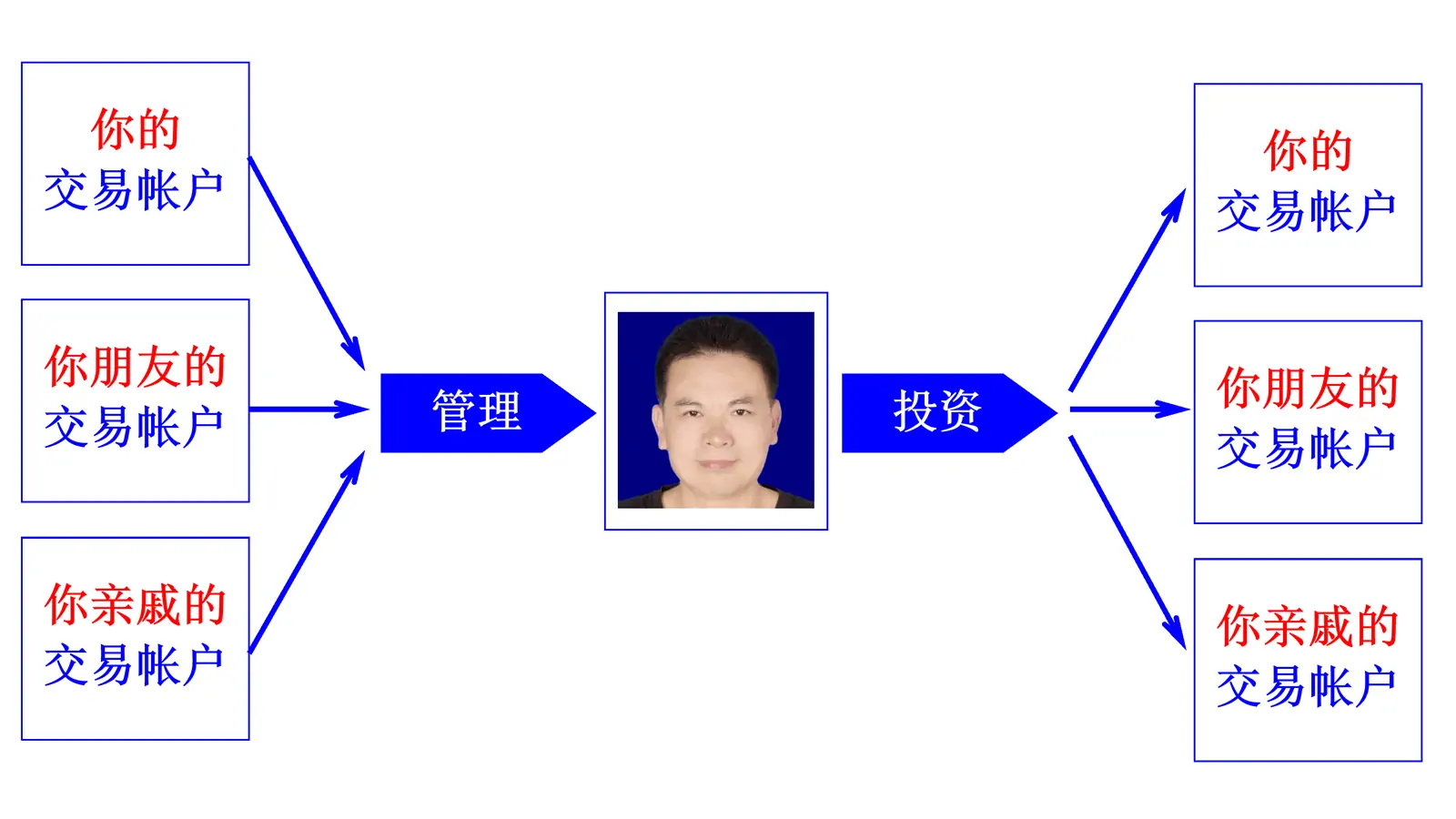
Appendix: Over Two Decades of Practical Experience | Tens of Thousands of Original Research Articles Available for Reference.
Since shifting from foreign trade manufacturing to foreign exchange investment in 2007, I have gained a deep understanding of the operating essence of the foreign exchange market and the core logic of long-term investment through over a decade of intensive self-study, massive real-world verification, and systematic review.
Now, I am publishing tens of thousands of original research articles accumulated over more than two decades, fully presenting my decision-making logic, position management, and execution discipline under various market environments, allowing clients to objectively assess the robustness of my strategies and the consistency of long-term performance.
This knowledge base also provides a high-value learning path for beginners, helping them avoid common pitfalls, shorten trial-and-error cycles, and build rational and sustainable trading capabilities.
In the forex two-way trading market, if traders intend to use technical indicators to assist in decision-making, moving averages and candlestick charts are sufficient to meet their core needs; there's no need to overly rely on complex indicator systems.
For forex two-way traders, a solid foundation in trading techniques is often built upon the combined application of moving averages and candlestick charts. These two complement each other, jointly constructing a basic framework for judging market trends. Moving averages focus on outlining the market's horizontal trend, providing traders with clear directional guidance; candlestick charts focus on reflecting the details of vertical price fluctuations, accurately capturing the traces of the battle between bulls and bears within each cycle. The combination of the two provides a relatively comprehensive view of the market's movement.
However, this combined application logic often leads to operational difficulties among forex two-way trading novices. Many beginners, while understanding the trend signals conveyed by moving averages in the early stages of trading, often hesitate due to doubts about the certainty of the trend, missing the best entry opportunities. When the moving average trend is fully clear and the signals stabilize, the corresponding price wave is often nearing its end. Not only is the subsequent upward potential very limited, but it is also highly susceptible to a period of pullback. This indecisive trading style stems from a novice's insufficient grasp of the overall structure of the trading instrument and a slow perception of market rhythm. This deficiency can only be gradually overcome through systematic practical training and experience accumulation.
In the two-way trading mechanism of the forex market, short-term and long-term investors adhere to drastically different operating logics: short-term traders prioritize momentum over price, focusing on capturing short-term market momentum; while long-term investors prioritize price over momentum, paying more attention to the intrinsic value and long-term rationality of the price itself.
Especially for long-term positioning, historical highs or lows of currency pairs often have special significance. When a sovereign nation's currency falls into crisis due to economic, political, or financial factors, its exchange rate may be severely undervalued or overvalued. At this point, while prices are extremely attractive, market momentum often dwindles—there's neither a clear driving force for upward or downward movement nor a sustained trend.
Therefore, these extreme price levels actually provide long-term investors with a rare strategic entry window. In this scenario, if the chosen currency pair offers a positive overnight interest rate spread, it not only effectively reduces holding costs but also, with the added benefit of compounding over time, further enhances the stability and sustainability of overall investment returns.
Therefore, rationally discerning the primary and secondary relationship between price and trend, and combining this with a comprehensive assessment of macroeconomic fundamentals and funding costs, is essential to achieving the long-term investment goal of making informed decisions and seeking steady gains in the complex and volatile foreign exchange market.
In the two-way foreign exchange market, traders live in an era of information overload, where information access is unprecedentedly convenient. However, the vast amount of information also presents problems of varying quality and difficulty in distinguishing truth from falsehood, creating potential risks for trading decisions.
Even those traders who dedicate themselves to mastering fundamental information often struggle to grasp its core essence. Many rely on fundamental analysis for trading but ultimately fail to achieve their desired results. The core issue lies in a flawed understanding of fundamental information, a failure to see beyond the surface and grasp the essence.
Regarding technical analysis, some traders mistakenly consider it useless or even a misleading tool. This is not the case. Technical analysis itself is neither superior nor inferior; its effectiveness depends entirely on the user's skill. Just as a sharp sword wounds not because of the sword, but because of the user's lack of proficiency, traders must abandon a one-sided view of technical analysis. They should neither blindly believe in it nor completely reject it, but rather rationally explore its underlying logic, avoid cognitive biases, and allow technical analysis to serve as a supplementary tool for trading decisions, not the dominant factor.
Fundamental analysis is far more complex than imagined. It encompasses a wide variety of influencing factors, including not only objective market elements such as fund flows, market expectations, and sentiment fluctuations, but also subjective factors such as the trader's risk tolerance and psychological resilience. These factors intertwine and interact, collectively influencing the trends of the foreign exchange market. Therefore, traders must never rely solely on fundamental analysis for judgment; instead, they must comprehensively consider all factors, constructing a holistic analytical framework to organically combine subjective and objective perspectives.
Ultimately, the shortcomings of traders' trading skills in two-way forex trading are essentially due to insufficient understanding. The core of trading ability is not simply analytical skills or operational techniques, but a comprehensive and profound understanding of market rules, analytical tools, and one's own limitations. The breadth and depth of a trader's cognitive boundaries are the key to determining trading success or failure.
Under the two-way trading mechanism of forex investment, the market always reserves its own window of opportunity for traders with sufficient knowledge and a reasonable capital scale.
Regardless of market cycles, there will always be a certain phase or wave that demonstrates significant suitability for specific strategies or styles, thus providing traders with a real possibility of profit. This is precisely why the foreign exchange market has always carried hope and expectation, becoming an arena that countless practitioners strive for.
However, it is undeniable that this industry is also known for its high degree of uncertainty and psychological pressure. Forex trading is often a long-term test of patience, discipline, and emotional control, resulting in generally low levels of job satisfaction and professional identity among practitioners. In this context, "preserving capital is essential for survival" is not only a simple survival rule but also a fundamental prerequisite for maintaining a foothold in the market—only by preserving capital and maintaining a stable mindset can one find opportunities amidst volatility.
It is gratifying that every year the market generates several significant price movements with clear trends, providing a stage for those who are prepared to showcase their talents. These crucial moments not only highlight the unique charm of forex trading but also validate the value of perseverance and continuous improvement. May those traders who have already achieved success continue to refine their skills and reach new heights; and may those still struggling on the edge of profit and loss remain steadfast in their beliefs, diligently hone their skills, and ultimately find a stable path that suits their own characteristics.
Most losing investors struggle to hold profitable positions long-term, rushing to exit with even the slightest profit.
In the forex market, most losing investors are trapped in a common misconception: they find it difficult to hold profitable positions long-term, rushing to exit with even the slightest profit, while when faced with losing positions, they cling to wishful thinking and are unwilling to cut losses in time, falling into a vicious cycle of "unable to hold onto profits and unable to let go of losses." This problem is not isolated; observations show that over 90% of investors have encountered or are currently trapped in this trading predicament, becoming a key bottleneck restricting their trading profits.
The root cause of this phenomenon lies in investors' distorted understanding of the nature of trading and their unbalanced mindset. Many traders often confuse the core objective of trading—whether it is to pursue the long-term, continuous growth of total account capital or to indulge in the fleeting psychological pleasure of a single profitable trade. Driven by a subconscious desire for inner peace, investors are prone to the pitfalls of frequent profit-taking and holding onto losing positions. When faced with small profits, to avoid potential pullbacks and lock in immediate gains for psychological satisfaction, they often deviate from their trading strategy and exit prematurely, missing out on potentially larger profits later. Conversely, when positions incur losses, they are unwilling to accept the inevitable losses and hope for a market reversal, choosing to stubbornly hold onto them, allowing losses to continue to mount and ultimately wiping out all previous profits or even eroding their principal.
In fact, this mindset-driven trading behavior is the core reason why the vast majority of investors fall into a quagmire of losses. For forex traders struggling with losses, the primary task is to re-examine their trading objectives and proactively ask themselves: is it to adhere to long-term principles and pursue steady growth of account funds, or to be swayed by short-term emotions and indulge in the immediate pleasure of a single profit-taking opportunity? Only by clarifying this core understanding can they break free from the interference of emotions in their trading decisions and establish a rational and sustainable trading logic.
In the forex market, traders with vastly different capital scales exhibit significant psychological differences in their mindset and behavioral logic, profoundly impacting their trading strategies and ultimate outcomes.
For traders with ample capital, the sheer size of their funds grants them a more relaxed trading mindset and greater strategic flexibility. If such a trader uses $1 million to invest in a long-term trend, even a 10% return would yield $100,000. This substantial capital base allows them to focus on trend-based opportunities without fixating on short-term profits. Even if they choose to use $100,000 for short-term trading, a $10,000 profit is insignificant in their overall financial situation. This "non-dependent profit" approach allows them to effectively avoid the interference of greed and fear, maintaining rational judgment.
Conversely, traders with limited capital often find themselves in the opposite predicament. Limited by their capital, the potential profit from a single trade is inherently limited. These meager gains fail to provide positive incentives, leading to an impulse for high-frequency trading. The attempt to accumulate profits through "volume to compensate for price" often results in a vicious cycle of increasing error rates due to frequent trading, leading to ever-growing losses. The intertwining of life pressures and trading anxiety erodes their rational decision-making, causing them to fall into cognitive biases. They equate forex trading with simply working for a living, stubbornly believing that only frantic daily trading constitutes "effort," while ignoring the core logic of the trading market: "follow the trend." Ultimately, the psychological problems of these traders stem from a lack of sufficient savings. Limited funds cannot support waiting for favorable market conditions, leading to a desire for quick profits in short-term trading. This anxiety further exacerbates decision-making biases, creating a vicious cycle.
Traders with substantial capital and ample savings have already transcended the cognitive limitations of "daily profits." Their trading logic leans towards long-term value capture. They are keenly aware of the uncertainty of the foreign exchange market. They don't seek frequent profits, but patiently lie low, focusing throughout the year on a few high-certainty market opportunities. Once the time is right, they strike decisively and reap substantial returns. During periods of market volatility with no clear opportunities, they choose to remain on the sidelines, calmly avoiding the risks of ineffective trading. This balanced trading rhythm is built upon a solid financial foundation and a mature mindset.
In the field of two-way forex trading, a trader's initial capital accumulation is not only a basic prerequisite for entering the market, but also a key factor determining their trading mindset and long-term success or failure. The earlier this awareness and practice of accumulation are established, the more proactive one can be in the market.
For the vast majority of forex traders, the accumulation of initial capital does not rely on accidental trading profits, but stems from long-term rational saving and consumption control. Small savings accumulate into a torrent of capital available for trading.
Crucially, when traders have low incomes and weak financial foundations, excessive focus on discussions and attempts at forex trading is a waste of time and energy. The core priority at this stage is not honing trading skills or participating in market speculation, but rather concentrating on increasing income and accumulating capital, avoiding empty talk when abilities and funds are mismatched. For young traders, abandoning unnecessary consumption and establishing rational consumption habits is the core path to accumulating initial capital. Only by accumulating a certain amount of initial capital can one possess the basic qualifications to participate in forex trading and withstand market risks; otherwise, all trading ideas are merely unrealistic castles in the air.
Young traders should also abandon the impetuous mentality of overspending and adhere to the principle of gradual, incremental capital accumulation, solidifying their financial foundation through daily cost-cutting and income growth. Only in this way can one possess sufficient financial strength to seize excellent trading opportunities when they arise in the market, rather than missing out due to a lack of capital. This is not only the way to survive in forex trading, but also the inevitable path for young traders to achieve financial advancement.
In the two-way trading mechanism of forex investment, a trader's fate is not entirely determined by market fluctuations, nor can it be reversed purely by later efforts; in a sense, their success or failure is subtly foreshadowed from the very beginning.
Just like an individual's background in traditional society—whether born into a wealthy and powerful family or raised in poverty—the initial circumstances of life, though vastly different, often define the basic framework of early development. However, human destiny is not a static, predetermined script: those from humble backgrounds often strive to break free with unwavering determination, constantly reconstructing their survival logic and attempting to escape the shackles of their birth—this is what is known as "defying fate." Those from wealthy families, on the other hand, tend to be content with their existing advantages and rarely take risks, because any reckless "troublemaking" could shake the foundations accumulated over generations; therefore, they prefer to maintain rather than overturn them.
The same applies to the field of forex investment. Although the reasons for entering this field are varied and numerous, those who truly navigate market cycles and achieve consistent profits often share a common prerequisite—a relatively ample amount of capital. This capital endowment is akin to an innate social class advantage: it not only provides traders with greater room for error and stronger risk tolerance but also implicitly raises their starting point and expected success rate. In contrast, those with limited funds, even with exceptional skills and meticulous strategies, are often forced out of the market by a single normal drawdown, rarely having a chance to recover. This reveals a structural "inherent fate" hidden behind the seemingly fair and open foreign exchange market—capital size has long been a key implicit variable determining a trader's long-term success or failure.
In the two-way foreign exchange market, some traders suffer significant losses, resulting in a substantial reduction in their initial capital. Even if their remaining capital still far exceeds that of ordinary investors, some extreme cases choose to end their lives. The core issue lies in the complete collapse of their emotional system and willpower.
For participants in forex trading, the courage to gamble and the ambition to profit are rare qualities honed and refined through market experience. Once eroded, they are difficult to rekindle, becoming the final straw for some disillusioned traders.
A problematic phenomenon exists in the market: some traders deliberately incite the profit-seeking desires of ordinary investors by using fabricated narratives of small-scale success and numerous screenshots of profits. The authenticity of these profit screenshots and trading accounts is often difficult to verify, posing a significant risk of misleading investors. This misleading approach is highly insidious and far-reaching, instilling in novice forex traders the illusion of "getting rich overnight," distorting their understanding of the nature of trading, and leading to flawed investment concepts and theories, thus sowing the seeds for future losses.
In reality, in the two-way forex market, most traders face a shortage of funds. Under the influence of these one-sided and fabricated profit stories, novices often overlook the harsh realities of the market. Forex trading inherently involves leverage, which amplifies both potential profits and risks. Even if a trader accumulates numerous small profits over time, a single margin call or account wipes out years of hard work, followed by emotional breakdown and a loss of willpower. Whether a novice or a seasoned trader, losses often stem from irrational behaviors such as over-leveraging and holding onto losing positions against the trend. High leverage inherently eliminates any room for wishful thinking; every instance of reckless gambling comes at a heavy price for past gambles.
In forex trading, maintaining a sound trading mindset is crucial for sustained market participation. A widely accepted approach is to clearly define one's target market direction and gradually increase trades using small positions. However, implementing this strategy faces numerous obstacles. The forex market is highly volatile and rife with temptations. Leverage amplifies greed and fear, making it difficult even for disciplined traders to succumb to market emotions. Ultimately, forex traders must maintain a stable mindset and strictly adhere to risk limits to avoid margin calls and ensure long-term sustainability in this volatile market.
In the two-way trading realm of forex investment, investors face a fundamental question: are they trading for their own benefit, or acting as agents for others?
Newcomers often have an illusion of complete control, mistakenly believing that learning a few technical indicators will easily achieve risk-free returns. This view ignores the true complexity of forex trading and its sensitivity to market dynamics, especially when using leverage. The rapid shifts between profits and losses make focusing solely on short-term trends while neglecting long-term stability particularly short-sighted.
From an employment perspective, forex investment firms tend to hire traders who can demonstrate consistent profitability. However, the paradox lies in the fact that those truly possessing this ability often prefer proprietary trading for higher returns and greater freedom, while those who choose to join the firm often haven't yet achieved stable profitability. This leads to a situation where companies rely too heavily on results-oriented standards in their selection process, failing to provide sufficient margin for error to support the uncertainties of growth. In reality, so-called "stable profitability" does not guarantee profits in any given period, nor does it mean complete risk avoidance. True sustained profitability is reflected in positive growth in returns over a certain period, supported by a proven trading system, including a clear understanding and expectation of key indicators such as profit/loss ratio, win rate, and maximum drawdown.
In the forex market, success depends not only on capturing favorable market trends and holding until profit, but also on the ability to cut losses promptly in unfavorable situations, thus waiting for the next opportunity. The essence of sustained profitability lies in balancing the difference between winning and losing trades, forming a positive growth trend. Meanwhile, risk management and emotional control are crucial factors in ensuring capital safety, and are also the main reasons why many retail investors fail.
For traders working within a company framework, strict risk control rules and money management measures effectively limit the impact of human weaknesses and promote rational decision-making. In contrast, while proprietary trading offers higher profit potential and flexibility, it also comes with greater risk and psychological pressure. Therefore, when choosing a trading path, individuals need to decide based on their ability to withstand emotional fluctuations and capital loss, as well as their preference for freedom and personal control. If you value stability, low stress levels, and inner peace, then working in a corporate environment is a good option; conversely, if you prioritize high returns and an independent work style, then proprietary trading might be a better choice.
In the realm of two-way forex trading, dedicating oneself full-time to trading is not the same as constantly monitoring the market and making frequent trades. There is a fundamental difference between the two, and many traders easily fall into this misconception.
More importantly, the forex market presents a classic paradoxical dilemma: traders who haven't yet achieved stable profits often face extremely high risks if they hastily switch to full-time trading, while maintaining a part-time approach makes it difficult to break through profit bottlenecks and achieve stable returns.
It is not recommended for those who haven't achieved stable profits to trade full-time. The core logic lies in the dual considerations of survival and mindset management. The lack of stable profits means an insecure income source, even making it difficult to maintain basic living needs. At this point, discussing trading as a profession is undoubtedly premature. Even with some reserve funds, the psychological pressure of eagerly anticipating profits can easily lead to an imbalance in mindset for novice traders, causing them to lose patience and rational judgment, thus exacerbating the difficulty of learning to trade and falling into a vicious cycle of making more mistakes the more impatient they are. In reality, there are numerous extreme cases. Some traders dedicate themselves full-time to trading, almost completely cutting themselves off from the outside world, deliberately cutting back on living costs and suppressing material needs, immersing themselves in the field for five years, only to ultimately fail to establish themselves in the forex market and leave in disgrace. More alarming is that the trading experience accumulated over those five years is highly industry-specific, difficult to transfer to other fields, and this prolonged detachment from mainstream society may even lead to a difficult situation of falling into poverty.
The crux of why part-time trading struggles to achieve stable profits also stems from a cognitive bias—mistaking full-time trading for constant monitoring of the market. In fact, the profit and loss in forex trading is not determined by the amount of time spent monitoring the market; the core lies in the trading system's adaptability to different market cycles. As a typical zero-sum or even negative-sum market, forex trading is not simply about exchanging time for profits. Blindly extending trading hours may actually increase the probability of errors due to overtrading. From an industry profit perspective, profit-making models can be broadly categorized into two types: one relies on time investment for compensation, such as ordinary employment; the other leverages capital operations to generate more money. Forex trading belongs to the latter, its essence being closer to doing business or starting a business, testing strategic planning, risk control, and resource management capabilities, rather than mechanically consuming time.
The correct path to becoming a full-time trader should be a gradual, system-centric progression. The primary task is to build a trading system with a positive expected value, then continuously test its effectiveness through market practice. During this process, strictly manage risk boundaries, continuously improve trading execution, and only consider a full-time transition after the stability of returns has been fully verified. Conversely, the common mistake made by many traders is rushing into full-time trading before clarifying the core logic and accidental factors of profitability. Under pressure from losses, they attempt to alleviate anxiety through frequent trading, falling into the trap of "false busyness," mistakenly equating mechanical busyness with improved trading skills, ultimately wasting capital and energy in repeated trial and error.
True full-time trading is not simply about dedicating all your time and energy; its core lies in achieving a state of full-time commitment in strategy building, cognitive iteration, mindset upgrading, and mental cultivation. Developing meticulous trading plans before the market opens, conducting thorough post-market reviews, and continuously refining and optimizing trading systems—these crucial steps determining trading success or failure do not rely on constant monitoring of the market, but rather on long-term learning, accumulation, and deliberate practice. The implicit and explicit costs of full-time trading cannot be ignored. Not only can there be direct financial losses, but the repeated impacts of market fluctuations can also shatter one's original values and mental balance. For traders with a decent starting point and other career options, full-time trading should not be a priority initially. They should gradually improve their trading skills while ensuring a stable life and income, and then make a rational decision based on their actual situation.
In the two-way trading field of forex investment, the most valuable quality for a trader is emotional stability and composure.
When first entering this field, many investors mistakenly believe that logical thinking ability and the ability to predict unknown markets are the keys to consistent profitability. However, with accumulated trading experience, especially after countless stop-losses and market setbacks, they gradually realize that speculative trading is not a simple intellectual game or a matter of right or wrong judgment. In the volatile forex market, all types of traders inevitably face the risk of loss.
Maintaining composure and preventing temporary setbacks from affecting subsequent trading decisions in the face of continuous losses—this strong emotional control is true trading talent. It's worth noting that while a trader may only need a year to master basic trading skills, truly mastering them and achieving consistent profitability typically requires 5 to 10 years of honing skills. This is a process of continuously strengthening execution and pursuing the unity of knowledge and action. During this process, many traders often encounter the problem of finding it difficult to cut losses or prematurely closing profitable positions, reflecting a contradiction between their emotional impulses in actual operation and their rational analysis in theory.
Emotional stability is an extremely rare and difficult-to-replicate trait for traders. It either stems from innate personality traits or needs to be cultivated through long-term, persistent effort. When consciously cultivating a trading mindset, a painful phase often occurs. This process requires engaging in behaviors most people wouldn't do to reduce emotional sensitivity to market fluctuations. Despite this, a few traders, possessing innate composure, can achieve consistent profitability by leveraging their unique micro-level advantages—such as a deep understanding of their trading system, keen insight into market dynamics, and accurate grasp of long-term chart trends—combined with effective money management strategies.
It's important to note that successful trading systems are often unique and cannot be easily replicated. Each trader's success stems from specific talents and unique ways of adapting to the market. Therefore, attempting to easily master the market by imitating others' trading systems is unrealistic. Each trader needs to build a trading system tailored to their own personality, knowledge structure, and market understanding, and continuously refine and develop it through practice.
In the forex market, position management is always the core issue determining a trader's survival and profitability. The strategy of "always using light positions, occasionally using heavy positions" is not only a proven practical principle but also a key logic for balancing risk and return.
For traders with small capital, how to achieve steady growth in capital through scientific position planning has always been a hot topic in the industry. Many small-capital traders often fall into the misconception that only by using heavy or even full positions can they reap high profits in large market movements and thus rapidly expand their capital. However, seasoned traders who have been in the market for many years generally adhere to the trading philosophy of "light positions as the foundation," emphasizing that the core of sustained profitability lies in stable, light positions.
In fact, these two views are not diametrically opposed; rather, they contain the underlying logic of "profit and loss originating from the same source" in forex trading. The essence of light-position trading is to safeguard the "lifeline" of trading, resisting unknown risks in the ever-changing market and preserving the possibility for long-term trading. Heavy-position trading, on the other hand, is a necessary means to efficiently amplify profit potential when certain opportunities arise. Risk and return are always intertwined in the forex market. If one insists on heavy-position trading, excessively high positions will significantly increase the probability of margin calls and even wipe out all capital in a single market reversal. However, while consistently maintaining light positions can avoid extreme risks, it also makes it difficult to break through the bottleneck of capital growth and achieve the goal of leapfrog development. Therefore, the optimal solution for forex trading position strategies ultimately lies in dynamic balance—building a solid foundation for survival with consistently light positions, and capturing profit opportunities with occasional heavy positions.
The implementation of position strategies needs to consider both the trading cycle and the amount of capital, proceeding gradually. For traders with small capital, establishing correct position habits is particularly important in the early stages of operation. In the first few years of trading, it's advisable to hone practical skills using small trades as a benchmark. Before developing a trading system with sufficient confidence, resolutely avoid the idea of heavy or full leverage. The core goal at this stage is not profit, but to accumulate experience and validate strategies through small trades, preventing rapid capital depletion due to excessive leverage and preserving room for trial and error in subsequent trades. As trading experience gradually accumulates, traders' understanding of their own trading system deepens, and their perception of market trends and volatility patterns becomes increasingly acute. At this point, they can selectively target high-probability, high-risk/reward ratio opportunities, using moderately heavy leverage to achieve efficient capital expansion.
In the specific operation of position adjustment, adding to winning positions is a core principle that must be strictly adhered to. Adding to positions must be based on a foundation of continuous unrealized profits, using profitable funds to further expand the position, rather than blindly adding to positions when unrealized losses exist, thus avoiding a vicious cycle of "the more you lose, the more you add; the more you add, the more you lose." Simultaneously, the execution of position strategies must also directly address potential psychological and risk challenges. Traders accustomed to small-position trading often become conservative when excellent opportunities arise. Even if they muster the courage to enter with a large position, they may be unable to hold the position for the long term due to emotional fluctuations, missing out on substantial profits. Furthermore, as small capital grows into larger sums, each increase in capital level can be wiped out by a single mistrade. This is the core reason why most full-time traders maintain a cautious attitude towards large-position trading.
Full-time forex traders, honed by market experience, typically have a clear understanding of their ability to manage capital and the limits of their trading psychology. They will not push their risk boundaries in pursuit of short-term windfalls. Once their capital reaches a certain scale, their core trading strategy shifts from the aggressive goal of simply doubling their capital to a more stable path of long-term compound interest through small-position trading. Smoothing out the impact of market volatility through small-position trading and relying on a mature trading system to achieve continuous profit accumulation is the ultimate way to achieve long-term stable profitability and transcend capital levels in forex trading.
Small-position trading provides novice investors with valuable learning time and more room to adapt.
In the vast world of forex trading, the profound significance of a small-position strategy for novice investors lies in its ability to not only extend the time between losses but also provide them with ample opportunity to understand market mechanisms, thereby increasing their probability of success and allowing them to remain in the market for a longer period rather than quickly exhausting their capital and exiting in despair. Compared to pursuing short-term profits and suffering rapid failure, a small-position strategy offers investors valuable learning and adaptation time.
While many ambitious individuals in the forex market attempt to triple their returns within a year, those who actually double their money in three years are extremely rare. Forex trading may appear to be gambling, but its core principle is a zero-sum game. To consistently profit in such a competitive environment, investors need to invest significant time, energy, and experience, building a trading system tailored to their individual circumstances and possessing a probabilistic advantage, based on a deep understanding of the trading rules. The advantage of this system lies in its overall effect and final result, rather than the specific price prediction of each trade. Therefore, strictly controlling stop-loss points and ensuring a favorable risk-reward ratio is crucial.
For novice forex investors, the survival period is often too short. Many lose everything due to normal trading practices before fully understanding the market. Newcomers should avoid relying solely on subjective judgment to buy low and sell high, but instead accumulate experience by observing market behavior at bottoms and tops during bull and bear market transitions. Learning forex trading inevitably involves paying tuition fees; it's difficult to earn money while learning. Most people only realize this after experiencing several account blowouts.
New investors using a small position strategy can slow down the rate of loss, extend their time in the market, and increase the likelihood of achieving consistent profitability. For experienced traders who have achieved stable profits or even make a living from trading, a small position strategy is equally important—it's an effective way to manage personal emotional fluctuations and unexpected market events. Small positions are not only key to long-term survival in the forex industry but also an important way to obtain returns while taking on appropriate risks. Ordinary traders should understand that profit and loss are two sides of the same coin and should not solely rely on heavy positions for windfall profits.
In the forex market, traders achieve steady wealth accumulation and appreciation not through short-term speculative trading, but through a long-term, low-leverage strategy that gradually builds up substantial wealth.
Many of the legendary stories of exorbitant profits circulating in the forex market, when traced back to their origins, largely stem from the compounding effect and trend-driven gains of long-term investment. Looking at successful traders who have established themselves in the market, their core trading systems are mostly based on long-term investment, rather than indulging in frequent short-term trading.
Buying low and selling high, as the underlying logic permeating all trading scenarios, is deeply ingrained in every trader's understanding. Long-term investment, in essence, aligns with humanity's innate pursuit of certainty and stability, making it a trading model that aligns with human nature. Compared to the extreme emotional strain of short-term trading, long-term investing effectively mitigates the emotional interference caused by short-term market fluctuations, providing traders with stronger psychological support and a sense of security during the holding period. Theoretically, long-term investing, by fully capturing trends, is more likely to achieve a higher profit-loss ratio, offering a better mathematical expectation for wealth accumulation.
Short-term market movements in forex trading often exhibit moderate volatility and weak trend continuity. Even small fluctuations within a single trading day rarely generate substantial profits. However, looking at a longer time horizon, market movements inevitably involve pullbacks and adjustments. These cyclical fluctuations provide traders with multiple opportunities to enter and add to positions based on technical logic, allowing long-term strategies to be gradually refined at reasonable price levels.
In contrast, the profit potential of short-term trading is inherently limited, particularly evident in forex currency investment. The monetary policies of major global central banks are largely anchored to the US dollar interest rate, resulting in a linkage effect between interest rates in different countries, with overall differences remaining within a narrow range, and in some scenarios even approaching parity. The narrowing interest rate space directly limits the range of exchange rate fluctuations, making it difficult for short-term trading to break through profit bottlenecks. Only by adhering to a long-term, low-position strategy, and accumulating small profits through compounding, can one break out of this profit predicament and achieve long-term, stable returns in foreign exchange investment.
In the two-way trading mechanism of forex investment, success is not an unattainable myth, but a feasible path built on rationality and self-discipline. Traders who possess basic logical thinking skills and can maintain emotional stability and composure already hold the key to long-term profitability.
Logical thinking enables one to penetrate the complexities of the market and discern the essential patterns behind price fluctuations; emotional stability ensures that one is not swayed by fear or greed amidst profit and loss fluctuations, thus adhering to established strategies.
Furthermore, trading does not demand profound intelligence, but rather emphasizes the basic cognitive ability to "see through appearances to the essence"—a quality possessed by most but often overlooked. For novice investors, the primary task is to clarify the nature of trading: it is essentially a probabilistic game wagered with capital. The value of technical analysis lies in helping traders identify statistically advantageous entry points, rather than pursuing absolute certainty. What truly determines success or failure is often not the sophistication of the technique itself, but rather the ability to build a trading system that aligns with one's risk appetite and behavioral habits, and possesses a positive expected value.
The importance of emotional management becomes increasingly apparent with years of trading experience. From a probabilistic perspective, the law of large numbers dictates that long-term returns are ultimately determined by both systemic advantages and consistent execution. The underlying logic of "small losses, big gains" can only be effectively implemented when emotions are stable. Many traders, after a decade of ups and downs, realize that top-notch emotional control combined with a mediocre trading system often outperforms a combination with a top-tier strategy but volatile emotions. While reviewing past performance and historical testing are crucial, even the most perfect plan is difficult to implement without present-day mental fortitude.
It's worth noting that a high level of education does not necessarily constitute an advantage in trading; instead, it may breed cognitive arrogance. Some highly educated traders, by underestimating market complexity and lacking the necessary respect for the randomness and uncertainty of prices, ultimately suffer severe losses. The fairness of the foreign exchange market lies not only in its transparent rules and equal access, but also in its pure outcome-oriented nature. Regardless of background, education, or personality traits, anyone who can develop a trading system that matches their talents and execute it with unwavering determination has the opportunity to achieve consistent profitability. Compared to many traditional industries, the potential returns in this field are particularly considerable.
Ultimately, the root causes of trading losses can usually be attributed to two points: first, a failure to deeply understand the underlying logic of the market; and second, a severe mismatch between the trading system used and one's personal psychological traits and operating style. Only by dispelling the fog of confusion in understanding and repeatedly calibrating the fit between strategy and self-discipline in practice can one navigate the wave of two-way trading steadily and sustainably.
In the two-way forex market, online platforms are rife with various false price predictions. These irregularities often mislead investors through carefully designed schemes, posing a potential risk, especially to inexperienced novices. Mastering common tactics and methods of identification, and cultivating independent thinking, are essential abilities for every forex investor.
In the realm of investment and trading, a deep understanding of the unpredictability of prices—whether in forex or stocks—is crucial. Neither can be precisely predicted. This is a core quality that distinguishes mature investors from ordinary traders. True trading profits do not rely on accidental price predictions, but rather on a self-consistent trading logic and a complete trading system with probabilistic advantages. Only in this way can long-term, sustainable profits be achieved, avoiding the pitfalls of blind speculation.
Common tactics used in online forex trading fraud are highly deceptive. One typical form involves fabricating trading scenarios by creating demo accounts with interfaces highly identical to legitimate trading software, thus confusing investors. These software programs are visually indistinguishable from live trading software, but the core data is not real-time market data. Instead, it is artificially generated or manipulated, lacking genuine trading attributes. However, the realistic interface design misleads investors into believing they are participating in real market trading, thus being misled by false profit performance.
Another prevalent tactic leverages the information dissemination characteristics of self-media platforms, using clever rhetoric and manipulation to create the illusion of "accurate predictions." Many self-media accounts first select popular currency pairs in the current market, simultaneously publishing both bullish and bearish views for each pair. These views are only visible to the account itself. Then, after the market opens the next trading day, they compare the actual market movements, selecting the correct predictions and publicly displaying them while deleting the incorrect ones. This selective disclosure can create cognitive biases for unsuspecting novice investors, leading them to mistakenly believe that every prediction from this self-media account is accurate. This can lead them to idolize the account operator as a "trading master," fostering a desire to learn from them and blindly follow their trades, ultimately resulting in being exploited.
It is worth considering that forex investors often have significant biases in their understanding of returns, which indirectly affects the rationality of their investment decisions. In daily life, a 20% annualized loan interest rate is often considered usurious and criticized; however, in the forex market, many investors scoff at a 20% annual return, deeming it too low. In fact, from a long-term investment perspective, consistently achieving an annualized return of 20% is extremely difficult. Such a level of return requires not only a mature trading system but also exceptional risk control and market insight. Blindly underestimating this level of return often leads investors to pursue excessively high returns and fall into the trap of aggressive trading, ultimately losing the possibility of stable profits. For every forex investor, overcoming cognitive biases, abandoning reliance on false predictions, and maintaining independent thinking while rationally considering returns and risks are fundamental to success in the market.
In the forex two-way trading market, whether one's personality is suitable for trading is a core issue that often perplexes beginners. Different personalities behave differently in trading scenarios, and corresponding strategies must be tailored to the individual; there is no one-size-fits-all approach.
Many forex trading beginners often struggle with the compatibility of their personality with the market, especially when trading is not going well. This can easily lead to self-doubt and discussions about "which personality is more suitable for trading." This confusion stems essentially from a lack of trading knowledge. Newcomers often enter the market with high expectations of profit, eager to capture the tops and bottoms of every market cycle. However, lacking sufficient trading experience and professional skills, they cannot accurately identify profitable opportunities and market risks to avoid, ultimately falling into the trap of ignorant and reckless trading. Their choices and operations often deviate from objective market laws.
The diversity of the forex market determines significant differences in trading choices and profit models among newcomers. Even when aiming to double their profits, different traders take drastically different paths: some tend to adopt a high-leverage strategy, using small investments to reap huge returns; others adhere to a low-leverage principle, relying on trends to gradually accumulate and amplify profits. Newcomers also show divergent preferences in how they capture market movements. Some favor left-side trading, actively predicting market turning points; others adhere to right-side trading, following established trends. Both choices have unique win rate characteristics and profit/loss ratio logics, with no absolute superiority or inferiority. The key lies in the degree of matching with one's own characteristics and the market environment.
It's important to clarify that there's no inherently good or bad personality type for forex trading beginners. Excluding extreme cases, most traders possess both offensive and defensive traits, and their suitability hinges on their ability to accurately adapt to different trading scenarios. In terms of personality traits, while a more patient trader may not achieve explosive high profits, their stability helps them avoid significant losses. Conversely, an impatient trader faces higher risk of loss, but their inherent explosiveness allows them to potentially reap excess returns. Therefore, a calmer personality is better suited to trend trading with small position sizes, accumulating profits through long-term commitment. An impatient personality can appropriately increase position sizes, focusing on short-term, small-range trades. Regardless of the chosen trading style, it must be based on probabilistic logic that offers a high win rate and favorable risk-reward ratio, rather than simply relying on personality preferences.
Furthermore, beginners must avoid emotional imbalances during trading, especially avoiding blind envy. Once a trading method is chosen, one should not blindly pursue the profit advantages of other models. Confusion in trading often stems from confusing the core boundaries of different models. Essentially, all trading choices follow the principle of "profit and loss are two sides of the same coin"—high returns inevitably come with high risks, and stability requires sacrificing some profit potential. Only by accepting the compatibility between one's own personality traits and the trading model can a stable trading system be established in the market.
In the two-way trading field of forex investment, experienced investors tend to simplify their strategies and methods over time.
Compared to novice investors' understanding of the complex and ever-changing nature of forex trading, experienced traders know that the secret to success lies in simplicity, not complexity.
New investors often view the forex market as a kaleidoscope, believing it contains endless changes and possibilities. They confidently believe they have mastered various trading techniques and theories, enabling them to accurately buy low and sell high, or vice versa, regardless of market conditions. However, reality is far more complex than ideals, and this mindset can easily lead to a lack of understanding of the true operating mechanisms of the market.
Furthermore, novice investors often make mistakes when using technical indicators. When they find that a single indicator cannot meet their needs, they tend to use multiple indicators in combination, hoping to improve predictive accuracy by increasing the number of indicators. But in fact, all technical indicators are based on price movements and cannot directly predict future price trends. Over-reliance on indicators not only fails to compensate for the limitations of a single indicator but can also lead to homogenized analysis and reduced decision-making effectiveness, just as launching more missiles does not necessarily increase the hit rate.
For consistent profitability, the key lies in understanding the inertia of prices within a cycle. Market prices have a certain continuity and inertia; different scales of inertia determine the size of market movements and the level of volatility. Mastering this underlying logic helps achieve the goal of small losses and large profits, which is the core principle of consistent profitability in forex trading.
In summary, trading skills are not about quantity but about effectively achieving the goal of small losses and large profits. As trading experience accumulates, traders' strategies tend to simplify, reflecting the philosophy of "simplicity is the ultimate sophistication" and the technical concept of mean reversion. True masters understand how to extract the most essential patterns from complex market environments, using a simple approach to address ever-changing market challenges.
In the forex market, many novice traders often find themselves in a perplexing dilemma: the more energy they invest in studying trading and the more frequently they trade, the more severe their losses become. This contradiction between effort and results becomes the primary obstacle on a novice's path to advancement.
This stage is often a frustrating period for novice traders. At this time, traders are not complacent; instead, they actively review each trade, meticulously summarize their gains and losses, and are eager to capture every opportunity presented by market fluctuations, attempting to accumulate profits through high-density trading. However, contrary to expectations, this excessive pursuit of opportunities not only fails to bring the expected returns but also accelerates losses, amplifies the amount of losses, and ultimately leaves traders deeply confused. The core issue behind this confusion lies in the fact that beginners haven't yet developed a correct understanding of profitability—the key to profitable trading is never the number of trades, but rather focusing on a few trading opportunities that one can understand and control, rather than blindly believing the misconception that "more trades equal more money."
For forex beginners, the core path to achieving consistent profitability lies in solidifying a trading model and flexibly adapting it to their own abilities. Solidifying a trading model doesn't require traders to accurately predict market movements, but rather to establish a standardized operating framework and consistently capture specific market conditions that fit that framework. This is the core logic behind the stable returns achieved by most full-time traders. It's important to note that a solidified trading model is not a single, rigid system. Traders can build multi-dimensional strategy combinations based on their capital size, risk tolerance, and strategy mastery level, ensuring the trading model highly matches their actual situation, rather than being limited to a single operating logic.
In fact, beginners inevitably take a detour during their advancement process, namely, over-reliance on trading techniques to predict market movements, obsessively trying to capture every market fluctuation, and directly linking trading frequency with profit potential. This cognitive bias and operational habit are essential stages for beginners to build trading knowledge from scratch; essentially, they are the learning costs and growth expenses they pay to the forex market. While this experience is accompanied by losses and confusion, it allows traders to gradually recognize the complexity of the market, laying the foundation for subsequent strategy transformation.
The core transformation of a beginner's trading strategy often stems from the profound pain of consecutive losses. This pain forces traders to abandon the obsession with "capturing all market movements" and shift towards trading strategies with probabilistic advantages, focusing on specific trend opportunities. However, this transformation is by no means easy. What seems like a simple cognitive shift requires overcoming human greed and fear, the inertia of frequent trading, and truly knowing what to do and what not to do. Its execution is far more difficult than theoretical understanding.
Traders also need to deeply understand the "trading trinity" in the forex market: high win rate, large profit/loss ratio, and high-frequency trading are difficult to achieve simultaneously. High-win-rate trading opportunities with a considerable profit/loss ratio are inherently scarce. Most traders' profits tend to be concentrated when these high-quality opportunities appear, while the final profit and loss gap between traders is precisely reflected in their operational choices outside of high-quality opportunities. Those who blindly chase ordinary opportunities and trade frequently often erode core profits and become the key variable that widens the profit gap.
In the two-way trading mechanism of forex investment, the entire trading process experienced by investors is essentially a rational awakening that gradually dispels the illusion of "certainty."
So-called certainty often manifests as an obsession—the attempt to lock in profits and avoid losses, simplifying market behavior into a predictable and controllable linear process. This obsession is particularly evident in novice traders: they generally prefer short-term operations, are keen on intraday or even ultra-short-term trading, fantasize about achieving stable returns through daily small profits (such as a fixed profit of $200), and naively believe that as long as they are not greedy, they can be guaranteed to win. Little do they know that this obsession with a "small and stable" profit model stems precisely from a deep-seated fear of the inherent randomness and uncertainty of the market.
However, the forex market is essentially a zero-sum game arena; any participant, once entering the market, naturally bears the possibility of loss. Even if a trading strategy has a statistically positive expected value, according to the law of large numbers, low-probability extreme losses are still unavoidable. More importantly, many traders don't truly understand their own psychology and behavioral patterns: even after achieving their preset daily profit targets, the satisfaction is often fleeting, replaced by a craving for even higher returns—revealing the true desire hidden beneath superficial rationality: not steady growth, but stable, exorbitant profits.
Therefore, risk management becomes the core issue in forex trading. Profit and loss are essentially two sides of the same coin; behind exorbitant profits often lies the risk of massive losses. The true art of trading lies not in maximizing profits, but in building a scientific and disciplined risk control system. Greed is not simply defined by the amount of profit, but by whether it deviates from established position management principles and the logic of the trading system. If one acts according to the system, manages positions reasonably, and strictly adheres to risk control boundaries, even substantial profits are not greed; conversely, if one subjectively interprets market trends and forcibly sets unrealistic profit targets, then regardless of profit or loss, it is an irrational act.
Ultimately, traders can only control their own risk exposure and behavioral discipline; whether they profit, and how much, is left to the market to decide. When the market lacks a clear trend or is in chaotic fluctuation, forced trading not only fails to generate profits but also increases unnecessary losses. Therefore, mature forex investors will eventually understand that true certainty lies not in predicting the market, but in mastering oneself.
In the forex two-way trading market, losses are the norm for the vast majority of traders. In fact, it can be said that the mainstream ecosystem of this market is consistently composed of a losing group, with most participants trapped in a cycle of losses.
Especially for forex trading novices, their trading behavior often falls into fixed pitfalls: they become overly obsessed with studying various trading techniques, while also being keen to seek out so-called insider information and market rumors, regarding these two methods as shortcuts to profit, while neglecting the core logic of trading and the accumulation of their own abilities.
In fact, the characteristics of forex novices and those who lose money highly overlap. Besides being obsessed with technical analysis and blindly following rumors, weak emotional management is another fatal flaw. These traders are easily swayed by market fluctuations, becoming greedy when profitable and unwilling to take profits in time, missing opportunities to lock in gains; when losing, they cling to wishful thinking and refuse to cut losses, allowing losses to continue to escalate, ultimately falling into a passive situation of "not being able to hold onto profits and enduring losses to the bitter end," gradually becoming part of the market's losing camp.
To escape the losing camp in forex trading, consider a reverse approach, using the typical behavioral characteristics of those who lose money as a counter-reference. This might open up a different trading path. This process doesn't simply rely on intellectual games; the core is changing one's mindset, learning to let go of the black-and-white obsession with right and wrong—abandoning the prejudice that "my losses are due to market injustice," and objectively examining market rules and one's own operations. A closer look reveals that those who suffer losses often harbor a gambler's mentality of trying to buy at the bottom and sell at the top, and frequently fall into the paradox of "quickly exiting when profitable and stubbornly holding onto losses." Learning from this and avoiding such irrational actions, while establishing a trading rhythm that aligns with market principles, will undoubtedly provide profound insights and assistance in improving one's probability of profitable trading.
In the two-way trading mechanism of forex investment, investors' obsession with certainty actually constitutes the most hidden yet most fatal obstacle on their path to profitability.
Indeed, the forex market, as a typical zero-sum game, does not operate because "the majority are destined to lose"; on the contrary, it is precisely the psychological tendency of traders to try to avoid uncertainty and obsessively seek so-called "sure-win signals" that truly shakes the foundation of the market's existence. It's crucial to understand that if absolute certainty truly existed in the market, rational participants would quickly converge in the same direction, leading to a depletion of counterparties and an instantaneous evaporation of liquidity—a market without the opposing forces of buying and selling would cease to be a market.
This misconception about certainty often manifests as a blind worship of a particular technical indicator or trading model: when investors firmly believe a tool can provide risk-free returns, they subconsciously view other market participants as exploitable "fools." Little do they realize that in the highly interconnected and iterative modern forex market, others view themselves with the same logic. It is precisely in this collective cognitive dissonance of mutual perception as "irrational others" that the market quietly completes its brutal yet efficient selection mechanism—the "Pareto Principle" is not accidental, but an inevitable result of the combined effects of group behavior bias and systemic feedback loops.
What is particularly alarming is that newcomers to forex trading often fall into a cognitive paradox: the simpler the market conditions and strategies seem, the more likely they are to reveal their inherent complexity in practice. Many beginners, upon entering the market, are bewildered by the gap between their idealized expectations and real-world volatility, feeling as if they are making mistakes at every turn and facing constant difficulties. Little do they know, this is precisely the market's initial disenchantment of their illusions of certainty—only by letting go of the obsession with "easy answers" can one forge a truly sound trading philosophy amidst the vast ocean of uncertainty.
In the two-way forex market, retail traders' opponents are not institutions, major players, or market makers.
From the actual market structure, institutions and other entities have an overwhelming advantage over retail traders in terms of capital size, trading experience, and operational discipline. There is a significant disparity in resources and capabilities between the two sides, making an equal game impossible. Viewing institutions as opponents is itself a cognitive bias.
The various forex trading secrets circulating in the market are essentially pseudo-knowledge and false propositions, unlikely to support retail traders in achieving consistent profits. Many traders mistakenly believe that mastering so-called secret techniques will allow them to defeat institutions, major players, or market makers, falling into a cognitive trap. True profitability doesn't stem from confronting or defeating institutions, but rather from skillfully avoiding direct confrontation and seizing opportunities when institutions haven't deeply intervened or are moving in the same direction. From a profit perspective, the source of returns for retail investors in the forex market isn't new market capital inflows, but rather the losses incurred by other retail investors due to misconceptions and operational errors—essentially a redistribution of profits within the retail investor group.
For retail investors to achieve stable profits in forex trading, the key is learning to admit defeat at the right time. Admitting defeat is not compromise or retreat, but rather a respect for market rules and a clear understanding of one's own limitations. Without timely stop-loss orders and the ability to accept temporary losses, it's difficult to break through profit bottlenecks and even more difficult to establish a long-term foothold in a complex and volatile market. Forex trading naturally follows the zero-sum game principle, where total profits and losses are always balanced, accompanied by the long-term effectiveness of the Pareto principle (80/20 rule), meaning a minority of traders profit while the majority lose. The core function of market trading rules is to maintain the balance of the overall market structure, rather than to achieve an equal distribution of profits. This underlying logic determines the scarcity and difficulty of profits for retail investors.
In the two-way trading mechanism of forex investment, there is a fundamental difference between forex trading and gambling. This difference is not only reflected in the operational logic but also rooted in deeper dimensions of risk control, opportunity identification, and trading philosophy.
Forex traders do not participate in the market based on emotional impulses or blind betting. Instead, they rely on systematic methods such as technical analysis, key price level judgment, and cycle resonance to cautiously enter the market in situations with a high win rate and profit-loss ratio. Especially in market conditions with clear swing or short-term trends, traders usually set stop-loss orders near important support or resistance levels, analogous to proactive risk management in business activities, thereby achieving effective capital protection and appreciation.
Truly strategic traders understand that the market isn't always a trading opportunity; rather, they patiently wait for breakout opportunities that emerge after prolonged periods of consolidation—these points often hold the potential for excess returns through dual confirmation of cyclical and price movements. In contrast, gambling is essentially a game of negative expected value, its outcome highly dependent on randomness and luck, lacking a replicable positive feedback mechanism. No matter how participants adjust their strategies, in the long run, their capital will be quietly eroded by the cold rules of probability. While the forex market also carries risk, its structural characteristics and analyzability provide rational traders with a reasonable basis for "betting" at key points, elevating their behavior beyond pure speculation.
Furthermore, mature forex traders place particular emphasis on the art of "timing": knowing when to enter decisively when signals are clear and the odds are favorable, and when to exit promptly when trends weaken and risks accumulate. This precise control of "entering the table" and "leaving the table" is the fundamental difference between professional trading and blind gambling. Therefore, two-way foreign exchange trading is by no means a gamble left to chance, but a financial skill that combines discipline, insight, and patience.
In the two-way foreign exchange trading market, for traders who are new to the industry, the core logic of trading always revolves around "small losses and big profits".
It should be noted that in this highly liquid and volatile market, it is unrealistic to pursue absolute profits and no losses. Even for ordinary investors, trading qualifications in this ideal state are difficult to achieve. Moderate small losses are actually an inevitable part of the trading process.
Looking at the traders who can make long-term stable profits in the foreign exchange market, their commonality is not that they are overly obsessed with transactions. Instead, they mostly treat every transaction with a free and easy attitude, so that they can move freely and not be coerced by the ups and downs of the market. This transcendent trading state of mind is by no means innate, but is gradually formed after countless real-time operations and the polishing of alternating profits and losses. It is the dual result of market experience and mentality cultivation. Loss in trading is normal, but if you observe it among novice traders, you will find that the losses of novice traders tend to be larger and more frequent. "Loss more and profit less" is almost a typical label at this stage, and the key to turning losses into profits must ultimately return to the core logic of "small losses, big profits".
It is worth pondering that the core of seeking long-term profits in the foreign exchange market does not rely on a single trading technology. The technology itself can only be used as an auxiliary tool to help traders judge the possibility of market trends, quantify potential risk boundaries and profit margins, and provide data and logical support for trading decisions. What truly determines whether a trader can survive the market cycle and achieve sustained profits is his depth of understanding of the nature of the market and the execution of his trading strategy. This understanding is the core secret that the foreign exchange market conveys to every persistently exploring trader in the long-term fluctuations.
In the two-way trading mechanism of foreign exchange investment, the seemingly poetic expression of "enjoying solitude" actually hides a high-cost trap.
The foreign exchange market is essentially a zero-sum or even negative-sum game. In this field, if traders romanticize solitude as a kind of spiritual enjoyment, it is tantamount to engaging in an expensive game that may exhaust their energy and capital - this may become the most expensive "entertainment" in their lives.
What is even more alarming is that "enjoying solitude" is often packaged as a trading philosophy, but in fact it constitutes the deepest cognitive misleading to traders. Many people mistakenly believe that the key to success or failure in trading lies in how much profit can be earned. However, the bigger scam lies in the self-hypnotic belief that as long as you stay away from the hustle and bustle and immerse yourself in the market, you can reach a state of rationality and freedom. Especially for full-time traders, the outside world often looks at them with envy, thinking that they have enough time to pursue poetry and distance, and realize those dreams that have been shelved due to the shackles of reality. However, the truth is exactly the opposite: if a full-time trader is stuck in front of a screen day after day, keeping an eye on price fluctuations, not only will he be unable to gain peace of mind, but he will easily fall into a whirlpool of anxiety. The more closely you watch, the more anxious you become; the more anxious you are, the more likely your judgment will be inaccurate, your operations will be deformed, and losses will follow you. The so-called "enjoying loneliness" at this time is nothing more than a psychological defense mechanism to escape the pressure of reality. Its essence is no different from the behavior of escaping into the trading world due to frustration in the workplace - it is all done in the name of trading to avoid it.
Furthermore, the physical and mental impact of living alone for a long time on traders is no lie. A large-scale British study that lasted 12 years and covered 460,000 people revealed that individuals who lack social interaction for a long time will face "genetic penalties." In a state of continued isolation, the human body will secrete a large amount of stress-related hormones such as stress peptides, which not only leads to a tendency to be paranoid and stubborn, but also significantly increases the risk of premature death - up to 77%, which is as harmful as smoking a whole pack of cigarettes every day. For foreign exchange traders who rely heavily on emotional stability and cognitive clarity, this dual physical and psychological erosion is undoubtedly a fatal weakening of their trading ability.
Therefore, in the face of popular discourse such as "To trade, you must enjoy loneliness", traders urgently need to establish a clear and rational understanding. Loneliness should not be glorified as a spiritual practice but should be seen as a risk factor that needs to be proactively managed. Real professional trading is not about practicing hard in solitude, but about seeking balance and improvement in self-discipline, reflection and appropriate social support. Only in this way can we make steady progress in the unpredictable foreign exchange market instead of becoming an expensive sacrifice in the "lonely game".
In the field of two-way foreign exchange trading, many people have a misunderstanding and believe that mastering trading technology is enough to be qualified for the positions of foreign exchange analysts and foreign exchange trainers.
In fact, this is not the case. Trading technology is only the tip of the iceberg in the foreign exchange trading ability system, but not the whole. Looking at the foreign exchange market, it is not true that there are no trading mentors with profound knowledge. This can be seen from the rules of the Olympic Games: the coaches of Olympic champions are often proficient in all the technical points and tactical logic of the project, but they may not be able to stand on the highest podium in person. However, their core value lies in their ability to accurately empower players and cultivate many top champions. This logic also applies to the foreign exchange market. Excellent trading mentors may not be top traders who are consistently profitable, but they can guide traders to grow with their deep understanding of the nature of trading.
To participate in two-way foreign exchange trading, the first prerequisite is to have qualified trading skills, and the composition of this skill system is far more complex than a single trading technology. The tempering and precipitation of trading mentality are also core components. Even in the entire skill system, the weight of trading technology is actually relatively limited. More importantly, the cultivation of foreign exchange trading skills cannot be achieved by studying books. From mastering theoretical trading techniques to truly possessing practical trading skills, there is a gap between a large number of actual transactions and repeated practice. The core cost of this kind of exercise is precisely the inevitable trial and error cost of traders in the process of exploration, which is the so-called "trading detour cost". For novice traders, taking detours is the only way to grow. Every trial and error is to pay for their own lack of knowledge. Profit and learning are often difficult to achieve simultaneously. The two are essentially pursuits in different dimensions and cannot be confused.
Compared with the monetary cost of trial and error, the pressure brought by time cost is even more unbearable. Many traders have been immersed in the market for many years and have never reached the threshold of stable profits. Their long-term frustration has gradually eroded their trading confidence, which also proves the difficulty of cultivating foreign exchange trading skills. In addition, the biggest challenge faced by traders is actually the game of human nature. Overcoming the weaknesses of human nature is far more difficult than expected. At the moment of placing a trading order, the psychological shadow left by past losses can easily cause fear and interfere with decision-making and judgment. This personal experience is difficult for foreign exchange analysts to perceive - analysts' abilities can be gradually built through systematic learning, while traders' core qualities must be polished in countless actual combats. After all, traders who can truly break through bottlenecks and develop mature trading abilities are rare.
In the two-way trading mechanism of foreign exchange investment, although the vast majority of traders can capture profit opportunities, they often find it difficult to maintain profits and profits.
The root cause is not a lack of judgment on market trends, but a significant disconnect between thinking and behavior: at the cognitive level, they know that they should firmly hold profitable positions, and even have a strong intention, but they fail to internalize this rational cognition into stable behavioral habits, and therefore lack the ability to truly "take it." When there is a floating profit in the account, the instinctive psychology of seeking profits and avoiding losses will quietly come into play - settling for safety becomes a subconscious choice. Although this is human nature, it constitutes a deep obstacle to sustained profits.
In fact, many traders are proficient in various technical analysis tools and are qualified to play the role of analysts; however, there is a psychological and behavioral gap between "understanding trading" and "being able to trade" that requires long-term tempering. Real traders not only need to master the methodology, but also need to solidify rational decisions into executable and replicable operating principles through repeated practice. This process is inseparable from a solid realistic foundation: if you have never fully experienced the profit of 100 points on a single position, then expecting to control a larger market with a larger position is tantamount to a castle in the air.
What is particularly noteworthy is that profit itself also tests psychological endurance. People often focus on the pressure caused by losses, but ignore the anxiety and uneasiness caused by fluctuations in profits. The process of training the ability to "hold profits" is essentially a dual challenge of cognitive boundaries and emotional resilience - it requires traders to calmly face the torment of multiple retracements or even zero profits, and gradually expand their tolerance threshold for profits through repeated trials and errors. After all, truly substantial gains are often hidden beyond the awareness of most people and beyond the untrained psychological comfort zone. Only by going through this tempering journey can we recognize good opportunities and hold on to the results in the two-way fluctuating foreign exchange market.
In the field of two-way foreign exchange trading, a controversial core question has always lingered in the minds of traders: should the income obtained through exchange rate fluctuations be classified as positive wealth or partial wealth?
In fact, there is no absolute classification of attributes in foreign exchange trading itself. Whether it is a positive or partial fortune depends entirely on the trader's cognitive dimension, operational logic and trading mentality. It is essentially an investment tool with both high liquidity and leverage characteristics and its own profit and loss rules. The core of attribute definition lies in the person rather than the tool itself.
To clarify this issue, we first need to clarify the core characteristics of positive wealth and partial wealth. Positive wealth is essentially the corresponding reward that an individual obtains step by step through continuous investment of labor, energy and professional abilities. Its core characteristics are stability, security and long-term, and it is a deterministic return based on predictable efforts. It runs through normal professional operations or labor processes, such as workplace wages, steady profits from industrial operations, etc., all fall into the category of positive wealth.
In contrast, partial wealth mostly comes from unexpected opportunities, capital operations or short-term investment returns. It is characterized by distinct contingency, volatility and high risk. It is often deviated from the normal labor scene and is more like an uncertain increase in wealth. It is often popularly compared to "pie in the sky". Its returns and risks lack stable expectations. It may achieve a surge in wealth in a short period of time, or it may face a sharp shrinkage in an instant.
The reason why foreign exchange trading is often classified as making money by the public is mainly due to its trading characteristics and the irrational operations of some traders. From the perspective of the transaction itself, a leverage mechanism of about 10 times is common in the foreign exchange market. This mechanism greatly amplifies the profit and loss efficiency of funds, making profits and losses much faster than traditional workplace salary income and stable investments. This extreme efficiency difference easily makes the public equate it with speculative gambling. In addition, there is no clear boundary between the upper limit of profit and the lower limit of loss. Frequent extreme cases of "getting rich overnight" and "exploding positions overnight" further strengthen the perception of its financial bias. From a trader level, most beginners have insufficient understanding of the financial logic of the foreign exchange market and fail to grasp the core principle of investment in risk management. They often enter the market with a utilitarian mentality of getting rich overnight and blindly take radical operations such as heavy positions and full positions. They lack the support of systematic strategies and rely mostly on the accidental favor of market conditions. In essence, wealth is obtained by luck, which is naturally in line with the characteristics of partial wealth.
In the eyes of mature professional traders, foreign exchange trading can become a stable way to make money. This is due to its professional trading system and rational business thinking. The core competitiveness of those professional veterans who can achieve sustained profits for more than ten years lies in a set of trading strategies that have been proven by the market and have advantages in winning rate and profit-loss ratio. Every profit is not an accident, but a reasonable return after taking the initiative to take controllable risks within the strategy framework. They regard foreign exchange trading as a refined business rather than short-term speculation. In this business logic, losses are not unexpected losses, but costs that must be paid to obtain long-term profits. When the market is volatile or the trend is unclear, they will choose to wait on the sidelines and wait patiently for the best time to enter. Before each position is opened, they will formulate a strict stop-loss strategy in advance to lock the risk within their own tolerance. Through continuous strategy execution and risk control, they can achieve long-term and steady growth in income. This is completely consistent with the logic of investing costs, controlling risks, and making steady profits in industrial operations, and naturally has the core attribute of making money.
In the two-way trading mechanism of forex investment, differences in capital size profoundly affect traders' psychological state, behavioral patterns, and even overall strategic orientation.
Investors with substantial capital and those with limited funds exhibit significant differences in mindset, risk tolerance, and trading pace.
For traders with considerable financial strength, their operations are often calm and prudent. For example, a trader with one million dollars in investable funds, if they judge a long-term market trend to have high certainty, may decisively invest that million dollars. Even with a mere 10% return, they could still reap a considerable return of one hundred thousand dollars. Even with one hundred thousand dollars used for medium-sized trades, a profit of one hundred thousand dollars would hardly have a substantial impact on their overall financial structure. This is why such investors typically don't obsess over daily profits, but rather adhere to the principle of "waiting for the opportune moment"—if they capture a high-probability, high-reward opportunity within a year, they seize it with full force; the rest of the time, they lie low, away from the market noise, patiently waiting for the next good opportunity.
On the other hand, traders with limited capital face a completely different situation. Due to meager capital, even if they successfully capitalize on short-term fluctuations, the profits are often negligible, failing to improve their actual circumstances. This sense of frustration from "poor returns," coupled with life pressures and an urgent desire for quick wealth, easily breeds anxiety, driving them into a cycle of high-frequency, short-sighted trading—day after day, constantly monitoring the market and frequently entering and exiting, attempting to compensate for insufficient capital with "diligence." Little do they know that this misconception of equating trading with physical labor directly contradicts the essential logic of the financial market: "patient waiting, striking decisively." The root cause of their unbalanced mindset lies in the lack of necessary financial buffer and the inability to bear the time cost. This forces them to gamble everything in uncertain short-term games, often resulting in disappointing outcomes and deeper losses.
Therefore, the size of capital not only affects the amount of profit and loss but also profoundly shapes a trader's psychological resilience and strategic vision. True investment wisdom often arises from calm and patient waiting, rather than from anxious and frequent trading.
In the two-way trading practice of forex investment, the concept of "initial capital accumulation" is fundamental—the earlier it begins, the more solid the foundation for future investment.
For the vast majority of ordinary traders, initial capital does not come from nothing but from the accumulation of daily restraint and rational saving; in other words, money is often "saved," not "thought" into existence.
When a trader is still in a stage of meager income and weak economic foundation, indulging in grand discussions about market trends, trading strategies, or profit myths is tantamount to trying to catch fish by climbing a tree. Not only will it fail to translate into tangible results, but it will also easily distract from the truly important process of financial development. Especially for young investors, the focus at this stage should not be on how to get rich quickly, but on how to gradually accumulate their first capital for practical trading through prudent consumption and eliminating unnecessary expenses. Only with a certain amount of initial capital can one be qualified to participate in the market when opportunities arise; otherwise, all discussions about trading skills and profit expectations will ultimately become castles in the air, increasing anxiety without providing any real benefit.
Therefore, young people especially need to abandon excessive consumption and a get-rich-quick mentality, and instead view the process of wealth accumulation with a long-term perspective. A journey of a thousand miles begins with a single step, and a great river is formed from countless streams—only by completing the leap from "nothing" to "something" through self-discipline and patience can one truly enter the door of rational, stable, and sustainable forex investment. In the two-way trading arena of forex investment, a trader's investment trajectory and ultimate outcome are subtly influenced by the underlying destiny shaped by innate conditions, much like in real life.
This implicit presupposition, while not absolute, significantly impacts a trader's starting point and progress. Its logic can be found in the class and social circumstances of traditional societies.
In the context of traditional society, an individual's birth is like a pre-set initial script. Some are born into wealthy and powerful families, inheriting inherent riches and resources; others are born into ordinary circumstances, even impoverished. These innate family circumstances define drastically different starting points in life, forming relatively fixed initial survival paradigms. But the beauty of life lies precisely in its dynamic potential and malleability. Those born into poverty often refuse to accept the shackles of fate, struggling and striving upwards throughout their lives, breaking free from predetermined survival patterns with unwavering determination, and rewriting their innate destiny through tireless effort—this is what people often refer to as "defying fate." Conversely, individuals born into privileged backgrounds rarely experience such arduous struggles and are less inclined to venture into unknown risks and uncertainties. After all, maintaining their existing wealth and status is the optimal choice; rash attempts might overturn their current advantageous position. Therefore, they tend to cling to their existing resources and preserve the natural continuation of their advantageous destiny.
The market ecosystem of two-way forex trading shares a striking similarity with this logic of destiny in traditional society. Traders enter the forex trading field at various times—driven by a desire for wealth, an extension of their professional field, or by chance—their origins are diverse and driven by various reasons. However, in this market fraught with uncertainty, traders who ultimately achieve success often rely on substantial capital. For forex traders, ample financial reserves are akin to a privileged family background in traditional society, providing not only greater trading opportunities and operational tolerance but also a significant initial advantage and higher probability of success compared to those with limited funds. This inherent difference, determined by capital size, cannot be easily overcome through short-term efforts; it essentially constitutes a hidden "investment destiny" in the forex market, profoundly influencing a trader's confidence and potential for growth.
In the two-way trading arena of forex investment, some investors, even with relatively large initial capital, may suffer significant losses, and due to a complete breakdown of emotions and willpower, may choose to end their lives in extreme circumstances.
This serves as a warning that a forex trader's drive and ambition are finite and non-renewable resources; once exhausted, they will bring irreversible consequences.
Meanwhile, the market is rife with schemes using small-scale success stories or showcasing numerous profit screenshots to entice others to invest. However, these so-called success stories are often dubious, and the hidden dangers are far-reaching. They easily instill in novice forex investors the false illusion of overnight riches and flawed investment concepts and theoretical frameworks.
Most forex investors face a shortage of funds. Influenced by one-sided and false narratives, they often overlook the ruthless nature of the forex market. Forex trading inherently involves leverage. While multiple small profits may seem appealing, a single margin call or wipeout can wipe out years of hard work and severely damage an investor's emotions and willpower. Whether novice or experienced, over-leveraging is a major cause of losses. The high leverage of forex trading leaves no room for wishful thinking; every large bet is like a gamble on the future, ultimately just paying the price for past recklessness.
Maintaining a good mindset is crucial for forex investors. This means clearly defining their trading goals and investing with small, trial positions. However, achieving this in practice is fraught with challenges because the market is incredibly tempting, and forex leverage amplifies both greed and fear. Even highly disciplined investors struggle to fully control their emotions. Therefore, only by constantly adjusting one's mindset and avoiding unnecessary risk exposure can one ensure continued progress and long-term stable development in forex investment.
In the complex ecosystem of forex two-way trading, a core question always deserves traders' deep consideration: Is the core objective of each trade to increase one's own wealth, or is it driven by external factors to do the work for others?
Behind this question lies the underlying logic of different trading models and also conceals cognitive pitfalls that forex trading novices are prone to fall into.
For newcomers to the forex two-way trading market, a misconception of having complete control often arises. They simplify trading to a single technical operation, mistakenly believing that mastering a few basic technical indicators will allow them to overcome risk barriers and achieve worry-free profits. Foreign exchange trading, seemingly low-barrier and easy to operate, coupled with the amplifying effect of leverage, significantly accelerates profit and loss reversals, further reinforcing the illusion of market "ease of access." Most traders are obsessed with capturing short-term trend reversals, eager to pursue immediate gains, while neglecting the accumulated value of long-term trends and failing to recognize the inherent laws and risks of market operation.
From the perspective of industry recruitment logic, foreign exchange trading companies generally focus on stable profitability as the core requirement for traders. However, this standard itself contains an inherent contradiction. Those traders who truly possess stable profitability tend to choose proprietary trading models, controlling the entire trading process to maximize profits; while traders who actively seek company employment opportunities are mostly those who have not yet broken through profitability bottlenecks and have not yet developed a sustainable profit system. More concerningly, most companies use "stable profitability" as the sole screening criterion, failing to provide necessary tolerance for errors and growth support in the trading process, and even ignoring a crucial premise—so-called stable profitability is often just a temporary market illusion for traders, not a replicable long-term ability.
In fact, stable profitability does not mean guaranteed positive returns within a fixed period, nor does it imply the absence of any risk. Capital costs and risk attrition are inherent and unavoidable core costs in trading. True stable profitability, more accurately termed consistent profitability, refers specifically to a consistently positive growth curve in trading returns over a given period. This is invariably supported by a market-proven, mature trading system with clear mathematical predictions and quantitative control over key indicators such as profit/loss ratio, win rate, and maximum drawdown, rather than relying solely on luck or short-term market gains.
The profit logic in the forex market is essentially a comprehensive test of market judgment and execution capabilities: when a trend emerges, can one accurately enter the market and firmly hold profitable positions to capture the full trend's gains? When the market enters a period of consolidation or deviates from expectations, can one decisively cut losses and patiently await the next trading opportunity? The rhythm of consistent profitability is ultimately reflected in the net result of winning and losing trades. In this process, the two major risk points—capital protection and psychological management—are precisely the core issues causing widespread losses among retail investors and inherent disadvantages that individual traders struggle to overcome.
The systemic advantage of forex trading companies lies in their clear risk control rules and rigid capital management systems, which create a binding framework that confines human weaknesses such as greed and fear within its constraints. This forces traders to make rational decisions and fundamentally avoids extreme risks like margin calls. The two models of proprietary trading and company trading are essentially choices based on different risk appetites and return expectations: proprietary trading offers higher profit ceilings and operational freedom, but also comes with greater risk exposure and psychological pressure; company trading, while offering lower profit sharing and limited operational freedom, can reduce risk and alleviate pressure through institutional safeguards. Essentially, it trades institutional constraints for operational freedom and rule restrictions for stable returns.
Therefore, a trader's choice of trading style should be highly compatible with their own characteristics: if they can calmly accept the impact of emotional fluctuations on decision-making, accept the risk of potential capital loss, have sufficient confidence in their self-control, and pursue a high degree of operational freedom, then proprietary trading may be a more suitable choice; if they value the stability of the trading process more, hope to reduce psychological pressure, and maintain a calm mindset, then relying on the company's system to conduct trading when the opportunity arises is a more prudent path.
In the two-way trading field of forex investment, even if investors choose to dedicate themselves to this career full-time, it doesn't mean they need to be trading around the clock.
In fact, successful investing doesn't depend on the length of time invested, but rather on a systematic strategy that can operate stably and adapt to changes in various market environments.
A common misconception is rushing to become a full-time investor before achieving stable profits. However, this approach often leads to a paradox: on the one hand, investors lacking stable returns struggle to make a living through trading; on the other hand, without full commitment to learning and practice, it's difficult to build the necessary skills to achieve stable profits. For those who haven't yet established a solid profit foundation, prematurely making trading their primary source of income may not only result in failing to meet basic living needs but may also lead to impatience due to eagerness for quick success, making the already challenging learning process even more difficult. Some people even fail to establish themselves in the forex market after years of complete isolation from society, an experience that can have irreversible effects on their careers.
It's important to note that the key factor determining trading success or failure is not merely the length of time spent monitoring the market, but rather the adaptability and competitiveness of the trading system employed. Trading is essentially a zero-sum or negative-sum game; simply increasing trading frequency does not guarantee profitability. True success stems from a deep understanding of the market, effective risk management, and continuous self-improvement.
Therefore, for investors aspiring to become full-time traders, the correct path should begin with building a trading system with a positive expected value, then testing its effectiveness through practice, and continuously optimizing and refining it. It's crucial to recognize that becoming a professional trader is not just a commitment of time, but involves a comprehensive improvement in strategic planning, cognitive deepening, mindset transformation, and psychological resilience. Highly effective traders utilize their non-trading time for in-depth analysis, reflection on past operations, and continuous improvement of their trading system. In short, choosing full-time trading is a costly and extremely risky path; one should carefully consider their individual circumstances before making the decision.
In the forex market, emotional stability and composure are arguably the most core talents a trader possesses.
Many new traders, when entering the market, often regard logical thinking and the ability to predict market trends as the key to achieving consistent profits, firmly believing that intellectual superiority can dominate trading outcomes. However, with accumulated trading experience and a wealth of profit and loss experience, especially after repeatedly experiencing stop-loss orders and self-doubt, they gradually realize that forex speculation is not simply a game of intellect or judgment. Losses are a normal occurrence that no participant in the market can avoid; even experienced traders are not immune to capital drawdowns. Compared to short-term profit-making techniques, the ability to maintain a stable mindset under the pressure of consecutive losses, and the emotional control to prevent negative emotions from affecting the execution of the next trade, is the core talent that enables traders to navigate market fluctuations.
While the entry barrier to forex trading may not be high—most traders can grasp the basic trading logic and operational methods within a year—achieving consistent profitability and mastering the art of trading often requires five to ten years of dedicated practice. This process is essentially a long and arduous journey of continuously building execution skills and pursuing the unity of knowledge and action. In practice, traders generally face two major challenges: difficulty in cutting losses and reluctance to implement timely stop-loss orders, and an eagerness to exit profitable positions early on, making it difficult to hold onto winning trades. The core of this phenomenon lies in the disconnect and conflict between rational post-market planning and emotional decision-making during trading. Resolving this conflict ultimately comes down to improving emotional control.
It is worth noting that stable trading emotions are not a skill that can be quickly acquired or replicated in the short term. They either stem from innate personality traits or require gradual refinement through long-term market experience. When traders consciously cultivate their trading mindset, they often enter a challenging growth phase—requiring them to deliberately practice behaviors that defy common sense, constantly lowering their emotional sensitivity threshold to market fluctuations, and building a strong mental defense through repeated self-stretching and correction.
While only a few traders are born with innate composure, most traders can discover their unique micro-level talents even without this natural emotional stability. Whether it's a deep understanding of a trading system, a keen insight into market dynamics, or the ability to accurately analyze long-term charts and capture major market trends, these differentiated talents are crucial foundations for a trader's success in the market. Combining these talents with sound money management allows for the creation of a probabilistic advantage in the uncertain forex market, laying the groundwork for consistent profitability.
It's important to understand that each trader's talents and trading system are unique; others' mature trading systems are difficult to simply replicate and master. The effective operation of a trading system depends on a deep fit between the trader's own talent, cognitive level, and operational habits. Blindly copying others' models often leads to trading difficulties due to incompatibility. Only by building a unique trading logic based on one's own talents can a sustainable trading path be forged in the market.
In the vast world of two-way forex trading, forex investors demonstrate unique wisdom in position management.
They understand that in the art of capital operation, survival and profit are the two core themes. Typically, investors choose to operate with light positions to ensure a safety margin of capital, only cautiously adopting a heavy position strategy to pursue high returns when a clear opportunity arises in the market.
For forex traders with small amounts of capital, how to skillfully use position strategies to achieve asset appreciation is a crucial issue. Newcomers to the market often believe that only through full-margin or even over-leveraged trading can wealth be accumulated quickly. However, experienced and successful traders emphasize that the key to sustained profitability lies in maintaining a low position level. These two viewpoints are not entirely contradictory, but rather reflect different emphases in risk management: the former focuses on maximizing short-term returns, while the latter focuses on the foundation of long-term stable growth—safety and stability.
An ideal position sizing strategy should maintain a light position most of the time, only moderately increasing the position when market conditions are extremely favorable. Especially in the early stages of a trading career, beginners should focus on practicing with smaller positions until they establish a mature and reliable trading system, avoiding premature high-risk heavy or full-position operations to prevent excessive losses from hindering their growth.
As trading experience accumulates and market insight deepens, when faced with high-probability and attractive profit-loss ratio trading opportunities, one can consider using these opportunities to propel capital growth. However, when implementing a position-adding strategy, it must be based on the account already generating unrealized profits, rather than blindly adding to losing positions. It is worth noting that investors accustomed to conservative positions may lack the courage to act decisively at crucial moments, or even if they dare to take heavy positions, they may find it difficult to hold firmly. This is a key reason why full-time traders must be cautious about heavy position operations. Ultimately, full-time forex investors who successfully transform small amounts of capital into large sums clearly understand the limits of their ability to manage funds and their psychological limits in withstanding market volatility. Once they reach a certain capital level, they turn to more stable growth methods, namely achieving long-term compounding effects through consistent, low-leverage trading, rather than solely pursuing short-term doubling of their principal. This strategy not only helps protect existing profits but also lays a solid foundation for future sustainable development.
Low-leverage trading allows beginners sufficient time to understand the market's dynamics, while it provides experienced traders with an effective shield against their own emotional fluctuations.
In the forex market, the core value of using small positions for novice traders is not simply about controlling losses, but rather about extending the capital consumption cycle and delaying the point of failure. This allows for ample time to learn about market dynamics through continuous participation, gradually building a solid foundation for success and enabling long-term survival in the market, rather than being forced to exit prematurely due to rapid capital depletion, thus missing out on potential growth and profits.
The forex market is never short of stories of short-term windfall profits; traders who triple their assets within a year seem numerous and ubiquitous. However, those who can weather market cycles and steadily double their assets within three years are extremely rare, practically phoenix feathers. The surface appearance of forex trading is often misunderstood as speculation, even confused with gambling, but its underlying logic is essentially a zero-sum game—one party's profit necessarily corresponds to another party's loss. The market itself does not create additional value; all gains stem from the redistribution of funds among participants.
For traders aspiring to achieve consistent profitability and establish a foothold in the forex market, short-term windfalls are far from sustainable. Only by investing sufficient time, effort, and experience—starting from the essence of the trading system and building a trading system tailored to their trading habits and possessing a probabilistic advantage—based on the underlying logic of zero-sum games, can they break free from the constraints of short-term fluctuations. In this process, traders must personally experience various market conditions, including bull and bear market cycles, periods of consolidation, and trends, honing their mindset and optimizing profit strategies and risk management plans in different market environments. It is worth emphasizing that the advantage of a trading system always lies in long-term overall results, not in the precise prediction of individual trade prices. Therefore, it is essential to strictly control the stop-loss range for each trade, establishing a reasonable profit-loss ratio to achieve positive long-term profit accumulation.
In reality, most forex trading novices often fail to survive long-term in the market. Before they have had time to deeply understand the market's operating logic and become familiar with various market characteristics, they gradually deplete their capital due to losses in normal trading and hastily exit the market. The most common pitfall for novice traders is acting solely on subjective judgment, blindly buying at the bottom when prices fall and rushing to buy at the top when prices rise, while ignoring the complex behavior of bottoms and tops during bull-bear market transitions and lacking respect and understanding of market trends. The learning process in forex trading often involves costs; so-called "tuition fees" are unavoidable. Most traders need to experience several painful lessons of margin calls before recognizing the unrealistic nature of "profiting while learning" and thus correcting their trading mindset.
Low-position trading is a key method for beginners to combat rapid capital depletion and extend their market participation time. It slows the pace of losses, allowing beginners to accumulate experience and refine their understanding through continuous market practice, thereby increasing the probability of achieving consistent profitability. For experienced traders who have achieved stable profits or even make a living from trading, the significance of low-position trading goes further, becoming an effective shield against emotional fluctuations and black swan events in the market. Ultimately, low-position trading is the lifeline for forex traders to establish themselves in the industry. The core logic of trading is to obtain reasonable returns within an acceptable risk range, rather than blindly pursuing short-term windfalls from heavy positions. For ordinary traders, the principle that profit and loss originate from the same source always applies. Only by respecting risk and adhering to the principle of small positions can one achieve long-term survival and steady profits in a zero-sum game market.
In the two-way trading mechanism of forex investment, the true path to steady wealth growth often does not stem from frequent short-term speculation, but rather from the continuous accumulation of long-term, small-position strategies.
Looking at the widely circulated "myths of windfall profits" in the forex market, few are miracles achieved overnight through high-frequency trading. More often, they are created by patient, long-term investors who hold positions and follow the trend. At its core, the simple yet profound business logic of "buying low and selling high" is deeply ingrained in human investment instincts. Long-term investment, because it aligns with the natural human pursuit of certainty and security, not only gives traders greater composure and resolve psychologically, but also effectively reduces the interference of emotional fluctuations on decision-making. From a risk-reward ratio perspective, long-term holding theoretically offers a superior risk-reward structure, making it a mainstream strategy favored by rational investors.
Although daily price fluctuations in the foreign exchange market are relatively limited, especially against the backdrop of highly coordinated monetary policies among major central banks and converging interest rates, the interest rate differentials between currency pairs are significantly compressed, thus limiting the possibility of short-term arbitrage and volatility. However, it is precisely this seemingly uneventful trend, when viewed over a longer timeframe, that provides multiple reasonable entry or position-adding opportunities for technical analysis. While short-term trading offers operational flexibility, it is limited by meager individual profits and high transaction costs, making it difficult to generate a sustainable compounding effect. Only through long-term, low-position investing, accumulating small gains into large ones, can one navigate market noise, avoid the vicious cycle of "low volatility - low returns" caused by overtrading, and ultimately achieve steady asset growth and the gradual accumulation of wealth.
In the two-way forex market, a trader's success does not depend on chance. Its core pillars lie in solid logical thinking and a stable, composed mindset. These two complement each other, jointly constructing the path to consistent profitability.
While forex trading does not require exceptional intelligence, it does demand at least average cognitive abilities. Its core essence lies in the ability to penetrate market appearances and discern the underlying patterns of price fluctuations. This fundamental understanding is particularly crucial for novice traders. Different cognitive orientations will lead to drastically different trading results—those who rely on technical analysis to uncover market certainty and build trading systems with probabilistic advantages often gradually accumulate advantages in market competition, while those with vague understanding are prone to falling into the trap of blind trading. Beginners need to understand that trading is essentially a game of strategy revolving around the flow of funds. Price fluctuations are the premise and foundation of technical analysis; technical indicators are merely derivative representations of price movements. Even without a deep understanding of the zero-sum game nature of the forex market, one must adhere to the basic principle of "price first, technique second" to avoid falling into the trap of blindly following indicators.
Stable emotional control is an indispensable core quality in forex trading. Its importance stems from the law of large numbers in probability theory and the underlying profit logic of "small losses, big gains," and cannot be achieved simply by reviewing historical data or deducing theoretical models. The deeper value of trading practice lies in translating theoretical understanding into emotional control in real-time decision-making. Traders with over a decade of market experience often agree that emotional stability is far more important than the trading system itself. A top-notch emotional management ability paired with a mediocre trading system often yields better results than a top-notch system with mediocre emotions. This is because the randomness and uncertainty of market fluctuations always require a calm mindset to support decision-making. Only by eliminating short-term emotional interference can one adhere to trading rules and achieve long-term compounding profits.
It is worth noting that highly educated traders are often prone to overconfidence, ignoring the implicit barriers to entry in the forex market due to excessive reliance on their own knowledge, and losing respect for the market. This lack of respect is often the trigger for huge losses. The fairness of the forex market is not only reflected in its unified and transparent trading rules, but also in its inclusivity towards participants—regardless of education level or personality differences, as long as one can build a trading system suited to their own personality traits, possess exceptional execution skills, and adhere to established trading discipline, they can achieve consistent profitability in the market, and its profit potential is more attractive than in most traditional industries.
Looking back at the root causes of most traders' losses, they can essentially be attributed to two core problems: first, a failure to understand the underlying operating logic of the forex market, with a vague understanding of the inherent laws governing price fluctuations and capital flows; second, a failure to build a trading system that matches their own risk tolerance and personality traits, or having a system but lacking the determination to execute it firmly. Only by overcoming these two major challenges can one gain a foothold in the complex and ever-changing two-way forex market and achieve long-term, stable investment returns.
In the forex market, a market characterized by two-way trading, investors are often overwhelmed by the sheer volume of online information, especially various false price predictions.
This chaos not only disrupts market perception but also easily misleads inexperienced novices. Therefore, recognizing common tactics and cultivating independent judgment has become an indispensable lesson on the path to becoming a mature trader.
It must be understood that at the fundamental level of investment trading, prices themselves are unpredictable—whether in forex or stocks, any promise to accurately predict future trends inherently contradicts the randomness and complexity of the market. Truly mature traders understand that consistent profitability does not stem from "precognition" of prices, but is built upon a logically consistent trading system with a probabilistic advantage. This system integrates risk management, capital allocation, entry and exit rules, and other multi-dimensional elements; it is the culmination of long-term practice and reflection, not a matter of chance based on so-called "miraculous predictions."
One common tactic among online fraudulent predictions is the use of highly realistic trading interfaces to mislead investors. These software programs are virtually indistinguishable from mainstream trading platforms, but the data is artificially generated in the background, not derived from real market quotes, and lacks any actual transaction records. They are merely demo accounts or completely fictitious demonstration environments. Beginners, without careful discernment, are easily misled into believing virtual profits and losses represent real ability, thus overestimating the publisher's trading skills.
Another, more insidious tactic is common on self-media platforms. Operators often pre-select several popular currency pairs and simultaneously publish two diametrically opposed views—one bullish and one bearish—on the same pair, making them private. After the market trend becomes clear the next day, they then publicly publish the view that aligns with the actual market movement. This repeated operation creates the illusion of "every prediction is correct." Newcomers often mistakenly believe they have encountered a "trading master," developing admiration and even considering becoming his apprentices. Unbeknownst to them, this is a carefully designed cognitive trap, exploiting humanity's natural thirst for certainty and blind trust in apparent success.
Furthermore, the cognitive biases among market participants regarding expected returns warrant serious consideration. For example, society generally condemns a 20% annualized loan interest rate as "usury," yet scoffs at a stable 20% annualized return in forex trading, viewing it as mediocre or even a failure. However, from the perspective of compound interest and long-term capital growth, consistently achieving a 20% annualized return over many years is an achievement attainable only by a select few professional institutions and top traders. This misjudgment of the difficulty of achieving returns reflects a shallow understanding of the true operating logic of financial markets among the general public, highlighting the importance of establishing a rational and objective investment perspective.
In conclusion, faced with the information fog in the forex market, investors should use a clear eye to distinguish truth from falsehood, and independent thinking to dispel illusions, shifting their focus from chasing "prediction myths" to building their own sustainable, verifiable, and evolving trading system. Only in this way can they navigate the ever-changing market waves steadily and sustainably.
In the realm of two-way trading in forex investment, novice investors often question whether their personality is suited to this type of trading.
This confusion stems from insufficient market knowledge and a lack of sufficient trading experience. Newcomers are eager to maximize profits by capturing every market fluctuation, but often struggle to accurately determine which opportunities to seize and which to avoid.
In fact, in the world of forex trading, there is no single "ideal" personality type that applies to everyone. Different investors, due to their unique personality traits, exhibit different behavioral patterns and strategy choices when facing the market. For example, some investors tend to use heavy leverage, hoping to reap high returns with a relatively small investment; while others prefer light leverage, allowing profits to accumulate gradually with market trends. Similarly, in capturing market movements, some investors prefer left-side trading, that is, predicting and acting before price movements occur; while others may prefer right-side trading, that is, waiting for the trend to become clear before entering the market.
It's important to note that there's no inherent superiority or inferiority in an investor's personality. Aside from extreme cases, most traders possess both aggressive and defensive traits. In terms of trading behavior, more composed investors typically don't pursue huge short-term gains but focus on long-term, stable growth, making them well-suited for trend-following strategies with small positions. Conversely, more impatient investors, while facing greater risk of loss, also possess a formidable ability to achieve high profits in a short period, making them more suitable for short-term swing trading with larger positions. However, regardless of personality, the key is to choose a strategy with a high win rate and a favorable risk-reward ratio to ensure overall trading success.
Furthermore, maintaining the right trading mindset is crucial for novice investors. Avoid blindly idolizing other traders' methods and understand that every trading method has its inherent risks and rewards. Confusion during trading often stems from failing to clearly distinguish the boundaries between different strategies. Recognizing that each choice carries the potential for profit and loss is an essential step on the path to becoming a mature trader.
In the forex market, a trader's career is often accompanied by the iterative simplification of strategies and methods. The trading duration and the number of techniques employed typically exhibit an inverse relationship, a change that is essentially a natural result of the trader's deepening understanding of the market.
Forex trading novices often view this market as a dazzling kaleidoscope, becoming engrossed in piling up various trading techniques and theories, blindly confident that they have mastered the key to market control. Regardless of market fluctuations, they are convinced they can accurately capture highs and lows, achieving the ideal trading state of buying at the bottom and selling at the peak, while ignoring the complexity and uncertainty of market volatility.
New traders commonly have misconceptions about the use of technical indicators. When a single indicator fails to provide the expected signal, traders often fall into the trap of thinking "quantity makes up for quality" and "only brute force can produce miracles." They rush to add more indicators to try and cover market changes, failing to clarify the essential attributes and inherent limitations of indicators, and further confusing the causal relationship between indicators and prices. In fact, all technical indicators are derivatives of price fluctuations; price changes are the cause, and indicator performance is the effect. Attempting to predict the preceding cause with a lagging "effect" is futile and violates market principles. More importantly, piling up indicators does not achieve the desired effect of filling gaps; instead, it leads to homogenization due to the convergence of core logic among different indicators. Their actual effectiveness does not linearly increase with quantity. Just as launching multiple missiles does not simply improve the hit rate, too many indicators may interfere with each other, blurring trading decisions.
For novice traders to achieve consistent profitability, they must first understand the underlying logic of profitability. The core of this logic is not complex technical techniques, but rather the price inertia from a cyclical perspective. Price fluctuations are not entirely random; they exhibit significant inertia within specific periods. This inertia varies in strength, and the different intensities collectively determine the level and amplitude of market movements. The key to consistent profitability lies in aligning with this price inertia and constructing a "small losses, big gains" trading model. When market inertia is weak or the direction is unclear, manage risk with small losses; when inertia is strong and the trend is clear, firmly grasp profit opportunities. Through this imbalanced allocation of risk and return, achieve positive returns in the long term. This is the core underlying logic of consistent profitability in forex trading.
The essence of forex trading is never about accumulating a large number of techniques, but about accurately targeting the core objective of "small losses, big gains." As trading experience accumulates, traders gradually discard redundant and complex strategies, focusing instead on core methods that align with the market's essence. This evolution of "the longer you trade, the fewer tricks you use" reflects a deeper understanding of the market, moving from superficial appearances to their true nature. It also validates the core logic of "simplicity is the ultimate sophistication" in trading, representing a mean reversion process from scattered and chaotic trading techniques to a return to fundamental principles. Ultimately, it achieves resonance with market dynamics through minimalist strategies.
In the two-way trading field of forex investment, novice investors often fall into a paradox: the more they invest in trading, the more likely they are to incur greater losses.
The reason behind this phenomenon is that novices often overlook the essence of profitability—focusing on opportunities they truly understand, rather than blindly increasing trading frequency.
The novice period is a challenging learning phase. During this time, although they diligently review and summarize their experiences, attempting to seize every opportunity in the market, the results are often unsatisfactory. This excessive effort not only failed to bring the expected returns but also accelerated the loss of funds, leaving investors confused and bewildered. In fact, successful trading lies not in frequent operations, but in accurately seizing a few high-certainty opportunities.
For beginners seeking consistent profitability, building and solidifying a trading model that suits them is crucial. This doesn't mean finding a universal formula to predict every market fluctuation, but rather developing a strategy through continuous practice and adjustment that effectively captures specific market conditions. It's worth noting that different investors, due to differences in capital size and individual abilities, will require different strategies; therefore, flexibly using multiple strategies is the wise approach.
Many beginners tend to rely on technical analysis to predict market trends in the initial stages, dreaming of capturing every fluctuation and believing that more trades equate to higher returns. In reality, this is a necessary learning process and a cost of understanding market patterns. However, the real transformation occurs after profound reflection following consecutive losses—shifting from trying to capture every opportunity to implementing strategies with a probabilistic advantage, focusing on specific trends. This process is easier said than done, requiring investors to overcome psychological barriers and be willing to adapt.
Finally, understanding the "trading trinity" is equally important: high-probability, high-reward-loss-ratio trading opportunities are extremely rare, and most investors can only profit when such opportunities arise. In daily trading, the key factor that differentiates investors' profits and losses lies in how they handle those regular opportunities and their ability to consistently execute proven trading strategies.
In the realm of two-way forex trading, every decision and action a trader takes is essentially a journey of dispelling the mystique surrounding "certainty."
This persistent pursuit of certainty often boils down to the extreme goal of stable profits and minimizing losses. This obsession stems from humanity's instinctive fear of market randomness and unknown risks, giving rise to numerous trading dilemmas and pitfalls. This fascination with certainty is particularly pronounced among forex trading novices. They often prefer intraday trading or even ultra-short-term trading, setting concrete, small daily profit targets such as a guaranteed $200, naively believing that simply avoiding greed and taking profits when appropriate will lead to steady gains. However, they overlook the underlying logic of the trading market and the complex interplay of human nature.
However, such idealized profit targets are often difficult to achieve, due to both objective constraints of market mechanisms and a lack of self-awareness among traders. From a market perspective, forex trading is a zero-sum game; risk and return are inextricably linked. Once you enter the market and assume risk, the possibility of loss is ever-present. Even according to the law of large numbers, those low-probability extreme loss events will eventually become inevitable over the long term. From the trader's perspective, human nature's shortcomings more easily destroy established goals—even if daily profit expectations are occasionally met, a sense of "not earning enough" inevitably arises, leading to deviations from original plans in pursuit of higher returns. Hidden deep within is a secret desire for "stable, exorbitant profits," which quietly breaks trading discipline, causing initial intentions to give way to greed.
Recognizing this reality is crucial to understanding the core logic of forex trading: profit and loss are two sides of the same coin; behind exorbitant profits lies the risk of massive losses. The essence of trading is ultimately a precise control of risk management. Greed is never defined by the amount of profit, but is deeply intertwined with the rationality of position management and the execution of the trading system. If one strictly adheres to a trading system, rationally controls positions, and accurately manages risk, even substantial profits are compliant and rational trading outcomes. Conversely, if one sets profit targets based solely on subjective desires and forcibly executes them, detached from actual market movements, even seemingly conservative targets are essentially manifestations of greed. Truly mature trading understanding involves distinguishing between what is controllable and uncontrollable in trading—the boundaries of risk, the size of positions, and the rhythm of operations are all within the trader's control; however, the final amount of profit and the quality of timing are left to the market's judgment. When the market is in a trendless, range-bound state, forcibly pursuing profits often only increases losses. Learning to follow the trend and respect the market is the key to survival in uncertainty.
In the two-way trading mechanism of the forex market, the vast majority of participants ultimately cannot escape the fate of losses, making this market almost a haven for "losers."
The root cause is not that the market itself deliberately creates obstacles, but rather that traders' own cognitive biases and behavioral habits lead to these problems. Especially for beginners in the forex market, they often fall into a blind worship of technical indicators and an excessive pursuit of rumors, mistakenly believing that mastering some "secret formula" or obtaining exclusive information will guarantee success. Little do they know that the real problem lies in a lack of emotional management skills—facing volatility, they are easily swayed by fear and greed, leading to hesitation in stop-loss orders and hasty profit-taking. They are eager to secure profits when they are winning, but cling to illusions and stubbornly hold onto losses when they are losing, forming a vicious cycle of "not being able to hold onto profits and holding onto losses to the bitter end."
To truly escape this losing streak, the key is not to pursue more sophisticated predictive tools, but to deeply reflect on and reverse their own behavioral patterns. In other words, we should learn from the typical characteristics of "losers" and do the opposite: curb excessive reliance on technical analysis and news, and strengthen discipline; remain calm when emotions run high, and strictly adhere to pre-set trading plans; more importantly, completely abandon the obsession that "the market must be in my favor," and let go of black-and-white right and wrong views—losses are not necessarily due to market errors, but often stem from blind spots in one's own strategy or mindset. Only in this way can one settle down in the noisy forex market, shifting from passively accepting losses to actively building a sound profit-making logic, thus truly moving towards becoming a mature trader.
In the two-way forex market, the trader's extreme pursuit of certainty is actually the core constraint hindering profitability.
This cognitive bias does not simply correspond to the market outcome of "most people losing," but rather reveals the underlying logic of a zero-sum game market—the root of losses is not group attributes, but a misperception of the market's essence. The forex market, as a typical zero-sum game, always sees a balance between total profits and losses. The majority of traders fall into a losing position because their obsession with certainty disrupts the balance of the trading ecosystem, rather than a natural market law that "most people will lose."
The market's built-in random reward mechanism further intensifies traders' pursuit of certainty. Even with inherent uncertainty, this mechanism is unlikely to deter participants fixated on finding the "absolute answer," making it a significant factor limiting trading profitability. From a market operation perspective, certainty itself contradicts the very foundation of the forex market. If absolutely replicable, certain trading opportunities existed, market liquidity would instantly dry up. The reason is that when all traders grasp the same certain logic, counterparties disappear completely. A market lacking counterparties loses its core foundation for trading and ultimately stagnates.
This obsession with certainty manifests itself in a common cognitive bias among traders: many cling to a particular technical indicator, regarding it as a "magic weapon" for guaranteed profits, subconsciously assuming that other market participants are incapable of discerning this pattern, thus falling into a cognitive loop of "everyone else is foolish while I am wise." However, every participant in the market may harbor the same mindset. In this cognitive game of opposing viewpoints, retail investors ultimately contribute to the normalization of the "Pareto Principle"—a few profit by overcoming cognitive biases, while the majority are eliminated by the market due to the limitations of their own understanding.
For novice forex traders, this cognitive dilemma, coupled with the market's complexity, is even more likely to have a strong impact, causing their trading mentality to often shift from "simple understanding" to "complex confusion." The strange thing about the forex market is that when most participants feel the trading logic is clear and the operation is simple, the market often subtly shifts, and its complexity becomes apparent. Newcomers to the trading field are often overwhelmed by a multitude of problems: they struggle to accurately grasp the patterns of market fluctuations and find it difficult to align their own actions with market trends. It seems as if every decision contradicts market feedback. This confusion stems from a combination of insufficient understanding of market complexity and an excessive craving for certainty.
In the two-way trading mechanism of forex trading, retail investors do not face traditional institutional investors, major players, or so-called "market makers."
Admittedly, these market participants possess overwhelming advantages over ordinary retail investors in terms of experience, capital size, and discipline. However, placing them in a direct confrontation framework is a misunderstanding. The market structure itself does not operate based on the logic of individual wins and losses, but rather resembles a complex game driven by rules and emotions. Therefore, if retail investors are obsessed with "beating" institutions, it's futile and easily leads to cognitive biases.
So-called "real-money trading secrets" and "sure-win strategies" circulating in the market often cloak themselves in a professional guise, but are in reality mostly unverified pseudo-knowledge, even constituting a systemic cognitive trap. True profitability doesn't stem from outsmarting or technically overwhelming so-called "big players," but rather from avoiding the illusion of direct confrontation. The nature of the forex market dictates that most retail investors' losses are not due to institutions, but rather to themselves—to greed, fear, obsession, and the blind pursuit of certainty. In other words, the profits of the winners essentially come from the "cognitive tax" paid by other retail investors who failed to rationally exit the market and insisted on buying into flawed beliefs.
Therefore, learning to admit defeat becomes a crucial threshold for retail investors towards sustained profitability. Admitting defeat is not cowardice, but a manifestation of respect for the market and a clear understanding of one's own limitations. In the zero-sum game of the forex market, the redistribution of wealth always follows the "Pareto Principle": a few profit, and the majority lose. This pattern is not accidental, but an inevitable result shaped by human weaknesses and market mechanisms. The initial purpose of trading rules is not to achieve an equal distribution of wealth, but to maintain a dynamic balance within the system. Only by letting go of obsessions, accepting uncertainty, and decisively cutting losses at the appropriate time can one truly master their own way of survival in this cruel yet rational arena.
In the context of forex two-way trading, the actions of traders differ significantly from gambling in a fundamental way. This difference is not merely a formal distinction, but stems from a fundamental difference in the core logic, risk management, and profit logic.
The professionalism of forex two-way trading is primarily reflected in the awareness of risk management and the regularity of operations. When conducting trades, traders need to establish a strict stop-loss mechanism and anchor their trading actions to key market price levels. This is similar to the prediction and control of potential risks in real business operations. The core is to conduct rational operations based on market swings or clear short-term trends, rather than blindly following the crowd.
The core essence of trading lies in patiently waiting for and accurately capturing high-quality opportunities. When key price levels and market cycles effectively overlap, there is often a potential for excess returns. For example, a breakout after a long period of consolidation at low or high levels is a prime scenario that traders should focus on and position themselves for. These opportunities are not accidental but rather the inevitable result of a balance between bullish and bearish forces in the market. By analyzing market patterns and grasping cycles, traders can significantly improve their trading success rate, a stark contrast to the randomness of gambling.
The core difference lies in their underlying logic and profit attributes: gambling is essentially either an emotionally driven speculative game or a probabilistic game with negative expected value. There are no precisely predictable opportunities; victory or defeat depends entirely on luck. In contrast, forex trading, with its core advantage of aligning key price levels and cycles, provides traders with predictable and manageable trading anchors. From the perspective of capital depletion, gambling inherently involves cold randomness and compulsion, continuously eroding capital through repeated play and ultimately leading to a high probability of loss. While forex trading also involves market risk, precise control of key levels and cycles allows for a dynamic balance between risk and return, providing a reasonable path to generating excess returns.
For forex traders, cultivating a mature trading mindset is crucial, and the ability to time the market is a core competency. Traders must not only accurately judge entry points and decisively position themselves in favorable market conditions, but also clearly define exit boundaries, exiting promptly when preset targets are reached or risks exceed manageable limits. This rhythmic control of "knowing when to enter and exit," like the precise timing of entering and exiting the game, directly determines the final trading outcome and is a key benchmark distinguishing professional traders from blind speculators.