z-x-n.com | Trade for you! Trade for your account! | Direct | Joint | MAM | PAMM | LAMM | POA
Trade for you! Trade for your account! Direct | Joint | MAM | PAMM | LAMM | POA Forex prop firm | Asset management company | Personal large funds. Formal starting from $500,000, test starting from $50,000. Profits are shared by half (50%), and losses are shared by a quarter (25%).
Forex multi-account manager Z-X-N Accepts global forex account operation, investment, and trading Assists family office investment and autonomous management
Foreign exchange investment manager Z-X-N accepts entrusted investment and trading for global foreign exchange investment accounts.
I am Z-X-N. Since 2000, I have been running a foreign trade manufacturing factory in Guangzhou, with products sold globally. Factory website: www.gosdar.com. In 2006, due to significant losses from entrusting investment business to international banks, I embarked on a self-taught journey in investment trading. After ten years of in-depth research, I now focus on foreign exchange trading and long-term investment business in London, Switzerland, Hong Kong, and other regions.
I possess core expertise in English application and web programming. During my early years running a factory, I successfully expanded overseas business through an online marketing system. After entering the investment field, I fully utilized my programming skills to complete comprehensive testing of various indicators for the MT4 trading system. Simultaneously, I conducted in-depth research by searching the official websites of major global banks and various professional materials in the foreign exchange field. Practical experience has proven that the only technical indicators with real-world application value are moving averages and candlestick charts. Effective trading methods focus on four core patterns: breakout buying, breakout selling, pullback buying, and pullback selling.
Based on nearly twenty years of practical experience in foreign exchange investment, I have summarized three core long-term strategies: First, when there are significant interest rate differentials between currencies, I employ a carry trade strategy; second, when currency prices are at historical highs or lows, I use large positions to buy at the top or bottom; third, when facing market volatility caused by currency crises or news speculation, I follow the principle of contrarian investing and enter the market in the opposite direction, achieving significant returns through swing trading or long-term holding.
Foreign exchange investment has significant advantages, primarily because if high leverage is strictly controlled or avoided, even if there are temporary misjudgments, significant losses are usually avoided. This is because currency prices tend to revert to their intrinsic value in the long run, allowing for the gradual recovery of temporary losses, and most global currencies possess this intrinsic value-reversion attribute.
Foreign Exchange Manager | Z-X-N | Detailed Introduction.
Starting in 1993, I leveraged my English proficiency to begin my career in Guangzhou. In 2000, utilizing my core strengths in English, website building, and online marketing, I founded a manufacturing company and began cross-border export business, with products sold globally.
In 2007, based on my substantial foreign exchange holdings, I shifted my career focus to the financial investment field, officially initiating systematic learning, in-depth research, and small-scale pilot trading in foreign exchange investment. In 2008, leveraging the resource advantages of the international financial market, I conducted large-scale, high-volume foreign exchange investment and trading business through financial institutions and foreign exchange banks in the UK, Switzerland, and Hong Kong.
In 2015, based on eight years of accumulated practical experience in foreign exchange investment, I officially launched a client foreign exchange account management, investment, and trading service, with a minimum account balance of US$500,000. For cautious and conservative clients, a trial investment account service is offered to facilitate their verification of my trading capabilities. The minimum investment for this type of account is $50,000.
Service Principles: I only provide agency management, investment, and trading services for clients' trading accounts; I do not directly hold client funds. Joint trading account partnerships are preferred.
Why did foreign exchange manager Z-X-N enter the field of foreign exchange investment?
My initial foray into financial investment stemmed from an urgent need to effectively allocate and preserve the value of idle foreign exchange funds. In 2000, I founded an export manufacturing company in Guangzhou, whose main products were marketed in Europe and the United States, and the business continued to grow steadily. However, due to China's then-current annual foreign exchange settlement quota of US$50,000 for individuals and enterprises, a large amount of US dollar funds accumulated in the company's account that could not be promptly repatriated.
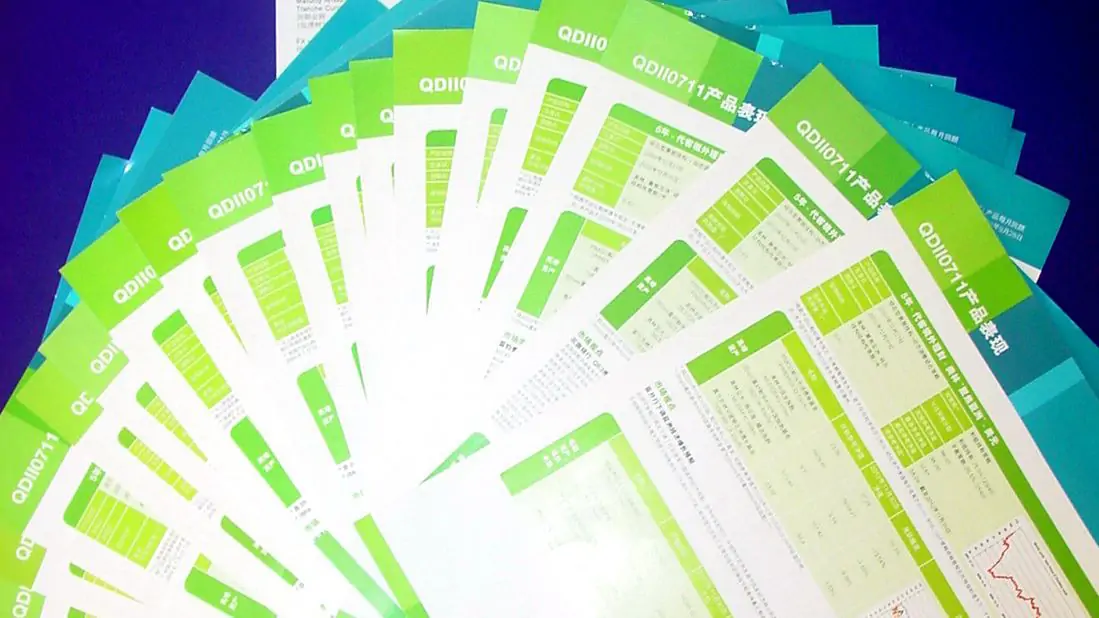
To revitalize these hard-earned assets, around 2006, I entrusted some funds to a well-known international bank for wealth management. Unfortunately, the investment results were far below expectations—several structured products suffered serious losses, especially product number QDII0711 (i.e., "Merrill Lynch Focus Asia Structured Investment No. 2 Wealth Management Plan"), which ultimately lost nearly 70%, becoming a key turning point for me to switch to independent investment.
In 2008, as the Chinese government further strengthened its regulation of cross-border capital flows, a large amount of export revenue became stuck in the overseas banking system, unable to be smoothly repatriated. Faced with the reality of millions of dollars being tied up in overseas accounts for an extended period, I was forced to shift from passive wealth management to active management, and began systematically engaging in long-term foreign exchange investment. My investment cycle is typically three to five years, focusing on fundamental drivers and macroeconomic trend judgments, rather than short-term high-frequency or scalping trading.
This fund pool not only includes my personal capital but also integrates the overseas assets of several partners engaged in export trade who also faced the problem of capital being tied up. Based on this, I also actively seek cooperation with external investors who have a long-term vision and matching risk appetite. It is important to note that I do not directly hold or manage client funds, but rather provide professional account management, strategy execution, and asset operation services by authorizing the operation of clients' trading accounts, committed to helping clients achieve steady wealth growth under strict risk control.
Foreign Exchange Manager Z-X-N's Diversified Investment Strategy System.
I. Currency Hedging Strategy: Focusing on substantial currency exchange transactions, with long-term stable returns as the core objective. This strategy uses currency swaps as the core operational vehicle, constructing a long-term investment portfolio to achieve continuous and stable returns.
II. Carry Trade Strategy: Targeting significant interest rate differences between different currency pairs, this strategy implements arbitrage operations to maximize returns. The core of the strategy lies in fully exploring and realizing the continuous profit potential brought by interest rate differentials by holding the underlying currency pair for the long term.
III. Long Terms Extremes-Based Positioning Strategy: Based on historical currency price fluctuation cycles, this strategy implements large-scale capital intervention to buy at the top or bottom when prices reach historical extreme ranges (highs or lows). By holding positions long-term and waiting for prices to return to a reasonable range or for a trend to unfold, excess returns can be realized.
IV. Crisis & News-Driven Contrarian Strategy: This strategy employs a contrarian investment framework to address extreme market conditions such as currency crises and excessive speculation in the foreign exchange market. It encompasses diverse operational models including contrarian trading strategies, trend following, and long-term position holding, leveraging the amplified profit window of market volatility to achieve significant differentiated returns.
Profit and Loss Plan Explanation for Forex Manager Z-X-N
I. Profit and Loss Distribution Mechanism.
1. Profit Distribution: The forex manager is entitled to 50% of the profits. This distribution ratio is a reasonable return on the manager's professional competence and market timing ability.
2. Loss Sharing: The forex manager is responsible for 25% of the losses. This clause aims to strengthen the manager's decision-making prudence, restrain aggressive trading behavior, and reduce the risk of excessive losses.
II. Fee Collection Rules.
The forex manager only charges a performance fee and does not charge additional management fees or trading commissions. Performance Fee Calculation Rules: After deducting the current period's profit from the previous period's loss, the performance fee is calculated based on the actual profit. Example: If the first period has a 5% loss and the second period has a 25% profit, then the difference between the current period's profit and the previous period's loss (25% - 5% = 20%) will be used as the calculation base, from which the forex manager will collect the performance fee.
III. Trading Objectives and Profit Determination Method.


1. Trading Objectives: The forex manager's core trading objective is to achieve a conservative return rate, adhering to the principle of prudent trading and not pursuing short-term windfall profits.
2. Profit Determination: The final profit amount is determined comprehensively based on the market fluctuations and actual trading results for the year.
Forex Manager Z-X-N provides you with professional forex investment and trading services directly!
You directly provide your investment and trading account username and password, establishing a private direct entrustment relationship. This relationship is based on mutual trust.
Service Cooperation Model Description: After you provide your account information, I will directly conduct trading operations on your behalf. Profits will be split 50/50. If losses occur, I will bear 25% of the loss. Furthermore, you can choose or negotiate other cooperation agreement terms that conform to the principle of mutual benefit; the final decision on cooperation details rests with you.
Risk Protection Warning: Under this service model, we do not hold any of your funds; we only conduct trading operations through the account you provide, thus fundamentally avoiding the risk of fund security.
Joint Investment Trading Account Cooperation Model: You provide the funds, and I am responsible for the execution of trades, achieving professional division of labor, shared risk, and shared profits.
In this cooperation, both parties jointly open a joint trading account: you, as the investor, provide the operating capital, and I, as the trading manager, am responsible for professional investment operations. This model represents a mutually beneficial cooperative relationship established between natural persons based on full trust.
Account profit and risk arrangements are as follows: For profits, I will receive 50% as performance compensation; for losses, I will bear 25% of the losses. Specific cooperation terms can be negotiated and drafted according to your needs, and the final plan respects your decision.
During the cooperation period, all funds remain in the joint account. I only execute trading instructions and do not hold or safeguard funds, thereby completely avoiding the risk of fund security. We look forward to establishing a long-term, stable, and mutually trusting professional cooperation with you through this model.
MAM, PAMM, LAMM, POA, and other account management models primarily provide professional investment and trading services for client accounts.
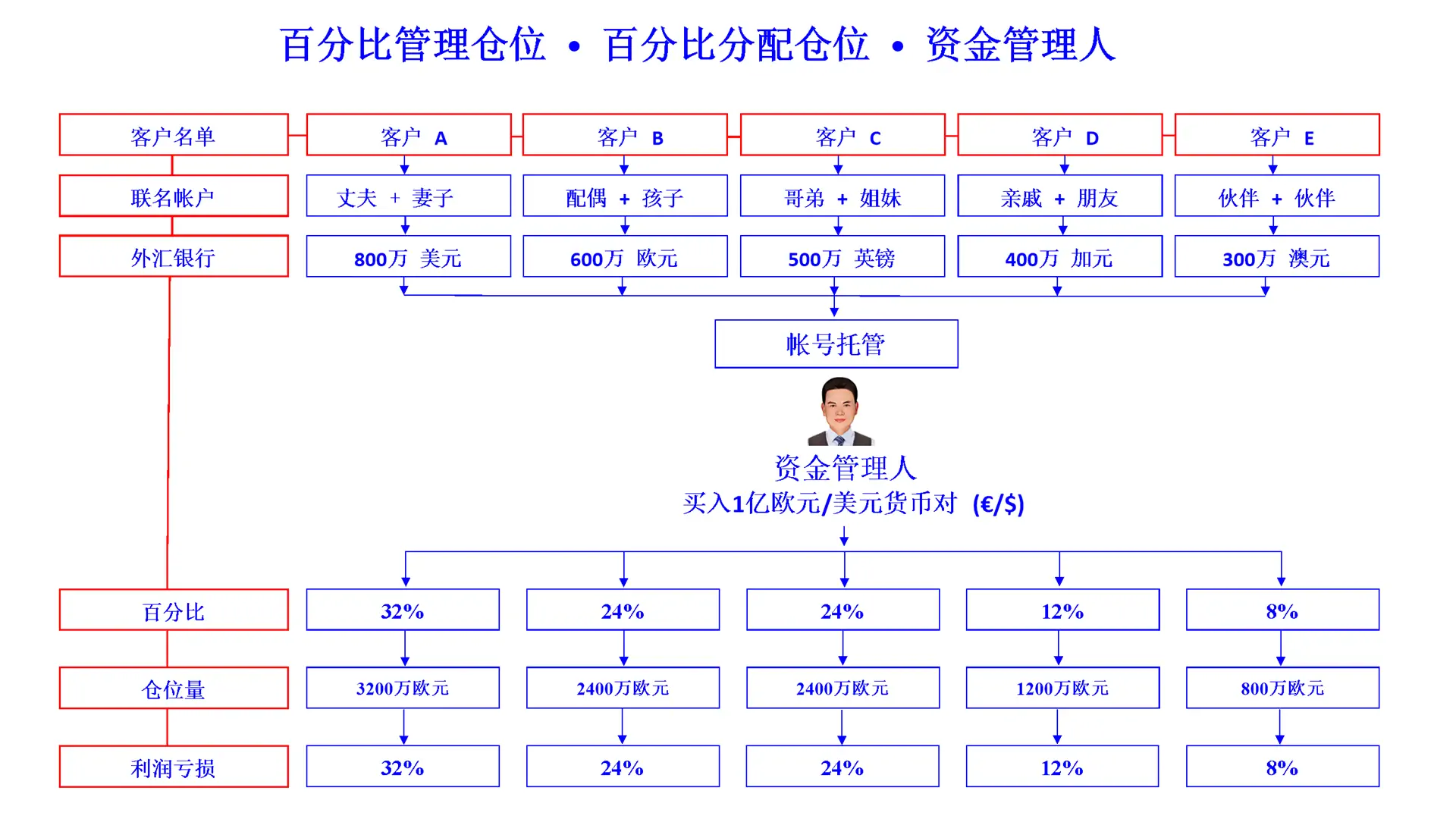
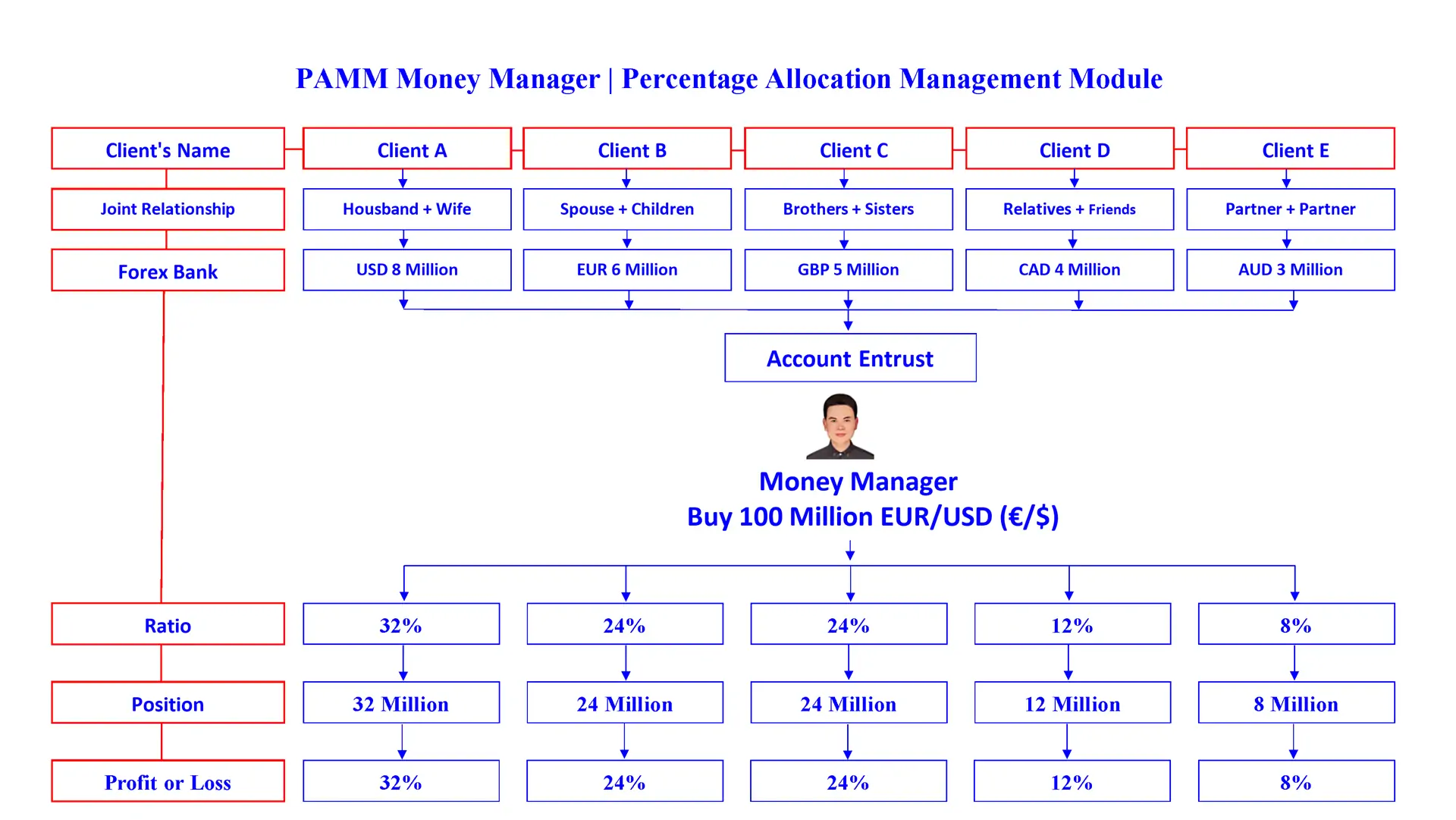
MAM (Multi-Account Management), PAMM (Percentage Allocation Management), LAMM (Lot Allocation Management), and POA (Power of Attorney) are all widely supported account management structures by major international forex brokers. These models allow clients to authorize professional traders to execute investment decisions on their behalf while retaining ownership of their funds. This is a mature, transparent, and regulated form of asset management.
If you entrust your account to us for investment and trading operations, the relevant cooperation terms are as follows: Profits will be split 50/50 between both parties, and this split will be included in the formal entrustment agreement issued by the forex broker. In the event of trading losses, we will bear 25% of the loss liability. This loss liability clause is beyond the scope of a standard brokerage entrustment agreement and must be clarified in a separate private cooperation agreement signed by both parties.
During this cooperation, we are only responsible for account transaction operations and will not access your account funds. This cooperation model has eliminated fund security risks from its operational mechanism.
Introduction to Account Custody Models such as MAM, PAMM, LAMM, and POA.
Clients need to entrust a forex manager to manage their trading accounts using custody models such as MAM, PAMM, LAMM, and POA. After the entrustment takes effect, the client's account will be officially included in the management system of the corresponding custody model.
Clients included in the MAM, PAMM, LAMM, and POA custody models can only log in to their account's read-only portal and have no right to execute any trading operations. The account's trading decision-making power is exercised uniformly by the entrusted forex manager.
The entrusted client has the right to terminate the account custody at any time and can withdraw their account from the MAM, PAMM, LAMM, and POA custody system managed by the forex manager. After the account withdrawal is completed, the client will regain full operational rights to their own account and can independently carry out trading-related operations.
We can undertake family fund management services through account custody models such as MAM, PAMM, LAMM, and POA.
If you intend to preserve and grow your family funds through forex investment, you must first select a trustworthy broker with compliant qualifications and open a personal trading account. After the account is opened, you can sign an agency trading agreement with us through the broker, entrusting us to conduct professional trading operations on your account; profit distribution will be automatically cleared and transferred by the trading platform system you selected.
Regarding fund security, the core logic is as follows: We only have trading operation rights for your trading account and do not directly control the account funds; at the same time, we give priority to accepting joint accounts. According to the general rules of the forex banking and brokerage industry, fund transfers are limited to the account holder and are strictly prohibited from being transferred to third parties. This rule is fundamentally different from the transfer regulations of ordinary commercial banks, ensuring fund security from a systemic perspective.
Our custody services cover all models: MAM, PAMM, LAMM, and POA. There are no restrictions on the source of custody accounts; any compliant trading platform that supports the above custody models can be seamlessly integrated for management.
Regarding the initial capital size of custody accounts, we recommend the following: Trial investment should start at no less than US$50,000; formal investment should start at no less than US$500,000.
Note: Joint accounts refer to trading accounts jointly held and owned by you and your spouse, children, relatives, etc. The core advantage of this type of account is that in the event of unforeseen circumstances, any account holder can legally and compliantly exercise their right to transfer funds, ensuring the safety and controllability of account rights.

Appendix: Over Two Decades of Practical Experience | Tens of Thousands of Original Research Articles Available for Reference.
Since shifting from foreign trade manufacturing to foreign exchange investment in 2007, I have gained a deep understanding of the operating essence of the foreign exchange market and the core logic of long-term investment through over a decade of intensive self-study, massive real-world verification, and systematic review.
Now, I am publishing tens of thousands of original research articles accumulated over more than two decades, fully presenting my decision-making logic, position management, and execution discipline under various market environments, allowing clients to objectively assess the robustness of my strategies and the consistency of long-term performance.
This knowledge base also provides a high-value learning path for beginners, helping them avoid common pitfalls, shorten trial-and-error cycles, and build rational and sustainable trading capabilities.
The forex market has entered a phase of fierce competition for existing users due to a lack of new users. Forex brokers are employing aggressive marketing models, exacerbating the infighting among forex broker platforms and creating a vicious cycle in the industry.
In the two-way trading sector of forex investment, the industry as a whole has shown a continuous decline over the past decade, and forex investment trading has gradually entered the ranks of sunset industries.
From the perspective of industry development trends, the closure of forex broker trading platforms globally will become the norm in recent years and for a considerable period to come. Behind this trend lies a profound transformation of the industry ecosystem and a continuously deteriorating market environment.
Compared to emerging industries such as digital currencies and stablecoins, which have risen rapidly in recent years, the gap in industry vitality for forex investment trading is becoming increasingly apparent. Its sunset industry characteristics are constantly being reinforced, and it has even gradually become a niche industry. The shrinking industry has directly led to an increasing scarcity of customer resources. To compete for customers in a limited market share, most forex brokerage trading platforms have turned to aggressive marketing models. Specifically, these platforms are increasing their attractiveness to customers by lowering transaction costs and compressing spreads, while simultaneously increasing rebates to expand customer acquisition channels, attempting to seize market share through these concessions. It's important to clarify that aggressive marketing models are somewhat reasonable in a rapidly growing market with a continuous increase in new users, helping platforms quickly accumulate a customer base. However, as forex trading becomes a niche industry, entering a phase of competition for existing customers with scarce new users, this aggressive marketing model further exacerbates the involution among forex brokerage platforms, leading to a vicious cycle of industry competition.
For forex brokerage platforms, the aggressive marketing model continuously squeezes their profit margins, making it difficult to support normal hedging operations by placing customer orders in the market. As a result, most platforms are forced to adopt a business model of betting against their clients. This betting model inherently involves a conflict of interest, as the platform's profits directly oppose those of its clients. If a large number of clients withdraw their profits en masse, it will put immense pressure on the platform's cash flow and could even trigger an operational crisis. Against this backdrop, some platforms may engage in illegal practices such as refusing to allow clients to withdraw funds or restricting their ability to withdraw profits, severely damaging clients' legitimate rights. Meanwhile, even some forex brokers that adopt conservative operating strategies and do not rely excessively on aggressive customer acquisition methods are choosing to scale back or even close their forex brokerage businesses due to intense market competition, in order to avoid damage to their reputation and further squeeze on their profit margins. This further confirms the current decline in the forex industry.
It is worth noting that as forex trading becomes a niche industry, the new client base entering the market exhibits differentiated characteristics. Unlike clients who blindly followed trends in the past, most new investors today have undergone systematic trading training, possess certain professional knowledge and trading experience, and their investment behavior is more rational. From a long-term perspective, well-prepared forex investors have a significantly lower probability of loss. However, if these profitable investors withdraw their funds en masse, it will further exacerbate the financial pressure on forex brokerage platforms, potentially becoming the final straw that breaks the camel's back for some platforms.
Based on the current state of the forex industry and the potential risks of platform operating models, mature forex investors, when their trading is relatively stable and their probability of profit is high, should avoid platforms with excessively low transaction costs. These platforms often have a greater risk of illegal operations due to insufficient profit margins, and may manipulate investors' profitable orders, ultimately preventing investors from withdrawing funds and harming their investment returns.
In the two-way trading market of forex investment, the trader's character has a decisive impact on investment results. Kind-hearted forex traders are often more likely to achieve stable profits in the market.
These types of traders typically possess the core qualities of non-greed and patience. These qualities help them better cope with the inherent volatility of the forex market, avoid being misled by immediate gains from short-term market fluctuations, and consistently adhere to long-term investment logic and sound trading plans, thereby gaining opportunities for sustained profitability. At the same time, forex traders with a calm and composed mindset tend to remain rational when faced with market changes and their own decision-making errors. They are willing to face and admit their mistakes, and will not stubbornly adhere to established strategies due to emotional biases. Instead, they adjust their trading strategies in a timely manner according to the actual market situation, laying the foundation for successful subsequent trading.
In contrast to kind-hearted, rational, and composed traders, cunning and greedy forex traders often fall into the trap of chasing short-term gains in the forex market. These traders lack a long-term market judgment perspective, focus excessively on immediate profits and losses, and are prone to making irrational and erroneous decisions during market fluctuations, ultimately making it difficult to achieve sustained profitability. Furthermore, while forex traders who rely on clever tricks might gain small, short-term profits through speculative methods, the forex market is inherently complex and volatile. Long-term profitability requires a sound trading system and a trustworthy investment mindset. Such highly speculative traders, lacking a core, sustainable trading logic, ultimately cannot survive in the complex forex market.
It's worth noting that attempting to gain small profits in forex trading often causes traders to miss out on better investment opportunities. These traders, overly focused on minor, localized gains, easily overlook market trends and high-quality trading targets, ultimately failing to achieve their overall profit goals. Another major negative characteristic in forex trading is impatience. Such traders often fall into the trap of frequent buying and selling when currency prices fluctuate. Frequent trading not only significantly increases transaction costs such as commissions but also leads to a chaotic trading rhythm, increasing the probability of decision-making errors and significantly reducing the likelihood of profitability. More importantly, forex traders who stubbornly refuse to admit mistakes often cling to flawed trading strategies due to wishful thinking or pride, leading to accumulated losses and ultimately extinguishing any possibility of profitability in the forex market.
In fact, the saying circulating in the forex investment field, "90% tests a trader's character, only 10% tests their investment skills," accurately reveals the core logic of market profitability. As a highly transparent trading system governed by value principles, the forex market's trajectory is not swayed by individual will. Even if some traders attempt to use so-called technical skills to conceal their character flaws and try to gain illicit profits, they ultimately cannot deceive the market. Only those with sound character, integrating rationality, patience, and integrity into the entire trading process, can achieve long-term, stable profits in the complex and volatile forex investment market.
In the context of two-way forex trading, for investors, achieving an investment return one to three times that of a fixed deposit is considered a successful investment goal.
This goal-setting logic aligns with the risk characteristics of forex trading and conforms to the core principles of rational investment, avoiding the pitfall of blind trading due to an excessive pursuit of high returns.
From actual trading practice, many forex investors have a common cognitive bias: they habitually use specific profit amounts as annual trading goals, frequently setting concrete profit indicators such as "this year's profit should be XX amount," but ultimately often fall into the predicament of year-on-year losses, and usually, the higher the profit target, the greater the actual loss. In fact, the foreign exchange trading industry possesses significant unique characteristics. Its trading environment is influenced by multiple complex factors, including the global macroeconomy, geopolitics, and exchange rate fluctuations. The uncertainty of profits is far higher than in traditional industries. Therefore, its operational goal setting logic differs fundamentally from other industries, and it is not advisable to use specific profit amounts as the core trading objective.
For participants in two-way forex trading, a more scientific and reasonable annual goal setting should focus on the core dimension of "preserving capital." When investors prioritize capital preservation, they can more clearly control trading risks, paying more attention to position management, stop-loss settings, and the execution of trading discipline during the decision-making process. This effectively avoids aggressive trading behaviors arising from pursuing short-term high profits. This capital preservation-oriented trading mindset helps investors maintain rational judgment in a complex and volatile market environment, reducing errors caused by emotional trading, and is more conducive to achieving long-term stable profits, ultimately achieving a sustainable trading state of annual profitability.
In the two-way trading scenario of forex investment, traders inevitably encounter situations where their decision-making direction contradicts market trends. At this time, the primary mindset to cultivate is to avoid falling into a state of persistent regret.
Many traders, after making a misjudgment, often fall into the trap of repeatedly looking back, constantly dwelling on hypothetical propositions like "If I had chosen the right direction, I would have profited." This excessive regret is essentially an unreasonable self-criticism. It needs to be clear that when traders make their trading decisions, they are often in a "fog" of incomplete information asymmetry and unclear market trends. The confusion and hesitation at that time are due to objectively existing cognitive limitations. Even if they returned to that decision-making point, under the same information and market conditions, they would most likely have made the same choice. Therefore, excessively criticizing one's past self is meaningless.
More importantly, traders should avoid overly romanticizing the hypothetical scenario of "choosing the right direction." Such idealized imagination not only amplifies negative emotions in the present moment but also interferes with subsequent trading decisions. In fact, throughout the entire process of forex trading, every choice a trader makes based on their own understanding, market information, and risk tolerance, regardless of whether it ultimately results in profit or loss, is the optimal solution under specific time and space conditions, and each has its own rationality and inevitability. From an investment logic perspective, market trends are constantly changing, and a trader's decisions are inherently probabilistic judgments of market trends. Profit and loss are inherent attributes of trading, and there is no need to assign excessive subjective value judgments to different outcomes.
From the perspective of trading mentality and long-term development, the human visual structure dictates that we always face forward. This physiological characteristic also applies to the cognitive orientation in forex trading—traders should always focus on future market trends and subsequent decision optimization, rather than dwelling on past regrets. Looking back excessively only consumes a lot of psychological and decision-making energy, hindering a keen awareness of market dynamics. Only by breaking free from the constraints of past decisions, accepting each transaction result with an objective and rational mindset, and focusing attention on summarizing experience and refining trading strategies can one achieve a dual improvement in mindset and trading ability in the complex environment of forex trading.
Forex traders with low expectations, low volatility, and low drawdowns have the most stable investment growth curves.
In the two-way forex market, a rather contrasting phenomenon is worth noting: traders who consistently achieve profits are often not the group with deep professional expertise or rich practical experience as commonly perceived by market participants. Instead, they are more likely to be ordinary participants who seem "completely ignorant" of the complex operating logic of the forex market. This conclusion, while seemingly counterintuitive, can be corroborated by analyzing the actual performance of various market participants. To clarify the essence of this phenomenon, we must first identify which types of traders in the forex two-way trading field actually struggle to achieve consistent profitability.
Before discussing the profitable participants in forex two-way trading, we must first exclude several groups that are excessively glorified by the market but whose actual profitability is questionable. First, we must exclude speculative capital. The legendary stories circulating in the market of speculative capital leveraging tens of thousands of dollars to generate hundreds of millions in profits are mostly fictionalized narratives. These narratives are essentially traps built on investors' get-rich-quick mentality. The higher investors' trust in these stories, the more likely they are to make irrational decisions in trading, leading to exacerbated losses. Secondly, technical analysts are not necessarily a group capable of achieving stable profits. In fact, many technical analysts' market analysis and guidance primarily serve to guide retail investors' trading direction rather than help them achieve profits. They may even mislead retail investors' trading decisions to some extent, ultimately harming their investment interests. Furthermore, traders who excessively pursue technical mastery are equally susceptible to losses and even bankruptcy. These traders often become engrossed in the intricate study of various technical indicators and trading strategies, neglecting the inherent uncertainty and randomness of the market. Over-reliance on the precision of technical analysis can lead to frequent misjudgments during market fluctuations, ultimately resulting in financial losses. In addition, champions of various live trading competitions are not necessarily representatives of sustainable profitability. Their outstanding performance during the competition is like a shooting star—briefly brilliant but unsustainable. Their trading models often rely on short-term market opportunities under specific conditions, lacking long-term replicability. Once market conditions change, they are highly susceptible to plummeting from profit peaks to losses.
Having excluded the aforementioned groups, we return to the core question: what kind of traders can achieve stable profits in two-way forex trading? The answer lies precisely with those considered "fools" by some market participants, those who are completely ignorant of the specific details of the forex market's operation. This "ignorance" manifests in their responses to specific questions about short-term markt trends and core themes—when asked about the specific direction of forex currency movements over the next few years, they don't offer subjective guesses but honestly state they don't know; when pressed about the core trading themes of the forex market over the year-end, they similarly don't offer conclusions based on speculation but clearly state they cannot predict them. However, this "ignorance" is not a genuine lack of knowledge, but rather reflects a clear understanding of market uncertainty, which is precisely the key prerequisite for their profitability. In fact, these traders don't trade blindly without a plan. Their core competency lies in constructing a logically closed-loop, risk-controlled trading system. They are able to eliminate the interference of subjective emotions and consistently and strictly adhere to the system's trading rules. This unwavering commitment to "blindly following" the rules precisely avoids the irrational actions of most traders in the market caused by over-prediction and emotional fluctuations. Thus, in the long run, they achieve sustainable profitability through the stability of their rules.
Foreign exchange investment traders should allow for losses, allow for wrong directions, and allow everything to go against their wishes.
In the two-way trading market of foreign exchange investment, mature trading cognition is the core foundation for traders to establish themselves in the market, and the key prerequisite for this mature cognition is to learn to accept various uncertain outcomes in market operation.
Specifically, foreign exchange traders first need to establish an acceptance mentality towards losses, clarify that the essence of two-way trading determines that both profit and loss are normal results of market operation, and do not need to deny their trading logic due to a single loss, nor do they have to be hesitant and paranoid about trading decisions due to fear of losses.
At the same time, traders also need to face the possibility of misjudgment in direction. The foreign exchange market is influenced by multiple repeated and complex factors such as global macroeconomic data, geopolitical changes, and monetary policy adjustments. Any direction prediction based on historical data or technical analysis may have deviations. Accepting such misjudgment is not a denial of one's own analytical ability, but a rational reverence for the complexity and randomness of the market.
It is worth noting that even for currency pairs that have been carefully researched, held for a long time, and have achieved stable profits, traders need to be mentally prepared for sudden deterioration of their fundamentals. The fundamental factors of the foreign exchange market are always in a dynamic state of change. The economic fundamentals, policy environment, and other factors that support the trend of currency pairs in the early stage may reverse due to unexpected situations. If these unexpected changes cannot be accepted, it is easy to make irrational stop loss or position decisions when the market turns, which can lead to a significant loss or even turn into a loss in the early stage.
Essentially, the maturity of forex trading is reflected in traders no longer placing their subjective expectations above the objective laws of the market, being able to accept various market outcomes that are contrary to their expectations, and abandoning the paranoid perception that market trends must conform to their own expectations. This means that traders need to have a clear understanding that the direction of the foreign exchange market has its own objectivity and independence, and will not change due to individual subjective will. Any attempt to force the market to operate in the direction they desire is a irrational mentality that goes against the essence of the market.
Only when foreign exchange traders truly allow all possible outcomes to occur, without fear of losses and judgment errors, nor are they entangled in sudden reversals of profitable positions, and respond to various market fluctuations and changes with an inclusive and rational attitude, can they get rid of the interference of subjective emotions on trading decisions and gradually establish a stable and sustainable trading system. This is also the core indicator of whether a foreign exchange trader is moving towards maturity.
The various myths of sudden wealth circulating in the foreign exchange margin market are almost all carefully edited narrative products in the upstream of the interest chain.
In the two-way foreign exchange trading market, the widely circulated "myth of sudden wealth" among investors is essentially a false narrative. These myths are not real products under the objective laws of the market, but marketing tools carefully packaged and created by market stakeholders. Their core purpose is to attract a large number of inexperienced novice investors to enter the market, deliver continuous traffic and funds to the market, and meet the potential demands of stakeholders.
From the actual market situation, the vast majority of so-called 'instant wealth myths' do not have authenticity. According to market observations, the proportion of such false narratives is as high as 99%, all of which are artificially constructed false scenes. It is not difficult to deeply analyze its formation logic, and it can be found that sudden wealth itself is the core aspiration of many novice investors when entering the foreign exchange market. Some profit seeking speculative forces in the market precisely grasp this common psychological demand and package and interpret the "sudden wealth scene" through similar film and television script creation methods. This is consistent with the creative logic of some current brainless films and TV dramas, such as "ordinary individuals are taken care of by wealthy women to achieve class crossing" and "domineering CEOs fall in love with ordinary Cinderella". The reason why these unrealistic plots can be widely spread is that they satisfy some people's fantasy of achieving success without effort. However, if the plot is created according to the real human logic of "high wealth and handsome men and white wealth and beautiful women are of equal status" in reality, it is often difficult to attract the audience's attention; The myth of sudden wealth in the foreign exchange market is no exception. It is precisely because every novice investor harbors a desire for quick wealth that such false narratives have the soil to survive and spread.
In the field of two-way foreign exchange trading, the negative impact of such false wealth myths far exceeds their surface effect of "attracting traffic". In addition to inducing a large number of traders who are not fully prepared, lack professional knowledge and risk awareness to enter the market rashly, becoming the "fuel" in market fluctuations, and ultimately facing a high probability of capital losses, what is more serious is their destructive impact on the market ecology and investor mentality - it greatly disrupts the original intention of the vast majority of investors who hope to steadily accumulate wealth through steady trading. In fact, for the vast majority of foreign exchange investors, as long as they can abandon the speculative mentality of overnight wealth and adhere to the principle of rational investment, they have the ability and opportunity to gradually accumulate wealth; From the perspective of actual profit potential, if investors can establish conservative return expectations, not pursue unrealistic high returns, and only aim for "returns that are twice, twice, or even three times higher than fixed deposits", it is not difficult to achieve an annualized profit of more than 10%. This profit target is easily achievable for investors with basic trading skills and risk control awareness.
In the two-way trading market of foreign exchange, introverted traders often possess a more natural advantage compared to extroverted traders.
The core source of this advantage lies in the inherent nature of the foreign exchange trading industry - seeking inward.
Unlike other industries that require frequent external communication and rely on the integration of external resources, the core logic of foreign exchange trading lies in the precise control of one's inner state and deep perception of true thoughts. The quality of a trader's decision-making does not depend on the accumulation of external information, but rather on the clarity of self-awareness and stable control of inner emotions. This industry characteristic naturally aligns with the personality traits of introverted traders.
One of the core traits of introverted traders lies in their adaptation to and enjoyment of solitude, which perfectly aligns with the core requirement of "looking inward" in forex trading. In the trading process, whether it's analyzing market trends, formulating trading strategies, or managing emotions during position holding, traders need to invest sufficient time and energy in independent thinking, deeply combing their own trading logic, identifying potential cognitive biases, and simultaneously perceiving inner emotional fluctuations to avoid negative emotions such as greed and fear from interfering with decision-making. Introverted traders are able to maintain focus in a solitary environment, completing self-examination and reflection without external interference. This ability enables them to be more proactive in exploring their inner states and calibrating their trading mindset, and it is also easier for them to form a stable trading rhythm and a mature decision-making system through long-term trading practice.
Compared to introverted traders, the personality traits of extroverted traders exhibit a certain degree of mismatch with the "inward-seeking" essence of foreign exchange trading. Extroverted traders have strong social attributes and often need to invest a lot of time and energy in external social interactions. This outward allocation of energy makes it difficult for them to set aside sufficient time for self-examination and inner perception. When exposed to high-frequency social interactions for a long time, extroverted traders' attention is more easily drawn by external information, making it difficult for them to settle down and sort out their own trading logic and inner state, thus hindering their ability to deeply explore self-awareness and precisely control emotions. This difference in energy allocation leads to extroverted traders often needing to put in more effort to achieve awakening and transformation in trading cognition, and it is also more difficult for them to quickly form a stable trading mindset. From industry practice, most foreign exchange trading experts who truly possess a mature trading system tend to have the trait of reducing ineffective social interactions and focusing on self-improvement, which also indirectly confirms the adaptability of foreign exchange trading to introverted traits and the natural advantages of introverted traders in this field.
Core Cognitive Deficiencies and Obstacles for Forex Traders: Excessive Concern for Self-Reliance and Excessive Desire for Profit.
In the forex market, the core issue preventing most traders from achieving long-term, stable profits often boils down to two fatal cognitive flaws and obstacles: an obsession with "self-reliance" and a biased goal of "profit-seeking." These two problems are intertwined, jointly restricting traders' rational decision-making and execution capabilities, becoming key barriers on the path to profitability.
The obsession with "self-reliance" manifests specifically as an excessive pursuit of "self-correction" throughout the trading process, and a subconscious tendency to seek validation. In the market analysis and trend prediction stages of forex trading, traders often fall into the trap of "proving themselves," directly linking the correctness of their market judgments to their personal abilities and cognitive levels. The most typical behavioral manifestation of this cognitive bias in trading execution is "holding onto losing positions"—when the direction of the position contradicts the actual market movement, the trader does not make a stop-loss decision based on objective market signals, but rather chooses to hold onto the incorrect position out of a "reluctance to deny oneself." Essentially, this kind of "holding onto losing positions" behavior is not a rational judgment of market trends, but a blind defense of personal opinions. Its core aim is to avoid the embarrassment of "self-contradiction," while ignoring the potential risks of two-way fluctuations in the forex market. Ultimately, it often leads to small losses escalating into significant financial losses.
The biased goal of "being too greedy for money" stems from a misperception of the trader's profit objective—treating "making money" as the sole core goal of trading, even equating money with the ultimate pursuit in life. Undeniably, profit is one of the core objectives of forex trading, but traders need to understand that trading is not the only way to acquire wealth. Employment, business operations, and many other methods can all lead to wealth accumulation. This misperception directly causes serious utilitarian biases in trading: on the one hand, the eagerness to profit can lead to irrational behaviors such as frequent trading and over-leveraging, causing traders to ignore market rules and risk control, falling into a vicious cycle of "chasing highs and selling lows"; on the other hand, viewing money as the purpose of life can cause excessive emotional fluctuations when facing profit volatility—greed and recklessness when profitable, and fear and anxiety when losing, further exacerbating decision-making errors. In fact, money in foreign exchange investment and even in life as a whole should be defined as a tool to achieve goals, rather than the goals themselves. The lack of understanding of this core logic is a major reason why many traders fall into trading difficulties.
Forex traders are more like miniature CEOs and decision-makers.
In the two-way forex market, a successful forex investor's role goes far beyond that of a mere trade executor; it's more akin to the CEO and BOSS of a miniature business unit.
The core logic of this role is that forex trading is not simply speculative buying and selling, but a systematic business activity requiring coordinated market analysis, risk management, and self-awareness improvement. Every trading decision is like a strategic deployment in business operations, directly impacting capital security and profit generation.
From a core task perspective, successful forex traders need to simultaneously advance two key tasks, which complement each other and form the foundation for profitable trading. First, it's about focusing on trend discovery and opportunity capture in the market, the core of which lies in accurately identifying breakout signals and trend directions of major currency pairs. Essentially, the profit potential in the forex market stems from the price fluctuations and trend extensions of currency pairs. A market lacking volatility makes it difficult to form effective price spreads, and failing to grasp the trend direction leads to trading decisions that deviate from market rules, ultimately resulting in losses. Therefore, traders need to rely on diverse tools such as macroeconomic data, geopolitical dynamics, and technical indicator analysis to continuously track the supply and demand changes and market sentiment of major currencies, thereby identifying trading opportunities with profit potential.
Secondly, it involves cultivating and improving one's internal cognitive abilities. Competition in the forex market ultimately boils down to competition in traders' cognitive levels. The objectivity of market fluctuations and the bias in traders' subjective judgments are often the key factors leading to trading errors. The core goal of internal cultivation is to continuously improve one's trading cognitive system, including a deep understanding of market operating rules, a clear definition of the applicable boundaries of trading strategies, an accurate understanding of one's own risk tolerance, and the scientific management of trading psychology. Only by continuously iterating one's trading cognition can one maintain rational judgment in a complex and ever-changing market environment, avoid being disturbed by short-term market noise, and effectively cope with various uncertainties and risks in the trading process.
It is worth emphasizing that when forex traders can solidly complete the two core tasks of market opportunity discovery and internal cognitive cultivation, and achieve their organic synergy, they can build a sustainable profit model. The foreign exchange market has a huge amount of capital and is constantly volatile. As long as you always adhere to scientific trading logic, respond to market changes with a mature cognitive system, and accurately capture trend opportunities, you can continuously obtain reasonable returns under the premise of compliance. This is the core logic behind the long-term profit potential of the foreign exchange market.
In the realm of two-way forex trading, trading itself can be seen as both the most difficult and the easiest thing. This seemingly contradictory perception is actually closely related to the trader's level of commitment and depth of understanding.
Nothing in the world is inherently inherently difficult or easy; the key lies in whether one takes action. Proactive practice can gradually transform even the most challenging tasks into easier ones; hesitation and reluctance to try will make even the simplest things increasingly difficult. This logic also applies to cognitive improvement and the learning process—with a spirit of inquiry and proactive exploration, even the most profound knowledge can be gradually mastered; without initiative in learning, even basic common sense will become obscure and daunting.
This principle is particularly evident in the two-way forex trading scenario. For traders, if they can immerse themselves in in-depth study, systematically organize and comprehensively master the knowledge system, industry common sense, practical experience, and technical methods of forex trading, and thoroughly research the core elements and potential risks of trading, the originally complex trading logic and operational procedures will naturally become clear, and trading decisions will be made with greater confidence and basis. Before mastering the core logic and operational essence of forex trading, most traders often compare it to traditional economic activities like opening a physical store, operating a factory, or running a foreign trade company, or even to simply working for someone else. At this point, they generally feel that forex trading is far more difficult than these areas, even considering it the most difficult thing in the world.
However, as traders continuously learn and practice, truly understand the inherent laws of forex trading, accurately grasp the core logic of market fluctuations, skillfully utilize various analytical tools and trading strategies, and develop a mature and stable trading system, their perception of the difficulty of trading undergoes a fundamental shift. They then discover that forex trading is simpler and easier than traditional economic activities that involve high fixed costs and complex supply chain and market channel issues, and even more flexible and relaxed than working for someone else, which is limited by fixed hours and location and has limited income growth potential. This leads to the perception that "forex trading is the easiest thing in the world." This shift in perception is not essentially a change in the inherent difficulty of trading itself, but rather a significant improvement in the trader's own capabilities and cognitive dimensions, enabling them to proactively control and mitigate the difficulties of trading.
In the forex two-way trading market, the core reason successful traders achieve excess profits lies in their long-term accumulated trading experience and advanced cognitive level, rather than the absolute advantage of the technical indicators they use.
Compared to the choice of tools, the trader's own depth of understanding, perspective, and mindset are the key variables determining trading results. This core logic is particularly evident in the forex two-way trading scenario. Specifically, the profit logic of seasoned traders who can consistently generate profits does not rely on the superiority or inferiority of a single technical means or specific indicator tool (such as the common analytical tools like moving averages), but rather stems from a profound understanding of market patterns, precise risk control, and a clear understanding of their own trading behavior. Essentially, it is a concentrated manifestation of comprehensive human qualities in trading, rather than a result of simply being empowered by tools.
In stark contrast to successful traders, ordinary forex traders generally face profitability difficulties. The core problem lies precisely in cognitive biases—most ordinary traders invest a great deal of energy in learning trading techniques, excessively pursuing the application skills of various indicators, while neglecting the accumulation of trading experience and the improvement of cognitive abilities. This learning model, which emphasizes tools over understanding, makes it difficult for traders to cope with the complex challenges of the two-way fluctuations in the foreign exchange market. They often find themselves passive in market changes and struggle to achieve stable profits.
It is important to clarify that accumulating trading experience and improving cognitive levels are not achieved overnight; they require long-term investment and systematic training. In this process, traders first master basic trading techniques, then gain extensive practical experience, transforming fragmented technical knowledge into reusable trading experience. Through continuous review and reflection, they elevate their experience to a deeper understanding. This gradual evolution from technique to experience, and then to understanding, is the essential path for traders to break through profit bottlenecks and achieve trading success. Any attempt to skip the stages of experience accumulation and cognitive improvement, relying solely on technical tools for profitability, will ultimately be unsustainable.
In the two-way trading scenario of foreign exchange investment, traders' large profits and huge losses often occur silently, a characteristic that contrasts sharply with traditional investment fields.
Compared to foreign exchange investment, the operating model of traditional fund investment is more transparent and marketing-oriented. Fund managers typically actively promote themselves and their products through various channels, regularly disclosing or selectively revealing performance data. Their core objective is to attract investors to subscribe to fund products; after all, in a normal market environment, fund products lacking proactive marketing struggle to gain sufficient market attention and capital inflows.
From an industry perspective, foreign exchange investment falls under the category of off-exchange trading, exhibiting a niche and unpopular nature. More importantly, central banks worldwide, driven by the core objectives of maintaining the stability of their financial systems and ensuring the competitiveness of foreign trade exports, generally employ strict regulatory and control measures in the foreign exchange market, further exacerbating the information isolation inherent in the foreign exchange industry. Against this backdrop, large holders of funds in the foreign exchange market rarely engage in frequent public disclosure. Only in special circumstances involving short-term market manipulation do coordinated actions by related parties occur. Looking back at market practices over the past two decades, there have indeed been several cases where large foreign exchange holders manipulated the market through joint meetings and negotiations, but such situations are not the norm in the industry.
In summary, foreign exchange investment and trading are inherently a highly secretive industry. The entire trading process is largely a psychological game and decision-making contest among traders relying on market data presented on computer terminals. Whether a trader achieves substantial profits through accurate judgment or suffers huge losses due to market fluctuations or poor decision-making, as long as the corresponding broker does not proactively disclose relevant trading information, these profits or losses often remain unknown to the outside world. This further confirms the core characteristic of foreign exchange investment and trading: its quiet and unassuming nature.
In the field of two-way trading in foreign exchange investment, this industry has shown significant characteristics of a sunset industry and belongs to the niche industry category with limited market capacity.
From the actual performance of market capacity, although the foreign exchange market is nominally large, in recent decades, the monetary policies of most central banks around the world have been anchored to the US dollar interest rate. This universal policy orientation has directly led to a significant compression of the interest rate spread between different currencies, and has remained in a relatively narrow range for a long time. As one of the core sources of profit in foreign exchange trading, the limited space of interest rate differentials directly limits the profit margin of mainstream currency pair trading, resulting in the profit level of related transactions being firmly locked in a lower range, making it difficult to achieve substantial breakthroughs.
Due to the rigid constraints of profit margins, the development prospects of the foreign exchange industry have a clear ceiling, and the overall growth potential of the industry is extremely limited. This situation also directly affects the development pattern of institutions in the industry. Most of the top ranked foreign exchange industry giants internationally have already attached themselves to large investment banking systems, either being acquired by large investment banks or becoming their controlling subsidiaries. From the strategic layout of large investment banks, the inclusion of foreign exchange brokers is not based on profit as the core goal, but rather as an important component of brand strategy layout, leveraging the business layout in the foreign exchange field to enhance the comprehensiveness and influence of their own brand. The core reason is that the capacity of the foreign exchange market itself is limited, making it difficult to support large-scale profits. Currently, this field no longer has traffic dividends, and the potential user base is relatively small with clear growth limits. The foreign exchange market has more often become a tool for promoting large investment bank brands rather than a core profit sector.
Based on an objective assessment of the current situation in the aforementioned industry, we solemnly warn newcomers in the foreign exchange investment field that if there are still other career paths to choose from, they should try to avoid entering the foreign exchange investment trading field as much as possible, as it is an industry that combines sunset attributes and niche characteristics. It should be clarified that as an investor with experience in large capital operations, this withdrawal is not due to concerns about others sharing benefits due to the superior market prospects, but based on a profound understanding of the nature of the industry. In fact, before entering the foreign exchange market, I already had a reserve of millions of dollars in funds, which did not come from foreign exchange trading, but were accumulated through investing in foreign trade factories. Due to China's foreign exchange control policies, my large offshore funds cannot enter the country directly. Entering the foreign exchange market is only to find a feasible investment channel for this portion of funds, rather than because the field has outstanding profit advantages.
Finally, it should be emphasized that there is a fundamental cognitive premise in the field of foreign exchange investment trading: although a stable annual return of 10% -20% may be achieved through scientific trading strategies, there is almost no possibility of doubling or multiplying funds in this field, let alone achieving the goal of overnight wealth. For any group interested in investing in foreign exchange, a clear understanding is the core prerequisite for avoiding irrational investment decisions and viewing industry value rationally.
In the forex market, emotional stability is arguably one of the core competitive advantages for traders. Compared to other trading factors, irrational emotions often have a more direct and devastating negative impact on trading decisions.
The forex market's inherent two-way volatility and instant feedback make traders' emotions more susceptible to market fluctuations. Loss of emotional control often leads to the collapse of trading logic, resulting in irreversible losses.
From the perspective of general interpersonal communication, ordinary people are more receptive to calm and rational communication and criticism in everyday situations. Even with differing opinions, a calm emotional tone ensures the smooth transmission of information. Conversely, even if the other party's viewpoint is fully reasonable and feasible, a poor communication tone can easily trigger resistance. This tendency to prioritize emotions over facts is amplified in the forex trading context, producing even more severe negative consequences. While emotional resistance in daily communication may only affect interpersonal relationships, emotional dominance in trading directly distorts the judgment of market signals and disrupts established trading strategies.
In actual forex trading, negative examples of emotionally driven decision-making are extremely common. When the market clearly shows signs of directional divergence—meaning existing trading positions fundamentally conflict with the overall market trend—some traders, driven by wishful thinking, resentment, and other negative emotions, choose to hold onto losing positions, ignoring the core fact that the market trend has substantially reversed. This ultimately leads to a continuous expansion of losses. The essence of this behavior is that traders prioritize personal emotions over objective market laws, replacing rational judgment of actual market movements with subjective assumptions.
More significantly, many forex traders fall into the cognitive trap of "prioritizing personal feelings," focusing excessively on their current losses and subjective pain, while actively ignoring core objective factors such as market trends, policy changes, and the logic behind exchange rate fluctuations. This cognitive bias creates a vicious cycle: losses trigger negative emotions, which further hinder rational understanding of market facts, leading to more irrational decisions such as averaging down or cutting losses, ultimately exacerbating the losses.
Ultimately, success in two-way forex trading is essentially a process of rationality overcoming emotion. For traders, only by actively eliminating the interference of subjective emotions and establishing a decision-making logic centered on market facts, consistently using objective factors such as market trends, data signals, and risk thresholds as the sole basis for trading decisions, can they build a stable trading system in the complex and ever-changing forex market and gradually achieve long-term trading success. Emotional management does not negate the trader's subjective feelings, but rather guides them rationally, allowing objective facts to dominate trading decisions. This is also one of the key dimensions that distinguishes professional traders from ordinary traders in two-way forex trading.
Forex traders must proactively absorb new knowledge to avoid being left behind.
In the two-way trading scenario of forex investment, the development of a trader's core competencies relies on continuously pushing beyond their comfort zone and proactively embracing new ideas. Only by keeping pace with the times and actively adapting to changes in the market environment can one effectively avoid the risk of being eliminated by industry iterations.
This core requirement is not unique to the forex investment field but is a universal law permeating individual growth and social development. It has already shown distinct characteristics in traditional social life. Those with forward-thinking intelligence consistently maintain an awareness of pushing beyond their comfort zone, actively trying new things in unknown areas. Conversely, some who cling to their established ways remain confined within their comfort zone, habitually rejecting new attempts with negative attitudes such as "I won't do this" or "I can't do that." It is worth noting that the rapid iteration of the times is constantly reconstructing cognitive systems and survival rules. Many concepts and survival logics formed by our parents based on past experience have gradually lost their applicability in today's diversified and fast-paced era. Similarly, the cognitive framework and thinking patterns established by our generation today will likely lag behind the next generation in the next two or three decades due to further development of the times.
Returning to the essence of two-way forex trading, the market environment faced by traders is constantly changing, and industry development continuously presents new demands. This requires traders to continuously learn and break through their own cognitive boundaries, proactively mastering new things and logics that can adapt to market changes. Looking at the industry's development history, the market environment has never stopped iterating. For example, the negative interest rate policies and quantitative easing measures that emerged globally in the past decade were novel phenomena that broke through traditional financial understanding, profoundly impacting the pricing logic and trading rhythm of the global forex market. In the current stage of development, the rise of emerging financial forms such as digital currencies and stablecoins has had a significant impact on the forex investment and trading field. This impact has not only changed the traditional forex trading market ecosystem but has also further shrunk the already niche forex trading industry, leading to a decline in market activity. Against this backdrop, forex traders need to establish dynamically adjustable investment strategies and rationally plan their capital size based on the actual market capacity. Compared to blindly expanding capital investment, moderately reducing the capital size is more in line with the current market situation, because the current forex investment market no longer has the capacity to accommodate large-scale funds. Excessive expansion of capital size will inevitably amplify trading risks. This requires traders to always maintain a keen insight into the development of the situation and continuously optimize and adjust their investment pace according to changes in the market environment to ensure that their trading strategies are effectively adapted to the development trends of the times and the actual market conditions.
Forex traders with self-awareness are more likely to successfully transition from beginner to expert.
In the two-way trading scenario of forex investment, traders with self-awareness tend to be more adept at this transition. This phenomenon stems from a clear understanding of the boundaries of their own knowledge, a cognitive trait that also exhibits significant differentiation across broader social contexts.
Specifically, those with rational cognitive abilities, even those with established expertise in their familiar areas, will humbly accept their lack of knowledge when venturing into unfamiliar territory. Conversely, those lacking rational cognitive ability are prone to falling into a "cognitive blind spot," often overgeneralizing their abilities. Even when faced with completely unfamiliar or unexplored areas, they may underestimate the cognitive threshold based on subjective assumptions of "cleverness," assuming they can quickly master the subject with their existing skills, ignoring the professional barriers and core logical differences between different fields.
This cognitive difference is further amplified in the two-way forex trading field, directly impacting a trader's growth trajectory and trading results. Forex traders with self-awareness, when entering a trading niche they are completely unfamiliar with, they can readily accept their own lack of knowledge and even proactively face the initial "cognitive awkwardness"—they clearly understand that in unfamiliar trading scenarios, they are highly likely to make frequent mistakes due to unfamiliarity with market rules, trading logic, risk control, and other basic common sense. Because of this clear understanding of their own shortcomings, such traders will proactively establish a systematic learning mindset, continuously supplementing their knowledge gaps through multiple paths such as studying professional trading books, searching authoritative industry materials, and consulting with experienced traders, constantly iterating their trading knowledge and practical skills, ultimately achieving a steady improvement in trading ability.
Conversely, forex traders lacking self-awareness often fall into the trap of "cognitive arrogance" when facing unfamiliar forex trading. They are unable to face their own cognitive shortcomings, nor do they develop a sense of awareness of their own deficiencies. Instead, they approach trading with a subjective bias of "omniscience." In this mindset, they neither proactively seek guidance from industry veterans nor are willing to invest the effort to fill knowledge gaps. They consistently rely on rigid cognitive logic to navigate the complex and ever-changing foreign exchange market, making it difficult to iterate and upgrade their trading skills. The foreign exchange market itself is characterized by high volatility and high professionalism, demanding a deep understanding and extensive practical experience from traders. Traders lacking self-awareness and a willingness to learn often end up with trading losses due to their inability to accurately manage market risks and respond to market changes, and may even be forced to leave the forex trading field altogether.
In the two-way forex market, wealth accumulation always follows a gradual logic; there is no path to instant riches.
For forex traders, the core prerequisite for stable profits is to acknowledge the growth cycle of trading skills and build their trading system with a long-term perspective, rather than hoping for short-term, accidental gains.
Looking at the development patterns of various industries, top practitioners all require time to hone their skills. This pattern also applies to the highly specialized field of forex trading. The generally accepted growth cycle in the industry shows that the first three years are a beginner's period, focused on familiarizing oneself with the rules and accumulating basic knowledge; three to five years are a growth period of in-depth exploration, requiring continuous trial and error in practice to calibrate direction; five to eight years gradually lead to a mature stage of skilled operation, forming a relatively stable execution logic; only after ten years of dedicated practice, undergoing the complete test of market cycles, can one be considered an expert with professional judgment and the core ability to independently cope with complex market changes.
However, many forex trading novices fall into a cognitive bias, the core problem being that they ignore this objective growth pattern. In the cognitive framework of these traders, the improvement of forex trading skills lacks a clear time anchor. They often disregard the industry consensus of "ten years of honing a sword," mistakenly believing that core profitability can be mastered without long-term accumulation.
Specifically, the cognitive misconceptions of novices are mainly reflected in three aspects: First, they overestimate their own ability boundaries, naively simplifying the development of trading skills into a short-term learning process, even hoping to achieve basic financial freedom through a few months of theoretical study and practical operation, completely ignoring the common rule that top levels in various industries require decades of in-depth cultivation; Second, they confuse the boundary between accidental gains and core competencies, attributing short-term profits in trading to their own operational skills and judgment, failing to clearly recognize that such gains may only be accidental coincidences in market fluctuations or the result of short-term luck, lacking sustainability; Third, they lack respect for the complexity of the market, failing to realize that the forex market is affected by multiple factors such as macroeconomics and geopolitics, and its uncertainty requires traders to rely on long-term accumulated experience and knowledge, rather than short-term subjective judgments.
Talent is either driven by interest and proactive cultivation, or a tenacious pursuit forced by adversity.
In the two-way trading field of forex investment, few traders are born with "talent." Its core either stems from a heartfelt passion or is rooted in the tempering of real-world challenges.
In traditional understanding, people often equate exceptional ability in a particular field with talent. However, a deeper examination reveals that any professional competence beyond the ordinary does not come from nowhere, but is the result of decades of consistent accumulation—a comprehensive ability condensed from the refinement of behavioral habits, the honing of personality traits, and the optimization of reaction mechanisms. It is also the inevitable product of focusing on a single area with unwavering dedication, thoroughly exploring its principles and achieving a profound understanding.
The core difference between people lies in the dimension and depth of their actions: some remain at the superficial level of "taking action," some achieve synergy between "thinking and planning" and "taking action," while true masters reach the realm of "deep cultivation with heart." Compared to those who merely think, the results of an hour of dedicated study by someone who focuses on their mind are comparable to ten hours of superficial effort by the latter; compared to mechanical execution by hand, an hour of in-depth study is worth more than a hundred hours of aimless labor by the latter. The root of this difference lies in whether one is willing to immerse themselves in understanding the essence and exploring the underlying principles.
Returning to the field of forex investment, the logic of a trader's "talent" is similar. Firstly, it stems from an extreme passion and desire for exploration: a deep interest in the inherent logic of trading mechanisms, a proactive approach to understanding core principles, and a gradual development of a unique cognitive system through exploration. Secondly, it arises from the pressure and tempering of real-world difficulties: having experienced the hardship of financial scarcity and the pain of humiliation caused by lack of money, a strong determination to cultivate trading skills and accumulate wealth is born. Even after countless trading setbacks and market trials, they maintained unwavering resilience, focusing intently on mastering the essence of trading. Ultimately, they broke through cognitive barriers, mastered trading logic, and achieved a leap in wealth accumulation.
Finally, "talent" in forex trading is never an innate gift, but rather the inevitable result of proactive cultivation driven by interest, or the relentless pursuit forced by adversity.
The path to mastering forex two-way trading is essentially a progressive process for traders, moving from confusion to clarity, from complexity to understanding, and from stagnation to smooth operation.
This progressive logic is consistent with the growth patterns in human society—from birth, individuals embark on a journey of development from initial exploration to skillful mastery, from struggle to ease and success. After initial chaotic trials, they gradually clarify their understanding, accumulate experience, and ultimately enter a stable and smooth path.
For practitioners of forex two-way trading, the cognitive difficulties encountered upon entering the market are common. The forex trading system encompasses multiple dimensions, including professional knowledge, market common sense, technical analysis, practical experience, and investment psychology. The unknown nature of this new field is like a fog, easily leading beginners into a predicament of "the more they learn, the more confused they become; the more they delve, the more bewildered they feel." At this stage, knowledge accumulation is often fragmented, technical application lacks systematic support, interpretation of market fluctuations remains superficial, and investment mentality is easily swayed by short-term gains and losses, making it difficult to form a stable trading logic.
The key to breaking through the current impasse lies in the systematic reconstruction of accumulated diverse elements. When traders actively initiate the process of organizing, summarizing, classifying, filtering, and refining knowledge, scattered knowledge points gradually connect into lines and weave into a dense network. The application scenarios and boundaries of technical tools become increasingly clear, lessons learned from successes and failures in practical experience are transformed into replicable decision-making bases, and the understanding of investment psychology is grounded in practical methods of mindset regulation. In this process, the operating rules of the market and the inherent logic of market fluctuations gradually emerge, dispelling previous confusion and uncertainty.
When traders have thoroughly mastered and understood all dimensions of the trading system, they will reach a turning point of "sudden enlightenment." At this point, complex technical analysis can be condensed into concise decision signals, complex market information can be quickly filtered out to identify core elements, investment mentality becomes more calm and stable, trading actions become natural and fluid, and the profit logic is steadily established. This transformation from "difficult" to "simple" to "smooth" relies on the trader's respect for difficulties rather than fear, and their dedication to in-depth study rather than complacency. Only by maintaining a persistent passion for learning and a meticulous attitude towards research, and by continuously refining our understanding and optimizing our systems through market practice, can we overcome the thorns of growth and reach the smooth path to advanced trading.
Large investors prioritize steady growth and gradual accumulation. Retail investors, on the other hand, are driven by short-term gains and prone to reckless bets.
In the two-way trading ecosystem of the forex market, the vast difference in capital size directly shapes the drastically different investment logics and behavioral paradigms of institutional investors (large investors) and retail investors.
Retail investors often harbor speculative aspirations of "high returns with low investment, overnight riches," while institutions adhere to the investment principle of "high leverage with low returns, accumulating small gains into significant profits." This divergence in philosophies not only determines the orientation of trading strategies but also profoundly influences the ultimate outcome of investments.
From a core perspective, the goals set by institutions and retail investors are strikingly different. For institutions with substantial capital reserves, "high leverage with low returns" is not a sign of conservatism or weakness, but a rational choice based on capital size and risk tolerance. With their massive capital, institutional trading decisions prioritize long-term stability and sustainability, rather than drastic short-term fluctuations in returns. In the investment framework of these entities, an annual return of 20%-30% is considered satisfactory. This seemingly modest return reflects a deep respect for market dynamics and an extreme consideration for capital security. The goal is to achieve steady asset appreciation through the accumulation of small, consistent profits.
In contrast, retail investors, with their relatively small capital, often prioritize "leveraging small amounts for large gains." They frequently hope to leverage limited funds to generate excess returns, hoping to achieve rapid wealth growth through the two-way fluctuations of the foreign exchange market, even harboring dreams of multiplying their capital several times over. This pursuit inherently carries a strong speculative element, making retail investors more prone to short-sighted profit-seeking in their trading decisions, thus sowing the seeds for future risks.
This difference in philosophy extends to the implementation of risk control strategies. Their trading behaviors are like two completely different boxing styles, vividly illustrating the core difference between "first ensure invincibility, then wait for the enemy's vulnerability" and "eagerness for victory, neglecting defense." Institutional investors always prioritize risk control in trading; their core logic is "protect yourself first, then seek profit." This strategy is like a boxer's agile footwork in a match, constantly adjusting their posture through leaps and bounds to avoid fatal attacks. Even when minor impacts occur, solid defensive skills minimize damage, fundamentally safeguarding the bottom line of capital security.
Individual investors, on the other hand, often act in the opposite way. Their eagerness for quick profits leads them to prioritize offense over defense in trading. In pursuit of maximizing returns, they frequently employ aggressive strategies such as full-position or heavily leveraged trading, much like a boxer throwing a powerful punch at the start, attempting to quickly overwhelm their opponent, completely neglecting to build their resilience. This strategy, while seemingly proactive, actually exposes them to extremely high risk. If the market moves against their expectations, they are easily caught off guard and become passive.
This significant difference in risk tolerance ultimately leads to their different experiences during market fluctuations. Individual investors' investment vision is often limited to short-term gains, lacking judgment on long-term market trends and contingency plans for adverse market conditions, making them inherently less resilient. When the market experiences minor adverse fluctuations, retail investors, due to limited capital reserves and excessive leverage (fully leveraged positions are essentially a hidden manifestation of high leverage), often find it difficult to withstand market shocks, frequently resulting in margin calls.
In contrast, cases of institutional investors experiencing margin calls are extremely rare. On one hand, their substantial capital reserves provide a significant safety buffer; even during periodic market corrections, their sheer size allows them to withstand volatility and greatly reduce the probability of margin calls. On the other hand, their scientific risk control systems and diversified investment strategies further mitigate the risk exposure of any single trade, enabling them to maintain a stable position in complex market environments. This is the core guarantee for institutions to achieve long-term profitability.
Choose a reputable forex brokerage platform with a strong track record, long operating history, and minimal reliance on marketing.
In two-way forex trading, the choice of brokerage platform directly impacts a trader's fund security and trading experience, making it a crucial initial step in the investment decision-making process.
For forex traders, prioritizing reputable brokerage platforms with a strong track record is a core principle for mitigating trading risks. These platforms have undergone long-term market testing and typically have established robust risk control systems and mature operating mechanisms. They offer greater assurance in terms of fund repayment capabilities, trading system stability, and compliance services, providing traders with a more reliable trading environment.
Traders should avoid brokerage platforms with excessive marketing during the selection process. From an industry perspective, platforms that rely heavily on marketing often reflect a lack of core competitiveness. High-quality, normally operating platforms attract customers through word-of-mouth and service quality, while platforms that rely on constant marketing hype may be compensating for weaknesses in their core capabilities through publicity, often lacking effective support for service stability and fund security.
It's worth noting that weak financial resources are a typical characteristic of these unregulated platforms, and excessive marketing is a direct outward manifestation of their insufficient strength. To seize market share, these platforms often employ aggressive tactics such as exaggerated advertising and sensational marketing to attract customers. Behind this behavior lies a lack of confidence in their own operational capabilities and a failure to sustain long-term development with their core strengths. Choosing such platforms will bring significant potential risks to forex trading.
In the forex market, both long and short positions can be opened independently, making one person a "profit unit."
This "one-person company" setup places the trader at the forefront of value creation: decision-making, risk control, and profit/loss are all self-managed.
Traditional success is often simplified to "gaining both fame and fortune." However, many high-earning professionals, despite their substantial bank accounts, are merely pawns in a larger game; once they leave the platform, the applause stops abruptly, and their prestige instantly diminishes. Their wealth curve and self-esteem curve are not synchronized, resulting in the paradox of "paper wealth, inner poverty."
Forex traders are different: they are the legislators and executors of strategies; they are the guardians and valuers of funds; every profit requires no external approval, and the account balance is a real-time vote of "social recognition." This "mini-CEO" identity ensures that success is not secondhand applause, but firsthand achievement.
When profits are realized, the sense of accomplishment at that moment isn't the delayed gratification of a "company bonus," but rather the immediate confirmation of "I am the source of value"—the battlefield is in front, the spoils are in hand, and self and wealth grow in tandem. This is the ultimate romance unique to independent traders, something that cannot be outsourced.
The Independent Value and Success Perception of Investors in Forex Two-Way Trading.
In the context of forex two-way trading, traders participate in market competition and achieve wealth appreciation as independent entities. This process of achieving profit goals through their own decisions and abilities transcends mere wealth acquisition, embodying a deeper meaning of success in realizing one's life value.
Looking back at the traditional societal understanding of success, the secular framework often binds it to the pursuit of fame and fortune. Here, "fame" primarily refers to the respect of others and social recognition, constituting a crucial dimension of the secular evaluation system of success. Even individuals who have already entered the ranks of "success" by secular standards will find it difficult to find true inner peace and satisfaction if they fail to gain the recognition and respect of others.
This cognitive dilemma is particularly pronounced among wealth owners: some groups, despite accumulating considerable wealth, struggle to establish a clear sense of success. The root cause lies in the fact that such wealth acquisition often relies on a dependent role—either serving as top managers in large corporations or profiting as professional managers leveraging platform resources. This non-independent wealth accumulation model fails to earn deep respect from society and leaves individuals lacking a sense of accomplishment from autonomously creating value, ultimately failing to grasp the core essence of success.
In general, true success possesses a dual core: firstly, the ability to autonomously control one's life trajectory and achieve predetermined goals through personal ability; secondly, the direct acquisition of wealth in the process of creating value, simultaneously gaining widespread social recognition. These two aspects complement each other, constructing a solid and profound understanding of success.
The unique nature of two-way forex trading provides a practical vehicle for this true success. In this scenario, traders participate in the market as independent investors, their role comparable to the helmsman of a micro-enterprise—directly leading trading decisions and driving wealth generation and accumulation without relying on any platform or entity. This path to success is highly direct and intuitive: traders are always at the forefront of wealth creation, every decision is directly linked to profit, and every gain stems from their own judgment and execution. This immersive experience of wealth creation gives success a unique quality, and the resulting sense of accomplishment is not an externally bestowed byproduct, but rather originates from an inner affirmation of value, ultimately settling into a solid and lasting sense of achievement satisfaction.
Capital size plays a decisive role, followed by psychological qualities and lastly, technical skills. With sufficient capital, earning $10,000 from $1 million is easy; with sufficient trading skills, earning $1 million from $10,000 is virtually impossible.
In the two-way trading system of the forex market, a trader's capital size is a key variable influencing trading strategy formulation, psychological control, and ultimate profit. Its importance permeates the entire trading process, far exceeding many superficial trading factors.
Forex traders with large capital reserves have a wider range of strategic options. Compared to small-capital traders' urgent pursuit of short-term gains, large-capital traders are not burdened by the psychological constraint of "quickly accumulating wealth," resulting in a more stable and composed mindset. This stable mindset is further reflected in risk control, eliminating the need for frequent stop-loss orders and better avoiding irrational operations caused by short-term fluctuations. Based on this, large-capital traders can calmly deploy medium- to long-term trades, using time to digest short-term market fluctuations and capture more stable trend-based profit opportunities.
From the operational patterns of the forex market, trending markets have relatively short durations, while consolidation and range-bound markets dominate. Under these market characteristics, long-term carry trade strategies often become the core path for practicing long-term value investing in the forex market. Compared to the application of trading techniques, the scale of capital plays a decisive role in such long-term layouts—sufficient capital reserves can support traders in resisting the pressure of capital occupation during consolidation periods, allowing them to calmly wait for the continuous accumulation of carry trade profits. Technical optimization can only play a supporting role and cannot replace the fundamental supporting value of capital scale.
It is worth noting that the argument in the market that "small-capital traders can achieve financial freedom by overcoming capital limitations through technical skills" often lacks realistic support. From the perspective of actual trading scenarios, small capital inherently suffers from weak risk resistance, limited strategy selection, and insufficient capital turnover flexibility. Even with mature trading techniques, it is difficult to withstand the impact of sudden market fluctuations, let alone achieve a leap in wealth through continuous trading. In fact, for small-capital traders to expect to achieve financial freedom with limited funds, not only do they face extremely high operational difficulties, but from the perspective of market operation logic and the laws of capital appreciation, its feasibility is extremely low, and can even be regarded as an unrealistic fantasy.
The Dilemmas and Conflicts of Growth for Young Forex Traders.
In the field of two-way forex trading, young people often face a more demanding working environment. The nature of this field means it doesn't favor younger individuals. In the core logic of forex trading, capital size remains decisive, while the trader's psychological qualities serve as important support, albeit secondary. Together, they form the key foundation for trading success.
It's worth noting that both effective capital accumulation and the cultivation of a mature psychological mindset require time and experience; they cannot be achieved overnight. For most traders, it's typically around forty years old that they gradually accumulate enough capital to support effective trading, while simultaneously developing a calm, rational, and composed trading mindset. These are precisely the core weaknesses that young people often struggle to overcome in the short term.
In essence, forex trading is a comprehensive form of self-cultivation for practitioners. It requires traders to continuously refine various dimensions of their mindset through long-term practice, achieving profound iterations in self-awareness and behavioral patterns. The survival rules in this field are particularly brutal. Traders may not need exceptionally outstanding strengths, but they absolutely cannot have any significant weaknesses. Any flaw in mindset or ability can become a fatal reason for being eliminated by the market.
Human nature's inherent bad habits such as greed, impatience, and wishful thinking are amplified infinitely under the leverage effect of forex trading. Overcoming these deep-rooted flaws often requires a decade or even longer of dedicated refinement, gradually smoothing out the rough edges and impatience in one's character. More importantly, in the forex market, initial accidental successes are often highly deceptive, mostly the result of chance market conditions, not a reflection of the trader's mature ability and mindset. Such short-lived successes often fail to hold onto hard-earned wealth and may instead breed arrogance and recklessness due to premature "victory," sowing the seeds for subsequent trading failures.
The Value and Investment Principles of Moving Averages in Forex Trading.
In the complex market environment of forex trading, the invaluable worth of moving averages deserves in-depth exploration and attention from every trader. In today's deluge of online information, various trading indicators abound, some boasting accurate predictions, others touting short-term profits, attracting countless traders. Yet, the seemingly simple moving average indicator is severely underestimated amidst this clamor, even becoming an object of neglect by most market participants. In fact, the logic behind using moving averages is not complicated, especially suitable for long-term investment strategies. Simply grasp the core trend: hold long positions in an uptrend and rationally place short positions in a downtrend. This aligns with the core principles of long-term value investing, anchoring the basic direction of market movement in a simple and effective way.
For forex traders, moving averages represent not only a trading tool, but also a set of investment principles and rhythm control logic that have been tested by the market over a long period. As long as you consistently adhere to the core principles of moving average investing and trade in accordance with the market rhythm it guides, achieving profitability in the forex market is not an unattainable goal. However, it's crucial to understand that long-term investing is never a smooth road. Over a holding period of several years, numerous challenges are inevitable. The most agonizing period for traders is undoubtedly the holding phase accompanied by fluctuating losses. During this process, account fluctuations will continuously test the trader's psychological defenses. Every reversal in market movements can trigger anxiety and wavering. This discomfort and torment are precisely the psychological hurdles that long-term investing must overcome, and the ultimate test of a trader's determination to uphold the principles of moving average investing.
Profit Mindset and Trading Success/Failure in Forex Two-Way Trading.
In the two-way trading ecosystem of the forex market, the difference in profit mindset is often the core factor determining a trader's success or failure. Participants who adhere to a fixed-income mindset are highly unlikely to achieve long-term success in this highly volatile and risky market. The essence of forex trading is a dynamic game of risk and return. This game naturally divides two different types of profit-makers: forex brokers, with their fixed mechanisms such as commissions and spreads, become fixed-income earners in the market, while forex traders must face market volatility head-on, pursuing returns while bearing risk—they are typical risk-reward traders.
If traders are trapped in a fixed-income mindset, equating forex trading with a daily wage or part-time job, fixated on the certainty of daily and monthly income, and taking the immediate feedback of funds arriving as their core source of psychological comfort, then this fixed mindset will inevitably become an obstacle to trading success. Guided by this mindset, traders are prone to two extremes: either becoming overly conservative in their pursuit of stable returns, hesitant to seize excellent trading opportunities and missing profit windows; or becoming aggressive in their pursuit of daily or monthly fixed return targets, blindly entering the market without sufficient analysis, ignoring market risk boundaries, and ultimately suffering financial losses due to irrational operations.
Conversely, when traders develop a risk-return mindset aligned with the nature of the forex market, examining trading from the perspective of an entrepreneur or business owner, possessing a long-term profit-seeking mentality and risk tolerance, they can break free from the constraints of short-term profit fluctuations and accept market uncertainty and floating losses with a more composed attitude. This mindset gives traders a longer-term perspective and a more stable mindset, preventing anxiety and panic in the face of market fluctuations. Instead, they can maintain rational judgment, accurately grasp market trends, patiently wait for excellent trading opportunities under controllable risk, and thus achieve more robust trading decisions and long-term profit goals.
High leverage does not equate to a high win rate, and the ability to close positions at any time does not guarantee profits.
In the two-way trading system of forex investment, every trader needs to deeply understand the core differences and respective advantages and disadvantages between intraday trading and long-term investment. This is the fundamental premise for building a sound trading logic and avoiding systemic risks. So-called intraday forex trading essentially falls under the category of short-term trading. From the underlying logic and natural laws of financial market operation, this trading model focusing on short-term fluctuations is not sustainable. If used as a long-term trading strategy, traders will find it difficult to achieve the goal of stable profits.
As one of the world's largest financial markets, the forex market always follows its own unique operating rhythm and cyclical patterns. The formation, initiation, and development of market trends often require a specific time dimension to support them. Not every trading day can form a trend with trading value. Attempting to profit through intraday trading in a market environment lacking effective market support violates the objective laws of market development.
From the core logic of profitable trading, profit generation always depends on the space created by market price fluctuations. The expansion of this space inevitably relies on time. Without sufficient time support, the space for price fluctuations is naturally greatly limited. Intraday trading requires traders to complete all entry and exit operations within the same day. This excessively compressed time frame often leads traders to chase after short-term, minute fluctuations, making it difficult to grasp the core market trend and easily resulting in unnecessary transaction costs and psychological damage due to frequent trading. Ultimately, it degenerates into ineffective operations lacking logical support, making it difficult to achieve sustained profit breakthroughs.
In the complex ecosystem of forex trading, professional growth requires a decade, while achieving true mastery and monetization may only take a year.
The growth of a trader in forex trading is never a smooth, overnight process. Accumulating experience often requires a long period of time, perhaps up to ten years.
These ten years are essentially a process of building a comprehensive professional competency system. From the fundamental theories and industry knowledge of the forex market to the refinement of practical trading techniques and strategies, and even to the essential qualities in deeper areas such as investment psychology and risk management logic, all these require repeated verification and gradual consolidation through repeated trading practice.
Every judgment of market fluctuations, every execution of a trading order, and every review of profit and loss results are concrete manifestations of accumulated experience. Only through such long-term, meticulous cultivation can the foundational framework supporting subsequent trading be built.
In stark contrast to the long period of accumulation in the early stages, once traders have completed their foundational work and achieved a breakthrough and enlightenment at the cognitive level under a certain opportunity, the sublimation of experience and the leap in ability often only take a year or even less.
This enlightenment is not a chance flash of inspiration, but the inevitable explosion after long-term accumulation. At this point, traders can integrate previously scattered knowledge, techniques, and experience, break down cognitive barriers, and form a systematic trading logic and judgment system.
With this clear understanding, they can accurately perceive the core laws of market operation, keenly capture those hidden high-quality investment opportunities, find the rhythm and grasp the pulse in complex two-way trading, and achieve the leap from stable profits to substantial gains. This process of sublimation from quantitative change to qualitative change often allows the accumulation of ten years of experience to be realized in a short period of time as tangible investment results.
The road to forex trading is always fraught with difficulties. The perseverance of "ten years of honing a sword" is not only an essential path to accumulating ability, but also a dual test of the trader's patience and insight.
Not everyone who embarks on this path reaches the end. Many traders either succumb to the tedium and hardship of the long accumulation period and choose to leave halfway; or they lack core trading insights, failing to break through cognitive bottlenecks and transform from novice to seasoned trader, ultimately missing out on success.
Essentially, achieving goals in the forex trading field depends not only on personal effort and perseverance but also on the arrangement of fate and opportunity. Different traders' life trajectories and opportunities converge here, and those who ultimately become mature and successful traders often encounter a moment of enlightenment during their long-term perseverance.
The arrival of this opportunity requires both thorough prior preparation and the occasional favor of fate, becoming a true reflection of the collision of different life circumstances and opportunities in the forex trading field.
The Difference in Return Logic Between Two-Way Foreign Exchange Trading and Bank Wealth Management.
In two-way foreign exchange trading, one of the core metrics for evaluating the success of a trader's strategy is whether its returns surpass those of time deposits in bank wealth management products. For foreign exchange investors adopting a conservative strategy, achieving two to three times the return of a bank time deposit is considered a successful milestone.
This difference in returns is closely related to the operational logic of bank wealth management funds. After absorbing social funds, banks primarily invest in areas such as debt lending and stock investment. However, their operational logic is always based on conservatism—to avoid potential risks, banks often proactively forgo some investment opportunities with potential. This risk-averse orientation directly lowers the overall return level. A deeper reason lies in the extremely large amount of funds managed by banks. This massive scale dictates that they must prioritize stable returns. Any aggressive operations could trigger systemic risks; therefore, the principle of prioritizing stability permeates the entire process of bank investment operations.
It's worth noting that the size of the capital profoundly influences the investment strategy choices of accounts of different sizes, a logic particularly evident in the forex investment field. For large accounts, the larger the capital, the stronger the demand for stability. Their operational logic is comparable to large-scale military operations, requiring strict adherence to trading discipline and the avoidance of flashy and risky operations. A well-structured and rigorous strategy is essential to ensure capital safety and steady growth. Conversely, small accounts in forex investment are more flexible. Their core strategy lies in achieving unexpected gains, much like a small unit conducting special operations. They can seek excess returns through precise timing and flexible operating models. This difference in strategy is essentially a natural choice resulting from the matching of capital size and risk tolerance.
Delayed Gratification and Investment Logic in Forex Two-Way Trading.
In the investment scenario of forex two-way trading, the selection and implementation of long-term investment strategies is essentially a concrete manifestation of the trader's delayed gratification psychology. The value of this psychological trait can actually be found in broader life experiences.
In traditional life contexts, the lack of immediate results for something does not equate to a flawed direction; the realization of value for many things often involves a long period. Just as the effort of spring sowing in agriculture may not yield a harvest in late spring or summer, but more often requires the passage of seasons to accumulate, reaping the rewards in autumn or even further into the future, this principle of "asynchronous effort and reward" also profoundly applies to the field of foreign exchange investment.
Specifically, a clear divergence in investment behavior exists in the two-way foreign exchange market. A significant number of traders favor short-term trading models, their core demand being the pursuit of immediate feedback. They crave to validate the correctness of their judgments through a closed loop of "today's effort, immediate return." This obsession with short-term gains is essentially a projection of the psychology of instant gratification into investment decisions.
In contrast, another group of traders exhibits a strong tendency towards delayed gratification. They actively choose long-term investment paths, even willing to maintain holding periods of three to five years. In the minds of these traders, investment returns are never an instantaneous linear correspondence. Current profits may stem from past planning and investment, while the value of the time, effort, and capital invested now may require a three- to five-year period to materialize.
From a more fundamental investment perspective, truly stable and successful trading in the forex market often relies on the support of delayed gratification psychology. This restraint against short-term temptations and adherence to long-term value are the core prerequisites for long-term investment to navigate market fluctuations and realize profits.
The Core of Courage and the Value of Breaking Through Cognition in Two-Way Forex Trading.
In the realm of two-way forex trading, consistently maintaining unwavering investment courage is one of the core qualities of a trader navigating market fluctuations. The value of this quality can perhaps be examined from a broader perspective of social cognition, thereby clarifying its deeper logic and practical significance.
In traditional social contexts, "bragging" often carries a negative connotation. Most boastful individuals lack genuine ability and factual support, and such empty talk is essentially a deceptive and opportunistic act. However, it's worth noting that a rare breed of exceptional "braggarts" exist. Their pronouncements are not baseless but rooted in keen insight into future trends and bold visions of innovative paths. These seemingly groundbreaking expressions are actually the embodiment of genius, harboring the seeds of unconventional innovation. From the other extreme, those who never engage in such "bold talk" often find themselves trapped in mediocrity. The root cause lies in a deep-seated lack of self-confidence that erodes their courage to imagine boldly, confining them within established frameworks and preventing them from exploring broader possibilities.
Looking back at the growth trajectories of many successful individuals, it's easy to see that those seemingly naive "bragging" moments of childhood were actually the embryonic form of their life dreams, becoming a lasting driving force that propelled them forward. It is this driving force, fueled by the belief in "fulfilling promises," that compels them to continuously improve and relentlessly climb the ladder of success over the years, ultimately overcoming numerous obstacles and transforming their former boasts into tangible life achievements, turning "bragging" into a beacon illuminating their path to dreams.
From a macro perspective of social development, every advancement in human civilization is inseparable from bold ideas that break with convention and transcend current understanding—even if these ideas were considered "bragging" at the time. It is this kind of thinking and exploration that dares to push the boundaries of cognition that injects continuous vitality into social progress, driving the iteration of cognitive systems and the innovation of productivity.
Returning to the two-way trading scenario of forex investment, this spirit of breaking through cognition and upholding beliefs must ultimately be grounded in the practical experience of traders. For forex traders, mere momentary courage is far from sufficient; they must cultivate an indomitable spirit and a relentless drive for progress. Only in this way can they stand firm amidst the market's ups and downs and achieve long-term success. In the journey of forex trading, any discouragement or retreat can be the final straw that breaks the camel's back. Once faith collapses, it's easy to fall into the trap of giving up, ultimately missing out on long-term investment value.
The qualities of a trader in forex two-way trading: "Learning from all things" teaches you reverence, while "questioning everything" grants you freedom.
In the complex ecosystem of forex two-way trading, a trader's cognitive framework and behavioral principles directly affect the stability of investment logic and the sustainability of practical results. Crucially, this involves maintaining a core attitude of learning from all things while exercising prudent skepticism. The foreign exchange market is volatile, reflecting multiple external variables such as macroeconomic cycles, geopolitical games, and industry policy adjustments, while also being guided by micro-signals like market sentiment fluctuations and unusual capital flows. Therefore, traders need an open-minded perspective to observe the market, treating various market phenomena, industry experience, and even cross-disciplinary insights as valuable resources to refine their understanding of market patterns through observation and summarization. However, the inherent uncertainty of the market means that any understanding has limitations. This requires traders to maintain a skeptical spirit, not be bound by preconceived notions, and not equate local experience with universal laws, critically examining every market signal and conclusion.
At its core, this skepticism is the construction and adherence to an independent thinking system. In the forex trading field, various authoritative opinions, industry interpretations, and so-called "expert experience" abound, but blindly believing them can easily lead to cognitive biases and turning one into a passive follower of market fluctuations. Truly mature traders inevitably reject blind obedience to authority and do not treat others' opinions as gospel. Instead, they build an independent cognitive system based on their deep understanding of the market, characterized by logical consistency and clear responsibilities. This system allows them to rationally discern the reasonable elements and applicable boundaries of authoritative viewpoints, and to use their own analytical framework to filter, verify, and integrate information. Every trading decision stems from their own independent judgment, rather than a simple replication of external opinions.
While upholding independent thinking, traders must also abandon the irrational mentality of gambling-style investing and establish a trading principle centered on self-reflection, with external advice as a supplement. The essence of forex trading is grasping market patterns and managing risk effectively, not reckless speculation. This requires traders to always use their own investment system as the core support for decision-making, placing the advice of others as supplementary reference. One can say that their own proven investment logic, risk control standards, and decision-making processes are like the main ingredients in cooking, determining the core flavor and underlying logic of the trading strategy; while the advice of others is like a secondary ingredient, providing supplementary perspectives in specific scenarios, but not the key element guiding the decision. Only by clearly defining the primary and secondary relationship between self-awareness and external advice can traders maintain clarity amidst the complexities of market information, avoid being misled by various distractions, and achieve rational, controllable, and long-term stable trading behavior.
In the complex market environment of two-way forex trading, traders must not treat textbook theories as gospel, much less use them as the sole basis for trading decisions.
The fluctuations in the forex market are influenced by a combination of variables, including the global macroeconomy, geopolitics, and market sentiment. The complexity of its dynamic changes far exceeds the presupposed boundaries of theoretical models. Most trading methods described in textbooks are often limited to idealized theoretical assumptions, lacking a comprehensive consideration of the real market environment, and thus becoming nothing more than unrealistic theoretical deductions.
A closer examination reveals that these textbook-style trading methods are mostly subjective concepts based on static assumptions, many even stemming from arbitrary, guesswork designs detached from market practice. They lack both long-term market validation and empirical support for consistent profitability in real-world trading scenarios. If traders blindly copy these methods, they not only fail to capture effective trading opportunities but are also highly susceptible to trading difficulties due to the disconnect between theory and practice.
In contrast to blindly following theoretical dogma, the essence of forex two-way trading demands that traders develop an independent cognitive system and critical thinking skills. Based on a full understanding of market complexity, traders must abandon reliance on ready-made methods and gradually explore and refine trading methods that suit their own trading habits, risk tolerance, and cognitive dimensions. Furthermore, what truly enables traders to thrive in the volatile forex market is a unique and exclusive investment and trading system—not simply a collection of trading strategies, but a complete system integrating market understanding, risk control, decision-making logic, and execution discipline. Only by relying on such a personalized system can traders seize the initiative in the game of two-way trading and achieve rational and sustainable trading behavior.
z-x-n.com | Négociez pour vous ! Négociez pour votre compte ! | Direct | Joint | MAM | PAMM | LAMM | POA MAM | PAMM | LAMM | POA
Négociez pour vous ! Négociez pour votre compte ! Direct | Joint | MAM | PAMM | LAMM | POA MAM | PAMM | LAMM | POA Société de prop Forex | Société de gestion d'actifs | Fonds personnels importants. Formel à partir de 500 000 $, test à partir de 50 000 $. Les bénéfices sont partagés à parts égales (50 %) et les pertes à parts égales (25 %).
Gestionnaire multi-comptes de change Z-X-N Accepte les opérations, investissements et transactions d'agence de comptes de change mondiaux Aider les family offices à gérer leurs investissements de manière autonome
Z-X-N, gestionnaire de placements en devises, accepte les investissements et les opérations de change pour compte propre.
Je suis Z-X-N. Depuis 2000, je dirige une usine de fabrication de produits destinés au commerce international à Guangzhou, dont les produits sont vendus dans le monde entier. Site web de l'usine : www.gosdar.com. En 2006, suite à d'importantes pertes liées à la gestion de mes investissements par des banques internationales, j'ai entrepris un apprentissage autodidacte du trading. Après dix ans de recherches approfondies, je me concentre désormais sur le trading de devises et les investissements à long terme à Londres, en Suisse, à Hong Kong et dans d'autres régions.
Je possède une solide expertise en programmation web et d'applications en anglais. Durant mes premières années à la tête d'une usine, j'ai développé avec succès une activité à l'international grâce à un système de marketing en ligne. Après mon entrée dans le secteur de l'investissement, j'ai pleinement exploité mes compétences en programmation pour réaliser des tests complets de divers indicateurs pour le système de trading MT4. Parallèlement, j'ai mené des recherches approfondies en consultant les sites web officiels des principales banques internationales et diverses ressources spécialisées dans le domaine des changes. L'expérience pratique a démontré que seuls les indicateurs techniques des moyennes mobiles et des graphiques en chandeliers japonais présentent une réelle valeur ajoutée. Mes méthodes de trading efficaces reposent sur quatre configurations clés : l'achat en cas de cassure, la vente en cas de cassure, l'achat en repli et la vente en repli.
Fort de près de vingt ans d'expérience pratique dans l'investissement sur le marché des changes, j'ai identifié trois stratégies clés à long terme : premièrement, en cas d'écarts de taux d'intérêt importants entre les devises, j'utilise une stratégie de portage ; Deuxièmement, lorsque les cours des devises atteignent des sommets ou des creux historiques, je prends des positions importantes pour acheter au plus haut ou au plus bas. Troisièmement, face à la volatilité des marchés causée par des crises monétaires ou des spéculations, j'applique les principes de l'investissement contrarien et j'entre sur le marché dans le sens inverse, réalisant ainsi des gains significatifs grâce au swing trading ou à la détention à long terme.
L'investissement sur le marché des changes présente des avantages considérables, notamment parce que, si l'effet de levier est strictement contrôlé ou évité, même en cas d'erreurs d'appréciation temporaires, les pertes importantes sont généralement limitées. En effet, les cours des devises tendent à revenir à leur valeur intrinsèque sur le long terme, permettant ainsi un rétablissement progressif des pertes temporaires. La plupart des devises mondiales possèdent cette propriété de retour à la valeur intrinsèque.
Gestionnaire de change | Z-X-N | Présentation détaillée.
Dès 1993, j'ai mis à profit ma maîtrise de l'anglais pour débuter ma carrière à Guangzhou. En 2000, fort de mes compétences en anglais, en création de sites web et en marketing digital, j'ai fondé une entreprise de fabrication et lancé une activité d'exportation internationale, avec des produits vendus dans le monde entier.
En 2007, grâce à un important portefeuille de devises, j'ai réorienté ma carrière vers le secteur des investissements financiers, en commençant officiellement un apprentissage systématique, des recherches approfondies et une expérience pilote de trading à petite échelle sur le marché des changes. En 2008, tirant parti des ressources offertes par le marché financier international, j'ai mené des opérations d'investissement et de trading de devises à grande échelle et à fort volume par le biais d'institutions financières et de banques de change au Royaume-Uni, en Suisse et à Hong Kong.
En 2015, forte de huit années d'expérience pratique dans le domaine des investissements en devises, j'ai officiellement lancé un service de gestion, d'investissement et de trading de comptes de change pour mes clients, avec un solde minimum de 500 000 USD. Pour les clients prudents, un compte d'essai est proposé afin de leur permettre de vérifier mes compétences en matière de trading. L'investissement minimum pour ce type de compte est de 50 000 USD.
Principes de service : Je propose uniquement des services de gestion, d'investissement et de trading pour les comptes de trading de mes clients ; je ne détiens pas directement leurs fonds. Les partenariats sur comptes de trading conjoints sont privilégiés.
Pourquoi le gestionnaire de change Z-X-N s'est-il lancé dans l'investissement en devises ?
Mon entrée dans le monde de l'investissement financier est née d'un besoin urgent d'allouer et de préserver efficacement la valeur de mes fonds en devises dormants. En 2000, j'ai fondé à Guangzhou une entreprise de fabrication destinée à l'exportation, dont les principaux produits étaient commercialisés en Europe et aux États-Unis. L'activité a connu une croissance régulière. Cependant, en raison du quota annuel de règlement en devises en vigueur en Chine à l'époque, fixé à 50 000 $US pour les particuliers et les entreprises, une somme importante de dollars américains s'est accumulée sur le compte de l'entreprise, sans possibilité de rapatriement rapide.
Afin de revitaliser ces actifs durement acquis, vers 2006, j'ai confié une partie de ces fonds à une banque internationale de gestion de patrimoine réputée. Malheureusement, les résultats des investissements ont été bien inférieurs aux attentes : plusieurs produits structurés ont subi de lourdes pertes, notamment le produit QDII0711 (c’est-à-dire le « Plan de gestion de patrimoine structuré Merrill Lynch Focus Asia n° 2 »), qui a finalement perdu près de 70 %, marquant un tournant décisif dans ma décision de me tourner vers la gestion indépendante.
En 2008, alors que le gouvernement chinois renforçait sa réglementation des flux de capitaux transfrontaliers, une part importante des recettes d’exportation s’est retrouvée bloquée dans le système bancaire étranger, sans possibilité de rapatriement. Confronté à la réalité de millions de dollars immobilisés sur des comptes à l’étranger pendant une période prolongée, j’ai été contraint de passer d’une gestion de patrimoine passive à une gestion active et j’ai commencé à investir systématiquement sur le marché des changes à long terme. Mon cycle d’investissement est généralement de trois à cinq ans et privilégie l’analyse des facteurs fondamentaux et des tendances macroéconomiques plutôt que le trading haute fréquence à court terme ou le scalping.
Ce fonds commun comprend non seulement mon capital personnel, mais aussi les actifs à l'étranger de plusieurs partenaires actifs dans le commerce d'exportation et confrontés eux aussi à des difficultés de financement. C'est pourquoi je recherche activement des investisseurs externes ayant une vision à long terme et une tolérance au risque adaptée. Il est important de préciser que je ne détiens ni ne gère directement les fonds de mes clients. Je leur fournis des services professionnels de gestion de comptes, d'exécution de stratégies et d'opérations sur actifs en leur autorisant la gestion de leurs comptes de trading. Mon objectif est de les aider à réaliser une croissance patrimoniale stable, sous un contrôle rigoureux des risques.
Système de stratégie d'investissement diversifiée du gestionnaire de change Z-X-N.
I. Stratégie de couverture de change : Axée sur des opérations de change substantielles, avec pour objectif principal des rendements stables à long terme. Cette stratégie utilise les swaps de devises comme principal instrument opérationnel, construisant un portefeuille d'investissement à long terme pour obtenir des rendements continus et stables.
II. Stratégie de portage : Ciblant les écarts significatifs de taux d'intérêt entre différentes paires de devises, cette stratégie met en œuvre des opérations d'arbitrage pour maximiser les rendements. Le cœur de la stratégie réside dans l'exploitation et la réalisation complètes du potentiel de profit continu offert par les différentiels de taux d'intérêt en conservant la paire de devises sous-jacente à long terme.
III. Stratégie de positionnement à long terme basée sur les extrêmes : S’appuyant sur les cycles historiques de fluctuation des cours des devises, cette stratégie met en œuvre une intervention massive de capitaux pour acheter au plus haut ou au plus bas lorsque les prix atteignent des niveaux extrêmes historiques (plus hauts ou plus bas). En conservant les positions à long terme et en attendant que les prix reviennent à une fourchette raisonnable ou qu’une tendance se dessine, il est possible de réaliser des rendements supérieurs.
IV. Stratégie contrarienne axée sur les crises et l’actualité : Cette stratégie utilise un cadre d’investissement contrarien pour faire face aux conditions de marché extrêmes telles que les crises monétaires et la spéculation excessive sur le marché des changes. Elle englobe divers modèles opérationnels, notamment des stratégies de trading contrariennes, le suivi de tendance et le maintien de positions à long terme, tirant parti de la fenêtre de profit amplifiée par la volatilité du marché pour obtenir des rendements significativement différenciés.
Explication du plan de profits et pertes pour le gestionnaire Forex Z-X-N
I. Mécanisme de répartition des profits et pertes.
1. Répartition des profits : Le gestionnaire Forex a droit à 50 % des profits. Ce taux de répartition représente une rémunération raisonnable pour sa compétence professionnelle et sa capacité à anticiper les fluctuations du marché.
2. Partage des pertes : Le gestionnaire Forex est responsable de 25 % des pertes. Cette clause vise à encourager la prudence dans la prise de décision, à limiter les comportements de trading agressifs et à réduire le risque de pertes excessives.
II. Règles de perception des honoraires.
Le gestionnaire Forex perçoit uniquement une commission de performance et ne facture ni frais de gestion ni commissions de trading supplémentaires. Règles de calcul des commissions de performance : Après déduction du profit de la période en cours de la perte de la période précédente, les commissions de performance sont calculées sur la base du profit réel. Exemple : Si la première période enregistre une perte de 5 % et la seconde un profit de 25 %, la différence entre le profit de la période en cours et la perte de la période précédente (25 % - 5 % = 20 %) servira de base de calcul pour le prélèvement des commissions de performance par le gestionnaire de change.
III. Objectifs de trading et méthode de détermination des profits
1. Objectifs de trading : L’objectif principal du gestionnaire de change est d’obtenir un rendement prudent, en respectant les principes d’une gestion rigoureuse et en évitant la recherche de gains exceptionnels à court terme.
2. Détermination des profits : Le montant final des profits est déterminé de manière globale en fonction des fluctuations du marché et des résultats de trading réels de l’année.
Forex Manager Z-X-N vous propose des services professionnels d'investissement et de trading forex !
Vous nous fournissez directement votre identifiant et votre mot de passe pour vos comptes d'investissement et de trading, établissant ainsi une relation de confiance directe et privée.
Description du modèle de collaboration : Après réception de vos informations de compte, nous réalisons directement les opérations de trading pour votre compte. Les profits sont partagés à parts égales (50/50). En cas de pertes, nous prenons en charge 25 % des pertes. Vous pouvez également choisir ou négocier d'autres modalités de collaboration conformes au principe de l'intérêt mutuel ; la décision finale concernant les détails de notre collaboration vous appartient.
Avertissement relatif à la protection contre les risques : Dans le cadre de ce modèle de service, nous ne détenons aucun de vos fonds ; nous réalisons uniquement les opérations de trading via le compte que vous nous fournissez, éliminant ainsi tout risque lié à la sécurité de vos fonds.
Modèle de coopération pour un compte de trading d'investissement conjoint : Vous fournissez les fonds et je me charge de l'exécution des transactions, ce qui permet une répartition professionnelle des tâches, un partage des risques et des profits.
Dans le cadre de cette coopération, nous ouvrons conjointement un compte de trading : vous, en tant qu'investisseur, fournissez le capital opérationnel et je, en tant que gestionnaire de trading, suis responsable des opérations d'investissement professionnelles. Ce modèle représente une relation de coopération mutuellement avantageuse, établie entre personnes physiques et fondée sur une confiance totale.
La répartition des profits et des risques du compte est la suivante : en cas de profits, je perçois 50 % de la commission de performance ; en cas de pertes, je supporte 25 % des pertes. Les modalités spécifiques de cette coopération peuvent être négociées et adaptées à vos besoins, et le plan final respectera votre décision.
Pendant toute la durée de la coopération, les fonds restent sur le compte joint. Je me contente d'exécuter les instructions de trading et ne détiens ni ne protège les fonds, éliminant ainsi tout risque lié à leur sécurité. Nous espérons établir avec vous, grâce à ce modèle, une coopération professionnelle durable, stable et fondée sur la confiance mutuelle.
Les modèles de gestion de comptes MAM, PAMM, LAMM, POA et autres offrent principalement des services professionnels d'investissement et de trading pour les comptes clients.
Les modèles MAM (Gestion multi-comptes), PAMM (Gestion de l'allocation en pourcentage), LAMM (Gestion de l'allocation de lots) et POA (Procuration) sont des structures de gestion de comptes largement proposées par les principaux courtiers forex internationaux. Ces modèles permettent aux clients d'autoriser des traders professionnels à exécuter des décisions d'investissement en leur nom, tout en conservant la propriété de leurs fonds. Il s'agit d'une forme de gestion d'actifs éprouvée, transparente et réglementée.
Si vous nous confiez la gestion de votre compte pour vos opérations d'investissement et de trading, les conditions de coopération sont les suivantes : les bénéfices seront partagés à parts égales (50/50) entre les deux parties, et ce partage sera stipulé dans la convention de mandat formelle émise par le courtier forex. En cas de pertes liées à des transactions, nous prendrons en charge 25 % de la responsabilité. Cette clause de responsabilité est distincte de toute convention de courtage standard et doit être précisée dans un accord de coopération privé signé par les deux parties.
Durant cette coopération, nous sommes uniquement responsables des opérations de transaction sur votre compte et n'aurons pas accès à vos fonds. Ce modèle de coopération élimine tout risque lié à la sécurité des fonds.
Présentation des modèles de garde de comptes tels que MAM, PAMM, LAMM et POA.
Les clients doivent confier la gestion de leurs comptes de trading à un gestionnaire forex via des modèles de garde tels que MAM, PAMM, LAMM et POA. Une fois la gestion effectuée, le compte du client est officiellement intégré au système de gestion du modèle de garde correspondant.
Les clients inclus dans les modèles de garde MAM, PAMM, LAMM et POA peuvent uniquement se connecter au portail en lecture seule de leur compte et n'ont aucun droit d'effectuer des opérations de trading. Le pouvoir de décision en matière de trading du compte est exercé de manière uniforme par le gestionnaire forex désigné.
Le client mandaté a le droit de résilier la garde de son compte à tout moment et peut le retirer du système de garde MAM, PAMM, LAMM et POA géré par le gestionnaire de change. Une fois le retrait effectué, le client recouvre l'intégralité des droits opérationnels sur son compte et peut réaliser lui-même ses opérations de trading.
Nous proposons des services de gestion de patrimoine familial via différents modèles de dépôt de comptes, tels que MAM, PAMM, LAMM et POA.
Si vous souhaitez préserver et faire fructifier votre patrimoine familial grâce au forex, vous devez d'abord choisir un courtier de confiance répondant aux critères requis et ouvrir un compte de trading personnel. Une fois le compte ouvert, vous pouvez signer avec nous, par l'intermédiaire du courtier, une convention de trading par mandat, nous confiant ainsi la gestion professionnelle de votre compte. La distribution des profits sera automatiquement effectuée par la plateforme de trading que vous aurez sélectionnée.
En matière de sécurité des fonds, notre principe est le suivant : nous disposons uniquement des droits d'opération sur votre compte de trading et ne contrôlons pas directement les fonds. Par ailleurs, nous privilégions l'ouverture de comptes joints. Conformément aux règles générales du secteur des opérations bancaires et de courtage sur le marché des changes, les transferts de fonds sont limités au titulaire du compte et ne peuvent être effectués au profit de tiers. Cette règle diffère fondamentalement des réglementations en matière de transferts des banques commerciales classiques, garantissant ainsi la sécurité des fonds d'un point de vue systémique.
Nos services de conservation couvrent tous les modèles : MAM, PAMM, LAMM et POA. Aucune restriction ne s'applique à la source des comptes de conservation ; toute plateforme de trading conforme prenant en charge les modèles de conservation susmentionnés peut être intégrée facilement à la gestion.
Concernant le capital initial des comptes de conservation, nous recommandons : un investissement d'essai d'au moins 50 000 USD ; un investissement formel d'au moins 500 000 USD.
Remarque : Les comptes joints sont des comptes de trading détenus conjointement par vous et votre conjoint, vos enfants, vos proches, etc. L’avantage principal de ce type de compte est qu’en cas d’imprévu, chaque titulaire peut légalement et en toute conformité exercer son droit de transférer des fonds, garantissant ainsi la sécurité et le contrôle des droits sur le compte.
Annexe : Plus de vingt ans d’expérience pratique | Des dizaines de milliers d’articles de recherche originaux disponibles pour consultation.
Depuis ma reconversion du commerce extérieur manufacturier vers l’investissement en devises en 2007, j’ai acquis une connaissance approfondie du fonctionnement du marché des changes et des principes fondamentaux de l’investissement à long terme grâce à plus d’une décennie d’autoformation intensive, de vérifications concrètes à grande échelle et d’analyses systématiques.
Je publie aujourd’hui des dizaines de milliers d’articles de recherche originaux, fruits de plus de vingt ans d’expérience, présentant en détail ma logique de prise de décision, ma gestion des positions et ma rigueur d’exécution dans divers contextes de marché. Mes clients peuvent ainsi évaluer objectivement la robustesse de mes stratégies et la constance de leurs performances à long terme.
Cette base de connaissances offre également un parcours d'apprentissage de grande valeur pour les débutants, les aidant à éviter les pièges courants, à raccourcir les cycles d'essais et d'erreurs et à développer des compétences de trading rationnelles et durables.
Le marché des changes est entré dans une phase de concurrence féroce pour attirer les utilisateurs existants, en raison d'une pénurie de nouveaux clients. Les courtiers forex déploient des stratégies marketing agressives, exacerbant la rivalité entre les plateformes et créant un cercle vicieux au sein du secteur.
Dans le secteur du trading bidirectionnel sur le marché des changes, l'industrie dans son ensemble a connu un déclin continu au cours de la dernière décennie, et le trading forex est progressivement devenu un secteur en voie de disparition.
Du point de vue des tendances de développement du secteur, la fermeture des plateformes de trading forex à l'échelle mondiale deviendra la norme dans les années à venir et pour un certain temps encore. Cette tendance s'explique par une profonde transformation de l'écosystème du secteur et une dégradation continue de l'environnement de marché.
Comparativement aux secteurs émergents tels que les cryptomonnaies et les stablecoins, qui ont connu une croissance fulgurante ces dernières années, le déclin du marché des changes (forex) est de plus en plus manifeste. Ses caractéristiques de secteur en déclin se confirment, et il est même progressivement devenu un marché de niche. Ce rétrécissement a directement entraîné une raréfaction croissante de la clientèle. Pour se démarquer sur un marché limité, la plupart des plateformes de courtage forex ont adopté des stratégies marketing agressives. Concrètement, ces plateformes augmentent leur attractivité en baissant les coûts de transaction et en comprimant les spreads, tout en proposant des remises plus importantes afin d'élargir leurs canaux d'acquisition de clients et de gagner des parts de marché. Il est important de préciser que ces stratégies marketing agressives se justifient en partie sur un marché en forte croissance, avec un nombre croissant de nouveaux utilisateurs, permettant aux plateformes de se constituer rapidement une clientèle. Cependant, à mesure que le trading forex se transforme en un marché de niche, entrant dans une phase de concurrence féroce pour les clients existants face à la rareté des nouveaux utilisateurs, ce modèle marketing agressif exacerbe la concurrence entre les plateformes de courtage forex, engendrant un cercle vicieux de concurrence sectorielle.
Pour les plateformes de courtage forex, le modèle marketing agressif comprime sans cesse leurs marges bénéficiaires, rendant difficile le maintien d'opérations de couverture classiques par le biais du placement d'ordres clients sur le marché. De ce fait, la plupart des plateformes sont contraintes d'adopter un modèle économique consistant à parier contre leurs clients. Ce modèle de pari implique intrinsèquement un conflit d'intérêts, puisque les profits de la plateforme s'opposent directement à ceux de ses clients. Si un grand nombre de clients retirent leurs gains en masse, cela exercera une pression immense sur la trésorerie de la plateforme et pourrait même déclencher une crise opérationnelle. Dans ce contexte, certaines plateformes peuvent se livrer à des pratiques illégales, telles que le refus d'autoriser les retraits de fonds ou la restriction de la capacité des clients à retirer leurs gains, portant ainsi gravement atteinte à leurs droits légitimes. Parallèlement, même certains courtiers forex qui adoptent des stratégies opérationnelles prudentes et ne s'appuient pas excessivement sur des méthodes d'acquisition de clients agressives choisissent de réduire la voilure, voire de cesser leurs activités de courtage forex en raison de la forte concurrence du marché, afin d'éviter de nuire à leur réputation et de comprimer davantage leurs marges bénéficiaires. Ceci confirme une fois de plus le déclin actuel du secteur du forex.
Il est important de noter que, le trading forex étant devenu un secteur de niche, la nouvelle clientèle qui y fait son entrée présente des caractéristiques distinctes. Contrairement aux clients qui, par le passé, suivaient aveuglément les tendances, la plupart des nouveaux investisseurs actuels ont bénéficié d'une formation systématique au trading, possèdent des connaissances professionnelles et une expérience avérées, et leur comportement d'investissement est plus rationnel. À long terme, les investisseurs forex bien préparés ont une probabilité de perte nettement inférieure. Cependant, si ces investisseurs rentables retirent massivement leurs fonds, la pression financière sur les plateformes de courtage forex s'en trouvera accentuée, pouvant constituer le coup de grâce pour certaines d'entre elles.
Compte tenu de l'état actuel du secteur forex et des risques potentiels liés aux modèles opérationnels des plateformes, les investisseurs forex expérimentés, lorsque leur activité est relativement stable et leur probabilité de profit élevée, devraient éviter les plateformes aux coûts de transaction excessivement bas. Ces plateformes présentent souvent un risque accru d'opérations illégales en raison de marges bénéficiaires insuffisantes et peuvent manipuler les ordres gagnants des investisseurs, les empêchant ainsi de retirer leurs fonds et nuisant à leurs rendements.
Sur le marché des changes, où les transactions sont bidirectionnelles, le caractère du trader influence considérablement les résultats de ses investissements. Les traders bienveillants sont souvent plus susceptibles de réaliser des profits stables.
Ces traders se caractérisent généralement par la modération et la patience. Ces qualités leur permettent de mieux gérer la volatilité inhérente au marché des changes, d'éviter les gains immédiats liés aux fluctuations à court terme et de s'en tenir à une logique d'investissement à long terme et à des plans de trading rigoureux, favorisant ainsi une rentabilité durable. Par ailleurs, les traders calmes et posés restent rationnels face aux variations du marché et à leurs propres erreurs de jugement. Ils sont capables d'admettre leurs erreurs et ne s'obstinent pas à suivre des stratégies établies sous l'influence de leurs émotions. Au contraire, ils adaptent leurs stratégies en temps réel à la situation du marché, jetant ainsi les bases de transactions futures fructueuses.
Contrairement aux traders bienveillants, rationnels et posés, les traders forex rusés et avides tombent souvent dans le piège de la recherche de gains à court terme sur le marché des changes. Ces traders manquent de vision à long terme, se concentrent excessivement sur les profits et les pertes immédiats et sont enclins à prendre des décisions irrationnelles et erronées lors des fluctuations du marché, ce qui rend difficile l'obtention d'une rentabilité durable. De plus, si les traders forex qui s'appuient sur des astuces peuvent réaliser de petits profits à court terme grâce à des méthodes spéculatives, le marché des changes est intrinsèquement complexe et volatil. Une rentabilité à long terme exige un système de trading solide et une approche d'investissement fiable. Ces traders hautement spéculatifs, dépourvus d'une logique de trading fondamentale et durable, ne peuvent finalement pas survivre sur le marché complexe des changes.
Il est important de noter que la recherche de petits profits en trading forex conduit souvent les traders à passer à côté de meilleures opportunités d'investissement. Ces traders, trop concentrés sur des gains mineurs et localisés, négligent facilement les tendances du marché et les cibles de trading de qualité, et ne parviennent finalement pas à atteindre leurs objectifs de profit globaux. Un autre inconvénient majeur du trading forex est l'impatience. Ces traders tombent souvent dans le piège des achats et ventes incessants lorsque les cours des devises fluctuent. Ces transactions fréquentes augmentent considérablement les coûts, tels que les commissions, et engendrent un rythme chaotique, accroissant le risque d'erreurs de décision et réduisant significativement les chances de rentabilité. Plus important encore, les traders forex qui refusent obstinément d'admettre leurs erreurs s'accrochent souvent à des stratégies défaillantes par optimisme ou par orgueil, ce qui entraîne des pertes cumulatives et, finalement, anéantit toute perspective de profit sur le marché des changes.
En réalité, l'adage qui circule dans le milieu du forex, « 90 % du trading met à l'épreuve le caractère d'un trader, seulement 10 % ses compétences d'investissement », illustre parfaitement la logique fondamentale de la rentabilité du marché. Système de trading très transparent, régi par des principes de valeur, le marché des changes n'est pas soumis aux volontés individuelles. Même si certains traders tentent d'utiliser de prétendues compétences techniques pour masquer leurs faiblesses et réaliser des profits illicites, ils ne peuvent en fin de compte tromper le marché. Seuls ceux qui font preuve d'une grande intégrité morale, intégrant rationalité, patience et rigueur à l'ensemble du processus de trading, peuvent réaliser des profits stables et durables sur le marché complexe et volatil du forex.
Dans le contexte du trading forex bidirectionnel, pour les investisseurs, obtenir un rendement de un à trois fois supérieur à celui d'un dépôt à terme est considéré comme un objectif d'investissement réussi.
Cette logique de fixation d'objectifs est en adéquation avec les caractéristiques de risque du trading forex et conforme aux principes fondamentaux de l'investissement rationnel, évitant ainsi l'écueil du trading aveugle dû à une recherche excessive de rendements élevés.
Dans la pratique, de nombreux investisseurs en forex présentent un biais cognitif fréquent : ils ont l’habitude de se fixer des objectifs de profit annuels précis, en définissant souvent des indicateurs de rentabilité concrets tels que « le profit de cette année devrait être de XX $ ». Or, ils se retrouvent souvent confrontés à des pertes d’une année sur l’autre, et généralement, plus l’objectif de profit est élevé, plus la perte réelle est importante. En réalité, le marché des changes possède des caractéristiques uniques et significatives. Son environnement de trading est influencé par de multiples facteurs complexes, notamment la macroéconomie mondiale, la géopolitique et les fluctuations des taux de change. L’incertitude quant aux profits est bien plus élevée que dans les secteurs traditionnels. Par conséquent, la logique de définition des objectifs opérationnels diffère fondamentalement de celle des autres secteurs, et il est déconseillé de se baser sur des montants de profit précis comme objectif principal.
Pour les participants au trading forex bidirectionnel, une définition d’objectifs annuels plus scientifique et raisonnable devrait se concentrer sur la « préservation du capital ». En privilégiant la préservation du capital, les investisseurs peuvent mieux contrôler les risques de trading, en accordant une plus grande attention à la gestion des positions, au paramétrage des ordres stop-loss et à l’application d’une discipline de trading rigoureuse lors de la prise de décision. Cela permet d'éviter efficacement les comportements de trading agressifs liés à la recherche de profits élevés à court terme. Cette approche axée sur la préservation du capital aide les investisseurs à conserver un jugement rationnel dans un environnement de marché complexe et volatil, réduisant ainsi les erreurs dues aux décisions émotionnelles et favorisant la réalisation de profits stables à long terme, pour finalement atteindre une rentabilité annuelle durable.
Dans le contexte du trading bidirectionnel du forex, les traders sont inévitablement confrontés à des situations où leurs décisions vont à l'encontre des tendances du marché. Dans ce cas, l'état d'esprit primordial est d'éviter de sombrer dans le regret.
Après une erreur de jugement, de nombreux traders tombent dans le piège de ressasser le passé, ruminant sans cesse des hypothèses telles que : « Si j'avais choisi la bonne direction, j'aurais gagné. » Ce regret excessif relève essentiellement d'une autocritique déraisonnable. Il est important de comprendre que, lorsqu'ils prennent leurs décisions de trading, les traders sont souvent plongés dans un brouillard d'informations incomplètes et d'asymétrie d'information, ainsi que dans des tendances de marché incertaines. La confusion et l'hésitation ressenties à ce moment-là sont dues à des limitations cognitives objectives. Même s'ils revenaient à ce point de décision, avec les mêmes informations et les mêmes conditions de marché, ils feraient très probablement le même choix. Par conséquent, s'autocritiquer excessivement est inutile.
Plus important encore, les traders devraient éviter de trop idéaliser le scénario hypothétique du « bon choix ». Une telle vision idéalisée amplifie non seulement les émotions négatives du moment présent, mais interfère également avec les décisions de trading ultérieures. En réalité, tout au long du processus de trading forex, chaque choix effectué par un trader en fonction de sa propre compréhension, des informations de marché et de sa tolérance au risque, qu'il aboutisse finalement à un profit ou à une perte, est la solution optimale dans des conditions de temps et de lieu spécifiques, et chaque choix a sa propre rationalité et son caractère inévitable. Du point de vue de la logique d'investissement, les tendances du marché évoluent constamment et les décisions d'un trader reposent intrinsèquement sur des estimations probabilistes de ces tendances. Les profits et les pertes sont inhérents au trading, et il est inutile d'attribuer une valeur subjective excessive aux différents résultats.
Du point de vue de la mentalité du trader et du développement à long terme, la structure visuelle humaine nous pousse à toujours regarder vers l'avenir. Cette caractéristique physiologique s'applique également à l'orientation cognitive en trading forex : les traders doivent se concentrer sur les tendances futures du marché et l'optimisation des décisions qui en découlent, plutôt que de s'attarder sur les regrets du passé. Regarder excessivement en arrière ne fait que gaspiller une énergie psychologique et décisionnelle considérable, et nuit à une bonne compréhension de la dynamique du marché. Ce n'est qu'en s'affranchissant des contraintes des décisions passées, en acceptant chaque résultat de transaction avec un esprit objectif et rationnel, et en se concentrant sur la synthèse de l'expérience et le perfectionnement des stratégies de trading que l'on peut progresser simultanément, tant sur le plan de l'état d'esprit que sur celui des compétences de trading, dans l'environnement complexe du trading forex.
Les traders forex aux attentes modestes, à faible volatilité et à faibles pertes présentent les courbes de croissance d'investissement les plus stables.
Sur le marché des changes bidirectionnel, un phénomène assez contrasté mérite d'être souligné : les traders qui dégagent des profits constants ne font souvent pas partie de ceux qui possèdent une expertise professionnelle pointue ou une riche expérience pratique, contrairement à ce que l'on imagine généralement. Il s'agit plutôt de participants ordinaires qui semblent ignorer tout du fonctionnement complexe du marché des changes. Cette conclusion, bien que paraissant contre-intuitive, peut être corroborée par l'analyse des performances réelles de différents acteurs du marché. Pour comprendre ce phénomène, il convient d'identifier les types de traders qui, sur le marché bidirectionnel des changes, peinent réellement à atteindre une rentabilité constante. Avant d'aborder la question des participants rentables sur le marché bidirectionnel des changes, il est essentiel d'exclure certains groupes surmédiatisés dont la rentabilité réelle est discutable. Il faut notamment exclure les capitaux spéculatifs. Les histoires légendaires qui circulent sur les marchés, racontant comment des dizaines de milliers de dollars peuvent générer des centaines de millions de profits grâce à la spéculation, relèvent pour la plupart de la fiction. Ces récits sont en réalité des pièges qui exploitent la mentalité de gain rapide des investisseurs. Plus ces derniers y croient, plus ils risquent de prendre des décisions irrationnelles, aggravant ainsi leurs pertes. Par ailleurs, les analystes techniques ne sont pas nécessairement capables de générer des profits stables. En fait, leurs analyses et leurs conseils servent surtout à orienter les investisseurs particuliers plutôt qu'à les aider à réaliser des profits. Ils peuvent même les induire en erreur, nuisant ainsi à leurs intérêts. De plus, les traders qui recherchent excessivement la maîtrise technique sont tout aussi susceptibles de subir des pertes, voire la faillite. Ils se perdent souvent dans l'étude complexe des indicateurs techniques et des stratégies de trading, négligeant l'incertitude et l'aléatoire inhérents au marché. Une confiance excessive dans la précision de l'analyse technique peut conduire à de fréquentes erreurs d'appréciation lors des fluctuations du marché, et finalement engendrer des pertes financières. De plus, les champions des compétitions de trading en direct ne sont pas nécessairement synonymes de rentabilité durable. Leur performance exceptionnelle durant la compétition est comme une étoile filante : brillante, mais éphémère. Leurs modèles de trading reposent souvent sur des opportunités de marché à court terme, dans des conditions spécifiques, et manquent de reproductibilité à long terme. Dès que les conditions de marché changent, ils sont très susceptibles de passer brutalement de pics de profit à des pertes.
Après avoir exclu les groupes mentionnés précédemment, revenons à la question centrale : quel type de traders peut réaliser des profits stables sur le marché des changes bidirectionnel ? La réponse se trouve précisément chez ceux que certains acteurs du marché considèrent comme des « imbéciles », ceux qui ignorent tout des détails du fonctionnement du marché des changes. Cette « ignorance » se manifeste dans leurs réponses aux questions précises sur les tendances et les thèmes clés à court terme : interrogés sur l’évolution des devises au cours des prochaines années, ils ne se contentent pas de suppositions subjectives, mais admettent honnêtement leur ignorance ; questionnés sur les principaux thèmes de trading du marché des changes en fin d’année, ils ne tirent pas de conclusions spéculatives, mais affirment clairement leur incapacité à les prédire. Cependant, cette « ignorance » ne traduit pas un véritable manque de connaissances, mais reflète plutôt une compréhension claire de l’incertitude du marché, condition essentielle à leur rentabilité. En réalité, ces traders ne tradent pas à l’aveuglette, sans stratégie. Leur compétence principale réside dans la construction d’un système de trading logique, structuré et maîtrisé en termes de risques. Ils parviennent à éliminer l'influence des émotions subjectives et à respecter scrupuleusement les règles de trading du système. Cet engagement indéfectible à suivre les règles à la lettre leur permet d'éviter les actions irrationnelles de la plupart des traders, dues à des prédictions excessives et aux fluctuations émotionnelles. Ainsi, à long terme, la stabilité de leurs règles leur assure une rentabilité durable.
Les investisseurs en forex doivent accepter les pertes, les erreurs de direction et tous les désaccords avec leurs attentes.
Dans le marché à deux sens des investissements en devises, une compréhension mature des transactions constitue la base essentielle pour les traders afin de s'établir sur le marché, et la condition préalable clé de cette compréhension mature réside dans l'apprentissage à accepter les divers résultats incertains du fonctionnement du marché.
Plus précisément, les traders en devises doivent d'abord adopter une mentalité d'acceptation des pertes, en comprenant que la nature bidirectionnelle des transactions signifie que les gains et les pertes sont tous deux des résultats normaux du fonctionnement du marché. Il ne faut pas rejeter sa propre logique de trading à cause d'une seule perte, et encore moins tomber dans l'hésitation ou l'obsession des décisions de trading par peur des pertes.
Parallèlement, les traders doivent également prendre en compte la possibilité d'une erreur dans la détermination de la direction. Le marché des changes est influencé par de multiples facteurs complexes tels que les données macroéconomiques mondiales, les changements géopolitiques et les ajustements de la politique monétaire. Toute prédiction basée sur des données historiques ou des analyses techniques peut présenter des écarts. Accepter ces erreurs de jugement ne signifie pas nier ses capacités d'analyse, mais plutôt reconnaître avec rationalité la complexité et le caractère aléatoire du marché.
Il est à noter que même pour les paires de devises qui ont fait l'objet de recherches minutieuses, sont détenues à long terme et ont généré des profits stables, les traders doivent être mentalement préparés à une détérioration soudaine de leurs fondamentaux. Les facteurs fondamentaux du marché des changes sont en constante évolution. Les éléments économiques et les environnements politiques qui soutenaient auparavant la tendance des paires de devises pourraient s'inverser en raison d'événements imprévus. Si l'on ne peut pas accepter ce type de changement inattendu, il est facile de prendre des décisions irrationnelles de stop-loss ou de maintien des positions lors d'un retournement du marché, ce qui peut entraîner un effacement important des gains précédents, voire une transformation en pertes.
Essentiellement, la maturité des transactions de change se manifeste par le fait que les traders ne placent plus leurs attentes subjectives au-dessus des lois objectives du marché, mais acceptent avec sérénité les résultats "contraires à leurs attentes" et abandonnent l'idée obsessionnelle que les tendances du marché doivent correspondre à leurs propres prévisions. Cela signifie que les traders doivent prendre conscience que la direction du marché des changes a sa propre objectivité et indépendance, et ne change pas en fonction des volontés individuelles. Toute tentative de forcer le marché à évoluer dans la direction souhaitée est une mentalité irrationnelle qui va à l'encontre de la nature même du marché.
Ce n'est que lorsque les traders de forex parviennent à accepter réellement toutes les possibilités de résultats, sans craindre les pertes ni les erreurs de jugement, et sans s'attarder sur les retournements soudains des positions gagnantes, en abordant les fluctuations et les changements du marché avec une attitude inclusive et rationnelle, qu'ils peuvent se libérer de l'influence des émotions subjectives sur leurs décisions de trading et construire progressivement un système de trading stable et durable. C'est aussi le critère central pour juger si un trader de forex atteint la maturité.
Les divers mythes de fortune fulgurante circulant sur le marché des marges en devises sont presque tous des produits narratifs soigneusement montés en amont de la chaîne d'intérêts.
Dans le marché de trading bidirectionnel des devises, les divers "mythes de fortune instantanée" largement répandus parmi les investisseurs sont essentiellement des récits non fondés. Ces mythes ne sont pas des produits réels des lois objectives du marché, mais plutôt des outils marketing soigneusement élaborés par les parties prenantes du marché. Leur objectif principal est d'attirer un grand nombre de nouveaux investisseurs inexpérimentés sur le marché, afin d'y injecter un flux continu de capitaux et ainsi satisfaire les demandes potentielles des parties prenantes.
Du point de vue de la réalité du marché, la grande majorité des soi-disant mythes de fortune instantanée ne sont pas authentiques. Selon les observations du marché, ces récits trompeurs représentent jusqu'à 99 % des cas, tous étant des scénarios falsifiés délibérément construits par l'homme. Une analyse approfondie de leur logique de formation révèle sans difficulté que la fortune instantanée elle-même est le rêve central que de nombreux nouveaux investisseurs nourrissent en entrant sur le marché des changes. Certaines forces spéculatives profitant du marché ont précisément saisi cette demande psychologique universelle et ont emballé et interprété les "scénarios de fortune" de manière similaire à la création de scénarios de films. Cela ressemble étrangement à la logique de création de certains films et séries télévisés actuels déconnectés de la réalité, comme "un individu ordinaire subventionné par une femme riche pour réaliser une ascension sociale" ou "un magnat séduisant par une Cendrillon ordinaire". Ces intrigues déconnectées de la réalité peuvent se propager largement car elles satisfont à la fantaisie de certains pour obtenir de la richesse sans effort et monter d'un cran rapidement. Si l'on créait des intrigues selon la logique humaine réelle de "égalité des classes entre un homme riche et beau et une femme riche et belle", il serait souvent difficile d'attirer l'attention des spectateurs. Le mythe de la fortune instantanée sur le marché des changes est le même : c'est précisément parce que chaque nouvel investisseur cache en lui une soif de fortune rapide que ces récits trompeurs trouvent un terrain fertile pour exister et se propager.
Dans le domaine des transactions bidirectionnelles de change, l'impact négatif de ces mythes de richesse instantanée dépasse largement son rôle superficiel d'"attraction de trafic". Outre le fait qu'ils incitent de nombreux traders mal préparés, dépourvus de connaissances professionnelles et de conscience des risques à entrer précipitamment sur le marché, devenant ainsi "du carburant" pour les fluctuations du marché et finissant par subir des pertes financières avec une probabilité élevée, l'impact plus grave réside dans leur effet destructeur sur l'écosystème du marché et la mentalité des investisseurs. Ils perturbent considérablement l'intention initiale de la grande majorité des investisseurs qui espèrent accumuler progressivement des richesses par des transactions solides. En réalité, pour la grande majorité des investisseurs en devises, tant qu'ils parviennent à abandonner l'esprit spéculatif de la richesse instantanée et à adhérer aux principes d'investissement rationnel, ils possèdent la capacité et l'opportunité d'accumuler progressivement des richesses. En termes de potentiel de profit réel, si les investisseurs peuvent établir des attentes de rendement prudentes, sans rechercher des rendements élevés irréalistes, en fixant simplement l'objectif de "un, deux ou même trois fois le rendement des dépôts à terme", alors atteindre un rendement annuel supérieur à 10% n'est pas difficile. Pour les investisseurs possédant des compétences de base en trading et une conscience du contrôle des risques, cet objectif de profit peut être facilement atteint.
Les traders introvertis ont tendance à avoir des avantages naturels plus adaptés que les Traders extravertis.
Sur le marché du Trading bidirectionnel Forex, les Traders introvertis ont tendance à avoir un avantage naturel plus adapté par rapport aux traders extravertis, un avantage qui trouve sa racine dans l'attribut essentiel de l'industrie du trading forex - la recherche de l'intérieur.
Contrairement à d'autres industries qui nécessitent une communication externe fréquente et dépendent de l'intégration de ressources externes, la logique de base du trading forex réside dans la précision de l'état intérieur du trader avec la perception profonde de la pensée réelle, la qualité de la décision du trader ne dépend pas de l'empilement d'informations externes, mais de la clarté de la perception de soi et de la maîtrise constante des émotions intérieures, cette caractéristique de l'industrie forme un ajustement naturel avec les traits de caractère du trader introverti.
L'un des traits de base d'un trader introverti réside dans l'adaptation et le plaisir d'être seul, et ce trait correspond exactement aux exigences fondamentales du trading forex en matière de « demande intérieure». Dans le processus de négociation, qu'il s'agisse de l'étude des mouvements, de l'élaboration de stratégies de négociation ou de la gestion des émotions dans le processus d'ouverture de position, les Traders doivent consacrer suffisamment de temps et d'énergie à la réflexion indépendante, à l'examen approfondi de leur propre logique de négociation, à L'identification des biais cognitifs potentiels, tout en percevant les fluctuations émotionnelles internes et en évitant les émotions négatives telles que la cupidité, la peur et autres. Interférer avec la prise de décision. Les traders introvertis sont en mesure de rester concentrés dans un environnement solitaire et de réaliser un examen de soi et une réflexion sans interférence extérieure, ce qui les rend plus proactifs dans l'exploration de leur état d'esprit, l'étalonnage de leur état d'esprit de Trading et la formation d'un rythme de Trading stable et d'un système de prise de décision mature dans la pratique du Trading à long terme.
Par rapport aux traders introvertis, les traits de caractère des traders extravertis s'écartent dans une certaine mesure de la nature « aspirante» du trading forex. Les traders extravertis ont des attributs sociaux forts et doivent souvent consacrer beaucoup de temps et d'énergie aux relations interpersonnelles extérieures, ce qui rend difficile de réserver suffisamment de temps à l'examen de soi et à la perception intérieure. Dans un état social à haute fréquence à long terme, l'attention des traders extravertis est plus facilement attirée par des informations externes, il est difficile de s'enfoncer dans la logique de Trading et l'état intérieur, et il est difficile d'atteindre une profonde exploration de la perception de soi et un contrôle précis des émotions. Cette différence dans la répartition de l'énergie conduit les Traders extravertis à avoir tendance à faire plus d'efforts pour atteindre l'éveil et le saut de la cognition commerciale et à avoir plus de difficulté à développer rapidement une mentalité de Trading stable. Du point de vue de la pratique de l'industrie, les experts du trading forex qui ont vraiment un système de Trading mature, ont principalement les qualités de réduction de la sociabilité inefficace et de l'auto - amélioration ciblée, ce qui confirme également l'adéquation du trading forex aux traits introvertis, ainsi que les avantages naturels des traders introvertis Dans ce domaine.
Principales déficiences cognitives et obstacles pour les traders Forex : une préoccupation excessive pour l’autonomie et une soif de profit démesurée.
Sur le marché des changes, le principal obstacle empêchant la plupart des traders de réaliser des profits stables et durables se résume souvent à deux faiblesses cognitives majeures : une obsession de l’« autonomie » et une focalisation excessive sur la « recherche du profit ». Ces deux problèmes sont étroitement liés et limitent conjointement la capacité des traders à prendre des décisions rationnelles et à les exécuter efficacement, devenant ainsi des freins importants à la rentabilité.
L’obsession de l’« autonomie » se manifeste notamment par une recherche excessive d’« autocorrection » tout au long du processus de trading, et par une tendance inconsciente à rechercher la validation. Lors des phases d’analyse de marché et de prévision des tendances, les traders tombent souvent dans le piège de « faire leurs preuves », associant directement la justesse de leurs analyses de marché à leurs compétences et à leur niveau cognitif. La manifestation comportementale la plus typique de ce biais cognitif dans l'exécution des transactions est le « maintien de positions perdantes ». Lorsque la direction de la position contredit le mouvement réel du marché, le trader ne prend pas de décision de stop-loss basée sur des signaux objectifs du marché, mais choisit plutôt de conserver une position erronée par « réticence à se priver ». Essentiellement, ce comportement de « maintien de positions perdantes » ne relève pas d'une analyse rationnelle des tendances du marché, mais d'une défense aveugle d'opinions personnelles. Son objectif principal est d'éviter l'embarras d'une « contradiction », tout en ignorant les risques potentiels liés aux fluctuations bidirectionnelles du marché des changes. En fin de compte, cela conduit souvent à des pertes qui se transforment en pertes financières importantes.
L'objectif biaisé de « l'avidité excessive » découle d'une perception erronée de l'objectif de profit du trader : « gagner de l'argent » est considéré comme le seul objectif fondamental du trading, voire assimilé à la quête ultime de l'argent. Il est indéniable que le profit est l'un des objectifs principaux du trading forex, mais les traders doivent comprendre que le trading n'est pas le seul moyen d'acquérir des richesses. Le travail salarié, la création d'entreprise et bien d'autres méthodes peuvent également y contribuer. Cette perception erronée engendre directement de graves biais utilitaristes dans le trading : d'une part, la soif de profit peut conduire à des comportements irrationnels tels que des transactions fréquentes et un effet de levier excessif, incitant les traders à ignorer les règles du marché et la gestion des risques, et à s'engager dans un cercle vicieux de « course aux plus hauts et de vente aux plus bas » ; d'autre part, considérer l'argent comme le but de la vie peut provoquer des fluctuations émotionnelles excessives face à la volatilité des profits : avidité et imprudence en période de gains, peur et anxiété en période de pertes, aggravant ainsi les erreurs de décision. En réalité, l'argent, que ce soit dans le domaine du forex ou dans la vie en général, doit être perçu comme un outil au service d'objectifs, et non comme une fin en soi. L'incompréhension de cette logique fondamentale est une des principales raisons pour lesquelles de nombreux traders rencontrent des difficultés.
Les traders forex sont comparables à de véritables chefs d'entreprise, capables de prendre des décisions stratégiques.
Sur le marché des changes, caractérisé par une forte volatilité, le rôle d'un investisseur forex performant dépasse largement celui d'un simple exécutant ; il s'apparente davantage à celui d'un PDG et d'un dirigeant d'entreprise à taille humaine.
Ce rôle repose sur le principe que le trading forex n'est pas une simple spéculation, mais une activité commerciale systématique exigeant une analyse de marché rigoureuse, une gestion des risques efficace et une connaissance approfondie de ses propres stratégies. Chaque décision de trading s'apparente à un déploiement stratégique au sein d'une entreprise, impactant directement la sécurité du capital et la génération de profits.
Concrètement, les traders forex performants doivent mener de front deux tâches essentielles, complémentaires et fondamentales pour un trading rentable. Il s'agit d'abord de se concentrer sur la détection des tendances et la saisie des opportunités de marché, notamment en identifiant avec précision les signaux de rupture et les directions des tendances des principales paires de devises. En définitive, le potentiel de profit sur le marché des changes provient des fluctuations de prix et de l'extension des tendances des paires de devises. Un marché peu volatil rend difficile la mise en place de spreads efficaces, et l'incapacité à appréhender la tendance conduit à des décisions de trading non conformes aux règles du marché, engendrant des pertes. Par conséquent, les traders doivent s'appuyer sur divers outils, tels que les données macroéconomiques, la dynamique géopolitique et l'analyse des indicateurs techniques, afin de suivre en permanence l'évolution de l'offre et de la demande ainsi que le sentiment du marché des principales devises, et ainsi identifier les opportunités de trading potentiellement rentables.
En second lieu, il est essentiel de développer et d'améliorer ses capacités cognitives internes. La concurrence sur le marché des changes se résume en fin de compte à une compétition au niveau cognitif des traders. L'objectivité des fluctuations du marché et les biais liés à la subjectivité des jugements sont souvent les principaux facteurs d'erreurs de trading. L'objectif principal du développement interne est d'améliorer continuellement son système cognitif de trading, notamment par une compréhension approfondie des règles de fonctionnement du marché, une définition claire des limites d'application des stratégies de trading, une évaluation précise de sa propre tolérance au risque et une gestion scientifique de la psychologie du trading. Seule une itération constante de sa réflexion stratégique permet de maintenir un jugement rationnel dans un environnement de marché complexe et en perpétuelle évolution, d'éviter les perturbations à court terme et de gérer efficacement les diverses incertitudes et risques inhérents au trading.
Il convient de souligner que lorsque les traders forex maîtrisent les deux tâches essentielles que sont la détection des opportunités de marché et le développement de leurs capacités cognitives, et parviennent à une synergie naturelle entre elles, ils peuvent bâtir un modèle de profit durable. Le marché des changes, qui brasse d'immenses capitaux, est extrêmement volatil. En respectant une logique de trading rigoureuse, en s'adaptant aux fluctuations du marché grâce à une réflexion stratégique approfondie et en saisissant avec précision les opportunités de tendance, il est possible d'obtenir des rendements satisfaisants et constants. C'est là le fondement du potentiel de profit à long terme du marché des changes.
Dans le domaine du trading forex bidirectionnel, trader peut sembler à la fois extrêmement difficile et extrêmement facile. Cette perception apparemment contradictoire est en réalité étroitement liée au niveau d'engagement et à la profondeur de compréhension du trader.
Rien n'est intrinsèquement difficile ou facile ; la clé réside dans le passage à l'action. Une pratique proactive permet de simplifier progressivement même les tâches les plus ardues ; l'hésitation et la réticence à essayer rendent les choses les plus simples de plus en plus difficiles. Cette logique s'applique également au développement cognitif et à l'apprentissage : avec un esprit de curiosité et d'exploration proactive, même les connaissances les plus approfondies peuvent être progressivement maîtrisées ; sans initiative, même le bon sens élémentaire devient obscur et intimidant.
Ce principe est particulièrement évident dans le contexte du trading forex bidirectionnel. Pour les traders, s'ils s'immergent dans une étude approfondie, organisent et maîtrisent de façon systématique le système de connaissances, le bon sens du secteur, l'expérience pratique et les méthodes techniques du trading forex, et s'ils étudient en profondeur les éléments fondamentaux et les risques potentiels du trading, la logique et les procédures opérationnelles, initialement complexes, deviendront naturellement claires. Leurs décisions de trading seront alors prises avec plus d'assurance et de pertinence. Avant de maîtriser la logique et l'essence même du trading forex, la plupart des traders le comparent souvent à des activités économiques traditionnelles comme l'ouverture d'un magasin physique, la gestion d'une usine, la direction d'une société de commerce international, ou même au simple fait de travailler pour quelqu'un d'autre. À ce stade, ils ont généralement l'impression que le trading forex est bien plus difficile que ces domaines, voire qu'il s'agit de l'activité la plus difficile au monde.
Cependant, à mesure que les traders apprennent et pratiquent, qu'ils comprennent véritablement les lois inhérentes au trading forex, qu'ils saisissent avec précision la logique des fluctuations du marché, qu'ils utilisent habilement divers outils d'analyse et stratégies de trading, et qu'ils développent un système de trading mature et stable, leur perception de la difficulté du trading se transforme radicalement. Ils découvrent alors que le trading sur le marché des changes est plus simple et plus facile que les activités économiques traditionnelles, caractérisées par des coûts fixes élevés et des problématiques complexes liées à la chaîne d'approvisionnement et aux circuits de distribution. Il est même plus flexible et moins contraignant que le salariat, qui impose des horaires et un lieu de travail fixes et offre un potentiel de croissance des revenus limité. Ceci engendre l'idée que « le trading sur le marché des changes est la chose la plus facile au monde ». Ce changement de perception ne reflète pas nécessairement une modification de la difficulté intrinsèque du trading, mais plutôt une amélioration significative des capacités et des facultés cognitives du trader, lui permettant d'anticiper et d'atténuer les difficultés liées à cette activité.
Sur le marché des changes (Forex), la principale raison du succès des traders réside dans leur longue expérience et leur expertise, bien plus que dans la supériorité absolue des indicateurs techniques utilisés.
Contrairement au choix des outils, la profondeur de compréhension, la perspective et l'état d'esprit du trader sont les facteurs clés de la réussite. Cette logique est particulièrement manifeste sur le marché des changes. En effet, la rentabilité des traders expérimentés, capables de générer des profits constants, ne repose pas sur la supériorité d'un outil technique ou d'un indicateur spécifique (comme les moyennes mobiles), mais sur une compréhension approfondie des tendances du marché, une gestion précise des risques et une parfaite maîtrise de leur propre comportement. Il s'agit donc d'une combinaison de qualités humaines essentielles, et non d'une simple utilisation d'outils performants.
À l'inverse, les traders forex ordinaires rencontrent généralement des difficultés à atteindre la rentabilité. Le problème fondamental réside précisément dans les biais cognitifs : la plupart des traders ordinaires investissent une énergie considérable dans l'apprentissage des techniques de trading, s'attachant excessivement à la maîtrise de divers indicateurs, tout en négligeant l'accumulation d'expérience et le développement de leurs capacités cognitives. Ce modèle d'apprentissage, qui privilégie les outils à la compréhension, les empêche de faire face aux défis complexes que représentent les fluctuations du marché des changes. Ils se retrouvent souvent passifs face à ces fluctuations et peinent à dégager des profits stables.
Il est important de préciser que l'acquisition d'expérience et l'amélioration des capacités cognitives ne se font pas du jour au lendemain ; elles exigent un investissement à long terme et une formation systématique. Dans ce processus, les traders maîtrisent d'abord les techniques de base, puis acquièrent une vaste expérience pratique, transformant ainsi des connaissances techniques fragmentées en une expérience de trading réutilisable. Par une analyse et une réflexion continues, ils approfondissent leur expérience pour parvenir à une compréhension plus fine. Cette évolution progressive, de la technique à l'expérience, puis à la compréhension, est essentielle pour permettre aux traders de surmonter les obstacles à la rentabilité et d'atteindre le succès. Toute tentative de court-circuiter les étapes d'accumulation d'expérience et de développement cognitif, en se reposant uniquement sur les outils techniques pour générer des profits, sera vouée à l'échec.
Dans le contexte des échanges bilatéraux sur le marché des changes, les gains importants comme les pertes considérables des traders se produisent souvent sans bruit, une caractéristique qui contraste fortement avec les secteurs d'investissement traditionnels.
Comparé aux investissements en devises, le modèle opérationnel des fonds d'investissement traditionnels est plus transparent et axé sur le marketing. Les gestionnaires de fonds promeuvent activement leurs produits et leurs services par divers canaux, en publiant régulièrement ou de manière sélective des données de performance. Leur objectif principal est d'attirer les investisseurs ; en effet, dans un marché normal, les fonds qui ne font pas l'objet d'un marketing proactif peinent à capter l'attention du marché et à attirer des capitaux.
Du point de vue sectoriel, les investissements en devises relèvent du marché hors cote, ce qui leur confère un caractère de niche et une certaine impopularité. De plus, les banques centrales du monde entier, soucieuses de maintenir la stabilité de leurs systèmes financiers et d'assurer la compétitivité de leurs exportations, appliquent généralement des mesures de réglementation et de contrôle strictes sur le marché des changes, accentuant ainsi le manque de transparence inhérent à ce secteur. Dans ce contexte, les grands investisseurs sur le marché des changes communiquent rarement régulièrement avec le public. Ce n'est que dans des circonstances exceptionnelles, impliquant une manipulation de marché à court terme, que des actions coordonnées entre parties liées se produisent. Au cours des deux dernières décennies, on a certes constaté plusieurs cas où d'importants détenteurs de devises ont manipulé le marché par le biais de réunions et de négociations conjointes, mais de telles situations restent exceptionnelles.
En résumé, l'investissement et le négoce de devises constituent par nature un secteur très opaque. L'ensemble du processus de négociation repose en grande partie sur un jeu psychologique et une compétition de décisions entre traders, qui s'appuient sur les données de marché affichées sur leurs écrans. Qu'un trader réalise des profits substantiels grâce à un jugement sûr ou subisse des pertes considérables en raison des fluctuations du marché ou de mauvaises décisions, tant que le courtier concerné ne divulgue pas proactivement les informations pertinentes, ces gains ou pertes demeurent souvent inconnus du public. Ceci confirme la caractéristique fondamentale de l'investissement et du négoce de devises : leur nature discrète et peu médiatisée.
Dans le domaine du Trading bidirectionnel des investissements Forex, l'industrie a présenté les caractéristiques distinctives de l'industrie du coucher de soleil, tout en appartenant à la catégorie des industries de niche avec une capacité de marché limitée.
Du point de vue de la performance réelle de la capacité du marché, malgré la taille nominale du marché des changes, la politique monétaire de la plupart des banques centrales du monde a ancré les taux d’intérêt du dollar américain au cours des dernières décennies, une orientation politique générale qui a directement conduit à une compression significative de l’espace entre les différentes devises pour les écarts de taux d’intérêt et à une période prolongée dans une fourchette relativement étroite. Et la différence de taux d'intérêt comme l'une des sources de profit au cœur du trading forex, la nature limitée de son espace limite directement l'espace de profit pour le trading de paires de devises principales, ce qui rend le niveau de profit des transactions liées fermement verrouillé dans une fourchette inférieure, ce qui rend difficile une percée substantielle.
Limité par les contraintes rigides de l'espace rentable, les perspectives de développement de l'industrie du Forex ont un plafond évident et le potentiel de croissance global de l'industrie est extrêmement limité. Ce statu quo a également eu un impact direct sur le paysage du développement des institutions au sein de l'industrie, avec les principaux géants de l'industrie du Forex à l'échelle internationale, qui sont pour la plupart devenus dépendants des grands systèmes de banque d'investissement, soit acquis par la CIB, soit devenus ses filiales contrôlées. Du point de vue de la disposition stratégique de la Banque d'investissement, l'inclusion de courtiers Forex n'est pas axée sur la rentabilité comme objectif principal, mais plutôt comme une partie importante de la disposition stratégique de la marque, en utilisant la disposition commerciale dans le domaine du Forex pour améliorer l'exhaustivité et l'influence de sa propre marque. La raison principale est que le marché du Forex lui - même a une capacité limitée, il est difficile de soutenir la rentabilité à grande échelle, actuellement ce domaine n'a plus de dividendes de trafic, la petite taille de la base d'utilisateurs potentiels et le plafond de croissance est clairement visible, le marché du Forex a plus souvent été réduit à un outil de promotion de la marque Big Picture plutôt qu'à un segment de profit de base.
Sur la base d'un jugement objectif de l'état actuel de l'industrie ci - dessus, voici un avertissement solennel pour les nouveaux arrivants dans le domaine de l'investissement forex: s'il existe encore d'autres orientations de carrière à choisir, vous devriez essayer de contourner l'entrée dans le domaine du Trading d'investissement Forex, après tout, c'est une industrie qui combine les attributs du coucher du soleil et les caractéristiques de niche. Il doit être clair qu'en tant qu'investisseur expérimenté dans les opérations de gros fonds, le repli ne découle pas de perspectives de marché supérieures et de préoccupations concernant le partage des intérêts des autres, mais repose sur une profonde compréhension de la nature de l'industrie. En fait, avant d'entrer sur le marché des changes, j'avais des réserves de fonds de niveau million de dollars qui ne provenaient pas du commerce des changes, mais qui avaient été accumulées en investissant dans des usines de commerce extérieur. En raison de la politique de contrôle des changes en vigueur en Chine, mes fonds offshore importants ne peuvent pas entrer directement dans le pays, et l'accès au marché des changes est simplement la recherche d'un canal d'investissement viable pour cette partie de l'argent, pas en raison d'un avantage rentable important dans ce domaine.
Enfin, il convient de souligner qu'il existe une prémisse Cognitive fondamentale dans le domaine du Trading d'investissement forex: Bien qu'il soit possible d'atteindre un rendement annuel stable de 10% à 20% grâce à une stratégie de Trading scientifique, il existe peu de chances que l'argent double ou augmente plusieurs fois dans ce domaine, et encore moins de chances d'atteindre l'objectif d'une nuit d'abondance. Pour tout groupe qui a l'intention de se lancer dans l'investissement Forex, une compréhension claire de cette prémisse centrale est la base pour contourner les décisions d'investissement irrationnelles et une vision rationnelle de la valeur de l'industrie.
Sur le marché des changes, la stabilité émotionnelle est sans doute l'un des principaux atouts concurrentiels des traders. Comparées à d'autres facteurs, les émotions irrationnelles ont souvent un impact négatif plus direct et dévastateur sur les décisions de trading.
La volatilité bidirectionnelle inhérente au marché des changes et la réactivité instantanée rendent les émotions des traders plus vulnérables aux fluctuations du marché. La perte de contrôle émotionnel conduit souvent à l'effondrement du raisonnement, engendrant des pertes irréversibles.
Dans le cadre de la communication interpersonnelle en général, les individus sont plus réceptifs à une communication et à des critiques calmes et rationnelles au quotidien. Même en cas d'opinions divergentes, un ton posé assure une transmission fluide de l'information. À l'inverse, même si le point de vue de l'interlocuteur est parfaitement raisonnable et plausible, un ton de communication inapproprié peut facilement susciter de la résistance. Cette tendance à privilégier les émotions aux faits est amplifiée dans le contexte du trading sur le marché des changes, engendrant des conséquences négatives encore plus graves. Si la résistance émotionnelle dans la communication quotidienne peut n'affecter que les relations interpersonnelles, la domination émotionnelle en trading fausse directement l'interprétation des signaux du marché et perturbe les stratégies de trading établies.
Dans le trading forex, les exemples de décisions prises sous l'influence des émotions sont extrêmement fréquents. Lorsque le marché présente des signes évidents de divergence directionnelle – c'est-à-dire lorsque les positions de trading existantes sont fondamentalement en contradiction avec la tendance générale – certains traders, guidés par l'espoir, le ressentiment et d'autres émotions négatives, choisissent de conserver des positions perdantes, ignorant le fait que la tendance du marché s'est considérablement inversée. Cela conduit inévitablement à une accumulation des pertes. Ce comportement se caractérise par le fait que les traders privilégient leurs émotions personnelles aux lois objectives du marché, remplaçant ainsi une analyse rationnelle des mouvements réels du marché par des suppositions subjectives.
Plus grave encore, de nombreux traders forex tombent dans le piège cognitif de la « priorité aux sentiments personnels », se focalisant excessivement sur leurs pertes actuelles et leur souffrance subjective, tout en ignorant activement des facteurs objectifs essentiels tels que les tendances du marché, les changements de politique et la logique des fluctuations des taux de change. Ce biais cognitif crée un cercle vicieux : les pertes déclenchent des émotions négatives, qui entravent davantage la compréhension rationnelle des faits du marché, conduisant à des décisions encore plus irrationnelles comme le lissage à la baisse ou la limitation des pertes, ce qui, au final, aggrave les pertes.
En définitive, la réussite en trading forex bidirectionnel repose essentiellement sur la capacité de la rationalité à dominer l'émotion. Pour les traders, seul un processus rigoureux, fondé sur l'élimination active des interférences émotionnelles et l'établissement d'une logique décisionnelle basée sur les faits du marché, et prenant systématiquement en compte des facteurs objectifs tels que les tendances, les signaux de données et les seuils de risque, leur permet de construire un système de trading stable sur le marché forex, complexe et en perpétuelle évolution, et d'atteindre progressivement un succès durable. La gestion des émotions ne consiste pas à nier les sentiments subjectifs du trader, mais à les orienter rationnellement, permettant ainsi aux faits objectifs de guider les décisions. C'est d'ailleurs l'une des principales différences qui distinguent les traders professionnels des traders amateurs en trading forex bidirectionnel.
Les traders forex doivent s'informer en permanence pour rester compétitifs.
Dans l'environnement bidirectionnel du forex, le développement des compétences fondamentales d'un trader repose sur le dépassement constant de sa zone de confort et l'intégration proactive de nouvelles idées. Seul un suivi rigoureux du marché et une adaptation constante permettent d'éviter le risque d'être dépassé par les évolutions du secteur.
Cette exigence fondamentale n'est pas propre au forex ; il s'agit d'une loi universelle qui sous-tend le développement individuel et social. Elle a déjà démontré son efficacité dans la vie sociale traditionnelle. Les individus visionnaires et intelligents sont toujours prêts à sortir de leur zone de confort et à explorer de nouveaux horizons. À l'inverse, ceux qui s'accrochent à leurs habitudes restent cantonnés à leur zone de confort, rejetant systématiquement toute nouveauté avec des attitudes négatives telles que « Je ne ferai pas ça » ou « Je n'y arriverai pas ». Il est important de noter que le rythme rapide des progrès technologiques remodèle constamment nos systèmes cognitifs et nos règles de survie. Nombre de concepts et de logiques de survie forgés par nos parents à partir de leur expérience passée sont devenus obsolètes dans le monde actuel, diversifié et en constante évolution. De même, les cadres cognitifs et les schémas de pensée que nous, en tant que génération, avons établis risquent d'être dépassés face à la génération suivante dans les deux ou trois prochaines décennies, en raison de l'évolution continue de la société.
Pour revenir à l'essence du trading forex bidirectionnel, l'environnement de marché auquel sont confrontés les traders est en perpétuelle mutation, et le développement du secteur engendre sans cesse de nouvelles exigences. Cela les oblige à apprendre et à repousser constamment leurs limites cognitives, en maîtrisant de manière proactive de nouvelles notions et de nouvelles logiques capables de s'adapter aux fluctuations du marché. Du point de vue du développement du secteur, l'environnement de marché n'a jamais cessé d'évoluer. Par exemple, les politiques de taux d'intérêt négatifs et les mesures d'assouplissement quantitatif apparues à l'échelle mondiale au cours de la dernière décennie ont constitué des phénomènes inédits qui ont bouleversé la compréhension financière traditionnelle, impactant profondément la logique de fixation des prix et le rythme des échanges sur le marché mondial des changes. À l'heure actuelle, l'essor de nouvelles formes financières telles que les cryptomonnaies et les stablecoins a eu un impact significatif sur le domaine de l'investissement et du trading sur le marché des changes. Cet impact a non seulement bouleversé l'écosystème traditionnel du marché des changes, mais a également accentué la contraction de ce secteur déjà confidentiel, entraînant un ralentissement de l'activité. Dans ce contexte, les cambistes doivent mettre en place des stratégies d'investissement flexibles et adapter rationnellement la taille de leurs capitaux en fonction de la capacité réelle du marché. Plutôt que d'accroître inconsidérément leurs investissements, une réduction modérée des capitaux est plus en phase avec la situation actuelle, car le marché des changes ne peut plus absorber des capitaux importants. Une expansion excessive des capitaux amplifierait inévitablement les risques de trading. Il est donc essentiel que les cambistes suivent de près l'évolution de la situation et optimisent en permanence leur rythme d'investissement en fonction des fluctuations du marché, afin que leurs stratégies restent parfaitement alignées sur les tendances et les conditions réelles du marché.
Les traders forex conscients de leurs limites sont plus susceptibles de réussir leur transition de débutant à expert.
Dans le contexte bidirectionnel des investissements forex, les traders conscients de leurs limites réussissent généralement mieux cette transition. Ce phénomène découle d'une compréhension claire des limites de leurs connaissances, une caractéristique cognitive qui présente également des variations significatives selon les contextes sociaux.
Plus précisément, les personnes dotées de capacités cognitives rationnelles, même celles qui possèdent une expertise reconnue dans leurs domaines de prédilection, acceptent humblement leurs lacunes lorsqu'elles s'aventurent en terrain inconnu. À l'inverse, celles qui manquent de capacités cognitives rationnelles sont susceptibles de tomber dans un « angle mort cognitif », en surestimant souvent leurs compétences. Même confrontées à des domaines totalement inconnus ou inexplorés, elles peuvent sous-estimer le seuil cognitif requis en se basant sur des suppositions subjectives de « leur intelligence », supposant pouvoir maîtriser rapidement le sujet grâce à leurs compétences existantes, ignorant ainsi les barrières professionnelles et les différences logiques fondamentales entre les différents domaines.
Cette différence cognitive est encore plus marquée dans le domaine du trading forex bidirectionnel, influençant directement la progression et les résultats des traders. Les traders forex conscients d'eux-mêmes, lorsqu'ils abordent un marché qu'ils ne maîtrisent pas, acceptent facilement leurs lacunes et anticipent même la gêne initiale. Ils comprennent parfaitement que, dans des situations de trading inconnues, ils sont susceptibles de commettre des erreurs fréquentes, faute de familiarité avec les règles du marché, la logique de trading, la gestion des risques et les principes de base. Grâce à cette lucidité, ces traders adoptent une démarche d'apprentissage systématique, comblant continuellement leurs lacunes par divers moyens : lecture d'ouvrages spécialisés, recherche de documentation de référence et échanges avec des traders expérimentés. Ils perfectionnent ainsi constamment leurs connaissances et leurs compétences pratiques, ce qui leur permet d'améliorer progressivement leurs performances.
À l'inverse, les traders forex manquant de conscience d'eux-mêmes tombent souvent dans le piège de l'arrogance cognitive face à un trading forex nouveau. Incapables de reconnaître leurs propres lacunes cognitives, ils ne développent aucune conscience de leurs faiblesses. Au contraire, ils abordent le trading avec un biais subjectif d'« omniscience ». Dans cet état d'esprit, ils ne sollicitent ni les conseils des traders expérimentés, ni ne sont disposés à investir les efforts nécessaires pour combler leurs lacunes. Ils s'appuient systématiquement sur une logique cognitive rigide pour naviguer sur le marché des changes, complexe et en perpétuelle évolution, ce qui les empêche d'améliorer leurs compétences. Le marché des changes se caractérise par une forte volatilité et un haut niveau de professionnalisme, exigeant des traders une compréhension approfondie et une vaste expérience pratique. Les traders qui manquent de lucidité et de volonté d'apprendre subissent souvent des pertes, faute de pouvoir gérer correctement les risques et réagir aux fluctuations du marché, et peuvent même être contraints de quitter définitivement le trading forex.
Sur le marché des changes, l'accumulation de richesse suit toujours une logique progressive ; il n'existe pas de chemin vers la fortune instantanée.
Pour les traders forex, la condition essentielle à la réalisation de profits stables est de comprendre le cycle d'apprentissage des compétences de trading et de construire son système de trading dans une perspective à long terme, plutôt que d'espérer des gains accidentels à court terme.
L'analyse des modèles de développement dans divers secteurs montre que les meilleurs professionnels ont tous besoin de temps pour perfectionner leurs compétences. Ce schéma s'applique également au domaine très spécialisé du trading forex. Le cycle de développement généralement admis dans ce secteur montre que les trois premières années constituent une période d'apprentissage, axée sur la familiarisation avec les règles et l'acquisition des connaissances fondamentales ; les trois à cinq années représentent une période de croissance et d'exploration approfondie, nécessitant une pratique continue d'essais et d'erreurs pour affiner sa stratégie ; les cinq à huit années mènent progressivement à une phase de maturité et d'expertise, caractérisée par une logique d'exécution relativement stable ; ce n'est qu'après dix ans de pratique assidue, et après avoir traversé l'ensemble des cycles de marché, qu'un trader peut être considéré comme un expert doté d'un jugement professionnel et de la capacité nécessaire pour gérer de manière autonome les fluctuations complexes du marché.
Cependant, de nombreux novices en trading forex sont victimes d'un biais cognitif, leur principal problème étant d'ignorer ce modèle de progression objectif. Dans leur raisonnement, l'amélioration des compétences en trading forex manque d'un ancrage temporel clair. Ils négligent souvent le consensus du secteur selon lequel « dix ans d'expérience sont nécessaires pour maîtriser le trading », croyant à tort qu'une rentabilité durable peut être atteinte sans accumulation à long terme.
Plus précisément, les idées fausses des novices se manifestent principalement sous trois aspects : premièrement, ils surestiment leurs propres limites, simplifiant naïvement l'apprentissage du trading à un processus d'acquisition de compétences à court terme, espérant même atteindre une certaine indépendance financière en quelques mois d'étude théorique et de pratique, ignorant complètement la règle générale selon laquelle les plus hauts niveaux dans divers secteurs requièrent des décennies d'expérience approfondie ; deuxièmement, ils confondent gains accidentels et compétences fondamentales, attribuant les profits à court terme à leurs propres compétences opérationnelles et à leur jugement, sans réaliser que ces gains peuvent n'être que de simples coïncidences dues aux fluctuations du marché ou le fruit d'un coup de chance passager, et ne sont donc pas durables ; Troisièmement, ils manquent de respect pour la complexité du marché, ne réalisant pas que le marché des changes est affecté par de multiples facteurs tels que la macroéconomie et la géopolitique, et que son incertitude exige des traders qu'ils s'appuient sur une expérience et des connaissances accumulées à long terme, plutôt que sur des jugements subjectifs à court terme.
Le talent se nourrit soit d'un intérêt profond et d'un développement proactif, soit d'une quête acharnée forgée par l'adversité.
Dans le domaine du trading bidirectionnel sur le marché des changes, rares sont les traders qui naissent avec un « talent inné ». Ce talent puise son essence soit dans une passion sincère, soit dans l'expérience acquise face aux défis du monde réel.
Traditionnellement, on assimile souvent une capacité exceptionnelle dans un domaine particulier au talent. Pourtant, une analyse plus approfondie révèle que toute compétence professionnelle hors du commun ne surgit pas ex nihilo, mais résulte de décennies d'accumulation constante : une capacité globale condensée par le perfectionnement des habitudes comportementales, l'affinage des traits de personnalité et l'optimisation des mécanismes de réaction. C'est aussi le fruit inévitable d'une concentration sans faille sur un seul domaine, d'une exploration approfondie de ses principes et d'une compréhension profonde de celui-ci.
La principale différence entre les individus réside dans la dimension et la profondeur de leurs actions : certains se contentent d'« agir » superficiellement, d'autres parviennent à une synergie entre « réflexion, planification » et « action », tandis que les véritables maîtres atteignent le niveau d'une « culture profonde et authentique ». Comparé à celui qui se contente de penser, le résultat d'une heure d'étude assidue par une personne concentrée sur son esprit équivaut à dix heures d'effort superficiel pour cette dernière ; comparé à une exécution mécanique et manuelle, une heure d'étude approfondie vaut plus que cent heures de travail inutile pour cette dernière. La racine de cette différence réside dans la volonté de s'immerger dans la compréhension de l'essence et l'exploration des principes sous-jacents.
Pour revenir au domaine de l'investissement en devises, la logique du « talent » d'un trader est similaire. Elle découle d'abord d'une passion et d'un désir d'exploration extrêmes : un intérêt profond pour la logique inhérente aux mécanismes de trading, une approche proactive de la compréhension des principes fondamentaux et le développement progressif d'un système cognitif unique par l'exploration. Deuxièmement, elle découle de la pression et de l'épreuve des difficultés concrètes : ayant connu les difficultés financières et l'humiliation du manque d'argent, une forte détermination à développer des compétences en trading et à accumuler des richesses naît. Même après d'innombrables revers et épreuves de marché, ils ont fait preuve d'une résilience inébranlable, se concentrant intensément sur la maîtrise des fondamentaux du trading. Finalement, ils ont surmonté les blocages cognitifs, maîtrisé la logique du trading et réalisé un bond en avant dans l'accumulation de leurs richesses.
Enfin, le « talent » en trading forex n'est jamais un don inné, mais plutôt le résultat inévitable d'un apprentissage proactif, motivé par l'intérêt, ou d'une persévérance sans faille, imposée par l'adversité.
Le chemin vers la maîtrise du trading bidirectionnel sur le Forex est fondamentalement un processus progressif pour les traders, passant de la confusion à la clarté, de la complexité à la compréhension, et de la stagnation à un fonctionnement fluide.
Cette logique progressive est cohérente avec les schémas de croissance de la société humaine : dès la naissance, les individus entreprennent un parcours de développement, de l’exploration initiale à la maîtrise, de la difficulté à l’aisance et au succès. Après des débuts chaotiques, ils clarifient progressivement leur compréhension, accumulent de l’expérience et finissent par s’engager sur une voie stable et harmonieuse.
Pour les praticiens du trading bidirectionnel sur le Forex, les difficultés cognitives rencontrées lors de l’entrée sur le marché sont courantes. Le système de trading Forex englobe de multiples dimensions, notamment les connaissances professionnelles, le bon sens du marché, l’analyse technique, l’expérience pratique et la psychologie de l’investissement. La nature inconnue de ce nouveau domaine est comme un brouillard, plongeant facilement les débutants dans un dilemme : « Plus ils apprennent, plus ils sont confus ; plus ils approfondissent, plus ils se sentent désorientés.» À ce stade, l'accumulation des connaissances est souvent fragmentée, l'application technique manque de soutien systématique, l'interprétation des fluctuations du marché reste superficielle et la mentalité d'investissement est facilement influencée par les gains et les pertes à court terme, ce qui rend difficile l'élaboration d'une logique de trading stable.
La clé pour sortir de l'impasse actuelle réside dans la reconstruction systématique des divers éléments accumulés. Lorsque les traders entreprennent activement d'organiser, de synthétiser, de classer, de filtrer et d'affiner leurs connaissances, les points de savoir épars se connectent progressivement et forment un réseau dense. Les scénarios d'application et les limites des outils techniques deviennent de plus en plus clairs, les leçons tirées des succès et des échecs de l'expérience pratique se transforment en bases de décision reproductibles et la compréhension de la psychologie de l'investissement s'appuie sur des méthodes pratiques de régulation mentale. Dans ce processus, les règles de fonctionnement du marché et la logique inhérente à ses fluctuations émergent progressivement, dissipant la confusion et l'incertitude antérieures.
Lorsque les traders auront parfaitement maîtrisé et compris toutes les dimensions du système de trading, ils atteindront un point de bascule, une véritable « illumination ». À ce stade, l'analyse technique complexe se condense en signaux de décision concis, les informations de marché complexes sont rapidement filtrées pour identifier les éléments clés, l'état d'esprit des investisseurs s'affine et se stabilise, les actions de trading deviennent naturelles et fluides, et la logique de profit s'établit solidement. Cette transformation, du « difficile » au « simple » puis au « fluide », repose sur le respect des difficultés par le trader plutôt que sur la peur, et sur son dévouement à l'étude approfondie plutôt que sur la complaisance. Ce n'est qu'en cultivant une passion constante pour l'apprentissage et une approche rigoureuse de la recherche, et en affinant sans cesse notre compréhension et en optimisant nos systèmes par la pratique du marché, que nous pourrons surmonter les obstacles à la croissance et atteindre la voie d'un trading avancé.
Les gros investisseurs privilégient une croissance régulière et une accumulation progressive. Les investisseurs particuliers, quant à eux, sont motivés par les gains à court terme et enclins aux paris hasardeux.
Dans l'écosystème bidirectionnel du marché des changes, l'écart considérable de capital influence directement les logiques d'investissement et les comportements radicalement différents des investisseurs institutionnels (gros investisseurs) et des investisseurs particuliers.
Ces derniers nourrissent souvent des aspirations spéculatives, rêvant de « rendements élevés avec un faible investissement, pour s'enrichir du jour au lendemain », tandis que les institutions adhèrent au principe d'investissement d'un « fort effet de levier avec de faibles rendements, permettant d'accumuler de petits gains pour obtenir des profits importants ». Cette divergence de philosophies détermine non seulement l'orientation des stratégies de trading, mais influence aussi profondément le résultat final des investissements.
D'un point de vue fondamental, les objectifs des institutions et des investisseurs particuliers sont radicalement différents. Pour les institutions disposant de réserves de capital importantes, un « fort effet de levier avec de faibles rendements » n'est pas un signe de conservatisme ou de faiblesse, mais un choix rationnel fondé sur la taille du capital et la tolérance au risque. Avec leurs capitaux considérables, les investisseurs institutionnels privilégient la stabilité et la pérennité à long terme plutôt que les fluctuations importantes des rendements à court terme. Dans leur stratégie d'investissement, un rendement annuel de 20 % à 30 % est considéré comme satisfaisant. Ce rendement, en apparence modeste, témoigne d'un profond respect pour la dynamique des marchés et d'une extrême préoccupation pour la sécurité du capital. L'objectif est d'obtenir une appréciation régulière des actifs grâce à l'accumulation de petits profits constants.
À l'inverse, les investisseurs particuliers, disposant de capitaux relativement faibles, privilégient souvent l'effet de levier pour des gains importants. Ils espèrent fréquemment tirer parti de fonds limités pour générer des rendements supérieurs, espérant ainsi une croissance rapide de leur patrimoine grâce aux fluctuations du marché des changes, allant même jusqu'à rêver de multiplier leur capital par plusieurs fois. Cette quête comporte intrinsèquement une forte dimension spéculative, rendant les investisseurs particuliers plus enclins à la recherche de profits à court terme dans leurs décisions d'investissement, semant ainsi les germes de risques futurs.
Cette différence de philosophie se retrouve également dans la mise en œuvre des stratégies de contrôle des risques. Leurs comportements en trading s'apparentent à deux styles de boxe radicalement différents, illustrant parfaitement la différence fondamentale entre « s'assurer d'abord l'invincibilité, puis attendre la vulnérabilité de l'adversaire » et « la soif de victoire au détriment de la défense ». Les investisseurs institutionnels privilégient toujours la maîtrise des risques ; leur logique de base est de « se protéger d'abord, puis rechercher le profit ». Cette stratégie est comparable à l'agilité d'un boxeur sur le ring, qui ajuste constamment sa posture par bonds pour éviter les coups fatals. Même en cas d'impacts mineurs, une solide maîtrise des techniques défensives minimise les dégâts, préservant ainsi l'intégrité du capital.
Les investisseurs individuels, quant à eux, agissent souvent à l'inverse. Leur soif de gains rapides les pousse à privilégier l'offensive à la défense. Dans leur quête de rendements maximaux, ils emploient fréquemment des stratégies agressives telles que le trading en position complète ou à fort effet de levier, à l'image d'un boxeur qui, d'emblée, assène un coup puissant pour submerger son adversaire, sans se soucier de sa propre résistance. Cette stratégie, bien que paraissant proactive, les expose en réalité à des risques extrêmement élevés. Si le marché évolue à l'encontre de leurs attentes, ils sont facilement pris au dépourvu et deviennent passifs.
Cette différence significative de tolérance au risque explique leurs expériences différentes lors des fluctuations du marché. La vision d'investissement des investisseurs particuliers se limite souvent aux gains à court terme, sans analyse des tendances de marché à long terme ni plans de contingence pour les conditions de marché défavorables, ce qui les rend intrinsèquement moins résilients. Lorsque le marché subit de légères fluctuations défavorables, les investisseurs particuliers, en raison de leurs réserves de capital limitées et d'un effet de levier excessif (les positions à effet de levier maximal étant en réalité une manifestation cachée d'un fort effet de levier), ont souvent du mal à résister aux chocs de marché, ce qui entraîne fréquemment des appels de marge.
À l'inverse, les appels de marge sont extrêmement rares pour les investisseurs institutionnels. D'une part, leurs réserves de capital substantielles constituent une importante marge de sécurité ; même lors de corrections de marché périodiques, leur taille leur permet de résister à la volatilité et de réduire considérablement la probabilité d'appels de marge. D'autre part, leurs systèmes de contrôle des risques rigoureux et leurs stratégies d'investissement diversifiées atténuent davantage l'exposition au risque de chaque transaction, leur permettant de maintenir une position stable dans des environnements de marché complexes. C'est la garantie essentielle de la rentabilité à long terme des institutions.
Choisissez une plateforme de courtage forex réputée, forte d'une solide expérience, d'une longue histoire et peu dépendante du marketing.
En trading forex bidirectionnel, le choix de la plateforme de courtage a un impact direct sur la sécurité des fonds et l'expérience de trading, ce qui en fait une étape initiale cruciale dans la prise de décision d'investissement.
Pour les traders forex, privilégier les plateformes de courtage réputées et solides est un principe fondamental pour limiter les risques. Ces plateformes ont fait leurs preuves sur le marché et disposent généralement de systèmes de contrôle des risques robustes et de mécanismes opérationnels éprouvés. Elles offrent une meilleure garantie en matière de remboursement des fonds, de stabilité du système de trading et de conformité, assurant ainsi aux traders un environnement de trading plus fiable.
Lors du processus de sélection, les traders doivent éviter les plateformes de courtage qui investissent excessivement dans le marketing. De l'avis du secteur, les plateformes qui misent trop sur le marketing manquent souvent de compétitivité. Les plateformes de qualité, fonctionnant normalement, attirent les clients grâce au bouche-à-oreille et à la qualité de leurs services. En revanche, celles qui misent sur un marketing agressif et incessant peuvent compenser leurs faiblesses par une publicité excessive, souvent au détriment d'un soutien efficace pour la stabilité des services et la sécurité des fonds.
Il est important de noter que la faiblesse des ressources financières est une caractéristique typique de ces plateformes non réglementées, et un marketing excessif est la manifestation directe de leur insuffisance. Pour conquérir des parts de marché, ces plateformes emploient fréquemment des tactiques agressives, telles que des publicités exagérées et un marketing sensationnaliste, afin d'attirer les clients. Ce comportement révèle un manque de confiance en leurs propres capacités opérationnelles et une incapacité à assurer un développement durable grâce à leurs atouts fondamentaux. Choisir de telles plateformes comporte des risques importants pour le trading sur le marché des changes.
Sur le marché des changes, les positions longues et courtes peuvent être ouvertes indépendamment, faisant d'une personne une véritable « unité de profit ».
Ce modèle d'« entreprise individuelle » place le trader au cœur de la création de valeur : prise de décision, gestion des risques et profits/pertes sont entièrement autogérés.
Le succès traditionnel se résume souvent à « acquérir gloire et fortune ». Pourtant, nombre de professionnels aux revenus élevés, malgré leurs comptes en banque bien garnis, ne sont que des pions dans un jeu plus vaste ; dès qu'ils quittent le système, les applaudissements cessent brutalement et leur prestige s'effondre instantanément. Leur réussite financière et leur estime de soi ne sont plus synchronisées, ce qui engendre le paradoxe de la « richesse sur le papier, pauvreté intérieure ».
Les traders forex sont différents : ils conçoivent et exécutent leurs stratégies ; ils sont les gardiens et les évaluateurs de leurs fonds ; chaque profit ne requiert aucune approbation extérieure et le solde de leur compte est une forme de reconnaissance sociale en temps réel. Ce statut de « mini-PDG » garantit que le succès n'est pas une reconnaissance indirecte, mais un accomplissement personnel.
Lorsque les profits sont réalisés, le sentiment d'accomplissement immédiat ne réside pas dans la gratification différée d'une prime, mais dans la confirmation immédiate que « je suis la source de valeur ». Le champ de bataille est ouvert, le butin est en main, et l'individu et sa richesse croissent de concert. C'est là le summum de l'épanouissement personnel, propre aux traders indépendants, une expérience qu'ils ne peuvent déléguer.
Perception de la valeur et du succès des investisseurs indépendants dans le trading bidirectionnel sur le Forex.
Dans le contexte du trading bidirectionnel sur le Forex, les traders participent à la concurrence du marché et voient leur patrimoine s'accroître en tant qu'entités indépendantes. Ce processus d'atteinte des objectifs de profit grâce à leurs propres décisions et compétences transcende la simple acquisition de richesse, incarnant une conception plus profonde du succès : la réalisation de la valeur de sa vie.
Si l'on se réfère à la conception sociétale traditionnelle du succès, on constate que le cadre séculier l'associe souvent à la quête de la gloire et de la fortune. Ici, la « gloire » renvoie principalement au respect d'autrui et à la reconnaissance sociale, constituant une dimension cruciale du système d'évaluation séculier du succès. Même ceux qui ont déjà atteint le statut de « réussite » selon les critères sociaux auront du mal à trouver une véritable paix intérieure et une satisfaction profonde s'ils ne parviennent pas à obtenir la reconnaissance et le respect d'autrui.
Ce dilemme cognitif est particulièrement marqué chez les personnes fortunées : certains groupes, malgré une accumulation de richesses considérables, peinent à définir clairement ce qu'est la réussite. La cause profonde réside dans le fait que cette acquisition de richesse repose souvent sur une position de dépendance : occuper des postes de direction dans de grandes entreprises ou tirer profit de plateformes de gestion. Ce modèle d'accumulation de richesse non indépendant ne permet pas de gagner le respect de la société et laisse les individus sans sentiment d'accomplissement lié à la création autonome de valeur, les empêchant ainsi de saisir l'essence même de la réussite.
De manière générale, la véritable réussite repose sur deux piliers : d'une part, la capacité à maîtriser son parcours de vie et à atteindre des objectifs prédéterminés grâce à ses propres compétences ; d'autre part, l'acquisition directe de richesse par la création de valeur, accompagnée d'une large reconnaissance sociale. Ces deux aspects se complètent, offrant une conception solide et profonde de la réussite.
La nature unique du trading bidirectionnel sur le marché des changes offre un moyen concret d'atteindre ce véritable succès. Dans ce contexte, les traders participent au marché en tant qu'investisseurs indépendants, leur rôle étant comparable à celui du dirigeant d'une micro-entreprise : ils prennent directement les décisions de trading et pilotent la création et l'accumulation de richesse sans dépendre d'aucune plateforme ni entité. Ce chemin vers le succès est direct et intuitif : les traders sont toujours au cœur de la création de richesse, chaque décision est directement liée au profit, et chaque gain découle de leur propre jugement et de leur propre mise en œuvre. Cette expérience immersive de la création de richesse confère au succès une dimension unique, et le sentiment d'accomplissement qui en résulte n'est pas un sous-produit extérieur, mais provient d'une affirmation intérieure de la valeur, se transformant en une satisfaction profonde et durable.
La taille du capital joue un rôle déterminant, suivie par les qualités psychologiques et, enfin, les compétences techniques. Avec un capital suffisant, il est facile de gagner 10 000 $ à partir d'un million de dollars ; avec des compétences de trading solides, gagner un million de dollars à partir de 10 000 $ est quasiment impossible.
Sur le marché des changes, système de trading bidirectionnel, la taille du capital d'un trader est une variable clé qui influence l'élaboration de sa stratégie, sa maîtrise de soi et, au final, ses profits. Son importance imprègne tout le processus de trading, surpassant largement de nombreux facteurs superficiels.
Les traders forex disposant d'importantes réserves de capital bénéficient d'un plus large éventail d'options stratégiques. Contrairement aux traders disposant de petits capitaux, qui recherchent activement des gains à court terme, les traders disposant de capitaux importants ne sont pas soumis à la pression psychologique de « l'accumulation rapide de richesse », ce qui leur confère un état d'esprit plus stable et serein. Cette stabilité se traduit également par une meilleure gestion des risques, évitant ainsi le recours fréquent aux ordres stop-loss et permettant de mieux maîtriser les opérations irrationnelles dues aux fluctuations à court terme. Partant de ce constat, les traders disposant d'un capital important peuvent déployer sereinement des stratégies à moyen et long terme, en prenant le temps d'assimiler les fluctuations de marché à court terme et de saisir des opportunités de profit plus stables, basées sur les tendances.
L'analyse des schémas opérationnels du marché des changes révèle que les marchés en tendance ont des durées relativement courtes, tandis que les marchés en consolidation et en range dominent. Dans ce contexte, les stratégies de carry trade à long terme constituent souvent la voie principale pour pratiquer l'investissement de valeur à long terme sur le marché des changes. Comparée à l'application des techniques de trading, la taille du capital joue un rôle déterminant dans ces stratégies à long terme : des réserves de capital suffisantes permettent aux traders de résister à la pression de l'occupation du capital pendant les périodes de consolidation, leur permettant ainsi d'attendre sereinement l'accumulation continue des profits du carry trade. L'optimisation technique ne peut jouer qu'un rôle de soutien et ne saurait remplacer l'importance fondamentale de la taille du capital.
Il convient de noter que l'argument selon lequel « les traders disposant d'un petit capital peuvent atteindre l'indépendance financière en surmontant les limitations de capital grâce à leurs compétences techniques » manque souvent de fondement réaliste. Dans la pratique, les petits capitaux souffrent intrinsèquement d'une faible résistance au risque, d'un choix de stratégies limité et d'une flexibilité insuffisante en matière de rotation des capitaux. Même avec des techniques de trading éprouvées, il est difficile de résister à l'impact des fluctuations soudaines du marché, et encore moins de réaliser une forte croissance de son patrimoine par des transactions continues. En réalité, pour les petits investisseurs qui espèrent atteindre l'indépendance financière avec des fonds limités, non seulement les difficultés opérationnelles sont extrêmement élevées, mais, compte tenu de la logique du marché et des lois de l'appréciation du capital, cette perspective est extrêmement peu réaliste, voire une utopie.
Les dilemmes et les conflits liés à la croissance des jeunes traders Forex.
Dans le domaine du trading Forex bidirectionnel, les jeunes sont souvent confrontés à un environnement de travail plus exigeant. La nature même de ce secteur fait qu'il ne favorise pas les jeunes talents. Dans la logique fondamentale du trading Forex, la taille du capital reste déterminante, tandis que les qualités psychologiques du trader constituent un soutien important, bien que secondaire. Ensemble, elles forment le socle de la réussite en trading.
Il est important de noter que l'accumulation efficace de capital et le développement d'un état d'esprit mature requièrent du temps et de l'expérience ; elles ne s'acquièrent pas du jour au lendemain. La plupart des traders atteignent généralement la quarantaine lorsqu'ils accumulent progressivement un capital suffisant pour trader efficacement, tout en développant un état d'esprit calme, rationnel et posé. Ce sont précisément ces faiblesses que les jeunes peinent souvent à surmonter à court terme.
En définitive, le trading Forex est une forme complète de développement personnel pour ses praticiens. Le trading sur le marché des changes exige des traders qu'ils perfectionnent sans cesse leur état d'esprit grâce à une pratique assidue, atteignant ainsi une profonde introspection et une maîtrise accrue de leurs comportements. Les règles de survie dans ce domaine sont particulièrement impitoyables. Un trader n'a pas forcément besoin de forces exceptionnelles, mais il ne peut absolument pas se permettre la moindre faiblesse significative. Le moindre défaut d'état d'esprit ou de compétence peut lui être fatal et entraîner son élimination par le marché.
Les travers inhérents à la nature humaine, tels que la cupidité, l'impatience et l'optimisme béat, sont décuplés par l'effet de levier du trading sur le marché des changes. Surmonter ces défauts profondément ancrés requiert souvent une décennie, voire plus, de perfectionnement constant, afin d'adoucir progressivement les aspérités et l'impatience qui caractérisent son caractère. Plus important encore, sur le marché des changes, les succès initiaux, souvent fortuits, sont généralement trompeurs et résultent principalement de la conjoncture, sans pour autant refléter la maturité et l'état d'esprit du trader. Ces succès éphémères ne permettent souvent pas de conserver une richesse durement acquise et peuvent au contraire engendrer arrogance et imprudence en raison d'une « victoire » prématurée, semant ainsi les graines d'échecs commerciaux ultérieurs.
Principes d'investissement et de valeur des moyennes mobiles en trading Forex.
Dans l'environnement complexe du marché des changes, la valeur inestimable des moyennes mobiles mérite une analyse approfondie et toute l'attention des traders. Face au déluge d'informations en ligne actuel, les indicateurs de trading pullulent, certains promettant des prédictions précises, d'autres des profits à court terme, attirant ainsi d'innombrables investisseurs. Pourtant, l'indicateur apparemment simple des moyennes mobiles est largement sous-estimé, voire négligé par la plupart des acteurs du marché. En réalité, la logique sous-jacente à l'utilisation des moyennes mobiles est simple et particulièrement adaptée aux stratégies d'investissement à long terme. Il suffit de saisir la tendance principale : conserver des positions longues en période de hausse et prendre des positions courtes de manière rationnelle en période de baisse. Ceci est en parfaite adéquation avec les principes fondamentaux de l'investissement de valeur à long terme, permettant d'ancrer la direction générale du marché de façon simple et efficace.
Pour les traders Forex, les moyennes mobiles représentent non seulement un outil de trading, mais aussi un ensemble de principes d'investissement et une logique de contrôle du rythme éprouvés par le marché sur le long terme. Tant que vous respectez scrupuleusement les principes fondamentaux de l'investissement par moyenne mobile et que vous tradez en fonction du rythme du marché qu'il indique, la rentabilité sur le marché des changes est un objectif atteignable. Cependant, il est crucial de comprendre que l'investissement à long terme est un parcours semé d'embûches. Sur une période de détention de plusieurs années, de nombreux défis sont inévitables. La période la plus éprouvante pour les traders est sans aucun doute la phase de détention, marquée par des pertes fluctuantes. Durant ce processus, les fluctuations du compte mettront constamment à l'épreuve la résistance psychologique du trader. Chaque retournement de tendance peut engendrer anxiété et hésitation. Ce malaise et cette angoisse constituent précisément les obstacles psychologiques que l'investissement à long terme doit surmonter, et l'épreuve ultime de la détermination d'un trader à respecter les principes de l'investissement par moyenne mobile.
Mentalité axée sur le profit et succès/échec en trading Forex bidirectionnel.
Dans l'écosystème bidirectionnel du marché des changes, la mentalité axée sur le profit est souvent le facteur déterminant du succès ou de l'échec d'un trader. Les participants qui adoptent une mentalité de revenu fixe ont très peu de chances de réussir sur le long terme sur ce marché extrêmement volatil et risqué. Le trading Forex est par essence un jeu dynamique de risque et de rendement. Ce jeu distingue naturellement deux types de personnes qui génèrent des profits : les courtiers Forex, avec leurs mécanismes fixes tels que les commissions et les spreads, perçoivent un revenu fixe, tandis que les traders Forex doivent affronter la volatilité du marché de front, recherchant des rendements tout en assumant le risque ; ce sont des traders typiques qui privilégient le rapport risque/rendement.
Si les traders sont prisonniers d'une mentalité de revenu fixe, assimilant le trading Forex à un salaire journalier ou à un emploi à temps partiel, obsédés par la certitude d'un revenu quotidien et mensuel, et considérant l'arrivée immédiate des fonds comme leur principale source de réconfort psychologique, alors cette mentalité rigide deviendra inévitablement un obstacle à leur réussite. Guidés par cet état d'esprit, les traders sont sujets à deux extrêmes : soit ils deviennent excessivement conservateurs dans leur recherche de rendements stables, hésitant à saisir d'excellentes opportunités de trading et ratant ainsi des fenêtres de profit ; soit ils deviennent agressifs dans la poursuite d'objectifs de rendement fixes quotidiens ou mensuels, entrant aveuglément sur le marché sans analyse suffisante, ignorant les limites du risque et subissant finalement des pertes financières dues à des opérations irrationnelles.
À l'inverse, lorsque les traders développent une approche risque-rendement adaptée à la nature du marché des changes, en envisageant le trading du point de vue d'un entrepreneur ou d'un chef d'entreprise, avec une mentalité axée sur la recherche de profits à long terme et une tolérance au risque adéquate, ils peuvent s'affranchir des contraintes des fluctuations de profit à court terme et accepter l'incertitude du marché et les pertes latentes avec plus de sérénité. Cet état d'esprit leur confère une perspective à plus long terme et une plus grande stabilité, prévenant l'anxiété et la panique face aux fluctuations du marché. Ils peuvent ainsi conserver un jugement rationnel, appréhender avec précision les tendances du marché, attendre patiemment d'excellentes opportunités de trading avec un risque maîtrisé et, par conséquent, prendre des décisions de trading plus judicieuses et atteindre leurs objectifs de profit à long terme.
Un effet de levier élevé n'est pas synonyme de taux de réussite élevé, et la possibilité de clôturer des positions à tout moment ne garantit pas les profits.
Dans le système de trading bidirectionnel du forex, chaque trader doit parfaitement comprendre les différences fondamentales, ainsi que les avantages et inconvénients respectifs, du trading intraday et de l'investissement à long terme. C'est le principe de base pour construire une logique de trading solide et éviter les risques systémiques. Le trading intraday sur le forex relève essentiellement du trading à court terme. De par la logique sous-jacente et les lois naturelles du fonctionnement des marchés financiers, ce modèle de trading axé sur les fluctuations à court terme n'est pas viable. Utilisé comme stratégie de trading à long terme, il sera difficile pour les traders d'atteindre l'objectif de profits stables.
Le marché des changes, l'un des plus importants marchés financiers au monde, suit toujours son propre rythme et ses propres cycles. La formation, l'initiation et le développement des tendances de marché nécessitent souvent un espace temporel spécifique. Chaque jour de bourse ne permet pas de former une tendance porteuse de valeur. Tenter de réaliser des profits par le biais du trading intraday dans un environnement de marché dépourvu de soutien efficace contrevient aux lois objectives de l'évolution du marché.
Selon la logique fondamentale du trading rentable, la génération de profits dépend toujours de l'espace créé par les fluctuations des prix du marché. L'expansion de cet espace est inévitablement liée au temps. Sans un soutien temporel suffisant, l'espace de fluctuation des prix est naturellement très limité. Le trading intraday exige des traders qu'ils effectuent toutes leurs opérations d'entrée et de sortie au cours de la même journée. Ce délai excessivement court les conduit souvent à courir après des fluctuations infimes à court terme, ce qui rend difficile la compréhension de la tendance de fond du marché et entraîne facilement des coûts de transaction inutiles et un stress psychologique dû à des transactions fréquentes. Finalement, cela dégénère en opérations inefficaces et dépourvues de fondement logique, rendant difficile la réalisation de gains durables.
Dans l'écosystème complexe du trading forex, la progression professionnelle exige une décennie, tandis que la maîtrise et la monétisation peuvent être atteintes en seulement un an.
La progression d'un trader forex n'est jamais un processus linéaire et instantané. Accumuler de l'expérience demande souvent une longue période, parfois jusqu'à dix ans.
Ces dix années constituent essentiellement le développement d'un système de compétences professionnelles complet. Des théories fondamentales et de la connaissance du marché forex au perfectionnement des techniques et stratégies de trading, en passant par les qualités essentielles dans des domaines plus pointus tels que la psychologie de l'investissement et la gestion des risques, tout requiert une vérification et une consolidation progressives par la pratique régulière du trading.
Chaque analyse des fluctuations du marché, chaque exécution d'ordre et chaque examen des résultats (profits et pertes) sont des manifestations concrètes de l'expérience accumulée. Seule une telle culture méticuleuse et de longue haleine permet de construire les fondements nécessaires à la pratique du trading.
Contrairement à la longue période d'accumulation des débuts, une fois que les traders ont achevé leur travail de fond et atteint une révélation cognitive grâce à une opportunité particulière, la sublimation de l'expérience et le bond en avant de leurs compétences ne prennent souvent qu'un an, voire moins.
Cette révélation n'est pas une inspiration soudaine et fortuite, mais l'aboutissement inévitable d'une longue accumulation. À ce stade, les traders peuvent intégrer des connaissances, des techniques et une expérience auparavant dispersées, lever les barrières cognitives et élaborer une logique de trading et un système de jugement systématiques.
Grâce à cette compréhension claire, ils peuvent percevoir avec précision les lois fondamentales du fonctionnement du marché, identifier avec habileté les opportunités d'investissement de haute qualité, trouver le rythme et saisir les enjeux complexes du trading bidirectionnel, et passer de profits stables à des gains substantiels. Ce processus de sublimation du changement quantitatif au changement qualitatif permet souvent de concrétiser en peu de temps dix années d'expérience en résultats d'investissement tangibles.
Le chemin du trading forex est toujours semé d'embûches. La persévérance, telle qu'on la décrit souvent lorsqu'on « aiguise son épée pendant dix ans », est non seulement essentielle pour développer ses compétences, mais aussi une double épreuve qui met à l'épreuve la patience et la perspicacité du trader.
Tous ceux qui s'engagent sur cette voie n'en atteignent pas le but. Nombreux sont les traders qui, lassés par la monotonie et les difficultés de cette longue période d'apprentissage, abandonnent en cours de route ; d'autres, faute de connaissances fondamentales en trading, ne parviennent pas à surmonter les blocages cognitifs et à passer du statut de novice à celui de trader chevronné, ratant ainsi le succès.
En définitive, la réussite dans le trading forex dépend non seulement des efforts et de la persévérance personnels, mais aussi de la conjonction des circonstances et des opportunités. C'est ici que convergent les parcours et les opportunités de chacun, et ceux qui deviennent des traders accomplis et performants connaissent souvent une révélation au cours de leur longue persévérance.
L'apparition de cette opportunité requiert une préparation minutieuse et, parfois, un coup de pouce du destin, reflétant ainsi la rencontre de différentes circonstances de vie et d'opportunités dans le monde du trading forex.
Différence de logique de rendement entre le trading bidirectionnel sur le marché des changes et la gestion de patrimoine bancaire.
En trading bidirectionnel sur le marché des changes, l'un des principaux indicateurs de performance d'une stratégie de trading est la capacité d'un trader à surpasser les rendements des dépôts à terme proposés par les produits de gestion de patrimoine bancaire. Pour les investisseurs en devises adoptant une stratégie prudente, obtenir un rendement deux à trois fois supérieur à celui d'un dépôt à terme bancaire est considéré comme un succès.
Cette différence de rendement est étroitement liée à la logique opérationnelle des fonds de gestion de patrimoine bancaire. Après avoir absorbé des fonds privés, les banques investissent principalement dans des domaines tels que les prêts et les placements en actions. Cependant, leur logique opérationnelle repose toujours sur le conservatisme : afin d'éviter les risques potentiels, les banques renoncent souvent, de manière proactive, à certaines opportunités d'investissement prometteuses. Cette aversion au risque réduit directement le niveau de rendement global. Une autre raison, plus profonde, réside dans l'immense volume d'actifs gérés par les banques. Cette envergure considérable les oblige à privilégier la stabilité des rendements. Toute opération agressive pourrait engendrer des risques systémiques ; par conséquent, le principe de stabilité imprègne l'ensemble du processus des opérations d'investissement bancaires.
Il est important de noter que la taille du capital influence profondément les choix de stratégie d'investissement des comptes de différentes tailles, une logique particulièrement évidente sur le marché des changes. Pour les comptes importants, plus le capital est élevé, plus la recherche de stabilité est forte. Leur logique opérationnelle est comparable à celle d'opérations militaires de grande envergure, exigeant un respect rigoureux de la discipline de trading et l'évitement d'opérations risquées et spectaculaires. Une stratégie structurée et rigoureuse est essentielle pour garantir la sécurité du capital et une croissance régulière. À l'inverse, les petits comptes en trading forex sont plus flexibles. Leur stratégie principale consiste à réaliser des gains inattendus, à l'instar d'une petite unité menant des opérations spéciales. Ils peuvent rechercher des rendements supérieurs grâce à un timing précis et des modèles opérationnels flexibles. Cette différence de stratégie découle naturellement de l'adéquation entre la taille du capital et la tolérance au risque.
La gratification différée et la logique d'investissement dans le trading bidirectionnel forex.
Dans le contexte du trading bidirectionnel forex, le choix et la mise en œuvre de stratégies d'investissement à long terme illustrent concrètement la capacité du trader à différer sa gratification. La valeur de ce trait psychologique se révèle pleinement dans des expériences de vie plus vastes.
Dans les contextes de vie traditionnels, l'absence de résultats immédiats ne signifie pas nécessairement que la voie suivie est erronée ; la valorisation de nombreuses choses s'acquiert souvent sur le long terme. De même que les efforts des semailles de printemps en agriculture ne donnent pas toujours de récolte à la fin du printemps ou en été, mais nécessitent le plus souvent le passage des saisons pour s'accumuler et porter leurs fruits à l'automne, voire plus tard, ce principe d'« effort et de récompense asynchrones » s'applique également de manière profonde au domaine des investissements sur le marché des changes.
Plus précisément, une nette divergence de comportements d'investissement existe sur le marché bidirectionnel des changes. Un nombre important de traders privilégient les modèles de trading à court terme, leur principal besoin étant d'obtenir un retour sur investissement immédiat. Ils recherchent activement la validation de leurs jugements par un cycle fermé : « effort du jour, retour immédiat ». Cette obsession des gains à court terme est en réalité une projection de la psychologie de la gratification instantanée dans les décisions d'investissement.
À l'inverse, un autre groupe de traders manifeste une forte propension à la gratification différée. Ils privilégient les investissements à long terme, allant jusqu'à conserver leurs positions pendant trois à cinq ans. Pour ces traders, le rendement des investissements n'est jamais instantané et linéaire. Les profits actuels peuvent provenir d'une planification et d'investissements antérieurs, tandis que la valeur du temps, des efforts et du capital investis aujourd'hui peut nécessiter trois à cinq ans pour se concrétiser.
D'un point de vue plus fondamental, la réussite et la stabilité sur le marché des changes reposent souvent sur la capacité à différer la gratification. Cette maîtrise de soi face aux tentations à court terme et cette adhésion à la valeur à long terme sont les conditions essentielles pour que les investissements à long terme permettent de traverser les fluctuations du marché et de réaliser des profits.
Le courage et l'importance de dépasser les idées reçues dans le trading bidirectionnel sur le Forex.
Dans le domaine du trading bidirectionnel sur le Forex, faire preuve d'un courage inébranlable en matière d'investissement est une qualité essentielle pour un trader qui navigue dans les fluctuations du marché. La valeur de cette qualité peut sans doute être examinée dans une perspective plus large de cognition sociale, ce qui permettrait d'éclairer sa logique profonde et sa portée pratique.
Dans les contextes sociaux traditionnels, la vantardise a souvent une connotation négative. La plupart des personnes vantardes manquent de compétences réelles et de fondements concrets, et ces paroles creuses relèvent essentiellement de la tromperie et de l'opportunisme. Il convient toutefois de noter qu'il existe une catégorie rare de vantards exceptionnels. Leurs déclarations ne sont pas dénuées de fondement, mais s'appuient sur une fine compréhension des tendances futures et des visions audacieuses de voies novatrices. Ces expressions apparemment révolutionnaires incarnent en réalité le génie, recelant les germes d'une innovation non conventionnelle. À l'inverse, ceux qui ne se livrent jamais à de tels discours audacieux se retrouvent souvent prisonniers de la médiocrité. La cause profonde réside dans un manque de confiance en soi profondément ancré qui mine leur courage d'imaginer avec audace, les confinant dans des cadres établis et les empêchant d'explorer des possibilités plus vastes.
En observant le parcours de nombreuses personnes qui ont réussi, on constate aisément que ces moments de vantardise, en apparence naïfs, de l'enfance, étaient en réalité les prémices de leurs rêves, une force motrice durable qui les a propulsés vers l'avant. C'est cette force, alimentée par la conviction de tenir ses promesses, qui les pousse à s'améliorer sans cesse et à gravir inlassablement les échelons du succès au fil des ans, surmontant finalement de nombreux obstacles et transformant leurs anciennes vantardises en réalisations concrètes, faisant de la vantardise un phare éclairant leur chemin vers leurs rêves.
D'un point de vue macroéconomique du développement social, chaque progrès de la civilisation humaine est indissociable d'idées audacieuses qui rompent avec les conventions et transcendent la compréhension établie – même si ces idées étaient considérées comme de la vantardise à l'époque. C'est ce type de pensée et d'exploration, qui ose repousser les limites de la cognition, qui insuffle une vitalité continue au progrès social, stimulant l'itération des systèmes cognitifs et l'innovation en matière de productivité.
Pour revenir au scénario bidirectionnel du trading forex, cet esprit de dépassement des idées reçues et de fidélité à ses convictions doit s'appuyer sur l'expérience pratique des traders. Pour eux, un courage passager est loin d'être suffisant ; ils doivent cultiver une détermination sans faille et une soif insatiable de progrès. C'est la seule façon de traverser les fluctuations du marché et d'assurer un succès durable. Dans le monde du trading forex, le moindre découragement ou recul peut être la goutte d'eau qui fait déborder le vase. Une fois la confiance ébranlée, il est facile de tomber dans le piège de l'abandon et de passer à côté d'une plus-value à long terme.
Les qualités d'un trader en trading forex bidirectionnel : « Apprendre de tout » enseigne le respect, tandis que « tout remettre en question » confère la liberté.
Dans l'écosystème complexe du trading bidirectionnel sur le marché des changes, le cadre cognitif et les principes comportementaux d'un trader influencent directement la stabilité de sa logique d'investissement et la pérennité de ses résultats. Il est essentiel de cultiver une attitude d'apprentissage continu, tout en faisant preuve d'un scepticisme prudent. Le marché des changes est volatil et reflète de multiples variables externes, telles que les cycles macroéconomiques, les enjeux géopolitiques et les ajustements des politiques sectorielles, tout en étant guidé par des microsignaux comme les fluctuations du sentiment de marché et les flux de capitaux inhabituels. Par conséquent, les traders doivent adopter une perspective ouverte pour observer le marché, en considérant divers phénomènes, l'expérience du secteur et même les perspectives interdisciplinaires comme des ressources précieuses pour affiner leur compréhension des tendances par l'observation et la synthèse. Cependant, l'incertitude inhérente au marché implique que toute compréhension a ses limites. Les traders doivent donc faire preuve de scepticisme, ne pas se laisser enfermer par des idées préconçues et ne pas assimiler l'expérience locale à des lois universelles, en examinant de manière critique chaque signal et conclusion.
Ce scepticisme repose fondamentalement sur la construction et le respect d'un système de pensée indépendant. Dans le domaine du trading forex, les avis d'experts, les interprétations du secteur et les prétendues « expériences d'experts » abondent. Cependant, y croire aveuglément peut facilement engendrer des biais cognitifs et transformer un trader en simple spectateur passif des fluctuations du marché. Les traders véritablement expérimentés rejettent l'obéissance aveugle à l'autorité et ne considèrent pas les opinions d'autrui comme parole d'évangile. Ils développent plutôt un système cognitif indépendant, fondé sur une compréhension approfondie du marché et caractérisé par une cohérence logique et des responsabilités clairement définies. Ce système leur permet de discerner rationnellement les éléments pertinents et les limites applicables des points de vue officiels, et d'utiliser leur propre cadre d'analyse pour filtrer, vérifier et intégrer l'information. Chaque décision de trading découle de leur propre jugement, et non d'une simple reproduction d'opinions externes.
Tout en préservant leur indépendance d'esprit, les traders doivent également abandonner la mentalité irrationnelle des investissements spéculatifs et adopter une approche du trading centrée sur l'introspection, les conseils externes venant en complément. L'essence du trading forex réside dans la compréhension des tendances du marché et la gestion efficace des risques, et non dans la spéculation hasardeuse. Cela exige des traders qu'ils s'appuient systématiquement sur leur propre système d'investissement comme principal outil de prise de décision, les conseils d'autrui n'étant qu'une référence complémentaire. On peut comparer leur logique d'investissement éprouvée, leurs normes de gestion des risques et leurs processus décisionnels aux ingrédients principaux d'une recette, déterminant la saveur et la logique sous-jacente de leur stratégie de trading. Les conseils d'autrui, quant à eux, sont comme un ingrédient secondaire, apportant des perspectives complémentaires dans des situations spécifiques, mais non l'élément clé guidant la décision. Ce n'est qu'en définissant clairement la relation entre leur propre analyse et les conseils externes que les traders peuvent préserver leur lucidité face à la complexité des informations de marché, éviter d'être induits en erreur par diverses distractions et adopter un comportement de trading rationnel, maîtrisé et stable à long terme.
Dans l'environnement complexe du marché des changes bidirectionnel, les traders ne doivent pas considérer les théories académiques comme parole d'évangile, et encore moins les utiliser comme unique fondement de leurs décisions de trading.
Les fluctuations du marché des changes sont influencées par une combinaison de variables, notamment la macroéconomie mondiale, la géopolitique et le sentiment du marché. La complexité de ses fluctuations dynamiques dépasse largement les limites des modèles théoriques. La plupart des méthodes de trading décrites dans les manuels se limitent souvent à des hypothèses théoriques idéalisées, sans tenir compte de l'environnement réel du marché, et se réduisent ainsi à de simples déductions théoriques irréalistes.
Un examen plus approfondi révèle que ces méthodes de trading, telles que présentées dans les manuels, sont pour la plupart des concepts subjectifs basés sur des hypothèses statiques, dont beaucoup découlent même de conceptions arbitraires et conjecturales, déconnectées de la pratique du marché. Elles manquent à la fois de validation sur le long terme et de preuves empiriques de leur rentabilité constante dans des scénarios de trading réels. Si les traders copient aveuglément ces méthodes, ils ne se privent pas seulement de saisir les opportunités de trading efficaces, mais sont également très vulnérables aux difficultés de trading dues au décalage entre la théorie et la pratique.
Contrairement à l'application aveugle de dogmes théoriques, l'essence du trading bidirectionnel sur le forex exige des traders qu'ils développent un système cognitif indépendant et un esprit critique. Forts d'une compréhension approfondie de la complexité du marché, les traders doivent abandonner leur dépendance aux méthodes toutes faites et explorer et affiner progressivement des méthodes de trading adaptées à leurs habitudes, leur tolérance au risque et leurs capacités cognitives. En outre, ce qui permet véritablement aux traders de prospérer sur le marché volatil du forex, c'est un système d'investissement et de trading unique et exclusif — non pas un simple ensemble de stratégies, mais un système complet intégrant la compréhension du marché, la maîtrise des risques, la logique de prise de décision et la rigueur d'exécution. Seul un tel système personnalisé permet aux traders de prendre l'ascendant sur le marché des changes et d'adopter une pratique de trading rationnelle et durable.
z-x-n.com | Handeln Sie für Sie! Handeln Sie für Ihr Konto! | Direkt | Joint | MAM | PAMM | LAMM | POA
Handeln Sie für Sie! Handeln Sie für Ihr Konto! Direkt | Joint | MAM | PAMM | LAMM | POA Forex-Prop-Firma | Vermögensverwaltung | Große Privatfonds. Offizieller Start ab 500.000 US-Dollar, Test ab 50.000 US-Dollar. Gewinne werden zur Hälfte (50 %) und Verluste zu einem Viertel (25 %) geteilt.
Foreign Exchange Multi-Account Manager Z-X-N Akzeptiert den Betrieb, die Investitionen und die Transaktionen globaler Devisenkontoagenturen Unterstützen Sie Family Offices bei der autonomen Vermögensverwaltung
Der Deviseninvestmentmanager Z-X-N nimmt anvertraute Investitionen und Handelsgeschäfte für globale Deviseninvestmentkonten entgegen.
Ich bin Z-X-N. Seit 2000 leite ich eine Produktionsstätte für Außenhandelsprodukte in Guangzhou, deren Produkte weltweit vertrieben werden. Webseite der Fabrik: www.gosdar.com. Im Jahr 2006 begann ich aufgrund erheblicher Verluste durch die Überlassung von Anlagegeschäften an internationale Banken, mir autodidaktisch Kenntnisse im Wertpapierhandel anzueignen. Nach zehn Jahren intensiver Recherche konzentriere ich mich nun auf Devisenhandel und langfristige Investitionen in London, der Schweiz, Hongkong und anderen Regionen.
Ich verfüge über fundierte Kenntnisse in englischer Anwendungs- und Webprogrammierung. In meinen frühen Jahren als Fabrikbesitzer konnte ich das Auslandsgeschäft erfolgreich über ein Online-Marketingsystem ausbauen. Nach meinem Einstieg in die Investmentbranche nutzte ich meine Programmierkenntnisse umfassend, um verschiedene Indikatoren für das MT4-Handelssystem zu testen. Parallel dazu recherchierte ich eingehend auf den offiziellen Websites großer globaler Banken und in diversen Fachpublikationen zum Thema Devisenhandel. Die Praxis hat gezeigt, dass gleitende Durchschnitte und Candlestick-Charts die einzigen technischen Indikatoren mit praktischem Nutzen sind. Effektive Handelsmethoden basieren auf vier Kernmustern: Ausbruchskäufe, Ausbruchsverkäufe, Pullback-Käufe und Pullback-Verkäufe.
Basierend auf fast zwanzig Jahren praktischer Erfahrung im Devisenhandel habe ich drei zentrale langfristige Strategien entwickelt: Erstens, bei signifikanten Zinsdifferenzen zwischen Währungen wende ich eine Carry-Trade-Strategie an; Zweitens: Wenn sich Währungskurse auf historischen Höchst- oder Tiefstständen befinden, nutze ich große Positionen, um an diesen Punkten zu kaufen. Drittens: Bei Marktvolatilität aufgrund von Währungskrisen oder Spekulationen über Nachrichten verfolge ich das Prinzip des konträren Investierens und steige entgegengesetzt in den Markt ein. So erziele ich signifikante Renditen durch Swing-Trading oder langfristiges Halten.
Deviseninvestitionen bieten erhebliche Vorteile, vor allem, weil bei strikter Kontrolle oder Vermeidung hoher Hebelwirkung selbst bei vorübergehenden Fehleinschätzungen in der Regel keine signifikanten Verluste entstehen. Dies liegt daran, dass Währungskurse langfristig tendenziell zu ihrem inneren Wert zurückkehren, wodurch vorübergehende Verluste allmählich ausgeglichen werden. Die meisten globalen Währungen weisen diese Eigenschaft der Wertrückkehr auf.
Devisenmanager | Z-X-N | Ausführliche Vorstellung.
1993 nutzte ich meine Englischkenntnisse, um meine Karriere in Guangzhou zu beginnen. Im Jahr 2000 gründete ich, basierend auf meinen Stärken in Englisch, Webdesign und Online-Marketing, ein Produktionsunternehmen und begann mit dem grenzüberschreitenden Exportgeschäft. Meine Produkte wurden weltweit vertrieben.
2007 verlagerte ich meinen beruflichen Schwerpunkt aufgrund meiner umfangreichen Devisenbestände auf den Bereich Finanzinvestitionen. Ich begann systematisch zu lernen, führte eingehende Recherchen durch und erwarb erste Erfahrungen im Devisenhandel. 2008 nutzte ich die Ressourcen des internationalen Finanzmarktes, um über Finanzinstitute und Devisenbanken in Großbritannien, der Schweiz und Hongkong umfangreiche Devisengeschäfte abzuwickeln.
Im Jahr 2015 habe ich, basierend auf acht Jahren praktischer Erfahrung im Devisenhandel, offiziell einen Service für die Verwaltung, Anlage und den Handel von Devisenkonten für Kunden mit einem Mindestguthaben von 500.000 US-Dollar eingeführt. Für vorsichtige und konservative Kunden biete ich ein Probekonto an, um ihnen die Möglichkeit zu geben, sich von meiner Handelskompetenz zu überzeugen. Die Mindestanlage für dieses Konto beträgt 50.000 US-Dollar.
Serviceprinzipien: Ich biete ausschließlich Dienstleistungen in den Bereichen Kontoverwaltung, Anlage und Handel für Kundenkonten an; ich verwalte keine Kundengelder direkt. Partnerschaften für gemeinsame Handelskonten werden bevorzugt.
Warum hat sich Devisenmanager Z-X-N dem Bereich Deviseninvestitionen zugewandt?
Mein Einstieg in die Finanzinvestitionen entstand aus dem dringenden Bedürfnis, ungenutzte Devisenmittel effektiv anzulegen und ihren Wert zu sichern. Im Jahr 2000 gründete ich in Guangzhou ein exportorientiertes Produktionsunternehmen, dessen Hauptprodukte in Europa und den USA vertrieben wurden. Das Unternehmen wuchs stetig. Aufgrund der damals geltenden jährlichen Devisenabrechnungsgrenze Chinas von 50.000 US-Dollar für Privatpersonen und Unternehmen sammelte sich jedoch ein großer Betrag an US-Dollar auf dem Firmenkonto an, der nicht umgehend transferiert werden konnte.
Um diese hart erarbeiteten Vermögenswerte zu revitalisieren, vertraute ich um das Jahr 2006 einen Teil davon einer renommierten internationalen Bank zur Vermögensverwaltung an. Leider blieben die Anlageergebnisse weit hinter den Erwartungen zurück – mehrere strukturierte Produkte erlitten erhebliche Verluste, insbesondere das Produkt mit der Nummer QDII0711 (d. h. „Merrill Lynch Focus Asia Structured Investment No. 2 Wealth Management Plan“), das letztendlich fast 70 % an Wert verlor. Dies war für mich der entscheidende Wendepunkt, um auf unabhängiges Investment umzusteigen.
2008, als die chinesische Regierung die Regulierung grenzüberschreitender Kapitalströme weiter verschärfte, blieben große Exporterlöse im ausländischen Bankensystem stecken und konnten nicht reibungslos repatriiert werden. Angesichts der Tatsache, dass Millionen von Dollar über einen längeren Zeitraum auf ausländischen Konten gebunden waren, sah ich mich gezwungen, von passiver Vermögensverwaltung auf aktive Verwaltung umzusteigen und systematisch in langfristige Devisenanlagen zu investieren. Mein Anlagezyklus beträgt in der Regel drei bis fünf Jahre. Dabei konzentriere ich mich auf fundamentale Faktoren und die Beurteilung makroökonomischer Trends anstatt auf kurzfristigen Hochfrequenzhandel oder Scalping.
Dieser Fonds umfasst nicht nur mein persönliches Kapital, sondern integriert auch die Auslandsvermögen mehrerer Partner aus dem Exportgeschäft, die ebenfalls mit gebundenem Kapital konfrontiert waren. Aus diesem Grund suche ich aktiv nach externen Investoren mit einer langfristigen Anlagevision und einer entsprechenden Risikobereitschaft. Es ist wichtig zu betonen, dass ich keine Kundengelder direkt verwalte, sondern professionelle Kontoführung, Strategieumsetzung und Vermögensverwaltung durch die Autorisierung der Handelskonten meiner Kunden anbiete. Mein Ziel ist es, meine Kunden beim Erreichen eines stetigen Vermögenswachstums unter strenger Risikokontrolle zu unterstützen.
Das diversifizierte Anlagestrategiesystem von Foreign Exchange Manager Z-X-N.
I. Währungsabsicherungsstrategie: Fokus auf umfangreiche Währungstransaktionen mit dem Ziel langfristiger, stabiler Renditen. Diese Strategie nutzt Währungsswaps als zentrales Instrument und baut ein langfristiges Anlageportfolio auf, um kontinuierliche und stabile Renditen zu erzielen.
II. Carry-Trade-Strategie: Diese Strategie zielt auf signifikante Zinsdifferenzen zwischen verschiedenen Währungspaaren ab und nutzt Arbitragegeschäfte zur Renditemaximierung. Kern der Strategie ist die vollständige Ausschöpfung und Realisierung des kontinuierlichen Gewinnpotenzials, das sich aus Zinsdifferenzen durch das langfristige Halten des zugrunde liegenden Währungspaares ergibt.
III. Langfristige Positionierungsstrategie basierend auf Extremwerten: Diese Strategie nutzt historische Währungskursschwankungen und setzt auf groß angelegte Kapitalinterventionen, um bei Erreichen historischer Extremwerte (Hochs oder Tiefs) am Höchst- oder Tiefststand zu kaufen. Durch das Halten von Positionen über einen längeren Zeitraum und das Abwarten einer Rückkehr der Kurse in einen angemessenen Bereich oder die Entwicklung eines Trends können überdurchschnittliche Renditen erzielt werden.
IV. Krisen- und nachrichtengetriebene Kontra-Strategie: Diese Strategie verwendet einen konträren Anlageansatz, um auf extreme Marktbedingungen wie Währungskrisen und übermäßige Spekulation am Devisenmarkt zu reagieren. Sie umfasst verschiedene operative Modelle, darunter konträre Handelsstrategien, Trendfolge und das Halten langfristiger Positionen. Dabei wird das erhöhte Gewinnpotenzial durch Marktvolatilität genutzt, um signifikante differenzierte Renditen zu erzielen.
Erläuterung des Gewinn- und Verlustplans für Forex-Manager Z-X-N
I. Gewinn- und Verlustverteilung
1. Gewinnverteilung: Der Forex-Manager erhält 50 % des Gewinns. Diese Verteilungsquote entspricht einer angemessenen Vergütung für die Fachkompetenz und das Markt-Timing des Managers.
2. Verlustbeteiligung: Der Forex-Manager trägt 25 % der Verluste. Diese Klausel soll die Umsicht des Managers bei seinen Entscheidungen stärken, aggressives Handelsverhalten eindämmen und das Risiko übermäßiger Verluste reduzieren.
II. Gebührenordnung
Der Forex-Manager berechnet ausschließlich eine Erfolgsgebühr und keine zusätzlichen Managementgebühren oder Handelskommissionen. Berechnungsregeln für die Performancegebühr: Die Performancegebühr wird berechnet, indem der Gewinn der aktuellen Periode vom Verlust der Vorperiode abgezogen wird. Beispiel: Bei einem Verlust von 5 % in der ersten Periode und einem Gewinn von 25 % in der zweiten Periode dient die Differenz zwischen dem Gewinn der aktuellen Periode und dem Verlust der Vorperiode (25 % - 5 % = 20 %) als Berechnungsgrundlage. Auf dieser Grundlage zieht der Forex-Manager die Performancegebühr ein.
III. Handelsziele und Gewinnermittlung
1. Handelsziele: Das Hauptziel des Forex-Managers ist die Erzielung einer konservativen Rendite. Dabei wird nach dem Prinzip des umsichtigen Handels gehandelt und nicht auf kurzfristige Gewinne spekuliert.
2. Gewinnermittlung: Die endgültige Gewinnhöhe wird umfassend auf Basis der Marktschwankungen und der tatsächlichen Handelsergebnisse des Jahres ermittelt.
Forex Manager Z-X-N bietet Ihnen professionelle Forex-Investitions- und Handelsdienstleistungen direkt an!
Sie geben uns Ihre Zugangsdaten für Ihr Anlage- und Handelskonto direkt an und begründen so eine direkte und vertrauensvolle Geschäftsbeziehung. Diese Beziehung basiert auf gegenseitigem Vertrauen.
Beschreibung des Service-Kooperationsmodells: Nachdem Sie uns Ihre Kontoinformationen mitgeteilt haben, führe ich die Handelsgeschäfte direkt in Ihrem Namen durch. Gewinne werden 50/50 geteilt. Im Falle von Verlusten übernehme ich 25 % des Verlustes. Darüber hinaus können Sie weitere Kooperationsbedingungen wählen oder aushandeln, die dem Prinzip des gegenseitigen Nutzens entsprechen. Die endgültige Entscheidung über die Details der Zusammenarbeit liegt bei Ihnen.
Hinweis zum Risikoschutz: Im Rahmen dieses Service-Modells verwahren wir keine Ihrer Gelder. Wir führen die Handelsgeschäfte ausschließlich über das von Ihnen angegebene Konto durch und vermeiden so das Risiko für Ihre Gelder.
Kooperationsmodell für ein gemeinsames Investment- und Handelskonto: Sie stellen das Kapital bereit, und ich bin für die Ausführung der Transaktionen verantwortlich. So erreichen wir eine professionelle Arbeitsteilung, geteiltes Risiko und geteilte Gewinne.
In dieser Kooperation eröffnen beide Parteien ein gemeinsames Handelskonto: Sie als Investor stellen das Betriebskapital bereit, und ich als Handelsmanager bin für die professionellen Anlagegeschäfte verantwortlich. Dieses Modell stellt eine für beide Seiten vorteilhafte Kooperation zwischen natürlichen Personen dar, die auf vollem Vertrauen basiert.
Die Gewinn- und Risikoverteilung auf dem Konto gestaltet sich wie folgt: Bei Gewinnen erhalte ich 50 % als Erfolgsvergütung; bei Verlusten trage ich 25 % der Verluste. Die konkreten Kooperationsbedingungen können individuell nach Ihren Bedürfnissen verhandelt und ausgearbeitet werden. Der endgültige Plan richtet sich nach Ihren Wünschen.
Während der gesamten Kooperationsdauer verbleiben alle Gelder auf dem gemeinsamen Konto. Ich führe ausschließlich Handelsaufträge aus und verwahre oder sichere keine Kundengelder, wodurch das Risiko für die Sicherheit Ihrer Gelder vollständig ausgeschlossen wird. Wir freuen uns darauf, mit Ihnen im Rahmen dieses Modells eine langfristige, stabile und vertrauensvolle Zusammenarbeit aufzubauen.
MAM, PAMM, LAMM, POA und andere Kontoverwaltungsmodelle bieten in erster Linie professionelle Anlage- und Handelsdienstleistungen für Kundenkonten.
MAM (Multi-Account Management), PAMM (Percentage Allocation Management), LAMM (Lot Allocation Management) und POA (Power of Attorney) sind weit verbreitete Kontoverwaltungsstrukturen, die von großen internationalen Forex-Brokern unterstützt werden. Diese Modelle ermöglichen es Kunden, professionelle Händler zu bevollmächtigen, in ihrem Namen Anlageentscheidungen zu treffen, während sie gleichzeitig die Kontrolle über ihr Kapital behalten. Dies ist eine ausgereifte, transparente und regulierte Form der Vermögensverwaltung.
Wenn Sie uns Ihr Konto für Anlage- und Handelsgeschäfte anvertrauen, gelten folgende Kooperationsbedingungen: Die Gewinne werden zwischen beiden Parteien hälftig geteilt. Diese Aufteilung wird in der formellen Treuhandvereinbarung des Forex-Brokers festgehalten. Im Falle von Handelsverlusten übernehmen wir 25 % der Verlusthaftung. Diese Haftungsklausel geht über den Rahmen eines Standard-Brokerage-Vertrags hinaus und muss in einer separaten, von beiden Parteien unterzeichneten Kooperationsvereinbarung klar geregelt werden.
Während dieser Zusammenarbeit sind wir ausschließlich für die Kontotransaktionen verantwortlich und haben keinen Zugriff auf Ihr Kontoguthaben. Dieses Kooperationsmodell schließt jegliche Risiken für die Kontosicherheit aus.
Einführung in Depotverwaltungsmodelle wie MAM, PAMM, LAMM und POA.
Kunden müssen einen Forex-Manager mit der Verwaltung ihrer Handelskonten beauftragen. Dabei kommen Depotverwaltungsmodelle wie MAM, PAMM, LAMM und POA zum Einsatz. Nach der Beauftragung wird das Kundenkonto offiziell in das Verwaltungssystem des jeweiligen Depotverwaltungsmodells aufgenommen.
Kunden, die in den Depotverwaltungsmodellen MAM, PAMM, LAMM und POA geführt werden, können sich lediglich im Leseportal ihres Kontos anmelden und haben keine Berechtigung, Handelsgeschäfte durchzuführen. Die Handelsentscheidungen für das Konto werden einheitlich vom beauftragten Forex-Manager getroffen.
Der Kunde hat das Recht, die Kontoverwaltung jederzeit zu beenden und sein Konto aus dem vom Forex-Manager verwalteten Verwahrungssystem (MAM, PAMM, LAMM, POA) abzuheben. Nach der Kontoabhebung erhält der Kunde alle Zugriffsrechte auf sein Konto zurück und kann selbstständig Handelsgeschäfte durchführen.
Wir bieten Ihnen Dienstleistungen im Bereich der Familienvermögensverwaltung über Depotbankmodelle wie MAM, PAMM, LAMM und POA an.
Wenn Sie Ihr Familienvermögen durch Forex-Investitionen sichern und vermehren möchten, wählen Sie zunächst einen vertrauenswürdigen Broker mit den entsprechenden Qualifikationen und eröffnen Sie ein persönliches Handelskonto. Nach der Kontoeröffnung können Sie über den Broker einen Handelsauftrag mit uns abschließen und uns damit beauftragen, professionelle Handelsgeschäfte für Ihr Konto durchzuführen. Die Gewinnausschüttung erfolgt automatisch über die von Ihnen gewählte Handelsplattform.
Bezüglich der Sicherheit Ihrer Gelder gilt folgendes Prinzip: Wir verfügen lediglich über die Handelsrechte für Ihr Handelskonto und haben keinen direkten Zugriff auf die Kontogelder. Gleichzeitig bevorzugen wir die Annahme von Gemeinschaftskonten. Gemäß den allgemeinen Regeln der Devisenbank- und Brokerbranche sind Geldtransfers auf den Kontoinhaber beschränkt und dürfen nicht an Dritte weitergeleitet werden. Diese Regelung unterscheidet sich grundlegend von den Transferbestimmungen herkömmlicher Geschäftsbanken und gewährleistet die Sicherheit der Gelder aus systemischer Sicht.
Unsere Verwahrungsdienstleistungen umfassen alle Modelle: MAM, PAMM, LAMM und POA. Es gibt keine Einschränkungen hinsichtlich der Herkunft der Verwahrkonten; jede kompatible Handelsplattform, die die oben genannten Verwahrungsmodelle unterstützt, kann nahtlos in die Verwaltung integriert werden.
Bezüglich der Mindesteinlage für Verwahrkonten empfehlen wir Folgendes: Testinvestitionen sollten mit mindestens 50.000 US-Dollar beginnen; formelle Investitionen sollten mit mindestens 500.000 US-Dollar beginnen.
Unsere Verwahrungsdienstleistungen umfassen alle Modelle: MAM, PAMM, LAMM und POA.
Hinweis: Gemeinschaftskonten sind Handelskonten, die von Ihnen und Ihrem Ehepartner, Ihren Kindern, Verwandten usw. gemeinsam geführt werden. Der Hauptvorteil dieser Kontoart besteht darin, dass im Falle unvorhergesehener Ereignisse jeder Kontoinhaber sein Recht auf Überweisung von Guthaben rechtmäßig und gesetzeskonform ausüben kann. Dies gewährleistet die Sicherheit und Kontrollierbarkeit der Kontorechte.
Anhang: Über zwei Jahrzehnte praktische Erfahrung | Zehntausende Originalforschungsartikel als Referenz verfügbar.
Seit meinem Wechsel vom Außenhandel zur Devisenanlage im Jahr 2007 habe ich mir durch über ein Jahrzehnt intensives Selbststudium, umfangreiche Praxiserfahrung und systematische Analysen ein tiefes Verständnis für die Funktionsweise des Devisenmarktes und die Kernlogik langfristiger Investitionen angeeignet.
Nun veröffentliche ich Zehntausende Originalforschungsartikel, die ich in über zwei Jahrzehnten gesammelt habe. Darin präsentiere ich meine Entscheidungslogik, mein Positionsmanagement und meine Umsetzungsdisziplin in verschiedenen Marktumfeldern. So können meine Kunden die Robustheit meiner Strategien und die Beständigkeit meiner langfristigen Performance objektiv beurteilen.
Diese Wissensdatenbank bietet Einsteigern einen wertvollen Lernpfad und hilft ihnen, häufige Fehler zu vermeiden, den Kreislauf des Ausprobierens zu verkürzen und rationale sowie nachhaltige Handelskompetenzen aufzubauen.
Der Devisenmarkt befindet sich aufgrund mangelnder Neukunden in einer Phase des erbitterten Wettbewerbs um bestehende Nutzer. Forex-Broker setzen aggressive Marketingstrategien ein, was den Konkurrenzkampf zwischen den Brokerplattformen verschärft und einen Teufelskreis in der Branche auslöst.
Im Bereich des bidirektionalen Devisenhandels verzeichnet die Branche insgesamt seit einem Jahrzehnt einen kontinuierlichen Rückgang, und der Devisenhandel zählt zunehmend zu den aussterbenden Branchen.
Aus Sicht der Branchenentwicklung wird die Schließung von Forex-Brokerplattformen weltweit in den kommenden Jahren und für längere Zeit zur Norm werden. Hinter diesem Trend steht ein tiefgreifender Wandel des Branchenökosystems und ein sich stetig verschlechterndes Marktumfeld.
Im Vergleich zu aufstrebenden Branchen wie Kryptowährungen und Stablecoins, die in den letzten Jahren ein rasantes Wachstum verzeichneten, wird die mangelnde Vitalität des Devisenhandels immer deutlicher. Seine Merkmale als auslaufende Branche verstärken sich stetig, und er hat sich zunehmend zu einer Nischenbranche entwickelt. Der schrumpfende Markt hat direkt zu einer zunehmenden Verknappung von Kunden geführt. Um in einem begrenzten Marktanteil um Kunden zu konkurrieren, setzen die meisten Forex-Broker auf aggressive Marketingstrategien. Konkret steigern diese Plattformen ihre Attraktivität für Kunden, indem sie die Transaktionskosten senken und die Spreads verringern, während sie gleichzeitig die Rabatte erhöhen, um neue Kunden zu gewinnen und so Marktanteile zu erobern. Es ist wichtig zu verstehen, dass aggressive Marketingstrategien in einem schnell wachsenden Markt mit stetig steigenden Nutzerzahlen durchaus sinnvoll sind und den Plattformen helfen, schnell einen Kundenstamm aufzubauen. Da der Devisenhandel jedoch zu einer Nischenbranche wird und sich in einer Phase des Wettbewerbs um bestehende Kunden bei gleichzeitigem Mangel an neuen Nutzern befindet, verschärft diese aggressive Marketingstrategie die zunehmende Konkurrenz zwischen den Forex-Brokern und führt zu einem Teufelskreis des Branchenwettbewerbs.
Für Forex-Brokerage-Plattformen führt das aggressive Marketingmodell zu einem kontinuierlichen Druck auf die Gewinnmargen. Dadurch wird es schwierig, reguläre Hedging-Geschäfte durch die Ausführung von Kundenaufträgen am Markt zu unterstützen. Infolgedessen sind die meisten Plattformen gezwungen, ein Geschäftsmodell zu verfolgen, das auf Wetten gegen ihre Kunden basiert. Dieses Wettmodell birgt einen inhärenten Interessenkonflikt, da die Gewinne der Plattform denen ihrer Kunden direkt entgegenstehen. Wenn viele Kunden gleichzeitig ihre Gewinne abheben, gerät der Cashflow der Plattform unter enormen Druck und es kann sogar zu einer operativen Krise kommen. Vor diesem Hintergrund greifen einige Plattformen möglicherweise zu illegalen Praktiken, wie z. B. der Verweigerung von Kundenauszahlungen oder der Einschränkung der Gewinnauszahlung, wodurch die legitimen Rechte der Kunden schwerwiegend beeinträchtigt werden. Gleichzeitig entscheiden sich selbst einige Forex-Broker, die konservative Geschäftsstrategien verfolgen und nicht übermäßig auf aggressive Kundengewinnungsmethoden setzen, aufgrund des intensiven Wettbewerbs dafür, ihr Forex-Brokerage-Geschäft zurückzufahren oder sogar ganz einzustellen, um Reputationsschäden zu vermeiden und ihre Gewinnmargen nicht weiter zu schmälern. Dies bestätigt den aktuellen Abwärtstrend in der Forex-Branche.
Es ist bemerkenswert, dass sich die neue Kundengruppe im Forex-Handel, der sich zu einer Nischenbranche entwickelt hat, durch differenzierte Merkmale auszeichnet. Im Gegensatz zu Kunden, die in der Vergangenheit blind Trends folgten, haben die meisten neuen Anleger heute systematische Handelsschulungen absolviert, verfügen über Fachwissen und Handelserfahrung und agieren rationaler. Langfristig gesehen haben gut vorbereitete Forex-Anleger ein deutlich geringeres Verlustrisiko. Sollten diese profitablen Anleger jedoch massenhaft ihre Gelder abziehen, würde dies den finanziellen Druck auf Forex-Broker-Plattformen weiter erhöhen und für einige Plattformen den endgültigen Zusammenbruch bedeuten.
Angesichts der aktuellen Lage im Forex-Markt und der potenziellen Risiken der Geschäftsmodelle von Plattformen sollten erfahrene Forex-Anleger, deren Handelsaktivitäten relativ stabil sind und deren Gewinnwahrscheinlichkeit hoch ist, Plattformen mit extrem niedrigen Transaktionskosten meiden. Diese Plattformen bergen aufgrund unzureichender Gewinnmargen oft ein höheres Risiko illegaler Operationen und können profitable Aufträge manipulieren, wodurch Anleger letztendlich an der Auszahlung ihrer Gelder gehindert und ihre Renditen beeinträchtigt werden.
Im Devisenhandel hat der Charakter des Traders entscheidenden Einfluss auf den Anlageerfolg. Gutmütige Forex-Trader erzielen häufiger stabile Gewinne.
Diese Trader zeichnen sich typischerweise durch Bescheidenheit und Geduld aus. Diese Eigenschaften helfen ihnen, die Volatilität des Devisenmarktes besser zu bewältigen, sich nicht von kurzfristigen Gewinnen blenden zu lassen und konsequent langfristige Anlagestrategien und solide Handelspläne zu verfolgen. Dadurch sichern sie sich nachhaltige Gewinne. Gleichzeitig bleiben Forex-Trader mit einer ruhigen und besonnenen Denkweise rational, wenn sie mit Marktveränderungen und eigenen Fehlentscheidungen konfrontiert werden. Sie sind bereit, ihre Fehler einzugestehen und halten nicht stur an etablierten Strategien fest, geleitet von Emotionen. Stattdessen passen sie ihre Handelsstrategien zeitnah an die aktuelle Marktlage an und legen so den Grundstein für erfolgreiches Trading.
Im Gegensatz zu wohlwollenden, rationalen und besonnenen Händlern tappen gerissene und gierige Forex-Händler oft in die Falle, kurzfristige Gewinne im Devisenmarkt zu jagen. Ihnen fehlt die langfristige Markteinschätzung, sie konzentrieren sich übermäßig auf unmittelbare Gewinne und Verluste und neigen dazu, in Marktschwankungen irrationale und fehlerhafte Entscheidungen zu treffen, was es ihnen letztendlich erschwert, nachhaltige Rentabilität zu erzielen. Obwohl Forex-Händler, die auf clevere Tricks setzen, durch spekulative Methoden kurzfristig kleine Gewinne erzielen können, ist der Devisenmarkt von Natur aus komplex und volatil. Langfristige Rentabilität erfordert ein solides Handelssystem und eine vertrauenswürdige Anlagestrategie. Solche hochspekulativen Händler, denen eine fundierte, nachhaltige Handelslogik fehlt, können im komplexen Devisenmarkt letztendlich nicht bestehen.
Es ist wichtig zu beachten, dass der Versuch, im Devisenhandel kleine Gewinne zu erzielen, oft dazu führt, dass Händler bessere Investitionsmöglichkeiten verpassen. Diese Händler, die sich übermäßig auf geringfügige, lokale Gewinne konzentrieren, übersehen leicht Markttrends und hochwertige Handelsziele und verfehlen letztendlich ihre langfristigen Gewinnziele. Ein weiteres gravierendes negatives Merkmal im Devisenhandel ist Ungeduld. Solche Händler tappen oft in die Falle, bei schwankenden Währungskursen ständig zu kaufen und zu verkaufen. Häufiges Handeln erhöht nicht nur die Transaktionskosten, wie beispielsweise Kommissionen, erheblich, sondern führt auch zu einem chaotischen Handelsrhythmus. Dadurch steigt die Wahrscheinlichkeit von Fehlentscheidungen, und die Erfolgsaussichten sinken deutlich. Noch wichtiger ist, dass Devisenhändler, die sich hartnäckig weigern, Fehler einzugestehen, aufgrund von Wunschdenken oder Stolz oft an fehlerhaften Handelsstrategien festhalten. Dies führt zu immer höheren Verlusten und letztendlich dazu, dass jegliche Chance auf Profitabilität am Devisenmarkt zunichtegemacht wird.
Tatsächlich verdeutlicht das im Devisenhandel verbreitete Sprichwort „90 % testen den Charakter eines Händlers, nur 10 % seine Anlagefähigkeiten“ die Kernlogik der Marktprofitabilität. Als hochtransparentes, wertorientiert gestaltetes Handelssystem lässt sich der Devisenmarkt nicht vom individuellen Willen beeinflussen. Selbst wenn einige Händler versuchen, ihre Charakterschwächen mit vermeintlichen technischen Fähigkeiten zu verschleiern und unrechtmäßige Gewinne zu erzielen, können sie den Markt letztendlich nicht täuschen. Nur wer über einen einwandfreien Charakter verfügt und Rationalität, Geduld und Integrität in den gesamten Handelsprozess integriert, kann im komplexen und volatilen Devisenmarkt langfristige und stabile Gewinne erzielen.
Im Kontext des Devisenhandels gilt für Anleger eine Rendite, die dem Ein- bis Dreifachen einer Festgeldanlage entspricht, als erfolgreiches Anlageziel.
Diese Zielsetzungslogik entspricht den Risikomerkmalen des Devisenhandels und den Grundprinzipien rationalen Investierens. Sie vermeidet die Falle des blinden Handelns aufgrund übermäßigen Strebens nach hohen Renditen.
Viele Forex-Investoren unterliegen in der Praxis einem häufigen kognitiven Fehler: Sie setzen gewohnheitsmäßig konkrete Gewinnziele als Jahresziele und formulieren oft konkrete Gewinnindikatoren wie „Der Gewinn sollte dieses Jahr XX betragen“. Letztendlich geraten sie jedoch häufig in die Falle von jährlichen Verlusten, und je höher das Gewinnziel, desto höher in der Regel der tatsächliche Verlust. Tatsächlich weist der Devisenhandel einige Besonderheiten auf. Sein Handelsumfeld wird von einer Vielzahl komplexer Faktoren beeinflusst, darunter die globale Makroökonomie, Geopolitik und Wechselkursschwankungen. Die Gewinnunsicherheit ist deutlich höher als in traditionellen Branchen. Daher unterscheidet sich die Logik der Zielsetzung grundlegend von anderen Branchen, und es ist nicht ratsam, konkrete Gewinnziele als zentrales Handelsziel zu verwenden.
Für Teilnehmer am Devisenhandel sollte eine wissenschaftlichere und realistischere Jahreszielsetzung den Fokus auf den Kapitalerhalt legen. Wenn Anleger dem Kapitalerhalt Priorität einräumen, können sie Handelsrisiken besser kontrollieren und dem Positionsmanagement, der Festlegung von Stop-Loss-Orders und der Umsetzung disziplinierter Handelsstrategien während des Entscheidungsprozesses mehr Aufmerksamkeit schenken. Dies vermeidet effektiv aggressives Handelsverhalten, das aus der Jagd nach kurzfristigen hohen Gewinnen resultiert. Diese auf Kapitalerhalt ausgerichtete Denkweise hilft Anlegern, in einem komplexen und volatilen Marktumfeld rational zu handeln, Fehler durch emotionales Handeln zu reduzieren und langfristig stabile Gewinne zu erzielen, was letztendlich zu einer nachhaltigen jährlichen Rentabilität führt.
Im Devisenhandel geraten Händler unweigerlich in Situationen, in denen ihre Entscheidungen den Markttrends widersprechen. In solchen Momenten ist es besonders wichtig, nicht in einen Zustand anhaltenden Bedauerns zu verfallen.
Viele Trader verfallen nach einer Fehlentscheidung oft dem Irrglauben, immer wieder zurückzublicken und sich in hypothetischen Szenarien zu verlieren, wie etwa: „Hätte ich die richtige Richtung gewählt, hätte ich Gewinn gemacht.“ Dieses übermäßige Bedauern ist im Grunde eine unberechtigte Selbstkritik. Es muss klar sein, dass Trader bei ihren Handelsentscheidungen oft in einem „Nebel“ unvollständiger Informationen und unklarer Markttrends agieren. Die Verwirrung und das Zögern in diesem Moment sind auf objektiv vorhandene kognitive Grenzen zurückzuführen. Selbst wenn sie unter denselben Informations- und Marktbedingungen zum selben Entscheidungspunkt zurückkehren würden, würden sie höchstwahrscheinlich dieselbe Wahl treffen. Daher ist übermäßige Selbstkritik sinnlos.
Noch wichtiger ist, dass Trader die hypothetische Situation, die „richtige Richtung“ gewählt zu haben, nicht übermäßig romantisieren. Eine solche idealisierte Vorstellung verstärkt nicht nur negative Emotionen im Moment, sondern beeinträchtigt auch nachfolgende Handelsentscheidungen. Tatsächlich ist im gesamten Forex-Handel jede Entscheidung, die ein Trader auf Basis seines Verständnisses, der Marktinformationen und seiner Risikotoleranz trifft – unabhängig davon, ob sie letztendlich zu Gewinn oder Verlust führt –, unter den gegebenen Zeit- und Ortsbedingungen die optimale Lösung. Jede Entscheidung hat ihre eigene Logik und ist gewissermaßen unausweichlich. Aus Anlegersicht verändern sich Markttrends ständig, und die Entscheidungen eines Traders sind im Kern Wahrscheinlichkeitsbewertungen dieser Trends. Gewinn und Verlust sind dem Handel inhärente Eigenschaften, und es besteht keine Notwendigkeit, unterschiedlichen Ergebnissen übermäßige subjektive Werturteile zuzuschreiben.
Aus Sicht der Trading-Mentalität und der langfristigen Entwicklung gebietet die menschliche Sehstruktur, dass wir immer nach vorne blicken. Diese physiologische Eigenschaft gilt auch für die kognitive Ausrichtung im Forex-Handel: Trader sollten sich stets auf zukünftige Markttrends und die Optimierung ihrer Entscheidungen konzentrieren, anstatt in der Vergangenheit zu verharren. Ein übermäßiger Blick zurück verbraucht nur unnötig viel psychische und Entscheidungsenergie und behindert das Verständnis für die Marktdynamik. Nur indem man sich von den Zwängen vergangener Entscheidungen befreit, jedes Transaktionsergebnis objektiv und rational betrachtet und sich darauf konzentriert, Erfahrungen zusammenzufassen und Handelsstrategien zu verfeinern, kann man im komplexen Umfeld des Devisenhandels sowohl seine Denkweise als auch seine Handelsfähigkeiten verbessern.
Devisenhändler mit niedrigen Erwartungen, geringer Volatilität und geringen Drawdowns weisen die stabilsten Anlagewachstumskurven auf.
Im Devisenmarkt ist ein eher gegensätzliches Phänomen bemerkenswert: Händler, die dauerhaft Gewinne erzielen, gehören oft nicht zu der Gruppe mit tiefgreifendem Fachwissen oder umfangreicher praktischer Erfahrung, wie Marktteilnehmer gemeinhin annehmen. Vielmehr handelt es sich häufig um gewöhnliche Teilnehmer, die die komplexe Funktionsweise des Devisenmarktes scheinbar nicht verstehen. Diese Schlussfolgerung, so kontraintuitiv sie auch erscheinen mag, lässt sich durch die Analyse der tatsächlichen Performance verschiedener Marktteilnehmer bestätigen. Um das Wesen dieses Phänomens zu verstehen, müssen wir zunächst identifizieren, welche Arten von Händlern im Devisenhandel tatsächlich Schwierigkeiten haben, dauerhafte Gewinne zu erzielen.
Bevor wir auf die profitablen Teilnehmer am Devisenhandel eingehen, müssen wir zunächst einige Gruppen ausschließen, die vom Markt übertrieben gepriesen werden, deren tatsächliche Rentabilität aber fragwürdig ist. Erstens müssen wir spekulatives Kapital ausschließen. Die legendären Geschichten, die im Markt kursieren, von spekulativem Kapital, das mit Zehntausenden von Dollar Hunderte von Millionen Gewinn erwirtschaftet, sind größtenteils Fiktion. Diese Geschichten sind im Grunde Fallen, die auf der Mentalität des schnellen Reichtums von Anlegern basieren. Je mehr Anleger diesen Geschichten vertrauen, desto wahrscheinlicher treffen sie irrationale Handelsentscheidungen, was zu noch größeren Verlusten führt. Zweitens sind technische Analysten nicht unbedingt in der Lage, stabile Gewinne zu erzielen. Tatsächlich dienen die Marktanalysen und Empfehlungen vieler technischer Analysten primär dazu, die Handelsrichtung von Privatanlegern zu lenken, anstatt ihnen zu Gewinnen zu verhelfen. Sie können Privatanleger sogar in die Irre führen und letztendlich deren Anlageinteressen schädigen. Darüber hinaus sind Händler, die übermäßig nach technischer Perfektion streben, gleichermaßen anfällig für Verluste und sogar Insolvenz. Diese Händler verlieren sich oft in der detaillierten Analyse verschiedener technischer Indikatoren und Handelsstrategien und vernachlässigen dabei die dem Markt innewohnende Unsicherheit und Zufälligkeit. Eine übermäßige Abhängigkeit von der Präzision der technischen Analyse kann bei Marktschwankungen zu häufigen Fehleinschätzungen und letztendlich zu finanziellen Verlusten führen. Darüber hinaus sind die Gewinner diverser Live-Trading-Wettbewerbe nicht zwangsläufig für nachhaltige Profitabilität bekannt. Ihre herausragende Leistung im Wettbewerb ist wie ein kurzlebiger Sternschnuppen-Effekt – hell und flüchtig. Ihre Handelsmodelle basieren häufig auf kurzfristigen Marktchancen unter bestimmten Bedingungen und sind nicht langfristig reproduzierbar. Sobald sich die Marktbedingungen ändern, sind sie stark gefährdet, von Höchstständen in Verluste abzustürzen.
Nachdem wir die zuvor genannten Gruppen ausgeschlossen haben, kehren wir zur Kernfrage zurück: Welche Art von Händlern kann im Devisenhandel stabile Gewinne erzielen? Die Antwort liegt genau bei jenen, die von einigen Marktteilnehmern als „Narren“ betrachtet werden – jenen, die die spezifischen Details des Devisenmarktes nicht kennen. Diese vermeintliche Unkenntnis zeigt sich in ihren Antworten auf konkrete Fragen zu kurzfristigen Markttrends und zentralen Themen: Werden sie nach der konkreten Richtung der Devisenkursbewegungen in den nächsten Jahren gefragt, geben sie keine subjektiven Vermutungen an, sondern erklären ehrlich, dass sie es nicht wissen. Werden sie nach den zentralen Handelsthemen des Devisenmarktes zum Jahresende gefragt, ziehen sie ebenfalls keine spekulativen Schlüsse, sondern geben klar zu, dass sie diese nicht vorhersagen können. Diese vermeintliche Unkenntnis ist jedoch kein echter Wissensmangel, sondern spiegelt vielmehr ein klares Verständnis der Marktunsicherheit wider – genau die entscheidende Voraussetzung für ihre Profitabilität. Diese Händler handeln nämlich nicht planlos. Ihre Kernkompetenz liegt im Aufbau eines logisch geschlossenen, risikokontrollierten Handelssystems. Sie sind in der Lage, den Einfluss subjektiver Emotionen auszuschließen und sich konsequent und strikt an die Handelsregeln des Systems zu halten. Dieses unerschütterliche Festhalten an den Regeln vermeidet genau die irrationalen Handlungen der meisten Händler am Markt, die durch Überprognosen und emotionale Schwankungen verursacht werden. So erzielen sie langfristig nachhaltige Rentabilität durch die Stabilität ihrer Regeln.
Forex-Investmenthändler müssen Verluste erlauben, in die falsche Richtung sehen und alles gegen ihre Wünsche gehen lassen.
In den bidirektionalen Handelsmärkten für Deviseninvestitionen ist eine ausgereifte Trading-Erkenntnis die Kerngrundlage für die Marktbasierung der Händler, und die Schlüsselprüßaussetzung für diese ausgereifte Erkenntnis besteht darin, zu lernen, die Auswirkungen aller Arten von Unsicherheiten im Marktlauf zu akzeptieren.
Insbesondere müssen Forex-Händler zunächst eine Akzeptanz der Verluste aufbauen, klar, dass die Natur des bidirektionalen Handels bestimmt, dass Gewinn und Verlust ein normales Ergebnis des Marktlaufs sind, ohne ihre eigene Handelslogik aufgrund eines einzelnen Verlustes zu leugnen, geschweiger denn die Angst vor Verlusten, die in die Handelsentscheidung gezögert und paranoid sind.
Gleichzeitig müssen die Händler auch mit der Möglichkeit der Richtungsbeurteilung Fehler konfrontiert werden, dass der Devisenmarkt durch globale makroökonomische Daten, geopolitische Veränderungen, geldpolitische Anpassungen und andere komplexe Faktoren beeinflusst wird, und jede Richtungsvorhersage auf der Grundlage historischer Daten oder technischer Analysen abweichen kann. Akzeptieren Sie diesen Urteilsfehler ist nicht die Verneinung Ihrer analytischen Fähigkeiten, sondern eine rationale Furcht vor der Komplexität und Zufälligkeit des Marktes.
Es ist bemerkenswert, dass selbst bei den gut untersuchten, langfristig gehaltenen und stabil profitablen Währungspaaren Trader auf eine plötzliche Verschlechterung ihrer Grundlagen vorbereitet sein müssen. Die grundlegenden Faktoren des Devisenmarktes befinden sich immer in einer dynamischen Veränderung, die wirtschaftlichen Grundlagen, politischen Umfeld und andere Faktoren, die die Bewegungen des Währungspaares in der Vorzeit unterstützen, können sich aufgrund unerwarteter Umstände umkehren, wenn diese Veränderung nicht akzeptiert werden kann, die die Erwartungen übersteigt, ist es leicht, irrationale Stop-Loss- oder Positionsentscheidungen zu treffen, wenn der Markt sich wendet, was zu einem erheblichen Rückgang des Gewinns in der Vorzeit oder sogar zu Verlusten führt.
Im Wesentlichen spiegelt sich die Reife des Devisenhandels darin wider, dass die Händler ihre persönlichen subjektiven Erwartungen nicht mehr über die objektiven Gesetze des Marktes stellen, in der Lage sind, alle Arten von "Dingen und Wünschen" auf dem Markt zu akzeptieren und die paranoid Wahrnehmung aufzuheben, dass die Marktbewegungen ihren Erwartungen entsprechen müssen. Dies bedeutet, dass der Händler klar erkennen muss, dass die Richtung des Devisenmarktes seine eigene Objektivität und Unabhängigkeit hat, die sich nicht durch den subjektiven Willen des Individuums ändert, und jeder Versuch, den Markt in die Richtung zu zwingen, in die er sich wünscht, ist eine irrationale Mentalität, die der Natur des Marktes widerspricht.
Erst wenn Forex-Händler wirklich alle möglichen Ergebnisse erlauben, weder die Angst vor Verlusten und Urteilsfehlern haben, noch sich mit einer plötzlichen Umkehr der profitablen Positionen beschäftigen, mit einer inklusiven und rationalen Mentalität auf alle Arten von Schwankungen und Veränderungen des Marktes reagieren, können sie sich von den Störungen der subjektiven Emotionen in die Handelsentscheidung befreien und allmählich ein stabiles und nachhaltiges Handelssystem aufbauen, was auch das Kernzeichen ist, um zu beurteilen, ob ein Forex-Händler in Richtung Reife geht.
Die vielfältigen Reichtum-Mythen, die auf dem Forex-Margin-Markt zirkulieren, sind fast ausschließlich sorgfältig geschnittene Erzählungsprodukte Upstream der Interessenkette.
Auf dem Forex-Markt sind die weit verbreiteten Investoren-Mythen im Wesentlichen falsche Erzählungen, diese Mythen sind keine realen Produkte der objektiven Gesetze des Marktes, sondern Marketinginstrumente, die von den Marktinteressierten sorgfältig verpackt wurden, deren Kernziel darin besteht, eine große Anzahl unerfahrener Neuanbieter in den Markt zu ziehen, kontinuierlichen Fluss und Geld für den Markt zu liefern und die potenziellen Ansprüche der Interessensparteien zu erfüllen.
Aus der Sicht der realen Marktsituationen ist die überwiegende Mehrheit der sogenannten Reichtumsmythen nicht wahr, und laut Marktbeobachtungen sind bis zu 99% dieser Art von falschen Erzählungen künstlich gefälschte Szenarien. Eine tiefgreifende Analyse der Logik der Bildung ist nicht schwer zu erkennen, dass der Wohlstand selbst die Kernvision ist, die viele Anfänger haben, wenn sie in den Devisenmarkt eintreten, und die teilweise gewinnstrebenden Spekulationskräfte auf dem Markt haben genau diese allgemeine psychologische Forderung erfasst, um die "Wohlstand-Szene" durch ähnliche Filme und TV-Drehbücher zu verpacken. Dies ist die gleiche kreative Logik wie die heutigen Teile der geirlosen Filme und TV-Dramen, wie "die gewöhnlichen Individuen werden von reichen Frauen aufgenommen, um die Klassen zu überschreiten", "der Hegemonische Präsident hat gewöhnliche Cinderella" und andere von der Realität getrennte Handlungen, die weit verbreitet werden können, liegt der Kern darin, die Illusion von einigen Menschen zu erfüllen, die keine Arbeit erzielen, Schritt für Schritt zum Himmel, und wenn die wahre menschliche Logik des "hohen Reichtums und der weißen Reichtums" in der Realität entspricht, ist es oft schwierig, die Aufmerksamkeit des Publikums zu erregen; Das gleiche gilt für den Mythos des Reichtums auf dem Devisenmarkt, und genau weil jeder Anfänger in seinem Herzen das Sehnsucht nach schnellem Reichtum versteckt hat, hat diese Art von falschen Erzählungen den Boden zum Überleben und zur Verbreitung erhalten.
Im Bereich des bidirektionalen Devisenhandels sind die negativen Auswirkungen eines solchen falschen Vermögensmythos weit über ihre oberflächliche Rolle als "Anziehungskraft" hinaus: Neben der Anregung einer großen Anzahl von unzureichend vorbereiteten, fehlenden Fachwissen und Risikobewusstseins aufweisenden Händlern, die zum "Brennstoff" für Marktvolatilität werden und schließlich wahrscheinlich mit Kapitalverlusten konfrontiert werden, sind ihre zerstörerischen Auswirkungen auf die Marktökologie und die Mentalität der Investoren noch schlimmer - sie stören die Initialität der überwiegenden Mehrheit der Investoren, die durch einen soliden Handel stetig Vermögen sammeln möchten. In der Tat, für die überwältigende Mehrheit der Deviseninvestoren, solange es möglich ist, die spekulative Mentalität der Übernachtung zu verwerfen und sich an das Prinzip der rationalen Investition zu halten, haben sie die Fähigkeit und die Möglichkeit, allmählich Reichtum zu sammeln; Wenn Anleger in der Lage sind, konservative Gewinnerwartungen zu setzen, ohne unrealistisch hohe Renditen zu verfolgen, und nur das Ziel haben, einen Gewinn von mehr als dem Doppelten, Doppelten oder sogar Dreifachen der laufenden Einlagen zu erzielen, ist es nicht schwierig, einen Gewinn von mehr als 10% pro Jahr zu erzielen, ein Gewinnziel, das für Anleger mit grundlegenden Handelsfähigkeiten und Risikokontrolle leicht erreicht werden kann.
Introvertierte Händler haben im Vergleich zu extrovertierten Händlern häufig einen natürlichen Vorteil.
Im bidirektionalen Devisenhandelsmarkt haben introvertierte Händler im Vergleich zu extrovertierten Händlern häufig einen natürlichen Vorteil, der sich in der wesentlichen Eigenschaft der Devisenhandelsbranche ergibt: die Nachfrage nach innen.
Im Gegensatz zu anderen Branchen, die häufige externe Kommunikation erfordern und sich auf die Integration von externen Ressourcen verlassen, besteht die Kernlogik des Devisenhandels in der präzisen Kontrolle ihres inneren Zustands und der tiefen Wahrnehmung der wahren Ideen. Die Qualität der Entscheidungsfindung des Händlers hängt nicht von der Aufstellung von externen Informationen ab, sondern von der Klarheit der Selbsterkennung und der stabilen Kontrolle der inneren Stimmung.
Eine der zentralen Eigenschaften eines introvertierten Händlers besteht in der Anpassung und dem Genuss des Einsamseins, und diese Eigenschaft passt genau zu den zentralen Anforderungen des Forex-Handels an die "Inwärts-Suche". Im Handelsprozess, ob es sich um die Beurteilung von Marktbewegungen, die Entwicklung von Handelsstrategien oder das emotionale Management während des Positionenhaltens handelt, erfordert es, dass Händler ausreichend Zeit und Energie für unabhängiges Denken investieren, ihre eigene Handelslogik vertiefen, potenzielle kognitive Abweichungen entdecken und gleichzeitig innere emotionale Schwankungen wahrnehmen und negative Emotionen wie Gier und Angst vermeiden, die Entscheidungsfindung stören. Die Fähigkeit introvertierter Händler, sich in einer einsamen Umgebung zu konzentrieren und sich selbst zu überprüfen und zu denken, ohne Eingriffe von außen, macht es ihnen einfacher, ihren inneren Zustand zu entdecken, ihre Handelsmentualität zu kalibrieren und ein stabiles Handelrhythmus und ein ausgereiftes Entscheidungssystem in der langfristigen Handelspraxis zu entwickeln.
Im Vergleich zu den introvertierten Händlern ist die Persönlichkeitsmerkmale der extrovertierten Händler teilweise abweichend von der "introvertierten" Natur des Devisenhandels. Extrovertierte Händler haben starke soziale Eigenschaften und benötigen oft viel Zeit und Energie für externe Interaktionen, die es ihnen schwierig machen, ausreichend Zeit für Selbstprüfung und innere Wahrnehmung zu reservieren. In einem langfristigen sozialen Zustand mit hoher Frequenz ist die Aufmerksamkeit des extrovertierten Händlers leichter von externen Informationen gezogen, es ist schwierig, sich einzusenken, um ihre Handelslogik und ihren inneren Zustand zu kämmen, was es schwierig macht, eine tiefe Ausgrabung der Selbsterkennung und eine präzise Kontrolle der Emotionen zu erreichen. Diese Unterschiede in der Verteilung der Energie führen dazu, dass extrovertierte Händler häufig mehr Anstrengungen unternehmen müssen, um das Erwachen und den Übergang der Trading-Erkenntnisse zu erreichen, und es schwieriger ist, schnell eine stabile Trading-Mentalität zu entwickeln. Aus der Sicht der Branchenpraxis haben die Devisenhandelsmeister, die wirklich ein ausgereiftes Handelssystem haben, meist die Eigenschaften, die ineffektive Sozialität reduzieren und sich auf die Selbstverbesserung konzentrieren, was auch die Anpassung des Devisenhandels an die introvertierten Eigenschaften und die natürlichen Vorteile der introvertierten Händler in diesem Bereich bestätigt.
Kognitive Kernschwächen und Hindernisse für Forex-Trader: Übermäßiges Streben nach Selbstständigkeit und übermäßiges Gewinnstreben.
Im Forex-Markt lässt sich das Hauptproblem, das die meisten Trader daran hindert, langfristige und stabile Gewinne zu erzielen, oft auf zwei schwerwiegende kognitive Schwächen und Hindernisse zurückführen: eine Besessenheit von „Selbstständigkeit“ und ein einseitiges Ziel der „Gewinnmaximierung“. Diese beiden Probleme sind eng miteinander verknüpft und schränken gemeinsam die rationale Entscheidungsfindung und die Umsetzungsfähigkeit der Trader ein. Sie stellen somit zentrale Hürden auf dem Weg zur Profitabilität dar.
Die Besessenheit von „Selbstständigkeit“ äußert sich insbesondere in einem übermäßigen Streben nach „Selbstkorrektur“ während des gesamten Handelsprozesses und einer unbewussten Tendenz zur Bestätigung. In den Phasen der Marktanalyse und Trendprognose im Forex-Handel tappen Trader oft in die Falle, sich „beweisen“ zu müssen, indem sie die Richtigkeit ihrer Markteinschätzungen direkt mit ihren persönlichen Fähigkeiten und ihrem kognitiven Niveau verknüpfen. Die typischste Verhaltensmanifestation dieser kognitiven Verzerrung beim Trading ist das „Festhalten an Verlustpositionen“. Widerspricht die Richtung der Position der tatsächlichen Marktbewegung, trifft der Trader keine Stop-Loss-Entscheidung auf Basis objektiver Marktsignale, sondern hält aus einer Art „Verzichtswut“ an der falschen Position fest. Im Grunde ist dieses Verhalten keine rationale Beurteilung von Markttrends, sondern eine blinde Verteidigung persönlicher Meinungen. Es zielt darauf ab, die Peinlichkeit eines „Selbstwiderspruchs“ zu vermeiden und ignoriert dabei die potenziellen Risiken von Kursschwankungen im Devisenmarkt. Letztendlich führt dies oft dazu, dass sich kleine Verluste zu erheblichen finanziellen Einbußen auswachsen.
Das verzerrte Ziel, „zu geldgierig“ zu sein, rührt von einer Fehlwahrnehmung des Gewinnziels des Traders her – „Geld verdienen“ wird als einziges Ziel des Tradings betrachtet, ja sogar mit Geld als dem höchsten Ziel im Leben gleichgesetzt. Gewinn ist zweifellos eines der Hauptziele im Devisenhandel, doch Trader müssen verstehen, dass Trading nicht der einzige Weg zum Vermögensaufbau ist. Auch Erwerbstätigkeit, unternehmerische Aktivitäten und viele andere Methoden können zu Vermögensbildung führen. Dieses Missverständnis verursacht gravierende utilitaristische Verzerrungen im Trading: Einerseits kann die Gewinnmaximierung zu irrationalem Verhalten wie häufigem Handel und übermäßiger Hebelwirkung führen, wodurch Trader Marktregeln und Risikomanagement ignorieren und in einen Teufelskreis aus „Hochs jagen und Tiefs verkaufen“ geraten. Andererseits kann die Betrachtung von Geld als Lebenssinn bei Gewinnschwankungen zu starken emotionalen Schwankungen führen – Gier und Leichtsinn bei Gewinnen, Angst und Panik bei Verlusten, was Fehlentscheidungen weiter verschärft. Tatsächlich sollte Geld – sowohl bei Deviseninvestitionen als auch im Leben allgemein – als Mittel zum Zweck und nicht als Selbstzweck betrachtet werden. Das fehlende Verständnis dieser grundlegenden Logik ist ein Hauptgrund für die Schwierigkeiten vieler Trader.
Forex-Händler agieren eher wie kleine CEOs und Entscheidungsträger.
Im Devisenmarkt geht die Rolle eines erfolgreichen Forex-Investors weit über die eines bloßen Handelsausführers hinaus; sie ähnelt eher der eines CEOs und Chefs einer kleinen Geschäftseinheit.
Der Kern dieser Rolle liegt darin, dass Forex-Handel nicht einfach nur spekulativer Kauf und Verkauf ist, sondern eine systematische Geschäftstätigkeit, die koordinierte Marktanalyse, Risikomanagement und ständige Weiterentwicklung des eigenen Wissens erfordert. Jede Handelsentscheidung ist wie eine strategische Maßnahme im Geschäftsbetrieb und beeinflusst direkt die Kapitalsicherheit und die Gewinnmaximierung.
Erfolgreiche Forex-Händler müssen zwei zentrale Aufgaben gleichzeitig bewältigen, die sich gegenseitig ergänzen und die Grundlage für profitablen Handel bilden. Erstens geht es darum, Trends zu erkennen und Marktchancen zu nutzen. Der Kern davon liegt in der präzisen Identifizierung von Ausbruchssignalen und Trendrichtungen wichtiger Währungspaare. Im Wesentlichen ergibt sich das Gewinnpotenzial im Devisenmarkt aus den Kursschwankungen und Trendfortsetzungen von Währungspaaren. Ein Markt mit geringer Volatilität erschwert die Bildung effektiver Preisspannen. Wer die Trendrichtung nicht erkennt, trifft Handelsentscheidungen, die von den Marktregeln abweichen und letztendlich Verluste verursachen. Daher müssen Händler verschiedene Instrumente wie makroökonomische Daten, geopolitische Dynamiken und technische Indikatorenanalysen nutzen, um Angebots- und Nachfrageveränderungen sowie die Marktstimmung der wichtigsten Währungen kontinuierlich zu verfolgen und so gewinnbringende Handelsmöglichkeiten zu identifizieren.
Zweitens geht es darum, die eigenen kognitiven Fähigkeiten zu entwickeln und zu verbessern. Der Wettbewerb am Devisenmarkt läuft letztlich auf einen Wettbewerb der kognitiven Fähigkeiten der Händler hinaus. Die Objektivität der Marktschwankungen und die Verzerrung in den subjektiven Urteilen der Händler sind oft die Hauptursachen für Handelsfehler. Das zentrale Ziel der internen Weiterentwicklung ist die kontinuierliche Verbesserung des eigenen kognitiven Systems im Handel. Dazu gehören ein tiefes Verständnis der Marktmechanismen, eine klare Definition der Anwendungsbereiche von Handelsstrategien, ein genaues Verständnis der eigenen Risikotoleranz und der wissenschaftliche Umgang mit der Handelspsychologie. Nur durch die kontinuierliche Weiterentwicklung der eigenen Handelskompetenz kann man in einem komplexen und sich ständig verändernden Marktumfeld rational handeln, sich nicht von kurzfristigen Marktschwankungen ablenken lassen und den vielfältigen Unsicherheiten und Risiken im Handelsprozess effektiv begegnen.
Es ist wichtig zu betonen, dass Forex-Händler, wenn sie die beiden Kernaufgaben – die Identifizierung von Marktchancen und die interne kognitive Entwicklung – erfolgreich meistern und deren Synergie erreichen, ein nachhaltiges Gewinnmodell aufbauen können. Der Devisenmarkt verfügt über ein enormes Kapitalvolumen und ist ständigen Schwankungen unterworfen. Solange man sich stets an eine wissenschaftliche Handelslogik hält, mit einem ausgereiften kognitiven System auf Marktveränderungen reagiert und Trendchancen präzise nutzt, lassen sich unter Einhaltung dieser Prinzipien kontinuierlich angemessene Renditen erzielen. Dies ist die Kernlogik hinter dem langfristigen Gewinnpotenzial des Devisenmarktes.
Im Bereich des Devisenhandels kann der Handel selbst als das Schwierigste und gleichzeitig das Einfachste angesehen werden. Diese scheinbar widersprüchliche Wahrnehmung hängt eng mit dem Engagement und dem Verständnis des Traders zusammen.
Nichts auf der Welt ist von Natur aus schwierig oder einfach; entscheidend ist, ob man handelt. Proaktives Üben kann selbst die anspruchsvollsten Aufgaben schrittweise erleichtern; Zögern und Widerwillen, etwas zu versuchen, machen selbst einfachste Dinge immer schwieriger. Diese Logik gilt auch für die kognitive Entwicklung und den Lernprozess: Mit Neugier und proaktiver Erkundung lässt sich selbst tiefgreifendes Wissen nach und nach aneignen; ohne Lerninitiative bleibt selbst der gesunde Menschenverstand undurchsichtig und abschreckend.
Dieses Prinzip wird im Devisenhandel besonders deutlich. Wenn Trader sich intensiv mit dem Devisenhandel auseinandersetzen, das Wissen, die Branchenkenntnisse, die praktische Erfahrung und die technischen Methoden des Forex-Handels systematisch strukturieren und umfassend beherrschen sowie die Kernelemente und potenziellen Risiken des Handels gründlich analysieren, werden die ursprünglich komplexe Handelslogik und die operativen Abläufe klarer. Dadurch können sie Handelsentscheidungen mit größerer Sicherheit und auf einer fundierteren Basis treffen. Bevor Trader die Kernlogik und das operative Wesen des Forex-Handels beherrschen, vergleichen sie ihn oft mit traditionellen Wirtschaftstätigkeiten wie der Eröffnung eines Ladengeschäfts, dem Betrieb einer Fabrik oder der Führung eines Außenhandelsunternehmens oder sogar mit einer Angestelltentätigkeit. Zu diesem Zeitpunkt empfinden sie den Forex-Handel im Allgemeinen als weitaus schwieriger als diese Bereiche, ja sogar als die größte Herausforderung der Welt.
Doch je mehr Trader lernen und üben, je besser sie die zugrunde liegenden Gesetze des Forex-Handels verstehen, die Kernlogik der Marktschwankungen präzise erfassen, verschiedene Analyseinstrumente und Handelsstrategien gekonnt einsetzen und ein ausgereiftes und stabiles Handelssystem entwickeln, desto grundlegender verändert sich ihre Wahrnehmung der Schwierigkeit des Handels. Sie entdecken dann, dass Devisenhandel einfacher und unkomplizierter ist als traditionelle Wirtschaftstätigkeiten mit hohen Fixkosten und komplexen Lieferketten- und Marktkanalproblemen. Er ist sogar flexibler und entspannter als eine Anstellung, die durch feste Arbeitszeiten und einen festen Arbeitsort sowie begrenztes Einkommenswachstum eingeschränkt ist. Dies führt zu der Wahrnehmung, dass „Devisenhandel das Einfachste der Welt ist“. Diese veränderte Wahrnehmung beruht nicht primär auf einer geringeren Schwierigkeit des Handels an sich, sondern vielmehr auf einer deutlichen Verbesserung der Fähigkeiten und kognitiven Fähigkeiten des Händlers. Dadurch kann er die Schwierigkeiten des Handels proaktiv steuern und minimieren.
Im Devisenhandel liegt der Hauptgrund für überdurchschnittliche Gewinne erfolgreicher Trader in ihrer langjährigen Handelserfahrung und ihrem hohen kognitiven Niveau, nicht im absoluten Vorteil der verwendeten technischen Indikatoren.
Im Vergleich zur Wahl der Tools sind das Verständnis, die Perspektive und die Denkweise des Traders die entscheidenden Faktoren für den Handelserfolg. Diese grundlegende Logik zeigt sich besonders deutlich im Devisenhandel. Die Gewinnlogik erfahrener Trader, die konstant Gewinne erzielen, basiert nicht auf der Überlegenheit oder Unterlegenheit eines einzelnen technischen Mittels oder eines bestimmten Indikators (wie beispielsweise gleitenden Durchschnitten), sondern auf einem tiefen Verständnis von Marktmustern, präzisem Risikomanagement und einem klaren Verständnis des eigenen Handelsverhaltens. Im Wesentlichen ist es die gebündelte Kraft umfassender menschlicher Qualitäten im Handel und nicht das Ergebnis der bloßen Nutzung von Tools.
Im Gegensatz zu erfolgreichen Tradern haben gewöhnliche Devisenhändler in der Regel Schwierigkeiten, profitabel zu handeln. Das Kernproblem liegt genau in kognitiven Verzerrungen: Die meisten Trader investieren viel Energie in das Erlernen von Handelstechniken und konzentrieren sich übermäßig auf die Anwendung verschiedener Indikatoren, während sie die Sammlung von Handelserfahrung und die Verbesserung ihrer kognitiven Fähigkeiten vernachlässigen. Dieses Lernmodell, das Werkzeuge über Verständnis stellt, erschwert es Tradern, mit den komplexen Herausforderungen der wechselseitigen Schwankungen am Devisenmarkt umzugehen. Sie reagieren oft passiv auf Marktveränderungen und haben Schwierigkeiten, stabile Gewinne zu erzielen.
Es ist wichtig zu verstehen, dass Handelserfahrung und die Verbesserung der kognitiven Fähigkeiten nicht über Nacht erreicht werden; sie erfordern langfristige Investitionen und systematisches Training. In diesem Prozess beherrschen Trader zunächst grundlegende Handelstechniken, sammeln dann umfangreiche praktische Erfahrung und wandeln fragmentiertes technisches Wissen in wiederverwendbare Handelserfahrung um. Durch kontinuierliche Überprüfung und Reflexion vertiefen sie ihre Erfahrung und gewinnen ein tieferes Verständnis. Diese schrittweise Entwicklung von der Technik über die Erfahrung zum Verständnis ist der entscheidende Weg für Trader, Gewinnbarrieren zu überwinden und erfolgreich zu handeln. Jeder Versuch, die Phasen der Erfahrungssammlung und der kognitiven Verbesserung zu überspringen und sich ausschließlich auf technische Instrumente für Profitabilität zu verlassen, ist letztendlich nicht nachhaltig.
Im Devisenhandel, der von zwei Seiten geprägt ist, bleiben hohe Gewinne und Verluste oft unbemerkt – ein Merkmal, das sich deutlich von traditionellen Anlagebereichen unterscheidet.
Im Vergleich zu Deviseninvestitionen ist das Geschäftsmodell traditioneller Fonds transparenter und marketingorientierter. Fondsmanager bewerben sich und ihre Produkte aktiv über verschiedene Kanäle und veröffentlichen regelmäßig oder selektiv Performance-Daten. Ihr Hauptziel ist es, Investoren für die Fonds zu gewinnen; denn in einem normalen Marktumfeld haben Fonds ohne proaktives Marketing Schwierigkeiten, ausreichend Aufmerksamkeit und Kapitalzuflüsse zu erzielen.
Aus Branchensicht zählt der Devisenhandel zum außerbörslichen Handel und ist daher eine Nische mit geringer Popularität. Hinzu kommt, dass Zentralbanken weltweit, angetrieben von der Notwendigkeit, die Stabilität ihrer Finanzsysteme zu gewährleisten und die Wettbewerbsfähigkeit der Exporte zu sichern, im Devisenmarkt strenge Regulierungs- und Kontrollmaßnahmen anwenden. Dies verstärkt die Informationsisolierung in diesem Sektor zusätzlich. Vor diesem Hintergrund veröffentlichen große Fondsinhaber im Devisenmarkt nur selten regelmäßig Informationen. Nur in Ausnahmefällen, die kurzfristige Marktmanipulation betreffen, kommt es zu koordinierten Aktionen verbundener Parteien. Betrachtet man die Marktpraktiken der letzten zwei Jahrzehnte, so gab es zwar einige Fälle, in denen große Deviseninhaber den Markt durch gemeinsame Treffen und Verhandlungen manipulierten, doch sind solche Situationen in der Branche nicht die Regel.
Zusammenfassend lässt sich sagen, dass Deviseninvestitionen und -handel von Natur aus ein sehr intransparentes Geschäft sind. Der gesamte Handelsprozess ist im Wesentlichen ein psychologisches Spiel und ein Wettstreit der Entscheidungsfindung zwischen Händlern, die sich auf Marktdaten an Computerterminals stützen. Ob ein Händler durch richtige Einschätzungen erhebliche Gewinne erzielt oder aufgrund von Marktschwankungen oder Fehlentscheidungen hohe Verluste erleidet – solange der jeweilige Broker relevante Handelsinformationen nicht proaktiv offenlegt, bleiben diese Gewinne oder Verluste der Öffentlichkeit oft verborgen. Dies bestätigt einmal mehr das Kernmerkmal von Deviseninvestitionen und -handel: seine stille und unauffällige Natur.
Im Bereich des bidirektionalen Handels mit Deviseninvestitionen hat die Branche bereits die markanten Merkmale der Sonnenuntergang-Industrie gezeigt und gehört gleichzeitig zur Kategorie der Kleinhandel mit begrenzter Marktkapazität.
In Bezug auf die tatsächliche Leistung der Marktkapazität hat die Geldpolitik der meisten Zentralbanken der Welt in den letzten Jahrzehnten trotz der nominalen Größe des Devisenmarktes die Zinssätze im Dollar verankert, eine allgemeine politische Orientierung, die direkt dazu geführt hat, dass die Zinsspalte zwischen den verschiedenen Währungen stark komprimiert und langfristig in einem relativ engen Bereich bleiben. Und die Zinsschwäche als eine der Gewinnquellen des Kerns des Devisenhandels beschränken die Beschränkung des Raumes direkt den Gewinnraum des Handels mit Mainstream-Währungspaaren, so dass das Gewinnniveau der betreffenden Transaktionen fest in einem niedrigeren Bereich gesperrt ist und es schwierig ist, einen wesentlichen Durchbruch zu erzielen.
Aufgrund der starren Grenzen des Gewinnbereichs gibt es eine offensichtliche Obergrenze für die Entwicklungsperspektiven der Devisenbranche und das gesamte Wachstumspotenzial der Branche ist äußerst begrenzt. Dieser Status hat auch einen direkten Einfluss auf das Entwicklungsmuster der Institutionen in der Branche, wobei die größten Teile der internationalen Riesen der Devisenbranche bereits an ein großes Investmentbanksystem angewiesen sind, entweder von großen Investitionsbanken übernommen werden oder ihre Tochtergesellschaften werden. Aus der Sicht des strategischen Layouts der großen Investmentbanken ist die Einbeziehung von Forex-Brokern nicht das Kernziel des Gewinns, sondern es ist ein wichtiger Bestandteil der Markenstrategie, um die Umfassung und den Einfluss ihrer Marke durch das Geschäftslayout im Forex-Bereich zu verbessern. Der Kerngrund liegt darin, dass der Devisenmarkt selbst eine begrenzte Kapazität hat und es schwierig ist, massive Gewinne zu erzielen, derzeit gibt es keine Verkehrsdividenden mehr in diesem Bereich, die potenzielle Nutzergruppe ist klein und die Wachstumsgrenze klar sichtbar ist, und der Devisenmarkt ist häufiger zu einem Instrument für die Markenbeförderung von Investitionsbanken geworden, anstatt zu einem Kern-Gewinnsegment.
Auf der Grundlage eines objektiven Urteils über den aktuellen Stand der Branche warnen wir hier feierlich Neulinge im Bereich der Deviseninvestitionen: Wenn es noch andere Karriereauswahlen gibt, sollten Sie den Eintritt in den Bereich des Deviseninvestitionshandels möglichst vermeiden, denn dies ist eine Branche, die sowohl Sonnenuntergang als auch Minderheitscharakteristiken hat. Es muss klar sein, dass diese Ermutigung als Investor mit großer Kapitalerfahrung nicht auf der Grundlage der Sorgen über die Vorteile anderer basiert, sondern auf einem tiefen Verständnis der Natur der Branche. In der Tat, bevor ich den Devisenmarkt betreten, hatte ich bereits eine Millionenreserve, die nicht aus dem Devisenhandel stammte, sondern durch Investitionen in Außenhandelsfabriken angesammelt wurde. Aufgrund der chinesischen Devisenkontrollpolitik konnte mein großes Offshore-Geld nicht direkt ins Land gelangen, und der Eintritt auf den Devisenmarkt diente nur der Suche nach einem lebensfähigen Investitionskanal für diesen Teil des Geldes, nicht wegen der hervorragenden Rentabilität des Sektors.
Schließlich muss betont werden, dass es eine der grundlegendsten kognitiven Voraussetzungen im Bereich des Devisenhandels gibt: Obwohl wissenschaftliche Handelsstrategien eine stabile jährliche Rendite von 10-20% erreichen können, besteht in diesem Bereich kaum die Wahrscheinlichkeit, dass sich das Geld verdoppelt oder mehrfach wächst, noch weniger wahrscheinlich, dass das Ziel eines Übernachts-Reichtums erreicht wird. Für jede Gruppe, die sich mit Deviseninvestitionen beschäftigen möchte, ist ein klares Verständnis dieser Grundvoraussetzung die Grundlage, um irrationale Investitionsentscheidungen zu vermeiden und den Wert der Branche rational zu betrachten.
Im Devisenmarkt ist emotionale Stabilität wohl einer der wichtigsten Wettbewerbsvorteile für Trader. Im Vergleich zu anderen Handelsfaktoren haben irrationale Emotionen oft einen direkteren und verheerenderen negativen Einfluss auf Handelsentscheidungen.
Die dem Devisenmarkt innewohnende, wechselseitige Volatilität und das unmittelbare Feedback machen die Emotionen der Trader anfälliger für Marktschwankungen. Der Verlust der emotionalen Kontrolle führt häufig zum Zusammenbruch der Handelslogik und damit zu irreversiblen Verlusten.
Im Bereich der allgemeinen zwischenmenschlichen Kommunikation sind Menschen im Alltag empfänglicher für ruhige und rationale Kommunikation und Kritik. Selbst bei unterschiedlichen Meinungen gewährleistet ein ruhiger Tonfall die reibungslose Informationsübermittlung. Umgekehrt kann ein unfreundlicher Kommunikationsstil, selbst wenn der Standpunkt des Gegenübers völlig vernünftig und nachvollziehbar ist, leicht Widerstand hervorrufen. Diese Tendenz, Emotionen über Fakten zu stellen, verstärkt sich im Devisenhandel und führt zu noch gravierenderen negativen Konsequenzen. Während emotionaler Widerstand in der alltäglichen Kommunikation lediglich zwischenmenschliche Beziehungen betrifft, verzerrt emotionale Dominanz im Handel direkt die Beurteilung von Marktsignalen und stört etablierte Handelsstrategien.
Im realen Devisenhandel sind negative Beispiele für emotional getriebene Entscheidungen extrem häufig. Zeigt der Markt deutliche Anzeichen einer Richtungsdivergenz – stehen bestehende Handelspositionen also im Widerspruch zum allgemeinen Markttrend –, halten manche Händler, getrieben von Wunschdenken, Groll und anderen negativen Emotionen, an Verlustpositionen fest und ignorieren dabei die Tatsache, dass sich der Markttrend deutlich umgekehrt hat. Dies führt letztendlich zu einer kontinuierlichen Ausweitung der Verluste. Kern dieses Verhaltens ist, dass Händler ihren persönlichen Emotionen den Vorrang vor objektiven Marktgesetzen geben und rationale Beurteilungen der tatsächlichen Marktbewegungen durch subjektive Annahmen ersetzen.
Noch gravierender ist, dass viele Devisenhändler in die kognitive Falle tappen, „persönliche Gefühle zu priorisieren“. Sie konzentrieren sich übermäßig auf ihre aktuellen Verluste und ihren subjektiven Schmerz und ignorieren dabei wichtige objektive Faktoren wie Markttrends, politische Änderungen und die Logik hinter Wechselkursschwankungen. Diese kognitive Verzerrung erzeugt einen Teufelskreis: Verluste lösen negative Emotionen aus, die das rationale Verständnis der Marktfakten weiter behindern und zu irrationalen Entscheidungen wie dem Nachkaufen oder dem Begrenzen von Verlusten führen, wodurch die Verluste letztendlich noch verstärkt werden.
Letztendlich beruht Erfolg im Devisenhandel im Wesentlichen darauf, dass Rationalität die Emotionen überwindet. Nur wenn Trader den Einfluss subjektiver Emotionen aktiv eliminieren und eine auf Marktfakten basierende Entscheidungslogik etablieren, die objektive Faktoren wie Markttrends, Datensignale und Risikoschwellenwerte konsequent als alleinige Grundlage für ihre Handelsentscheidungen nutzt, können sie ein stabiles Handelssystem im komplexen und sich ständig verändernden Devisenmarkt aufbauen und langfristig erfolgreich handeln. Emotionsmanagement negiert nicht die subjektiven Gefühle des Traders, sondern lenkt sie rational, sodass objektive Fakten die Handelsentscheidungen bestimmen. Dies ist auch einer der Schlüsselfaktoren, der professionelle Trader von Gelegenheitshändlern im Devisenhandel unterscheidet.
Forex-Händler müssen proaktiv neues Wissen aufnehmen, um nicht den Anschluss zu verlieren.
Im dynamischen Umfeld des Devisenhandels beruht der Aufbau von Kernkompetenzen darauf, die eigene Komfortzone kontinuierlich zu verlassen und neue Ideen proaktiv zu integrieren. Nur wer mit der Zeit geht und sich an die Veränderungen des Marktumfelds anpasst, kann dem Risiko, von Brancheninnovationen überholt zu werden, effektiv entgehen.
Diese grundlegende Anforderung ist nicht nur für den Devisenhandel relevant, sondern ein universelles Gesetz, das die individuelle Entwicklung und die gesellschaftliche Entwicklung prägt. Sie zeigt sich bereits im traditionellen sozialen Leben. Vorausschauende und intelligente Menschen sind stets bereit, ihre Komfortzone zu verlassen und aktiv Neues in unbekannten Bereichen auszuprobieren. Im Gegensatz dazu verharren diejenigen, die an ihren etablierten Gewohnheiten festhalten, in ihrer Komfortzone und lehnen neue Versuche gewohnheitsmäßig mit einer negativen Einstellung ab, wie etwa „Das mache ich nicht“ oder „Das kann ich nicht“. Es ist wichtig zu beachten, dass das rasante Tempo des technologischen Fortschritts kognitive Systeme und Überlebensregeln ständig verändert. Viele der Konzepte und Überlebensstrategien, die unsere Eltern aufgrund ihrer Erfahrungen entwickelt haben, verlieren in der heutigen vielfältigen und schnelllebigen Welt zunehmend an Anwendbarkeit. Ebenso werden die kognitiven Rahmen und Denkmuster, die wir als Generation etabliert haben, in den nächsten zwei bis drei Jahrzehnten angesichts der fortschreitenden gesellschaftlichen Entwicklung wahrscheinlich überholt sein, wenn wir der nächsten Generation begegnen.
Um auf den Kern des Devisenhandels zurückzukommen: Das Marktumfeld, mit dem Händler konfrontiert sind, verändert sich ständig, und die Branchenentwicklung stellt kontinuierlich neue Anforderungen. Dies erfordert von Händlern, sich stetig weiterzubilden und ihre eigenen kognitiven Grenzen zu überwinden, indem sie proaktiv neue Kenntnisse und Denkweisen erwerben, die sich an die Marktveränderungen anpassen. Aus Sicht der Branchenentwicklung hat sich das Marktumfeld kontinuierlich weiterentwickelt. Beispielsweise waren die Negativzinspolitik und die Maßnahmen zur quantitativen Lockerung, die im letzten Jahrzehnt weltweit eingeführt wurden, neuartige Phänomene, die das traditionelle Finanzverständnis in Frage stellten und die Preislogik und den Handelsrhythmus des globalen Devisenmarktes tiefgreifend beeinflussten. In der aktuellen Entwicklungsphase hat der Aufstieg neuer Finanzformen wie digitaler Währungen und Stablecoins einen signifikanten Einfluss auf den Deviseninvestitions- und Handelsbereich. Diese Entwicklung hat nicht nur das traditionelle Ökosystem des Devisenhandels verändert, sondern den ohnehin schon kleinen Devisenmarkt weiter verkleinert und zu einem Rückgang der Marktaktivität geführt. Vor diesem Hintergrund müssen Devisenhändler dynamisch anpassbare Anlagestrategien entwickeln und ihr Kapitalvolumen rational an die aktuelle Marktlage anpassen. Im Vergleich zu einer unkontrollierten Kapitalerhöhung ist eine moderate Reduzierung des Kapitalvolumens der gegenwärtigen Marktsituation angemessener, da der Devisenmarkt derzeit keine großen Investitionen mehr aufnehmen kann. Eine übermäßige Kapitalerhöhung würde zwangsläufig die Handelsrisiken erhöhen. Daher müssen Händler die Marktentwicklung genau beobachten und ihre Anlagestrategie kontinuierlich an die Veränderungen im Marktumfeld anpassen, um sicherzustellen, dass ihre Handelsstrategien den aktuellen Trends und Marktbedingungen gerecht werden.
Forex-Händler mit Selbstreflexion schaffen den Übergang vom Anfänger zum Experten mit größerer Wahrscheinlichkeit.
Im Devisenhandel sind Händler mit Selbstreflexion tendenziell geschickter in diesem Übergang. Dieses Phänomen beruht auf einem klaren Verständnis der Grenzen ihres eigenen Wissens – einer kognitiven Eigenschaft, die sich auch in breiteren sozialen Kontexten deutlich unterscheidet.
Insbesondere Menschen mit rationalen kognitiven Fähigkeiten, selbst solche mit etablierter Expertise in ihren vertrauten Bereichen, akzeptieren demütig ihren Wissensmangel, wenn sie sich auf unbekanntes Terrain begeben. Menschen mit mangelnden rationalen kognitiven Fähigkeiten hingegen neigen dazu, in einen „kognitiven blinden Fleck“ zu tappen und ihre Fähigkeiten oft zu überschätzen. Selbst in völlig unbekannten oder unerforschten Gebieten unterschätzen sie möglicherweise die kognitiven Anforderungen aufgrund subjektiver Annahmen über ihre vermeintliche „Kompetenz“. Sie gehen davon aus, sich das Thema mit ihren vorhandenen Fähigkeiten schnell aneignen zu können und ignorieren dabei die fachlichen Hürden und grundlegenden logischen Unterschiede zwischen verschiedenen Fachgebieten.
Dieser kognitive Unterschied verstärkt sich im Devisenhandel und beeinflusst direkt die Entwicklung und die Handelsergebnisse eines Traders. Forex-Trader mit Selbstreflexion können, wenn sie ein ihnen völlig unbekanntes Handelsgebiet betreten, ihre Wissenslücken akzeptieren und sich sogar proaktiv der anfänglichen Unsicherheit stellen. Sie verstehen, dass sie in ungewohnten Handelssituationen aufgrund mangelnder Kenntnisse der Marktregeln, der Handelslogik, des Risikomanagements und anderer grundlegender Prinzipien mit hoher Wahrscheinlichkeit häufig Fehler machen werden. Dank dieses Verständnisses ihrer eigenen Schwächen entwickeln solche Trader proaktiv eine systematische Lernmentalität und schließen ihre Wissenslücken kontinuierlich durch verschiedene Wege, wie das Studium von Fachbüchern, die Recherche in relevanten Branchenmaterialien und den Austausch mit erfahrenen Tradern. Sie verbessern so stetig ihr Handelswissen und ihre praktischen Fähigkeiten und erzielen letztendlich eine kontinuierliche Steigerung ihrer Handelskompetenz.
Umgekehrt tappen Forex-Händler mit mangelnder Selbstwahrnehmung oft in die Falle der „kognitiven Arroganz“, wenn sie mit dem Devisenhandel in unbekanntem Terrain konfrontiert werden. Sie sind nicht in der Lage, ihre eigenen kognitiven Schwächen zu erkennen oder sich ihrer Defizite bewusst zu werden. Stattdessen gehen sie mit einer subjektiven, vermeintlichen Allwissenheit an den Handel heran. In dieser Denkweise suchen sie weder proaktiv Rat bei erfahrenen Branchenexperten, noch sind sie bereit, Wissenslücken zu schließen. Sie verlassen sich konsequent auf starre kognitive Logik, um sich im komplexen und sich ständig verändernden Devisenmarkt zurechtzufinden, was es ihnen erschwert, ihre Handelsfähigkeiten weiterzuentwickeln und zu verbessern. Der Devisenmarkt selbst ist durch hohe Volatilität und hohe Professionalität gekennzeichnet und erfordert von Händlern ein tiefes Verständnis und umfangreiche praktische Erfahrung. Händler, denen es an Selbstwahrnehmung und Lernbereitschaft mangelt, erleiden oft Verluste, weil sie Marktrisiken nicht präzise managen und auf Marktveränderungen nicht reagieren können, und sehen sich unter Umständen sogar gezwungen, den Devisenhandel ganz aufzugeben.
Im Devisenmarkt folgt der Vermögensaufbau stets einer schrittweisen Logik; es gibt keinen Weg zu schnellem Reichtum.
Für Forex-Händler ist die wichtigste Voraussetzung für stabile Gewinne, den Entwicklungszyklus ihrer Handelsfähigkeiten zu verstehen und ihr Handelssystem langfristig auszurichten, anstatt auf kurzfristige, zufällige Gewinne zu hoffen.
Betrachtet man die Entwicklungsmuster verschiedener Branchen, so benötigen auch die erfolgreichsten Händler Zeit, um ihre Fähigkeiten zu verfeinern. Dieses Muster gilt auch für den hochspezialisierten Bereich des Devisenhandels. Der allgemein anerkannte Entwicklungszyklus in der Branche zeigt, dass die ersten drei Jahre die Anfängerphase darstellen, in der man sich mit den Regeln vertraut macht und grundlegendes Wissen erwirbt; drei bis fünf Jahre sind eine Wachstumsphase der eingehenden Erkundung, die kontinuierliches Ausprobieren und Lernen aus Fehlern erfordert, um die richtige Richtung zu finden; fünf bis acht Jahre führen allmählich zu einer ausgereiften Phase des geschickten Handelns, in der sich eine relativ stabile Handelsstrategie entwickelt; erst nach zehn Jahren engagierter Praxis und dem Bestehen aller Marktzyklen kann man als Experte mit professionellem Urteilsvermögen und der Fähigkeit gelten, selbstständig auf komplexe Marktveränderungen zu reagieren.
Viele Forex-Trading-Neulinge unterliegen jedoch einem kognitiven Fehler: Sie ignorieren dieses objektive Wachstumsmuster. In ihrem Denkmuster fehlt der Verbesserung ihrer Forex-Trading-Fähigkeiten ein klarer zeitlicher Bezugspunkt. Sie missachten oft die branchenübliche Regel, dass „zehn Jahre Übung nötig sind“, und glauben fälschlicherweise, dass sich grundlegende Profitabilität ohne langfristige Erfahrung erzielen lässt.
Die kognitiven Fehlvorstellungen von Anfängern zeigen sich vor allem in drei Aspekten: Erstens überschätzen sie ihre eigenen Fähigkeiten und vereinfachen die Entwicklung von Trading-Fähigkeiten naiv zu einem kurzfristigen Lernprozess. Sie hoffen sogar, durch wenige Monate Theorie und Praxis finanzielle Unabhängigkeit zu erreichen und ignorieren dabei völlig die allgemeine Regel, dass Spitzenpositionen in verschiedenen Branchen jahrzehntelange, intensive Entwicklung erfordern. Zweitens verwischen sie die Grenze zwischen zufälligen Gewinnen und Kernkompetenzen, indem sie kurzfristige Gewinne im Handel ihren eigenen operativen Fähigkeiten und ihrem Urteilsvermögen zuschreiben und dabei nicht klar erkennen, dass solche Gewinne lediglich zufällige Koinzidenzen in Marktschwankungen oder das Ergebnis kurzfristigen Glücks sein können und daher nicht nachhaltig sind; Drittens mangelt es ihnen an Respekt vor der Komplexität des Marktes, da sie nicht erkennen, dass der Devisenmarkt von vielfältigen Faktoren wie Makroökonomie und Geopolitik beeinflusst wird und seine Unsicherheit von Händlern verlangt, sich auf langfristig gesammelte Erfahrung und Kenntnisse zu stützen, anstatt auf kurzfristige subjektive Einschätzungen.
Talent entsteht entweder durch Interesse und proaktive Förderung oder durch beharrliches Streben, erzwungen durch Widrigkeiten.
Im Devisenhandel werden nur wenige Trader mit „Talent“ geboren. Dessen Kern entspringt entweder einer tiefen Leidenschaft oder der Bewältigung realer Herausforderungen.
Traditionell wird außergewöhnliche Begabung in einem bestimmten Bereich oft mit Talent gleichgesetzt. Eine genauere Betrachtung zeigt jedoch, dass jede überdurchschnittliche Fachkompetenz nicht aus dem Nichts kommt, sondern das Ergebnis jahrzehntelanger kontinuierlicher Erfahrung ist – eine umfassende Fähigkeit, die sich aus der Verfeinerung von Verhaltensgewohnheiten, der Schärfung von Persönlichkeitsmerkmalen und der Optimierung von Reaktionsmechanismen entwickelt. Sie ist auch das unvermeidliche Ergebnis unerschütterlicher Hingabe an ein einzelnes Gebiet, dessen Prinzipien gründlich erforscht und ein tiefes Verständnis erlangt werden.
Der grundlegende Unterschied zwischen Menschen liegt in der Dimension und Tiefe ihres Handelns: Manche verharren auf der oberflächlichen Ebene des bloßen „Handelns“, andere erreichen eine Synergie zwischen „Denken und Planen“ und „Handeln“, während wahre Meister die Ebene der „tiefen, mitfühlenden Kultivierung“ erreichen. Im Vergleich zu denen, die nur denken, sind die Ergebnisse einer Stunde konzentrierten Studiums bei jemandem, der sich auf seinen Verstand konzentriert, vergleichbar mit zehn Stunden oberflächlicher Anstrengung bei Letzteren; im Vergleich zur mechanischen Ausführung mit der Hand ist eine Stunde tiefgründigen Studiums mehr wert als hundert Stunden zielloser Arbeit bei Letzteren. Die Wurzel dieses Unterschieds liegt darin, ob man bereit ist, sich in das Verständnis des Wesentlichen und die Erforschung der zugrunde liegenden Prinzipien zu vertiefen.
Zurück zum Bereich der Deviseninvestitionen: Die Logik des „Talents“ eines Traders ist ähnlich. Sie entspringt in erster Linie einer extremen Leidenschaft und dem Wunsch nach Entdeckung: einem tiefen Interesse an der inhärenten Logik der Handelsmechanismen, einem proaktiven Ansatz zum Verständnis der Kernprinzipien und einer schrittweisen Entwicklung eines einzigartigen kognitiven Systems durch Erkundung. Zweitens entsteht es aus dem Druck und der Härte realer Schwierigkeiten: Die Erfahrung finanzieller Not und die damit einhergehende Demütigung führen zu einem starken Willen, Handelsfähigkeiten zu entwickeln und Vermögen aufzubauen. Selbst nach unzähligen Rückschlägen und Marktkrisen bewahren sie unerschütterliche Widerstandsfähigkeit und konzentrieren sich intensiv darauf, das Wesen des Handels zu beherrschen. Schließlich durchbrechen sie kognitive Barrieren, meistern die Handelslogik und erzielen einen enormen Vermögenszuwachs.
Letztendlich ist „Talent“ im Devisenhandel niemals eine angeborene Gabe, sondern das Ergebnis proaktiver, von Interesse getriebener Entwicklung oder des durch Widrigkeiten erzwungenen unermüdlichen Strebens.
Der Weg zum erfolgreichen Forex-Handel ist für Trader ein fortschreitender Prozess, der von Verwirrung zu Klarheit, von Komplexität zu Verständnis und von Stagnation zu reibungslosem Handeln führt.
Diese progressive Logik entspricht den Entwicklungsmustern der menschlichen Gesellschaft: Von Geburt an durchläuft jeder Mensch eine Entwicklungsreise von ersten Erkundungen bis hin zu gekonnter Meisterschaft, von Anstrengung zu Leichtigkeit und Erfolg. Nach anfänglichen chaotischen Versuchen klären sie nach und nach ihr Verständnis, sammeln Erfahrung und finden schließlich einen stabilen und reibungslosen Weg.
Für Forex-Trader sind die kognitiven Schwierigkeiten beim Markteintritt typisch. Das Forex-Handelssystem umfasst mehrere Dimensionen, darunter Fachwissen, Marktverständnis, technische Analyse, praktische Erfahrung und Anlagepsychologie. Die Unbekanntheit dieses neuen Gebiets wirkt wie Nebel und führt Anfänger leicht in die Zwickmühle: „Je mehr sie lernen, desto verwirrter werden sie; je tiefer sie in die Materie eintauchen, desto ratloser fühlen sie sich.“ In dieser Phase ist das angesammelte Wissen oft fragmentiert, die technische Anwendung entbehrt einer systematischen Grundlage, die Interpretation von Marktschwankungen bleibt oberflächlich, und die Anlegermentalität lässt sich leicht von kurzfristigen Gewinnen und Verlusten beeinflussen, was die Entwicklung einer stabilen Handelslogik erschwert.
Der Schlüssel zur Überwindung dieser Sackgasse liegt in der systematischen Rekonstruktion der gesammelten, vielfältigen Elemente. Wenn Händler aktiv damit beginnen, Wissen zu ordnen, zusammenzufassen, zu klassifizieren, zu filtern und zu verfeinern, verbinden sich die verstreuten Wissenspunkte allmählich zu einem dichten Netzwerk. Die Anwendungsszenarien und Grenzen technischer Werkzeuge werden immer deutlicher, die Lehren aus Erfolgen und Misserfolgen in der Praxis werden zu wiederholbaren Entscheidungsgrundlagen, und das Verständnis der Anlegerpsychologie gründet sich auf praktische Methoden der Denkweisenregulierung. In diesem Prozess treten die Funktionsregeln des Marktes und die inhärente Logik der Marktschwankungen allmählich hervor und beseitigen die vorherige Verwirrung und Unsicherheit.
Wenn Händler alle Dimensionen des Handelssystems vollständig beherrschen und verstehen, erreichen sie einen Wendepunkt der „plötzlichen Erleuchtung“. An diesem Punkt lassen sich komplexe technische Analysen in prägnante Entscheidungssignale umwandeln, komplexe Marktinformationen schnell herausfiltern, um die Kernelemente zu identifizieren, die Anlegermentalität wird ruhiger und stabiler, Handelsaktionen erfolgen natürlich und fließend, und die Gewinnlogik etabliert sich stetig. Diese Transformation von „schwierig“ über „einfach“ zu „reibungslos“ beruht auf dem Respekt des Traders vor Schwierigkeiten statt auf Angst und auf seinem Engagement für tiefgehendes Studium statt auf Selbstzufriedenheit. Nur durch anhaltende Lernbegeisterung, eine sorgfältige Herangehensweise an die Recherche und die kontinuierliche Verfeinerung unseres Verständnisses und die Optimierung unserer Systeme durch Marktpraxis können wir die Herausforderungen des Wachstums meistern und den Weg zu fortgeschrittenem Trading beschreiten.
Großinvestoren priorisieren stetiges Wachstum und schrittweisen Vermögensaufbau. Privatanleger hingegen sind auf kurzfristige Gewinne ausgerichtet und neigen zu riskanten Spekulationen.
Im zweiseitigen Handelsökosystem des Devisenmarktes prägt der enorme Unterschied im Kapitalvolumen die grundverschiedenen Anlagelogiken und Verhaltensmuster institutioneller Anleger (Großinvestoren) und Privatanleger maßgeblich.
Privatanleger hegen oft spekulative Ambitionen auf „hohe Renditen bei geringem Kapitaleinsatz, schnellen Reichtum“, während Institutionen dem Anlageprinzip „hohe Hebelwirkung bei niedrigen Renditen, um aus kleinen Gewinnen signifikante Profite zu erzielen“ folgen. Diese unterschiedlichen Anlagephilosophien bestimmen nicht nur die Ausrichtung der Handelsstrategien, sondern beeinflussen auch maßgeblich den Erfolg von Investitionen.
Im Kern unterscheiden sich die Ziele von Institutionen und Privatanlegern deutlich. Für Institutionen mit substanziellen Kapitalreserven ist „hohe Hebelwirkung bei niedrigen Renditen“ kein Zeichen von Konservatismus oder Schwäche, sondern eine rationale Entscheidung, die auf Kapitalgröße und Risikotoleranz basiert. Institutionelle Anleger mit ihrem enormen Kapital priorisieren bei ihren Handelsentscheidungen langfristige Stabilität und Nachhaltigkeit gegenüber drastischen kurzfristigen Renditeschwankungen. In ihrem Anlagekontext gilt eine jährliche Rendite von 20–30 % als zufriedenstellend. Diese scheinbar bescheidene Rendite spiegelt ein tiefes Verständnis für die Marktdynamik und ein hohes Maß an Kapitalsicherheit wider. Ziel ist ein stetiger Vermögenszuwachs durch die Akkumulation kleiner, aber kontinuierlicher Gewinne.
Im Gegensatz dazu priorisieren Privatanleger mit ihrem vergleichsweise geringen Kapital oft die Strategie, mit kleinen Beträgen große Gewinne zu erzielen. Sie hoffen häufig, mit begrenzten Mitteln überdurchschnittliche Renditen zu erwirtschaften und durch die Schwankungen des Devisenmarktes ein schnelles Vermögenswachstum zu erzielen, ja sogar davon zu träumen, ihr Kapital zu vervielfachen. Dieses Streben birgt naturgemäß ein starkes spekulatives Element und macht Privatanleger anfälliger für kurzsichtige Gewinnmaximierung bei ihren Handelsentscheidungen, wodurch sie den Grundstein für zukünftige Risiken legen.
Dieser Unterschied in der Anlagephilosophie erstreckt sich auch auf die Umsetzung von Risikomanagementstrategien. Ihr Handelsverhalten gleicht zwei völlig unterschiedlichen Boxstilen und verdeutlicht den Kernunterschied zwischen „zuerst Unbesiegbarkeit sichern, dann auf die Schwäche des Gegners warten“ und „Siegesgier auf Kosten der Verteidigung“. Institutionelle Anleger priorisieren beim Handel stets die Risikokontrolle; ihre Grundlogik lautet: „Erst schützen, dann Gewinn erzielen“. Diese Strategie ähnelt der agilen Beinarbeit eines Boxers im Kampf, der seine Position durch Sprünge und Ausweichbewegungen ständig anpasst. So werden tödliche Treffer vermieden und selbst bei kleineren Treffern der Schaden durch solide Verteidigungsfähigkeiten minimiert, wodurch die Kapitalsicherheit grundlegend geschützt wird. Privatanleger hingegen handeln oft genau umgekehrt. Ihr Streben nach schnellen Gewinnen verleitet sie dazu, beim Handel die Offensive der Defensive vorzuziehen. Auf der Suche nach maximalen Renditen setzen Privatanleger häufig aggressive Strategien wie den Handel mit vollen Positionen oder hohem Hebel ein, ähnlich wie ein Boxer, der zu Beginn einen kraftvollen Schlag austeilt, um seinen Gegner schnell zu überwältigen, und dabei die eigene Widerstandsfähigkeit völlig vernachlässigt. Diese Strategie, die zwar proaktiv erscheint, setzt sie tatsächlich extrem hohen Risiken aus. Wenn sich der Markt entgegen ihren Erwartungen entwickelt, werden sie leicht überrascht und reagieren passiv.
Dieser signifikante Unterschied in der Risikotoleranz führt letztendlich zu unterschiedlichen Erfahrungen bei Marktschwankungen. Die Anlagestrategie von Privatanlegern beschränkt sich oft auf kurzfristige Gewinne. Ihnen fehlt das Urteilsvermögen hinsichtlich langfristiger Markttrends und die Fähigkeit, Notfallpläne für ungünstige Marktbedingungen zu entwickeln, was sie von Natur aus weniger widerstandsfähig macht. Bei kleineren Marktschwankungen fällt es Privatanlegern aufgrund begrenzter Kapitalreserven und hoher Hebelwirkung (voll gehebelte Positionen sind im Grunde ein verstecktes Zeichen hoher Hebelwirkung) oft schwer, Marktschocks zu verkraften, was häufig zu Nachschussforderungen führt.
Im Gegensatz dazu sind Nachschussforderungen bei institutionellen Anlegern äußerst selten. Einerseits bieten ihre substanziellen Kapitalreserven einen erheblichen Sicherheitspuffer. Selbst bei periodischen Marktkorrekturen ermöglicht ihnen ihre schiere Größe, Volatilität zu überstehen und die Wahrscheinlichkeit von Nachschussforderungen deutlich zu reduzieren. Andererseits mindern ihre wissenschaftlichen Risikomanagementsysteme und diversifizierten Anlagestrategien das Risiko jedes einzelnen Handels und ermöglichen es ihnen, in komplexen Marktumgebungen eine stabile Position zu halten. Dies ist die zentrale Voraussetzung für die langfristige Rentabilität von Institutionen.
Wählen Sie eine seriöse Forex-Brokerage-Plattform mit einer starken Erfolgsbilanz, langjähriger Betriebshistorie und geringem Marketingaufwand.
Beim Devisenhandel hat die Wahl der Brokerage-Plattform direkten Einfluss auf die Sicherheit der Kundengelder und das Handelserlebnis. Daher ist sie ein entscheidender erster Schritt im Anlageentscheidungsprozess.
Für Forex-Händler ist die Priorisierung seriöser Brokerage-Plattformen mit einer starken Erfolgsbilanz ein zentrales Prinzip zur Risikominimierung. Diese Plattformen haben sich über lange Zeit am Markt bewährt und verfügen in der Regel über robuste Risikomanagementsysteme und ausgereifte Betriebsmechanismen. Sie bieten mehr Sicherheit hinsichtlich der Rückzahlungsmöglichkeiten, der Stabilität des Handelssystems und der Einhaltung gesetzlicher Bestimmungen und schaffen so ein zuverlässigeres Handelsumfeld.
Händler sollten Brokerage-Plattformen mit übermäßigem Marketing bei der Auswahl meiden. Aus Branchensicht deuten Plattformen, die stark auf Marketing setzen, oft auf mangelnde Wettbewerbsfähigkeit hin. Qualitativ hochwertige, regulär funktionierende Plattformen gewinnen Kunden durch Mundpropaganda und Servicequalität. Plattformen hingegen, die auf ständige Marketingkampagnen setzen, kompensieren möglicherweise Schwächen in ihren Kernkompetenzen durch Publicity und bieten oft keine effektive Unterstützung für Servicestabilität und Kundensicherheit.
Es ist anzumerken, dass schwache finanzielle Ressourcen ein typisches Merkmal dieser unregulierten Plattformen sind und exzessives Marketing ein direktes Anzeichen ihrer mangelnden Stärke darstellt. Um Marktanteile zu gewinnen, greifen diese Plattformen häufig zu aggressiven Taktiken wie übertriebener Werbung und reißerischem Marketing. Hinter diesem Verhalten verbirgt sich ein Mangel an Vertrauen in die eigenen operativen Fähigkeiten und die Unfähigkeit, eine langfristige Entwicklung auf Basis ihrer Kernkompetenzen zu gewährleisten. Die Wahl solcher Plattformen birgt erhebliche potenzielle Risiken für den Devisenhandel.
Im Devisenmarkt können Long- und Short-Positionen unabhängig voneinander eröffnet werden, wodurch eine Person zur „Gewinneinheit“ wird.
Dieses „Ein-Personen-Unternehmen“-Modell stellt den Trader an die Spitze der Wertschöpfung: Entscheidungsfindung, Risikomanagement und Gewinn-/Verlustkontrolle erfolgen in eigener Verantwortung.
Traditioneller Erfolg wird oft vereinfacht als „Ruhm und Reichtum“ definiert. Viele Gutverdiener sind jedoch trotz ihrer beträchtlichen Bankkonten nur Spielfiguren in einem größeren Spiel. Sobald sie die Plattform verlassen, verstummt der Applaus abrupt, und ihr Prestige schwindet rapide. Ihr Vermögens- und Selbstwertgefühl korrelieren nicht, was zum Paradoxon von „Papiervermögen und innerer Armut“ führt.
Forex-Trader sind anders: Sie sind die Gestalter und Umsetzer von Strategien; sie verwalten und bewerten ihre Gelder; jeder Gewinn bedarf keiner externen Genehmigung, und der Kontostand ist ein Echtzeit-Ausdruck sozialer Anerkennung. Diese „Mini-CEO“-Rolle stellt sicher, dass Erfolg nicht nur Applaus von außen ist, sondern eine eigene Leistung.
Wenn Gewinne erzielt werden, besteht das Erfolgserlebnis in diesem Moment nicht in der verzögerten Befriedigung durch einen „Firmenbonus“, sondern in der unmittelbaren Bestätigung: „Ich bin die Quelle des Wertes“ – das Schlachtfeld liegt vor uns, die Beute ist in unseren Händen, und Selbstverwirklichung und Vermögensaufbau wachsen parallel. Dies ist die einzigartige Faszination unabhängiger Trader, etwas, das sich nicht auslagern lässt.
Die unabhängige Wert- und Erfolgswahrnehmung von Investoren im Forex-Zweiwegehandel.
Im Kontext des Forex-Zweiwegehandels nehmen Trader als unabhängige Akteure am Marktwettbewerb teil und erzielen Vermögenszuwachs. Dieser Prozess, Gewinnziele durch eigene Entscheidungen und Fähigkeiten zu erreichen, geht über bloßen Vermögenserwerb hinaus und verkörpert eine tiefere Bedeutung von Erfolg in der Verwirklichung des eigenen Lebenswertes.
Betrachtet man das traditionelle gesellschaftliche Verständnis von Erfolg, so verknüpft der säkulare Rahmen diesen oft mit dem Streben nach Ruhm und Reichtum. Hier bezieht sich „Ruhm“ primär auf den Respekt anderer und die soziale Anerkennung und stellt somit eine entscheidende Dimension des säkularen Bewertungssystems von Erfolg dar. Selbst Menschen, die nach weltlichen Maßstäben bereits als „erfolgreich“ gelten, finden es schwer, wahren inneren Frieden und Zufriedenheit zu erlangen, wenn sie keine Anerkennung und keinen Respekt von anderen erhalten.
Dieses kognitive Dilemma ist besonders ausgeprägt bei Vermögenden: Manche Gruppen haben trotz beträchtlichen Vermögens Schwierigkeiten, ein klares Erfolgsgefühl zu entwickeln. Die Ursache liegt darin, dass der Vermögenserwerb oft auf einer abhängigen Rolle beruht – entweder als Topmanager in großen Konzernen oder als professionelle Manager, die von Plattformressourcen profitieren. Dieses Modell der Vermögensbildung ohne Selbstbestimmung erntet keinen tiefen gesellschaftlichen Respekt und lässt die Betroffenen ohne das Gefühl der Erfüllung durch eigenständige Wertschöpfung zurück. Letztendlich verfehlen sie so das Wesen des Erfolgs.
Im Allgemeinen besitzt wahrer Erfolg zwei Kernaspekte: erstens die Fähigkeit, den eigenen Lebensweg selbstbestimmt zu gestalten und vorgegebene Ziele durch persönliche Fähigkeiten zu erreichen; zweitens den direkten Vermögenserwerb im Prozess der Wertschöpfung, verbunden mit breiter gesellschaftlicher Anerkennung. Diese beiden Aspekte ergänzen sich und bilden die Grundlage für ein fundiertes und tiefgreifendes Verständnis von Erfolg.
Die einzigartige Natur des bidirektionalen Devisenhandels bietet einen praktischen Weg zu diesem wahren Erfolg. In diesem Szenario agieren Händler als unabhängige Investoren am Markt, vergleichbar mit dem Steuermann eines Kleinstunternehmens – sie treffen Handelsentscheidungen direkt und treiben die Vermögensbildung und -anhäufung voran, ohne auf Plattformen oder Institutionen angewiesen zu sein. Dieser Weg zum Erfolg ist direkt und intuitiv: Händler stehen stets an vorderster Front der Vermögensbildung, jede Entscheidung ist unmittelbar mit Gewinn verbunden, und jeder Gewinn resultiert aus ihrem eigenen Urteilsvermögen und ihrer Umsetzung. Diese intensive Erfahrung der Vermögensbildung verleiht dem Erfolg eine besondere Qualität, und das daraus resultierende Erfolgserlebnis ist kein äußerlich bedingtes Nebenprodukt, sondern entspringt einer inneren Wertbestätigung und mündet schließlich in ein solides und dauerhaftes Gefühl der Zufriedenheit.
Die Kapitalstärke spielt eine entscheidende Rolle, gefolgt von psychologischen Eigenschaften und schließlich technischen Fähigkeiten. Mit ausreichendem Kapital lassen sich aus einer Million Dollar leicht 10.000 Dollar machen; mit ausreichenden Handelskenntnissen ist es hingegen nahezu unmöglich, aus 10.000 Dollar eine Million Dollar zu erwirtschaften.
Im zweiseitigen Handelssystem des Devisenmarktes ist die Kapitalstärke eines Händlers eine Schlüsselvariable, die die Entwicklung der Handelsstrategie, die psychologische Kontrolle und den letztendlichen Gewinn beeinflusst. Ihre Bedeutung durchdringt den gesamten Handelsprozess und übertrifft viele oberflächliche Handelsfaktoren bei Weitem.
Devisenhändler mit großen Kapitalreserven verfügen über ein breiteres Spektrum an strategischen Optionen. Im Vergleich zu Händlern mit kleinem Kapital, die kurzfristige Gewinne anstreben, sind Händler mit großem Kapital nicht durch den psychologischen Druck der „schnellen Vermögensanhäufung“ belastet, was zu einer stabileren und gelasseneren Denkweise führt. Diese Stabilität spiegelt sich auch im Risikomanagement wider, wodurch häufige Stop-Loss-Orders überflüssig werden und irrationale Transaktionen aufgrund kurzfristiger Schwankungen besser vermieden werden. Auf dieser Grundlage können Händler mit großem Kapital mittel- bis langfristige Positionen ruhig aufbauen, kurzfristige Marktschwankungen ausgleichen und stabilere, trendbasierte Gewinnchancen nutzen.
Die Funktionsweise des Devisenmarktes zeigt, dass Trendmärkte relativ kurzlebig sind, während Konsolidierungs- und Seitwärtsmärkte dominieren. Unter diesen Marktbedingungen sind langfristige Carry-Trade-Strategien oft der Kernansatz für langfristiges Value-Investing im Devisenmarkt. Im Vergleich zur Anwendung von Handelstechniken spielt die Kapitalstärke bei solchen langfristigen Strategien eine entscheidende Rolle: Ausreichende Kapitalreserven ermöglichen es Händlern, dem Kapitalbindungsdruck in Konsolidierungsphasen standzuhalten und die kontinuierliche Akkumulation von Carry-Trade-Gewinnen abzuwarten. Technische Optimierung kann lediglich eine unterstützende Rolle spielen und die fundamentale Bedeutung der Kapitalstärke nicht ersetzen.
Es ist anzumerken, dass die im Markt verbreitete Annahme, „Händler mit kleinem Kapital könnten durch technische Fähigkeiten finanzielle Freiheit erlangen und so Kapitalbeschränkungen überwinden“, oft keine realistische Grundlage hat. Aus der Perspektive realer Handelsszenarien leidet geringes Kapital naturgemäß unter schwacher Risikoresistenz, eingeschränkter Strategieauswahl und unzureichender Flexibilität beim Kapitalumschlag. Selbst mit ausgereiften Handelstechniken ist es schwierig, den Auswirkungen plötzlicher Marktschwankungen standzuhalten, geschweige denn durch kontinuierliches Trading einen Vermögenssprung zu erzielen. Für Händler mit geringem Kapital, die finanzielle Freiheit mit begrenzten Mitteln erreichen wollen, ist dies nicht nur mit extrem hohen operativen Schwierigkeiten verbunden, sondern angesichts der Marktlogik und der Gesetze der Kapitalwertsteigerung auch äußerst unwahrscheinlich und kann sogar als unrealistische Illusion betrachtet werden.
Die Dilemmata und Konflikte des Wachstums junger Forex-Trader.
Im Devisenhandel sehen sich junge Menschen oft einem anspruchsvolleren Arbeitsumfeld gegenüber. Die Natur dieses Bereichs begünstigt jüngere Menschen nicht unbedingt. Im Kern des Devisenhandels ist die Kapitalgröße entscheidend, während die psychologischen Qualitäten des Traders zwar eine wichtige, aber dennoch sekundäre Rolle spielen. Zusammen bilden sie die Grundlage für den Handelserfolg.
Es ist wichtig zu beachten, dass sowohl ein effektiver Kapitalaufbau als auch die Entwicklung einer reifen psychologischen Denkweise Zeit und Erfahrung erfordern; sie lassen sich nicht über Nacht erreichen. Die meisten Trader haben typischerweise um das vierzigste Lebensjahr herum genügend Kapital angesammelt, um effektiv handeln zu können, und gleichzeitig eine ruhige, rationale und besonnene Denkweise entwickelt. Genau diese Schwächen haben junge Menschen oft kurzfristig zu überwinden.
Im Wesentlichen ist Devisenhandel eine umfassende Form der Selbstentwicklung für die Praktizierenden. Der Devisenhandel erfordert von Händlern die kontinuierliche Weiterentwicklung verschiedener Aspekte ihrer Denkweise durch langfristiges Training, wodurch sie tiefgreifende Verbesserungen in Selbstwahrnehmung und Verhaltensmustern erzielen. Die Überlebensregeln in diesem Bereich sind besonders hart. Händler benötigen keine außergewöhnlichen Stärken, dürfen aber keinesfalls nennenswerte Schwächen aufweisen. Jeder Mangel in der Denkweise oder den Fähigkeiten kann zum Ausscheiden am Markt führen.
Menschliche Schwächen wie Gier, Ungeduld und Wunschdenken werden durch den Hebeleffekt des Devisenhandels enorm verstärkt. Die Überwindung dieser tief verwurzelten Schwächen erfordert oft ein Jahrzehnt oder sogar länger intensives Training, um die Ecken und Kanten des Charakters und die Ungeduld allmählich abzubauen. Wichtiger noch: Anfängliche, zufällige Erfolge am Devisenmarkt sind oft trügerisch und meist das Ergebnis von zufälligen Marktbedingungen – kein Spiegelbild der Reife und der Denkweise des Händlers. Solche kurzlebigen Erfolge führen oft nicht dazu, dass der hart erarbeitete Reichtum erhalten bleibt, sondern können stattdessen aufgrund eines verfrühten „Sieges“ Arroganz und Rücksichtslosigkeit hervorrufen und so den Grundstein für nachfolgende Handelsmisserfolge legen.
Wert und Anlageprinzipien von gleitenden Durchschnitten im Devisenhandel.
Im komplexen Marktumfeld des Devisenhandels verdient der unschätzbare Wert gleitender Durchschnitte die eingehende Auseinandersetzung und Aufmerksamkeit jedes Traders. Angesichts der heutigen Informationsflut im Internet gibt es unzählige Handelsindikatoren, von denen einige präzise Vorhersagen versprechen, andere kurzfristige Gewinne und so unzählige Trader anlocken. Doch der scheinbar einfache Indikator des gleitenden Durchschnitts wird inmitten dieses Lärms stark unterschätzt und von den meisten Marktteilnehmern sogar vernachlässigt. Dabei ist die Logik hinter der Verwendung gleitender Durchschnitte nicht kompliziert und eignet sich besonders für langfristige Anlagestrategien. Man muss lediglich den Kerntrend erfassen: Long-Positionen in einem Aufwärtstrend halten und Short-Positionen in einem Abwärtstrend rational platzieren. Dies entspricht den Kernprinzipien des langfristigen Value-Investings und verankert die grundlegende Richtung der Marktbewegung auf einfache und effektive Weise.
Für Devisenhändler stellen gleitende Durchschnitte nicht nur ein Handelsinstrument dar, sondern auch eine Reihe von Anlageprinzipien und eine Logik zur Rhythmuskontrolle, die sich über lange Zeit am Markt bewährt haben. Solange Sie sich konsequent an die Grundprinzipien des gleitenden Durchschnitts halten und im Einklang mit dem Marktrhythmus handeln, ist Profitabilität im Devisenmarkt durchaus erreichbar. Es ist jedoch entscheidend zu verstehen, dass langfristiges Investieren nie einfach ist. Über einen Anlagehorizont von mehreren Jahren sind zahlreiche Herausforderungen unvermeidlich. Die schwierigste Phase für Trader ist zweifellos die Haltephase mit schwankenden Verlusten. In dieser Zeit stellen die Kontoschwankungen die psychologische Belastbarkeit des Traders kontinuierlich auf die Probe. Jede Marktumkehr kann Angst und Unsicherheit auslösen. Genau diese Unannehmlichkeiten und Belastungen sind die psychologischen Hürden, die langfristiges Investieren überwinden muss, und die ultimative Prüfung für die Entschlossenheit eines Traders, die Prinzipien des gleitenden Durchschnitts konsequent zu befolgen.
Gewinnorientierung und Erfolg/Misserfolg im Forex-Handel.
Im Forex-Markt ist die Gewinnorientierung oft der entscheidende Faktor für Erfolg oder Misserfolg. Teilnehmer mit einer auf feste Einkünfte ausgerichteten Denkweise werden in diesem volatilen und risikoreichen Markt kaum langfristigen Erfolg erzielen. Der Forex-Handel ist ein dynamisches Spiel mit Risiko und Rendite. Dadurch ergeben sich zwei Arten von Gewinnern: Forex-Broker mit ihren fixen Mechanismen wie Kommissionen und Spreads erzielen feste Einkünfte, während Forex-Händler der Marktvolatilität direkt begegnen und Renditen unter Berücksichtigung des Risikos anstreben – sie sind typische Risiko-Rendite-Trader.
Wenn Trader in einer Denkweise gefangen sind, die auf ein festes Einkommen ausgerichtet ist, Forex-Trading mit einem Tageslohn oder einem Nebenjob gleichsetzt, sich auf die Sicherheit eines täglichen und monatlichen Einkommens fixiert und den unmittelbaren Geldeingang als wichtigste Quelle psychologischer Sicherheit betrachtet, wird diese starre Denkweise unweigerlich zum Hindernis für den Trading-Erfolg. Geleitet von dieser Denkweise neigen Trader zu zwei Extremen: Entweder werden sie übermäßig konservativ in ihrem Streben nach stabilen Renditen, zögern, hervorragende Handelschancen zu nutzen und verpassen Gewinnfenster; oder sie werden aggressiv in ihrem Streben nach täglichen oder monatlichen festen Renditezielen, steigen blindlings ohne ausreichende Analyse in den Markt ein, ignorieren Marktrisiken und erleiden letztendlich finanzielle Verluste durch irrationale Transaktionen.
Entwickeln Trader hingegen eine Risiko-Rendite-Mentalität, die der Natur des Forex-Marktes entspricht, und betrachten das Trading aus der Perspektive eines Unternehmers oder Firmeninhabers, mit einer langfristigen Gewinnorientierung und Risikotoleranz, können sie sich von den Zwängen kurzfristiger Gewinnschwankungen befreien und Marktunsicherheit und potenzielle Verluste gelassener hinnehmen. Diese Denkweise ermöglicht Händlern eine langfristigere und stabilere Perspektive und beugt Angst und Panik angesichts von Marktschwankungen vor. Stattdessen können sie rational handeln, Markttrends präzise erfassen, geduldig auf vielversprechende Handelsmöglichkeiten bei überschaubarem Risiko warten und so fundiertere Handelsentscheidungen treffen und langfristige Gewinnziele erreichen.
Hohe Hebelwirkung bedeutet nicht automatisch eine hohe Gewinnquote, und die Möglichkeit, Positionen jederzeit zu schließen, garantiert keine Gewinne.
Im Devisenhandel muss jeder Trader die grundlegenden Unterschiede sowie die jeweiligen Vor- und Nachteile von Intraday-Trading und langfristigen Anlagen genau verstehen. Dies ist die Basis für eine solide Handelsstrategie und die Vermeidung systemischer Risiken. Intraday-Devisenhandel fällt im Wesentlichen unter die Kategorie des kurzfristigen Handels. Aus Sicht der zugrunde liegenden Logik und der natürlichen Gesetze der Finanzmärkte ist dieses auf kurzfristige Schwankungen fokussierte Handelsmodell nicht nachhaltig. Wird es als langfristige Strategie eingesetzt, ist es für Trader schwierig, stabile Gewinne zu erzielen.
Als einer der größten Finanzmärkte der Welt folgt der Devisenmarkt stets seinem eigenen Rhythmus und seinen zyklischen Mustern. Die Entstehung, der Beginn und die Entwicklung von Markttrends erfordern oft einen bestimmten Zeitrahmen. Nicht jeder Handelstag kann einen Trend mit Handelswert hervorbringen. Der Versuch, in einem Marktumfeld ohne effektive Marktunterstützung durch Intraday-Trading Gewinne zu erzielen, verstößt gegen die objektiven Gesetze der Marktentwicklung.
Die grundlegende Logik der Handelsprofitabilität besagt, dass die Gewinngenerierung stets vom Spielraum abhängt, der durch Marktpreisschwankungen entsteht. Die Erweiterung dieses Spielraums wiederum ist zwangsläufig von der Zeit abhängig. Ohne ausreichend Zeit ist der Spielraum für Preisschwankungen naturgemäß stark eingeschränkt. Intraday-Trading erfordert von Händlern, alle Ein- und Ausstiegspositionen innerhalb desselben Tages zu erreichen. Dieser zu enge Zeitrahmen verleitet Händler oft dazu, kurzfristigen, geringfügigen Schwankungen hinterherzujagen. Dadurch wird es schwierig, den Kerntrend des Marktes zu erfassen, und es entstehen unnötige Transaktionskosten sowie psychologische Belastungen durch häufige Transaktionen. Letztendlich führt dies zu ineffektiven, logisch unbegründeten Operationen, wodurch nachhaltige Gewinne kaum erzielt werden können.
Im komplexen Ökosystem des Devisenhandels benötigt professionelles Wachstum ein Jahrzehnt, während wahre Meisterschaft und Monetarisierung bereits nach einem Jahr erreicht werden können.
Der Aufstieg eines Devisenhändlers verläuft niemals reibungslos und über Nacht. Erfahrung zu sammeln erfordert oft einen langen Zeitraum, mitunter bis zu zehn Jahre.
Diese zehn Jahre dienen im Wesentlichen dem Aufbau eines umfassenden professionellen Kompetenzsystems. Von den grundlegenden Theorien und dem Branchenwissen des Devisenmarktes über die Verfeinerung praktischer Handelstechniken und -strategien bis hin zu essenziellen Fähigkeiten in tiefergehenden Bereichen wie Anlagepsychologie und Risikomanagement – all dies erfordert wiederholte Überprüfung und schrittweise Festigung durch kontinuierliche Handelspraxis.
Jede Einschätzung von Marktschwankungen, jede Ausführung eines Handelsauftrags und jede Überprüfung der Gewinn- und Verlustergebnisse sind konkrete Ausdrucksformen gesammelter Erfahrung. Nur durch solch langfristige und sorgfältige Entwicklung kann das Fundament für den späteren Handel geschaffen werden.
Im Gegensatz zur langen Akkumulationsphase in der Anfangsphase dauert es oft nur ein Jahr oder sogar weniger, bis Trader, nachdem sie ihre Grundlagenarbeit abgeschlossen und unter bestimmten Umständen einen kognitiven Durchbruch erzielt haben, ihre Erfahrungen verinnerlicht und ihre Fähigkeiten sprunghaft verbessert haben.
Diese Erkenntnis ist kein plötzlicher Geistesblitz, sondern die unvermeidliche Folge langfristiger Akkumulation. Nun können Trader zuvor verstreutes Wissen, Techniken und Erfahrungen integrieren, kognitive Barrieren überwinden und eine systematische Handelslogik und ein entsprechendes Urteilsvermögen entwickeln.
Mit diesem klaren Verständnis können sie die grundlegenden Gesetze des Marktgeschehens präzise erfassen, verborgene, hochwertige Investitionsmöglichkeiten erkennen, den Rhythmus im komplexen Zwei-Wege-Handel finden und den Sprung von stabilen Gewinnen zu substanziellen Erträgen schaffen. Dieser Prozess der Transformation von quantitativer zu qualitativer Veränderung ermöglicht es oft, die Erfahrung von zehn Jahren innerhalb kurzer Zeit in greifbaren Anlageergebnissen zu realisieren.
Der Weg zum Devisenhandel ist stets mit Schwierigkeiten gepflastert. Die Beharrlichkeit, die man „zehn Jahre lang beim Üben eines Schwertes“ verspürt, ist nicht nur ein unerlässlicher Weg zum Kompetenzaufbau, sondern auch eine doppelte Prüfung für die Geduld und das Urteilsvermögen des Traders.
Nicht jeder, der diesen Weg beschreitet, erreicht sein Ziel. Viele Trader erliegen entweder der Eintönigkeit und den Strapazen der langen Aufbauphase und geben auf halbem Weg auf; oder ihnen fehlen grundlegende Handelskenntnisse, sodass sie kognitive Hürden nicht überwinden und sich nicht vom Anfänger zum erfahrenen Trader entwickeln können – und verpassen letztendlich den Erfolg.
Im Wesentlichen hängt das Erreichen von Zielen im Devisenhandel nicht nur von persönlichem Einsatz und Beharrlichkeit ab, sondern auch vom Zusammenspiel von Schicksal und Gelegenheit. Die Lebenswege und Chancen verschiedener Trader laufen hier zusammen, und diejenigen, die letztendlich zu reifen und erfolgreichen Tradern werden, erleben oft einen Moment der Erleuchtung während ihrer langfristigen Beharrlichkeit.
Das Eintreten dieser Gelegenheit erfordert sowohl eine gründliche Vorbereitung als auch gelegentlich etwas Glück und spiegelt somit das Zusammentreffen verschiedener Lebensumstände und Chancen im Devisenhandel wider.
Der Unterschied in der Renditelogik zwischen Devisenhandel und Vermögensverwaltung von Banken.
Im Devisenhandel ist eine der wichtigsten Kennzahlen zur Bewertung des Erfolgs einer Handelsstrategie, ob ihre Rendite die Rendite von Festgeldanlagen in der Vermögensverwaltung von Banken übertrifft. Für Deviseninvestoren mit einer konservativen Strategie gilt das Erreichen des Zwei- bis Dreifachen der Rendite einer Festgeldanlage als wichtiger Meilenstein.
Dieser Renditeunterschied hängt eng mit der operativen Logik der Vermögensverwaltung von Banken zusammen. Nach der Aufnahme von Kundengeldern investieren Banken primär in Bereiche wie Kreditvergabe und Aktienanlagen. Ihre operative Logik basiert jedoch stets auf Konservatismus – um potenzielle Risiken zu vermeiden, verzichten Banken oft proaktiv auf vielversprechende Investitionsmöglichkeiten. Diese risikoaverse Ausrichtung senkt direkt das Gesamtrenditeniveau. Ein tieferliegender Grund liegt in dem extrem hohen von Banken verwalteten Vermögen. Diese enorme Größe erfordert, dass sie stabile Renditen priorisieren. Aggressive Operationen könnten systemische Risiken auslösen; daher durchdringt das Prinzip der Stabilität den gesamten Prozess der Bankinvestitionen.
Es ist bemerkenswert, dass die Kapitalgröße die Anlagestrategie von Konten unterschiedlicher Größe maßgeblich beeinflusst – eine Logik, die sich insbesondere im Devisenhandel zeigt. Bei großen Konten gilt: Je höher das Kapital, desto stärker das Bedürfnis nach Stabilität. Ihre Vorgehensweise ähnelt großangelegten Militäroperationen und erfordert strikte Handelsdisziplin sowie die Vermeidung riskanter und aufsehenerregender Geschäfte. Eine gut strukturierte und stringente Strategie ist unerlässlich, um Kapitalsicherheit und stetiges Wachstum zu gewährleisten. Kleinere Devisenkonten hingegen sind flexibler. Ihre Kernstrategie liegt darin, unerwartete Gewinne zu erzielen, ähnlich wie eine kleine Einheit bei Spezialoperationen. Sie können durch präzises Timing und flexible Geschäftsmodelle überdurchschnittliche Renditen erzielen. Dieser Strategieunterschied ist im Wesentlichen eine natürliche Folge der Übereinstimmung von Kapitalgröße und Risikotoleranz.
Verzögerte Belohnung und Anlagelogik im Devisenhandel.
Im Devisenhandel ist die Auswahl und Umsetzung langfristiger Anlagestrategien ein konkreter Ausdruck der Fähigkeit des Traders, Belohnung aufzuschieben. Der Wert dieser psychologischen Eigenschaft zeigt sich auch in anderen Lebensbereichen.
Im traditionellen Leben bedeutet das Ausbleiben sofortiger Ergebnisse nicht zwangsläufig, dass der eingeschlagene Weg falsch ist; die Wertschöpfung vieler Dinge erfordert oft einen langen Zeitraum. So wie die Aussaat im Frühjahr in der Landwirtschaft nicht immer sofort Früchte trägt, sondern erst nach mehreren Jahreszeiten Früchte trägt und erst im Herbst oder noch später eingebracht werden kann, gilt dieses Prinzip der „asynchronen Anstrengung und Belohnung“ auch für Devisenanlagen.
Insbesondere zeigt sich im Devisenmarkt ein deutlicher Unterschied im Anlageverhalten. Viele Trader bevorzugen kurzfristige Handelsmodelle, da ihr Hauptanliegen unmittelbares Feedback ist. Sie sehnen sich danach, die Richtigkeit ihrer Entscheidungen durch einen geschlossenen Kreislauf aus „heutigem Aufwand und sofortiger Rendite“ zu bestätigen. Diese Fixierung auf kurzfristige Gewinne ist im Wesentlichen eine Projektion der Psychologie der sofortigen Bedürfnisbefriedigung auf Anlageentscheidungen.
Im Gegensatz dazu zeigt eine andere Gruppe von Tradern eine starke Tendenz zur Belohnungsaufschiebung. Sie wählen aktiv langfristige Anlagestrategien und sind sogar bereit, Haltedauern von drei bis fünf Jahren einzuhalten. Für diese Trader sind Anlagerenditen niemals ein linearer Prozess, der unmittelbar erfolgt. Aktuelle Gewinne können auf vergangener Planung und Investition beruhen, während der Wert der heute investierten Zeit, des Aufwands und des Kapitals sich erst nach drei bis fünf Jahren realisiert.
Aus einer fundamentaleren Anlageperspektive betrachtet, basiert wirklich stabiles und erfolgreiches Trading am Devisenmarkt häufig auf der Unterstützung durch die Psychologie der Belohnungsaufschiebung. Diese Selbstbeherrschung gegenüber kurzfristigen Verlockungen und die Orientierung an langfristigen Werten sind die Grundvoraussetzungen für langfristiges Investieren, um Marktschwankungen zu meistern und Gewinne zu erzielen.
Der Kern des Mutes und der Wert des Überwindens kognitiver Grenzen im Devisenhandel.
Im Devisenhandel ist unerschütterlicher Investitionsmut eine der wichtigsten Eigenschaften eines Traders, der Marktschwankungen erfolgreich begegnet. Der Wert dieser Eigenschaft lässt sich möglicherweise aus einer breiteren Perspektive der sozialen Kognition betrachten, wodurch ihre tiefere Logik und praktische Bedeutung deutlicher werden.
In traditionellen sozialen Kontexten hat Prahlerei oft einen negativen Beigeschmack. Den meisten prahlerischen Menschen mangelt es an echten Fähigkeiten und faktischen Belegen, und solches leeres Gerede ist im Grunde ein betrügerischer und opportunistischer Akt. Es gibt jedoch auch eine seltene Spezies außergewöhnlicher Prahler. Ihre Aussagen sind nicht haltlos, sondern gründen auf scharfsinnigen Einblicken in zukünftige Trends und kühnen Visionen innovativer Wege. Diese scheinbar bahnbrechenden Äußerungen verkörpern in Wahrheit Genie und bergen den Keim unkonventioneller Innovation. Am anderen Ende des Spektrums finden sich diejenigen, die sich nie an solchen „kühnen Reden“ beteiligen, oft in der Mittelmäßigkeit gefangen. Die Ursache liegt in einem tiefsitzenden Mangel an Selbstvertrauen, der ihren Mut zu kühnen Vorstellungen untergräbt, sie in etablierten Denkmustern gefangen hält und sie daran hindert, neue Möglichkeiten zu erkunden.
Betrachtet man die Werdegänge vieler erfolgreicher Persönlichkeiten, wird deutlich, dass jene scheinbar naiven Momente des „Angebens“ in der Kindheit tatsächlich die Keimzelle ihrer Lebensträume waren und zu einer beständigen Triebkraft wurden, die sie vorwärts trieb. Es ist diese treibende Kraft, genährt vom Glauben an die Erfüllung von Versprechen, die sie dazu bringt, sich stetig zu verbessern und über die Jahre unermüdlich die Erfolgsleiter zu erklimmen. So überwinden sie zahlreiche Hindernisse und verwandeln ihre einstigen Prahlereien in greifbare Lebensleistungen, wodurch das „Angeben“ zu einem Leuchtfeuer wird, das ihnen den Weg zu ihren Träumen erhellt.
Aus einer makroökonomischen Perspektive der gesellschaftlichen Entwicklung ist jeder Fortschritt der menschlichen Zivilisation untrennbar mit kühnen Ideen verbunden, die mit Konventionen brechen und das gegenwärtige Verständnis übersteigen – selbst wenn diese Ideen damals als „Angeberei“ galten. Es ist diese Art des Denkens und Forschens, die es wagt, die Grenzen des Denkens zu erweitern, die dem gesellschaftlichen Fortschritt kontinuierliche Dynamik verleiht und die Weiterentwicklung kognitiver Systeme sowie die Innovation der Produktivität vorantreibt.
Zurück zum Szenario des Devisenhandels: Dieser Geist des Durchbrechens kognitiver Grenzen und des Festhaltens an Überzeugungen muss letztlich in der praktischen Erfahrung der Händler verankert sein. Für Devisenhändler ist bloßer kurzfristiger Mut bei Weitem nicht ausreichend. Sie müssen einen unbezwingbaren Willen und ein unermüdliches Streben nach Fortschritt entwickeln. Nur so können sie den Höhen und Tiefen des Marktes standhalten und langfristigen Erfolg erzielen. Im Devisenhandel kann jede Entmutigung oder jeder Rückzug das Fass zum Überlaufen bringen. Sobald das Vertrauen schwindet, ist es leicht, in die Falle der Resignation zu tappen und letztendlich langfristigen Anlagewert zu verpassen.
Die Eigenschaften eines Traders im Devisenhandel: „Aus allem lernen“ lehrt Respekt, während „alles hinterfragen“ Freiheit schenkt.
Im komplexen Ökosystem des Devisenhandels beeinflussen die kognitiven Strukturen und Verhaltensprinzipien eines Traders direkt die Stabilität seiner Anlagestrategie und die Nachhaltigkeit seiner Ergebnisse. Entscheidend ist dabei, stets bereit zu sein, aus allem zu lernen und gleichzeitig eine gesunde Skepsis zu wahren. Der Devisenmarkt ist volatil und spiegelt zahlreiche externe Variablen wie makroökonomische Zyklen, geopolitische Entwicklungen und branchenpolitische Anpassungen wider. Gleichzeitig wird er von Mikrosignalen wie Schwankungen der Marktstimmung und ungewöhnlichen Kapitalflüssen beeinflusst. Daher benötigen Händler eine offene Perspektive, um den Markt zu beobachten und verschiedene Marktphänomene, Branchenerfahrung und interdisziplinäre Erkenntnisse als wertvolle Ressourcen zu nutzen, um ihr Verständnis von Marktmustern durch Beobachtung und Zusammenfassung zu verfeinern. Die dem Markt inhärente Unsicherheit bedeutet jedoch, dass jedes Verständnis Grenzen hat. Dies erfordert von Händlern eine skeptische Haltung, die Bereitschaft, sich nicht von vorgefassten Meinungen einengen zu lassen und lokale Erfahrungen nicht mit universellen Gesetzen gleichzusetzen. Sie müssen jedes Marktsignal und jede Schlussfolgerung kritisch prüfen.
Im Kern bedeutet diese Skepsis die Entwicklung und Anwendung eines unabhängigen Denksystems. Im Devisenhandel gibt es zahlreiche maßgebliche Meinungen, Brancheninterpretationen und sogenannte „Expertenerfahrungen“. Ihnen blind zu glauben, kann jedoch leicht zu kognitiven Verzerrungen führen und einen zu einem passiven Mitläufer von Marktschwankungen machen. Erfahrene Trader lehnen blinden Gehorsam gegenüber Autoritäten ab und betrachten die Meinungen anderer nicht als unumstößliche Wahrheit. Stattdessen entwickeln sie ein unabhängiges kognitives System, basierend auf ihrem tiefen Marktverständnis, das sich durch logische Konsistenz und klare Verantwortlichkeiten auszeichnet. Dieses System ermöglicht es ihnen, die nachvollziehbaren Elemente und die Grenzen autoritativer Standpunkte rational zu erkennen und Informationen mithilfe ihres eigenen analytischen Rahmens zu filtern, zu überprüfen und zu integrieren. Jede Handelsentscheidung basiert auf ihrem eigenen unabhängigen Urteil und nicht auf der bloßen Übernahme externer Meinungen.
Neben dem Festhalten an unabhängigem Denken müssen Trader auch die irrationale Mentalität spekulativer Anlagestrategien aufgeben und ein auf Selbstreflexion basierendes Handelsprinzip etablieren, das externe Beratung lediglich ergänzt. Im Forex-Handel geht es darum, Marktmuster zu erkennen und Risiken effektiv zu managen, nicht um leichtsinnige Spekulation. Dies erfordert, dass Trader ihr eigenes Anlagesystem stets als zentrale Entscheidungsgrundlage nutzen und die Ratschläge anderer nur als ergänzende Referenz betrachten. Man kann sagen, dass die eigene, bewährte Anlagelogik, die Risikomanagementstandards und die Entscheidungsprozesse wie die Hauptzutaten beim Kochen sind und den Kern und die zugrundeliegende Logik der Handelsstrategie bestimmen. Der Rat anderer hingegen ist wie eine sekundäre Zutat, die in bestimmten Szenarien zusätzliche Perspektiven bietet, aber nicht der entscheidende Faktor für die Entscheidung ist. Nur durch eine klare Definition des primären und sekundären Verhältnisses zwischen Selbstreflexion und externem Rat können Händler inmitten der Komplexität der Marktinformationen den Überblick behalten, sich nicht von Ablenkungen in die Irre führen lassen und ein rationales, kontrollierbares und langfristig stabiles Handelsverhalten erreichen.
Im komplexen Marktumfeld des Devisenhandels dürfen Händler Lehrbuchtheorien nicht für bare Münze nehmen, geschweige denn sie als alleinige Grundlage für ihre Handelsentscheidungen nutzen.
Die Schwankungen am Devisenmarkt werden von einer Kombination verschiedener Variablen beeinflusst, darunter die globale Makroökonomie, die Geopolitik und die Marktstimmung. Die Komplexität der dynamischen Veränderungen übersteigt bei Weitem die Grenzen theoretischer Modelle. Die meisten in Lehrbüchern beschriebenen Handelsmethoden beschränken sich auf idealisierte theoretische Annahmen und vernachlässigen die reale Marktumgebung. Dadurch bleiben sie nichts weiter als unrealistische theoretische Schlussfolgerungen.
Eine genauere Betrachtung zeigt, dass diese lehrbuchartigen Handelsmethoden zumeist subjektive Konzepte sind, die auf statischen Annahmen basieren. Viele entspringen sogar willkürlichen, spekulativen Ansätzen, die von der Marktpraxis losgelöst sind. Ihnen fehlt sowohl die langfristige Marktvalidierung als auch die empirische Unterstützung für nachhaltige Profitabilität in realen Handelsszenarien. Wenn Händler diese Methoden blind kopieren, verpassen sie nicht nur effektive Handelschancen, sondern sind aufgrund der Diskrepanz zwischen Theorie und Praxis auch stark von Handelsschwierigkeiten betroffen.
Im Gegensatz zum blinden Befolgen theoretischer Dogmen erfordert der Devisenhandel, dass Händler ein unabhängiges kognitives System und kritisches Denkvermögen entwickeln. Basierend auf einem umfassenden Verständnis der Marktkomplexität müssen Händler sich von vorgefertigten Methoden lösen und stattdessen schrittweise Handelsmethoden entwickeln und verfeinern, die ihren eigenen Handelsgewohnheiten, ihrer Risikotoleranz und ihren kognitiven Fähigkeiten entsprechen. Was Händlern im volatilen Devisenmarkt wirklich zum Erfolg verhilft, ist ein einzigartiges und exklusives Anlage- und Handelssystem – nicht einfach eine Sammlung von Handelsstrategien, sondern ein vollständiges System, das Marktverständnis, Risikomanagement, Entscheidungslogik und Ausführungsdisziplin integriert. Nur mit einem solchen personalisierten System können Händler im dynamischen Devisenhandel die Initiative ergreifen und ein rationales und nachhaltiges Handelsverhalten erreichen.
z-x-n.com | आपके लिए ट्रेड करें! आपके अकाउंट के लिए ट्रेड करें! | डायरेक्ट | जॉइंट | MAM | PAMM | LAMM | POA
आपके लिए ट्रेड करें! आपके अकाउंट के लिए ट्रेड करें! डायरेक्ट | जॉइंट | MAM | PAMM | LAMM | POA विदेशी मुद्रा प्रॉप फर्म | एसेट मैनेजमेंट कंपनी | व्यक्तिगत बड़े फंड। औपचारिक शुरुआत $500,000 से, परीक्षण शुरुआत $50,000 से। लाभ आधे (50%) द्वारा साझा किया जाता है, और नुकसान एक चौथाई (25%) द्वारा साझा किया जाता है।
फॉरेन एक्सचेंज मल्टी-अकाउंट मैनेजर Z-X-N वैश्विक विदेशी मुद्रा खाता एजेंसी संचालन, निवेश और लेनदेन स्वीकार करता है स्वायत्त निवेश प्रबंधन में पारिवारिक कार्यालयों की सहायता करें
फॉरेन एक्सचेंज इन्वेस्टमेंट मैनेजर Z-X-N ग्लोबल फॉरेन एक्सचेंज इन्वेस्टमेंट अकाउंट्स के लिए ट्रस्टेड इन्वेस्टमेंट और ट्रेडिंग स्वीकार करता है।
मैं Z-X-N हूं। 2000 से, मैं ग्वांगझू में एक फॉरेन ट्रेड मैन्युफैक्चरिंग फैक्ट्री चला रहा हूं, जिसके प्रोडक्ट्स दुनिया भर में बेचे जाते हैं। फैक्ट्री वेबसाइट: www.gosdar.com। 2006 में, इंटरनेशनल बैंकों को इन्वेस्टमेंट बिज़नेस सौंपने से हुए बड़े नुकसान के कारण, मैंने इन्वेस्टमेंट ट्रेडिंग में खुद से सीखी हुई यात्रा शुरू की। दस साल की गहरी रिसर्च के बाद, अब मैं लंदन, स्विट्जरलैंड, हांगकांग और दूसरे इलाकों में फॉरेन एक्सचेंज ट्रेडिंग और लॉन्ग-टर्म इन्वेस्टमेंट बिज़नेस पर फोकस करता हूँ।
मेरे पास इंग्लिश एप्लीकेशन और वेब प्रोग्रामिंग में खास एक्सपर्टीज़ है। फैक्ट्री चलाने के शुरुआती सालों में, मैंने एक ऑनलाइन मार्केटिंग सिस्टम के ज़रिए विदेशों में बिज़नेस को सफलतापूर्वक बढ़ाया। इन्वेस्टमेंट फील्ड में आने के बाद, मैंने MT4 ट्रेडिंग सिस्टम के लिए अलग-अलग इंडिकेटर्स की पूरी टेस्टिंग पूरी करने के लिए अपनी प्रोग्रामिंग स्किल्स का पूरा इस्तेमाल किया। साथ ही, मैंने बड़े ग्लोबल बैंकों की ऑफिशियल वेबसाइट्स और फॉरेन एक्सचेंज फील्ड में अलग-अलग प्रोफेशनल मटीरियल्स को सर्च करके गहरी रिसर्च की। प्रैक्टिकल एक्सपीरियंस ने साबित किया है कि रियल-वर्ल्ड एप्लीकेशन वैल्यू वाले सिर्फ मूविंग एवरेज और कैंडलस्टिक चार्ट्स ही टेक्निकल इंडिकेटर्स हैं। असरदार ट्रेडिंग मेथड्स चार मुख्य पैटर्न पर फोकस करते हैं: ब्रेकआउट बाइंग, ब्रेकआउट सेलिंग, पुलबैक बाइंग और पुलबैक सेलिंग।
फॉरेन एक्सचेंज इन्वेस्टमेंट में लगभग बीस साल के प्रैक्टिकल एक्सपीरियंस के आधार पर, मैंने तीन मुख्य लॉन्ग-टर्म स्ट्रेटेजी बताई हैं: पहली, जब करेंसीज़ के बीच इंटरेस्ट रेट में काफी अंतर होता है, तो मैं कैरी ट्रेड स्ट्रेटेजी अपनाता हूँ; दूसरा, जब करेंसी की कीमतें अब तक के सबसे ऊंचे या निचले स्तर पर होती हैं, तो मैं ऊपर या नीचे खरीदने के लिए बड़ी पोजीशन का इस्तेमाल करता हूं; तीसरा, जब करेंसी संकट या खबरों की अटकलों की वजह से मार्केट में उतार-चढ़ाव होता है, तो मैं कॉन्ट्रेरियन इन्वेस्टिंग के सिद्धांत को मानता हूं और स्विंग ट्रेडिंग या लंबे समय तक होल्डिंग के ज़रिए अच्छा रिटर्न पाने के लिए उल्टी दिशा में मार्केट में उतरता हूं।
फॉरेन एक्सचेंज इन्वेस्टमेंट के बड़े फायदे हैं, खासकर इसलिए क्योंकि अगर ज़्यादा लेवरेज को सख्ती से कंट्रोल किया जाए या उससे बचा जाए, तो भले ही कुछ समय के लिए गलत फैसले हों, लेकिन आमतौर पर बड़े नुकसान से बचा जा सकता है। ऐसा इसलिए है क्योंकि करेंसी की कीमतें लंबे समय में अपनी इंट्रिंसिक वैल्यू पर वापस आ जाती हैं, जिससे कुछ समय के नुकसान की धीरे-धीरे रिकवरी होती है, और ज़्यादातर ग्लोबल करेंसी में यह इंट्रिंसिक वैल्यू-रिवर्सन एट्रीब्यूट होता है।
फॉरेन एक्सचेंज मैनेजर | Z-X-N | डिटेल्ड इंट्रोडक्शन।
1993 में, मैंने ग्वांगझू में अपना करियर शुरू करने के लिए अपनी इंग्लिश की काबिलियत का इस्तेमाल किया। 2000 में, इंग्लिश, वेबसाइट बनाने और ऑनलाइन मार्केटिंग में अपनी खास ताकत का इस्तेमाल करते हुए, मैंने एक मैन्युफैक्चरिंग कंपनी शुरू की और क्रॉस-बॉर्डर एक्सपोर्ट बिज़नेस शुरू किया, जिसके प्रोडक्ट दुनिया भर में बेचे जाते थे।
2007 में, अपनी काफी फॉरेन एक्सचेंज होल्डिंग्स के आधार पर, मैंने अपने करियर का फोकस फाइनेंशियल इन्वेस्टमेंट फील्ड में शिफ्ट कर दिया, और ऑफिशियली सिस्टमैटिक लर्निंग, गहरी रिसर्च और फॉरेन एक्सचेंज इन्वेस्टमेंट में छोटे लेवल पर पायलट ट्रेडिंग शुरू की। 2008 में, इंटरनेशनल फाइनेंशियल मार्केट के रिसोर्स का फ़ायदा उठाते हुए, मैंने UK, स्विट्जरलैंड और हांगकांग में फाइनेंशियल इंस्टीट्यूशन और फॉरेन एक्सचेंज बैंकों के ज़रिए बड़े पैमाने पर, ज़्यादा वॉल्यूम वाला फॉरेन एक्सचेंज इन्वेस्टमेंट और ट्रेडिंग बिज़नेस किया।
2015 में, फॉरेन एक्सचेंज इन्वेस्टमेंट में आठ साल के जमा हुए प्रैक्टिकल अनुभव के आधार पर, मैंने ऑफिशियली एक क्लाइंट फॉरेन एक्सचेंज अकाउंट मैनेजमेंट, इन्वेस्टमेंट और ट्रेडिंग सर्विस शुरू की, जिसमें कम से कम अकाउंट बैलेंस US$500,000 था। सावधान और कंजर्वेटिव क्लाइंट के लिए, मेरी ट्रेडिंग क्षमताओं के वेरिफिकेशन में मदद के लिए एक ट्रायल इन्वेस्टमेंट अकाउंट सर्विस दी जाती है। इस तरह के अकाउंट के लिए कम से कम इन्वेस्टमेंट $50,000 है।
सर्विस के सिद्धांत: मैं सिर्फ़ क्लाइंट के ट्रेडिंग अकाउंट के लिए एजेंसी मैनेजमेंट, इन्वेस्टमेंट और ट्रेडिंग सर्विस देता हूँ; मैं सीधे क्लाइंट का फंड नहीं रखता। जॉइंट ट्रेडिंग अकाउंट पार्टनरशिप को प्राथमिकता दी जाती है।
फॉरेन एक्सचेंज मैनेजर Z-X-N फॉरेन एक्सचेंज इन्वेस्टमेंट के फील्ड में क्यों आए?
फाइनेंशियल इन्वेस्टमेंट में मेरा शुरुआती कदम बेकार पड़े फॉरेन एक्सचेंज फंड की वैल्यू को असरदार तरीके से बांटने और बचाने की तुरंत ज़रूरत से शुरू हुआ। 2000 में, मैंने ग्वांगझू में एक एक्सपोर्ट मैन्युफैक्चरिंग कंपनी शुरू की, जिसके मुख्य प्रोडक्ट यूरोप और यूनाइटेड स्टेट्स में बेचे जाते थे, और बिज़नेस लगातार बढ़ता रहा। हालांकि, चीन में उस समय लोगों और कंपनियों के लिए US$50,000 के सालाना फॉरेन एक्सचेंज सेटलमेंट कोटा के कारण, कंपनी के अकाउंट में बड़ी मात्रा में US डॉलर फंड जमा हो गए थे जिन्हें तुरंत वापस नहीं लाया जा सका।
इन मेहनत से कमाए गए एसेट्स को फिर से शुरू करने के लिए, 2006 के आसपास, मैंने कुछ फंड वेल्थ मैनेजमेंट के लिए एक जाने-माने इंटरनेशनल बैंक को सौंप दिए। बदकिस्मती से, इन्वेस्टमेंट के नतीजे उम्मीद से बहुत कम थे—कई स्ट्रक्चर्ड प्रोडक्ट्स को बहुत नुकसान हुआ, खासकर प्रोडक्ट नंबर QDII0711 (यानी, "मेरिल लिंच फोकस एशिया स्ट्रक्चर्ड इन्वेस्टमेंट नंबर 2 वेल्थ मैनेजमेंट प्लान"), जिसमें आखिरकार लगभग 70% का नुकसान हुआ, जो मेरे लिए इंडिपेंडेंट इन्वेस्टमेंट पर स्विच करने का एक अहम मोड़ बन गया।
2008 में, जब चीनी सरकार ने क्रॉस-बॉर्डर कैपिटल फ्लो के अपने रेगुलेशन को और मज़बूत किया, तो एक्सपोर्ट रेवेन्यू का एक बड़ा हिस्सा ओवरसीज़ बैंकिंग सिस्टम में फंस गया, जिसे आसानी से वापस नहीं लाया जा सका। लाखों डॉलर के ओवरसीज़ अकाउंट्स में लंबे समय तक फंसे रहने की सच्चाई का सामना करते हुए, मुझे पैसिव वेल्थ मैनेजमेंट से एक्टिव मैनेजमेंट में शिफ्ट होने के लिए मजबूर होना पड़ा, और मैंने सिस्टमैटिक तरीके से लॉन्ग-टर्म फॉरेन एक्सचेंज इन्वेस्टमेंट में शामिल होना शुरू कर दिया। मेरा इन्वेस्टमेंट साइकिल आमतौर पर तीन से पांच साल का होता है, जो शॉर्ट-टर्म हाई-फ्रीक्वेंसी या स्कैल्पिंग ट्रेडिंग के बजाय फंडामेंटल ड्राइवर्स और मैक्रोइकोनॉमिक ट्रेंड जजमेंट पर फोकस करता है।
इस फंड पूल में न सिर्फ मेरा पर्सनल कैपिटल शामिल है, बल्कि एक्सपोर्ट ट्रेड में लगे कई पार्टनर्स के ओवरसीज एसेट्स भी शामिल हैं, जिन्हें कैपिटल के फंसने की प्रॉब्लम का सामना करना पड़ा। इसके आधार पर, मैं उन बाहरी इन्वेस्टर्स से भी एक्टिव रूप से सहयोग चाहता हूं जिनका लॉन्ग-टर्म विज़न हो और जो रिस्क लेने की क्षमता से मैच करते हों। यह ध्यान रखना ज़रूरी है कि मैं सीधे क्लाइंट फंड्स को होल्ड या मैनेज नहीं करता, बल्कि क्लाइंट्स के ट्रेडिंग अकाउंट्स के ऑपरेशन को ऑथराइज़ करके प्रोफेशनल अकाउंट मैनेजमेंट, स्ट्रैटेजी एग्जीक्यूशन और एसेट ऑपरेशन सर्विसेज़ देता हूं, जो क्लाइंट्स को सख्त रिस्क कंट्रोल के तहत लगातार वेल्थ ग्रोथ हासिल करने में मदद करने के लिए कमिटेड है।
फॉरेन एक्सचेंज मैनेजर Z-X-N का डायवर्सिफाइड इन्वेस्टमेंट स्ट्रैटेजी सिस्टम।
I. करेंसी हेजिंग स्ट्रैटेजी: बड़े करेंसी एक्सचेंज ट्रांज़ैक्शन पर फोकस करना, जिसका मुख्य मकसद लंबे समय तक स्टेबल रिटर्न देना है। यह स्ट्रैटेजी करेंसी स्वैप को मुख्य ऑपरेशनल व्हीकल के तौर पर इस्तेमाल करती है, और लगातार और स्टेबल रिटर्न पाने के लिए एक लंबे समय का इन्वेस्टमेंट पोर्टफोलियो बनाती है।
II. कैरी ट्रेड स्ट्रैटेजी: अलग-अलग करेंसी पेयर्स के बीच इंटरेस्ट रेट के बड़े अंतर को टारगेट करते हुए, यह स्ट्रैटेजी रिटर्न को ज़्यादा से ज़्यादा करने के लिए आर्बिट्रेज ऑपरेशन लागू करती है। इस स्ट्रैटेजी का मुख्य मकसद अंडरलाइंग करेंसी पेयर को लंबे समय तक होल्ड करके इंटरेस्ट रेट के अंतर से मिलने वाले लगातार प्रॉफिट की संभावना को पूरी तरह से एक्सप्लोर करना और उसे हासिल करना है।
III. लॉन्ग टर्म एक्सट्रीम-बेस्ड पोजिशनिंग स्ट्रैटेजी: हिस्टॉरिकल करेंसी प्राइस में उतार-चढ़ाव के साइकिल के आधार पर, यह स्ट्रैटेजी बड़े पैमाने पर कैपिटल इंटरवेंशन लागू करती है ताकि जब कीमतें हिस्टॉरिकल एक्सट्रीम रेंज (हाई या लो) तक पहुंच जाएं तो टॉप या बॉटम पर खरीदा जा सके। लॉन्ग टर्म तक पोजीशन होल्ड करके और कीमतों के एक सही रेंज में लौटने या किसी ट्रेंड के सामने आने का इंतज़ार करके, ज़्यादा रिटर्न पाया जा सकता है।
IV. क्राइसिस और न्यूज़-ड्रिवन कॉन्ट्रेरियन स्ट्रैटेजी: यह स्ट्रैटेजी करेंसी क्राइसिस और फॉरेन एक्सचेंज मार्केट में बहुत ज़्यादा सट्टेबाजी जैसी एक्सट्रीम मार्केट कंडीशन से निपटने के लिए एक कॉन्ट्रेरियन इन्वेस्टमेंट फ्रेमवर्क का इस्तेमाल करती है। इसमें कॉन्ट्रेरियन ट्रेडिंग स्ट्रैटेजी, ट्रेंड फॉलोइंग और लॉन्ग-टर्म पोजीशन होल्ड करने सहित अलग-अलग ऑपरेशनल मॉडल शामिल हैं, जो मार्केट वोलैटिलिटी के एम्प्लिफाइड प्रॉफिट विंडो का फायदा उठाकर खास डिफरेंशियल रिटर्न हासिल करते हैं।
फॉरेक्स मैनेजर Z-X-N के लिए प्रॉफिट और लॉस प्लान का एक्सप्लेनेशन
I. प्रॉफिट और लॉस डिस्ट्रीब्यूशन मैकेनिज्म।
1. प्रॉफिट डिस्ट्रीब्यूशन: फॉरेक्स मैनेजर को प्रॉफिट का 50% हिस्सा मिलता है। यह डिस्ट्रीब्यूशन रेश्यो मैनेजर की प्रोफेशनल काबिलियत और मार्केट टाइमिंग की काबिलियत पर एक ठीक-ठाक रिटर्न है।
2. लॉस शेयरिंग: फॉरेक्स मैनेजर 25% नुकसान के लिए जिम्मेदार होता है। इस क्लॉज का मकसद मैनेजर की फैसले लेने की समझदारी को मजबूत करना, एग्रेसिव ट्रेडिंग बिहेवियर को रोकना और बहुत ज्यादा नुकसान के रिस्क को कम करना है।
II. फीस कलेक्शन रूल्स।
फॉरेक्स मैनेजर सिर्फ परफॉर्मेंस फीस लेता है और कोई एडिशनल मैनेजमेंट फीस या ट्रेडिंग कमीशन नहीं लेता है। परफॉर्मेंस फीस कैलकुलेशन के नियम: पिछले पीरियड के नुकसान में से मौजूदा पीरियड का प्रॉफिट घटाने के बाद, असल प्रॉफिट के आधार पर परफॉर्मेंस फीस कैलकुलेट की जाती है। उदाहरण: अगर पहले पीरियड में 5% का नुकसान होता है और दूसरे पीरियड में 25% का प्रॉफिट होता है, तो मौजूदा पीरियड के प्रॉफिट और पिछले पीरियड के नुकसान (25% - 5% = 20%) के बीच के अंतर को कैलकुलेशन बेस के तौर पर इस्तेमाल किया जाएगा, जिससे फॉरेक्स मैनेजर परफॉर्मेंस फीस इकट्ठा करेगा।
III. ट्रेडिंग के मकसद और प्रॉफिट तय करने का तरीका।
1. ट्रेडिंग के मकसद: फॉरेक्स मैनेजर का मुख्य ट्रेडिंग मकसद समझदारी भरी ट्रेडिंग के सिद्धांत का पालन करते हुए और शॉर्ट-टर्म में अचानक होने वाले प्रॉफिट के पीछे न भागते हुए, एक कंजर्वेटिव रिटर्न रेट पाना है।
2. प्रॉफिट तय करना: फाइनल प्रॉफिट की रकम मार्केट के उतार-चढ़ाव और साल के असल ट्रेडिंग नतीजों के आधार पर पूरी तरह से तय की जाती है।
फॉरेक्स मैनेजर Z-X-N आपको सीधे प्रोफेशनल फॉरेक्स इन्वेस्टमेंट और ट्रेडिंग सर्विस देता है!
आप सीधे अपना इन्वेस्टमेंट और ट्रेडिंग अकाउंट यूज़रनेम और पासवर्ड देते हैं, जिससे एक प्राइवेट डायरेक्ट एन्ट्रस्टमेंट रिलेशनशिप बनता है। यह रिलेशनशिप आपसी भरोसे पर आधारित है।
सर्विस कोऑपरेशन मॉडल का विवरण: आपके अकाउंट की जानकारी देने के बाद, मैं सीधे आपकी ओर से ट्रेडिंग ऑपरेशन करूँगा। प्रॉफिट 50/50 में बांटा जाएगा। अगर नुकसान होता है, तो मैं नुकसान का 25% उठाऊँगा। इसके अलावा, आप दूसरे कोऑपरेशन एग्रीमेंट टर्म्स चुन सकते हैं या उन पर बातचीत कर सकते हैं जो आपसी फायदे के सिद्धांत के हिसाब से हों; कोऑपरेशन डिटेल्स पर आखिरी फैसला आपका होगा।
रिस्क प्रोटेक्शन चेतावनी: इस सर्विस मॉडल के तहत, हम आपके किसी भी फंड को होल्ड नहीं करते हैं; हम सिर्फ़ आपके दिए गए अकाउंट से ही ट्रेडिंग ऑपरेशन करते हैं, इस तरह फंड सिक्योरिटी का रिस्क पूरी तरह से टाला जा सकता है।
जॉइंट इन्वेस्टमेंट ट्रेडिंग अकाउंट कोऑपरेशन मॉडल: आप फंड देते हैं, और मैं ट्रेड्स को पूरा करने, प्रोफेशनल काम का बंटवारा करने, रिस्क शेयर करने और प्रॉफिट शेयर करने के लिए ज़िम्मेदार हूँ।
इस कोऑपरेशन में, दोनों पार्टी मिलकर एक जॉइंट ट्रेडिंग अकाउंट खोलती हैं: आप, इन्वेस्टर के तौर पर, ऑपरेटिंग कैपिटल देते हैं, और मैं, ट्रेडिंग मैनेजर के तौर पर, प्रोफेशनल इन्वेस्टमेंट ऑपरेशन्स के लिए ज़िम्मेदार हूँ। यह मॉडल पूरे भरोसे के आधार पर लोगों के बीच बने आपसी फायदे वाले कोऑपरेटिव रिश्ते को दिखाता है।
अकाउंट प्रॉफिट और रिस्क अरेंजमेंट इस तरह हैं: प्रॉफिट के लिए, मुझे परफॉर्मेंस कंपनसेशन के तौर पर 50% मिलेगा; नुकसान के लिए, मैं 25% नुकसान उठाऊँगा। आपकी ज़रूरतों के हिसाब से खास कोऑपरेशन की शर्तों पर बातचीत और ड्राफ्ट किया जा सकता है, और फाइनल प्लान आपके फैसले का सम्मान करता है।
कोऑपरेशन पीरियड के दौरान, सारा फंड जॉइंट अकाउंट में रहता है। मैं सिर्फ़ ट्रेडिंग इंस्ट्रक्शन को एग्जीक्यूट करता हूँ और फंड को होल्ड या सेफ नहीं करता, जिससे फंड सिक्योरिटी का रिस्क पूरी तरह से टल जाता है। हम इस मॉडल के ज़रिए आपके साथ लंबे समय तक चलने वाला, स्टेबल और आपसी भरोसे वाला प्रोफेशनल कोऑपरेशन बनाने की उम्मीद करते हैं।
MAM, PAMM, LAMM, POA, और दूसरे अकाउंट मैनेजमेंट मॉडल मुख्य रूप से क्लाइंट अकाउंट के लिए प्रोफेशनल इन्वेस्टमेंट और ट्रेडिंग सर्विस देते हैं।
MAM (मल्टी-अकाउंट मैनेजमेंट), PAMM (परसेंटेज एलोकेशन मैनेजमेंट), LAMM (लॉट एलोकेशन मैनेजमेंट), और POA (पावर ऑफ अटॉर्नी) सभी बड़े इंटरनेशनल फॉरेक्स ब्रोकर द्वारा बड़े पैमाने पर सपोर्टेड अकाउंट मैनेजमेंट स्ट्रक्चर हैं। ये मॉडल क्लाइंट को अपने फंड का मालिकाना हक बनाए रखते हुए प्रोफेशनल ट्रेडर को अपनी ओर से इन्वेस्टमेंट के फैसले लेने के लिए ऑथराइज़ करने की सुविधा देते हैं। यह एसेट मैनेजमेंट का एक मैच्योर, ट्रांसपेरेंट और रेगुलेटेड तरीका है।
अगर आप इन्वेस्टमेंट और ट्रेडिंग ऑपरेशन के लिए अपना अकाउंट हमें सौंपते हैं, तो संबंधित कोऑपरेशन की शर्तें इस प्रकार हैं: प्रॉफिट दोनों पार्टियों के बीच 50/50 में बांटा जाएगा, और यह बंटवारा फॉरेक्स ब्रोकर द्वारा जारी किए गए फॉर्मल सौंपने के एग्रीमेंट में शामिल होगा। ट्रेडिंग में नुकसान होने पर, हम नुकसान की 25% लायबिलिटी उठाएंगे। यह नुकसान लायबिलिटी क्लॉज़ एक स्टैंडर्ड ब्रोकरेज एन्ट्रस्टमेंट एग्रीमेंट के दायरे से बाहर है और इसे दोनों पार्टियों द्वारा साइन किए गए एक अलग प्राइवेट कोऑपरेशन एग्रीमेंट में साफ़ किया जाना चाहिए।
इस कोऑपरेशन के दौरान, हम सिर्फ़ अकाउंट ट्रांज़ैक्शन ऑपरेशन के लिए ज़िम्मेदार हैं और आपके अकाउंट के फंड को एक्सेस नहीं करेंगे। इस कोऑपरेशन मॉडल ने अपने ऑपरेशनल मैकेनिज़्म से फंड सिक्योरिटी रिस्क को खत्म कर दिया है।
MAM, PAMM, LAMM, और POA जैसे अकाउंट कस्टडी मॉडल का परिचय।
क्लाइंट को MAM, PAMM, LAMM, और POA जैसे कस्टडी मॉडल का इस्तेमाल करके अपने ट्रेडिंग अकाउंट को मैनेज करने के लिए एक फॉरेक्स मैनेजर को सौंपना होगा। सौंपे जाने के बाद, क्लाइंट का अकाउंट आधिकारिक तौर पर संबंधित कस्टडी मॉडल के मैनेजमेंट सिस्टम में शामिल हो जाएगा।
MAM, PAMM, LAMM, और POA कस्टडी मॉडल में शामिल क्लाइंट सिर्फ़ अपने अकाउंट के रीड-ओनली पोर्टल में लॉग इन कर सकते हैं और उन्हें कोई भी ट्रेडिंग ऑपरेशन करने का अधिकार नहीं है। अकाउंट की ट्रेडिंग का फैसला लेने की शक्ति सौंपे गए फॉरेक्स मैनेजर द्वारा एक समान रूप से इस्तेमाल की जाती है।
जिस क्लाइंट को अकाउंट कस्टडी दी गई है, उसे किसी भी समय अकाउंट कस्टडी खत्म करने का अधिकार है और वह फॉरेक्स मैनेजर द्वारा मैनेज किए जाने वाले MAM, PAMM, LAMM, और POA कस्टडी सिस्टम से अपना अकाउंट निकाल सकता है। अकाउंट से पैसे निकालने के पूरा होने के बाद, क्लाइंट को अपने अकाउंट पर पूरे ऑपरेशनल अधिकार वापस मिल जाएंगे और वह खुद से ट्रेडिंग से जुड़े ऑपरेशन कर सकता है।
हम MAM, PAMM, LAMM, और POA जैसे अकाउंट कस्टडी मॉडल के ज़रिए फ़ैमिली फ़ंड मैनेजमेंट सर्विस दे सकते हैं।
अगर आप फ़ॉरेक्स इन्वेस्टमेंट के ज़रिए अपने फ़ैमिली फ़ंड को बचाना और बढ़ाना चाहते हैं, तो आपको सबसे पहले एक भरोसेमंद ब्रोकर चुनना होगा जिसके पास ज़रूरी क्वालिफ़िकेशन हों और एक पर्सनल ट्रेडिंग अकाउंट खोलना होगा। अकाउंट खुलने के बाद, आप ब्रोकर के ज़रिए हमारे साथ एक एजेंसी ट्रेडिंग एग्रीमेंट साइन कर सकते हैं, और हमें आपके अकाउंट पर प्रोफ़ेशनल ट्रेडिंग ऑपरेशन करने का काम सौंप सकते हैं; आपके चुने हुए ट्रेडिंग प्लेटफ़ॉर्म सिस्टम से प्रॉफ़िट डिस्ट्रीब्यूशन अपने आप क्लियर और ट्रांसफ़र हो जाएगा।
फ़ंड सिक्योरिटी के बारे में, मुख्य लॉजिक यह है: हमारे पास सिर्फ़ आपके ट्रेडिंग अकाउंट के लिए ट्रेडिंग ऑपरेशन के अधिकार हैं और हम सीधे अकाउंट के फ़ंड को कंट्रोल नहीं करते हैं; साथ ही, हम जॉइंट अकाउंट स्वीकार करने को प्राथमिकता देते हैं। फॉरेक्स बैंकिंग और ब्रोकरेज इंडस्ट्री के आम नियमों के मुताबिक, फंड ट्रांसफर सिर्फ़ अकाउंट होल्डर तक ही सीमित हैं और इसे किसी तीसरे पक्ष को ट्रांसफर करने की सख्त मनाही है। यह नियम आम कमर्शियल बैंकों के ट्रांसफर नियमों से बिल्कुल अलग है, जो सिस्टम के नज़रिए से फंड की सुरक्षा पक्का करता है।
हमारी कस्टडी सर्विस सभी मॉडल को कवर करती हैं: MAM, PAMM, LAMM, और POA। कस्टडी अकाउंट के सोर्स पर कोई रोक नहीं है; कोई भी कम्प्लायंट ट्रेडिंग प्लेटफॉर्म जो ऊपर बताए गए कस्टडी मॉडल को सपोर्ट करता है, उसे मैनेजमेंट के लिए आसानी से इंटीग्रेट किया जा सकता है।
कस्टडी अकाउंट के शुरुआती कैपिटल साइज़ के बारे में, हम ये सलाह देते हैं: ट्रायल इन्वेस्टमेंट US$50,000 से कम से शुरू नहीं होना चाहिए; फॉर्मल इन्वेस्टमेंट US$500,000 से कम से शुरू नहीं होना चाहिए।
ध्यान दें: जॉइंट अकाउंट का मतलब है ट्रेडिंग अकाउंट जो आप और आपके जीवनसाथी, बच्चे, रिश्तेदार वगैरह मिलकर रखते हैं और उनके मालिक होते हैं। इस तरह के अकाउंट का सबसे बड़ा फ़ायदा यह है कि अचानक कोई भी हालात आने पर, कोई भी अकाउंट होल्डर कानूनी तौर पर और नियमों के हिसाब से फंड ट्रांसफर करने के अपने अधिकार का इस्तेमाल कर सकता है, जिससे अकाउंट के अधिकारों की सुरक्षा और कंट्रोल पक्का होता है।
अपेंडिक्स: दो दशकों से ज़्यादा का प्रैक्टिकल अनुभव | रेफरेंस के लिए हज़ारों ओरिजिनल रिसर्च आर्टिकल उपलब्ध हैं।
2007 में फॉरेन ट्रेड मैन्युफैक्चरिंग से फॉरेन एक्सचेंज इन्वेस्टमेंट में शिफ्ट होने के बाद से, मैंने एक दशक से ज़्यादा की गहरी सेल्फ-स्टडी, बड़े पैमाने पर रियल-वर्ल्ड वेरिफिकेशन और सिस्टमैटिक रिव्यू के ज़रिए फॉरेन एक्सचेंज मार्केट के ऑपरेटिंग एसेंस और लॉन्ग-टर्म इन्वेस्टमेंट के कोर लॉजिक की गहरी समझ हासिल की है।
अब, मैं दो दशकों से ज़्यादा समय में जमा किए गए हज़ारों ओरिजिनल रिसर्च आर्टिकल पब्लिश कर रहा हूँ, जो अलग-अलग मार्केट एनवायरनमेंट में मेरे डिसीजन-मेकिंग लॉजिक, पोजीशन मैनेजमेंट और एग्जीक्यूशन डिसिप्लिन को पूरी तरह से पेश करते हैं, जिससे क्लाइंट्स मेरी स्ट्रेटेजी की मजबूती और लॉन्ग-टर्म परफॉर्मेंस की कंसिस्टेंसी का ऑब्जेक्टिवली असेसमेंट कर सकते हैं।
यह नॉलेज बेस शुरुआती लोगों के लिए एक हाई-वैल्यू लर्निंग पाथ भी देता है, जिससे उन्हें आम गलतियों से बचने, ट्रायल-एंड-एरर साइकिल को छोटा करने और सही और टिकाऊ ट्रेडिंग क्षमता बनाने में मदद मिलती है।
नए यूज़र्स की कमी के कारण फॉरेक्स मार्केट मौजूदा यूज़र्स के लिए कड़े कॉम्पिटिशन के दौर में आ गया है। फॉरेक्स ब्रोकर्स एग्रेसिव मार्केटिंग मॉडल्स का इस्तेमाल कर रहे हैं, जिससे फॉरेक्स ब्रोकर प्लेटफॉर्म्स के बीच अंदरूनी लड़ाई बढ़ रही है और इंडस्ट्री में एक बुरा चक्र बन रहा है।
फॉरेक्स इन्वेस्टमेंट के टू-वे ट्रेडिंग सेक्टर में, पिछले एक दशक में पूरी इंडस्ट्री में लगातार गिरावट आई है, और फॉरेक्स इन्वेस्टमेंट ट्रेडिंग धीरे-धीरे सनसेट इंडस्ट्रीज़ की कैटेगरी में आ गई है।
इंडस्ट्री डेवलपमेंट ट्रेंड्स के नज़रिए से, हाल के सालों में और आने वाले काफी समय तक दुनिया भर में फॉरेक्स ब्रोकर ट्रेडिंग प्लेटफॉर्म्स का बंद होना आम बात हो जाएगी। इस ट्रेंड के पीछे इंडस्ट्री इकोसिस्टम में गहरा बदलाव और लगातार बिगड़ता मार्केट माहौल है।
डिजिटल करेंसी और स्टेबलकॉइन जैसी उभरती इंडस्ट्रीज़ की तुलना में, जो हाल के सालों में तेज़ी से बढ़ी हैं, फॉरेक्स इन्वेस्टमेंट ट्रेडिंग के लिए इंडस्ट्री की ताकत में अंतर तेज़ी से साफ़ होता जा रहा है। इसकी सनसेट इंडस्ट्री की खासियतें लगातार मज़बूत हो रही हैं, और यह धीरे-धीरे एक खास इंडस्ट्री भी बन गई है। सिकुड़ती इंडस्ट्री की वजह से सीधे तौर पर कस्टमर रिसोर्स की कमी बढ़ गई है। सीमित मार्केट शेयर में कस्टमर्स के लिए मुकाबला करने के लिए, ज़्यादातर फॉरेक्स ब्रोकरेज ट्रेडिंग प्लेटफॉर्म ने एग्रेसिव मार्केटिंग मॉडल अपनाए हैं। खास तौर पर, ये प्लेटफॉर्म ट्रांज़ैक्शन कॉस्ट कम करके और स्प्रेड को कम करके कस्टमर्स के लिए अपनी अट्रैक्शन बढ़ा रहे हैं, साथ ही कस्टमर एक्विजिशन चैनल को बढ़ाने के लिए रिबेट भी बढ़ा रहे हैं, इन छूटों के ज़रिए मार्केट शेयर पर कब्ज़ा करने की कोशिश कर रहे हैं। यह साफ़ करना ज़रूरी है कि एग्रेसिव मार्केटिंग मॉडल तेज़ी से बढ़ते मार्केट में कुछ हद तक ठीक हैं, जहाँ नए यूज़र्स लगातार बढ़ रहे हैं, जिससे प्लेटफॉर्म्स को तेज़ी से कस्टमर बेस बनाने में मदद मिलती है। हालाँकि, जैसे-जैसे फॉरेक्स ट्रेडिंग एक खास इंडस्ट्री बनती जा रही है, मौजूदा कस्टमर्स के लिए मुकाबले के दौर में आ रही है, जहाँ नए यूज़र्स कम हैं, यह एग्रेसिव मार्केटिंग मॉडल फॉरेक्स ब्रोकरेज प्लेटफॉर्म्स के बीच इन्वॉल्वमेंट को और बढ़ा रहा है, जिससे इंडस्ट्री में मुकाबले का एक बुरा चक्कर बन रहा है।
फॉरेक्स ब्रोकरेज प्लेटफॉर्म के लिए, एग्रेसिव मार्केटिंग मॉडल लगातार उनके प्रॉफिट मार्जिन को कम करता है, जिससे मार्केट में कस्टमर ऑर्डर देकर नॉर्मल हेजिंग ऑपरेशन को सपोर्ट करना मुश्किल हो जाता है। नतीजतन, ज़्यादातर प्लेटफॉर्म अपने क्लाइंट के खिलाफ बेटिंग का बिजनेस मॉडल अपनाने के लिए मजबूर हो जाते हैं। इस बेटिंग मॉडल में स्वाभाविक रूप से कॉन्फ्लिक्ट ऑफ इंटरेस्ट शामिल होता है, क्योंकि प्लेटफॉर्म का प्रॉफिट सीधे उसके क्लाइंट के प्रॉफिट के खिलाफ होता है। अगर बड़ी संख्या में क्लाइंट एक साथ अपना प्रॉफिट निकालते हैं, तो इससे प्लेटफॉर्म के कैश फ्लो पर बहुत ज़्यादा दबाव पड़ेगा और ऑपरेशनल संकट भी पैदा हो सकता है। इस बैकग्राउंड में, कुछ प्लेटफॉर्म गैर-कानूनी काम कर सकते हैं जैसे क्लाइंट को फंड निकालने से मना करना या प्रॉफिट निकालने की उनकी क्षमता पर रोक लगाना, जिससे क्लाइंट के कानूनी अधिकारों को बहुत नुकसान होता है। इस बीच, कुछ फॉरेक्स ब्रोकर जो कंजर्वेटिव ऑपरेटिंग स्ट्रेटेजी अपनाते हैं और एग्रेसिव कस्टमर एक्विजिशन तरीकों पर बहुत ज़्यादा निर्भर नहीं रहते हैं, वे भी अपनी रेप्युटेशन को नुकसान से बचाने और अपने प्रॉफिट मार्जिन पर और दबाव डालने से बचने के लिए, मार्केट में कड़े कॉम्पिटिशन के कारण अपने फॉरेक्स ब्रोकरेज बिजनेस को छोटा करने या बंद करने का फैसला कर रहे हैं। यह फॉरेक्स इंडस्ट्री में मौजूदा गिरावट को और कन्फर्म करता है।
यह ध्यान देने वाली बात है कि जैसे-जैसे फॉरेक्स ट्रेडिंग एक खास इंडस्ट्री बनती जा रही है, मार्केट में आने वाले नए क्लाइंट बेस में अलग-अलग खासियतें दिख रही हैं। पहले के ट्रेंड्स को आँख बंद करके फॉलो करने वाले क्लाइंट्स के उलट, आज ज़्यादातर नए इन्वेस्टर्स ने सिस्टमैटिक ट्रेडिंग ट्रेनिंग ली है, उनके पास कुछ प्रोफेशनल नॉलेज और ट्रेडिंग का अनुभव है, और उनका इन्वेस्टमेंट बिहेवियर ज़्यादा समझदारी वाला है। लंबे समय के नज़रिए से, अच्छी तरह से तैयार फॉरेक्स इन्वेस्टर्स के नुकसान की संभावना काफी कम होती है। हालांकि, अगर ये फायदेमंद इन्वेस्टर्स एक साथ अपने फंड निकालते हैं, तो इससे फॉरेक्स ब्रोकरेज प्लेटफॉर्म पर फाइनेंशियल दबाव और बढ़ जाएगा, जो शायद कुछ प्लेटफॉर्म्स के लिए आखिरी मुसीबत बन सकता है।
फॉरेक्स इंडस्ट्री की मौजूदा हालत और प्लेटफॉर्म ऑपरेटिंग मॉडल्स के संभावित जोखिमों के आधार पर, मैच्योर फॉरेक्स इन्वेस्टर्स को, जब उनकी ट्रेडिंग काफी स्टेबल हो और उनके मुनाफे की संभावना ज़्यादा हो, तो बहुत कम ट्रांजैक्शन कॉस्ट वाले प्लेटफॉर्म्स से बचना चाहिए। इन प्लेटफॉर्म्स में अक्सर कम प्रॉफिट मार्जिन के कारण गैर-कानूनी ऑपरेशन का ज़्यादा जोखिम होता है, और ये इन्वेस्टर्स के फायदेमंद ऑर्डर्स में हेरफेर कर सकते हैं, जिससे आखिर में इन्वेस्टर्स फंड निकालने से रुक सकते हैं और उनके इन्वेस्टमेंट रिटर्न को नुकसान हो सकता है।
फॉरेक्स इन्वेस्टमेंट के टू-वे ट्रेडिंग मार्केट में, ट्रेडर के कैरेक्टर का इन्वेस्टमेंट के नतीजों पर अहम असर पड़ता है। अच्छे दिल वाले फॉरेक्स ट्रेडर्स को अक्सर मार्केट में स्टेबल प्रॉफिट मिलने की ज़्यादा संभावना होती है।
इस तरह के ट्रेडर्स में आमतौर पर लालच न करने और सब्र रखने जैसे खास गुण होते हैं। ये गुण उन्हें फॉरेक्स मार्केट की अंदरूनी वोलैटिलिटी से बेहतर तरीके से निपटने, शॉर्ट-टर्म मार्केट के उतार-चढ़ाव से तुरंत होने वाले फायदे से गुमराह होने से बचने, और लगातार लॉन्ग-टर्म इन्वेस्टमेंट लॉजिक और अच्छे ट्रेडिंग प्लान पर टिके रहने में मदद करते हैं, जिससे उन्हें लगातार प्रॉफिट कमाने के मौके मिलते हैं। साथ ही, शांत और स्थिर सोच वाले फॉरेक्स ट्रेडर्स मार्केट में बदलाव और अपने फैसले लेने की गलतियों का सामना करते समय समझदारी से काम लेते हैं। वे अपनी गलतियों का सामना करने और उन्हें मानने के लिए तैयार रहते हैं, और इमोशनल बायस के कारण बनी-बनाई स्ट्रेटेजी पर अड़े नहीं रहते। इसके बजाय, वे असल मार्केट की स्थिति के हिसाब से समय पर अपनी ट्रेडिंग स्ट्रेटेजी को एडजस्ट करते हैं, जिससे बाद की सफल ट्रेडिंग की नींव बनती है।
अच्छे दिल वाले, समझदार और शांत ट्रेडर्स के उलट, चालाक और लालची फॉरेक्स ट्रेडर्स अक्सर फॉरेक्स मार्केट में शॉर्ट-टर्म फायदे के पीछे भागने के जाल में फंस जाते हैं। इन ट्रेडर्स में लॉन्ग-टर्म मार्केट जजमेंट का नज़रिया नहीं होता, वे तुरंत होने वाले मुनाफे और नुकसान पर बहुत ज़्यादा ध्यान देते हैं, और मार्केट में उतार-चढ़ाव के दौरान बिना सोचे-समझे और गलत फैसले लेने की आदत होती है, जिससे आखिरकार लगातार प्रॉफिट कमाना मुश्किल हो जाता है। इसके अलावा, जबकि चालाक ट्रिक्स पर भरोसा करने वाले फॉरेक्स ट्रेडर्स सट्टेबाजी के तरीकों से छोटे, शॉर्ट-टर्म प्रॉफिट कमा सकते हैं, फॉरेक्स मार्केट अपने आप में कॉम्प्लेक्स और वोलाटाइल होता है। लॉन्ग-टर्म प्रॉफिट के लिए एक अच्छे ट्रेडिंग सिस्टम और भरोसेमंद इन्वेस्टमेंट माइंडसेट की ज़रूरत होती है। ऐसे बहुत ज़्यादा सट्टेबाजी करने वाले ट्रेडर्स, जिनमें एक कोर, सस्टेनेबल ट्रेडिंग लॉजिक की कमी होती है, आखिरकार कॉम्प्लेक्स फॉरेक्स मार्केट में टिक नहीं पाते।
यह ध्यान देने वाली बात है कि फॉरेक्स ट्रेडिंग में छोटा प्रॉफिट कमाने की कोशिश में अक्सर ट्रेडर्स बेहतर इन्वेस्टमेंट के मौके गँवा देते हैं। ये ट्रेडर्स, जो छोटे, लोकल फायदों पर बहुत ज़्यादा ध्यान देते हैं, आसानी से मार्केट ट्रेंड्स और हाई-क्वालिटी ट्रेडिंग टारगेट को नज़रअंदाज़ कर देते हैं, और आखिरकार अपने ओवरऑल प्रॉफिट गोल्स को पाने में फेल हो जाते हैं। फॉरेक्स ट्रेडिंग में एक और बड़ी नेगेटिव बात है बेसब्री। ऐसे ट्रेडर अक्सर करेंसी की कीमतों में उतार-चढ़ाव होने पर बार-बार खरीदने और बेचने के जाल में फंस जाते हैं। बार-बार ट्रेडिंग करने से न केवल कमीशन जैसी ट्रांज़ैक्शन कॉस्ट काफी बढ़ जाती है, बल्कि ट्रेडिंग का तरीका भी अस्त-व्यस्त हो जाता है, जिससे फैसले लेने में गलतियों की संभावना बढ़ जाती है और मुनाफ़े की संभावना काफी कम हो जाती है। इससे भी ज़रूरी बात यह है कि जो फॉरेक्स ट्रेडर ज़िद करके गलतियाँ मानने से मना कर देते हैं, वे अक्सर अपनी मर्ज़ी या घमंड के कारण गलत ट्रेडिंग स्ट्रेटेजी अपनाते रहते हैं, जिससे लगातार नुकसान होता है और आखिर में फॉरेक्स मार्केट में मुनाफ़े की कोई भी संभावना खत्म हो जाती है।
असल में, फॉरेक्स इन्वेस्टमेंट के क्षेत्र में यह कहावत चल रही है, "90% एक ट्रेडर के कैरेक्टर को टेस्ट करता है, केवल 10% उसकी इन्वेस्टमेंट स्किल्स को टेस्ट करता है," यह मार्केट में मुनाफ़े के मूल लॉजिक को सही ढंग से बताता है। वैल्यू प्रिंसिपल्स द्वारा चलाए जाने वाले एक बहुत ही ट्रांसपेरेंट ट्रेडिंग सिस्टम के रूप में, फॉरेक्स मार्केट का रास्ता किसी की अपनी मर्ज़ी से नहीं बदलता है। भले ही कुछ ट्रेडर अपनी कैरेक्टर की कमियों को छिपाने और गलत मुनाफ़ा कमाने के लिए तथाकथित टेक्निकल स्किल्स का इस्तेमाल करने की कोशिश करें, वे आखिर में मार्केट को धोखा नहीं दे सकते। सिर्फ़ वही लोग जिनका चरित्र अच्छा हो, जो पूरी ट्रेडिंग प्रोसेस में समझदारी, धैर्य और ईमानदारी को शामिल करते हों, वे ही मुश्किल और अस्थिर फॉरेक्स इन्वेस्टमेंट मार्केट में लंबे समय तक चलने वाला, स्थिर मुनाफ़ा कमा सकते हैं।
टू-वे फॉरेक्स ट्रेडिंग के मामले में, इन्वेस्टर्स के लिए, फिक्स्ड डिपॉजिट से एक से तीन गुना ज़्यादा इन्वेस्टमेंट रिटर्न पाना एक सफल इन्वेस्टमेंट लक्ष्य माना जाता है।
यह लक्ष्य तय करने का लॉजिक फॉरेक्स ट्रेडिंग की रिस्क वाली खासियतों से मेल खाता है और समझदारी भरे इन्वेस्टमेंट के मुख्य सिद्धांतों के मुताबिक है, जिससे ज़्यादा रिटर्न पाने की बहुत ज़्यादा चाहत में ब्लाइंड ट्रेडिंग के नुकसान से बचा जा सकता है।
असल ट्रेडिंग प्रैक्टिस से, कई फॉरेक्स इन्वेस्टर्स में एक आम कॉग्निटिव बायस होता है: वे आदतन सालाना ट्रेडिंग गोल के तौर पर खास प्रॉफिट अमाउंट का इस्तेमाल करते हैं, अक्सर "इस साल का प्रॉफिट XX अमाउंट होना चाहिए" जैसे पक्के प्रॉफिट इंडिकेटर सेट करते हैं, लेकिन आखिर में अक्सर साल-दर-साल नुकसान की मुश्किल में पड़ जाते हैं, और आमतौर पर, प्रॉफिट टारगेट जितना ज़्यादा होता है, असल नुकसान उतना ही ज़्यादा होता है। असल में, फॉरेन एक्सचेंज ट्रेडिंग इंडस्ट्री में खास खासियतें होती हैं। इसका ट्रेडिंग माहौल कई मुश्किल फैक्टर्स से प्रभावित होता है, जिसमें ग्लोबल मैक्रोइकॉनॉमी, जियोपॉलिटिक्स और एक्सचेंज रेट में उतार-चढ़ाव शामिल हैं। ट्रेडिशनल इंडस्ट्रीज़ की तुलना में प्रॉफिट की अनिश्चितता कहीं ज़्यादा होती है। इसलिए, इसका ऑपरेशनल गोल सेटिंग लॉजिक दूसरी इंडस्ट्रीज़ से बिल्कुल अलग होता है, और खास प्रॉफिट अमाउंट को कोर ट्रेडिंग ऑब्जेक्टिव के तौर पर इस्तेमाल करना सही नहीं है।
टू-वे फॉरेक्स ट्रेडिंग में हिस्सा लेने वालों के लिए, एक ज़्यादा साइंटिफिक और सही सालाना गोल सेटिंग को "कैपिटल को बचाने" के कोर पहलू पर फोकस करना चाहिए। जब इन्वेस्टर्स कैपिटल को बचाने को प्रायोरिटी देते हैं, तो वे ट्रेडिंग रिस्क को ज़्यादा साफ तौर पर कंट्रोल कर सकते हैं, और फैसला लेने की प्रोसेस के दौरान पोजीशन मैनेजमेंट, स्टॉप-लॉस सेटिंग और ट्रेडिंग डिसिप्लिन को लागू करने पर ज़्यादा ध्यान दे सकते हैं। इससे शॉर्ट-टर्म ज़्यादा प्रॉफ़िट कमाने के चक्कर में होने वाले एग्रेसिव ट्रेडिंग बिहेवियर से असरदार तरीके से बचा जा सकता है। यह कैपिटल बचाने वाली ट्रेडिंग सोच इन्वेस्टर्स को मुश्किल और अस्थिर मार्केट के माहौल में सही फ़ैसला लेने में मदद करती है, इमोशनल ट्रेडिंग से होने वाली गलतियों को कम करती है, और लंबे समय तक स्थिर प्रॉफ़िट पाने के लिए ज़्यादा सही है, जिससे आखिर में सालाना प्रॉफ़िट की एक टिकाऊ ट्रेडिंग स्थिति मिलती है।
फ़ॉरेक्स इन्वेस्टमेंट के टू-वे ट्रेडिंग सिनेरियो में, ट्रेडर्स को ज़रूर ऐसी स्थितियों का सामना करना पड़ता है जहाँ उनके फ़ैसले लेने की दिशा मार्केट ट्रेंड्स के उलट होती है। इस समय, सबसे ज़रूरी सोच यह है कि लगातार पछतावे की स्थिति में पड़ने से बचा जाए।
कई ट्रेडर्स, गलत फ़ैसला लेने के बाद, अक्सर बार-बार पीछे मुड़कर देखने के जाल में फँस जाते हैं, और लगातार "अगर मैंने सही दिशा चुनी होती, तो मुझे प्रॉफ़िट होता" जैसी काल्पनिक बातों पर सोचते रहते हैं। यह बहुत ज़्यादा पछतावा असल में एक बेवजह की खुद की बुराई है। यह साफ़ होना चाहिए कि जब ट्रेडर अपने ट्रेडिंग के फ़ैसले लेते हैं, तो वे अक्सर अधूरी जानकारी और साफ़ न होने वाले मार्केट ट्रेंड के "धुंध" में होते हैं। उस समय कन्फ्यूज़न और हिचकिचाहट असल में मौजूद कॉग्निटिव लिमिटेशन की वजह से होती है। अगर वे उसी जानकारी और मार्केट के हालात में फ़ैसला लेने के उस पॉइंट पर वापस भी आते, तो भी वे शायद वही चुनाव करते। इसलिए, अपने पिछले खुद की बहुत ज़्यादा बुराई करना बेकार है।
इससे भी ज़रूरी बात यह है कि ट्रेडर को "सही दिशा चुनने" के काल्पनिक सिनेरियो को बहुत ज़्यादा रोमांटिक बनाने से बचना चाहिए। ऐसी आइडियल कल्पना न सिर्फ़ अभी के समय में नेगेटिव भावनाओं को बढ़ाती है, बल्कि बाद के ट्रेडिंग फ़ैसलों में भी दखल देती है। असल में, फॉरेक्स ट्रेडिंग के पूरे प्रोसेस में, एक ट्रेडर अपनी समझ, मार्केट की जानकारी और रिस्क लेने की क्षमता के आधार पर जो भी चुनाव करता है, चाहे उसका नतीजा आखिर में फ़ायदा हो या नुकसान, वह खास समय और जगह के हालात में सबसे अच्छा हल होता है, और हर एक की अपनी समझदारी और ज़रूरत होती है। इन्वेस्टमेंट लॉजिक के नज़रिए से, मार्केट ट्रेंड लगातार बदलते रहते हैं, और एक ट्रेडर के फैसले असल में मार्केट ट्रेंड के प्रोबेबिलिस्टिक फैसले होते हैं। प्रॉफिट और लॉस ट्रेडिंग के अंदरूनी गुण हैं, और अलग-अलग नतीजों के लिए बहुत ज़्यादा सब्जेक्टिव वैल्यू जजमेंट देने की कोई ज़रूरत नहीं है।
ट्रेडिंग मेंटैलिटी और लॉन्ग-टर्म डेवलपमेंट के नज़रिए से, इंसान का विज़ुअल स्ट्रक्चर तय करता है कि हम हमेशा आगे की ओर देखें। यह फिज़ियोलॉजिकल खासियत फॉरेक्स ट्रेडिंग में कॉग्निटिव ओरिएंटेशन पर भी लागू होती है—ट्रेडर्स को हमेशा भविष्य के मार्केट ट्रेंड और उसके बाद के फैसले ऑप्टिमाइज़ेशन पर ध्यान देना चाहिए, न कि पिछले पछतावों पर ध्यान देना चाहिए। बहुत ज़्यादा पीछे मुड़कर देखने से सिर्फ़ बहुत ज़्यादा साइकोलॉजिकल और फैसले लेने की एनर्जी खर्च होती है, जिससे मार्केट डायनामिक्स की गहरी समझ में रुकावट आती है। सिर्फ़ पिछले फैसलों की रुकावटों से आज़ाद होकर, हर ट्रांज़ैक्शन के नतीजे को एक ऑब्जेक्टिव और रैशनल माइंडसेट के साथ स्वीकार करके, और अनुभव को समराइज़ करने और ट्रेडिंग स्ट्रेटेजी को बेहतर बनाने पर ध्यान देकर ही फॉरेक्स ट्रेडिंग के मुश्किल माहौल में माइंडसेट और ट्रेडिंग की क्षमता में दोहरा सुधार किया जा सकता है।
कम उम्मीदों, कम उतार-चढ़ाव और कम गिरावट वाले फॉरेक्स ट्रेडर्स के इन्वेस्टमेंट ग्रोथ कर्व सबसे स्थिर होते हैं।
टू-वे फॉरेक्स मार्केट में, एक अलग बात ध्यान देने लायक है: जो ट्रेडर्स लगातार प्रॉफिट कमाते हैं, वे अक्सर ऐसे ग्रुप नहीं होते जिनके पास गहरी प्रोफेशनल एक्सपर्टीज़ या अच्छा प्रैक्टिकल अनुभव होता है, जैसा कि मार्केट पार्टिसिपेंट्स आमतौर पर मानते हैं। इसके बजाय, वे आम पार्टिसिपेंट्स होने की ज़्यादा संभावना रखते हैं जो फॉरेक्स मार्केट के कॉम्प्लेक्स ऑपरेटिंग लॉजिक से "पूरी तरह अनजान" लगते हैं। यह नतीजा, भले ही उल्टा लगे, लेकिन अलग-अलग मार्केट पार्टिसिपेंट्स के असल परफॉर्मेंस का एनालिसिस करके इसकी पुष्टि की जा सकती है। इस बात का मतलब समझने के लिए, हमें पहले यह पहचानना होगा कि फॉरेक्स टू-वे ट्रेडिंग फील्ड में किस तरह के ट्रेडर्स को लगातार प्रॉफिट कमाने में असल में मुश्किल होती है।
फॉरेक्स टू-वे ट्रेडिंग में प्रॉफिटेबल पार्टिसिपेंट्स पर बात करने से पहले, हमें पहले कई ऐसे ग्रुप्स को बाहर करना होगा जिन्हें मार्केट बहुत ज़्यादा बढ़ा-चढ़ाकर बताता है लेकिन जिनकी असल प्रॉफिटेबिलिटी पर सवाल उठते हैं। सबसे पहले, हमें स्पेक्युलेटिव कैपिटल को बाहर करना होगा। सट्टेबाज़ी के बाज़ार में हज़ारों डॉलर लगाकर करोड़ों का मुनाफ़ा कमाने की मशहूर कहानियाँ ज़्यादातर मनगढ़ंत कहानियाँ होती हैं। ये कहानियाँ असल में निवेशकों की जल्दी अमीर बनने की सोच पर बने जाल हैं। निवेशकों का इन कहानियों पर जितना ज़्यादा भरोसा होगा, ट्रेडिंग में उनके गलत फ़ैसले लेने की संभावना उतनी ही ज़्यादा होगी, जिससे उन्हें और ज़्यादा नुकसान होगा। दूसरी बात, टेक्निकल एनालिस्ट ज़रूरी नहीं कि स्टेबल मुनाफ़ा कमाने में काबिल हों। असल में, कई टेक्निकल एनालिस्ट का मार्केट एनालिसिस और गाइडेंस मुख्य रूप से रिटेल निवेशकों को मुनाफ़ा कमाने में मदद करने के बजाय उनकी ट्रेडिंग की दिशा बताने का काम करता है। वे कुछ हद तक रिटेल निवेशकों के ट्रेडिंग फ़ैसलों को गुमराह भी कर सकते हैं, जिससे आखिर में उनके निवेश के फ़ायदे को नुकसान पहुँचता है। इसके अलावा, जो ट्रेडर बहुत ज़्यादा टेक्निकल महारत हासिल करने की कोशिश करते हैं, उन्हें भी नुकसान होने और दिवालिया होने का खतरा रहता है। ये ट्रेडर अक्सर अलग-अलग टेक्निकल इंडिकेटर्स और ट्रेडिंग स्ट्रेटेजी की गहरी स्टडी में उलझ जाते हैं, और बाज़ार की अंदरूनी अनिश्चितता और रैंडमनेस को नज़रअंदाज़ कर देते हैं। टेक्निकल एनालिसिस की सटीकता पर बहुत ज़्यादा भरोसा करने से बाज़ार में उतार-चढ़ाव के दौरान अक्सर गलत फ़ैसले हो सकते हैं, जिससे आखिर में फ़ाइनेंशियल नुकसान होता है। इसके अलावा, अलग-अलग लाइव ट्रेडिंग कॉम्पिटिशन के चैंपियन ज़रूरी नहीं कि सस्टेनेबल प्रॉफिटेबिलिटी के रिप्रेजेंटेटिव हों। कॉम्पिटिशन के दौरान उनका शानदार परफॉर्मेंस एक टूटते तारे जैसा होता है—थोड़ी देर के लिए शानदार लेकिन सस्टेनेबल नहीं। उनके ट्रेडिंग मॉडल अक्सर खास हालात में शॉर्ट-टर्म मार्केट मौकों पर निर्भर करते हैं, जिनमें लॉन्ग-टर्म रिप्लिकेबिलिटी की कमी होती है। एक बार मार्केट के हालात बदलने पर, उनके प्रॉफिट पीक से लॉस में गिरने का खतरा बहुत ज़्यादा होता है।
ऊपर बताए गए ग्रुप्स को छोड़कर, हम असल सवाल पर वापस आते हैं: किस तरह के ट्रेडर्स टू-वे फॉरेक्स ट्रेडिंग में स्टेबल प्रॉफिट कमा सकते हैं? इसका जवाब ठीक उन्हीं लोगों के पास है जिन्हें कुछ मार्केट पार्टिसिपेंट्स "मूर्ख" मानते हैं, जो फॉरेक्स मार्केट के ऑपरेशन की खास डिटेल्स से पूरी तरह अनजान हैं। यह "अज्ञानता" शॉर्ट-टर्म मार्केट ट्रेंड्स और कोर थीम्स के बारे में खास सवालों के उनके जवाबों में दिखती है—जब उनसे अगले कुछ सालों में फॉरेक्स करेंसी मूवमेंट्स की खास दिशा के बारे में पूछा जाता है, तो वे अपने हिसाब से अंदाज़ा नहीं लगाते बल्कि ईमानदारी से कहते हैं कि उन्हें नहीं पता; जब साल के आखिर में फॉरेक्स मार्केट की कोर ट्रेडिंग थीम्स के बारे में उनसे पूछा जाता है, तो वे इसी तरह अंदाज़े के आधार पर नतीजे नहीं देते बल्कि साफ-साफ कहते हैं कि वे उनका अनुमान नहीं लगा सकते। हालांकि, यह "अज्ञानता" असली जानकारी की कमी नहीं है, बल्कि मार्केट की अनिश्चितता की साफ समझ को दिखाती है, जो उनके प्रॉफिट के लिए सबसे ज़रूरी शर्त है। असल में, ये ट्रेडर्स बिना किसी प्लान के आँख बंद करके ट्रेड नहीं करते। उनकी मुख्य काबिलियत एक लॉजिकली क्लोज्ड-लूप, रिस्क-कंट्रोल्ड ट्रेडिंग सिस्टम बनाने में है। वे अपनी भावनाओं के दखल को खत्म कर पाते हैं और सिस्टम के ट्रेडिंग नियमों का लगातार और सख्ती से पालन करते हैं। नियमों को "आँख बंद करके मानने" का यह पक्का वादा, ज़्यादा अंदाज़े और इमोशनल उतार-चढ़ाव की वजह से मार्केट में ज़्यादातर ट्रेडर्स के बिना सोचे-समझे किए गए कामों से ठीक बचाता है। इस तरह, लंबे समय में, वे अपने नियमों की स्थिरता से लगातार मुनाफ़ा कमाते हैं।
विदेशी मुद्रा निवेश व्यापारियों को नुकसान की अनुमति देनी चाहिए, गलत दिशा में देखने की अनुमति देनी चाहिए, और सभी चीजों को व
विदेशी मुद्रा निवेश के द्वि-दिशात्मक व्यापारिक बाजार में, परिपक्व व्यापारिक ज्ञान व्यापारियों के लिए बाजार-आधारित मूल आधार है, और इस परिपक्व ज्ञान की एक महत्व
विशेष रूप से, विदेशी मुद्रा व्यापारियों को सबसे पहले नुकसान की स्वीकृति की मानसिकता स्थापित करने की आवश्यकता है, यह स्पष्ट है कि द्विदिशात्मक व्यापार की स्वभाव निर्धारित करती है कि लाभ और नुकसान बाजार क
इसी समय, व्यापारियों को भी दिशा निर्णय गलती की संभावना का सामना करना होगा, विदेशी मुद्रा बाजार वैश्विक मैक्रोइकोनॉमिक डेटा, भू-राजनीतिक परिवर्तन, मौद्रिक नीति समायोजन जैसे कई जटिल कारकों से प्रभावित होता है, ऐतिहासिक डेटा या
यह ध्यान देने योग्य है कि यहां तक कि उन मुद्रा जोड़ों के लिए भी जो सावधानीपूर्वक अनुसंधान किए गए हैं, लंबे समय तक पकड़े गए हैं और पहले से ही स्थिर लाभदायक हैं, व्यापारि विदेशी मुद्रा बाजार के बुनियादी कारक हमेशा गतिशील परिवर्तन में हैं, आर्थिक बुनियादी, नीतिगत वातावरण और अन्य तत्व जो मुद्रा जोड़ी की गति का समर्थन करते हैं, अचानक परिस्थितियों के कारण उलट सकते हैं, यदि अपेक्षाओं से अधिक इस परिवर्तन को स्वीक
मूल रूप से, विदेशी मुद्रा व्यापार की परिपक्वता इस बात में प्रतिबिंबित होती है कि व्यापारी अब बाजार के वस्तुनिष्ठ कानूनों से ऊपर व्यक्तिगत व्यक्तिपरक अपेक्षाओं को स्वीकार नहीं करते हैं, व इसका मतलब यह है कि व्यापारियों को यह स्पष्ट रूप से जानने की आवश्यकता है कि विदेशी मुद्रा बाजार की संचालन की दिशा अपनी उद्देश्यपूर्णता और स्वतंत्रता है और व्यक्ति की व्यक्तिपरक इच्छा से नहीं बदलती है, और
केवल तब ही जब विदेशी मुद्रा व्यापारी वास्तव में सभी संभावित परिणामों की अनुमति देते हैं, न तो नुकसान और निर्णय गलतियों से डरते हैं, न ही लाभकारी स्थितियों के अचानक उलटाव से जुड़े हुए, बाजार में विभिन्न प्रकार की उतार-चढ़ाव और परिवर्तनों का समावेशी और तर्कसंगत मानसिकता क
विदेशी मुद्रा मार्जिन बाजार में प्रसारित विभिन्न प्रकार के अमीर मिथक लगभग पूरी तरह से हित श्रृंखला के अपस्ट्रीम में सावधा
विदेशी मुद्रा द्विमार्गीय व्यापार बाजार में, व्यापक रूप से प्रसारित विभिन्न प्रकार के निवेशक "अमीर मिथक", स्वभाव में गलत कथाएं हैं, ये मिथक बाजार के उद्देश्य के नियमों के तहत वास्तविक उत्पाद नहीं हैं, बल्कि बाजार हितधारकों द्वारा सावधानीपूर
बाजार की वास्तविक स्थिति के दृष्टिकोण से, तथाकथित समृद्धि के अधिकांश मिथकों की प्रामाणिकता नहीं है, बाजार के अवलोकन के अनुसार, इस तरह की गलत कहानियों का 99% तक हिस्स इसके गठन तर्क को गहराई से विश्लेषण करना मुश्किल नहीं है कि विदेशी मुद्रा बाजार में प्रवेश करने के लिए कई नए निवेशकों की मुख्य आशा है, और बाजार में आंशिक रूप से लाभकारी सट्टेबाजी शक्तियों ने इस सामान्य मनोवैज्ञा यह वर्तमान के कुछ मस्तिष्क रहित फिल्मों और टीवी नाटकों के रचनात्मक तर्क के समान है, जैसे "आम व्यक्तियों को अमीर महिलाओं द्वारा वर्ग पार करने के लिए सम्मिलित किया गया है" "सरकारी राष्ट्रपति को सामान्य सिंडेरिया के लिए प्रेरित किया गया है" जैसे वास्तविकता से अलग नाटक, क्योंकि व विदेशी मुद्रा बाजार में अमीर मिथक भी यही है, क्योंकि प्रत्येक नए निवेशक के दिल में तेजी से अमीर होने की लालसा छिपी हुई है, इस तरह की गलत कहानियों को अस्तित्व और फै
विदेशी मुद्रा द्विमार्गीय व्यापार के क्षेत्र में, इस तरह के झूठे धन के मिथकों का नकारात्मक प्रभाव उनके "प्रवाह को आकर्षित करने" की सतह की भूमिका से बहुत अधिक है, इसके अलावा बड़ी संख्या में व्यापारियों को प्रेरित करने के लिए, जो पर्याप्त रूप से तैयार नहीं हैं, विशेषज्ञता और जोखिम की जागरूकता वास्तव में, विदेशी मुद्रा निवेशकों के विशाल अधिकांश के लिए, जब तक कि आप एक रात के लिए अमीर की सट्टेबाजी को छोड़ सकते हैं, तर्कसंगत निवेश के सिद्धांतों को पालन करते हैं, वास्तविक लाभकारी स्थान के दृष्टिकोण से, यदि निवेशक रूढ़िवादी लाभकारी अपेक्षाओं को निर्धारित करने में सक्षम हैं, अवास्तविक उच्च रिटर्न का पीछा करने के बिना, केवल "अवधि जमा से दोगुना, दोगुना या यहां तक कि तीन गुना अधिक लाभ" का लक्ष्य रखत
अंतर्मुखी व्यापारियों को बाहरी व्यापारियों की तुलना में अधिक अनुकूलित प्राकृतिक लाभ होते हैं।
विदेशी मुद्रा द्विमुखी व्यापार बाजार में, अंतर्मुखी व्यापारियों को बाहरी व्यापारियों की तुलना में अधिक अनुकूलित प्राकृतिक लाभ होते हैं, जिसकी मुख्य जड़ विदेश
अन्य उद्योगों के विपरीत, जिन्हें बाहरी संसाधनों के एकीकरण पर निर्भर होने वाले बाहरी संचार की आवश्यकता होती है, विदेशी मुद्रा व्यापार का मूल तर्क अपनी आंतरिक स्थिति का सटीक नियंत्रण और वास्तविक विचारों की गहरी धारणा है, व्यापारियों की निर्णय लेने की गुणवत्ता बा
अंतर्मुखी व्यापारियों की मुख्य विशेषताओं में से एक अकेले रहने का अनुकूलन और आनंद लेना है, जो विदेशी मुद्रा व्यापार की "अंतर्मुखी" आवश्यकताओ व्यापार की प्रक्रिया के दौरान, चाहे वह बाजार की गतिविधियों का अनुसंधान हो, व्यापार रणनीतियों का निर्माण हो, या पोजीशन होल्डिंग प्रक्रिया में भावनात्मक प्रबंधन हो, व्यापारियों को स्वतंत्र रूप से सोचने के लिए पर्याप्त समय और ऊर्ज अंतर्मुखी व्यापारी अकेले वातावरण में ध्यान केंद्रित रखने और बाहरी हस्तक्षेप के बिना आत्म-परीक्षा और सोचने की क्षमता उन्हें आंतरिक स्थितियों को खोनने, व्यापार मानसिकता को कैलिब्रेट करने और दीर्घकालिक व्य
अंतर्मुखी व्यापारियों की तुलना में, बाहरी व्यापारियों की व्यक्तित्व विशेषताएं कुछ हद तक विदेशी मुद्रा व्यापार की "अंतर्मुखी" स्व बाहरी व्यापारियों के लिए मजबूत सामाजिक गुण होते हैं और अक्सर बाहरी व्यक्तिगत संपर्क के लिए बहुत समय और ऊर्जा लगाने की आवश्यकता होती है, जिससे बाहरी ऊर्जा का वितरण उन्हें आत् लंबे समय तक उच्च आवृत्ति सामाजिक स्थिति में, बाहरी व्यापारियों का ध्यान बाहरी जानकारी द्वारा खींचा जाने की अधिक संभावना है, अपने व्यापार तर्क और आंतरिक स्थिति को कंघाई करने के लिए दिल ऊर्जा वितरण में इस अंतर के कारण बाहरी व्यापारियों को अक्सर व्यापार संज्ञान की जागृति और छलांग प्राप्त करने में अधिक प्रयास करने की आवश्यकता होती है और तेजी से उद्योग अभ्यास के दृष्टिकोण से, वास्तव में परिपक्व व्यापार प्रणाली के साथ विदेशी मुद्रा व्यापार मास्टर, ज्यादातर अप्रभावी सामाजिकता को कम करने, स्व-सुधार पर ध्यान केंद्रित करने वाले गुणों के साथ
फॉरेक्स ट्रेडर्स के लिए मुख्य कॉग्निटिव कमियां और रुकावटें: आत्मनिर्भरता की बहुत ज़्यादा चिंता और मुनाफ़े की बहुत ज़्यादा इच्छा।
फॉरेक्स मार्केट में, ज़्यादातर ट्रेडर्स को लंबे समय तक, स्थिर मुनाफ़ा पाने से रोकने वाली मुख्य समस्या अक्सर दो जानलेवा कॉग्निटिव कमियों और रुकावटों पर आकर टिक जाती है: "आत्मनिर्भरता" का जुनून और "मुनाफ़ा कमाने" का एकतरफ़ा लक्ष्य। ये दोनों समस्याएं आपस में जुड़ी हुई हैं, जो मिलकर ट्रेडर्स के समझदारी से फ़ैसले लेने और उन्हें लागू करने की क्षमताओं को रोकती हैं, और मुनाफ़े के रास्ते में मुख्य रुकावटें बन जाती हैं।
"आत्मनिर्भरता" का जुनून खास तौर पर पूरे ट्रेडिंग प्रोसेस में "खुद को सुधारने" की बहुत ज़्यादा कोशिश और वैलिडेशन पाने की सबकॉन्शियस प्रवृत्ति के रूप में दिखता है। फॉरेक्स ट्रेडिंग के मार्केट एनालिसिस और ट्रेंड प्रेडिक्शन स्टेज में, ट्रेडर्स अक्सर "खुद को साबित करने" के जाल में फंस जाते हैं, और अपने मार्केट के फ़ैसलों की सही होने को सीधे अपनी पर्सनल क्षमताओं और कॉग्निटिव लेवल से जोड़ देते हैं। ट्रेडिंग में इस कॉग्निटिव बायस का सबसे आम बिहेवियरल रूप है "हारने वाली पोजीशन को होल्ड करना"—जब पोजीशन की दिशा असल मार्केट मूवमेंट के उलट होती है, तो ट्रेडर ऑब्जेक्टिव मार्केट सिग्नल के आधार पर स्टॉप-लॉस का फैसला नहीं लेता, बल्कि "खुद को नकारने की अनिच्छा" के कारण गलत पोजीशन को होल्ड करना चुनता है। असल में, इस तरह का "हारने वाली पोजीशन को होल्ड करने" वाला बिहेवियर मार्केट ट्रेंड का कोई लॉजिकल जजमेंट नहीं है, बल्कि अपनी राय का अंधा बचाव है। इसका मुख्य मकसद "खुद के विरोधाभास" की शर्मिंदगी से बचना है, जबकि फॉरेक्स मार्केट में दो-तरफ़ा उतार-चढ़ाव के संभावित जोखिमों को नज़रअंदाज़ करना है। आखिरकार, इससे अक्सर छोटे नुकसान बड़े फाइनेंशियल नुकसान में बदल जाते हैं।
"पैसे के लिए बहुत ज़्यादा लालची होना" का बायस्ड लक्ष्य ट्रेडर के प्रॉफिट के लक्ष्य की गलत समझ से पैदा होता है—"पैसा कमाना" को ट्रेडिंग का एकमात्र मुख्य लक्ष्य मानना, यहाँ तक कि पैसे को ज़िंदगी के आखिरी लक्ष्य के बराबर मानना। इसमें कोई शक नहीं कि प्रॉफ़िट फ़ॉरेक्स ट्रेडिंग के मुख्य मकसदों में से एक है, लेकिन ट्रेडर्स को यह समझने की ज़रूरत है कि ट्रेडिंग ही पैसा कमाने का एकमात्र तरीका नहीं है। नौकरी, बिज़नेस ऑपरेशन और कई दूसरे तरीकों से भी पैसा जमा हो सकता है। यह गलतफ़हमी सीधे तौर पर ट्रेडिंग में गंभीर यूटिलिटेरियन बायस पैदा करती है: एक तरफ़, प्रॉफ़िट की चाहत बार-बार ट्रेडिंग और ओवर-लेवरेजिंग जैसे बेमतलब के व्यवहार को जन्म दे सकती है, जिससे ट्रेडर्स मार्केट के नियमों और रिस्क कंट्रोल को नज़रअंदाज़ कर देते हैं, और "ऊँचे दामों का पीछा करने और निचले दामों पर बेचने" के बुरे चक्कर में फँस जाते हैं; दूसरी तरफ़, पैसे को ज़िंदगी का मकसद मानने से प्रॉफ़िट में उतार-चढ़ाव का सामना करते समय बहुत ज़्यादा इमोशनल उतार-चढ़ाव हो सकते हैं—मुनाफ़े में लालच और लापरवाही, और हारने पर डर और चिंता, जिससे फ़ैसले लेने में गलतियाँ और बढ़ जाती हैं। असल में, फ़ॉरेन एक्सचेंज इन्वेस्टमेंट में और यहाँ तक कि पूरी ज़िंदगी में पैसे को खुद लक्ष्यों के बजाय लक्ष्य पाने के एक टूल के तौर पर डिफाइन किया जाना चाहिए। इस मुख्य लॉजिक को न समझना एक बड़ा कारण है कि कई ट्रेडर्स ट्रेडिंग में मुश्किलों में पड़ जाते हैं।
फॉरेक्स ट्रेडर छोटे CEO और डिसीजन-मेकर जैसे होते हैं।
टू-वे फॉरेक्स मार्केट में, एक सफल फॉरेक्स इन्वेस्टर का रोल सिर्फ़ ट्रेड एग्जीक्यूटर से कहीं ज़्यादा होता है; यह एक छोटे बिज़नेस यूनिट के CEO और BOSS जैसा होता है।
इस रोल का मेन लॉजिक यह है कि फॉरेक्स ट्रेडिंग सिर्फ़ स्पेक्युलेटिव खरीद-बिक्री नहीं है, बल्कि एक सिस्टमैटिक बिज़नेस एक्टिविटी है जिसके लिए कोऑर्डिनेटेड मार्केट एनालिसिस, रिस्क मैनेजमेंट और सेल्फ-अवेयरनेस में सुधार की ज़रूरत होती है। हर ट्रेडिंग डिसीजन बिज़नेस ऑपरेशन में एक स्ट्रेटेजिक डिप्लॉयमेंट जैसा होता है, जो सीधे कैपिटल सिक्योरिटी और प्रॉफिट जेनरेशन पर असर डालता है।
कोर टास्क के नज़रिए से, सफल फॉरेक्स ट्रेडर को एक साथ दो खास टास्क को आगे बढ़ाने की ज़रूरत होती है, जो एक-दूसरे को पूरा करते हैं और प्रॉफिटेबल ट्रेडिंग की नींव बनाते हैं। पहला, यह मार्केट में ट्रेंड डिस्कवरी और मौके कैप्चर करने पर फोकस करने के बारे में है, जिसका मेन मकसद मेजर करेंसी पेयर्स के ब्रेकआउट सिग्नल और ट्रेंड डायरेक्शन को सही ढंग से पहचानना है। असल में, फॉरेक्स मार्केट में प्रॉफिट पोटेंशियल करेंसी पेयर्स के प्राइस में उतार-चढ़ाव और ट्रेंड एक्सटेंशन से आता है। जिस मार्केट में वोलैटिलिटी नहीं होती, उसमें असरदार प्राइस स्प्रेड बनाना मुश्किल हो जाता है, और ट्रेंड की दिशा को न समझ पाने से ट्रेडिंग के फैसले मार्केट के नियमों से भटक जाते हैं, जिससे आखिर में नुकसान होता है। इसलिए, ट्रेडर्स को सप्लाई और डिमांड में बदलाव और बड़ी करेंसी की मार्केट सेंटिमेंट को लगातार ट्रैक करने के लिए मैक्रोइकोनॉमिक डेटा, जियोपॉलिटिकल डायनामिक्स और टेक्निकल इंडिकेटर एनालिसिस जैसे अलग-अलग टूल्स पर भरोसा करने की ज़रूरत होती है, जिससे प्रॉफिट की संभावना वाले ट्रेडिंग मौकों की पहचान हो सके।
दूसरा, इसमें अपनी अंदरूनी कॉग्निटिव क्षमताओं को बढ़ाना और बेहतर बनाना शामिल है। फॉरेक्स मार्केट में कॉम्पिटिशन आखिरकार ट्रेडर्स के कॉग्निटिव लेवल में कॉम्पिटिशन पर निर्भर करता है। मार्केट के उतार-चढ़ाव की ऑब्जेक्टिविटी और ट्रेडर्स के सब्जेक्टिव फैसलों में बायस अक्सर ट्रेडिंग में गलतियों की मुख्य वजहें होती हैं। अंदरूनी कल्चर का मुख्य लक्ष्य अपने ट्रेडिंग कॉग्निटिव सिस्टम को लगातार बेहतर बनाना है, जिसमें मार्केट ऑपरेटिंग नियमों की गहरी समझ, ट्रेडिंग स्ट्रेटेजी की लागू सीमाओं की साफ परिभाषा, अपनी रिस्क लेने की क्षमता की सही समझ और ट्रेडिंग साइकोलॉजी का साइंटिफिक मैनेजमेंट शामिल है। सिर्फ़ अपनी ट्रेडिंग की समझ को लगातार दोहराकर ही कोई मुश्किल और हमेशा बदलते मार्केट के माहौल में सही फ़ैसला ले सकता है, शॉर्ट-टर्म मार्केट के शोर से परेशान होने से बच सकता है, और ट्रेडिंग प्रोसेस में अलग-अलग अनिश्चितताओं और जोखिमों का असरदार तरीके से सामना कर सकता है।
इस बात पर ज़ोर देना ज़रूरी है कि जब फ़ॉरेक्स ट्रेडर मार्केट के मौके खोजने और अंदरूनी समझ को बढ़ाने के दो मुख्य कामों को अच्छी तरह से पूरा कर लेते हैं, और अपनी ऑर्गेनिक सिनर्जी हासिल कर लेते हैं, तो वे एक टिकाऊ प्रॉफ़िट मॉडल बना सकते हैं। फ़ॉरेन एक्सचेंज मार्केट में बहुत ज़्यादा कैपिटल होता है और यह लगातार बदलता रहता है। जब तक आप हमेशा साइंटिफ़िक ट्रेडिंग लॉजिक का पालन करते हैं, एक मैच्योर कॉग्निटिव सिस्टम के साथ मार्केट में होने वाले बदलावों पर रिस्पॉन्ड करते हैं, और ट्रेंड के मौकों को सही-सही पकड़ते हैं, तब तक आप कम्प्लायंस के आधार पर लगातार सही रिटर्न पा सकते हैं। फ़ॉरेन एक्सचेंज मार्केट के लॉन्ग-टर्म प्रॉफ़िट पोटेंशियल के पीछे यही मुख्य लॉजिक है।
टू-वे फॉरेक्स ट्रेडिंग की दुनिया में, ट्रेडिंग को सबसे मुश्किल और सबसे आसान दोनों तरह से देखा जा सकता है। यह उलटी लगने वाली सोच असल में ट्रेडर के कमिटमेंट के लेवल और समझ की गहराई से जुड़ी होती है।
दुनिया में कुछ भी अपने आप में मुश्किल या आसान नहीं होता; बात इस बात पर है कि कोई एक्शन लेता है या नहीं। प्रोएक्टिव प्रैक्टिस धीरे-धीरे सबसे मुश्किल कामों को भी आसान बना सकती है; कोशिश करने में झिझक और हिचकिचाहट सबसे आसान कामों को भी और मुश्किल बना देगी। यह लॉजिक कॉग्निटिव सुधार और सीखने की प्रक्रिया पर भी लागू होता है—पूछताछ और प्रोएक्टिव खोज की भावना से, सबसे गहरी जानकारी भी धीरे-धीरे हासिल की जा सकती है; सीखने में पहल के बिना, बेसिक कॉमन सेंस भी अस्पष्ट और डरावना हो जाएगा।
यह सिद्धांत टू-वे फॉरेक्स ट्रेडिंग सिनेरियो में खास तौर पर साफ दिखता है। ट्रेडर्स के लिए, अगर वे गहराई से स्टडी कर सकें, फॉरेक्स ट्रेडिंग के नॉलेज सिस्टम, इंडस्ट्री कॉमन सेंस, प्रैक्टिकल एक्सपीरियंस और टेक्निकल तरीकों को सिस्टमैटिक तरीके से ऑर्गनाइज़ और पूरी तरह से मास्टर कर सकें, और ट्रेडिंग के मुख्य एलिमेंट्स और पोटेंशियल रिस्क पर अच्छी तरह से रिसर्च कर सकें, तो शुरू में मुश्किल ट्रेडिंग लॉजिक और ऑपरेशनल प्रोसीजर अपने आप साफ हो जाएंगे, और ट्रेडिंग के फैसले ज़्यादा कॉन्फिडेंस और बेसिस पर लिए जाएंगे। फॉरेक्स ट्रेडिंग के मुख्य लॉजिक और ऑपरेशनल एसेंस को मास्टर करने से पहले, ज़्यादातर ट्रेडर्स अक्सर इसकी तुलना ट्रेडिशनल इकोनॉमिक एक्टिविटीज़ जैसे फिजिकल स्टोर खोलना, फैक्ट्री चलाना, या फॉरेन ट्रेड कंपनी चलाना, या किसी और के लिए काम करने से करते हैं। इस पॉइंट पर, उन्हें आमतौर पर लगता है कि फॉरेक्स ट्रेडिंग इन एरियाज़ से कहीं ज़्यादा मुश्किल है, यहाँ तक कि वे इसे दुनिया की सबसे मुश्किल चीज़ भी मानते हैं।
हालांकि, जैसे-जैसे ट्रेडर्स लगातार सीखते और प्रैक्टिस करते हैं, फॉरेक्स ट्रेडिंग के अंदरूनी नियमों को सही मायने में समझते हैं, मार्केट के उतार-चढ़ाव के मुख्य लॉजिक को सही ढंग से समझते हैं, अलग-अलग एनालिटिकल टूल्स और ट्रेडिंग स्ट्रेटेजी का अच्छे से इस्तेमाल करते हैं, और एक मैच्योर और स्टेबल ट्रेडिंग सिस्टम डेवलप करते हैं, ट्रेडिंग की मुश्किल के बारे में उनकी सोच में एक बड़ा बदलाव आता है। फिर उन्हें पता चलता है कि फॉरेक्स ट्रेडिंग पारंपरिक आर्थिक कामों से ज़्यादा आसान है, जिनमें ज़्यादा फिक्स्ड कॉस्ट और मुश्किल सप्लाई चेन और मार्केट चैनल की दिक्कतें होती हैं, और यह किसी और के लिए काम करने से भी ज़्यादा फ्लेक्सिबल और आरामदायक है, जो फिक्स्ड घंटों और जगह तक ही सीमित होता है और जिसमें इनकम बढ़ने की गुंजाइश भी कम होती है। इससे यह सोच बनती है कि "फॉरेक्स ट्रेडिंग दुनिया की सबसे आसान चीज़ है।" सोच में यह बदलाव असल में ट्रेडिंग की अंदरूनी मुश्किल में बदलाव नहीं है, बल्कि ट्रेडर की अपनी क्षमताओं और सोचने-समझने की क्षमता में एक बड़ा सुधार है, जिससे वे ट्रेडिंग की मुश्किलों को पहले से कंट्रोल कर पाते हैं और कम कर पाते हैं।
फॉरेक्स टू-वे ट्रेडिंग मार्केट में, सफल ट्रेडर्स के ज़्यादा प्रॉफ़िट कमाने का मुख्य कारण उनके लंबे समय से जमा हुए ट्रेडिंग अनुभव और एडवांस्ड कॉग्निटिव लेवल में होता है, न कि उनके द्वारा इस्तेमाल किए जाने वाले टेक्निकल इंडिकेटर्स के पूरे फ़ायदे में।
टूल्स के चुनाव की तुलना में, ट्रेडर की अपनी समझ की गहराई, नज़रिया और माइंडसेट ही ट्रेडिंग के नतीजों को तय करने वाले मुख्य वेरिएबल हैं। यह मुख्य लॉजिक फॉरेक्स टू-वे ट्रेडिंग सिनेरियो में खास तौर पर साफ़ दिखता है। खास तौर पर, अनुभवी ट्रेडर्स का प्रॉफ़िट लॉजिक जो लगातार प्रॉफ़िट कमा सकते हैं, वह किसी एक टेक्निकल तरीके या खास इंडिकेटर टूल (जैसे मूविंग एवरेज जैसे आम एनालिटिकल टूल) की बेहतरी या कमज़ोरी पर निर्भर नहीं करता है, बल्कि मार्केट पैटर्न की गहरी समझ, सटीक रिस्क कंट्रोल और उनके अपने ट्रेडिंग बिहेवियर की साफ़ समझ से आता है। असल में, यह ट्रेडिंग में इंसानी गुणों का एक केंद्रित रूप है, न कि सिर्फ़ टूल्स से ताकत मिलने का नतीजा।
सफल ट्रेडर्स के बिल्कुल उलट, आम फॉरेक्स ट्रेडर्स को आम तौर पर प्रॉफ़िट कमाने में मुश्किलों का सामना करना पड़ता है। असल समस्या ठीक कॉग्निटिव बायस में है—ज़्यादातर आम ट्रेडर ट्रेडिंग टेक्नीक सीखने में बहुत ज़्यादा एनर्जी लगाते हैं, अलग-अलग इंडिकेटर्स के एप्लीकेशन स्किल्स को बहुत ज़्यादा आगे बढ़ाते हैं, जबकि ट्रेडिंग एक्सपीरियंस जमा करने और कॉग्निटिव एबिलिटीज़ को बेहतर बनाने को नज़रअंदाज़ कर देते हैं। यह लर्निंग मॉडल, जो समझ से ज़्यादा टूल्स पर ज़ोर देता है, ट्रेडर्स के लिए फॉरेन एक्सचेंज मार्केट में दो-तरफ़ा उतार-चढ़ाव की मुश्किल चुनौतियों का सामना करना मुश्किल बना देता है। वे अक्सर मार्केट में होने वाले बदलावों में खुद को पैसिव पाते हैं और स्टेबल प्रॉफ़िट पाने के लिए संघर्ष करते हैं।
यह साफ़ करना ज़रूरी है कि ट्रेडिंग एक्सपीरियंस जमा करना और कॉग्निटिव लेवल को बेहतर बनाना रातों-रात हासिल नहीं होता; इसके लिए लंबे समय के इन्वेस्टमेंट और सिस्टमैटिक ट्रेनिंग की ज़रूरत होती है। इस प्रोसेस में, ट्रेडर्स पहले बेसिक ट्रेडिंग टेक्नीक में मास्टर होते हैं, फिर बहुत ज़्यादा प्रैक्टिकल एक्सपीरियंस हासिल करते हैं, और बिखरे हुए टेक्निकल नॉलेज को दोबारा इस्तेमाल होने वाले ट्रेडिंग एक्सपीरियंस में बदलते हैं। लगातार रिव्यू और सोच-विचार के ज़रिए, वे अपने एक्सपीरियंस को और गहरी समझ तक ले जाते हैं। टेक्नीक से एक्सपीरियंस और फिर समझ तक का यह धीरे-धीरे विकास, ट्रेडर्स के लिए प्रॉफ़िट की रुकावटों को तोड़ने और ट्रेडिंग में सफलता पाने का ज़रूरी रास्ता है। एक्सपीरियंस जमा करने और कॉग्निटिव सुधार के स्टेज को छोड़ने की कोई भी कोशिश, सिर्फ़ प्रॉफ़िट के लिए टेक्निकल टूल्स पर निर्भर रहना, आखिर में कामयाब नहीं होगा।
फॉरेन एक्सचेंज इन्वेस्टमेंट के टू-वे ट्रेडिंग सिनेरियो में, ट्रेडर्स का बड़ा प्रॉफिट और भारी नुकसान अक्सर चुपचाप होता है, यह एक ऐसी खासियत है जो ट्रेडिशनल इन्वेस्टमेंट फील्ड्स से बिल्कुल अलग है।
फॉरेन एक्सचेंज इन्वेस्टमेंट की तुलना में, ट्रेडिशनल फंड इन्वेस्टमेंट का ऑपरेटिंग मॉडल ज़्यादा ट्रांसपेरेंट और मार्केटिंग-ओरिएंटेड होता है। फंड मैनेजर आमतौर पर अलग-अलग चैनलों के ज़रिए खुद को और अपने प्रोडक्ट्स को एक्टिवली प्रमोट करते हैं, रेगुलरली या चुनिंदा तौर पर परफॉर्मेंस डेटा बताते हैं। उनका मुख्य मकसद इन्वेस्टर्स को फंड प्रोडक्ट्स को सब्सक्राइब करने के लिए अट्रैक्ट करना है; आखिर, एक नॉर्मल मार्केट माहौल में, जिन फंड प्रोडक्ट्स में प्रोएक्टिव मार्केटिंग की कमी होती है, उन्हें मार्केट का काफी ध्यान और कैपिटल इनफ्लो पाने में मुश्किल होती है।
इंडस्ट्री के नजरिए से, फॉरेन एक्सचेंज इन्वेस्टमेंट ऑफ-एक्सचेंज ट्रेडिंग की कैटेगरी में आता है, जो एक खास और अनपॉपुलर नेचर दिखाता है। इससे भी ज़रूरी बात यह है कि दुनिया भर के सेंट्रल बैंक, अपने फाइनेंशियल सिस्टम की स्टेबिलिटी बनाए रखने और फॉरेन ट्रेड एक्सपोर्ट की कॉम्पिटिटिवनेस पक्का करने के मुख्य मकसद से, आमतौर पर फॉरेन एक्सचेंज मार्केट में सख्त रेगुलेटरी और कंट्रोल उपाय अपनाते हैं, जिससे फॉरेन एक्सचेंज इंडस्ट्री में मौजूद इन्फॉर्मेशन आइसोलेशन और बढ़ जाता है। इस बैकग्राउंड में, फॉरेन एक्सचेंज मार्केट में फंड्स के बड़े होल्डर्स शायद ही कभी बार-बार पब्लिक डिस्क्लोजर करते हैं। सिर्फ़ कुछ खास हालात में ही, जब मार्केट में शॉर्ट-टर्म मैनिपुलेशन होता है, तो रिलेटेड पार्टीज़ मिलकर काम करती हैं। पिछले दो दशकों में मार्केट के तरीकों को देखें, तो सच में ऐसे कई मामले हुए हैं जहाँ बड़े फॉरेन एक्सचेंज होल्डर्स ने जॉइंट मीटिंग्स और बातचीत के ज़रिए मार्केट में मैनिपुलेशन किया, लेकिन ऐसी स्थितियाँ इंडस्ट्री में आम नहीं हैं।
आसान शब्दों में कहें तो, फॉरेन एक्सचेंज इन्वेस्टमेंट और ट्रेडिंग असल में एक बहुत सीक्रेट इंडस्ट्री है। पूरी ट्रेडिंग प्रोसेस काफी हद तक एक साइकोलॉजिकल गेम और ट्रेडर्स के बीच कंप्यूटर टर्मिनल पर दिखाए गए मार्केट डेटा पर भरोसा करने वाला फैसला लेने का कॉन्टेस्ट है। चाहे कोई ट्रेडर सही फैसले से अच्छा-खासा प्रॉफिट कमाए या मार्केट के उतार-चढ़ाव या खराब फैसले लेने की वजह से भारी नुकसान उठाए, जब तक संबंधित ब्रोकर ज़रूरी ट्रेडिंग जानकारी को पहले से नहीं बताता, तब तक ये प्रॉफिट या नुकसान अक्सर बाहरी दुनिया को पता नहीं चलते। यह फॉरेन एक्सचेंज इन्वेस्टमेंट और ट्रेडिंग की मुख्य खासियत को और पक्का करता है: इसका शांत और सादा नेचर।
विदेशी मुद्रा निवेश के द्विदिशात्मक व्यापार के क्षेत्र में, उद्योग ने सूर्यास्त उद्योग की उल्लेखनीय विशेषताएं प्रदर्शित की
बाजार की क्षमता के वास्तविक प्रदर्शन से, विदेशी मुद्रा बाजार के नाममात्र रूप से बड़े आकार के बावजूद, हाल के दशकों में, दुनिया भर के अधिकांश केंद्रीय बैंकों की मौद्रिक नीतियों ने डॉलर की ब्याज दरों को लंगर लगा जबकि विदेशी मुद्रा व्यापार के मूल लाभ के स्रोतों में से एक के रूप में ब्याज दरों में कमी, इसकी स्थान की सीमितता सीधे मुख्यधारा के मुद्रा जोड़ी व्यापार के लिए लाभकारी स्थान को
लाभकारी स्थान के कठोर प्रतिबंधों से सीमित, विदेशी मुद्रा उद्योग के विकास की संभावनाओं के लिए एक स्पष्ट छत है और उद्योग की समग्र व इस स्थिति ने उद्योग में संस्थाओं के विकास के परिदृश्य को भी सीधे प्रभावित किया, अंतरराष्ट्रीय स्तर पर शीर्ष रैंकिंग वाले विदेशी मुद्रा उद्योग के दिग्गज ज्यादातर बड़े निवेश बैंकों के रणनीतिक लेआउट के दृष्टिकोण से, विदेशी मुद्रा दलालों को शामिल करना लाभ के मुख्य लक्ष्य के रूप में नहीं है, बल्कि इसे ब्रांड के रणनीतिक लेआउट के एक महत्वपूर् मुख्य कारण यह है कि विदेशी मुद्रा बाजार स्वयं की क्षमता सीमित है, बड़े पैमाने पर लाभ का समर्थन करना मुश्किल है, वर्तमान में क्षेत्र में अब ट्रैफ़िक लाभांश नहीं है, संभावित उपयोगकर्ता समूह छोटा है और विकास की सी
उपरोक्त उद्योग की वर्तमान स्थिति के बारे में निष्पक्ष निर्णय के आधार पर, विदेशी मुद्रा निवेश के क्षेत्र में नए लोगों को गंभीरता से चेतावनी दी जाती है: यदि अभी भी विकल्प के लिए अन्य यह स्पष्ट होना चाहिए कि एक बड़े पूंजी संचालन अनुभव वाले निवेशक के रूप में, यह प्रोत्साहन बाजार की बेहतर संभावनाओं और दूसरों के हितों के विभाजन के बारे में चिंता से नह वास्तव में, विदेशी मुद्रा बाजार में प्रवेश करने से पहले, मेरे पास पहले से ही मिलियन डॉलर के स्तर के भंडार थे, जो विदेशी मुद्रा व्यापार से नहीं बल्कि विदेशी व चीन में मौजूद विदेशी मुद्रा नियंत्रण नीति के कारण, मेरी बड़ी अपतटीय पूंजी सीधे प्रवेश नहीं कर सकती है, और विदेशी मुद्रा बाजार में प्रवेश करना केवल इस हिस्से के लिए एक व्
अंत में, यह जोर देने की आवश्यकता है कि विदेशी मुद्रा निवेश व्यापार के क्षेत्र में एक सबसे बुनियादी संज्ञानात्मक पूर्वानुमान है: हालांकि वैज्ञानिक व्यापार रणनीतियों के माध्यम से 10 विदेशी मुद्रा निवेश में शामिल होने के इरादे रखने वाले किसी भी समूह के लिए, इस मूल पूर्वानुमान की स्पष्ट जानकारी अनुचित निवेश निर्णय ले
फॉरेक्स मार्केट में, ट्रेडर्स के लिए इमोशनल स्टेबिलिटी यकीनन सबसे बड़े कॉम्पिटिटिव फायदों में से एक है। दूसरे ट्रेडिंग फैक्टर्स की तुलना में, बिना सोचे-समझे किए गए इमोशंस का अक्सर ट्रेडिंग फैसलों पर ज़्यादा सीधा और बहुत बुरा नेगेटिव असर पड़ता है।
फॉरेक्स मार्केट की अंदरूनी दो-तरफ़ा वोलैटिलिटी और तुरंत फीडबैक ट्रेडर्स के इमोशंस को मार्केट के उतार-चढ़ाव के प्रति ज़्यादा सेंसिटिव बनाते हैं। इमोशनल कंट्रोल खोने से अक्सर ट्रेडिंग लॉजिक खत्म हो जाता है, जिससे ऐसा नुकसान होता है जिसे ठीक नहीं किया जा सकता।
आम आपसी बातचीत के नज़रिए से, आम लोग रोज़मर्रा के हालात में शांत और समझदारी भरी बातचीत और आलोचना को ज़्यादा आसानी से मान लेते हैं। अलग-अलग राय होने पर भी, एक शांत इमोशनल टोन जानकारी के आसान ट्रांसमिशन को पक्का करता है। इसके उलट, भले ही दूसरे पक्ष का नज़रिया पूरी तरह से सही और मुमकिन हो, एक खराब कम्युनिकेशन टोन आसानी से विरोध को बढ़ावा दे सकता है। फॉरेक्स ट्रेडिंग के मामले में इमोशंस को फैक्ट्स से ज़्यादा अहमियत देने की यह आदत और भी ज़्यादा गंभीर नेगेटिव नतीजे पैदा करती है। जबकि रोज़ाना की बातचीत में इमोशनल विरोध सिर्फ़ आपसी रिश्तों पर असर डाल सकता है, ट्रेडिंग में इमोशनल दबदबा सीधे मार्केट सिग्नल के फैसले को बिगाड़ देता है और बनी-बनाई ट्रेडिंग स्ट्रेटेजी को बिगाड़ देता है।
असल फॉरेक्स ट्रेडिंग में, इमोशन से प्रेरित होकर फैसले लेने के नेगेटिव उदाहरण बहुत आम हैं। जब मार्केट में दिशा में बदलाव के साफ संकेत दिखते हैं—मतलब मौजूदा ट्रेडिंग पोजीशन असल में पूरे मार्केट ट्रेंड से टकराती हैं—तो कुछ ट्रेडर, मनमर्ज़ी, नाराज़गी और दूसरी नेगेटिव भावनाओं में बहकर, नुकसान वाली पोजीशन पर टिके रहना चुनते हैं, इस मुख्य बात को नज़रअंदाज़ करते हुए कि मार्केट का ट्रेंड काफी हद तक उलट गया है। इससे आखिर में नुकसान लगातार बढ़ता है। इस व्यवहार का मतलब यह है कि ट्रेडर ऑब्जेक्टिव मार्केट कानूनों के बजाय पर्सनल भावनाओं को प्राथमिकता देते हैं, और असल मार्केट मूवमेंट के बारे में समझदारी भरे फैसले को अपनी सोच से बदल देते हैं।
इससे भी ज़्यादा ज़रूरी बात यह है कि कई फॉरेक्स ट्रेडर "पर्सनल भावनाओं को प्राथमिकता देने" के कॉग्निटिव जाल में फंस जाते हैं, वे अपने मौजूदा नुकसान और अपनी तकलीफ पर बहुत ज़्यादा ध्यान देते हैं, जबकि मार्केट ट्रेंड, पॉलिसी में बदलाव और एक्सचेंज रेट में उतार-चढ़ाव के पीछे के लॉजिक जैसे मुख्य ऑब्जेक्टिव फैक्टर को जानबूझकर नज़रअंदाज़ करते हैं। यह कॉग्निटिव बायस एक बुरा चक्र बनाता है: नुकसान नेगेटिव भावनाओं को ट्रिगर करते हैं, जो मार्केट के तथ्यों की समझदारी भरी समझ में और रुकावट डालते हैं, जिससे एवरेजिंग डाउन या नुकसान कम करने जैसे और भी बिना सोचे-समझे फैसले लिए जाते हैं, जिससे आखिर में नुकसान और बढ़ जाता है।
आखिरकार, टू-वे फॉरेक्स ट्रेडिंग में सफलता असल में भावनाओं पर काबू पाने के लिए समझदारी का प्रोसेस है। ट्रेडर्स के लिए, सिर्फ़ अपनी भावनाओं के दखल को खत्म करके और मार्केट के फैक्ट्स पर आधारित फैसला लेने का लॉजिक बनाकर, ट्रेडिंग के फैसलों के लिए मार्केट ट्रेंड्स, डेटा सिग्नल्स और रिस्क थ्रेशहोल्ड जैसे ऑब्जेक्टिव फैक्टर्स को लगातार आधार बनाकर, वे कॉम्प्लेक्स और हमेशा बदलते फॉरेक्स मार्केट में एक स्टेबल ट्रेडिंग सिस्टम बना सकते हैं और धीरे-धीरे लंबे समय तक ट्रेडिंग में सफलता पा सकते हैं। इमोशनल मैनेजमेंट ट्रेडर की अपनी भावनाओं को नकारता नहीं है, बल्कि उन्हें समझदारी से गाइड करता है, जिससे ऑब्जेक्टिव फैक्ट्स ट्रेडिंग के फैसलों पर हावी हो जाते हैं। यह भी एक खास बात है जो टू-वे फॉरेक्स ट्रेडिंग में प्रोफेशनल ट्रेडर्स को आम ट्रेडर्स से अलग करती है।
फॉरेक्स ट्रेडर्स को पीछे न छूटने के लिए नई जानकारी को पहले से सीखना चाहिए।
फॉरेक्स इन्वेस्टमेंट के दो-तरफ़ा ट्रेडिंग माहौल में, एक ट्रेडर की कोर काबिलियत बनाने के लिए लगातार अपने कम्फर्ट ज़ोन से बाहर निकलने और नए आइडिया को पहले से सीखने पर निर्भर करता है। सिर्फ़ समय के साथ चलने और मार्केट के माहौल में बदलावों के हिसाब से ढलने से ही कोई इंडस्ट्री में होने वाले बदलावों से बाहर होने के रिस्क से असरदार तरीके से बच सकता है।
यह कोर ज़रूरत सिर्फ़ फॉरेक्स इन्वेस्टमेंट फील्ड तक ही सीमित नहीं है, बल्कि यह एक यूनिवर्सल नियम है जो व्यक्तिगत विकास और सामाजिक विकास से होकर गुज़रता है। इसने पारंपरिक सामाजिक जीवन में अपनी खासियतें पहले ही दिखा दी हैं। आगे की सोचने वाले और समझदार लोग हमेशा अपने कम्फर्ट ज़ोन से बाहर निकलने की इच्छा रखते हैं, और अनजाने क्षेत्रों में नई चीज़ें आज़माने की कोशिश करते हैं। इसके उलट, कुछ लोग जो अपने बने-बनाए तरीकों से चिपके रहते हैं, वे अपने कम्फर्ट ज़ोन में ही बंधे रहते हैं, और आदतन नई कोशिशों को "मैं यह नहीं करूँगा" या "मैं वह नहीं कर सकता" जैसी नेगेटिव सोच के साथ मना कर देते हैं। यह ध्यान देने वाली बात है कि टेक्नोलॉजी में तेज़ी से हो रही तरक्की लगातार सोचने-समझने के सिस्टम और ज़िंदा रहने के नियमों को बदल रही है। हमारे माता-पिता ने पिछले अनुभव के आधार पर जो कई कॉन्सेप्ट और सर्वाइवल लॉजिक बनाए थे, वे आज की अलग-अलग तरह की और तेज़ी से बदलती दुनिया में धीरे-धीरे अपना काम का नहीं रह गए हैं। इसी तरह, एक पीढ़ी के तौर पर हमने जो कॉग्निटिव फ्रेमवर्क और सोचने के तरीके बनाए हैं, वे अगले दो या तीन दशकों में समाज के और विकास के कारण अगली पीढ़ी के सामने शायद पुराने पड़ जाएँगे।
टू-वे फॉरेक्स ट्रेडिंग के सार पर लौटते हुए, ट्रेडर्स जिस मार्केट माहौल का सामना करते हैं, वह लगातार बदल रहा है, और इंडस्ट्री का विकास लगातार नई माँगें पेश कर रहा है। इसके लिए ट्रेडर्स को लगातार सीखना और अपनी कॉग्निटिव सीमाओं को तोड़ना होगा, और मार्केट में होने वाले बदलावों के हिसाब से नई चीज़ों और नए लॉजिक में पहले से महारत हासिल करनी होगी। इंडस्ट्री के विकास के नज़रिए से, मार्केट का माहौल कभी भी बदलना बंद नहीं हुआ है। उदाहरण के लिए, पिछले दशक में दुनिया भर में सामने आई नेगेटिव इंटरेस्ट रेट पॉलिसी और क्वांटिटेटिव ईज़िंग उपाय नई घटनाएँ थीं, जिन्होंने पारंपरिक फाइनेंशियल समझ को तोड़ दिया, और ग्लोबल फॉरेन एक्सचेंज मार्केट के प्राइसिंग लॉजिक और ट्रेडिंग की लय पर गहरा असर डाला। विकास के मौजूदा दौर में, डिजिटल करेंसी और स्टेबलकॉइन जैसे उभरते फाइनेंशियल रूपों के आने से फॉरेन एक्सचेंज इन्वेस्टमेंट और ट्रेडिंग फील्ड पर काफी असर पड़ा है। इस असर ने न सिर्फ़ पारंपरिक फॉरेन एक्सचेंज ट्रेडिंग मार्केट इकोसिस्टम को बदला है, बल्कि पहले से ही खास फॉरेन एक्सचेंज ट्रेडिंग इंडस्ट्री को और भी छोटा कर दिया है, जिससे मार्केट एक्टिविटी में गिरावट आई है। इस बैकग्राउंड में, फॉरेन एक्सचेंज ट्रेडर्स को डायनामिक रूप से एडजस्टेबल इन्वेस्टमेंट स्ट्रेटेजी बनाने और असल मार्केट कैपेसिटी के आधार पर अपने कैपिटल साइज़ की सोच-समझकर प्लानिंग करने की ज़रूरत है। कैपिटल इन्वेस्टमेंट को आँख बंद करके बढ़ाने के मुकाबले, कैपिटल साइज़ को थोड़ा कम करना मौजूदा मार्केट की स्थिति के हिसाब से ज़्यादा सही है, क्योंकि मौजूदा फॉरेन एक्सचेंज इन्वेस्टमेंट और ट्रेडिंग मार्केट में अब बड़े पैमाने पर फंड को एडजस्ट करने की क्षमता नहीं है। कैपिटल साइज़ का बहुत ज़्यादा बढ़ना लाज़मी तौर पर ट्रेडिंग रिस्क को बढ़ा देगा। इसके लिए ट्रेडर्स को स्थिति के डेवलपमेंट पर गहरी नज़र रखने और मार्केट के माहौल में बदलाव के अनुसार अपने इन्वेस्टमेंट रिदम को लगातार ऑप्टिमाइज़ और एडजस्ट करने की ज़रूरत है, ताकि यह पक्का हो सके कि उनकी ट्रेडिंग स्ट्रेटेजी समय के ट्रेंड और असल मार्केट की स्थितियों के हिसाब से असरदार तरीके से अडैप्टेड हों।
जिन फॉरेक्स ट्रेडर्स को खुद के बारे में पता होता है, उनके बिगिनर से एक्सपर्ट बनने में कामयाब होने की संभावना ज़्यादा होती है।
फॉरेक्स इन्वेस्टमेंट के टू-वे ट्रेडिंग सिनेरियो में, खुद के बारे में पता होने वाले ट्रेडर्स इस बदलाव में ज़्यादा माहिर होते हैं। यह बात उनके अपने ज्ञान की सीमाओं की साफ़ समझ से आती है, यह एक कॉग्निटिव खासियत है जो बड़े सामाजिक संदर्भों में भी काफ़ी फ़र्क दिखाती है।
खास तौर पर, जिन लोगों में समझदारी वाली कॉग्निटिव क्षमता होती है, यहाँ तक कि जिन लोगों को अपने जाने-पहचाने एरिया में महारत हासिल होती है, वे भी अनजान जगह पर कदम रखते समय अपनी जानकारी की कमी को विनम्रता से मान लेंगे। इसके उलट, जिन लोगों में समझदारी वाली कॉग्निटिव क्षमता की कमी होती है, वे अक्सर "कॉग्निटिव ब्लाइंड स्पॉट" में फँस जाते हैं, और अक्सर अपनी क्षमताओं को बढ़ा-चढ़ाकर बताते हैं। यहाँ तक कि जब उनका सामना पूरी तरह से अनजान या अनदेखे एरिया से होता है, तो वे "चालाकपन" की अपनी सोच के आधार पर कॉग्निटिव थ्रेशहोल्ड को कम आंक सकते हैं, यह मानकर कि वे अपनी मौजूदा स्किल्स से उस सब्जेक्ट में जल्दी मास्टर हो सकते हैं, और अलग-अलग फील्ड्स के बीच प्रोफेशनल रुकावटों और मुख्य लॉजिकल अंतरों को नज़रअंदाज़ कर सकते हैं।
यह कॉग्निटिव अंतर टू-वे फॉरेक्स ट्रेडिंग फील्ड में और बढ़ जाता है, जो सीधे तौर पर एक ट्रेडर के ग्रोथ ट्रैजेक्टरी और ट्रेडिंग रिजल्ट्स पर असर डालता है। सेल्फ-अवेयरनेस वाले फॉरेक्स ट्रेडर्स, जब किसी ऐसे ट्रेडिंग नीश में एंटर करते हैं जिससे वे पूरी तरह अनजान होते हैं, तो वे आसानी से अपनी नॉलेज की कमी को मान सकते हैं और शुरुआती "कॉग्निटिव ऑक्वर्डनेस" का भी सामना कर सकते हैं - वे साफ तौर पर समझते हैं कि अनजान ट्रेडिंग सिनेरियो में, मार्केट रूल्स, ट्रेडिंग लॉजिक, रिस्क कंट्रोल और दूसरे बेसिक कॉमन सेंस से अनजान होने के कारण उनसे बार-बार गलतियाँ होने की बहुत ज़्यादा संभावना होती है। अपनी कमियों की इस साफ समझ के कारण, ऐसे ट्रेडर्स प्रोएक्टिवली एक सिस्टमैटिक लर्निंग माइंडसेट बनाएंगे, प्रोफेशनल ट्रेडिंग बुक्स पढ़ने, ऑथेंटिक इंडस्ट्री मटीरियल्स सर्च करने और एक्सपीरियंस्ड ट्रेडर्स से कंसल्ट करने जैसे कई तरीकों से अपनी नॉलेज गैप्स को लगातार पूरा करेंगे, लगातार अपनी ट्रेडिंग नॉलेज और प्रैक्टिकल स्किल्स को दोहराते रहेंगे, और आखिरकार ट्रेडिंग एबिलिटी में लगातार इम्प्रूवमेंट हासिल करेंगे।
इसके उलट, सेल्फ-अवेयरनेस की कमी वाले फॉरेक्स ट्रेडर्स अक्सर अनजान फॉरेक्स ट्रेडिंग का सामना करते समय "कॉग्निटिव एरोगेंस" के ट्रैप में फँस जाते हैं। वे अपनी कॉग्निटिव कमियों का सामना नहीं कर पाते, न ही उन्हें अपनी कमियों के बारे में पता चलता है। इसके बजाय, वे "सब कुछ जानने" के अपने नज़रिए से ट्रेडिंग करते हैं। इस सोच में, वे न तो इंडस्ट्री के अनुभवी लोगों से गाइडेंस लेते हैं और न ही जानकारी की कमी को पूरा करने के लिए मेहनत करने को तैयार रहते हैं। वे मुश्किल और हमेशा बदलते फॉरेन एक्सचेंज मार्केट में आगे बढ़ने के लिए लगातार सख़्त कॉग्निटिव लॉजिक पर निर्भर रहते हैं, जिससे उनके लिए अपनी ट्रेडिंग स्किल्स को दोहराना और अपग्रेड करना मुश्किल हो जाता है। फॉरेन एक्सचेंज मार्केट की अपनी खासियत है कि इसमें बहुत ज़्यादा उतार-चढ़ाव और बहुत ज़्यादा प्रोफेशनलिज़्म होता है, जिसके लिए ट्रेडर्स से गहरी समझ और बहुत ज़्यादा प्रैक्टिकल अनुभव की ज़रूरत होती है। जिन ट्रेडर्स में खुद के बारे में पता नहीं होता और सीखने की इच्छा नहीं होती, वे अक्सर मार्केट के जोखिमों को सही ढंग से मैनेज करने और मार्केट में होने वाले बदलावों पर रिस्पॉन्ड करने में नाकाम रहने के कारण ट्रेडिंग में नुकसान उठाते हैं, और उन्हें फॉरेक्स ट्रेडिंग फील्ड को पूरी तरह छोड़ने के लिए भी मजबूर होना पड़ सकता है।
टू-वे फॉरेक्स मार्केट में, पैसा जमा करना हमेशा धीरे-धीरे होता है; तुरंत अमीर बनने का कोई रास्ता नहीं है।
फॉरेक्स ट्रेडर्स के लिए, स्टेबल प्रॉफिट के लिए सबसे ज़रूरी बात यह है कि वे ट्रेडिंग स्किल्स के ग्रोथ साइकिल को समझें और शॉर्ट-टर्म, अचानक होने वाले फायदे की उम्मीद करने के बजाय, लॉन्ग-टर्म नज़रिए से अपना ट्रेडिंग सिस्टम बनाएं।
अलग-अलग इंडस्ट्रीज़ के डेवलपमेंट पैटर्न को देखें, तो टॉप प्रैक्टिशनर्स को अपनी स्किल्स को बेहतर बनाने के लिए समय चाहिए होता है। यह पैटर्न फॉरेक्स ट्रेडिंग के बहुत खास फील्ड पर भी लागू होता है। इंडस्ट्री में आम तौर पर माना जाने वाला ग्रोथ साइकिल दिखाता है कि पहले तीन साल शुरुआती लोगों का समय होता है, जिसमें नियमों को समझने और बेसिक जानकारी जमा करने पर ध्यान दिया जाता है; तीन से पांच साल गहराई से जानने का ग्रोथ पीरियड होता है, जिसमें दिशा तय करने के लिए प्रैक्टिस में लगातार ट्रायल और एरर की ज़रूरत होती है; पांच से आठ साल धीरे-धीरे स्किल्ड ऑपरेशन के एक मैच्योर स्टेज की ओर ले जाते हैं, जिससे एक काफी स्टेबल एग्जीक्यूशन लॉजिक बनता है; सिर्फ़ दस साल की डेडिकेटेड प्रैक्टिस के बाद, मार्केट साइकिल्स के पूरे टेस्ट से गुज़रने के बाद ही किसी को प्रोफेशनल जजमेंट और मुश्किल मार्केट बदलावों से खुद निपटने की मुख्य क्षमता वाला एक्सपर्ट माना जा सकता है।
लेकिन, कई फॉरेक्स ट्रेडिंग के नए लोग कॉग्निटिव बायस में पड़ जाते हैं, मुख्य समस्या यह है कि वे इस ऑब्जेक्टिव ग्रोथ पैटर्न को नज़रअंदाज़ कर देते हैं। इन ट्रेडर्स के कॉग्निटिव फ्रेमवर्क में, फॉरेक्स ट्रेडिंग स्किल्स में सुधार के लिए कोई साफ़ टाइम एंकर नहीं होता है। वे अक्सर "दस साल तलवार को धार देने" की इंडस्ट्री की आम सहमति को नज़रअंदाज़ कर देते हैं, यह गलती से मान लेते हैं कि लंबे समय तक जमा किए बिना कोर प्रॉफिटेबिलिटी हासिल की जा सकती है।
खास तौर पर, नए लोगों की कॉग्निटिव गलतफहमियां मुख्य रूप से तीन पहलुओं में दिखती हैं: पहला, वे अपनी काबिलियत की सीमाओं को ज़्यादा आंकते हैं, भोलेपन से ट्रेडिंग स्किल्स के डेवलपमेंट को एक शॉर्ट-टर्म लर्निंग प्रोसेस में आसान बना देते हैं, यहां तक कि कुछ महीनों की थ्योरेटिकल स्टडी और प्रैक्टिकल ऑपरेशन से बेसिक फाइनेंशियल फ्रीडम पाने की उम्मीद भी करते हैं, इस आम नियम को पूरी तरह से नज़रअंदाज़ करते हैं कि अलग-अलग इंडस्ट्रीज़ में टॉप लेवल पर पहुंचने के लिए दशकों तक गहराई से सीखने की ज़रूरत होती है; दूसरा, वे एक्सीडेंटल गेन और कोर कॉम्पिटेंसी के बीच की सीमा को कन्फ्यूज करते हैं, ट्रेडिंग में शॉर्ट-टर्म प्रॉफिट का श्रेय अपनी ऑपरेशनल स्किल्स और फैसले को देते हैं, यह साफ तौर पर पहचानने में नाकाम रहते हैं कि ऐसे गेन सिर्फ़ मार्केट के उतार-चढ़ाव में एक्सीडेंटल इत्तेफाक हो सकते हैं या शॉर्ट-टर्म किस्मत का नतीजा हो सकते हैं, जिसमें सस्टेनेबिलिटी की कमी होती है; तीसरा, उन्हें मार्केट की कॉम्प्लेक्सिटी की कोई इज्ज़त नहीं होती, वे यह समझने में नाकाम रहते हैं कि फॉरेक्स मार्केट मैक्रोइकॉनॉमिक्स और जियोपॉलिटिक्स जैसे कई फैक्टर्स से प्रभावित होता है, और इसकी अनिश्चितता के लिए ट्रेडर्स को शॉर्ट-टर्म सब्जेक्टिव जजमेंट के बजाय लंबे समय के जमा किए हुए अनुभव और ज्ञान पर भरोसा करने की ज़रूरत होती है।
टैलेंट या तो दिलचस्पी और पहले से सीखने से आता है, या मुश्किल हालात से मजबूर होकर लगातार कोशिश करने से आता है।
फॉरेक्स इन्वेस्टमेंट के टू-वे ट्रेडिंग फील्ड में, कुछ ही ट्रेडर "टैलेंट" के साथ पैदा होते हैं। इसका मूल या तो दिल से निकले जुनून से आता है या असल दुनिया की चुनौतियों का सामना करने में निहित होता है।
पारंपरिक समझ में, लोग अक्सर किसी खास फील्ड में बहुत अच्छी काबिलियत को टैलेंट के बराबर मानते हैं। हालांकि, गहराई से जांच करने पर पता चलता है कि आम से अलग कोई भी प्रोफेशनल काबिलियत कहीं से नहीं आती, बल्कि यह दशकों तक लगातार जमा करने का नतीजा होती है—यह एक पूरी काबिलियत होती है जो व्यवहार की आदतों को बेहतर बनाने, पर्सनैलिटी के गुणों को बेहतर बनाने और रिएक्शन मैकेनिज्म को बेहतर बनाने से बनती है। यह किसी एक एरिया पर पूरी लगन से फोकस करने, उसके सिद्धांतों को अच्छी तरह से समझने और गहरी समझ हासिल करने का भी नतीजा है।
लोगों के बीच मुख्य अंतर उनके कामों के डायमेंशन और गहराई में होता है: कुछ लोग "एक्शन लेने" के ऊपरी लेवल पर ही रहते हैं, कुछ "सोचने और प्लानिंग करने" और "एक्शन लेने" के बीच तालमेल बना लेते हैं, जबकि सच्चे मास्टर "दिल से गहरी साधना" के दायरे में पहुंच जाते हैं। जो लोग सिर्फ़ सोचते हैं, उनकी तुलना में, जो अपने दिमाग पर ध्यान देते हैं, उनकी एक घंटे की डेडिकेटेड पढ़ाई का नतीजा, बाद वाले की दस घंटे की ऊपरी मेहनत के बराबर होता है; हाथ से मशीनी काम करने की तुलना में, गहराई से की गई एक घंटे की पढ़ाई, बाद वाले की सौ घंटे की बिना मकसद की मेहनत से ज़्यादा कीमती होती है। इस फ़र्क की जड़ इस बात में है कि क्या कोई असलियत को समझने और अंदरूनी सिद्धांतों को जानने में खुद को डुबोने को तैयार है।
फॉरेक्स इन्वेस्टमेंट के फील्ड में वापस आते हैं, तो एक ट्रेडर के "टैलेंट" का लॉजिक भी ऐसा ही है। सबसे पहले, यह एक्सप्लोरेशन के लिए बहुत ज़्यादा जुनून और इच्छा से पैदा होता है: ट्रेडिंग मैकेनिज्म के अंदरूनी लॉजिक में गहरी दिलचस्पी, मुख्य सिद्धांतों को समझने के लिए एक प्रोएक्टिव अप्रोच, और एक्सप्लोरेशन के ज़रिए एक यूनिक कॉग्निटिव सिस्टम का धीरे-धीरे डेवलपमेंट। दूसरा, यह असल दुनिया की मुश्किलों के दबाव और संयम से पैदा होता है: पैसे की कमी की मुश्किल और पैसे की कमी से होने वाली बेइज्जती के दर्द को महसूस करने के बाद, ट्रेडिंग स्किल्स को बेहतर बनाने और पैसा जमा करने का एक मज़बूत इरादा पैदा होता है। अनगिनत ट्रेडिंग में असफलताओं और मार्केट ट्रायल के बाद भी, उन्होंने मज़बूती बनाए रखी, और ट्रेडिंग के असल मतलब को समझने पर पूरा ध्यान दिया। आखिरकार, उन्होंने सोचने-समझने की रुकावटों को तोड़ा, ट्रेडिंग लॉजिक में महारत हासिल की, और पैसा जमा करने में बड़ी कामयाबी हासिल की।
आखिर में, फॉरेक्स ट्रेडिंग में "टैलेंट" कभी भी कोई जन्मजात तोहफा नहीं होता, बल्कि यह दिलचस्पी से प्रेरित होकर खुद को बढ़ाने या मुश्किल हालात में लगातार कोशिश करने का नतीजा होता है।
फॉरेक्स टू-वे ट्रेडिंग में माहिर होने का रास्ता ट्रेडर्स के लिए असल में एक प्रोग्रेसिव प्रोसेस है, जो कन्फ्यूजन से क्लैरिटी की ओर, कॉम्प्लेक्सिटी से अंडरस्टैंडिंग की ओर, और स्टैगमेंट से स्मूद ऑपरेशन की ओर बढ़ता है।
यह प्रोग्रेसिव लॉजिक इंसानी समाज में ग्रोथ पैटर्न के हिसाब से है—जन्म से ही, लोग शुरुआती एक्सप्लोरेशन से लेकर स्किलफुल मास्टरी तक, स्ट्रगल से आसानी और सक्सेस तक डेवलपमेंट के सफर पर निकल पड़ते हैं। शुरुआती मुश्किल ट्रायल्स के बाद, वे धीरे-धीरे अपनी समझ को क्लियर करते हैं, एक्सपीरियंस जमा करते हैं, और आखिर में एक स्टेबल और स्मूद रास्ते पर आ जाते हैं।
फॉरेक्स टू-वे ट्रेडिंग करने वालों के लिए, मार्केट में एंटर करने पर आने वाली कॉग्निटिव मुश्किलें आम हैं। फॉरेक्स ट्रेडिंग सिस्टम में प्रोफेशनल नॉलेज, मार्केट कॉमन सेंस, टेक्निकल एनालिसिस, प्रैक्टिकल एक्सपीरियंस और इन्वेस्टमेंट साइकोलॉजी सहित कई डायमेंशन शामिल हैं। इस नए फील्ड का अनजान नेचर एक कोहरे की तरह है, जो आसानी से बिगिनर्स को "जितना ज़्यादा वे सीखते हैं, उतने ही कन्फ्यूज्ड होते जाते हैं; जितना ज़्यादा वे गहराई में जाते हैं, उतना ही वे कन्फ्यूज्ड महसूस करते हैं" वाली मुश्किल में डाल देता है। इस स्टेज पर, नॉलेज जमा करना अक्सर टुकड़ों में होता है, टेक्निकल एप्लीकेशन में सिस्टमैटिक सपोर्ट की कमी होती है, मार्केट के उतार-चढ़ाव का मतलब ऊपरी रहता है, और इन्वेस्टमेंट की सोच शॉर्ट-टर्म फायदे और नुकसान से आसानी से प्रभावित होती है, जिससे एक स्टेबल ट्रेडिंग लॉजिक बनाना मुश्किल हो जाता है।
मौजूदा रुकावट को तोड़ने का तरीका जमा हुए अलग-अलग एलिमेंट्स को सिस्टमैटिक तरीके से फिर से बनाना है। जब ट्रेडर्स एक्टिवली नॉलेज को ऑर्गनाइज़ करने, समराइज़ करने, क्लासिफ़ाई करने, फ़िल्टर करने और बेहतर बनाने का प्रोसेस शुरू करते हैं, तो बिखरे हुए नॉलेज पॉइंट्स धीरे-धीरे लाइनों में जुड़ जाते हैं और एक घने नेटवर्क में बुन जाते हैं। टेक्निकल टूल्स के एप्लीकेशन सिनेरियो और बाउंड्रीज़ ज़्यादा साफ़ होती जाती हैं, प्रैक्टिकल एक्सपीरियंस में सफलताओं और असफलताओं से सीखे गए सबक रिप्लिकेबल डिसीजन-मेकिंग बेस में बदल जाते हैं, और इन्वेस्टमेंट साइकोलॉजी की समझ माइंडसेट रेगुलेशन के प्रैक्टिकल तरीकों पर आधारित होती है। इस प्रोसेस में, मार्केट के ऑपरेटिंग नियम और मार्केट के उतार-चढ़ाव का अंदरूनी लॉजिक धीरे-धीरे सामने आते हैं, जिससे पिछला कन्फ्यूजन और अनिश्चितता दूर हो जाती है।
जब ट्रेडर्स ट्रेडिंग सिस्टम के सभी पहलुओं में पूरी तरह से मास्टरी हासिल कर लेते हैं और उन्हें समझ लेते हैं, तो वे "अचानक ज्ञान" के एक टर्निंग पॉइंट पर पहुँच जाएँगे। इस पॉइंट पर, मुश्किल टेक्निकल एनालिसिस को छोटे डिसीजन सिग्नल में बदला जा सकता है, मुश्किल मार्केट जानकारी को जल्दी से फ़िल्टर करके कोर एलिमेंट्स की पहचान की जा सकती है, इन्वेस्टमेंट की सोच ज़्यादा शांत और स्टेबल हो जाती है, ट्रेडिंग एक्शन नेचुरल और फ़्लूइड हो जाते हैं, और प्रॉफ़िट लॉजिक लगातार बनता रहता है। "मुश्किल" से "सिंपल" और फिर "स्मूद" में यह बदलाव ट्रेडर के डर के बजाय मुश्किलों के प्रति सम्मान और लापरवाही के बजाय गहरी स्टडी के प्रति उनके डेडिकेशन पर निर्भर करता है। सिर्फ़ सीखने के लिए लगातार पैशन और रिसर्च के प्रति एक बारीकी भरा नज़रिया बनाए रखकर, और मार्केट प्रैक्टिस के ज़रिए अपनी समझ को लगातार बेहतर बनाकर और अपने सिस्टम को ऑप्टिमाइज़ करके, हम ग्रोथ की मुश्किलों को पार कर सकते हैं और एडवांस्ड ट्रेडिंग के आसान रास्ते पर पहुँच सकते हैं।
बड़े इन्वेस्टर लगातार ग्रोथ और धीरे-धीरे जमा करने को प्राथमिकता देते हैं। दूसरी ओर, रिटेल इन्वेस्टर शॉर्ट-टर्म मुनाफ़े के पीछे भागते हैं और बिना सोचे-समझे दांव लगाने के लिए प्रवृत्त होते हैं।
फॉरेक्स मार्केट के टू-वे ट्रेडिंग इकोसिस्टम में, कैपिटल साइज़ में बड़ा अंतर सीधे तौर पर इंस्टीट्यूशनल इन्वेस्टर (बड़े इन्वेस्टर) और रिटेल इन्वेस्टर के बहुत अलग इन्वेस्टमेंट लॉजिक और व्यवहार के तरीकों को आकार देता है।
रिटेल इन्वेस्टर अक्सर "कम इन्वेस्टमेंट में ज़्यादा रिटर्न, रातों-रात अमीर" जैसी सट्टेबाजी की उम्मीदें रखते हैं, जबकि इंस्टीट्यूशन "कम रिटर्न में ज़्यादा लेवरेज, छोटे मुनाफ़े को बड़े मुनाफ़े में बदलना" के इन्वेस्टमेंट सिद्धांत का पालन करते हैं। सोच में यह अंतर न केवल ट्रेडिंग स्ट्रेटेजी की दिशा तय करता है, बल्कि इन्वेस्टमेंट के आखिरी नतीजे पर भी गहरा असर डालता है।
मुख्य नज़रिए से, इंस्टीट्यूशन और रिटेल इन्वेस्टर द्वारा तय किए गए लक्ष्य बहुत अलग हैं। जिन इंस्टीट्यूशन के पास काफ़ी कैपिटल रिज़र्व हैं, उनके लिए "कम रिटर्न में ज़्यादा लेवरेज" रूढ़िवादिता या कमज़ोरी की निशानी नहीं है, बल्कि कैपिटल साइज़ और रिस्क लेने की क्षमता के आधार पर एक सही चुनाव है। अपने बड़े कैपिटल के साथ, इंस्टीट्यूशनल ट्रेडिंग के फैसले लंबे समय की स्टेबिलिटी और सस्टेनेबिलिटी को प्राथमिकता देते हैं, न कि रिटर्न में शॉर्ट-टर्म में भारी उतार-चढ़ाव को। इन एंटिटीज़ के इन्वेस्टमेंट फ्रेमवर्क में, 20%-30% का सालाना रिटर्न संतोषजनक माना जाता है। यह मामूली सा दिखने वाला रिटर्न मार्केट के डायनामिक्स के लिए गहरा सम्मान और कैपिटल सिक्योरिटी के लिए बहुत ज़्यादा ध्यान दिखाता है। इसका लक्ष्य छोटे, लगातार मुनाफ़े जमा करके एसेट में लगातार बढ़ोतरी हासिल करना है।
इसके उलट, रिटेल इन्वेस्टर, अपने तुलनात्मक रूप से छोटे कैपिटल के साथ, अक्सर "बड़े मुनाफ़े के लिए छोटी रकम का फ़ायदा उठाने" को प्राथमिकता देते हैं। वे अक्सर ज़्यादा रिटर्न पाने के लिए सीमित फंड का फ़ायदा उठाने की उम्मीद करते हैं, फॉरेन एक्सचेंज मार्केट के दो-तरफ़ा उतार-चढ़ाव के ज़रिए तेज़ी से वेल्थ ग्रोथ हासिल करने की उम्मीद करते हैं, यहाँ तक कि अपनी कैपिटल को कई गुना बढ़ाने का सपना भी देखते हैं। इस कोशिश में स्वाभाविक रूप से एक मज़बूत स्पेक्युलेटिव एलिमेंट होता है, जिससे रिटेल इन्वेस्टर अपने ट्रेडिंग फैसलों में शॉर्ट-साइटेड मुनाफ़ा कमाने के लिए ज़्यादा इच्छुक हो जाते हैं, इस तरह भविष्य के जोखिमों के बीज बोते हैं।
सोच में यह अंतर रिस्क कंट्रोल स्ट्रेटेजी को लागू करने तक फैला हुआ है। उनका ट्रेडिंग बिहेवियर दो बिल्कुल अलग बॉक्सिंग स्टाइल जैसा होता है, जो "पहले अजेयता पक्का करो, फिर दुश्मन की कमजोरी का इंतज़ार करो" और "जीत की बेसब्री, डिफेंस को नज़रअंदाज़ करते हुए" के बीच के मुख्य अंतर को साफ़ तौर पर दिखाता है। इंस्टीट्यूशनल इन्वेस्टर हमेशा ट्रेडिंग में रिस्क कंट्रोल को प्रायोरिटी देते हैं; उनका मुख्य लॉजिक है "पहले खुद को बचाओ, फिर प्रॉफिट देखो।" यह स्ट्रैटेजी एक मैच में बॉक्सर के फुर्तीले फुटवर्क की तरह है, जो जानलेवा हमलों से बचने के लिए लगातार छलांग लगाकर अपनी पोस्चर को एडजस्ट करता रहता है। जब मामूली असर भी होता है, तो मज़बूत डिफेंसिव स्किल्स नुकसान को कम करते हैं, और असल में कैपिटल सिक्योरिटी की बॉटम लाइन को सुरक्षित रखते हैं।
दूसरी ओर, इंडिविजुअल इन्वेस्टर अक्सर इसके उलट काम करते हैं। जल्दी प्रॉफिट कमाने की उनकी बेसब्री उन्हें ट्रेडिंग में डिफेंस के बजाय अटैक को प्रायोरिटी देने के लिए प्रेरित करती है। ज़्यादा से ज़्यादा रिटर्न पाने के चक्कर में, वे अक्सर फुल-पोजीशन या हेवी लेवरेज्ड ट्रेडिंग जैसी एग्रेसिव स्ट्रैटेजी अपनाते हैं, ठीक वैसे ही जैसे कोई बॉक्सर शुरुआत में एक ज़ोरदार पंच मारता है, अपने अपोनेंट को जल्दी से हराने की कोशिश करता है, और अपनी रेजिलिएंस बनाने को पूरी तरह नज़रअंदाज़ कर देता है। यह स्ट्रैटेजी, भले ही प्रोएक्टिव लगती हो, असल में उन्हें बहुत ज़्यादा रिस्क में डाल देती है। अगर मार्केट उनकी उम्मीद के खिलाफ जाता है, तो वे आसानी से चौंक जाते हैं और पैसिव हो जाते हैं।
रिस्क लेने की क्षमता में यह बड़ा अंतर आखिरकार मार्केट में उतार-चढ़ाव के दौरान उनके अलग-अलग अनुभवों की वजह बनता है। अलग-अलग इन्वेस्टर्स का इन्वेस्टमेंट विज़न अक्सर शॉर्ट-टर्म मुनाफ़े तक ही सीमित होता है, जिसमें लॉन्ग-टर्म मार्केट ट्रेंड्स और खराब मार्केट कंडीशंस के लिए इमरजेंसी प्लान्स की कमी होती है, जिससे वे स्वाभाविक रूप से कम लचीले बन जाते हैं। जब मार्केट में छोटे-मोटे खराब उतार-चढ़ाव आते हैं, तो रिटेल इन्वेस्टर्स, सीमित कैपिटल रिज़र्व और बहुत ज़्यादा लेवरेज (पूरी तरह से लेवरेज्ड पोजीशन असल में ज़्यादा लेवरेज का एक छिपा हुआ रूप है) के कारण, अक्सर मार्केट के झटकों को झेलना मुश्किल पाते हैं, जिसके कारण अक्सर मार्जिन कॉल्स आते हैं।
इसके उलट, इंस्टीट्यूशनल इन्वेस्टर्स के मार्जिन कॉल्स का सामना करने के मामले बहुत कम होते हैं। एक तरफ, उनके बड़े कैपिटल रिज़र्व एक बड़ा सेफ्टी बफर देते हैं; समय-समय पर मार्केट में होने वाले करेक्शन के दौरान भी, उनका बड़ा साइज़ उन्हें वोलैटिलिटी झेलने और मार्जिन कॉल्स की संभावना को बहुत कम करने में मदद करता है। दूसरी ओर, उनके साइंटिफिक रिस्क कंट्रोल सिस्टम और डायवर्सिफाइड इन्वेस्टमेंट स्ट्रैटेजी किसी भी एक ट्रेड के रिस्क को और कम कर देती हैं, जिससे वे मुश्किल मार्केट माहौल में एक स्थिर पोजीशन बनाए रख पाते हैं। यह इंस्टीट्यूशन्स के लिए लॉन्ग-टर्म प्रॉफिटेबिलिटी पाने की मुख्य गारंटी है।
एक ऐसा नामी फॉरेक्स ब्रोकरेज प्लेटफॉर्म चुनें जिसका ट्रैक रिकॉर्ड अच्छा हो, ऑपरेटिंग हिस्ट्री लंबी हो और मार्केटिंग पर कम से कम भरोसा हो।
टू-वे फॉरेक्स ट्रेडिंग में, ब्रोकरेज प्लेटफॉर्म का चुनाव सीधे ट्रेडर की फंड सिक्योरिटी और ट्रेडिंग एक्सपीरियंस पर असर डालता है, जिससे यह इन्वेस्टमेंट का फैसला लेने की प्रोसेस में एक ज़रूरी शुरुआती कदम बन जाता है।
फॉरेक्स ट्रेडर्स के लिए, ट्रेडिंग रिस्क कम करने के लिए एक मुख्य सिद्धांत है, जिसका ट्रैक रिकॉर्ड अच्छा हो और जो नामी ब्रोकरेज प्लेटफॉर्म को प्राथमिकता देते हों। इन प्लेटफॉर्म की लंबे समय तक मार्केट टेस्टिंग हुई है और आमतौर पर इनमें मजबूत रिस्क कंट्रोल सिस्टम और मैच्योर ऑपरेटिंग सिस्टम बने होते हैं। ये फंड रीपेमेंट कैपेबिलिटी, ट्रेडिंग सिस्टम स्टेबिलिटी और कम्प्लायंस सर्विस के मामले में ज़्यादा भरोसा देते हैं, जिससे ट्रेडर्स को ज़्यादा भरोसेमंद ट्रेडिंग माहौल मिलता है।
ट्रेडर्स को चुनने की प्रोसेस के दौरान बहुत ज़्यादा मार्केटिंग वाले ब्रोकरेज प्लेटफॉर्म से बचना चाहिए। इंडस्ट्री के नज़रिए से, जो प्लेटफॉर्म मार्केटिंग पर बहुत ज़्यादा निर्भर करते हैं, उनमें अक्सर मुख्य कॉम्पिटिटिवनेस की कमी दिखती है। हाई-क्वालिटी, नॉर्मली चलने वाले प्लेटफॉर्म कस्टमर्स को वर्ड-ऑफ-माउथ और सर्विस क्वालिटी से अट्रैक्ट करते हैं, जबकि जो प्लेटफॉर्म लगातार मार्केटिंग हाइप पर डिपेंड करते हैं, वे पब्लिसिटी के ज़रिए अपनी कोर कैपेबिलिटीज़ की कमज़ोरियों को पूरा कर सकते हैं, अक्सर सर्विस स्टेबिलिटी और फंड सिक्योरिटी के लिए असरदार सपोर्ट की कमी होती है।
यह ध्यान देने वाली बात है कि कमज़ोर फाइनेंशियल रिसोर्स इन अनरेगुलेटेड प्लेटफॉर्म्स की एक आम खासियत है, और बहुत ज़्यादा मार्केटिंग उनकी कमज़ोर ताकत का सीधा बाहरी रूप है। मार्केट शेयर पर कब्ज़ा करने के लिए, ये प्लेटफॉर्म अक्सर कस्टमर्स को अट्रैक्ट करने के लिए बढ़ा-चढ़ाकर एडवरटाइज़िंग और सेंसेशनल मार्केटिंग जैसे अग्रेसिव टैक्टिक्स अपनाते हैं। इस बिहेवियर के पीछे उनकी अपनी ऑपरेशनल कैपेबिलिटीज़ पर कॉन्फिडेंस की कमी और अपनी कोर स्ट्रेंथ्स के साथ लॉन्ग-टर्म डेवलपमेंट को बनाए रखने में फेलियर होता है। ऐसे प्लेटफॉर्म्स को चुनने से फॉरेक्स ट्रेडिंग में काफी पोटेंशियल रिस्क आ सकते हैं।
फॉरेक्स मार्केट में, लॉन्ग और शॉर्ट दोनों पोजीशन अलग-अलग खोली जा सकती हैं, जिससे एक व्यक्ति "प्रॉफिट यूनिट" बन जाता है।
यह "वन-पर्सन कंपनी" सेटअप ट्रेडर को वैल्यू क्रिएशन में सबसे आगे रखता है: फैसले लेना, रिस्क कंट्रोल, और प्रॉफिट/लॉस सब खुद मैनेज होते हैं।
पारंपरिक सफलता को अक्सर "शोहरत और दौलत दोनों पाना" समझा जाता है। हालांकि, कई ज़्यादा कमाने वाले प्रोफेशनल, अपने बड़े बैंक अकाउंट के बावजूद, एक बड़े खेल में सिर्फ मोहरे होते हैं; एक बार जब वे प्लेटफॉर्म छोड़ देते हैं, तो तारीफ अचानक बंद हो जाती है, और उनकी इज़्ज़त तुरंत कम हो जाती है। उनका वेल्थ कर्व और सेल्फ-एस्टीम कर्व सिंक्रोनाइज़ नहीं होते, जिससे "कागज़ी दौलत, अंदर की गरीबी" का विरोधाभास पैदा होता है।
फॉरेक्स ट्रेडर अलग होते हैं: वे स्ट्रेटेजी बनाने वाले और लागू करने वाले होते हैं; वे फंड के गार्डियन और वैल्यूअर होते हैं; हर प्रॉफिट के लिए किसी बाहरी मंज़ूरी की ज़रूरत नहीं होती, और अकाउंट बैलेंस "सोशल पहचान" का एक रियल-टाइम वोट होता है। यह "मिनी-CEO" पहचान यह पक्का करती है कि सफलता सेकंडहैंड तारीफ नहीं, बल्कि फर्स्टहैंड अचीवमेंट है।
जब प्रॉफ़िट मिलता है, तो उस पल कामयाबी का एहसास "कंपनी बोनस" की देर से मिली खुशी नहीं होता, बल्कि यह तुरंत कन्फ़र्म हो जाता है कि "मैं ही वैल्यू का सोर्स हूँ"—लड़ाई का मैदान सामने है, लूट का माल हाथ में है, और मैं और पैसा एक साथ बढ़ते हैं। यह इंडिपेंडेंट ट्रेडर्स के लिए अनोखा सबसे बड़ा रोमांस है, जिसे आउटसोर्स नहीं किया जा सकता।
फ़ॉरेक्स टू-वे ट्रेडिंग में इन्वेस्टर्स की इंडिपेंडेंट वैल्यू और सक्सेस की सोच।
फ़ॉरेक्स टू-वे ट्रेडिंग के मामले में, ट्रेडर्स मार्केट कॉम्पिटिशन में हिस्सा लेते हैं और इंडिपेंडेंट एंटिटी के तौर पर वेल्थ एप्रिसिएशन हासिल करते हैं। अपने फ़ैसलों और काबिलियत से प्रॉफ़िट के गोल हासिल करने का यह प्रोसेस सिर्फ़ वेल्थ अक्वायरी से कहीं ज़्यादा है, और यह किसी की ज़िंदगी की वैल्यू को महसूस करने में सक्सेस के गहरे मतलब को दिखाता है।
सक्सेस की ट्रेडिशनल सोशल समझ को देखें, तो सेक्युलर फ्रेमवर्क अक्सर इसे फेम और दौलत की तलाश से जोड़ता है। यहाँ, "फेम" का मतलब मुख्य रूप से दूसरों की इज़्ज़त और सोशल पहचान से है, जो सक्सेस के सेक्युलर इवैल्यूएशन सिस्टम का एक ज़रूरी हिस्सा है। यहां तक कि जो लोग दुनियावी तरीकों से "सफलता" की लिस्ट में पहले ही आ चुके हैं, उन्हें भी सच्ची मन की शांति और संतुष्टि पाना मुश्किल होगा अगर वे दूसरों से पहचान और सम्मान पाने में नाकाम रहते हैं।
यह सोच-समझकर की जाने वाली दुविधा खास तौर पर अमीर लोगों में ज़्यादा होती है: कुछ ग्रुप, काफी पैसा जमा करने के बावजूद, सफलता का साफ एहसास बनाने के लिए संघर्ष करते हैं। इसका असली कारण यह है कि इस तरह का पैसा कमाना अक्सर एक निर्भर भूमिका पर निर्भर करता है—या तो बड़ी कंपनियों में टॉप मैनेजर के तौर पर काम करना या प्लेटफॉर्म रिसोर्स का इस्तेमाल करके प्रोफेशनल मैनेजर के तौर पर फायदा कमाना। यह गैर-स्वतंत्र पैसा जमा करने का मॉडल समाज से गहरा सम्मान पाने में नाकाम रहता है और लोगों को खुद से वैल्यू बनाने से मिलने वाली कामयाबी की भावना की कमी महसूस कराता है, और आखिर में वे सफलता के असली सार को समझने में नाकाम रहते हैं।
आम तौर पर, सच्ची सफलता के दो पहलू होते हैं: पहला, अपनी ज़िंदगी की राह को खुद से कंट्रोल करने और अपनी काबिलियत से पहले से तय लक्ष्यों को पाने की काबिलियत; दूसरा, वैल्यू बनाने के प्रोसेस में सीधे पैसा कमाना, और साथ ही समाज में बड़े पैमाने पर पहचान पाना। ये दोनों पहलू एक-दूसरे के पूरक हैं, और सफलता की एक ठोस और गहरी समझ बनाते हैं।
टू-वे फॉरेक्स ट्रेडिंग का अनोखा नेचर इस सच्ची सफलता के लिए एक प्रैक्टिकल तरीका देता है। इस सिनेरियो में, ट्रेडर्स मार्केट में इंडिपेंडेंट इन्वेस्टर्स के तौर पर हिस्सा लेते हैं, उनकी भूमिका एक माइक्रो-एंटरप्राइज के हेड की तरह होती है—बिना किसी प्लेटफॉर्म या एंटिटी पर निर्भर हुए सीधे ट्रेडिंग के फैसले लेना और पैसा बनाना और जमा करना। सफलता का यह रास्ता बहुत सीधा और आसान है: ट्रेडर्स हमेशा पैसा बनाने में सबसे आगे रहते हैं, हर फैसला सीधे प्रॉफिट से जुड़ा होता है, और हर फायदा उनके अपने फैसले और एग्जीक्यूशन से होता है। पैसा बनाने का यह इमर्सिव एक्सपीरियंस सफलता को एक अनोखी क्वालिटी देता है, और इसके नतीजे में मिलने वाली कामयाबी की भावना कोई बाहर से मिला हुआ बायप्रोडक्ट नहीं है, बल्कि वैल्यू की अंदरूनी पुष्टि से आती है, जो आखिर में कामयाबी की संतुष्टि की एक पक्की और लंबे समय तक चलने वाली भावना में बदल जाती है।
कैपिटल साइज़ एक अहम भूमिका निभाता है, उसके बाद साइकोलॉजिकल क्वालिटी और आखिर में, टेक्निकल स्किल्स। काफ़ी कैपिटल होने पर, $1 मिलियन से $10,000 कमाना आसान है; काफ़ी ट्रेडिंग स्किल्स होने पर, $10,000 से $1 मिलियन कमाना लगभग नामुमकिन है।
फॉरेक्स मार्केट के टू-वे ट्रेडिंग सिस्टम में, एक ट्रेडर का कैपिटल साइज़ एक अहम वैरिएबल है जो ट्रेडिंग स्ट्रेटेजी बनाने, साइकोलॉजिकल कंट्रोल और आखिरी प्रॉफ़िट पर असर डालता है। इसकी अहमियत पूरी ट्रेडिंग प्रोसेस में फैली हुई है, जो कई ऊपरी ट्रेडिंग फैक्टर्स से कहीं ज़्यादा है।
जिन फॉरेक्स ट्रेडर्स के पास ज़्यादा कैपिटल रिज़र्व होते हैं, उनके पास ज़्यादा स्ट्रेटेजिक ऑप्शन होते हैं। छोटे कैपिटल वाले ट्रेडर्स के शॉर्ट-टर्म मुनाफ़े की जल्दी में कोशिश करने की तुलना में, बड़े कैपिटल वाले ट्रेडर्स पर "जल्दी से पैसा जमा करने" की साइकोलॉजिकल रुकावट का बोझ नहीं होता, जिससे उनकी सोच ज़्यादा स्थिर और शांत होती है। यह स्थिर सोच रिस्क कंट्रोल में और दिखती है, जिससे बार-बार स्टॉप-लॉस ऑर्डर की ज़रूरत खत्म हो जाती है और शॉर्ट-टर्म उतार-चढ़ाव के कारण होने वाले बिना सोचे-समझे कामों से बेहतर तरीके से बचा जा सकता है। इसके आधार पर, बड़े कैपिटल वाले ट्रेडर शांति से मीडियम से लॉन्ग-टर्म ट्रेड कर सकते हैं, समय का इस्तेमाल करके शॉर्ट-टर्म मार्केट के उतार-चढ़ाव को समझ सकते हैं और ज़्यादा स्टेबल ट्रेंड-बेस्ड प्रॉफ़िट के मौके पा सकते हैं।
फॉरेक्स मार्केट के ऑपरेशनल पैटर्न से, ट्रेंडिंग मार्केट का ड्यूरेशन काफ़ी कम होता है, जबकि कंसोलिडेशन और रेंज-बाउंड मार्केट हावी रहते हैं। इन मार्केट की खासियतों के तहत, लॉन्ग-टर्म कैरी ट्रेड स्ट्रैटेजी अक्सर फॉरेक्स मार्केट में लॉन्ग-टर्म वैल्यू इन्वेस्टिंग करने का मुख्य रास्ता बन जाती हैं। ट्रेडिंग टेक्नीक के इस्तेमाल की तुलना में, कैपिटल का स्केल ऐसे लॉन्ग-टर्म लेआउट में अहम भूमिका निभाता है—काफ़ी कैपिटल रिज़र्व ट्रेडर को कंसोलिडेशन पीरियड के दौरान कैपिटल ऑक्यूपेशन के दबाव का सामना करने में मदद कर सकता है, जिससे वे शांति से कैरी ट्रेड प्रॉफ़िट के लगातार जमा होने का इंतज़ार कर सकते हैं। टेक्निकल ऑप्टिमाइज़ेशन सिर्फ़ एक सपोर्टिंग रोल निभा सकता है और कैपिटल स्केल की बुनियादी सपोर्टिंग वैल्यू की जगह नहीं ले सकता।
यह ध्यान देने वाली बात है कि मार्केट में यह तर्क कि "छोटे कैपिटल वाले ट्रेडर टेक्निकल स्किल के ज़रिए कैपिटल की सीमाओं को पार करके फ़ाइनेंशियल आज़ादी पा सकते हैं" में अक्सर असलियत का सपोर्ट नहीं होता है। असल ट्रेडिंग के हालात के हिसाब से, छोटी कैपिटल में रिस्क रेजिस्टेंस कम होता है, स्ट्रैटेजी चुनने में लिमिटेड होती है, और कैपिटल टर्नओवर में फ्लेक्सिबिलिटी भी कम होती है। मैच्योर ट्रेडिंग टेक्नीक के साथ भी, अचानक मार्केट के उतार-चढ़ाव का असर झेलना मुश्किल होता है, लगातार ट्रेडिंग से पैसे में उछाल तो दूर की बात है। असल में, छोटी कैपिटल वाले ट्रेडर के लिए लिमिटेड फंड के साथ फाइनेंशियल फ्रीडम पाने की उम्मीद करना, न सिर्फ उन्हें बहुत ज़्यादा ऑपरेशनल मुश्किलों का सामना करना पड़ता है, बल्कि मार्केट ऑपरेशन लॉजिक और कैपिटल एप्रिसिएशन के नियमों के हिसाब से, इसकी संभावना बहुत कम है, और इसे एक अनरियलिस्टिक फैंटेसी भी माना जा सकता है।
युवा फॉरेक्स ट्रेडर्स के लिए ग्रोथ की दुविधाएँ और मुश्किलें।
टू-वे फॉरेक्स ट्रेडिंग के फील्ड में, युवा लोगों को अक्सर ज़्यादा मुश्किल काम करने के माहौल का सामना करना पड़ता है। इस फील्ड का नेचर ऐसा है कि यह युवा लोगों को पसंद नहीं करता। फॉरेक्स ट्रेडिंग के कोर लॉजिक में, कैपिटल का साइज़ ही अहम होता है, जबकि ट्रेडर की साइकोलॉजिकल खूबियाँ ज़रूरी सपोर्ट का काम करती हैं, भले ही वे सेकेंडरी हों। साथ में, ये ट्रेडिंग में सफलता के लिए मुख्य आधार बनाते हैं।
यह ध्यान देने वाली बात है कि असरदार कैपिटल जमा करने और एक मैच्योर साइकोलॉजिकल सोच बनाने, दोनों के लिए समय और अनुभव की ज़रूरत होती है; ये रातों-रात हासिल नहीं किए जा सकते। ज़्यादातर ट्रेडर्स के लिए, यह आमतौर पर लगभग चालीस साल की उम्र में होता है कि वे धीरे-धीरे असरदार ट्रेडिंग को सपोर्ट करने के लिए काफ़ी कैपिटल जमा कर लेते हैं, और साथ ही एक शांत, समझदारी भरा और शांत ट्रेडिंग माइंडसेट भी डेवलप करते हैं। ये ठीक वही मुख्य कमज़ोरियाँ हैं जिनसे युवा लोग अक्सर कम समय में उबरने के लिए संघर्ष करते हैं।
असल में, फॉरेक्स ट्रेडिंग प्रैक्टिशनर्स के लिए खुद को बेहतर बनाने का एक बड़ा तरीका है। इसके लिए ट्रेडर्स को लंबे समय तक प्रैक्टिस करके अपनी सोच के अलग-अलग पहलुओं को लगातार बेहतर बनाने की ज़रूरत होती है, जिससे सेल्फ-अवेयरनेस और बिहेवियरल पैटर्न में गहरे बदलाव आते हैं। इस फील्ड में बने रहने के नियम बहुत सख्त हैं। ट्रेडर्स को शायद बहुत ज़्यादा ताकत की ज़रूरत न हो, लेकिन उनमें कोई बड़ी कमज़ोरी बिल्कुल नहीं हो सकती। सोच या काबिलियत में कोई भी कमी मार्केट से बाहर होने का एक जानलेवा कारण बन सकती है।
इंसान के स्वभाव की बुरी आदतें जैसे लालच, बेसब्री और मनमौजी सोच फॉरेक्स ट्रेडिंग के लेवरेज इफ़ेक्ट में बहुत ज़्यादा बढ़ जाती हैं। इन गहरी कमियों को दूर करने के लिए अक्सर एक दशक या उससे भी ज़्यादा समय तक मेहनत करनी पड़ती है, जिससे धीरे-धीरे अपने स्वभाव की कमियों और बेसब्री को दूर किया जा सके। इससे भी ज़रूरी बात यह है कि फॉरेक्स मार्केट में, शुरुआती अचानक मिली सफलताएँ अक्सर बहुत धोखा देने वाली होती हैं, ज़्यादातर ये मार्केट के अचानक बने हालात का नतीजा होती हैं, न कि ट्रेडर की मैच्योर काबिलियत और सोच का। ऐसी कम समय की सफलताएँ अक्सर मेहनत से कमाए गए पैसे को बनाए रखने में नाकाम रहती हैं और इसके बजाय समय से पहले मिली "जीत" के कारण घमंड और लापरवाही पैदा कर सकती हैं, जिससे बाद की ट्रेडिंग में नाकामियों के बीज बोए जा सकते हैं।
फॉरेक्स ट्रेडिंग में मूविंग एवरेज की वैल्यू और इन्वेस्टमेंट के सिद्धांत।
फॉरेक्स ट्रेडिंग के मुश्किल मार्केट माहौल में, मूविंग एवरेज की बहुत कीमती कीमत हर ट्रेडर को गहराई से जानने और ध्यान देने की ज़रूरत है। आज ऑनलाइन जानकारी की भरमार में, कई तरह के ट्रेडिंग इंडिकेटर मौजूद हैं, कुछ सटीक अनुमान लगाते हैं, तो कुछ शॉर्ट-टर्म प्रॉफिट का दावा करते हैं, और अनगिनत ट्रेडर को अपनी ओर खींचते हैं। फिर भी, इस शोर-शराबे के बीच, जो आसान सा दिखने वाला मूविंग एवरेज इंडिकेटर है, उसे बहुत कम आंका जाता है, यहाँ तक कि ज़्यादातर मार्केट पार्टिसिपेंट इसे नज़रअंदाज़ कर देते हैं। असल में, मूविंग एवरेज इस्तेमाल करने के पीछे का लॉजिक मुश्किल नहीं है, खासकर लॉन्ग-टर्म इन्वेस्टमेंट स्ट्रेटेजी के लिए। बस मुख्य ट्रेंड को समझें: अपट्रेंड में लॉन्ग पोजीशन रखें और डाउनट्रेंड में समझदारी से शॉर्ट पोजीशन रखें। यह लॉन्ग-टर्म वैल्यू इन्वेस्टिंग के मुख्य सिद्धांतों के साथ मेल खाता है, जो मार्केट की चाल की मूल दिशा को आसान और असरदार तरीके से तय करता है।
फॉरेक्स ट्रेडर के लिए, मूविंग एवरेज न केवल एक ट्रेडिंग टूल है, बल्कि इन्वेस्टमेंट के सिद्धांतों और रिदम कंट्रोल लॉजिक का एक सेट भी है जिसे मार्केट ने लंबे समय तक टेस्ट किया है। जब तक आप लगातार मूविंग एवरेज इन्वेस्टिंग के मुख्य सिद्धांतों का पालन करते हैं और मार्केट की लय के अनुसार ट्रेड करते हैं, तब तक फॉरेक्स मार्केट में प्रॉफिट कमाना कोई मुश्किल लक्ष्य नहीं है। हालांकि, यह समझना ज़रूरी है कि लॉन्ग-टर्म इन्वेस्टिंग कभी भी आसान रास्ता नहीं होता है। कई सालों के होल्डिंग पीरियड में, कई चुनौतियाँ ज़रूर आती हैं। ट्रेडर्स के लिए सबसे तकलीफ़ देने वाला समय बेशक होल्डिंग फेज़ होता है जिसमें उतार-चढ़ाव वाला नुकसान होता है। इस प्रोसेस के दौरान, अकाउंट में उतार-चढ़ाव ट्रेडर के साइकोलॉजिकल डिफेंस को लगातार टेस्ट करेगा। मार्केट की चाल में हर उलटफेर चिंता और हिचकिचाहट पैदा कर सकता है। यह बेचैनी और तकलीफ़ ठीक वही साइकोलॉजिकल रुकावटें हैं जिनसे लॉन्ग-टर्म इन्वेस्टिंग को पार करना होता है, और यह एक ट्रेडर के मूविंग एवरेज इन्वेस्टिंग के सिद्धांतों को बनाए रखने के पक्के इरादे का आखिरी टेस्ट है।
फॉरेक्स टू-वे ट्रेडिंग में प्रॉफिट की सोच और ट्रेडिंग की सफलता/असफलता।
फॉरेक्स मार्केट के टू-वे ट्रेडिंग इकोसिस्टम में, प्रॉफिट की सोच में अंतर अक्सर एक ट्रेडर की सफलता या असफलता तय करने वाला मुख्य कारण होता है। जो पार्टिसिपेंट फिक्स्ड-इनकम वाली सोच रखते हैं, उनके इस बहुत ज़्यादा उतार-चढ़ाव वाले और जोखिम भरे मार्केट में लंबे समय तक सफल होने की संभावना बहुत कम होती है। फॉरेक्स ट्रेडिंग का मतलब रिस्क और रिटर्न का एक डायनामिक गेम है। यह गेम स्वाभाविक रूप से दो अलग-अलग तरह के प्रॉफिट कमाने वालों को बांटता है: फॉरेक्स ब्रोकर, अपने फिक्स्ड मैकेनिज्म जैसे कमीशन और स्प्रेड के साथ, मार्केट में फिक्स्ड-इनकम कमाने वाले बन जाते हैं, जबकि फॉरेक्स ट्रेडर्स को मार्केट के उतार-चढ़ाव का सीधा सामना करना पड़ता है, रिस्क उठाते हुए रिटर्न हासिल करना होता है—वे आम तौर पर रिस्क-रिवॉर्ड ट्रेडर होते हैं।
अगर ट्रेडर्स फिक्स्ड-इनकम वाली सोच में फंसे हुए हैं, फॉरेक्स ट्रेडिंग को दिहाड़ी या पार्ट-टाइम नौकरी के बराबर मानते हैं, रोज़ और महीने की इनकम की निश्चितता पर ध्यान देते हैं, और फंड आने पर तुरंत मिलने वाले फीडबैक को अपने साइकोलॉजिकल आराम का मुख्य सोर्स मानते हैं, तो यह फिक्स्ड सोच ट्रेडिंग की सफलता में ज़रूर एक रुकावट बन जाएगी। इस सोच से गाइड होकर, ट्रेडर्स दो तरह की मुश्किलों का सामना करते हैं: या तो स्टेबल रिटर्न पाने के चक्कर में बहुत ज़्यादा कंजर्वेटिव हो जाते हैं, अच्छे ट्रेडिंग मौकों का फ़ायदा उठाने में हिचकिचाते हैं और प्रॉफ़िट विंडो गँवा देते हैं; या रोज़ाना या महीने के फिक्स्ड रिटर्न टारगेट पाने के चक्कर में अग्रेसिव हो जाते हैं, बिना सही एनालिसिस के आँख बंद करके मार्केट में घुस जाते हैं, मार्केट रिस्क की सीमाओं को नज़रअंदाज़ कर देते हैं, और आखिर में बिना सोचे-समझे किए गए कामों की वजह से फ़ाइनेंशियल नुकसान उठाते हैं।
इसके उलट, जब ट्रेडर्स फ़ॉरेक्स मार्केट के नेचर के हिसाब से रिस्क-रिटर्न वाली सोच बनाते हैं, एक एंटरप्रेन्योर या बिज़नेस ओनर के नज़रिए से ट्रेडिंग को देखते हैं, लंबे समय तक प्रॉफ़िट कमाने की सोच और रिस्क लेने की क्षमता रखते हैं, तो वे शॉर्ट-टर्म प्रॉफ़िट में उतार-चढ़ाव की रुकावटों से आज़ाद हो सकते हैं और मार्केट की अनिश्चितता और फ़्लोटिंग नुकसान को ज़्यादा शांत नज़रिए से स्वीकार कर सकते हैं। यह सोच ट्रेडर्स को लंबे समय का नज़रिया और ज़्यादा स्टेबल सोच देती है, जिससे मार्केट में उतार-चढ़ाव के समय चिंता और घबराहट नहीं होती। इसके बजाय, वे समझदारी से फ़ैसला ले सकते हैं, मार्केट के ट्रेंड को सही-सही समझ सकते हैं, कंट्रोल किए जा सकने वाले रिस्क के तहत अच्छे ट्रेडिंग मौकों का सब्र से इंतज़ार कर सकते हैं, और इस तरह ज़्यादा मज़बूत ट्रेडिंग फ़ैसले और लंबे समय तक प्रॉफ़िट के लक्ष्य हासिल कर सकते हैं।
ज़्यादा लेवरेज का मतलब ज़्यादा विन रेट नहीं होता, और किसी भी समय पोजीशन बंद करने की क्षमता मुनाफ़े की गारंटी नहीं देती।
फॉरेक्स इन्वेस्टमेंट के टू-वे ट्रेडिंग सिस्टम में, हर ट्रेडर को इंट्राडे ट्रेडिंग और लॉन्ग-टर्म इन्वेस्टमेंट के बीच मुख्य अंतर और उनके फ़ायदे और नुकसान को गहराई से समझने की ज़रूरत है। यह एक अच्छा ट्रेडिंग लॉजिक बनाने और सिस्टमिक रिस्क से बचने का मूल आधार है। तथाकथित इंट्राडे फॉरेक्स ट्रेडिंग असल में शॉर्ट-टर्म ट्रेडिंग की कैटेगरी में आती है। फाइनेंशियल मार्केट ऑपरेशन के अंदरूनी लॉजिक और प्राकृतिक नियमों से, शॉर्ट-टर्म उतार-चढ़ाव पर ध्यान देने वाला यह ट्रेडिंग मॉडल टिकाऊ नहीं है। अगर इसे लॉन्ग-टर्म ट्रेडिंग स्ट्रैटेजी के तौर पर इस्तेमाल किया जाता है, तो ट्रेडर्स को स्थिर मुनाफ़े का लक्ष्य हासिल करना मुश्किल होगा।
दुनिया के सबसे बड़े फाइनेंशियल मार्केट में से एक होने के नाते, फॉरेक्स मार्केट हमेशा अपनी खास ऑपरेटिंग रिदम और साइक्लिकल पैटर्न को फॉलो करता है। मार्केट ट्रेंड के बनने, शुरू होने और डेवलपमेंट के लिए अक्सर उन्हें सपोर्ट करने के लिए एक खास टाइम डायमेंशन की ज़रूरत होती है। हर ट्रेडिंग दिन ट्रेडिंग वैल्यू वाला ट्रेंड नहीं बना सकता। ऐसे मार्केट माहौल में इंट्राडे ट्रेडिंग के ज़रिए प्रॉफ़िट कमाने की कोशिश करना, जहाँ असरदार मार्केट सपोर्ट न हो, मार्केट डेवलपमेंट के ऑब्जेक्टिव नियमों का उल्लंघन है।
प्रॉफ़िटेबल ट्रेडिंग के कोर लॉजिक से, प्रॉफ़िट कमाना हमेशा मार्केट प्राइस में उतार-चढ़ाव से बनी जगह पर निर्भर करता है। इस जगह का बढ़ना ज़रूरी तौर पर समय पर निर्भर करता है। काफ़ी टाइम सपोर्ट के बिना, प्राइस में उतार-चढ़ाव के लिए जगह स्वाभाविक रूप से बहुत कम हो जाती है। इंट्राडे ट्रेडिंग में ट्रेडर्स को एक ही दिन में सभी एंट्री और एग्ज़िट ऑपरेशन पूरे करने होते हैं। यह बहुत कम समय अक्सर ट्रेडर्स को शॉर्ट-टर्म, छोटे उतार-चढ़ाव के पीछे भागने पर मजबूर कर देता है, जिससे कोर मार्केट ट्रेंड को समझना मुश्किल हो जाता है और बार-बार ट्रेडिंग के कारण आसानी से बेवजह ट्रांज़ैक्शन कॉस्ट और साइकोलॉजिकल नुकसान होता है। आखिर में, यह लॉजिकल सपोर्ट के बिना बेअसर ऑपरेशन में बदल जाता है, जिससे लगातार प्रॉफ़िट में सफलता पाना मुश्किल हो जाता है।
फॉरेक्स ट्रेडिंग के मुश्किल इकोसिस्टम में, प्रोफेशनल ग्रोथ के लिए दस साल लगते हैं, जबकि असली मास्टरी और मोनेटाइज़ेशन पाने में सिर्फ़ एक साल लग सकता है।
फॉरेक्स ट्रेडिंग में एक ट्रेडर की ग्रोथ कभी भी आसान, रातों-रात होने वाला प्रोसेस नहीं होता है। अनुभव जमा करने में अक्सर लंबा समय लगता है, शायद दस साल तक।
ये दस साल असल में एक कॉम्प्रिहेंसिव प्रोफेशनल कॉम्पिटेंसी सिस्टम बनाने का प्रोसेस है। फॉरेक्स मार्केट की बेसिक थ्योरी और इंडस्ट्री नॉलेज से लेकर प्रैक्टिकल ट्रेडिंग टेक्नीक और स्ट्रेटेजी को बेहतर बनाने तक, और यहाँ तक कि इन्वेस्टमेंट साइकोलॉजी और रिस्क मैनेजमेंट लॉजिक जैसे गहरे एरिया में ज़रूरी क्वालिटी तक, इन सभी के लिए बार-बार वेरिफिकेशन और बार-बार ट्रेडिंग प्रैक्टिस के ज़रिए धीरे-धीरे कंसोलिडेशन की ज़रूरत होती है।
मार्केट के उतार-चढ़ाव का हर जजमेंट, ट्रेडिंग ऑर्डर का हर एग्जीक्यूशन, और प्रॉफिट और लॉस के नतीजों का हर रिव्यू जमा किए गए अनुभव का ठोस नतीजा है। सिर्फ़ ऐसे लंबे समय तक, ध्यान से सीखने से ही आगे की ट्रेडिंग को सपोर्ट करने वाला बेसिक फ्रेमवर्क बनाया जा सकता है।
शुरुआती स्टेज में जमा करने के लंबे समय के बिल्कुल उलट, एक बार जब ट्रेडर्स अपना बेसिक काम पूरा कर लेते हैं और एक खास मौके के तहत कॉग्निटिव लेवल पर एक ब्रेकथ्रू और ज्ञान हासिल कर लेते हैं, तो अनुभव का सब्लिमेशन और काबिलियत में उछाल में अक्सर सिर्फ़ एक साल या उससे भी कम समय लगता है।
यह ज्ञान प्रेरणा का कोई अचानक आया फ्लैश नहीं है, बल्कि लंबे समय तक जमा करने के बाद होने वाला ज़रूरी एक्सप्लोजन है। इस पॉइंट पर, ट्रेडर्स पहले से बिखरे हुए ज्ञान, टेक्नीक और अनुभव को इंटीग्रेट कर सकते हैं, कॉग्निटिव रुकावटों को तोड़ सकते हैं, और एक सिस्टमैटिक ट्रेडिंग लॉजिक और जजमेंट सिस्टम बना सकते हैं।
इस साफ़ समझ के साथ, वे मार्केट ऑपरेशन के मुख्य नियमों को सही ढंग से समझ सकते हैं, उन छिपे हुए हाई-क्वालिटी इन्वेस्टमेंट मौकों को अच्छी तरह से पकड़ सकते हैं, कॉम्प्लेक्स टू-वे ट्रेडिंग में रिदम ढूंढ सकते हैं और नब्ज़ पकड़ सकते हैं, और स्टेबल प्रॉफिट से बड़े मुनाफे तक की छलांग लगा सकते हैं। क्वांटिटेटिव बदलाव से क्वालिटेटिव बदलाव तक सब्लिमेशन की यह प्रोसेस अक्सर दस साल के अनुभव के जमाव को कम समय में टैंजिबल इन्वेस्टमेंट नतीजों के रूप में महसूस करने देती है।
फॉरेक्स ट्रेडिंग का रास्ता हमेशा मुश्किलों से भरा होता है। "तलवार को धार देने के दस साल" की लगन न सिर्फ़ जमा करने की काबिलियत का एक ज़रूरी रास्ता है, बल्कि यह ट्रेडर के सब्र और समझ का दोहरा टेस्ट भी है।
इस रास्ते पर चलने वाला हर कोई आखिर तक नहीं पहुँचता। कई ट्रेडर या तो लंबे जमा करने के समय की बोरियत और मुश्किलों के आगे हार मान लेते हैं और बीच में ही छोड़ देते हैं; या उनमें ट्रेडिंग की खास समझ की कमी होती है, जिससे वे सोचने-समझने की रुकावटों को तोड़ नहीं पाते और नए से अनुभवी ट्रेडर नहीं बन पाते, और आखिर में सफलता से चूक जाते हैं।
असल में, फॉरेक्स ट्रेडिंग फील्ड में लक्ष्य पाना न सिर्फ़ अपनी कोशिश और लगन पर निर्भर करता है, बल्कि किस्मत और मौके के इंतज़ाम पर भी निर्भर करता है। अलग-अलग ट्रेडर्स की ज़िंदगी के रास्ते और मौके यहीं मिलते हैं, और जो लोग आखिर में मैच्योर और सफल ट्रेडर बनते हैं, उन्हें अक्सर अपनी लंबे समय की लगन के दौरान ज्ञान का एक पल मिलता है।
इस मौके के आने के लिए पहले से पूरी तैयारी और कभी-कभी किस्मत का साथ, दोनों की ज़रूरत होती है, जो फॉरेक्स ट्रेडिंग फील्ड में ज़िंदगी के अलग-अलग हालात और मौकों के टकराव की सच्ची झलक बन जाता है।
टू-वे फॉरेन एक्सचेंज ट्रेडिंग और बैंक वेल्थ मैनेजमेंट के बीच रिटर्न लॉजिक में अंतर।
टू-वे फॉरेन एक्सचेंज ट्रेडिंग में, किसी ट्रेडर की स्ट्रैटेजी की सफलता को जांचने के लिए एक मुख्य मेट्रिक्स यह है कि क्या उसका रिटर्न बैंक वेल्थ मैनेजमेंट प्रोडक्ट्स में टाइम डिपॉजिट से बेहतर है। कंजर्वेटिव स्ट्रैटेजी अपनाने वाले फॉरेन एक्सचेंज इन्वेस्टर्स के लिए, बैंक टाइम डिपॉजिट से दो से तीन गुना रिटर्न पाना एक सफल माइलस्टोन माना जाता है।
रिटर्न में यह अंतर बैंक वेल्थ मैनेजमेंट फंड्स के ऑपरेशनल लॉजिक से काफी हद तक जुड़ा हुआ है। सोशल फंड्स को एब्जॉर्ब करने के बाद, बैंक मुख्य रूप से डेट लेंडिंग और स्टॉक इन्वेस्टमेंट जैसे एरिया में इन्वेस्ट करते हैं। हालांकि, उनका ऑपरेशनल लॉजिक हमेशा कंजर्वेटिज्म पर आधारित होता है—पोटेंशियल रिस्क से बचने के लिए, बैंक अक्सर पोटेंशियल वाले कुछ इन्वेस्टमेंट मौकों को पहले ही छोड़ देते हैं। यह रिस्क-अवर्स ओरिएंटेशन सीधे ओवरऑल रिटर्न लेवल को कम करता है। एक गहरा कारण बैंकों द्वारा मैनेज किए जाने वाले फंड्स की बहुत बड़ी मात्रा में है। यह बड़ा स्केल तय करता है कि उन्हें स्टेबल रिटर्न को प्रायोरिटी देनी चाहिए। कोई भी एग्रेसिव ऑपरेशन सिस्टमिक रिस्क को ट्रिगर कर सकता है; इसलिए, स्टेबिलिटी को प्रायोरिटी देने का प्रिंसिपल बैंक इन्वेस्टमेंट ऑपरेशन्स की पूरी प्रोसेस में शामिल है।
यह ध्यान देने वाली बात है कि कैपिटल का साइज़ अलग-अलग साइज़ के अकाउंट्स की इन्वेस्टमेंट स्ट्रेटेजी चुनने पर बहुत ज़्यादा असर डालता है, यह लॉजिक फॉरेक्स इन्वेस्टमेंट फील्ड में खास तौर पर साफ़ दिखता है। बड़े अकाउंट्स के लिए, कैपिटल जितना बड़ा होगा, स्टेबिलिटी की डिमांड उतनी ही ज़्यादा होगी। उनका ऑपरेशनल लॉजिक बड़े पैमाने के मिलिट्री ऑपरेशन्स जैसा है, जिसमें ट्रेडिंग डिसिप्लिन का सख्ती से पालन करने और दिखावटी और रिस्की ऑपरेशन्स से बचने की ज़रूरत होती है। कैपिटल सेफ्टी और लगातार ग्रोथ पक्का करने के लिए एक अच्छी तरह से बनी और सख्त स्ट्रेटेजी ज़रूरी है। इसके उलट, फॉरेक्स इन्वेस्टमेंट में छोटे अकाउंट्स ज़्यादा फ्लेक्सिबल होते हैं। उनकी मुख्य स्ट्रेटेजी अचानक फ़ायदा पाने में होती है, ठीक वैसे ही जैसे कोई छोटी यूनिट स्पेशल ऑपरेशन करती है। वे सटीक टाइमिंग और फ्लेक्सिबल ऑपरेटिंग मॉडल्स के ज़रिए ज़्यादा रिटर्न पा सकते हैं। स्ट्रेटेजी में यह अंतर असल में कैपिटल साइज़ और रिस्क टॉलरेंस के मैच होने से होने वाला एक नैचुरल चॉइस है।
फॉरेक्स टू-वे ट्रेडिंग में डिलेड ग्रैटिफिकेशन और इन्वेस्टमेंट लॉजिक
फॉरेक्स टू-वे ट्रेडिंग के इन्वेस्टमेंट सिनेरियो में, लॉन्ग-टर्म इन्वेस्टमेंट स्ट्रेटेजी का चुनाव और उन्हें लागू करना असल में ट्रेडर की डिलेड ग्रैटिफिकेशन साइकोलॉजी का एक ठोस उदाहरण है। इस साइकोलॉजिकल खासियत की वैल्यू असल में ज़िंदगी के बड़े अनुभवों में मिल सकती है।
पारंपरिक ज़िंदगी के हालात में, किसी चीज़ के तुरंत नतीजे न मिलने का मतलब यह नहीं है कि दिशा गलत है; कई चीज़ों की वैल्यू मिलने में अक्सर लंबा समय लगता है। जैसे खेती में बसंत की बुवाई की मेहनत से शायद बसंत के आखिर या गर्मियों में फसल न मिले, बल्कि अक्सर इसे जमा होने में मौसमों का समय लगता है, जिसका फ़ायदा पतझड़ में या भविष्य में और भी आगे मिलता है, वैसे ही "एक साथ मेहनत और इनाम" का यह सिद्धांत फॉरेन एक्सचेंज इन्वेस्टमेंट के क्षेत्र में भी गहराई से लागू होता है।
खास तौर पर, दो-तरफ़ा फॉरेन एक्सचेंज मार्केट में इन्वेस्टमेंट के व्यवहार में साफ़ अंतर होता है। बहुत सारे ट्रेडर शॉर्ट-टर्म ट्रेडिंग मॉडल पसंद करते हैं, उनकी मुख्य मांग तुरंत फ़ीडबैक पाना है। वे "आज की मेहनत, तुरंत रिटर्न" के बंद लूप के ज़रिए अपने फ़ैसलों की सच्चाई को साबित करना चाहते हैं। शॉर्ट-टर्म फ़ायदों का यह जुनून असल में इन्वेस्टमेंट के फ़ैसलों में तुरंत खुशी की साइकोलॉजी का एक प्रोजेक्शन है।
इसके उलट, ट्रेडर्स का एक और ग्रुप देर से खुशी पाने की तरफ़ ज़्यादा झुकाव दिखाता है। वे सोच-समझकर लंबे समय के इन्वेस्टमेंट के रास्ते चुनते हैं, यहाँ तक कि तीन से पाँच साल का होल्डिंग पीरियड बनाए रखने को भी तैयार रहते हैं। इन ट्रेडर्स के मन में, इन्वेस्टमेंट रिटर्न कभी भी तुरंत एक जैसा नहीं होता। अभी का प्रॉफ़िट पिछली प्लानिंग और इन्वेस्टमेंट से आ सकता है, जबकि अभी इन्वेस्ट किए गए समय, मेहनत और कैपिटल की वैल्यू को असलियत में बदलने में तीन से पाँच साल लग सकते हैं।
इन्वेस्टमेंट के ज़्यादा बेसिक नज़रिए से देखें, तो फ़ॉरेक्स मार्केट में सच में स्टेबल और सफल ट्रेडिंग अक्सर डिलेड ग्रैटिफ़िकेशन साइकोलॉजी के सपोर्ट पर निर्भर करती है। शॉर्ट-टर्म लालच से बचना और लॉन्ग-टर्म वैल्यू पर टिके रहना, मार्केट के उतार-चढ़ाव से निपटने और प्रॉफ़िट कमाने के लिए लॉन्ग-टर्म इन्वेस्टमेंट की मुख्य ज़रूरतें हैं।
टू-वे फ़ॉरेक्स ट्रेडिंग में हिम्मत का कोर और समझ से आगे बढ़ने की वैल्यू
टू-वे फ़ॉरेक्स ट्रेडिंग की दुनिया में, लगातार मज़बूत इन्वेस्टमेंट की हिम्मत बनाए रखना, मार्केट के उतार-चढ़ाव से निपटने वाले ट्रेडर की मुख्य खूबियों में से एक है। इस क्वालिटी की वैल्यू को शायद सोशल कॉग्निशन के बड़े नज़रिए से देखा जा सकता है, जिससे इसके गहरे लॉजिक और प्रैक्टिकल महत्व को समझा जा सके।
पारंपरिक सामाजिक माहौल में, "डींग मारना" अक्सर एक नेगेटिव मतलब रखता है। ज़्यादातर डींग मारने वाले लोगों में असली काबिलियत और असलियत का सपोर्ट नहीं होता, और ऐसी खोखली बातें असल में एक धोखा देने वाला और मौकापरस्त काम होता है। हालांकि, यह ध्यान देने वाली बात है कि कुछ खास तरह के "डींग मारने वाले" लोग होते हैं। उनकी बातें बेबुनियाद नहीं होतीं, बल्कि भविष्य के ट्रेंड्स और नए रास्तों के बोल्ड विज़न की गहरी समझ पर आधारित होती हैं। ये नई लगने वाली बातें असल में जीनियस की पहचान होती हैं, जिनमें अलग तरह के इनोवेशन के बीज होते हैं। दूसरी तरफ, जो लोग कभी ऐसी "बोल्ड बातें" नहीं करते, वे अक्सर खुद को औसत दर्जे में फंसा हुआ पाते हैं। इसकी असली वजह आत्मविश्वास की गहरी कमी है जो उनकी हिम्मत से सोचने की हिम्मत कम कर देती है, उन्हें तय फ्रेमवर्क में बांध देती है और उन्हें बड़ी संभावनाओं को एक्सप्लोर करने से रोकती है।
कई सफल लोगों के विकास के रास्तों को देखें, तो यह देखना आसान है कि बचपन के वे भोले-भाले "डींगें हांकने" वाले पल असल में उनके जीवन के सपनों का शुरुआती रूप थे, जो उन्हें आगे बढ़ाने वाली एक स्थायी ड्राइविंग फ़ोर्स बन गए। यह वह ड्राइविंग फ़ोर्स है, जो "वादों को पूरा करने" में विश्वास से प्रेरित है, जो उन्हें लगातार बेहतर होने और सालों तक सफलता की सीढ़ी चढ़ने के लिए मजबूर करती है, आखिरकार कई रुकावटों को पार करती है और अपनी पिछली डींगों को जीवन की ठोस उपलब्धियों में बदल देती है, "डींगें" उनके सपनों के रास्ते को रोशन करने वाली एक रोशनी बन जाती हैं।
सामाजिक विकास के एक बड़े नज़रिए से, इंसानी सभ्यता में हर तरक्की उन साहसिक विचारों से जुड़ी है जो परंपरा को तोड़ते हैं और मौजूदा समझ से आगे निकल जाते हैं - भले ही उस समय इन विचारों को "डींगें हांकना" माना जाता था। यह इस तरह की सोच और खोज है जो कॉग्निशन की सीमाओं को आगे बढ़ाने की हिम्मत करती है जो सामाजिक तरक्की में लगातार जान डालती है, कॉग्निटिव सिस्टम के दोहराव और प्रोडक्टिविटी के इनोवेशन को आगे बढ़ाती है।
फॉरेक्स इन्वेस्टमेंट के टू-वे ट्रेडिंग सिनेरियो पर वापस आते हैं, सोच को तोड़ने और विश्वासों को बनाए रखने की यह भावना आखिरकार ट्रेडर्स के प्रैक्टिकल अनुभव पर आधारित होनी चाहिए। फॉरेक्स ट्रेडर्स के लिए, सिर्फ़ कुछ समय की हिम्मत काफ़ी नहीं है; उन्हें आगे बढ़ने के लिए एक मज़बूत भावना और लगातार कोशिश करनी चाहिए। सिर्फ़ इसी तरह वे मार्केट के उतार-चढ़ाव के बीच मज़बूती से खड़े रह सकते हैं और लंबे समय तक सफलता पा सकते हैं। फॉरेक्स ट्रेडिंग के सफ़र में, कोई भी निराशा या पीछे हटना ऊंट की पीठ तोड़ने वाला आखिरी तिनका हो सकता है। एक बार विश्वास टूट जाए, तो हार मानने के जाल में फँसना आसान है, और आखिरकार लंबे समय तक इन्वेस्टमेंट वैल्यू से चूक जाते हैं।
फॉरेक्स टू-वे ट्रेडिंग में एक ट्रेडर के गुण: "हर चीज़ से सीखना" आपको सम्मान सिखाता है, जबकि "हर चीज़ पर सवाल उठाना" आपको आज़ादी देता है।
फॉरेक्स टू-वे ट्रेडिंग के कॉम्प्लेक्स इकोसिस्टम में, एक ट्रेडर का कॉग्निटिव फ्रेमवर्क और बिहेवियरल प्रिंसिपल सीधे इन्वेस्टमेंट लॉजिक की स्टेबिलिटी और प्रैक्टिकल नतीजों की सस्टेनेबिलिटी पर असर डालते हैं। सबसे ज़रूरी बात, इसमें समझदारी भरा शक करते हुए सभी चीज़ों से सीखने का एक कोर एटीट्यूड बनाए रखना शामिल है। फॉरेन एक्सचेंज मार्केट वोलाटाइल है, जो मैक्रोइकोनॉमिक साइकिल, जियोपॉलिटिकल गेम और इंडस्ट्री पॉलिसी एडजस्टमेंट जैसे कई बाहरी वैरिएबल को दिखाता है, साथ ही मार्केट सेंटिमेंट में उतार-चढ़ाव और असामान्य कैपिटल फ्लो जैसे माइक्रो-सिग्नल से भी गाइड होता है। इसलिए, ट्रेडर्स को मार्केट को देखने के लिए एक खुले दिमाग वाले नज़रिए की ज़रूरत होती है, जिसमें मार्केट की अलग-अलग घटनाओं, इंडस्ट्री के अनुभव और यहां तक कि क्रॉस-डिसिप्लिनरी इनसाइट्स को ऑब्ज़र्वेशन और समराइज़ेशन के ज़रिए मार्केट पैटर्न की अपनी समझ को बेहतर बनाने के लिए कीमती रिसोर्स के तौर पर इस्तेमाल किया जाता है। हालांकि, मार्केट की अंदरूनी अनिश्चितता का मतलब है कि किसी भी समझ की अपनी सीमाएं होती हैं। इसके लिए ट्रेडर्स को शक करने वाली भावना बनाए रखने, पहले से बनी धारणाओं से बंधे न रहने और लोकल अनुभव को यूनिवर्सल नियमों के बराबर न मानने, हर मार्केट सिग्नल और नतीजे की क्रिटिकली जांच करने की ज़रूरत होती है।
इसके मूल में, यह शक एक इंडिपेंडेंट थिंकिंग सिस्टम को बनाना और उसका पालन करना है। फॉरेक्स ट्रेडिंग फील्ड में, अलग-अलग भरोसेमंद राय, इंडस्ट्री की सोच और तथाकथित "एक्सपर्ट एक्सपीरियंस" बहुत हैं, लेकिन उन पर आँख बंद करके यकीन करने से आसानी से कॉग्निटिव बायस हो सकते हैं और कोई मार्केट के उतार-चढ़ाव का पैसिव फॉलोअर बन सकता है। सच में मैच्योर ट्रेडर अथॉरिटी की आँख बंद करके बात मानने को ज़रूरी तौर पर मना कर देते हैं और दूसरों की राय को सच नहीं मानते। इसके बजाय, वे मार्केट की अपनी गहरी समझ के आधार पर एक इंडिपेंडेंट कॉग्निटिव सिस्टम बनाते हैं, जिसकी खासियत लॉजिकल कंसिस्टेंसी और साफ ज़िम्मेदारियाँ होती हैं। यह सिस्टम उन्हें भरोसेमंद नज़रिए के सही एलिमेंट्स और लागू होने वाली सीमाओं को समझदारी से समझने, और जानकारी को फिल्टर करने, वेरिफाई करने और इंटीग्रेट करने के लिए अपने खुद के एनालिटिकल फ्रेमवर्क का इस्तेमाल करने की इजाज़त देता है। हर ट्रेडिंग फैसला उनके अपने इंडिपेंडेंट फैसले से आता है, न कि बाहरी राय की सिर्फ नकल से।
इंडिपेंडेंट सोच को बनाए रखते हुए, ट्रेडर्स को गैंबलिंग-स्टाइल इन्वेस्टिंग की बिना सोचे-समझे सोच को भी छोड़ना चाहिए और खुद के सोचने पर आधारित एक ट्रेडिंग प्रिंसिपल बनाना चाहिए, जिसमें बाहरी सलाह भी शामिल हो। फॉरेक्स ट्रेडिंग का मतलब मार्केट पैटर्न को समझना और रिस्क को असरदार तरीके से मैनेज करना है, न कि बिना सोचे-समझे अंदाज़ा लगाना। इसके लिए ट्रेडर्स को हमेशा अपने इन्वेस्टमेंट सिस्टम को फैसले लेने के लिए मुख्य सपोर्ट के तौर पर इस्तेमाल करना चाहिए, और दूसरों की सलाह को सप्लीमेंट्री रेफरेंस के तौर पर रखना चाहिए। कोई कह सकता है कि उनका अपना प्रूवन इन्वेस्टमेंट लॉजिक, रिस्क कंट्रोल स्टैंडर्ड और फैसले लेने की प्रोसेस खाना पकाने में मुख्य चीज़ों की तरह हैं, जो ट्रेडिंग स्ट्रेटेजी का मुख्य स्वाद और अंदरूनी लॉजिक तय करते हैं; जबकि दूसरों की सलाह एक सेकेंडरी चीज़ की तरह है, जो खास सिनेरियो में सप्लीमेंट्री नज़रिया देती है, लेकिन फैसले को गाइड करने वाली मुख्य चीज़ नहीं है। सिर्फ़ सेल्फ-अवेयरनेस और बाहरी सलाह के बीच प्राइमरी और सेकेंडरी रिश्ते को साफ तौर पर डिफाइन करके ही ट्रेडर्स मार्केट की जानकारी की कॉम्प्लेक्सिटी के बीच क्लैरिटी बनाए रख सकते हैं, अलग-अलग डिस्ट्रैक्शन से गुमराह होने से बच सकते हैं, और लॉजिकल, कंट्रोल करने लायक और लंबे समय तक स्टेबल ट्रेडिंग बिहेवियर पा सकते हैं।
टू-वे फॉरेक्स ट्रेडिंग के कॉम्प्लेक्स मार्केट माहौल में, ट्रेडर्स को टेक्स्टबुक थ्योरीज़ को गॉस्पेल नहीं मानना चाहिए, और उन्हें ट्रेडिंग फैसलों के लिए अकेले बेसिस के तौर पर इस्तेमाल तो बिल्कुल नहीं करना चाहिए।
फॉरेक्स मार्केट में उतार-चढ़ाव ग्लोबल मैक्रोइकॉनॉमी, जियोपॉलिटिक्स और मार्केट सेंटिमेंट सहित कई वैरिएबल्स के कॉम्बिनेशन से प्रभावित होते हैं। इसके डायनामिक बदलावों की कॉम्प्लेक्सिटी, थ्योरेटिकल मॉडल्स की पहले से तय सीमाओं से कहीं ज़्यादा है। टेक्स्टबुक्स में बताए गए ज़्यादातर ट्रेडिंग मेथड अक्सर आइडियल थ्योरेटिकल अजम्पशन्स तक ही सीमित होते हैं, जिनमें असली मार्केट के माहौल पर पूरी तरह से विचार नहीं किया जाता, और इस तरह वे अनरियलिस्टिक थ्योरेटिकल डिडक्शन्स से ज़्यादा कुछ नहीं बन पाते।
ज़्यादा ध्यान से देखने पर पता चलता है कि ये टेक्स्टबुक-स्टाइल ट्रेडिंग मेथड ज़्यादातर सब्जेक्टिव कॉन्सेप्ट्स होते हैं जो स्टैटिक अजम्पशन्स पर आधारित होते हैं, जिनमें से कई तो मार्केट प्रैक्टिस से अलग, बिना सोचे-समझे, अंदाज़े वाले डिज़ाइन से निकलते हैं। इनमें लंबे समय तक मार्केट वैलिडेशन और रियल-वर्ल्ड ट्रेडिंग सिनेरियो में लगातार प्रॉफिट के लिए एंपिरिकल सपोर्ट, दोनों की कमी होती है। अगर ट्रेडर्स आँख बंद करके इन मेथड को कॉपी करते हैं, तो वे न केवल असरदार ट्रेडिंग के मौके नहीं पा पाते, बल्कि थ्योरी और प्रैक्टिस के बीच के अंतर के कारण ट्रेडिंग में मुश्किलों के प्रति भी बहुत ज़्यादा सेंसिटिव हो जाते हैं।
थ्योरेटिकल डोग्मा को आँख बंद करके फॉलो करने के उलट, फॉरेक्स टू-वे ट्रेडिंग का मतलब यह है कि ट्रेडर्स एक इंडिपेंडेंट कॉग्निटिव सिस्टम और क्रिटिकल थिंकिंग स्किल्स डेवलप करें। मार्केट कॉम्प्लेक्सिटी की पूरी समझ के आधार पर, ट्रेडर्स को रेडी-मेड मेथड पर भरोसा छोड़ देना चाहिए और धीरे-धीरे ऐसे ट्रेडिंग मेथड एक्सप्लोर और रिफाइन करने चाहिए जो उनकी अपनी ट्रेडिंग आदतों, रिस्क टॉलरेंस और कॉग्निटिव डाइमेंशन्स के हिसाब से हों। इसके अलावा, जो चीज़ सच में ट्रेडर्स को उतार-चढ़ाव वाले फॉरेक्स मार्केट में आगे बढ़ने में मदद करती है, वह है एक यूनिक और एक्सक्लूसिव इन्वेस्टमेंट और ट्रेडिंग सिस्टम—सिर्फ़ ट्रेडिंग स्ट्रेटेजी का कलेक्शन नहीं, बल्कि मार्केट की समझ, रिस्क कंट्रोल, फैसले लेने का लॉजिक और एग्जीक्यूशन डिसिप्लिन को जोड़ने वाला एक पूरा सिस्टम। सिर्फ़ ऐसे पर्सनलाइज़्ड सिस्टम पर भरोसा करके ही ट्रेडर्स टू-वे ट्रेडिंग के खेल में पहल कर सकते हैं और सही और टिकाऊ ट्रेडिंग बिहेवियर हासिल कर सकते हैं।
z-x-n.com | Fai trading per te! Fai trading per il tuo account! | Diretto | Giunto | MAM | PAMM | LAMM | POA
Fai trading per te! Fai trading per il tuo account! Diretto | Giunto | MAM | PAMM | LAMM | POA Società di proprietà Forex | Società di gestione patrimoniale | Grandi fondi personali. Formale a partire da $ 500.000, test a partire da $ 50.000. I profitti sono divisi per metà (50%) e le perdite per un quarto (25%).
Gestore multi-account in valuta estera Z-X-N Accetta operazioni, investimenti e transazioni di agenzia di conti in valuta estera globali Assistere i family office nella gestione autonoma degli investimenti
Il gestore di investimenti in valuta estera Z-X-N accetta investimenti e trading affidati per conti di investimento in valuta estera globali.
Sono Z-X-N. Dal 2000 gestisco una fabbrica di produzione per il commercio estero a Guangzhou, con prodotti venduti in tutto il mondo. Sito web della fabbrica: www.gosdar.com. Nel 2006, a causa di perdite significative derivanti dall'affidamento di attività di investimento a banche internazionali, ho intrapreso un percorso autodidatta nel trading di investimenti. Dopo dieci anni di ricerca approfondita, ora mi concentro sul trading di valute e sugli investimenti a lungo termine a Londra, in Svizzera, a Hong Kong e in altre regioni.
Possiedo competenze di base in applicazioni in inglese e programmazione web. Durante i miei primi anni alla guida di un'azienda, ho ampliato con successo il mio business all'estero attraverso un sistema di marketing online. Dopo essere entrato nel settore degli investimenti, ho sfruttato appieno le mie competenze di programmazione per completare test completi di vari indicatori per il sistema di trading MT4. Contemporaneamente, ho condotto ricerche approfondite consultando i siti web ufficiali delle principali banche globali e vari materiali professionali nel settore dei cambi. L'esperienza pratica ha dimostrato che gli unici indicatori tecnici con valore applicativo nel mondo reale sono le medie mobili e i grafici a candele. I metodi di trading efficaci si concentrano su quattro pattern principali: acquisto breakout, vendita breakout, acquisto pullback e vendita pullback.
Sulla base di quasi vent'anni di esperienza pratica negli investimenti in valute, ho riassunto tre strategie fondamentali a lungo termine: in primo luogo, quando ci sono differenziali significativi dei tassi di interesse tra le valute, utilizzo una strategia di carry trade; In secondo luogo, quando i prezzi delle valute sono ai massimi o ai minimi storici, sfrutto posizioni ampie per acquistare al rialzo o al ribasso; in terzo luogo, quando mi trovo ad affrontare la volatilità del mercato causata da crisi valutarie o speculazioni sulle notizie, seguo il principio dell'investimento contrarian ed entro nel mercato nella direzione opposta, ottenendo rendimenti significativi attraverso lo swing trading o il mantenimento a lungo termine.
Gli investimenti in valuta estera presentano vantaggi significativi, principalmente perché se si controlla o si evita un'elevata leva finanziaria, anche in caso di errori di valutazione temporanei, si evitano solitamente perdite significative. Questo perché i prezzi delle valute tendono a tornare al loro valore intrinseco nel lungo periodo, consentendo il graduale recupero delle perdite temporanee, e la maggior parte delle valute globali possiede questa caratteristica di ritorno al valore intrinseco.
Responsabile Valuta Estera | Z-X-N | Introduzione dettagliata.
A partire dal 1993, ho sfruttato la mia conoscenza dell'inglese per iniziare la mia carriera a Guangzhou. Nel 2000, sfruttando i miei punti di forza in inglese, creazione di siti web e marketing online, ho fondato un'azienda manifatturiera e avviato attività di esportazione transfrontaliera, con prodotti venduti in tutto il mondo.
Nel 2007, grazie alle mie ingenti disponibilità in valuta estera, ho spostato l'attenzione della mia carriera sul campo degli investimenti finanziari, avviando ufficialmente un percorso di apprendimento sistematico, una ricerca approfondita e un trading pilota su piccola scala nel settore degli investimenti in valuta estera. Nel 2008, sfruttando le risorse vantaggiose del mercato finanziario internazionale, ho condotto investimenti e trading in valuta estera su larga scala e ad alto volume tramite istituti finanziari e banche valutarie nel Regno Unito, in Svizzera e a Hong Kong.
Nel 2015, sulla base di otto anni di esperienza pratica accumulata negli investimenti in valuta estera, ho lanciato ufficialmente un servizio di gestione, investimento e trading di conti in valuta estera per i clienti, con un saldo minimo di 500.000 dollari USA. Per i clienti prudenti e prudenti, viene offerto un servizio di conto di investimento di prova per facilitare la verifica delle mie capacità di trading. L'investimento minimo per questo tipo di conto è di 50.000 dollari.
Principi del servizio: fornisco solo servizi di gestione, investimento e trading per i conti di trading dei clienti; non detengo direttamente i fondi dei clienti. Sono preferibili partnership con conti di trading congiunti.
Perché il gestore di cambi Z-X-N ha deciso di dedicarsi agli investimenti in valuta estera?
Il mio primo approccio agli investimenti finanziari è nato dall'urgente necessità di allocare e preservare efficacemente il valore dei fondi in valuta estera inutilizzati. Nel 2000 ho fondato un'azienda manifatturiera per l'esportazione a Guangzhou, i cui prodotti principali venivano commercializzati in Europa e negli Stati Uniti, e l'attività ha continuato a crescere costantemente. Tuttavia, a causa della quota annuale di regolamento in valuta estera in vigore in Cina, pari a 50.000 dollari USA per privati e imprese, sul conto aziendale si è accumulata una grande quantità di fondi in dollari USA che non poteva essere rimpatriata tempestivamente.
Per rivitalizzare questi asset guadagnati con fatica, intorno al 2006 ho affidato alcuni fondi a una nota banca internazionale per la gestione patrimoniale. Purtroppo, i risultati degli investimenti sono stati ben al di sotto delle aspettative: diversi prodotti strutturati hanno subito gravi perdite, in particolare il prodotto numero QDII0711 (ovvero, "Merrill Lynch Focus Asia Structured Investment No. 2 Wealth Management Plan"), che alla fine ha perso quasi il 70%, diventando per me un punto di svolta fondamentale per passare agli investimenti indipendenti.
Nel 2008, con l'ulteriore rafforzamento della regolamentazione dei flussi di capitali transfrontalieri da parte del governo cinese, una grande quantità di proventi derivanti dalle esportazioni è rimasta bloccata nel sistema bancario estero, senza poter essere rimpatriata senza problemi. Di fronte alla realtà di milioni di dollari bloccati in conti esteri per un periodo prolungato, sono stato costretto a passare dalla gestione patrimoniale passiva a quella attiva e ho iniziato a investire sistematicamente in valuta estera a lungo termine. Il mio ciclo di investimento è in genere di tre-cinque anni, concentrandomi sui fattori fondamentali e sulle valutazioni delle tendenze macroeconomiche, piuttosto che sul trading ad alta frequenza o sullo scalping a breve termine.
Questo fondo non include solo il mio capitale personale, ma integra anche le attività estere di diversi partner impegnati nel commercio estero, che hanno anch'essi dovuto affrontare il problema del vincolo di capitale. Per questo motivo, cerco attivamente la collaborazione con investitori esterni che abbiano una visione a lungo termine e una propensione al rischio adeguata. È importante sottolineare che non detengo né gestisco direttamente i fondi dei clienti, ma piuttosto fornisco servizi professionali di gestione dei conti, esecuzione di strategie e gestione patrimoniale autorizzando la gestione dei conti di trading dei clienti, impegnandomi ad aiutarli a raggiungere una crescita costante del patrimonio sotto un rigoroso controllo del rischio.
Sistema di strategia di investimento diversificato del gestore del mercato valutario Z-X-N.
I. Strategia di copertura valutaria: focalizzata su transazioni di cambio sostanziali, con rendimenti stabili a lungo termine come obiettivo principale. Questa strategia utilizza gli swap valutari come principale strumento operativo, costruendo un portafoglio di investimenti a lungo termine per ottenere rendimenti continui e stabili.
II. Strategia di carry trade: mirata a differenze significative dei tassi di interesse tra diverse coppie di valute, questa strategia implementa operazioni di arbitraggio per massimizzare i rendimenti. Il fulcro della strategia risiede nell'esplorare e realizzare appieno il potenziale di profitto continuo offerto dai differenziali dei tassi di interesse, detenendo la coppia di valute sottostante a lungo termine.
III. Strategia di posizionamento a lungo termine basata su estremi: basata sui cicli storici di fluttuazione dei prezzi delle valute, questa strategia implementa un intervento di capitale su larga scala per acquistare al massimo o al minimo quando i prezzi raggiungono intervalli estremi storici (massimi o minimi). Mantenendo posizioni a lungo termine e attendendo che i prezzi tornino a un intervallo ragionevole o che si sviluppi un trend, è possibile realizzare rendimenti extra.
IV. Strategia contrarian basata su crisi e notizie: questa strategia impiega un framework di investimento contrarian per affrontare condizioni di mercato estreme come crisi valutarie ed eccessiva speculazione sul mercato dei cambi. Comprende diversi modelli operativi, tra cui strategie di trading contrarian, trend following e mantenimento di posizioni a lungo termine, sfruttando l'amplificazione della finestra di profitto dovuta alla volatilità del mercato per ottenere rendimenti differenziati significativi.
Spiegazione del piano di profitti e perdite per il gestore Forex Z-X-N
I. Meccanismo di distribuzione di profitti e perdite.
1. Distribuzione dei profitti: il gestore Forex ha diritto al 50% dei profitti. Questa percentuale di distribuzione rappresenta un ragionevole ritorno sulla competenza professionale e sulla capacità di market timing del gestore.
2. Condivisione delle perdite: il gestore Forex è responsabile del 25% delle perdite. Questa clausola mira a rafforzare la prudenza decisionale del gestore, a limitare comportamenti di trading aggressivi e a ridurre il rischio di perdite eccessive.
II. Regole di riscossione delle commissioni.
Il gestore Forex addebita solo una commissione di performance e non addebita commissioni di gestione o di trading aggiuntive. Regole di calcolo della commissione di performance: dopo aver dedotto l'utile del periodo corrente dalla perdita del periodo precedente, la commissione di performance viene calcolata in base all'utile effettivo. Esempio: se il primo periodo registra una perdita del 5% e il secondo un utile del 25%, la differenza tra l'utile del periodo corrente e la perdita del periodo precedente (25% - 5% = 20%) verrà utilizzata come base di calcolo, da cui il gestore forex riscuoterà la commissione di performance.
III. Obiettivi di trading e metodo di determinazione del profitto.
1. Obiettivi di trading: l'obiettivo principale del gestore forex è raggiungere un tasso di rendimento conservativo, aderendo al principio di un trading prudente e non perseguendo profitti inaspettati a breve termine.
2. Determinazione del profitto: l'importo finale del profitto viene determinato in modo completo in base alle fluttuazioni del mercato e ai risultati di trading effettivi dell'anno.
Forex Manager Z-X-N ti offre servizi professionali di investimento e trading forex direttamente!
Fornisci direttamente il nome utente e la password del tuo conto di investimento e trading, instaurando un rapporto di affidamento privato e diretto. Questo rapporto si basa sulla fiducia reciproca.
Descrizione del modello di cooperazione: Dopo aver fornito le informazioni del tuo conto, condurrò direttamente le operazioni di trading per tuo conto. I profitti saranno suddivisi al 50%. In caso di perdite, mi farò carico del 25% della perdita. Inoltre, puoi scegliere o negoziare altri termini di cooperazione conformi al principio del reciproco vantaggio; la decisione finale sui dettagli della cooperazione spetta a te.
Avvertenza sulla protezione dai rischi: Con questo modello di servizio, non tratteniamo alcuno dei tuoi fondi; effettuiamo operazioni di trading solo tramite il conto che ci fornisci, evitando così fondamentalmente il rischio di perdita dei fondi.
Modello di cooperazione per conto di trading di investimento congiunto: tu fornisci i fondi e io sono responsabile dell'esecuzione delle operazioni, ottenendo una divisione professionale del lavoro, un rischio condiviso e profitti condivisi.
In questa cooperazione, entrambe le parti aprono congiuntamente un conto di trading congiunto: tu, in qualità di investitore, fornisci il capitale operativo e io, in qualità di responsabile del trading, sono responsabile delle operazioni di investimento professionali. Questo modello rappresenta un rapporto di cooperazione reciprocamente vantaggioso, instaurato tra persone fisiche e basato sulla piena fiducia.
Gli accordi su profitti e rischi del conto sono i seguenti: per i profitti, riceverò il 50% come compenso per le prestazioni; per le perdite, sosterrò il 25% delle perdite. Termini di cooperazione specifici possono essere negoziati e redatti in base alle tue esigenze e il piano finale rispetta la tua decisione.
Durante il periodo di cooperazione, tutti i fondi rimangono nel conto congiunto. Eseguo solo istruzioni di trading e non detengo né proteggo fondi, evitando così completamente il rischio per la sicurezza dei fondi. Ci auguriamo di instaurare con voi una collaborazione professionale a lungo termine, stabile e basata sulla fiducia reciproca attraverso questo modello.
MAM, PAMM, LAMM, POA e altri modelli di gestione dei conti forniscono principalmente servizi di investimento e trading professionali per i conti dei clienti.
MAM (Multi-Account Management), PAMM (Percentage Allocation Management), LAMM (Lot Allocation Management) e POA (Power of Attorney) sono tutti modelli di gestione dei conti ampiamente supportati dai principali broker forex internazionali. Questi modelli consentono ai clienti di autorizzare trader professionisti a eseguire decisioni di investimento per loro conto, mantenendo la proprietà dei loro fondi. Si tratta di una forma di gestione patrimoniale matura, trasparente e regolamentata.
Se ci affidi il tuo conto per operazioni di investimento e trading, i termini di cooperazione applicabili sono i seguenti: i profitti saranno suddivisi al 50% tra entrambe le parti e tale suddivisione sarà inclusa nell'accordo di affidamento formale emesso dal broker forex. In caso di perdite di trading, ci assumeremo il 25% della responsabilità per le perdite. Questa clausola di responsabilità per le perdite esula dall'ambito di un contratto di incarico di intermediazione standard e deve essere chiarita in un accordo di cooperazione privato separato firmato da entrambe le parti.
Durante questa cooperazione, siamo responsabili solo delle operazioni di transazione del conto e non avremo accesso ai fondi del tuo conto. Questo modello di cooperazione ha eliminato i rischi per la sicurezza dei fondi dal suo meccanismo operativo.
Introduzione ai modelli di custodia dei conti come MAM, PAMM, LAMM e POA.
I clienti devono affidare a un gestore forex la gestione dei propri conti di trading utilizzando modelli di custodia come MAM, PAMM, LAMM e POA. Una volta che l'affidamento avrà effetto, il conto del cliente verrà ufficialmente incluso nel sistema di gestione del modello di custodia corrispondente.
I clienti inclusi nei modelli di custodia MAM, PAMM, LAMM e POA possono accedere solo al portale di sola lettura del proprio conto e non hanno il diritto di eseguire alcuna operazione di trading. Il potere decisionale di trading del conto è esercitato in modo uniforme dal gestore forex incaricato.
Il cliente affidatario ha il diritto di interrompere la custodia del conto in qualsiasi momento e può ritirare il proprio conto dai sistemi di custodia MAM, PAMM, LAMM e POA gestiti dal gestore forex. Una volta completato il ritiro, il cliente riacquisterà i pieni diritti operativi sul proprio conto e potrà svolgere autonomamente le operazioni di trading.
Possiamo offrire servizi di gestione di fondi familiari attraverso modelli di custodia dei conti come MAM, PAMM, LAMM e POA.
Se intendi preservare e far crescere i tuoi fondi familiari attraverso investimenti nel forex, devi prima selezionare un broker affidabile con qualifiche conformi e aprire un conto di trading personale. Dopo l'apertura del conto, puoi firmare un contratto di trading con noi tramite il broker, affidandoci la conduzione di operazioni di trading professionali sul tuo conto; la distribuzione degli utili verrà automaticamente liquidata e trasferita dal sistema della piattaforma di trading da te selezionato.
Per quanto riguarda la sicurezza dei fondi, la logica di base è la seguente: abbiamo solo i diritti di operare sul tuo conto di trading e non controlliamo direttamente i fondi del conto; allo stesso tempo, diamo priorità all'accettazione di conti cointestati. Secondo le regole generali del settore bancario e di intermediazione forex, i trasferimenti di fondi sono limitati al titolare del conto e ne è severamente vietato il trasferimento a terzi. Questa regola è fondamentalmente diversa dalle normative sui trasferimenti delle normali banche commerciali, garantendo la sicurezza dei fondi da una prospettiva sistemica.
I nostri servizi di custodia coprono tutti i modelli: MAM, PAMM, LAMM e POA. Non ci sono restrizioni sulla provenienza dei conti di custodia; qualsiasi piattaforma di trading conforme che supporti i modelli di custodia sopra indicati può essere integrata senza problemi per la gestione.
Per quanto riguarda l'importo iniziale del capitale dei conti di custodia, consigliamo quanto segue: l'investimento di prova dovrebbe iniziare da almeno 50.000 dollari USA; l'investimento formale dovrebbe iniziare da almeno 500.000 dollari USA.
Nota: i conti cointestati sono conti di trading detenuti e posseduti congiuntamente da te e dal tuo coniuge, figli, parenti, ecc. Il vantaggio principale di questo tipo di conto è che, in caso di circostanze impreviste, qualsiasi titolare può esercitare legalmente e nel rispetto delle norme il proprio diritto di trasferire fondi, garantendo la sicurezza e la controllabilità dei diritti del conto.
Appendice: Oltre due decenni di esperienza pratica | Decine di migliaia di articoli di ricerca originali disponibili per la consultazione.
Da quando sono passato dalla produzione al commercio estero agli investimenti in valuta estera nel 2007, ho acquisito una profonda comprensione dell'essenza operativa del mercato dei cambi e della logica fondamentale degli investimenti a lungo termine attraverso oltre un decennio di intenso studio autonomo, massicce verifiche nel mondo reale e revisione sistematica.
Ora pubblico decine di migliaia di articoli di ricerca originali, accumulati in oltre due decenni, che presentano in modo completo la mia logica decisionale, la gestione delle posizioni e la disciplina esecutiva in diversi contesti di mercato, consentendo ai clienti di valutare oggettivamente la solidità delle mie strategie e la coerenza delle performance a lungo termine.
Questa base di conoscenze fornisce anche un percorso di apprendimento di alto valore per i principianti, aiutandoli a evitare errori comuni, abbreviare i cicli di tentativi ed errori e sviluppare capacità di trading razionali e sostenibili.
Il mercato Forex è entrato in una fase di forte concorrenza per gli utenti esistenti a causa della mancanza di nuovi utenti. I broker Forex stanno adottando modelli di marketing aggressivi, esacerbando le lotte intestine tra le piattaforme di broker Forex e creando un circolo vizioso nel settore.
Nel settore del trading bidirezionale degli investimenti Forex, il settore nel suo complesso ha registrato un continuo declino nell'ultimo decennio, e il trading di investimenti Forex è gradualmente entrato a far parte dei settori in declino.
Dal punto di vista delle tendenze di sviluppo del settore, la chiusura delle piattaforme di trading dei broker Forex a livello globale diventerà la norma negli ultimi anni e per un periodo considerevole a venire. Dietro questa tendenza si cela una profonda trasformazione dell'ecosistema del settore e un contesto di mercato in continuo deterioramento.
Rispetto a settori emergenti come le valute digitali e le stablecoin, in rapida crescita negli ultimi anni, il divario di vitalità del settore per il trading di investimenti forex sta diventando sempre più evidente. Le sue caratteristiche di settore in declino si stanno costantemente rafforzando, e il settore è persino gradualmente diventato un settore di nicchia. La contrazione del settore ha portato direttamente a una crescente scarsità di risorse per i clienti. Per competere per i clienti in una quota di mercato limitata, la maggior parte delle piattaforme di trading forex si è rivolta a modelli di marketing aggressivi. Nello specifico, queste piattaforme stanno aumentando la loro attrattiva per i clienti riducendo i costi di transazione e comprimendo gli spread, aumentando contemporaneamente gli sconti per espandere i canali di acquisizione clienti, nel tentativo di conquistare quote di mercato attraverso queste concessioni. È importante chiarire che modelli di marketing aggressivi sono in qualche modo ragionevoli in un mercato in rapida crescita con un continuo aumento di nuovi utenti, aiutando le piattaforme ad accumulare rapidamente una base clienti. Tuttavia, poiché il trading forex sta diventando un settore di nicchia, entrando in una fase di competizione per i clienti esistenti con una scarsa presenza di nuovi utenti, questo modello di marketing aggressivo esacerba ulteriormente l'involuzione tra le piattaforme di brokeraggio forex, dando origine a un circolo vizioso di concorrenza nel settore.
Per le piattaforme di brokeraggio forex, il modello di marketing aggressivo riduce costantemente i margini di profitto, rendendo difficile supportare le normali operazioni di copertura piazzando ordini dei clienti sul mercato. Di conseguenza, la maggior parte delle piattaforme è costretta ad adottare un modello di business basato sulle scommesse a sfavore dei propri clienti. Questo modello di scommesse comporta intrinsecamente un conflitto di interessi, poiché i profitti della piattaforma si contrappongono direttamente a quelli dei suoi clienti. Se un gran numero di clienti ritira i propri profitti in massa, ciò eserciterà un'enorme pressione sul flusso di cassa della piattaforma e potrebbe persino innescare una crisi operativa. In questo contesto, alcune piattaforme potrebbero adottare pratiche illegali, come rifiutare ai clienti di prelevare fondi o limitare la loro capacità di prelevare profitti, danneggiando gravemente i diritti legittimi dei clienti. Nel frattempo, anche alcuni broker forex che adottano strategie operative conservative e non fanno eccessivo affidamento su metodi aggressivi di acquisizione clienti stanno scegliendo di ridimensionare o addirittura chiudere le proprie attività di brokeraggio forex a causa dell'intensa concorrenza di mercato, al fine di evitare danni alla propria reputazione e un'ulteriore riduzione dei margini di profitto. Ciò conferma ulteriormente l'attuale declino del settore forex.
Vale la pena notare che, con il trading sul forex che sta diventando un settore di nicchia, la nuova base di clienti che entra nel mercato presenta caratteristiche differenziate. A differenza dei clienti che in passato seguivano ciecamente le tendenze, la maggior parte dei nuovi investitori oggi ha seguito una formazione sistematica nel trading, possiede una certa conoscenza professionale ed esperienza di trading e il suo comportamento di investimento è più razionale. In una prospettiva a lungo termine, gli investitori forex ben preparati hanno una probabilità di perdita significativamente inferiore. Tuttavia, se questi investitori redditizi ritirassero i loro fondi in massa, ciò esacerberebbe ulteriormente la pressione finanziaria sulle piattaforme di brokeraggio forex, diventando potenzialmente la goccia che fa traboccare il vaso per alcune piattaforme.
In base allo stato attuale del settore forex e ai potenziali rischi dei modelli operativi delle piattaforme, gli investitori forex maturi, quando il loro trading è relativamente stabile e la loro probabilità di profitto è elevata, dovrebbero evitare piattaforme con costi di transazione eccessivamente bassi. Queste piattaforme presentano spesso un rischio maggiore di operazioni illegali a causa di margini di profitto insufficienti e possono manipolare gli ordini redditizi degli investitori, impedendo loro di prelevare fondi e danneggiando i loro rendimenti.
Nel mercato del trading bidirezionale degli investimenti forex, il carattere del trader ha un impatto decisivo sui risultati dell'investimento. I trader forex di buon cuore hanno spesso maggiori probabilità di ottenere profitti stabili sul mercato.
Questi tipi di trader possiedono in genere le qualità fondamentali di non avidità e pazienza. Queste qualità li aiutano ad affrontare meglio la volatilità intrinseca del mercato forex, a evitare di essere ingannati da guadagni immediati derivanti da fluttuazioni di mercato a breve termine e ad aderire costantemente a logiche di investimento a lungo termine e a solidi piani di trading, ottenendo così opportunità di redditività sostenibile. Allo stesso tempo, i trader forex con una mentalità calma e composta tendono a rimanere razionali di fronte ai cambiamenti del mercato e ai propri errori decisionali. Sono disposti ad affrontare e ammettere i propri errori e non aderiscono ostinatamente a strategie consolidate a causa di pregiudizi emotivi. Al contrario, adattano le loro strategie di trading tempestivamente in base alla situazione effettiva del mercato, gettando le basi per un trading successivo di successo.
A differenza dei trader generosi, razionali e composti, i trader forex astuti e avidi spesso cadono nella trappola di inseguire guadagni a breve termine nel mercato forex. Questi trader mancano di una prospettiva di giudizio di mercato a lungo termine, si concentrano eccessivamente su profitti e perdite immediati e sono inclini a prendere decisioni irrazionali ed errate durante le fluttuazioni del mercato, rendendo in definitiva difficile il raggiungimento di una redditività sostenibile. Inoltre, mentre i trader forex che si affidano a trucchi intelligenti potrebbero ottenere piccoli profitti a breve termine attraverso metodi speculativi, il mercato forex è intrinsecamente complesso e volatile. La redditività a lungo termine richiede un solido sistema di trading e una mentalità di investimento affidabile. Questi trader altamente speculativi, privi di una logica di trading fondamentale e sostenibile, in definitiva non possono sopravvivere nel complesso mercato forex.
Vale la pena notare che il tentativo di ottenere piccoli profitti nel trading forex spesso fa sì che i trader perdano migliori opportunità di investimento. Questi trader, eccessivamente concentrati su guadagni minori e localizzati, trascurano facilmente le tendenze del mercato e gli obiettivi di trading di alta qualità, fallendo infine nel raggiungere i loro obiettivi di profitto complessivi. Un'altra importante caratteristica negativa del trading sul forex è l'impazienza. Questi trader spesso cadono nella trappola di acquisti e vendite frequenti quando i prezzi delle valute fluttuano. Il trading frequente non solo aumenta significativamente i costi di transazione, come le commissioni, ma porta anche a un ritmo di trading caotico, aumentando la probabilità di errori decisionali e riducendo significativamente le probabilità di redditività. Ancora più importante, i trader sul forex che si rifiutano ostinatamente di ammettere i propri errori spesso si aggrappano a strategie di trading imperfette a causa di illusioni o orgoglio, accumulando perdite e, in definitiva, annullando ogni possibilità di redditività nel mercato forex.
Infatti, il detto che circola nel settore degli investimenti sul forex, "il 90% mette alla prova il carattere di un trader, solo il 10% mette alla prova le sue capacità di investimento", rivela accuratamente la logica fondamentale della redditività del mercato. Essendo un sistema di trading altamente trasparente e governato da principi di valore, l'andamento del mercato forex non è influenzato dalla volontà individuale. Anche se alcuni trader tentano di usare le cosiddette competenze tecniche per nascondere i propri difetti caratteriali e cercare di ottenere profitti illeciti, in definitiva non possono ingannare il mercato. Solo chi ha un carattere sano, integrando razionalità, pazienza e integrità nell'intero processo di trading, può ottenere profitti stabili e a lungo termine nel complesso e volatile mercato degli investimenti forex.
Nel contesto del trading forex bidirezionale, per gli investitori, ottenere un rendimento da una a tre volte superiore a quello di un deposito a termine è considerato un obiettivo di investimento di successo.
Questa logica di definizione degli obiettivi è in linea con le caratteristiche di rischio del trading forex e conforme ai principi fondamentali dell'investimento razionale, evitando la trappola del trading alla cieca dovuto a un'eccessiva ricerca di rendimenti elevati.
Dalla pratica di trading effettiva, molti investitori forex hanno un pregiudizio cognitivo comune: utilizzano abitualmente importi di profitto specifici come obiettivi di trading annuali, fissando spesso indicatori di profitto concreti come "l'utile di quest'anno dovrebbe essere di XX", ma alla fine spesso cadono nella situazione di perdite anno su anno e, di solito, più alto è l'obiettivo di profitto, maggiore è la perdita effettiva. In effetti, il settore del trading forex possiede caratteristiche uniche significative. Il suo ambiente di trading è influenzato da molteplici fattori complessi, tra cui la macroeconomia globale, la geopolitica e le fluttuazioni dei tassi di cambio. L'incertezza sui profitti è molto più elevata rispetto ai settori tradizionali. Pertanto, la sua logica di definizione degli obiettivi operativi differisce fondamentalmente da quella di altri settori e non è consigliabile utilizzare importi di profitto specifici come obiettivo di trading principale.
Per chi opera nel trading forex bidirezionale, una definizione di obiettivi annuali più scientifica e ragionevole dovrebbe concentrarsi sulla dimensione fondamentale della "preservazione del capitale". Quando gli investitori danno priorità alla preservazione del capitale, possono controllare più chiaramente i rischi di trading, prestando maggiore attenzione alla gestione delle posizioni, alle impostazioni degli stop-loss e all'applicazione della disciplina di trading durante il processo decisionale. Questo evita efficacemente comportamenti di trading aggressivi derivanti dalla ricerca di profitti elevati a breve termine. Questa mentalità di trading orientata alla preservazione del capitale aiuta gli investitori a mantenere un giudizio razionale in un contesto di mercato complesso e volatile, riducendo gli errori causati dal trading emotivo, ed è più favorevole al raggiungimento di profitti stabili a lungo termine, raggiungendo infine una redditività annuale sostenibile.
Nello scenario di trading bidirezionale degli investimenti forex, i trader si trovano inevitabilmente ad affrontare situazioni in cui la direzione presa dalle loro decisioni contraddice le tendenze del mercato. In questo momento, la mentalità principale da coltivare è quella di evitare di cadere in uno stato di rimpianto persistente.
Molti trader, dopo aver commesso un errore di valutazione, cadono spesso nella trappola di guardarsi indietro ripetutamente, soffermandosi costantemente su proposizioni ipotetiche come "Se avessi scelto la direzione giusta, avrei guadagnato". Questo rimpianto eccessivo è essenzialmente un'autocritica irragionevole. Deve essere chiaro che, quando i trader prendono le loro decisioni di trading, si trovano spesso in una "nebbia" di asimmetria informativa incompleta e trend di mercato poco chiari. La confusione e l'esitazione in quel momento sono dovute a limiti cognitivi oggettivamente esistenti. Anche se tornassero a quel punto decisionale, con le stesse informazioni e condizioni di mercato, molto probabilmente avrebbero fatto la stessa scelta. Pertanto, criticare eccessivamente il proprio passato è inutile.
Ancora più importante, i trader dovrebbero evitare di romanticizzare eccessivamente l'ipotetico scenario di "scelta della direzione giusta". Un'immaginazione così idealizzata non solo amplifica le emozioni negative del momento presente, ma interferisce anche con le decisioni di trading successive. Infatti, durante l'intero processo di trading sul forex, ogni scelta che un trader fa in base alla propria comprensione, alle informazioni di mercato e alla propria tolleranza al rischio, indipendentemente dal fatto che si traduca in profitto o in perdita, rappresenta la soluzione ottimale in specifiche condizioni di tempo e spazio, e ciascuna ha la sua razionalità e inevitabilità. Dal punto di vista della logica di investimento, i trend di mercato sono in continua evoluzione e le decisioni di un trader sono intrinsecamente giudizi probabilistici sui trend di mercato. Profitti e perdite sono attributi intrinseci del trading e non è necessario attribuire eccessivi giudizi di valore soggettivi a diversi risultati.
Dal punto di vista della mentalità di trading e dello sviluppo a lungo termine, la struttura visiva umana ci impone di guardare sempre avanti. Questa caratteristica fisiologica si applica anche all'orientamento cognitivo nel trading sul forex: i trader dovrebbero sempre concentrarsi sui trend di mercato futuri e sulla successiva ottimizzazione delle decisioni, piuttosto che soffermarsi sui rimpianti del passato. Guardare eccessivamente al passato consuma solo molta energia psicologica e decisionale, ostacolando una profonda consapevolezza delle dinamiche di mercato. Solo liberandosi dai vincoli delle decisioni passate, accettando ogni risultato di transazione con una mentalità oggettiva e razionale e concentrandosi sulla sintesi dell'esperienza e sull'affinamento delle strategie di trading, si può ottenere un duplice miglioramento della mentalità e delle capacità di trading nel complesso ambiente del forex trading.
I trader forex con basse aspettative, bassa volatilità e bassi drawdown hanno le curve di crescita degli investimenti più stabili.
Nel mercato forex bidirezionale, vale la pena notare un fenomeno piuttosto contrastante: i trader che realizzano profitti costanti spesso non appartengono al gruppo con una profonda competenza professionale o una ricca esperienza pratica, come comunemente percepito dagli operatori di mercato. Al contrario, è più probabile che si tratti di operatori ordinari che sembrano "completamente ignoranti" della complessa logica operativa del mercato forex. Questa conclusione, sebbene apparentemente controintuitiva, può essere corroborata analizzando le performance effettive dei diversi operatori di mercato. Per chiarire l'essenza di questo fenomeno, dobbiamo prima identificare quali tipologie di trader nel trading forex bidirezionale faticano effettivamente a raggiungere una redditività costante.
Prima di analizzare i partecipanti redditizi nel trading forex bidirezionale, dobbiamo innanzitutto escludere diversi gruppi eccessivamente glorificati dal mercato, ma la cui redditività effettiva è discutibile. Innanzitutto, dobbiamo escludere il capitale speculativo. Le storie leggendarie che circolano sul mercato, secondo cui il capitale speculativo fa leva su decine di migliaia di dollari per generare centinaia di milioni di profitti, sono per lo più narrazioni romanzate. Queste narrazioni sono essenzialmente trappole costruite sulla mentalità degli investitori di arricchirsi rapidamente. Maggiore è la fiducia degli investitori in queste storie, maggiore è la probabilità che prendano decisioni irrazionali nel trading, con conseguenti perdite aggravate. In secondo luogo, gli analisti tecnici non sono necessariamente un gruppo in grado di ottenere profitti stabili. Infatti, l'analisi di mercato e la guida di molti analisti tecnici servono principalmente a orientare la direzione del trading degli investitori al dettaglio, piuttosto che ad aiutarli a realizzare profitti. Possono persino fuorviare in una certa misura le decisioni di trading degli investitori al dettaglio, danneggiando in ultima analisi i loro interessi di investimento. Inoltre, i trader che perseguono eccessivamente la padronanza tecnica sono altrettanto esposti a perdite e persino al fallimento. Questi trader spesso si immergono nello studio intricato di vari indicatori tecnici e strategie di trading, trascurando l'incertezza e la casualità intrinseche del mercato. Un eccessivo affidamento sulla precisione dell'analisi tecnica può portare a frequenti errori di valutazione durante le fluttuazioni del mercato, con conseguenti perdite finanziarie. Inoltre, i campioni di varie competizioni di trading dal vivo non sono necessariamente rappresentanti di una redditività sostenibile. Le loro eccezionali prestazioni durante la competizione sono come una stella cadente: brillanti per un breve periodo ma insostenibili. I loro modelli di trading si basano spesso su opportunità di mercato a breve termine in condizioni specifiche, mancando di replicabilità a lungo termine. Una volta che le condizioni di mercato cambiano, sono altamente suscettibili di precipitare dai picchi di profitto alle perdite.
Esclusi i gruppi sopra menzionati, torniamo alla domanda fondamentale: che tipo di trader può ottenere profitti stabili nel trading forex bidirezionale? La risposta risiede proprio in coloro che sono considerati "sciocchi" da alcuni operatori di mercato, coloro che ignorano completamente i dettagli specifici del funzionamento del mercato forex. Questa "ignoranza" si manifesta nelle loro risposte a domande specifiche sui trend di mercato a breve termine e sui temi principali: quando vengono interrogati sulla direzione specifica dei movimenti valutari del forex nei prossimi anni, non offrono ipotesi soggettive, ma affermano onestamente di non saperlo; quando vengono interrogati sui temi principali del trading forex di fine anno, allo stesso modo non offrono conclusioni basate su speculazioni, ma affermano chiaramente di non poterli prevedere. Tuttavia, questa "ignoranza" non è una vera e propria mancanza di conoscenza, ma riflette piuttosto una chiara comprensione dell'incertezza del mercato, che è proprio il prerequisito fondamentale per la loro redditività. In effetti, questi trader non operano alla cieca senza un piano. La loro competenza principale risiede nella costruzione di un sistema di trading logicamente chiuso e a rischio controllato. Sono in grado di eliminare l'interferenza delle emozioni soggettive e di aderire in modo coerente e rigoroso alle regole di trading del sistema. Questo impegno incrollabile a "seguire ciecamente" le regole evita precisamente le azioni irrazionali della maggior parte dei trader sul mercato, causate da previsioni eccessive e fluttuazioni emotive. Pertanto, nel lungo periodo, raggiungono una redditività sostenibile grazie alla stabilità delle loro regole.
Un trader di investimenti in valuta estera deve consentire la perdita, permettere di vedere nella direzione sbagliata e permettere che tutto vada contro i propri desideri.
Nel mercato di trading bidirezionale dell'investimento in valuta estera, la conoscenza matura del trading è la base fondamentale per i trader basati sul mercato, e il presupposto chiave per questa conoscenza matura consiste nell'imparare ad accettare i risultati di ogni tipo di incertezza nel funzionamento del mercato.
In particolare, i trader di forex devono prima di tutto stabilire una mentalità di accettazione delle perdite, chiaramente la natura del trading bidirezionale determina che sia i profitti che le perdite siano il normale risultato del funzionamento del mercato, senza dover negare la propria logica di trading per una singola perdita, tanto meno per l'esitazione e la paranoia nel prendere decisioni di trading a causa della paura della perdita.
Allo stesso tempo, i trader devono anche affrontare la possibilità di errori di giudizio della direzione, il mercato forex è influenzato da molti fattori complessi come i dati macroeconomici globali, i cambiamenti geopolitici, l'adeguamento della politica monetaria e qualsiasi previsione della direzione basata sui dati storici o sull'analisi tecnica può essere distorta, accettare questo errore di giudizio non è una negazione della propria capacità analitica, ma un ragionale timore della complessità e della casualità del mercato.
Vale la pena notare che anche per le coppie di valute accuratamente ricercate, detenute a lungo termine e che hanno ottenuto profitti stabili, i trader devono essere mentalmente preparati per un improvviso deterioramento dei loro fondamenti. I fattori fondamentali del mercato forex sono sempre in cambiamento dinamico, i fondamentali economici a sostegno del movimento della coppia di valute, l'ambiente politico e altri fattori possono essere invertiti a causa di una situazione improvvisa, se non è possibile accettare questo cambiamento al di là delle aspettative, è facile prendere decisioni irrazionali di stop loss o di posizione quando il mercato cambia, portando a un notevole ritorno dei profitti anticipati o persino a una perdita.
In sostanza, la maturità del trading forex si riflette nel fatto che il trader non mette più le aspettative soggettive personali al di sopra delle leggi oggettive del mercato, è in grado di accettare con franchezza tutti i tipi di "cose e desideri" risultati del mercato, abbandonando la percezione paranoica che i movimenti del mercato devono soddisfare le proprie aspettative. Ciò significa che i trader devono essere chiaramente consapevoli che la direzione in cui funziona il mercato Forex ha la sua propria obiettività e indipendenza e non cambia a causa della volontà soggettiva dell'individuo, e che qualsiasi tentativo di costringere il mercato a operare nella direzione che desidera è una mentalità irrazionale che va contro la natura del mercato.
Solo quando un trader di valuta estera fa davvero per consentire che accadano tutti i risultati possibili, senza paura di perdite e errori di giudizio, né impegnati in un'improvvisa inversione delle posizioni di profitto, per affrontare le variazioni e i cambiamenti del mercato con una mentalità inclusiva e razionale, può liberarsi dalle emozioni soggettive che interferiscono con le decisioni di trading e gradualmente stabilire un sistema di trading stabile e sostenibile, che è anche il segno centrale per giudicare se un trader di valuta estera sta arrivando alla maturità.
I miti della ricchezza che circolano nel mercato del margine forex sono quasi tutti prodotti narrativi accuratamente tagliati a monte della catena di interesse.
Nel mercato del trading bidirezionale di valuta estera, la diffusione di vari tipi di investitori "mito di ricchezza", essenzialmente sono storie false, questi miti non sono prodotti reali sotto le leggi obiettive del mercato, ma sono strumenti di marketing accuratamente confezionati dalle parti interessate del mercato, il cui scopo principale è quello di attirare un gran numero di investitori nuovi inexperienti nel mercato, trasportare flussi continui e fondi al mercato, e quindi soddisfare le richieste potenziali delle parti interessate.
Dal punto di vista reale del mercato, la stragrande maggioranza dei cosiddetti miti della ricchezza non sono autentici, e secondo le osservazioni del mercato, fino al 99% di queste false narrazioni sono false scene artificialmente costruite. Analizzando in profondità la sua logica formativa, non è difficile scoprire che la ricchezza è la visione centrale di molti investitori novatori quando entrano nel mercato forex, e le forze speculative in parte per il profitto del mercato hanno catturato con precisione questa richiesta psicologica universale, attraverso la creazione di una sceneggiatura simile al cinema e alla televisione per confezionare la "scena della ricchezza". Questa è la stessa logica creativa di alcuni film e drammi senza cervello attuali, come "gli individui comuni sono stati abbracciati da donne ricche per realizzare il passaggio di classe", "il presidente hegemonico inclina Cenerentola ordinaria" e altri drammi che non sono reali, la ragione per cui è possibile diffondere ampiamente, il nucleo è quello di soddisfare la fantasia di alcune persone di non guadagnare, salire al cielo passo dopo passo, e se secondo la reale logica umana della creazione di drammi "alta ricchezza e bianca ricchezza", spesso è difficile attirare l'attenzione del pubblico; Lo stesso vale per il mito dell’arricchimento del mercato forex, che è proprio perché ogni investitore novizio nasconde nel cuore il desiderio di diventare ricco velocemente e questo tipo di falsa narrazione ha il terreno per sopravvivere e diffondersi.
Nell'ambito del trading bidirezionale forex, l'impatto negativo di questo falso mito della ricchezza va ben oltre il suo ruolo superficiale di "attrazione di flusso", oltre a indurre un gran numero di trader non ben preparati, carenti di competenze e di consapevolezza del rischio ad entrare nel mercato, diventando un "carburante" per le volatilità del mercato e, in ultima analisi, rischiando di perdere denaro, è ancora più grave il suo impatto distruttivo sull'ecosistema del mercato e sulla mentalità degli investitori, che ha turbato notevolmente la mente iniziale della stragrande maggioranza degli investitori che desiderano accumulare costantemente ricchezza attraverso il trading solido. Infatti, per la stragrande maggioranza degli investitori in valuta estera, la capacità e l'opportunità di accumulare gradualmente ricchezza sono disponibili purché possano abbandonare la speculazione di ricchezza durante la notte e aderire ai principi di investimento razionale; Se gli investitori sono in grado di stabilire aspettative di rendimento conservative, senza perseguire rendimenti irrealmente elevati, e si limitano a "raddoppiare, raddoppiare o persino triplicare il rendimento dei depositi a termine", non è difficile raggiungere un rendimento annuale superiore al 10%, un obiettivo che può essere facilmente raggiunto per gli investitori con capacità di trading di base e consapevolezza del controllo del rischio.
I trader introvertiti tendono ad avere vantaggi naturali più adatti rispetto ai trader esterni.
Nel mercato del trading bidirezionale del forex, i trader introvertiti tendono a avere un vantaggio naturale più adatto rispetto ai trader esterni, la radice principale di questo vantaggio è l'attributo essenziale del settore del trading del forex: la domanda interna.
A differenza di altre industrie che richiedono frequenti comunicazioni esterne e dipendono dall'integrazione di risorse esterne, la logica centrale del trading Forex è il controllo preciso del proprio stato interiore e la profonda percezione delle idee reali, la qualità del processo decisionale del trader non dipende dall'accumulo di informazioni esterne, ma deriva dal grado di chiarezza dell'auto-conoscenza e dal controllo stabile delle emozioni interiori, questa caratteristica del settore è una naturale corispondenza con le caratteristiche della personalità del trader introvertito.
Una delle caratteristiche fondamentali dei trader introvertiti è l'adattamento e il godimento della solitudine, che corrisponde esattamente alle esigenze fondamentali del trading forex per la "ricerca interiore". Durante il processo di trading, sia che si tratti di valutare i movimenti del mercato, lo sviluppo di strategie di trading o la gestione delle emozioni durante il processo di detenzione di posizioni, i trader devono dedicare abbastanza tempo e energia a pensare in modo indipendente, approfondire la propria logica di trading, individuare i potenziali pregiudizi cognitivi, percepire le fluttuazioni dell'umore interiore e evitare che emozioni negative come l'avidità e la paura interferiscano con il processo decisionale. La capacità dei trader introvertiti di rimanere concentrati in un ambiente di solitudine e di effettuare l'auto-esame e il pensiero senza interferenze esterne li rende più proattivi nell'esplorazione dello stato interiore, nella calibrazione della mentalità di trading e più pronti a formare un ritmo di trading stabile e un sistema decisionale maturo nella pratica di trading a lungo termine.
Rispetto ai trader introvertiti, le caratteristiche di carattere dei trader estroverti sono in certa misura differenziate dall'essenza "introvertita" del trading forex. I trader estroverti hanno un forte carattere sociale e spesso richiedono molto tempo ed energia per le interazioni esterne, una distribuzione di energia che rende difficile dedicare abbastanza tempo all'auto-esame e alla percezione interiore. In uno stato sociale ad alta frequenza a lungo termine, l'attenzione dei trader estroverti è più suscettibile di essere attirata da informazioni esterne, difficili da soffocare per pettinare la propria logica di trading e lo stato interiore, e quindi difficili da raggiungere lo scavo profondo dell'autocognizione e il controllo preciso delle emozioni. Queste differenze nella distribuzione dell'energia fanno sì che i trader estroverti richiedano spesso più sforzo per raggiungere il risveglio e il salto nella cognizione del trading e che sia più difficile formare rapidamente una mentalità di trading stabile. Dal punto di vista della pratica del settore, i maestri del trading forex che hanno veramente un sistema di trading maturo, per lo più hanno le caratteristiche di riduzione della socializzazione inefficace e di concentrarsi sull'auto-miglioramento, che confermano anche da un lato l'adeguatezza del trading forex alle caratteristiche introvertite e il vantaggio naturale dei trader introvertiti in questo settore.
Carenze cognitive fondamentali e ostacoli per i trader Forex: eccessiva preoccupazione per l'autosufficienza e desiderio eccessivo di profitto.
Nel mercato forex, il problema principale che impedisce alla maggior parte dei trader di ottenere profitti stabili a lungo termine si riduce spesso a due difetti e ostacoli cognitivi fatali: l'ossessione per l'"autosufficienza" e un obiettivo distorto di "ricerca del profitto". Questi due problemi sono interconnessi, limitando congiuntamente le capacità decisionali e di esecuzione razionali dei trader, diventando ostacoli chiave sulla strada della redditività.
L'ossessione per l'"autosufficienza" si manifesta specificamente come un'eccessiva ricerca di "autocorrezione" durante tutto il processo di trading e una tendenza inconscia a cercare conferme. Nelle fasi di analisi di mercato e previsione del trend del forex trading, i trader cadono spesso nella trappola di "dimostrare il proprio valore", collegando direttamente la correttezza dei loro giudizi di mercato alle proprie capacità personali e ai propri livelli cognitivi. La manifestazione comportamentale più tipica di questo bias cognitivo nell'esecuzione del trading è il "mantenere posizioni in perdita": quando la direzione della posizione contraddice l'effettivo movimento del mercato, il trader non prende una decisione di stop-loss basata su segnali di mercato oggettivi, ma sceglie piuttosto di mantenere la posizione errata per "riluttanza a negare se stesso". In sostanza, questo tipo di comportamento di "mantenere posizioni in perdita" non è un giudizio razionale sulle tendenze del mercato, ma una cieca difesa delle proprie opinioni personali. Il suo obiettivo principale è evitare l'imbarazzo dell'"autocontraddizione", ignorando al contempo i potenziali rischi delle fluttuazioni bilaterali del mercato forex. In definitiva, spesso porta a piccole perdite che si trasformano in perdite finanziarie significative.
L'obiettivo distorto di "essere troppo avidi di denaro" deriva da una percezione errata dell'obiettivo di profitto del trader, che considera "fare soldi" l'unico obiettivo principale del trading, arrivando persino a equiparare il denaro al fine ultimo della vita. Innegabilmente, il profitto è uno degli obiettivi principali del trading sul forex, ma i trader devono comprendere che il trading non è l'unico modo per accumulare ricchezza. Il lavoro, le operazioni commerciali e molti altri metodi possono tutti portare all'accumulo di ricchezza. Questa percezione errata causa direttamente gravi distorsioni utilitaristiche nel trading: da un lato, l'ansia di profitto può portare a comportamenti irrazionali come il trading frequente e l'eccessiva leva finanziaria, inducendo i trader a ignorare le regole del mercato e il controllo del rischio, cadendo in un circolo vizioso di "inseguimento dei massimi e vendita dei minimi"; dall'altro, considerare il denaro come lo scopo della vita può causare eccessive fluttuazioni emotive di fronte alla volatilità dei profitti: avidità e incoscienza quando si guadagna, e paura e ansia quando si perde, aggravando ulteriormente gli errori decisionali. In effetti, il denaro negli investimenti in valuta estera e persino nella vita in generale dovrebbe essere definito come uno strumento per raggiungere obiettivi, piuttosto che gli obiettivi stessi. La mancanza di comprensione di questa logica fondamentale è una delle ragioni principali per cui molti trader incontrano difficoltà nel trading.
I trader Forex sono più simili a CEO e decision maker in miniatura.
Nel mercato forex bidirezionale, il ruolo di un investitore forex di successo va ben oltre quello di un semplice esecutore di operazioni; è più simile a quello di CEO e BOSS di una piccola unità aziendale.
La logica fondamentale di questo ruolo è che il trading forex non è semplicemente un acquisto e una vendita speculativi, ma un'attività aziendale sistematica che richiede un'analisi di mercato coordinata, la gestione del rischio e il miglioramento della consapevolezza di sé. Ogni decisione di trading è come un'implementazione strategica nelle operazioni aziendali, che ha un impatto diretto sulla sicurezza del capitale e sulla generazione di profitti.
Dal punto di vista delle attività principali, i trader forex di successo devono portare avanti contemporaneamente due compiti chiave, che si completano a vicenda e costituiscono la base per un trading redditizio. In primo luogo, si tratta di concentrarsi sulla scoperta di trend e sulla cattura di opportunità nel mercato, il cui fulcro risiede nell'identificazione accurata dei segnali di breakout e delle direzioni di tendenza delle principali coppie di valute. In sostanza, il potenziale di profitto nel mercato forex deriva dalle fluttuazioni dei prezzi e dalle estensioni di tendenza delle coppie di valute. Un mercato privo di volatilità rende difficile la formazione di spread di prezzo efficaci e la mancata comprensione della direzione del trend porta a decisioni di trading che si discostano dalle regole del mercato, con conseguenti perdite. Pertanto, i trader devono fare affidamento su diversi strumenti, come dati macroeconomici, dinamiche geopolitiche e analisi di indicatori tecnici, per monitorare costantemente le variazioni di domanda e offerta e il sentiment di mercato delle principali valute, identificando così opportunità di trading con potenziale di profitto.
In secondo luogo, implica coltivare e migliorare le proprie capacità cognitive interne. La competizione nel mercato forex si riduce in ultima analisi alla competizione nei livelli cognitivi dei trader. L'oggettività delle fluttuazioni del mercato e la distorsione nei giudizi soggettivi dei trader sono spesso i fattori chiave che portano a errori di trading. L'obiettivo principale della coltivazione interna è il miglioramento continuo del proprio sistema cognitivo di trading, che include una profonda comprensione delle regole operative del mercato, una chiara definizione dei limiti applicabili delle strategie di trading, una comprensione accurata della propria tolleranza al rischio e la gestione scientifica della psicologia del trading. Solo aggiornando costantemente la propria cognizione di trading è possibile mantenere un giudizio razionale in un contesto di mercato complesso e in continua evoluzione, evitare di essere disturbati dal rumore di mercato a breve termine e affrontare efficacemente le diverse incertezze e i rischi del processo di trading.
Vale la pena sottolineare che quando i trader forex riescono a completare con solidità i due compiti principali di scoperta delle opportunità di mercato e di sviluppo cognitivo interno, e a raggiungere la loro sinergia organica, possono costruire un modello di profitto sostenibile. Il mercato dei cambi ha un'enorme quantità di capitale ed è costantemente volatile. Finché si aderisce sempre a una logica di trading scientifica, si risponde ai cambiamenti del mercato con un sistema cognitivo maturo e si catturano accuratamente le opportunità di trend, è possibile ottenere costantemente rendimenti ragionevoli, a patto di rispettare la premessa. Questa è la logica fondamentale alla base del potenziale di profitto a lungo termine del mercato dei cambi.
Nell'ambito del trading forex bidirezionale, il trading stesso può essere visto sia come la cosa più difficile che come la più facile. Questa percezione apparentemente contraddittoria è in realtà strettamente correlata al livello di impegno e alla profondità di comprensione del trader.
Nulla al mondo è intrinsecamente difficile o facile; la chiave sta nell'agire. La pratica proattiva può gradualmente trasformare anche i compiti più impegnativi in più facili; l'esitazione e la riluttanza a provare renderanno sempre più difficili anche le cose più semplici. Questa logica si applica anche al miglioramento cognitivo e al processo di apprendimento: con uno spirito di ricerca e di esplorazione proattiva, anche la conoscenza più profonda può essere gradualmente acquisita; senza iniziativa nell'apprendimento, anche il buon senso di base diventerà oscuro e scoraggiante.
Questo principio è particolarmente evidente nello scenario del trading forex bidirezionale. Per i trader, se riescono a immergersi in uno studio approfondito, a organizzare sistematicamente e a padroneggiare in modo completo il sistema di conoscenze, il buon senso del settore, l'esperienza pratica e i metodi tecnici del trading sul forex, e a ricercare approfonditamente gli elementi fondamentali e i potenziali rischi del trading, la logica di trading e le procedure operative originariamente complesse diventeranno naturalmente chiare e le decisioni di trading saranno prese con maggiore sicurezza e fondamento. Prima di padroneggiare la logica fondamentale e l'essenza operativa del trading sul forex, la maggior parte dei trader spesso lo paragona ad attività economiche tradizionali come l'apertura di un negozio fisico, la gestione di una fabbrica o di una società di commercio estero, o anche semplicemente al lavoro per qualcun altro. A questo punto, generalmente ritengono che il trading sul forex sia molto più difficile di questi ambiti, considerandolo addirittura la cosa più difficile al mondo.
Tuttavia, man mano che i trader imparano e si esercitano costantemente, comprendono a fondo le leggi intrinseche del trading sul forex, afferrano accuratamente la logica fondamentale delle fluttuazioni di mercato, utilizzano abilmente vari strumenti analitici e strategie di trading e sviluppano un sistema di trading maturo e stabile, la loro percezione della difficoltà del trading subisce un cambiamento fondamentale. Scoprono quindi che il trading sul forex è più semplice e agevole delle attività economiche tradizionali, che comportano elevati costi fissi e complesse problematiche legate alla catena di approvvigionamento e ai canali di mercato, e persino più flessibile e rilassato del lavoro per conto terzi, che è limitato da orari e luoghi fissi e ha un potenziale di crescita del reddito limitato. Questo porta alla percezione che "il trading sul forex sia la cosa più facile del mondo". Questo cambiamento di percezione non rappresenta essenzialmente un cambiamento nella difficoltà intrinseca del trading in sé, ma piuttosto un miglioramento significativo delle capacità e delle dimensioni cognitive del trader, che gli consente di controllare e mitigare proattivamente le difficoltà del trading.
Nel mercato del trading forex bidirezionale, la ragione principale per cui i trader di successo ottengono profitti eccessivi risiede nella loro esperienza di trading accumulata a lungo termine e nel loro avanzato livello cognitivo, piuttosto che nel vantaggio assoluto degli indicatori tecnici che utilizzano.
Rispetto alla scelta degli strumenti, la profondità di comprensione, la prospettiva e la mentalità del trader sono le variabili chiave che determinano i risultati di trading. Questa logica fondamentale è particolarmente evidente nello scenario del trading forex bidirezionale. Nello specifico, la logica di profitto dei trader esperti, in grado di generare profitti in modo costante, non si basa sulla superiorità o inferiorità di un singolo strumento tecnico o di uno specifico indicatore (come i comuni strumenti analitici come le medie mobili), ma deriva piuttosto da una profonda comprensione dei modelli di mercato, da un preciso controllo del rischio e da una chiara comprensione del proprio comportamento di trading. In sostanza, si tratta di una manifestazione concentrata di qualità umane complete nel trading, piuttosto che del semplice ausilio degli strumenti.
In netto contrasto con i trader di successo, i trader forex ordinari generalmente incontrano difficoltà di redditività. Il problema principale risiede proprio nei pregiudizi cognitivi: la maggior parte dei trader comuni investe molte energie nell'apprendimento di tecniche di trading, ricercando eccessivamente le competenze applicative di vari indicatori, trascurando l'accumulo di esperienza e il miglioramento delle capacità cognitive. Questo modello di apprendimento, che privilegia gli strumenti rispetto alla comprensione, rende difficile per i trader affrontare le complesse sfide delle fluttuazioni bilaterali del mercato valutario. Spesso si ritrovano passivi di fronte ai cambiamenti del mercato e faticano a ottenere profitti stabili.
È importante chiarire che l'accumulo di esperienza di trading e il miglioramento dei livelli cognitivi non si ottengono dall'oggi al domani; richiedono investimenti a lungo termine e una formazione sistematica. In questo processo, i trader prima padroneggiano le tecniche di trading di base, poi acquisiscono una vasta esperienza pratica, trasformando conoscenze tecniche frammentate in esperienza di trading riutilizzabile. Attraverso una revisione e una riflessione continue, elevano la loro esperienza a una comprensione più profonda. Questa graduale evoluzione dalla tecnica all'esperienza, e poi alla comprensione, è il percorso essenziale per i trader per superare i colli di bottiglia dei profitti e raggiungere il successo nel trading. Ogni tentativo di saltare le fasi di accumulo di esperienza e di miglioramento cognitivo, affidandosi esclusivamente a strumenti tecnici per ottenere profitti, alla fine sarà insostenibile.
Nello scenario di trading bidirezionale degli investimenti in valuta estera, i grandi profitti e le ingenti perdite dei trader si verificano spesso in silenzio, una caratteristica in netto contrasto con i settori di investimento tradizionali.
Rispetto agli investimenti in valuta estera, il modello operativo degli investimenti tradizionali in fondi è più trasparente e orientato al marketing. I gestori di fondi in genere promuovono attivamente se stessi e i loro prodotti attraverso vari canali, divulgando regolarmente o rivelando selettivamente i dati sulle performance. Il loro obiettivo principale è quello di attrarre investitori a sottoscrivere prodotti di fondi; dopotutto, in un normale contesto di mercato, i prodotti di fondi privi di un marketing proattivo faticano a ottenere sufficiente attenzione dal mercato e afflussi di capitali.
Dal punto di vista del settore, gli investimenti in valuta estera rientrano nella categoria delle negoziazioni fuori borsa, presentando una natura di nicchia e impopolare. Ancora più importante, le banche centrali di tutto il mondo, spinte dall'obiettivo fondamentale di mantenere la stabilità dei loro sistemi finanziari e garantire la competitività delle esportazioni del commercio estero, generalmente adottano rigide misure di regolamentazione e controllo nel mercato dei cambi, aggravando ulteriormente l'isolamento informativo insito nel settore dei cambi. In questo contesto, i grandi detentori di fondi sul mercato valutario raramente divulgano frequentemente informazioni al pubblico. Solo in circostanze particolari che comportano manipolazioni di mercato a breve termine si verificano azioni coordinate da parte di parti correlate. Guardando alle pratiche di mercato degli ultimi due decenni, si sono effettivamente verificati diversi casi in cui i grandi detentori di valuta estera hanno manipolato il mercato attraverso riunioni e negoziazioni congiunte, ma tali situazioni non sono la norma nel settore.
In sintesi, gli investimenti e il trading in valuta estera sono intrinsecamente un settore altamente riservato. L'intero processo di trading è in gran parte un gioco psicologico e una competizione decisionale tra trader che si basano sui dati di mercato presentati sui terminali informatici. Che un trader ottenga profitti sostanziali grazie a un giudizio accurato o subisca perdite ingenti a causa delle fluttuazioni del mercato o di decisioni errate, finché il broker corrispondente non divulga proattivamente informazioni di trading rilevanti, questi profitti o perdite rimangono spesso sconosciuti al mondo esterno. Ciò conferma ulteriormente la caratteristica fondamentale degli investimenti e del trading in valuta estera: la loro natura silenziosa e discreta.
Nel settore del trading bidirezionale degli investimenti in valuta estera, il settore ha mostrato caratteristiche distintive dell'industria del tramonto e appartiene alla categoria del settore di piccole dimensioni con una capacità di mercato limitata.
Dalle prestazioni effettive della capacità del mercato, nonostante le dimensioni nominali del mercato forex, la politica monetaria della maggior parte delle banche centrali di tutto il mondo negli ultimi decenni ha ancorato i tassi di interesse del dollaro, una tendenza generale che ha portato direttamente a una notevole compressione dello spazio di differenza tra le diverse valute e a un intervallo relativamente ristretto a lungo termine. Mentre lo spreco di tassi di interesse, come una delle fonti di profitto fondamentali del trading forex, la limitazione dello spazio limita direttamente lo spazio di profitto delle principali coppie di valute, rendendo il livello di profitto delle transazioni correlate fermamente bloccato in un intervallo inferiore e difficile da raggiungere una svolta sostanziale.
Restricto dalle rigide restrizioni dello spazio di profitto, le prospettive di sviluppo del settore forex hanno un evidente soffitto e il potenziale di crescita generale del settore è estremamente limitato. Questo status quo ha anche influenzato direttamente lo sviluppo delle istituzioni nel settore, dove i giganti del settore forex più importanti a livello internazionale sono in gran parte legati a grandi sistemi bancari di investimento, acquisiti da grandi banche di investimento o diventati filiali di holding. Dal punto di vista del layout strategico delle grandi banche di investimento, l'inclusione di broker forex non è un obiettivo centrale per il profitto, ma piuttosto come una parte importante del layout strategico del marchio, utilizzando il layout aziendale nel settore forex per migliorare la completezza e l'impatto del proprio marchio. La ragione principale è che il mercato forex stesso ha una capacità limitata, è difficile sostenere profitti su larga scala, attualmente il settore non ha più dividendi di traffico, il gruppo di utenti potenziali è piccolo e il limite di crescita è chiaramente visibile, il mercato forex è più spesso diventato uno strumento di promozione del marchio delle grandi banche di investimento piuttosto che un segmento di profitto centrale.
Sulla base di un giudizio oggettivo sullo stato attuale del settore sopra menzionato, i nuovi arrivati nel settore degli investimenti in valuta estera sono invitati a mettere in guardia: se ci sono ancora altre direzioni di carriera da scegliere, si dovrebbe cercare di evitare di entrare nel settore del trading di investimenti in valuta estera, dopo tutto questo è un settore che presenta sia le caratteristiche del tramonto che le caratteristiche minoritarie. Per essere chiari, come investitori con grande esperienza in operazioni di capitale, questa dissuasione non deriva dalla preoccupazione di una condivisione degli interessi tra gli altri, ma dalla profonda conoscenza della natura del settore. Infatti, prima di entrare nel mercato forex, avevo una riserva di fondi pari a milioni di dollari che non venivano dalle transazioni di valuta estera, ma accumulati attraverso investimenti in fabbriche di commercio estero. A causa della politica cinese di controllo valutario, i miei grandi fondi offshore non possono essere immessi direttamente nel paese, e l'accesso al mercato valutario è solo per cercare un canale di investimento praticabile per questa parte del capitale, non perché il settore ha un notevole vantaggio di redditività.
Infine, bisogna sottolineare che esiste una delle premisse cognitive più fondamentali nel settore del trading di investimenti in valuta estera: sebbene sia possibile raggiungere un rendimento annuo stabile del 10% -20% attraverso strategie di trading scientifiche, non c'è praticamente alcuna possibilità di raddoppiare o moltiplicare il capitale in questo settore e molto meno di raggiungere l'obiettivo di diventare ricchi durante la notte. Per qualsiasi gruppo interessato ad investire in valuta estera, una chiara comprensione di questa premissa fondamentale è la base per evitare decisioni di investimento irrazionali e considerare il valore del settore in modo razionale.
Nel mercato forex, la stabilità emotiva è probabilmente uno dei principali vantaggi competitivi per i trader. Rispetto ad altri fattori di trading, le emozioni irrazionali hanno spesso un impatto negativo più diretto e devastante sulle decisioni di trading.
L'intrinseca volatilità bidirezionale del mercato forex e il feedback immediato rendono le emozioni dei trader più sensibili alle fluttuazioni del mercato. La perdita di controllo emotivo porta spesso al collasso della logica di trading, con conseguenti perdite irreversibili.
Dal punto di vista della comunicazione interpersonale generale, le persone comuni sono più ricettive a una comunicazione calma e razionale e a critiche nelle situazioni quotidiane. Anche in presenza di opinioni divergenti, un tono emotivo calmo garantisce la fluidità della trasmissione delle informazioni. Al contrario, anche se il punto di vista dell'altra parte è del tutto ragionevole e condivisibile, un tono di comunicazione scadente può facilmente innescare resistenze. Questa tendenza a dare priorità alle emozioni rispetto ai fatti è amplificata nel contesto del trading forex, producendo conseguenze negative ancora più gravi. Mentre la resistenza emotiva nella comunicazione quotidiana può influenzare solo le relazioni interpersonali, la predominanza emotiva nel trading distorce direttamente la valutazione dei segnali di mercato e interrompe le strategie di trading consolidate.
Nel trading forex, gli esempi negativi di decisioni guidate dalle emozioni sono estremamente comuni. Quando il mercato mostra chiaramente segni di divergenza direzionale, ovvero quando le posizioni di trading esistenti sono fondamentalmente in conflitto con il trend generale del mercato, alcuni trader, spinti da illusioni, risentimento e altre emozioni negative, scelgono di mantenere posizioni in perdita, ignorando il fatto fondamentale che il trend del mercato si è sostanzialmente invertito. Questo porta in ultima analisi a una continua espansione delle perdite. L'essenza di questo comportamento è che i trader danno priorità alle emozioni personali rispetto alle leggi oggettive del mercato, sostituendo il giudizio razionale sui movimenti effettivi del mercato con ipotesi soggettive.
Ancora più significativo, molti trader forex cadono nella trappola cognitiva di "dare priorità alle emozioni personali", concentrandosi eccessivamente sulle perdite attuali e sul dolore soggettivo, ignorando attivamente fattori oggettivi fondamentali come i trend di mercato, i cambiamenti politici e la logica alla base delle fluttuazioni dei tassi di cambio. Questo pregiudizio cognitivo crea un circolo vizioso: le perdite innescano emozioni negative, che ostacolano ulteriormente la comprensione razionale dei fatti di mercato, portando a decisioni più irrazionali come la media al ribasso o la riduzione delle perdite, aggravando infine le perdite stesse.
In definitiva, il successo nel trading forex bidirezionale è essenzialmente un processo in cui la razionalità supera le emozioni. Per i trader, solo eliminando attivamente l'interferenza delle emozioni soggettive e stabilendo una logica decisionale incentrata sui fatti di mercato, utilizzando costantemente fattori oggettivi come trend di mercato, segnali di dati e soglie di rischio come unica base per le decisioni di trading, è possibile costruire un sistema di trading stabile nel complesso e in continua evoluzione mercato forex e raggiungere gradualmente il successo a lungo termine. La gestione emotiva non nega le emozioni soggettive del trader, ma piuttosto le guida razionalmente, consentendo ai fatti oggettivi di dominare le decisioni di trading. Questa è anche una delle dimensioni chiave che distingue i trader professionisti dai trader ordinari nel trading forex bidirezionale.
I trader Forex devono assorbire proattivamente nuove conoscenze per evitare di rimanere indietro.
Nello scenario di trading bidirezionale degli investimenti forex, lo sviluppo delle competenze chiave di un trader si basa sulla capacità di spingersi costantemente oltre la propria zona di comfort e di accogliere proattivamente nuove idee.
Solo rimanendo al passo con i tempi e adattandosi attivamente ai cambiamenti del mercato si può evitare efficacemente il rischio di essere eliminati dalle iterazioni del settore.
Questo requisito fondamentale non è esclusivo del settore degli investimenti forex, ma è una legge universale che permea la crescita individuale e lo sviluppo sociale. Ha già mostrato caratteristiche distintive nella vita sociale tradizionale. Chi ha un'intelligenza lungimirante mantiene costantemente la consapevolezza di spingersi oltre la propria zona di comfort, sperimentando attivamente cose nuove in ambiti sconosciuti. Al contrario, chi si aggrappa alle proprie abitudini consolidate rimane confinato nella propria zona di comfort, rifiutando abitualmente nuovi tentativi con atteggiamenti negativi come "Non lo farò" o "Non posso fare quello". Vale la pena notare che la rapida iterazione dei tempi sta costantemente ricostruendo i sistemi cognitivi e le regole di sopravvivenza. Molti concetti e logiche di sopravvivenza formulati dai nostri genitori sulla base dell'esperienza passata hanno gradualmente perso la loro applicabilità nell'attuale era diversificata e frenetica. Allo stesso modo, il quadro cognitivo e i modelli di pensiero stabiliti dalla nostra generazione oggi probabilmente rimarranno indietro rispetto alla generazione successiva nei prossimi due o tre decenni a causa dell'ulteriore evoluzione dei tempi.
Tornando all'essenza del trading forex bidirezionale, il contesto di mercato che i trader si trovano ad affrontare è in continua evoluzione e lo sviluppo del settore presenta continuamente nuove esigenze. Ciò richiede ai trader di apprendere e superare costantemente i propri limiti cognitivi, padroneggiando in modo proattivo nuovi elementi e logiche in grado di adattarsi ai cambiamenti del mercato. Osservando la storia dello sviluppo del settore, il contesto di mercato non ha mai smesso di evolversi. Ad esempio, le politiche sui tassi di interesse negativi e le misure di quantitative easing emerse a livello globale nell'ultimo decennio sono stati fenomeni innovativi che hanno infranto la comprensione finanziaria tradizionale, influenzando profondamente la logica dei prezzi e il ritmo di trading del mercato forex globale. Nell'attuale fase di sviluppo, l'ascesa di forme finanziarie emergenti come le valute digitali e le stablecoin ha avuto un impatto significativo sul settore degli investimenti e del trading forex. Questo impatto non solo ha modificato l'ecosistema tradizionale del mercato del forex trading, ma ha anche ulteriormente ridotto un settore già di nicchia, portando a un calo dell'attività di mercato. In questo contesto, i trader forex devono stabilire strategie di investimento dinamicamente regolabili e pianificare razionalmente la dimensione del capitale in base all'effettiva capacità del mercato. Rispetto all'espansione cieca degli investimenti di capitale, una moderata riduzione della dimensione del capitale è più in linea con l'attuale situazione di mercato, poiché l'attuale mercato degli investimenti forex non ha più la capacità di accogliere fondi su larga scala. Un'eccessiva espansione della dimensione del capitale amplificherà inevitabilmente i rischi di trading. Ciò richiede ai trader di mantenere sempre una visione attenta dell'evoluzione della situazione e di ottimizzare e adattare costantemente il proprio ritmo di investimento in base ai cambiamenti del contesto di mercato, per garantire che le loro strategie di trading siano efficacemente adattate ai trend di sviluppo del momento e alle reali condizioni di mercato.
I trader Forex con consapevolezza di sé hanno maggiori probabilità di passare con successo da principiante a esperto.
Nello scenario di trading bidirezionale degli investimenti Forex, i trader con consapevolezza di sé tendono ad essere più abili in questa transizione. Questo fenomeno deriva da una chiara comprensione dei limiti delle proprie conoscenze, un tratto cognitivo che mostra anche una significativa differenziazione in contesti sociali più ampi.
In particolare, coloro che possiedono capacità cognitive razionali, anche coloro che hanno una consolidata esperienza nei loro ambiti familiari, accetteranno umilmente la loro mancanza di conoscenza quando si avventurano in territori sconosciuti. Al contrario, coloro che mancano di capacità cognitive razionali tendono a cadere in un "punto cieco cognitivo", spesso generalizzando eccessivamente le proprie capacità. Anche quando si trovano di fronte ad ambiti completamente sconosciuti o inesplorati, possono sottostimare la soglia cognitiva basandosi su presupposti soggettivi di "intelligenza", dando per scontato di poter padroneggiare rapidamente la materia con le proprie competenze, ignorando le barriere professionali e le differenze logiche fondamentali tra i diversi campi.
Questa differenza cognitiva è ulteriormente amplificata nel trading forex bidirezionale, con un impatto diretto sulla traiettoria di crescita e sui risultati di trading di un trader. I trader forex con consapevolezza di sé, quando entrano in una nicchia di mercato con cui non hanno familiarità, possono accettare prontamente la propria mancanza di conoscenza e persino affrontare proattivamente l'iniziale "imbarazzo cognitivo": comprendono chiaramente che in scenari di trading non familiari, è altamente probabile che commettano errori frequenti a causa della scarsa familiarità con le regole del mercato, la logica di trading, il controllo del rischio e altri principi di base del buon senso. Grazie a questa chiara consapevolezza delle proprie carenze, questi trader adotteranno proattivamente una mentalità di apprendimento sistematico, colmando costantemente le proprie lacune conoscitive attraverso molteplici percorsi, come lo studio di libri di trading professionali, la ricerca di materiale autorevole del settore e la consulenza di trader esperti, aggiornando costantemente le proprie conoscenze di trading e competenze pratiche, ottenendo infine un costante miglioramento delle proprie capacità di trading.
Al contrario, i trader forex privi di consapevolezza di sé spesso cadono nella trappola dell'"arroganza cognitiva" quando si trovano ad affrontare un mercato forex sconosciuto. Non sono in grado di affrontare le proprie carenze cognitive, né sviluppano un senso di consapevolezza delle proprie carenze. Piuttosto, si avvicinano al trading con un pregiudizio soggettivo di "onniscienza". Con questa mentalità, non cercano proattivamente la guida di veterani del settore né sono disposti a investire sforzi per colmare le lacune di conoscenza. Si affidano costantemente a una rigida logica cognitiva per orientarsi nel complesso e in continua evoluzione del mercato forex, rendendo difficile iterare e aggiornare le proprie competenze di trading. Il mercato forex stesso è caratterizzato da elevata volatilità e alta professionalità, che richiedono ai trader una profonda comprensione e una vasta esperienza pratica. I trader privi di consapevolezza di sé e di voglia di imparare spesso finiscono per subire perdite a causa della loro incapacità di gestire accuratamente i rischi di mercato e di rispondere ai cambiamenti del mercato, e potrebbero persino essere costretti ad abbandonare del tutto il mondo del trading forex.
Nel mercato forex bidirezionale, l'accumulo di ricchezza segue sempre una logica graduale; non esiste una via per la ricchezza immediata.
Per i trader forex, il prerequisito fondamentale per profitti stabili è riconoscere il ciclo di crescita delle competenze di trading e costruire il proprio sistema di trading con una prospettiva a lungo termine, piuttosto che sperare in guadagni casuali a breve termine.
Osservando i modelli di sviluppo dei vari settori, i migliori professionisti necessitano tutti di tempo per affinare le proprie competenze. Questo schema si applica anche al campo altamente specializzato del trading forex. Il ciclo di crescita generalmente accettato nel settore mostra che i primi tre anni sono un periodo per principianti, incentrato sulla familiarizzazione con le regole e sull'accumulo di conoscenze di base; dai tre ai cinque anni sono un periodo di crescita di esplorazione approfondita, che richiede continui tentativi ed errori nella pratica per calibrare la direzione; dai cinque agli otto anni conducono gradualmente a una fase matura di operatività qualificata, formando una logica di esecuzione relativamente stabile; solo dopo dieci anni di pratica dedicata, sottoponendosi alla prova completa dei cicli di mercato, si può essere considerati esperti con giudizio professionale e la capacità fondamentale di affrontare in modo indipendente i complessi cambiamenti del mercato.
Tuttavia, molti principianti del forex trading cadono in un bias cognitivo, il cui problema principale è l'ignorare questo modello di crescita oggettivo. Nel quadro cognitivo di questi trader, il miglioramento delle competenze di forex trading non ha un chiaro ancoraggio temporale. Spesso ignorano il consenso del settore sui "dieci anni di affilatura", credendo erroneamente che la redditività di base possa essere padroneggiata senza un accumulo a lungo termine.
In particolare, le concezioni cognitive errate dei principianti si riflettono principalmente in tre aspetti: in primo luogo, sopravvalutano i propri limiti di abilità, semplificando ingenuamente lo sviluppo delle competenze di trading in un processo di apprendimento a breve termine, sperando persino di raggiungere una libertà finanziaria di base attraverso pochi mesi di studio teorico e di esperienza pratica, ignorando completamente la regola comune secondo cui i livelli più alti in vari settori richiedono decenni di approfondimento; In secondo luogo, confondono il confine tra guadagni accidentali e competenze fondamentali, attribuendo i profitti a breve termine nel trading alle proprie capacità operative e al proprio giudizio, senza riconoscere chiaramente che tali guadagni potrebbero essere solo coincidenze accidentali nelle fluttuazioni del mercato o il risultato di una fortuna a breve termine, mancando di sostenibilità; in terzo luogo, mancano di rispetto per la complessità del mercato, non rendendosi conto che il mercato forex è influenzato da molteplici fattori come la macroeconomia e la geopolitica, e la sua incertezza richiede che i trader facciano affidamento sull'esperienza e sulla conoscenza accumulate a lungo termine, piuttosto che su giudizi soggettivi a breve termine.
Il talento è guidato dall'interesse e da una coltivazione proattiva, oppure è una ricerca tenace imposta dalle avversità.
Nel campo del trading a due vie degli investimenti forex, pochi trader nascono con il "talento". Il suo nucleo deriva da una passione sincera o è radicato nella capacità di affrontare le sfide del mondo reale.
Nella comprensione tradizionale, le persone spesso equiparano l'abilità eccezionale in un particolare campo al talento. Tuttavia, un esame più approfondito rivela che qualsiasi competenza professionale al di là dell'ordinario non nasce dal nulla, ma è il risultato di decenni di costante accumulo: una capacità completa condensata dall'affinamento delle abitudini comportamentali, dall'affinamento dei tratti della personalità e dall'ottimizzazione dei meccanismi di reazione. È anche il risultato inevitabile della concentrazione su un singolo ambito con incrollabile dedizione, esplorandone a fondo i principi e raggiungendone una profonda comprensione.
La differenza fondamentale tra le persone risiede nella dimensione e nella profondità delle loro azioni: alcuni rimangono al livello superficiale dell'"agire", altri raggiungono la sinergia tra "pensare e pianificare" e "agire", mentre i veri maestri raggiungono il regno della "coltivazione profonda con il cuore". Rispetto a chi si limita a pensare, i risultati di un'ora di studio dedicato da parte di chi si concentra sulla propria mente sono paragonabili a dieci ore di sforzo superficiale da parte di quest'ultimo; rispetto all'esecuzione meccanica manuale, un'ora di studio approfondito vale più di cento ore di lavoro senza scopo da parte di quest'ultimo. La radice di questa differenza risiede nella disponibilità o meno di una persona a immergersi nella comprensione dell'essenza e nell'esplorazione dei principi sottostanti.
Tornando al campo degli investimenti forex, la logica del "talento" di un trader è simile. Innanzitutto, deriva da un'estrema passione e desiderio di esplorazione: un profondo interesse per la logica intrinseca dei meccanismi di trading, un approccio proattivo alla comprensione dei principi fondamentali e uno sviluppo graduale di un sistema cognitivo unico attraverso l'esplorazione. In secondo luogo, nasce dalla pressione e dalla tempra delle difficoltà del mondo reale: dopo aver sperimentato le difficoltà della scarsità finanziaria e il dolore dell'umiliazione causata dalla mancanza di denaro, nasce una forte determinazione a coltivare le proprie capacità di trading e ad accumulare ricchezza. Anche dopo innumerevoli battute d'arresto e prove di mercato, hanno mantenuto una resilienza incrollabile, concentrandosi intensamente sulla padronanza dell'essenza del trading. Alla fine, hanno superato le barriere cognitive, padroneggiato la logica del trading e compiuto un balzo in avanti nell'accumulo di ricchezza.
Infine, il "talento" nel trading forex non è mai un dono innato, ma piuttosto il risultato inevitabile di una coltivazione proattiva guidata dall'interesse, o di una ricerca incessante forzata dalle avversità.
Il percorso per padroneggiare il trading bidirezionale sul forex è essenzialmente un processo progressivo per i trader, che passa dalla confusione alla chiarezza, dalla complessità alla comprensione e dalla stagnazione al buon funzionamento.5
Questa logica progressiva è coerente con i modelli di crescita della società umana: fin dalla nascita, gli individui intraprendono un percorso di sviluppo che va dall'esplorazione iniziale alla padronanza, dalla difficoltà alla facilità e al successo. Dopo le prime caotiche prove, gradualmente chiariscono la loro comprensione, accumulano esperienza e infine intraprendono un percorso stabile e fluido.
Per chi pratica il trading bidirezionale sul forex, le difficoltà cognitive incontrate all'ingresso nel mercato sono comuni. Il sistema di trading sul forex comprende molteplici dimensioni, tra cui la conoscenza professionale, il buon senso del mercato, l'analisi tecnica, l'esperienza pratica e la psicologia degli investimenti. La natura sconosciuta di questo nuovo campo è come una nebbia, che porta facilmente i principianti a una situazione difficile: "più imparano, più diventano confusi; più approfondiscono, più si sentono disorientati". In questa fase, l'accumulo di conoscenze è spesso frammentato, l'applicazione tecnica manca di un supporto sistematico, l'interpretazione delle fluttuazioni del mercato rimane superficiale e la mentalità d'investimento è facilmente influenzata da guadagni e perdite a breve termine, rendendo difficile la formazione di una logica di trading stabile.
La chiave per uscire dall'attuale impasse risiede nella ricostruzione sistematica dei diversi elementi accumulati. Quando i trader avviano attivamente il processo di organizzazione, sintesi, classificazione, filtraggio e perfezionamento delle conoscenze, i punti di conoscenza sparsi si collegano gradualmente in linee e si intrecciano in una fitta rete. Gli scenari applicativi e i limiti degli strumenti tecnici diventano sempre più chiari, le lezioni apprese dai successi e dai fallimenti nell'esperienza pratica si trasformano in basi decisionali replicabili e la comprensione della psicologia dell'investimento si fonda su metodi pratici di regolazione della mentalità. In questo processo, le regole operative del mercato e la logica intrinseca delle fluttuazioni del mercato emergono gradualmente, dissipando la precedente confusione e incertezza.
Quando i trader avranno padroneggiato e compreso a fondo tutte le dimensioni del sistema di trading, raggiungeranno un punto di svolta di "illuminazione improvvisa". A questo punto, un'analisi tecnica complessa può essere condensata in segnali decisionali concisi, informazioni di mercato complesse possono essere rapidamente filtrate per identificare gli elementi chiave, la mentalità di investimento diventa più calma e stabile, le azioni di trading diventano naturali e fluide e la logica del profitto si consolida costantemente. Questa trasformazione da "difficile" a "semplice" a "fluido" si basa sul rispetto del trader per le difficoltà piuttosto che sulla paura, e sulla sua dedizione allo studio approfondito piuttosto che sull'autocompiacimento. Solo mantenendo una passione persistente per l'apprendimento e un atteggiamento meticoloso verso la ricerca, e affinando costantemente la nostra comprensione e ottimizzando i nostri sistemi attraverso la pratica di mercato, possiamo superare le spine della crescita e raggiungere il percorso agevole verso il trading avanzato.
I grandi investitori danno priorità alla crescita costante e all'accumulo graduale. Gli investitori al dettaglio, d'altra parte, sono guidati da guadagni a breve termine e inclini a scommesse avventate.
Nell'ecosistema di trading bidirezionale del mercato forex, l'enorme differenza nella dimensione del capitale plasma direttamente le logiche di investimento e i paradigmi comportamentali drasticamente diversi degli investitori istituzionali (grandi investitori) e degli investitori al dettaglio.
Gli investitori al dettaglio spesso nutrono aspirazioni speculative di "alti rendimenti con bassi investimenti, ricchezze dall'oggi al domani", mentre gli investitori istituzionali aderiscono al principio di investimento di "elevata leva finanziaria con bassi rendimenti, accumulando piccoli guadagni in profitti significativi". Questa divergenza di filosofie non solo determina l'orientamento delle strategie di trading, ma influenza anche profondamente il risultato finale degli investimenti.
Da una prospettiva di base, gli obiettivi fissati da istituzioni e investitori al dettaglio sono sorprendentemente diversi. Per gli istituti con ingenti riserve di capitale, "elevata leva finanziaria con bassi rendimenti" non è un segno di conservatorismo o debolezza, ma una scelta razionale basata sulla dimensione del capitale e sulla propensione al rischio. Grazie al loro ingente capitale, le decisioni di trading istituzionali danno priorità alla stabilità e alla sostenibilità a lungo termine, piuttosto che a drastiche fluttuazioni dei rendimenti a breve termine. Nel contesto di investimento di queste entità, un rendimento annuo del 20%-30% è considerato soddisfacente. Questo rendimento apparentemente modesto riflette un profondo rispetto per le dinamiche di mercato e un'estrema attenzione alla sicurezza del capitale. L'obiettivo è ottenere un apprezzamento costante del patrimonio attraverso l'accumulo di profitti piccoli e costanti.
Al contrario, gli investitori al dettaglio, con il loro capitale relativamente ridotto, spesso danno priorità alla "leva finanziaria di piccole somme per ottenere grandi guadagni". Spesso sperano di sfruttare fondi limitati per generare rendimenti in eccesso, sperando di ottenere una rapida crescita del patrimonio attraverso le fluttuazioni bilaterali del mercato valutario, coltivando persino il sogno di moltiplicare il proprio capitale di diverse volte. Questa ricerca porta intrinsecamente con sé una forte componente speculativa, rendendo gli investitori al dettaglio più inclini a una ricerca di profitto miope nelle loro decisioni di trading, gettando così le basi per rischi futuri.
Questa differenza di filosofia si estende all'implementazione delle strategie di controllo del rischio. I loro comportamenti di trading sono come due stili di pugilato completamente diversi, che illustrano vividamente la differenza fondamentale tra "prima assicurati l'invincibilità, poi attendi la vulnerabilità del nemico" e "desiderio di vittoria, trascurando la difesa". Gli investitori istituzionali danno sempre priorità al controllo del rischio nel trading; la loro logica fondamentale è "prima proteggiti, poi cerca il profitto". Questa strategia è come l'agile gioco di gambe di un pugile in un incontro, che modifica costantemente la propria postura con salti e balzi per evitare attacchi fatali. Anche quando si verificano impatti minori, solide capacità difensive minimizzano i danni, salvaguardando fondamentalmente il risultato finale della sicurezza del capitale.
Gli investitori individuali, d'altra parte, spesso agiscono in modo opposto. La loro brama di profitti rapidi li porta a dare priorità all'attacco rispetto alla difesa nel trading. Nel tentativo di massimizzare i rendimenti, impiegano spesso strategie aggressive come il trading a piena posizione o con leva finanziaria elevata, proprio come un pugile che sferra un potente pugno all'inizio, cercando di sopraffare rapidamente l'avversario, trascurando completamente di sviluppare la propria resilienza. Questa strategia, sebbene apparentemente proattiva, in realtà li espone a rischi estremamente elevati. Se il mercato si muove contro le loro aspettative, vengono facilmente colti di sorpresa e diventano passivi.
Questa significativa differenza nella tolleranza al rischio porta in ultima analisi alle loro diverse esperienze durante le fluttuazioni di mercato. La visione d'investimento degli investitori individuali è spesso limitata ai guadagni a breve termine, priva di capacità di giudizio sulle tendenze di mercato a lungo termine e di piani di emergenza per condizioni di mercato avverse, il che li rende intrinsecamente meno resilienti. Quando il mercato subisce piccole fluttuazioni avverse, gli investitori al dettaglio, a causa delle limitate riserve di capitale e dell'eccessiva leva finanziaria (le posizioni a leva finanziaria completa sono essenzialmente una manifestazione nascosta di un'elevata leva finanziaria), spesso trovano difficile resistere agli shock di mercato, il che si traduce spesso in richieste di margine.
Al contrario, i casi di investitori istituzionali che subiscono richieste di margine sono estremamente rari. Da un lato, le loro ingenti riserve di capitale forniscono un significativo cuscinetto di sicurezza; anche durante le periodiche correzioni di mercato, la loro entità consente loro di resistere alla volatilità e di ridurre notevolmente la probabilità di richieste di margine. D'altro canto, i loro sistemi scientifici di controllo del rischio e le strategie di investimento diversificate mitigano ulteriormente l'esposizione al rischio di ogni singola operazione, consentendo loro di mantenere una posizione stabile in contesti di mercato complessi. Questa è la garanzia fondamentale per le istituzioni di raggiungere una redditività a lungo termine.
Scegliete una piattaforma di brokeraggio forex affidabile con una solida esperienza, una lunga storia operativa e una dipendenza minima dal marketing.
Nel trading forex bidirezionale, la scelta della piattaforma di brokeraggio ha un impatto diretto sulla sicurezza dei fondi e sull'esperienza di trading di un trader, rendendola un passo iniziale cruciale nel processo decisionale di investimento.
Per i trader forex, dare priorità a piattaforme di brokeraggio affidabili con una solida esperienza è un principio fondamentale per mitigare i rischi di trading. Queste piattaforme sono state sottoposte a test di mercato a lungo termine e in genere hanno implementato solidi sistemi di controllo del rischio e meccanismi operativi maturi. Offrono maggiore garanzia in termini di capacità di rimborso dei fondi, stabilità del sistema di trading e servizi di conformità, offrendo ai trader un ambiente di trading più affidabile.
I trader dovrebbero evitare piattaforme di brokeraggio con un marketing eccessivo durante il processo di selezione. Dal punto di vista del settore, le piattaforme che fanno molto affidamento sul marketing spesso riflettono una mancanza di competitività di base. Le piattaforme di alta qualità e operative normalmente attraggono clienti grazie al passaparola e alla qualità del servizio, mentre le piattaforme che si affidano a un marketing costantemente hype potrebbero compensare le debolezze delle loro capacità principali attraverso la pubblicità, spesso priva di un supporto efficace per la stabilità del servizio e la sicurezza dei fondi.
Vale la pena notare che le scarse risorse finanziarie sono una caratteristica tipica di queste piattaforme non regolamentate e un marketing eccessivo è una diretta manifestazione esteriore della loro insufficiente forza. Per conquistare quote di mercato, queste piattaforme spesso impiegano tattiche aggressive, come pubblicità esagerate e marketing sensazionalistico, per attrarre clienti. Dietro questo comportamento si cela una mancanza di fiducia nelle proprie capacità operative e l'incapacità di sostenere uno sviluppo a lungo termine con i propri punti di forza principali. La scelta di tali piattaforme comporterà rischi potenziali significativi per il trading sul forex.
Nel mercato forex, sia le posizioni lunghe che quelle corte possono essere aperte indipendentemente, rendendo ogni persona una "unità di profitto".
Questa configurazione "a persona singola" pone il trader in prima linea nella creazione di valore: il processo decisionale, il controllo del rischio e la gestione di profitti/perdite sono tutti autogestiti.
Il successo tradizionale viene spesso semplificato in "ottenere fama e fortuna". Tuttavia, molti professionisti con alti guadagni, nonostante i loro consistenti conti in banca, sono solo pedine in un gioco più grande; una volta che lasciano la piattaforma, gli applausi si interrompono bruscamente e il loro prestigio diminuisce all'istante. La loro curva di ricchezza e quella dell'autostima non sono sincronizzate, dando origine al paradosso di "ricchezza cartacea, povertà interiore".
I trader forex sono diversi: sono i legislatori e gli esecutori delle strategie; sono i custodi e i valutatori dei fondi; ogni profitto non richiede alcuna approvazione esterna e il saldo del conto è un voto in tempo reale di "riconoscimento sociale". Questa identità da "mini-CEO" garantisce che il successo non sia un applauso di seconda mano, ma un risultato di prima mano.
Quando si realizzano profitti, il senso di realizzazione in quel momento non è la gratificazione ritardata di un "bonus aziendale", ma piuttosto la conferma immediata di "io sono la fonte di valore": il campo di battaglia è davanti a noi, il bottino è in mano e l'ego e la ricchezza crescono di pari passo. Questa è la storia d'amore per eccellenza, esclusiva dei trader indipendenti, qualcosa che non può essere esternalizzato.
La percezione di valore indipendente e successo degli investitori nel trading bidirezionale sul Forex.
Nel contesto del trading bidirezionale sul Forex, i trader partecipano alla competizione di mercato e ottengono un apprezzamento della ricchezza come entità indipendenti. Questo processo di raggiungimento degli obiettivi di profitto attraverso le proprie decisioni e capacità trascende la mera acquisizione di ricchezza, incarnando un significato più profondo di successo nella realizzazione del valore della propria vita.
Ripensando alla tradizionale comprensione sociale del successo, il quadro secolare spesso lo lega alla ricerca di fama e fortuna. Qui, "fama" si riferisce principalmente al rispetto degli altri e al riconoscimento sociale, costituendo una dimensione cruciale del sistema di valutazione secolare del successo. Anche gli individui che hanno già raggiunto il livello del "successo" secondo gli standard secolari troveranno difficile trovare vera pace interiore e soddisfazione se non riescono a ottenere il riconoscimento e il rispetto degli altri.
Questo dilemma cognitivo è particolarmente pronunciato tra i ricchi: alcuni gruppi, nonostante accumulino una ricchezza considerevole, faticano a stabilire un chiaro senso di successo. La causa principale risiede nel fatto che tale acquisizione di ricchezza spesso si basa su un ruolo di dipendenza, sia come top manager in grandi aziende, sia come manager professionisti che sfruttano le risorse delle piattaforme. Questo modello di accumulazione di ricchezza non indipendente non riesce a guadagnarsi un profondo rispetto da parte della società e lascia gli individui privi del senso di realizzazione derivante dalla creazione autonoma di valore, in definitiva incapaci di cogliere l'essenza fondamentale del successo.
In generale, il vero successo possiede un duplice nucleo: in primo luogo, la capacità di controllare autonomamente il proprio percorso di vita e di raggiungere obiettivi predeterminati attraverso le proprie capacità personali; in secondo luogo, l'acquisizione diretta di ricchezza nel processo di creazione di valore, ottenendo contemporaneamente un ampio riconoscimento sociale. Questi due aspetti si completano a vicenda, costruendo una solida e profonda comprensione del successo.
La natura unica del trading forex bidirezionale fornisce un mezzo pratico per questo vero successo. In questo scenario, i trader partecipano al mercato come investitori indipendenti, con un ruolo paragonabile a quello del timoniere di una microimpresa: guidano direttamente le decisioni di trading e guidano la generazione e l'accumulo di ricchezza senza dipendere da alcuna piattaforma o entità. Questo percorso verso il successo è altamente diretto e intuitivo: i trader sono sempre in prima linea nella creazione di ricchezza, ogni decisione è direttamente collegata al profitto e ogni guadagno deriva dal loro giudizio e dalla loro esecuzione. Questa esperienza immersiva di creazione di ricchezza conferisce al successo una qualità unica, e il senso di realizzazione che ne deriva non è un sottoprodotto esterno, ma nasce piuttosto da un'affermazione interiore di valore, che si traduce infine in un solido e duraturo senso di soddisfazione per il successo.
La dimensione del capitale gioca un ruolo decisivo, seguita dalle qualità psicologiche e, infine, dalle competenze tecniche. Con un capitale sufficiente, guadagnare 10.000 dollari da 1 milione di dollari è facile; con sufficienti competenze di trading, guadagnare 1 milione di dollari da 10.000 dollari è praticamente impossibile.
Nel sistema di trading bidirezionale del mercato forex, la dimensione del capitale di un trader è una variabile chiave che influenza la formulazione della strategia di trading, il controllo psicologico e il profitto finale. La sua importanza permea l'intero processo di trading, superando di gran lunga molti fattori di trading superficiali.
I trader Forex con grandi riserve di capitale hanno una gamma più ampia di opzioni strategiche. Rispetto ai trader con piccoli capitali, che ricercano urgentemente guadagni a breve termine, i trader con grandi capitali non sono gravati dal vincolo psicologico di "accumulare rapidamente ricchezza", il che si traduce in una mentalità più stabile e composta. Questa mentalità stabile si riflette ulteriormente nel controllo del rischio, eliminando la necessità di frequenti ordini stop-loss ed evitando meglio operazioni irrazionali causate da fluttuazioni a breve termine. In base a ciò, i trader con capitali elevati possono tranquillamente operare a medio-lungo termine, impiegando il tempo per assimilare le fluttuazioni di mercato a breve termine e cogliere opportunità di profitto più stabili basate sui trend.
Dal punto di vista operativo del mercato forex, i mercati in trend hanno durate relativamente brevi, mentre dominano i mercati di consolidamento e quelli con range di oscillazione. In queste caratteristiche di mercato, le strategie di carry trade a lungo termine diventano spesso la strada principale per praticare investimenti di valore a lungo termine nel mercato forex. Rispetto all'applicazione di tecniche di trading, l'entità del capitale gioca un ruolo decisivo in tali schemi a lungo termine: sufficienti riserve di capitale possono aiutare i trader a resistere alla pressione dell'occupazione di capitale durante i periodi di consolidamento, consentendo loro di attendere con calma il continuo accumulo di profitti derivanti dal carry trade. L'ottimizzazione tecnica può svolgere solo un ruolo di supporto e non può sostituire il valore fondamentale di supporto dell'entità del capitale.
Vale la pena notare che l'argomentazione diffusa sul mercato secondo cui "i trader con capitali ridotti possono raggiungere la libertà finanziaria superando i limiti di capitale attraverso competenze tecniche" spesso manca di fondamento realistico. Dal punto di vista degli scenari di trading reali, i piccoli capitali soffrono intrinsecamente di una scarsa resistenza al rischio, di una limitata selezione delle strategie e di un'insufficiente flessibilità nella rotazione del capitale. Anche con tecniche di trading mature, è difficile resistere all'impatto di improvvise fluttuazioni di mercato, per non parlare di ottenere un balzo in avanti nella ricchezza attraverso il trading continuo. Infatti, per i trader con piccoli capitali, aspettarsi di raggiungere la libertà finanziaria con fondi limitati non solo comporta difficoltà operative estremamente elevate, ma dal punto di vista della logica di funzionamento del mercato e delle leggi dell'apprezzamento del capitale, la sua fattibilità è estremamente bassa e può persino essere considerata una fantasia irrealistica.
I dilemmi e i conflitti di crescita per i giovani trader Forex.
Nel campo del trading forex bidirezionale, i giovani si trovano spesso ad affrontare un ambiente di lavoro più impegnativo. La natura di questo settore non favorisce i giovani. Nella logica fondamentale del trading forex, la dimensione del capitale rimane decisiva, mentre le qualità psicologiche del trader svolgono un ruolo importante, seppur secondario. Insieme, costituiscono la base fondamentale per il successo nel trading.
Vale la pena notare che sia l'efficace accumulo di capitale sia lo sviluppo di una mentalità psicologica matura richiedono tempo ed esperienza; non possono essere conseguiti dall'oggi al domani. Per la maggior parte dei trader, è in genere intorno ai quarant'anni che si accumula gradualmente capitale sufficiente a supportare un trading efficace, sviluppando allo stesso tempo una mentalità di trading calma, razionale e composta. Queste sono proprio le debolezze principali che i giovani spesso faticano a superare nel breve termine.
In sostanza, il trading forex è una forma completa di auto-coltivazione per i professionisti. Richiede ai trader di affinare continuamente diverse dimensioni della propria mentalità attraverso una pratica a lungo termine, raggiungendo profondi cambiamenti nella consapevolezza di sé e nei modelli comportamentali. Le regole di sopravvivenza in questo campo sono particolarmente brutali. I trader potrebbero non aver bisogno di punti di forza eccezionalmente elevati, ma non possono assolutamente avere debolezze significative. Qualsiasi difetto di mentalità o abilità può diventare una causa fatale per l'eliminazione dal mercato.
Le cattive abitudini intrinseche della natura umana, come avidità, impazienza e illusioni, vengono amplificate all'infinito dall'effetto leva del trading sul forex. Superare questi difetti radicati richiede spesso un decennio o anche più di dedizione e perfezionamento, smussando gradualmente le asperità e l'impazienza del proprio carattere. Ancora più importante, nel mercato forex, i successi iniziali accidentali sono spesso altamente ingannevoli, per lo più il risultato di condizioni di mercato casuali, non un riflesso della matura capacità e della mentalità del trader. Tali successi di breve durata spesso non riescono a trattenere la ricchezza duramente guadagnata e possono invece generare arroganza e incoscienza dovute a "vittorie" premature, gettando i semi per successivi fallimenti commerciali.
Il valore e i principi di investimento delle medie mobili nel trading forex.
Nel complesso contesto di mercato del trading forex, l'inestimabile valore delle medie mobili merita un'analisi approfondita e l'attenzione di ogni trader. Nell'attuale marea di informazioni online, abbondano diversi indicatori di trading, alcuni dei quali vantano previsioni accurate, altri promettono profitti a breve termine, attraendo innumerevoli trader. Eppure, l'indicatore della media mobile, apparentemente semplice, è gravemente sottovalutato in mezzo a tutto questo clamore, diventando persino oggetto di negligenza da parte della maggior parte degli operatori di mercato. In realtà, la logica alla base dell'utilizzo delle medie mobili non è complicata, ed è particolarmente adatta alle strategie di investimento a lungo termine. Basta comprendere il trend principale: mantenere posizioni lunghe in un trend rialzista e aprire razionalmente posizioni corte in un trend ribassista. Questo è in linea con i principi fondamentali dell'investimento di valore a lungo termine, ancorando la direzione di base del movimento del mercato in modo semplice ed efficace.
Per i trader forex, le medie mobili rappresentano non solo uno strumento di trading, ma anche un insieme di principi di investimento e di logiche di controllo del ritmo che sono stati testati dal mercato per un lungo periodo. Finché si aderiscono costantemente ai principi fondamentali dell'investimento con le medie mobili e si opera in conformità con il ritmo di mercato che esse guidano, raggiungere la redditività nel mercato forex non è un obiettivo irraggiungibile. Tuttavia, è fondamentale comprendere che investire a lungo termine non è mai una strada facile. In un periodo di detenzione di diversi anni, numerose sfide sono inevitabili. Il periodo più angosciante per i trader è senza dubbio la fase di detenzione, accompagnata da perdite fluttuanti. Durante questo processo, le fluttuazioni del conto metteranno costantemente alla prova le difese psicologiche del trader. Ogni inversione nei movimenti di mercato può innescare ansia e tentennamenti. Questo disagio e tormento sono proprio gli ostacoli psicologici che gli investimenti a lungo termine devono superare e la prova definitiva della determinazione di un trader nel sostenere i principi dell'investimento con le medie mobili.
Mentalità del profitto e successo/fallimento nel trading bidirezionale sul Forex.
Nell'ecosistema di trading bidirezionale del mercato forex, la differenza nella mentalità del profitto è spesso il fattore chiave che determina il successo o il fallimento di un trader. I partecipanti che aderiscono a una mentalità orientata al reddito fisso hanno scarse probabilità di raggiungere il successo a lungo termine in questo mercato altamente volatile e rischioso. L'essenza del trading sul Forex è un gioco dinamico di rischio e rendimento. Questo gioco divide naturalmente due diverse tipologie di trader: i broker forex, con i loro meccanismi fissi come commissioni e spread, diventano investitori a reddito fisso sul mercato, mentre i trader forex devono affrontare la volatilità del mercato a testa alta, perseguendo rendimenti pur sopportando il rischio: sono i tipici trader rischio-rendimento.
Se i trader sono intrappolati in una mentalità da reddito fisso, equiparando il trading sul forex a uno stipendio giornaliero o a un lavoro part-time, fissati sulla certezza di un reddito giornaliero e mensile e considerando il feedback immediato dei fondi in arrivo come la loro principale fonte di conforto psicologico, allora questa mentalità fissa diventerà inevitabilmente un ostacolo al successo nel trading. Guidati da questa mentalità, i trader sono inclini a due estremi: o diventare eccessivamente conservatori nella ricerca di rendimenti stabili, esitanti nel cogliere eccellenti opportunità di trading e perdendo finestre di profitto; o diventare aggressivi nel perseguire obiettivi di rendimento fisso giornalieri o mensili, entrando ciecamente nel mercato senza un'analisi adeguata, ignorando i limiti del rischio di mercato e, in ultima analisi, subendo perdite finanziarie a causa di operazioni irrazionali.
Al contrario, quando i trader sviluppano una mentalità rischio-rendimento allineata alla natura del mercato forex, esaminando il trading dalla prospettiva di un imprenditore o di un imprenditore, possedendo una mentalità orientata al profitto a lungo termine e una tolleranza al rischio, possono liberarsi dai vincoli delle fluttuazioni dei profitti a breve termine e accettare l'incertezza del mercato e le perdite fluttuanti con un atteggiamento più composto. Questa mentalità offre ai trader una prospettiva a lungo termine e una mentalità più stabile, prevenendo ansia e panico di fronte alle fluttuazioni del mercato. Al contrario, possono mantenere un giudizio razionale, comprendere accuratamente le tendenze del mercato, attendere pazientemente eccellenti opportunità di trading in condizioni di rischio controllabili e quindi raggiungere decisioni di trading più solide e obiettivi di profitto a lungo termine.
Un'elevata leva finanziaria non equivale a un elevato tasso di vincita e la possibilità di chiudere le posizioni in qualsiasi momento non garantisce profitti.
Nel sistema di trading bidirezionale degli investimenti forex, ogni trader deve comprendere a fondo le differenze fondamentali e i rispettivi vantaggi e svantaggi tra il trading intraday e gli investimenti a lungo termine. Questa è la premessa fondamentale per costruire una solida logica di trading ed evitare rischi sistemici. Il cosiddetto trading forex intraday rientra essenzialmente nella categoria del trading a breve termine. Dal punto di vista della logica sottostante e delle leggi naturali del funzionamento del mercato finanziario, questo modello di trading incentrato sulle fluttuazioni a breve termine non è sostenibile. Se utilizzato come strategia di trading a lungo termine, i trader troveranno difficile raggiungere l'obiettivo di profitti stabili.
Essendo uno dei più grandi mercati finanziari al mondo, il mercato forex segue sempre un ritmo operativo e modelli ciclici unici. La formazione, l'avvio e lo sviluppo dei trend di mercato richiedono spesso una dimensione temporale specifica. Non tutte le giornate di trading possono formare un trend con valore di trading. Tentare di trarre profitto dal trading intraday in un contesto di mercato privo di un efficace supporto viola le leggi oggettive dello sviluppo del mercato.
Secondo la logica fondamentale della redditività del trading, la generazione di profitti dipende sempre dallo spazio creato dalle fluttuazioni dei prezzi di mercato, e l'espansione di questo spazio dipende inevitabilmente dal tempo. Senza un adeguato supporto temporale, lo spazio per le fluttuazioni dei prezzi è naturalmente molto limitato. Il trading intraday richiede ai trader di completare tutte le operazioni di entrata e uscita nello stesso giorno. Questo intervallo di tempo eccessivamente compresso porta spesso i trader a inseguire fluttuazioni minori e di breve termine, rendendo difficile cogliere l'andamento principale del mercato e causando inutili costi di transazione e danni psicologici dovuti a operazioni frequenti. In definitiva, degenera in operazioni inefficaci prive di supporto logico, rendendo difficile ottenere profitti duraturi.
Nel complesso ecosistema del trading forex, la crescita professionale richiede un decennio, mentre raggiungere la vera padronanza e la monetizzazione può richiedere solo un anno.
La crescita di un trader nel trading forex non è mai un processo fluido e immediato. Accumulare esperienza richiede spesso un lungo periodo di tempo, forse fino a dieci anni.
Questi dieci anni sono essenzialmente un processo di costruzione di un sistema completo di competenze professionali. Dalle teorie fondamentali e dalla conoscenza del settore del mercato forex al perfezionamento di tecniche e strategie di trading pratiche, fino alle qualità essenziali in ambiti più approfonditi come la psicologia degli investimenti e la logica della gestione del rischio, tutto ciò richiede ripetute verifiche e un graduale consolidamento attraverso una pratica di trading continua.
Ogni valutazione delle fluttuazioni di mercato, ogni esecuzione di un ordine di trading e ogni analisi dei risultati di profitti e perdite sono manifestazioni concrete dell'esperienza accumulata. Solo attraverso una coltivazione meticolosa e a lungo termine è possibile costruire la struttura fondamentale a supporto del trading successivo.
In netto contrasto con il lungo periodo di accumulo nelle fasi iniziali, una volta che i trader hanno completato il loro lavoro fondamentale e raggiunto una svolta e un'illuminazione a livello cognitivo in una determinata occasione, la sublimazione dell'esperienza e il balzo in avanti nelle capacità spesso richiedono solo un anno o anche meno.
Questa illuminazione non è un lampo di ispirazione casuale, ma l'inevitabile esplosione dopo un accumulo a lungo termine. A questo punto, i trader possono integrare conoscenze, tecniche ed esperienze precedentemente disperse, abbattere le barriere cognitive e formare una logica di trading sistematica e un sistema di giudizio.
Con questa chiara comprensione, possono percepire accuratamente le leggi fondamentali del funzionamento del mercato, cogliere con attenzione quelle opportunità di investimento nascoste di alta qualità, trovare il ritmo e cogliere il polso nel trading bidirezionale complesso e compiere il salto da profitti stabili a guadagni sostanziali. Questo processo di sublimazione dal cambiamento quantitativo al cambiamento qualitativo spesso consente di realizzare in breve tempo l'accumulo di dieci anni di esperienza sotto forma di risultati di investimento tangibili.
La strada per il trading sul forex è sempre irta di difficoltà. La perseveranza di "dieci anni di affilatura" non è solo un percorso essenziale per accumulare abilità, ma anche una duplice prova per la pazienza e l'intuizione del trader.
Non tutti coloro che intraprendono questo percorso raggiungono la fine. Molti trader o soccombono alla noia e alle difficoltà del lungo periodo di accumulo e scelgono di abbandonare a metà strada; oppure mancano di intuizioni fondamentali nel trading, non riuscendo a superare i colli di bottiglia cognitivi e a trasformarsi da trader principiante a trader esperto, perdendo così il successo.
In sostanza, il raggiungimento degli obiettivi nel campo del forex trading dipende non solo dall'impegno personale e dalla perseveranza, ma anche dalla combinazione di destino e opportunità. Qui convergono le traiettorie di vita e le opportunità di diversi trader, e coloro che alla fine diventano trader maturi e di successo spesso incontrano un momento di illuminazione durante la loro perseveranza a lungo termine.
L'arrivo di questa opportunità richiede sia un'accurata preparazione preliminare che l'occasionale favore del destino, diventando un vero riflesso della collisione di diverse circostanze di vita e opportunità nel campo del forex trading.
La differenza nella logica di rendimento tra il trading valutario bidirezionale e la gestione patrimoniale bancaria.
Nel trading valutario bidirezionale, uno dei parametri fondamentali per valutare il successo della strategia di un trader è se i suoi rendimenti superano quelli dei depositi a termine nei prodotti di gestione patrimoniale bancaria. Per gli investitori in valuta estera che adottano una strategia conservativa, ottenere un rendimento da due a tre volte superiore a quello di un deposito a termine bancario è considerato un traguardo di successo.
Questa differenza di rendimento è strettamente correlata alla logica operativa dei fondi di gestione patrimoniale bancaria. Dopo aver assorbito i fondi sociali, le banche investono principalmente in settori come il prestito obbligazionario e gli investimenti azionari. Tuttavia, la loro logica operativa è sempre basata sul conservatorismo: per evitare potenziali rischi, le banche spesso rinunciano proattivamente ad alcune opportunità di investimento con potenziale. Questo orientamento avverso al rischio riduce direttamente il livello di rendimento complessivo. Una ragione più profonda risiede nell'enorme quantità di fondi gestiti dalle banche. Questa mole impone loro di dare priorità a rendimenti stabili. Qualsiasi operazione aggressiva potrebbe innescare rischi sistemici; pertanto, il principio di dare priorità alla stabilità permea l'intero processo delle operazioni di investimento bancario.
Vale la pena notare che l'entità del capitale influenza profondamente le scelte strategiche di investimento di conti di diverse dimensioni, una logica particolarmente evidente nel settore degli investimenti forex. Per i conti di grandi dimensioni, maggiore è il capitale, maggiore è la richiesta di stabilità. La loro logica operativa è paragonabile a quella delle operazioni militari su larga scala, che richiedono una rigorosa aderenza alla disciplina di trading e l'evitamento di operazioni appariscenti e rischiose. Una strategia ben strutturata e rigorosa è essenziale per garantire la sicurezza del capitale e una crescita costante. Al contrario, i conti di piccole dimensioni che investono nel forex sono più flessibili. La loro strategia principale consiste nel conseguire guadagni inaspettati, proprio come una piccola unità che conduce operazioni speciali. Possono ricercare rendimenti extra attraverso tempistiche precise e modelli operativi flessibili. Questa differenza di strategia è essenzialmente una scelta naturale derivante dalla corrispondenza tra entità del capitale e propensione al rischio.
Gratificazione differita e logica di investimento nel trading bidirezionale sul Forex.
Nello scenario di investimento del trading bidirezionale sul Forex, la selezione e l'implementazione di strategie di investimento a lungo termine sono essenzialmente una manifestazione concreta della psicologia della gratificazione differita del trader. Il valore di questo tratto psicologico può essere effettivamente riscontrato in esperienze di vita più ampie.
Nei contesti di vita tradizionali, la mancanza di risultati immediati per qualcosa non equivale a una direzione sbagliata; la realizzazione del valore per molte cose spesso richiede un lungo periodo. Proprio come lo sforzo della semina primaverile in agricoltura potrebbe non produrre un raccolto a fine primavera o in estate, ma più spesso richiede il passare delle stagioni per accumularsi, raccogliendo i frutti in autunno o anche più avanti nel tempo, questo principio di "sforzo e ricompensa asincroni" si applica profondamente anche al campo degli investimenti in valuta estera.
In particolare, esiste una netta divergenza nel comportamento di investimento nel mercato valutario bidirezionale. Un numero significativo di trader predilige modelli di trading a breve termine, la cui esigenza principale è la ricerca di un feedback immediato. Desiderano convalidare la correttezza dei propri giudizi attraverso un ciclo chiuso di "sforzo di oggi, rendimento immediato". Questa ossessione per i guadagni a breve termine è essenzialmente una proiezione della psicologia della gratificazione immediata nelle decisioni di investimento.
Al contrario, un altro gruppo di trader mostra una forte tendenza alla gratificazione differita. Scelgono attivamente percorsi di investimento a lungo termine, arrivando persino a mantenere periodi di detenzione da tre a cinque anni. Nella mente di questi trader, i rendimenti degli investimenti non sono mai una corrispondenza lineare istantanea. I profitti attuali possono derivare da pianificazioni e investimenti passati, mentre il valore del tempo, dell'impegno e del capitale investiti ora può richiedere un periodo da tre a cinque anni per concretizzarsi.
Da una prospettiva di investimento più fondamentale, un trading veramente stabile e di successo nel mercato forex spesso si basa sul supporto della psicologia della gratificazione differita. Questa moderazione contro le tentazioni a breve termine e l'adesione al valore a lungo termine sono i prerequisiti fondamentali per gli investimenti a lungo termine, che consentono di affrontare le fluttuazioni del mercato e realizzare profitti.
Il nucleo del coraggio e il valore di superare la cognizione nel trading forex bidirezionale.
Nell'ambito del trading forex bidirezionale, mantenere costantemente un coraggio di investimento incrollabile è una delle qualità fondamentali di un trader che affronta le fluttuazioni del mercato. Il valore di questa qualità può forse essere esaminato da una prospettiva più ampia di cognizione sociale, chiarendone così la logica più profonda e il significato pratico.
Nei contesti sociali tradizionali, "vantarsi" ha spesso una connotazione negativa. La maggior parte degli individui vanagloriosi manca di capacità autentiche e di supporto fattuale, e questo parlare a vuoto è essenzialmente un atto ingannevole e opportunistico. Tuttavia, vale la pena notare che esiste una rara razza di "sbruffoni" eccezionali. Le loro affermazioni non sono infondate, ma affondano le radici in una profonda intuizione delle tendenze future e in visioni audaci di percorsi innovativi. Queste espressioni apparentemente rivoluzionarie sono in realtà l'incarnazione del genio, che custodisce i semi di un'innovazione non convenzionale. All'estremo opposto, coloro che non si impegnano mai in tali "discorsi audaci" si ritrovano spesso intrappolati nella mediocrità. La causa principale risiede in una profonda mancanza di fiducia in se stessi che erode il loro coraggio di immaginare con audacia, confinandoli entro schemi prestabiliti e impedendo loro di esplorare possibilità più ampie.
Ripensando ai percorsi di crescita di molte persone di successo, è facile vedere che quei momenti di "vantaggio" apparentemente ingenui dell'infanzia erano in realtà la forma embrionale dei loro sogni di vita, diventando una forza trainante duratura che li ha spinti avanti. È questa forza trainante, alimentata dalla convinzione di "mantenere le promesse", che li spinge a migliorare costantemente e a scalare inesorabilmente la scala del successo nel corso degli anni, superando infine numerosi ostacoli e trasformando i loro vecchi vanti in traguardi tangibili nella vita, trasformando il "vantarsi" in un faro che illumina il loro cammino verso i sogni.
Da una prospettiva macroeconomica dello sviluppo sociale, ogni progresso nella civiltà umana è inseparabile da idee audaci che rompono con le convenzioni e trascendono la comprensione corrente, anche se queste idee erano considerate "vantarsi" all'epoca. È questo tipo di pensiero e di esplorazione che osa spingere i confini della cognizione, iniettando una continua vitalità nel progresso sociale, guidando l'iterazione dei sistemi cognitivi e l'innovazione della produttività.
Tornando allo scenario di trading bidirezionale degli investimenti nel forex, questo spirito di rottura cognitiva e di difesa delle convinzioni deve in ultima analisi essere radicato nell'esperienza pratica dei trader. Per i trader nel forex, il semplice coraggio momentaneo è ben lungi dall'essere sufficiente; Devono coltivare uno spirito indomito e una spinta incessante al progresso. Solo in questo modo possono resistere agli alti e bassi del mercato e raggiungere il successo a lungo termine. Nel percorso del trading sul forex, qualsiasi scoraggiamento o ritirata può essere la goccia che fa traboccare il vaso. Una volta che la fiducia crolla, è facile cadere nella trappola della rinuncia, perdendo in definitiva il valore dell'investimento a lungo termine.
Le qualità di un trader nel trading sul forex a due vie: "Imparare da ogni cosa" insegna il rispetto, mentre "mettere tutto in discussione" garantisce la libertà.
Nel complesso ecosistema del trading sul forex a due vie, il quadro cognitivo e i principi comportamentali di un trader influenzano direttamente la stabilità della logica di investimento e la sostenibilità dei risultati pratici. Fondamentalmente, questo implica mantenere un atteggiamento di base che consiste nell'imparare da ogni cosa, esercitando al contempo un cauto scetticismo. Il mercato dei cambi è volatile e riflette molteplici variabili esterne, come cicli macroeconomici, dinamiche geopolitiche e aggiustamenti delle politiche industriali, ma è anche guidato da micro-segnali come fluttuazioni del sentiment di mercato e flussi di capitale insoliti. Pertanto, i trader necessitano di una prospettiva aperta per osservare il mercato, considerando i vari fenomeni di mercato, l'esperienza del settore e persino le intuizioni interdisciplinari come risorse preziose per affinare la propria comprensione dei modelli di mercato attraverso l'osservazione e la sintesi. Tuttavia, l'incertezza intrinseca del mercato implica che qualsiasi comprensione abbia dei limiti. Ciò richiede ai trader di mantenere uno spirito scettico, di non essere vincolati da nozioni preconcette e di non equiparare l'esperienza locale alle leggi universali, esaminando criticamente ogni segnale e conclusione di mercato.
In sostanza, questo scetticismo consiste nella costruzione e nell'adesione a un sistema di pensiero indipendente. Nel campo del trading forex, abbondano opinioni autorevoli, interpretazioni del settore e la cosiddetta "esperienza degli esperti", ma crederci ciecamente può facilmente portare a pregiudizi cognitivi e trasformarsi in un passivo seguace delle fluttuazioni del mercato. I trader veramente maturi rifiutano inevitabilmente l'obbedienza cieca all'autorità e non considerano le opinioni altrui come vangelo. Al contrario, costruiscono un sistema cognitivo indipendente basato sulla loro profonda comprensione del mercato, caratterizzato da coerenza logica e chiare responsabilità. Questo sistema consente loro di discernere razionalmente gli elementi ragionevoli e i limiti applicabili dei punti di vista autorevoli e di utilizzare il proprio quadro analitico per filtrare, verificare e integrare le informazioni. Ogni decisione di trading deriva dal proprio giudizio indipendente, piuttosto che da una semplice replica di opinioni esterne.
Pur mantenendo un pensiero indipendente, i trader devono anche abbandonare la mentalità irrazionale degli investimenti in stile gioco d'azzardo e stabilire un principio di trading incentrato sull'autoriflessione, con consulenza esterna come integrazione. L'essenza del trading forex è comprendere i modelli di mercato e gestire il rischio in modo efficace, non la speculazione sconsiderata. Ciò richiede che i trader utilizzino sempre il proprio sistema di investimento come supporto fondamentale per il processo decisionale, utilizzando i consigli degli altri come riferimento supplementare. Si può affermare che la propria comprovata logica di investimento, gli standard di controllo del rischio e i processi decisionali sono come gli ingredienti principali di una cucina, determinando il sapore e la logica di fondo della strategia di trading; mentre i consigli degli altri sono come un ingrediente secondario, che fornisce prospettive supplementari in scenari specifici, ma non l'elemento chiave che guida la decisione. Solo definendo chiaramente la relazione primaria e secondaria tra consapevolezza di sé e consigli esterni, i trader possono mantenere la chiarezza nella complessità delle informazioni di mercato, evitare di essere fuorviati da varie distrazioni e raggiungere un comportamento di trading razionale, controllabile e stabile a lungo termine.
Nel complesso contesto di mercato del trading forex bidirezionale, i trader non devono considerare le teorie dei libri di testo come un vangelo, né tantomeno utilizzarle come unica base per le decisioni di trading.
Le fluttuazioni del mercato forex sono influenzate da una combinazione di variabili, tra cui la macroeconomia globale, la geopolitica e il sentiment del mercato. La complessità dei suoi cambiamenti dinamici supera di gran lunga i limiti presupposti dai modelli teorici. La maggior parte dei metodi di trading descritti nei libri di testo si limita spesso a presupposti teorici idealizzati, privi di una considerazione completa del contesto di mercato reale, e quindi non sono altro che deduzioni teoriche irrealistiche.
Un esame più attento rivela che questi metodi di trading in stile libro di testo sono per lo più concetti soggettivi basati su presupposti statici, molti dei quali derivano persino da ipotesi arbitrarie e congetture, slegate dalla pratica di mercato. Mancano sia di una validazione di mercato a lungo termine sia di un supporto empirico per una redditività costante in scenari di trading reali. Se i trader copiano ciecamente questi metodi, non solo non riescono a cogliere opportunità di trading efficaci, ma sono anche altamente suscettibili a difficoltà di trading dovute alla disconnessione tra teoria e pratica.
In contrasto con la cieca adesione ai dogmi teorici, l'essenza del trading forex bidirezionale richiede che i trader sviluppino un sistema cognitivo indipendente e capacità di pensiero critico. Sulla base di una piena comprensione della complessità del mercato, i trader devono abbandonare la dipendenza da metodi preconfezionati ed esplorare e perfezionare gradualmente metodi di trading che si adattino alle proprie abitudini di trading, alla propria tolleranza al rischio e alle proprie dimensioni cognitive. Inoltre, ciò che consente davvero ai trader di prosperare nel volatile mercato forex è un sistema di investimento e trading unico ed esclusivo: non una semplice raccolta di strategie di trading, ma un sistema completo che integra comprensione del mercato, controllo del rischio, logica decisionale e disciplina di esecuzione. Solo affidandosi a un sistema così personalizzato i trader possono prendere l'iniziativa nel gioco del trading bidirezionale e raggiungere un comportamento di trading razionale e sostenibile.
外国為替運用会社 Z-X-N の分散投資戦略システム
I. 為替ヘッジ戦略:長期安定的なリターンを最優先に考え、大規模な為替取引に注力する戦略です。この戦略は、通貨スワップを中核的な運用手段として活用し、継続的かつ安定したリターンを実現する長期投資ポートフォリオを構築します。
II. キャリートレード戦略:異なる通貨ペア間の大幅な金利差をターゲットに、裁定取引によってリターンを最大化します。この戦略の核心は、対象通貨ペアを長期保有することで、金利差がもたらす継続的な利益の可能性を最大限に追求し、実現することにあります。
III.長期エクストリーム・ポジショニング戦略:過去の通貨価格変動サイクルに基づき、価格が過去の極端なレンジ(高値または安値)に達した際に、大規模な資本介入を行い、高値または安値で買い注文を出します。ポジションを長期保有し、価格が妥当なレンジに戻るか、トレンドが展開するのを待つことで、超過収益を実現できます。
IV. 危機・ニュースドリブン逆張り戦略:この戦略は、通貨危機や外国為替市場における過剰な投機といった極端な市場状況に対処するため、逆張り投資の枠組みを採用しています。逆張り取引戦略、トレンドフォロー、長期ポジション保有など、多様な運用モデルを網羅し、市場ボラティリティの増幅された利益獲得機会を活用して、差別化された大きなリターンを実現します。
FXマネージャーZ-X-Nの損益計算書に関する説明
I. 損益分配メカニズム
1. 利益分配:FXマネージャーは利益の50%を受け取る権利を有します。この分配率は、マネージャーの専門的能力と市場タイミング能力に対する合理的なリターンです。
2. 損失分担:FXマネージャーは損失の25%を負担します。この条項は、マネージャーの意思決定における慎重さを強化し、積極的な取引行動を抑制し、過大な損失のリスクを軽減することを目的としています。
II. 手数料徴収ルール
FXマネージャーはパフォーマンス手数料のみを請求し、追加の管理手数料や取引手数料は請求しません。成功報酬の計算ルール:前期の損失から当期の利益を差し引いた後、実際の利益に基づいて成功報酬が計算されます。例:第1期の損失が5%、第2期の利益が25%の場合、当期の利益と前期の損失の差(25% - 5% = 20%)が計算基準となり、FXマネージャーはそこから成功報酬を徴収します。
III. 取引目標と利益決定方法
1. 取引目標:FXマネージャーの取引における主な目標は、短期的な突発的な利益を追求せず、慎重な取引の原則を遵守し、保守的な収益率を達成することです。
2. 利益決定:最終的な利益額は、市場の変動と年間の実際の取引結果に基づいて総合的に決定されます。
z-x-n.com | Negocie por si! Negocie para a sua conta! | Direto | Conjunto | MAM | PAMM | LAMM | POA
Negocie por si! Negocie para a sua conta! Direto | Conjunto | MAM | PAMM | LAMM | POA Empresa de suporte Forex | Empresa de gestão de ativos | Grandes fundos pessoais. Curso formal a partir de 500.000 dólares, teste a partir de 50.000 dólares. Os lucros são divididos por metade (50%) e as perdas são divididas por um quarto (25%).
Gerente de múltiplas contas de câmbio Z-X-N Aceita operações, investimentos e transações globais de agências de contas de câmbio Auxiliar os family offices na gestão autónoma de investimentos
O gestor de investimentos cambiais Z-X-N aceita investimentos e negociações confiadas para contas de investimento cambiais globais.
Eu sou o Z-X-N. Desde 2000, dirijo uma fábrica de fabrico para comércio externo em Cantão, com produtos vendidos a nível global. Site da fábrica: www.gosdar.com. Em 2006, devido a perdas significativas por confiar os meus negócios de investimento a bancos internacionais, embarquei numa viagem de aprendizagem autodidata em negociação de investimento. Após dez anos de investigação aprofundada, dedico-me agora ao mercado cambial e a investimentos de longo prazo em Londres, Suíça, Hong Kong e outras regiões.
Possuo uma vasta experiência em programação web e de aplicações em inglês. Durante os meus primeiros anos a gerir uma fábrica, expandi com sucesso os meus negócios internacionais através de um sistema de marketing online. Após ter ingressado no mercado financeiro, utilizei plenamente as minhas competências de programação para realizar testes abrangentes de diversos indicadores para o sistema de negociação MT4. Simultaneamente, realizei pesquisas aprofundadas consultando os sites oficiais dos principais bancos globais e diversos materiais profissionais na área cambial. A experiência prática comprovou que os únicos indicadores técnicos com valor de aplicação no mundo real são as médias móveis e os gráficos de velas. Os métodos de negociação eficazes concentram-se em quatro padrões principais: rutura de compra, rutura de venda, retração de compra e retração de venda.
Com base em quase vinte anos de experiência prática em investimentos cambiais, resumi três estratégias principais a longo prazo: Em primeiro lugar, quando existem diferenciais significativos nas taxas de juro entre moedas, emprego uma estratégia de carry trade; Em segundo lugar, quando os preços das moedas estão em máximos ou mínimos históricos, utilizo grandes posições para comprar no topo ou na base; em terceiro lugar, quando enfrento volatilidade de mercado causada por crises cambiais ou especulação de notícias, sigo o princípio do investimento contrarian e entro no mercado na direção oposta, obtendo retornos significativos através de swing trading ou investimentos de longo prazo.
O investimento cambial apresenta vantagens significativas, principalmente porque, se a elevada alavancagem for rigorosamente controlada ou evitada, mesmo que ocorram erros de julgamento temporários, são geralmente evitadas perdas significativas. Isto acontece porque os preços das moedas tendem a regressar ao seu valor intrínseco no longo prazo, permitindo a recuperação gradual das perdas temporárias, e a maioria das moedas globais possui este atributo de reversão do valor intrínseco.
Gestor de Câmbios | Z-X-N | Apresentação Detalhada.
A partir de 1993, utilizei a minha proficiência em inglês para iniciar a minha carreira em Cantão. Em 2000, empregando as minhas principais competências em inglês, desenvolvimento de websites e marketing digital, fundei uma empresa de fabrico e iniciei negócios de exportação internacional, com produtos vendidos a nível global.
Em 2007, com base nas minhas consideráveis reservas em moeda estrangeira, redirecionei o meu foco profissional para o setor dos investimentos financeiros, iniciando oficialmente uma aprendizagem sistemática, investigação aprofundada e operações piloto de pequena escala no mercado cambial. Em 2008, aproveitando as vantagens de recursos do mercado financeiro internacional, realizei operações de investimento e negociação em câmbios de grande escala e de elevado volume através de instituições financeiras e bancos de câmbio no Reino Unido, Suíça e Hong Kong. Em 2015, com base em oito anos de experiência prática acumulada em investimentos cambiais, lancei oficialmente um serviço de gestão, investimento e negociação de contas de câmbio para clientes, com um saldo mínimo de 500.000 dólares. Para clientes cautelosos e conservadores, ofereço um serviço de conta de investimento experimental para facilitar a verificação das minhas capacidades de negociação. O investimento mínimo para este tipo de conta é de 50.000 dólares.
Princípios de Serviço: Apenas presto serviços de gestão, investimento e negociação para contas de negociação de clientes; não administro diretamente os fundos dos clientes. As parcerias em contas de negociação conjuntas são preferenciais.
Por que razão o gestor de câmbios Z-X-N entrou no negócio de investimento em moeda estrangeira?
A minha incursão inicial nos investimentos financeiros surgiu da necessidade urgente de alocar e preservar o valor dos fundos ociosos em moeda estrangeira. Em 2000, fundei uma empresa de fabrico para exportação em Cantão, cujos principais produtos eram comercializados na Europa e nos Estados Unidos, e o negócio continuou a crescer de forma constante. No entanto, devido à quota anual de liquidação de câmbios na China, então em vigor, de 50.000 dólares para particulares e empresas, uma grande quantia em dólares americanos acumulou-se na conta da empresa e não pôde ser prontamente repatriada.
Para revitalizar estes activos conquistados com muito esforço, por volta de 2006, confiei alguns fundos a um banco internacional de renome para a gestão de património. Infelizmente, os resultados dos investimentos ficaram muito aquém das expectativas — vários produtos estruturados sofreram perdas significativas, especialmente o produto número QDII0711 (ou seja, "Plano de Gestão de Património nº 2 do Merrill Lynch Focus Asia Structured Investment"), que acabou por perder quase 70%, tornando-se um ponto de viragem crucial para que eu migrasse para investimentos independentes.
Em 2008, com o reforço da regulação dos fluxos de capitais internacionais por parte do governo chinês, uma grande quantidade de receitas de exportação ficou retida no sistema bancário estrangeiro, sem poder ser repatriada sem problemas. Perante a realidade de milhões de dólares retidos em contas no estrangeiro durante um longo período, fui obrigado a mudar da gestão passiva de património para a gestão activa e comecei a investir sistematicamente em câmbios a longo prazo. O meu ciclo de investimento dura geralmente três a cinco anos, com foco nos fundamentos e tendências macroeconómicas, em vez de operações de curto prazo de alta frequência ou scalping.
Este fundo não inclui apenas o meu capital pessoal, mas também integra os ativos no estrangeiro de vários parceiros envolvidos no comércio externo que também enfrentavam o problema do capital imobilizado. Com base nisto, procuro ativamente a cooperação com investidores externos que tenham uma visão de longo prazo e um apetite ao risco compatível. É importante salientar que não detenho nem administro diretamente os fundos dos clientes, mas sim presto serviços profissionais de gestão de contas, execução de estratégias e operação de ativos, autorizando a operação das contas de negociação dos clientes, com o compromisso de os ajudar a alcançar um crescimento patrimonial constante sob um rigoroso controlo de risco.
Sistema de Estratégia de Investimento Diversificado do Gestor de Câmbios Z-X-N.
I. Estratégia de Hedge Cambial: Focada em transações cambiais substanciais, com o objetivo principal de retornos estáveis a longo prazo. Esta estratégia utiliza os swaps cambiais como principal instrumento operacional, construindo um portefólio de investimentos de longo prazo para alcançar retornos contínuos e estáveis.
II. Estratégia de Carry Trade: Visando diferenças significativas nas taxas de juro entre diferentes pares de moedas, esta estratégia implementa operações de arbitragem para maximizar os retornos. O cerne da estratégia reside na exploração e realização plenas do potencial de lucro contínuo proporcionado pelos diferenciais das taxas de juro, mantendo o par de moedas subjacente a longo prazo.
III. Estratégia de Posicionamento de Longo Prazo Baseada em Extremos: Baseada em ciclos históricos de flutuação dos preços das moedas, esta estratégia implementa intervenções de capital em grande escala para comprar no topo ou na base quando os preços atingem gamas extremas históricas (máximas ou mínimas). Ao manter posições a longo prazo e aguardar que os preços regressem a um intervalo razoável ou que se desenvolva uma tendência, podem ser obtidos retornos excedentes.
IV. Estratégia Contrária Impulsionada por Crises e Notícias: Esta estratégia emprega uma estrutura de investimento contrária para lidar com condições extremas de mercado, tais como crises cambiais e especulação excessiva no mercado cambial. Engloba diversos modelos operacionais, incluindo estratégias de negociação contrárias, acompanhamento de tendências e manutenção de posições de longo prazo, aproveitando a janela de lucro alargada pela volatilidade do mercado para alcançar retornos diferenciados significativos.
Explicação do Plano de Resultados para o Gestor Forex Z-X-N
I. Mecanismo de Distribuição de Resultados.
1. Distribuição de Lucros: O gestor forex tem direito a 50% dos lucros. Esta taxa de distribuição representa um retorno razoável pela competência profissional e capacidade de market timing do gestor.
2.º Partilha de Perdas: O gestor forex é responsável por 25% das perdas. Esta cláusula visa reforçar a prudência na tomada de decisões por parte do gestor, restringir o comportamento agressivo de negociação e reduzir o risco de perdas excessivas.
II. Regras de Cobrança de Taxas.
O gestor forex cobra apenas uma taxa de desempenho e não cobra taxas de gestão adicionais ou comissões de negociação. Regras de Cálculo da Taxa de Performance: Após deduzir o lucro do período corrente à perda do período anterior, a taxa de performance é calculada com base no lucro real. Exemplo: Se o primeiro período tiver uma perda de 5% e o segundo período tiver um lucro de 25%, a diferença entre o lucro do período atual e a perda do período anterior (25% - 5% = 20%) será utilizada como base de cálculo, a partir da qual o gestor de forex irá cobrar a taxa de performance.
III. Objectivos de Negociação e Método de Determinação do Lucro.
1. Objetivos de Negociação: O principal objetivo de negociação do gestor de forex é alcançar uma taxa de retorno conservadora, aderindo ao princípio da negociação prudente e não procurando lucros extraordinários a curto prazo.
2. Determinação do lucro: O valor final do lucro é determinado de forma abrangente com base nas flutuações do mercado e nos resultados reais de negociação do ano.
O Gestor de Forex Z-X-N oferece serviços profissionais de investimento e negociação em Forex diretamente para si!
Fornece diretamente o nome de utilizador e a palavra-passe da sua conta de investimento e negociação, estabelecendo uma relação de confiança direta e privada. Esta relação é baseada na confiança mútua.
Descrição do Modelo de Cooperação de Serviço: Após fornecer as informações da sua conta, realizarei as operações de negociação diretamente em seu nome. Os lucros serão divididos em partes iguais (50/50). Em caso de perdas, suportarei 25% do prejuízo. Além disso, pode escolher ou negociar outros termos do acordo de cooperação que estejam de acordo com o princípio do benefício mútuo; a decisão final sobre os detalhes da cooperação é sua.
Aviso de Proteção de Risco: Neste modelo de serviço, não retemos nenhum dos seus fundos; apenas realizamos as operações de negociação através da conta que nos fornece, evitando, assim, o risco de perda de fundos.
Modelo de Cooperação em Conta Conjunta de Investimento e Negociação: Você fornece os fundos e eu sou responsável pela execução das negociações, alcançando uma divisão profissional do trabalho, risco partilhado e lucros partilhados.
Nesta cooperação, ambas as partes abrem conjuntamente uma conta de negociação conjunta: você, como investidor, fornece o fundo de maneio e eu, como gestor de negociação, sou responsável pelas operações de investimento profissionais. Este modelo representa uma relação de cooperação mutuamente benéfica estabelecida entre pessoas singulares com base na plena confiança.
Os acordos de lucro e risco da conta são os seguintes: Em caso de lucros, receberei 50% como remuneração de desempenho; em caso de perdas, suportarei 25% das perdas. Os termos específicos da cooperação podem ser negociados e elaborados de acordo com as suas necessidades, e o plano final respeitará a sua decisão.
Durante o período de cooperação, todos os fundos permanecem na conta conjunta. Apenas executo instruções de negociação e não guardo nem protejo fundos, evitando assim completamente o risco de segurança dos fundos. Aguardamos com expectativa o estabelecimento de uma cooperação profissional estável, a longo prazo e baseada na confiança mútua através deste modelo.
Os modelos de gestão de contas MAM, PAMM, LAMM, POA e outros oferecem principalmente serviços profissionais de investimento e negociação para contas de clientes.
MAM (Gestão de Múltiplas Contas), PAMM (Gestão de Alocação Percentual), LAMM (Gestão de Alocação de Lotes) e POA (Procuração) são estruturas de gestão de contas amplamente suportadas pelas principais corretoras de forex internacionais. Estes modelos permitem que os clientes autorizem os traders profissionais a executar decisões de investimento em seu nome, mantendo a propriedade dos seus fundos. Esta é uma forma madura, transparente e regulada de gestão de ativos.
Se nos confiar a sua conta para operações de investimento e negociação, os termos de cooperação relevantes são os seguintes: Os lucros serão divididos em partes iguais (50/50) entre ambas as partes, e esta divisão será incluída no contrato formal de custódia emitido pela corretora de forex. Em caso de perdas nas negociações, suportaremos 25% da responsabilidade pela perda. Esta cláusula de responsabilidade por perdas está para além do âmbito de um contrato de corretagem padrão e deve ser clarificada num contrato de cooperação privado separado, assinado por ambas as partes.
Durante esta cooperação, seremos apenas responsáveis pelas operações de transação da conta e não teremos acesso aos seus fundos. Este modelo de cooperação eliminou os riscos de segurança dos fundos do seu mecanismo operacional.
Introdução aos Modelos de Custódia de Contas, como o MAM, PAMM, LAMM e POA.
Os clientes necessitam de confiar a gestão das suas contas de trading a um gestor de forex, utilizando modelos de custódia como o MAM, PAMM, LAMM e POA. Após a efetivação da confiança, a conta do cliente será oficialmente incluída no sistema de gestão do modelo de custódia correspondente.
Os clientes incluídos nos modelos de custódia MAM, PAMM, LAMM e POA apenas podem aceder ao portal de leitura das suas contas e não têm permissão para executar quaisquer operações de negociação. O poder de decisão sobre as negociações da conta é exercido exclusivamente pelo gestor de forex responsável.
O cliente que confia a custódia à sua conta tem o direito de rescindir o contrato a qualquer momento e pode retirar os seus fundos do sistema de custódia MAM, PAMM, LAMM e POA gerido pelo gestor de forex. Após a conclusão do levantamento, o cliente recupera todos os direitos operacionais sobre a sua conta e pode realizar operações de negociação de forma independente.
Podemos prestar serviços de gestão de fundos familiares através de modelos de custódia de contas como o MAM, PAMM, LAMM e POA.
Se pretende preservar e aumentar os seus fundos familiares através de investimentos em Forex, deve primeiro selecionar uma corretora de confiança com qualificações adequadas e abrir uma conta de negociação pessoal. Após a abertura da conta, pode assinar um contrato de agência de negociação connosco através da corretora, confiando-nos a realização de operações de negociação profissionais na sua conta; a distribuição de lucros será automaticamente liquidada e transferida pelo sistema da plataforma de negociação que selecionou.
Em relação à segurança dos fundos, a lógica principal é a seguinte: temos apenas direitos de operação de negociação para a sua conta de negociação e não controlamos diretamente os fundos da conta; ao mesmo tempo, damos prioridade à aceitação de contas conjuntas. De acordo com as regras gerais do setor bancário e de corretagem de câmbio, as transferências de fundos estão limitadas ao titular da conta e são estritamente proibidas a terceiros. Esta regra difere fundamentalmente das normas de transferência dos bancos comerciais comuns, garantindo a segurança dos fundos numa perspectiva sistémica.
Os nossos serviços de custódia abrangem todos os modelos: MAM, PAMM, LAMM e POA. Não existem restrições quanto à origem das contas de custódia; qualquer plataforma de negociação compatível que suporte os modelos de custódia acima pode ser integrada facilmente para gestão.
Relativamente ao capital inicial das contas de custódia, recomendamos o seguinte: o investimento inicial para testes deverá ser de, pelo menos, 50.000 dólares; o investimento formal deve ser de, pelo menos, 500.000 dólares.
Nota: As contas conjuntas referem-se a contas de negociação mantidas em conjunto por si e pelo seu cônjuge, filhos, familiares, etc. A principal vantagem deste tipo de conta é que, em caso de imprevistos, qualquer titular da conta pode exercer legalmente e em conformidade com a lei o seu direito de transferir fundos, garantindo a segurança e o controlo dos direitos da conta.
Apêndice: Mais de duas décadas de experiência prática | Dezenas de milhares de artigos de investigação originais disponíveis para consulta.
Desde que migrei da indústria transformadora de comércio externo para o investimento cambial em 2007, adquiri um profundo conhecimento da essência operacional do mercado cambial e da lógica central do investimento a longo prazo através de mais de uma década de estudo intensivo, verificação massiva no mundo real e revisão sistemática.
Publico agora dezenas de milhares de artigos de investigação originais acumulados ao longo de mais de duas décadas, apresentando integralmente a minha lógica de tomada de decisão, gestão de posições e disciplina de execução em diversos cenários de mercado, permitindo aos clientes avaliar objetivamente a robustez das minhas estratégias e a consistência do desempenho a longo prazo.
Esta base de conhecimentos também oferece um caminho de aprendizagem valioso para os principiantes, ajudando-os a evitar erros comuns, a reduzir os ciclos de tentativa e erro e a desenvolver competências de negociação racionais e sustentáveis.
O mercado Forex entrou numa fase de forte concorrência pelos utilizadores existentes devido à falta de novos utilizadores. As corretoras Forex estão a empregar modelos de marketing agressivos, exacerbando as disputas internas entre plataformas e criando um ciclo vicioso no setor.
No setor de negociação bidirecional de investimentos Forex, a indústria como um todo tem apresentado um declínio contínuo na última década, e o mercado Forex entrou gradualmente para a lista de setores em declínio.
Do ponto de vista das tendências de desenvolvimento do setor, o encerramento das plataformas de negociação de corretores Forex em todo o mundo tornar-se-á a norma nos próximos anos e durante um período considerável. Por detrás desta tendência, está uma profunda transformação do ecossistema do setor e um ambiente de mercado em constante deterioração.
Em comparação com setores emergentes como as moedas digitais e as stablecoins, que têm crescido rapidamente nos últimos anos, a lacuna na vitalidade do mercado de investimento em forex está a tornar-se cada vez mais evidente. As suas características de declínio são constantemente reforçadas, e o sector está gradualmente a tornar-se um nicho. A retração do mercado levou diretamente a uma crescente escassez de clientes. Para competir por clientes num mercado limitado, a maioria das plataformas de corretagem forex tem recorrido a modelos de marketing agressivos. Especificamente, estas plataformas estão a aumentar a sua atratividade para os clientes através da redução dos custos de transação e da compressão dos spreads, ao mesmo tempo que aumentam simultaneamente os descontos para expandir os canais de aquisição de clientes, tentando conquistar quota de mercado através destas concessões. É importante esclarecer que os modelos de marketing agressivos são, de certa forma, razoáveis num mercado em rápido crescimento com um aumento contínuo de novos utilizadores, ajudando as plataformas a acumular rapidamente uma base de clientes. No entanto, à medida que o mercado forex se torna um nicho, entrando numa fase de competição por clientes existentes com poucos novos utilizadores, este modelo de marketing agressivo agrava ainda mais a involução entre as plataformas de corretagem forex, levando a um ciclo vicioso de competição no setor.
Para as plataformas de corretagem forex, o modelo de marketing agressivo pressiona continuamente as suas margens de lucro, dificultando a realização de operações normais de cobertura através da execução de ordens de clientes no mercado. Como resultado, a maioria das plataformas é forçada a adotar um modelo de negócio baseado em apostas contra os seus clientes. Este modelo de apostas envolve inerentemente um conflito de interesses, uma vez que os lucros da plataforma se opõem diretamente aos dos seus clientes. Se um grande número de clientes levantar os seus lucros em massa, isso exercerá uma imensa pressão sobre o fluxo de caixa da plataforma e poderá mesmo desencadear uma crise operacional. Neste contexto, algumas plataformas podem envolver-se em práticas ilegais, como recusar-se a permitir que os clientes levantem fundos ou restringir a sua capacidade de levantar lucros, prejudicando gravemente os direitos legítimos dos clientes. Entretanto, mesmo algumas corretoras forex que adotam estratégias operacionais conservadoras e não dependem excessivamente de métodos agressivos de aquisição de clientes estão a optar por reduzir ou mesmo encerrar as suas operações devido à intensa concorrência de mercado, a fim de evitar danos à sua reputação e uma pressão ainda maior sobre as suas margens de lucro. Isto confirma ainda mais o atual declínio no setor forex.
De salientar que, à medida que o mercado Forex se torna um nicho, a nova base de clientes que entra no mercado apresenta características diferenciadas. Ao contrário dos clientes que seguiam cegamente tendências no passado, a maioria dos novos investidores de hoje em dia passou por uma formação sistemática em negociação, tem um certo conhecimento profissional e experiência em negociação, e o seu comportamento de investimento é mais racional. Numa perspetiva de longo prazo, os investidores Forex bem preparados têm uma probabilidade de perda significativamente menor. No entanto, se estes investidores lucrativos retirarem os seus fundos em massa, isso irá agravar ainda mais a pressão financeira sobre as plataformas de corretagem Forex, podendo ser a gota de água para algumas plataformas.
Com base no estado atual do mercado Forex e nos riscos potenciais dos modelos operacionais das plataformas, os investidores Forex experientes, quando as suas negociações são relativamente estáveis e a sua probabilidade de lucro é elevada, devem evitar plataformas com custos de transação excessivamente baixos. Estas plataformas apresentam frequentemente um risco mais elevado de operações ilegais devido a margens de lucro insuficientes e podem manipular as ordens lucrativas dos investidores, impedindo-os de retirar fundos e prejudicando os seus retornos de investimento.
No mercado cambial, onde o investimento é bidirecional, o caráter do trader tem um impacto decisivo nos resultados. Os traders com bom senso têm geralmente maior probabilidade de alcançar lucros estáveis.
Estes tipos de traders possuem normalmente qualidades essenciais como a ausência de ganância e a paciência. Estas qualidades ajudam-nos a lidar melhor com a volatilidade inerente ao mercado forex, a evitar serem enganados por ganhos imediatos decorrentes de flutuações de curto prazo e a aderir consistentemente à lógica de investimento a longo prazo e a planos de negociação sólidos, conquistando assim oportunidades de rentabilidade sustentável. Ao mesmo tempo, os traders com uma mentalidade calma e equilibrada tendem a manter a racionalidade face às mudanças do mercado e aos seus próprios erros de decisão. Estão dispostos a reconhecer e admitir os seus erros e não se agarram obstinadamente a estratégias estabelecidas devido a enviesamentos emocionais. Em vez disso, ajustam as suas estratégias de negociação em tempo útil, de acordo com a situação real do mercado, estabelecendo as bases para negociações subsequentes bem-sucedidas.
Em contraste com os traders de bom coração, racionais e equilibrados, os traders de forex astutos e gananciosos caem frequentemente na armadilha de procurar ganhos a curto prazo no mercado forex. Estes traders carecem de uma perspetiva de longo prazo para o mercado, focam-se excessivamente nos lucros e perdas imediatas e são propensos a tomar decisões irracionais e erróneas durante as flutuações do mercado, o que, em última análise, dificulta a obtenção de rentabilidade sustentável. Além disso, embora os traders de forex que se baseiam em truques inteligentes possam obter pequenos lucros a curto prazo através de métodos especulativos, o mercado forex é inerentemente complexo e volátil. A rentabilidade a longo prazo exige um sistema de negociação sólido e uma mentalidade de investimento fiável. Estes traders altamente especulativos, que carecem de uma lógica de negociação central e sustentável, não conseguem sobreviver no complexo mercado forex.
Vale a pena mencionar que a tentativa de obter pequenos lucros na negociação forex faz com que, muitas vezes, os traders percam melhores oportunidades de investimento. Estes traders, excessivamente focados em ganhos pequenos e localizados, ignoram facilmente as tendências do mercado e os alvos de negociação de alta qualidade, falhando, em última análise, em alcançar os seus objetivos de lucro global. Outra característica negativa importante no mercado Forex é a impaciência. Estes traders caem frequentemente na armadilha de comprar e vender com demasiada frequência quando os preços das moedas flutuam. A negociação frequente não só aumenta significativamente os custos de transação, como as comissões, como também leva a um ritmo de negociação caótico, aumentando a probabilidade de erros de decisão e reduzindo significativamente a possibilidade de lucro. Mais importante ainda, os traders de Forex que se recusam obstinadamente a admitir erros, muitas vezes agarram-se a estratégias de negociação falhadas por ilusão ou orgulho, o que leva a perdas acumuladas e, em última análise, extinguindo qualquer possibilidade de lucro no mercado Forex.
De facto, o ditado que circula no campo dos investimentos Forex, "90% testa o carácter de um trader, apenas 10% testa as suas capacidades de investimento", revela com precisão a lógica central da rentabilidade do mercado. Como um sistema de negociação altamente transparente, regido por princípios de valor, a trajetória do mercado Forex não é influenciada pela vontade individual. Mesmo que alguns traders tentem utilizar as chamadas competências técnicas para ocultar as suas falhas de carácter e tentar obter lucros ilícitos, não conseguem enganar o mercado. Apenas aqueles com um carácter íntegro, que integram racionalidade, paciência e integridade em todo o processo de negociação, podem alcançar lucros estáveis e a longo prazo no complexo e volátil mercado de investimento forex.
No contexto da negociação forex bidirecional, para os investidores, alcançar um retorno do investimento de uma a três vezes superior ao de um depósito a prazo é considerado um objetivo de investimento bem-sucedido.
Esta lógica de definição de objetivos está alinhada com as características de risco da negociação forex e em conformidade com os princípios fundamentais do investimento racional, evitando a armadilha da negociação cega devido à procura excessiva de retornos elevados.
Na prática, muitos investidores em Forex apresentam um viés cognitivo comum: utilizam habitualmente metas anuais de lucro específicas, definindo frequentemente indicadores concretos como "o lucro deste ano deve ser de XX reais", mas acabam frequentemente por sofrer perdas ano após ano, e geralmente, quanto maior a meta de lucro, maior a perda real. Na verdade, o mercado cambial possui características únicas significativas. O seu ambiente de negociação é influenciado por múltiplos factores complexos, incluindo a macroeconomia global, a geopolítica e as flutuações cambiais. A incerteza dos lucros é muito maior do que nos setores tradicionais. Assim sendo, a lógica de definição de metas operacionais difere fundamentalmente de outros setores, não sendo aconselhável utilizar metas de lucro específicas como principal objetivo de negociação.
Para os participantes do mercado Forex, uma definição de objectivos anuais mais científica e razoável deve concentrar-se na dimensão central da "preservação do capital". Quando os investidores dão prioridade à preservação do capital, conseguem controlar melhor os riscos de negociação, dedicando mais atenção à gestão de posições, à definição de stop-loss e à aplicação da disciplina de negociação durante o processo de tomada de decisão. Isto evita eficazmente comportamentos de negociação agressivos decorrentes da procura de lucros elevados a curto prazo. Esta mentalidade de negociação orientada para a preservação do capital ajuda os investidores a manterem um julgamento racional num ambiente de mercado complexo e volátil, reduzindo os erros causados pelas negociações emocionais e sendo mais propícia para alcançar lucros estáveis a longo prazo, atingindo, em última instância, um estado de negociação sustentável de rentabilidade anual.
No cenário de negociação bidirecional do investimento em forex, os traders deparam-se inevitavelmente com situações em que a direção das suas decisões contradiz as tendências do mercado. Nesse momento, a principal mentalidade a cultivar é evitar cair num estado de arrependimento persistente.
Muitos traders, após cometerem um erro de julgamento, caem frequentemente na armadilha de olhar repetidamente para trás, remoendo constantemente hipóteses como "Se tivesse escolhido a direção certa, teria lucrado". Este arrependimento excessivo é essencialmente uma autocrítica irracional. É necessário deixar claro que, ao tomarem as suas decisões de trading, os traders encontram-se frequentemente no meio de uma "névoa" de informação incompleta e assimetria, bem como de tendências de mercado pouco claras. A confusão e a hesitação nesse momento decorrem de limitações cognitivas objetivamente existentes. Mesmo que regressassem àquele ponto de tomada de decisão, nas mesmas condições de informação e de mercado, muito provavelmente fariam a mesma escolha. Portanto, criticar excessivamente o próprio eu do passado é inútil.
Mais importante ainda, os traders devem evitar romantizar demasiado o cenário hipotético de "escolher a direção certa". Esta idealização não só amplifica as emoções negativas no momento presente, como também interfere nas decisões de negociação subsequentes. Na verdade, ao longo de todo o processo de negociação forex, cada escolha que um trader faz com base no seu próprio entendimento, na informação de mercado e na sua tolerância ao risco, independentemente de resultar em lucro ou prejuízo, é a solução ideal sob condições específicas de tempo e espaço, e cada uma tem a sua própria racionalidade e inevitabilidade. Do ponto de vista da lógica de investimento, as tendências de mercado estão em constante mudança, e as decisões de um trader são inerentemente julgamentos probabilísticos dessas tendências. O lucro e o prejuízo são atributos inerentes ao trading, não havendo necessidade de atribuir valores subjetivos excessivos a diferentes resultados.
Do ponto de vista da mentalidade de trading e do desenvolvimento a longo prazo, a estrutura visual humana dita que olhemos sempre em frente. Esta característica fisiológica também se aplica à orientação cognitiva no mercado Forex — os traders devem sempre concentrar-se nas tendências futuras do mercado e na otimização subsequente das decisões, em vez de se deterem em arrependimentos passados. Olhar excessivamente para trás consome muita energia psicológica e de tomada de decisão, prejudicando a perceção aguçada da dinâmica do mercado. Só libertando-se das amarras das decisões passadas, aceitando o resultado de cada transação com uma mentalidade objetiva e racional, e concentrando-se em sintetizar a experiência e refinar as estratégias de trading, é possível alcançar uma dupla melhoria na mentalidade e na capacidade de operar no complexo ambiente do mercado Forex.
Os traders de Forex com baixas expectativas, baixa volatilidade e baixos drawdowns apresentam as curvas de crescimento do investimento mais estáveis.
No mercado bidirecional do Forex, vale a pena notar um fenómeno bastante contrastante: os traders que obtêm lucros consistentemente não pertencem, geralmente, ao grupo com um profundo conhecimento profissional ou uma vasta experiência prática, como é comummente percebido pelos participantes do mercado. Em vez disso, é mais provável que sejam participantes comuns que parecem "completamente ignorantes" da complexa lógica operacional do mercado Forex. Esta conclusão, embora aparentemente contra-intuitiva, pode ser corroborada pela análise do desempenho real de vários intervenientes no mercado. Para esclarecer a essência deste fenómeno, devemos primeiro identificar que tipos de traders no mercado bidirecional de Forex têm realmente dificuldades em alcançar uma rentabilidade consistente.
Antes de discutirmos os participantes lucrativos no mercado bidirecional do Forex, devemos primeiro excluir alguns grupos que são excessivamente glorificados pelo mercado, mas cuja rentabilidade real é questionável. Em primeiro lugar, devemos excluir o capital especulativo. As histórias lendárias que circulam no mercado sobre o capital especulativo que alavanca dezenas de milhares de dólares para gerar centenas de milhões em lucros são, na sua maioria, narrativas ficcionadas. Estas narrativas são essencialmente armadilhas construídas sobre a mentalidade de enriquecimento rápido dos investidores. Quanto maior for a confiança dos investidores nestas histórias, maior será a probabilidade de tomarem decisões irracionais nas suas negociações, levando a perdas ainda maiores. Em segundo lugar, os analistas técnicos não são necessariamente um grupo capaz de alcançar lucros estáveis. Na verdade, muitas análises e orientações de mercado feitas por analistas técnicos servem principalmente para direcionar as negociações de investidores individuais, em vez de os ajudar a obter lucros. Podem mesmo induzir os investidores individuais a decisões de negociação erradas, prejudicando os seus interesses. Além disso, os investidores que procuram excessivamente o domínio técnico são igualmente suscetíveis a perdas e até mesmo à falência. Estes investidores envolvem-se frequentemente no estudo complexo de vários indicadores técnicos e estratégias de negociação, negligenciando a incerteza e a aleatoriedade inerentes ao mercado. A dependência excessiva da precisão da análise técnica pode levar a erros de julgamento frequentes durante as flutuações do mercado, resultando, em última análise, em perdas financeiras. Além disso, os campeões de diversas competições de trading ao vivo não são necessariamente representantes de rentabilidade sustentável. O seu desempenho excecional durante a competição é como uma estrela cadente — brilhante por um breve período, mas insustentável. Os seus modelos de trading baseiam-se frequentemente em oportunidades de mercado de curto prazo sob condições específicas, carecendo de replicabilidade a longo prazo. Assim que as condições de mercado se alteram, tornam-se altamente suscetíveis a quedas bruscas, passando de picos de lucro para perdas.
Excluindo os grupos anteriormente mencionados, regressamos à questão central: que tipo de traders consegue obter lucros estáveis no mercado Forex bidirecional? A resposta reside precisamente naqueles considerados "tolos" por alguns participantes do mercado, aqueles que desconhecem por completo os detalhes específicos do funcionamento do mercado Forex. Esta «ignorância» manifesta-se nas suas respostas a questões específicas sobre tendências de curto prazo e temas centrais do mercado — quando questionados sobre a direcção específica dos movimentos cambiais nos próximos anos, não oferecem palpites subjectivos, mas afirmam honestamente que não sabem; quando pressionados sobre os principais temas de negociação do mercado Forex no final do ano, da mesma forma, não oferecem conclusões baseadas em especulação, mas declaram claramente que não os podem prever. No entanto, esta "ignorância" não é uma genuína falta de conhecimento, mas antes reflecte uma clara compreensão da incerteza do mercado, que é precisamente o pré-requisito fundamental para a sua rentabilidade. De facto, estes traders não negoceiam às cegas, sem um plano. A sua principal competência reside na construção de um sistema de negociação logicamente estruturado e com controlo de risco. Conseguem eliminar a interferência de emoções subjetivas e aderir de forma consistente e rigorosa às regras de negociação do sistema. Este compromisso inabalável em "seguir cegamente" as regras evita precisamente as ações irracionais da maioria dos traders no mercado, causadas por previsões exageradas e flutuações emocionais. Assim, a longo prazo, conseguem uma rentabilidade sustentável através da estabilidade das suas regras.
Os comerciantes de investimentos em divisas devem permitir perdas, permitir ver na direção errada e permitir que tudo seja contrário.
No mercado de negociação bidirecional do investimento em divisas, a compreensão de negociação madura é a base fundamental para que os comerciantes se baseiem no mercado, e a premissa fundamental para essa compreensão madura é aprender a aceitar todos os tipos de incertezas no funcionamento do mercado.
Especificamente, os comerciantes de forex precisam primeiro estabelecer uma mentalidade de aceitação da perda, claramente a natureza do comércio bidirecional determina que lucro e perda são resultados normais do funcionamento do mercado, sem a necessidade de negar sua própria lógica de negociação por causa de uma única perda, muito menos a hesitação e a paranoia de tomar decisões de negociação por causa do medo da perda.
Ao mesmo tempo, os comerciantes também precisam enfrentar a possibilidade de erros de julgamento de direção, o mercado de câmbio é afetado por vários fatores complexos como dados macroeconômicos globais, mudanças geopolíticas, ajustes de política monetária e qualquer previsão de direção baseada em dados históricos ou análise técnica pode ter desvios, aceitar esse erro de julgamento não é uma negação de sua própria capacidade analítica, mas um medo racional da complexidade e aleatoriedade do mercado.
Vale a pena notar que, mesmo para pares de moedas cuidadosamente pesquisados, mantidos a longo prazo e com lucro estável, os traders precisam estar preparados para uma repentina deterioração de seus fundamentos. Os fundamentos do mercado de câmbio estão sempre em mudança dinâmica, os fundamentos econômicos e os ambientes políticos que apoiam o movimento do par de moedas no início do período podem ser revertidos devido a circunstâncias inesperadas, e se não for possível aceitar essas mudanças acima das expectativas, é fácil tomar decisões irracionais de stop loss ou retenção de posição quando o mercado se transforma, o que resulta em um retorno significativo dos lucros no início do período ou mesmo em perdas.
Essencialmente, a maturidade da negociação de divisas é refletida no fato de que os comerciantes deixam de colocar as expectativas pessoais subjetivas acima das leis objetivas do mercado, são capazes de aceitar com calma todos os tipos de "coisas e desejos" resultados do mercado e abandonar a percepção paranóica de que os movimentos do mercado devem estar de acordo com suas expectativas. Isso significa que os comerciantes precisam ter uma percepção clara de que a direção do mercado de câmbio tem sua própria objetividade e independência e não muda devido à vontade subjetiva do indivíduo, e que qualquer tentativa de forçar o mercado a funcionar na direção que deseja é uma mentalidade irracional contra a natureza do mercado.
Somente quando os comerciantes de forex realmente permitem que todos os resultados possíveis ocorram, sem medo de perdas e erros de julgamento, nem se envolvem em uma reversão abrupta de posições lucrativas, e lidam com as variações e mudanças do mercado com uma mentalidade inclusiva e racional, podem se livrar da interferência das emoções subjetivas na tomada de decisões de negociação e estabelecer gradualmente um sistema de negociação estável e sustentável, que também é o sinal central para julgar se um comerciante de forex está indo para a maturidade.
Os mitos de riqueza que circulam no mercado de margem forex são quase todos produtos narrativos cuidadosamente editados upstream da cadeia de interesses.
No mercado de negociação bidirecional de câmbio, os "mitos da riqueza" dos investidores são essencialmente falsos, esses mitos não são produtos reais sob as leis objetivas do mercado, mas são ferramentas de marketing cuidadosamente empacotadas pelas partes interessadas do mercado, com o objetivo central de atrair um grande número de investidores iniciantes inexperientes para o mercado, transportar fluxos contínuos e capital para o mercado e, em seguida, satisfazer as demandas potenciais das partes interessadas.
Na realidade do mercado, a grande maioria dos chamados mitos da riqueza não são verdadeiros, e, de acordo com as observações do mercado, até 99% desses tipos de narrativas falsas são falsas e deliberadamente construídas pelo homem. Analisar profundamente a lógica da sua formação não é difícil descobrir que a riqueza em si é a visão central de muitos investidores novatos quando entram no mercado de câmbio, e as forças especulativas parcialmente lucrativas do mercado são exatamente as que capturam essa exigência psicológica universal, através de uma forma semelhante à criação de roteiros de cinema e televisão para embalar a "cena da riqueza". Isto é o mesmo que a lógica criativa de alguns filmes e dramas sem cérebro atuais, tais como "indivíduos comuns são adotados por mulheres ricas para alcançar a travessia de classe", "o presidente hegemônico se inclina para Cinderela ordinária" e outros dramas fora da realidade, a razão pela qual podem ser amplamente difundidos, o núcleo está em satisfazer a ilusão de algumas pessoas de não ganhar dinheiro, um passo para o céu, e se de acordo com a lógica humana real da criação de dramas da realidade de "alto rico e rico e branco, muitas vezes é difícil atrair a atenção do público; O mesmo acontece com o mito da riqueza no mercado de câmbio, e é porque cada investidor novato tem um desejo de se enriquecer rapidamente que permite que essas falsas narrativas tenham terreno para sobreviver e se espalhar.
Na área de negociação bidirecional de forex, os efeitos negativos desse mito falso da riqueza vão muito além do seu papel superficial de “atração de fluxo”, além de induzir um grande número de comerciantes mal preparados, carentes de conhecimento especializado e consciência de risco a entrar no mercado, tornando-se um “combustível” para a volatilidade do mercado e, eventualmente, provavelmente, enfrentando perdas de capital, e, ainda mais grave, seus efeitos destrutivos sobre a ecologia do mercado e a mentalidade dos investidores – que perturbam enormemente o coração inicial da grande maioria dos investidores que querem acumular riqueza constantemente através de negociações sólidas. De fato, para a grande maioria dos investidores de divisas, a capacidade e a oportunidade de acumular riqueza gradualmente estão disponíveis, desde que sejam capazes de abandonar a especulação de riqueza durante a noite e aderir aos princípios de investimento racional; No que diz respeito ao espaço de lucro real, se os investidores conseguem estabelecer expectativas conservadoras de lucro, não buscando retornos elevados e irrealistas, e apenas visando "mais do que o dobro, o dobro ou até o triplo do lucro do depósito a prazo", não é difícil alcançar lucro anual superior a 10%, um objetivo de lucro que pode ser facilmente alcançado por investidores com capacidade de negociação básica e consciência de controle de risco.
Os comerciantes introvertidos tendem a ter vantagens naturais mais adequadas do que os comerciantes extrovertidos.
No mercado de negociação bidirecional de forex, os comerciantes introvertidos tendem a ter uma vantagem natural mais adequada do que os comerciantes extrovertidos, cuja raiz central está no atributo essencial da indústria de negociação de forex: a procura interna.
Ao contrário de outras indústrias que exigem comunicação externa frequente e dependem da integração de recursos externos, a lógica central da negociação de forex é o controle preciso do seu estado interior e a percepção profunda das ideias reais, a qualidade da tomada de decisões dos comerciantes não depende da pilha de informações externas, mas do grau de clareza da autoconhecimento e controle estável das emoções internas, essa característica da indústria é uma combinação natural com as características de caráter dos comerciantes introvertidos.
Uma das características essenciais de um comerciante introvertido é a adaptação e o prazer de estar sozinho, que coincide exatamente com os requisitos essenciais da "busca para dentro" da negociação de forex. Durante o processo de negociação, seja o estudo das tendências do mercado, o desenvolvimento de estratégias de negociação ou o gerenciamento emocional durante o processo de posição, os comerciantes precisam dedicar tempo e energia suficientes para pensar de forma independente, aprofundar a sua própria lógica de negociação, identificar possíveis desvios cognitivos, ao mesmo tempo em que percebem as flutuações emocionais internas e evitam que emoções negativas como ganância e medo interferam na tomada de decisões. A capacidade dos comerciantes introvertidos de se concentrar em um ambiente solitário e concluir a auto-revisão e a reflexão sem interferência externa torna-os mais proativos na exploração do estado interno, na calibração da mentalidade de negociação e na formação de um ritmo de negociação estável e um sistema de tomada de decisão maduro em práticas de negociação de longo prazo.
Em comparação com os comerciantes introvertidos, as características de caráter dos comerciantes extrovertidos são, em certa medida, adaptadas à natureza "introvertida" da negociação de divisas. Os comerciantes extrovertidos têm atributos sociais fortes e, muitas vezes, exigem muito tempo e energia para interações externas, e essa alocação externa de energia dificulta que eles reservem tempo suficiente para auto-exame e percepção interna. Em um estado social de alta frequência por muito tempo, os comerciantes extrovertidos são mais propensos a atrair a atenção por informações externas, têm dificuldade em se afundar para examinar sua lógica de negociação e seu estado interior, e, em seguida, têm dificuldade em alcançar uma exploração profunda da autoconhecência e controle preciso das emoções. Essa diferença na distribuição de energia faz com que os comerciantes extrovertidos, muitas vezes, precisem de mais esforço para alcançar o despertar e a transição da cognição de negociação e que seja mais difícil formar uma mentalidade de negociação estável rapidamente. Do ponto de vista da prática da indústria, os mestres de negociação de forex que realmente possuem sistemas de negociação maduros, na maioria dos casos, têm uma redução das características sociais ineficazes e se concentram em auto-aprimoramento, o que também confirma a adequação da negociação de forex para as características introvertidas e as vantagens naturais dos comerciantes introvertidos nesta área.
Principais Deficiências Cognitivas e Obstáculos para os Traders de Forex: Preocupação Excessiva com a Auto-suficiência e Desejo Excessivo de Lucro.
No mercado Forex, o principal problema que impede a maioria dos traders de alcançar lucros estáveis a longo prazo resume-se, geralmente, a duas falhas cognitivas e obstáculos fatais: uma obsessão com a "autossuficiência" e um objetivo tendencioso de "procura de lucro". Estes dois problemas estão interligados, restringindo conjuntamente a capacidade de tomada de decisão racional e a execução de ordens dos traders, tornando-se barreiras cruciais no caminho para a rentabilidade.
A obsessão pela "autossuficiência" manifesta-se especificamente como uma busca excessiva de "autocorreção" ao longo do processo de negociação e uma tendência subconsciente para procurar validação. Nas fases de análise de mercado e previsão de tendências no Forex, os traders caem frequentemente na armadilha de "provar o seu valor", ligando diretamente a correção dos seus juízos de mercado às suas competências pessoais e níveis cognitivos. A manifestação comportamental mais típica deste enviesamento cognitivo na execução de operações é "manter posições perdedoras" — quando a direção da posição contradiz o movimento real do mercado, o trader não toma uma decisão de stop-loss com base em sinais objetivos do mercado, mas opta por manter a posição incorreta por "relutância em negar-se a si próprio". Essencialmente, este tipo de comportamento de "manter posições perdedoras" não é um juízo racional das tendências do mercado, mas uma defesa cega de opiniões pessoais. O seu principal objetivo é evitar o constrangimento da "autocontradição", ignorando os riscos potenciais das flutuações bidirecionais no mercado forex. Em última análise, isto leva frequentemente a pequenas perdas que se transformam em perdas financeiras significativas.
O objetivo distorcido de "ser demasiado ganancioso por dinheiro" deriva de uma perceção errada do objetivo de lucro do trader — tratar "ganhar dinheiro" como o único objetivo central das negociações, chegando a equiparar o dinheiro à busca suprema da vida. Sem dúvida que o lucro é um dos principais objetivos do mercado Forex, mas os traders precisam de compreender que operar no mercado não é a única forma de acumular riqueza. O emprego, os negócios e muitas outras formas podem também levar à acumulação de património. Esta perceção errada causa graves enviesamentos utilitaristas nas negociações: por um lado, a ânsia pelo lucro pode levar a comportamentos irracionais, como negociações frequentes e alavancagem excessiva, fazendo com que os traders ignorem as regras do mercado e o controlo do risco, caindo num ciclo vicioso de "perseguir subidas e vender descidas"; por outro lado, encarar o dinheiro como o propósito da vida pode provocar oscilações emocionais excessivas face à volatilidade dos lucros — ganância e imprudência quando se obtém lucro, e medo e ansiedade quando se perde, exacerbando ainda mais os erros de tomada de decisão. Na verdade, o dinheiro, tanto no investimento em Forex como na vida como um todo, deve ser definido como uma ferramenta para alcançar objetivos, e não como os próprios objetivos. A falta de compreensão desta lógica fundamental é um dos principais motivos pelos quais muitos traders enfrentam dificuldades.
Os traders de Forex são como pequenos CEO e decisores.
No mercado Forex, um mercado de duas vias, o papel de um investidor de sucesso vai muito além de um mero executor de ordens; assemelha-se mais ao de CEO e chefe de uma pequena unidade de negócio.
A lógica central deste papel é que o trading Forex não se resume à compra e venda especulativa, mas sim a uma atividade comercial sistemática que exige uma análise de mercado coordenada, gestão de risco e melhoria da autoconsciência. Cada decisão de trading é como uma implementação estratégica nas operações comerciais, impactando diretamente a segurança do capital e a geração de lucros.
Do ponto de vista das tarefas principais, os traders de Forex bem-sucedidos precisam de realizar simultaneamente duas tarefas-chave, que se complementam e constituem a base para um trading rentável. Em primeiro lugar, trata-se de focar na descoberta de tendências e na captura de oportunidades no mercado, cujo ponto central reside na identificação precisa dos sinais de rutura e das direções de tendência dos principais pares de moedas. Essencialmente, o potencial de lucro no mercado Forex deriva das flutuações de preço e das extensões de tendência dos pares de moedas. Um mercado com baixa volatilidade dificulta a formação de spreads de preços eficazes, e a incapacidade de compreender a direção da tendência leva a decisões de negociação que se desviam das regras do mercado, resultando, em última análise, em perdas. Por conseguinte, os traders precisam de se basear em diversas ferramentas, tais como dados macroeconómicos, dinâmicas geopolíticas e análise de indicadores técnicos, para monitorizar continuamente as alterações na oferta e na procura e o sentimento do mercado das principais moedas, identificando assim oportunidades de negociação com potencial de lucro.
Em segundo lugar, envolve o cultivo e o aperfeiçoamento das capacidades cognitivas internas. A competição no mercado forex resume-se, em última análise, à competição nos níveis cognitivos dos traders. A objetividade das flutuações do mercado e o enviesamento nos julgamentos subjetivos dos traders são frequentemente os principais fatores que levam a erros de negociação. O objetivo central do cultivo interno é melhorar continuamente o sistema cognitivo de negociação, incluindo uma compreensão profunda das regras de operação do mercado, uma definição clara dos limites aplicáveis das estratégias de negociação, uma compreensão precisa da própria tolerância ao risco e a gestão científica da psicologia do trader. Só através da iteração contínua do raciocínio estratégico é possível manter um juízo racional num ambiente de mercado complexo e em constante mudança, evitar ser perturbado pelo ruído de curto prazo e lidar eficazmente com as diversas incertezas e riscos inerentes ao processo de negociação.
É de salientar que, quando os traders de Forex conseguem completar com sucesso as duas tarefas principais – a descoberta de oportunidades de mercado e o desenvolvimento do raciocínio estratégico – e alcançar a sinergia entre elas, podem construir um modelo de lucro sustentável. O mercado Forex possui um enorme volume de capital e é constantemente volátil. Desde que siga sempre uma lógica de negociação científica, responda às mudanças do mercado com um sistema cognitivo maduro e identifique com precisão as oportunidades de tendência, poderá obter retornos razoáveis de forma contínua, desde que cumpra as suas obrigações. Esta é a lógica central por detrás do potencial de lucro a longo prazo do mercado Forex.
No mundo do trading Forex bidirecional, a própria negociação pode ser vista como a coisa mais difícil e a mais fácil ao mesmo tempo. Esta perceção aparentemente contraditória está, na verdade, intimamente ligada ao nível de compromisso e à profundidade de compreensão do trader.
Nada no mundo é inerentemente difícil ou fácil; a chave está em agir. A prática proativa pode transformar gradualmente até as tarefas mais desafiantes em mais fáceis; a hesitação e a relutância em tentar tornarão até as coisas mais simples cada vez mais difíceis. Esta lógica também se aplica ao melhoramento cognitivo e ao processo de aprendizagem — com um espírito de investigação e exploração proativa, até o conhecimento mais profundo pode ser gradualmente dominado; sem iniciativa na aprendizagem, até o senso comum básico se tornará obscuro e intimidante.
Este princípio é particularmente evidente no cenário do trading Forex bidirecional. Para os traders, se se dedicarem a um estudo aprofundado, organizarem sistematicamente e dominarem de forma abrangente o sistema de conhecimento, o senso comum do setor, a experiência prática e os métodos técnicos do trading forex, e pesquisarem minuciosamente os elementos essenciais e os potenciais riscos do trading, a lógica e os procedimentos operacionais, anteriormente complexos, tornar-se-ão naturalmente claros, e as decisões de negociação serão tomadas com maior confiança e fundamento. Antes de dominar a lógica e a essência operacional do trading forex, a maioria dos traders costuma compará-lo a atividades económicas tradicionais, como abrir uma loja física, gerir uma fábrica ou gerir uma empresa de comércio exterior, ou até mesmo simplesmente trabalhar para outra pessoa. Nesta altura, geralmente sentem que o trading forex é muito mais difícil do que estas áreas, chegando a considerá-lo a coisa mais difícil do mundo.
No entanto, à medida que os traders continuam a aprender e a praticar, a compreender verdadeiramente as leis inerentes ao trading forex, a captar com precisão a lógica central das flutuações do mercado, a utilizar habilmente diversas ferramentas analíticas e estratégias de trading, e a desenvolver um sistema de trading maduro e estável, a sua percepção da dificuldade do trading sofre uma mudança fundamental. Descobrem então que o mercado Forex é mais simples e fácil do que as atividades económicas tradicionais, que envolvem custos fixos elevados e questões complexas de cadeia de abastecimento e canais de mercado, e até mais flexível e tranquilo do que trabalhar para outra pessoa, o que é limitado por horários e local fixos e tem um potencial limitado de crescimento de rendimentos. Isto leva à perceção de que "o mercado Forex é a coisa mais fácil do mundo". Esta mudança de perceção não se deve necessariamente a uma alteração da dificuldade inerente do próprio mercado, mas sim a uma melhoria significativa das capacidades e dimensões cognitivas do trader, permitindo-lhe controlar e mitigar proactivamente as dificuldades do mercado.
No mercado Forex, a principal razão pela qual os traders de sucesso obtêm lucros acima da média reside na sua longa experiência acumulada e no seu nível cognitivo avançado, e não na vantagem absoluta dos indicadores técnicos que utilizam.
Em comparação com a escolha das ferramentas, a profundidade de compreensão, a perspetiva e a mentalidade do trader são as variáveis-chave que determinam os resultados das negociações. Esta lógica fundamental é particularmente evidente no panorama do Forex. Especificamente, a lógica de lucro dos traders experientes que conseguem gerar lucros consistentemente não se baseia na superioridade ou inferioridade de um único meio técnico ou ferramenta de indicador específica (como as ferramentas analíticas comuns, como as médias móveis), mas sim numa compreensão profunda dos padrões de mercado, num controlo preciso do risco e numa compreensão clara do seu próprio comportamento de negociação. Essencialmente, trata-se de uma manifestação concentrada de qualidades humanas abrangentes na negociação, e não de um resultado simplesmente do poder das ferramentas.
Em nítido contraste com os traders de sucesso, os traders de Forex comuns enfrentam frequentemente dificuldades em obter rentabilidade. O problema central reside precisamente nos enviesamentos cognitivos: a maioria dos traders comuns investe muita energia na aprendizagem de técnicas de negociação, concentrando-se excessivamente na aplicação de diversos indicadores, ao mesmo tempo que negligencia a aquisição de experiência prática e o aperfeiçoamento das competências cognitivas. Este modelo de aprendizagem, que prioriza as ferramentas em detrimento da compreensão, dificulta a capacidade dos traders para lidar com os desafios complexos das flutuações bidirecionais do mercado cambial. Frequentemente, vêem-se passivos face às mudanças do mercado e lutam para obter lucros estáveis.
É importante esclarecer que a aquisição de experiência prática e o aperfeiçoamento cognitivo não acontecem de um dia para o outro; exigem investimento a longo prazo e formação sistemática. Neste processo, os traders dominam primeiro as técnicas básicas de negociação, depois adquirem uma vasta experiência prática, transformando o conhecimento técnico fragmentado em experiência prática reutilizável. Através de uma revisão e reflexão contínuas, elevam a sua experiência a um nível de compreensão mais profundo. Esta evolução gradual da técnica para a experiência e, finalmente, para a compreensão, é o caminho essencial para que os traders superem os estrangulamentos de lucro e alcancem o sucesso nas negociações. Qualquer tentativa de saltar as etapas de aquisição de experiência e de melhoria cognitiva, confiando unicamente em ferramentas técnicas para obter rentabilidade, será, em última análise, insustentável.
No cenário de negociação bidirecional de investimentos cambiais, os grandes lucros e as enormes perdas dos investidores ocorrem frequentemente de forma silenciosa, uma característica que contrasta fortemente com os campos de investimento tradicionais.
Em comparação com o investimento cambial, o modelo operacional dos fundos de investimento tradicionais é mais transparente e orientado para o marketing. Os gestores de fundos promovem-se normalmente ativamente a si próprios e aos seus produtos através de diversos canais, divulgando regular ou seletivamente dados de desempenho. O seu principal objetivo é atrair investidores para subscreverem os produtos dos fundos; afinal, num ambiente de mercado normal, os produtos de fundos que carecem de marketing proactivo têm dificuldade em obter a atenção suficiente do mercado e os fluxos de capital.
Do ponto de vista da indústria, o investimento cambial enquadra-se na categoria de negociação fora da bolsa, apresentando um carácter de nicho e impopular. Mais importante ainda, os bancos centrais de todo o mundo, impulsionados pelos objectivos principais de manter a estabilidade dos seus sistemas financeiros e garantir a competitividade das exportações do comércio externo, geralmente empregam medidas regulamentares e de controlo rigorosas no mercado cambial, exacerbando ainda mais o isolamento de informação inerente ao sector. Neste contexto, os grandes detentores de fundos no mercado cambial raramente se envolvem em divulgações públicas frequentes. Apenas em circunstâncias especiais que envolvam manipulação de mercado de curto prazo ocorrem ações coordenadas entre partes relacionadas. Analisando as práticas de mercado das últimas duas décadas, houve, de facto, vários casos em que grandes detentores de moeda estrangeira manipularam o mercado através de reuniões e negociações conjuntas, mas tais situações não são a norma no setor.
Em síntese, o investimento e a negociação cambial são, inerentemente, um setor altamente sigiloso. Todo o processo de negociação é, em grande parte, um jogo psicológico e uma competição de tomada de decisões entre operadores que se baseiam em dados de mercado apresentados em terminais de computador. Independentemente de um operador obter lucros substanciais através de julgamentos precisos ou sofrer enormes perdas devido a flutuações de mercado ou decisões erradas, desde que a corretora correspondente não divulgue proactivamente informações relevantes sobre a negociação, estes lucros ou perdas permanecem geralmente desconhecidos para o mundo exterior. Isto confirma ainda mais a principal característica do investimento e da negociação cambial: a sua natureza discreta e reservada.
No setor de negociação bidirecional de investimentos em divisas, o setor tem apresentado características distintivas da indústria do pôr-do-sol e, ao mesmo tempo, pertence à categoria do setor de minoria com capacidade de mercado limitada.
A partir do desempenho real da capacidade do mercado, apesar da dimensão nominal do mercado de câmbio, a política monetária da maioria dos bancos centrais do mundo ancorou as taxas de juros do dólar nas últimas décadas, uma orientação política generalizada que levou diretamente a uma grande compressão do espaço de diferenças de taxas de juros entre as diferentes moedas e a um intervalo relativamente estreito por muito tempo. Enquanto a diferença de taxas de juros é uma das principais fontes de lucro das negociações de câmbio, a limitação de seu espaço limita diretamente o espaço de lucro das negociações de pares de moedas principais, tornando o nível de lucro das transações relacionadas firmemente bloqueado em intervalos mais baixos, dificultando a realização de avanços substanciais.
Restringido pelas restrições rígidas do espaço lucrativo, as perspectivas de desenvolvimento do setor forex têm um teto claro e o potencial de crescimento geral do setor é extremamente limitado. Este status quo também afetou diretamente o padrão de desenvolvimento das instituições do setor, com a maioria dos grandes gigantes do setor de câmbio internacionalmente dependentes de grandes sistemas de bancos de investimento, adquiridos por grandes bancos de investimento ou tornados subsidiários de holding. Do ponto de vista do layout estratégico dos grandes bancos de investimento, a inclusão de corretores de forex não é um objetivo central para o lucro, mas mais como uma parte importante do layout estratégico da marca, usando o layout de negócios na área de forex para aumentar a integridade e o impacto da sua marca. A razão principal é que o próprio mercado de câmbio tem capacidade limitada e dificuldade em suportar lucros em grande escala, atualmente o setor não tem mais dividendos de fluxo, o potencial grupo de usuários é pequeno e o limite de crescimento é claramente visível, e o mercado de câmbio se tornou mais frequentemente uma ferramenta para a promoção da marca dos grandes bancos de investimento do que o setor de lucro principal.
Com base em um julgamento objetivo sobre a situação atual do setor acima mencionado, aqui é um alerta solene para os novos no setor de investimentos em divisas: se ainda houver outras direções de carreira para escolher, deve tentar evitar entrar no setor de negociação de investimentos em divisas, afinal de contas, esta é uma indústria com atributos de pôr-do-sol e características minoritárias. É preciso deixar claro que, como investidores com grande experiência em operações de capital, esta dissuasão não se baseia em uma perspectiva de mercado superior e preocupação com a partilha de interesses de outros, mas sim em uma profunda compreensão da natureza da indústria. Na verdade, antes de entrar no mercado de câmbio, eu tinha uma reserva de milhões de dólares, que não veio de negociações de câmbio, mas foi acumulado através de investimentos em fábricas de comércio externo. Minha grande quantidade de fundos offshore não pode entrar diretamente no país devido à política de controle de câmbio na China, e entrar no mercado de câmbio é apenas para encontrar um canal viável de investimento para essa parte do fundo, e não por causa de uma vantagem significativa de lucro no setor.
Por fim, é importante ressaltar que existe uma premissa cognitiva fundamental no campo da negociação de investimentos em divisas: embora seja possível alcançar um rendimento anual estável de 10% a 20% através de estratégias de negociação científicas, há quase nenhuma possibilidade de duplicar ou multiplicar o capital no campo e muito menos de alcançar o objetivo de enriquecer durante a noite. Para qualquer grupo que pretenda envolver-se em investimentos em divisas, uma clara compreensão dessa premissa fundamental é a base para evitar decisões de investimento irracionais e considerar racionalmente o valor da indústria.
No mercado Forex, a estabilidade emocional é, sem dúvida, uma das principais vantagens competitivas para os traders. Comparadas com outros fatores de negociação, as emoções irracionais têm frequentemente um impacto negativo mais direto e devastador nas decisões de negociação.
A volatilidade bidirecional inerente ao mercado Forex e o feedback instantâneo tornam as emoções dos traders mais suscetíveis às flutuações do mercado. A perda de controlo emocional leva frequentemente ao colapso da lógica de negociação, resultando em perdas irreversíveis.
Do ponto de vista da comunicação interpessoal em geral, as pessoas comuns são mais recetivas à comunicação e a críticas calmas e racionais em situações do dia-a-dia. Mesmo com opiniões divergentes, um tom emocional calmo garante a transmissão tranquila da informação. Por outro lado, mesmo que o ponto de vista da outra parte seja totalmente razoável e viável, um tom de comunicação inadequado pode facilmente gerar resistência. Esta tendência para priorizar as emoções em detrimento dos factos é amplificada no contexto da negociação Forex, produzindo consequências negativas ainda mais graves. Enquanto a resistência emocional na comunicação diária pode afetar apenas as relações interpessoais, o domínio emocional na negociação distorce diretamente a interpretação dos sinais de mercado e interrompe as estratégias de negociação estabelecidas.
Na prática do mercado Forex, os exemplos negativos de tomada de decisão guiada pelas emoções são extremamente comuns. Quando o mercado demonstra claramente sinais de divergência direcional — ou seja, quando as posições de negociação existentes entram em conflito fundamental com a tendência geral do mercado — alguns traders, movidos por ilusões, ressentimento e outras emoções negativas, optam por manter posições perdedoras, ignorando o facto crucial de que a tendência do mercado se inverteu substancialmente. Isto leva, em última análise, a uma expansão contínua das perdas. A essência deste comportamento reside no facto de os traders priorizarem as emoções pessoais em detrimento das leis objetivas do mercado, substituindo o julgamento racional dos movimentos reais do mercado por pressupostos subjetivos.
Mais importante ainda, muitos traders de Forex caem na armadilha cognitiva de "priorizar os sentimentos pessoais", concentrando-se excessivamente nas suas perdas atuais e na dor subjetiva, enquanto ignoram ativamente fatores objetivos essenciais, como as tendências do mercado, as mudanças nas políticas e a lógica por detrás das flutuações cambiais. Este enviesamento cognitivo cria um ciclo vicioso: as perdas desencadeiam emoções negativas, que dificultam ainda mais a compreensão racional dos factos do mercado, levando a decisões mais irracionais, como a redução do preço médio ou o corte das perdas, o que, em última análise, exacerba as perdas.
Em última análise, o sucesso no mercado Forex bidirecional é essencialmente um processo de racionalidade que supera a emoção. Para os traders, só eliminando ativamente a interferência de emoções subjetivas e estabelecendo uma lógica de tomada de decisão centrada em factos de mercado, utilizando consistentemente fatores objetivos como tendências de mercado, sinais de dados e limites de risco como base exclusiva para as decisões de negociação, é possível construir um sistema de negociação estável no complexo e sempre mutável mercado Forex e, gradualmente, alcançar o sucesso a longo prazo. A gestão emocional não anula os sentimentos subjetivos do trader, mas sim orienta-o racionalmente, permitindo que os factos objetivos dominem as decisões de negociação. Esta é também uma das principais dimensões que distingue os traders profissionais dos traders comuns no mercado Forex bidirecional.
Os traders de Forex precisam de absorver proactivamente novos conhecimentos para não ficarem para trás.
No ambiente de negociação bidirecional do Forex, o desenvolvimento das competências essenciais de um trader depende de ir além da sua zona de conforto e absorver proactivamente novas ideias. Só acompanhando as tendências e adaptando-se às mudanças do mercado é possível evitar o risco de ser eliminado pelas iterações do setor.
Esta necessidade fundamental não é exclusiva do Forex, mas sim uma lei universal que permeia o crescimento individual e o desenvolvimento social. Já se manifesta em características distintas na vida social tradicional. Os indivíduos com visão de futuro e inteligência demonstram constantemente a vontade de sair da zona de conforto, experimentando ativamente novas abordagens em áreas desconhecidas. Em contrapartida, aqueles que se agarram a métodos estabelecidos permanecem confinados à sua zona de conforto, rejeitando habitualmente novas tentativas com uma mentalidade negativa, como "Eu não vou fazer isto" ou "Eu não consigo fazer aquilo". É de salientar que o ritmo acelerado do avanço tecnológico remodela constantemente os sistemas cognitivos e as regras de sobrevivência. Muitos dos conceitos e lógicas de sobrevivência formados pelos nossos pais com base em experiências passadas perderam gradualmente a sua aplicabilidade no mundo diversificado e acelerado de hoje. Da mesma forma, as estruturas cognitivas e os padrões de pensamento que nós, enquanto geração, estabelecemos, provavelmente se tornarão obsoletos quando enfrentarmos a próxima geração nas próximas duas ou três décadas, devido ao desenvolvimento contínuo da sociedade.
Regressando à essência do trading bidirecional de câmbio, o ambiente de mercado que os traders enfrentam está em constante mudança, e o desenvolvimento do setor apresenta continuamente novas exigências. Isto exige que os traders aprendam continuamente e superem as suas próprias limitações cognitivas, dominando proactivamente novas coisas e novas lógicas que se possam adaptar às mudanças do mercado. Na perspetiva do desenvolvimento do setor, o ambiente de mercado nunca parou de evoluir. Por exemplo, as políticas de taxas de juro negativas e as medidas de flexibilização quantitativa que surgiram a nível global na última década foram fenómenos inéditos que romperam com a compreensão financeira tradicional, impactando profundamente a lógica de preços e o ritmo de negociação do mercado cambial global. Na atual fase de desenvolvimento, a ascensão de novas formas financeiras, como as moedas digitais e as stablecoins, teve um impacto significativo no campo do investimento e da negociação cambial. Este impacto não só alterou o ecossistema tradicional do mercado cambial, como também reduziu ainda mais o já nichado setor de negociação cambial, levando a uma queda da atividade do mercado. Neste contexto, os operadores cambiais necessitam de estabelecer estratégias de investimento dinamicamente ajustáveis e planear racionalmente a dimensão do seu capital com base na capacidade real do mercado. Em vez de expandir o investimento de capital indiscriminadamente, reduzir moderadamente a dimensão do capital está mais em consonância com a situação actual do mercado, uma vez que o mercado de investimento e de negociação cambial já não tem capacidade para acomodar grandes volumes de capital. A expansão excessiva do capital irá inevitavelmente amplificar os riscos de negociação. Isto exige que os operadores mantenham uma visão aguçada da evolução da situação e otimizem e ajustem continuamente o seu ritmo de investimento de acordo com as mudanças no ambiente de mercado, garantindo que as suas estratégias de negociação estão efetivamente adaptadas às tendências do momento e às condições reais do mercado.
Os traders de Forex com autoconhecimento têm maior probabilidade de fazer a transição de principiante para especialista com sucesso.
No cenário de negociação bidirecional do Forex, os traders com autoconhecimento tendem a ser mais hábeis nesta transição. Este fenómeno decorre de uma compreensão clara dos limites do próprio conhecimento, uma característica cognitiva que também apresenta uma diferenciação significativa em contextos sociais mais amplos.
Especificamente, aqueles com capacidades cognitivas racionais, mesmo aqueles com experiência consolidada nas suas áreas de atuação, aceitam humildemente a sua falta de conhecimento ao aventurarem-se em território desconhecido. Por outro lado, aqueles que carecem de competências cognitivas racionais são propensos a cair num "ponto cego cognitivo", muitas vezes generalizando demasiado as suas capacidades. Mesmo perante áreas completamente desconhecidas ou inexploradas, podem subestimar o limiar cognitivo com base em pressupostos subjetivos de "inteligência", assumindo que podem rapidamente dominar o assunto com as suas competências existentes, ignorando as barreiras profissionais e as principais diferenças lógicas entre os diferentes campos.
Esta diferença cognitiva é ainda mais amplificada no campo da negociação bidirecional de Forex, impactando diretamente a trajetória de crescimento e os resultados de negociação de um trader. Os traders de Forex com autoconhecimento, ao entrarem num nicho de mercado com o qual não estão familiarizados, conseguem aceitar facilmente a sua própria falta de conhecimento e até mesmo enfrentar proactivamente a "desconforto cognitivo" inicial. Compreendem claramente que, em cenários de negociação desconhecidos, é muito provável que cometam erros frequentes devido à falta de familiaridade com as regras do mercado, a lógica de negociação, o controlo do risco e outros princípios básicos de bom senso. Graças a esta compreensão clara das suas próprias limitações, estes traders estabelecem proactivamente uma mentalidade de aprendizagem sistemática, complementando continuamente as suas lacunas de conhecimento através de diversas fontes, como o estudo de livros profissionais sobre negociação, a procura de materiais fiáveis para o setor e a consulta de traders experientes. Iteram constantemente o seu conhecimento e competências práticas, conseguindo, em última análise, uma melhoria constante da sua capacidade de negociação.
Por outro lado, os traders de Forex sem autoconhecimento caem frequentemente na armadilha da "arrogância cognitiva" quando se deparam com o mercado Forex desconhecido. São incapazes de encarar as suas próprias limitações cognitivas, nem desenvolvem uma consciência das suas deficiências. Em vez disso, abordam a negociação com uma visão subjetiva da "omnisciência". Nesta mentalidade, não procuram proactivamente a orientação de veteranos do setor nem estão dispostos a investir o esforço necessário para colmatar lacunas de conhecimento. Baseiam-se consistentemente numa lógica cognitiva rígida para navegar no complexo e sempre mutável mercado cambial, o que dificulta a iteração e o aperfeiçoamento das suas capacidades de negociação. O próprio mercado cambial é caracterizado por uma elevada volatilidade e um elevado profissionalismo, exigindo um profundo conhecimento e uma vasta experiência prática dos traders. Os traders que carecem de autoconhecimento e vontade de aprender acabam frequentemente por ter perdas devido à sua incapacidade de gerir com precisão os riscos de mercado e de responder às mudanças do mercado, podendo mesmo ser forçados a abandonar por completo o mercado cambial.
No mercado Forex, onde o investimento é bidirecional, a acumulação de riqueza segue sempre uma lógica gradual; não existe um caminho para a riqueza instantânea.
Para os traders de Forex, o pré-requisito fundamental para lucros estáveis é reconhecer o ciclo de crescimento das competências de negociação e construir o seu sistema de trading com uma perspetiva de longo prazo, em vez de esperar por ganhos acidentais e de curto prazo.
Observando os padrões de desenvolvimento de diversos setores, percebe-se que os melhores profissionais necessitam de tempo para melhorar as suas competências. Este padrão também se aplica ao campo altamente especializado do Forex. O ciclo de crescimento geralmente aceite no setor mostra que os primeiros três anos são um período de iniciação, focado na familiarização com as regras e na aquisição de conhecimentos básicos; de três a cinco anos são um período de crescimento com exploração aprofundada, exigindo tentativas e erros contínuos na prática para calibrar a direção; dos cinco aos oito anos conduzem gradualmente a um estádio de maturidade na operação especializada, formando uma lógica de execução relativamente estável; só após dez anos de prática dedicada, passando pelo teste completo dos ciclos de mercado, é que se pode ser considerado um especialista com julgamento profissional e a capacidade essencial de lidar de forma independente com as complexas mudanças do mercado.
No entanto, muitos traders iniciantes no mercado Forex caem num viés cognitivo, cujo principal problema é ignorar este padrão objetivo de crescimento. Na perspetiva destes traders, o aperfeiçoamento das competências de negociação Forex carece de uma âncora temporal clara. Desconsideram frequentemente o consenso do setor de "dez anos de prática", acreditando erradamente que a rentabilidade essencial pode ser alcançada sem acumulação a longo prazo.
Especificamente, as conceções erradas dos principiantes refletem-se principalmente em três aspetos: Primeiro, sobrestimam os seus próprios limites de competências, simplificando ingenuamente o desenvolvimento de competências de negociação num processo de aprendizagem de curto prazo, chegando a esperar alcançar a independência financeira básica com alguns meses de estudo teórico e prática, ignorando completamente a regra geral de que os níveis mais elevados em diversos setores exigem décadas de cultivo aprofundado; Em segundo lugar, confundem a fronteira entre ganhos acidentais e competências essenciais, atribuindo lucros de curto prazo na negociação às suas próprias capacidades operacionais e de capacidade de julgamento, sem reconhecerem claramente que tais ganhos podem ser apenas coincidências acidentais nas flutuações do mercado ou o resultado de uma sorte momentânea, sem sustentabilidade; Em terceiro lugar, não respeitam a complexidade do mercado, não percebendo que o mercado forex é afectado por múltiplos factores, como a macroeconomia e a geopolítica, e que a sua incerteza exige que os traders confiem na experiência e no conhecimento acumulados a longo prazo, em vez de juízos subjectivos a curto prazo.
O talento surge do interesse e do cultivo proativo, ou de uma busca tenaz impulsionada pela adversidade.
No campo da negociação bidirecional do investimento em Forex, poucos traders nascem com "talento". A sua essência provém de uma paixão genuína ou está enraizada na superação de desafios do mundo real.
Na visão tradicional, as pessoas costumam equiparar a capacidade excecional numa área específica ao talento. No entanto, uma análise mais profunda revela que qualquer competência profissional para além do comum não surge do nada, mas é o resultado de décadas de acumulação consistente — uma capacidade abrangente condensada pelo refinamento de hábitos comportamentais, pelo aperfeiçoamento de traços de personalidade e pela otimização dos mecanismos de reação. É também o produto inevitável do foco numa única área com uma dedicação inabalável, da exploração minuciosa dos seus princípios e da conquista de uma compreensão profunda.
A principal diferença entre as pessoas reside na dimensão e profundidade das suas ações: algumas permanecem no nível superficial do "agir", algumas alcançam sinergia entre "pensar e planear" e "agir", enquanto os verdadeiros mestres atingem o reino do "cultivo profundo com o coração". Em comparação com aqueles que apenas pensam, os resultados de uma hora de estudo dedicado por alguém que concentra a sua mente são comparáveis a dez horas de esforço superficial por parte deste último; comparação com a execução mecânica manual, uma hora de estudo aprofundado vale mais do que cem horas de trabalho sem objetivo por parte deste último. A raiz desta diferença reside na vontade de se imergir na compreensão da essência e na exploração dos princípios subjacentes.
Voltando ao campo do investimento em Forex, a lógica do "talento" de um trader é semelhante. Em primeiro lugar, deriva de uma paixão e desejo extremos de exploração: um profundo interesse pela lógica inerente aos mecanismos de negociação, uma abordagem proativa para a compreensão dos princípios fundamentais e o desenvolvimento gradual de um sistema cognitivo único através da exploração. Em segundo lugar, surge da pressão e da superação das dificuldades do mundo real: tendo experimentado as dificuldades da escassez financeira e a dor da humilhação provocada pela falta de dinheiro, nasce uma forte determinação para cultivar competências de negociação e acumular riqueza. Mesmo após inúmeros contratempos e provações no mercado, mantiveram uma resiliência inabalável, concentrando-se intensamente em dominar a essência do trading. Por fim, ultrapassaram as barreiras cognitivas, dominaram a lógica do trading e conseguiram um salto na acumulação de riqueza.
Por fim, o "talento" no trading forex nunca é um dom inato, mas sim o resultado inevitável do cultivo proactivo impulsionado pelo interesse ou da busca incansável forçada pela adversidade.
O caminho para dominar o trading bidirecional no mercado Forex é essencialmente um processo progressivo para os traders, que passa da confusão à clareza, da complexidade à compreensão e da estagnação à operação fluida.
Esta lógica progressiva é consistente com os padrões de crescimento da sociedade humana: desde o nascimento, os indivíduos embarcam numa viagem de desenvolvimento, da exploração inicial ao domínio hábil, da luta à facilidade e ao sucesso. Após as tentativas iniciais caóticas, esclarecem gradualmente a sua compreensão, acumulam experiência e, por fim, entram num caminho estável e tranquilo.
Para os praticantes do trading bidirecional no mercado Forex, as dificuldades cognitivas encontradas ao entrar no mercado são comuns. O sistema de trading Forex abrange múltiplas dimensões, incluindo conhecimento profissional, senso comum de mercado, análise técnica, experiência prática e psicologia do investimento. A natureza desconhecida deste novo campo é como uma névoa, que facilmente leva os principiantes a um dilema: "quanto mais aprendem, mais confusos ficam; quanto mais se aprofundam, mais perplexos se sentem". Nesta fase, a acumulação de conhecimento é frequentemente fragmentada, a aplicação técnica carece de suporte sistemático, a interpretação das flutuações do mercado permanece superficial e a mentalidade de investimento é facilmente influenciada por ganhos e perdas de curto prazo, dificultando a formação de uma lógica de negociação estável.
A chave para ultrapassar o impasse actual reside na reconstrução sistemática dos diversos elementos acumulados. Quando os traders iniciam ativamente o processo de organização, sumarização, classificação, filtragem e refinamento do conhecimento, os pontos de conhecimento dispersos ligam-se gradualmente em linhas e entrelaçam-se numa rede densa. Os cenários e os limites de aplicação das ferramentas técnicas tornam-se cada vez mais claros, as lições aprendidas com os sucessos e os fracassos na experiência prática são transformadas em bases replicáveis para a tomada de decisões, e a compreensão da psicologia do investimento assenta em métodos práticos de regulação da mentalidade. Neste processo, as regras de funcionamento do mercado e a lógica inerente às flutuações do mercado emergem gradualmente, dissipando a confusão e a incerteza anteriores.
Quando os traders dominam e compreendem completamente todas as dimensões do sistema de negociação, atingem um ponto de viragem de "iluminação súbita". Neste ponto, análises técnicas complexas podem ser condensadas em sinais de decisão concisos, informações complexas de mercado podem ser rapidamente filtradas para identificar os elementos essenciais, a mentalidade de investimento torna-se mais calma e estável, as ações de negociação tornam-se naturais e fluidas, e a lógica de lucro é estabelecida de forma consistente. Esta transformação do "difícil" para o "simples" e, finalmente, para o "tranquilo" depende do respeito do trader pelas dificuldades, em vez do medo, e da sua dedicação ao estudo aprofundado, em vez da complacência. Só mantendo uma paixão persistente pela aprendizagem e uma atitude meticulosa em relação à investigação, e refinando continuamente a nossa compreensão e otimizando os nossos sistemas através da prática de mercado, podemos superar os obstáculos do crescimento e trilhar o caminho tranquilo para a negociação avançada.
Os grandes investidores priorizam o crescimento constante e a acumulação gradual. Os investidores de retalho, por outro lado, são movidos por ganhos de curto prazo e propensos a apostas imprudentes.
No ecossistema de negociação bidirecional do mercado Forex, a grande diferença no tamanho do capital molda diretamente as lógicas de investimento e os paradigmas comportamentais drasticamente diferentes dos investidores institucionais (grandes investidores) e dos investidores de retalho.
Os investidores de retalho nutrem frequentemente aspirações especulativas de "altos retornos com baixo investimento, riqueza da noite para o dia", enquanto as instituições aderem ao princípio de investimento de "alta alavancagem com baixos retornos, acumulando pequenos ganhos em lucros significativos". Esta divergência de filosofias não só determina a orientação das estratégias de negociação, como também influencia profundamente o resultado final dos investimentos.
Numa perspectiva fundamental, os objectivos definidos pelas instituições e pelos investidores de retalho são notavelmente diferentes. Para as instituições com reservas de capital substanciais, "alta alavancagem com baixos retornos" não é um sinal de conservadorismo ou fraqueza, mas uma escolha racional baseada na dimensão do capital e na tolerância ao risco. Com o seu capital maciço, as decisões de negociação institucionais priorizam a estabilidade e a sustentabilidade a longo prazo, em vez de flutuações drásticas de curto prazo nos retornos. Na estrutura de investimento destas entidades, um retorno anual de 20% a 30% é considerado satisfatório. Este retorno aparentemente modesto reflecte um profundo respeito pela dinâmica do mercado e uma extrema preocupação com a segurança do capital. O objetivo é alcançar uma valorização constante dos ativos através da acumulação de lucros pequenos e consistentes.
Em contraste, os investidores de retalho, com o seu capital relativamente pequeno, dão frequentemente prioridade a "alavancar pequenas quantias para obter grandes ganhos". Frequentemente, esperam alavancar fundos limitados para gerar retornos excedentes, na esperança de alcançar um rápido crescimento patrimonial através das flutuações bidirecionais do mercado cambial, chegando mesmo a nutrir o sonho de multiplicar o seu capital várias vezes. Esta procura acarreta, inerentemente, um forte elemento especulativo, tornando os investidores de retalho mais propensos à procura de lucros imediatistas nas suas decisões de negociação, semeando, assim, as sementes para riscos futuros.
Esta diferença de filosofia estende-se à implementação de estratégias de controlo de risco. Os seus comportamentos de negociação são como dois estilos de boxe completamente diferentes, ilustrando vividamente a diferença fundamental entre "primeiro garantir a invencibilidade, depois esperar pela vulnerabilidade do inimigo" e "ansiedade pela vitória, negligenciando a defesa". Os investidores institucionais priorizam sempre o controlo de risco nas suas negociações; a sua lógica central é "proteger-se primeiro, depois procurar o lucro". Esta estratégia é como o jogo de pés ágil de um pugilista numa luta, ajustando constantemente a sua postura através de movimentos de salto e impulso. Isto evita ataques fatais e, mesmo quando ocorrem impactos menores, atenua os danos através de sólidas capacidades defensivas, protegendo fundamentalmente a segurança do capital. Os investidores de retalho, por outro lado, agem muitas vezes de forma oposta. A sua ânsia por lucros rápidos leva-os a priorizar o ataque em detrimento da defesa nas negociações. Em busca de retornos máximos, os investidores de retalho empregam frequentemente estratégias agressivas, como a negociação com posições totalmente abertas ou com alta alavancagem, muito à semelhança de um pugilista que desfere um poderoso soco no início, tentando dominar rapidamente o seu adversário, negligenciando completamente o desenvolvimento da sua própria resiliência. Esta estratégia, embora aparentemente proactiva, expõe-nos, na realidade, a riscos extremamente elevados. Se o mercado se mover contra as suas expectativas, são facilmente apanhados de surpresa e tornam-se passivos.
Esta diferença significativa na tolerância ao risco leva, em última análise, a experiências distintas durante as flutuações do mercado. A visão de investimento dos investidores individuais limita-se geralmente a ganhos de curto prazo, carecendo de discernimento sobre as tendências de mercado a longo prazo e de planos de contingência para condições adversas, o que os torna inerentemente menos resilientes. Quando o mercado sofre pequenas flutuações adversas, os investidores individuais, devido às reservas de capital limitadas e à alavancagem excessiva (as posições totalmente alavancadas são essencialmente uma manifestação oculta de elevada alavancagem), têm frequentemente dificuldade em suportar choques de mercado, resultando frequentemente em chamadas de margem.
Em contraste, os casos de investidores institucionais que sofrem chamadas de margem são extremamente raros. Por um lado, as suas substanciais reservas de capital proporcionam uma importante margem de segurança; mesmo durante correções periódicas de mercado, a sua dimensão permite-lhes resistir à volatilidade e reduzir consideravelmente a probabilidade de chamadas de margem. Por outro lado, os seus sistemas científicos de controlo de risco e as estratégias de investimento diversificadas atenuam ainda mais a exposição ao risco de qualquer operação individual, permitindo-lhes manter uma posição estável em ambientes de mercado complexos. Esta é a principal garantia para que as instituições atinjam a rentabilidade a longo prazo.
Escolha uma plataforma de corretagem forex de boa reputação, com um histórico sólido, uma longa trajetória operacional e uma dependência mínima de marketing.
No mercado forex, a escolha da plataforma de corretagem impacta diretamente a segurança dos fundos e a experiência de negociação do trader, tornando-se um passo inicial crucial no processo de tomada de decisão de investimento.
Para os traders de forex, priorizar plataformas de corretagem de boa reputação e com um histórico sólido é um princípio fundamental para mitigar os riscos de negociação. Estas plataformas passaram por testes de mercado a longo prazo e, geralmente, possuem sistemas de controlo de risco robustos e mecanismos operacionais maduros. Oferecem maior segurança em termos de capacidade de reembolso de fundos, estabilidade do sistema de negociação e serviços de conformidade, proporcionando aos traders um ambiente de negociação mais fiável.
Durante o processo de seleção, os traders devem evitar plataformas de corretagem com marketing excessivo. Do ponto de vista do setor, as plataformas que dependem muito do marketing refletem, muitas vezes, uma falta de competitividade essencial. Plataformas de alta qualidade e com funcionamento regular atraem clientes através de recomendações e qualidade de serviço, enquanto as plataformas que dependem de um marketing exagerado constante podem estar a compensar deficiências nas suas competências essenciais com publicidade, muitas vezes carecendo de apoio eficaz para a estabilidade do serviço e a segurança dos fundos.
De notar que os recursos financeiros frágeis são uma característica típica destas plataformas não reguladas, e o marketing excessivo é uma manifestação externa direta da sua insuficiência. Para conquistar quota de mercado, estas plataformas empregam frequentemente táticas agressivas, como publicidade exagerada e marketing sensacionalista para atrair clientes. Por detrás deste comportamento, reside a falta de confiança nas suas próprias capacidades operacionais e a incapacidade de sustentar o desenvolvimento a longo prazo com base nos seus pontos fortes. Optar por tais plataformas acarretará riscos potenciais significativos para a negociação forex.
No mercado Forex, as posições de compra e venda podem ser abertas de forma independente, fazendo de cada pessoa uma "unidade de lucro".
Esta configuração de "empresa de uma pessoa só" coloca o trader na vanguarda da criação de valor: a tomada de decisões, o controlo do risco e os lucros/prejuízos são todos auto-geridos.
O sucesso tradicional é normalmente simplificado a "ganhar fama e fortuna". No entanto, muitos profissionais bem-sucedidos, apesar das suas substanciais contas bancárias, são meros peões num jogo maior; assim que saem da plataforma, os aplausos cessam abruptamente e o seu prestígio diminui instantaneamente. As suas curvas de riqueza e autoestima não estão sincronizadas, resultando no paradoxo da "riqueza no papel, pobreza interior".
Os traders de Forex são diferentes: são os legisladores e os executores das estratégias; são os guardiões e avaliadores dos fundos; cada lucro não requer aprovação externa e o saldo da conta é um voto em tempo real de "reconhecimento social". Esta identidade de "mini-CEO" garante que o sucesso não é um aplauso indireto, mas sim uma conquista direta.
Quando os lucros são alcançados, a sensação de realização naquele momento não é a gratificação tardia de um "bónus da empresa", mas sim a confirmação imediata de "Eu sou a fonte de valor" — o campo de batalha está à frente, os despojos estão em mãos, e o eu e a riqueza crescem em conjunto. Este é o romantismo supremo, exclusivo dos traders independentes, algo que não pode ser externalizado.
O Valor Independente e a Perceção de Sucesso dos Investidores no Forex Two-Way Trading.
No contexto do forex two-way trading, os traders participam na competição de mercado e alcançam valorização patrimonial como entidades independentes. Este processo de atingir objetivos de lucro através das suas próprias decisões e competências transcende a mera aquisição de riqueza, incorporando um significado mais profundo de sucesso na realização do valor da vida.
Ao analisarmos a compreensão social tradicional do sucesso, a estrutura secular liga-o frequentemente à procura de fama e fortuna. Aqui, a "fama" refere-se principalmente ao respeito pelos outros e ao reconhecimento social, constituindo uma dimensão crucial do sistema secular de avaliação do sucesso. Mesmo os indivíduos que já alcançaram o "sucesso" segundo padrões seculares terão dificuldade em encontrar a verdadeira paz interior e satisfação se não conquistarem o reconhecimento e o respeito dos outros.
Este dilema cognitivo é particularmente acentuado entre os detentores de riqueza: alguns grupos, apesar de acumularem uma fortuna considerável, lutam por estabelecer um claro sentido de sucesso. A causa principal reside no facto de esta aquisição de riqueza depender muitas vezes de um papel de dependência — seja atuando como altos executivos em grandes corporações ou lucrando como gestores profissionais que alavancam os recursos das plataformas. Este modelo de acumulação de riqueza não independente não gera um respeito profundo por parte da sociedade e deixa os indivíduos sem o sentimento de realização por criarem valor de forma autónoma, impedindo-os, em última análise, de compreender a essência do sucesso.
De um modo geral, o verdadeiro sucesso possui um núcleo duplo: em primeiro lugar, a capacidade de controlar autonomamente a própria trajetória de vida e de alcançar objetivos pré-determinados através da capacidade pessoal; segundo, a aquisição direta de riqueza no processo de criação de valor, obtendo simultaneamente um amplo reconhecimento social. Estes dois aspetos complementam-se, construindo uma compreensão sólida e profunda do sucesso.
A natureza singular do trading Forex bidirecional proporciona um veículo prático para este verdadeiro sucesso. Neste cenário, os traders participam no mercado como investidores independentes, desempenhando um papel comparável ao do timoneiro de uma microempresa — liderando diretamente as decisões de negociação e impulsionando a geração e acumulação de riqueza sem depender de qualquer plataforma ou entidade. Este caminho para o sucesso é altamente direto e intuitivo: os traders estão sempre na vanguarda da criação de riqueza, cada decisão está diretamente ligada ao lucro e cada ganho provém do seu próprio julgamento e execução. Esta experiência imersiva de criação de riqueza confere ao sucesso uma qualidade única, e a sensação de realização resultante não é um subproduto externo, mas antes origina-se de uma afirmação interna de valor, que, em última análise, se consolida numa sólida e duradoura sensação de satisfação.
A dimensão do capital desempenha um papel decisivo, seguido pelas qualidades psicológicas e, por último, pelas competências técnicas. Com capital suficiente, transformar 1 milhão de dólares em 10.000 dólares é fácil; com competências de negociação suficientes, transformar 10.000 dólares em 1 milhão de dólares é praticamente impossível.
No sistema de negociação bidirecional do mercado Forex, a dimensão do capital de um trader é uma variável fundamental que influencia a formulação da estratégia de negociação, o controlo psicológico e o lucro final. A sua importância perpassa todo o processo de negociação, superando em muito muitos fatores superficiais.
Os traders Forex com grandes reservas de capital têm uma gama mais ampla de opções estratégicas. Comparativamente à procura urgente de ganhos a curto prazo dos traders com pouco capital, os traders com grande capital não são sobrecarregados pela restrição psicológica de "acumular riqueza rapidamente", resultando numa mentalidade mais estável e equilibrada. Esta estabilidade mental reflete-se ainda no controlo do risco, eliminando a necessidade de ordens de stop-loss frequentes e evitando melhor as operações irracionais causadas por flutuações de curto prazo. Com base nisto, os traders com grande capital podem implementar operações de médio a longo prazo com tranquilidade, utilizando o tempo para digerir as flutuações de curto prazo do mercado e captar oportunidades de lucro mais estáveis, baseadas em tendências.
Nos padrões operacionais do mercado forex, os mercados em tendência têm durações relativamente curtas, enquanto predominam os mercados de consolidação e os mercados laterais. Face a estas características de mercado, as estratégias de carry trade a longo prazo tornam-se frequentemente o caminho principal para a prática de investimento em valor a longo prazo no mercado forex. Em comparação com a aplicação de técnicas de negociação, o tamanho do capital desempenha um papel decisivo nestes planeamentos de longo prazo — reservas de capital suficientes podem auxiliar os traders a resistir à pressão da alocação de capital durante períodos de consolidação, permitindo-lhes aguardar com calma o acúmulo contínuo de lucros do carry trade. A optimização técnica pode apenas desempenhar um papel de apoio e não pode substituir o valor fundamental da dimensão do capital.
Vale a pena notar que o argumento de que "os traders com um pequeno capital podem alcançar a liberdade financeira superando as limitações de capital através de competências técnicas" carece muitas vezes de fundamentos realistas. Do ponto de vista dos cenários reais de negociação, os pequenos investidores sofrem inerentemente de baixa tolerância ao risco, seleção limitada de estratégias e flexibilidade insuficiente para a rotação de capital. Mesmo com técnicas de negociação consolidadas, é difícil suportar o impacto das flutuações repentinas do mercado, quanto mais alcançar um aumento significativo do capital próprio através de negociações contínuas. De facto, para os investidores com um pequeno capital, esperar alcançar a independência financeira com recursos limitados não só representa uma enorme dificuldade operacional, como também, do ponto de vista da lógica de funcionamento do mercado e das leis de valorização do capital, torna esta possibilidade extremamente improvável, podendo mesmo ser considerada uma fantasia irrealista.
Os Dilemas e os Conflitos do Crescimento para os Jovens Traders de Forex.
No campo do trading Forex, os jovens enfrentam frequentemente um ambiente de trabalho mais exigente. A natureza deste campo não favorece os mais jovens. Na lógica central do trading Forex, a dimensão do capital continua a ser determinante, enquanto as qualidades psicológicas do trader servem como um importante suporte, ainda que secundário. Juntos, constituem a base fundamental para o sucesso no trading.
É de salientar que tanto a acumulação eficaz de capital como o desenvolvimento de uma mentalidade psicológica madura exigem tempo e experiência; não se conquistam de um dia para o outro. Para a maioria dos traders, é geralmente por volta dos quarenta anos que acumulam gradualmente capital suficiente para sustentar um trading eficaz, ao mesmo tempo que desenvolvem simultaneamente uma mentalidade calma, racional e equilibrada. Estas são precisamente as principais fraquezas que os jovens lutam frequentemente para ultrapassar a curto prazo.
Na sua essência, o trading Forex é uma forma abrangente de autodesenvolvimento para os praticantes. Requer que os traders refinem continuamente várias dimensões da sua mentalidade através da prática a longo prazo, alcançando iterações profundas no autoconhecimento e nos padrões comportamentais. As regras de sobrevivência neste campo são particularmente brutais. Os traders podem não precisar de competências excecionais, mas definitivamente não podem ter quaisquer pontos fracos significativos. Qualquer falha de mentalidade ou de capacidade pode tornar-se um motivo fatal para a eliminação pelo mercado.
Os maus hábitos inerentes à natureza humana, como a ganância, a impaciência e a ilusão, são amplificados infinitamente sob o efeito de alavancagem do mercado Forex. Superar estas falhas profundamente enraizadas requer frequentemente uma década ou até mais de melhoria dedicada, suavizando gradualmente as arestas e a impaciência do carácter. Mais importante ainda, no mercado Forex, os sucessos iniciais acidentais são frequentemente enganadores, sendo em grande parte o resultado de condições de mercado fortuitas, e não um reflexo da maturidade e mentalidade do trader. Estes sucessos efémeros muitas vezes não conseguem manter a riqueza conquistada com esforço e podem, em vez disso, gerar arrogância e imprudência devido à "vitória" prematura, lançando as sementes para os fracassos subsequentes nas negociações.
O Valor e os Princípios de Investimento das Médias Móveis no Forex.
No complexo ambiente do mercado Forex, o valor inestimável das médias móveis merece uma análise aprofundada e a atenção de todos os traders. Na atual avalanche de informação online, abundam diversos indicadores de trading, uns prometendo previsões precisas, outros alardeando lucros a curto prazo, atraindo inúmeros traders. Contudo, o indicador de média móvel, aparentemente simples, é severamente subestimado no meio desta avalanche de informação, chegando mesmo a ser negligenciado pela maioria dos participantes do mercado. Na verdade, a lógica por detrás da utilização de médias móveis não é complicada, sendo especialmente adequada para estratégias de investimento a longo prazo. Basta compreender a tendência principal: manter posições longas numa tendência de alta e abrir posições curtas de forma racional numa tendência de baixa. Isto está alinhado com os princípios fundamentais do investimento em valor a longo prazo, ancorando a direção básica do movimento do mercado de uma forma simples e eficaz.
Para os traders de Forex, as médias móveis representam não só uma ferramenta de negociação, mas também um conjunto de princípios de investimento e uma lógica de controlo do ritmo que foram testados pelo mercado ao longo de um período extenso. Desde que siga consistentemente os princípios fundamentais do investimento em médias móveis e negoceie de acordo com o ritmo do mercado, alcançar a rentabilidade no mercado Forex não é um objetivo inatingível. No entanto, é crucial compreender que o investimento a longo prazo nunca é um caminho fácil. Ao longo de um período de vários anos, inúmeros desafios são inevitáveis. O período mais angustiante para os traders é, sem dúvida, a fase de manutenção da posição, acompanhada por perdas flutuantes. Durante este processo, as oscilações da conta testarão continuamente as defesas psicológicas do trader. Cada reversão nos movimentos do mercado pode desencadear ansiedade e hesitação. Este desconforto e tormento são precisamente os obstáculos psicológicos que o investimento a longo prazo tem de ultrapassar e o teste final da determinação de um trader em manter os princípios do investimento em médias móveis.
Mentalidade de Lucro e Sucesso/Fracasso no Trading Forex Bidirecional.
No ecossistema de trading bidirecional do mercado Forex, a diferença na mentalidade de lucro é frequentemente o fator principal que determina o sucesso ou o fracasso de um trader. Os participantes que adotam uma mentalidade de rendimento fixo têm poucas hipóteses de alcançar o sucesso a longo prazo neste mercado altamente volátil e arriscado. A essência do trading Forex é um jogo dinâmico de risco e retorno. Este jogo divide naturalmente dois tipos diferentes de agentes de lucro: as corretoras Forex, com os seus mecanismos fixos, como comissões e spreads, tornam-se ganhadoras de rendimento fixo no mercado, enquanto os traders Forex têm de enfrentar a volatilidade do mercado de frente, procurando retornos enquanto assumem riscos — são os típicos traders de risco-recompensa.
Se os traders estiverem presos a uma mentalidade de rendimento fixo, equiparando o trading Forex a um salário diário ou a um emprego a tempo parcial, fixados na certeza do rendimento diário e mensal, e considerando o feedback imediato da entrada de fundos como a sua principal fonte de conforto psicológico, então esta mentalidade fixa tornar-se-á inevitavelmente um obstáculo ao sucesso no trading. Guiados por esta mentalidade, os traders tendem para dois extremos: ou tornam-se excessivamente conservadores na busca de retornos estáveis, hesitantes em aproveitar excelentes oportunidades de trading e perdendo janelas de lucro; ou tornam-se agressivos na procura de objetivos de retorno fixos diários ou mensais, entrando cegamente no mercado sem análise suficiente, ignorando os limites de risco do mercado e, em última análise, sofrendo perdas financeiras devido a operações irracionais.
Por outro lado, quando os traders desenvolvem uma mentalidade de risco-retorno alinhada com a natureza do mercado forex, examinando a negociação na perspetiva de um empreendedor ou empresário, possuindo uma mentalidade de procura de lucro a longo prazo e tolerância ao risco, podem libertar-se das restrições das flutuações de lucro a curto prazo e aceitar a incerteza do mercado e as perdas flutuantes com uma atitude mais serena. Esta mentalidade proporciona aos traders uma perspetiva de longo prazo e uma mentalidade mais estável, prevenindo a ansiedade e o pânico face às flutuações do mercado. Em vez disso, podem manter um julgamento racional, compreender com precisão as tendências do mercado, aguardar pacientemente por excelentes oportunidades de negociação com risco controlável e, assim, alcançar decisões de negociação mais sólidas e objetivos de lucro a longo prazo.
Uma elevada alavancagem não equivale a uma elevada taxa de acerto, e a capacidade de fechar posições a qualquer momento não garante lucros.
No sistema de negociação bidirecional do mercado Forex, todo o trader necessita de compreender profundamente as principais diferenças e as respetivas vantagens e desvantagens entre o day trading e o investimento a longo prazo. Esta é a premissa fundamental para construir uma lógica de negociação sólida e evitar riscos sistémicos. O chamado day trading no Forex enquadra-se essencialmente na categoria de negociação de curto prazo. Da lógica subjacente e das leis naturais do funcionamento do mercado financeiro, este modelo de negociação, focado nas flutuações de curto prazo, não é sustentável. Se for utilizado como uma estratégia de negociação a longo prazo, os traders terão dificuldade em atingir o objetivo de lucros estáveis.
Sendo um dos maiores mercados financeiros do mundo, o mercado Forex segue sempre o seu próprio ritmo operacional e padrões cíclicos únicos. A formação, o início e o desenvolvimento das tendências de mercado exigem, geralmente, um período específico. Nem todo o dia de negociação pode gerar uma tendência com valor de negociação. Tentar lucrar com operações de day trading num ambiente de mercado sem suporte eficaz viola as leis objetivas do desenvolvimento do mercado.
Do ponto de vista da lógica fundamental do trading rentável, a geração de lucro depende sempre do espaço criado pelas flutuações de preço do mercado. A expansão deste espaço depende inevitavelmente do tempo. Sem suporte temporal suficiente, o espaço para flutuações de preços é naturalmente muito limitado. O day trading exige que os traders completem todas as operações de entrada e saída no mesmo dia. Este prazo excessivamente curto leva muitas vezes os traders a perseguirem flutuações mínimas e de curto prazo, dificultando a compreensão da tendência central do mercado e resultando facilmente em custos de transação desnecessários e danos psicológicos devido à negociação frequente. Em última análise, isto degenera em operações ineficazes e sem suporte lógico, dificultando a obtenção de lucros consistentes.
No complexo ecossistema do mercado Forex, o crescimento profissional exige uma década, enquanto que alcançar o domínio e a monetização pode demorar apenas um ano.
O crescimento de um trader no Forex nunca é um processo tranquilo e instantâneo. A acumulação de experiência requer geralmente um longo período, talvez até dez anos.
Estes dez anos são essencialmente um processo de construção de um sistema abrangente de competências profissionais. Desde as teorias fundamentais e o conhecimento do mercado Forex até ao aperfeiçoamento de técnicas e estratégias práticas de negociação, e até mesmo às qualidades essenciais em áreas mais profundas, como a psicologia do investimento e a lógica de gestão de risco, tudo isto requer uma verificação repetida e uma consolidação gradual através da prática constante de negociação.
Cada avaliação das flutuações do mercado, cada execução de uma ordem de negociação e cada análise dos resultados de lucro e prejuízo são manifestações concretas da experiência acumulada. Só através deste cultivo meticuloso e de longo prazo é possível construir a base fundamental que sustentará as negociações subsequentes.
Em nítido contraste com o longo período de acumulação nos estágios iniciais, uma vez que os traders concluem o seu trabalho fundamental e alcançam um avanço e uma iluminação no nível cognitivo sob uma determinada oportunidade, a sublimação da experiência e o salto na habilidade geralmente ocorrem em apenas um ano ou até menos.
Esta iluminação não é um lampejo de inspiração fortuito, mas a explosão inevitável após um longo período de acumulação. Neste ponto, os traders podem integrar conhecimentos, técnicas e experiências anteriormente dispersos, romper barreiras cognitivas e formar uma lógica de negociação sistemática e um sistema de julgamento.
Com esta compreensão clara, podem perceber com precisão as leis fundamentais da operação do mercado, captar com perspicácia as oportunidades de investimento de alta qualidade ocultas, encontrar o ritmo e captar o pulso em negociações complexas de dois lados e alcançar o salto de lucros estáveis para ganhos substanciais. Este processo de sublimação da mudança quantitativa para a mudança qualitativa permite, muitas vezes, que a acumulação de dez anos de experiência se concretize num curto espaço de tempo como resultados de investimento tangíveis.
O caminho para o trading forex é sempre repleto de dificuldades. A perseverança de "dez anos a afiar uma espada" não é apenas um caminho essencial para acumular habilidade, mas também um teste duplo de paciência e perspicácia do trader.
Nem todos os que embarcam nesta viagem chegam ao fim. Muitos traders sucumbem ao tédio e às dificuldades do longo período de acumulação e optam por desistir a meio; ou carecem de insights fundamentais para o trading, não conseguindo ultrapassar os bloqueios cognitivos e transformar-se de novatos em traders experientes, perdendo, em última análise, a oportunidade de alcançar o sucesso.
Essencialmente, atingir objetivos no mercado Forex depende não só do esforço e da perseverança pessoal, mas também da combinação de fatores e oportunidades. As diferentes trajetórias de vida e oportunidades dos traders convergem neste ponto, e aqueles que se tornam traders maduros e bem-sucedidos experimentam frequentemente um momento de iluminação durante a sua longa jornada de perseverança.
A chegada desta oportunidade requer tanto uma preparação prévia minuciosa como uma pequena ajuda do destino, tornando-se um verdadeiro reflexo da convergência de diferentes circunstâncias e oportunidades no mercado Forex.
A Diferença na Lógica de Retorno entre o Trading de Câmbios Bidirecional e a Gestão de Património Bancário.
No trading de câmbio bidirecional, uma das principais métricas para avaliar o sucesso da estratégia de um trader é se os seus retornos superam os dos depósitos a prazo em produtos de gestão de património bancário. Para os investidores cambiais que adotam uma estratégia conservadora, alcançar um retorno duas a três vezes superior ao de um depósito a prazo bancário é considerado um marco de sucesso.
Esta diferença nos retornos está intimamente ligada à lógica operacional dos fundos de gestão de património bancário. Após a captação de recursos públicos, os bancos investem sobretudo em áreas como empréstimos e ações. No entanto, a sua lógica operacional baseia-se sempre no conservadorismo — para evitar potenciais riscos, os bancos abdicam frequentemente, de forma proativa, de algumas oportunidades de investimento com potencial. Esta aversão ao risco reduz diretamente o nível geral de rendibilidade. Uma razão mais profunda reside na enorme quantidade de recursos geridos pelos bancos. Esta escala massiva exige que priorizem retornos estáveis. Quaisquer operações agressivas podem desencadear riscos sistémicos; assim sendo, o princípio de priorizar a estabilidade perpassa todo o processo das operações de investimento bancário.
De salientar que a dimensão do capital influencia profundamente as escolhas de estratégia de investimento de contas de diferentes dimensões, uma lógica particularmente evidente no mercado Forex. Para grandes contas, quanto maior o capital, maior a necessidade de estabilidade. A sua lógica operacional é comparável a operações militares de grande escala, exigindo uma estrita disciplina de negociação e evitando operações arriscadas e extravagantes. Uma estratégia bem estruturada e rigorosa é essencial para garantir a segurança do capital e um crescimento constante. Por outro lado, as pequenas contas no mercado Forex são mais flexíveis. A sua estratégia principal reside na obtenção de ganhos inesperados, tal como uma pequena unidade a realizar operações especiais. Podem procurar retornos acima da média através de timing preciso e modelos operacionais flexíveis. Esta diferença de estratégia é essencialmente uma escolha natural resultante da compatibilidade entre a dimensão do capital e a tolerância ao risco.
Gratificação Adiada e Lógica de Investimento no Mercado Forex Bidirecional
No cenário de investimento do mercado Forex bidirecional, a seleção e implementação de estratégias de investimento a longo prazo é essencialmente uma manifestação concreta da psicologia da gratificação adiada do trader. O valor desta característica psicológica pode ser encontrado em experiências de vida mais amplas.
Nos contextos de vida tradicionais, a ausência de resultados imediatos não significa necessariamente um rumo errado; a obtenção de valor para muitas coisas implica, geralmente, um longo período. Tal como o esforço da sementeira na primavera, na agricultura, pode não render uma colheita no final da primavera ou no verão, mas frequentemente requer a passagem das estações para acumular, colhendo os frutos no outono ou até mesmo mais adiante, este princípio de "esforço e recompensa assíncronos" também se aplica profundamente ao campo do investimento cambial.
Especificamente, existe uma clara divergência no comportamento de investimento no mercado Forex bidirecional. Um número significativo de traders prefere modelos de trading de curto prazo, sendo a sua principal exigência a procura de feedback imediato. Anseiam por validar a correção dos seus julgamentos através de um ciclo fechado de "esforço de hoje, retorno imediato". Esta obsessão pelos ganhos a curto prazo é essencialmente uma projeção da psicologia da gratificação instantânea nas decisões de investimento.
Em contraste, outro grupo de traders demonstra uma forte tendência para a gratificação tardia. Escolhem ativamente caminhos de investimento a longo prazo, estando mesmo dispostos a deter posições por períodos de três a cinco anos. Na visão destes traders, os retornos de investimento nunca são uma correspondência linear instantânea. Os lucros actuais podem ser o resultado de planeamento e investimento passados, enquanto o valor do tempo, esforço e capital investidos podem agora demorar três a cinco anos a materializar-se.
De uma perspetiva de investimento mais fundamental, a negociação verdadeiramente estável e bem-sucedida no mercado forex baseia-se frequentemente no apoio da psicologia da gratificação tardia. Esta contenção contra as tentações de curto prazo e a adesão ao valor a longo prazo são os pré-requisitos essenciais para que o investimento a longo prazo navegue pelas flutuações do mercado e obtenha lucros.
A Essência da Coragem e o Valor de Romper com a Cognição no Trading Forex Bidirecional.
No mundo do trading forex bidirecional, manter uma coragem inabalável nos investimentos é uma das qualidades essenciais de um trader que navega pelas flutuações do mercado. O valor desta qualidade pode ser analisado a partir de uma perspectiva mais ampla da cognição social, esclarecendo assim a sua lógica mais profunda e significado prático.
Em contextos sociais tradicionais, "gabar-se" tem, geralmente, uma conotação negativa. A maioria dos indivíduos que se gabam não tem capacidade genuína e fundamento factual, e esta conversa vazia é essencialmente um ato enganador e oportunista. No entanto, é de salientar que existe uma rara espécie de "gabaristas" excepcionais. As suas declarações não são infundadas, mas antes baseadas numa percepção aguçada das tendências futuras e em visões ousadas de caminhos inovadores. Estas expressões aparentemente inovadoras são, na verdade, a personificação do génio, albergando as sementes da inovação não convencional. No extremo oposto, aqueles que nunca se envolvem em tais "discursos ousados" vêem-se muitas vezes presos à mediocridade. A causa principal reside numa profunda falta de autoconfiança que corrói a sua coragem de imaginar com ousadia, confinando-os a estruturas estabelecidas e impedindo-os de explorar possibilidades mais amplas.
Ao analisarmos as trajetórias de crescimento de muitos indivíduos bem-sucedidos, é fácil perceber que aqueles momentos aparentemente ingénuos de "ostentação" da infância foram, na verdade, a forma embrionária dos seus sonhos de vida, tornando-se uma força motriz duradoura que os impulsionou para a frente. É esta força motriz, alimentada pela crença em "cumprir promessas", que os impele a melhorar continuamente e a subir incansavelmente a escada do sucesso ao longo dos anos, ultrapassando inúmeros obstáculos e transformando as suas antigas ostentações em conquistas tangíveis, transformando a "ostentação" num farol que ilumina o seu caminho rumo aos sonhos.
Numa perspectiva macro do desenvolvimento social, todo o avanço na civilização humana é indissociável de ideias ousadas que rompem com as convenções e transcendem a compreensão vigente — mesmo que essas ideias fossem consideradas "arrogância" na época. É este tipo de pensamento e exploração, que ousa expandir os limites da cognição, que injeta uma vitalidade contínua no progresso social, impulsionando a iteração dos sistemas cognitivos e a inovação da produtividade.
Regressando ao cenário de negociação bidirecional do investimento em forex, este espírito de rutura com a cognição e manutenção de crenças deve, em última análise, estar fundamentado na experiência prática dos traders. Para os traders de forex, a mera coragem momentânea está longe de ser suficiente; devem cultivar um espírito indomável e uma busca incansável pelo progresso. Só assim poderão manter-se firmes no meio das oscilações do mercado e alcançar o sucesso a longo prazo. Na jornada do trading forex, qualquer desânimo ou recuo pode ser a gota de água. Uma vez que a fé se esvai, é fácil cair na armadilha de desistir, perdendo, em última análise, o valor do investimento a longo prazo.
As qualidades de um trader no mercado Forex: "Aprender com tudo" ensina a reverência, enquanto "questionar tudo" concede liberdade.
No complexo ecossistema do mercado Forex, a estrutura cognitiva e os princípios comportamentais de um trader afetam diretamente a estabilidade da lógica de investimento e a sustentabilidade dos resultados práticos. Fundamentalmente, isto implica manter uma atitude central de aprendizagem com tudo, ao mesmo tempo que se exerce um ceticismo prudente. O mercado Forex é volátil, refletindo múltiplas variáveis externas, como ciclos macroeconómicos, jogos geopolíticos e ajustes nas políticas do setor, além de ser orientado por microssinais, como flutuações no sentimento do mercado e fluxos de capital incomuns. Por conseguinte, os traders precisam de uma perspetiva aberta para observar o mercado, tratando diversos fenómenos de mercado, experiência no setor e até mesmo insights interdisciplinares como recursos valiosos para refinar a sua compreensão dos padrões de mercado através da observação e síntese. No entanto, a incerteza inerente ao mercado significa que qualquer compreensão tem limitações. Isto exige que os traders mantenham um espírito cético, não se prendam a noções preconcebidas e não equiparem a experiência local a leis universais, examinando criticamente cada sinal e conclusão do mercado.
Na sua essência, este cepticismo é a construção e a adesão a um sistema de pensamento independente. No campo do mercado Forex, abundam diversas opiniões de autoridades, interpretações do setor e a chamada "experiência de especialista", mas acreditar cegamente nelas pode facilmente levar a enviesamentos cognitivos e transformar o trader num seguidor passivo das flutuações do mercado. Os traders verdadeiramente maduros rejeitam inevitavelmente a obediência cega à autoridade e não tratam as opiniões alheias como verdade absoluta. Em vez disso, constroem um sistema cognitivo independente baseado na sua profunda compreensão do mercado, caracterizado por uma consistência lógica e responsabilidades claras. Este sistema permite-lhes discernir racionalmente os elementos razoáveis e os limites aplicáveis dos pontos de vista das autoridades, e utilizar a sua própria estrutura analítica para filtrar, verificar e integrar a informação. Cada decisão de negociação deriva do seu próprio juízo independente, em vez de uma simples replicação de opiniões externas.
Ao mesmo tempo que cultivam o pensamento independente, os traders devem também abandonar a mentalidade irracional de investir com base no jogo e estabelecer um princípio de negociação centrado na autorreflexão, com aconselhamento externo como complemento. A essência da negociação forex reside na compreensão dos padrões de mercado e na gestão eficaz do risco, e não na especulação imprudente. Isto exige que os traders utilizem sempre o seu próprio sistema de investimento como base para a tomada de decisões, considerando o aconselhamento externo como referência complementar. Pode dizer-se que a lógica de investimento comprovada, os padrões de controlo de risco e os processos de tomada de decisão do trader são como os ingredientes principais de uma receita, determinando o sabor e a lógica subjacente da estratégia de negociação; enquanto o aconselhamento externo é como um ingrediente secundário, fornecendo perspetivas complementares em cenários específicos, mas não o elemento-chave que orienta a decisão. Só definindo claramente a relação primária e secundária entre a autoconsciência e o aconselhamento externo é que os traders podem manter a clareza no meio da complexidade da informação de mercado, evitar serem enganados por diversas distrações e alcançar um comportamento de negociação racional, controlável e estável a longo prazo.
No complexo ambiente de mercado do câmbio bidirecional, os traders não devem tratar as teorias dos manuais como verdades absolutas, muito menos usá-las como a única base para as suas decisões de negociação.
As flutuações no mercado forex são influenciadas por uma combinação de variáveis, incluindo a macroeconomia global, a geopolítica e o sentimento do mercado. A complexidade das suas mudanças dinâmicas ultrapassa em muito os limites pressupostos dos modelos teóricos. A maioria dos métodos de negociação descritos nos manuais escolares limita-se a pressupostos teóricos idealizados, carecendo de uma consideração abrangente do ambiente real do mercado e, portanto, não se tornando mais do que deduções teóricas irrealistas.
Uma análise mais detalhada revela que estes métodos de negociação, típicos dos manuais escolares, são na sua maioria conceitos subjetivos baseados em pressupostos estáticos, muitos deles derivados de palpites arbitrários e desligados da prática de mercado. Faltam-lhes tanto validação de mercado a longo prazo como suporte empírico para uma rentabilidade consistente em cenários de negociação do mundo real. Se os traders copiarem cegamente estes métodos, não só deixarão de aproveitar oportunidades de negociação eficazes, como também ficarão altamente suscetíveis a dificuldades devido à desconexão entre a teoria e a prática.
Em contraste com a adesão cega a dogmas teóricos, a essência do trading bidirecional no mercado Forex exige que os traders desenvolvam um sistema cognitivo independente e competências de pensamento crítico. Com base numa compreensão completa da complexidade do mercado, os traders devem abandonar a dependência de métodos prontos a usar e explorar e refinar gradualmente os métodos de negociação que se adequem aos seus próprios hábitos de negociação, tolerância ao risco e dimensões cognitivas. Além disso, o que realmente permite aos traders prosperar no volátil mercado Forex é um sistema de investimento e negociação único e exclusivo — não simplesmente uma coleção de estratégias de negociação, mas um sistema completo que integra compreensão do mercado, controlo de risco, lógica de tomada de decisão e disciplina de execução. Só confiando num sistema personalizado como este é que os traders podem tomar a iniciativa no jogo do trading bidirecional e alcançar um comportamento de negociação racional e sustentável.
z-x-n.com | Торговля для вас! Торговля для вашего аккаунта! | Прямая | Совместный | MAM | PAMM | LAMM | POA
Торговля для вас! Торговля для вашего аккаунта! Прямая | Совместный | MAM | PAMM | LAMM | POA Forex prop firm | Компания по управлению активами | Крупные личные фонды. Формальный старт от $500 000, тестовый старт от $50 000. Прибыль делится пополам (50%), а убытки делятся на четверть (25%).
Менеджер нескольких валютных счетов Z-X-N Принимает глобальные операции агентства по счетам в иностранной валюте, инвестиции и транзакции Помощь семейным офисам в автономном управлении инвестициями
Управляющий инвестициями в иностранной валюте Z-X-N принимает доверенные инвестиции и торговые операции для глобальных инвестиционных счетов в иностранной валюте.
Меня зовут Z-X-N. С 2000 года я управляю заводом по производству товаров для внешней торговли в Гуанчжоу, продукция которого продается по всему миру. Веб-сайт завода: www.gosdar.com. В 2006 году, из-за значительных убытков от передачи инвестиционного бизнеса международным банкам, я начал самообразование в сфере инвестиционной торговли. После десяти лет углубленных исследований я теперь специализируюсь на торговле иностранной валютой и долгосрочных инвестициях в Лондоне, Швейцарии, Гонконге и других регионах.
Я обладаю глубокими знаниями в области прикладного и веб-программирования. В начале своей карьеры, управляя заводом, я успешно расширил зарубежный бизнес с помощью системы онлайн-маркетинга. После перехода в инвестиционную сферу я в полной мере использовал свои навыки программирования для проведения всестороннего тестирования различных индикаторов для торговой системы MT4. Одновременно я проводил углубленные исследования, изучая официальные сайты крупнейших мировых банков и различные профессиональные материалы в области валютного рынка. Практический опыт показал, что единственными техническими индикаторами, имеющими реальную практическую ценность, являются скользящие средние и свечные графики. Эффективные методы торговли основаны на четырех основных паттернах: покупка на прорыве, продажа на прорыве, покупка на откате и продажа на откате.
Основываясь на почти двадцатилетнем практическом опыте инвестиций в иностранную валюту, я выделил три основные долгосрочные стратегии: Во-первых, при значительных различиях в процентных ставках между валютами я использую стратегию кэрри-трейда; Во-вторых, когда цены на валюту находятся на исторических максимумах или минимумах, я использую крупные позиции для покупки на пике или минимуме; в-третьих, когда сталкиваюсь с волатильностью рынка, вызванной валютными кризисами или спекуляциями на новостях, я следую принципу контрциклического инвестирования и вхожу на рынок в противоположном направлении, получая значительную прибыль за счет свинг-трейдинга или долгосрочного удержания.
Инвестиции в иностранную валюту имеют значительные преимущества, прежде всего потому, что при строгом контроле или избегании высокого кредитного плеча, даже при временных ошибках в оценке, обычно удается избежать значительных потерь. Это связано с тем, что цены на валюту, как правило, возвращаются к своей внутренней стоимости в долгосрочной перспективе, что позволяет постепенно компенсировать временные потери, и большинство мировых валют обладают этим свойством возвращения к внутренней стоимости.
Менеджер по валютным операциям | Z-X-N | Подробное описание.
Начиная с 1993 года, я использовал свои знания английского языка, чтобы начать свою карьеру в Гуанчжоу. В 2000 году, используя свои сильные стороны в английском языке, создании веб-сайтов и онлайн-маркетинге, я основал производственную компанию и начал трансграничный экспортный бизнес, продукция которого продается по всему миру.
В 2007 году, основываясь на своих значительных валютных активах, я переключил свою карьеру на сферу финансовых инвестиций, официально начав систематическое обучение, углубленные исследования и мелкомасштабную пилотную торговлю в сфере валютных инвестиций. В 2008 году, используя ресурсные преимущества международного финансового рынка, я осуществлял крупномасштабные, высокообъемные операции по инвестициям и торговле иностранной валютой через финансовые учреждения и валютные банки в Великобритании, Швейцарии и Гонконге.
В 2015 году, опираясь на восьмилетний практический опыт в сфере инвестиций в иностранную валюту, я официально запустил услугу управления счетами клиентов, инвестиций и торговли иностранной валютой с минимальным балансом счета в 500 000 долларов США. Для осторожных и консервативных клиентов предлагается услуга пробного инвестиционного счета, чтобы облегчить им проверку моих торговых возможностей. Минимальный объем инвестиций для этого типа счета составляет 50 000 долларов США.
Принципы обслуживания: Я предоставляю только агентские услуги по управлению, инвестициям и торговле для торговых счетов клиентов; я не храню средства клиентов напрямую. Предпочтительны партнерские отношения по совместным торговым счетам.
Почему управляющий валютным портфелем Z-X-N занялся инвестициями в валютный рынок?
Мое первое знакомство с финансовыми инвестициями было вызвано острой необходимостью эффективно распределять и сохранять стоимость неиспользуемых валютных средств. В 2000 году я основал экспортную производственную компанию в Гуанчжоу, основная продукция которой продавалась в Европе и США, и бизнес продолжал стабильно расти. Однако из-за действовавшей тогда в Китае годовой квоты на валютные расчеты в размере 50 000 долларов США для физических и юридических лиц, на счете компании накопилось большое количество долларов, которые не могли быть оперативно репатриированы.
Чтобы оживить эти с трудом заработанные активы, примерно в 2006 году я доверил часть средств известному международному банку для управления активами. К сожалению, результаты инвестиций оказались намного ниже ожиданий — несколько структурированных продуктов понесли серьёзные убытки, особенно продукт номер QDII0711 (т.е. «Структурированный инвестиционный план Merrill Lynch Focus Asia № 2 для управления капиталом»), который в итоге потерял почти 70%, став для меня ключевым поворотным моментом в переходе к независимым инвестициям.
В 2008 году, когда китайское правительство ещё больше усилило регулирование трансграничных потоков капитала, значительная часть экспортной выручки застряла в зарубежных банковских системах, и её невозможно было беспрепятственно репатриировать. Столкнувшись с реальностью того, что миллионы долларов были заблокированы на зарубежных счетах в течение длительного периода, я был вынужден перейти от пассивного управления капиталом к активному управлению и начал систематически заниматься долгосрочными инвестициями в иностранную валюту. Мой инвестиционный цикл обычно составляет от трёх до пяти лет, и я фокусируюсь на фундаментальных факторах и макроэкономических тенденциях, а не на краткосрочной высокочастотной торговле или скальпинге.
Этот инвестиционный фонд включает не только мой личный капитал, но и зарубежные активы нескольких партнеров, занимающихся экспортной торговлей, которые также столкнулись с проблемой замороженного капитала. Исходя из этого, я также активно ищу сотрудничества с внешними инвесторами, обладающими долгосрочным видением и соответствующей склонностью к риску. Важно отметить, что я не владею и не управляю средствами клиентов напрямую, а предоставляю профессиональные услуги по управлению счетами, реализации стратегий и операциям с активами, разрешая операции с торговыми счетами клиентов, стремясь помочь клиентам достичь стабильного роста капитала при строгом контроле рисков.
Диверсифицированная инвестиционная стратегия управляющего валютным портфелем Z-X-N.
I. Стратегия валютного хеджирования: Фокус на существенных валютных операциях с долгосрочной стабильной доходностью в качестве основной цели. Эта стратегия использует валютные свопы в качестве основного операционного инструмента, формируя долгосрочный инвестиционный портфель для достижения непрерывной и стабильной доходности.
II. Стратегия кэрри-трейда: Нацелившись на значительные различия процентных ставок между различными валютными парами, эта стратегия использует арбитражные операции для максимизации доходности. Суть стратегии заключается в полном изучении и реализации потенциала непрерывной прибыли, обеспечиваемого разницей процентных ставок, путем удержания базовой валютной пары в течение длительного времени.
III. Стратегия долгосрочного позиционирования на основе экстремальных значений: Основываясь на исторических циклах колебаний валютных курсов, эта стратегия предполагает масштабные капиталовложения для покупки на пике или минимуме, когда цены достигают исторических экстремальных диапазонов (максимумов или минимумов). Удерживая позиции в долгосрочной перспективе и ожидая возвращения цен в разумный диапазон или развития тренда, можно получить дополнительную прибыль.
IV. Контрарианская стратегия, основанная на кризисах и новостях: Эта стратегия использует контрциклический подход к инвестициям для противодействия экстремальным рыночным условиям, таким как валютные кризисы и чрезмерные спекуляции на валютном рынке. Она включает в себя различные операционные модели, в том числе контрциклические торговые стратегии, следование тренду и долгосрочное удержание позиций, используя расширенное окно прибыли, создаваемое волатильностью рынка, для достижения значительной дифференцированной доходности.
Объяснение плана прибыли и убытков для форекс-менеджера Z-X-N
I. Механизм распределения прибыли и убытков.
1. Распределение прибыли: Форекс-менеджер имеет право на 50% прибыли. Это соотношение распределения является разумной оценкой профессиональной компетентности менеджера и его способности определять момент для совершения сделок.
2. Разделение убытков: Форекс-менеджер несет ответственность за 25% убытков. Этот пункт направлен на повышение осмотрительности менеджера при принятии решений, сдерживание агрессивного торгового поведения и снижение риска чрезмерных убытков.
II. Правила взимания комиссий.
Форекс-менеджер взимает только комиссию за исполнение и не взимает дополнительных комиссий за управление или торговых комиссий. Правила расчета комиссионных за успех: После вычета прибыли текущего периода из убытка предыдущего периода, комиссионные за успех рассчитываются на основе фактической прибыли. Пример: Если в первом периоде убыток составил 5%, а во втором — прибыль 25%, то разница между прибылью текущего периода и убытком предыдущего периода (25% - 5% = 20%) будет использована в качестве основы для расчета, на основании которой управляющий форекс-рынком будет взимать комиссионные за успех.
III. Торговые цели и метод определения прибыли.
1. Торговые цели: Основная торговая цель управляющего форекс-рынком — достижение консервативной доходности, придерживаясь принципа осмотрительной торговли и не стремясь к краткосрочной сверхприбыли.
2. Определение прибыли: Окончательная сумма прибыли определяется комплексно на основе рыночных колебаний и фактических результатов торговли за год.
Forex Manager Z-X-N предоставляет вам профессиональные услуги по инвестициям и торговле на Форекс напрямую!
Вы напрямую предоставляете имя пользователя и пароль от своего инвестиционного и торгового счета, устанавливая частные отношения прямого доверия. Эти отношения основаны на взаимном доверии.
Описание модели сотрудничества: После предоставления вами информации о вашем счете я буду напрямую проводить торговые операции от вашего имени. Прибыль будет делиться 50/50. В случае убытков я понесу 25% убытков. Кроме того, вы можете выбрать или согласовать другие условия соглашения о сотрудничестве, соответствующие принципу взаимной выгоды; окончательное решение по деталям сотрудничества остается за вами.
Предупреждение о защите от рисков: В рамках данной модели обслуживания мы не храним ваши средства; Мы проводим торговые операции только через предоставленный вами счет, что в принципе исключает риск потери средств.
Модель сотрудничества в рамках совместного инвестиционного торгового счета: Вы предоставляете средства, а я отвечаю за исполнение сделок, обеспечивая профессиональное разделение труда, распределение рисков и прибыли.
В рамках этого сотрудничества обе стороны совместно открывают совместный торговый счет: вы, как инвестор, предоставляете оборотный капитал, а я, как управляющий торговыми операциями, отвечаю за профессиональное проведение инвестиционных операций. Эта модель представляет собой взаимовыгодное сотрудничество между физическими лицами, основанное на полном доверии.
Условия распределения прибыли и рисков по счету следующие: за прибыль я получаю 50% в качестве вознаграждения за результаты; за убытки я несу 25% убытков. Конкретные условия сотрудничества могут быть согласованы и составлены в соответствии с вашими потребностями, и окончательный план учитывает ваше решение.
В течение периода сотрудничества все средства остаются на совместном счете. Я только исполняю торговые поручения и не храню и не обеспечиваю сохранность средств, тем самым полностью исключая риск потери средств. Мы рассчитываем на установление долгосрочного, стабильного и взаимовыгодного профессионального сотрудничества с вами по этой модели.
MAM, PAMM, LAMM, POA и другие модели управления счетами в основном предоставляют профессиональные инвестиционные и торговые услуги для клиентских счетов.
MAM (управление несколькими счетами), PAMM (управление процентным распределением), LAMM (управление распределением лотов) и POA (доверенность) — это широко распространенные структуры управления счетами, используемые крупными международными форекс-брокерами. Эти модели позволяют клиентам уполномочивать профессиональных трейдеров принимать инвестиционные решения от их имени, сохраняя при этом право собственности на их средства. Это зрелая, прозрачная и регулируемая форма управления активами.
Если вы доверяете нам свой счет для инвестиционных и торговых операций, соответствующие условия сотрудничества следующие: Прибыль будет делиться 50/50 между обеими сторонами, и это распределение будет включено в официальное соглашение о доверительном управлении, выданное форекс-брокером. В случае торговых убытков мы несем 25% от суммы убытков. Этот пункт об ответственности за убытки выходит за рамки стандартного соглашения о доверительном управлении брокером и должен быть оговорен в отдельном частном соглашении о сотрудничестве, подписанном обеими сторонами.
В ходе этого сотрудничества мы несем ответственность только за операции по операциям на счете и не будем иметь доступа к средствам вашего счета. Эта модель сотрудничества исключает риски безопасности средств из своего операционного механизма.
Введение в модели хранения счетов, такие как MAM, PAMM, LAMM и POA.
Клиенты должны доверить управление своими торговыми счетами форекс-менеджеру, используя модели хранения, такие как MAM, PAMM, LAMM и POA. После вступления в силу доверительного управления счет клиента будет официально включен в систему управления соответствующей модели хранения.
Клиенты, включенные в модели хранения MAM, PAMM, LAMM и POA, могут входить только в портал только для чтения своего счета и не имеют права совершать какие-либо торговые операции. Право принятия торговых решений по счету осуществляется единообразно доверенным форекс-менеджером.
Доверенный клиент имеет право в любое время прекратить хранение счета и вывести свой счет из систем хранения MAM, PAMM, LAMM и POA, управляемых форекс-менеджером. После завершения вывода средств клиент восстанавливает полные операционные права на свой счет и может самостоятельно осуществлять торговые операции.
Мы можем предоставлять услуги по управлению семейными средствами через модели хранения счетов, такие как MAM, PAMM, LAMM и POA.
Если вы намерены сохранить и приумножить семейные средства посредством инвестиций в Форекс, вам необходимо сначала выбрать надежного брокера с соответствующей квалификацией и открыть личный торговый счет. После открытия счета вы можете заключить с нами агентское торговое соглашение через брокера, поручив нам проводить профессиональные торговые операции на вашем счете; распределение прибыли будет автоматически осуществляться через выбранную вами торговую платформу.
Что касается безопасности средств, основная логика такова: мы имеем только права на торговые операции на вашем торговом счете и не контролируем средства на счете напрямую; в то же время мы отдаем приоритет совместным счетам. В соответствии с общими правилами индустрии форекс-банкинга и брокерских услуг, переводы средств ограничены только владельцем счета и строго запрещены для перевода третьим лицам. Это правило принципиально отличается от правил перевода средств обычных коммерческих банков, обеспечивая безопасность средств с системной точки зрения.
Наши услуги по хранению активов охватывают все модели: MAM, PAMM, LAMM и POA. Нет никаких ограничений на источник средств на депозитарных счетах; любая соответствующая торговая платформа, поддерживающая вышеуказанные модели хранения, может быть беспрепятственно интегрирована для управления.
Что касается размера начального капитала на депозитарных счетах, мы рекомендуем следующее: пробные инвестиции должны начинаться не менее чем с 50 000 долларов США; формальные инвестиции должны начинаться не менее чем с 500 000 долларов США.
Примечание: Совместные счета — это торговые счета, находящиеся в совместной собственности вас и вашего супруга(и), детей, родственников и т. д. Основное преимущество этого типа счетов заключается в том, что в случае непредвиденных обстоятельств любой владелец счета может законным и соответствующим законодательству образом осуществить перевод средств, обеспечивая безопасность и контролируемость прав по счету.
Приложение: Более двух десятилетий практического опыта | Десятки тысяч оригинальных исследовательских статей доступны для ознакомления.
С момента перехода от внешнеторгового производства к инвестициям в иностранную валюту в 2007 году я приобрел глубокое понимание сути функционирования валютного рынка и основной логики долгосрочных инвестиций благодаря более чем десятилетнему интенсивному самообразованию, масштабной проверке в реальных условиях и систематическому анализу.
Сейчас я публикую десятки тысяч оригинальных исследовательских статей, накопленных за более чем два десятилетия, в которых в полной мере излагаю свою логику принятия решений, управление позициями и дисциплину исполнения в различных рыночных условиях, позволяя клиентам объективно оценивать надежность моих стратегий и стабильность долгосрочных результатов.
Эта база знаний также предоставляет ценный путь обучения для начинающих, помогая им избегать распространенных ошибок, сокращать циклы проб и ошибок и развивать рациональные и устойчивые торговые навыки.
Рынок Форекс вступил в фазу жесткой конкуренции за существующих пользователей из-за нехватки новых пользователей. Форекс-брокеры используют агрессивные маркетинговые модели, усугубляя внутреннюю борьбу между брокерскими платформами и создавая порочный круг в отрасли.
В секторе двусторонней торговли на Форекс в целом наблюдается непрерывный спад в течение последнего десятилетия, и торговля на Форекс постепенно переходит в число отраслей, находящихся на грани исчезновения.
С точки зрения тенденций развития отрасли, закрытие торговых платформ форекс-брокеров во всем мире станет нормой в последние годы и на значительный период времени. За этой тенденцией стоит глубокая трансформация экосистемы отрасли и постоянно ухудшающаяся рыночная среда.
В сравнении с быстро развивающимися отраслями, такими как цифровые валюты и стейблкоины, которые стремительно росли в последние годы, разрыв в жизнеспособности индустрии торговли на Форекс становится все более очевидным. Характеристики этой угасающей отрасли постоянно усиливаются, и она даже постепенно превращается в нишевую индустрию. Сокращение масштабов отрасли напрямую приводит к растущему дефициту клиентских ресурсов. Чтобы конкурировать за клиентов на ограниченной доле рынка, большинство брокерских платформ Форекс прибегают к агрессивным маркетинговым моделям. В частности, эти платформы повышают свою привлекательность для клиентов, снижая транзакционные издержки и уменьшая спреды, одновременно увеличивая скидки для расширения каналов привлечения клиентов, пытаясь захватить долю рынка за счет этих уступок. Важно уточнить, что агрессивные маркетинговые модели в некоторой степени оправданы на быстрорастущем рынке с постоянным увеличением числа новых пользователей, помогая платформам быстро накапливать клиентскую базу. Однако, по мере того как торговля на Форекс становится нишевой отраслью, вступая в фазу конкуренции за существующих клиентов с дефицитом новых пользователей, эта агрессивная маркетинговая модель еще больше усугубляет деградацию среди брокерских платформ Форекс, приводя к порочному кругу отраслевой конкуренции.
Для форекс-брокерских платформ агрессивная маркетинговая модель постоянно снижает их прибыль, затрудняя поддержание обычных операций хеджирования путем размещения ордеров клиентов на рынке. В результате большинство платформ вынуждены переходить к бизнес-модели, основанной на ставках против своих клиентов. Эта модель ставок по своей сути предполагает конфликт интересов, поскольку прибыль платформы напрямую противоречит прибыли ее клиентов. Если большое количество клиентов массово выведет свою прибыль, это окажет огромное давление на денежный поток платформы и может даже спровоцировать операционный кризис. На этом фоне некоторые платформы могут прибегать к незаконным практикам, таким как отказ клиентам в выводе средств или ограничение их возможности вывода прибыли, что серьезно нарушает законные права клиентов. Между тем, даже некоторые форекс-брокеры, которые придерживаются консервативных стратегий работы и не слишком полагаются на агрессивные методы привлечения клиентов, предпочитают сокращать или даже закрывать свой форекс-бизнес из-за жесткой рыночной конкуренции, чтобы избежать ущерба своей репутации и дальнейшего снижения прибыли. Это еще раз подтверждает текущий спад в индустрии форекс.
Стоит отметить, что по мере того, как торговля на Форекс становится нишевой отраслью, новая клиентская база, выходящая на рынок, демонстрирует дифференцированные характеристики. В отличие от клиентов, которые слепо следовали трендам в прошлом, большинство новых инвесторов сегодня прошли систематическое обучение торговле, обладают определенными профессиональными знаниями и опытом, и их инвестиционное поведение более рационально. В долгосрочной перспективе у хорошо подготовленных инвесторов на Форекс значительно ниже вероятность потерь. Однако, если эти прибыльные инвесторы массово выведут свои средства, это еще больше усугубит финансовое давление на брокерские платформы Форекс, потенциально став последней каплей для некоторых платформ.
С учетом текущего состояния индустрии Форекс и потенциальных рисков операционных моделей платформ, опытным инвесторам на Форекс, когда их торговля относительно стабильна и вероятность получения прибыли высока, следует избегать платформ с чрезмерно низкими транзакционными издержками. Такие платформы часто сопряжены с большим риском незаконных операций из-за недостаточной маржи прибыли и могут манипулировать прибыльными ордерами инвесторов, в конечном итоге препятствуя выводу средств и нанося ущерб их инвестиционной доходности.
На двустороннем рынке Форекс характер трейдера оказывает решающее влияние на результаты инвестиций. Добросердечные трейдеры на Форекс чаще добиваются стабильной прибыли на рынке.
Такие трейдеры, как правило, обладают такими качествами, как нежадность и терпение. Эти качества помогают им лучше справляться с присущей рынку Форекс волатильностью, избегать соблазна получить немедленную прибыль от краткосрочных колебаний рынка и последовательно придерживаться долгосрочной инвестиционной логики и обоснованных торговых планов, тем самым получая возможности для устойчивой прибыльности. В то же время, трейдеры на Форекс со спокойным и уравновешенным мышлением, как правило, остаются рациональными, сталкиваясь с изменениями рынка и собственными ошибками в принятии решений. Они готовы признавать свои ошибки и не будут упрямо придерживаться установленных стратегий из-за эмоциональных предубеждений. Вместо этого они своевременно корректируют свои торговые стратегии в соответствии с реальной рыночной ситуацией, закладывая основу для успешной последующей торговли.
В отличие от добросердечных, рациональных и уравновешенных трейдеров, хитрые и жадные форекс-трейдеры часто попадают в ловушку погони за краткосрочной прибылью на валютном рынке. Эти трейдеры не обладают долгосрочным пониманием рынка, чрезмерно сосредотачиваются на сиюминутной прибыли и убытках и склонны принимать иррациональные и ошибочные решения во время рыночных колебаний, что в конечном итоге затрудняет достижение устойчивой прибыльности. Более того, хотя форекс-трейдеры, полагающиеся на хитрые уловки, могут получить небольшую краткосрочную прибыль с помощью спекулятивных методов, валютный рынок по своей природе сложен и волатилен. Долгосрочная прибыльность требует надежной торговой системы и заслуживающего доверия инвестиционного мышления. Такие высокоспекулятивные трейдеры, не имеющие основной, устойчивой торговой логики, в конечном итоге не могут выжить на сложном валютном рынке.
Стоит отметить, что попытки получить небольшую прибыль на валютном рынке часто приводят к тому, что трейдеры упускают лучшие инвестиционные возможности. Эти трейдеры, чрезмерно сосредоточенные на незначительной, локальной прибыли, легко упускают из виду рыночные тренды и высококачественные торговые цели, в конечном итоге не достигая своих общих целей по прибыли. Еще одна важная негативная характеристика в торговле на Форекс — нетерпение. Такие трейдеры часто попадают в ловушку частых покупок и продаж при колебаниях валютных курсов. Частая торговля не только значительно увеличивает транзакционные издержки, такие как комиссии, но и приводит к хаотичному торговому ритму, увеличивая вероятность ошибок в принятии решений и значительно снижая вероятность прибыльности. Что еще важнее, трейдеры на Форекс, которые упорно отказываются признавать ошибки, часто цепляются за ошибочные торговые стратегии из-за самонадеянности или гордости, что приводит к накоплению убытков и в конечном итоге уничтожает любую возможность получения прибыли на рынке Форекс.
На самом деле, распространенное в сфере инвестиций на Форекс высказывание «90% проверяет характер трейдера, только 10% — его инвестиционные навыки» точно отражает основную логику прибыльности рынка. Как высокопрозрачная торговая система, управляемая принципами ценности, рынок Форекс не подвержен влиянию индивидуальной воли. Даже если некоторые трейдеры пытаются использовать так называемые технические навыки, чтобы скрыть свои недостатки характера и получить незаконную прибыль, в конечном итоге они не смогут обмануть рынок. Только те, кто обладает безупречным характером, интегрируя рациональность, терпение и честность во весь торговый процесс, могут добиться долгосрочной, стабильной прибыли на сложном и волатильном рынке Форекс.
В контексте двусторонней торговли на Форекс для инвесторов достижение инвестиционной доходности в один-три раза превышающей доходность фиксированного депозита считается успешной инвестиционной целью.
Эта логика постановки целей соответствует характеристикам риска в торговле на Форекс и отвечает основным принципам рационального инвестирования, избегая ловушки слепой торговли, вызванной чрезмерным стремлением к высокой доходности.
Из реальной торговой практики многие инвесторы на Форекс имеют распространенное когнитивное искажение: они привычно используют конкретные суммы прибыли в качестве годовых торговых целей, часто устанавливая конкретные показатели прибыли, такие как «прибыль в этом году должна составить XX сумму», но в конечном итоге часто попадают в ситуацию годовых убытков, и обычно, чем выше целевая прибыль, тем больше фактический убыток. На самом деле, индустрия торговли иностранной валютой обладает значительными уникальными характеристиками. На ее торговую среду влияют многочисленные сложные факторы, включая глобальную макроэкономику, геополитику и колебания обменного курса. Неопределенность прибыли намного выше, чем в традиционных отраслях. Поэтому логика постановки оперативных целей в ней принципиально отличается от других отраслей, и нецелесообразно использовать конкретные суммы прибыли в качестве основной торговой цели.
Для участников двусторонней торговли на Форекс более научная и разумная постановка годовых целей должна быть сосредоточена на ключевом аспекте «сохранения капитала». Когда инвесторы ставят во главу угла сохранение капитала, они могут более четко контролировать торговые риски, уделяя больше внимания управлению позициями, установке стоп-лоссов и применению торговой дисциплины в процессе принятия решений. Это эффективно предотвращает агрессивное торговое поведение, возникающее в погоне за краткосрочной высокой прибылью. Такой ориентированный на сохранение капитала подход к торговле помогает инвесторам сохранять рациональное суждение в сложной и волатильной рыночной среде, уменьшая ошибки, вызванные эмоциональной торговлей, и способствует достижению долгосрочной стабильной прибыли, в конечном итоге обеспечивая устойчивое состояние годовой прибыльности.
В сценарии двусторонней торговли на Форекс трейдеры неизбежно сталкиваются с ситуациями, когда направление их принятия решений противоречит рыночным тенденциям. В данный момент первостепенное значение имеет стремление избегать постоянного чувства сожаления.
Многие трейдеры, после принятия неверного решения, часто попадают в ловушку постоянного оглядывания назад, зацикливаясь на гипотетических предположениях вроде: «Если бы я выбрал правильное направление, я бы получил прибыль». Это чрезмерное сожаление по сути является необоснованной самокритикой. Необходимо понимать, что, принимая торговые решения, трейдеры часто находятся в «тумане» неполной информации, асимметрии и неясных рыночных трендов. Замешательство и нерешительность в этот момент обусловлены объективно существующими когнитивными ограничениями. Даже если бы они вернулись к тому моменту принятия решения, при тех же информационных и рыночных условиях, они, скорее всего, сделали бы тот же выбор. Поэтому чрезмерная критика своего прошлого «я» бессмысленна.
Что еще важнее, трейдерам следует избегать чрезмерной романтизации гипотетического сценария «выбора правильного направления». Подобное идеализированное воображение не только усиливает негативные эмоции в настоящий момент, но и мешает принятию последующих торговых решений. Фактически, на протяжении всего процесса торговли на Форекс каждый выбор, сделанный трейдером на основе собственного понимания, рыночной информации и допустимого риска, независимо от того, приведет ли он в конечном итоге к прибыли или убытку, является оптимальным решением в конкретных временных и пространственных условиях, и каждый из них имеет свою рациональность и неизбежность. С точки зрения инвестиционной логики, рыночные тренды постоянно меняются, и решения трейдера по своей сути являются вероятностными суждениями о рыночных трендах. Прибыль и убыток — неотъемлемые атрибуты торговли, и нет необходимости придавать чрезмерную субъективную оценку различным результатам.
С точки зрения торгового мышления и долгосрочного развития, зрительная структура человека диктует, что мы всегда смотрим вперед. Эта физиологическая характеристика также применима к когнитивной ориентации в торговле на Форекс — трейдеры всегда должны фокусироваться на будущих рыночных трендах и последующей оптимизации решений, а не зацикливаться на прошлых сожалениях. Чрезмерное оглядывание назад отнимает много психологической и управленческой энергии, препятствуя глубокому пониманию динамики рынка. Только освободившись от ограничений прошлых решений, принимая результаты каждой сделки с объективным и рациональным настроем и сосредотачиваясь на обобщении опыта и совершенствовании торговых стратегий, можно добиться двойного улучшения как в мышлении, так и в торговых способностях в сложной среде форекс-торговли.
Форекс-трейдеры с низкими ожиданиями, низкой волатильностью и низкими просадками демонстрируют наиболее стабильные кривые роста инвестиций.
На двустороннем рынке форекс стоит отметить довольно контрастное явление: трейдеры, которые стабильно получают прибыль, часто не относятся к группе с глубокими профессиональными знаниями или богатым практическим опытом, как это обычно воспринимают участники рынка. Вместо этого они, скорее всего, являются обычными участниками, которые кажутся «совершенно невежественными» в отношении сложной логики функционирования рынка форекс. Этот вывод, хотя и кажется нелогичным, может быть подтвержден анализом фактической эффективности различных участников рынка. Чтобы прояснить суть этого явления, мы должны сначала определить, какие типы трейдеров на рынке Форекс действительно испытывают трудности с достижением стабильной прибыльности.
Прежде чем обсуждать прибыльных участников рынка Форекс, мы должны сначала исключить несколько групп, которые чрезмерно превозносятся рынком, но чья реальная прибыльность вызывает сомнения. Во-первых, мы должны исключить спекулятивный капитал. Легендарные истории, циркулирующие на рынке, о спекулятивном капитале, использующем десятки тысяч долларов для получения сотен миллионов прибыли, в основном являются вымышленными. Эти истории, по сути, представляют собой ловушки, построенные на менталитете инвесторов, стремящихся быстро разбогатеть. Чем больше доверия инвесторов к этим историям, тем больше вероятность того, что они будут принимать иррациональные решения в торговле, что приведет к усугублению убытков. Во-вторых, технические аналитики не обязательно являются группой, способной достигать стабильной прибыли. На самом деле, анализ рынка и рекомендации многих технических аналитиков в первую очередь служат для направления торговых стратегий розничных инвесторов, а не для помощи им в достижении прибыли. Они могут даже в некоторой степени вводить в заблуждение розничных инвесторов при принятии торговых решений, в конечном итоге нанося ущерб их инвестиционным интересам. Более того, трейдеры, чрезмерно стремящиеся к техническому совершенству, в равной степени подвержены убыткам и даже банкротству. Эти трейдеры часто увлекаются сложным изучением различных технических индикаторов и торговых стратегий, пренебрегая присущей рынку неопределенностью и случайностью. Чрезмерная зависимость от точности технического анализа может привести к частым ошибкам в оценке ситуации во время рыночных колебаний, в конечном итоге приводя к финансовым потерям. Кроме того, победители различных торговых соревнований не обязательно являются представителями устойчивой прибыльности. Их выдающиеся результаты на соревнованиях подобны падающей звезде — кратковременно яркие, но недолговечные. Их торговые модели часто основаны на краткосрочных рыночных возможностях в определенных условиях, не поддающихся воспроизведению в долгосрочной перспективе. Как только рыночные условия меняются, они становятся крайне подвержены резкому падению прибыли с пиков до убытков.
Исключив вышеупомянутые группы, мы возвращаемся к главному вопросу: какие трейдеры могут добиться стабильной прибыли в двусторонней торговле на Форекс? Ответ кроется именно в тех, кого некоторые участники рынка считают «дураками», в тех, кто совершенно не осведомлен о специфике функционирования рынка Форекс. Это «невежество» проявляется в их ответах на конкретные вопросы о краткосрочных рыночных трендах и основных темах: когда их спрашивают о конкретном направлении движения валют на Форекс в ближайшие несколько лет, они не предлагают субъективных предположений, а честно заявляют, что не знают; когда их спрашивают об основных торговых темах рынка Форекс на конец года, они также не делают выводов, основанных на спекуляциях, а четко заявляют, что не могут их предсказать. Однако это «невежество» не является подлинным отсутствием знаний, а скорее отражает четкое понимание рыночной неопределенности, что является именно ключевым условием их прибыльности. На самом деле, эти трейдеры не торгуют вслепую без плана. Их ключевая компетенция заключается в построении логически замкнутой, контролируемой по риску торговой системы. Они способны исключить влияние субъективных эмоций и последовательно и строго придерживаются торговых правил системы. Эта непоколебимая приверженность «слепому следованию» правилам точно предотвращает иррациональные действия большинства трейдеров на рынке, вызванные чрезмерными прогнозами и эмоциональными колебаниями. Таким образом, в долгосрочной перспективе они достигают устойчивой прибыльности благодаря стабильности своих правил.
Трейдеры валютных инвестиций должны допускать убытки, позволять видеть неправильное направление, а также позволять все контрпродуктивно.
На двустороннем рынке валютных инвестиций зрелое понимание торговли является основной основой для трейдеров, основанных на рынке, и ключевая предпосылка этого зрелого понимания заключается в том, чтобы научиться принимать различные виды неопределенности в функционировании рынка.
В частности, валютные трейдеры должны сначала установить менталитет принятия убытков, чтобы понять, что природа двусторонней торговли определяет, что прибыль и убыток являются нормальными результатами функционирования рынка, не нужно отрицать свою собственную торговую логику из - за единичных убытков, не говоря уже о колебаниях и паранойе в торговых решениях из - за страха потери.
В то же время трейдеры также должны столкнуться с вероятностью ошибки в определении направления, валютный рынок подвержен воздействию множества повторяющихся факторов, таких как глобальные макроэкономические данные, геополитические изменения, корректировка денежно - кредитной политики и т. Д., Любые прогнозы направления, основанные на исторических данных или техническом анализе, могут быть предвзятыми. Принятие таких ошибок суждения - это не отрицание их собственных аналитических возможностей, а рациональный страх перед сложностью и случайностью рынка.
Примечательно, что даже для тщательно изученных, давно удерживаемых валютных пар, которые достигли стабильной прибыли, трейдеры должны быть психологически готовы к внезапному ухудшению своих основ. Основополагающие факторы валютного рынка всегда динамично меняются, экономические основы, политические условия и другие элементы, которые поддерживали движение валютной пары на раннем этапе, могут измениться из - за непредвиденных обстоятельств. Если такие изменения не могут быть приняты сверх ожиданий, легко принять иррациональное решение о прекращении или удержании позиций при повороте рынка, что приведет к значительному откату от предыдущей прибыли или даже к убыткам.
По сути, зрелость валютной торговли проявляется в том, что трейдеры больше не ставят личные субъективные ожидания выше объективных законов рынка, могут спокойно принимать все виды « контрпродуктивных» рыночных результатов и отказаться от параноидального понимания того, что рыночные тенденции должны соответствовать их собственным ожиданиям. Это означает, что трейдеры должны четко понимать, что направление, в котором работает валютный рынок, имеет свою собственную объективность и независимость и не меняется из - за субъективной воли отдельных лиц. Любая попытка заставить рынок двигаться в желаемом направлении является иррациональным менталитетом, который противоречит самой природе рынка.
Только тогда, когда трейдеры Форекс действительно допускают все возможные результаты, не опасаясь убытков и просчетов в суждениях, не запутываясь в внезапной инверсии прибыльных позиций, реагируя на различные колебания и изменения на рынке с инклюзивным и рациональным отношением, они могут избавиться от субъективных эмоций, мешающих принятию торговых решений, и постепенно создать стабильную и устойчивую торговую систему, которая также является основным показателем зрелости трейдера Форекс.
Мифы о богатстве, циркулирующие на рынке валютных марж, почти все являются тщательно отредактированными повествовательными продуктами вверх по цепочке интересов.
На рынке двусторонней торговли иностранной валютой широко распространены различные типы инвесторов « мифы о богатстве», которые по существу являются ложными повествованиями, эти мифы не являются реальным продуктом в соответствии с объективными законами рынка, а тщательно упакованные маркетинговые инструменты заинтересованных сторон рынка, основная цель которых заключается в привлечении большого количества неопытных новых инвесторов на рынок, доставке непрерывного потока и капитала на рынок и, следовательно, удовлетворении потенциальных требований заинтересованных сторон.
Судя по реальной ситуации на рынке, подавляющее большинство так называемых мифов о богатстве не являются правдивыми, согласно рыночным наблюдениям, доля таких ложных повествований достигает 99%, все из которых являются искусственно созданными ложными сценами. Углубленный анализ логики его формирования нетрудно обнаружить, что само по себе обогащение является основным видением, которое несут многие начинающие инвесторы, когда они выходят на валютный рынок, а некоторые спекулятивные силы на рынке, которые стремятся к прибыли, точно уловили это универсальное психологическое требование и упаковали и интерпретировали « сцены обогащения» с помощью аналогичных сценариев кино и телевидения. Это точно так же, как творческая логика некоторых сегодняшних безмозглых кино - и телевизионных драм, Такие сюжеты, как « обычные люди, увековеченные богатыми женщинами для достижения классового скачка», « властный президент, преданный обыкновенной Золушке» и т. Д., Причина, по которой они могут быть широко распространены, заключается в том, что они удовлетворяют иллюзии некоторых людей о том, что они не работают, чтобы получить и подняться на небо шаг за шагом, и часто трудно привлечь внимание аудитории, если они создают сюжеты в соответствии с реальной человеческой логикой « высокого богатства и белого богатства и красоты, которые находятся на грани» в реальности. То же самое можно сказать и о мифе о богатстве на валютном рынке: именно стремление к быстрому обогащению, скрытое в сердце каждого начинающего инвестора, дает почву для выживания и распространения таких ложных повествований.
В области двусторонней торговли иностранной валютой негативное влияние таких мифов о ложном обогащении выходит далеко за рамки их поверхностного эффекта « привлечения потока», Помимо того, что они побуждают большое количество плохо подготовленных, не имеющих опыта и знаний о рисках трейдеров спешить на рынок, чтобы стать « топливом» в волатильности рынка и в конечном итоге столкнуться с финансовыми убытками, еще более серьезным является их разрушительное влияние на экологию рынка и менталитет инвесторов, которые сильно нарушают первоначальные намерения подавляющего большинства инвесторов, которые хотят неуклонно накапливать богатство за счет реальной торговли. На самом деле, для подавляющего большинства валютных инвесторов, если они могут отказаться от спекулятивного менталитета однодневного обогащения и придерживаться принципа рационального инвестирования, у них есть возможность и возможность постепенно накапливать богатство; С точки зрения реального пространства прибыли, если инвестор может установить консервативные ожидания прибыли, не преследуя нереалистично высокую прибыль, просто имея цель « прибыль более чем в два, два или даже три раза выше, чем срочные депозиты», то достижение прибыли более чем на 10% в год не является сложной задачей, и эта цель прибыли может быть легко достигнута для инвесторов с базовой торговой способностью и сознанием управления рисками.
Интровертивные трейдеры, как правило, имеют более подходящие естественные преимущества по сравнению с внешними трейдерами.
На двустороннем рынке Форекс - трейдеры - интроверты, как правило, имеют более подходящие естественные преимущества по сравнению с трейдерами, ориентированными на экспорт, и в основе этого преимущества лежит основной атрибут индустрии Форекс - поиск изнутри.
В отличие от других отраслей, которые требуют частых внешних коммуникаций и полагаются на интеграцию внешних ресурсов, основная логика торговли иностранной валютой заключается в глубоком восприятии точного контроля над своим внутренним состоянием и реальными мыслями. Качество принятия решений трейдером зависит не от объема внешней информации, а от четкости самосознания и стабильного контроля внутренних эмоций, которые естественным образом соответствуют характеру интровертированного трейдера.
Одной из основных черт интровертов является адаптация к одиночеству и наслаждение им, и эта особенность точно соответствует основным требованиям Forex для « внутреннего поиска». В процессе торговли, будь то оценка конъюнктурных тенденций, разработка торговой стратегии или эмоциональное управление в процессе владения, трейдеры должны инвестировать достаточно времени и энергии для независимого мышления, глубоко расчесывать свою собственную торговую логику, исследовать потенциальные когнитивные отклонения, одновременно воспринимать внутренние эмоциональные колебания и избегать негативных эмоций, таких как жадность и страх, которые мешают принятию решений. Интровертивные трейдеры могут сосредоточиться в одиночестве и завершить самоанализ и мышление без вмешательства извне, что делает их более активными в поиске внутреннего состояния, калибровке торгового менталитета и облегчает формирование стабильного темпа торговли и зрелой системы принятия решений в долгосрочной торговой практике.
По сравнению с интровертными трейдерами, характер экстраверта в определенной степени смещается с « изнутри» природы валютных операций. Внешне ориентированные трейдеры имеют сильные социальные характеристики и часто тратят много времени и энергии на внешние межличностные отношения, что затрудняет им резервирование достаточного времени для самоанализа и внутреннего восприятия. Долгое время в высокочастотном социальном состоянии внимание трейдеров, ориентированных на экспорт, легче привлечь к внешней информации, трудно погрузиться в свою торговую логику и внутреннее состояние, что затрудняет достижение глубокого самосознания и точного контроля эмоций. Эта разница в распределении энергии приводит к тому, что ориентированным на экспорт трейдерам часто приходится прилагать больше усилий для достижения пробуждения и перехода к торговой осведомленности, а также затрудняет быстрое формирование стабильного торгового менталитета. С точки зрения отраслевой практики, большинство настоящих мастеров торговли иностранной валютой со зрелой торговой системой имеют характеристики, которые уменьшают неэффективное общество и фокусируются на самосовершенствовании, что также подтверждает со стороны адаптивность торговли иностранной валютой к интровертам и естественным преимуществам интровертов в этой области.
Основные когнитивные недостатки и препятствия для трейдеров на рынке Форекс: чрезмерная озабоченность собственной независимостью и чрезмерное стремление к прибыли.
На рынке Форекс основная проблема, мешающая большинству трейдеров получать долгосрочную стабильную прибыль, часто сводится к двум фатальным когнитивным недостаткам и препятствиям: одержимости «самостоятельностью» и предвзятой цели «поиска прибыли». Эти две проблемы взаимосвязаны, совместно ограничивая возможности трейдеров в принятии рациональных решений и исполнении сделок, становясь ключевыми барьерами на пути к прибыльности.
Одержимость «самостоятельностью» проявляется, в частности, в чрезмерном стремлении к «самокоррекции» на протяжении всего торгового процесса и подсознательной тенденции к поиску подтверждения. На этапах анализа рынка и прогнозирования трендов в торговле на Форекс трейдеры часто попадают в ловушку «доказательства своей правоты», напрямую связывая правильность своих рыночных суждений со своими личными способностями и когнитивным уровнем. Наиболее типичным поведенческим проявлением этого когнитивного искажения в исполнении торговых операций является «удержание убыточных позиций» — когда направление движения позиции противоречит фактическому движению рынка, трейдер не принимает решение о стоп-лоссе на основе объективных рыночных сигналов, а предпочитает удерживать неверную позицию из-за «нежелания отказывать себе». По сути, такое поведение, как «удержание убыточных позиций», не является рациональной оценкой рыночных тенденций, а представляет собой слепую защиту личных мнений. Его основная цель — избежать неловкости от «самопротиворечия», игнорируя потенциальные риски двусторонних колебаний на валютном рынке. В конечном итоге это часто приводит к тому, что небольшие убытки перерастают в значительные финансовые потери.
Предвзятое стремление «слишком сильно жадничать» проистекает из неправильного понимания цели получения прибыли трейдером — рассматривая «зарабатывание денег» как единственную основную цель торговли, даже приравнивая деньги к высшей цели в жизни. Несомненно, прибыль является одной из основных целей торговли на Форекс, но трейдерам необходимо понимать, что торговля — не единственный способ накопления богатства. Работа по найму, ведение бизнеса и многие другие методы могут способствовать накоплению капитала. Это ошибочное представление напрямую приводит к серьезным утилитаристским предубеждениям в торговле: с одной стороны, стремление к прибыли может привести к иррациональному поведению, такому как частая торговля и чрезмерное использование кредитного плеча, заставляя трейдеров игнорировать правила рынка и контроль рисков, попадая в порочный круг «погони за максимумами и продажи на минимумах»; с другой стороны, рассмотрение денег как цели жизни может вызывать чрезмерные эмоциональные колебания при столкновении с волатильностью прибыли — жадность и безрассудство при прибыли и страх и тревогу при убытках, что еще больше усугубляет ошибки в принятии решений. На самом деле, деньги в инвестициях на валютном рынке и даже в жизни в целом следует рассматривать как инструмент для достижения целей, а не как сами цели. Отсутствие понимания этой основной логики является одной из главных причин, по которой многие трейдеры сталкиваются с трудностями в торговле.
Трейдеры на Форекс больше похожи на миниатюрных генеральных директоров и лиц, принимающих решения.
На двустороннем рынке Форекс роль успешного инвестора выходит далеко за рамки простого исполнения сделок; она больше похожа на роль генерального директора и руководителя миниатюрного бизнес-подразделения.
Основная логика этой роли заключается в том, что торговля на Форекс — это не просто спекулятивная покупка и продажа, а систематическая бизнес-деятельность, требующая скоординированного анализа рынка, управления рисками и повышения самосознания. Каждое торговое решение — это стратегическое действие в бизнес-операциях, напрямую влияющее на сохранность капитала и получение прибыли.
С точки зрения основных задач, успешным трейдерам на Форекс необходимо одновременно выполнять две ключевые задачи, которые дополняют друг друга и формируют основу для прибыльной торговли. Во-первых, это сосредоточение на обнаружении трендов и использовании возможностей на рынке, суть которых заключается в точном определении сигналов прорыва и направлений тренда основных валютных пар. По сути, потенциал прибыли на рынке Форекс обусловлен колебаниями цен и продолжением тренда валютных пар. Отсутствие волатильности на рынке затрудняет формирование эффективных ценовых спредов, а неспособность понять направление тренда приводит к торговым решениям, отклоняющимся от рыночных правил, что в конечном итоге влечет за собой убытки. Поэтому трейдерам необходимо полагаться на различные инструменты, такие как макроэкономические данные, геополитическая динамика и анализ технических индикаторов, чтобы постоянно отслеживать изменения спроса и предложения, а также рыночные настроения основных валют, тем самым выявляя торговые возможности с потенциалом получения прибыли.
Во-вторых, это включает в себя развитие и совершенствование внутренних когнитивных способностей. Конкуренция на валютном рынке в конечном итоге сводится к конкуренции на уровне когнитивных способностей трейдеров. Объективность рыночных колебаний и предвзятость в субъективных суждениях трейдеров часто являются ключевыми факторами, приводящими к торговым ошибкам. Основная цель внутреннего совершенствования — постоянное улучшение своей торговой когнитивной системы, включая глубокое понимание правил функционирования рынка, четкое определение применимых границ торговых стратегий, точное понимание собственной толерантности к риску и научное управление торговой психологией. Только постоянно совершенствуя свои торговые навыки, можно сохранять рациональное суждение в сложной и постоянно меняющейся рыночной среде, избегать краткосрочных рыночных колебаний и эффективно справляться с различными неопределенностями и рисками в торговом процессе.
Стоит подчеркнуть, что когда трейдеры на рынке Форекс могут уверенно выполнять две основные задачи – поиск рыночных возможностей и развитие внутренних когнитивных навыков – и достигать их органической синергии, они могут построить устойчивую модель прибыли. Валютный рынок обладает огромным объемом капитала и постоянно подвержен колебаниям. Пока вы всегда придерживаетесь научной торговой логики, реагируете на изменения рынка с помощью зрелой когнитивной системы и точно улавливаете трендовые возможности, вы можете постоянно получать разумную прибыль при соблюдении правил. В этом заключается основная логика, лежащая в основе долгосрочного потенциала прибыли на валютном рынке.
В сфере двусторонней торговли на Форекс сама торговля может рассматриваться одновременно как самое сложное и самое простое занятие. Это, казалось бы, противоречивое восприятие на самом деле тесно связано с уровнем вовлеченности трейдера и глубиной его понимания.
Ничто в мире не является по своей природе сложным или легким; ключ к успеху заключается в том, предпринимает ли человек действия. Активная практика может постепенно превратить даже самые сложные задачи в более простые; нерешительность и нежелание пробовать сделают даже самые простые вещи все более сложными. Эта логика также применима к когнитивному развитию и процессу обучения — с духом исследования и активным поиском даже самые глубокие знания могут быть постепенно освоены; без инициативы в обучении даже элементарный здравый смысл станет неясным и пугающим.
Этот принцип особенно ярко проявляется в сценарии двусторонней торговли на Форекс. Для трейдеров, если они смогут глубоко погрузиться в изучение, систематически организовать и всесторонне освоить систему знаний, отраслевой здравый смысл, практический опыт и технические методы торговли на Форекс, а также тщательно исследовать основные элементы и потенциальные риски торговли, изначально сложная логика торговли и операционные процедуры естественным образом станут понятными, и торговые решения будут приниматься с большей уверенностью и обоснованностью. До освоения основной логики и операционной сущности торговли на Форекс большинство трейдеров часто сравнивают её с традиционной экономической деятельностью, такой как открытие физического магазина, управление заводом или внешнеторговой компанией, или даже просто с работой на кого-то другого. На этом этапе они, как правило, считают торговлю на Форекс намного сложнее, чем эти области, даже считая её самым сложным делом в мире.
Однако, по мере того как трейдеры постоянно учатся и практикуются, по-настоящему понимают основные законы торговли на Форекс, точно улавливают основную логику рыночных колебаний, умело используют различные аналитические инструменты и торговые стратегии, а также разрабатывают зрелую и стабильную торговую систему, их восприятие сложности торговли претерпевает фундаментальный сдвиг. Затем они обнаруживают, что торговля на Форекс проще и легче, чем традиционные виды экономической деятельности, связанные с высокими фиксированными затратами, сложными цепочками поставок и каналами сбыта, и даже более гибкая и спокойная, чем работа на кого-то, которая ограничена фиксированным рабочим временем и местоположением и имеет ограниченный потенциал роста дохода. Это приводит к восприятию того, что «торговля на Форекс — это самое простое в мире». Этот сдвиг в восприятии по сути не является изменением присущей торговле сложности, а скорее значительным улучшением собственных возможностей и когнитивных способностей трейдера, позволяющим ему активно контролировать и смягчать трудности торговли.
На рынке Форекс, где торговля ведется в двух направлениях, основная причина получения трейдерами сверхприбыли заключается в их многолетнем опыте торговли и высоком уровне интеллекта, а не в абсолютном преимуществе используемых ими технических индикаторов.
По сравнению с выбором инструментов, ключевыми переменными, определяющими результаты торговли, являются собственное понимание, перспектива и образ мышления трейдера. Эта основная логика особенно очевидна в сценарии двусторонней торговли на Форекс. В частности, прибыльность опытных трейдеров, которые могут стабильно получать прибыль, не зависит от превосходства или неполноценности какого-либо одного технического средства или конкретного индикатора (например, распространенных аналитических инструментов, таких как скользящие средние), а скорее проистекает из глубокого понимания рыночных закономерностей, точного контроля рисков и четкого понимания собственного торгового поведения. По сути, это концентрированное проявление всесторонних человеческих качеств в торговле, а не результат простого использования инструментов.
В отличие от успешных трейдеров, обычные трейдеры на Форекс, как правило, сталкиваются с трудностями в получении прибыли. Основная проблема заключается именно в когнитивных искажениях — большинство обычных трейдеров вкладывают много энергии в изучение торговых техник, чрезмерно стремясь к освоению навыков применения различных индикаторов, пренебрегая накоплением торгового опыта и улучшением когнитивных способностей. Такая модель обучения, которая делает акцент на инструментах, а не на понимании, затрудняет трейдерам решение сложных задач, связанных с двусторонними колебаниями на валютном рынке. Они часто оказываются пассивными участниками рыночных изменений и с трудом добиваются стабильной прибыли.
Важно уточнить, что накопление торгового опыта и повышение когнитивного уровня не происходит за одну ночь; они требуют долгосрочных инвестиций и систематического обучения. В этом процессе трейдеры сначала осваивают базовые торговые техники, затем приобретают обширный практический опыт, преобразуя фрагментарные технические знания в применимый на практике торговый опыт. Благодаря постоянному анализу и размышлению они поднимают свой опыт на более глубокий уровень понимания. Эта постепенная эволюция от техники к опыту, а затем к пониманию, является важнейшим путем для трейдеров к преодолению «узких мест» в получении прибыли и достижению успеха в торговле. Любая попытка обойти этапы накопления опыта и когнитивного совершенствования, полагаясь исключительно на технические инструменты для получения прибыли, в конечном итоге окажется нежизнеспособной.
В условиях двусторонней торговли на валютном рынке крупные прибыли и огромные убытки трейдеров часто происходят незаметно, что резко контрастирует с традиционными сферами инвестиций.
По сравнению с валютными инвестициями, операционная модель традиционных инвестиционных фондов более прозрачна и ориентирована на маркетинг. Управляющие фондами, как правило, активно продвигают себя и свои продукты по различным каналам, регулярно или выборочно раскрывая данные о результатах. Их основная цель — привлечь инвесторов к покупке продуктов фондов; в конце концов, в нормальных рыночных условиях инвестиционные фонды, не обладающие активным маркетингом, с трудом привлекают достаточное внимание рынка и приток капитала.
С точки зрения отрасли, валютные инвестиции относятся к категории внебиржевой торговли, демонстрируя нишевый и непопулярный характер. Что еще более важно, центральные банки по всему миру, руководствуясь основными целями поддержания стабильности своих финансовых систем и обеспечения конкурентоспособности внешнеторговых экспортных товаров, как правило, применяют строгие регулирующие и контрольные меры на валютном рынке, что еще больше усугубляет информационную изоляцию, присущую валютной индустрии. На этом фоне крупные держатели средств на валютном рынке редко занимаются частым публичным раскрытием информации. Скоординированные действия заинтересованных сторон происходят только в особых случаях, связанных с краткосрочными манипуляциями на рынке. Анализ рыночной практики за последние два десятилетия показывает, что действительно было несколько случаев, когда крупные держатели валютных средств манипулировали рынком посредством совместных встреч и переговоров, но такие ситуации не являются нормой в отрасли.
В целом, инвестиции и торговля на валютном рынке по своей природе являются крайне секретной отраслью. Весь торговый процесс в значительной степени представляет собой психологическую игру и соревнование в принятии решений между трейдерами, опирающимися на рыночные данные, представленные на компьютерных терминалах. Независимо от того, получает ли трейдер существенную прибыль благодаря точным суждениям или терпит огромные убытки из-за рыночных колебаний или неверных решений, до тех пор, пока соответствующий брокер не раскрывает заблаговременно соответствующую торговую информацию, эти прибыли или убытки часто остаются неизвестными внешнему миру. Это еще раз подтверждает основную характеристику инвестиций и торговли на валютном рынке: их тихий и неприметный характер.
В области двусторонней торговли инвалютными инвестициями отрасль продемонстрировала отличительные черты закатной отрасли и в то же время относится к категории мелких отраслей с ограниченной емкостью рынка.
С точки зрения реальных показателей емкости рынка, несмотря на номинальный размер валютного рынка, в последние десятилетия денежно - кредитная политика большинства центральных банков по всему миру закрепляла процентные ставки в долларах США, что является общим направлением политики, которое непосредственно привело к значительному сокращению пространства для разницы в процентных ставках между различными валютами и длительному нахождению в относительно узком диапазоне. В то время как разница в процентных ставках является одним из основных источников прибыли для валютных транзакций, ограниченность ее пространства напрямую ограничивает пространство прибыли для основных валютных пар, что делает уровень прибыли для соответствующих транзакций прочно запертым в более низких диапазонах, что затрудняет достижение существенного прорыва.
Из - за жестких ограничений, ограничивающих пространство для получения прибыли, перспективы развития валютной отрасли имеют очевидный потолок, а общий потенциал роста отрасли крайне ограничен. Этот статус - кво также напрямую влияет на структуру развития институтов в отрасли. Крупные международные гиганты валютной индустрии, большинство из которых привязаны к крупным инвестиционным банковским системам, либо приобретаются крупными инвестиционными банками, либо становятся их контролируемыми дочерними компаниями. С точки зрения стратегической планировки крупных инвестиционных банков, включение валютных брокеров не является основной целью прибыли, а скорее важной частью стратегического макета бренда, с помощью бизнес - макета в области иностранной валюты для повышения полноты и влияния собственного бренда. Основная причина заключается в том, что сам валютный рынок имеет ограниченную емкость, трудно поддерживать крупномасштабную прибыль, в настоящее время эта область больше не имеет дивидендов от трафика, небольшая группа потенциальных пользователей и четко видный потолок роста, валютный рынок чаще становится инструментом для продвижения брендов крупных инвестиционных банков, а не основным сегментом прибыли.
Основываясь на объективном суждении о нынешнем состоянии вышеупомянутых отраслей, мы торжественно предупреждаем новичков в области валютных инвестиций: если есть другие карьерные направления, мы должны стараться избегать входа в область валютных инвестиционных операций, в конце концов, это отрасль, которая сочетает в себе как закат, так и мелкие характеристики. Следует уточнить, что, будучи инвестором с большим опытом работы с капиталом, это отговорка основана не на превосходных рыночных перспективах и опасениях по поводу разделения интересов другими, а на глубоком понимании природы отрасли. На самом деле, до выхода на валютный рынок у меня уже были резервы средств на уровне миллионов долларов, которые были накоплены не за счет валютных операций, а за счет инвестиций во внешнеторговые заводы. Из - за политики валютного контроля в Китае мои оффшорные крупные суммы денег не могут попасть в страну напрямую, и выход на валютный рынок - это просто поиск жизнеспособного инвестиционного канала для этой части денег, а не из - за выдающихся прибыльных преимуществ в этой области.
Наконец, следует подчеркнуть, что в области торговли валютными инвестициями существует одна из самых фундаментальных когнитивных предпосылок: хотя стабильная годовая доходность в 10 - 20% может быть достигнута с помощью научной торговой стратегии, в этой области практически нет возможности удвоить или многократно увеличить капитал, а тем более достичь цели быстрого обогащения в одночасье. Для любой группы, заинтересованной в участии в валютных инвестициях, четкое понимание этой основной предпосылки является основой для обхода иррациональных инвестиционных решений и рационального взгляда на ценность отрасли.
На валютном рынке эмоциональная стабильность, пожалуй, является одним из ключевых конкурентных преимуществ трейдеров. По сравнению с другими факторами, влияющими на торговлю, иррациональные эмоции часто оказывают более прямое и разрушительное негативное воздействие на торговые решения.
Присущая валютному рынку двусторонняя волатильность и мгновенная обратная связь делают эмоции трейдеров более восприимчивыми к колебаниям рынка. Потеря эмоционального контроля часто приводит к краху торговой логики, что влечет за собой необратимые потери.
С точки зрения общего межличностного общения, обычные люди более восприимчивы к спокойному и рациональному общению и критике в повседневных ситуациях. Даже при наличии разных мнений спокойный эмоциональный тон обеспечивает беспрепятственную передачу информации. И наоборот, даже если точка зрения другой стороны вполне разумна и осуществима, плохой тон общения может легко вызвать сопротивление. Эта тенденция отдавать приоритет эмоциям над фактами усиливается в контексте торговли на валютном рынке, приводя к еще более серьезным негативным последствиям. В то время как эмоциональное сопротивление в повседневном общении может влиять только на межличностные отношения, эмоциональное доминирование в торговле напрямую искажает оценку рыночных сигналов и нарушает устоявшиеся торговые стратегии.
В реальной торговле на Форекс крайне распространены негативные примеры принятия решений, продиктованных эмоциями. Когда рынок явно демонстрирует признаки направленной дивергенции — то есть существующие торговые позиции принципиально противоречат общему рыночному тренду — некоторые трейдеры, движимые выдаванием желаемого за действительное, обидой и другими негативными эмоциями, предпочитают удерживать убыточные позиции, игнорируя тот факт, что рыночный тренд существенно изменился. Это в конечном итоге приводит к непрерывному увеличению убытков. Суть такого поведения заключается в том, что трейдеры ставят личные эмоции выше объективных рыночных законов, заменяя рациональную оценку реальных рыночных движений субъективными предположениями.
Что еще более важно, многие трейдеры на Форекс попадают в когнитивную ловушку «приоритета личных чувств», чрезмерно сосредотачиваясь на своих текущих убытках и субъективной боли, активно игнорируя при этом основные объективные факторы, такие как рыночные тренды, изменения в политике и логика колебаний обменного курса. Это когнитивное искажение создает порочный круг: убытки вызывают негативные эмоции, которые еще больше затрудняют рациональное понимание рыночных фактов, приводя к еще более иррациональным решениям, таким как усреднение или сокращение убытков, что в конечном итоге усугубляет потери.
В конечном счете, успех в двусторонней торговле на Форекс — это, по сути, процесс преодоления эмоций рациональностью. Для трейдеров только путем активного устранения влияния субъективных эмоций и установления логики принятия решений, основанной на рыночных фактах, последовательно используя объективные факторы, такие как рыночные тенденции, сигналы данных и пороговые значения риска, в качестве единственной основы для торговых решений, они могут построить стабильную торговую систему на сложном и постоянно меняющемся рынке Форекс и постепенно добиться долгосрочного успеха в торговле. Управление эмоциями не отрицает субъективные чувства трейдера, а скорее направляет его рационально, позволяя объективным фактам доминировать в торговых решениях. Это также один из ключевых аспектов, отличающих профессиональных трейдеров от обычных трейдеров в двусторонней торговле на Форекс.
Трейдерам на рынке Форекс необходимо активно усваивать новые знания, чтобы не отстать.
В двусторонней торговой среде инвестиций на Форекс развитие основных компетенций трейдера зависит от постоянного выхода за пределы своей зоны комфорта и активного усвоения новых идей. Только идя в ногу со временем и адаптируясь к изменениям рыночной конъюнктуры, можно эффективно избежать риска вытеснения из отрасли.
Это ключевое требование не является уникальным для сферы инвестиций на Форекс, а представляет собой универсальный закон, пронизывающий индивидуальный рост и социальное развитие. Он уже проявил свои отличительные черты в традиционной социальной жизни. Люди, мыслящие прогрессивно и интеллектуально, всегда стремятся выйти из своей зоны комфорта, активно пробуя что-то новое в неизведанных областях. Напротив, те, кто цепляется за свои устоявшиеся методы, остаются в своей зоне комфорта, привычно отвергая новые попытки с негативным настроем, например, «Я этого не сделаю» или «Я не могу этого сделать». Стоит отметить, что стремительный темп технологического прогресса постоянно меняет когнитивные системы и правила выживания. Многие концепции и принципы выживания, сформированные нашими родителями на основе прошлого опыта, постепенно утратили свою актуальность в современном разнообразном и быстро меняющемся мире. Аналогично, когнитивные модели и образ мышления, которые мы, как поколение, сформировали, скорее всего, устареют перед лицом следующего поколения в ближайшие два-три десятилетия из-за дальнейшего развития общества.
Возвращаясь к сути двусторонней торговли на Форекс, рыночная среда, с которой сталкиваются трейдеры, постоянно меняется, а развитие отрасли постоянно предъявляет новые требования. Это требует от трейдеров постоянного обучения и преодоления собственных когнитивных барьеров, активного освоения новых вещей и новых принципов, которые могут адаптироваться к изменениям рынка. С точки зрения развития отрасли, рыночная среда никогда не переставала развиваться. Например, политика отрицательных процентных ставок и меры количественного смягчения, появившиеся во всем мире за последнее десятилетие, стали новыми явлениями, которые вышли за рамки традиционного финансового понимания, оказав глубокое влияние на логику ценообразования и ритм торговли на мировом валютном рынке. На современном этапе развития появление новых финансовых форм, таких как цифровые валюты и стейблкоины, оказало значительное влияние на сферу инвестиций и торговли на валютном рынке. Это влияние не только изменило традиционную экосистему валютного рынка, но и еще больше сузило и без того нишевую отрасль валютной торговли, что привело к снижению рыночной активности. В этих условиях валютным трейдерам необходимо разрабатывать динамически корректируемые инвестиционные стратегии и рационально планировать размер капитала, исходя из фактической рыночной вместимости. По сравнению со слепым увеличением капитала, умеренное сокращение его размера больше соответствует текущей рыночной ситуации, поскольку нынешний валютный рынок инвестиций и торговли уже не в состоянии вместить крупные суммы средств. Чрезмерное увеличение капитала неизбежно приведет к усилению торговых рисков. Это требует от трейдеров постоянного отслеживания развития ситуации и непрерывной оптимизации и корректировки инвестиционного ритма в соответствии с изменениями рыночной среды, обеспечивая эффективную адаптацию своих торговых стратегий к современным тенденциям и реальным рыночным условиям.
Трейдеры на рынке Форекс, обладающие самосознанием, с большей вероятностью успешно переходят от уровня новичка к уровню эксперта.
В двусторонней торговле на рынке Форекс трейдеры с самосознанием, как правило, более успешно справляются с этим переходом. Это явление обусловлено четким пониманием границ собственных знаний — когнитивной чертой, которая также демонстрирует значительные различия в более широком социальном контексте.
В частности, люди с рациональными когнитивными способностями, даже те, кто обладает устоявшейся экспертизой в своей области, смиренно признают недостаток знаний, когда осваивают незнакомую территорию. И наоборот, люди, не обладающие рациональными когнитивными способностями, склонны попадать в «когнитивную слепую зону», часто чрезмерно обобщая свои способности. Даже сталкиваясь с совершенно незнакомыми или неизведанными областями, они могут недооценивать когнитивный порог, основываясь на субъективных предположениях о «уме», полагая, что смогут быстро освоить предмет с помощью имеющихся навыков, игнорируя профессиональные барьеры и основные логические различия между различными областями.
Это когнитивное различие еще больше усиливается в двусторонней торговле на рынке Форекс, напрямую влияя на траекторию роста и результаты торговли трейдера. Трейдеры Форекс, обладающие самосознанием, при входе в совершенно незнакомую им торговую нишу, легко принимают собственное незнание и даже активно преодолевают первоначальную «когнитивную неловкость» — они четко понимают, что в незнакомых торговых сценариях они с высокой вероятностью будут часто совершать ошибки из-за незнания правил рынка, торговой логики, контроля рисков и других базовых принципов. Благодаря этому четкому пониманию собственных недостатков, такие трейдеры активно формируют систематический подход к обучению, постоянно восполняя пробелы в знаниях различными путями, такими как изучение профессиональных книг по трейдингу, поиск авторитетных отраслевых материалов и консультации с опытными трейдерами, постоянно совершенствуя свои знания и практические навыки, в конечном итоге добиваясь устойчивого улучшения своих торговых способностей.
Напротив, трейдеры на рынке Форекс, которым не хватает самосознания, часто попадают в ловушку «когнитивной высокомерия», сталкиваясь с незнакомой торговлей на Форекс. Они не способны признать свои собственные когнитивные недостатки и не развивают в себе чувство осознания своих слабостей. Вместо этого они подходят к торговле с субъективным предубеждением «всезнания». В таком образе мышления они не стремятся активно обращаться за советом к ветеранам отрасли и не желают прилагать усилия для восполнения пробелов в знаниях. Они постоянно полагаются на жесткую когнитивную логику, чтобы ориентироваться на сложном и постоянно меняющемся валютном рынке, что затрудняет совершенствование и повышение их торговых навыков. Сам валютный рынок характеризуется высокой волатильностью и высоким профессионализмом, требуя от трейдеров глубокого понимания и обширного практического опыта. Трейдеры, которым не хватает самосознания и желания учиться, часто терпят торговые убытки из-за неспособности точно управлять рыночными рисками и реагировать на изменения рынка, и могут даже быть вынуждены вовсе покинуть сферу торговли на Форекс.
На двустороннем валютном рынке накопление богатства всегда происходит постепенно; мгновенного обогащения не существует.
Для форекс-трейдеров ключевым условием стабильной прибыли является понимание цикла роста торговых навыков и построение торговой системы с долгосрочной перспективой, а не надежда на краткосрочную, случайную прибыль.
Анализируя модели развития различных отраслей, можно заметить, что лучшим специалистам требуется время для оттачивания своих навыков. Эта модель применима и к узкоспециализированной области торговли на Форекс. Общепринятый цикл роста в отрасли показывает, что первые три года — это период новичка, сосредоточенный на ознакомлении с правилами и накоплении базовых знаний; от трех до пяти лет — это период глубокого изучения, требующий постоянных проб и ошибок на практике для корректировки направления; от пяти до восьми лет постепенно приводят к зрелой стадии умелой работы, формируя относительно стабильную логику исполнения; только после десяти лет целенаправленной практики, пройдя полную проверку рыночными циклами, можно считаться экспертом с профессиональным суждением и ключевой способностью самостоятельно справляться со сложными рыночными изменениями.
Однако многие новички в торговле на Форекс попадают в ловушку когнитивных искажений, основная проблема которых заключается в игнорировании объективной модели роста. В когнитивной модели этих трейдеров совершенствование навыков торговли на Форекс не имеет четкой временной привязки. Они часто игнорируют общепринятое в отрасли мнение о «десяти годах оттачивания мастерства», ошибочно полагая, что основной прибыльности можно достичь без долгосрочного накопления.
В частности, когнитивные заблуждения новичков проявляются в трех основных аспектах: во-первых, они переоценивают собственные возможности, наивно упрощая развитие торговых навыков до краткосрочного процесса обучения, даже надеясь достичь базовой финансовой свободы за несколько месяцев теоретического изучения и практической работы, полностью игнорируя общепринятое правило, что для достижения высшего уровня в различных отраслях требуются десятилетия глубокого совершенствования; Во-вторых, они размывают границу между случайной прибылью и ключевыми компетенциями, приписывая краткосрочную прибыль от торговли своим собственным операционным навыкам и суждениям, не понимая, что такая прибыль может быть лишь случайным совпадением рыночных колебаний или результатом краткосрочной удачи, не имеющим устойчивости; в-третьих, они не уважают сложность рынка, не осознавая, что на валютный рынок влияют многочисленные факторы, такие как макроэкономика и геополитика, и его неопределенность требует от трейдеров полагаться на долгосрочный накопленный опыт и знания, а не на краткосрочные субъективные суждения.
Талант либо обусловлен интересом и активным развитием, либо является результатом упорного стремления, вызванного трудностями.
В сфере торговли на рынке Форекс лишь немногие трейдеры рождаются с «талантом». Его суть либо проистекает из искренней страсти, либо коренится в преодолении реальных жизненных трудностей.
В традиционном понимании исключительные способности в определенной области часто приравниваются к таланту. Однако более глубокое исследование показывает, что любая профессиональная компетентность, выходящая за рамки обычного, не возникает из ниоткуда, а является результатом десятилетий последовательного накопления — всесторонней способности, сформированной в результате совершенствования поведенческих привычек, оттачивания личностных качеств и оптимизации механизмов реагирования. Это также неизбежный продукт сосредоточения на одной области с непоколебимой преданностью, тщательного изучения ее принципов и достижения глубокого понимания.
Основное различие между людьми заключается в масштабе и глубине их действий: одни остаются на поверхностном уровне «действия», другие достигают синергии между «мышлением и планированием» и «действием», а истинные мастера достигают уровня «глубокого совершенствования с душой». По сравнению с теми, кто просто думает, результаты часа целенаправленного изучения для того, кто сосредоточился на своем уме, сопоставимы с десятью часами поверхностных усилий последнего; по сравнению с механическим выполнением вручную, час углубленного изучения стоит больше, чем сто часов бесцельного труда последнего. Корень этого различия заключается в готовности погрузиться в понимание сути и исследование лежащих в ее основе принципов.
Возвращаясь к сфере инвестиций на рынке Форекс, логика «таланта» трейдера аналогична. Во-первых, он проистекает из крайней страсти и стремления к исследованию: глубокого интереса к внутренней логике торговых механизмов, проактивного подхода к пониманию основных принципов и постепенного развития уникальной когнитивной системы посредством исследования. Во-вторых, это результат давления и закаливания, вызванных реальными трудностями: испытав тяготы финансовой нехватки и боль унижения, причиненную отсутствием денег, рождается сильная решимость развивать торговые навыки и накапливать богатство. Даже после бесчисленных торговых неудач и рыночных испытаний они сохраняли непоколебимую стойкость, сосредоточившись на освоении сути торговли. В конечном итоге они преодолели когнитивные барьеры, освоили торговую логику и совершили скачок в накоплении богатства.
Наконец, «талант» в торговле на Форекс никогда не является врожденным даром, а скорее неизбежным результатом активного развития, движимого интересом, или неустанного стремления, вызванного трудностями.
Путь к освоению двусторонней торговли на Форекс по сути представляет собой прогрессивный процесс для трейдеров, от путаницы к ясности, от сложности к пониманию и от стагнации к плавной работе.
Эта прогрессивная логика соответствует моделям развития в человеческом обществе — с рождения люди начинают свой путь развития от первоначального исследования к умелому мастерству, от борьбы к легкости и успеху. После первоначальных хаотичных испытаний они постепенно проясняют свое понимание, накапливают опыт и в конечном итоге встают на стабильный и плавный путь.
Для практикующих двустороннюю торговлю на Форекс когнитивные трудности, с которыми они сталкиваются при выходе на рынок, являются обычным явлением. Торговая система Форекс включает в себя множество аспектов, в том числе профессиональные знания, здравый смысл рынка, технический анализ, практический опыт и инвестиционную психологию. Неизвестность этой новой области подобна туману, легко приводя новичков в затруднительное положение: «чем больше они узнают, тем больше путаются; чем больше они погружаются, тем больше растеряны». На данном этапе накопление знаний часто фрагментарно, применение технических инструментов не имеет систематической поддержки, интерпретация рыночных колебаний остается поверхностной, а инвестиционный менталитет легко поддается влиянию краткосрочных прибылей и убытков, что затрудняет формирование стабильной торговой логики.
Ключ к преодолению нынешнего тупика лежит в систематической перестройке накопленных разрозненных элементов. Когда трейдеры активно инициируют процесс организации, обобщения, классификации, фильтрации и уточнения знаний, разрозненные точки знаний постепенно соединяются в линии и сплетаются в плотную сеть. Сценарии применения и границы технических инструментов становятся все более ясными, уроки, извлеченные из успехов и неудач в практическом опыте, трансформируются в воспроизводимые основы принятия решений, а понимание инвестиционной психологии основывается на практических методах регулирования мышления. В этом процессе постепенно выявляются правила функционирования рынка и присущая рыночным колебаниям логика, рассеивая прежнюю путаницу и неопределенность.
Когда трейдеры полностью освоят и поймут все аспекты торговой системы, они достигнут поворотного момента «внезапного просветления». На этом этапе сложный технический анализ можно свести к лаконичным сигналам для принятия решений, сложную рыночную информацию можно быстро отфильтровать для выявления ключевых элементов, инвестиционный менталитет становится более спокойным и стабильным, торговые действия становятся естественными и плавными, а логика получения прибыли неуклонно формируется. Эта трансформация от «сложного» к «простому» и «плавному» зависит от уважения трейдера к трудностям, а не от страха, и от его преданности углубленному изучению, а не от самоуспокоения. Только сохраняя неизменную страсть к обучению и скрупулезное отношение к исследованиям, а также постоянно совершенствуя наше понимание и оптимизируя наши системы посредством рыночной практики, мы можем преодолеть препятствия роста и выйти на плавный путь к продвинутой торговле.
Крупные инвесторы отдают приоритет стабильному росту и постепенному накоплению. Розничные инвесторы, напротив, руководствуются краткосрочной прибылью и склонны к безрассудным ставкам.
В двусторонней торговой экосистеме валютного рынка огромная разница в размере капитала напрямую формирует кардинально разные инвестиционные стратегии и поведенческие парадигмы институциональных инвесторов (крупных инвесторов) и розничных инвесторов.
Розничные инвесторы часто питают спекулятивные стремления к «высокой доходности при низких инвестициях, мгновенному обогащению», в то время как институциональные инвесторы придерживаются инвестиционного принципа «высокое кредитное плечо при низкой доходности, накопление небольших прибылей в значительную прибыль». Это расхождение в философии не только определяет направленность торговых стратегий, но и оказывает глубокое влияние на конечный результат инвестиций.
С точки зрения основных принципов, цели, устанавливаемые институциональными и розничными инвесторами, разительно различаются. Для институциональных инвесторов со значительными капиталовложениями «высокое кредитное плечо при низкой доходности» — это не признак консерватизма или слабости, а рациональный выбор, основанный на размере капитала и толерантности к риску. Институциональные инвесторы, обладающие огромным капиталом, отдают приоритет долгосрочной стабильности и устойчивости, а не резким краткосрочным колебаниям доходности. В инвестиционной стратегии этих организаций годовая доходность в 20-30% считается удовлетворительной. Эта, казалось бы, скромная доходность отражает глубокое уважение к динамике рынка и крайнюю заботу о сохранности капитала. Цель состоит в достижении стабильного роста стоимости активов за счет накопления небольших, но постоянных прибылей.
В отличие от них, розничные инвесторы, обладающие относительно небольшим капиталом, часто отдают приоритет «использованию небольших сумм для получения большой прибыли». Они часто надеются использовать ограниченные средства для получения сверхприбыли, рассчитывая на быстрый рост капитала за счет двусторонних колебаний валютного рынка, даже мечтая многократно увеличить свой капитал. Это стремление по своей сути несет в себе сильный спекулятивный элемент, делая розничных инвесторов более склонными к краткосрочному стремлению к прибыли в своих торговых решениях, тем самым закладывая основу для будущих рисков.
Это различие в философии распространяется и на реализацию стратегий контроля рисков. Их торговые стратегии подобны двум совершенно разным стилям бокса, наглядно иллюстрирующим ключевое различие между принципом «сначала обеспечьте себе непобедимость, а затем ждите уязвимости противника» и принципом «стремление к победе без защиты». Институциональные инвесторы всегда ставят во главу угла контроль рисков в торговле; их основная логика — «сначала защитите себя, а затем стремитесь к прибыли». Эта стратегия подобна ловкой работе ног боксера в поединке, постоянно корректирующего свою позицию с помощью прыжков и скачков. Это позволяет избежать смертельных ударов и, даже при незначительных повреждениях, минимизировать ущерб за счет надежных защитных навыков, фундаментально обеспечивая безопасность капитала. Розничные инвесторы, с другой стороны, часто действуют противоположным образом. Их стремление к быстрой прибыли заставляет их отдавать приоритет нападению, а не защите в торговле. В погоне за максимальной прибылью розничные инвесторы часто используют агрессивные стратегии, такие как полная позиция или торговля с высоким кредитным плечом, подобно боксеру, наносящему мощный удар в начале, пытаясь быстро сокрушить противника, полностью пренебрегая развитием собственной устойчивости. Эта стратегия, хотя и кажется проактивной, на самом деле подвергает их чрезвычайно высокому риску. Если рынок движется против их ожиданий, они легко оказываются застигнутыми врасплох и становятся пассивными.
Эта существенная разница в толерантности к риску в конечном итоге приводит к различному опыту розничных инвесторов во время рыночных колебаний. Инвестиционное видение розничных инвесторов часто ограничивается краткосрочной прибылью, им не хватает оценки долгосрочных рыночных тенденций и планов действий на случай неблагоприятных рыночных условий, что делает их по своей природе менее устойчивыми. Когда рынок испытывает незначительные неблагоприятные колебания, розничные инвесторы, из-за ограниченных капитальных резервов и чрезмерного кредитного плеча (полностью заемные позиции по сути являются скрытым проявлением высокого кредитного плеча), часто испытывают трудности с противостоянием рыночным потрясениям, что часто приводит к маржин-коллам.
В отличие от этого, случаи маржин-коллов у институциональных инвесторов крайне редки. С одной стороны, их значительные капитальные резервы обеспечивают существенный буфер безопасности; даже во время периодических рыночных коррекций их огромный размер позволяет им противостоять волатильности и значительно снижать вероятность маржин-коллов. С другой стороны, их научно обоснованные системы контроля рисков и диверсифицированные инвестиционные стратегии дополнительно снижают риск, связанный с каждой отдельной сделкой, что позволяет им поддерживать стабильную позицию в сложных рыночных условиях. Это является основной гарантией для институциональных инвесторов достижения долгосрочной прибыльности.
Выберите авторитетную брокерскую платформу для форекс-торговли с солидной репутацией, длительной историей работы и минимальной зависимостью от маркетинга.
В двусторонней торговле на форекс выбор брокерской платформы напрямую влияет на безопасность средств трейдера и его торговый опыт, что делает его важным начальным шагом в процессе принятия инвестиционных решений.
Для форекс-трейдеров приоритетное внимание к авторитетным брокерским платформам с солидной репутацией является ключевым принципом снижения торговых рисков. Эти платформы прошли долгосрочное тестирование на рынке и, как правило, имеют надежные системы контроля рисков и зрелые операционные механизмы. Они обеспечивают большую уверенность в плане возврата средств, стабильности торговой системы и услуг по соблюдению нормативных требований, предоставляя трейдерам более надежную торговую среду.
Трейдерам следует избегать брокерских платформ с чрезмерным маркетингом в процессе выбора. С точки зрения отрасли, платформы, которые сильно зависят от маркетинга, часто отражают отсутствие основной конкурентоспособности. Высококачественные, нормально функционирующие платформы привлекают клиентов благодаря сарафанному радио и качеству обслуживания, в то время как платформы, полагающиеся на постоянную маркетинговую шумиху, могут компенсировать слабости своих основных возможностей за счет рекламы, часто не имея эффективной поддержки стабильности обслуживания и безопасности средств.
Стоит отметить, что слабые финансовые ресурсы являются типичной характеристикой этих нерегулируемых платформ, а чрезмерный маркетинг — прямым внешним проявлением их недостаточной силы. Для захвата доли рынка эти платформы часто используют агрессивные тактики, такие как преувеличенная реклама и сенсационный маркетинг для привлечения клиентов. За таким поведением скрывается недостаток уверенности в собственных операционных возможностях и неспособность поддерживать долгосрочное развитие, опираясь на свои основные сильные стороны. Выбор таких платформ сопряжен со значительными потенциальными рисками для торговли на Форекс.
На валютном рынке как длинные, так и короткие позиции могут открываться независимо друг от друга, превращая одного человека в «прибыльную единицу».
Такая схема «компании одного человека» ставит трейдера во главу угла создания ценности: принятие решений, контроль рисков и прибыль/убытки — всё это управляется им самостоятельно.
Традиционный успех часто сводится к «получению славы и богатства». Однако многие высокооплачиваемые профессионалы, несмотря на свои внушительные банковские счета, являются всего лишь пешками в более крупной игре; как только они покидают платформу, аплодисменты резко прекращаются, и их престиж мгновенно падает. Кривая их богатства и кривая самооценки не синхронизированы, что приводит к парадоксу «бумажного богатства и внутренней бедности».
Форекс-трейдеры отличаются: они являются законодателями и исполнителями стратегий; они являются хранителями и оценщиками средств; каждая прибыль не требует внешнего одобрения, а баланс счета — это голосование в реальном времени «социального признания». Эта идентичность «мини-генерального директора» гарантирует, что успех — это не вторичные аплодисменты, а достижение, полученное непосредственно.
Когда прибыль получена, чувство удовлетворения в этот момент — это не отложенное вознаграждение в виде «бонуса компании», а скорее немедленное подтверждение того, что «я являюсь источником ценности» — поле битвы впереди, добыча в руках, и личность и богатство растут вместе. Это высшая романтика, уникальная для независимых трейдеров, то, что нельзя передать на аутсорсинг.
Независимая ценность и восприятие успеха инвесторами в двусторонней торговле на Форекс.
В контексте двусторонней торговли на Форекс трейдеры участвуют в рыночной конкуренции и достигают роста своего богатства как независимые субъекты. Этот процесс достижения целей прибыли посредством собственных решений и способностей выходит за рамки простого накопления богатства, воплощая более глубокий смысл успеха в реализации ценности своей жизни.
Оглядываясь на традиционное общественное понимание успеха, светская концепция часто связывает его с погоней за славой и богатством. Здесь «слава» в первую очередь относится к уважению окружающих и социальному признанию, составляя важнейшее измерение светской системы оценки успеха. Даже тем, кто уже вошел в ряды «успешных» по светским меркам, будет трудно обрести истинный внутренний покой и удовлетворение, если они не смогут заслужить признание и уважение окружающих.
Эта когнитивная дилемма особенно ярко выражена среди обладателей богатства: некоторые группы, несмотря на накопление значительного состояния, испытывают трудности с формированием четкого ощущения успеха. Основная причина заключается в том, что такое накопление богатства часто основано на зависимой роли — либо на работе топ-менеджерами в крупных корпорациях, либо на получении прибыли в качестве профессиональных менеджеров, использующих ресурсы платформы. Эта несамостоятельная модель накопления богатства не позволяет заслужить глубокое уважение общества и лишает людей чувства удовлетворения от автономного создания ценности, в конечном итоге не позволяя им понять суть успеха.
В целом, истинный успех имеет двойную основу: во-первых, способность автономно контролировать свою жизненную траекторию и достигать заранее определенных целей благодаря личным способностям; Во-вторых, это прямое приобретение богатства в процессе создания ценности, одновременно обеспечивающее широкое социальное признание. Эти два аспекта дополняют друг друга, формируя прочное и глубокое понимание успеха.
Уникальная природа двусторонней торговли на Форекс предоставляет практический инструмент для достижения этого истинного успеха. В этом сценарии трейдеры участвуют в рынке как независимые инвесторы, их роль сравнима с ролью руководителя микропредприятия — они напрямую принимают торговые решения и способствуют созданию и накоплению богатства, не полагаясь на какую-либо платформу или организацию. Этот путь к успеху очень прямой и интуитивный: трейдеры всегда находятся в авангарде создания богатства, каждое решение напрямую связано с прибылью, и каждая выгода проистекает из их собственного суждения и исполнения. Этот всесторонний опыт создания богатства придает успеху уникальное качество, а возникающее чувство достижения является не внешним побочным продуктом, а скорее результатом внутреннего подтверждения ценности, в конечном итоге формируя прочное и долгосрочное чувство удовлетворения от достигнутого.
Размер капитала играет решающую роль, за ним следуют психологические качества и, наконец, технические навыки. При достаточном капитале легко заработать 10 000 долларов из 1 миллиона долларов; при достаточном торговом мастерстве заработать 1 миллион долларов из 10 000 долларов практически невозможно.
В двусторонней торговой системе валютного рынка размер капитала трейдера является ключевой переменной, влияющей на разработку торговой стратегии, психологический контроль и конечную прибыль. Его важность пронизывает весь торговый процесс, значительно превосходя многие поверхностные торговые факторы.
Трейдеры на валютном рынке с большими капиталовложениями имеют более широкий спектр стратегических возможностей. По сравнению с трейдерами с небольшим капиталом, стремящимися к краткосрочной прибыли, трейдеры с большим капиталом не обременены психологическим ограничением «быстрого накопления богатства», что приводит к более стабильному и уравновешенному мышлению. Это стабильное мышление также отражается на контроле рисков, устраняя необходимость в частых стоп-лосс ордерах и лучше избегая иррациональных операций, вызванных краткосрочными колебаниями. Исходя из этого, трейдеры с крупным капиталом могут спокойно размещать среднесрочные и долгосрочные сделки, используя время для анализа краткосрочных рыночных колебаний и получения более стабильной прибыли на основе трендов.
С точки зрения операционных моделей валютного рынка, трендовые рынки имеют относительно короткую продолжительность, в то время как преобладают рынки консолидации и бокового движения. В условиях этих рыночных характеристик долгосрочные стратегии кэрри-трейда часто становятся основным путем для практики долгосрочного стоимостного инвестирования на валютном рынке. По сравнению с применением торговых техник, масштаб капитала играет решающую роль в таких долгосрочных стратегиях — достаточные капитальные резервы могут помочь трейдерам противостоять давлению захвата капитала в периоды консолидации, позволяя им спокойно ждать непрерывного накопления прибыли от кэрри-трейда. Техническая оптимизация может играть лишь вспомогательную роль и не может заменить фундаментальную вспомогательную ценность масштаба капитала.
Стоит отметить, что аргумент на рынке о том, что «трейдеры с малым капиталом могут достичь финансовой свободы, преодолевая ограничения капитала с помощью технических навыков», часто не имеет реалистичного обоснования. С точки зрения реальных торговых сценариев, малый капитал по своей природе страдает от низкой устойчивости к риску, ограниченного выбора стратегий и недостаточной гибкости оборота капитала. Даже при наличии отработанных торговых методов трудно противостоять воздействию внезапных рыночных колебаний, не говоря уже о значительном увеличении капитала за счет непрерывной торговли. Фактически, для трейдеров с малым капиталом достижение финансовой свободы при ограниченных средствах сопряжено не только с крайне высокими операционными трудностями, но и с точки зрения логики функционирования рынка и законов роста капитала, что крайне маловероятно и может даже рассматриваться как нереалистичная фантазия.
Дилеммы и конфликты роста для молодых трейдеров на рынке Форекс.
В сфере двусторонней торговли на Форекс молодые люди часто сталкиваются с более требовательной рабочей средой. Природа этой сферы не благоприятствует молодым людям. В основе логики торговли на Форекс решающее значение имеет размер капитала, в то время как психологические качества трейдера играют важную, хотя и второстепенную, роль. Вместе они формируют ключевой фундамент для успеха в торговле.
Стоит отметить, что как эффективное накопление капитала, так и развитие зрелого психологического мышления требуют времени и опыта; этого нельзя достичь за одну ночь. Для большинства трейдеров, как правило, примерно в сорок лет они постепенно накапливают достаточно капитала для эффективной торговли, одновременно развивая спокойное, рациональное и уравновешенное торговое мышление. Именно эти основные слабости молодые люди часто с трудом преодолевают в краткосрочной перспективе.
По сути, торговля на Форекс — это всесторонняя форма самосовершенствования для практикующих трейдеров. Трейдерам необходимо постоянно совершенствовать различные аспекты своего мышления посредством длительной практики, достигая глубоких изменений в самосознании и поведенческих моделях. Правила выживания в этой сфере особенно жестоки. Трейдерам, возможно, и не нужны исключительно выдающиеся сильные стороны, но у них абсолютно не должно быть никаких существенных недостатков. Любой недостаток в мышлении или способностях может стать фатальной причиной для выбывания из игры на рынке.
Врожденные вредные привычки человеческой природы, такие как жадность, нетерпение и принятие желаемого за действительное, бесконечно усиливаются под влиянием эффекта кредитного плеча в торговле на Форекс. Преодоление этих глубоко укоренившихся недостатков часто требует десяти лет или даже больше целенаправленной работы над собой, постепенно сглаживая шероховатости и нетерпение в характере. Что еще важнее, на рынке Форекс первоначальные случайные успехи часто оказываются обманчивыми, в основном результатом случайных рыночных условий, а не отражением зрелых способностей и мышления трейдера. Подобные кратковременные успехи часто не позволяют сохранить с трудом заработанное богатство и вместо этого могут породить высокомерие и безрассудство из-за преждевременной «победы», закладывая основу для последующих торговых неудач.
Ценность и инвестиционные принципы скользящих средних в торговле на Форекс.
В сложной рыночной среде Форекс неоценимая ценность скользящих средних заслуживает глубокого изучения и внимания каждого трейдера. В сегодняшнем потоке онлайн-информации существует множество торговых индикаторов, некоторые из которых обещают точные прогнозы, другие — краткосрочную прибыль, привлекая бесчисленное количество трейдеров. Тем не менее, кажущийся простым индикатор скользящей средней сильно недооценивается в этом шумихе, становясь даже объектом пренебрежения со стороны большинства участников рынка. На самом деле, логика использования скользящих средних не сложна, особенно подходит для долгосрочных инвестиционных стратегий. Просто усвойте основной тренд: держите длинные позиции в восходящем тренде и рационально открывайте короткие позиции в нисходящем тренде. Это соответствует основным принципам долгосрочного стоимостного инвестирования, определяя базовое направление движения рынка простым и эффективным способом.
Для форекс-трейдеров скользящие средние представляют собой не только торговый инструмент, но и набор инвестиционных принципов и логики управления ритмом рынка, проверенных рынком в течение длительного периода. Если вы последовательно придерживаетесь основных принципов инвестирования с использованием скользящих средних и торгуете в соответствии с рыночным ритмом, который они задают, достижение прибыльности на рынке Форекс не является недостижимой целью. Однако важно понимать, что долгосрочное инвестирование никогда не бывает легким. В течение нескольких лет владения активом неизбежны многочисленные трудности. Самым мучительным периодом для трейдеров, несомненно, является фаза удержания, сопровождающаяся колебаниями убытков. В течение этого процесса колебания счета будут постоянно испытывать психологическую устойчивость трейдера. Каждый разворот в рыночных движениях может вызвать тревогу и колебания. Этот дискомфорт и мучения — именно те психологические препятствия, которые должны преодолеть долгосрочные инвесторы, и высшее испытание решимости трейдера придерживаться принципов инвестирования с использованием скользящих средних.
Ориентация на прибыль и успех/неудача в двусторонней торговле на Форекс.
В двусторонней торговой экосистеме рынка Форекс разница в ориентации на прибыль часто является ключевым фактором, определяющим успех или неудачу трейдера. Участники, придерживающиеся ориентации на фиксированный доход, вряд ли добьются долгосрочного успеха на этом крайне волатильном и рискованном рынке. Суть торговли на Форекс заключается в динамичной игре риска и прибыли. Эта игра естественным образом разделяет два разных типа тех, кто зарабатывает прибыль: форекс-брокеры, с их фиксированными механизмами, такими как комиссии и спреды, становятся источниками фиксированного дохода на рынке, в то время как форекс-трейдеры должны напрямую сталкиваться с волатильностью рынка, стремясь к прибыли, но принимая на себя риск — они являются типичными трейдерами, ориентированными на соотношение риска и прибыли.
Если трейдеры застряли в мышлении, ориентированном на фиксированный доход, приравнивая торговлю на Форекс к ежедневной зарплате или подработке, зацикливаясь на уверенности в ежедневном и ежемесячном заработке и воспринимая немедленное поступление средств как основной источник психологического комфорта, то это фиксированное мышление неизбежно станет препятствием для успеха в торговле. Руководствуясь этим мышлением, трейдеры склонны к двум крайностям: либо к чрезмерной консервативности в погоне за стабильной доходностью, нерешительности в использовании отличных торговых возможностей и упущению возможностей для получения прибыли; либо к агрессивной погоне за целевыми показателями ежедневной или ежемесячной фиксированной доходности, слепому входу на рынок без достаточного анализа, игнорированию границ рыночного риска и, в конечном итоге, к финансовым потерям из-за иррациональных действий.
И наоборот, когда трейдеры развивают мышление, ориентированное на соотношение риска и доходности, соответствующее природе валютного рынка, рассматривая торговлю с точки зрения предпринимателя или владельца бизнеса, обладая долгосрочной ориентацией на прибыль и толерантностью к риску, они могут освободиться от ограничений краткосрочных колебаний прибыли и принимать рыночную неопределенность и плавающие убытки с более спокойным настроем. Такое мышление дает трейдерам долгосрочную перспективу и более стабильное состояние, предотвращая тревогу и панику перед лицом рыночных колебаний. Вместо этого они могут сохранять рациональное суждение, точно понимать рыночные тенденции, терпеливо ждать отличных торговых возможностей при контролируемом риске и, таким образом, принимать более взвешенные торговые решения и достигать долгосрочных целей по прибыли.
Высокое кредитное плечо не означает высокий процент выигрышных сделок, а возможность закрывать позиции в любое время не гарантирует прибыль.
В двусторонней торговой системе на рынке Форекс каждый трейдер должен глубоко понимать основные различия и соответствующие преимущества и недостатки внутридневной торговли и долгосрочных инвестиций. Это фундаментальная предпосылка для построения надежной торговой логики и избегания системных рисков. Так называемая внутридневная торговля на Форекс по сути относится к категории краткосрочной торговли. С точки зрения лежащей в основе логики и естественных законов функционирования финансового рынка, эта торговая модель, ориентированная на краткосрочные колебания, не является устойчивой. При использовании в качестве долгосрочной торговой стратегии трейдерам будет сложно достичь цели стабильной прибыли.
Как один из крупнейших финансовых рынков мира, рынок Форекс всегда следует своему уникальному ритму работы и циклическим моделям. Формирование, инициирование и развитие рыночных трендов часто требуют определенного временного измерения. Не каждый торговый день может сформировать тренд с торговым потенциалом. Попытки получения прибыли за счет внутридневной торговли в условиях отсутствия эффективной рыночной поддержки нарушают объективные законы развития рынка.
С точки зрения основной логики прибыльности торговли, получение прибыли всегда зависит от пространства, создаваемого колебаниями рыночных цен, а расширение этого пространства неизбежно зависит от времени. Без достаточной временной поддержки пространство для колебаний цен, естественно, сильно ограничено. Внутридневная торговля требует от трейдеров выполнения всех операций входа и выхода в течение одного дня. Этот чрезмерно сжатый временной интервал часто приводит к тому, что трейдеры гонятся за краткосрочными, незначительными колебаниями, что затрудняет понимание основного рыночного тренда и приводит к ненужным транзакционным издержкам и психологическому ущербу из-за частых операций. В конечном итоге это вырождается в неэффективные операции, лишенные логической поддержки, что затрудняет достижение устойчивых прорывов в прибыли.
В сложной экосистеме торговли на Форекс профессиональный рост занимает десятилетие, в то время как достижение истинного мастерства и монетизации может занять всего год.
Рост трейдера на Форекс никогда не происходит плавно и за одну ночь. Накопление опыта часто требует длительного периода времени, возможно, до десяти лет.
Эти десять лет, по сути, представляют собой процесс построения всеобъемлющей системы профессиональных компетенций. От фундаментальных теорий и отраслевых знаний рынка Форекс до совершенствования практических торговых методов и стратегий, и даже до важных качеств в таких более глубоких областях, как инвестиционная психология и логика управления рисками, все это требует многократной проверки и постепенной консолидации посредством многократной торговой практики.
Каждая оценка рыночных колебаний, каждое исполнение торгового ордера и каждый анализ результатов прибыли и убытков являются конкретными проявлениями накопленного опыта. Только благодаря такому долгосрочному, тщательному развитию можно построить фундаментальную основу, поддерживающую последующую торговлю.
В отличие от длительного периода накопления на ранних этапах, после того как трейдеры завершают свою фундаментальную работу и достигают прорыва и просветления на когнитивном уровне в рамках определенной возможности, сублимация опыта и скачок в способностях часто занимают всего год или даже меньше.
Это просветление — не случайная вспышка вдохновения, а неизбежный взрыв после долгосрочного накопления. На этом этапе трейдеры могут интегрировать ранее разрозненные знания, методы и опыт, преодолеть когнитивные барьеры и сформировать систематическую торговую логику и систему принятия решений.
Обладая этим четким пониманием, они могут точно распознавать основные законы функционирования рынка, умело улавливать скрытые высококачественные инвестиционные возможности, находить ритм и чувствовать пульс в сложной двусторонней торговле и совершать скачок от стабильной прибыли к существенной прибыли. Этот процесс сублимации от количественных изменений к качественным часто позволяет реализовать десятилетний опыт в короткие сроки в виде ощутимых инвестиционных результатов.
Путь к торговле на Форекс всегда полон трудностей. Настойчивость, проявляющаяся в «десяти годах оттачивания мастерства», — это не только важный путь к накоплению навыков, но и двойное испытание терпения и проницательности трейдера.
Не каждый, кто встает на этот путь, доходит до конца. Многие трейдеры либо поддаются скуке и трудностям длительного периода накопления и решают бросить все на полпути; либо им не хватает ключевых торговых знаний, они не могут преодолеть когнитивные барьеры и превратиться из новичка в опытного трейдера, в конечном итоге упуская успех.
По сути, достижение целей в сфере торговли на Форекс зависит не только от личных усилий и настойчивости, но и от стечения обстоятельств и благоприятных возможностей. Жизненные траектории и возможности разных трейдеров сходятся здесь, и те, кто в конечном итоге становятся зрелыми и успешными трейдерами, часто переживают момент просветления во время своей длительной настойчивости.
Появление этой возможности требует как тщательной предварительной подготовки, так и периодической благосклонности судьбы, становясь истинным отражением столкновения различных жизненных обстоятельств и возможностей в сфере торговли на Форекс.
Разница в логике доходности между двусторонней торговлей иностранной валютой и управлением активами в банках.
В двусторонней торговле иностранной валютой одним из основных показателей оценки успеха стратегии трейдера является то, превосходит ли доходность срочных депозитов в продуктах управления активами банков. Для инвесторов на валютном рынке, придерживающихся консервативной стратегии, достижение доходности в два-три раза выше, чем по срочным депозитам, считается успешным результатом.
Эта разница в доходности тесно связана с операционной логикой фондов управления активами банков. После привлечения социальных фондов банки в основном инвестируют в такие области, как кредитование и инвестиции в акции. Однако их операционная логика всегда основана на консерватизме — чтобы избежать потенциальных рисков, банки часто заблаговременно отказываются от некоторых перспективных инвестиционных возможностей. Такая ориентация на избегание риска напрямую снижает общий уровень доходности. Более глубокая причина кроется в чрезвычайно большом объеме средств, управляемых банками. Этот огромный масштаб диктует необходимость приоритета стабильной доходности. Любые агрессивные операции могут спровоцировать системные риски; поэтому принцип приоритета стабильности пронизывает весь процесс инвестиционных операций банков. Стоит отметить, что размер капитала оказывает существенное влияние на выбор инвестиционной стратегии счетов разного размера, что особенно очевидно в сфере инвестиций на рынке Форекс. Для крупных счетов, чем больше капитал, тем выше потребность в стабильности. Их операционная логика сравнима с крупномасштабными военными операциями, требующими строгого соблюдения торговой дисциплины и избегания броских и рискованных операций. Хорошо структурированная и строгая стратегия необходима для обеспечения безопасности капитала и стабильного роста. Напротив, небольшие счета в инвестициях на Форекс более гибкие. Их основная стратегия заключается в получении неожиданной прибыли, подобно небольшому подразделению, проводящему специальные операции. Они могут стремиться к сверхприбыли за счет точного выбора времени и гибких операционных моделей. Это стратегическое различие является, по сути, естественным выбором, вытекающим из соответствия размера капитала и допустимого уровня риска.
Отложенное удовлетворение и инвестиционная логика в двусторонней торговле на Форекс.
В инвестиционном сценарии двусторонней торговли на Форекс выбор и реализация долгосрочных инвестиционных стратегий по сути являются конкретным проявлением психологии отложенного удовлетворения трейдера. Ценность этой психологической черты можно обнаружить в более широком жизненном опыте.
В традиционных жизненных контекстах отсутствие немедленных результатов чего-либо не означает ошибочного направления; реализация ценности многих вещей часто включает в себя длительный период. Точно так же, как усилия весеннего посева в сельском хозяйстве могут не принести урожая поздней весной или летом, а чаще требуют прохождения сезонов для накопления, чтобы пожинать плоды осенью или даже позже, этот принцип «асинхронных усилий и вознаграждения» также глубоко применим к сфере инвестиций в иностранную валюту.
В частности, на двустороннем валютном рынке существует явное расхождение в инвестиционном поведении. Значительное число трейдеров отдают предпочтение краткосрочным торговым моделям, их основное требование — стремление к немедленной обратной связи. Они жаждут подтвердить правильность своих решений в замкнутом цикле «сегодняшние усилия — немедленная прибыль». Эта одержимость краткосрочной прибылью по сути является проекцией психологии мгновенного удовлетворения на инвестиционные решения.
В противоположность этому, другая группа трейдеров демонстрирует сильную тенденцию к отложенному удовлетворению. Они активно выбирают долгосрочные инвестиционные пути, даже готовы удерживать активы в течение трех-пяти лет. В сознании этих трейдеров инвестиционная прибыль никогда не является мгновенной линейной зависимостью. Текущая прибыль может быть результатом прошлого планирования и инвестиций, в то время как ценность времени, усилий и капитала, вложенных сейчас, может проявиться только через три-пять лет.
С более фундаментальной точки зрения инвестирования, действительно стабильная и успешная торговля на валютном рынке часто опирается на поддержку психологии отложенного удовлетворения. Сдержанность перед краткосрочными соблазнами и приверженность долгосрочной ценности являются основными предпосылками для долгосрочных инвестиций, позволяющих преодолевать рыночные колебания и получать прибыль.
Суть смелости и ценность преодоления когнитивных барьеров в двусторонней торговле на Форекс.
В сфере двусторонней торговли на Форекс постоянное поддержание непоколебимой инвестиционной смелости является одним из основных качеств трейдера, преодолевающего рыночные колебания. Ценность этого качества, возможно, можно рассмотреть с более широкой точки зрения социального познания, тем самым прояснив его более глубокую логику и практическое значение.
В традиционных социальных контекстах «хвастовство» часто имеет негативный оттенок. Большинство хвастливых людей не обладают реальными способностями и фактическим подтверждением, и такая пустая болтовня по сути является обманным и оппортунистическим актом. Однако стоит отметить, что существует редкая порода исключительных «хвастунов». Их заявления не лишены оснований, а коренятся в глубоком понимании будущих тенденций и смелых видениях инновационных путей. Эти, казалось бы, новаторские высказывания на самом деле являются воплощением гениальности, заложенной в семенах нетрадиционных инноваций. С другой стороны, те, кто никогда не прибегает к таким «смелым заявлениям», часто оказываются в ловушке посредственности. Корень проблемы кроется в глубоко укоренившейся неуверенности в себе, которая подрывает их смелость мыслить нестандартно, ограничивая их устоявшимися рамками и не позволяя исследовать более широкие возможности.
Оглядываясь на траектории развития многих успешных людей, легко увидеть, что те, казалось бы, наивные «хвастливые» моменты детства на самом деле были зачатками их жизненных мечтаний, став устойчивой движущей силой, которая двигала их вперед. Именно эта движущая сила, подпитываемая верой в «исполнение обещаний», заставляет их постоянно совершенствоваться и неустанно подниматься по лестнице успеха на протяжении многих лет, в конечном итоге преодолевая многочисленные препятствия и превращая свои прежние хвастовства в ощутимые жизненные достижения, превращая «хвастовство» в маяк, освещающий их путь к мечтам.
С макроперспективы социального развития, каждый прогресс в человеческой цивилизации неотделим от смелых идей, которые ломают условности и выходят за рамки существующего понимания — даже если эти идеи в то время считались «хвастовством». Именно такое мышление и исследование, осмеливающееся раздвигать границы познания, вдыхает непрерывную жизненную силу в социальный прогресс, стимулируя итерацию когнитивных систем и инновации в производительности.
Возвращаясь к двусторонней торговой ситуации на рынке Форекс, этот дух преодоления когнитивных барьеров и отстаивания убеждений в конечном итоге должен основываться на практическом опыте трейдеров. Для трейдеров Форекс одной лишь мимолетной смелости далеко недостаточно; Они должны развивать в себе непоколебимый дух и неустанное стремление к прогрессу. Только так они смогут выстоять в условиях рыночных взлетов и падений и добиться долгосрочного успеха. На пути к успеху в торговле на Форекс любое разочарование или отступление могут стать последней каплей, переполнившей чашу терпения. Как только вера рушится, легко попасть в ловушку сдаться, в конечном итоге упустив долгосрочную инвестиционную выгоду.
Качества трейдера в двусторонней торговле на Форекс: «Учиться на всем» учит благоговению, а «ставить под сомнение все» дарует свободу.
В сложной экосистеме двусторонней торговли на Форекс когнитивная структура и поведенческие принципы трейдера напрямую влияют на стабильность инвестиционной логики и устойчивость практических результатов. Крайне важно сохранять основное стремление учиться на всем, проявляя при этом осмотрительный скептицизм. Валютный рынок нестабилен, отражая множество внешних факторов, таких как макроэкономические циклы, геополитические игры и корректировки отраслевой политики, а также руководствуясь микросигналами, такими как колебания рыночных настроений и необычные потоки капитала. Поэтому трейдерам необходим непредвзятый взгляд на рынок, рассматривая различные рыночные явления, отраслевой опыт и даже междисциплинарные идеи как ценные ресурсы для уточнения своего понимания рыночных закономерностей посредством наблюдения и обобщения. Однако присущая рынку неопределенность означает, что любое понимание имеет ограничения. Это требует от трейдеров сохранения скептического настроя, отказа от предвзятых представлений и от отождествления местного опыта с универсальными законами, критически анализируя каждый рыночный сигнал и вывод.
В основе этого скептицизма лежит построение и следование независимой системе мышления. В сфере торговли на Форекс существует множество авторитетных мнений, отраслевых интерпретаций и так называемого «экспертного опыта», но слепое верование им легко может привести к когнитивным искажениям и превращению в пассивного наблюдателя рыночных колебаний. По-настоящему зрелые трейдеры неизбежно отвергают слепое подчинение авторитетам и не воспринимают чужие мнения как истину в последней инстанции. Вместо этого они строят независимую когнитивную систему, основанную на глубоком понимании рынка, характеризующуюся логической последовательностью и четкой ответственностью. Эта система позволяет им рационально различать разумные элементы и применимые границы авторитетных точек зрения, а также использовать собственную аналитическую структуру для фильтрации, проверки и интеграции информации. Каждое торговое решение принимается на основе их собственного независимого суждения, а не простого копирования внешних мнений.
Поддерживая независимое мышление, трейдеры также должны отказаться от иррационального мышления, свойственного азартным играм, и установить торговый принцип, основанный на самоанализе, с внешней поддержкой в качестве дополнения. Суть торговли на Форекс заключается в понимании рыночных закономерностей и эффективном управлении рисками, а не в безрассудных спекуляциях. Это требует от трейдеров всегда использовать собственную инвестиционную систему в качестве основной опоры при принятии решений, рассматривая советы других как дополнительный ориентир. Можно сказать, что их собственная проверенная инвестиционная логика, стандарты контроля рисков и процессы принятия решений подобны основным ингредиентам в кулинарии, определяющим основной вкус и лежащую в основе логику торговой стратегии; в то время как советы других являются второстепенным ингредиентом, предоставляющим дополнительные перспективы в конкретных сценариях, но не ключевым элементом, определяющим решение. Только четко определив основную и второстепенную взаимосвязь между самосознанием и внешними советами, трейдеры могут сохранять ясность в условиях сложности рыночной информации, избегать отвлекающих факторов и достигать рационального, контролируемого и долгосрочного стабильного торгового поведения.
В сложной рыночной среде двусторонней торговли на Форекс трейдеры не должны воспринимать теории из учебников как истину в последней инстанции, тем более использовать их в качестве единственной основы для принятия торговых решений.
Колебания на валютном рынке обусловлены сочетанием факторов, включая глобальную макроэкономику, геополитику и рыночные настроения. Сложность динамических изменений значительно превосходит предполагаемые границы теоретических моделей. Большинство торговых методов, описанных в учебниках, часто ограничиваются идеализированными теоретическими предположениями, не учитывая всестороннего анализа реальной рыночной среды и, таким образом, превращаясь не более чем в теоретическую спекуляцию.
Более тщательное исследование показывает, что эти торговые методы, описанные в учебниках, в основном являются субъективными концепциями, основанными на статических предположениях, многие из которых даже вытекают из произвольных, догадочных разработок, оторванных от рыночной практики. Им не хватает как долгосрочной рыночной проверки, так и эмпирического подтверждения стабильной прибыльности в реальных торговых сценариях. Если трейдеры слепо копируют эти методы, они не только не используют эффективные торговые возможности, но и подвержены значительным торговым трудностям из-за разрыва между теорией и практикой.
В отличие от слепого следования теоретической догме, суть двусторонней торговли на валютном рынке требует от трейдеров развития независимой когнитивной системы и навыков критического мышления. Основываясь на полном понимании сложности рынка, трейдеры должны отказаться от опоры на готовые методы и постепенно изучать и совершенствовать торговые стратегии, которые соответствуют их собственным торговым привычкам, толерантности к риску и когнитивным особенностям. Более того, то, что действительно позволяет трейдерам преуспевать на волатильном рынке Форекс, — это уникальная и эксклюзивная инвестиционная и торговая система — не просто набор торговых стратегий, а целостная система, объединяющая понимание рынка, контроль рисков, логику принятия решений и дисциплину исполнения. Только опираясь на такую персонализированную систему, трейдеры могут перехватить инициативу в игре двусторонней торговли и достичь рационального и устойчивого торгового поведения.
z-x-n.com | ¡Intercambia por ti! ¡Intercambia por tu cuenta! | Directo | Conjunto | MAM | PAMM | LAMM | POA
¡Intercambia por ti! ¡Intercambia por tu cuenta! Directo | Conjunto | MAM | PAMM | LAMM | POA Empresa de Forex | Compañía de gestión de activos | Grandes fondos personales. Formal desde $500,000, prueba desde $50,000. Las ganancias se comparten a la mitad (50%) y las pérdidas a una cuarta parte (25%).
Administrador de cuentas múltiples de divisas Z-X-N Acepta operaciones, inversiones y transacciones de agencias de cuentas de divisas globales Ayudar a las family offices en la gestión autónoma de inversiones
El gestor de inversiones en divisas Z-X-N acepta inversiones y operaciones encomendadas para cuentas globales de inversión en divisas.
Soy Z-X-N. Desde el año 2000, dirijo una fábrica de productos de comercio exterior en Guangzhou, con ventas globales de productos. Sitio web de la fábrica: www.gosdar.com. En 2006, debido a pérdidas significativas por confiar negocios de inversión a bancos internacionales, me embarqué en una aventura autodidacta en el comercio de inversiones. Tras diez años de investigación exhaustiva, ahora me centro en el comercio de divisas y la inversión a largo plazo en Londres, Suiza, Hong Kong y otras regiones.
Cuento con una amplia experiencia en programación web y de aplicaciones en inglés. Durante mis primeros años como gerente de una fábrica, expandí con éxito mi negocio internacional a través de un sistema de marketing online. Tras incorporarme al sector de las inversiones, apliqué al máximo mis conocimientos de programación para realizar pruebas exhaustivas de diversos indicadores para el sistema de trading MT4. Simultáneamente, realicé una investigación exhaustiva consultando los sitios web oficiales de los principales bancos mundiales y diversos materiales profesionales sobre el sector de divisas. La experiencia práctica ha demostrado que los únicos indicadores técnicos con valor de aplicación real son las medias móviles y los gráficos de velas. Los métodos de trading eficaces se centran en cuatro patrones fundamentales: compra con ruptura, venta con ruptura, compra con retroceso y venta con retroceso.
Con casi veinte años de experiencia práctica en la inversión en divisas, he resumido tres estrategias fundamentales a largo plazo: primero, cuando existen diferenciales significativos de tipos de interés entre divisas, utilizo una estrategia de carry trade; En segundo lugar, cuando los precios de las divisas alcanzan máximos o mínimos históricos, utilizo posiciones amplias para comprar en los máximos o mínimos; en tercer lugar, ante la volatilidad del mercado causada por crisis cambiarias o especulaciones periodísticas, sigo el principio de la inversión contraria y entro en el mercado en la dirección opuesta, obteniendo rentabilidades significativas mediante swing trading o inversiones a largo plazo.
La inversión en divisas ofrece ventajas significativas, principalmente porque si se controla o evita estrictamente un alto apalancamiento, incluso si se producen errores temporales de cálculo, se suelen evitar pérdidas significativas. Esto se debe a que los precios de las divisas tienden a recuperar su valor intrínseco a largo plazo, lo que permite la recuperación gradual de las pérdidas temporales, y la mayoría de las divisas globales poseen esta propiedad intrínseca de reversión al valor.
Gerente de Divisas | Z-X-N | Introducción Detallada.
En 1993, aproveché mi dominio del inglés para iniciar mi carrera en Guangzhou. En el año 2000, aprovechando mis fortalezas en inglés, creación de sitios web y marketing digital, fundé una empresa manufacturera y comencé a exportar productos a nivel internacional.
En 2007, gracias a mis importantes inversiones en divisas, orienté mi carrera hacia el sector de la inversión financiera, iniciando oficialmente el aprendizaje sistemático, la investigación exhaustiva y la realización de operaciones piloto a pequeña escala en divisas. En 2008, aprovechando las ventajas del mercado financiero internacional, realicé operaciones de inversión y comercio de divisas a gran escala y de gran volumen a través de instituciones financieras y bancos de divisas en el Reino Unido, Suiza y Hong Kong.
En 2015, tras ocho años de experiencia práctica en inversión en divisas, lancé oficialmente un servicio de gestión de cuentas de divisas para clientes, con un saldo mínimo de US$500.000. Para clientes cautelosos y conservadores, se ofrece un servicio de cuenta de inversión de prueba para facilitar la verificación de mis capacidades de trading. La inversión mínima para este tipo de cuenta es de US$50.000.
Principios del servicio: Solo ofrezco servicios de gestión de agencia, inversión y trading para las cuentas de trading de mis clientes; no gestiono directamente sus fondos. Se prefieren las asociaciones de cuentas de trading conjuntas.
¿Por qué el gestor de divisas Z-X-N se dedicó a la inversión en divisas?
Mi primera incursión en la inversión financiera surgió de la urgente necesidad de asignar y preservar eficazmente el valor de los fondos de divisas inactivos. En el año 2000, fundé una empresa manufacturera de exportación en Guangzhou, cuyos principales productos se comercializaban en Europa y Estados Unidos, y el negocio continuó creciendo de forma constante. Sin embargo, debido a la cuota anual de liquidación de divisas vigente en China, de 50.000 dólares estadounidenses para particulares y empresas, se acumuló una gran cantidad de fondos en dólares estadounidenses en la cuenta de la empresa que no pudieron repatriarse con prontitud.
Para revitalizar estos activos, ganados con tanto esfuerzo, alrededor de 2006, confié algunos fondos a un reconocido banco internacional para la gestión patrimonial. Lamentablemente, los resultados de la inversión fueron muy inferiores a las expectativas: varios productos estructurados sufrieron graves pérdidas, especialmente el producto número QDII0711 (es decir, el "Plan de Gestión Patrimonial Merrill Lynch Focus Asia Structured Investment No. 2"), que finalmente perdió casi el 70%, lo que se convirtió en un punto de inflexión clave para mi transición a la inversión independiente.
En 2008, a medida que el gobierno chino reforzaba aún más la regulación de los flujos de capital transfronterizos, una gran cantidad de ingresos por exportaciones quedó estancada en el sistema bancario extranjero, sin poder repatriarse sin problemas. Ante la realidad de tener millones de dólares inmovilizados en cuentas en el extranjero durante un período prolongado, me vi obligado a cambiar de la gestión patrimonial pasiva a la gestión activa y comencé a invertir sistemáticamente en divisas a largo plazo. Mi ciclo de inversión suele ser de tres a cinco años, centrándome en los factores fundamentales y en las tendencias macroeconómicas, en lugar de en operaciones de alta frecuencia o scalping a corto plazo.
Este fondo común no solo incluye mi capital personal, sino que también integra los activos en el extranjero de varios socios dedicados al comercio de exportación que también se enfrentaron al problema de la inmovilización de capital. Por ello, busco activamente la cooperación con inversores externos con una visión a largo plazo y un perfil de riesgo similar. Cabe destacar que no poseo ni gestiono directamente los fondos de los clientes, sino que brindo servicios profesionales de gestión de cuentas, ejecución de estrategias y operación de activos, autorizando la operación de las cuentas de trading de los clientes, con el compromiso de ayudarlos a lograr un crecimiento patrimonial constante bajo un estricto control de riesgos.
Sistema de Estrategia de Inversión Diversificada del Gestor de Divisas Z-X-N.
I. Estrategia de Cobertura de Divisas: Se centra en transacciones cambiarias sustanciales, con el objetivo principal de obtener rendimientos estables a largo plazo. Esta estrategia utiliza swaps de divisas como vehículo operativo principal, construyendo una cartera de inversión a largo plazo para lograr rendimientos continuos y estables.
II. Estrategia de Carry Trade: Con el objetivo de abordar las diferencias significativas en los tipos de interés entre diferentes pares de divisas, esta estrategia implementa operaciones de arbitraje para maximizar los rendimientos. La clave de la estrategia reside en explorar y aprovechar al máximo el potencial de beneficios continuos que ofrecen los diferenciales de tipos de interés al mantener el par de divisas subyacente a largo plazo.
III. Estrategia de Posicionamiento Basada en Extremos a Largo Plazo: Basada en los ciclos históricos de fluctuación de los precios de las divisas, esta estrategia implementa una intervención de capital a gran escala para comprar en el máximo o mínimo cuando los precios alcanzan rangos extremos históricos (máximos o mínimos). Al mantener posiciones a largo plazo y esperar a que los precios vuelvan a un rango razonable o a que se desarrolle una tendencia, se pueden obtener rendimientos superiores.
IV. Estrategia Contraria Impulsada por Crisis y Noticias: Esta estrategia emplea un marco de inversión contraria para abordar condiciones extremas del mercado, como crisis cambiarias y especulación excesiva en el mercado de divisas. Abarca diversos modelos operativos, incluyendo estrategias de trading contraria, seguimiento de tendencias y mantenimiento de posiciones a largo plazo, aprovechando la ventana de beneficios amplificada que ofrece la volatilidad del mercado para obtener rendimientos significativos y diferenciados.
Explicación del Plan de Pérdidas y Ganancias para el Gestor de Forex Z-X-N
I. Mecanismo de Distribución de Pérdidas y Ganancias.
1. Distribución de Ganancias: El gestor de Forex tiene derecho al 50% de las ganancias. Esta proporción de distribución representa una rentabilidad razonable basada en la competencia profesional del gestor y su capacidad para anticipar el mercado.
2. Reparto de Pérdidas: El gestor de Forex es responsable del 25% de las pérdidas. Esta cláusula tiene como objetivo fortalecer la prudencia del gestor en la toma de decisiones, restringir las operaciones agresivas y reducir el riesgo de pérdidas excesivas.
II. Normas de Cobro de Comisiones.
El gestor de Forex solo cobra una comisión por rendimiento y no cobra comisiones de gestión ni comisiones de trading adicionales. Reglas para el cálculo de la comisión de rendimiento: Tras deducir las ganancias del período actual de las pérdidas del período anterior, la comisión de rendimiento se calcula con base en las ganancias reales. Ejemplo: Si el primer período presenta una pérdida del 5% y el segundo una del 25%, la diferencia entre las ganancias del período actual y las pérdidas del período anterior (25% - 5% = 20%) se utilizará como base de cálculo, de la cual el gestor de forex cobrará la comisión de rendimiento.
III. Objetivos de trading y método de determinación de beneficios.
1. Objetivos de trading: El objetivo principal del gestor de forex es lograr una tasa de rendimiento conservadora, siguiendo el principio de negociación prudente y sin buscar ganancias inesperadas a corto plazo.
2. Determinación de beneficios: El importe final de los beneficios se determina exhaustivamente en función de las fluctuaciones del mercado y los resultados reales del año.
¡Forex Manager Z-X-N le ofrece servicios profesionales de inversión y trading de forex directamente!
Usted proporciona directamente el nombre de usuario y la contraseña de su cuenta de inversión y trading, estableciendo así una relación privada de confianza directa. Esta relación se basa en la confianza mutua.
Descripción del modelo de cooperación: Después de proporcionar la información de su cuenta, realizaré operaciones comerciales directamente en su nombre. Las ganancias se dividirán al 50%. En caso de pérdidas, asumiré el 25% de las mismas. Además, puede elegir o negociar otros términos del acuerdo de cooperación que se ajusten al principio de beneficio mutuo; la decisión final sobre los detalles de la cooperación recae en usted.
Advertencia sobre la protección de riesgos: Con este modelo de servicio, no retenemos sus fondos; solo realizamos operaciones comerciales a través de la cuenta que usted proporciona, evitando así cualquier riesgo relacionado con la seguridad de los fondos.
Modelo de Cooperación para la Cuenta de Trading de Inversión Conjunta: Usted aporta los fondos y yo me encargo de la ejecución de las operaciones, logrando una división profesional del trabajo, riesgos y beneficios compartidos.
En esta cooperación, ambas partes abren conjuntamente una cuenta de trading conjunta: usted, como inversor, aporta el capital operativo y yo, como gestor de operaciones, me encargo de las operaciones de inversión profesionales. Este modelo representa una relación de cooperación mutuamente beneficiosa entre personas físicas basada en la plena confianza.
Los acuerdos sobre beneficios y riesgos de la cuenta son los siguientes: De los beneficios, recibiré el 50% como compensación por rendimiento; de las pérdidas, asumiré el 25%. Se pueden negociar y redactar términos específicos de cooperación según sus necesidades, y el plan final respetará su decisión.
Durante el período de cooperación, todos los fondos permanecen en la cuenta conjunta. Solo ejecuto instrucciones de trading y no retengo ni protejo fondos, lo que evita por completo el riesgo de seguridad de los mismos. Esperamos establecer con usted una cooperación profesional a largo plazo, estable y de confianza mutua a través de este modelo.
MAM, PAMM, LAMM, POA y otros modelos de gestión de cuentas ofrecen principalmente servicios profesionales de inversión y trading para las cuentas de los clientes.
MAM (Gestión Multicuenta), PAMM (Gestión de Asignación de Porcentaje), LAMM (Gestión de Asignación de Lotes) y POA (Poder Notarial) son estructuras de gestión de cuentas ampliamente aceptadas por los principales brókeres de forex internacionales. Estos modelos permiten a los clientes autorizar a operadores profesionales a tomar decisiones de inversión en su nombre, conservando la propiedad de sus fondos. Se trata de una forma de gestión de activos madura, transparente y regulada.
Si nos confía su cuenta para operaciones de inversión y trading, las condiciones de cooperación pertinentes son las siguientes: Las ganancias se dividirán al 50% entre ambas partes, y esta distribución se incluirá en el acuerdo de encomienda formal emitido por el bróker de forex. En caso de pérdidas comerciales, asumiremos el 25 % de la responsabilidad por pérdidas. Esta cláusula de responsabilidad por pérdidas excede el alcance de un contrato estándar de encargo de corretaje y debe aclararse en un acuerdo de cooperación privado independiente firmado por ambas partes.
Durante esta cooperación, solo somos responsables de las operaciones de la cuenta y no accederemos a los fondos de la misma. Este modelo de cooperación ha eliminado los riesgos de seguridad de los fondos de su mecanismo operativo.
Introducción a los Modelos de Custodia de Cuentas como MAM, PAMM, LAMM y POA.
Los clientes deben confiar la gestión de sus cuentas de trading a un gestor de forex mediante modelos de custodia como MAM, PAMM, LAMM y POA. Una vez que la encomienda entre en vigor, la cuenta del cliente se incluirá oficialmente en el sistema de gestión del modelo de custodia correspondiente.
Los clientes incluidos en los modelos de custodia MAM, PAMM, LAMM y POA solo pueden acceder al portal de solo lectura de su cuenta y no tienen derecho a realizar operaciones de trading. El gestor de forex encargado ejerce de forma uniforme la capacidad de tomar decisiones sobre las operaciones de la cuenta.
El cliente encargado tiene derecho a cancelar la custodia de la cuenta en cualquier momento y puede retirar su cuenta del sistema de custodia MAM, PAMM, LAMM y POA administrado por el gestor de forex. Una vez completado el retiro, el cliente recuperará todos los derechos operativos sobre su cuenta y podrá realizar operaciones de trading de forma independiente.
Podemos ofrecer servicios de gestión de fondos familiares a través de modelos de custodia de cuentas como MAM, PAMM, LAMM y POA.
Si desea preservar y aumentar sus fondos familiares mediante la inversión en forex, primero debe seleccionar un bróker confiable con las cualificaciones necesarias y abrir una cuenta de trading personal. Una vez abierta la cuenta, puede firmar un acuerdo de representación con nosotros a través del bróker, encargándonos la realización de operaciones profesionales en su cuenta. La distribución de beneficios se liquidará y transferirá automáticamente a través de la plataforma de trading que haya seleccionado.
En cuanto a la seguridad de los fondos, la lógica básica es la siguiente: Solo tenemos derechos de operación para su cuenta y no controlamos directamente los fondos de la cuenta; al mismo tiempo, damos prioridad a la aceptación de cuentas conjuntas. De acuerdo con las normas generales de la industria de banca y corretaje de divisas, las transferencias de fondos se limitan al titular de la cuenta y tienen estrictamente prohibida su transferencia a terceros. Esta norma difiere fundamentalmente de las regulaciones de transferencia de los bancos comerciales convencionales, lo que garantiza la seguridad de los fondos desde una perspectiva sistémica.
Nuestros servicios de custodia abarcan todos los modelos: MAM, PAMM, LAMM y POA. No existen restricciones en cuanto al origen de las cuentas de custodia; cualquier plataforma de negociación compatible con los modelos de custodia mencionados se puede integrar sin problemas para su gestión.
En cuanto al capital inicial de las cuentas de custodia, recomendamos lo siguiente: la inversión de prueba debe comenzar con un mínimo de US$50.000; la inversión formal debe comenzar con un mínimo de US$500.000.
Nota: Las cuentas conjuntas se refieren a cuentas de operaciones que usted y su cónyuge, hijos, familiares, etc. poseen conjuntamente. La principal ventaja de este tipo de cuenta es que, en caso de circunstancias imprevistas, cualquier titular puede ejercer su derecho a transferir fondos legalmente y conforme a la normativa vigente, lo que garantiza la seguridad y el control de los derechos de la cuenta.
Apéndice: Más de dos décadas de experiencia práctica | Decenas de miles de artículos de investigación originales disponibles para consulta.
Desde que cambié de la manufactura para comercio exterior a la inversión en divisas en 2007, he adquirido un profundo conocimiento de la esencia operativa del mercado cambiario y la lógica fundamental de la inversión a largo plazo gracias a más de una década de intenso autoaprendizaje, una verificación exhaustiva en situaciones reales y una revisión sistemática.
Actualmente, estoy publicando decenas de miles de artículos de investigación originales acumulados durante más de dos décadas, que presentan en detalle mi lógica de toma de decisiones, gestión de posiciones y disciplina de ejecución en diversos entornos de mercado, lo que permite a los clientes evaluar objetivamente la solidez de mis estrategias y la consistencia de mi rendimiento a largo plazo.
Esta base de conocimientos también ofrece una valiosa ruta de aprendizaje para principiantes, ayudándoles a evitar errores comunes, acortar los ciclos de prueba y error y desarrollar capacidades de trading racionales y sostenibles.
El mercado forex ha entrado en una fase de feroz competencia por los usuarios existentes debido a la falta de nuevos usuarios. Los brókeres de forex están empleando modelos de marketing agresivos, lo que exacerba las luchas internas entre las plataformas de brókeres de forex y crea un círculo vicioso en la industria.
En el sector de inversión en forex, el trading bidireccional ha mostrado un declive continuo durante la última década, y la inversión en forex se ha convertido gradualmente en una industria en declive.
Desde la perspectiva de las tendencias de desarrollo de la industria, el cierre de las plataformas de trading de brókeres de forex a nivel mundial se convertirá en la norma en los últimos años y durante un período considerable en el futuro. Detrás de esta tendencia se encuentra una profunda transformación del ecosistema de la industria y un entorno de mercado en continuo deterioro.
En comparación con industrias emergentes como las monedas digitales y las monedas estables, que han experimentado un rápido crecimiento en los últimos años, la brecha en la vitalidad del sector para la inversión en divisas es cada vez más evidente. Sus características de industria en declive se refuerzan constantemente, e incluso se ha convertido gradualmente en un nicho. Esta contracción del sector ha provocado directamente una creciente escasez de clientes. Para competir por los clientes en una cuota de mercado limitada, la mayoría de las plataformas de trading de divisas han recurrido a modelos de marketing agresivos. En concreto, estas plataformas están aumentando su atractivo para los clientes reduciendo los costes de transacción y reduciendo los spreads, a la vez que aumentan los descuentos para ampliar los canales de adquisición de clientes, intentando así ganar cuota de mercado mediante estas concesiones. Es importante aclarar que los modelos de marketing agresivos son razonables en un mercado en rápido crecimiento con un aumento continuo de nuevos usuarios, lo que ayuda a las plataformas a acumular rápidamente una base de clientes. Sin embargo, a medida que el trading de divisas se convierte en un nicho, entrando en una fase de competencia por los clientes existentes con escasez de nuevos usuarios, este modelo de marketing agresivo exacerba aún más la involución entre las plataformas de trading de divisas, lo que genera un círculo vicioso de competencia en el sector.
Para las plataformas de corretaje de divisas, el agresivo modelo de marketing reduce continuamente sus márgenes de beneficio, lo que dificulta el mantenimiento de las operaciones de cobertura habituales mediante la colocación de órdenes de clientes en el mercado. Como resultado, la mayoría de las plataformas se ven obligadas a adoptar un modelo de negocio que apuesta en contra de sus clientes. Este modelo de apuesta conlleva inherentemente un conflicto de intereses, ya que las ganancias de la plataforma se oponen directamente a las de sus clientes. Si un gran número de clientes retira sus ganancias en masa, se ejercerá una enorme presión sobre el flujo de caja de la plataforma e incluso podría desencadenar una crisis operativa. En este contexto, algunas plataformas pueden incurrir en prácticas ilegales, como negar a los clientes la retirada de fondos o restringir su capacidad para retirar ganancias, lo que perjudica gravemente sus derechos legítimos. Mientras tanto, incluso algunos corredores de divisas que adoptan estrategias operativas conservadoras y no recurren excesivamente a métodos agresivos de adquisición de clientes están optando por reducir o incluso cerrar sus negocios de corretaje de divisas debido a la intensa competencia del mercado, para evitar dañar su reputación y reducir aún más sus márgenes de beneficio. Esto confirma aún más el declive actual del sector forex. Cabe destacar que, a medida que el trading de divisas se convierte en una industria especializada, la nueva base de clientes que ingresa al mercado presenta características diferenciadas. A diferencia de los clientes que seguían ciegamente las tendencias del pasado, la mayoría de los nuevos inversores actuales han recibido formación sistemática en trading, poseen conocimientos profesionales y experiencia, y su comportamiento de inversión es más racional. Desde una perspectiva a largo plazo, los inversores de divisas bien preparados tienen una probabilidad de pérdida significativamente menor. Sin embargo, si estos inversores rentables retiran sus fondos en masa, se agravará aún más la presión financiera sobre las plataformas de corretaje de divisas, convirtiéndose potencialmente en la gota que colma el vaso para algunas plataformas.
Dado el estado actual de la industria de divisas y los riesgos potenciales de los modelos operativos de las plataformas, los inversores de divisas experimentados, cuando sus operaciones son relativamente estables y su probabilidad de obtener ganancias es alta, deberían evitar las plataformas con costos de transacción excesivamente bajos. Estas plataformas suelen presentar un mayor riesgo de operaciones ilegales debido a márgenes de beneficio insuficientes y pueden manipular las órdenes rentables de los inversores, lo que en última instancia les impide retirar fondos y perjudica la rentabilidad de sus inversiones.
En el mercado de inversión en divisas, el carácter del operador influye decisivamente en los resultados. Los operadores de divisas con buen corazón suelen tener más probabilidades de obtener ganancias estables.
Este tipo de operadores suelen poseer cualidades clave como la paciencia y la no avaricia. Estas cualidades les ayudan a gestionar mejor la volatilidad inherente del mercado de divisas, a evitar ser engañados por las ganancias inmediatas derivadas de las fluctuaciones a corto plazo y a adherirse constantemente a la lógica de inversión a largo plazo y a planes de trading sólidos, lo que les permite obtener oportunidades de rentabilidad sostenida. Al mismo tiempo, los operadores de divisas con una mentalidad tranquila y serena tienden a mantener la racionalidad ante los cambios del mercado y sus propios errores en la toma de decisiones. Están dispuestos a afrontar y admitir sus errores, y no se aferran obstinadamente a las estrategias establecidas por prejuicios emocionales. En cambio, ajustan sus estrategias de trading oportunamente según la situación real del mercado, sentando las bases para un trading posterior exitoso.
A diferencia de los operadores bondadosos, racionales y serenos, los operadores de forex astutos y codiciosos suelen caer en la trampa de buscar ganancias a corto plazo en el mercado de divisas. Estos operadores carecen de una perspectiva de juicio de mercado a largo plazo, se centran excesivamente en las ganancias y pérdidas inmediatas y son propensos a tomar decisiones irracionales y erróneas durante las fluctuaciones del mercado, lo que en última instancia dificulta lograr una rentabilidad sostenida. Además, si bien los operadores de forex que recurren a trucos ingeniosos pueden obtener pequeñas ganancias a corto plazo mediante métodos especulativos, el mercado de divisas es inherentemente complejo y volátil. La rentabilidad a largo plazo requiere un sistema de trading sólido y una mentalidad de inversión confiable. Estos operadores altamente especulativos, carentes de una lógica de trading sólida y sostenible, en última instancia no pueden sobrevivir en el complejo mercado de divisas.
Cabe destacar que intentar obtener pequeñas ganancias en el trading de forex a menudo hace que los operadores pierdan mejores oportunidades de inversión. Estos operadores, demasiado centrados en ganancias pequeñas y localizadas, pasan por alto fácilmente las tendencias del mercado y los objetivos de trading de alta calidad, y finalmente no logran sus objetivos generales de ganancias. Otra característica negativa importante en el trading de divisas es la impaciencia. Estos operadores suelen caer en la trampa de comprar y vender con frecuencia cuando fluctúan los precios de las divisas. Operar con frecuencia no solo aumenta significativamente los costos de transacción, como las comisiones, sino que también genera un ritmo de trading caótico, lo que aumenta la probabilidad de errores en la toma de decisiones y reduce significativamente la probabilidad de rentabilidad. Aún más importante, los operadores de divisas que se niegan obstinadamente a admitir sus errores a menudo se aferran a estrategias de trading defectuosas por ilusiones o por orgullo, lo que genera pérdidas acumuladas y, en última instancia, elimina cualquier posibilidad de rentabilidad en el mercado de divisas.
De hecho, el dicho que circula en el ámbito de la inversión en divisas: «El 90% prueba el carácter de un operador, solo el 10% prueba sus habilidades de inversión», revela con precisión la lógica fundamental de la rentabilidad del mercado. Como sistema de trading altamente transparente regido por principios de valor, la trayectoria del mercado de divisas no se ve influenciada por la voluntad individual. Incluso si algunos operadores intentan utilizar las supuestas habilidades técnicas para ocultar sus defectos de carácter y obtener ganancias ilícitas, en última instancia no pueden engañar al mercado. Solo quienes tienen un carácter sólido, integrando racionalidad, paciencia e integridad en todo el proceso de trading, pueden obtener ganancias estables y a largo plazo en el complejo y volátil mercado de inversión en divisas.
En el contexto del trading bidireccional de divisas, para los inversores, lograr una rentabilidad de una a tres veces la de un depósito a plazo fijo se considera un objetivo de inversión exitoso.
Esta lógica de establecimiento de objetivos se alinea con las características de riesgo del trading de divisas y se ajusta a los principios fundamentales de la inversión racional, evitando el riesgo de operar a ciegas debido a la búsqueda excesiva de altos rendimientos.
En la práctica real, muchos inversores de forex comparten un sesgo cognitivo: suelen utilizar cantidades específicas de ganancias como objetivos anuales, estableciendo con frecuencia indicadores concretos como "la ganancia de este año debería ser XX", pero al final suelen caer en pérdidas interanuales. Por lo general, cuanto mayor sea el objetivo de ganancias, mayor será la pérdida real. De hecho, el sector del trading de divisas posee características únicas. Su entorno comercial se ve influenciado por múltiples factores complejos, como la macroeconomía global, la geopolítica y las fluctuaciones del tipo de cambio. La incertidumbre sobre las ganancias es mucho mayor que en las industrias tradicionales. Por lo tanto, su lógica de fijación de objetivos operativos difiere fundamentalmente de la de otras industrias, y no es aconsejable utilizar cantidades específicas de ganancias como objetivo principal.
Para quienes participan en el trading de forex bidireccional, un establecimiento de objetivos anuales más científico y razonable debería centrarse en la dimensión fundamental de la "preservación del capital". Cuando los inversores priorizan la preservación del capital, pueden controlar con mayor claridad los riesgos del trading, prestando más atención a la gestión de posiciones, la configuración de stop loss y la aplicación de la disciplina de trading durante el proceso de toma de decisiones. Esto evita eficazmente los comportamientos comerciales agresivos que surgen de la búsqueda de grandes beneficios a corto plazo. Esta mentalidad comercial orientada a la preservación del capital ayuda a los inversores a mantener un juicio racional en un entorno de mercado complejo y volátil, reduciendo los errores causados por el trading emocional y facilitando la obtención de beneficios estables a largo plazo, logrando así una rentabilidad anual sostenible.
En el escenario de trading bidireccional de la inversión en forex, los operadores inevitablemente se encuentran con situaciones en las que la dirección de sus decisiones contradice las tendencias del mercado. En este momento, la mentalidad principal que se debe cultivar es evitar caer en un estado de arrepentimiento persistente.
Muchos operadores, tras un error de juicio, suelen caer en la trampa de mirar atrás repetidamente, pensando constantemente en hipótesis como: "Si hubiera elegido la dirección correcta, habría obtenido beneficios". Este arrepentimiento excesivo es, en esencia, una autocrítica irrazonable. Es importante tener claro que, cuando los operadores toman sus decisiones, a menudo se encuentran en una "niebla" de información asimétrica incompleta y tendencias de mercado poco claras. La confusión y la vacilación en ese momento se deben a limitaciones cognitivas objetivamente existentes. Incluso si volvieran a ese punto de decisión, con la misma información y las mismas condiciones de mercado, probablemente habrían tomado la misma decisión. Por lo tanto, criticar excesivamente el propio pasado carece de sentido.
Más importante aún, los operadores deben evitar idealizar excesivamente el escenario hipotético de "elegir la dirección correcta". Esta imaginación idealizada no solo amplifica las emociones negativas en el momento presente, sino que también interfiere en las decisiones de trading posteriores. De hecho, a lo largo de todo el proceso de trading de forex, cada decisión que toma un operador basándose en su propia comprensión, información del mercado y tolerancia al riesgo, independientemente de si finalmente resulta en ganancias o pérdidas, es la solución óptima en condiciones de tiempo y espacio específicas, y cada una tiene su propia racionalidad e inevitabilidad. Desde una perspectiva lógica de inversión, las tendencias del mercado cambian constantemente, y las decisiones de un operador son juicios inherentemente probabilísticos sobre las tendencias del mercado. Las ganancias y las pérdidas son atributos inherentes del trading, y no es necesario asignar juicios de valor subjetivos excesivos a los diferentes resultados.
Desde la perspectiva de la mentalidad del trading y el desarrollo a largo plazo, la estructura visual humana dicta que siempre debemos mirar hacia adelante. Esta característica fisiológica también se aplica a la orientación cognitiva en el trading de forex: los operadores deben centrarse siempre en las tendencias futuras del mercado y la consiguiente optimización de las decisiones, en lugar de arrepentirse del pasado. Mirar atrás excesivamente consume mucha energía psicológica y de toma de decisiones, lo que dificulta un conocimiento profundo de la dinámica del mercado. Solo liberándose de las limitaciones de las decisiones pasadas, aceptando el resultado de cada transacción con una mentalidad objetiva y racional, y centrando la atención en resumir la experiencia y perfeccionar las estrategias de trading, se puede lograr una doble mejora de la mentalidad y la capacidad de trading en el complejo entorno del trading de forex.
Los operadores de Forex con bajas expectativas, baja volatilidad y bajas pérdidas de capital tienen las curvas de crecimiento de inversión más estables.
En el mercado de Forex bidireccional, cabe destacar un fenómeno bastante contrastante: los operadores que obtienen ganancias de forma consistente no suelen pertenecer al grupo con una amplia experiencia profesional o práctica, como suelen percibir los participantes del mercado. En cambio, es más probable que sean participantes comunes que parecen "completamente ignorantes" de la compleja lógica operativa del mercado de divisas. Esta conclusión, aunque aparentemente contradictoria, puede corroborarse analizando el rendimiento real de diversos participantes del mercado. Para aclarar la esencia de este fenómeno, primero debemos identificar qué tipos de operadores en el mercado de Forex bidireccional tienen dificultades para lograr una rentabilidad constante.
Antes de analizar a los participantes rentables en el mercado de Forex bidireccional, debemos excluir varios grupos que son excesivamente glorificados por el mercado, pero cuya rentabilidad real es cuestionable. En primer lugar, debemos excluir el capital especulativo. Las historias legendarias que circulan en el mercado sobre capital especulativo que apalanca decenas de miles de dólares para generar cientos de millones en ganancias son, en su mayoría, narrativas ficticias. Estas narrativas son, en esencia, trampas construidas sobre la mentalidad de los inversores de enriquecerse rápidamente. Cuanto mayor sea la confianza de los inversores en estas historias, mayor será la probabilidad de que tomen decisiones irracionales en sus operaciones, lo que conlleva pérdidas exacerbadas. En segundo lugar, los analistas técnicos no son necesariamente un grupo capaz de obtener ganancias estables. De hecho, el análisis y la orientación de mercado de muchos analistas técnicos sirven principalmente para guiar la dirección de las operaciones de los inversores minoristas en lugar de ayudarlos a obtener ganancias. Incluso pueden, en cierta medida, confundir las decisiones de los inversores minoristas, perjudicando en última instancia sus intereses de inversión. Además, los operadores que se esfuerzan excesivamente por dominar la técnica son igualmente susceptibles a pérdidas e incluso a la quiebra. Estos operadores a menudo se absorben en el estudio intrincado de diversos indicadores técnicos y estrategias de trading, ignorando la incertidumbre y la aleatoriedad inherentes al mercado. Confiar demasiado en la precisión del análisis técnico puede llevar a frecuentes errores de juicio durante las fluctuaciones del mercado, lo que finalmente resulta en pérdidas financieras. Además, los ganadores de diversas competiciones de trading en vivo no son necesariamente representantes de una rentabilidad sostenible. Su rendimiento sobresaliente durante la competición es como una estrella fugaz: brevemente brillante, pero insostenible. Sus modelos de trading a menudo se basan en oportunidades de mercado a corto plazo en condiciones específicas, sin replicabilidad a largo plazo. Una vez que las condiciones del mercado cambian, son muy susceptibles a desplomarse desde máximos de ganancias hasta pérdidas.
Tras excluir a los grupos mencionados, volvemos a la pregunta clave: ¿qué tipo de operadores pueden obtener ganancias estables operando en forex de forma bidireccional? La respuesta reside precisamente en aquellos considerados "tontos" por algunos participantes del mercado, quienes ignoran por completo los detalles específicos del funcionamiento del mercado forex. Esta "ignorancia" se manifiesta en sus respuestas a preguntas específicas sobre las tendencias a corto plazo del mercado y los temas clave: cuando se les pregunta sobre la dirección específica de los movimientos de divisas en los próximos años, no ofrecen conjeturas subjetivas, sino que declaran honestamente que no lo saben; cuando se les pregunta sobre los temas clave del mercado forex a fin de año, tampoco ofrecen conclusiones basadas en especulaciones, sino que afirman claramente que no pueden predecirlos. Sin embargo, esta "ignorancia" no se debe a una auténtica falta de conocimiento, sino a una clara comprensión de la incertidumbre del mercado, que es precisamente el requisito clave para su rentabilidad. De hecho, estos operadores no operan a ciegas sin un plan. Su competencia principal reside en construir un sistema de trading lógico, de ciclo cerrado y con control de riesgos. Son capaces de eliminar la interferencia de las emociones subjetivas y se adhieren de forma consistente y estricta a las reglas de trading del sistema. Este compromiso inquebrantable de seguir ciegamente las reglas evita con precisión las acciones irracionales de la mayoría de los traders en el mercado, causadas por la sobrepredicción y las fluctuaciones emocionales. Así, a largo plazo, logran una rentabilidad sostenible gracias a la estabilidad de sus reglas.
los comerciantes de inversión en divisas deben permitir pérdidas, permitir ver la dirección equivocada y permitir que todo sea contrario a las expectativas.
En el mercado de comercio bidireccional de inversión en divisas, la percepción comercial madura es la base central para que los comerciantes se basen en el mercado, y la premisa clave de esta percepción madura es aprender a aceptar todo tipo de resultados inciertos en el funcionamiento del mercado.
Específicamente, los comerciantes de divisas primero deben establecer una mentalidad de aceptación de las pérdidas, aclarar que la esencia de las transacciones bidireccionales determina que tanto las ganancias como las pérdidas son el resultado normal del funcionamiento del mercado, sin negar su propia lógica comercial debido a una sola pérdida, y mucho menos caer en la vacilación y la paranoia de las decisiones comerciales Debido al miedo a las pérdidas.
Al mismo tiempo, los comerciantes también deben enfrentar la posibilidad de errores en el juicio de Dirección. el mercado de divisas se ve afectado por múltiples factores repetitivos y diversos, como datos macroeconómicos globales, cambios geopolíticos y ajustes de política monetaria. cualquier predicción de dirección basada en datos históricos o análisis técnicos tiene la capacidad de desviarse. aceptar tales errores de juicio no es una negación de su propia capacidad de análisis, sino un temor racional a la complejidad y aleatoriedad del mercado.
Cabe señalar que incluso para aquellos pares de divisas cuidadosamente investigados, mantenidos durante mucho tiempo y que han logrado ganancias estables, los comerciantes deben estar preparados psicológicamente para un deterioro repentino de sus fundamentos. Los factores fundamentales del mercado de divisas siempre están cambiando dinámicamente, y los fundamentos económicos, el entorno político y otros elementos que apoyan la tendencia de la moneda en la etapa inicial pueden revertirse debido a emergencias. si no se puede aceptar este cambio más allá de las expectativas, es fácil tomar decisiones irracionales de stop loss o posiciones al cambiar el mercado, lo que a su vez conduce a una fuerte devolución o incluso a una pérdida de ganancias en la etapa inicial.
En esencia, la madurez de las transacciones de divisas se refleja en que los comerciantes ya no anteponen sus expectativas subjetivas personales a las leyes objetivas del mercado, pueden aceptar francamente todo tipo de resultados del mercado "contraproducentes" y abandonar la percepción paranoica de que las tendencias del mercado deben ajustarse a sus propias expectativas. Esto significa que los comerciantes deben ser conscientes claramente de que la dirección de funcionamiento del mercado de divisas tiene su propia objetividad e independencia, no cambiará debido a la voluntad subjetiva del individuo, y cualquier percepción que intente forzar al mercado a funcionar en su propia dirección deseada es una mentalidad irrazonable contraria a la esencia del mercado.
Solo cuando los comerciantes de divisas realmente permiten que ocurran todos los resultados posibles, sin miedo a las pérdidas y los errores de juicio, ni se enredan en la inversión repentina de las posiciones rentables y responden a todo tipo de fluctuaciones y cambios en el mercado con una mentalidad inclusiva y racional, pueden deshacerse de la interferencia del sentimiento subjetivo en las decisiones comerciales y establecer gradualmente un sistema comercial estable y sostenible, que también es el símbolo central para juzgar si un comerciante de divisas está madurando.
Casi todos los mitos de enriquecimiento que circulan en el mercado de márgenes de divisas son productos narrativos cuidadosamente editados aguas arriba de la cadena de intereses.
En el mercado de comercio bidireccional de divisas, todo tipo de "mitos de enriquecimiento" de inversores que circulan ampliamente son esencialmente narrativas falsas. estos mitos no son productos reales bajo las leyes objetivas del mercado, sino herramientas de marketing cuidadosamente empaquetadas y creadas por las partes interesadas del mercado. su objetivo central es atraer a un gran número de inversores novatos inexpertos al mercado, transportar flujos y fondos continuos al mercado y, a su vez, satisfacer las demandas potenciales de las partes interesadas.
A juzgar por la situación real del mercado, la gran mayoría de los llamados mitos de enriquecimiento no tienen autenticidad. según las observaciones del mercado, este tipo de narrativa falsa representa hasta el 99%, que son escenas falsas construidas deliberadamente por el hombre. Un análisis en profundidad de su lógica de formación no es difícil de encontrar que los ricos en sí mismos son la visión central de muchos inversores novatos cuando entran en el mercado de divisas, y algunas fuerzas especulativas que buscan ganancias en el mercado captan con precisión esta demanda psicológica general y empaquetan e interpretan "escenas ricas" de una manera similar a la Creación de guiones de cine y televisión. Esto es exactamente lo mismo que la lógica creativa actual de algunos dramas de cine y televisión sin cerebro, como "los individuos comunes son criados por mujeres ricas para lograr el salto de clase" y "el Presidente dominante se enamora de la Cenicienta ordinaria", la razón por la que se puede difundir ampliamente es que el núcleo es satisfacer la ilusión de algunas personas De no trabajar duro y subir al cielo paso a paso, y si se crea de acuerdo con la lógica humana real de la realidad de "altos ricos y guapos y blancos ricos y hermosos", a menudo es difícil atraer la atención del público; Lo mismo ocurre con el mito de la riqueza en el mercado de divisas, precisamente porque cada inversor novato esconde el deseo de enriquecerse rápidamente en su corazón, este tipo de narrativa falsa tiene un suelo para sobrevivir y difundirse.
En el campo de las transacciones bidireccionales de divisas, el impacto negativo de este mito de la falsa riqueza supera con creces su efecto superficial de "atraer flujos", además de inducir a un gran número de comerciantes que no están bien preparados, carecen de conocimientos profesionales y conciencia de riesgo a entrar precipitadamente en el mercado y convertirse en un "combustible" en la volatilidad del mercado, con una alta probabilidad final de enfrentar pérdidas de capital, y lo que es más grave es su impacto devastador en la ecología del mercado y la mentalidad de los inversores, que perturba enormemente la intención original de la gran mayoría de los inversores que desean acumular riqueza constantemente a través de transacciones sólidas. De hecho, para la gran mayoría de los inversores en divisas, siempre y cuando puedan abandonar la mentalidad especulativa de enriquecerse de la noche a la mañana y adherirse al principio de inversión racional, tendrán la capacidad y la oportunidad de acumular riqueza gradualmente; Desde el punto de vista del margen de beneficio real, si los inversores pueden establecer expectativas conservadoras de rendimiento, no perseguir altos rendimientos poco realistas y solo apuntar a "duplicar, triplicar o incluso triplicar los rendimientos por encima de los depósitos a plazo fijo", entonces no es difícil lograr una rentabilidad anual de más del 10%, que se puede alcanzar fácilmente para los inversores con capacidad de negociación básica y conciencia de control de riesgos.
En comparación con los comerciantes orientados a la exportación, los comerciantes introvertidos a menudo tienen ventajas naturales más adecuadas.
En el mercado de comercio bidireccional de divisas, los comerciantes introvertidos a menudo tienen una ventaja natural más adecuada que los comerciantes orientados a la exportación. la raíz central de esta ventaja radica en el atributo esencial de la industria de comercio de divisas: la búsqueda hacia adentro.
A diferencia de otras industrias que requieren una comunicación externa frecuente y dependen de la integración de recursos externos, la lógica central de las transacciones de divisas radica en el control preciso de su propio Estado interior y la percepción profunda de las ideas reales. la calidad de la toma de decisiones de los comerciantes no depende del apilamiento de información externa, sino del Control estable de la claridad de la autoconciencia y las emociones internas. esta característica de la industria forma un ajuste natural con las características de personalidad de los comerciantes introvertidos.
Una de las características centrales de los comerciantes introvertidos es la adaptación y el disfrute de la soledad, que coincide con los requisitos centrales de las transacciones de divisas para "buscar hacia adentro". En el proceso de negociación, ya sea la investigación y el juicio de la tendencia del mercado, la formulación de estrategias comerciales o la gestión emocional en el proceso de posición, los comerciantes deben invertir suficiente tiempo y energía para pensar de forma independiente, peinar profundamente su propia lógica comercial, investigar posibles desviaciones cognitivas, percibir las fluctuaciones emocionales internas al mismo tiempo y evitar que las emociones negativas como la codicia y el miedo interfieran con la toma de decisiones. Los comerciantes introvertidos pueden mantener la concentración en un entorno de soledad, completar el autoexamen y la precipitación del pensamiento sin interferencias externas, lo que les permite ser más proactivos en la excavación de su estado interno y calibrar su mentalidad comercial, y también es más fácil formar un ritmo comercial estable y un sistema de toma de decisiones maduro en la práctica comercial a largo plazo.
En comparación con los comerciantes introvertidos, las características de personalidad de los comerciantes extrovertidos tienen una desviación de adaptación de la esencia de "búsqueda hacia adentro" de las transacciones de divisas hasta cierto punto. Los comerciantes orientados a la exportación tienen fuertes atributos sociales y a menudo necesitan invertir mucho tiempo y energía en la comunicación interpersonal externa. esta distribución de energía externa dificulta que reserven tiempo suficiente para el autoexamen y la percepción interna. En un Estado social de alta frecuencia durante mucho tiempo, la atención de los comerciantes orientados a la exportación es más fácil de ser arrastrada por la información externa, y es difícil hundirse para resolver su propia lógica comercial y estado interior, y luego es difícil lograr una excavación profunda de la autoconciencia y un control preciso de las emociones. Esta diferencia en la distribución de energía hace que los comerciantes orientados a la exportación a menudo tengan que hacer más esfuerzos para lograr el despertar y el salto de la percepción comercial, y es más difícil formar rápidamente una mentalidad comercial estable. Desde el punto de vista de la práctica de la industria, la mayoría de los expertos en comercio de divisas que realmente tienen un sistema de comercio maduro tienen las características de reducir las redes sociales ineficaces y centrarse en la superación personal, lo que también confirma la adaptabilidad de las transacciones de divisas a las características introvertidas y las ventajas naturales de los comerciantes introvertidos en este campo.
Deficiencias y Obstáculos Cognitivos Fundamentales para los Operadores de Forex: Preocupación Excesiva por la Autosuficiencia y Deseo Excesivo de Obtener Beneficios.
En el mercado de divisas, el principal obstáculo que impide a la mayoría de los operadores obtener ganancias estables a largo plazo suele reducirse a dos deficiencias y obstáculos cognitivos fatales: la obsesión por la "autosuficiencia" y un objetivo sesgado de "búsqueda de ganancias". Estos dos problemas están entrelazados y restringen conjuntamente la toma de decisiones racionales y la capacidad de ejecución de los operadores, convirtiéndose en obstáculos clave en el camino hacia la rentabilidad.
La obsesión por la "autosuficiencia" se manifiesta específicamente como una búsqueda excesiva de "autocorrección" a lo largo del proceso de trading y una tendencia subconsciente a buscar la validación. En las etapas de análisis de mercado y predicción de tendencias del trading de divisas, los operadores a menudo caen en la trampa de "probarse a sí mismos", vinculando directamente la exactitud de sus juicios sobre el mercado con sus capacidades personales y niveles cognitivos. La manifestación conductual más típica de este sesgo cognitivo en la ejecución de operaciones es mantener posiciones perdedoras. Cuando la dirección de la posición contradice el movimiento real del mercado, el operador no toma una decisión de stop loss basándose en señales objetivas del mercado, sino que elige mantener la posición incorrecta por reticencia a negarse a sí mismo. En esencia, este tipo de comportamiento de mantener posiciones perdedoras no es un juicio racional de las tendencias del mercado, sino una defensa ciega de opiniones personales. Su objetivo principal es evitar la vergüenza de la autocontradicción, ignorando al mismo tiempo los riesgos potenciales de las fluctuaciones bidireccionales en el mercado de divisas. En última instancia, a menudo conduce a pequeñas pérdidas que se convierten en pérdidas financieras significativas.
El objetivo sesgado de ser demasiado codicioso de dinero proviene de una percepción errónea del objetivo de ganancias del operador: considerar "ganar dinero" como el único objetivo principal del trading, incluso equiparándolo con la búsqueda suprema de la vida. Sin duda, obtener ganancias es uno de los objetivos principales del trading de divisas, pero los operadores deben comprender que operar no es la única forma de generar riqueza. El empleo, las operaciones comerciales y muchos otros métodos pueden conducir a la acumulación de riqueza. Esta percepción errónea genera directamente graves sesgos utilitaristas en el trading: por un lado, el afán de obtener ganancias puede llevar a comportamientos irracionales, como operar con frecuencia y apalancamiento excesivo, lo que lleva a los operadores a ignorar las reglas del mercado y el control de riesgos, cayendo en un círculo vicioso de "perseguir máximos y vender mínimos"; por otro lado, considerar el dinero como el propósito de la vida puede causar fluctuaciones emocionales excesivas ante la volatilidad de las ganancias: codicia e imprudencia cuando se obtienen ganancias, y miedo y ansiedad cuando se pierden, lo que agrava aún más los errores en la toma de decisiones. De hecho, el dinero en la inversión en divisas, e incluso en la vida en general, debería definirse como una herramienta para alcanzar objetivos, más que como los objetivos en sí mismos. La falta de comprensión de esta lógica fundamental es una de las principales razones por las que muchos operadores tienen dificultades en el trading.
Los operadores de Forex son como pequeños directores ejecutivos y tomadores de decisiones.
En el mercado de divisas bidireccional, el rol de un inversor exitoso va mucho más allá del de un simple ejecutor de operaciones; se asemeja más al de un director ejecutivo y jefe de una pequeña unidad de negocio.
La lógica fundamental de este rol radica en que operar en Forex no es simplemente una compra y venta especulativa, sino una actividad empresarial sistemática que requiere un análisis coordinado del mercado, la gestión de riesgos y la mejora del autoconocimiento. Cada decisión de trading es como una implementación estratégica en las operaciones comerciales, que impacta directamente en la seguridad del capital y la generación de ganancias.
Desde la perspectiva de las tareas principales, los operadores de Forex exitosos deben desarrollar simultáneamente dos tareas clave, que se complementan y forman la base para operar con rentabilidad. En primer lugar, se trata de centrarse en el descubrimiento de tendencias y la captura de oportunidades en el mercado, cuyo núcleo reside en identificar con precisión las señales de ruptura y las direcciones de tendencia de los principales pares de divisas. En esencia, el potencial de ganancias en el mercado Forex proviene de las fluctuaciones de precios y las extensiones de tendencia de los pares de divisas. Un mercado sin volatilidad dificulta la formación de diferenciales de precios efectivos, y no comprender la dirección de la tendencia conduce a decisiones de trading que se desvían de las reglas del mercado, lo que finalmente resulta en pérdidas. Por lo tanto, los operadores deben recurrir a diversas herramientas, como datos macroeconómicos, dinámicas geopolíticas y análisis de indicadores técnicos, para monitorear continuamente los cambios en la oferta y la demanda, así como el sentimiento del mercado de las principales divisas, identificando así oportunidades de trading con potencial de ganancias.
En segundo lugar, implica cultivar y mejorar las capacidades cognitivas internas. La competencia en el mercado de divisas se reduce, en última instancia, a la competencia en los niveles cognitivos de los operadores. La objetividad de las fluctuaciones del mercado y el sesgo en los juicios subjetivos de los operadores suelen ser los factores clave que conducen a errores de trading. El objetivo principal del desarrollo interno es mejorar continuamente el sistema cognitivo de trading, lo que incluye una comprensión profunda de las reglas de funcionamiento del mercado, una definición clara de los límites aplicables a las estrategias de trading, una comprensión precisa de la propia tolerancia al riesgo y la gestión científica de la psicología del trading. Solo mediante la iteración continua de la cognición para operar se puede mantener un juicio racional en un entorno de mercado complejo y en constante cambio, evitar las perturbaciones del mercado a corto plazo y afrontar eficazmente las diversas incertidumbres y riesgos del proceso de negociación.
Cabe destacar que cuando los operadores de forex logran completar con solidez las dos tareas fundamentales: el descubrimiento de oportunidades de mercado y el desarrollo cognitivo interno, y logran su sinergia orgánica, pueden construir un modelo de rentabilidad sostenible. El mercado de divisas cuenta con una gran cantidad de capital y es constantemente volátil. Siempre que se adhiera a la lógica científica del trading, responda a los cambios del mercado con un sistema cognitivo maduro y capture con precisión las oportunidades de tendencia, se pueden obtener continuamente rendimientos razonables bajo la premisa del cumplimiento. Esta es la lógica fundamental que subyace al potencial de rentabilidad a largo plazo del mercado de divisas.
En el ámbito del trading bidireccional de divisas, operar en sí mismo puede considerarse tanto lo más difícil como lo más fácil. Esta percepción, aparentemente contradictoria, está estrechamente relacionada con el nivel de compromiso y la profundidad de comprensión del operador.
Nada en el mundo es inherentemente difícil ni fácil; la clave reside en la acción. La práctica proactiva puede transformar gradualmente incluso las tareas más desafiantes en más fáciles; la vacilación y la reticencia a intentarlo harán que incluso las cosas más sencillas sean cada vez más difíciles. Esta lógica también se aplica al desarrollo cognitivo y al proceso de aprendizaje: con un espíritu de indagación y exploración proactiva, incluso los conocimientos más profundos pueden dominarse gradualmente; sin iniciativa en el aprendizaje, incluso el sentido común básico se volverá confuso y abrumador.
Este principio es particularmente evidente en el escenario del trading bidireccional de divisas. Para los traders, si logran sumergirse en un estudio profundo, organizar sistemáticamente y dominar a fondo el sistema de conocimientos, el sentido común del sector, la experiencia práctica y los métodos técnicos del trading de forex, e investigar a fondo los elementos fundamentales y los riesgos potenciales del trading, la lógica y los procedimientos operativos, originalmente complejos, se aclararán de forma natural, y las decisiones de trading se tomarán con mayor confianza y fundamento. Antes de dominar la lógica y la esencia operativa del trading de forex, la mayoría de los traders suelen compararlo con actividades económicas tradicionales como abrir una tienda física, operar una fábrica o dirigir una empresa de comercio exterior, o incluso con simplemente trabajar para terceros. En este punto, generalmente consideran que el trading de forex es mucho más difícil que estas áreas, incluso considerándolo lo más difícil del mundo.
Sin embargo, a medida que los traders aprenden y practican continuamente, comprenden plenamente las leyes inherentes del trading de forex, comprenden con precisión la lógica central de las fluctuaciones del mercado, utilizan con destreza diversas herramientas analíticas y estrategias de trading, y desarrollan un sistema de trading maduro y estable, su percepción de la dificultad del trading experimenta un cambio fundamental. Descubren entonces que operar en forex es más sencillo y fácil que las actividades económicas tradicionales, que implican altos costos fijos y complejos problemas en la cadena de suministro y los canales de comercialización, e incluso más flexible y relajado que trabajar por cuenta ajena, con horarios y ubicaciones fijos y un potencial de crecimiento de ingresos limitado. Esto lleva a la percepción de que «operar en forex es lo más fácil del mundo». Este cambio de percepción no se debe esencialmente a un cambio en la dificultad inherente del trading en sí, sino a una mejora significativa en las propias capacidades y dimensiones cognitivas del operador, lo que le permite controlar y mitigar proactivamente las dificultades del trading.
En el mercado de trading bidireccional de forex, la razón principal por la que los traders exitosos obtienen grandes beneficios reside en su larga experiencia y su avanzado nivel cognitivo, más que en la ventaja absoluta de los indicadores técnicos que utilizan.
En comparación con la elección de herramientas, la profundidad de comprensión, la perspectiva y la mentalidad del trader son las variables clave que determinan los resultados. Esta lógica fundamental es particularmente evidente en el escenario del trading bidireccional de forex. En concreto, la lógica de beneficios de los traders experimentados que pueden generar beneficios de forma consistente no se basa en la superioridad o inferioridad de un único medio técnico o una herramienta de indicador específica (como las herramientas analíticas comunes, como las medias móviles), sino que se deriva de una profunda comprensión de los patrones del mercado, un control preciso del riesgo y una comprensión clara de su propio comportamiento al operar. En esencia, es una manifestación concentrada de cualidades humanas integrales en el trading, más que el resultado de simplemente estar capacitados por las herramientas.
En marcado contraste con los traders exitosos, los traders de forex comunes generalmente enfrentan dificultades para obtener beneficios. El problema central reside precisamente en los sesgos cognitivos: la mayoría de los operadores comunes invierten una gran cantidad de energía en aprender técnicas de trading, buscando excesivamente la aplicación de diversos indicadores, mientras descuidan la acumulación de experiencia y la mejora de sus capacidades cognitivas. Este modelo de aprendizaje, que prioriza las herramientas sobre la comprensión, dificulta que los operadores afronten los complejos desafíos de las fluctuaciones bidireccionales del mercado de divisas. A menudo se muestran pasivos ante los cambios del mercado y luchan por obtener ganancias estables.
Es importante aclarar que acumular experiencia y mejorar los niveles cognitivos no se logra de la noche a la mañana; requieren una inversión a largo plazo y una formación sistemática. En este proceso, los operadores primero dominan las técnicas básicas de trading, luego adquieren una amplia experiencia práctica, transformando el conocimiento técnico fragmentado en experiencia reutilizable. Mediante la revisión y la reflexión continuas, profundizan su experiencia. Esta evolución gradual de la técnica a la experiencia, y luego a la comprensión, es el camino esencial para que los operadores superen los obstáculos para obtener ganancias y alcancen el éxito. Cualquier intento de omitir las etapas de acumulación de experiencia y mejora cognitiva, confiando únicamente en las herramientas técnicas para obtener ganancias, será, en última instancia, insostenible.
En el escenario de negociación bidireccional de la inversión en divisas, las grandes ganancias y enormes pérdidas de los operadores suelen ocurrir de forma silenciosa, una característica que contrasta marcadamente con los campos de inversión tradicionales.
En comparación con la inversión en divisas, el modelo operativo de la inversión tradicional en fondos es más transparente y está orientado al marketing. Los gestores de fondos suelen promocionarse activamente a sí mismos y a sus productos a través de diversos canales, divulgando regularmente o de forma selectiva datos de rendimiento. Su objetivo principal es atraer a los inversores para que se suscriban a productos de fondos; después de todo, en un entorno de mercado normal, los productos de fondos que carecen de una comercialización proactiva tienen dificultades para captar la atención del mercado y atraer la entrada de capital suficiente.
Desde la perspectiva del sector, la inversión en divisas se clasifica como negociación extrabursátil, presentando un carácter nicho e impopular. Más importante aún, los bancos centrales de todo el mundo, impulsados por los objetivos fundamentales de mantener la estabilidad de sus sistemas financieros y garantizar la competitividad de las exportaciones de comercio exterior, generalmente aplican estrictas medidas regulatorias y de control en el mercado cambiario, lo que agrava aún más el aislamiento informativo inherente a la industria cambiaria. En este contexto, los grandes tenedores de fondos en el mercado cambiario rara vez divulgan información públicamente con frecuencia. Solo en circunstancias especiales que implican manipulación del mercado a corto plazo se producen acciones coordinadas entre partes relacionadas. Si analizamos las prácticas del mercado durante las últimas dos décadas, se han dado varios casos en los que grandes tenedores de divisas manipularon el mercado mediante reuniones y negociaciones conjuntas, pero estas situaciones no son la norma en el sector.
En resumen, la inversión y el comercio de divisas son inherentemente un sector altamente hermético. Todo el proceso de negociación es, en gran medida, un juego psicológico y una competencia de toma de decisiones entre operadores que se basan en datos de mercado presentados en terminales de computadora. Ya sea que un operador obtenga ganancias sustanciales mediante un juicio preciso o sufra grandes pérdidas debido a las fluctuaciones del mercado o a una mala toma de decisiones, mientras el corredor correspondiente no divulgue proactivamente la información comercial relevante, estas ganancias o pérdidas a menudo permanecen desconocidas para el mundo exterior. Esto confirma aún más la característica principal de la inversión y el comercio de divisas: su naturaleza discreta y modesta.
En el campo de las transacciones bidireccionales de inversión en divisas, la industria ha mostrado las características distintivas de la industria del atardecer y pertenece a la categoría de Industria de nicho con capacidad de mercado limitada.
A juzgar por el desempeño real de la capacidad del mercado, a pesar del gran tamaño nominal del mercado de divisas, la política monetaria de la mayoría de los bancos centrales del mundo ha anclado los tipos de interés del dólar en las últimas décadas, una orientación política universal que ha llevado directamente a una fuerte compresión del margen de diferencia de tipos de interés entre las diferentes monedas y a un rango relativamente estrecho durante mucho tiempo. Como una de las fuentes de beneficios centrales de las transacciones de divisas, la limitación de su espacio limita directamente el margen de beneficio de las monedas principales para las transacciones, lo que hace que el nivel de beneficio de las transacciones relacionadas esté firmemente bloqueado en un rango bajo y sea difícil lograr avances sustanciales.
Limitado por las limitaciones rígidas del margen de beneficio, hay un techo obvio en las perspectivas de desarrollo de la industria de divisas, y el potencial general de crecimiento de la industria es extremadamente limitado. Esta situación actual también afecta directamente el patrón de desarrollo de las instituciones dentro de la industria. la mayoría de los gigantes de la industria de divisas más importantes a nivel internacional se han adherido al gran sistema bancario de inversión y han sido adquiridos por grandes bancos de inversión o se han convertido en sus filiales holding. Desde el punto de vista del diseño estratégico de los grandes bancos de inversión, la inclusión de corredores de divisas no se basa en la rentabilidad como objetivo central, sino más bien como una parte importante del diseño estratégico de la marca, con la ayuda del diseño empresarial en el campo de las divisas para mejorar la exhaustividad e influencia de su propia marca. La razón central es que el propio mercado de divisas tiene una capacidad limitada y es difícil apoyar las ganancias a gran escala. en la actualidad, este campo ya no tiene dividendos de tráfico. la base de usuarios potenciales es pequeña y el límite superior de crecimiento es claramente visible. el mercado de divisas se ha convertido más a menudo en una herramienta para La promoción de marcas de grandes bancos de inversión que en el sector de ganancias no básicas.
Sobre la base de un juicio objetivo sobre la situación actual de las industrias mencionadas, se advierte solemnemente a los recién llegados al campo de la inversión en divisas: si todavía hay otras direcciones profesionales disponibles, se debe tratar de evitar entrar en el campo de las transacciones de inversión en divisas, después de todo, esta es una industria con atributos de atardecer y Características de nicho. Lo que debe quedar claro es que, como inversor con experiencia en el funcionamiento de grandes fondos, esta disuasión no se debe a las buenas perspectivas del mercado y a la preocupación por los intereses divididos de los demás, sino a una profunda comprensión de la esencia de la industria. De hecho, antes de entrar en el mercado de divisas, ya tenía una reserva de fondos de un millón de dólares, que no provenía de transacciones de divisas, sino que se acumulaba invirtiendo en fábricas de comercio exterior. Debido a la política de control de divisas de china, mis grandes fondos offshore no pueden entrar directamente en el país, y entrar en el mercado de divisas es solo para encontrar un canal de inversión factible para esta parte de los fondos, no porque el sector tenga una ventaja rentable sobresaliente.
Por último, hay que destacar que existe una premisa cognitiva más básica en el ámbito de las transacciones de inversión en divisas: aunque es posible lograr un rendimiento anual estable del 10% al 20% a través de estrategias comerciales científicas, es casi imposible duplicar o multiplicar los fondos en este ámbito, y mucho menos lograr el objetivo de enriquecerse de la noche a la mañana. Para cualquier grupo que tenga la intención de participar en la inversión en divisas, la premisa central de una comprensión clara es la base para evitar decisiones de inversión irracionales y ver racionalmente el valor de la industria.
En el mercado forex, la estabilidad emocional es sin duda una de las principales ventajas competitivas para los operadores. En comparación con otros factores del trading, las emociones irracionales suelen tener un impacto negativo más directo y devastador en las decisiones de trading.
La volatilidad bidireccional inherente al mercado forex y la retroalimentación instantánea hacen que las emociones de los operadores sean más susceptibles a las fluctuaciones del mercado. La pérdida de control emocional a menudo conduce al colapso de la lógica de trading, lo que resulta en pérdidas irreversibles.
Desde la perspectiva de la comunicación interpersonal general, la gente común es más receptiva a la comunicación tranquila y racional, así como a las críticas en situaciones cotidianas. Incluso con opiniones diferentes, un tono emocional tranquilo garantiza una transmisión fluida de la información. Por el contrario, incluso si el punto de vista de la otra parte es totalmente razonable y factible, un tono de comunicación deficiente puede fácilmente generar resistencia. Esta tendencia a priorizar las emociones sobre los hechos se amplifica en el contexto del trading forex, produciendo consecuencias negativas aún más graves. Si bien la resistencia emocional en la comunicación diaria puede afectar solo a las relaciones interpersonales, el dominio emocional en el trading distorsiona directamente la interpretación de las señales del mercado y altera las estrategias de trading establecidas.
En el trading de forex, los ejemplos negativos de toma de decisiones impulsada por las emociones son extremadamente comunes. Cuando el mercado muestra claramente señales de divergencia direccional (es decir, las posiciones existentes entran en conflicto fundamental con la tendencia general del mercado), algunos operadores, impulsados por ilusiones, resentimiento y otras emociones negativas, optan por mantener posiciones perdedoras, ignorando el hecho fundamental de que la tendencia del mercado se ha revertido sustancialmente. Esto, en última instancia, conduce a una expansión continua de las pérdidas. La esencia de este comportamiento radica en que los operadores priorizan las emociones personales sobre las leyes objetivas del mercado, reemplazando el juicio racional de los movimientos reales del mercado por suposiciones subjetivas.
Más significativamente, muchos operadores de forex caen en la trampa cognitiva de "priorizar los sentimientos personales", centrándose excesivamente en sus pérdidas actuales y su sufrimiento subjetivo, mientras ignoran activamente factores objetivos fundamentales como las tendencias del mercado, los cambios de política y la lógica detrás de las fluctuaciones del tipo de cambio. Este sesgo cognitivo crea un círculo vicioso: las pérdidas desencadenan emociones negativas, que dificultan aún más la comprensión racional de los hechos del mercado, lo que lleva a decisiones más irracionales, como promediar a la baja o reducir las pérdidas, lo que en última instancia agrava las pérdidas.
En definitiva, el éxito en el trading bidireccional de forex reside esencialmente en la racionalidad, superando las emociones. Para los operadores, solo eliminando activamente la interferencia de las emociones subjetivas y estableciendo una lógica de toma de decisiones centrada en los hechos del mercado, utilizando sistemáticamente factores objetivos como las tendencias del mercado, las señales de datos y los umbrales de riesgo como única base para sus decisiones, pueden construir un sistema de trading estable en el complejo y cambiante mercado de forex y alcanzar gradualmente el éxito a largo plazo. La gestión emocional no anula las emociones subjetivas del operador, sino que lo guía racionalmente, permitiendo que los hechos objetivos dominen sus decisiones. Esta es también una de las dimensiones clave que distingue a los operadores profesionales de los operadores comunes en el trading bidireccional de forex.
Los operadores de Forex deben absorber nuevos conocimientos de forma proactiva para no quedarse atrás.
En el entorno de inversión en Forex, el desarrollo de las competencias básicas de un operador depende de superar continuamente su zona de confort y absorber nuevas ideas de forma proactiva. Solo manteniéndose al día y adaptándose a los cambios del mercado se puede evitar eficazmente el riesgo de ser eliminado por las iteraciones del sector.
Este requisito fundamental no es exclusivo del sector de la inversión en Forex, sino una ley universal que se refleja en el crecimiento individual y el desarrollo social. Ya ha mostrado sus características distintivas en la vida social tradicional. Las personas con visión de futuro e inteligentes siempre mantienen la disposición a salir de su zona de confort, probando activamente cosas nuevas en áreas desconocidas. Por el contrario, quienes se aferran a sus costumbres establecidas permanecen confinados en su zona de confort, rechazando habitualmente nuevos intentos con una mentalidad negativa como "No haré esto" o "No puedo hacer aquello". Cabe destacar que el rápido ritmo de los avances tecnológicos transforma constantemente los sistemas cognitivos y las reglas de supervivencia. Muchos de los conceptos y lógicas de supervivencia que nuestros padres formaron con base en experiencias pasadas han perdido gradualmente su aplicabilidad en el mundo diverso y acelerado de hoy. De igual manera, los marcos cognitivos y patrones de pensamiento que hemos establecido como generación probablemente quedarán obsoletos para la próxima generación en las próximas dos o tres décadas debido al mayor desarrollo social.
Volviendo a la esencia del trading bidireccional de divisas, el entorno de mercado al que se enfrentan los operadores cambia constantemente, y el desarrollo de la industria presenta continuamente nuevas demandas. Esto requiere que los operadores aprendan continuamente y superen sus propios límites cognitivos, dominando proactivamente nuevos conceptos y nuevas lógicas que puedan adaptarse a los cambios del mercado. Desde la perspectiva del desarrollo de la industria, el entorno de mercado nunca ha dejado de evolucionar. Por ejemplo, las políticas de tipos de interés negativos y las medidas de flexibilización cuantitativa que surgieron a nivel mundial en la última década fueron fenómenos novedosos que trascendieron la comprensión financiera tradicional, impactando profundamente la lógica de precios y el ritmo de negociación del mercado cambiario global. En la etapa actual de desarrollo, el auge de formas financieras emergentes como las monedas digitales y las criptomonedas estables ha tenido un impacto significativo en el campo de la inversión y el trading de divisas. Este impacto no solo ha transformado el ecosistema tradicional del mercado de divisas, sino que también ha reducido aún más el ya nicho de mercado, lo que ha provocado una disminución de la actividad del mercado. En este contexto, los operadores de divisas deben establecer estrategias de inversión dinámicamente ajustables y planificar racionalmente el tamaño de su capital en función de la capacidad real del mercado. En comparación con una expansión ciega de la inversión de capital, una reducción moderada del tamaño del capital se ajusta mejor a la situación actual del mercado, ya que el mercado actual de inversión y comercio de divisas ya no tiene la capacidad para albergar grandes fondos. Una expansión excesiva del tamaño del capital inevitablemente amplificará los riesgos comerciales. Esto requiere que los operadores mantengan un profundo conocimiento de la evolución de la situación y optimicen y ajusten continuamente su ritmo de inversión según los cambios en el entorno del mercado, asegurando que sus estrategias comerciales se adapten eficazmente a las tendencias del momento y a las condiciones reales del mercado.
Los operadores de Forex con autoconocimiento tienen más probabilidades de pasar con éxito de principiante a experto.
En el escenario de trading bidireccional de la inversión en Forex, los operadores con autoconocimiento tienden a ser más hábiles en esta transición. Este fenómeno se deriva de una clara comprensión de los límites de su propio conocimiento, un rasgo cognitivo que también muestra una diferenciación significativa en contextos sociales más amplios.
En concreto, quienes poseen capacidades cognitivas racionales, incluso aquellos con experiencia consolidada en sus áreas de conocimiento, aceptarán con humildad su falta de conocimiento al aventurarse en territorio desconocido. Por el contrario, quienes carecen de capacidad cognitiva racional son propensos a caer en un "punto ciego cognitivo", generalizando a menudo sus habilidades en exceso. Incluso al enfrentarse a áreas completamente desconocidas o inexploradas, pueden subestimar el umbral cognitivo basándose en suposiciones subjetivas de "inteligencia", asumiendo que pueden dominar rápidamente el tema con sus habilidades existentes, ignorando las barreras profesionales y las diferencias lógicas fundamentales entre los distintos campos.
Esta diferencia cognitiva se acentúa aún más en el trading bidireccional de divisas, impactando directamente la trayectoria de crecimiento y los resultados del operador. Los operadores de divisas con autoconocimiento, al adentrarse en un nicho de trading con el que no están familiarizados, aceptan fácilmente su falta de conocimiento e incluso afrontan proactivamente la "incomodidad cognitiva" inicial. Comprenden claramente que, en escenarios de trading desconocidos, es muy probable que cometan errores frecuentes debido al desconocimiento de las reglas del mercado, la lógica de trading, el control de riesgos y otros elementos básicos del sentido común. Gracias a esta clara comprensión de sus propias deficiencias, estos operadores establecerán proactivamente una mentalidad de aprendizaje sistemático, complementando continuamente sus lagunas de conocimiento mediante diversas vías, como el estudio de libros profesionales de trading, la búsqueda de materiales de referencia del sector y la consulta con operadores experimentados, renovando constantemente sus conocimientos y habilidades prácticas, logrando así una mejora continua en su capacidad de trading.
Por el contrario, los operadores de divisas con falta de autoconocimiento a menudo caen en la trampa de la "arrogancia cognitiva" al enfrentarse a un mercado de divisas desconocido. Son incapaces de afrontar sus propias deficiencias cognitivas ni desarrollan conciencia de ellas. En cambio, abordan el trading con un sesgo subjetivo de "omnisciencia". Con esta mentalidad, no buscan proactivamente la orientación de expertos en el sector ni están dispuestos a invertir el esfuerzo necesario para cubrir lagunas de conocimiento. Se basan constantemente en una lógica cognitiva rígida para desenvolverse en el complejo y cambiante mercado de divisas, lo que dificulta la iteración y la mejora de sus habilidades. El mercado de divisas se caracteriza por su alta volatilidad y su alto nivel de profesionalismo, lo que exige a los operadores un profundo conocimiento y una amplia experiencia práctica. Los operadores que carecen de autoconciencia y de la disposición a aprender a menudo acaban con pérdidas debido a su incapacidad para gestionar con precisión los riesgos del mercado y responder a sus fluctuaciones, e incluso pueden verse obligados a abandonar el mercado de divisas por completo.
En el mercado de divisas bidireccional, la acumulación de riqueza siempre sigue una lógica gradual; no hay camino a la riqueza instantánea.
Para los operadores de divisas, el requisito fundamental para obtener ganancias estables es reconocer el ciclo de crecimiento de las habilidades de trading y desarrollar su sistema con una perspectiva a largo plazo, en lugar de esperar ganancias accidentales a corto plazo.
Al observar los patrones de desarrollo de diversas industrias, los mejores profesionales necesitan tiempo para perfeccionar sus habilidades. Este patrón también se aplica al campo altamente especializado del trading de divisas. El ciclo de crecimiento generalmente aceptado en la industria muestra que los primeros tres años son un período de iniciación, centrado en familiarizarse con las reglas y adquirir conocimientos básicos; de tres a cinco años son un período de crecimiento de exploración profunda, que requiere ensayo y error continuo en la práctica para calibrar la dirección; de cinco a ocho años conducen gradualmente a una etapa madura de operaciones expertas, formando una lógica de ejecución relativamente estable. Solo después de diez años de práctica dedicada, sometiéndose a la prueba completa de los ciclos del mercado, uno puede considerarse un experto con criterio profesional y la capacidad esencial para afrontar de forma independiente los complejos cambios del mercado.
Sin embargo, muchos principiantes en el trading de divisas caen en un sesgo cognitivo, cuyo principal problema radica en ignorar este patrón objetivo de crecimiento. En el marco cognitivo de estos operadores, la mejora de sus habilidades en el trading de divisas carece de un punto de referencia temporal claro. A menudo ignoran el consenso del sector de "diez años de afilar una espada", creyendo erróneamente que la rentabilidad básica se puede dominar sin una acumulación a largo plazo.
En concreto, las ideas erróneas cognitivas de los principiantes se reflejan principalmente en tres aspectos: primero, sobreestiman sus propios límites de capacidad, simplificando ingenuamente el desarrollo de las habilidades de trading en un proceso de aprendizaje a corto plazo, incluso con la esperanza de alcanzar la libertad financiera básica con unos pocos meses de estudio teórico y práctica, ignorando por completo la regla común de que los puestos más altos en diversas industrias requieren décadas de desarrollo profundo; segundo, confunden la frontera entre las ganancias accidentales y las competencias básicas, atribuyendo las ganancias a corto plazo en el trading a sus propias habilidades operativas y criterio, sin reconocer claramente que dichas ganancias pueden ser solo coincidencias accidentales en las fluctuaciones del mercado o el resultado de la suerte a corto plazo, carentes de sostenibilidad; En tercer lugar, carecen de respeto por la complejidad del mercado y no se dan cuenta de que el mercado Forex se ve afectado por múltiples factores, como la macroeconomía y la geopolítica, y su incertidumbre requiere que los operadores confíen en la experiencia y el conocimiento acumulados a largo plazo, en lugar de juicios subjetivos a corto plazo.
El talento se impulsa por el interés y el cultivo proactivo, o por una búsqueda tenaz forzada por la adversidad.
En el ámbito de las inversiones en divisas, pocos operadores nacen con "talento". Su esencia surge de una pasión sincera o se arraiga en la capacidad de afrontar los desafíos del mundo real.
Tradicionalmente, se suele asociar la capacidad excepcional en un campo con el talento. Sin embargo, un análisis más profundo revela que cualquier competencia profesional fuera de lo común no surge de la nada, sino que es el resultado de décadas de acumulación constante: una capacidad integral condensada a partir del perfeccionamiento de hábitos de comportamiento, el perfeccionamiento de rasgos de personalidad y la optimización de mecanismos de reacción. También es el resultado inevitable de centrarse en un área específica con una dedicación inquebrantable, explorando a fondo sus principios y alcanzando una comprensión profunda.
La diferencia fundamental entre las personas radica en la dimensión y la profundidad de sus acciones: algunas se quedan en el nivel superficial de la "acción", otras logran la sinergia entre "pensar y planificar" y "actuar", mientras que los verdaderos maestros alcanzan el reino de la "cultivación profunda con el corazón". En comparación con quienes se limitan a pensar, los resultados de una hora de estudio dedicado por parte de alguien que se concentra en su mente son comparables a diez horas de esfuerzo superficial por parte de este último; en comparación con la ejecución mecánica manual, una hora de estudio profundo vale más que cien horas de trabajo sin objetivo por parte de este último. La raíz de esta diferencia radica en si uno está dispuesto a sumergirse en la comprensión de la esencia y explorar los principios subyacentes.
Volviendo al campo de la inversión en forex, la lógica del "talento" de un trader es similar. En primer lugar, surge de una pasión extrema y un deseo de exploración: un profundo interés en la lógica inherente de los mecanismos de trading, un enfoque proactivo para comprender los principios fundamentales y un desarrollo gradual de un sistema cognitivo único a través de la exploración. En segundo lugar, surge de la presión y la moderación de las dificultades del mundo real: tras haber experimentado las dificultades de la escasez financiera y el dolor de la humillación causada por la falta de dinero, nace una firme determinación para cultivar habilidades de trading y acumular riqueza. Incluso después de innumerables reveses en el trading y pruebas de mercado, mantuvieron una resiliencia inquebrantable, concentrándose intensamente en dominar la esencia del trading. Finalmente, rompieron barreras cognitivas, dominaron la lógica del trading y dieron un salto en la acumulación de riqueza.
Por último, el talento en el trading de divisas nunca es un don innato, sino el resultado inevitable de un cultivo proactivo impulsado por el interés o de la búsqueda incansable forzada por la adversidad.
El camino para dominar el trading bidireccional en forex es esencialmente un proceso progresivo para los operadores, que pasa de la confusión a la claridad, de la complejidad a la comprensión y del estancamiento a la fluidez operativa.
Esta lógica progresiva es coherente con los patrones de crecimiento de la sociedad humana: desde el nacimiento, las personas emprenden un viaje de desarrollo que va desde la exploración inicial hasta el dominio de la habilidad, de la dificultad a la facilidad y el éxito. Tras las caóticas pruebas iniciales, gradualmente aclaran su comprensión, acumulan experiencia y, finalmente, emprenden un camino estable y fluido.
Para quienes practican el trading bidireccional en forex, las dificultades cognitivas al entrar en el mercado son comunes. El sistema de trading de forex abarca múltiples dimensiones, como el conocimiento profesional, el sentido común del mercado, el análisis técnico, la experiencia práctica y la psicología de la inversión. La naturaleza desconocida de este nuevo campo es como una niebla que fácilmente lleva a los principiantes a la situación de "cuanto más aprenden, más confundidos se sienten; cuanto más profundizan, más desconcertados se sienten". En esta etapa, la acumulación de conocimiento suele estar fragmentada, la aplicación técnica carece de un soporte sistemático, la interpretación de las fluctuaciones del mercado es superficial y la mentalidad inversora se ve fácilmente influenciada por las ganancias y pérdidas a corto plazo, lo que dificulta la formación de una lógica de trading estable.
La clave para superar el estancamiento actual reside en la reconstrucción sistemática de los diversos elementos acumulados. Cuando los operadores inician activamente el proceso de organizar, resumir, clasificar, filtrar y refinar el conocimiento, los puntos de conocimiento dispersos se conectan gradualmente y tejen una densa red. Los escenarios de aplicación y los límites de las herramientas técnicas se vuelven cada vez más claros, las lecciones aprendidas de los éxitos y fracasos en la experiencia práctica se transforman en bases replicables para la toma de decisiones, y la comprensión de la psicología de la inversión se fundamenta en métodos prácticos de regulación de la mentalidad. En este proceso, las reglas de funcionamiento del mercado y la lógica inherente a sus fluctuaciones emergen gradualmente, disipando la confusión y la incertidumbre previas.
Cuando los operadores dominen y comprendan a fondo todas las dimensiones del sistema de trading, alcanzarán un punto de inflexión de "iluminación repentina". En este punto, el análisis técnico complejo puede condensarse en señales de decisión concisas, la información compleja del mercado puede filtrarse rápidamente para identificar los elementos clave, la mentalidad inversora se vuelve más tranquila y estable, las acciones de trading se vuelven naturales y fluidas, y la lógica de la rentabilidad se establece de forma constante. Esta transformación de "difícil" a "simple" y a "fluida" se basa en el respeto del trader por las dificultades, en lugar del miedo, y en su dedicación al estudio profundo, en lugar de la complacencia. Solo manteniendo una pasión persistente por el aprendizaje y una actitud meticulosa hacia la investigación, y refinando continuamente nuestra comprensión y optimizando nuestros sistemas mediante la práctica del mercado, podemos superar los obstáculos del crecimiento y alcanzar el camino sin obstáculos hacia el trading avanzado.
Los grandes inversores priorizan el crecimiento constante y la acumulación gradual. Los inversores minoristas, por otro lado, se mueven por las ganancias a corto plazo y son propensos a realizar apuestas imprudentes.
En el ecosistema de trading bidireccional del mercado de divisas, la gran diferencia en el tamaño del capital influye directamente en las lógicas de inversión y los paradigmas de comportamiento drásticamente distintos de los inversores institucionales (grandes inversores) y los inversores minoristas.
Los inversores minoristas suelen albergar aspiraciones especulativas de "alta rentabilidad con poca inversión, riqueza de la noche a la mañana", mientras que las instituciones se adhieren al principio de inversión de "alto apalancamiento con baja rentabilidad, acumulando pequeñas ganancias en beneficios significativos". Esta divergencia en las filosofías no solo determina la orientación de las estrategias de trading, sino que también influye profundamente en el resultado final de las inversiones.
Desde una perspectiva fundamental, los objetivos establecidos por las instituciones y los inversores minoristas son notablemente diferentes. Para las instituciones con importantes reservas de capital, "alto apalancamiento con baja rentabilidad" no es un signo de conservadurismo ni debilidad, sino una elección racional basada en el tamaño del capital y la tolerancia al riesgo. Con su enorme capital, las decisiones de trading institucionales priorizan la estabilidad y la sostenibilidad a largo plazo, en lugar de las drásticas fluctuaciones de la rentabilidad a corto plazo. En el marco de inversión de estas entidades, una rentabilidad anual del 20%-30% se considera satisfactoria. Esta rentabilidad, aparentemente modesta, refleja un profundo respeto por la dinámica del mercado y una extrema consideración por la seguridad del capital. El objetivo es lograr una apreciación constante de los activos mediante la acumulación de pequeñas ganancias constantes.
En cambio, los inversores minoristas, con su capital relativamente reducido, suelen priorizar el apalancamiento de pequeñas cantidades para obtener grandes ganancias. Con frecuencia, esperan apalancar fondos limitados para generar rentabilidades excedentes, con la esperanza de lograr un rápido crecimiento patrimonial mediante las fluctuaciones bidireccionales del mercado cambiario, e incluso sueñan con multiplicar su capital varias veces. Esta búsqueda conlleva inherentemente un fuerte componente especulativo, lo que hace que los inversores minoristas sean más propensos a una búsqueda de beneficios miope en sus decisiones de trading, sembrando así la semilla de futuros riesgos.
Esta diferencia de filosofía se extiende a la implementación de estrategias de control de riesgos. Sus comportamientos de trading son como dos estilos de boxeo completamente diferentes, lo que ilustra vívidamente la diferencia fundamental entre "primero asegurar la invencibilidad, luego esperar la vulnerabilidad del enemigo" y "anhelo de victoria, descuidando la defensa". Los inversores institucionales siempre priorizan el control del riesgo en sus operaciones; su lógica fundamental es "primero protegerse, luego buscar ganancias". Esta estrategia es como la agilidad de un boxeador en un combate, ajustando constantemente su postura mediante saltos y rebotes. Esto evita ataques fatales e, incluso cuando se producen impactos menores, mitiga el daño mediante sólidas habilidades defensivas, salvaguardando fundamentalmente la seguridad del capital. Los inversores minoristas, por otro lado, suelen actuar de forma opuesta. Su afán por obtener ganancias rápidas los lleva a priorizar el ataque sobre la defensa en sus operaciones. En busca de la máxima rentabilidad, los inversores minoristas suelen emplear estrategias agresivas, como la inversión en posición completa o con un alto nivel de apalancamiento, como un boxeador que lanza un puñetazo potente al principio, intentando abrumar rápidamente a su oponente, descuidando por completo el desarrollo de su propia resiliencia. Esta estrategia, aunque aparentemente proactiva, en realidad los expone a un riesgo extremadamente alto. Si el mercado se mueve en contra de sus expectativas, son fácilmente sorprendidos y se vuelven pasivos.
Esta significativa diferencia en la tolerancia al riesgo, en última instancia, conduce a experiencias distintas durante las fluctuaciones del mercado. La visión de inversión de los inversores minoristas a menudo se limita a las ganancias a corto plazo, sin discernir las tendencias del mercado a largo plazo ni planes de contingencia ante condiciones adversas, lo que los hace inherentemente menos resilientes. Cuando el mercado experimenta pequeñas fluctuaciones adversas, los inversores minoristas, debido a sus limitadas reservas de capital y a su excesivo apalancamiento (las posiciones totalmente apalancadas son esencialmente una manifestación oculta de un alto apalancamiento), a menudo tienen dificultades para resistir las perturbaciones del mercado, lo que a menudo resulta en llamadas de margen.
En cambio, los casos de inversores institucionales que experimentan llamadas de margen son extremadamente raros. Por un lado, sus sustanciales reservas de capital proporcionan un importante colchón de seguridad; incluso durante las correcciones periódicas del mercado, su gran tamaño les permite soportar la volatilidad y reducir considerablemente la probabilidad de llamadas de margen. Por otro lado, sus sistemas científicos de control de riesgos y sus estrategias de inversión diversificadas mitigan aún más la exposición al riesgo de cada operación, lo que les permite mantener una posición estable en entornos de mercado complejos. Esta es la garantía fundamental para que las instituciones logren rentabilidad a largo plazo.
Elija una plataforma de corretaje de divisas de buena reputación con una sólida trayectoria, un largo historial operativo y una mínima dependencia del marketing.
En el trading bidireccional de divisas, la elección de la plataforma de corretaje impacta directamente en la seguridad de los fondos y la experiencia de trading del operador, lo que la convierte en un paso inicial crucial en el proceso de toma de decisiones de inversión.
Para los operadores de divisas, priorizar plataformas de corretaje de buena reputación con una sólida trayectoria es fundamental para mitigar los riesgos de las operaciones. Estas plataformas se han sometido a pruebas de mercado a largo plazo y suelen contar con sólidos sistemas de control de riesgos y mecanismos operativos consolidados. Ofrecen mayor seguridad en cuanto a la capacidad de reembolso de fondos, la estabilidad del sistema de trading y los servicios de cumplimiento normativo, proporcionando a los operadores un entorno de trading más fiable.
Los operadores deben evitar las plataformas de corretaje con un marketing excesivo durante el proceso de selección. Desde la perspectiva del sector, las plataformas que dependen en gran medida del marketing suelen reflejar una falta de competitividad. Las plataformas de alta calidad que operan con normalidad atraen a los clientes mediante el boca a boca y la calidad del servicio, mientras que las plataformas que dependen de una publicidad constante pueden estar compensando las debilidades de sus capacidades principales mediante publicidad, a menudo careciendo de un apoyo efectivo para la estabilidad del servicio y la seguridad de los fondos.
Cabe destacar que la escasez de recursos financieros es una característica típica de estas plataformas no reguladas, y el marketing excesivo es una manifestación directa de su insuficiente solidez. Para ganar cuota de mercado, estas plataformas suelen emplear tácticas agresivas, como publicidad exagerada y marketing sensacionalista, para atraer clientes. Este comportamiento se debe a la falta de confianza en sus propias capacidades operativas y a la incapacidad de mantener un desarrollo a largo plazo con sus fortalezas principales. Elegir estas plataformas conlleva importantes riesgos potenciales para el trading de divisas.
En el mercado de divisas, tanto las posiciones largas como las cortas pueden abrirse de forma independiente, convirtiendo a una persona en una "unidad de beneficio".
Esta configuración de "empresa unipersonal" coloca al operador al frente de la creación de valor: la toma de decisiones, el control de riesgos y la gestión de beneficios/pérdidas son autogestionados.
El éxito tradicional suele simplificarse a "ganar fama y fortuna". Sin embargo, muchos profesionales con altos ingresos, a pesar de sus cuantiosas cuentas bancarias, son meros peones en un juego más amplio; una vez que abandonan la plataforma, los aplausos cesan abruptamente y su prestigio disminuye al instante. Su curva de riqueza y su curva de autoestima no están sincronizadas, lo que resulta en la paradoja de "riqueza en el papel, pobreza interior".
Los operadores de divisas son diferentes: son los legisladores y ejecutores de estrategias; son los guardianes y tasadores de fondos; cada beneficio no requiere aprobación externa, y el saldo de la cuenta es un voto de "reconocimiento social" en tiempo real. Esta identidad de "mini-CEO" garantiza que el éxito no sea un aplauso de segunda mano, sino un logro de primera mano.
Cuando se obtienen ganancias, la sensación de logro en ese momento no es la gratificación tardía de una "bonificación de la empresa", sino la confirmación inmediata de "Soy la fuente de valor": el campo de batalla está al frente, el botín está en la mano, y la persona y la riqueza crecen a la par. Este es el romance definitivo, exclusivo de los traders independientes, algo que no se puede externalizar.
La percepción del valor independiente y el éxito de los inversores en el trading bidireccional de Forex.
En el contexto del trading bidireccional de Forex, los traders participan en la competencia del mercado y logran la apreciación de su riqueza como entidades independientes. Este proceso de alcanzar objetivos de ganancias mediante sus propias decisiones y habilidades trasciende la mera adquisición de riqueza, encarnando un significado más profundo del éxito al realizar el valor de la propia vida.
Revisando la comprensión social tradicional del éxito, el marco secular a menudo lo vincula a la búsqueda de fama y fortuna. Aquí, la "fama" se refiere principalmente al respeto de los demás y al reconocimiento social, constituyendo una dimensión crucial del sistema secular de evaluación del éxito. Incluso las personas que ya han alcanzado el éxito según los estándares seculares tendrán dificultades para encontrar la verdadera paz interior y satisfacción si no logran el reconocimiento y el respeto de los demás.
Este dilema cognitivo es particularmente pronunciado entre los ricos: algunos grupos, a pesar de acumular una riqueza considerable, luchan por establecer una clara sensación de éxito. La causa fundamental reside en que dicha adquisición de riqueza a menudo depende de un rol dependiente, ya sea como altos directivos en grandes corporaciones o lucrándose como gerentes profesionales que aprovechan los recursos de la plataforma. Este modelo de acumulación de riqueza no independiente no logra ganarse el respeto profundo de la sociedad y deja a las personas sin la sensación de logro que supone crear valor de forma autónoma, impidiéndoles comprender la esencia misma del éxito.
En general, el verdadero éxito posee un doble núcleo: primero, la capacidad de controlar de forma autónoma la propia trayectoria vital y alcanzar objetivos predeterminados a través de la capacidad personal; segundo, la adquisición directa de riqueza en el proceso de creación de valor, obteniendo simultáneamente un amplio reconocimiento social. Estos dos aspectos se complementan, construyendo una comprensión sólida y profunda del éxito.
La naturaleza única del trading bidireccional de divisas proporciona un vehículo práctico para este verdadero éxito. En este escenario, los operadores participan en el mercado como inversores independientes, con un rol comparable al del timonel de una microempresa: lideran directamente las decisiones de trading e impulsan la generación y acumulación de riqueza sin depender de ninguna plataforma o entidad. Este camino hacia el éxito es sumamente directo e intuitivo: los operadores siempre están a la vanguardia de la creación de riqueza, cada decisión está directamente vinculada a las ganancias y cada ganancia proviene de su propio juicio y ejecución. Esta experiencia inmersiva de creación de riqueza otorga al éxito una cualidad única, y la sensación de logro resultante no es un subproducto externo, sino que se origina en una afirmación interna de valor, que finalmente se transforma en una sensación sólida y duradera de satisfacción por el logro.
El tamaño del capital juega un papel decisivo, seguido de las cualidades psicológicas y, por último, las habilidades técnicas. Con suficiente capital, ganar $10,000 a partir de $1 millón es fácil; con suficientes habilidades de trading, ganar $1 millón a partir de $10,000 es prácticamente imposible.
En el sistema de trading bidireccional del mercado forex, el tamaño del capital de un operador es una variable clave que influye en la formulación de la estrategia de trading, el control psicológico y la rentabilidad final. Su importancia impregna todo el proceso de trading, superando con creces muchos factores superficiales.
Los operadores de forex con grandes reservas de capital disponen de un abanico más amplio de opciones estratégicas. En comparación con los operadores con poco capital, que buscan urgentemente ganancias a corto plazo, los operadores con gran capital no se ven agobiados por la limitación psicológica de "acumular riqueza rápidamente", lo que resulta en una mentalidad más estable y serena. Esta mentalidad estable se refleja además en el control del riesgo, eliminando la necesidad de frecuentes órdenes de stop-loss y evitando mejor las operaciones irracionales causadas por fluctuaciones a corto plazo. Con base en esto, los operadores con grandes capitales pueden operar con tranquilidad a mediano y largo plazo, aprovechando el tiempo para digerir las fluctuaciones del mercado a corto plazo y aprovechar oportunidades de ganancias más estables basadas en tendencias.
Dado los patrones operativos del mercado forex, los mercados con tendencia tienen duraciones relativamente cortas, mientras que los mercados de consolidación y de rangos de fluctuación predominan. Bajo estas características, las estrategias de carry trade a largo plazo suelen convertirse en la vía principal para practicar la inversión en valor a largo plazo en el mercado forex. En comparación con la aplicación de técnicas de trading, la escala de capital juega un papel decisivo en estas estrategias a largo plazo: unas reservas de capital suficientes pueden ayudar a los operadores a resistir la presión de la ocupación de capital durante los períodos de consolidación, permitiéndoles esperar con calma la acumulación continua de ganancias del carry trade. La optimización técnica solo puede desempeñar un papel de apoyo y no puede reemplazar el valor fundamental de la escala de capital.
Cabe destacar que el argumento en el mercado de que "los operadores con pequeños capitales pueden alcanzar la libertad financiera superando las limitaciones de capital mediante habilidades técnicas" a menudo carece de fundamento realista. Desde la perspectiva de escenarios comerciales reales, las pequeñas empresas de capital adolecen inherentemente de una baja resistencia al riesgo, una selección de estrategias limitada y una flexibilidad insuficiente en la rotación de capital. Incluso con técnicas de trading consolidadas, es difícil resistir el impacto de las fluctuaciones repentinas del mercado, y mucho menos lograr un aumento de riqueza mediante la negociación continua. De hecho, quienes buscan la libertad financiera con fondos limitados no solo se enfrentan a dificultades operativas extremadamente altas, sino que, desde la perspectiva de la lógica del mercado y las leyes de la apreciación del capital, su viabilidad es extremadamente baja, e incluso puede considerarse una fantasía irreal.
Los dilemas y conflictos del crecimiento para los jóvenes operadores de Forex.
En el ámbito del trading bidireccional de Forex, los jóvenes suelen enfrentarse a un entorno laboral más exigente. La naturaleza de este campo no favorece a los jóvenes. En la lógica básica del trading de Forex, el tamaño del capital sigue siendo decisivo, mientras que las cualidades psicológicas del operador sirven como apoyo importante, aunque secundario. Juntas, forman la base fundamental para el éxito en el trading.
Cabe destacar que tanto la acumulación efectiva de capital como el desarrollo de una mentalidad madura requieren tiempo y experiencia; no se logran de la noche a la mañana. La mayoría de los operadores, generalmente alrededor de los cuarenta años, acumulan gradualmente el capital suficiente para operar eficazmente, a la vez que desarrollan una mentalidad tranquila, racional y serena. Estas son precisamente las principales debilidades que los jóvenes suelen tener dificultades para superar a corto plazo.
En esencia, el trading de Forex es una forma integral de autoformación para los profesionales. Requiere que los operadores refinen continuamente diversas dimensiones de su mentalidad a través de la práctica a largo plazo, logrando profundas iteraciones en la autoconciencia y los patrones de comportamiento. Las reglas de supervivencia en este campo son particularmente brutales. Los operadores pueden no necesitar fortalezas excepcionales, pero no pueden tener debilidades significativas. Cualquier defecto de mentalidad o habilidad puede convertirse en una razón fatal para ser eliminados por el mercado.
Los malos hábitos inherentes a la naturaleza humana, como la codicia, la impaciencia y las ilusiones, se amplifican infinitamente bajo el efecto de apalancamiento del trading de forex. Superar estos defectos profundamente arraigados a menudo requiere una década o incluso más de dedicación y refinamiento, suavizando gradualmente las asperezas y la impaciencia. Más importante aún, en el mercado de forex, los éxitos accidentales iniciales suelen ser muy engañosos, principalmente resultado de condiciones fortuitas del mercado, no un reflejo de la madurez mental y la capacidad del operador. Estos éxitos efímeros a menudo no logran conservar la riqueza ganada con esfuerzo y, en cambio, pueden generar arrogancia e imprudencia debido a una "victoria prematura", sembrando las semillas de posteriores fracasos en el trading.
El Valor y los Principios de Inversión de las Medias Móviles en el Trading de Forex.
En el complejo entorno del mercado de forex, el invaluable valor de las medias móviles merece una exploración y atención profundas por parte de todo operador. En la avalancha actual de información en línea, abundan diversos indicadores de trading, algunos con predicciones precisas, otros con ganancias a corto plazo, atrayendo a innumerables operadores. Sin embargo, el aparentemente simple indicador de media móvil se subestima considerablemente en medio de este clamor, llegando incluso a ser ignorado por la mayoría de los participantes del mercado. De hecho, la lógica detrás del uso de las medias móviles no es complicada, especialmente adecuada para estrategias de inversión a largo plazo. Simplemente comprenda la tendencia principal: mantenga posiciones largas en una tendencia alcista y coloque posiciones cortas racionalmente en una tendencia bajista. Esto se alinea con los principios básicos de la inversión en valor a largo plazo, anclando la dirección básica del movimiento del mercado de una manera simple y efectiva.
Para los operadores de forex, las medias móviles representan no solo una herramienta de trading, sino también un conjunto de principios de inversión y una lógica de control del ritmo que han sido probados por el mercado durante un largo período. Siempre que se respeten sistemáticamente los principios básicos de la inversión con medias móviles y se opere según el ritmo del mercado, lograr rentabilidad en el mercado forex no es una meta inalcanzable. Sin embargo, es fundamental comprender que la inversión a largo plazo nunca es un camino fácil. Durante un período de inversión de varios años, se presentan numerosos desafíos. El período más angustioso para los operadores es, sin duda, la fase de inversión, acompañada de pérdidas fluctuantes. Durante este proceso, las fluctuaciones de la cuenta ponen a prueba continuamente las defensas psicológicas del operador. Cualquier cambio en los movimientos del mercado puede provocar ansiedad e incertidumbre. Esta incomodidad y tormento son precisamente los obstáculos psicológicos que la inversión a largo plazo debe superar, y la prueba definitiva de la determinación de un operador para defender los principios de la inversión con medias móviles.
Ориентация на прибыль и успех/неудача в двусторонней торговле на Форекс.
В двусторонней торговой экосистеме рынка Форекс разница в ориентации на прибыль часто является ключевым фактором, определяющим успех или неудачу трейдера. Участники, придерживающиеся ориентации на фиксированный доход, вряд ли добьются долгосрочного успеха на этом крайне волатильном и рискованном рынке. Суть торговли на Форекс заключается в динамичной игре риска и прибыли. Эта игра естественным образом разделяет два разных типа тех, кто зарабатывает прибыль: форекс-брокеры, с их фиксированными механизмами, такими как комиссии и спреды, становятся источниками фиксированного дохода на рынке, в то время как форекс-трейдеры должны напрямую сталкиваться с волатильностью рынка, стремясь к прибыли, но принимая на себя риск — они являются типичными трейдерами, ориентированными на соотношение риска и прибыли.
Если трейдеры застряли в мышлении, ориентированном на фиксированный доход, приравнивая торговлю на Форекс к ежедневной зарплате или подработке, зацикливаясь на уверенности в ежедневном и ежемесячном заработке и воспринимая немедленное поступление средств как основной источник психологического комфорта, то это фиксированное мышление неизбежно станет препятствием для успеха в торговле. Руководствуясь этим мышлением, трейдеры склонны к двум крайностям: либо к чрезмерной консервативности в погоне за стабильной доходностью, нерешительности в использовании отличных торговых возможностей и упущению возможностей для получения прибыли; либо к агрессивной погоне за целевыми показателями ежедневной или ежемесячной фиксированной доходности, слепому входу на рынок без достаточного анализа, игнорированию границ рыночного риска и, в конечном итоге, к финансовым потерям из-за иррациональных действий.
И наоборот, когда трейдеры развивают мышление, ориентированное на соотношение риска и доходности, соответствующее природе валютного рынка, рассматривая торговлю с точки зрения предпринимателя или владельца бизнеса, обладая долгосрочной ориентацией на прибыль и толерантностью к риску, они могут освободиться от ограничений краткосрочных колебаний прибыли и принимать рыночную неопределенность и плавающие убытки с более спокойным настроем. Такое мышление дает трейдерам долгосрочную перспективу и более стабильное состояние, предотвращая тревогу и панику перед лицом рыночных колебаний. Вместо этого они могут сохранять рациональное суждение, точно понимать рыночные тенденции, терпеливо ждать отличных торговых возможностей при контролируемом риске и, таким образом, принимать более взвешенные торговые решения и достигать долгосрочных целей по прибыли.
Un alto apalancamiento no equivale a una alta tasa de ganancias, y la posibilidad de cerrar posiciones en cualquier momento no garantiza ganancias.
En el sistema de trading bidireccional de la inversión en forex, todo operador debe comprender a fondo las diferencias fundamentales, así como las ventajas y desventajas respectivas, entre el trading intradía y la inversión a largo plazo. Esta es la premisa fundamental para construir una lógica de trading sólida y evitar riesgos sistémicos. El llamado trading intradía de forex se enmarca esencialmente en la categoría de trading a corto plazo. Según la lógica subyacente y las leyes naturales del funcionamiento del mercado financiero, este modelo de trading, centrado en las fluctuaciones a corto plazo, no es sostenible. Si se utiliza como estrategia de trading a largo plazo, a los operadores les resultará difícil alcanzar el objetivo de ganancias estables.
Como uno de los mercados financieros más grandes del mundo, el mercado forex siempre sigue su propio ritmo operativo y patrones cíclicos. La formación, el inicio y el desarrollo de las tendencias del mercado a menudo requieren un marco temporal específico. No todos los días de trading pueden generar una tendencia con valor. Intentar obtener ganancias mediante operaciones intradía en un entorno de mercado sin un soporte efectivo viola las leyes objetivas del desarrollo del mercado.
Desde la lógica básica de las operaciones rentables, la generación de ganancias siempre depende del margen creado por las fluctuaciones del precio del mercado. La expansión de este margen depende inevitablemente del tiempo. Sin un soporte temporal suficiente, el margen para las fluctuaciones del precio es, naturalmente, muy limitado. Las operaciones intradía requieren que los operadores completen todas las operaciones de entrada y salida en el mismo día. Este marco temporal excesivamente comprimido a menudo lleva a los operadores a perseguir fluctuaciones mínimas y a corto plazo, lo que dificulta comprender la tendencia principal del mercado y resulta fácilmente en costos de transacción innecesarios y daño psicológico debido a la negociación frecuente. En última instancia, esto degenera en operaciones ineficaces sin soporte lógico, lo que dificulta la obtención de beneficios sostenidos.
En el complejo ecosistema del trading de divisas, el crecimiento profesional requiere una década, mientras que alcanzar la verdadera maestría y la monetización puede tomar tan solo un año.
El crecimiento de un trader en el trading de divisas nunca es un proceso fácil y rápido. Acumular experiencia suele requerir un largo periodo de tiempo, quizás hasta diez años.
Estos diez años son esencialmente un proceso de construcción de un sistema integral de competencias profesionales. Desde las teorías fundamentales y el conocimiento del mercado de divisas hasta el perfeccionamiento de técnicas y estrategias prácticas de trading, e incluso las cualidades esenciales en áreas más profundas como la psicología de la inversión y la lógica de la gestión de riesgos, todo esto requiere una verificación constante y una consolidación gradual mediante la práctica continua.
Cada análisis de las fluctuaciones del mercado, cada ejecución de una orden de trading y cada revisión de los resultados de ganancias y pérdidas son manifestaciones concretas de la experiencia acumulada. Solo mediante este cultivo meticuloso y a largo plazo se puede construir la base fundamental para el trading posterior.
En marcado contraste con el largo período de acumulación en las etapas iniciales, una vez que los operadores han completado su trabajo fundamental y alcanzado un avance y una iluminación a nivel cognitivo gracias a una oportunidad determinada, la sublimación de la experiencia y el salto en la capacidad suelen tardar solo un año o incluso menos.
Esta iluminación no es un destello de inspiración fortuito, sino la explosión inevitable tras una acumulación a largo plazo. En este punto, los operadores pueden integrar conocimientos, técnicas y experiencia previamente dispersos, romper barreras cognitivas y formar una lógica de trading sistemática y un sistema de juicio.
Con esta comprensión clara, pueden percibir con precisión las leyes fundamentales del funcionamiento del mercado, captar con agudeza las oportunidades de inversión ocultas de alta calidad, encontrar el ritmo y captar el pulso en el trading bidireccional complejo, y dar el salto de ganancias estables a ganancias sustanciales. Este proceso de sublimación del cambio cuantitativo al cambio cualitativo a menudo permite que la acumulación de diez años de experiencia se materialice en un corto período de tiempo en resultados de inversión tangibles.
El camino hacia el trading de forex siempre está plagado de dificultades. La perseverancia de "diez años afilando una espada" no solo es un camino esencial para acumular habilidad, sino también una doble prueba para la paciencia y la perspicacia del trader.
No todos los que emprenden este camino llegan al final. Muchos traders sucumben al tedio y las dificultades del largo período de acumulación y optan por abandonarlo a mitad de camino; o carecen de los conocimientos básicos del trading, no logran superar los obstáculos cognitivos y pasan de novatos a traders experimentados, perdiendo finalmente el éxito.
En esencia, alcanzar objetivos en el trading de divisas depende no solo del esfuerzo personal y la perseverancia, sino también de la suerte y las oportunidades. Las trayectorias y oportunidades vitales de diferentes traders convergen aquí, y quienes finalmente se convierten en traders maduros y exitosos a menudo encuentran un momento de iluminación durante su perseverancia a largo plazo.
La llegada de esta oportunidad requiere tanto una preparación previa exhaustiva como la ocasional suerte del destino, convirtiéndose en un fiel reflejo de la combinación de diferentes circunstancias y oportunidades vitales en el trading de divisas.
La diferencia en la lógica de rentabilidad entre la negociación bidireccional de divisas y la gestión patrimonial bancaria.
En la negociación bidireccional de divisas, una de las métricas clave para evaluar el éxito de la estrategia de un operador es si sus rentabilidades superan las de los depósitos a plazo en productos de gestión patrimonial bancaria. Para los inversores en divisas que adoptan una estrategia conservadora, lograr una rentabilidad dos o tres veces superior a la de un depósito a plazo bancario se considera un logro exitoso.
Esta diferencia en la rentabilidad está estrechamente relacionada con la lógica operativa de los fondos de gestión patrimonial bancarios. Tras absorber los fondos sociales, los bancos invierten principalmente en áreas como la concesión de deuda y la inversión en acciones. Sin embargo, su lógica operativa siempre se basa en el conservadurismo: para evitar riesgos potenciales, los bancos suelen renunciar proactivamente a algunas oportunidades de inversión con potencial. Esta aversión al riesgo reduce directamente la rentabilidad general. Una razón más profunda reside en la enorme cantidad de fondos gestionados por los bancos. Esta escala masiva exige que prioricen la rentabilidad estable. Cualquier operación agresiva podría generar riesgos sistémicos; por lo tanto, el principio de priorizar la estabilidad impregna todo el proceso de las operaciones de inversión bancaria.
Cabe destacar que el tamaño del capital influye profundamente en la estrategia de inversión de cuentas de diferentes tamaños, una lógica particularmente evidente en el sector de la inversión en divisas. En el caso de las cuentas grandes, cuanto mayor sea el capital, mayor será la demanda de estabilidad. Su lógica operativa es comparable a la de las operaciones militares a gran escala, que requieren una estricta disciplina comercial y evitar operaciones ostentosas y arriesgadas. Una estrategia bien estructurada y rigurosa es esencial para garantizar la seguridad del capital y un crecimiento constante. Por el contrario, las cuentas pequeñas en la inversión en divisas son más flexibles. Su estrategia principal reside en obtener ganancias inesperadas, de forma similar a una pequeña unidad que realiza operaciones especiales. Pueden buscar rentabilidades superiores mediante la precisión en los plazos y modelos operativos flexibles. Esta diferencia de estrategia es, en esencia, una elección natural que resulta de la correspondencia entre el tamaño del capital y la tolerancia al riesgo.
Gratificación Diferida y Lógica de Inversión en el Trading Bidireccional de Forex.
En el escenario de inversión del trading bidireccional de Forex, la selección e implementación de estrategias de inversión a largo plazo es esencialmente una manifestación concreta de la psicología de la gratificación diferida del operador. El valor de este rasgo psicológico se puede encontrar en experiencias vitales más amplias.
En contextos de vida tradicionales, la falta de resultados inmediatos no equivale a una dirección errónea; la obtención de valor en muchas cosas suele implicar un largo período. Así como el esfuerzo de la siembra de primavera en la agricultura puede no producir una cosecha a finales de primavera o verano, sino que suele requerir el paso de las estaciones para acumularse, cosechando los frutos en otoño o incluso más adelante, este principio de "esfuerzo y recompensa asincrónicos" también se aplica profundamente al ámbito de la inversión en divisas.
En concreto, existe una clara divergencia en el comportamiento de inversión en el mercado de divisas bidireccional. Un número significativo de operadores prefiere modelos de trading a corto plazo, siendo su principal exigencia la búsqueda de retroalimentación inmediata. Anhelan validar la exactitud de sus juicios mediante un ciclo cerrado de "esfuerzo de hoy, retorno inmediato". Esta obsesión por las ganancias a corto plazo es esencialmente una proyección de la psicología de la gratificación instantánea en las decisiones de inversión.
En contraste, otro grupo de operadores muestra una fuerte tendencia hacia la gratificación diferida. Eligen activamente trayectorias de inversión a largo plazo, incluso dispuestos a mantener períodos de tenencia de tres a cinco años. Para estos operadores, la rentabilidad de la inversión nunca es una correspondencia lineal instantánea. Las ganancias actuales pueden provenir de la planificación e inversión previas, mientras que el valor del tiempo, el esfuerzo y el capital invertidos ahora pueden requerir un período de tres a cinco años para materializarse.
Desde una perspectiva de inversión más fundamental, una negociación verdaderamente estable y exitosa en el mercado de divisas a menudo se basa en el respaldo de la psicología de la gratificación diferida. Esta moderación ante las tentaciones a corto plazo y la adhesión al valor a largo plazo son los prerrequisitos fundamentales para que la inversión a largo plazo capte las fluctuaciones del mercado y obtenga beneficios.
La esencia del coraje y el valor de superar la cognición en el trading bidireccional de Forex.
En el ámbito del trading bidireccional de Forex, mantener constantemente un coraje inquebrantable al invertir es una de las cualidades esenciales de un operador que navega por las fluctuaciones del mercado. El valor de esta cualidad quizás pueda examinarse desde una perspectiva más amplia de cognición social, aclarando así su lógica más profunda y su significado práctico.
En contextos sociales tradicionales, "fanfarronear" suele tener una connotación negativa. La mayoría de las personas fanfarronas carecen de capacidad genuina y de respaldo fáctico, y esas palabras vacías son esencialmente un acto engañoso y oportunista. Sin embargo, cabe destacar que existe una especie poco común de "fanfarrones" excepcionales. Sus pronunciamientos no carecen de fundamento, sino que se basan en una profunda comprensión de las tendencias futuras y visiones audaces de caminos innovadores. Estas expresiones aparentemente innovadoras son en realidad la encarnación del genio, albergando las semillas de una innovación poco convencional. Desde el otro extremo, quienes nunca se involucran en esas "charlas audaces" a menudo se ven atrapados en la mediocridad. La causa principal reside en una profunda falta de confianza en sí mismos que erosiona su valentía para imaginar con audacia, confinándolos dentro de marcos establecidos e impidiéndoles explorar posibilidades más amplias.
Al observar las trayectorias de crecimiento de muchas personas exitosas, es fácil ver que esos momentos de "fanfarronería" aparentemente ingenuos de la infancia fueron en realidad el embrión de sus sueños de vida, convirtiéndose en un motor duradero que los impulsó hacia adelante. Es esta fuerza impulsora, impulsada por la creencia en "cumplir promesas", la que los impulsa a mejorar continuamente y ascender incansablemente en la escalera del éxito a lo largo de los años, superando numerosos obstáculos y transformando sus antiguas alardes en logros tangibles, convirtiendo la fanfarronería en un faro que ilumina su camino hacia los sueños.
Desde una perspectiva macro del desarrollo social, todo avance en la civilización humana es inseparable de ideas audaces que rompen con las convenciones y trascienden la comprensión actual, incluso si estas ideas se consideraban fanfarronería en su momento. Es este tipo de pensamiento y exploración, que se atreve a traspasar los límites de la cognición, lo que inyecta vitalidad continua al progreso social, impulsando la iteración de los sistemas cognitivos y la innovación de la productividad.
Volviendo al escenario de trading bidireccional de la inversión en forex, este espíritu de ir más allá de la cognición y defender las creencias debe, en última instancia, basarse en la experiencia práctica de los operadores. Para los operadores de forex, la mera valentía momentánea no es suficiente; deben cultivar un espíritu indomable y un afán incansable de progreso. Solo así podrán mantenerse firmes ante las fluctuaciones del mercado y alcanzar el éxito a largo plazo. En el mundo del trading de forex, cualquier desánimo o retroceso puede ser la gota que colma el vaso. Una vez que la fe se derrumba, es fácil caer en la trampa de rendirse, perdiendo así el valor de la inversión a largo plazo.
Las cualidades de un trader en el trading bidireccional de forex: "Aprender de todo" te enseña reverencia, mientras que "cuestionarlo todo" te otorga libertad.
En el complejo ecosistema del trading bidireccional de forex, el marco cognitivo y los principios de comportamiento de un trader afectan directamente la estabilidad de la lógica de inversión y la sostenibilidad de los resultados prácticos. Fundamentalmente, esto implica mantener una actitud fundamental de aprender de todo, ejerciendo un escepticismo prudente. El mercado de divisas es volátil y refleja múltiples variables externas, como ciclos macroeconómicos, juegos geopolíticos y ajustes en las políticas del sector, además de estar guiado por microseñales como fluctuaciones en el sentimiento del mercado y flujos de capital inusuales. Por lo tanto, los operadores necesitan una perspectiva abierta para observar el mercado, considerando los diversos fenómenos, la experiencia en el sector e incluso los conocimientos interdisciplinarios como recursos valiosos para refinar su comprensión de los patrones del mercado mediante la observación y el análisis. Sin embargo, la incertidumbre inherente al mercado implica que cualquier comprensión tiene limitaciones. Esto requiere que los operadores mantengan un espíritu escéptico, no se limiten a ideas preconcebidas ni equiparen la experiencia local con leyes universales, examinando críticamente cada señal y conclusión del mercado.
En esencia, este escepticismo consiste en construir y adherirse a un sistema de pensamiento independiente. En el ámbito del trading de divisas, abundan las opiniones autorizadas, las interpretaciones del sector y la llamada "experiencia experta", pero creerlas ciegamente puede fácilmente generar sesgos cognitivos y convertirnos en seguidores pasivos de las fluctuaciones del mercado. Los traders verdaderamente maduros rechazan inevitablemente la obediencia ciega a la autoridad y no aceptan las opiniones de los demás como si fueran verdad. En cambio, construyen un sistema cognitivo independiente basado en su profundo conocimiento del mercado, caracterizado por la coherencia lógica y responsabilidades claras. Este sistema les permite discernir racionalmente los elementos razonables y los límites aplicables de los puntos de vista autorizados, y utilizar su propio marco analítico para filtrar, verificar e integrar la información. Cada decisión de trading se basa en su propio juicio independiente, en lugar de ser una simple réplica de opiniones externas.
Si bien mantienen un pensamiento independiente, los traders también deben abandonar la mentalidad irracional de la inversión especulativa y establecer un principio de trading centrado en la autorreflexión, con el asesoramiento externo como complemento. La esencia del trading de forex reside en comprender los patrones del mercado y gestionar el riesgo eficazmente, no en la especulación imprudente. Esto requiere que los traders utilicen siempre su propio sistema de inversión como base fundamental para la toma de decisiones, considerando el asesoramiento de otros como referencia complementaria. Se puede decir que la lógica de inversión, los estándares de control de riesgos y los procesos de toma de decisiones, comprobados por sí mismos, son como los ingredientes principales de una cocina que determinan el sabor y la lógica subyacente de la estrategia de trading; mientras que el asesoramiento de otros es como un ingrediente secundario, que proporciona perspectivas complementarias en escenarios específicos, pero no el elemento clave que guía la decisión. Solo definiendo claramente la relación primaria y secundaria entre la autoconciencia y el asesoramiento externo, los operadores pueden mantener la claridad en medio de las complejidades de la información del mercado, evitar ser engañados por diversas distracciones y lograr un comportamiento de trading racional, controlable y estable a largo plazo.
En el complejo entorno del mercado de forex bidireccional, los operadores no deben tomar las teorías de los libros de texto como si fueran la verdad absoluta, y mucho menos utilizarlas como la única base para sus decisiones de trading.
Las fluctuaciones del mercado forex se ven influenciadas por una combinación de variables, como la macroeconomía global, la geopolítica y el sentimiento del mercado. La complejidad de sus cambios dinámicos supera con creces los límites que presuponen los modelos teóricos. La mayoría de los métodos de trading descritos en los libros de texto suelen limitarse a supuestos teóricos idealizados, sin una consideración exhaustiva del entorno real del mercado, convirtiéndose así en meras deducciones teóricas irrealistas.
Un análisis más detallado revela que estos métodos de trading, al estilo de los libros de texto, son en su mayoría conceptos subjetivos basados en supuestos estáticos, muchos de los cuales incluso se derivan de diseños arbitrarios y conjeturales, alejados de la práctica del mercado. Carecen tanto de validación de mercado a largo plazo como de respaldo empírico para una rentabilidad consistente en escenarios de trading reales. Si los traders copian ciegamente estos métodos, no solo no logran aprovechar oportunidades de trading efectivas, sino que también son muy susceptibles a dificultades debido a la desconexión entre la teoría y la práctica.
A diferencia de seguir ciegamente el dogma teórico, la esencia del trading bidireccional en forex exige que los traders desarrollen un sistema cognitivo independiente y habilidades de pensamiento crítico. Con una comprensión completa de la complejidad del mercado, los traders deben abandonar la dependencia de métodos predefinidos y explorar y perfeccionar gradualmente métodos de trading que se adapten a sus propios hábitos, tolerancia al riesgo y dimensiones cognitivas. Además, lo que realmente permite a los operadores prosperar en el volátil mercado forex es un sistema de inversión y trading único y exclusivo: no solo un conjunto de estrategias de trading, sino un sistema completo que integra la comprensión del mercado, el control de riesgos, la lógica de toma de decisiones y la disciplina de ejecución. Solo confiando en un sistema tan personalizado, los operadores pueden tomar la iniciativa en el trading bidireccional y lograr un comportamiento de trading racional y sostenible.
Trade for you! Trade for your account! Direct | Joint | MAM | PAMM | LAMM | POA Forex prop firm | Asset management company | Personal large funds. Formal starting from $500,000, test starting from $50,000. Profits are shared by half (50%), and losses are shared by a quarter (25%).
Foreign exchange investment manager Z-X-N accepts entrusted investment and trading for global foreign exchange investment accounts.
I am Z-X-N. Since 2000, I have been running a foreign trade manufacturing factory in Guangzhou, with products sold globally. Factory website: www.gosdar.com. In 2006, due to significant losses from entrusting investment business to international banks, I embarked on a self-taught journey in investment trading. After ten years of in-depth research, I now focus on foreign exchange trading and long-term investment business in London, Switzerland, Hong Kong, and other regions.
I possess core expertise in English application and web programming. During my early years running a factory, I successfully expanded overseas business through an online marketing system. After entering the investment field, I fully utilized my programming skills to complete comprehensive testing of various indicators for the MT4 trading system. Simultaneously, I conducted in-depth research by searching the official websites of major global banks and various professional materials in the foreign exchange field. Practical experience has proven that the only technical indicators with real-world application value are moving averages and candlestick charts. Effective trading methods focus on four core patterns: breakout buying, breakout selling, pullback buying, and pullback selling.
Based on nearly twenty years of practical experience in foreign exchange investment, I have summarized three core long-term strategies: First, when there are significant interest rate differentials between currencies, I employ a carry trade strategy; second, when currency prices are at historical highs or lows, I use large positions to buy at the top or bottom; third, when facing market volatility caused by currency crises or news speculation, I follow the principle of contrarian investing and enter the market in the opposite direction, achieving significant returns through swing trading or long-term holding.
Foreign exchange investment has significant advantages, primarily because if high leverage is strictly controlled or avoided, even if there are temporary misjudgments, significant losses are usually avoided. This is because currency prices tend to revert to their intrinsic value in the long run, allowing for the gradual recovery of temporary losses, and most global currencies possess this intrinsic value-reversion attribute.
Foreign Exchange Manager | Z-X-N | Detailed Introduction.
Starting in 1993, I leveraged my English proficiency to begin my career in Guangzhou. In 2000, utilizing my core strengths in English, website building, and online marketing, I founded a manufacturing company and began cross-border export business, with products sold globally.
In 2007, based on my substantial foreign exchange holdings, I shifted my career focus to the financial investment field, officially initiating systematic learning, in-depth research, and small-scale pilot trading in foreign exchange investment. In 2008, leveraging the resource advantages of the international financial market, I conducted large-scale, high-volume foreign exchange investment and trading business through financial institutions and foreign exchange banks in the UK, Switzerland, and Hong Kong.
In 2015, based on eight years of accumulated practical experience in foreign exchange investment, I officially launched a client foreign exchange account management, investment, and trading service, with a minimum account balance of US$500,000. For cautious and conservative clients, a trial investment account service is offered to facilitate their verification of my trading capabilities. The minimum investment for this type of account is $50,000.
Service Principles: I only provide agency management, investment, and trading services for clients' trading accounts; I do not directly hold client funds. Joint trading account partnerships are preferred.
Why did foreign exchange manager Z-X-N enter the field of foreign exchange investment?
My initial foray into financial investment stemmed from an urgent need to effectively allocate and preserve the value of idle foreign exchange funds. In 2000, I founded an export manufacturing company in Guangzhou, whose main products were marketed in Europe and the United States, and the business continued to grow steadily. However, due to China's then-current annual foreign exchange settlement quota of US$50,000 for individuals and enterprises, a large amount of US dollar funds accumulated in the company's account that could not be promptly repatriated.
To revitalize these hard-earned assets, around 2006, I entrusted some funds to a well-known international bank for wealth management. Unfortunately, the investment results were far below expectations—several structured products suffered serious losses, especially product number QDII0711 (i.e., "Merrill Lynch Focus Asia Structured Investment No. 2 Wealth Management Plan"), which ultimately lost nearly 70%, becoming a key turning point for me to switch to independent investment.
In 2008, as the Chinese government further strengthened its regulation of cross-border capital flows, a large amount of export revenue became stuck in the overseas banking system, unable to be smoothly repatriated. Faced with the reality of millions of dollars being tied up in overseas accounts for an extended period, I was forced to shift from passive wealth management to active management, and began systematically engaging in long-term foreign exchange investment. My investment cycle is typically three to five years, focusing on fundamental drivers and macroeconomic trend judgments, rather than short-term high-frequency or scalping trading.
This fund pool not only includes my personal capital but also integrates the overseas assets of several partners engaged in export trade who also faced the problem of capital being tied up. Based on this, I also actively seek cooperation with external investors who have a long-term vision and matching risk appetite. It is important to note that I do not directly hold or manage client funds, but rather provide professional account management, strategy execution, and asset operation services by authorizing the operation of clients' trading accounts, committed to helping clients achieve steady wealth growth under strict risk control.
Foreign Exchange Manager Z-X-N's Diversified Investment Strategy System.
I. Currency Hedging Strategy: Focusing on substantial currency exchange transactions, with long-term stable returns as the core objective. This strategy uses currency swaps as the core operational vehicle, constructing a long-term investment portfolio to achieve continuous and stable returns.
II. Carry Trade Strategy: Targeting significant interest rate differences between different currency pairs, this strategy implements arbitrage operations to maximize returns. The core of the strategy lies in fully exploring and realizing the continuous profit potential brought by interest rate differentials by holding the underlying currency pair for the long term.
III. Long Terms Extremes-Based Positioning Strategy: Based on historical currency price fluctuation cycles, this strategy implements large-scale capital intervention to buy at the top or bottom when prices reach historical extreme ranges (highs or lows). By holding positions long-term and waiting for prices to return to a reasonable range or for a trend to unfold, excess returns can be realized.
IV. Crisis & News-Driven Contrarian Strategy: This strategy employs a contrarian investment framework to address extreme market conditions such as currency crises and excessive speculation in the foreign exchange market. It encompasses diverse operational models including contrarian trading strategies, trend following, and long-term position holding, leveraging the amplified profit window of market volatility to achieve significant differentiated returns.
Profit and Loss Plan Explanation for Forex Manager Z-X-N
I. Profit and Loss Distribution Mechanism.
1. Profit Distribution: The forex manager is entitled to 50% of the profits. This distribution ratio is a reasonable return on the manager's professional competence and market timing ability.
2. Loss Sharing: The forex manager is responsible for 25% of the losses. This clause aims to strengthen the manager's decision-making prudence, restrain aggressive trading behavior, and reduce the risk of excessive losses.
II. Fee Collection Rules.
The forex manager only charges a performance fee and does not charge additional management fees or trading commissions. Performance Fee Calculation Rules: After deducting the current period's profit from the previous period's loss, the performance fee is calculated based on the actual profit. Example: If the first period has a 5% loss and the second period has a 25% profit, then the difference between the current period's profit and the previous period's loss (25% - 5% = 20%) will be used as the calculation base, from which the forex manager will collect the performance fee.
III. Trading Objectives and Profit Determination Method.
1. Trading Objectives: The forex manager's core trading objective is to achieve a conservative return rate, adhering to the principle of prudent trading and not pursuing short-term windfall profits.
2. Profit Determination: The final profit amount is determined comprehensively based on the market fluctuations and actual trading results for the year.
Forex Manager Z-X-N provides you with professional forex investment and trading services directly!
You directly provide your investment and trading account username and password, establishing a private direct entrustment relationship. This relationship is based on mutual trust.
Service Cooperation Model Description: After you provide your account information, I will directly conduct trading operations on your behalf. Profits will be split 50/50. If losses occur, I will bear 25% of the loss. Furthermore, you can choose or negotiate other cooperation agreement terms that conform to the principle of mutual benefit; the final decision on cooperation details rests with you.
Risk Protection Warning: Under this service model, we do not hold any of your funds; we only conduct trading operations through the account you provide, thus fundamentally avoiding the risk of fund security.
Joint Investment Trading Account Cooperation Model: You provide the funds, and I am responsible for the execution of trades, achieving professional division of labor, shared risk, and shared profits.
In this cooperation, both parties jointly open a joint trading account: you, as the investor, provide the operating capital, and I, as the trading manager, am responsible for professional investment operations. This model represents a mutually beneficial cooperative relationship established between natural persons based on full trust.
Account profit and risk arrangements are as follows: For profits, I will receive 50% as performance compensation; for losses, I will bear 25% of the losses. Specific cooperation terms can be negotiated and drafted according to your needs, and the final plan respects your decision.
During the cooperation period, all funds remain in the joint account. I only execute trading instructions and do not hold or safeguard funds, thereby completely avoiding the risk of fund security. We look forward to establishing a long-term, stable, and mutually trusting professional cooperation with you through this model.
MAM, PAMM, LAMM, POA, and other account management models primarily provide professional investment and trading services for client accounts.
MAM (Multi-Account Management), PAMM (Percentage Allocation Management), LAMM (Lot Allocation Management), and POA (Power of Attorney) are all widely supported account management structures by major international forex brokers. These models allow clients to authorize professional traders to execute investment decisions on their behalf while retaining ownership of their funds. This is a mature, transparent, and regulated form of asset management.
If you entrust your account to us for investment and trading operations, the relevant cooperation terms are as follows: Profits will be split 50/50 between both parties, and this split will be included in the formal entrustment agreement issued by the forex broker. In the event of trading losses, we will bear 25% of the loss liability. This loss liability clause is beyond the scope of a standard brokerage entrustment agreement and must be clarified in a separate private cooperation agreement signed by both parties.
During this cooperation, we are only responsible for account transaction operations and will not access your account funds. This cooperation model has eliminated fund security risks from its operational mechanism.
Introduction to Account Custody Models such as MAM, PAMM, LAMM, and POA.
Clients need to entrust a forex manager to manage their trading accounts using custody models such as MAM, PAMM, LAMM, and POA. After the entrustment takes effect, the client's account will be officially included in the management system of the corresponding custody model.
Clients included in the MAM, PAMM, LAMM, and POA custody models can only log in to their account's read-only portal and have no right to execute any trading operations. The account's trading decision-making power is exercised uniformly by the entrusted forex manager.
The entrusted client has the right to terminate the account custody at any time and can withdraw their account from the MAM, PAMM, LAMM, and POA custody system managed by the forex manager. After the account withdrawal is completed, the client will regain full operational rights to their own account and can independently carry out trading-related operations.
We can undertake family fund management services through account custody models such as MAM, PAMM, LAMM, and POA.
If you intend to preserve and grow your family funds through forex investment, you must first select a trustworthy broker with compliant qualifications and open a personal trading account. After the account is opened, you can sign an agency trading agreement with us through the broker, entrusting us to conduct professional trading operations on your account; profit distribution will be automatically cleared and transferred by the trading platform system you selected.
Regarding fund security, the core logic is as follows: We only have trading operation rights for your trading account and do not directly control the account funds; at the same time, we give priority to accepting joint accounts. According to the general rules of the forex banking and brokerage industry, fund transfers are limited to the account holder and are strictly prohibited from being transferred to third parties. This rule is fundamentally different from the transfer regulations of ordinary commercial banks, ensuring fund security from a systemic perspective.
Our custody services cover all models: MAM, PAMM, LAMM, and POA. There are no restrictions on the source of custody accounts; any compliant trading platform that supports the above custody models can be seamlessly integrated for management.
Regarding the initial capital size of custody accounts, we recommend the following: Trial investment should start at no less than US$50,000; formal investment should start at no less than US$500,000.
Note: Joint accounts refer to trading accounts jointly held and owned by you and your spouse, children, relatives, etc. The core advantage of this type of account is that in the event of unforeseen circumstances, any account holder can legally and compliantly exercise their right to transfer funds, ensuring the safety and controllability of account rights.
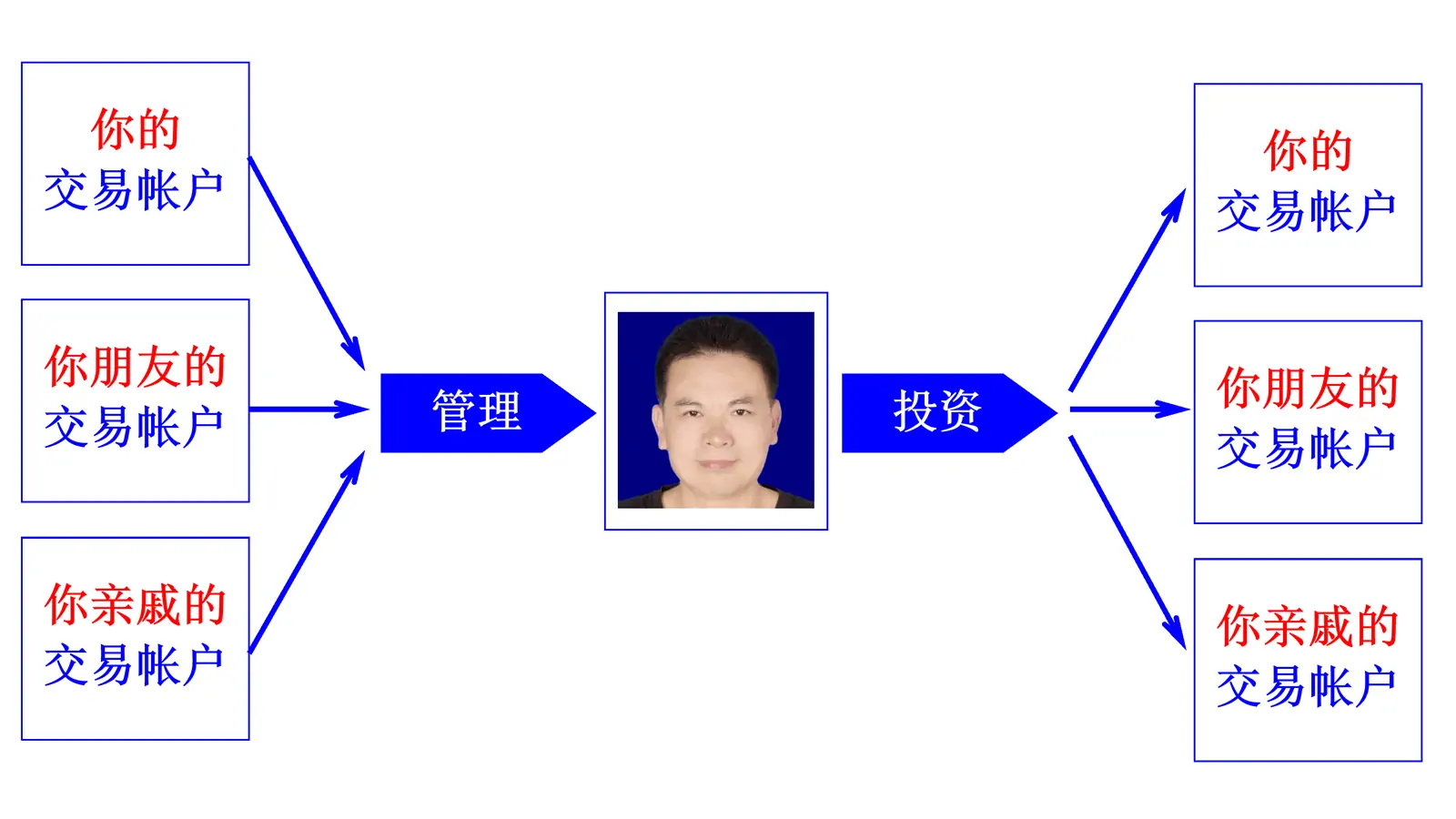
Appendix: Over Two Decades of Practical Experience | Tens of Thousands of Original Research Articles Available for Reference.
Since shifting from foreign trade manufacturing to foreign exchange investment in 2007, I have gained a deep understanding of the operating essence of the foreign exchange market and the core logic of long-term investment through over a decade of intensive self-study, massive real-world verification, and systematic review.
Now, I am publishing tens of thousands of original research articles accumulated over more than two decades, fully presenting my decision-making logic, position management, and execution discipline under various market environments, allowing clients to objectively assess the robustness of my strategies and the consistency of long-term performance.
This knowledge base also provides a high-value learning path for beginners, helping them avoid common pitfalls, shorten trial-and-error cycles, and build rational and sustainable trading capabilities.
The forex market has entered a phase of fierce competition for existing users due to a lack of new users. Forex brokers are employing aggressive marketing models, exacerbating the infighting among forex broker platforms and creating a vicious cycle in the industry.
In the two-way trading sector of forex investment, the industry as a whole has shown a continuous decline over the past decade, and forex investment trading has gradually entered the ranks of sunset industries.
From the perspective of industry development trends, the closure of forex broker trading platforms globally will become the norm in recent years and for a considerable period to come. Behind this trend lies a profound transformation of the industry ecosystem and a continuously deteriorating market environment.
Compared to emerging industries such as digital currencies and stablecoins, which have risen rapidly in recent years, the gap in industry vitality for forex investment trading is becoming increasingly apparent. Its sunset industry characteristics are constantly being reinforced, and it has even gradually become a niche industry. The shrinking industry has directly led to an increasing scarcity of customer resources. To compete for customers in a limited market share, most forex brokerage trading platforms have turned to aggressive marketing models. Specifically, these platforms are increasing their attractiveness to customers by lowering transaction costs and compressing spreads, while simultaneously increasing rebates to expand customer acquisition channels, attempting to seize market share through these concessions. It's important to clarify that aggressive marketing models are somewhat reasonable in a rapidly growing market with a continuous increase in new users, helping platforms quickly accumulate a customer base. However, as forex trading becomes a niche industry, entering a phase of competition for existing customers with scarce new users, this aggressive marketing model further exacerbates the involution among forex brokerage platforms, leading to a vicious cycle of industry competition.
For forex brokerage platforms, the aggressive marketing model continuously squeezes their profit margins, making it difficult to support normal hedging operations by placing customer orders in the market. As a result, most platforms are forced to adopt a business model of betting against their clients. This betting model inherently involves a conflict of interest, as the platform's profits directly oppose those of its clients. If a large number of clients withdraw their profits en masse, it will put immense pressure on the platform's cash flow and could even trigger an operational crisis. Against this backdrop, some platforms may engage in illegal practices such as refusing to allow clients to withdraw funds or restricting their ability to withdraw profits, severely damaging clients' legitimate rights. Meanwhile, even some forex brokers that adopt conservative operating strategies and do not rely excessively on aggressive customer acquisition methods are choosing to scale back or even close their forex brokerage businesses due to intense market competition, in order to avoid damage to their reputation and further squeeze on their profit margins. This further confirms the current decline in the forex industry.
It is worth noting that as forex trading becomes a niche industry, the new client base entering the market exhibits differentiated characteristics. Unlike clients who blindly followed trends in the past, most new investors today have undergone systematic trading training, possess certain professional knowledge and trading experience, and their investment behavior is more rational. From a long-term perspective, well-prepared forex investors have a significantly lower probability of loss. However, if these profitable investors withdraw their funds en masse, it will further exacerbate the financial pressure on forex brokerage platforms, potentially becoming the final straw that breaks the camel's back for some platforms.
Based on the current state of the forex industry and the potential risks of platform operating models, mature forex investors, when their trading is relatively stable and their probability of profit is high, should avoid platforms with excessively low transaction costs. These platforms often have a greater risk of illegal operations due to insufficient profit margins, and may manipulate investors' profitable orders, ultimately preventing investors from withdrawing funds and harming their investment returns.
In the two-way trading market of forex investment, the trader's character has a decisive impact on investment results. Kind-hearted forex traders are often more likely to achieve stable profits in the market.
These types of traders typically possess the core qualities of non-greed and patience. These qualities help them better cope with the inherent volatility of the forex market, avoid being misled by immediate gains from short-term market fluctuations, and consistently adhere to long-term investment logic and sound trading plans, thereby gaining opportunities for sustained profitability. At the same time, forex traders with a calm and composed mindset tend to remain rational when faced with market changes and their own decision-making errors. They are willing to face and admit their mistakes, and will not stubbornly adhere to established strategies due to emotional biases. Instead, they adjust their trading strategies in a timely manner according to the actual market situation, laying the foundation for successful subsequent trading.
In contrast to kind-hearted, rational, and composed traders, cunning and greedy forex traders often fall into the trap of chasing short-term gains in the forex market. These traders lack a long-term market judgment perspective, focus excessively on immediate profits and losses, and are prone to making irrational and erroneous decisions during market fluctuations, ultimately making it difficult to achieve sustained profitability. Furthermore, while forex traders who rely on clever tricks might gain small, short-term profits through speculative methods, the forex market is inherently complex and volatile. Long-term profitability requires a sound trading system and a trustworthy investment mindset. Such highly speculative traders, lacking a core, sustainable trading logic, ultimately cannot survive in the complex forex market.
It's worth noting that attempting to gain small profits in forex trading often causes traders to miss out on better investment opportunities. These traders, overly focused on minor, localized gains, easily overlook market trends and high-quality trading targets, ultimately failing to achieve their overall profit goals. Another major negative characteristic in forex trading is impatience. Such traders often fall into the trap of frequent buying and selling when currency prices fluctuate. Frequent trading not only significantly increases transaction costs such as commissions but also leads to a chaotic trading rhythm, increasing the probability of decision-making errors and significantly reducing the likelihood of profitability. More importantly, forex traders who stubbornly refuse to admit mistakes often cling to flawed trading strategies due to wishful thinking or pride, leading to accumulated losses and ultimately extinguishing any possibility of profitability in the forex market.
In fact, the saying circulating in the forex investment field, "90% tests a trader's character, only 10% tests their investment skills," accurately reveals the core logic of market profitability. As a highly transparent trading system governed by value principles, the forex market's trajectory is not swayed by individual will. Even if some traders attempt to use so-called technical skills to conceal their character flaws and try to gain illicit profits, they ultimately cannot deceive the market. Only those with sound character, integrating rationality, patience, and integrity into the entire trading process, can achieve long-term, stable profits in the complex and volatile forex investment market.
In the context of two-way forex trading, for investors, achieving an investment return one to three times that of a fixed deposit is considered a successful investment goal.
This goal-setting logic aligns with the risk characteristics of forex trading and conforms to the core principles of rational investment, avoiding the pitfall of blind trading due to an excessive pursuit of high returns.
From actual trading practice, many forex investors have a common cognitive bias: they habitually use specific profit amounts as annual trading goals, frequently setting concrete profit indicators such as "this year's profit should be XX amount," but ultimately often fall into the predicament of year-on-year losses, and usually, the higher the profit target, the greater the actual loss. In fact, the foreign exchange trading industry possesses significant unique characteristics. Its trading environment is influenced by multiple complex factors, including the global macroeconomy, geopolitics, and exchange rate fluctuations. The uncertainty of profits is far higher than in traditional industries. Therefore, its operational goal setting logic differs fundamentally from other industries, and it is not advisable to use specific profit amounts as the core trading objective.
For participants in two-way forex trading, a more scientific and reasonable annual goal setting should focus on the core dimension of "preserving capital." When investors prioritize capital preservation, they can more clearly control trading risks, paying more attention to position management, stop-loss settings, and the execution of trading discipline during the decision-making process. This effectively avoids aggressive trading behaviors arising from pursuing short-term high profits. This capital preservation-oriented trading mindset helps investors maintain rational judgment in a complex and volatile market environment, reducing errors caused by emotional trading, and is more conducive to achieving long-term stable profits, ultimately achieving a sustainable trading state of annual profitability.
In the two-way trading scenario of forex investment, traders inevitably encounter situations where their decision-making direction contradicts market trends. At this time, the primary mindset to cultivate is to avoid falling into a state of persistent regret.
Many traders, after making a misjudgment, often fall into the trap of repeatedly looking back, constantly dwelling on hypothetical propositions like "If I had chosen the right direction, I would have profited." This excessive regret is essentially an unreasonable self-criticism. It needs to be clear that when traders make their trading decisions, they are often in a "fog" of incomplete information asymmetry and unclear market trends. The confusion and hesitation at that time are due to objectively existing cognitive limitations. Even if they returned to that decision-making point, under the same information and market conditions, they would most likely have made the same choice. Therefore, excessively criticizing one's past self is meaningless.
More importantly, traders should avoid overly romanticizing the hypothetical scenario of "choosing the right direction." Such idealized imagination not only amplifies negative emotions in the present moment but also interferes with subsequent trading decisions. In fact, throughout the entire process of forex trading, every choice a trader makes based on their own understanding, market information, and risk tolerance, regardless of whether it ultimately results in profit or loss, is the optimal solution under specific time and space conditions, and each has its own rationality and inevitability. From an investment logic perspective, market trends are constantly changing, and a trader's decisions are inherently probabilistic judgments of market trends. Profit and loss are inherent attributes of trading, and there is no need to assign excessive subjective value judgments to different outcomes.
From the perspective of trading mentality and long-term development, the human visual structure dictates that we always face forward. This physiological characteristic also applies to the cognitive orientation in forex trading—traders should always focus on future market trends and subsequent decision optimization, rather than dwelling on past regrets. Looking back excessively only consumes a lot of psychological and decision-making energy, hindering a keen awareness of market dynamics. Only by breaking free from the constraints of past decisions, accepting each transaction result with an objective and rational mindset, and focusing attention on summarizing experience and refining trading strategies can one achieve a dual improvement in mindset and trading ability in the complex environment of forex trading.
Forex traders with low expectations, low volatility, and low drawdowns have the most stable investment growth curves.
In the two-way forex market, a rather contrasting phenomenon is worth noting: traders who consistently achieve profits are often not the group with deep professional expertise or rich practical experience as commonly perceived by market participants. Instead, they are more likely to be ordinary participants who seem "completely ignorant" of the complex operating logic of the forex market. This conclusion, while seemingly counterintuitive, can be corroborated by analyzing the actual performance of various market participants. To clarify the essence of this phenomenon, we must first identify which types of traders in the forex two-way trading field actually struggle to achieve consistent profitability.
Before discussing the profitable participants in forex two-way trading, we must first exclude several groups that are excessively glorified by the market but whose actual profitability is questionable. First, we must exclude speculative capital. The legendary stories circulating in the market of speculative capital leveraging tens of thousands of dollars to generate hundreds of millions in profits are mostly fictionalized narratives. These narratives are essentially traps built on investors' get-rich-quick mentality. The higher investors' trust in these stories, the more likely they are to make irrational decisions in trading, leading to exacerbated losses. Secondly, technical analysts are not necessarily a group capable of achieving stable profits. In fact, many technical analysts' market analysis and guidance primarily serve to guide retail investors' trading direction rather than help them achieve profits. They may even mislead retail investors' trading decisions to some extent, ultimately harming their investment interests. Furthermore, traders who excessively pursue technical mastery are equally susceptible to losses and even bankruptcy. These traders often become engrossed in the intricate study of various technical indicators and trading strategies, neglecting the inherent uncertainty and randomness of the market. Over-reliance on the precision of technical analysis can lead to frequent misjudgments during market fluctuations, ultimately resulting in financial losses. In addition, champions of various live trading competitions are not necessarily representatives of sustainable profitability. Their outstanding performance during the competition is like a shooting star—briefly brilliant but unsustainable. Their trading models often rely on short-term market opportunities under specific conditions, lacking long-term replicability. Once market conditions change, they are highly susceptible to plummeting from profit peaks to losses.
Having excluded the aforementioned groups, we return to the core question: what kind of traders can achieve stable profits in two-way forex trading? The answer lies precisely with those considered "fools" by some market participants, those who are completely ignorant of the specific details of the forex market's operation. This "ignorance" manifests in their responses to specific questions about short-term markt trends and core themes—when asked about the specific direction of forex currency movements over the next few years, they don't offer subjective guesses but honestly state they don't know; when pressed about the core trading themes of the forex market over the year-end, they similarly don't offer conclusions based on speculation but clearly state they cannot predict them. However, this "ignorance" is not a genuine lack of knowledge, but rather reflects a clear understanding of market uncertainty, which is precisely the key prerequisite for their profitability. In fact, these traders don't trade blindly without a plan. Their core competency lies in constructing a logically closed-loop, risk-controlled trading system. They are able to eliminate the interference of subjective emotions and consistently and strictly adhere to the system's trading rules. This unwavering commitment to "blindly following" the rules precisely avoids the irrational actions of most traders in the market caused by over-prediction and emotional fluctuations. Thus, in the long run, they achieve sustainable profitability through the stability of their rules.
Foreign exchange investment traders should allow for losses, allow for wrong directions, and allow everything to go against their wishes.
In the two-way trading market of foreign exchange investment, mature trading cognition is the core foundation for traders to establish themselves in the market, and the key prerequisite for this mature cognition is to learn to accept various uncertain outcomes in market operation.
Specifically, foreign exchange traders first need to establish an acceptance mentality towards losses, clarify that the essence of two-way trading determines that both profit and loss are normal results of market operation, and do not need to deny their trading logic due to a single loss, nor do they have to be hesitant and paranoid about trading decisions due to fear of losses.
At the same time, traders also need to face the possibility of misjudgment in direction. The foreign exchange market is influenced by multiple repeated and complex factors such as global macroeconomic data, geopolitical changes, and monetary policy adjustments. Any direction prediction based on historical data or technical analysis may have deviations. Accepting such misjudgment is not a denial of one's own analytical ability, but a rational reverence for the complexity and randomness of the market.
It is worth noting that even for currency pairs that have been carefully researched, held for a long time, and have achieved stable profits, traders need to be mentally prepared for sudden deterioration of their fundamentals. The fundamental factors of the foreign exchange market are always in a dynamic state of change. The economic fundamentals, policy environment, and other factors that support the trend of currency pairs in the early stage may reverse due to unexpected situations. If these unexpected changes cannot be accepted, it is easy to make irrational stop loss or position decisions when the market turns, which can lead to a significant loss or even turn into a loss in the early stage.
Essentially, the maturity of forex trading is reflected in traders no longer placing their subjective expectations above the objective laws of the market, being able to accept various market outcomes that are contrary to their expectations, and abandoning the paranoid perception that market trends must conform to their own expectations. This means that traders need to have a clear understanding that the direction of the foreign exchange market has its own objectivity and independence, and will not change due to individual subjective will. Any attempt to force the market to operate in the direction they desire is a irrational mentality that goes against the essence of the market.
Only when foreign exchange traders truly allow all possible outcomes to occur, without fear of losses and judgment errors, nor are they entangled in sudden reversals of profitable positions, and respond to various market fluctuations and changes with an inclusive and rational attitude, can they get rid of the interference of subjective emotions on trading decisions and gradually establish a stable and sustainable trading system. This is also the core indicator of whether a foreign exchange trader is moving towards maturity.
The various myths of sudden wealth circulating in the foreign exchange margin market are almost all carefully edited narrative products in the upstream of the interest chain.
In the two-way foreign exchange trading market, the widely circulated "myth of sudden wealth" among investors is essentially a false narrative. These myths are not real products under the objective laws of the market, but marketing tools carefully packaged and created by market stakeholders. Their core purpose is to attract a large number of inexperienced novice investors to enter the market, deliver continuous traffic and funds to the market, and meet the potential demands of stakeholders.
From the actual market situation, the vast majority of so-called 'instant wealth myths' do not have authenticity. According to market observations, the proportion of such false narratives is as high as 99%, all of which are artificially constructed false scenes. It is not difficult to deeply analyze its formation logic, and it can be found that sudden wealth itself is the core aspiration of many novice investors when entering the foreign exchange market. Some profit seeking speculative forces in the market precisely grasp this common psychological demand and package and interpret the "sudden wealth scene" through similar film and television script creation methods. This is consistent with the creative logic of some current brainless films and TV dramas, such as "ordinary individuals are taken care of by wealthy women to achieve class crossing" and "domineering CEOs fall in love with ordinary Cinderella". The reason why these unrealistic plots can be widely spread is that they satisfy some people's fantasy of achieving success without effort. However, if the plot is created according to the real human logic of "high wealth and handsome men and white wealth and beautiful women are of equal status" in reality, it is often difficult to attract the audience's attention; The myth of sudden wealth in the foreign exchange market is no exception. It is precisely because every novice investor harbors a desire for quick wealth that such false narratives have the soil to survive and spread.
In the field of two-way foreign exchange trading, the negative impact of such false wealth myths far exceeds their surface effect of "attracting traffic". In addition to inducing a large number of traders who are not fully prepared, lack professional knowledge and risk awareness to enter the market rashly, becoming the "fuel" in market fluctuations, and ultimately facing a high probability of capital losses, what is more serious is their destructive impact on the market ecology and investor mentality - it greatly disrupts the original intention of the vast majority of investors who hope to steadily accumulate wealth through steady trading. In fact, for the vast majority of foreign exchange investors, as long as they can abandon the speculative mentality of overnight wealth and adhere to the principle of rational investment, they have the ability and opportunity to gradually accumulate wealth; From the perspective of actual profit potential, if investors can establish conservative return expectations, not pursue unrealistic high returns, and only aim for "returns that are twice, twice, or even three times higher than fixed deposits", it is not difficult to achieve an annualized profit of more than 10%. This profit target is easily achievable for investors with basic trading skills and risk control awareness.
In the two-way trading market of foreign exchange, introverted traders often possess a more natural advantage compared to extroverted traders.
The core source of this advantage lies in the inherent nature of the foreign exchange trading industry - seeking inward.
Unlike other industries that require frequent external communication and rely on the integration of external resources, the core logic of foreign exchange trading lies in the precise control of one's inner state and deep perception of true thoughts. The quality of a trader's decision-making does not depend on the accumulation of external information, but rather on the clarity of self-awareness and stable control of inner emotions. This industry characteristic naturally aligns with the personality traits of introverted traders.
One of the core traits of introverted traders lies in their adaptation to and enjoyment of solitude, which perfectly aligns with the core requirement of "looking inward" in forex trading. In the trading process, whether it's analyzing market trends, formulating trading strategies, or managing emotions during position holding, traders need to invest sufficient time and energy in independent thinking, deeply combing their own trading logic, identifying potential cognitive biases, and simultaneously perceiving inner emotional fluctuations to avoid negative emotions such as greed and fear from interfering with decision-making. Introverted traders are able to maintain focus in a solitary environment, completing self-examination and reflection without external interference. This ability enables them to be more proactive in exploring their inner states and calibrating their trading mindset, and it is also easier for them to form a stable trading rhythm and a mature decision-making system through long-term trading practice.
Compared to introverted traders, the personality traits of extroverted traders exhibit a certain degree of mismatch with the "inward-seeking" essence of foreign exchange trading. Extroverted traders have strong social attributes and often need to invest a lot of time and energy in external social interactions. This outward allocation of energy makes it difficult for them to set aside sufficient time for self-examination and inner perception. When exposed to high-frequency social interactions for a long time, extroverted traders' attention is more easily drawn by external information, making it difficult for them to settle down and sort out their own trading logic and inner state, thus hindering their ability to deeply explore self-awareness and precisely control emotions. This difference in energy allocation leads to extroverted traders often needing to put in more effort to achieve awakening and transformation in trading cognition, and it is also more difficult for them to quickly form a stable trading mindset. From industry practice, most foreign exchange trading experts who truly possess a mature trading system tend to have the trait of reducing ineffective social interactions and focusing on self-improvement, which also indirectly confirms the adaptability of foreign exchange trading to introverted traits and the natural advantages of introverted traders in this field.
Core Cognitive Deficiencies and Obstacles for Forex Traders: Excessive Concern for Self-Reliance and Excessive Desire for Profit.
In the forex market, the core issue preventing most traders from achieving long-term, stable profits often boils down to two fatal cognitive flaws and obstacles: an obsession with "self-reliance" and a biased goal of "profit-seeking." These two problems are intertwined, jointly restricting traders' rational decision-making and execution capabilities, becoming key barriers on the path to profitability.
The obsession with "self-reliance" manifests specifically as an excessive pursuit of "self-correction" throughout the trading process, and a subconscious tendency to seek validation. In the market analysis and trend prediction stages of forex trading, traders often fall into the trap of "proving themselves," directly linking the correctness of their market judgments to their personal abilities and cognitive levels. The most typical behavioral manifestation of this cognitive bias in trading execution is "holding onto losing positions"—when the direction of the position contradicts the actual market movement, the trader does not make a stop-loss decision based on objective market signals, but rather chooses to hold onto the incorrect position out of a "reluctance to deny oneself." Essentially, this kind of "holding onto losing positions" behavior is not a rational judgment of market trends, but a blind defense of personal opinions. Its core aim is to avoid the embarrassment of "self-contradiction," while ignoring the potential risks of two-way fluctuations in the forex market. Ultimately, it often leads to small losses escalating into significant financial losses.
The biased goal of "being too greedy for money" stems from a misperception of the trader's profit objective—treating "making money" as the sole core goal of trading, even equating money with the ultimate pursuit in life. Undeniably, profit is one of the core objectives of forex trading, but traders need to understand that trading is not the only way to acquire wealth. Employment, business operations, and many other methods can all lead to wealth accumulation. This misperception directly causes serious utilitarian biases in trading: on the one hand, the eagerness to profit can lead to irrational behaviors such as frequent trading and over-leveraging, causing traders to ignore market rules and risk control, falling into a vicious cycle of "chasing highs and selling lows"; on the other hand, viewing money as the purpose of life can cause excessive emotional fluctuations when facing profit volatility—greed and recklessness when profitable, and fear and anxiety when losing, further exacerbating decision-making errors. In fact, money in foreign exchange investment and even in life as a whole should be defined as a tool to achieve goals, rather than the goals themselves. The lack of understanding of this core logic is a major reason why many traders fall into trading difficulties.
Forex traders are more like miniature CEOs and decision-makers.
In the two-way forex market, a successful forex investor's role goes far beyond that of a mere trade executor; it's more akin to the CEO and BOSS of a miniature business unit.
The core logic of this role is that forex trading is not simply speculative buying and selling, but a systematic business activity requiring coordinated market analysis, risk management, and self-awareness improvement. Every trading decision is like a strategic deployment in business operations, directly impacting capital security and profit generation.
From a core task perspective, successful forex traders need to simultaneously advance two key tasks, which complement each other and form the foundation for profitable trading. First, it's about focusing on trend discovery and opportunity capture in the market, the core of which lies in accurately identifying breakout signals and trend directions of major currency pairs. Essentially, the profit potential in the forex market stems from the price fluctuations and trend extensions of currency pairs. A market lacking volatility makes it difficult to form effective price spreads, and failing to grasp the trend direction leads to trading decisions that deviate from market rules, ultimately resulting in losses. Therefore, traders need to rely on diverse tools such as macroeconomic data, geopolitical dynamics, and technical indicator analysis to continuously track the supply and demand changes and market sentiment of major currencies, thereby identifying trading opportunities with profit potential.
Secondly, it involves cultivating and improving one's internal cognitive abilities. Competition in the forex market ultimately boils down to competition in traders' cognitive levels. The objectivity of market fluctuations and the bias in traders' subjective judgments are often the key factors leading to trading errors. The core goal of internal cultivation is to continuously improve one's trading cognitive system, including a deep understanding of market operating rules, a clear definition of the applicable boundaries of trading strategies, an accurate understanding of one's own risk tolerance, and the scientific management of trading psychology. Only by continuously iterating one's trading cognition can one maintain rational judgment in a complex and ever-changing market environment, avoid being disturbed by short-term market noise, and effectively cope with various uncertainties and risks in the trading process.
It is worth emphasizing that when forex traders can solidly complete the two core tasks of market opportunity discovery and internal cognitive cultivation, and achieve their organic synergy, they can build a sustainable profit model. The foreign exchange market has a huge amount of capital and is constantly volatile. As long as you always adhere to scientific trading logic, respond to market changes with a mature cognitive system, and accurately capture trend opportunities, you can continuously obtain reasonable returns under the premise of compliance. This is the core logic behind the long-term profit potential of the foreign exchange market.
In the realm of two-way forex trading, trading itself can be seen as both the most difficult and the easiest thing. This seemingly contradictory perception is actually closely related to the trader's level of commitment and depth of understanding.
Nothing in the world is inherently inherently difficult or easy; the key lies in whether one takes action. Proactive practice can gradually transform even the most challenging tasks into easier ones; hesitation and reluctance to try will make even the simplest things increasingly difficult. This logic also applies to cognitive improvement and the learning process—with a spirit of inquiry and proactive exploration, even the most profound knowledge can be gradually mastered; without initiative in learning, even basic common sense will become obscure and daunting.
This principle is particularly evident in the two-way forex trading scenario. For traders, if they can immerse themselves in in-depth study, systematically organize and comprehensively master the knowledge system, industry common sense, practical experience, and technical methods of forex trading, and thoroughly research the core elements and potential risks of trading, the originally complex trading logic and operational procedures will naturally become clear, and trading decisions will be made with greater confidence and basis. Before mastering the core logic and operational essence of forex trading, most traders often compare it to traditional economic activities like opening a physical store, operating a factory, or running a foreign trade company, or even to simply working for someone else. At this point, they generally feel that forex trading is far more difficult than these areas, even considering it the most difficult thing in the world.
However, as traders continuously learn and practice, truly understand the inherent laws of forex trading, accurately grasp the core logic of market fluctuations, skillfully utilize various analytical tools and trading strategies, and develop a mature and stable trading system, their perception of the difficulty of trading undergoes a fundamental shift. They then discover that forex trading is simpler and easier than traditional economic activities that involve high fixed costs and complex supply chain and market channel issues, and even more flexible and relaxed than working for someone else, which is limited by fixed hours and location and has limited income growth potential. This leads to the perception that "forex trading is the easiest thing in the world." This shift in perception is not essentially a change in the inherent difficulty of trading itself, but rather a significant improvement in the trader's own capabilities and cognitive dimensions, enabling them to proactively control and mitigate the difficulties of trading.
In the forex two-way trading market, the core reason successful traders achieve excess profits lies in their long-term accumulated trading experience and advanced cognitive level, rather than the absolute advantage of the technical indicators they use.
Compared to the choice of tools, the trader's own depth of understanding, perspective, and mindset are the key variables determining trading results. This core logic is particularly evident in the forex two-way trading scenario. Specifically, the profit logic of seasoned traders who can consistently generate profits does not rely on the superiority or inferiority of a single technical means or specific indicator tool (such as the common analytical tools like moving averages), but rather stems from a profound understanding of market patterns, precise risk control, and a clear understanding of their own trading behavior. Essentially, it is a concentrated manifestation of comprehensive human qualities in trading, rather than a result of simply being empowered by tools.
In stark contrast to successful traders, ordinary forex traders generally face profitability difficulties. The core problem lies precisely in cognitive biases—most ordinary traders invest a great deal of energy in learning trading techniques, excessively pursuing the application skills of various indicators, while neglecting the accumulation of trading experience and the improvement of cognitive abilities. This learning model, which emphasizes tools over understanding, makes it difficult for traders to cope with the complex challenges of the two-way fluctuations in the foreign exchange market. They often find themselves passive in market changes and struggle to achieve stable profits.
It is important to clarify that accumulating trading experience and improving cognitive levels are not achieved overnight; they require long-term investment and systematic training. In this process, traders first master basic trading techniques, then gain extensive practical experience, transforming fragmented technical knowledge into reusable trading experience. Through continuous review and reflection, they elevate their experience to a deeper understanding. This gradual evolution from technique to experience, and then to understanding, is the essential path for traders to break through profit bottlenecks and achieve trading success. Any attempt to skip the stages of experience accumulation and cognitive improvement, relying solely on technical tools for profitability, will ultimately be unsustainable.
In the two-way trading scenario of foreign exchange investment, traders' large profits and huge losses often occur silently, a characteristic that contrasts sharply with traditional investment fields.
Compared to foreign exchange investment, the operating model of traditional fund investment is more transparent and marketing-oriented. Fund managers typically actively promote themselves and their products through various channels, regularly disclosing or selectively revealing performance data. Their core objective is to attract investors to subscribe to fund products; after all, in a normal market environment, fund products lacking proactive marketing struggle to gain sufficient market attention and capital inflows.
From an industry perspective, foreign exchange investment falls under the category of off-exchange trading, exhibiting a niche and unpopular nature. More importantly, central banks worldwide, driven by the core objectives of maintaining the stability of their financial systems and ensuring the competitiveness of foreign trade exports, generally employ strict regulatory and control measures in the foreign exchange market, further exacerbating the information isolation inherent in the foreign exchange industry. Against this backdrop, large holders of funds in the foreign exchange market rarely engage in frequent public disclosure. Only in special circumstances involving short-term market manipulation do coordinated actions by related parties occur. Looking back at market practices over the past two decades, there have indeed been several cases where large foreign exchange holders manipulated the market through joint meetings and negotiations, but such situations are not the norm in the industry.
In summary, foreign exchange investment and trading are inherently a highly secretive industry. The entire trading process is largely a psychological game and decision-making contest among traders relying on market data presented on computer terminals. Whether a trader achieves substantial profits through accurate judgment or suffers huge losses due to market fluctuations or poor decision-making, as long as the corresponding broker does not proactively disclose relevant trading information, these profits or losses often remain unknown to the outside world. This further confirms the core characteristic of foreign exchange investment and trading: its quiet and unassuming nature.
In the field of two-way trading in foreign exchange investment, this industry has shown significant characteristics of a sunset industry and belongs to the niche industry category with limited market capacity.
From the actual performance of market capacity, although the foreign exchange market is nominally large, in recent decades, the monetary policies of most central banks around the world have been anchored to the US dollar interest rate. This universal policy orientation has directly led to a significant compression of the interest rate spread between different currencies, and has remained in a relatively narrow range for a long time. As one of the core sources of profit in foreign exchange trading, the limited space of interest rate differentials directly limits the profit margin of mainstream currency pair trading, resulting in the profit level of related transactions being firmly locked in a lower range, making it difficult to achieve substantial breakthroughs.
Due to the rigid constraints of profit margins, the development prospects of the foreign exchange industry have a clear ceiling, and the overall growth potential of the industry is extremely limited. This situation also directly affects the development pattern of institutions in the industry. Most of the top ranked foreign exchange industry giants internationally have already attached themselves to large investment banking systems, either being acquired by large investment banks or becoming their controlling subsidiaries. From the strategic layout of large investment banks, the inclusion of foreign exchange brokers is not based on profit as the core goal, but rather as an important component of brand strategy layout, leveraging the business layout in the foreign exchange field to enhance the comprehensiveness and influence of their own brand. The core reason is that the capacity of the foreign exchange market itself is limited, making it difficult to support large-scale profits. Currently, this field no longer has traffic dividends, and the potential user base is relatively small with clear growth limits. The foreign exchange market has more often become a tool for promoting large investment bank brands rather than a core profit sector.
Based on an objective assessment of the current situation in the aforementioned industry, we solemnly warn newcomers in the foreign exchange investment field that if there are still other career paths to choose from, they should try to avoid entering the foreign exchange investment trading field as much as possible, as it is an industry that combines sunset attributes and niche characteristics. It should be clarified that as an investor with experience in large capital operations, this withdrawal is not due to concerns about others sharing benefits due to the superior market prospects, but based on a profound understanding of the nature of the industry. In fact, before entering the foreign exchange market, I already had a reserve of millions of dollars in funds, which did not come from foreign exchange trading, but were accumulated through investing in foreign trade factories. Due to China's foreign exchange control policies, my large offshore funds cannot enter the country directly. Entering the foreign exchange market is only to find a feasible investment channel for this portion of funds, rather than because the field has outstanding profit advantages.
Finally, it should be emphasized that there is a fundamental cognitive premise in the field of foreign exchange investment trading: although a stable annual return of 10% -20% may be achieved through scientific trading strategies, there is almost no possibility of doubling or multiplying funds in this field, let alone achieving the goal of overnight wealth. For any group interested in investing in foreign exchange, a clear understanding is the core prerequisite for avoiding irrational investment decisions and viewing industry value rationally.
In the forex market, emotional stability is arguably one of the core competitive advantages for traders. Compared to other trading factors, irrational emotions often have a more direct and devastating negative impact on trading decisions.
The forex market's inherent two-way volatility and instant feedback make traders' emotions more susceptible to market fluctuations. Loss of emotional control often leads to the collapse of trading logic, resulting in irreversible losses.
From the perspective of general interpersonal communication, ordinary people are more receptive to calm and rational communication and criticism in everyday situations. Even with differing opinions, a calm emotional tone ensures the smooth transmission of information. Conversely, even if the other party's viewpoint is fully reasonable and feasible, a poor communication tone can easily trigger resistance. This tendency to prioritize emotions over facts is amplified in the forex trading context, producing even more severe negative consequences. While emotional resistance in daily communication may only affect interpersonal relationships, emotional dominance in trading directly distorts the judgment of market signals and disrupts established trading strategies.
In actual forex trading, negative examples of emotionally driven decision-making are extremely common. When the market clearly shows signs of directional divergence—meaning existing trading positions fundamentally conflict with the overall market trend—some traders, driven by wishful thinking, resentment, and other negative emotions, choose to hold onto losing positions, ignoring the core fact that the market trend has substantially reversed. This ultimately leads to a continuous expansion of losses. The essence of this behavior is that traders prioritize personal emotions over objective market laws, replacing rational judgment of actual market movements with subjective assumptions.
More significantly, many forex traders fall into the cognitive trap of "prioritizing personal feelings," focusing excessively on their current losses and subjective pain, while actively ignoring core objective factors such as market trends, policy changes, and the logic behind exchange rate fluctuations. This cognitive bias creates a vicious cycle: losses trigger negative emotions, which further hinder rational understanding of market facts, leading to more irrational decisions such as averaging down or cutting losses, ultimately exacerbating the losses.
Ultimately, success in two-way forex trading is essentially a process of rationality overcoming emotion. For traders, only by actively eliminating the interference of subjective emotions and establishing a decision-making logic centered on market facts, consistently using objective factors such as market trends, data signals, and risk thresholds as the sole basis for trading decisions, can they build a stable trading system in the complex and ever-changing forex market and gradually achieve long-term trading success. Emotional management does not negate the trader's subjective feelings, but rather guides them rationally, allowing objective facts to dominate trading decisions. This is also one of the key dimensions that distinguishes professional traders from ordinary traders in two-way forex trading.
Forex traders must proactively absorb new knowledge to avoid being left behind.
In the two-way trading scenario of forex investment, the development of a trader's core competencies relies on continuously pushing beyond their comfort zone and proactively embracing new ideas. Only by keeping pace with the times and actively adapting to changes in the market environment can one effectively avoid the risk of being eliminated by industry iterations.
This core requirement is not unique to the forex investment field but is a universal law permeating individual growth and social development. It has already shown distinct characteristics in traditional social life. Those with forward-thinking intelligence consistently maintain an awareness of pushing beyond their comfort zone, actively trying new things in unknown areas. Conversely, some who cling to their established ways remain confined within their comfort zone, habitually rejecting new attempts with negative attitudes such as "I won't do this" or "I can't do that." It is worth noting that the rapid iteration of the times is constantly reconstructing cognitive systems and survival rules. Many concepts and survival logics formed by our parents based on past experience have gradually lost their applicability in today's diversified and fast-paced era. Similarly, the cognitive framework and thinking patterns established by our generation today will likely lag behind the next generation in the next two or three decades due to further development of the times.
Returning to the essence of two-way forex trading, the market environment faced by traders is constantly changing, and industry development continuously presents new demands. This requires traders to continuously learn and break through their own cognitive boundaries, proactively mastering new things and logics that can adapt to market changes. Looking at the industry's development history, the market environment has never stopped iterating. For example, the negative interest rate policies and quantitative easing measures that emerged globally in the past decade were novel phenomena that broke through traditional financial understanding, profoundly impacting the pricing logic and trading rhythm of the global forex market. In the current stage of development, the rise of emerging financial forms such as digital currencies and stablecoins has had a significant impact on the forex investment and trading field. This impact has not only changed the traditional forex trading market ecosystem but has also further shrunk the already niche forex trading industry, leading to a decline in market activity. Against this backdrop, forex traders need to establish dynamically adjustable investment strategies and rationally plan their capital size based on the actual market capacity. Compared to blindly expanding capital investment, moderately reducing the capital size is more in line with the current market situation, because the current forex investment market no longer has the capacity to accommodate large-scale funds. Excessive expansion of capital size will inevitably amplify trading risks. This requires traders to always maintain a keen insight into the development of the situation and continuously optimize and adjust their investment pace according to changes in the market environment to ensure that their trading strategies are effectively adapted to the development trends of the times and the actual market conditions.
Forex traders with self-awareness are more likely to successfully transition from beginner to expert.
In the two-way trading scenario of forex investment, traders with self-awareness tend to be more adept at this transition. This phenomenon stems from a clear understanding of the boundaries of their own knowledge, a cognitive trait that also exhibits significant differentiation across broader social contexts.
Specifically, those with rational cognitive abilities, even those with established expertise in their familiar areas, will humbly accept their lack of knowledge when venturing into unfamiliar territory. Conversely, those lacking rational cognitive ability are prone to falling into a "cognitive blind spot," often overgeneralizing their abilities. Even when faced with completely unfamiliar or unexplored areas, they may underestimate the cognitive threshold based on subjective assumptions of "cleverness," assuming they can quickly master the subject with their existing skills, ignoring the professional barriers and core logical differences between different fields.
This cognitive difference is further amplified in the two-way forex trading field, directly impacting a trader's growth trajectory and trading results. Forex traders with self-awareness, when entering a trading niche they are completely unfamiliar with, they can readily accept their own lack of knowledge and even proactively face the initial "cognitive awkwardness"—they clearly understand that in unfamiliar trading scenarios, they are highly likely to make frequent mistakes due to unfamiliarity with market rules, trading logic, risk control, and other basic common sense. Because of this clear understanding of their own shortcomings, such traders will proactively establish a systematic learning mindset, continuously supplementing their knowledge gaps through multiple paths such as studying professional trading books, searching authoritative industry materials, and consulting with experienced traders, constantly iterating their trading knowledge and practical skills, ultimately achieving a steady improvement in trading ability.
Conversely, forex traders lacking self-awareness often fall into the trap of "cognitive arrogance" when facing unfamiliar forex trading. They are unable to face their own cognitive shortcomings, nor do they develop a sense of awareness of their own deficiencies. Instead, they approach trading with a subjective bias of "omniscience." In this mindset, they neither proactively seek guidance from industry veterans nor are willing to invest the effort to fill knowledge gaps. They consistently rely on rigid cognitive logic to navigate the complex and ever-changing foreign exchange market, making it difficult to iterate and upgrade their trading skills. The foreign exchange market itself is characterized by high volatility and high professionalism, demanding a deep understanding and extensive practical experience from traders. Traders lacking self-awareness and a willingness to learn often end up with trading losses due to their inability to accurately manage market risks and respond to market changes, and may even be forced to leave the forex trading field altogether.
In the two-way forex market, wealth accumulation always follows a gradual logic; there is no path to instant riches.
For forex traders, the core prerequisite for stable profits is to acknowledge the growth cycle of trading skills and build their trading system with a long-term perspective, rather than hoping for short-term, accidental gains.
Looking at the development patterns of various industries, top practitioners all require time to hone their skills. This pattern also applies to the highly specialized field of forex trading. The generally accepted growth cycle in the industry shows that the first three years are a beginner's period, focused on familiarizing oneself with the rules and accumulating basic knowledge; three to five years are a growth period of in-depth exploration, requiring continuous trial and error in practice to calibrate direction; five to eight years gradually lead to a mature stage of skilled operation, forming a relatively stable execution logic; only after ten years of dedicated practice, undergoing the complete test of market cycles, can one be considered an expert with professional judgment and the core ability to independently cope with complex market changes.
However, many forex trading novices fall into a cognitive bias, the core problem being that they ignore this objective growth pattern. In the cognitive framework of these traders, the improvement of forex trading skills lacks a clear time anchor. They often disregard the industry consensus of "ten years of honing a sword," mistakenly believing that core profitability can be mastered without long-term accumulation.
Specifically, the cognitive misconceptions of novices are mainly reflected in three aspects: First, they overestimate their own ability boundaries, naively simplifying the development of trading skills into a short-term learning process, even hoping to achieve basic financial freedom through a few months of theoretical study and practical operation, completely ignoring the common rule that top levels in various industries require decades of in-depth cultivation; Second, they confuse the boundary between accidental gains and core competencies, attributing short-term profits in trading to their own operational skills and judgment, failing to clearly recognize that such gains may only be accidental coincidences in market fluctuations or the result of short-term luck, lacking sustainability; Third, they lack respect for the complexity of the market, failing to realize that the forex market is affected by multiple factors such as macroeconomics and geopolitics, and its uncertainty requires traders to rely on long-term accumulated experience and knowledge, rather than short-term subjective judgments.
Talent is either driven by interest and proactive cultivation, or a tenacious pursuit forced by adversity.
In the two-way trading field of forex investment, few traders are born with "talent." Its core either stems from a heartfelt passion or is rooted in the tempering of real-world challenges.
In traditional understanding, people often equate exceptional ability in a particular field with talent. However, a deeper examination reveals that any professional competence beyond the ordinary does not come from nowhere, but is the result of decades of consistent accumulation—a comprehensive ability condensed from the refinement of behavioral habits, the honing of personality traits, and the optimization of reaction mechanisms. It is also the inevitable product of focusing on a single area with unwavering dedication, thoroughly exploring its principles and achieving a profound understanding.
The core difference between people lies in the dimension and depth of their actions: some remain at the superficial level of "taking action," some achieve synergy between "thinking and planning" and "taking action," while true masters reach the realm of "deep cultivation with heart." Compared to those who merely think, the results of an hour of dedicated study by someone who focuses on their mind are comparable to ten hours of superficial effort by the latter; compared to mechanical execution by hand, an hour of in-depth study is worth more than a hundred hours of aimless labor by the latter. The root of this difference lies in whether one is willing to immerse themselves in understanding the essence and exploring the underlying principles.
Returning to the field of forex investment, the logic of a trader's "talent" is similar. Firstly, it stems from an extreme passion and desire for exploration: a deep interest in the inherent logic of trading mechanisms, a proactive approach to understanding core principles, and a gradual development of a unique cognitive system through exploration. Secondly, it arises from the pressure and tempering of real-world difficulties: having experienced the hardship of financial scarcity and the pain of humiliation caused by lack of money, a strong determination to cultivate trading skills and accumulate wealth is born. Even after countless trading setbacks and market trials, they maintained unwavering resilience, focusing intently on mastering the essence of trading. Ultimately, they broke through cognitive barriers, mastered trading logic, and achieved a leap in wealth accumulation.
Finally, "talent" in forex trading is never an innate gift, but rather the inevitable result of proactive cultivation driven by interest, or the relentless pursuit forced by adversity.
The path to mastering forex two-way trading is essentially a progressive process for traders, moving from confusion to clarity, from complexity to understanding, and from stagnation to smooth operation.
This progressive logic is consistent with the growth patterns in human society—from birth, individuals embark on a journey of development from initial exploration to skillful mastery, from struggle to ease and success. After initial chaotic trials, they gradually clarify their understanding, accumulate experience, and ultimately enter a stable and smooth path.
For practitioners of forex two-way trading, the cognitive difficulties encountered upon entering the market are common. The forex trading system encompasses multiple dimensions, including professional knowledge, market common sense, technical analysis, practical experience, and investment psychology. The unknown nature of this new field is like a fog, easily leading beginners into a predicament of "the more they learn, the more confused they become; the more they delve, the more bewildered they feel." At this stage, knowledge accumulation is often fragmented, technical application lacks systematic support, interpretation of market fluctuations remains superficial, and investment mentality is easily swayed by short-term gains and losses, making it difficult to form a stable trading logic.
The key to breaking through the current impasse lies in the systematic reconstruction of accumulated diverse elements. When traders actively initiate the process of organizing, summarizing, classifying, filtering, and refining knowledge, scattered knowledge points gradually connect into lines and weave into a dense network. The application scenarios and boundaries of technical tools become increasingly clear, lessons learned from successes and failures in practical experience are transformed into replicable decision-making bases, and the understanding of investment psychology is grounded in practical methods of mindset regulation. In this process, the operating rules of the market and the inherent logic of market fluctuations gradually emerge, dispelling previous confusion and uncertainty.
When traders have thoroughly mastered and understood all dimensions of the trading system, they will reach a turning point of "sudden enlightenment." At this point, complex technical analysis can be condensed into concise decision signals, complex market information can be quickly filtered out to identify core elements, investment mentality becomes more calm and stable, trading actions become natural and fluid, and the profit logic is steadily established. This transformation from "difficult" to "simple" to "smooth" relies on the trader's respect for difficulties rather than fear, and their dedication to in-depth study rather than complacency. Only by maintaining a persistent passion for learning and a meticulous attitude towards research, and by continuously refining our understanding and optimizing our systems through market practice, can we overcome the thorns of growth and reach the smooth path to advanced trading.
Large investors prioritize steady growth and gradual accumulation. Retail investors, on the other hand, are driven by short-term gains and prone to reckless bets.
In the two-way trading ecosystem of the forex market, the vast difference in capital size directly shapes the drastically different investment logics and behavioral paradigms of institutional investors (large investors) and retail investors.
Retail investors often harbor speculative aspirations of "high returns with low investment, overnight riches," while institutions adhere to the investment principle of "high leverage with low returns, accumulating small gains into significant profits." This divergence in philosophies not only determines the orientation of trading strategies but also profoundly influences the ultimate outcome of investments.
From a core perspective, the goals set by institutions and retail investors are strikingly different. For institutions with substantial capital reserves, "high leverage with low returns" is not a sign of conservatism or weakness, but a rational choice based on capital size and risk tolerance. With their massive capital, institutional trading decisions prioritize long-term stability and sustainability, rather than drastic short-term fluctuations in returns. In the investment framework of these entities, an annual return of 20%-30% is considered satisfactory. This seemingly modest return reflects a deep respect for market dynamics and an extreme consideration for capital security. The goal is to achieve steady asset appreciation through the accumulation of small, consistent profits.
In contrast, retail investors, with their relatively small capital, often prioritize "leveraging small amounts for large gains." They frequently hope to leverage limited funds to generate excess returns, hoping to achieve rapid wealth growth through the two-way fluctuations of the foreign exchange market, even harboring dreams of multiplying their capital several times over. This pursuit inherently carries a strong speculative element, making retail investors more prone to short-sighted profit-seeking in their trading decisions, thus sowing the seeds for future risks.
This difference in philosophy extends to the implementation of risk control strategies. Their trading behaviors are like two completely different boxing styles, vividly illustrating the core difference between "first ensure invincibility, then wait for the enemy's vulnerability" and "eagerness for victory, neglecting defense." Institutional investors always prioritize risk control in trading; their core logic is "protect yourself first, then seek profit." This strategy is like a boxer's agile footwork in a match, constantly adjusting their posture through leaps and bounds to avoid fatal attacks. Even when minor impacts occur, solid defensive skills minimize damage, fundamentally safeguarding the bottom line of capital security.
Individual investors, on the other hand, often act in the opposite way. Their eagerness for quick profits leads them to prioritize offense over defense in trading. In pursuit of maximizing returns, they frequently employ aggressive strategies such as full-position or heavily leveraged trading, much like a boxer throwing a powerful punch at the start, attempting to quickly overwhelm their opponent, completely neglecting to build their resilience. This strategy, while seemingly proactive, actually exposes them to extremely high risk. If the market moves against their expectations, they are easily caught off guard and become passive.
This significant difference in risk tolerance ultimately leads to their different experiences during market fluctuations. Individual investors' investment vision is often limited to short-term gains, lacking judgment on long-term market trends and contingency plans for adverse market conditions, making them inherently less resilient. When the market experiences minor adverse fluctuations, retail investors, due to limited capital reserves and excessive leverage (fully leveraged positions are essentially a hidden manifestation of high leverage), often find it difficult to withstand market shocks, frequently resulting in margin calls.
In contrast, cases of institutional investors experiencing margin calls are extremely rare. On one hand, their substantial capital reserves provide a significant safety buffer; even during periodic market corrections, their sheer size allows them to withstand volatility and greatly reduce the probability of margin calls. On the other hand, their scientific risk control systems and diversified investment strategies further mitigate the risk exposure of any single trade, enabling them to maintain a stable position in complex market environments. This is the core guarantee for institutions to achieve long-term profitability.
Choose a reputable forex brokerage platform with a strong track record, long operating history, and minimal reliance on marketing.
In two-way forex trading, the choice of brokerage platform directly impacts a trader's fund security and trading experience, making it a crucial initial step in the investment decision-making process.
For forex traders, prioritizing reputable brokerage platforms with a strong track record is a core principle for mitigating trading risks. These platforms have undergone long-term market testing and typically have established robust risk control systems and mature operating mechanisms. They offer greater assurance in terms of fund repayment capabilities, trading system stability, and compliance services, providing traders with a more reliable trading environment.
Traders should avoid brokerage platforms with excessive marketing during the selection process. From an industry perspective, platforms that rely heavily on marketing often reflect a lack of core competitiveness. High-quality, normally operating platforms attract customers through word-of-mouth and service quality, while platforms that rely on constant marketing hype may be compensating for weaknesses in their core capabilities through publicity, often lacking effective support for service stability and fund security.
It's worth noting that weak financial resources are a typical characteristic of these unregulated platforms, and excessive marketing is a direct outward manifestation of their insufficient strength. To seize market share, these platforms often employ aggressive tactics such as exaggerated advertising and sensational marketing to attract customers. Behind this behavior lies a lack of confidence in their own operational capabilities and a failure to sustain long-term development with their core strengths. Choosing such platforms will bring significant potential risks to forex trading.
In the forex market, both long and short positions can be opened independently, making one person a "profit unit."
This "one-person company" setup places the trader at the forefront of value creation: decision-making, risk control, and profit/loss are all self-managed.
Traditional success is often simplified to "gaining both fame and fortune." However, many high-earning professionals, despite their substantial bank accounts, are merely pawns in a larger game; once they leave the platform, the applause stops abruptly, and their prestige instantly diminishes. Their wealth curve and self-esteem curve are not synchronized, resulting in the paradox of "paper wealth, inner poverty."
Forex traders are different: they are the legislators and executors of strategies; they are the guardians and valuers of funds; every profit requires no external approval, and the account balance is a real-time vote of "social recognition." This "mini-CEO" identity ensures that success is not secondhand applause, but firsthand achievement.
When profits are realized, the sense of accomplishment at that moment isn't the delayed gratification of a "company bonus," but rather the immediate confirmation of "I am the source of value"—the battlefield is in front, the spoils are in hand, and self and wealth grow in tandem. This is the ultimate romance unique to independent traders, something that cannot be outsourced.
The Independent Value and Success Perception of Investors in Forex Two-Way Trading.
In the context of forex two-way trading, traders participate in market competition and achieve wealth appreciation as independent entities. This process of achieving profit goals through their own decisions and abilities transcends mere wealth acquisition, embodying a deeper meaning of success in realizing one's life value.
Looking back at the traditional societal understanding of success, the secular framework often binds it to the pursuit of fame and fortune. Here, "fame" primarily refers to the respect of others and social recognition, constituting a crucial dimension of the secular evaluation system of success. Even individuals who have already entered the ranks of "success" by secular standards will find it difficult to find true inner peace and satisfaction if they fail to gain the recognition and respect of others.
This cognitive dilemma is particularly pronounced among wealth owners: some groups, despite accumulating considerable wealth, struggle to establish a clear sense of success. The root cause lies in the fact that such wealth acquisition often relies on a dependent role—either serving as top managers in large corporations or profiting as professional managers leveraging platform resources. This non-independent wealth accumulation model fails to earn deep respect from society and leaves individuals lacking a sense of accomplishment from autonomously creating value, ultimately failing to grasp the core essence of success.
In general, true success possesses a dual core: firstly, the ability to autonomously control one's life trajectory and achieve predetermined goals through personal ability; secondly, the direct acquisition of wealth in the process of creating value, simultaneously gaining widespread social recognition. These two aspects complement each other, constructing a solid and profound understanding of success.
The unique nature of two-way forex trading provides a practical vehicle for this true success. In this scenario, traders participate in the market as independent investors, their role comparable to the helmsman of a micro-enterprise—directly leading trading decisions and driving wealth generation and accumulation without relying on any platform or entity. This path to success is highly direct and intuitive: traders are always at the forefront of wealth creation, every decision is directly linked to profit, and every gain stems from their own judgment and execution. This immersive experience of wealth creation gives success a unique quality, and the resulting sense of accomplishment is not an externally bestowed byproduct, but rather originates from an inner affirmation of value, ultimately settling into a solid and lasting sense of achievement satisfaction.
Capital size plays a decisive role, followed by psychological qualities and lastly, technical skills. With sufficient capital, earning $10,000 from $1 million is easy; with sufficient trading skills, earning $1 million from $10,000 is virtually impossible.
In the two-way trading system of the forex market, a trader's capital size is a key variable influencing trading strategy formulation, psychological control, and ultimate profit. Its importance permeates the entire trading process, far exceeding many superficial trading factors.
Forex traders with large capital reserves have a wider range of strategic options. Compared to small-capital traders' urgent pursuit of short-term gains, large-capital traders are not burdened by the psychological constraint of "quickly accumulating wealth," resulting in a more stable and composed mindset. This stable mindset is further reflected in risk control, eliminating the need for frequent stop-loss orders and better avoiding irrational operations caused by short-term fluctuations. Based on this, large-capital traders can calmly deploy medium- to long-term trades, using time to digest short-term market fluctuations and capture more stable trend-based profit opportunities.
From the operational patterns of the forex market, trending markets have relatively short durations, while consolidation and range-bound markets dominate. Under these market characteristics, long-term carry trade strategies often become the core path for practicing long-term value investing in the forex market. Compared to the application of trading techniques, the scale of capital plays a decisive role in such long-term layouts—sufficient capital reserves can support traders in resisting the pressure of capital occupation during consolidation periods, allowing them to calmly wait for the continuous accumulation of carry trade profits. Technical optimization can only play a supporting role and cannot replace the fundamental supporting value of capital scale.
It is worth noting that the argument in the market that "small-capital traders can achieve financial freedom by overcoming capital limitations through technical skills" often lacks realistic support. From the perspective of actual trading scenarios, small capital inherently suffers from weak risk resistance, limited strategy selection, and insufficient capital turnover flexibility. Even with mature trading techniques, it is difficult to withstand the impact of sudden market fluctuations, let alone achieve a leap in wealth through continuous trading. In fact, for small-capital traders to expect to achieve financial freedom with limited funds, not only do they face extremely high operational difficulties, but from the perspective of market operation logic and the laws of capital appreciation, its feasibility is extremely low, and can even be regarded as an unrealistic fantasy.
The Dilemmas and Conflicts of Growth for Young Forex Traders.
In the field of two-way forex trading, young people often face a more demanding working environment. The nature of this field means it doesn't favor younger individuals. In the core logic of forex trading, capital size remains decisive, while the trader's psychological qualities serve as important support, albeit secondary. Together, they form the key foundation for trading success.
It's worth noting that both effective capital accumulation and the cultivation of a mature psychological mindset require time and experience; they cannot be achieved overnight. For most traders, it's typically around forty years old that they gradually accumulate enough capital to support effective trading, while simultaneously developing a calm, rational, and composed trading mindset. These are precisely the core weaknesses that young people often struggle to overcome in the short term.
In essence, forex trading is a comprehensive form of self-cultivation for practitioners. It requires traders to continuously refine various dimensions of their mindset through long-term practice, achieving profound iterations in self-awareness and behavioral patterns. The survival rules in this field are particularly brutal. Traders may not need exceptionally outstanding strengths, but they absolutely cannot have any significant weaknesses. Any flaw in mindset or ability can become a fatal reason for being eliminated by the market.
Human nature's inherent bad habits such as greed, impatience, and wishful thinking are amplified infinitely under the leverage effect of forex trading. Overcoming these deep-rooted flaws often requires a decade or even longer of dedicated refinement, gradually smoothing out the rough edges and impatience in one's character. More importantly, in the forex market, initial accidental successes are often highly deceptive, mostly the result of chance market conditions, not a reflection of the trader's mature ability and mindset. Such short-lived successes often fail to hold onto hard-earned wealth and may instead breed arrogance and recklessness due to premature "victory," sowing the seeds for subsequent trading failures.
The Value and Investment Principles of Moving Averages in Forex Trading.
In the complex market environment of forex trading, the invaluable worth of moving averages deserves in-depth exploration and attention from every trader. In today's deluge of online information, various trading indicators abound, some boasting accurate predictions, others touting short-term profits, attracting countless traders. Yet, the seemingly simple moving average indicator is severely underestimated amidst this clamor, even becoming an object of neglect by most market participants. In fact, the logic behind using moving averages is not complicated, especially suitable for long-term investment strategies. Simply grasp the core trend: hold long positions in an uptrend and rationally place short positions in a downtrend. This aligns with the core principles of long-term value investing, anchoring the basic direction of market movement in a simple and effective way.
For forex traders, moving averages represent not only a trading tool, but also a set of investment principles and rhythm control logic that have been tested by the market over a long period. As long as you consistently adhere to the core principles of moving average investing and trade in accordance with the market rhythm it guides, achieving profitability in the forex market is not an unattainable goal. However, it's crucial to understand that long-term investing is never a smooth road. Over a holding period of several years, numerous challenges are inevitable. The most agonizing period for traders is undoubtedly the holding phase accompanied by fluctuating losses. During this process, account fluctuations will continuously test the trader's psychological defenses. Every reversal in market movements can trigger anxiety and wavering. This discomfort and torment are precisely the psychological hurdles that long-term investing must overcome, and the ultimate test of a trader's determination to uphold the principles of moving average investing.
Profit Mindset and Trading Success/Failure in Forex Two-Way Trading.
In the two-way trading ecosystem of the forex market, the difference in profit mindset is often the core factor determining a trader's success or failure. Participants who adhere to a fixed-income mindset are highly unlikely to achieve long-term success in this highly volatile and risky market. The essence of forex trading is a dynamic game of risk and return. This game naturally divides two different types of profit-makers: forex brokers, with their fixed mechanisms such as commissions and spreads, become fixed-income earners in the market, while forex traders must face market volatility head-on, pursuing returns while bearing risk—they are typical risk-reward traders.
If traders are trapped in a fixed-income mindset, equating forex trading with a daily wage or part-time job, fixated on the certainty of daily and monthly income, and taking the immediate feedback of funds arriving as their core source of psychological comfort, then this fixed mindset will inevitably become an obstacle to trading success. Guided by this mindset, traders are prone to two extremes: either becoming overly conservative in their pursuit of stable returns, hesitant to seize excellent trading opportunities and missing profit windows; or becoming aggressive in their pursuit of daily or monthly fixed return targets, blindly entering the market without sufficient analysis, ignoring market risk boundaries, and ultimately suffering financial losses due to irrational operations.
Conversely, when traders develop a risk-return mindset aligned with the nature of the forex market, examining trading from the perspective of an entrepreneur or business owner, possessing a long-term profit-seeking mentality and risk tolerance, they can break free from the constraints of short-term profit fluctuations and accept market uncertainty and floating losses with a more composed attitude. This mindset gives traders a longer-term perspective and a more stable mindset, preventing anxiety and panic in the face of market fluctuations. Instead, they can maintain rational judgment, accurately grasp market trends, patiently wait for excellent trading opportunities under controllable risk, and thus achieve more robust trading decisions and long-term profit goals.
High leverage does not equate to a high win rate, and the ability to close positions at any time does not guarantee profits.
In the two-way trading system of forex investment, every trader needs to deeply understand the core differences and respective advantages and disadvantages between intraday trading and long-term investment. This is the fundamental premise for building a sound trading logic and avoiding systemic risks. So-called intraday forex trading essentially falls under the category of short-term trading. From the underlying logic and natural laws of financial market operation, this trading model focusing on short-term fluctuations is not sustainable. If used as a long-term trading strategy, traders will find it difficult to achieve the goal of stable profits.
As one of the world's largest financial markets, the forex market always follows its own unique operating rhythm and cyclical patterns. The formation, initiation, and development of market trends often require a specific time dimension to support them. Not every trading day can form a trend with trading value. Attempting to profit through intraday trading in a market environment lacking effective market support violates the objective laws of market development.
From the core logic of profitable trading, profit generation always depends on the space created by market price fluctuations. The expansion of this space inevitably relies on time. Without sufficient time support, the space for price fluctuations is naturally greatly limited. Intraday trading requires traders to complete all entry and exit operations within the same day. This excessively compressed time frame often leads traders to chase after short-term, minute fluctuations, making it difficult to grasp the core market trend and easily resulting in unnecessary transaction costs and psychological damage due to frequent trading. Ultimately, it degenerates into ineffective operations lacking logical support, making it difficult to achieve sustained profit breakthroughs.
In the complex ecosystem of forex trading, professional growth requires a decade, while achieving true mastery and monetization may only take a year.
The growth of a trader in forex trading is never a smooth, overnight process. Accumulating experience often requires a long period of time, perhaps up to ten years.
These ten years are essentially a process of building a comprehensive professional competency system. From the fundamental theories and industry knowledge of the forex market to the refinement of practical trading techniques and strategies, and even to the essential qualities in deeper areas such as investment psychology and risk management logic, all these require repeated verification and gradual consolidation through repeated trading practice.
Every judgment of market fluctuations, every execution of a trading order, and every review of profit and loss results are concrete manifestations of accumulated experience. Only through such long-term, meticulous cultivation can the foundational framework supporting subsequent trading be built.
In stark contrast to the long period of accumulation in the early stages, once traders have completed their foundational work and achieved a breakthrough and enlightenment at the cognitive level under a certain opportunity, the sublimation of experience and the leap in ability often only take a year or even less.
This enlightenment is not a chance flash of inspiration, but the inevitable explosion after long-term accumulation. At this point, traders can integrate previously scattered knowledge, techniques, and experience, break down cognitive barriers, and form a systematic trading logic and judgment system.
With this clear understanding, they can accurately perceive the core laws of market operation, keenly capture those hidden high-quality investment opportunities, find the rhythm and grasp the pulse in complex two-way trading, and achieve the leap from stable profits to substantial gains. This process of sublimation from quantitative change to qualitative change often allows the accumulation of ten years of experience to be realized in a short period of time as tangible investment results.
The road to forex trading is always fraught with difficulties. The perseverance of "ten years of honing a sword" is not only an essential path to accumulating ability, but also a dual test of the trader's patience and insight.
Not everyone who embarks on this path reaches the end. Many traders either succumb to the tedium and hardship of the long accumulation period and choose to leave halfway; or they lack core trading insights, failing to break through cognitive bottlenecks and transform from novice to seasoned trader, ultimately missing out on success.
Essentially, achieving goals in the forex trading field depends not only on personal effort and perseverance but also on the arrangement of fate and opportunity. Different traders' life trajectories and opportunities converge here, and those who ultimately become mature and successful traders often encounter a moment of enlightenment during their long-term perseverance.
The arrival of this opportunity requires both thorough prior preparation and the occasional favor of fate, becoming a true reflection of the collision of different life circumstances and opportunities in the forex trading field.
The Difference in Return Logic Between Two-Way Foreign Exchange Trading and Bank Wealth Management.
In two-way foreign exchange trading, one of the core metrics for evaluating the success of a trader's strategy is whether its returns surpass those of time deposits in bank wealth management products. For foreign exchange investors adopting a conservative strategy, achieving two to three times the return of a bank time deposit is considered a successful milestone.
This difference in returns is closely related to the operational logic of bank wealth management funds. After absorbing social funds, banks primarily invest in areas such as debt lending and stock investment. However, their operational logic is always based on conservatism—to avoid potential risks, banks often proactively forgo some investment opportunities with potential. This risk-averse orientation directly lowers the overall return level. A deeper reason lies in the extremely large amount of funds managed by banks. This massive scale dictates that they must prioritize stable returns. Any aggressive operations could trigger systemic risks; therefore, the principle of prioritizing stability permeates the entire process of bank investment operations.
It's worth noting that the size of the capital profoundly influences the investment strategy choices of accounts of different sizes, a logic particularly evident in the forex investment field. For large accounts, the larger the capital, the stronger the demand for stability. Their operational logic is comparable to large-scale military operations, requiring strict adherence to trading discipline and the avoidance of flashy and risky operations. A well-structured and rigorous strategy is essential to ensure capital safety and steady growth. Conversely, small accounts in forex investment are more flexible. Their core strategy lies in achieving unexpected gains, much like a small unit conducting special operations. They can seek excess returns through precise timing and flexible operating models. This difference in strategy is essentially a natural choice resulting from the matching of capital size and risk tolerance.
Delayed Gratification and Investment Logic in Forex Two-Way Trading.
In the investment scenario of forex two-way trading, the selection and implementation of long-term investment strategies is essentially a concrete manifestation of the trader's delayed gratification psychology. The value of this psychological trait can actually be found in broader life experiences.
In traditional life contexts, the lack of immediate results for something does not equate to a flawed direction; the realization of value for many things often involves a long period. Just as the effort of spring sowing in agriculture may not yield a harvest in late spring or summer, but more often requires the passage of seasons to accumulate, reaping the rewards in autumn or even further into the future, this principle of "asynchronous effort and reward" also profoundly applies to the field of foreign exchange investment.
Specifically, a clear divergence in investment behavior exists in the two-way foreign exchange market. A significant number of traders favor short-term trading models, their core demand being the pursuit of immediate feedback. They crave to validate the correctness of their judgments through a closed loop of "today's effort, immediate return." This obsession with short-term gains is essentially a projection of the psychology of instant gratification into investment decisions.
In contrast, another group of traders exhibits a strong tendency towards delayed gratification. They actively choose long-term investment paths, even willing to maintain holding periods of three to five years. In the minds of these traders, investment returns are never an instantaneous linear correspondence. Current profits may stem from past planning and investment, while the value of the time, effort, and capital invested now may require a three- to five-year period to materialize.
From a more fundamental investment perspective, truly stable and successful trading in the forex market often relies on the support of delayed gratification psychology. This restraint against short-term temptations and adherence to long-term value are the core prerequisites for long-term investment to navigate market fluctuations and realize profits.
The Core of Courage and the Value of Breaking Through Cognition in Two-Way Forex Trading.
In the realm of two-way forex trading, consistently maintaining unwavering investment courage is one of the core qualities of a trader navigating market fluctuations. The value of this quality can perhaps be examined from a broader perspective of social cognition, thereby clarifying its deeper logic and practical significance.
In traditional social contexts, "bragging" often carries a negative connotation. Most boastful individuals lack genuine ability and factual support, and such empty talk is essentially a deceptive and opportunistic act. However, it's worth noting that a rare breed of exceptional "braggarts" exist. Their pronouncements are not baseless but rooted in keen insight into future trends and bold visions of innovative paths. These seemingly groundbreaking expressions are actually the embodiment of genius, harboring the seeds of unconventional innovation. From the other extreme, those who never engage in such "bold talk" often find themselves trapped in mediocrity. The root cause lies in a deep-seated lack of self-confidence that erodes their courage to imagine boldly, confining them within established frameworks and preventing them from exploring broader possibilities.
Looking back at the growth trajectories of many successful individuals, it's easy to see that those seemingly naive "bragging" moments of childhood were actually the embryonic form of their life dreams, becoming a lasting driving force that propelled them forward. It is this driving force, fueled by the belief in "fulfilling promises," that compels them to continuously improve and relentlessly climb the ladder of success over the years, ultimately overcoming numerous obstacles and transforming their former boasts into tangible life achievements, turning "bragging" into a beacon illuminating their path to dreams.
From a macro perspective of social development, every advancement in human civilization is inseparable from bold ideas that break with convention and transcend current understanding—even if these ideas were considered "bragging" at the time. It is this kind of thinking and exploration that dares to push the boundaries of cognition that injects continuous vitality into social progress, driving the iteration of cognitive systems and the innovation of productivity.
Returning to the two-way trading scenario of forex investment, this spirit of breaking through cognition and upholding beliefs must ultimately be grounded in the practical experience of traders. For forex traders, mere momentary courage is far from sufficient; they must cultivate an indomitable spirit and a relentless drive for progress. Only in this way can they stand firm amidst the market's ups and downs and achieve long-term success. In the journey of forex trading, any discouragement or retreat can be the final straw that breaks the camel's back. Once faith collapses, it's easy to fall into the trap of giving up, ultimately missing out on long-term investment value.
The qualities of a trader in forex two-way trading: "Learning from all things" teaches you reverence, while "questioning everything" grants you freedom.
In the complex ecosystem of forex two-way trading, a trader's cognitive framework and behavioral principles directly affect the stability of investment logic and the sustainability of practical results. Crucially, this involves maintaining a core attitude of learning from all things while exercising prudent skepticism. The foreign exchange market is volatile, reflecting multiple external variables such as macroeconomic cycles, geopolitical games, and industry policy adjustments, while also being guided by micro-signals like market sentiment fluctuations and unusual capital flows. Therefore, traders need an open-minded perspective to observe the market, treating various market phenomena, industry experience, and even cross-disciplinary insights as valuable resources to refine their understanding of market patterns through observation and summarization. However, the inherent uncertainty of the market means that any understanding has limitations. This requires traders to maintain a skeptical spirit, not be bound by preconceived notions, and not equate local experience with universal laws, critically examining every market signal and conclusion.
At its core, this skepticism is the construction and adherence to an independent thinking system. In the forex trading field, various authoritative opinions, industry interpretations, and so-called "expert experience" abound, but blindly believing them can easily lead to cognitive biases and turning one into a passive follower of market fluctuations. Truly mature traders inevitably reject blind obedience to authority and do not treat others' opinions as gospel. Instead, they build an independent cognitive system based on their deep understanding of the market, characterized by logical consistency and clear responsibilities. This system allows them to rationally discern the reasonable elements and applicable boundaries of authoritative viewpoints, and to use their own analytical framework to filter, verify, and integrate information. Every trading decision stems from their own independent judgment, rather than a simple replication of external opinions.
While upholding independent thinking, traders must also abandon the irrational mentality of gambling-style investing and establish a trading principle centered on self-reflection, with external advice as a supplement. The essence of forex trading is grasping market patterns and managing risk effectively, not reckless speculation. This requires traders to always use their own investment system as the core support for decision-making, placing the advice of others as supplementary reference. One can say that their own proven investment logic, risk control standards, and decision-making processes are like the main ingredients in cooking, determining the core flavor and underlying logic of the trading strategy; while the advice of others is like a secondary ingredient, providing supplementary perspectives in specific scenarios, but not the key element guiding the decision. Only by clearly defining the primary and secondary relationship between self-awareness and external advice can traders maintain clarity amidst the complexities of market information, avoid being misled by various distractions, and achieve rational, controllable, and long-term stable trading behavior.
In the complex market environment of two-way forex trading, traders must not treat textbook theories as gospel, much less use them as the sole basis for trading decisions.
The fluctuations in the forex market are influenced by a combination of variables, including the global macroeconomy, geopolitics, and market sentiment. The complexity of its dynamic changes far exceeds the presupposed boundaries of theoretical models. Most trading methods described in textbooks are often limited to idealized theoretical assumptions, lacking a comprehensive consideration of the real market environment, and thus becoming nothing more than unrealistic theoretical deductions.
A closer examination reveals that these textbook-style trading methods are mostly subjective concepts based on static assumptions, many even stemming from arbitrary, guesswork designs detached from market practice. They lack both long-term market validation and empirical support for consistent profitability in real-world trading scenarios. If traders blindly copy these methods, they not only fail to capture effective trading opportunities but are also highly susceptible to trading difficulties due to the disconnect between theory and practice.
In contrast to blindly following theoretical dogma, the essence of forex two-way trading demands that traders develop an independent cognitive system and critical thinking skills. Based on a full understanding of market complexity, traders must abandon reliance on ready-made methods and gradually explore and refine trading methods that suit their own trading habits, risk tolerance, and cognitive dimensions. Furthermore, what truly enables traders to thrive in the volatile forex market is a unique and exclusive investment and trading system—not simply a collection of trading strategies, but a complete system integrating market understanding, risk control, decision-making logic, and execution discipline. Only by relying on such a personalized system can traders seize the initiative in the game of two-way trading and achieve rational and sustainable trading behavior.